The Pond House

Fabled St. Clair County home now a retreat

Story by GiGi Hood
Photos by Jerry Martin

“Sunrise, sunset, sunrise, sunset, swiftly go the years!” The poignant words from Jerry Bock’s and Sheldon Harnick’s musical adaptation of Joseph Stein’s “Fiddler On The Roof” couldn’t be more true. And thanks to — or because of — today’s technological marvels, sunrises seem to run into sunsets, and very few even have time to notice the transition from one day to the next. Nothing seems to slow down, and humanity can often resemble the mouse or gerbil running on the wheel to nowhere.

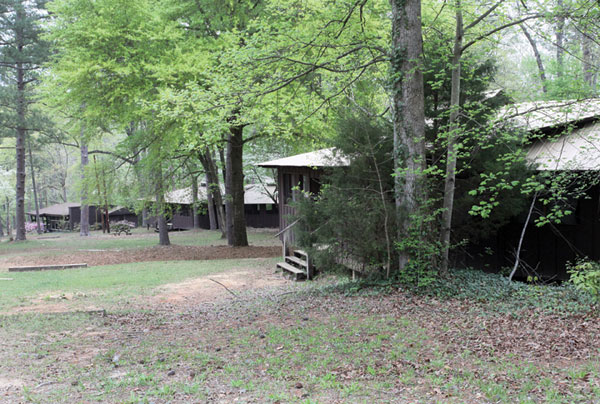
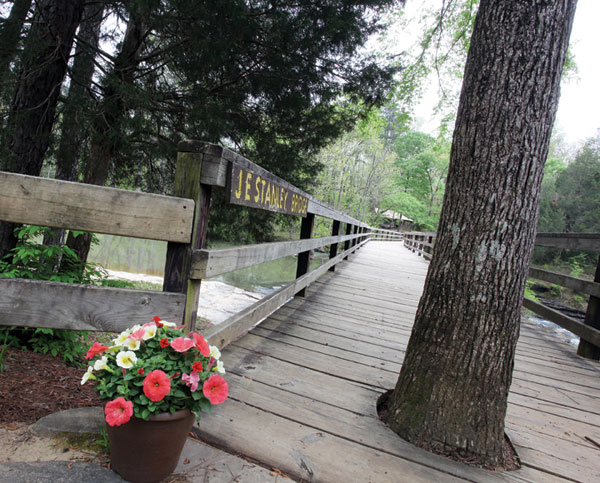
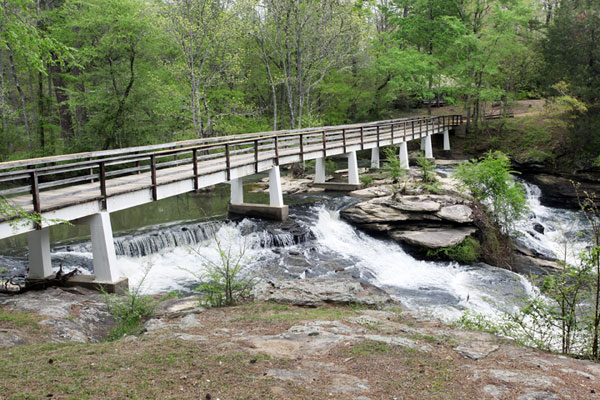
Few places exist where one might find refuge from the world’s ever-quickening pace and yield to an almost forgotten chance to reflect quietly on the thoughts in their head and the matters of their heart. Such places would seem remote, far away, unbelievably expensive and most likely existent only in theory. But that is not always the case. They do exist, and one is right in the heart of St. Clair County. The Pond House, with 40 acres of land, a 3-acre stocked lake, walking trails and quiet quarters, is the perfect destination for the person seeking solace, rest and a time and place for personal reflection as well as the renewal of the body, mind and soul. Located in Pell City, just off Alabama 34, it is a peaceful utopia that is easily reachable without the need to travel great distance or spend a large amount of money to get there.

Col. Hugh Cort III, a Korean War hero, and his wife, Vi, traveled the world as he served his country. After the war, they settled in Mountain Brook when Hugh went to work at the University of Alabama in Birmingham. Always busy and involved wherever they lived, Hugh and Vi both were constantly thinking about and looking for the perfect place to retire.

Their dream, not unlike that of Henry David Thoreau’s life at Walden Pond, was to find a quiet oasis with an atmosphere conducive to spiritual healing, Sabbath rest, quiet reflectivity, as well as times of personal enjoyment for both their family and friends. In tune with one another, they both wanted acreage in which to quietly meander; a peaceful setting with beautiful terrain; a chance to see and commune with wildlife and the opportunity to hear the symphony of nature’s night sounds. Blissful surroundings, a place for fishing, a canvas for water fowl and a pond that would reflect the colors of changing seasons, as well as a place to provide for the daily reflection of one’s life were each a viable part of their search.

When Hugh and Vi stumbled upon the 40 acres in St. Clair County during the early 1980s, they knew they were home. They had arrived at their dreams’ destination. Soon after, they purchased the property and began building the home that had so long existed within their minds’ eyes. With the overseeing of each and every intricacy of the process, it became apparent to both Vi and Hugh that the entry to the property was as important as the house itself. The manifestation of such thought produced a lengthy, winding lane. It allowed visitors to consciously leave the constantly spinning world at the beginning of the driveway and transcend to a world of peacefulness and rest upon entering the home that was ideally nestled among woodsy terrain and included a pond-side view.

A stone path was designed and created to run parallel to the lane and allowed for an easy walk to what would become the family cemetery, where Vi was laid to rest. Hiking trails were developed for enjoyable access to the property and all that it had to offer.

Social and athletic aspects of life were not to be overlooked at The Pond House. The Corts built a world-class croquet court just to the rear of the home. And true to the tradition of the sport, friends would gather in the spirit of competition dressed in the white sporting attire that was then appropriate for such events.

During their years of living in St. Clair County, the Corts became heavily involved with St. Peter Episcopal Church in Talladega. As their involvement and love for the church grew, a strong bond developed between them and Rev. Bob Blackwell, who then served as St. Peter’s priest.

It was during one of their times together that the Corts shared another matter of the heart with their good friend, Blackwell. They informed him that they wanted to give The Pond House, its acreage and its lake to St. Peter’s Episcopal Church. Their wishes were granted in 1992, when their beloved property, as well as an endowment, were given to the church and accepted by the Bishop of the Diocese of Alabama in a grand ceremony.

Today, it is the mission of The Pond House to provide a home-like setting for individuals or groups who are looking for an avenue to become disconnected from the world for either a short time or an extended stay.

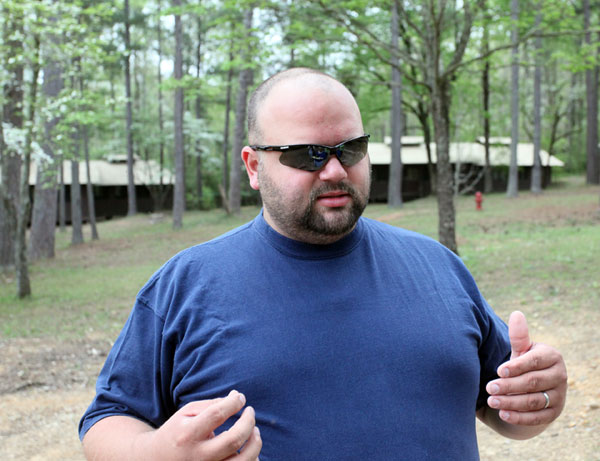
“While The Pond House is an outreach ministry of Talladega’s St. Peter’s Episcopal Church, all who appreciate the standards and way of the church are invited,” Dan Miller, director of The Pond House, explained. “We welcome both lay people as well as clergy, and we encourage anyone in need of time for reflectivity, rejuvenation and respite to take advantage of the peace and quiet The Pond House and its surrounding offers at a very economical rate.”

It is the ideal setting for group meetings, as well as a facility that provides accommodations for either a one-day gathering or overnight retreats.

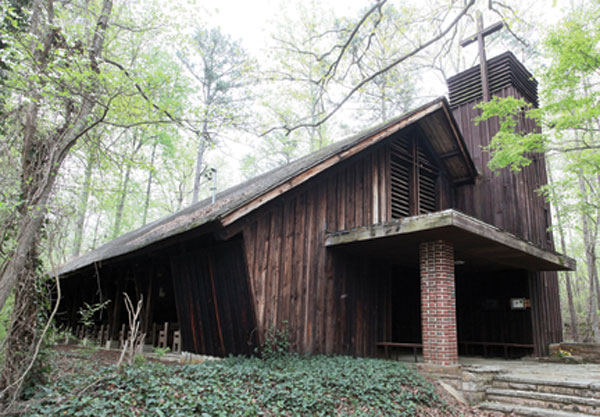
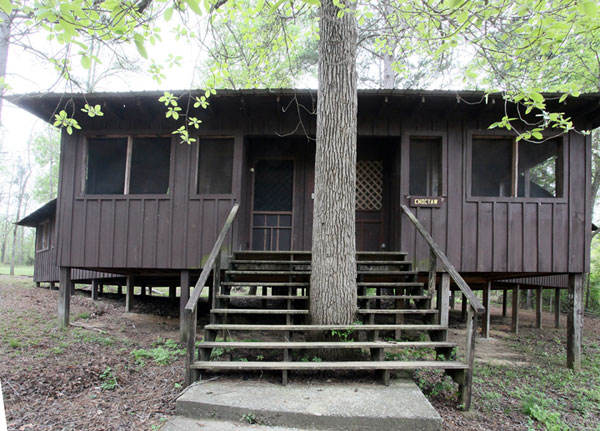
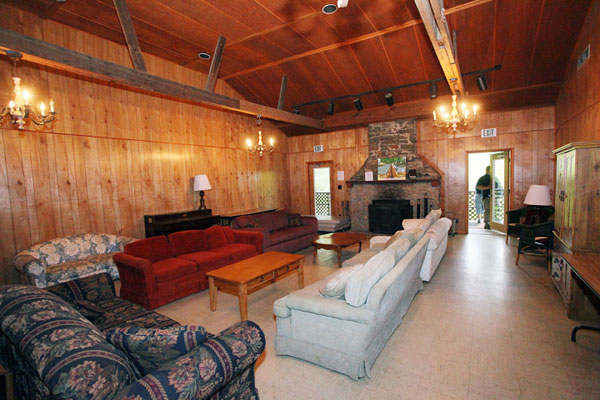
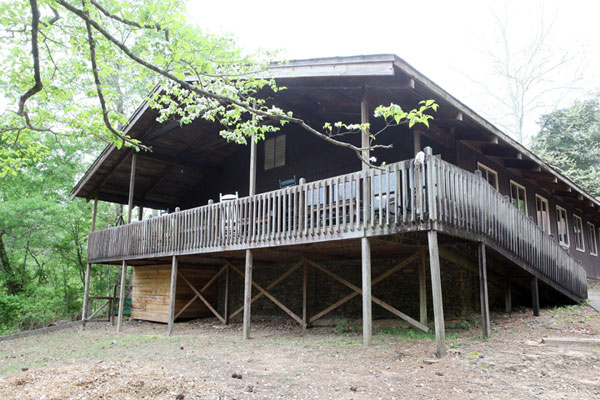
Originally, the house was set up to sleep 10 people. After the house was obtained by St. Peter’s, the space once used for the master bedroom was reconstructed in order to provide for a chapel. Many individuals, youth groups and vestry participants have enjoyed the wooded surroundings, as well as the screened porch and the wrap-around decks.

Having moved to another state, but certainly not forgetting his love for The Pond House, Col. Cort once again fiscally provided for additional changes that occurred during 2010. At that time, the house underwent gentle renovations in order to be able to sleep 16, to improve the functionality of the house and to provide options for limited food service. At the same time, the garage was converted to a meeting room that would accommodate up to 25 people.

The changes, growth and opportunity for serving greater numbers of people in search of spiritual, mental and physical renewal created the need for someone to orchestrate all the activities for which The Pond House could be used. As a result, Miller was hired as its first director. A low-key person, he is excited about all that The Pond House has to offer. “We want to create the atmosphere of warmth, love and enjoyment and peace,” he said. “It’s important that when our visitors come through the door they have a sense that they are at home. And one of the traditions we have to help create that sense is all visitors are greeted with the aroma and then the taste of fresh cinnamon rolls.”

While The Pond House has undergone many changes in the years since Col. and Mrs. Cort stumbled upon that glorious piece of property, some things are still the same. It is still a utopia of serenity, beauty, simplicity and tranquility. It still provides a place for spiritual, mental and physical renewal. And it still transcends the chaos of the world that exists down the lane and just outside the front gate.

LEARJET 464 Juliet

A mission of hope, a story of perseverance

Editor’s note: Excerpts from Wood’s book are italicized.

Story by Samantha Corona
Photos by Jerry Martin

In 1981, Bobby Wood sat down with a pen and paper, and began to write.

His story would have all the exciting elements – foreign countries, constant travels, a clash of cultures, gangs of criminals, and a few good guys who chose morals over money. It would highlight corrupt governments, an illegal industry on two continents, and one man’s quest to bring a valuable piece of American property — and history — home.

Most importantly, Wood’s story would be real. No fictional characters and no exaggerations, it would be his own true-life experiences – him and 464 Juliet.

“I wrote it all down by hand. I sat down and started writing, and I filled up notebook after notebook,” Wood said. “I wanted to include everything, every detail.”

Now, more than 30 years later, that original story Wood scribbled down has become a memoir, a nonfiction novel finally ready to be shared with the rest of the world – Learjet 464 Juliet.

“I’ve had this story for years and wanted to share it, but because of certain people and certain events, I wasn’t able to,” Wood said. “Now that some people have passed on, I’m able to publish it.”

Owner of Wood Performance in Pell City, Wood grew up in Birmingham, detouring to Florida before now calling Cropwell, Ala., home.

He began his love for engines early. His father owned and operated Wood Chevrolet in Birmingham, and it wasn’t long before the car fever caught on. Wood became involved in professional drag racing and was named the NHRA National record holder twice. He later traveled the nation in the Coca-Cola racing circuit.

Wood’s business today is leading innovation and design of carburetors and cam shafts for Harley Davidson motorcycles.

“I’ve always loved working with my hands. I like putting things together to see how they work,” he said.

In 1972, Wood moved to Opa-Locka, Florida, just outside Miami, with his wife, Terry, and their children. He started Wood Engineering, which built and designed products for the aircraft industry, and in 1978, under the title of Air Unlimited, Wood also opened a Cessna aircraft dealership, flight-training school and FAA repair station.

That’s where the story begins, and a Learjet by the name of 464 Juliet enters Wood’s life.

In January 1980, Raul Soto, Colombian by birth and Wood’s “right-hand man” at Air Unlimited, arranged for Wood to meet with a lawyer in Colombia who was interested in striking up an oil deal and in need of private investors. It was a proposition Wood decided to explore.

As the deal unfolded, Wood was introduced to another Colombian lawyer who brought his attention to the opportunity of restoring and returning confiscated airplanes.

The “business” of Colombia at that time – drug imports and exports – made available several abandoned and hijacked aircraft throughout the country. Some were left to waste away, some stripped for any value they could provide to the starving, money-hungry population, and some were considered property of the Colombian government and military.

An aviator at heart, Wood’s interest was piqued at the possibility of repairing and restoring these planes, both for the financial possibilities and the fun.

While out exploring the area and surveying a number of planes, native Soto remembered a U.S. plane that had been grounded just a few years earlier in 1977.

According to Wood and several news stories, the Learjet N464J was on a rescue mission to bring an American who had been badly injured in a plane crash back to the states to receive care in Texas. The victim was severely burned and required treatment that Colombian hospitals couldn’t provide.

“464 Juliet, a Jet Ambulance on a medical mission of mercy, had been sent to retrieve an American named Bruce Douglas Allen, who had been horribly injured in a plane crash. As Allen lay dying with third-degree burns over 80 percent of his body, Colombian officials and agencies, with the possible blessings of their United States counterparts, detained 464 Juliet on trumped-up charges of violation of airspace, and then, days later, neatly confiscated her by planting only fifty grams of cocaine onboard to ensure she would never leave Colombia. Neither would Allen, who was left to die unattended, a few days after 464 Juliet was confiscated.”

Six Americans – two pilots, two paramedics and two passengers – were jailed for their involvement with the rescue mission, but the circumstances, and their eventual release, left a number of unanswered questions.

As Wood made his way to the Simon Bolivar airport, where Juliet was detained, he saw the tail with her name, and it was love at first sight.

“Learjets are something special. I’ve always loved them, and I was excited about the chance to get her up and running again,” he said.

That opportunity wouldn’t be as easy as Wood had imagined.

As the story will tell readers, over several weeks and months, every roadblock imaginable lined the path – self-serving locals, legal red tape, drug lords and corrupt government officials would all have a say in Wood’s new quest to uncover the true story of that mercy mission and free Juliet.

“At that point I made a decision: If I didn’t get 464 Juliet out, no one else would either. I could have been wrong, but I didn’t believe so. I would turn their game back on them and muddy up the waters so much as to actual ownership that it would take years to clear – by that time the jet would be worthless.”

Today, Terry said she still remembers vividly how she felt every time her husband would head back to the Miami airport, bound for Colombia and whatever obstacles awaited him.

“I was terrified,” she said. “I knew he had to do this because he wanted it so badly, but I hated it every time he left.”

A man of deep faith, Wood said there was scarcely ever a moment when he didn’t feel completely fortunate to make it through alive. Without a doubt, he says the adventure would not have been possible without the grace of God.

“I have always been a devout believer in God, and I prayed to him for strength. I had been so busy, I had almost forgotten that He was there, but as I prayed, rattling over that road to Cienaga (city along the northern coast of Colombia), I truly felt His presence and was comforted.”

Thirty years later, Wood says he still feels blessed to have witnessed everything he did, and to have made it home to Terry and his children. As for the fate of 464 Juliet, he said, that is something readers will have to discover for themselves.


A Dog’s Life

Rural paradise, Kelly Run Farm, known far and wide for breeding, training retrievers

Story by Carol Pappas
Photos by Jerry Martin

It is one of those hidden-away places that you just might miss if you weren’t looking for it. But find the gated dirt road leading to Kelly Run Farm, round the bend and you come face-to-face with a rustic paradise.

A log home, wide-open pasture and ponds against a backdrop of towering trees make an ideal setting for Clarke and Dyxie Pauly, who wanted to get away from the harried pace of big-city life and pursue their passion for dogs.

To the Paulys, the land is their paradise. To their four-legged friends — some they own; some simply guests in their boarding operation — the land is their heaven.

Clarke Pauly has built a national reputation on this 30-acre tract that lies between Pell City and Odenville, breeding and training field Golden Retrievers. On a recent visit to Kelly Run Farm, named for the creek that runs nearby, the Paulys were playing host to two litters of Golden Retrievers, 13 in all. Theirs was a seven-week stay before moving on to points across the country, filling the wish lists of hunters and dog lovers and to be used as guide dogs in two instances.

The 9-puppy litter belonged to Taz, the Paulys’ 4-year-old field dog, and Mr. D.J. from Tennessee, who is a confirmation or show dog. It was the Paulys’ first attempt at breeding these distinctly different types of Golden Retrievers, but the result was nothing short of an absolute cuteness guaranteed to evoke a smile from all who see them. “They came out real pretty,” said Clarke, who had his hands full trying to get nine scurrying puppies to pause a moment to look in the direction of a camera.

Rebel, the Paulys’ 9-year-old, and Sky from Florida are true field dogs, and they are the parents of the 4-puppy litter. “They are true working dogs,” Clarke said. But at this moment, they’re just plain puppies, exploring everything around them.

At 5 and 6 weeks, he had them out touring the property, getting them used to all types of topography. “That way, nothing really scares them. They’re used to all terrains,” Dyxie noted.

While the puppies have been an enjoyable diversion at Kelly Run Farm, it’s the business of boarding dogs and training Golden Retrievers that keeps the Paulys the busiest.

When they moved to St. Clair County in December of 1999, it was to have just the right place to train dogs. Clarke began training after Dyxie’s Golden Retriever went jogging with him back in Birmingham. “She would stay to my left and I thought, ‘That’s cool.’ ” He began to do more and more and then started training dogs in city parks but soon found they weren’t ideal for his newfound hobby. “When the police were called on us, I knew it wasn’t working,” he said.

They began a search for just the right property and just as visitors do today, they rounded the bend and came face to face with their dream home.

“We always wanted a log home,” Dyxie recalled. One Labor Day, they saw an ad that said: “Log home with 20 acres.”

“It had to be just so,” Clarke said, remembering a mental checklist he had made for the perfect place before their arrival. “We couldn’t see it from the road.” But when they turned in, “both of us looked at each other and said, ‘Wow!’ It had a swamp. Every criteria was met. It was like the list. We built the ponds the way we wanted. It was just our dream house,” Clarke said.

“It was meant to be,” Dyxie said, echoing the sentiment.

And it has been. The Paulys have been partnering with Jackie Mertens of Topbrass Retrievers in Madison, Fla., on the training side of the business virtually ever since. “We raise. She markets. If you want field Goldens, Jackie’s the woman to see,” Clarke said.

On the boarding side, it was a business that eventually evolved. “We had enough runs for our dogs, but friends kept asking, ‘Can you keep my dog?’ We thought it was a good idea. In 2003, we started boarding,” Dyxie said.

Today, they can board up to 52 dogs at one time, and more than 1,000 clients have entrusted their dogs’ care at Kelly Run Farm, almost a doggie day camp with room to roam, exercise, play and swim. Among their more famous guests was a Golden Retriever who played “Duke” on the Bush’s Beans commercials three years running. In the commercials, Duke is the talking dog who tries to sell the secret family recipe for the highly successful line of beans.

No fear, he didn’t sell the recipe on any of his trips to Kelly Run, but his owners did thank Clarke and Dyxie for hosting their star with a special, framed photograph sequence of their boarder of notoriety in some of the advertisements in which he appeared.

Others may not be as famous, but they are no less loved. It is evident from the moment you step onto the property. And that love carries over to the discipline of training dogs.

Clarke agrees to demonstrate years worth of work in training Taz and Rebel, whose playful personalities come out as they jump and run, circling Clarke and making them look like any other dog who loves the attention of their master. But when it’s time to go to ‘work,’ their keen focus is all on Clarke and the job at hand.

On this particular afternoon, Clarke demonstrates the hunt for a downed bird. A gunshot sounds. Taz is more than ready to take off, but she doesn’t. She is at complete attention — like a statue at Clarke’s side. He sounds a short whistle, and she is off and running like a strong gust of wind. Another whistle sounds, and the abruptness of the stop is amazing. She turns, faces Clarke and sits. With a hand motion to the left from Clarke, the gust catches hold again, and she speedily heads directly toward her prey. She can’t see it, but the whistles and the motions from Clarke telegraph the exact location to her.

She runs into the woods and in a moment or so, she heads back with the prize from the woods and the praise awaiting her from Clarke a hundred yards away.

It’s just another day at Kelly Run Farm, where a dog’s life truly is the good life. And in return, the Paulys enjoy the good life, too. Nothing tells that story quite as well their own words in “About Us” on their website.

Here’s a hint, the title reads: “About Us (and the dogs that own us).”

Flying High

St. Clair residents revel in the thrill of hang gliding

Story by Loyd McIntosh
Photos by Jerry Martin


Since the time the first human being turned his eyes upward and saw a strange-featured creature flapping its wings in the air, mankind has dreamed of flying. For thousands upon thousands of years, fulfillment of that dream remained elusive, even as Homo sapiens conquered practically everything else. But a millennia of frustration, experimentation and spectacular failure was erased when a couple of bicycle builders from North Carolina named Orville and Wilbur became the first humans to achieve flight a little more than 109 years ago.


Since then, flying has become, for the most part, ho-hum. Routine. Another day at the office for millions of people traveling from meeting to meeting, airport to airport every single day; security checks in shoeless feet with unfamiliar hands getting a little too familiar.


If this experience makes you want to jump off the nearest cliff, rest assured, you’re not alone. But, before you leap, be sure to strap a giant kite to your back and get ready to really experience the miracle of flight. Some people might consider this method of flight, known as hang gliding, to be a little dangerous and a whole lot of crazy, but to a handful of St. Clair County residents, hang gliding is one heck of a thrill.


“It’s awesome,” said Bill Turner, a Springville resident and a dentist in Center Point. Turner at first glance may appear rather conservative and measured for the risky sport of hang gliding. But this self-described extreme sports enthusiast was introduced to hang gliding back in 1999 and almost 13 years later, hasn’t yet become bored with the feeling and excitement he gets from flying.
 

“My best description is if you can remember the dreams you had when you were a young child where you were just flying. You know, arms out flying around over things,” he said. “If you take that and put a small fan in front of your face to blow air on you, that’s what it’s like.”


Turner is part of a group of local gliders who are members of the Alabama Hang Gliding Association, a group started by another St. Clair County resident and avid glider, Phillip Dabney, back in 1980. The group has seen some ups and downs among its membership ranks over the years, but throughout the winter and spring, dozens of hang gliders from around the state make their way to launch sites dotting ridges and cliffs along Chandler Mountain.


Peaking at an elevation of 1,529 feet and overlooking Springville on one side and Oneonta in Blount County on the other, the mountain is a popular spot for hang gliders hungry for a place close to home to pursue their passion, even if it means having to pack up their gear with little advanced planning. “I started my own landscaping company in order to have more flexible hours and to be able to go hang gliding at a moment’s notice,” said Dabney, who lives close to his favorite launch point on Chandler Mountain near Springville. He and Turner say the challenge is the unpredictable nature of the weather patterns on the mountain.


“Everything is sort of determined by the wind and the weather,” Turner explained. “That ridge happens to face southeast, which means in the winter time, when we have those unseasonably warm days — 65 degrees, when normally it’s been 40 all week long — you get the wind blowing out of the southeast that takes that Florida air and warms the area around here and makes it delightful for us to fly.


“You want the wind to blow into the ridge and be deflected upward so when you launch, you’ll get up in that airlift that’s running along the ridge and then from that you can run into thermals and get up much higher,” he added.


Turner caught the hang gliding bug a dozen years ago after agreeing to accompany his brother, Jim, to Lookout Mountain near Chattanooga, home of some spectacular flying and where one of the nation’s best hang gliding schools happens to be located. Turner said his brother asked him to come along and take some photos during a tandem flight with an instructor. Initially believing his brother had gone a little loco in the dome, Turner agreed to go and brought his youngest son, Grant, along. Before he knew it, his son was wanting to fly. Turner suddenly realized he had a decision to make.


“So, we get up there and I sign him up and I’m thinking, ‘I’m going to have to come back here next Saturday and fly if the world finds out that my youngest son and my brother flew and I didn’t,” Turner recalled. “So, I plopped down another $125 and signed up for it.”


Before Turner could fly that morning, a warm weather storm came through, and his turn was postponed until the afternoon. By then, the choppy winds from the early morning were long gone. The conditions couldn’t have been more perfect. “My first flight was in air that had been calmed by the rain and was perfectly smooth, and I mean it just hooked me right in. It was so smooth, so nice and so much fun,” he said. That was in October 1999. “I’ve loved it ever since.”


Before long, Turner graduated from tandem flights to solo hang gliding and is now a tandem instructor himself. He said the thrill he received from hang gliding was so intense that it may have affected his judgment once in a while as a new pilot. However, even the most experienced pilots can have a close call or two — jumping off a cliff always comes with a certain amount of risk. Turner said he’s learned to dial back the adrenaline-junkie side of his personality over time.


“I probably let my love for it interfere with my common sense,” he said with a laugh. “I think I’m a little wiser now than I was then, but it gets in your system, and you love it so much that you just have to go every weekend.


“I’ve had a few close calls, more than I’d like to admit. Every pilot that has flown has had some close calls,” he noted. “There is a saying in aviation, ‘There are old pilots, there are bold pilots, but there are no old, bold pilots.’”


St. Clair County really is a sportsman’s paradise with plenty of lakes and acres upon acres of undisturbed land to take in and experience nature. But, Turner said, there is simply nothing like experiencing the surrounding area from the air silently and without so much as a windshield between the pilot and the world.


“We have lots of interaction with birds of prey up there. Not necessarily intentionally,” he said. “One of the things we look for when we try to find rising air is a bird, usually it’s a turkey vulture, but sometimes there are eagles or falcons, all sorts of birds like that, that will be circling, and we head into that air and try to get with them.


“Many times I have launched from Springville, and I have been on the wingtip of an eagle, and we’re circling each other. It is absolutely amazing. Sometimes we come up on birds that will be doing the ridge lift and really you’re just a few feet from them. Literally, I’ve been within 3 feet of a big bird, wings all the way out, and I could have reached out and touched it if I had wanted to,” Turner said. “The beauty up in the sky, particularly if you’re flying late at night and the sun is setting, is just amazing. And when the air smooths out, there are times when you can really fly with just two fingers on that control bar. It really is wonderful.”


For Dabney, who has been flying for almost 35 years, one of his favorite memories involved experiencing a certain weather phenomenon most people only hear about from meteorologists.


“I was flying with a friend over Blount Mountain. We were about 2,000 feet over the top of the mountain and flew out over the Big Oak Girls Ranch, and it started snowing. As we got lower, it turned to sleet then light rain,” Dabney said. “By the time we landed in the Washington Valley it was sunny, and none of the precipitation had made it to the ground. It had all evaporated in a drier layer of air near the ground. This phenomenon is called ‘virga.’ You may have heard (TV meteorologist) James Spann mention it.”


Regardless of the reasons for flying, which mountain you launch from, or whether it’s a tandem flight or solo, Turner said the idea of flying thousands of feet above the earth with only a helmet for protection is a buzz that never gets old. “There’s something incredibly exciting about having that big kite on your back, rolling down a hill, and realizing that you’re the only one controlling that thing.


“It’s so simple. It’s just pure flight.”


Playing to a Full House

Local Color is Springville’s ‘colorful’ music spot

Story by Mike Bolton
Photos by Jerry Martin

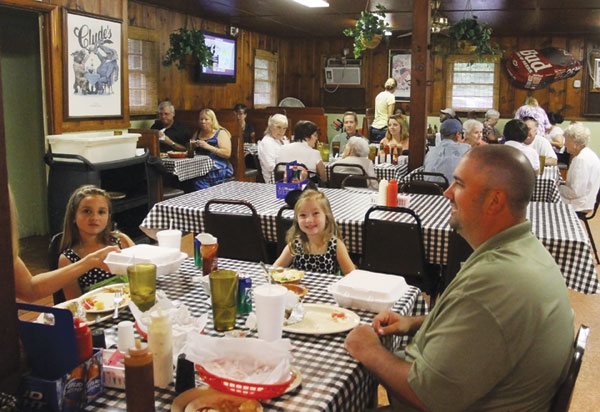
It’s barely dark thirty on a Friday evening, and a steady stream of vehicles with tags from Jefferson County, Shelby County, Blount County, Cullman County and other locales vie for a spot in the dimly lit parking lot of the indistinct brick building on Springville’s main thoroughfare. The occupants of the vehicles slip almost unnoticed through the side door and enter a world many Springville residents have no idea exists.

It is too obvious of a location to house something sinister, and its occupants are too nicely dressed and genteel for it to be a honky-tonk. Many a weekend passerby has seen the full parking lot across the street from Burton’s grocery store and with raised eyebrows pondered just what goes on in that place.

If the conspiracy-minded speculate something odd is going on within the building’s walls, at least give them credit for a lucky guess. Once inside, a visitor discovers a place that seems way out of place in Springville, Alabama. Step through the side door, and one might be immediately enveloped in the haunting sounds of a band from Ireland strumming Celtic music, or the toe-tapping music of a band cranking out Dixieland jazz. The next evening, a visitor might encounter the unmistakable sound of a banjo dominating a bluegrass set or watch incredulous that the twang of a bass fiddle from a folk group is shaking the liquid in their glass.

But for a few exceptions in major cities, music halls and supper clubs have pretty much gone the way of full-service gas stations. In Springville, however, Local Color is hanging in there like a rusty fish hook. For 10 years, the music hall has on weekends offered live music accompanied by a fanciful dinner. Despite the fact the business does no advertising, music lovers and a wide array of music groups find the path to the side door each weekend.

The business is operated by Springville residents Merle Dollar and Garry Burttram, who decided a decade ago to combine Burttram’s love of music and cooking and Dollar’s love of art into one of those dream ventures that for most people would stay just a dream. They both laughingly say their banks accounts attest to the fact that it is strictly a labor of love.

“We borrowed $10,000 to get started and have operated it on a shoestring budget every since,” said Dollar who served as an art teacher at Springville High School for 10 years and at Duran Junior High in Pell City for 16 years and now teaches art classes in the building. “Gary is a retired art teacher from Moody High School. He is truly an amazing person.”

Dollar says their idea was to incorporate music, art and good food in a quaint setting. The old building that once housed a boat-builder’s shop and feed store seemed like a natural. The building’s original windows have been replaced by stained glass, and memorabilia from everyone from the Beatles to Elvis adorn the walls along with Dollar’s artwork. Classic album covers and posters promoting coming attractions line the brick walls.

“We were looking for a name, and Local Color seemed like a logical choice,” she said.

Although he’s Local Color’s resident chef, and his food draws rave reviews from its patrons, Burttram insists it is all about the music for him.

“I had no choice but to love music because my parents loved music,” he said. “I can remember as a little boy hiding under the bed and watching people come to our house to listen to music. I can still remember seeing nothing but the bobby socks and penny loafers as they danced.”

Local Color has become a stopping off point for many diverse groups from Alabama, the South and even from around the world. Its reputation as a place that is a throwback in time makes musicians want to play there, band members say.

“Of all the places we have played it’s probably our favorite,” said Jerry Ryan of Three-on-a-String, the Alabama trio that has been playing across Alabama and the South for 40 years. “There’s no smoke and no TVs playing in the background like at most places today. They cater to musicians and make it a fun place to play. They know what it feels like to perform, and they enhance it.”

Ryan says music halls like Local Color have fallen by the wayside over the past several decades as television, cable and sports have become the primary entertainment. He says Local Color has survived because of attention to detail.
“It’s set up for music,” he said. “It’s one of the few places left that someone can sit right there close to the band and hear good, top-notch groups.”

There is a cover charge, and it varies according to what group performs. The entire cover charge goes to the group performing that night. Patrons may also eat dinner and can purchase wine and other alcoholic beverages.
“It is intimate, diverse, clean,” said Local Color regular Nancy Smith, a former Springville resident who now lives in Blount County. “It draws a lot of people from Birmingham. It’s just cozy and adorable.

“I bring a lot of people from Birmingham, and they are always surprised. It’s just not what you’d expect to find in little, old Springville. You can come here and listen to bluegrass, the blues, jazz and even rock and roll. I just love the diverse offerings.”

Local Color has no advertising budget and survives word of mouth and by the 1,900 e-mails it sends out each week, Dollar says. The music hall got a tremendous boost last year when the Alabama Department of Tourism and Travel, which declared 2011 “The Year of Alabama Music” promoted Local Color as a must-visit spot for live music in the state.

Local Color finds its musicians by word of mouth, too.

“I’d say about 99 percent of the groups contact us,” said Dollar on a night when a busload of patrons from Cullman had come to hear Three-on-a-String. “Four Shillings Short, a Celtic group from Ireland, was in the U.S. and heard about us and wanted to know if they could come perform.

“Another that surprises many people is Janet Hall of Fox 6 news in Birmingham. She performs twice a year. She is an incredible singer and songwriter.”

Singers and songwriters and groups, including Jeff Otwell, the Dill Pickers, Martini Shakers, Sweetwater Road, the Legendary Pineapple Skinners, Once in a Blue Moon, Steven Young (who wrote Seven Bridges Road for the Eagles) and Clair Lynch perform at Local Color annually.

Local Color’s house band is Something Else, a trio comprised of Dollar, Sylvia Waid and Peggy Jones, who have performed together for 26 years. The trio plays music from the 1920s to the 1960s and is primarily a swing and boogie group. The three ladies are, in addition to the opening group, ambassadors for Local Color and greet patrons. l

Local Color is open on Friday and Saturday nights for live music and on Sundays for lunch only. Reservations are recommended for the live performances. To make reservations, call 205-467-0334.

Custom Candy

Independent business bringing its sweet operation to Moody

By Amanda Pritchard
Photos by Jerry Martin

Creating a candy wonderland for children of all ages, store owner and creator Hanson Watkins opened Indie Candy in Crestline Village with that goal in mind. The business has thrived, and now she is expanding production in Moody.

In looking for the perfect place to expand her business, Watkins searched within an hour radius all around Birmingham, but ultimately knew she wanted to settle in Moody. “My father has done business in Moody for 30 years. It has a great reputation.”

This natural gourmet sweets shop specializes in allergen-free candies. Still keeping its storefront in Crestline Village at 73 Church St., Watkins will over time be building her workforce from seven employees to approximately 25 once the expansion is complete.

Featuring treats that Watkins calls “super duper handmade,” Indie Candy provides sweets that are free from the big eight allergens — wheat, soy, peanuts, eggs, tree nuts, dairy, fish and shellfish. “If it’s on the market and fits in our all-natural, allergen-free category, then we have it,” Watkins said.

Producing hard candy, chocolate and gummies, Watkins says, “Indie Candy focuses heavily on quality ingredients, keeping things fresh and shipping immediately.” Citing its best-seller as flavored gummies, Indie Candy packages its edibles in festive seasonal wrappings. “Everyone’s gone crazy for our pumpkin pie brittle. We’ll have it packaged in our gift tins for Christmas.”

Making it a mission to bring new experiences to candy lovers, young and old, Indie Candy Public Relations Director Beth Norris said, “Watching kids come in and eat their first piece of chocolate is out of control. Women come in all the time who haven’t been able to have candy and ask which section can they have. When we say all of it, they get so excited.”

Celebrating brisk Halloween sales, the staff at Indie Candy shipped more than 8,000 individual pieces of candy.

Indie Candy does not just make candy for others. They treat themselves, too. Watkins and her family have had trouble finding the right edibles without allergens and food dyes, so she looked to herself to provide the goodies. Mango and cherry gummies are her personal favorites, while Norris says she prefers the truffle apple.

Offering alternatives to allergens, Indie Candy can be purchased at its Crestline location or through its website at www.indiecandy.com. New customers can also “like” Indie Candy’s Facebook page to find out what’s cooking in the kitchen.

Indie Candy’s move to Moody with its production facilities will be completed soon. The new location is at Moody Acres where Minnie’s Bakery once occupied space.

Looking forward to expanding her business, Watkins said, “This is such a big deal for families who haven’t been able to have candy before. We can’t help but feel like what we do matters.”