The Woodall Building

Springville’s historic venue becomes site for new memories

Story by Leigh Pritchett
Submitted Photos

Ryanne Noss of Trussville walked past a building in Springville and was instantly smitten with its history, character and ambiance.

So captivated, she was, that she bought it.

Since 2019, she and Scott Farris of Trussville – who actually spotted the structure first – have been co-owners of the Woodall Building, Inc. and have turned it into a venue for intimate weddings and parties.

The building is nearly as old as Springville, which was incorporated in late 1880.

Aaron Woodall constructed the building in 1881, Noss said. Originally, it housed a carriage assembly plant. Through the years, it has been a hardware store, arcade, gym, venue and restaurant.
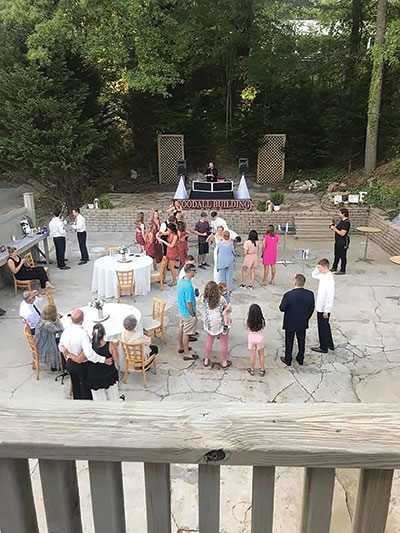
Outdoor space is also an option

On St. Clair County’s website, the Woodall Building is listed among Springville’s historical structures and is described as “one of the oldest hardware stores.”

An event planner for years, Noss decided she wanted to do that full time and have her own venue for the events.

Six months of work went into readying the building to be a venue. Care was taken to maintain period style and colors. “We wanted to preserve history, … keep history alive,” Noss said.

Mackenzie Free, half of the photography duo, Mac & Meg Collective in Steele, said the historical nature and architecture of the building make it an ideal backdrop for pictures.

The building’s 1,500 square feet include a first-level reception area with dark, vintage wood flooring. Chandeliers hang from organza-draped rafters. Noss said the draped ceiling is reminiscent of the elegance in a Victorian hotel lobby. “I really think that makes it.”

The mezzanine between the first and second levels is the bridal suite, furnished with period pieces. The mezzanine has actually held as many as 14 bridesmaids at one time, Noss said.

On the second level is the groom’s suite, featuring a brick accent wall and leather furnishings. Noss has chosen an “old English hunting lodge theme” for that room.

Beyond that suite is the chapel area set off with classic iron railing. The chapel’s metal ceiling and string lights – coupled with vintage flooring and painted brick – create what Noss calls an “industrial and antique” atmosphere. The bricks, holding 140 years of history, were handmade in Springville.

Billows of natural light pour into the chapel through seven large windows, much to the delight of photographers.

“I think it is a great place for a wedding,” Free said.

The three windows at the front of the chapel are framed in distressed turquoise blue. Brides sometimes incorporate those windows as art elements in their wedding decor, Noss said.

To the rear of the building is a private, outdoor courtyard with stringed lights and a stage. The building and courtyard can accommodate 100-125 people. Noss said one event at a time is held at the Woodall Building so that she can devote to it her undivided attention.

The building opened for events on March 5, 2020. Ten days later, the global pandemic closed it for a time.

The first wedding was held in May 2020 and, by that August, Noss was seeing a definite uptick in business.

To reassure prospective brides, Noss guaranteed the return of deposits if pandemic measures required that the building be closed.

She also worked with brides whose original venues canceled because of the pandemic.

The interior of the historic building is perfect for weddings.

Two months before her wedding on April 24, 2021, Paige Windham of Trussville lost her wedding venue for a different reason – storm and water damage. Because the caterer was part of the rental package, she lost that, too.

She found the Woodall Building through an internet search. With Noss’ help and Noss’ contacts, Windham was able to get her wedding replanned in less than two days.

What attracted Windham to the Woodall Building was “… everything. The exterior is gorgeous. I love the flooring. The flooring was perfect,” Windham said on April 23 when she and husband-to-be Trent Furlow came to leave some wedding items.

The character and amenities of the Woodall Building were a perfect fit for the small wedding with family and friends Windham said she wanted from the beginning.

Windham added that she felt more like Noss’ friend than a client because Noss has an accommodating spirit and goes “above and beyond.”

From May 2020 to June 1, 2021, the Woodall Building was the site for 10 weddings, five sweet-16 parties, numerous other birthday parties, baby showers, after-rehearsal dinners and sundry events.

“Total, we had 36 events last year,” Noss said. “… I was proud of 36.”

As of late April this year, Noss already had another 36 booked for 2021.

She works to make certain weddings are “affordable, yet elegant.” Setup and cleanup are included in the venue’s rental fee.

She said the brides who rent the venue are not confined to just a couple of visits. Rather, they are welcome to come sit, think and visualize what they want for their day.

When a bride chooses the Woodall Building, she not only secures a venue, but also a wedding coordinator. After the bride selects the florist, caterer and other vendors and makes her wishes known to them, Noss takes over from there. Noss assumes the work of advance preparations and serves as the wedding day coordinator.

Brides, she explained, want to depend on someone who will make their wedding dreams come true, and Noss tries to be that person.

“I just love my brides. I just do! … I try to make it as stress-free as possible. … So far, we’ve had drama-free weddings. That’s what I like!”

Noss has been delighted with the reception her business has received locally. People who have held events at the building are so excited about it that they volunteer to help her with other events, she said.

“Springville has been absolutely fabulous,” Noss said.

Dream Wedding

Rings, venues and much more

Story by Linda Long
Submitted photos and information from Griffins Jewelers, Weddings at Cabin Bluff and Pell City Flowers

Weddings look a little different these days as couples and wedding planners work around the challenges of COVID-19 to plan their special day.

To borrow a phrase from the Marines, couples are improvising, adapting and overcoming whatever the pandemic throws at them, seizing their special day.

No longer are we seeing the 200-plus wedding guests and oversized receptions with bands and sit-down dinners. Today, couples are embracing the idea of what is sometimes called the micro wedding. Guest lists number 30 to 50 people, generally family and close friends.

Technology is playing its part in 2021 weddings. Wedding photography and videography are more important than ever before. Couples are livestreaming their wedding ceremonies to folks who can’t attend due to space restrictions.

No one can say when weddings as we’ve always known them will return, but there’s one thing we know for sure – the bride will be beautiful, the groom handsome and at least one mom, maybe both, will shed happy tears.

Engagement and Wedding Rings

As the world emerges from COVID, couples realize just how important relationships are, said Michael Abernathy, vice president of Marketing and Sales for Griffins Jewelers in Pell City and Talladega.

“Couples are cherishing their special moments together more than ever before. They are marking these moments with quality diamond engagement rings that will become heirlooms for future generations. These diamond rings symbolize the heart and commitment of the relationship.” 

Trusted jewelers like Abernathy play a critical role in helping make those moments in time last a lifetime.  Ring selection traditionally follows trends, but the round brilliant cut diamond is timeless and always the most popular.  

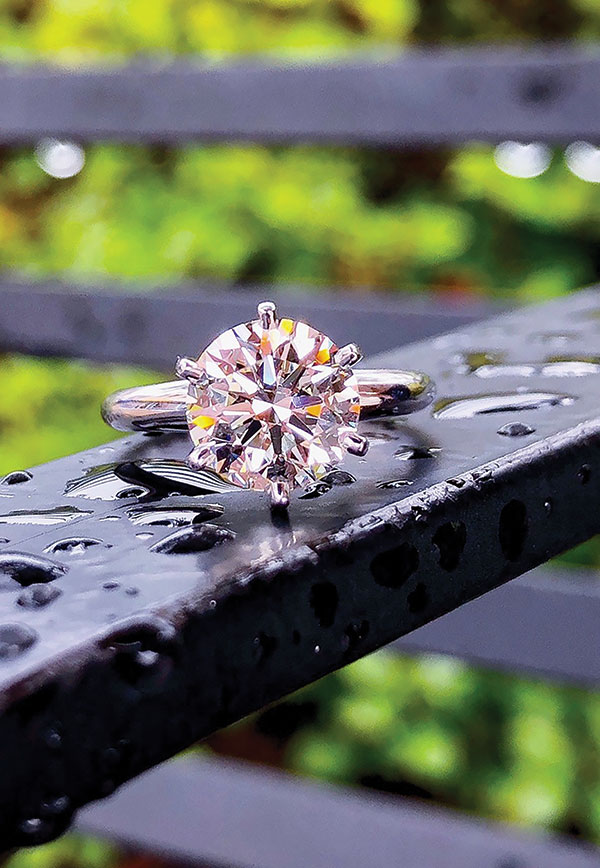
Diamonds are still the standard for engagement rings.

Round diamonds or fancy cut, like oval or pear, make beautiful solitaires or can be complemented nicely with diamond accents or halos. “Solitaires are very popular,” Abernathy said. “And composite clusters can often give the ring a bigger look for the money,” but some brides are trending toward vintage styles with colored gemstones like sapphire or ruby. Many Couples choose to design their own custom ring with the aid of (CAD) design. “Every piece of jewelry has a story,” he said. “Let us help you create yours.”

White gold is out. Yellow gold is in. That’s the word from Alisa Hutto at Agnew Jewelers in Trussville. “A year ago, we were selling completely all white. Now I’d say it’s 75 percent gold. That’s what the young people are trending toward, and they’re leaning more toward a solitaire as opposed to a halo style ring,” she said.

“I always say stick with a classic instead of following the trends when it comes to engagement rings because that’s something you’re going to have forever.

“I remember when I was trying to choose between an oval and a round stone. I loved both, but I chose round because it is the all-time classic. When I’m 80 years old, I want to look down at my hand and be just as happy with my stone as I was the day I got it.”

Hutto says there are those people who prefer gold no matter what and others who prefer white.

Ann Mitchell at Elite Jewelers in Trussville is also seeing yellow gold making “a strong comeback.”

Popular diamond shapes, she said, “are round, asscher and cushion but ovals, pear and marquis are beginning to trend. Styles range from a simple solitaire to lots of accent diamonds forming a halo around the center diamond to elaborate mountings with diamonds everywhere and even two stone engagement rings. Custom to heirloom, it’s an individual choice for each couple,” said Mitchell.

Looking at other wedding trends in 2021, Hutto said it seems that the groom is more often picking out the stone by himself, resulting in a choice of smaller, but more perfect stones.

“For a while, there was a tendency for the bride to come in with the groom and pick out her own stone. They would choose the larger stones, like two carats, but the boy, couldn’t afford that in a quality stone, so they had to settle for lesser quality in a larger stone.”

Hutto, who has been in the business of helping brides and grooms make this all-important purchase for 42 years said she works because she loves her job.

“And what woman wouldn’t love being surrounded by diamonds all day,” she laughed.

Diamonds are not trending in men’s wedding bands and gone are the days when men only had two choices – gold or silver.

Elite’s Mitchell said some grooms still prefer the traditional gold, platinum and silver bands, “but a more popular choice these days is an alternate design. There’s titanium, cobalt, meteorite and steel as well as ceramic and silicone and wood. I’ve even seen one carved from deer antlers,” she said.

Explaining that while some of these materials, like silicone, won’t last forever, “they still will withstand things like working on a car or going to the lake. Practicality wins out over sentiment.”

Flowers

Interesting is one word that describes wedding flower choices in 2021. Florists are seeing more of a demand for color, foliage, unusual blooms and even grasses. Bohemian or (boho), a style that’s been called a free-spirited mix of fun and unpredictability, is another way of describing this year’s bridal bouquets.

Cindy Luby at Pell City Flower & Gift shop says she’s seeing a lot of brides choosing bohemian for their wedding theme this year. “It’s the natural look with a lot of greenery and succulents,” she explained. “We’re also seeing blush pink make a big comeback.”

Hydrangeas and eucalyptus are also big this year, she said. “One thing we are seeing that is very different is a sand-colored rose. It’s very pretty in an odd way. But when we mix the sand rose with the blush pink, we have a very beautiful bouquet.”

Destination Weddings & Honeymoons

Due to COVID’s mandated crowd restrictions, many couples are keeping their weddings smaller. That observation came from Kathy Richards at Ash Travel in Springville.

“Because it’s just real difficult to plan a traditional wedding with a huge guest list, many couples are opting for a destination wedding,” she said. “Typically, the couple goes. The bridesmaids go and the parents. Maybe some siblings. So, what we have is about 20 people. The guests have their long weekend at a resort, and the couple stays on for the honeymoon.”

Richards added that many resorts now offer a videographer so they can livestream the wedding. “This way, everybody at home can be together and watch the ceremony. Later, the couple might plan the reception and have all the family and friends there.”

She is booking weddings only for Mexico, Jamaica and St. Lucia. “They are big enough to handle travelers in this pandemic situation, so I’m not sending people to the smaller islands. They’re just not as equipped to take care of it. And I want to absolutely be sure that I have contact with the tourism board and the government to make sure that everything I need taken care of with my people and my families – that they can handle it all.

One bonus to the destination wedding is easier planning and less work, Richards said. “It’s much easier to have a wedding at one of the resorts rather than at home. The bride gets on the phone with the resort’s wedding department. She tells them everything she wants – from flowers to candles to music to food. The resort takes care of it all.”

Some of the higher-priced properties offer these services free of charge. “You must limit your guests to 10 and book your reservation for seven nights. Also, you must pay extra if you’ve chosen music as part of the service.”

Closer to home, Richards said, the beach is always a favorite destination.

Dr. Penny Njoroge

Ms. Senior St. Clair is personification of empowerment

Story by Scottie Vickery
Photos by Graham Hadley
Submitted Photos

Growing up in Kenya, Dr. Penny Njoroge wanted nothing more than to get an education. The oldest of 10 children, she longed to learn and had big dreams, but they seemed to be out of reach.

“In my village, girls were raised to get married, raise families and serve the extended families in the communities – never to go to school,” she said. “I pestered my father until he got tired and registered me in school at age 11. As a result, he was kicked out of his family and clan, disinherited and forced to take us from our ancestral home. We ended up in the poorest slums of Nairobi.”

In the decades that followed, Dr. Penny, as she’s known to most people, survived domestic violence, depression and other hardships before finally starting college in the United States when she was 56. The reigning Mrs. Senior St. Clair County, she’s a psychologist, counselor, mental health advocate, award-winning motivational speaker and life coach.

“My desire is to empower, equip and encourage people not to quit,” said Dr. Penny, now 74. “I want to inspire people to dream big and pursue their life goals, regardless of how old or young or how rich or poor they may be.”

The path from Kenya to Trussville, where Dr. Penny lives with her son and his family, was filled with challenges and heartache, but her experiences have equipped her to be a compassionate advocate. “I can understand,” she said. “I’ve been there. Things may be bad today, but they can be better tomorrow.”

Life in Kenya

Dr. Penny’s desire to go to school cost her family, and life was hard. There was no sanitation in the slums they called home, and they constantly struggled, “selling scavenged bones and metal pieces for food, clothing and tuition.” She had promised her father he would never regret sending her to school, so she worked hard, became a top performing student and earned a spot in her country’s top girls’ high school.

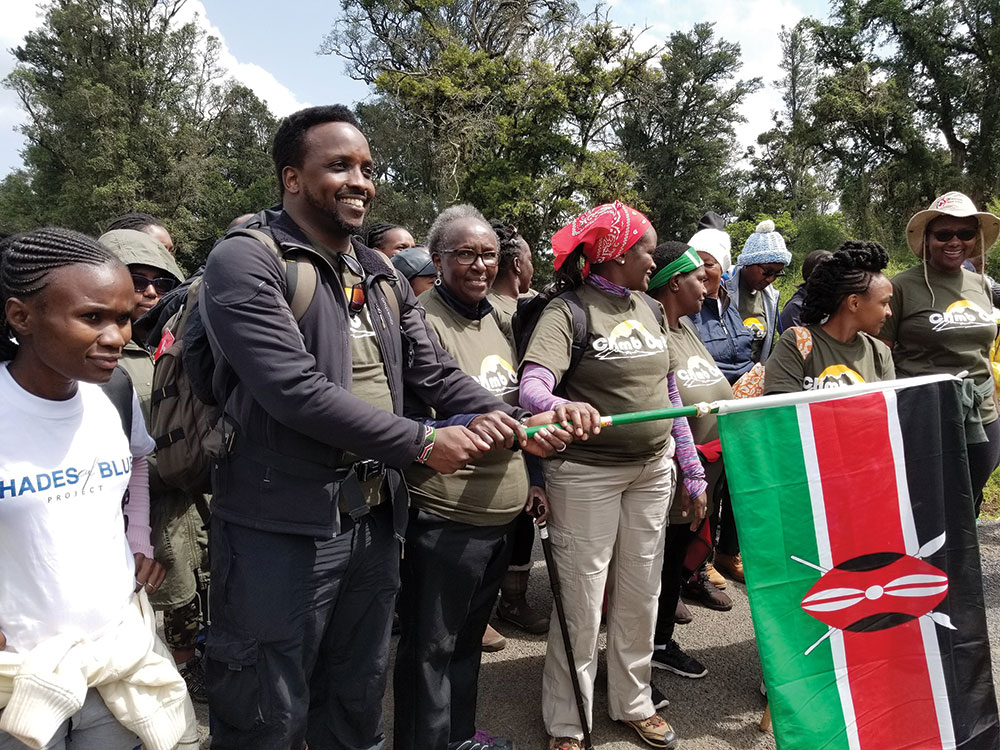
Flagging a group to climb Mt. Kenya, the highest in the country.

“Being the first of 10 children, my parents couldn’t afford to send me to college, so I started educating my siblings and working in the corporate world,” she said. She married at 22 and had four children – three boys and a girl. She loves her children dearly – “they are my backbone,” she said – but she endured a lot in her marriage.“ I survived 30 years of serious domestic abuse and violence, 25 years of depression and two attempted suicides until I ran for my life,” she said.

Her escape came by way of Servants in Faith and Technology (SIFAT), a Christian nonprofit founded by Ken and Sarah Corson, an Alabama couple who were missionaries in Bolivia. They started SIFAT in Lineville in 1979 and have trained church and community leaders from more than 80 countries to help meet basic needs in developing countries.

Dr. Penny’s church sponsored her 6-month community development training at SIFAT, and while she was in Alabama, she met some fellow Kenyans, including one who worked at Carraway Hospital. She was inspired to become a hospital chaplain, and after getting a visa, she moved to Alabama permanently in 2000 and began training at Carraway.

New Beginnings

Dr. Penny enrolled in college at 56 and earned a bachelor’s degree through distance learning from Carolina University and a master’s degree in Christian Counseling Psychology from Carolina University of Theology. She also earned her doctorate in Clinical Psychiatric Counseling Psychology from the Cornerstone University of Louisiana and worked as a board-certified trauma, hospital and psychiatric chaplain at St. Vincent’s East Hospital for 16 years before retiring as lead psychologist. 

“The U.S. has been a God-given home for me; it gave me a second chance in life,” said Dr. Penny, who became a citizen in 2017. “I have loved Alabama. To me, it is a place of healing and advancement.”

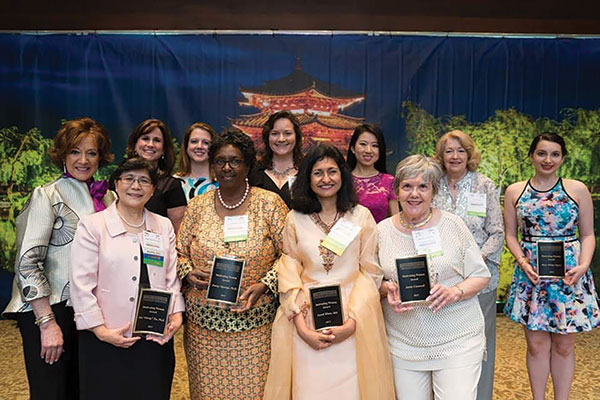
Dr. Penny with her Most Motivating Woman Award

Not one to sit still, Dr. Penny opened Angel Counseling Services. “My greatest passion is to remove the shame and stigma of mental illness,” the trained telehealth provider said. “Given a chance, anybody can survive and make a difference. People have a great sense of endurance if they have just a bit of a chance. I want to be able to offer compassion, to give a listening ear to someone, to give hope to someone.”

Some of Dr. Penny’s co-workers from St. Vincent’s encouraged her to enter the Ms. Senior St. Clair County pageant, and after winning that she was first runner-up in the Ms. Senior Alabama event. She also won Ms. Congeniality and People’s Choice honors.

“They said they were not looking only for beautiful faces, but also a beautiful story,” she said. “I wanted to share my inspirational story of great struggles, shame, rejection and deprivation accompanied by a spirit that refused to quit on my dreams.”

Dr. Penny said her children and grandchildren are her biggest supporters and sources of strength. “I would not be anywhere without that team,” she said. “We must intentionally cling to our families so we can face storms. I’ve gone through many storms, but it has been worth it because I am able to stand with people today and give them hope.”

Creedon Creek

Andy and Creed Stone keep legacy, craftsmanship alive

Story Elaine Hobson Miller
Photos by Graham Hadley
Submitted Photos

Andy Stone has developed an eye for beautiful wood. He sees character where others see beetle tunnels and discolorations. He takes so-called faulty pieces and turns them into unique tabletops, floating shelves and mantels. It’s a gift that propelled him from a hobby to making a living with wood, despite starting his business during the height of the COVID-19 pandemic.

“I started woodworking as a side business in 2006, while I was with Bill Harbert Construction,” says Andy. “Later, while I was at Coca-Cola, I prayed about it for two years, then in October of 2020, I stepped out on faith, trusted God and decided to do it. It was kinda scary, starting a business at that time.”

His Creedon Creek Woodworking began near his home in Trussville, but he quickly outgrew that shop. He moved to the Leeds headquarters of W.C. Wright Heating, Air, Plumbing and Generators because he needed more space. “Wright is a longtime friend who has plenty of warehouse space,” Andy says. “But we’re looking for something closer to home, in the Trussville or Springville area.”

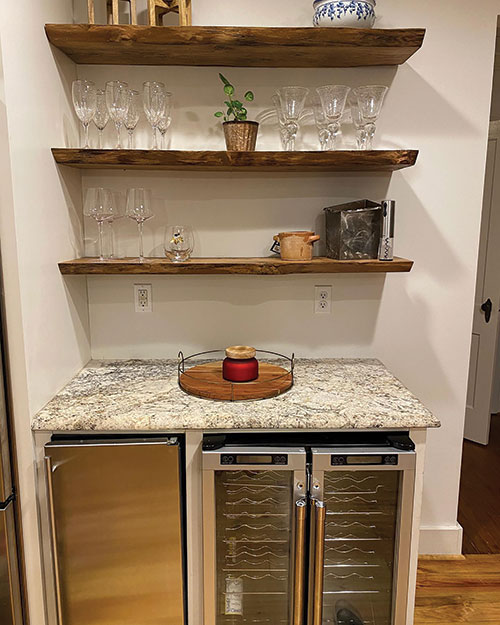
From live-edge shelves to cutting boards, if it is made of wood, Creedon Creek can make it.

The “we” to which he is referring includes his father, Creedon, who works with Andy and for whom the company is named. It’s just the two of them right now, but they hope to hire a helper soon. They build dining room tables, custom furniture, outdoor furniture, built-in bookcases and cabinets, mantels, conference tables, office desks and more. They do a lot of charcuterie boards, which are glorified cutting boards, because they are “all the rage now,” says Andy’s mom, Brenda Stone. “Most of them are out of hickory and walnut,” she says.

Epoxy tables are quite popular now, too. “Wood will have a live edge (where the bark was) and a straight edge (cut side),” Andy explains. “You put the live edges together and use resin to fill the gap between them. It can look like a river flowing through the length of the wood.” He says “Welcome” and scripture signs are also popular for dens and front porches, and he has done a few mudroom benches.

“We built a mantel from a pine log that came from the bottom of Lay Lake,” says Creed, the name the elder Stone goes by. “We like to have never got a hole drilled in it, it was so hard.” Andy wants to get into the wedding industry by making custom wedding gifts as well as serving pieces such as cake platters and tabletop risers for caterers to use at receptions.

Some people go to Creedon Creek with photos of what they want, others with only vague ideas and dreams. Andy will draw something up or send them to the internet in search of a picture for inspiration. “If you can dream it, we can make it,” is Creedon Creek’s motto.

 “I keep a folder of plans that I draw for people, in case I need something to reference,” Andy says. “I’m the only one who can read them, though,” he adds, referring to his drawing skills and penmanship.

Most of their machinery is portable, i.e., shop tools mounted on wheels. They have the usual table saw, router, planers and sanders, drills and track saw, as well as a fiber laser machine that’s used to cut out designs or cut them into a piece of wood.

They would love to own a portable sawmill and just might try to buy out their supplier when he retires. “We use a sawyer named Larry Ferguson of Cook Springs to cut wood from logs,” says Creed. “Ferguson Sawmill was started by his daddy, and my daddy bought from him.”

They use a variety of wood, including hickory, walnut, pine, cedar, maple and teak. They know the difference between ambrosia, curly and spalted wood and used all of those in a dining room table that is Andy’s favorite achievement so far. “Ambrosia wood is where you see little tunnels made by the ambrosia beetle,” Andy says. “Curly refers to the way the piece is cut: it’s quarter-sawn. Spalted is a discoloring caused by a fungus.” Then there’s “buggy blue” pine, where a fungus that grows on pine trees causes a blue stain in the grain.

Andy and Mackenzie

Teak and sapele are their choices for outdoor furniture, because both are highly weather-resistant. “Sapele looks like mahogany but it’s as durable as teak,” Andy says. “We seal our outdoor furniture with Thompson’s Water Seal, like you would a deck, although they don’t need anything.”

 Stacks of boards are scattered about the workroom, along with piles of cross-cut timber or “cookies.” Andy puts the latter together to make end tables and coffee tables. One particular flame-box elder cookie displays a red coloration that was made by love bugs. “We’ll probably put together two slices, a large one and a smaller one that broke off, using epoxy and pieces of wood cut in the shape of bow ties and inlaid between the slices,” Andy says.

He’ll set the bow ties opposite to the grain in the pieces he joins, to keep the wood from expanding and contracting too much. “You never know how wood will act,” says Andy. “Certain wood goes this way or that, and you have to tame it to go the way you want it to by the way you cut it and finish it. We’re just glorified wood tamers.”

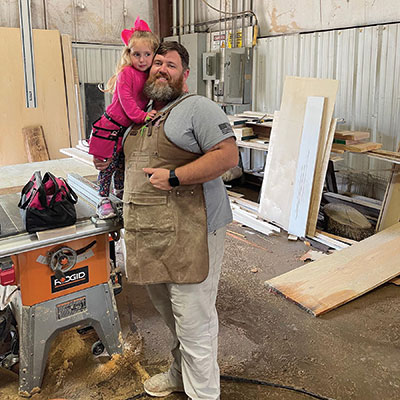
Under one of his work benches is a small tool bag that belongs to Andy’s daughter, 3-year-old Mackenzie. It contains real pliers, a hammer, ear protection and safety glasses. When Mackenzie visits her dad at the shop, she pulls out her tool bag and pretends to work right alongside him. When she tires of that, she zips around the room on her plastic car. “She’s the reason I stepped out on my own, to make her proud, to leave a legacy,” Andy says.

Prominently displayed on one vertical support beam is a 3D map of the United States, with each state recessed. Fifty pieces cut out of the map are in the shape of the 50 states, and they fit together like a puzzle. When someone orders such a map, Andy donates the pieces to a school or day care so the kids can paint them and learn about the states. “My silent business partner came up with this idea,” Andy says. It was his idea, however, to donate a tree to onetreeplanted.org, an organization that plants trees around the world, for every product sold.

“My great-grandfather was a master woodworker, and he and my grandfather were contractors,” says Andy. “One of my main goals is to start a mentorship program. I would love to teach some younger kids the trade, so it doesn’t die off.” l

Follow Creedon Creek on Facebook

Hemp Farming

Odenville farm family pioneer new crop

Story by Scottie Vickery
Submitted photos from Tiffany Roach, TNR Creative,
and Scott McLeod

There were days not too long ago when Bobby Isbell looked out from the front porch of his Odenville farm and saw lost opportunity. Years before, the family had dabbled in running a Christmas tree farm, but the fields had been dormant for a while.

“All we had out here was grass,” the poultry farmer of 32 years said of the six acres that make up his yard. For Bobby, who has a love of agriculture running through his veins, it was a blank canvas of sorts. The more he looked at the land, the more he could picture a lush green crop dotting the landscape.

That’s why he decided to join the first wave of farmers in Alabama to grow industrial hemp, a variety of the Cannabis sativa plant species harvested specifically to make an assortment of products – everything from paper and clothing to paint and biodegradable plastics. In addition, cannabidiol, or CBD oil, is made from industrial hemp and is widely used as a natural remedy for issues such as pain, inflammation and anxiety. 

“I got to reading about it, and I thought we’d give it a go,” said Bobby, who opened Baldrock Hemp Farm LLC in 2019. The business, like all of his endeavors, is a family affair, and after two seasons of growing hemp and selling it to processors, the Isbells recently launched their own line of organically grown CBD creams, capsules and oils. The oils, available in different strengths, are offered with lemon, peppermint, spearmint or natural flavors. There’s even a pet food supplement with a bacon and herb flavor.

“Bobby’s always looking for an opportunity to benefit his family,” daughter-in-law Haley Isbell said. “He saw an opportunity to get us in on the front end of something, and we all trusted him. We knew if anyone could do it, he could.”

The education process

Before 2019, it was illegal to grow hemp, which comes from the same plant species as marijuana, in the United States. The Farm Bill of 2018, however, reclassified hemp from a controlled substance to an agricultural commodity. The main difference between the two is the level of tetrahydrocannabinol (THC), the chemical usually associated with getting high. Industrial hemp has a THC level of 0.3 percent or less while marijuana has higher levels of THC.

“We spend a lot of time answering that question,” Haley, who coordinates marketing for the business, said with a laugh. “No matter how many times we say it’s not the same thing, we still get the wink-wink, nod-nod sometimes.”

Before they could educate their customers, they had to learn more themselves. Bobby’s son, Bobby III, who is also a poultry farmer, jumped in with both feet. They were among the first Alabama farmers licensed to grow or process hemp in the state’s pilot program in 2019.

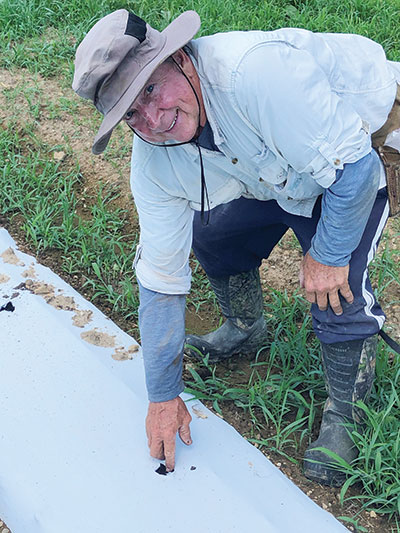
Bobby Isbell shows off a young plant, below

Growers, handlers and processors must be licensed by the Alabama Department of Agriculture and Industries (ADAI), and the regulation process is strict. According to Gail Ellis, hemp program manager for the department, the state issued 173 grower licenses for 2021, including three in St. Clair County.

Bobby’s wife, Lynn, said that her husband and son participated in seminars and conferences in Tennessee, Kentucky and other places to learn more about the industry, the products and the methods for growing hemp. “We tried to pick up as much knowledge as we could before we got into it,” Bobby said. “You can read all you want, but you have to learn by doing it. The first year was all work and no play.”

Besides following state regulations, the Isbells have also earned organic certification from Food Alliance. “My generation wants a more organic product with fewer chemicals, so we went through the process of being certified,” Haley said. “We wanted to offer a hemp product that was locally and organically grown so that we could provide our customers with the most natural way to address health and wellness issues.”

Learning curve

In addition to growing hemp, Bobby and his son are both still poultry farmers. Bobby raises about 125,000 chickens while Bobby III has about 127,000. “That first year, we were like single women,” Lynn said. “We didn’t really see them that much.”

Bobby and his son worked from daylight to dark, plowing the field, tilling the soil and preparing to plant hemp seeds in six acres. “That was way too much,” he said. “Now we just grow four acres, which is about 10,000 plants.” The planting process takes place in late May, and the crops are harvested in September or October.

The first year, they planted the seeds by hand. Last year, they germinated the seeds in the greenhouse and planted the seedlings. “That way you know you’ve got a plant in every hole,” rather than a seed that may or may not grow, Bobby said.

Like the vast majority of hemp grown in Alabama, the Isbells’ crop is grown for CBD oil. “Once the days start getting longer, they start sending out flowers and buds,” he said. “That’s what we want – the flowers to produce the oil. Out west, a lot of hemp is grown for the fiber. Carmakers make seats out of it.”

Drying the plants

This year’s crop is the Isbells’ third, and they’ve learned a lot along the way. The first year, they planted the rows too close together and couldn’t get a mower through, so they had to cut the grass with a weed trimmer. This year, they made sure to leave enough space for a riding lawn mower. 

Although the Isbells use organic methods to control bugs, Alabama hemp farmers have to be careful about the types of pesticides they use. “If you spray with something you’re not supposed to and take it to a processing plant, they’ll kick it out,” Isbell said.

In addition to approving seed sources and pesticides, the ADAI tests each crop in the state for THC levels, as well. If the level is higher than 0.3 percent, the field will be destroyed, according to information on the agency’s website. Growers must also submit GPS coordinates, which are forwarded to law enforcement so that officers can differentiate between a legal hemp crop and an illegal marijuana crop.

Bobby said he talked with the St. Clair County Sheriff’s Department, the district attorney’s office, and the Moody and Odenville police departments before planting for the first time in 2019. They also put up a fence with a green screen to keep animals out of the field and to discourage curious visitors. “Lots of people have stopped and looked, but we haven’t had any issues so far,” Lynn said.

The final product

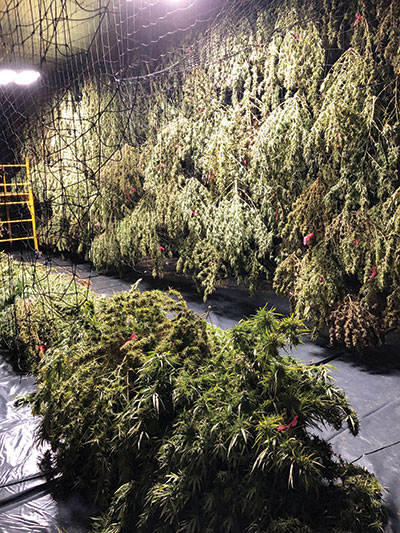
Once the hemp is ready to be harvested – about 100 to 110 days after planting – the workload really increases. Last year they hired extra help, and it takes about two weeks to get it all out of the field. “We cut it by hand, and we try not to ever let it hit the ground,” Bobby said. “We unload it by hand, and then we hang it in the drying shed by hand.”

The Isbells hung netting from ceiling to floor in the climate-controlled building and they stand on scaffolding to hang the hemp upside down in the nets. The crop dries for 7-10 days, and it takes two or three cycles to get all of the hemp dried. “It’s like cooking. If you rush it, you don’t get a good end product,” Bobby said.

Once dried, the hemp is stripped by hand, and they collect the finished product in 75- to 100-pound bags. The first year, they loaded up the bags and took them to a processor in Colorado since there weren’t many options in Alabama at the time. Last year, they used a processor in Huntsville.

The Isbells launched the Baldrock Hemp Farm line of CBD products in February, and the oils, creams and capsules are produced from their hemp by Sustainable CBD in Selma. “We definitely believe in what we’ve got, and we have lots of repeat customers,” said Haley, who designed the label and launched the website, baldrockhemp.com. “It’s a natural product that a lot of people have found relieves anxiety, joint pain and other symptoms.”

The family is some of its own best customers. Bobby III has found it helps him sleep when his body can’t shut down after a full day of physical labor. Bobby’s 87-year-old father uses the cream for joint pain, and Lynn takes it every night. “Sometimes, if I’ve been anxious, I’ll put a dropperful of the lemon flavored oil in my tea, and the anxiousness just goes away.” A family friend with a stressful job said that it helps keep him calm, Bobby said.

Although adding a hemp farm to the demands of poultry farming has been a tremendous undertaking, the Isbells said they are glad they took the leap of faith. “I enjoy it,” Bobby III said. “It gives me something to do in the summer.” The comment doesn’t surprise his wife.

“They can’t sit still,” Haley said of her husband and father-in-law. “If they hadn’t done hemp, they would have found something else.”

LakeLife 24/7 Magazine Coming to St. Clair

St. Clair County-based Partners by Design, creators of Discover St. Clair Magazine and the LakeLife 24/7® brand of lake apparel and accessories, is launching its newest venture, LakeLife 24/7 Magazine® on May 7.

This magazine will capture life along Logan Martin and Neely Henry lakes. “These incredible treasures of the Coosa River in St. Clair, Talladega, Calhoun and Etowah counties are just that – treasures – to be discovered, enjoyed and savored,” said Carol Pappas, president and CEO of the company. “And that’s precisely the aim of this new magazine and its digital components.”

This lake lifestyle magazine will be unrivaled in its content, bringing you the essence of life on the lake as Partners has already shown it can do through Discover St. Clair Magazine, now in its 10th successful year of publication. In addition, Partners created its own LakeLife™ and LakeLife 24/7® brands several years ago, and it has grown into an e-commerce website, lakelife247.com, featuring apparel and accessories for 15 Alabama lakes along with the national brand. A brick-and-mortar LakeLife™ shop opened in historic downtown Pell City three years ago.

“With the growth of our LakeLife 24/7® brand, we saw the magazine as a natural next step. It is an opportunity to open another avenue of telling the story of life on the lake and who better to tell that story than a group of veteran journalists, photographers, web and graphic designers?” Pappas said.

“In addition to this high-quality publication you’ll be proud to display on your coffee table, award-winning writers will bring you the stories of life on Logan Martin and Neely Henry that you’ll savor for a long time to come,” she said. “Beautiful photography, stunning video, digital advertising, digital page-turning edition, web extras, social media promotion and electronic newsletters will focus on life along our lakes as no other can. It is truly going to be a multimedia experience that keeps our readers abreast of the goings-on up and down our lakes.”

The print magazine will be published and distributed free of charge on the first Friday every two months, beginning in May and on the opposite months Discover is published. “We chose May as our beginning date for this inaugural issue because this is yet another new beginning for our company. It also coincides with what is traditionally seen as the beginning of ‘lake season.’” As a lake resident herself, Pappas noted, “Of course, lake season really lasts all year long. Spectacular sunsets, inspiring sunrises and shimmering water – it’s something you never grow tired of.”

Thousands of LakeLife 24/7 Magazines® will be distributed in high traffic areas around both lakes, reaching readers in St. Clair, Talladega, Etowah and Calhoun counties. Like Discover, it also will be available by subscription at a nominal annual cost.

Content in the magazine centers on the people, places and things that set lake life apart from other lifestyles. Every issuefeatures an historic piece, the story of days gone by on the lakes and the river before them. It takes you inside the kitchens of some of Logan Martin and Neely Henry’s best cooks and out on the open water as B.A.S.S. pro and fishing guide Zeke Gossett offers tips on how to catch the big ones.

The magazine strives to keep readers up to date on the latest trends in boating, water toys and lake life activities. Want to know about events on and around the lake? Pappas predicts Take 5 will be the go-to source in print and digitally.

“We are tremendously excited about this latest step for our company,” Pappas said. “Since we opened Partners by Design as a boutique marketing firm 11 years ago, we have always dubbed ourselves ‘the storytellers’ because the story is at the heart of everything we do, no matter the platform, no matter the messaging.

“This magazine gives us yet another opportunity to tell engaging stories of life on our lakes, and we hope readers will be drawn to them for years to come – just like our lakes.”