Local fishing star has a ‘big string’ of blessings
Story by Paul South Submitted photos
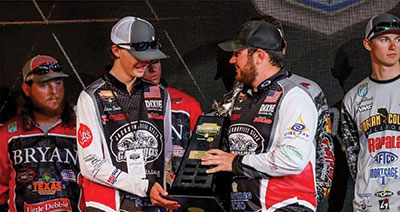
For most, in fishing terms, 2020 was an empty net, a snapped rod or a snarled line. But the past 12 months witnessed a string of blessings for Zeke Gossett.
As a member of the Jacksonville State University Fishing Team, Gossett was one of the nation’s top collegiate anglers. Teamed with fellow Gamecock Lucas Smith, he was part of the Carhartt Bassmaster College Team of the Year. In December, he received his degree in Recreational Leadership with a minor in Coaching. He joined the B.A.S.S. Pro Tour. And best tidings of all, his parents, Curtis and Laura, are recovering from the coronavirus.
“It was terrible,” Zeke told bassmaster.com about his parents’ illness. Curtis Gossett, who suffers from asthma, wound up on a ventilator. “One day, they tried to take the tube out, and it didn’t work. The next day, by the grace of God, his numbers went up to where he was strong enough to get the tube out. I just want to thank everyone for the prayers. Him and Mom are on the uptrend and doing a lot better.”
‘Gone fishing’ a way of life
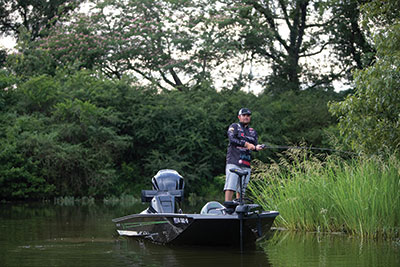
On a windless day in early December, Zeke was in a boat on Logan Martin, working his craft. Fishing was slow, perfect for a phone interview. He recounted his unusual, but magical year.
Zeke and Lucas, Bassmaster College Team of the Year
Like many youngsters, his fishing journey began with his father, who also competed on the tournament trail. He was his coach at Pell City High School and now coaches at Briarwood.
“He was always real patient with me,” Zeke said. “I loved spending time with him, of course. But fishing has always been a part of my life and our family’s life for sure.”
He added, “Just having a dad that spent the time with me – junior fishing and high school fishing were just starting to become popular. I grew up in it. Doing it from a young age, I love the competition. No drug can get you as high as winning a tournament, big or small.”
His parents have been with him on this journey to the professional ranks, particularly Curtis, who has spent “countless hours” and at every tournament, every weigh-in on the journey.
“They’ve always supported me in my dream to become a professional angler,” Zeke said. “They’ve always wanted me to do this ever since I said I wanted to. They are definitely my biggest supporters, bar none, to this day.”
He didn’t disappoint. Zeke captured 12 state titles between ages 11 and 18 on the way to becoming a high school All-American. In fact, he won the first two tournaments he ever fished as a junior angler (B.A.S.S. And FLW). As you can guess, he was hooked.
At the collegiate level, Jacksonville State competed against SEC schools. There are no divisions, so schools compete against each other, regardless of size.
“We fished against everybody. Auburn, Alabama, people like that,” he said.
Competing first at Jefferson State, then for Jacksonville, his teams were nationally ranked four times in five years. Jacksonville’s best finish was 16th nationally.
Zeke fished his first tournament as a pro in December 2020, finishing in the middle of the pack among some 170 anglers in the B.A.S.S. Open Series on Lay Lake. But he won’t officially join the tour until the 2021 season. He’s come up through the B.A.S.S. ranks, from juniors, to college and now to the pros, fishing lakes from Upstate New York to Florida.
He will compete on the B.A.S.S. Pro Tour, and he laid out his reasons for joining B.A.S.S. “The people that work there, I love them to death. B.A.S.S. offers steppingstones from juniors to high school – then the college experience. Taking part in all they offer really taught me a lot – especially the college experience – I believe this is best way for an angler to learn. If you want to do this as a profession one day, that is the way to go.”
He added, “I really feel like B.A.S.S. prepares you the best of any of the organizations, and I feel like sticking with them is the right choice. Their grassroots are here in Alabama.”
After only one tournament, Zeke sees a difference between college and the pros. There’s a similarity between pro fishing and pro football.
A quiet fishing spot along
the shore
“It’s pretty much the same deal,” he explained. “Everybody’s bigger and faster. You can be pretty dominant in high school. In college, you’re fishing against your buddies. You get to kick around and stuff, and it’s a great time, and you don’t feel much pressure. When I sat down in the boat at the Open and I looked over, and Jason Christie is to my left, and he’s won about everything in the sport, and I look to my right, and there’s Scott Martin, who’s won about everything in the sport. The intensity level in a pro tournament is a lot higher than I expected it to be … The competitiveness of those tournaments is through the roof compared to where I’ve ever fished.”
Even as a rookie on tour, Zeke has landed endorsement deals from Xpress Boats®, Woods Surfside Marina, Daiwa rods and reels, Vicious Fishing®, Elite Tungsten and LakeLife 24/7®, the creators of Discover magazine.
Through it all, the Gossetts have been there. Professional fishing is a precision sport that in part requires competitors to consistently cast a lure in a spot the size of a paper cup and do it quietly without much splash. Zeke learned those techniques from his dad.
Experience on the water and not losing heart when that big bass gets away are critical. As a high school senior, he fished 43 of 52 weekends.
And as for the mental side, “When you lose a big fish in a tournament, don’t get down on yourself, that’s one of the biggest things you have to do when it comes to tournament fishing,” Zeke said. “That’s all between the ears.”
That’s a lesson Zeke learned well. He knows vision and goals are critical to long-term success on the tour.
What’s his vision for life on tour after five years on the water? “I’d love to see myself fishing the Bassmaster Elite Series. You can’t go any higher. I’d like to have won a tournament by then.”
Even at 24, he knows how tough the waters of pro fishing can be. “They did a study and determined the odds of winning a B.A.S.S. tournament is .05 percent, once you hit the water,” Gossett said. “So, it’s really hard. But maybe I’ll have a couple of wins and maybe an Angler of the Year title. You got to shoot high for sure.”
Today’s destination is the corner of 19th Street South and 7th Avenue, the location of First Baptist Church South, hereafter FBC South. Organized by ex-slaves and their families, this church has served Pell City for 119 years.
During antebellum days, slaves worshiped together with whites, but in separate areas. When freedom came, Blacks continued worshiping interracially for a while. In Uplifting the People: Three Centuries of Black Baptists in Alabama, Wilson Fallin Jr. writes, “After emancipation, many Blacks began to leave white churches and form their own congregations. … By 1874, the year in which reconstruction ended in Alabama, the process of separation was complete….
“A desire for independence and …the opportunity to worship as they desired motivated Blacks to establish their own churches. …Blacks wanted a setting in which they could listen to and react to their own preachers, singing, dancing, and shouting in their own church.” This gave the freedmen “some measure of freedom over their lives and the opportunity to develop pride and self-respect. … These churches provided former slaves with a caring community.”
This freedom resulted in Blooming Light Baptist Church in Seddon. The former slaves who organized this church probably first met in homes, but by 1881, they officially organized as Blooming Light.
They soon joined Rushing Springs Association which served churches in Coosa, St. Clair and Calhoun counties. According to The Cyclopedia of the Colored Baptists in Alabama, Their Leaders and Their Work by Charles Octavius Boothe, by 1895, there were 6,500 Black Baptist in this Association.
Now, picture Pell City in 1901. The booklet, Hon. Sumter Cogswell and His Service as Founder of Pell City, Alabama, records that the town had one grocery store, the Cornett House Hotel and a train station for three railways traveling through. No highways – instead, “the principal artery of travel being the road from Eden to Cropwell to Talladega and Anniston.” The town progressed, and by 1902, a second St. Clair County Courthouse stood in Pell City.
By 1900, Blacks had formed a community south of today’s Cogswell Avenue and the railroad, establishing homes from today’s 19th Street South to U.S. 231. Many of these families belonged to Blooming Light Baptist, the nearest Black church.
Many ministers had a circuit of four churches, preaching once a month to each congregation. Pell City members of Blooming Light walked to church, and bad weather on Sundays hindered attendance.
By 1902, Pell City’s Black community had enough Baptists to form a church. Therefore, several Blooming Light members requested dismissal from that church so they could organize their own.
A typescript history of FBC South names some who met to organize: “Bro. C.J. Collins and wife, Coline; Rev. A.Z. Beavers and wife, Mary; Bro. Sam Collins and wife, Mary; Bro. Joe Collins; Bro. Joe Lawson and others.” The group chose the name Union Baptist Church with Rev. J.T. Chatman as pastor. This meeting took place “… at the old House of Knowledge School. …on U.S. Highway 231 North of the Alacare Center location where the home of Bro. Dibb (and Millie) Curry…was located.”
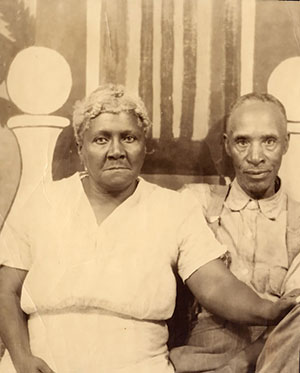
The Currys
The Currys’ granddaughter, Josephine Curry Watson, grew up in their home and called them “Mama and Papa.” “They were plain people who stayed home and took care of the household,” she recalled. “They didn’t have problems with anyone.”
She remembered their home as a welcoming one where visitors sought advice from Dibb. “I got my values from them,” she reflected. “I learned the Bible from them, and today, I’m a teacher and a missionary. They were good people.” This describes a stable, “salt-of-the-earth” family and probably describes other families who formed Union Baptist/FBC South.
Union Baptist soon joined the Colored Baptist Association, which served churches in Shelby and St. Clair counties. Today, the Association’s name is Mt. Zion Coosa Valley Association.
Sometime after 1902, Union Baptist purchased a lot on 19th Street South and constructed the building where New Beginnings Baptist Church holds services now. The church history records that, in 1934, “…the church was rebuilt on the site and was named the First Baptist Church of Pell City.” Rev. M.H. Sims was pastor.
Community news in TheSt. Clair News-Aegis regularly reported church activities, as shown in this of Jan. 31, 1952, “Rev. M.H. Sims, pastor of the First Baptist Church, Pell City, preached his farewell sermon last Sunday. He has pastored here for 23 years and is the oldest minister in the district.”
After Rev. Sims, Rev. R.E. Avery pastored for a few years. The St. Clair News-Aegis of Oct. 13, 1955, reported, “Sunday October 9th was a grand day at the First Baptist Church in Pell City. Rev. R.E. Avery, pastor, preached a wonderful sermon. His text was ‘Stay on the ship or you will be lost.’ Sunday afternoon the church held Appreciation Day for R.E. Avery.” Remembered as a dynamic speaker, Rev. Avery pastored until 1955.
About two years later, Rev. W.F. Poole began his 19-year ministry and worked for racial unity in Pell City during that time. On Oct. 19, 1962, The St. Clair News-Aegis published this letter from Rev. Poole:
“To the Citizens of Pell City: Please allow me this space to express my gratitude to all our white and colored friends for the fine support we have received during my five years of pastoring in the city of Pell City.
“I have worked in other places, but at no other place I’ve worked have I received any better cooperation. …
“Let us continue with peace between the races and the cooperation we have enjoyed in the past. Rev. W.F. Poole (Colored), Pastor First Baptist Church Pell City.”
Rev. Ronnie C. Beavers accepted the pastorate of the church Feb. 2, 1976. Under his leadership, the church expanded its ministries, updated the sanctuary and purchased property for future expansion.
Marion Frazier remembers well many of these pastors. Rev. Avery baptized her in the outside baptistry the deacons had recently dug and lined. “I was baptized in August of 1952, and he stayed, I believe, until 1955. He was a dynamic preacher. … He would end his sermons by singing a hymn, and the congregation would sing with him.”
Of Rev. W.F. Poole, Mrs. Frazier said, “I remember him and his wife and children very well. He was instrumental in our church because he loved singing hymns. He often closed his sermons with a hymn. His favorite hymn was In a Time Like This, I Need the Lord to Help Me.
“Rev. Poole came in ’56 or ’57 and stayed for 19 years. He worked for unity among the races, and we had a good relationship. We had associations with First Baptist here in Pell City on the north side. That’s where the distinction of FBC South came in; they were First Baptist North.”
“Rev. Beavers came in 1976 and stayed until 2000,” she recalled. During his ministry, he organized The R.C. Beavers’ Singers. Rev. Beavers loved to sing.” Under his leadership, the church choirs recorded an album.
Mrs. Frazier loves her church and enjoys recalling its history and events. Known in Pell City as an exceptional singer herself, she spoke fondly of their Choir Anniversaries. Observed every September, FBC South invited choirs from throughout the district to participate. Choir member Billy Joe Robinson, Dibb and Minnie Curry’s grandson, sang with the Star Lights of Pell City and often invited choirs from outside the district. These concerts filled the church to capacity.
District churches observe yearly homecomings, and they have arranged for each church to hold celebrations on different Sunday so congregations can celebrate together. Celebrating together results in unity and cooperation. FBC South has Homecoming the second Sunday in August.
On Oct. 18, 1981, FBC South celebrated its 79th anniversary. The memorial booklet for that event contains observations by pastor Rev. Ronnie C. Beavers, who gives praise and thanksgiving to God for the church. It also records historical events and a rich pictorial history with names under the photos. Rev. Beavers conducted the regular worship hour after which the congregation enjoyed a meal together. The afternoon service included Deacon Charles Jones singing the chosen anniversary hymn, Guide Me Oh Thou Great Jehovah, and Rev. Samuel Turner of Union Springs Baptist Church, Talladega, preaching the sermon.
In the memorial booklet, Rev. Beavers wrote, “We are truly grateful to God our Heavenly Father for those who toiled and labored so hard before us in breaking the ground to establish the foundation of this church which is dedicated to the up-building of God’s kingdom. Surely, He has smiled on us down through the years as even the old patriots continued to worship Him after having walked to the church in the rain, sunshine, sleet, and snow. Now, we, the present generation, must continue to move forward with that same spirit of determination to meet the need of a sinful world by spreading the message of Jesus Christ. This is the task of the church, and we dedicate and rededicate ourselves to accepting the challenge that the Lord has put before us ….”
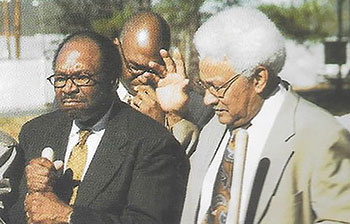
Prayer at the groundbreaking in 2002
Rev. Beavers concluded his remarks by thanking the church for working untiringly during his six years of his ministry and concluded, “I ask you to join me in looking to the Hills from whence cometh our help to seek the future directions through the grace of God that has brought us safe thus far and that His same grace will lead us on.”
Rev. Beavers’ comments for that 79th anniversary spoke of the past, present and future. Under his ministry, the church purchased the property on the corner of 7th Avenue and 19th Street South for constructing a larger sanctuary. In 2000, at the end of his 24 years as pastor, the church stood ready, through God’s grace, to plan for a new sanctuary.
In a special service on Jan.12, 2002, under Rev. Elliot T. Ivey’s ministry, the church broke ground for their new building. Goodgame Co. of Pell City did the work, and construction progressed steadily month by month. Goodgame completed their work in October 2002 in time for First Baptist’s 100th anniversary.
And what a celebration that was for church members and their friends! The Goodgame family, construction workers, Pell City mayor and city officials attended and joined the congregation’s afternoon walk from the old building to the new one for a dedication worship service.
Mrs. Frazier recalls, “We got congratulation letters from the State of Alabama, the governor and local officials. We framed those, and they hang on the church walls today.”
Among the papers about First Baptist on file at the Pell City Library is a page titled, A Prayer for Our New Sanctuary, which reads in part:
“Thou gracious and giving God…,We thank Thee for having given to our predecessors the vision and will to provide the church which has served us so far. Because of their devotion and Thy blessings our church family has outgrown the work of their hands. …
“We would build wisely and so well that long years hence our sons and daughters may gratefully say, ‘See! This our forefathers builded for us.’
“In HIS NAME, who loves us and gave Himself for us, we pray. Amen.”
George Forman grew up in this church and said of Rev. Elliot T. Ivey, “He was the most electrifying preacher I ever heard.” Forman also told how FBC South deacons mentored him as a boy. “My father died when I was one year old. Mr. Tobe Williams, Mr. William Matthews and Mr. Virgil Oden took me under their wings and taught me about life – what’s right and what’s wrong, how to respect and be respected, how to love your fellow man, how to go through life treating people. If people mistreat you, don’t go back and try to do the same thing to them; just believe in the Lord, cause, ‘Vengeance is mine, saith the Lord.’ They went out of their way to spend time with me. And Mr. M.C. McCoy was a businessman who taught me that education was essential.
“All those men were a blessing to me. They didn’t have a high school education, but they had more than a high school education. And they shared it.” That’s high praise for any man, but especially so for the deacon body of a church.
Twenty-four-year-old Christopher Evans II joined Forman in the interview, and both spoke of taking part in Christmas and Easter programs at church. Forman said that participating in these music and drama programs “… was like living what you’d been taught. You act it out and it’s gonna stick with you.” Christopher agreed, saying that for young people, the dramas “… helped us understand what was going on.” He added that sometimes “young people don’t like to read,” and the programs helped them understand the Bible. Mrs. Frazier directed the drama, and the late Ronnie White the music for these programs.
One of Christopher’s favorite times as a youth was yearly Vacation Bible School at FBC South. “That was the best thing,” he recalled. “We always went to Boys’ and Girls’ Club, and we just went from there to Vacation Bible School where you learned different things.” Other churches took part, so there was fellowship among the congregations at these events.
The 2020 COVID-19 pandemic curtailed in-person worship services, which precluded the joy and comfort in corporate fellowship. At FBC South, beginning in March, worship was streamed online, but by autumn 2020, the deacons and choir members were meeting each Sunday with Dr. Wilson to stream the service. The pandemic prevented these yearly events in 2020.
Dr. Wilson, pastor since 2007, recently reflected upon this unprecedented situation:
“In the midst of this COVID-19 pandemic, it is no secret that many people are suffering or experiencing loss in some way. The same holds true for the believer. Fear, stress and hopelessness have gripped many homes, even the households of Christians.
“As we endure this season in which social and spiritual interactions have been greatly thwarted, not by choice but rather by circumstances that are beyond our human control, we have been forced to make many adjustments in our daily lives.
“Consequently, the church, in these times of uncertainty, has also had to make adjustments. We understand that congregants have an affinity for joining hearts and hands and worshipping God together. Yet, this pandemic has placed a great strain on the church. No longer is it deemed ‘safe’ for large groups to congregate. This definite lack of socialization has caused some to suffer more than others.
“As a pastor, it has always been my job to guide and uplift the people of God through whatever season of life they are experiencing. There are more seeking this pastoral direction than ever before, and I must admit, facing so many obstacles has become a daunting challenge. It is sometimes hard ‘reaching’ to your congregants when the physical doors of the church are closed because we understand that the spiritual doors of the church are always open, along with other measures in place due to this pandemic.
“However, we understand that the spiritual doors of the church are always open, making way for the obstacles to become opportunities through continual prayer. As I strive to continue to render an effective pastoral ministry and to provide social support for those members who have become slightly anxious, to say the least, I try to remind my congregants that although we may be going through a brief period of separation as a body of believers, God is still in the business of protecting His own, and we are to stay strong until the Lord’s deliverance is fully exerted over this coronavirus outbreak.”
For long-time member Peggie Bothwell Frazier, Dr. Wilson has been a blessing to her and her family, for under his ministry her son, Charles Ryan Frazier, was ordained as a deacon, and her grandson, Griffin Ryan Frazier, was baptized. Griffin, at an early age, began talking about wanting to be a preacher. He spoke of it so often that Dr. Wilson and deacons met with Griffin and his parents to talk about his desire to serve Christ by preaching. Satisfied about his desire, Dr. Wilson baptized him. Griffin’s dad, Charles, stood in the baptismal pool with him.
Dr. Wilson was a special comfort to the Fraziers when Peggie’s husband, Charles, battled cancer. The Wilsons met with the Fraziers the night before Charles’ surgery, then visited him faithfully during his cancer journey. Peggie recalled that, Charles, knowing that Dr. Wilson especially enjoyed banana pudding, said to him, “Any time you want a banana pudding, you just tell her, and she will make you one.” She continued, “I do make him banana puddings. Dr. Wilson and his family will always have a special place in my heart.”
Chairman of the Deacons, Donald Allen, spoke of the blessing of working with Dr. Wilson. “We deacons work out of his office, and whatever he asks us to do we try to do it. If he calls us, we try to do what he asks us to do.” He also spoke of the disruption of COVID-19. “We’re used to coming in there, shaking each other’s hands, acting as a deacon body, you know, deacons and the pastor together. We miss that so much now – meeting with the pastor before he goes out to give the message. … I love working out of Dr. Wilson’s office because of his ability and gift to preach the unmitigated truth of God’s word. I pray every day that God keeps him and his family in his loving hands.”
Wilson Fallin, Jr. notes in his Black Baptists in Alabama that some owners allowed slaves to worship with singing and preaching, whereas irreligious owners didn’t, and their slaves worshiped secretly. One of the old hymns from that era speaks as much of the church today as it did then.
“We will travel on together, Hallelujah, Gwine to pull down Satan’s kingdom, Hallelujah, Gwine build up the walls of Zion, Hallelujah! I don’t feel noways tired, Glory Hallelujah!”
One hopes that those former slave families who founded today’s FBC South are aware that this church continues “to build up the walls of Zion” as they “travel on together, Hallelujah!”
Former Pell City Schools Superintendent Michael Barber pens uplifting book
Story by Scottie Vickery Submitted photos
Michael Barber was 10 years old the day he took his daddy’s prized Pontiac Catalina for a joyride. After returning it safely to its covered parking spot, he thought he’d gotten away with his grave sin. But a twist of fate and a dog named Whiskers caused things to take a terrible turn. Let’s just say a dog mistakenly left overnight in a car is capable of causing a whole lot of damage.
That’s not the only lesson young Michael learned that day. He realized his father loved him far more than his most prized possession. “My father never stood behind a pulpit and preached a sermon, but he taught me the most important spiritual lesson I carry in my heart to this day,” Barber recalled. “Total forgiveness is just that, it is total.”
A former teacher and retired superintendent of Pell City Schools, Barber has spent his adult life educating children, but the “eternal lessons” of his childhood were learned outside of a classroom. They often took place on front porches and came in the form of joyrides, dogs, shotguns and a cheap necklace.
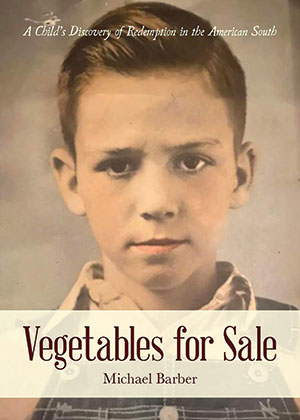
Barber shares seven stories from his childhood – including the story of his father’s Catalina – in his new book, Vegetables for Sale: A Child’s Discovery of Redemption in the American South, published in November. “It’s a simple book for a complicated time,” Barber said. “These are stories of redemption, unconditional love, forgiveness and mercy.”
The title comes from a sign 5-year-old Michael helped his grandmother make, a testament of his grandmother’s wisdom. She was tired of him asking for candy money, so she set up a vegetable stand on the side of the highway and put young Michael in charge. “My grandfather had a third-grade education, and my grandmother only finished sixth grade, but they knew we needed to know the value of certain things, and one was the value of money,” he said.
“I didn’t make much money, but the lesson I learned was worth millions,” he wrote in the book’s introduction. “It is better to earn than to be given, with the exception of God’s love.” As a reminder, Barber framed the sign he made with his grandmother (“She wrote the letters and I painted it”) and hung it alongside his diplomas in every office he has ever had.
A preacher, public speaker, and bluegrass musician, Barber didn’t set out to write a great work of literature or theology. He intended the book to be a ministry tool, one he could leave behind when he spoke at prisons, jails, nursing homes or revivals. “These are stories I’ve used from the pulpit,” said Barber, the pastor of Mt. Zion Baptist Church. “I knew some had the ability to move people because I’d seen how God had used them during sermons.”
The book is a small one, measuring 5 inches by 7 inches with fewer than 100 pages, and that was Barber’s intention. “It’s designed to be a book you could put in a purse, in a glove box, in a tacklebox,” he said, adding that his hope was to make the book more inviting by writing something that could be read in one sitting. “It’s written by a preacher, but it’s not preaching. Whatever God wants to do with it, it’s out there. He’ll put it in the right hands.”
A special place
Barber, 55, grew up in Pell City with his brother and sister in a time when life was simpler. “The American South has changed in the past half century of my life, much for the good, but I admit sometimes I find myself missing a place I never left,” he wrote.
His days were filled with bike rides, fishing, baseball, watermelon, peach cobbler and lessons he didn’t realize he was learning. “I’ve always had people invest in the right things in my life – my parents, my grandparents, church folks,” Barber said. “They made sure we learned the right things. We were held accountable if we did something wrong, and they didn’t always come to our aid bailing us out.”
They also served as wonderful role models. His father, who was the first in his family to go to college, was a certified registered nurse anesthetist and owned an anesthesia corporation. “I think he put everyone in the county to sleep at some time,” Barber said. His mother was a registered nurse, and Barber thought he would follow in his parents’ footsteps and enter the medical field. His plans changed, though, when he got a feeling he just couldn’t shake. “The Lord kept leading me to education,” Barber said.
Mother Pearl, Cobbler Cook Extraordinaire
His Sunday school teacher, Andrew Wright, was the principal of Iola Roberts Elementary School at the time, and his pastors were teachers, as well. “To have three men in your life who were elementary school teachers and in ministry showed me how God could use you in education,” Barber said. “God has always put the right people around me.”
Although he retired from the school system in 2019, Barber performs contract work for the Alabama Association of School Boards. “I’ve had a great experience in public education,” he said. “To me, education is ministry,” he said.
Barber was an assistant principal in 1995 when God called him to preach, as well. He had a guitar and his Bible, and he traveled around ministering at nursing homes and “wherever God placed me.” He landed at Mt. Zion as a deacon and has been preaching for about 25 years.
One ministry he particularly enjoys is Cake Walk, the bluegrass band he helped form that earned its name from the early days of playing at cake walks and fall festivals. “Mt. Zion is a musically blessed haven,” he said. “Anyone you pick out of a pew can pick something, play something or sing something.”
Barber, who plays mandolin, guitar, banjo and bass, said the size of the group fluctuates and the members range from 8-year-olds to 90-year-olds. “We’re not the best musicians in the world, but for some reason when you put us all together, it sounds pretty good,” he said. “It’s a joyful noise, I know that.”
The group plays live every Sunday morning on WFHK 94.1 The River, and before the coronavirus pandemic, the members regularly shared their music at nursing homes and other places. “I’ve seen people who were really sick wiggle a toe under the cover when they hear the banjo,” Barber said. “It’s a wonderful ministry, and members of the band have said they had no idea that service could be so much fun. For me, that’s when you really hit the mark.”
A tool for ministry
Barber’s outreach ministry was the impetus for Vegetables for Sale, and the idea had been in the back of his mind for a while. “I had a bunch of stories I wrote years ago, and I’d always planned on doing something with them, but I didn’t know what that would look like,” he said. Once the pandemic hit last March, Barber finally had time, so “I went to the attic and started gathering stories I’d written in old spiral notebooks.”
Although he’d planned to leave them behind at speaking engagements, COVID-19 changed those plans, so Barber started to give them away. “My idea of promoting it is leaving a copy on the table at Starbucks,” he said with a laugh.
After his wife, Legay, posted about the book on social media, it started taking off. “We accidentally, I guess, launched it,” Barber said. “The potential to reach people through the internet is mind boggling.” The book, which features a childhood photo of his father on the cover, is available through Amazon, Walmart.com, Barnes & Noble and Kindle. It will soon be available on Audible, an audiobook book service from Amazon.
Barber said he read the book for the Audible recording because the subject was so close to his heart. “This is a book about my mom, my daddy, my sister and brother and my grandparents,” he said. “I sure didn’t want someone reading it and having it be just a book to them. Besides, I hate when people try to fake a Southern accent.”
Although he never expected to sell a single copy, Barber said he’s heard from people from all over the country who have shared how the book has touched them. A hospice nurse shared how a family read it together during the last hours of their mother’s life, and it gave them a chance to laugh and cry together. Another woman wrote to say the book helped her after receiving a cancer diagnosis.
“If God doesn’t use it for anything other than that, it was worth writing it and putting it out there,” Barber said. “I’m definitely not a writer, and I’ll never be a best-selling author, but this was a labor of love. Whatever voice we have, whether it’s a guitar or an ink pen, as long as we’re giving God the glory, He’ll use it.”
Cannonball Man holds our past in his hands and heart
Story by Buddy Eiland Photos by Graham Hadley Submitted Photos
Searching for history can become a lifetime obsession. Just ask Steve Phillips. Although the guns of the American Civil War fell silent in 1865, Phillips has spent more than 50 years searching for the cannonballs and artillery shells, along with other artifacts left behind from that great conflict. In the process, he has become a knowledgeable student of Civil War history and has built one of the most extensive private collections of its artifacts in existence.
Phillips is a retired professional diver, having owned and operated Southern Skin Diver Supply Company in Birmingham for many years. His sons, Spencer and Forrest, still operate the business, and both are expert professional divers.
After leaving the Air Force and before he became involved in the dive business, Phillips was in the office machine business in Birmingham. He and his wife, Susan, live on a comfortable acreage straddling the St. Clair/Shelby County line. Their property has a lake, a creek and a secret mountain waterfall. Long ago, Native Americans lived there, and he and his family have found thousands of stone points over the years that they left behind.
Phillips has spent years reading, researching and learning where to look and how to find Civil War relics and artifacts. Searching by metal detecting on private land permissions and diving in public waters, he has found about half of his collection.
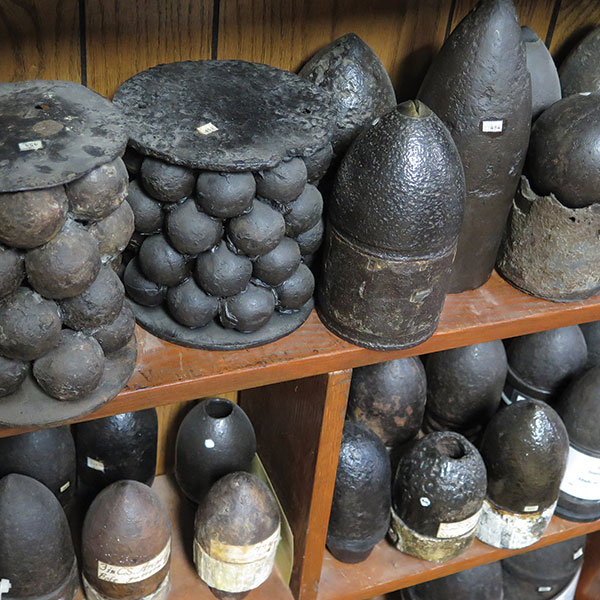
Cannister shot, made up of small balls, and other shells
The rest he has bought from other collectors, dealers and museums selling surplus items from their collections. Although his collection contains an unbelievable variety of artifacts, Phillips says, “I’m really all about cannonballs and artillery projectiles.” Learning from an early mentor, Tom Dickey of Atlanta, Phillips became an expert at disarming and preserving artillery projectiles. (Dickey is the brother of Deliverance author James Dickey). Over the years, he has disarmed and preserved over 2,000 cannonballs and artillery shells, developing his own methods from trial and error along the way.
The preservation is necessary because the iron will deteriorate from exposure to the air after being in the ground or water for so many years. The disarming process is extremely dangerous, as, even after over 150 years, the black powder sealed inside can still be viable and can explode if improperly handled.
He has designed a way to disarm projectiles safely and remotely, using a shed about a hundred yards behind his house and barn with a drilling apparatus controlled by ropes and pulleys to allow him to maintain a safe distance from the operation. “I don’t recommend people try this,” he says. “I’ve never had one to explode, but I treat every one like it might.”
After drilling into a shell, the black powder can then be safely washed out. Phillips uses a process of electrolysis to remove rust and scale that results from many years in water or in the ground. Then he boils the shell, usually several times, to remove salt and sulphites from the iron and help stabilize it. Finally comes a coat of preservative to complete the process.
Interesting among Phillips’ extensive and quite varied collection is probably the greatest number of “war logs” in any private collection. These are tree trunks from the Battle of Chickamauga, Georgia, that have artillery shells embedded in them. They speak to the intensity of the battle and were obtained from Tom Dickey’s collection after his death and from a museum in Atlanta.
The Enfield and the Coal Torpedo
What does he consider the most valuable item in his entire collection? Phillips is quick with an answer. “Monetarily, or to me personally?” he asks. “Probably money-wise would be the coal torpedo because it’s so rare. To me, personally, it would be my great-grandfather’s Enfield rifle that was left for me on the battlefield at Gettysburg. Of all the hundreds of items in my collection, it would be my favorite. It’s not the rarest, but it’s my favorite,” which leads us to two of Phillips’ most intriguing stories about his collection.
Rifle returns ‘home’
Some years ago, Phillips was attending the Nashville Relics Show, displaying some of his cannonballs and other items from his collection. “I subscribed to a magazine for The Horse Soldier, an antiques dealer in Gettysburg that sells relics and other artifacts from the Civil War. I was looking at a copy of the magazine, and, normally, I would just look at the cannonball and artillery section, but I was bored, and I began to look at other sections.
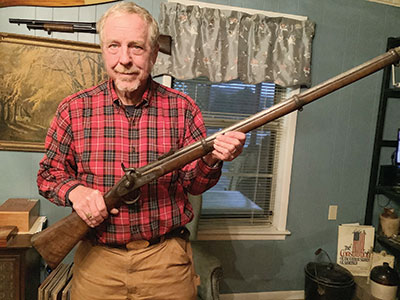
Phillips with the Enfield rifle that belonged to his great-grandfather, Private/Corporal John C. Deason, that was recovered from Devil’s Den, part of the battle of Gettysburg
“I saw a listing for a British-made Enfield rifle, a very well-made rifle, better than most people had. On one side of the stock were carved the initials “JCD,” and on the other side was carved, “Co B 44th Ala Infantry.” It was identified to a Private/Corporal John C. Deason of Company B, of the 44th Alabama Infantry. John C. Deason was John Columbus Deason, my great-grandfather on my mother’s side of my family.”
Deason fought in the battle of Gettysburg in the Civil War as a member of Company B of the 44th Alabama Infantry. They were involved in the part of the battle known as Devil’s Den. The fighting took place in close quarters among some large rocks. The rifle was picked up by the owner of the Slyder farm, which was part of the battlefield. It was missing the ramrod, and because of the close quarters of the fighting, the ramrod was likely bent, rendering the rifle useless. Without the ramrod, it couldn’t be reloaded, so he probably dropped it, picked up another rifle and continued to fight.” About 130 years later, Slyder family descendants sold their collection of relics collected after the battle.
Phillips contacted The Horse Soldier, expressing an interest in buying the rifle. Told that the rifle had been sold, he said he would like to contact the buyer and try to purchase it. “Don’t let him know,” he was told, “because he is a Yankee, and if he finds out you want it, you’re not going to get it.” He backed away from trying to buy the gun, and about five years later, he received a call from The Horse Soldier, asking if he was still interested in buying it. “I told them I was, so I bought it and brought it home.” This special rifle now occupies a place of honor, hanging over the mantle in his den.
Rare find
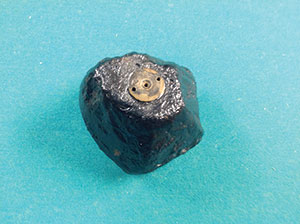
The coal torpedo Phillips found on an underwater dive. “I picked it up and thought it was just trash, but I kept it because I didn’t want to keep hearing it on my metal detector. I had found a 12-pound ball that day, and when I began to start cleaning it up, I threw the ‘trash’ into the tumbler with it to help knock some of the rust off.”
The tumbling cleaned rust from the odd piece he had found as well, and he noticed what looked like copper in the side of it. Comparing it with several artillery fuses from his collection, he determined that it was, indeed, a fuse plug. Taking the object to his veterinarian, who X-rayed it for him, he determined that it was hollow. Further research determined that what he had found was a coal torpedo, used by Confederate spies in the Civil War.
The coal
torpedo – one of
only four known to exist
It was cast from iron in the form of a lump of coal, filled with four or five ounces of powder, and, when covered with pitch and coal dust, disguised it so it could be placed in the coal bunker of a ship. Shoveled into the firebox of the ship, it would blow up the firebox. That would rupture the boiler, which, essentially blew up the ship.
Coal torpedoes were credited with destroying several ships during the war, and many, including Phillips, believe one was used to destroy the Sultana on the Mississippi River, resulting in the largest loss of life from a single ship in U.S. maritime history. Over 1,800 people died in the explosion and fire.
Phillips has the only coal torpedo known to have been found since the Civil War, and one of only four known to still exist. One was found on Jefferson Davis’ desk when Richmond surrendered, being used as a paperweight. Two were found at the Confederate spy headquarters, which was located in Canada during the war. According to Phillips, it is likely one of the rarest and most valuable relics of the war. “I thought I had found trash,” he said, “but what I had found was just wonderful. We don’t really know what its value to a collector might be because it will never be sold.”
The Alaska connection
If you are paying close attention, you might notice that Phillips quite often wears a solid, 14-carat-gold belt buckle. It was cast from a mold made from a Confederate belt buckle. In addition to being a Civil War relic collector, Phillips is also a gold prospector. For more than 25 years, he has spent about two months in Alaska, mining for gold. Diving and dredging in the Bering Sea at Nome, on claims he and his son, Spencer own, he has very successfully found gold over the years. He also has working claims further inland from Nome. Although he no longer dives, his son, Spencer does, joining him in Alaska during the summer.
According to Phillips, gold mining there is not as productive as it once was, but he continues to find gold. Inland, most of their pursuit involves dredging in the river there. The inland claim is extremely remote, so much so that, when they leave for the summer, the cabin there is left unlocked, providing refuge and shelter in case a hunter might become stranded there in the harsh winter. The greatest winter threat to the cabin is bears, who sometimes do damage to the property while they are away.
The remoteness of the area presents its own problems, according to Phillips, and resourcefulness and self-sufficiency become virtues. Failures to vehicles and equipment left to the elements over the harsh winters, along with poor access to spare parts, present their own challenges, and major repairs are especially diffiuclt … and frequent.
Phillips has made a hobby-business of fashioning jewelry from gold “pickers” he has found gold mining. These are gold particles larger than gold dust, but not large enough to be considered nuggets.
Phillips has generously shared his Civil War collection, placing many items on permanent loan to be displayed for the interest and enjoyment of the public. The museum at Tannehill State Park is furnished with items from his collection.
In keeping with that practice and with a personal desire that his collection will always be accessible for enjoyment and study by the public, Phillips’ collection will soon be moving to a new home. It will be placed on permanent loan at the Sons of Confederate Veterans’ headquarters and museum in Columbia, Tenn.
A number of videos Phillips has made to share his stories about collection are available on YouTube. Videos include the John Columbus Deason rifle, the confederate coal torpedo, artillery projectiles from Selma, Confederate mines, disarming and preserving artillery shells, and more. Also posted are videos about his gold prospecting adventures in Alaska. l
Story by Leigh Pritchett Submitted photos from Blair Goodgame and Don Smith
Amid the uncertainty of 2020, something positive appears to have occurred: a reawakening to the great outdoors.
The days, weeks, months of being confined and working or schooling remotely fed the desire to roam carefree in the wide open.
The outdoors became a refuge – a convenient and affordable one at that.
“There were so many unknowns about COVID-19 when it was first reported,” explained Don Smith, father of threechildren. “It seemed very contagious and the more populated, urbanized areas were having the highest outbreaks.
“When the lockdown in late March took place, my family and I decided we would focus our time outdoors, getting exercise, creating new memories instead of staying locked in our homes,” continued Smith, who is executive director of St. Clair County Economic Development Council (EDC).
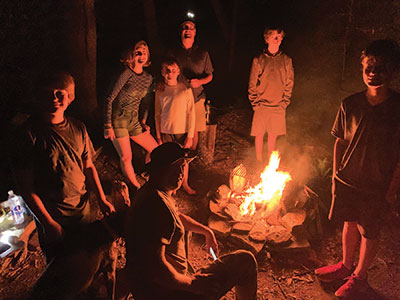
Every weekend that the weather cooperated, Smith, wife April and their family went hiking in and out of St. Clair or kayaking on Big Canoe Creek in Springville and Ashville.
Blair Goodgame, the EDC’s tourism coordinator, can understand why. Enjoying nature and the outdoors helps to relieve stress and gets people out of their homes “to refresh and rejuvenate.”
Natural settings are not difficult to find and are basically free of charge, which is a plus for individuals and families whose income may have decreased during the pandemic.
Settings close to home also became the destination of choice as vacation plans were put on hold during the summer.
People took shorter trips instead and rediscovered what was in their community and county. “We’re seeing a resurgence of that,” Goodgame said.
Camping on the trail
with the Smith family
Smith, in fact, spoke of a camping trip his sons had right in their own neighborhood.
People can enjoy the outdoors simply by strolling through their community or along city blocks, they both agreed.
Valerie Painter, manager of Pell City Civic Center, said foot traffic was up not only in Lakeside Park, which features a mile-long walking trail, but also at the adjoining Pell City Sports Complex.
“My husband walks out there (in the park) every day with our dog, and he has noticed an increase,” Painter said.
She observed, as well, that people were renting pavilions and using the amenities of Lakeside Park later into 2020 than she has seen in previous years.
Right up to the end of 2020, Lakeside Park was being used for exercising, playing, picnicking, gathering, … “everything but swimming,” Painter said.
The park appeared to serve as relief for “cabin fever,” and a solution for social-distancing dilemmas. In October 2020, three weddings, some receptions and a large baptismal service were held at Lakeside Park. November’s tally included a wedding, four birthday parties and a baby shower. One family celebrated Thanksgiving there.
The uptick in visitors going to natural settings apparently has grown common. Goodgame said that each time she went to Double Cove at Logan Martin Dam Park during the fall, she saw a greater number of people than usual.
To Goodgame, this indicates a rediscovery of the outdoors, a new awareness of St. Clair’s assets, and a fresh vision of the possibilities they present.
A case in point is open-air venues, such as St. Clair County Arena. Goodgame said open-air venues have become welcome alternatives for holding craft shows and other events.
“This resurrection of the outdoors started even before COVID,” she noted.
Prior to the pandemic slowdown that began in March 2020, boat traffic on lakes in the county had increased noticeably. People were taking advantage of opportunities close to home, she said.
Those possibilities in St. Clair are growing in number and size. One wilderness area is under development and another wilderness area has been proposed.
When completed in 2022, Canoe Creek Nature Preserve in Springville will boast 28 miles of trails, Goodgame said. The preserve is part of Alabama’s Forever Wild program.
Another Forever Wild preserve has been proposed for the Ragland area. Goodgame said it would offer miles and miles of trails as well.
St. Clair County’s numerous outlets for hiking, kayaking, boating, birding, climbing and camping draw a large number of visitors from outside the county, too. Interestingly, Goodgame said, the visitors are even finding places that have largely been well-kept secrets.
Those secrets – along with the county’s assets, spaciousness and proximity to Birmingham and Atlanta – attracted scores of people to relocate to St. Clair in 2020 despite the pandemic, Goodgame said.
This continues St. Clair County’s growing trend. According to recent population figures compiled by Public Affairs Research Council of Alabama, St. Clair gained an estimated 858 residents in 2018-2019. Between 2010 and 2019, the county’s population increased by an estimated 6,162 people.
Take a hike!
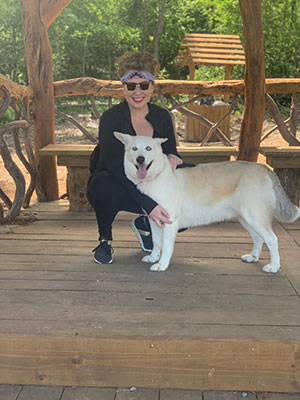
Hiking ranks high on Goodgame’s list of favorite outdoor activities. In fact, she spends two weekends a month hiking with her dog.
One of her favorite hiking spots in St. Clair County is Double Cove at Logan Martin Dam Park. Another is Ten Islands Park at Neely Henry Dam.
Goodgame includes Pell City’s Lakeside Park on her suggested list of hiking spots, saying it is ideal for people who prefer a paved path. Goodgame said the wetlands overlook, a project by Logan Martin Lake Protection Association, the botanical display of the Pell City Garden Club’s native plant garden, waterfowl and wildlife along the path make it a good place to walk and observe nature.
Hiking and being outdoors can be particularly beneficial for children, she said, because the youth learn about plants, creatures, geography, geology and the world around them.
Hiking is one of Blair Goodgame’s favorite activities.
The expanse overseen by Coosa Riverkeepers is one area of the county that she recommends for a nature “classroom.” The riverkeepers, she said, strive to document different species and to maintain a pristine environment.
Camp Sumatanga features the Sumatanga Mountain Trail, which is a 2.4-mile, lightly-trafficked out-and-back trail near Gallant, north of Ashville. The trail is rated moderate and features a lake. It is mainly used for hiking and running and is open on weekends. Dogs are allowed on the trail, but they must be kept on a leash. Camp Sumatanga was founded in 1947 as part of a United Methodist camping ministry, according to its website. The original property consisted of 430 acres extending from the crest of Chandler Mountain down into the valley of Greasy Cove. Breathtaking vistas are part of its allure.
Its name means: “… a place low enough for all who have a mind to climb to reach its heights and yet high enough for all to catch a vision of higher heights.”
Any hiking trail can be educational, as children look, for example, for bird holes in trees or count the different species of flowers, Goodgame said.
Hiking is a source of fun, too. “You can plan scavenger hunts with (the children),” she said. Also, using a hiking app lets children keep up with where they are on the trail and to compete in challenges.
Developing a love of and an appreciation for nature “is going to be better for our kids because they will be better guardians of our land later,” Goodgame said. “It gives us something positive to look forward to in the future.”
One of the many benefits of hiking, Goodgame said, is that it gets adults and children away from computer screens, phones, television and other technological devices.
Smith agreed wholeheartedly. “The great thing about hiking is it disconnects the family from electronics and allows for great conversation.”
Time spent discovering new places, hiking and enjoying nature knits family members together and forms memories to cherish always, said Goodgame and Smith.
“Hiking … costs nothing to walk on a trail and enjoy fresh air, wildlife and natural views,” Smith said. “… Overnight camping can require some investment, but it can be done on a reasonable budget and includes a campfire and stories for free. Sleeping under the stars miles from civilization really helps you appreciate all that we have that makes our life easier. It’s good to be reminded of how far we have come and all the incredible things nature offers us.”
Story by Elaine Hobson Miller Photo by Meghan Frondorf
Derrick Mostella was destined to be mayor of Ashville. The first time he walked into the old B&R Grocery on Sixth Street as a kid, proprietor Bill Murray looked down at him and declared, “You’re gonna be mayor one day, kid.”
“My mom told that story so much with me growing up, at some point, I just decided it was already written, that it was something I had to do,” Mostella says. “She told the story like I didn’t have a choice.”
The path to the mayor’s office wasn’t a straight one, nor was it lined with roses and violins. Rather, it was a circuitous route fraught with identity issues because of his biracial background. But dealing with those issues shaped Mostella’s character and, ultimately, his vision for the City of Ashville. It’s a vision that is changing the face of the downtown area and the way city government operates. Mostella hopes it’s changing the way Ashvillians feel about their town, too.
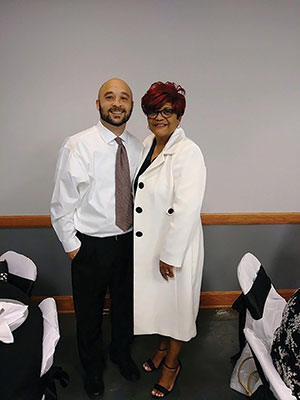
“My mom and I do a Thanksgiving dinner every year that’s free to the public,” Mostella says. “We did it take-out style in 2020, but it really kind of embodies what we want for Ashville. We want it to be a kind of mix of Mayberry and Cheers, where everybody knows your name.”
Derrick Mostella and his mother, Belinda Mostella
When Mostella was elected mayor for his first term in 2016, he was 37, making him one of the city’s youngest mayors and its first biracial one at the same time. Local newspaper headlines portrayed him as the city’s first Black mayor, and that made Mostella cringe. He works hard at avoiding labels, believing they are meant to separate and divide. Besides, calling him “Black” doesn’t tell his whole story.
“I do understand the pride our Black citizens feel about my election, and I appreciate the fact that they feel they have a voice now where they may have not in the past,” Mostella says.
It’s no secret that Mostella has a Black mother and a white father. His mother, Belinda Mostella, was a dispatcher at the city jail when she met his father, James Murray, who was an Ashville police officer. Although he has never had an in-depth relationship with his father’s family, Mostella has always known where he came from and is proud of that.
“I’m a child of Ashville,” he says. “Everybody knows who my folks are. I would hope that race doesn’t do a whole lot to dictate how somebody feels about me. I got elected not by Black people, not by white people, but by the people of Ashville, and I like to thinkthey elected me because I share their values, and they trust me, and none of that has anything to do with race at the end of the day.”
Race played a big role in Mostella’s childhood, though. He was raised in a Black household by his mom and his great-grandparents, Walter and Lila Mostella, but his light skin and curly blonde hair led casual acquaintances to think he was white. That made for some testy situations, some of them funny, some of them heart-breaking, all of them shaping his view of the world.
“My first experience in elementary school, and I can remember it like it was yesterday, was having a white kid ask me, ‘Why you gittin’ on the bus with all those N****s?” Mostella recalls. “Same thing on the playground. I’m out there with my brother, my cousins, and some kid comes up and says, ‘What you doin’ over there with them, why ain’t you over here?’ A shy kid, often he just ran off and cried. “There were many, many times I would cry myself to sleep,” he says.
His great-grandparents tried to shield him from the slings and arrows of racial tensions as much as they could. “I can remember our church going to Six Flags and my great-grandmother wouldn’t let me go because she was convinced something bad would happen to me,” he says, choking back tears at the painful memory. “She said, ‘Being this little white kid over there with all those Black folks (from his church), everybody having fun, not paying attention, they’re not going to watch you, and something will happen, you just can’t go, baby.’ As much as that hurt, I knew she did it because she loved me, and she was really, really trying to protect me.”
He sees wry humor, however, in a repeating high school experience. His all-time favorite teacher was Gina Wilson, who now works for the St. Clair County Board of Education. Every time a standardized test came around, she would allow Mostella to stand up in class and flip a coin to decide his race for that day. “You know those standardized tests where they ask for your race,” Mostella says, smiling at the memory. “I would say heads Black, tails white. So that was a running joke, what color are you going to be today, dear?”
His nickname, Flip, had nothing to do with that coin toss, however. An uncle who was a fan of comedian Flip Wilson gifted him with that moniker and it stuck. “Everybody knows me as ‘Flip,’” he says.
Mostella says his early years were tough because he caught whacks from both ends of the racial stick. “I’ve probably seen more racism than the average 100 percent Black person. There was a period in my life where I wasn’t white enough for white folks and not Black enough for Black folks, and that was rough,” he says, the tears flowing freely now. “It was brutal. My great-grandmother was my rock. She was the one I would go and cry on.”
When Mostella was in middle school, his mom moved to Memphis. He persuaded her to let him stay in Ashville with his great-grandparents. She convinced him to join her when he was 15, and it was his first time to leave the state of Alabama. That move lasted six weeks. During the middle of those six weeks, he returned to Ashville for a football game and ran into Amanda Minton. After admitting they had crushes on each other, they hung out, and he decided then and there to move home.
Mostella was always near the top of his class at Ashville High School and wanted to go to college. His grandparents couldn’t read or write, so they couldn’t sign applications for college and financial aid. Amanda, who is now his wife, did all of that for him. “She forced me to do it, letting me know it needed to be done and holding me accountable to get it done,” he says, tearing up again. “She’s fantastic, she really is, and I probably don’t tell her that enough.”
Mostella and Minton, who is white, graduated from AHS in 1997. Both went to UAB for a year, then transferred to Gadsden State Community College to finish their prerequisites. Around 1999 or 2000, both moved to Memphis, where he worked and lived with his mom while Minton lived in the dorm and got her occupational therapist degree at UT-Memphis. They stayed in Memphis for a year or two after she graduated, then returned home to Ashville in 2004 and got married. “We knew that whatever we wanted to accomplish, we wanted it to be here,” he says.
He worked for his father-in-law, Terry Minton, at Teague’s Hardware for a couple of years while contemplating his next move. He enjoyed most of his time there, but it’s also where he had some of the same type of painful experiences he had growing up. He was often the guy standing in a corner that no one knows is part Black.
“I couldn’t believe some of the hatred that people would spew and really more for laughs,” he says. “What was hurtfulmore than anything is that it was for chuckles and giggles and little one-off comments and things like that, and that really was just like a thousand cuts.”
He considered buying the store from Minton but decided that was not what he wanted to do with his life. So, he enrolled at Jacksonville State University, finishing in 2013 with an accounting degree.He worked in the accounts payable office at Steris Instrument Management Services in Birmingham for a few years, then joined Boatner & Pugh, an accounting firm in Gadsden. “Being mayor here by nature is a full-time job with part-time pay, and that’s why I’m very selective about the places I work,” he says.
Early political career
Mostella’s first foray into politics was in 2012, when he was elected to the Ashville City Council. His motivation to run for office came from some of his experiences while working at Teague Hardware, where he heard people complain about city government without offering any solutions. “Hearing how much they cared about the city and all the things they wanted for it just motivated me to get involved and to try to see some of these things through,” he says.
His frustration with the way city government was being run prompted him to run for mayor in 2016. “The one thing that I learned in being on the Council is that Ashville never had a cash-flow problem, we had a cash management problem,” he says. “We were run inefficiently. We had an antiquated way of doing everything.”
He didn’t have a picture in his head of the way he wanted Ashville to be or to look like, he just wanted people to get more involved, to take ownership of their town, and to realize its potential. “I wanted to empower people and let them know that the City of Ashville should be a reflection of what the people who live here want it to be, not (a reflection of) one person who sits at City Hall, not the mayor or the City Council. What we should be striving to do should be a reflection of what the people of Ashville want to see.”
One of Mostella’s earliest projects during his first term was to revamp the city’s employee handbook. Working closely with the Council and City Clerk Chrystal St. John, he re-wrote the old handbook that was simply a photocopy of one belonging to another city that had nothing in common with Ashville. “We had no pay scales, no job descriptions, nothing like that, so we had to start from scratch on a lot of stuff,” he says. “We revisited literally every policy and procedure, every city ordinance, that’s on the books.” The update resulted in pay raises for many employees.
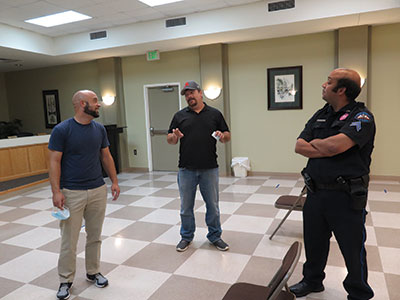
Mostella talks with city
employees after a Council meeting
His second term got off to a bumpy start, however, when a pair of candidates who fell short in the general election sued their opponents over alleged voter fraud. Former Mayor Robert McKay sued Mostella, while McKay’s nephew, Randy McKay, sued Councilwoman Sue Price. Mostella and Price breathed a sigh of relief when the pair dropped their lawsuit after three days of hearings at the St. Clair County Courthouse.
With a lot of input from local citizens, the same team that revamped the employee handbook is reworking an old, 20-year Comprehensive Plan to cover the next 20 years and developing a five-year strategic plan. Those plans include a new library, revamping downtown’s image and updating the city’s parks systems.
The city purchased the Alabama Power Building on U.S. 231 Southwith the intention of moving the library there. They shifted gears when they discovered that the medical building next door, which the city already owned and had been vacated by Dr. George Harris when he consolidated his offices in Springville, was more suitable. Bids for its renovation are still out. The process will be helped by a $100,000 donation from David O. and R.L. Louisa McCain, a couple with deep roots in Ashville. “David is from Ashville, and his wife was heavily involved in the Shelby County Library System,” Mostella says. “They recently moved back to the area, read the original newspaper article about our library plans and wanted to help.” The former Alabama Power Building was leased to the state’s Pardons and Parole Board for five years, and the lease money is paying for the building.
Mostella caused a minor uproar when the city tore down the old rock building at the corner of U.S. 231 and Sixth Street. It was necessary, he says, to accomplish the facelift he wants to see around the Courthouse Square. That facelift includes updating the sidewalks and increasing the turn radius at the traffic light to accommodate the large semis that come through. To do that, overhead utilities will have to be moved a block.
The city will build a pocket park where the rock building stood, incorporating some of the rocks saved from the building as well as the historic mounting block that stood in front of it. Plans also include updating signage, some of which is almost unreadable in places, and repairing sidewalks, which are buckled and have grass growing in the cracks in many places.
Retail shops have come and gone around the Courthouse Square for several years, and part of the problem is absentee ownership of the buildings there, according to Mostella. A lack of parking and publicity have contributed to the retention problem, too.
The city purchased an old gas station behind the former Ashville Drugs building and tore it down to provide more parking and has contacted the state highway department about signage near the Ashville I-59 exit. Meanwhile, several of those buildings were purchased by local people recently, and the city hopes to make announcements soon regarding new shops and businesses moving in.
“One of the problems we fought downtown was thatthe property owners weren’t very heavily invested, and I think the city has to take a large part of that responsibility because we haven’t progressed and created an environment down there that’s conducive to a business surviving,” Mostella says. “No parking, not a whole lot of aesthetics there. The flow of it doesn’t work from one side of the street to the other, there are no crosswalks painted, you’re literally dodging 18-wheelers at times, so we never put in the work to really build it up.”
Mostella believes the city’s futurelies in residential growth, and that people will see Ashville as an alternative to what he calls “big-city living” in Springville. The city’s approach under his administration will be to keep that small-city feel without the small-town mentality. “We wanted to play up the small-town feel but modernize our approach to it and get somemodern amenities for our citizens who may never have experienced something like that, and for the other generations that are coming along, where green space and pocket parks is not a foreign language,” he says.
Eventually, he plans to upgrade the city’s parks system, which includes the City Splash Pad Park and D.O Langston Park (in front of City Hall), maybe even hire a parks and recreation director. That upgrade will include more green space, more walking trails and replacing outdated equipment at the splash pad.
“Half of the equipment at that park was there when I was a kid,” he says. “We haven’t replaced it because I think it’s an inefficient approach to just go in and say, ‘Hey this piece of equipment is old, let’s put another one in its spot,’ when we need to be looking at the park as a whole.”
He says the city has the capital and the potential to do so much more now than it did four years ago due to better money management.
“My saying has always been that I just want Ashville to be the best version of itself that it can be,” Mostella says. “I’m not here to dictate what that is, I’m here to make sure that we do so efficiently and that we do so together.”