St. Clair County Fair

Story by Paul South
Submitted and Staff Photos

Jodi Shirley had a dream. Her perseverance turned it into reality.

Her daughter raised and showed lambs at county fairs across Alabama and in Mississippi, Georgia and Tennessee, but not close to home. “We didn’t have a local fair for these kids to show [their livestock],” she said. “Our livestock kids did not have their own fair to show sheep, cattle, and hogs. I said, ‘We’ve got to change that.’”

And they did. The St. Clair County Fair now enters its third year.
Enjoying entertainment

Shirley serves as the assistant coordinator of the St. Clair County Soil and Water Conservation District and is chairperson of the St. Clair County Fair Committee.

The fair is set for October 2 and 3 at the St. Clair County Agriculture Multi-Event Center at 100 Arena Drive in Odenville.

“It took us a few years to get things together,” she said. “It took us a year and a half or two years before we actually got it off the ground. We just pulled different community leaders together.”

Those leaders came from the county’s agricultural community – the St. Clair County Cattleman’s Association, the Women’s Committee of the Alabama Farmers Federation, the Alabama Cooperative Extension Service, Future Farmers of America and the county’s business community.

As a result, fair admission, parking and rides are free. And the fair celebrates St. Clair’s rich farming heritage, giving blue ribbon honors to everything from pies to pigs to pickles, quilts to crafts.

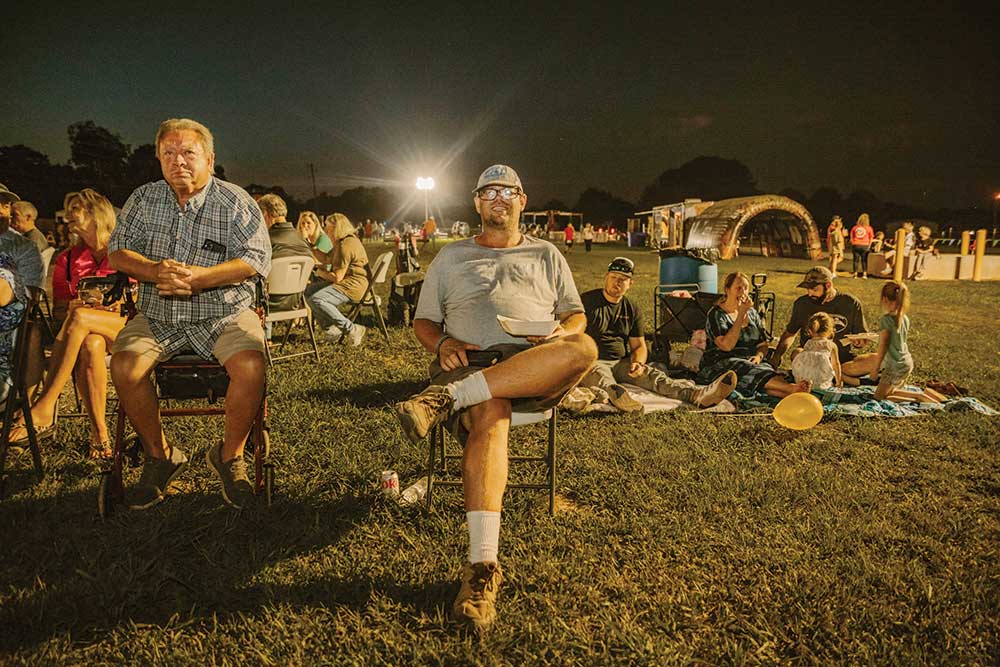
Fairgoers can feast on everything from corn dogs to cotton candy, to funnel cakes and caramel apples, staples of fair menus. Music for every taste from gospel to rock ‘n’ roll will fill the autumn air.

Families only have to pay for food, games or to buy crafts and other products. “We just brainstormed and said a lot of prayers, and it just all came together somehow,” Shirley said.

 In each of its first two years, the fair attracted 5,000 folks and rave reviews.
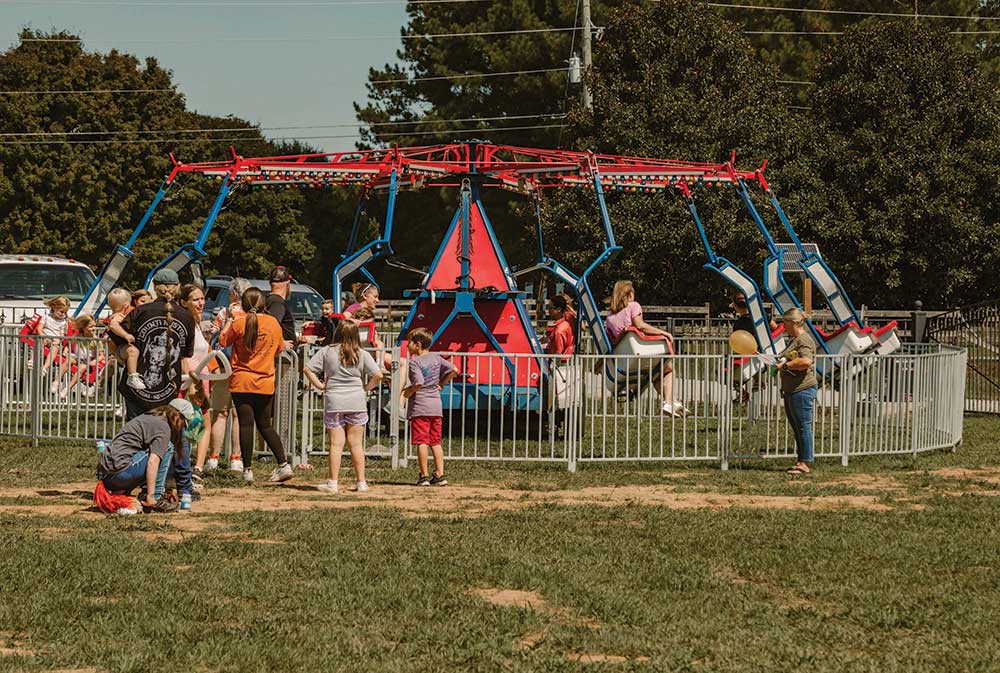
Rides for kids

“It’s been very positive,” she said. “We’d love to have a Ferris wheel. And people want better rides. But in year three, we’re taking baby steps.”

In its early years, the fair featured a rock-climbing wall, spinning teacups and a mechanical bull, swings, mini airplanes and bounce houses.

“The whole feel-good county fair is what we’re going for with the corn dogs and the lemonade and the funnel cakes and the candy apples, of course. Those are real important.”
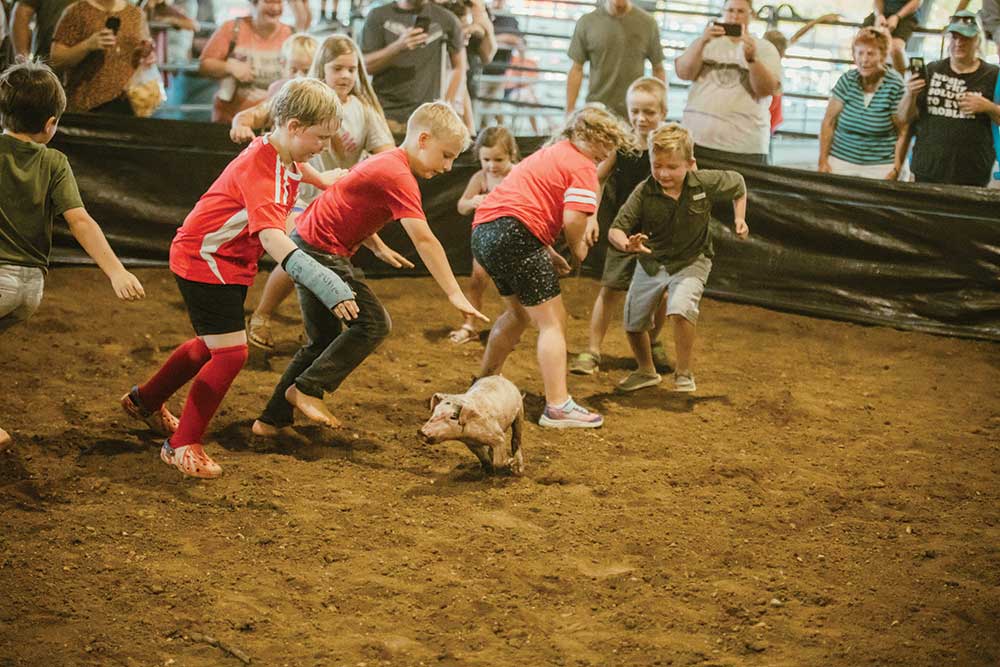
Greased pig event

 Full disclosure: Shirley is a confessed candy apple aficionado. But while apples may have her taste buds, the livestock showing has her heart.

“The [agriculture] world is my favorite,” she said. “Watching these kids get out there and present their animals and work super hard. Most of the work is behind the scenes. All of the dedication and work is put in at home typically.”

Part of the fair’s mission is to educate the community about the county’s agriculture, roots that run deep in St. Clair County. Local farmers demonstrated milking. Herding dogs showed off their skills. Plus, there’s a petting zoo.

“We love to educate the community about what it is, because a lot of people don’t know what livestock showing is, or what it’s about,” Shirley said. “There are so many people who go to the grocery store and think those items just happen to be there. But there’s somebody somewhere who’s worked from daylight to dark to make that happen. It’s nice to see the whole picture.”

Along with support from the business and agriculture community, a small army of volunteers makes the fair go. “Everybody knows their part,” Shirley said.

Bo Lindsey, a self-described “farm girl who learned to ride a cow before I could ride a horse” while spending time on her grandparents’ farm in Shoal Creek Valley, has been a fair volunteer from the start.

She shuttles families from the parking area to the fair and sees a change in families after a fun night. Free admission helps spark the fun, especially in these tough economic times.

“That’s the joy of it right there,” Lindsey said. “You’ve got families that can’t afford to take their kids nowhere because they’re trying to make ends meet. Let those kids wear themselves out.”

She recalled times when fairgoers would try to pay for parking. “You see when they open their wallet there ain’t much in there,” Lindsey said. 

And when they find out about free parking and admission and rides? “They light up and thank us,” she said. “It’s not us. God made it happen. You see it in people’s eyes. To see Mama and Daddy able to tell their kids, ‘Cut loose.’ That makes it worth it to me.”

Lindsey has a treasure trove of stories from her time as a volunteer. Free admission makes a difference. “There was a lady who had four kids,” Lindsey remembered. “Her husband was working two jobs. She had to take her kids … People just don’t have money anymore.”

The fair is a no-stress, unhurried, affordable family event.

She described the fair’s free rides as “bodacious,” adding, “I was talking to one lady who had five kids. She was trying to figure out how much it would cost for the rides. I told her, ‘It don’t cost you a dime. Put your kids on ‘em.’ That was just fun.”

Lindsey carries memories of the inaugural fair in her heart. “You will never top the first year,” she said. “It was just raw and innocent and joy and peace,” she said.

That joy and peace were sparked by something desperately needed these days. “Unity,” Lindsey said. “There just was. There were people who were your neighbors that you got to talk to. You got to meet their kids. I saw Mamas and Daddies talking while their kids were riding rides.”  

At the end of the day, beyond the food and fun and neighbors meeting neighbors, Shirley hopes folks will see agriculture beyond farmers and tractors and big fields.

“It goes so much beyond that. From the pencils we write with to the sports that we play that depend on the hides from some of these animals to the helmets we use to protect our children, everything starts with ag.”

But it’s even more than that, she said. “Not to be religious, but truly, God gave us this beautiful land and all of these creatures and all of these herbs for us to grow our food,” Shirley said. “That’s where it all starts. This is to celebrate that. I hope people come away with a better understanding of what agriculture truly is.”

Why is the fair important? “Because it is the community,” Lindsey said. “Everybody’s gotten away from this, and you end up with people who don’t know each other. That’s not community. This (the fair) is what communities are supposed to do. You’re supposed to get together, get to know each other, spend some time with each other. That doesn’t mean you have to talk to everybody that comes to the fair. But you’re going to meet some people you ain’t never talked to, and it’s fun just to get to know folks.”

Driving the shuttle, picking up families at the end of the evening, Lindsey notices something. They leave with a pocketful of memories.

“When they first get there, the kids are all excited, right?” Lindsey said. “At the end, the kids are worn out and excited. But the Moms and Dads? They’re at peace. You know you’ve done something right when you ask Mom and Dad if they had a good time.

“They look at each other and smile and go, ‘Yeah. We did.’”

Sweet taste of success

Story by Paul South
Photos by Ben Orvis
Submitted photos

The sweetest agriculture story in St. Clair County is flying under the radar – literally.

Just ask Bill McTyeire, Daniel Kirby and Nikkie Posey. The trio are part of a buzzing business – beekeeping and honey production.

“I’m passionate about bees,” McTyeire said.

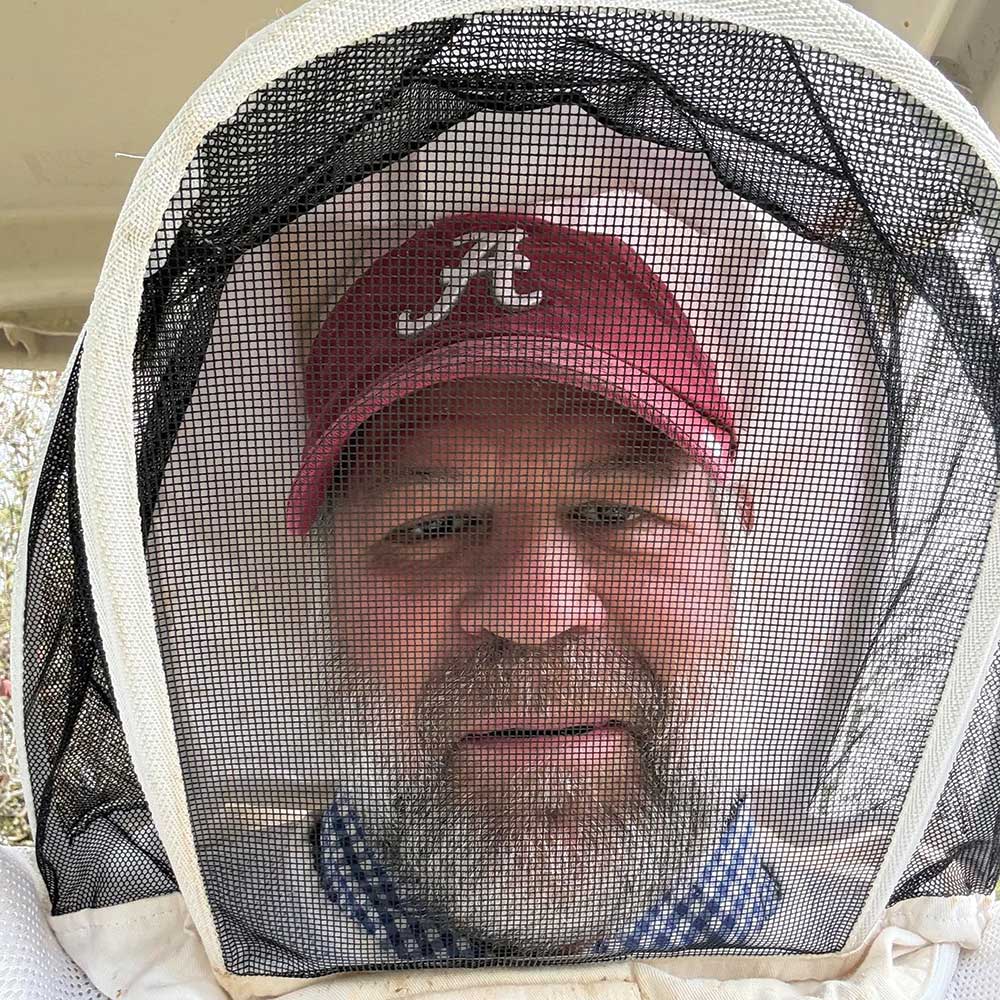
Bill McTyeire

That’s the story, it seems, for McTyeire, Kirby, Posey and beekeepers and researchers across the country. The bee population is critical to food production. So, by extension, the small insects are vital to humanity’s survival.

And the sweet amber liquid they produce is a popular product, found on and in everything from hot breakfast biscuits to bourbon.

Honey bees themselves are under siege, thanks to the Varroa mite, herbicides and pesticides, climate change and human development.

Nosh Crockette, the Honey Bee Outreach and Development Coordinator at Auburn University, spelled out the impact if bee populations and pollinating plants disappear.

“If pollinators disappeared, we’d be at risk of losing many of the crops we rely on, and our produce options could become extremely limited,” Crockette said.

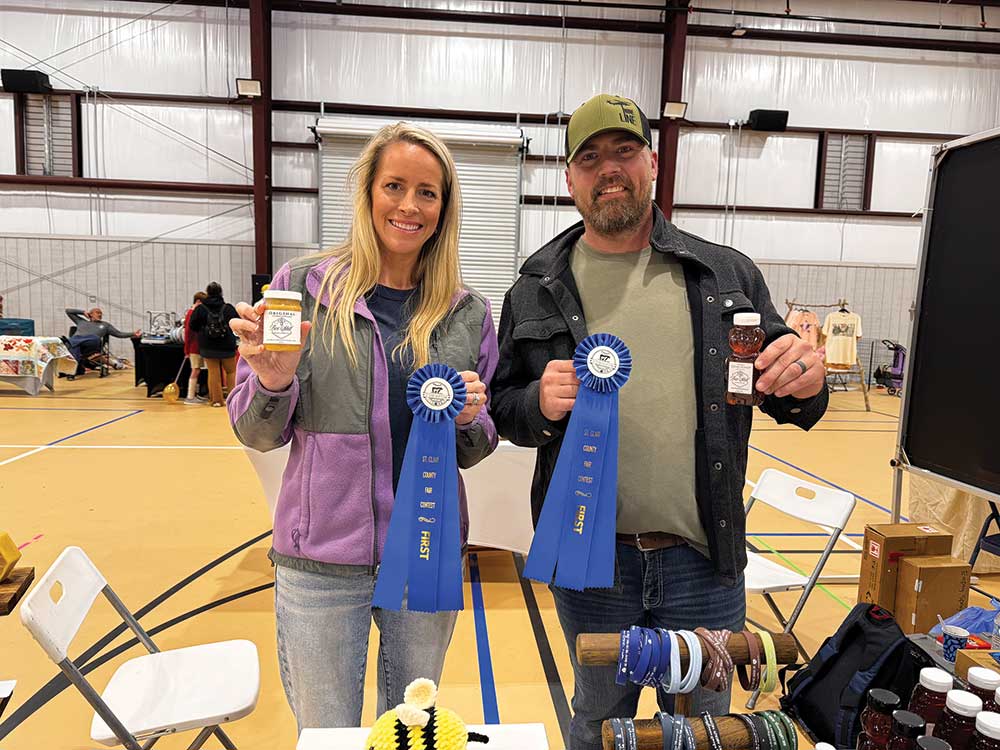
Deanna and Daniel Kirby with their prize-winning honey

There are more than 400 species of native bees in Alabama and some 2,000 beekeepers registered in the state, Crockette said. Auburn researchers collaborate with beekeepers to help minimize the impact of the mites on honey bees.

The honey bee doesn’t only produce the thick, sweet amber liquid used in American kitchens. Nor is it just about beeswax, candles, lotions and balms.

“Honey bees help pollinate many fruit, nut and vegetable crops, with some crops such as almonds being reliant on the bee population to produce fruit,” Crockette said.

McTyeire, Kirby and Posey are on the front lines of the quiet battle to save bee populations.

Bees as a Passion

Bill McTyeire spent more than 34 years as a landscape contractor. Now, bees are his focus. He travels throughout the region capturing swarms of the insects when local landowners call.

“Bees are my passion now,” he said. “I love dealing with bees.”

That’s seemingly the story of the growing beekeeping industry.

McTyeire has been keeping bees since 2020. His bee and honey production has been up and down. Early on, he bought packages of bees. Then he switched to purchasing “nucs,” a nucleus of bees.  Nucs are five or six frames of bees – a queen, honey, pollen, drones and babies, everything needed for a successful start. In central Alabama, beekeepers have only about a two-month window in summer for developing hives.

But McTyeire is “really into” capturing wild swarms of bees that attach their colonies to tree limbs and the like.

“If you’re a deer hunter, you like to go out and get the biggest buck. If you’re a beekeeper, for me, catching a wild swarm of bees. Or someone calls me and says, ‘Hey, I’ve got a wild swarm of bees in a tree in my yard. Are you interested?’ If I can get ‘em to the ground, I’m interested. I’ll put on my bee suit, and I’ll go. I’ll take ‘em home and put them in the bee yard.”

 Right now, the hobbyist has 35 hives, up from 11 last winter. In peak season, from May through July, there are an estimated 100,000 bees per brood box.

“My ultimate target is probably going to be 50 (hives). I’ve grown so fast,” he said.

 Though small, bees are some of the most intelligent members of the animal kingdom, flying up to five miles looking for pollinators. Most return to the hive. It’s baked into their DNA.

“They’ll visit like 5,500 flowers and produce like a 12th of a teaspoon of honey in their lifetime,” he said. “That’s each individual bee.”

The Allure

What drew McTyeire to beekeeping?

“I do it for the love of the bees,” he said. “I’ve never been a patient person at all. I’m very impatient. When I get into a hive working with bees, you have to be patient. You can’t get in a hurry. You have to be very methodical when going through a hive box.”

Hive management is critical, especially when battling the honey bee’s public enemy number one.   

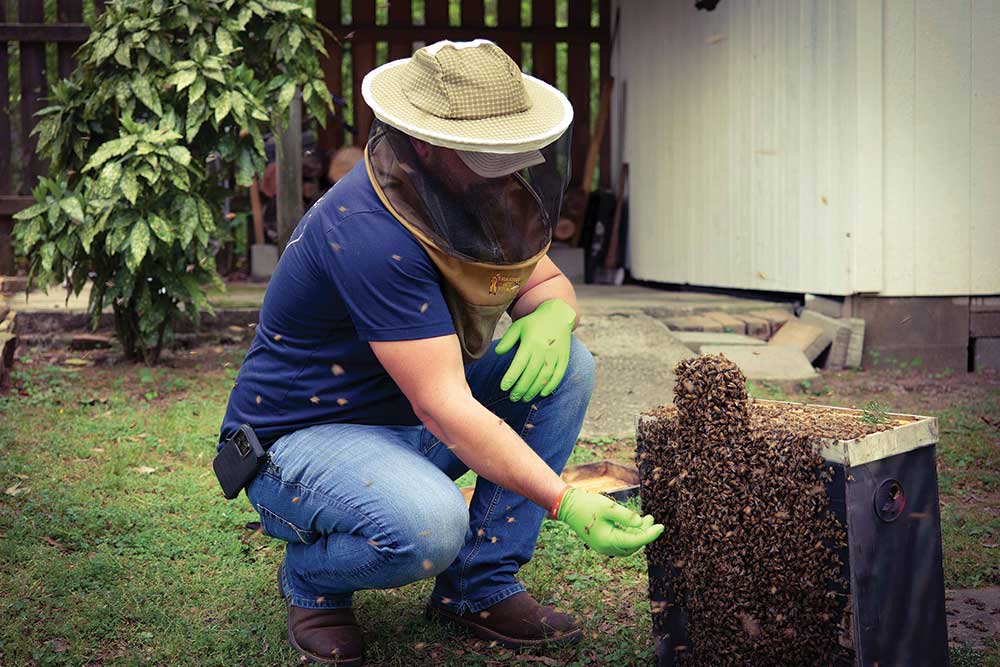
Kirby during swarm removal process

“If you do good, proper hive management and then you treat your bees for Varroa mites – I don’t treat them for anything else. The mites are the number one killer,” he said.

According to a survey led by Auburn in collaboration with Oregon State University and the Apiary Inspectors of America, beekeepers lost 39.9 percent of their colonies in 2025-26. Keepers saw record losses in 2023-24 (55.1 percent) and 2024-25 (55.6 percent).

Failure to maintain a healthy bee population can devastate the food chain.

In terms of honey production, 2025 was a good year for McTyeire’s company, McLuckie’s Honey, that he and his “sidekick,” Laura Niemann, sell.

 He sold 60 two-pound jars and 120 one-pound jars of his wildflower small batch honey last year. He’s also seen his smooth, not-too-sweet honey, with a pleasing floral aftertaste become a barter currency.

Neighbors will trade their offerings for a jar of his honey.

“It’s like money,” he said. “Every year is kind of a yo-yo. I do small-batch honey. I don’t want to be a bigwig. I want to sell what I have and try to grow my bee yard and to help other people learn about bees.”

The bottom-line lesson?

“Without the bees, we’re all goners,” he said. “I’m passionate about bees. I’m passionate about honey. But that’s not my main goal. It’s about building a healthy population of bees. We’ve got to do a better job as Americans and humans to save the bees,” McTyeire said. “When they’re gone, so are we.”

The Sweet Taste of Success

Daniel Kirby of Odenville serves with McTyeire and Nikkie Posey on Springville’s Bee City, U.S.A. board.  His honey of a story began in 2015 as a hobby that’s now a flourishing family business, Bee Still Honey Company, LLC. It’s built on feral bees caught in the wild. Unlike packages of bees, the wild, hardy creatures have already adapted to the colder winter weather in east central Alabama.

For Kirby, the life of the bee is a source of boundless fascination.

“Just the life of a honey bee, the way they interact and communicate and live their lives,” Kirby said. “They work as one organism. It takes all of them working together to make it. Just the way they communicate with each other to complete what they have to do.”

He added, “If humanity was like honey bees, we wouldn’t have any problems whatsoever.”

A native of Rome, Georgia, Kirby worked a variety of jobs from pipefitting and welding to law enforcement before discovering the bee business.

“God has really blessed us,” Kirby said. “Last year, we grew like 200 percent.”

Bee Still had 100 colonies in 2025, 200 this year. But like McTyeire, the number is constantly changing.

Echoing McTyeire, Kirby’s biggest challenge is fighting off the Varroa destructor mite and pesticides.

Worker Bees

The bees are brilliant. Like homing pigeons, many will return home after searching two to five miles, even in harsh conditions, for food and water.

“Could you imagine flying five miles for food and water and by the time you get home you’ve used half of it? They work themselves to death. They don’t sleep,” Kirby said. 

Divine providence brought Kirby and his wife to St. Clair County. “We think it was a God thing, honestly,” he said. “There were a ton of little things that brought us here.”  Those “little things” included Springville’s “Bee City” designation.

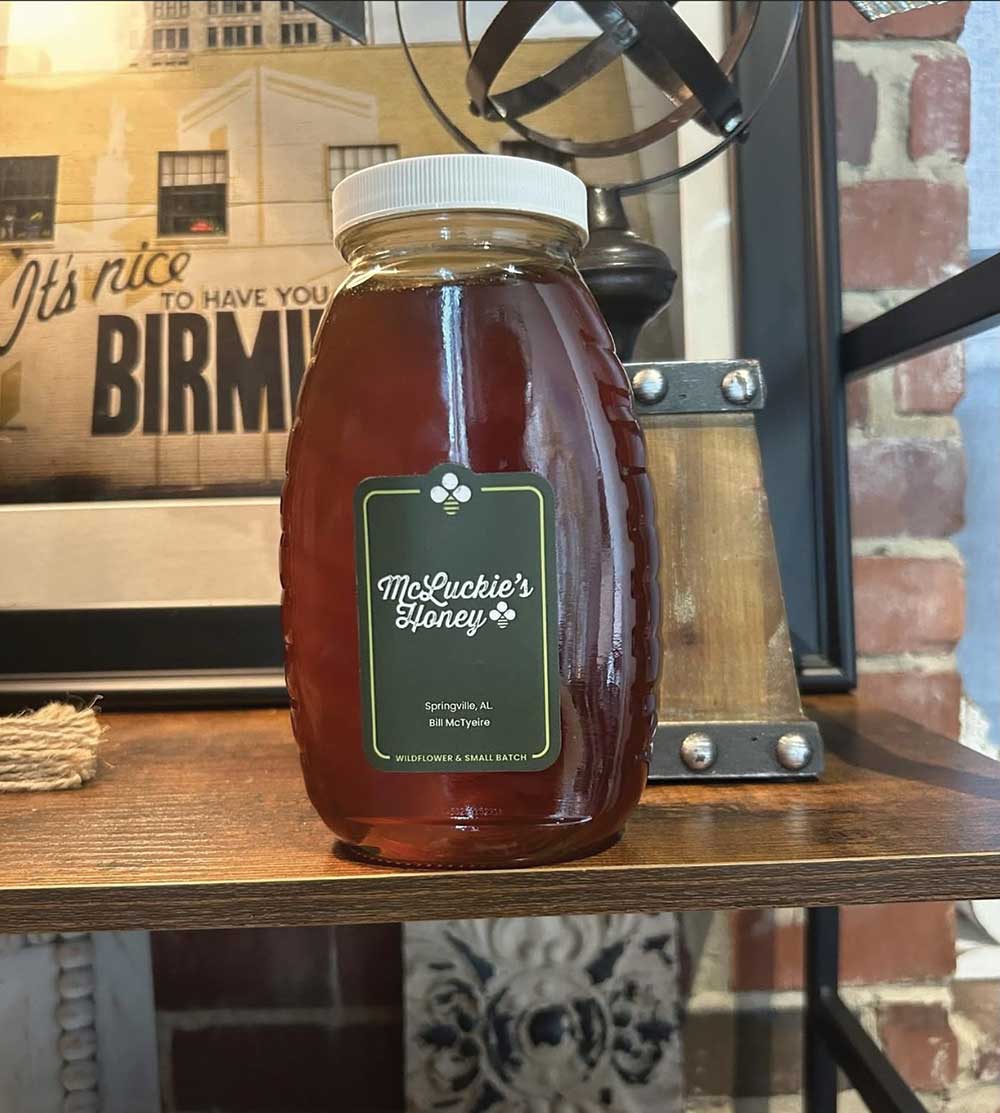
Small-batch honey from Bill McTyeire in Springville

Like McTyeire and Crockette, Kirby paints a dire picture for humanity if honey bees were to disappear. However, he believes increased awareness has helped bee populations turn the corner.

People have really started paying attention to honey bees in the past few years in trying to keep them alive, Kirby said. “The Varroa was the main threat, but we’ve got that pretty much under control.”

The bee business is blossoming, not only in St. Clair County, but across the country. And honey is fast becoming a big boost for the human immune system. One note: Heating honey, or adding it to hot coffee or tea, kills the healthy enzymes and bacteria in the natural sweetener.

“I predict that in a few years there’s going to be a honey shortage … unless there are more beekeepers. The youth are not getting interested in beekeeping. We teach classes to 4H and to school classes,” Kirby said.  “But all the wellness and health stuff has really taken off in the past five years. Everybody is wanting healthier products and they want honey.”

Bee Healthy

Posey’s beekeeping and her store, Pinkhill Organics in Springville, came together in 2019. Health was the big draw.

“The medicinal qualities of honey first and wanting to have that for myself and my family. But I also make Elderberry syrup for my store and having good honey to make it with was also important,” Posey said.

She has 10 hives and more than 1 million bees. The insects provide a big challenge, Posey said.

“Bees are curious creatures, and some years you lose hives and they abscond. This past winter, I lost five hives. You can catch swarms and do everything right. But sometimes, the little Airbnb you’ve set up for them, they just don’t like. The bees themselves are most frustrating.”

For example, when Posey and her family were starting their apiary, they bought packages of bees, costing $300 a pop. All flew away. Since then, the focus is on feral bees. It takes 18 months to two years to establish honey-producing hives.

Posey produced more than 10 gallons of honey last year. She expects to produce 25 gallons this year.

Posey made a key point about bees.

“They are the only insects that give us a product we can eat,” she said. “Honey bees aren’t the only pollinators. But people are more and more understanding of the role (of bees). When it’s swarming season in March, I see a lot more posts (on social media). ‘Does anyone know a beekeeper?’ It seems a lot of people are trying to save the bees.”

For those who want to increase the bee population, delay spring yardwork. “Let the dandelions come up. Let little flowers come up and let clover grow,” Posey said.

“The bees are going to work that and use that as their initial sources of nectar and pollen. If people would delay mowing for that pristine yard. But if you have some property, let it grow up. Those wild things are important to the bees as well. Let the natural things grow.”

Beekeepers are popping up across St. Clair County, from Washington Valley to Chandler Mountain. There are also beekeeping groups. A local elementary school promoted beekeeping in its summer reading program.

“More and more people come into my store are interested in beekeeping,” Posey said.

While honey can seemingly be used in countless ways, one simple way to eat the sweet treat seems most popular, at least for Niemann and Posey.

“By the spoonful.”

Lessons From the Bees

And as for a last piece of advice to potential beekeepers, Posey said, “The frustration is absolutely worth it. A piece of advice my mentor gave me when we bought packaged bees and they flew away, he said, don’t give up. And I would encourage people to support local beekeepers and buy their honey. Be mindful of the honey you’re buying. If you see honey in the store with a label that says, ‘USDA Certified Organic,’ there’s no such thing.”

What’s the bee lesson for humanity?

“Teamwork is important for the success of society,” she said. “If you think of each colony of bees as its own society, it takes their teamwork aside from personalities. If we can take that lesson of teamwork and how successful that is and how successful that can be for our community – even here in Springville – that it takes all of us to have a successful community.” l

The best ‘mater sammich

Story by Roxann Edsall
Photos by Mackenzie Free

Any way you slice it, the facts are clear. Southerners love a good “mater sammich.” Long considered the staple of summertime goodness, the tomato sandwich is the belle of the Southern culinary ball. Top fans include former President Jimmy Carter, who was well known for his love of this simple summer fare made with ripe tomatoes, mayonnaise, and bread.

“I love a good tomato sandwich!” says Springville resident Tiphanie Gatgens. “I love good, soft white bread with several big slices of tomatoes with Duke’s mayonnaise (although my mother swore by Bama mayo). Add a good bit of salt, and sometimes pepper. And now I’m in the mood for a tomato sandwich.”

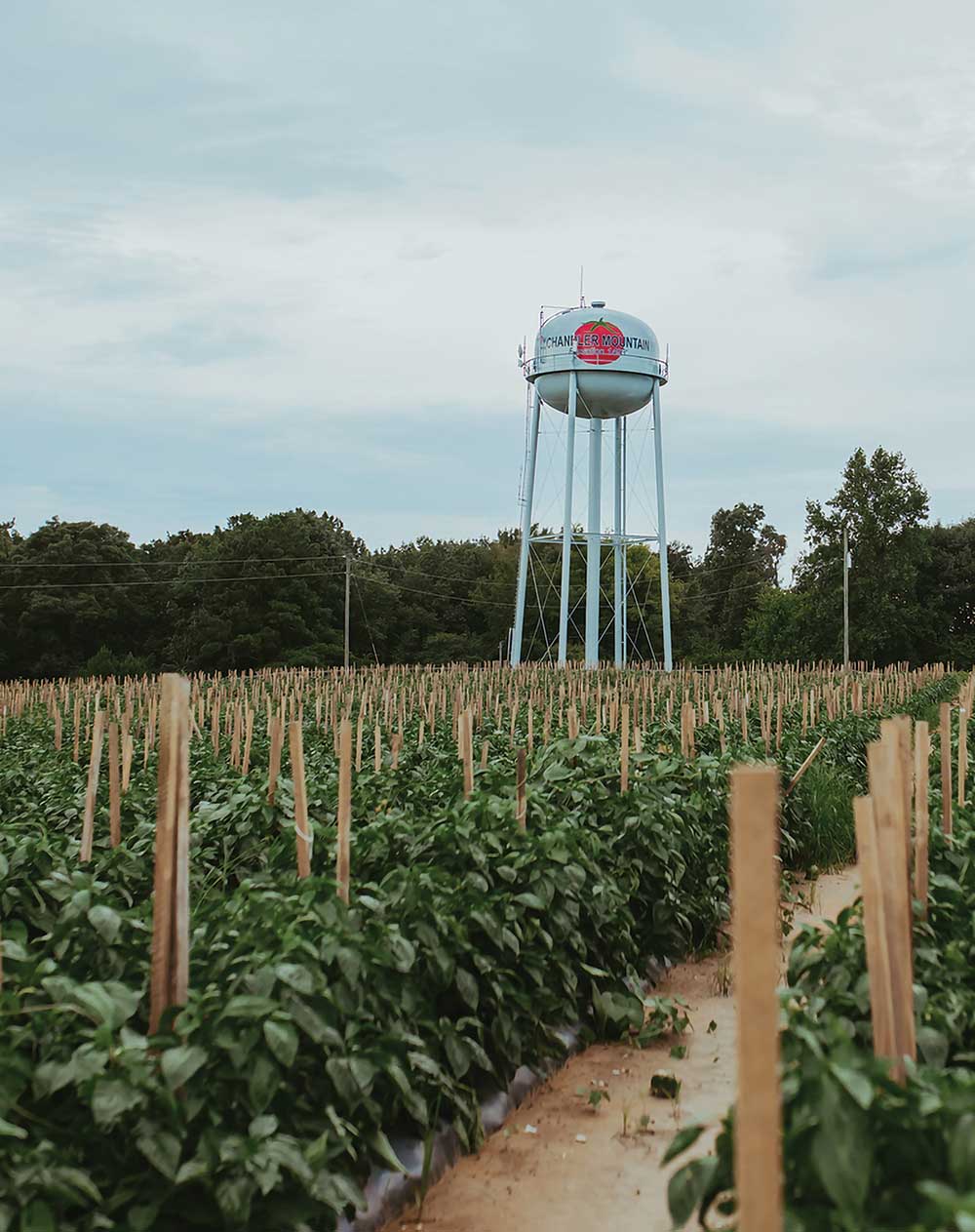
Chandler Mountain water tower stands over field of tomatoes

“Tomatoes speak of summer,” adds Texas transplant Heidi Cupstid-Bader, now a Pell City resident. “As a child, we’d pick them from my dad’s garden. We’d come home with buckets of vegetables, but before we started shelling peas, we had a delicious tomato sandwich and a cold glass of sweet tea. It’s not just the sandwich; it’s childhood summer memories.”

Even the movie industry recognizes the emotional connection to the tomato sandwich experience. In the 1996 movie “Harriet the Spy,” while 11-year-old Harriet makes her school lunch, her mother suggests some variety in sandwich choices. Harriet quickly admonishes her mother for even suggesting that she take something other than her beloved tomato sandwich. “I know what I like,” she flatly stated.

Southerners know what they like, too, and for tomato lovers in north and central Alabama, quenching the hunger for a tomato sandwich begins with a trip to Chandler Mountain beginning around July 4 when the first fruits are ready. Due to the volume of tomatoes produced and shipped from there, Chandler Mountain is known as the unofficial “Tomato Capital of Alabama.” And because of the sandy soil and breezy, cooler temperatures, Chandler Mountain is uniquely suited for producing high-quality flavorful tomatoes.

The Chandler Mountain tomato is something of a love story, the desire for the unattainable finally quenched after months of waiting. The season is four months long, at best, so these beauties are unavailable for the remaining eight months of the year. For tomato sandwich lovers, the wait is torture. Thankfully, the wait is over and until the end of October or early November, the tomato sandwich is back on the menu.

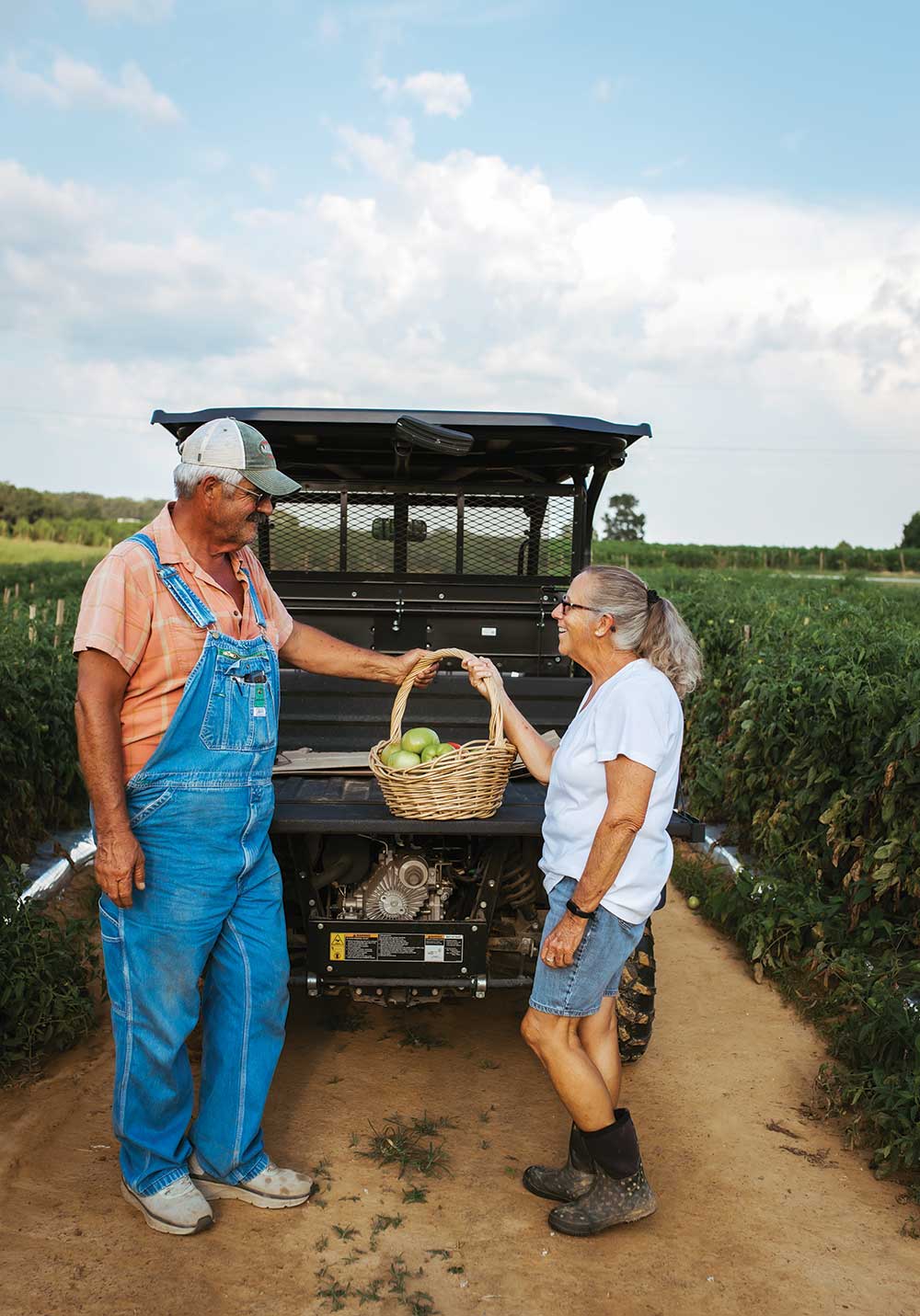
Paul and Cindy Alexander with a basket of their bounty

Chandler Mountain is home to several multi-generational tomato farms. Paul and Cindy Alexander own Alexander Farms in Steele. Paul, who also serves as pastor of Reeves Grove Baptist Church in nearby Whitney, is the third generation of his family to work the farm. He runs the farm with Cindy and his brother, Glenn. With no children to pass the farm down to, the couple is taking it a season at a time, with no immediate plans for retirement. “The Lord’s blessed us,” says Alexander.

The Alexanders have 240 acres and use 60 acres for their tomato crops. They hope to produce 100,000-150,000 25-pound boxes of tomatoes to sell. In addition to tomatoes, they grow squash, cucumbers, corn, okra, peas, peppers, pumpkins, peanuts, and flowers, most of which they sell from the farmstand on their property. The farm produces two varieties of tomatoes called Lancer and Patsy, both are big rounds and perfect for tomato sandwiches.

They still laugh when they tell the story of the day the lady came with knife in hand to test their product. “She said she’d bought tomatoes somewhere else last year and didn’t like them,” said Alexander. “She had a knife with her and asked if she could cut into one. I told her to help herself and if she didn’t like it, I didn’t want her to buy it. Both she and her husband tried it, and the husband said, ‘Now, that’s a tomato!’ And they come back about every two weeks (during the season) to buy more.”

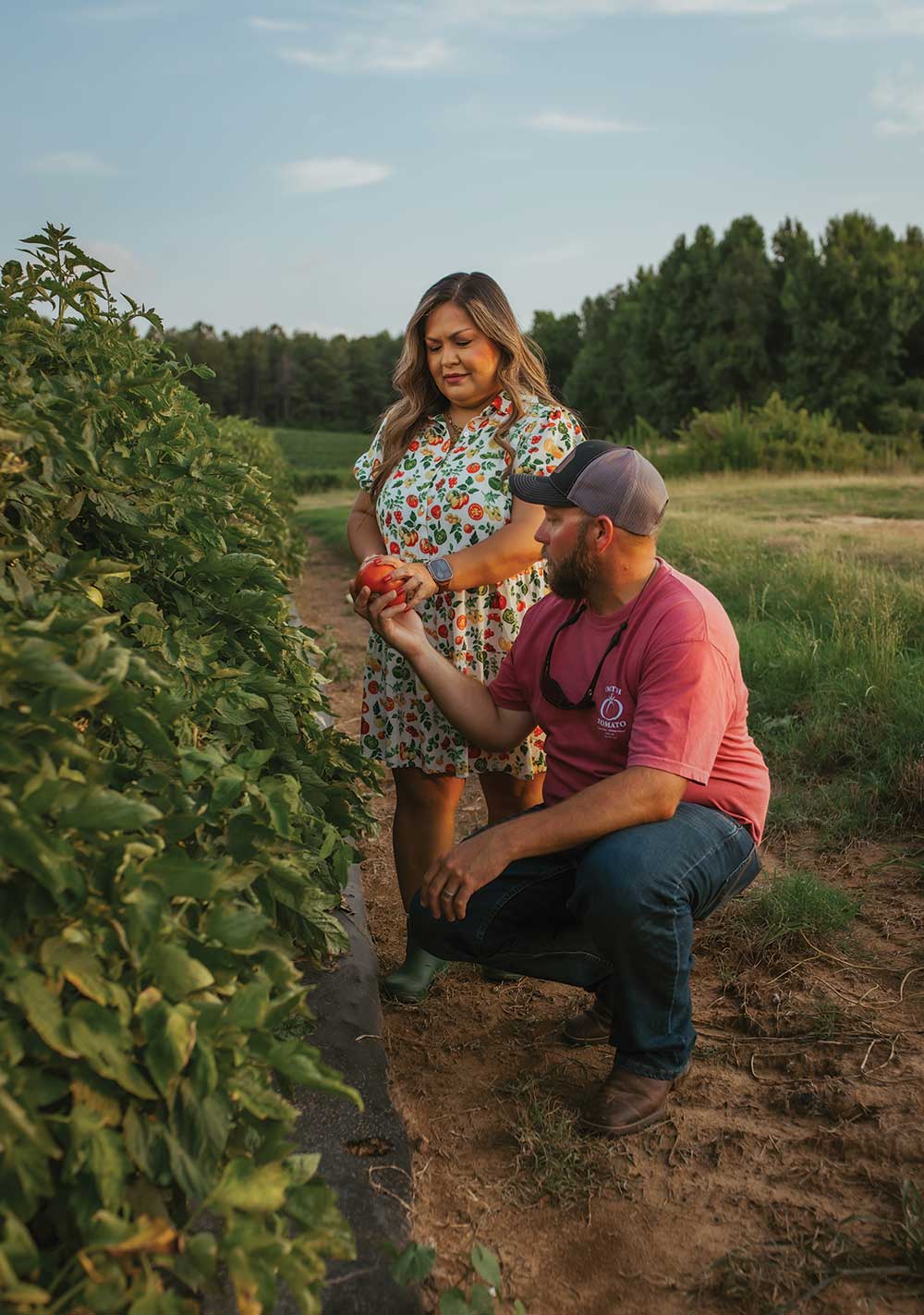
Just up the road at Smith Tomato Farm, Chad Smith grows many types of heirlooms, rounds, Romas, grape tomatoes, cherry tomatoes, and yellow non-acid tomatoes. Their 300-acre farm, which his uncle started in 1965, features 80 acres of tomatoes and 20 acres of other vegetables and pumpkins. Their typical crop yield is five million pounds of tomatoes.

Esther and Chad Smith check the crop at Smith tomato Farm

“Last year we had bad weather, and certain insects were more of a problem. Because of that, about 50 percent of the farmers went out of business,” said Smith. “That’s why I tell people it’s important to buy from local farmers. This year’s crop is better than last year’s.”

Tomatoes are widely recognized as a superfood, which is reportedly good for your heart, eyes, skin, and bones. They are also high in vitamin C and lycopene, both powerful antioxidants. Ironically, the tomato is even better for your body when cooked, especially in olive oil. According to a finding released by the National Institutes of Health, cooking tomatoes in healthy fats like olive oil greatly increases the body’s ability to absorb the beneficial lycopene.

Whether you crave tomatoes because of their health benefits or simply for the taste, there are many ways to prepare them. Salads, pastas, soups, stews, and chili have their flavors amplified by the addition of tomatoes. The best tomatoes, however, can stand on their own, dressed only in mayonnaise and bread.

All hail the tomato sandwich. While not universally loved, the tomato sandwich is a summertime ritual in the South. However, there is serious contention in the tomato sandwich arena. People are fiercely passionate about their own recipe for this most sacred of summertime fare.

For instance, should the tomato be peeled or not? What type of bread should the tomato be nestled between? What spices or herbs are used (salt and pepper, garlic, paprika, oregano, basil)? While most agree the mayonnaise should be applied liberally, people tend to be zealous regarding the brand of mayo to use. Lastly, are other ingredients invited to the party? Many around the country include bacon, leafy greens, or cheese.

Traditionalists call for a simple approach, allowing the tomato flavor to shine. Around here, it’s a simple recipe, with essentially 3 ingredients – tomato, cheap white bread, and mayonnaise, along with salt and pepper. And then there’s the finesse.

The tomato should be an heirloom variety from a local farm, preferably from Chandler Mountain, and should be large enough to fill out the bread. Cut a beefy slice of at least one inch. Slather one slice of cheap white bread with Duke’s (or Hellmann’s or Blue Plate). Place tomato slice on the bread, then liberally cover the tomato with more mayonnaise. Salt and pepper before finally placing second piece of cheap white bread on top of tomato.

Pell City native Joe Dorough looks forward to the arrival of ripe fresh tomatoes on the Fourth of July. “My favorite is the better boy variety!” he says. “Use Duke’s mayonnaise on sourdough bread and if you want more flavor, add four slices of thick bacon and a slice of Vidalia onion. This is southern soul food!”

Dorough’s friend, Fayne Howell, agrees with the mayonnaise choice but insists that white Sunbeam bread is the only option. “Sometimes I add a slice of Vidalia onion,” she adds with a smile, “but only if I won’t be in close proximity to people.” Her favorite sandwich tomato is the Cherokee Red.

A common sentiment when eating a tomato sandwich is that it is best eaten over the kitchen sink. Biting into the juicy goodness is sure to leave your arms, if not your clothes, dripping with tomato succulence. The juice from the tomato blends perfectly with the mayonnaise and seeps into the white bread, creating a thin, wet, pulpy, somewhat precarious vessel for holding the tomato.

There are many variations and adaptations to this recipe worldwide. Some regions prefer sourdough, wheat bread, or even biscuits. Some toast the bread. Still more variations surround the seasonings and additional ingredients. One of the most surprising twists comes from beyond our planet. Crumbs in zero gravity can float away and become problematic for equipment, so tomato sandwiches in space are made with tortillas.

One thing people do agree on is that one should not skimp on the mayonnaise. In a comedy sketch, author and humorist Sean Dietrich, known as “Sean of the South,” suggests that only by using a masonry trowel can you really get enough Duke’s on your tomato sandwich. At Smith Tomato Farm, Smith tells the story of his uncle, Carl, who when asked what they put on their tomatoes at the farm to make them taste so good would answer “mayonnaise” with a grin on his face.

Truly what makes Chandler Mountain tomatoes taste so good, says Smith, is the sandy, rich, and well-drained soil, along with the elevation at which the plants grow. “When you have well-drained soil,” explains Smith, “it dries out and you can add water as you need it. The next thing is the steady air flow and cooler weather. The expertise and the timing of certain things you do is a big thing, too.”

Cathy Limbaugh of Lincoln is a huge fan of Smith Farms tomatoes. She and husband, Curtis, enjoy a spin on the classic tomato sandwich using homemade biscuits with butter, tomatoes, and cheese. “It was always a special Friday night dinner when my mother lived with us,” she remembers. “We still enjoy them when tomatoes are in season.”

So, what will your tomato sandwich cost this year? “It’s simply supply and demand,” explains Alexander. “If everybody’s got good crops, the product is out there, and the price is going to be pretty cheap. And the market can change from week to week.”

As long as the supply is there, the demand for Chandler Mountain tomatoes is sure to be strong. The mighty ‘mater sammich may not actually be manna from Heaven, but after the long wait for the perfect tomato, it just feels Heaven sent. It’s just so good it’ll make your tongue slap your brains out.we are just the caretakers of it.”


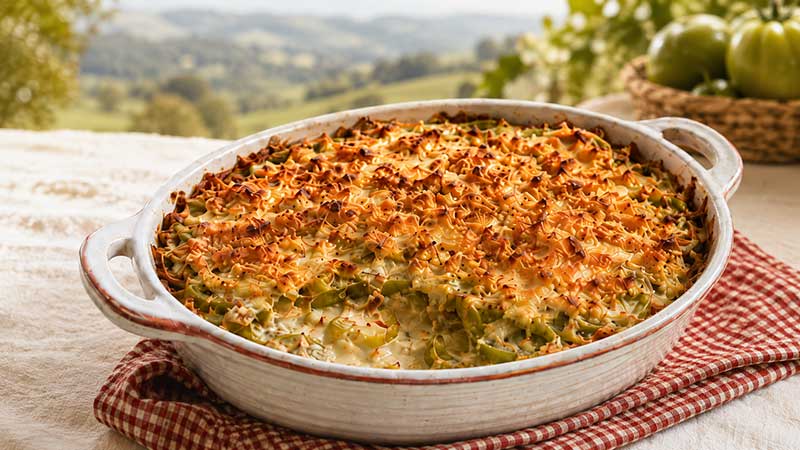
Green Tomato Casserole

Ingredients:

  • 4 medium green tomatoes cut in 1/4 inch slices
  • 1 tsp. sugar
  • 1 tsp. salt
  • 1/2 tsp. pepper
  • 2 cups bread crumbs
  • 1 cup sharp cheddar cheese
  • 1 tbsp. butter or margarine

Arrange one layer of tomato slices in bottom of greased 1 1/2 quart casserole dish. Combine salt, sugar and pepper, mix well. Sprinkle tomatoes with 1/2 sugar mixture, 1/3 bread crumbs and 1/3 cheese. Repeat layers, but omit cheese. Dot butter over top of casserole. Cover and bake at 400 degrees for 1 hour. Add remaining cheese. Bake uncovered for 5 minutes or until cheese melts.

Oven-Canned Tomatoes/Vegetables

Prepare tomato or vegetable as usual. Blanch. Fill jar with mixture and close lid. Place in cold oven. Set temperature to 275 degrees. Cook 1 hour and turn off oven. Leave until oven has cooled down.

New Tractor Supply

Odenville Chamber of Commerce welcomed Tractor Supply in April with a ribbon cutting ceremony, celebrating the addition of the nationally recognized retailer to its growing community. Local leaders, business representatives, and residents gathered to celebrate the store’s opening and the continued economic development in St. Clair County.

The new Tractor Supply store brings a wide selection of products for home improvement, agriculture, lawn and garden care, livestock, pet supplies and outdoor living. The addition of the store is expected to provide both convenient access to essential goods for residents and new employment opportunities for the area.

Store Manager Ross Coleman expressed enthusiasm about becoming part of the Odenville community. “We are thrilled to open our doors in Odenville and serve the hardworking customers in this area,” he said. “Tractor Supply is committed to supporting growing communities, and we look forward to building lasting relationships with our neighbors while providing the products and services they need.”

Odenville Mayor Buck Christian also highlighted the importance of the new store to the city’s growth. “This is an exciting day for Odenville,” he said. “Tractor Supply is a perfect fit for our community, and we are grateful for their decision to locate here. This store not only enhances the services available to our citizens but also contributes to our local economy and quality of life.”

St. Clair County Commission Chairman Stan Batemon offered his thanks for the investment into the county. “We are proud to welcome Tractor Supply to Odenville and St. Clair County. This investment reflects the strength of our local economy and the continued confidence that national retailers have in our community. Tractor Supply will be a valuable resource for our residents and a strong partner moving forward.”

The ribbon cutting ceremony marked an important milestone for Odenville’s continued growth and development. Community members were invited to explore the new store, meet the team and take advantage of opening promotions and offers.

Earnest Roots Farm

Story by Scottie Vickery
Photos by Mackenzie Free

Not long after they had their first child in 2017, Kiley and Josh Morrison started wondering about the food they were giving him. They worried about where it came from, the chemicals it contained, and whether or not it would affect their son’s future health.

After doing some research, they weren’t happy about what they learned. So they planted a vegetable garden, got a milk cow, and vowed to make changes for the good of their family.

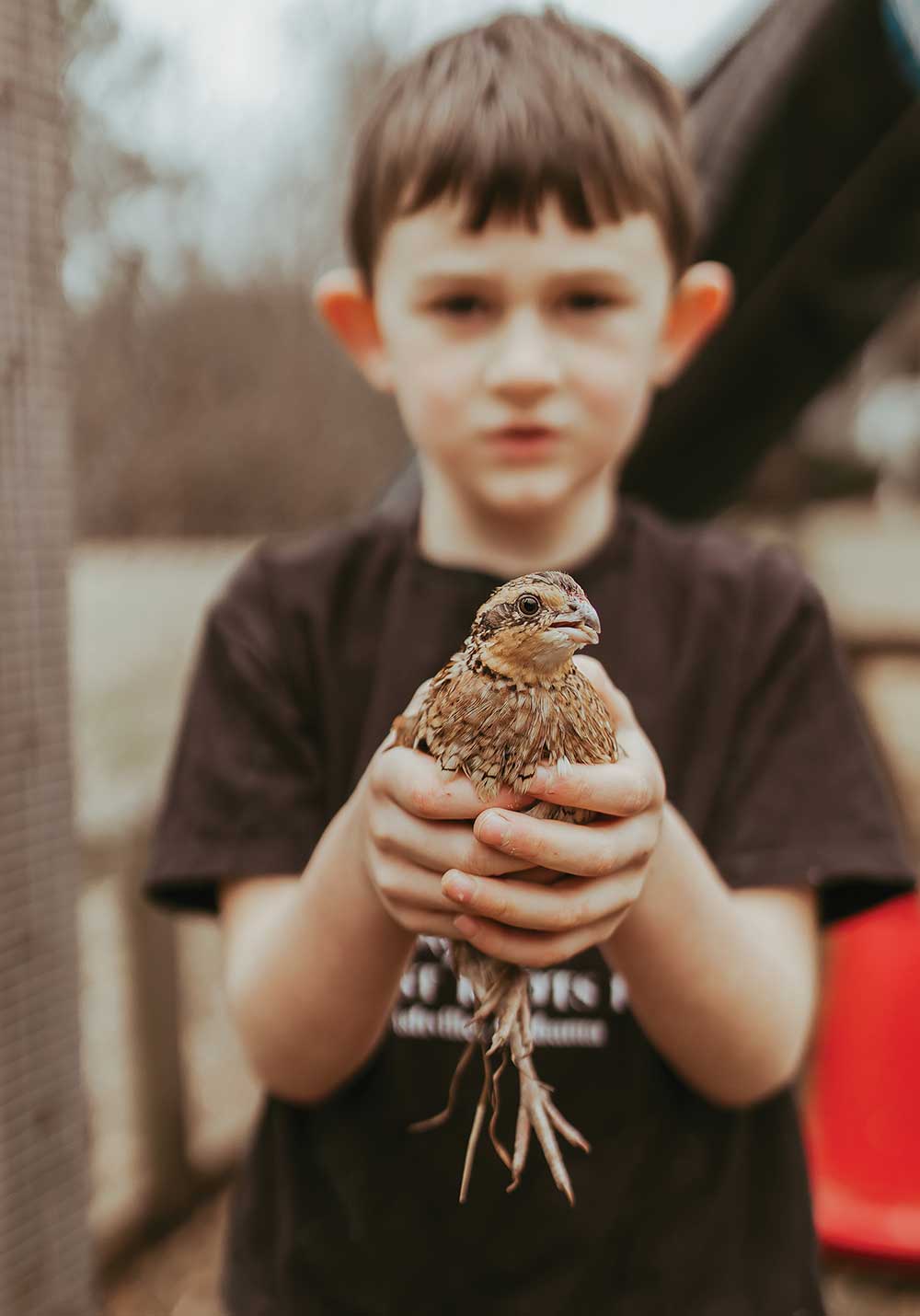
Atticus is raising quail

Nearly 10 years later, what started out as parents’ intuition has morphed into Earnest Roots Farm in Ashville, which offers pasture-raised beef, chicken, pork, and other food that was “produced the way God intended.” No GMOs, antibiotics, hormones, or synthetic chemicals are used, Josh said. Instead, they practice regenerative agriculture to produce healthy soil, which produces better grass, leading to healthier animals. The result, he said, is nutrient-rich foods with superior flavor.

“What’s at the end of your fork determines your health,” Josh said. “If you know your farmer, you know your food. It’s not just about taste, it’s about what you’re putting in your body,” Kiley added. It’s a lifestyle they’re willing to bet the farm on because they’ve seen the benefits of a healthier food system firsthand.

“We weren’t always foodies,” Josh said. “We didn’t care what we ate. I drank Mountain Dew like it was going out of style.”

Josh grew up with migraine headaches, some so severe he had to be hospitalized. While in a neurologist’s office one day, he flipped through a health magazine because it was the only reading material available. “There was an article about how your body needs water for your organs to work properly,” he said.

Josh decided to give it a try and vowed to drink only water. “I started seeing changes within several months,” he said. “Within two years I wasn’t having any more headaches, and this was something that had plagued me for 30-something years.”

Although their original goal was to provide the best food for their family, the Morrisons quickly realized that other folks wanted to do that, as well. As a result, they’ve steadily grown their business and their desire to be local farmers that people can trust.

Much of that trust comes from transparency. In addition to offering farm tours “so people can see that we do what we say we’re doing,” they have a YouTube channel with videos about everything from their farming practices to recipes and instructions for cutting up a whole chicken or making homemade butter.

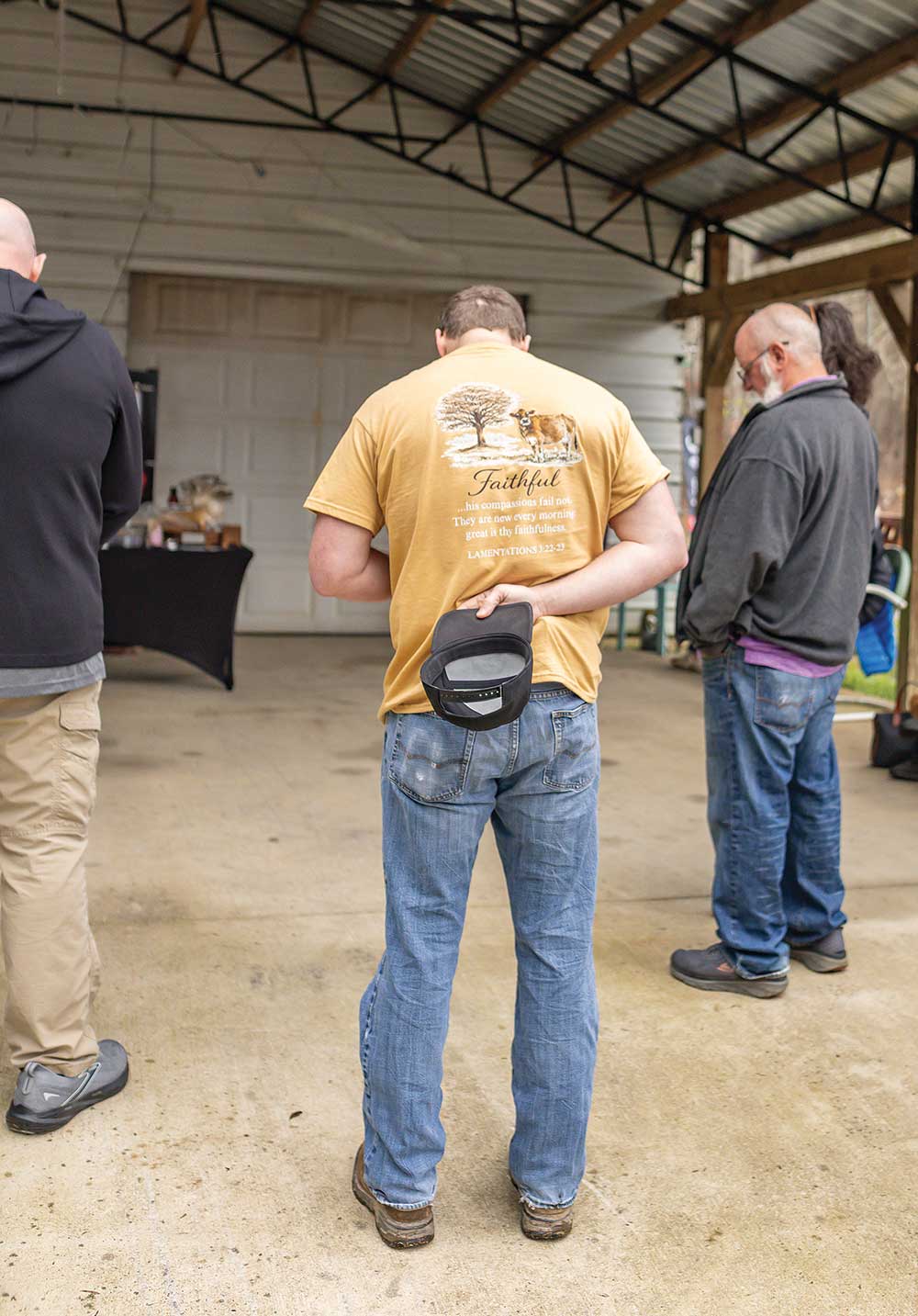
Andrew Jones offers a blessing before everyone eats at Market Day

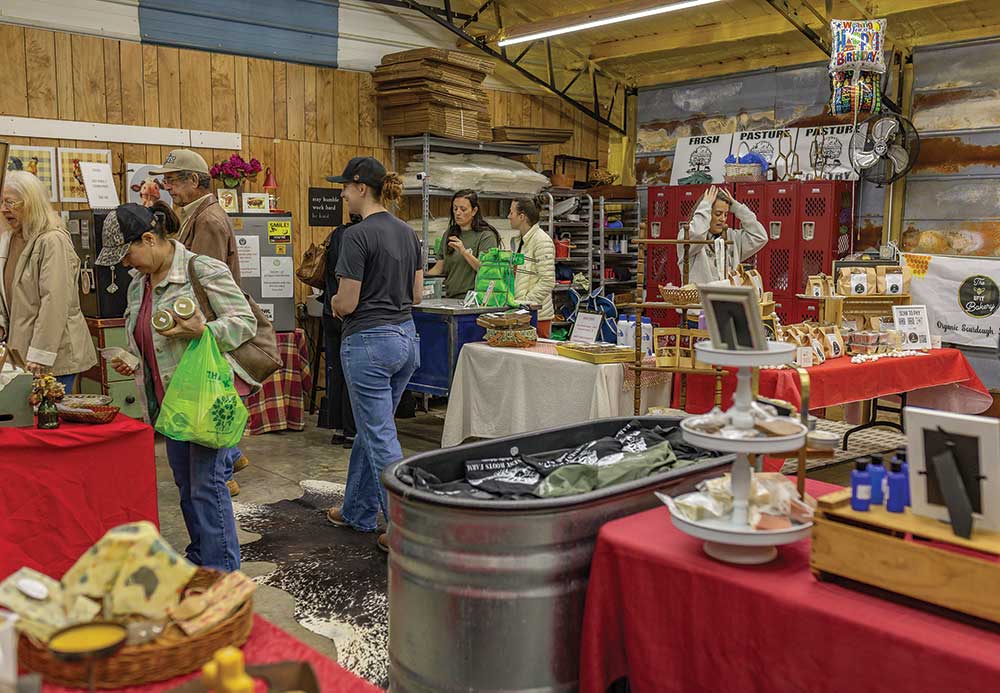
In 2024, they started hosting monthly Market Days with educational demonstrations and local vendors selling everything from honey, jams and jellies, sourdough bread, tinctures and oils, soap candles, and all-natural dog treats. They also sell their chicken, beef, pork, lamb, and quail, as well as offerings like fresh eggs, bourbon pepper bacon, garlic pepper brats, and maple brown sugar breakfast patties.

Market Days were so popular that they now host a farm market every Friday in addition to their shipping and local delivery options. “We’ve just continued to steadily improve it,” Kiley said. “We’ve learned a lot along the way, and God continues to open doors for us. We couldn’t do this without the tremendous support of the community.”

Deep roots

Kiley, a third-generation farmer, grew up on the family farm where she and Josh are now raising 9-year-old Augustus and Atticus, 6. Her grandfather, Ernest Ostrowski, was a dairy farmer in Wisconsin before moving to Alabama and marrying Kiley’s grandmother, June, a cattle farmer. Phillip Byram, Kiley’s father, was 16 when his mother married Ernest, and he has lived on the family farm, where he raises beef cattle, since he was 10. Phillip’s wife, Sharon, who passed away in 2020, was a farmer, as well.

Although Kiley loved growing up on the farm, she had no plans to end up there herself. She and Josh, who grew up in Altoona, met online 20 years ago, and they both attended Gadsden State before marrying and pursuing civil engineering degrees at the University of Alabama.

Kiley and Josh found jobs in the telecommunications field – she was in management with an engineering company in Birmingham, and he started designing fiber telecommunications. She traveled a lot and loved her job, but the lure of a simpler life eventually began to take hold.

“I wanted to be home and have a family and be grounded,” she said. “It took getting away from the farm to realize what a blessing it was to be able to live on the farm. It’s not something I take for granted.”

She realized she wanted her kids to have the same experiences she had, so they returned to Ashville and bought her grandparents’ farm, which was 10 minutes from her father’s farm. Although the plan was to focus on homesteading and self-sufficiency, they soon began selling beef, chicken and pork at a farmer’s market in Gadsden, which they did for two or three years. Business was good, so they launched a website just about the time the Covid pandemic started.

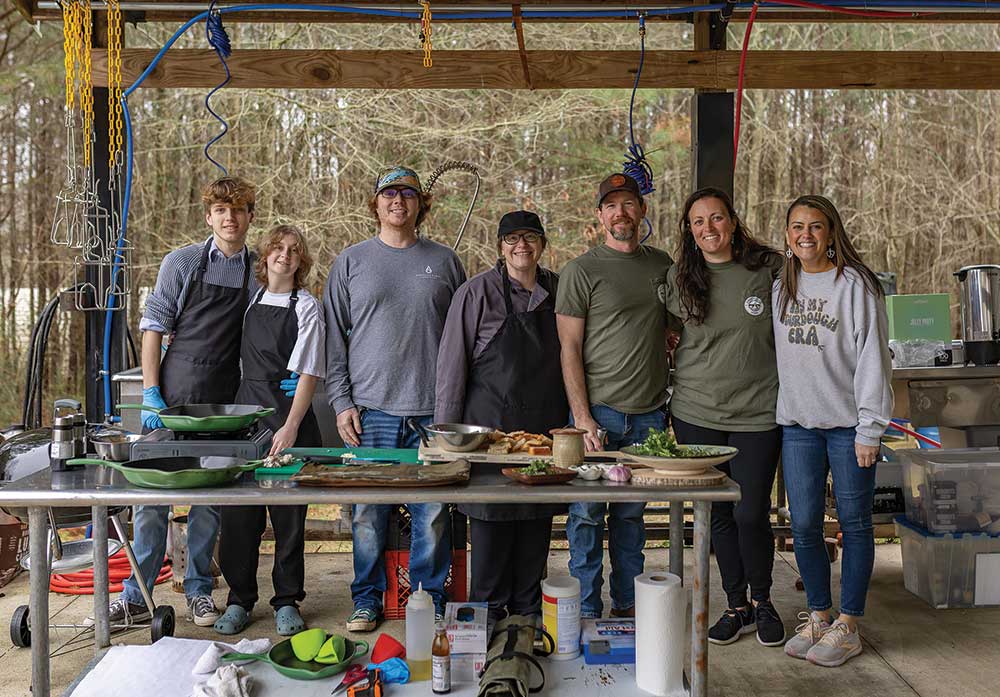
Culinary students Braden Godwin and Max Smith; Joey Duke of Aquality Farms; Meigan Tucker of ECTC; Josh and Kiley Morrison; and Anna Warren of The BFIT Bakery

“All of a sudden, people didn’t want to go to grocery stores; they wanted to go to their local farmer,” Kiley said. They set up local pickup points so customers could place orders online and pick it up later at a convenient location. “We did that for the community, and a lot of people took advantage of that,” she said.

The shipping side of the business grew quickly, and in 2021 they sold Ernest’s farm and bought a farmhouse and 10 acres (they recently added another 40 acres) adjacent to Phillip’s 180-acre cattle farm. Kiley’s sister and brother-in-law, Molly and Andrew Jones, live on the farm, as well, and the five of them work together to make Earnest Roots a reality. “Kiley and I are just really the faces” of the operation, Josh said. “It’s very much a family endeavor.”

The farm’s name is a nod to Ernest and the family’s deep farming history. Ernest and June taught Phillip to farm, and they taught Kiley and Molly, Josh explained. When he and Andrew joined the family and “didn’t know jack diddly about farming, they taught us, as well,” he said.

They changed the spelling from Ernest to Earnest as a nod to the future. “If you look in Webster’s dictionary, one of the definitions for ‘earnest’ is a promise of things to come,” Josh said. “As we grow, as we learn and diversify, we’re adding more and more products for our family and yours,” he said.

Future fruits

Market Day at the farm

They’re also raising what likely will be another generation of farmers. “They’re the reason we started this,” Josh said as he watched their boys run across the pasture.

The days are long. Josh is still designing fiber telecommunications in addition to his work on the farm. Kiley homeschools the boys while juggling her many roles. The boys get up early every morning to feed the chickens while Josh milks cows.

And they wouldn’t have it any other way. “I love that we’re raising them here where I was raised and that they’re getting their hands dirty and learning that it doesn’t hurt to work hard,” she said. “Never in a million years would I have thought that we would be here. There were a lot of steps between our original goals and where we are now, but God was laying the groundwork. He put us where we need to be without a shadow of a doubt.”

Beyond the Arena

Story by Elaine Hobson Miller
Photos by Mackenzie Free
Submitted Photos

The St. Clair County Arena in Odenville has been home to rodeos and agricultural shows for many years, but today, it is so much more. Over the past 12 months, it has hosted a dog show, a vintage market, a circus and a county fair.

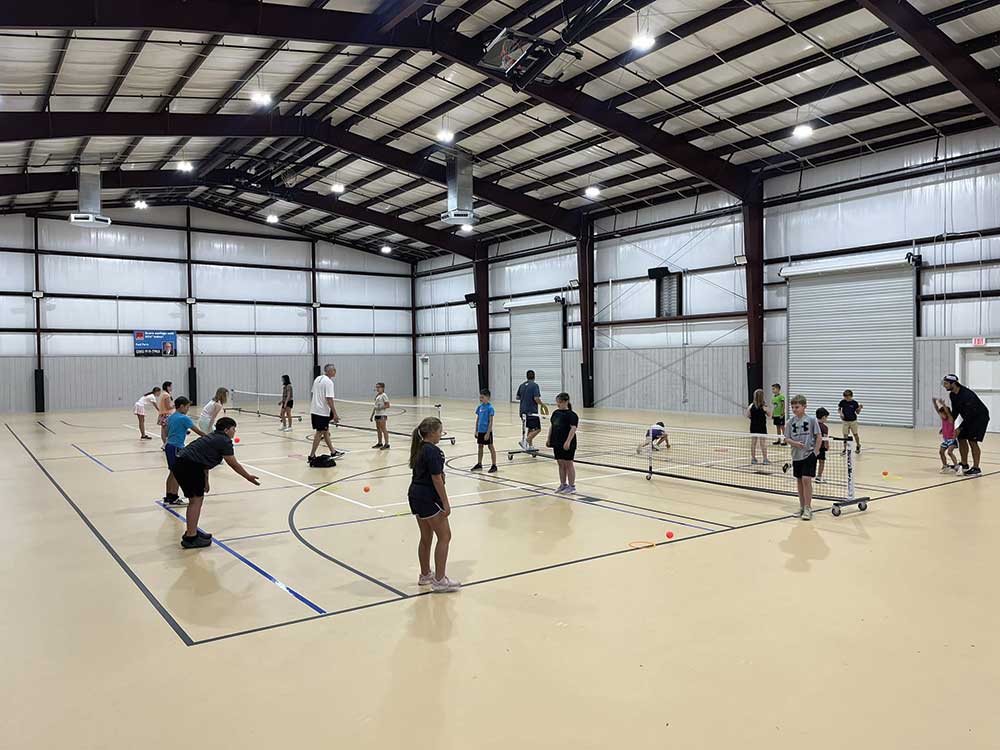
The Event Center next door is a pickleball mecca to rival any courts in the county.

 In other words, the Arena ain’t just a place for agricultural shows anymore. The official title may give a hint to the depth of its overall scope: St. Clair Agriculture and Multi-Event Center.

“We wanted more than just an agricultural center,” says County Commissioner Jeff Brown. “And that’s what we have. We can do a dog show one day, a circus the next. I give (Arena Director) Ashley (Hay) a ton of credit. She’s easy to work with. The original board that ran it needs credit, too. It started from nothing.”

Dog agility show

 The county bought the Arena, 25.6 acres of land and an office building in 2010 from Randy and Michelle Spence for $551,197. For 11 years, it was used for rodeos and other horse-related events. During COVID, the county received a $1 million federal grant to build an emergency facility, called a Pandemic Center, that they could operate from in the event of a natural disaster. That grant changed everything.

“I came aboard in 2021, and the grant had already been awarded,” says Hay.

“The county commission looked for a way to use the grant to best help the entire county. Only the Arena was here then.”

Hay says that grant required a large, unobstructed space, restrooms, as well as storage to be utilized by EMA. The county commission looked for ways that the facility could be used for more than just emergencies, though. This led to the addition of a sport-court surface, bleachers, retractable basketball goals and equipment for volleyball and pickleball in the Event Center.

“This building was attached to an existing older building that had administrative offices and the cowboy church,” says Hay. “The concession stand with restrooms and showers was built a while ago.”

Both the Arena and the indoor, 12,000-square-foot Event Center are membership facilities available to anyone. “We have a lock box for daily use, or you can sign up online. We have about 100 members right now. The cost is $100 for an annual membership, but daily memberships are obtainable, too.”

Pickleball players have five days a week to play their favorite game. “They are pretty dedicated folks,” Hay says. “And they say ours is one of the nicest facilities within 100 miles. We have pickleball classes, but we don’t have programs, so we’re able to offer more open gym time.”

The Event Center offers summer membership for kids, too. The Center’s Facebook page is the best place to check out the schedules.

“We’re the only arena in our area that I know of that allows open rides as much as we do,” Hay says. “Horseback riders can come any time between 6 a.m. and 10 p.m. When they register, they get access to opening the gates. We have 80 horse-riding members. One woman comes with her baby at 6 a.m. because it’s the only time she can.”

Early history

Originally, the county created a parks and recreation board to run the facility, appointing Lude Mashburn of Odenville, the late Hershel Walker of Argo, Don Smith of Springville, Brad Sanders of Odenville and Kenny Womack of Riverside as  members. A couple of years later, Womack was replaced by Jimmy Hollander, also of Riverside. The board elected Mashburn as chairman.

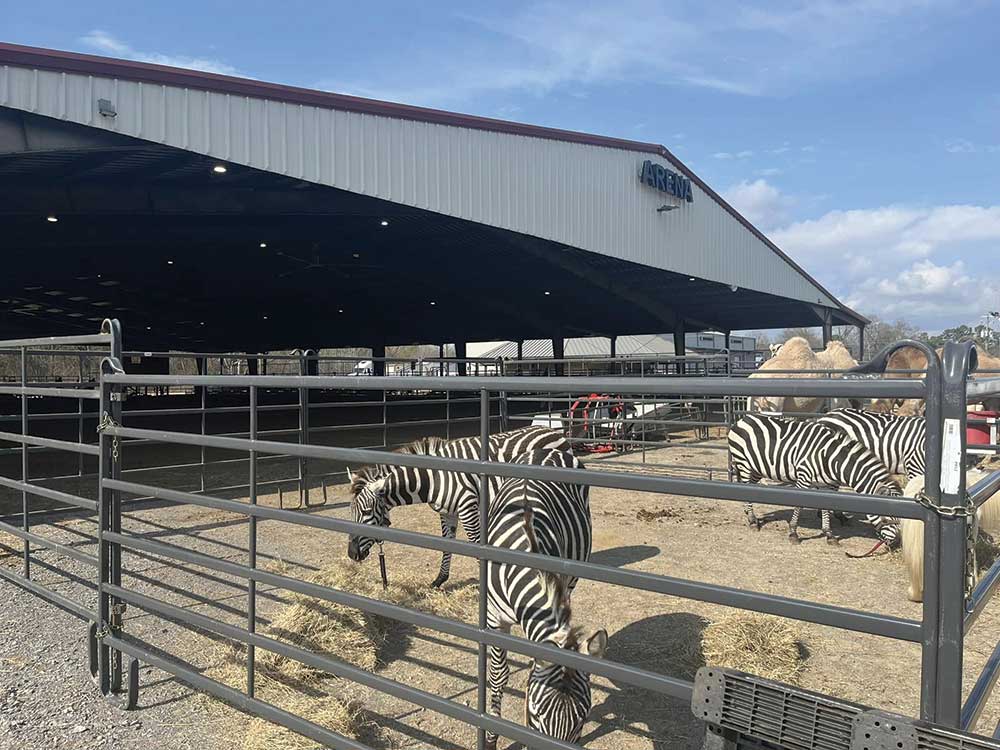
Zebras and camels visit with circus

“The county had a vision, and they appointed the board to run it,” says Mashburn, who was an agricultural science teacher at St. Clair County High School at that time. “They turned everything over to us, and we ran it. We put in the dirt for the Arena floor, bought a tractor to keep it compacted during rodeos, all that. But the county never funded it for the 10 years we had it, except for building the restrooms and the bleachers. Then things kinda changed when the county got COVID money.”

The board was officially dissolved on February 10, 2022, and the property and facility are now funded and managed by the St. Clair County Commission, according to County Administrator Tina Morgan. Board members at the time of dissolution were Chairman Lude Mashburn, Jimmy Hollander, Brad Sanders, Candi Jones and Donnie Smith.

The county covered the bleachers and Arena, added lights and industrial overhead fans. The bleachers seat 800, with extra seating brought in for rodeos, pushing that total to 1,200 seats as needed. The Arena itself is 22,000 square feet. “In March, April and May, then again in September, October and November, there’s an event every weekend,” Ashley Hay says. “We have had car shows, a community yard sale, barrel racing, ranch sorting, a pig squeal and a county fair.”

Youth timed events such as barrel and pole races and goat tying are still held there. “We have more equine events than anything else at the Arena,” Hay says. “We also have lots of banquets in the Event Center. We’re working on grants for developing the 12-15 acres at the back of the property, including a multi-use trail for walking, horseback riding and bicycles. We also want to do RV hookups so folks can park for the time they are in a show.”

Local youths take part in Pickleball Events Group clinic

Hay’s background is in parks and recreation, having worked for the city of Springville before St. Clair County. Originally from Kansas, she moved here in 2018 because her husband is from Alabama. “I was a high school volleyball and basketball coach, then got into parks and recreation after that,” she says. “I really enjoy it. I started and grew the parks and recreation program in Springville. Then they asked me to do the same here.”

Under Hay’s management, the facility has added a wash bay, industrial fans, lighting, an uncovered, warm-up pen behind the Arena, and everything inside of the Event Center. It has improved parking and upgraded the PA system, too. Hay added a Facebook page and advertisements on Radio Station 94.1. “I feel like things are running well,” she says. “We’re trying to expand the types of programs we have.”

Besides all the public functions, the Arena and Event Center are available to rent by individuals for volleyball and basketball games, for wedding receptions, banquets and other private events. “We have had a wedding, and they brought horses,” Hay says. “The wedding was in the back pasture, and the Arena was where they held the reception. It’s a $750 fee for two days’ rental, and that’s dang cheap in comparison to other facilities of similar size.”

The Arena hosted a circus in February 2025, and the Gala of World Horses in the Fall of 2024. “The Gala had never been to Alabama before,” Hay says.

At least two dozen trailers were parked outside the Arena for a recent Buckle Series, a barrel racing event. Several horses stood tied to trailers, munching hay from their hanging bags. Riders walked their horses in circles, getting them ready for the event. One of those riders was Emmaline Puckett, 9, of Ashville. She has been racing since she was five or six, and like most of the other competitors, usually comes early to put her horse through its paces.

“We’re members here, so if the weather is bad, we come over here to practice barrels,” says Emmaline’s mom, Christina Puckett. “We’re very thankful for this place.”

Tyler and Jayclyn Cobb of Blount County came to watch the barrel race, even though Jayclyn couldn’t compete as usual because her mare has been bred. “We love coming here, Jayclyn says. “It’s covered, shaded, not as hot as other places.”

“A lot of people have really done a great job with the Arena from the get-go,” says Commissioner Brown. “The board members deserve a lot of the credit. We (the county) had the ideas, and they made it happen.

“That board served for free, put in a lot of hours, even parked cars during events. They deserve all the credit.”