Renovations by the water

Wow factor comes to life in Junkins’ lakeside home

Story by Carol Pappas
Photos by Michael Callahan

Step inside the lakeside home of Lori and John Junkins, and you immediately come face to face with the ‘Wow!’ factor. Actually, there is plenty more than one of those factors.

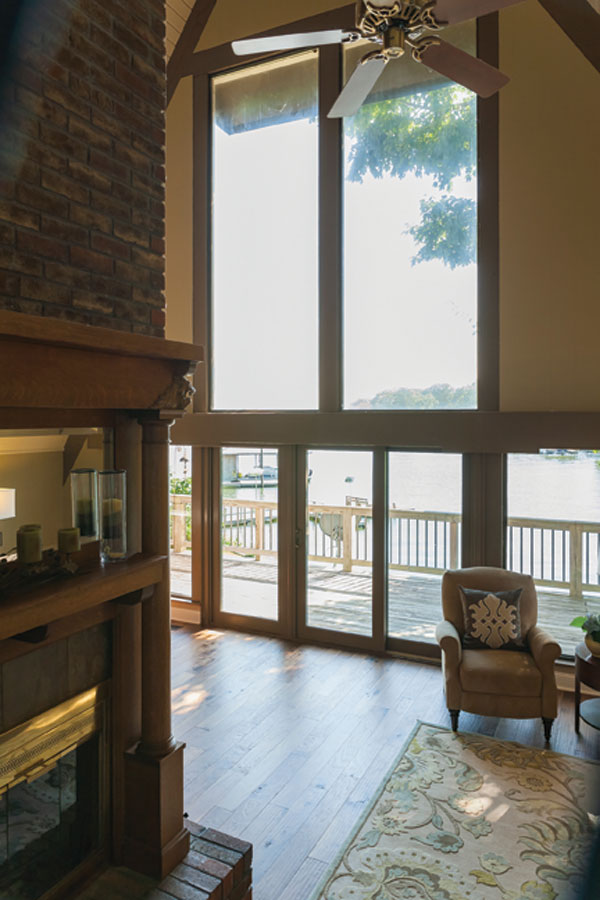
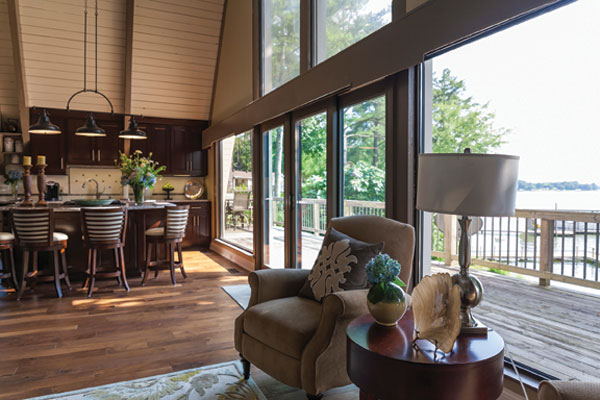
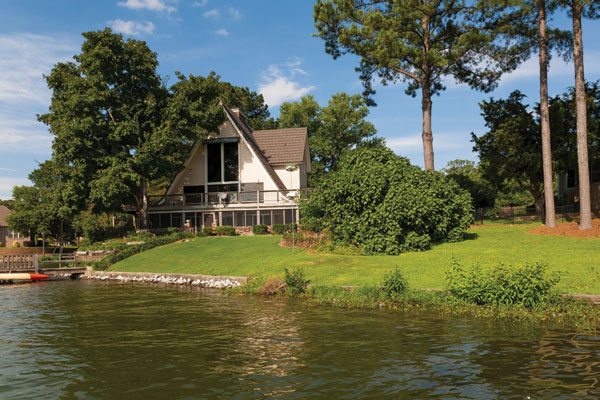
The three-story A-frame towers above the shoreline of Logan Martin Lake, angled toward its main channel with a wall of windows and glass doors that frame a breathtaking view.

But take a look around inside, and that same awe seems to envelop friends, family and visitors alike.

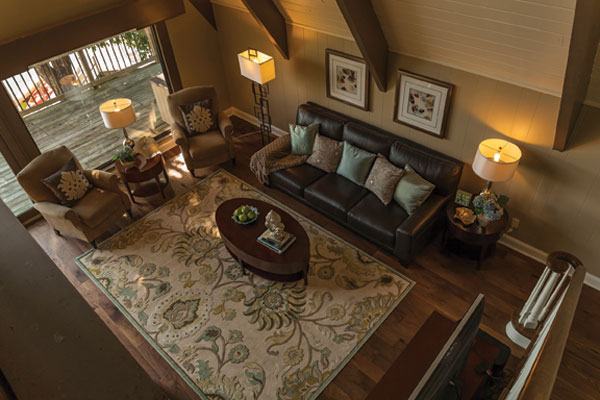
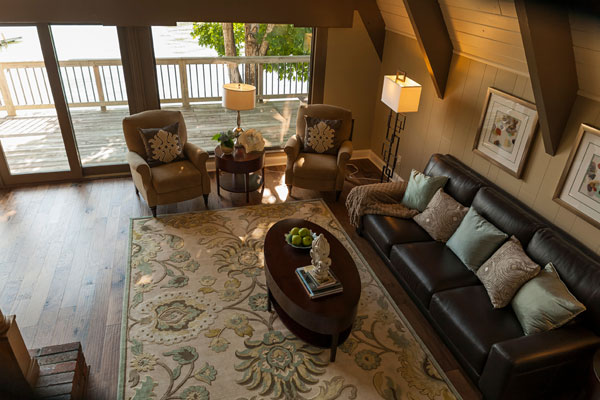
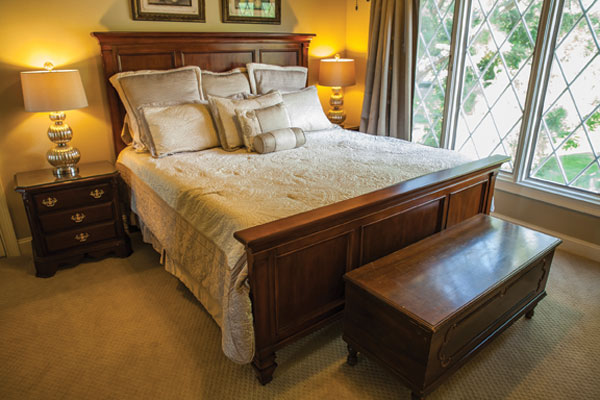
It wasn’t always this way. One thing led to another, they say. It began with the enclosure of the loft to enable a more private master suite. But no worries. The view is still there with a large picture window overlooking the main level below and a bird’s-eye vantage point of the lake just beyond. Satin curtains, warm colors and a mix of antique and contemporary furniture are the perfect complement.

For most, that would have been a major renovation. Little did the Junkins know then, that would be their ‘small’ project.

At Thanksgiving, 20 people made their way through the narrow, galley kitchen, which served as a main entrance to the house. And John said they knew it was time to re-imagine their home.

Originally, they had an architect come up with a plan to give them more usable space and design an entrance. But bedrooms for children Jake and Amelia on the main level would have been lost.

Time for Plan B, they said. Their appraiser, Jeff Jones, suggested an eat-in island for the kitchen, and Lori took the idea to the next level from there with the skill and craftsmanship of Dennis Smothers and Pell City-based Benchmark Construction.

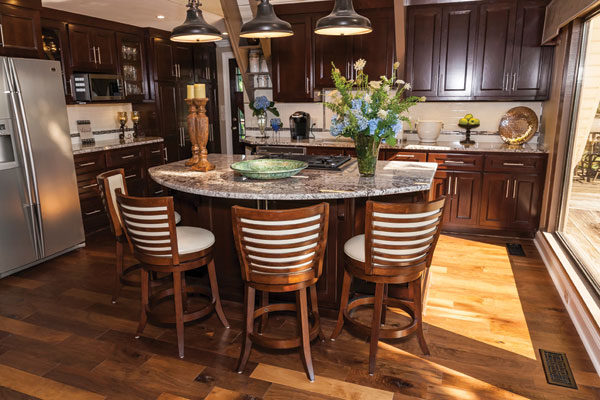
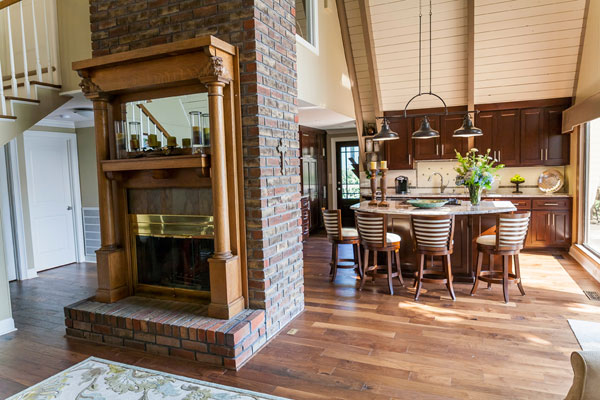
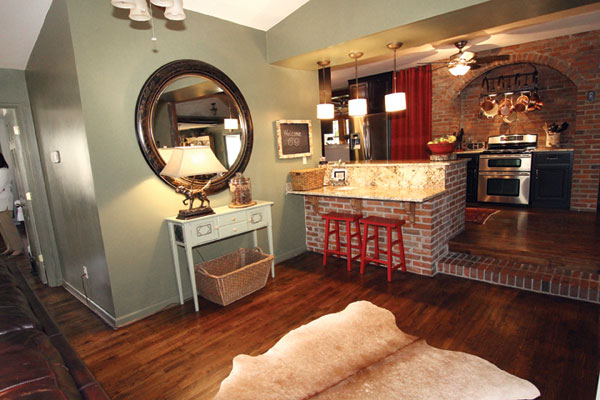
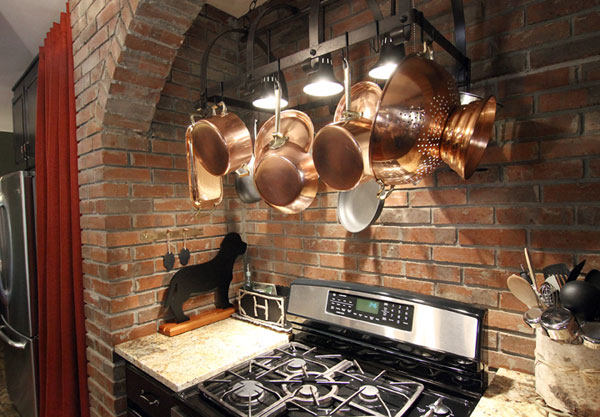
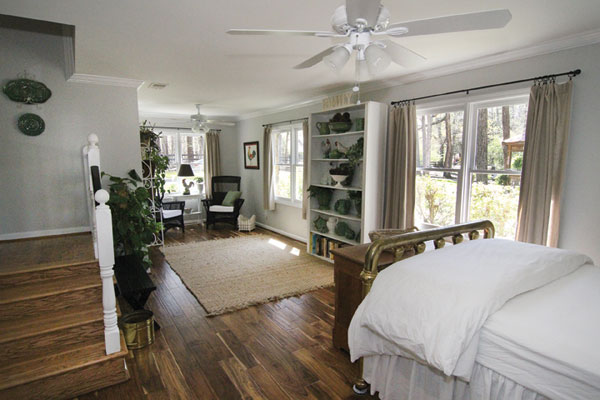
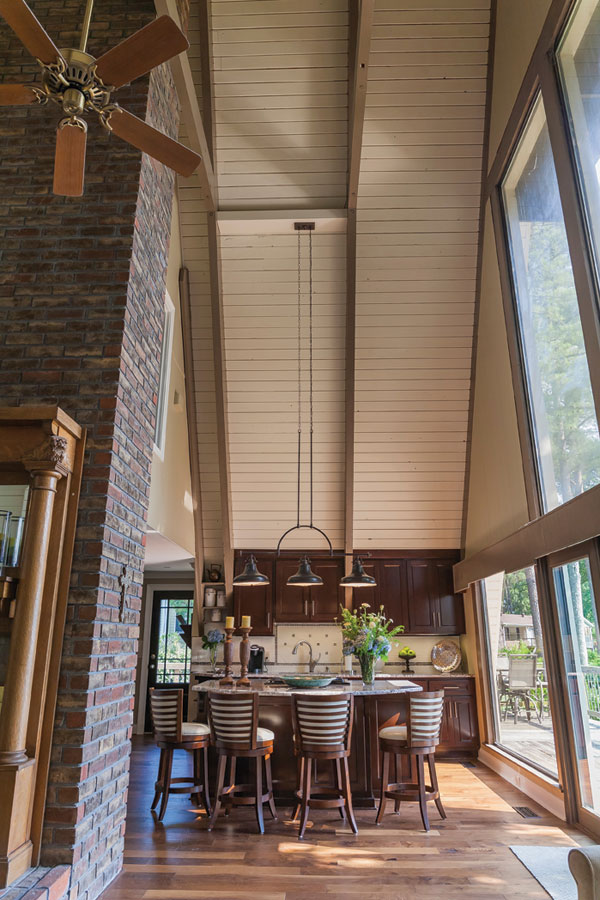
Open space replaced a galley kitchen that was separated by a single bar with dining area on the other side. Wide-plank hardwood floors enlarged the look of the room and gave it a richer feel. Custom cabinets designed by Lee Kerr in Anniston, running along the interior wall as well as built into a sloping exterior wall of the A-frame, are a rich, dark wood.

Granite countertops, brushed-nickel fixtures, a gas range and a pendant with three lights that took Smother’s crew with a 36-foot ladder to hang from the house’s tallest point are just a few of the amenities that make this space so special. The 6-foot, 8-inch-by-5-foot island with granite top features a rounded edge that makes seating more suitable to dinnertime conversation. Leather and wood stools fit perfectly with the décor.

The main-level guest bathroom and a master bathroom underwent a major makeover as well. The original, small master bath was a formidable challenge, but Lori knew what she wanted and designed it by doing away with an original wall that separated the bath from closets. It now has a much more open space. Renee Lily of Lily Designs of Pell City consulted on the renovation of the main level bath.

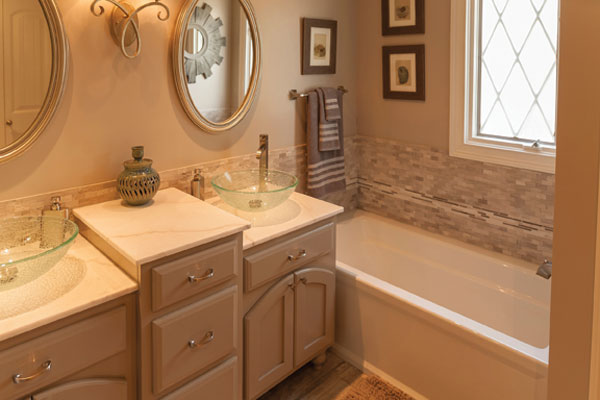
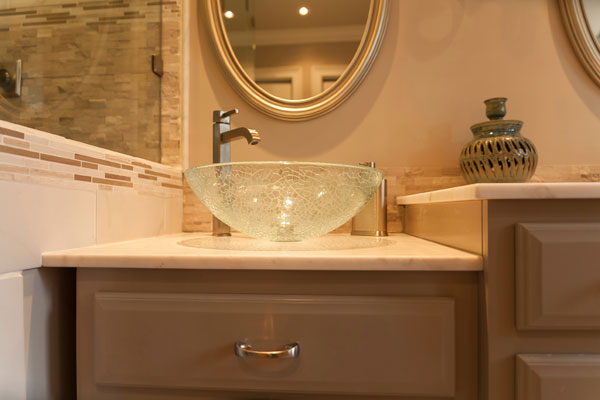
The master bath is greige — a warm and inviting color cross between grey and beige. Lori designed the vanity herself with arched doors and varying counter heights to give more flat space between two basins made of green, crystalline bowls with brushed nickel fixtures.

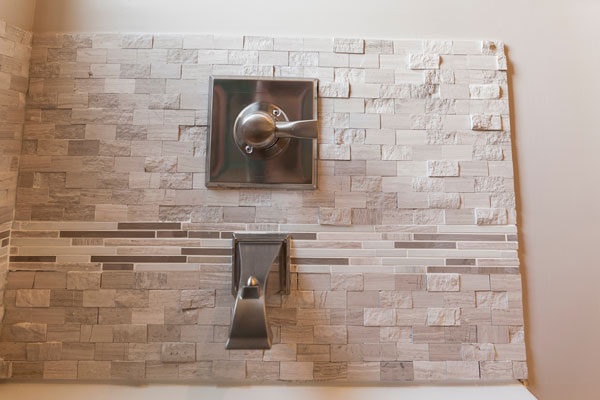
Three 1879 lithographs of birds nests and an egg — “my favorite,” said Lori — hang above a soaking tub surrounded by greige marble backsplash cut in small rectangles, giving it a stacked stone look. The backsplash runs from the bath to the vanity to the shower, bringing the room all together.

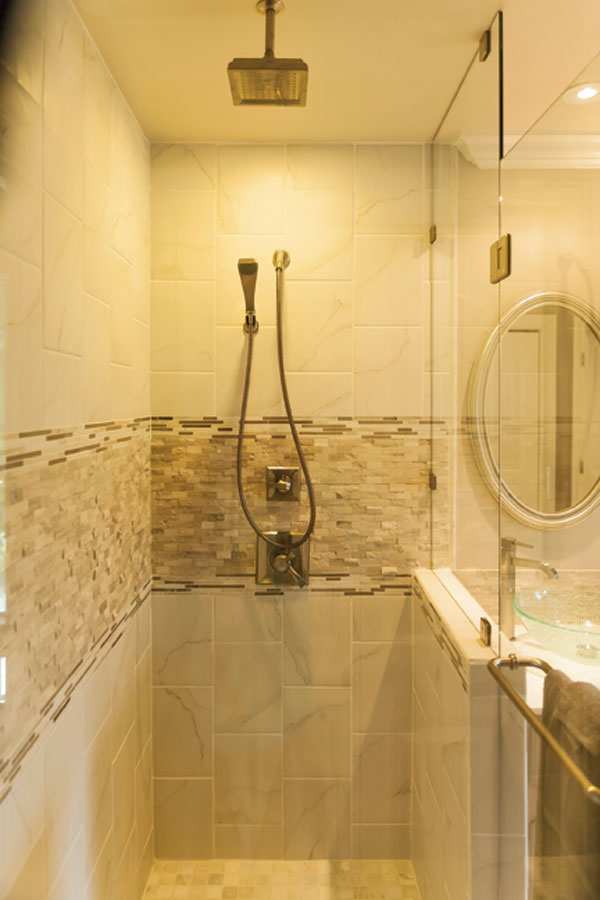
Across is a large, glass walk-in “rain shower” with oversized shower head to give a rain effect. And the tile floor is a wide-plank, weathered wood look. It is hard to imagine it is made of tile.

The guest bath below uses the same color scheme and amenities, enhancing the natural flow from room to room.

The Junkins’ dream makeover is now a reality, and the months of work are well behind them. They have enjoyed entertaining friends and family and just hosted a post-wedding party for Lori’s nephew and bride, Clay and Rachel Craft. More than 70 attended, and space to accommodate was never a problem with the new design.

With an older home, “you have to be creative,” said Smothers. “I just followed Lori’s lead. She was great to work with.”

Lori returned the compliment. “He is a great builder and designer.”

All you have to do is take a look around at the finished product, and you know they both are right.

Dolores Hydock

Master storyteller gets ‘schooled’ on Chandler Mountain

Story by Carol Pappas
Photos by Jerry Martin

In 1974, Dolores Hydock was on a hunt for folklore for an in-depth paper she was researching for a college class at Yale University.

That unlikely journey from New Haven, Conn., led her up a winding mountain road in northeast Alabama and clear up on the top, she found what she was looking for and some things she never dreamed she would find.

As a student in American Studies, this city girl born and raised in the north, set her sights on the Deep South for a paper on Alabama folklore. Recounting her early planning efforts, she said she traveled across the state and “discovered everything from Mardi Gras to snake handling.”

Alabama’s folklore was so abundant and so diverse, she faced the dilemma of having to narrow her focus. Enter Warren Musgrove, who owned Horse Pens 40 on Chandler Mountain at the time. She had been encouraged to go and see him because of his gift for storytelling and his ability to recognize where the best folklore could be found — right where she was — on Chandler Mountain.

For four months, she lived among its people, developing special relationships that would draw her back to the state after college and put her on a road that led to her life as one of Alabama’s master storytellers.

On her CD, Footprint on the Sky: Memories of a Chandler Mountain Spring, Hydock vividly recounts the people and the places atop the mountain. On the CD and in person, she talks fondly of those months, especially centering around two special friends — Hazel Coffman and Dora Gilliland.

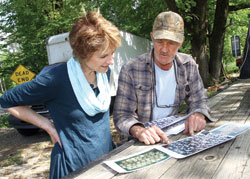
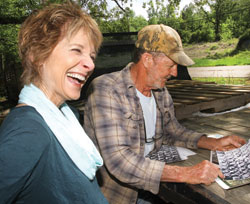
Dwight Rogers, whose parents owned Rogers Store, happens by while Hydock is on the mountain. He points out old school pictures of people she might know.

She talks of their impact — just like people who make a difference in your life, people who are “not powerful but are strong; not wealthy but are generous; not famous but are loved.”

They are, she said, people who “work hard, live simply, love their families and make strangers feel at home.” Just like Hazel and Dora did for a college girl from up north in 1974.

Hydock traveled the snaky road leading to the top of Chandler Mountain with Discover, revisiting some of the places and remembrances that helped shape the story performer and actress she is today.

Her wit, charm and an innate ability to turn a phrase in any direction she wants it to go are simply part of her signature style on stage, much to the delight of audiences large and small.

She is the most requested Road Scholar, a program of the Alabama Humanities Foundations that provides top-notch speakers for libraries and historical groups across the state.

And she is an award winning story performer with national accolades to her credit.

She has taken many an audience back in time to her Chandler Mountain spring, a time of seemingly endless learning for this Ivy Leaguer, the kind of lessons you just can’t get from books.

With a twang in an accent familiar around these parts, she lets audiences know some of the lighter lessons learned there: “Sand Mountain tomatoes are the most famous, but anyone who knew tomatoes knew Chandler Mountain tomatoes were the best.”

If you’re mountainfolks, it’s “on the mountain and off the mountain,” no going up or down.

That spring, she stayed at the Clarence House, a place used only in the summertime for tomato growing season. It had no electricity — only a fireplace to keep her warm.

There, she learned her first lesson. Those “long pointed sticks” piled behind the house were not kindling left by a thoughtful landlady, they were tomato stakes, which she learned after burning a whole stack of them her first week on the mountain.

At Rogers Bros. Store, whose sign advertised “feed, seed, hardware, groceries and gas,” she learned a little more. She had a ringside seat, a crate bench by a wood burning stove where people gathered to “tell stories and a lie or two,” she says.

She talks of their patience when a language barrier seemed to get in her way.

“You ever warm up?,” a woman asked her. Not knowing if she was referring to the weather or her demeanor, she was rescued when Hazel Coffman sensed her panic and stepped in to save the day. “She’s asking you do you ever eat leftovers, you know, warm up? She’s inviting you to dinner, honey, if you’ll eat what she has.”

With an obvious debt of gratitude, Hydock says, “Hazel and Dora Gilliland took me in — helped me understand you might come to Alabama looking for folklore but if you give it half a chance, odds were really good you’d end up finding a home.”

And that she did, moving to Alabama that same year after graduation.

She credits Hazel with unlocking her storytelling ability in later years with an iconic image of her — one leg shorter than the other making her “tilt” when she walked. Dressed in a bonnet, galoshes and overalls, she would scatter feed through the yard for dozens of chickens, calves, cows, a dog and a one-eyed cat. “Come on babies,” Hazel would call.

It didn’t matter that it wasn’t easy to get around, there are “plenty ways of doing things if you want to,” Hazel told her.

“Come on babies,” she calls as they scurry toward her. “I hold this picture of her in my heart,” says Hydock.

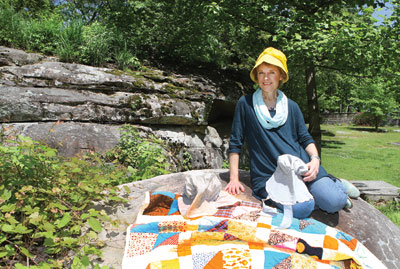
In her stories, Hydock talks about the old Chandler Mountain Community Center. It’s closed now, but it once was a thriving gathering place, especially for the women who came to quilt and visit every Tuesday and Thursday.

It was there she made it over another language barrier. What is afternoon to some is strictly evening up on the mountain. “When you’re up at first light and don’t know anything after 8 when you go to bed, anything after noon is evening,” she was told.

How did they learn to quilt so well? “Grow up in a house where you can see through the cracks in the floor, and you know it gets plenty cold in the wintertime.” With five or six kids in a house, “You learn to make them pretty quick.”

Hazel’s best friend was Dora, who Hydock describes as having a high, funny laugh. “Everything just tickles her to death.”

Dora would offer tales of her Aunt Bertie who used to tell scary stories. Dora admitted they did scare her in her early years but as she grew older, she learned not to be so afraid.

One time, Dora told her, Aunt Bertie started one of her stories, saying a man without a head got in bed with her and Uncle Carl.

A sensible Dora stopped her right there. “A man with no head may have gotten in bed where I had been, but not in bed where I was. Imagine a man with no head getting in the bed with you.”

Hazel sold bonnets every year at the bluegrass and crafts festivals held at Horse Pens every fall and spring. She had the first booth next to the music stage, selling the bonnets she made. “She sold hundreds every year. Dora sold handmade quilts.” They were part of what made those festivals a featured state attraction every year.

In later years, Hazel moved to the city, Gadsden, and lived there 14 years before she passed away. Dora stayed on the mountain — “canning and quilting,” Hydock says. She was 96 when she died.

Those two special ladies, Hydock tells her audiences, may be people you know or you know someone just like them. “They live on in the memories of people whose lives they touched and the people who love them.”

And they live on in the stories Hydock tells about a spring spent on a mountaintop and a place where she found a home.

A common past

St. Clair Springs log homes

Story by Elaine Hobson Miller
Photos by Jerry Martin

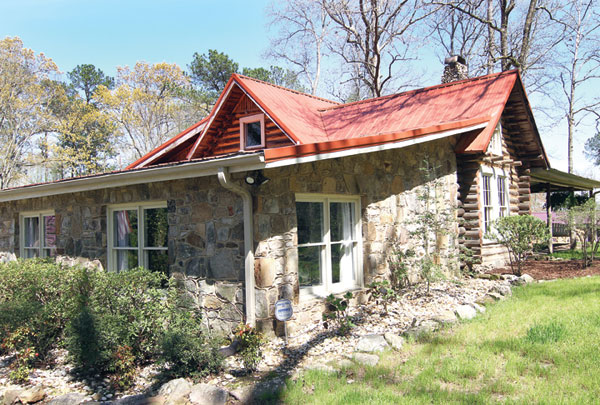
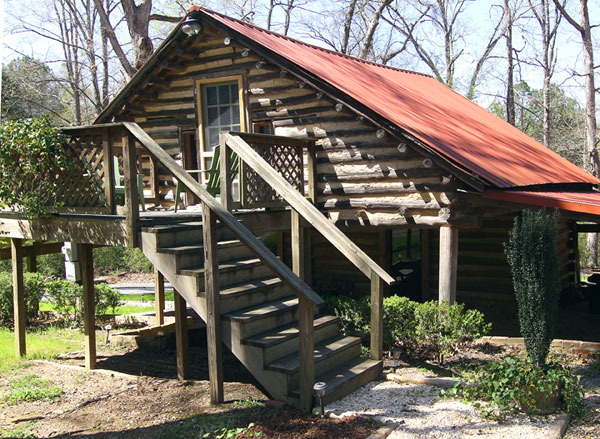
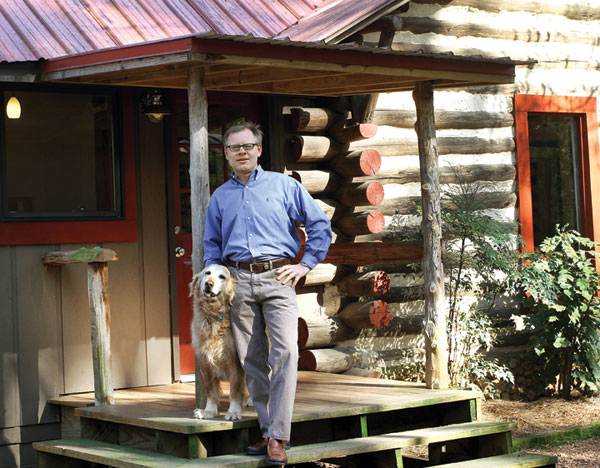
More than 100 years ago, the Jones Road homes of Mike and Cathy Harris and Jimmy Calvert on Jones Road began as simple, four-room log cabins. They were part of the same piece of property, the latter housing the servants’ quarters for the former. Additions and renovations have saved these relics of the past from the ravages of time and neglect, while the personal touches of current and former owners have turned them into modern-day cottages that retain much of their rusticity.

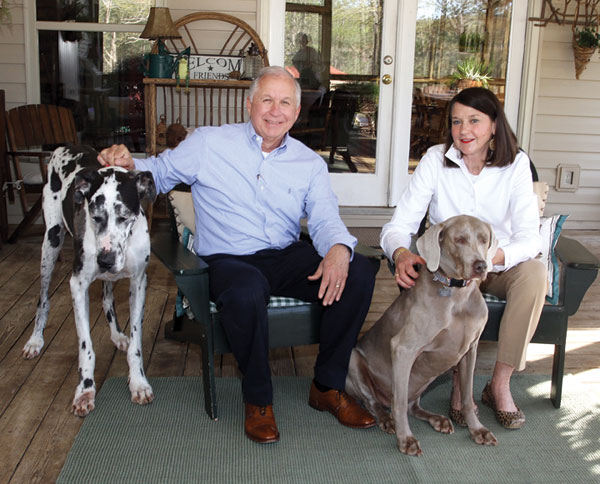
“It feels like half my house is old, half is new, but we don’t know when each was built,” says Cathy Harris, who moved here with husband, Mike, in June 2012 from Raleigh, N.C.

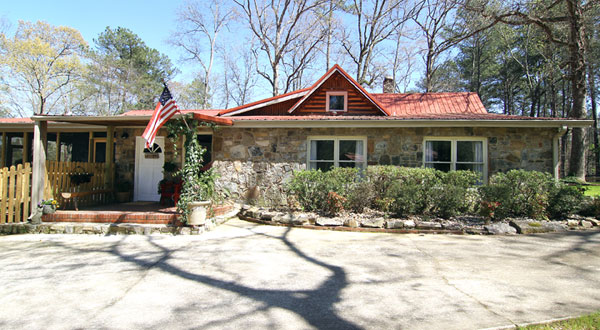
That description fits both the Harris home and the Calvert home. The split personality of the houses is more evident in the Harris home, however, especially from the outside. A stone facade covers the newer half, while the log section, with its tan chinking, dominates the other. Where the two are joined inside, exposed logs remind the owners of the house’s humble beginnings.

“Every floor in this house is (made of) a different kind of wood,” says Cathy Harris. “I think every owner put his own stamp on this house.”

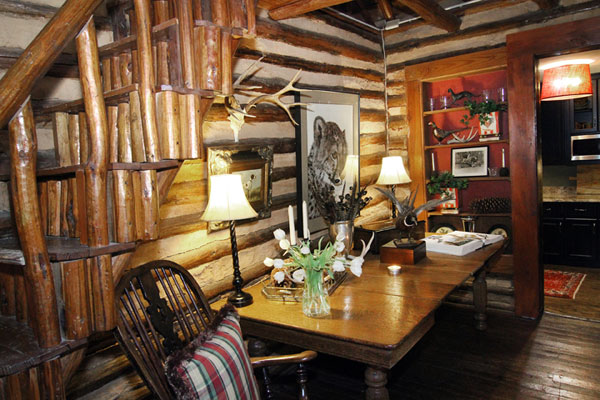
Their stamp happens to be a combination of rustic furnishings from a mountain cabin they used to own and from their Raleigh residence. In the dining area, a faux antler chandelier hangs over a huge round table that belonged to Cathy’s mother. The table is topped by a twig basket on a large lazy Susan, and is surrounded by old hickory chairs.

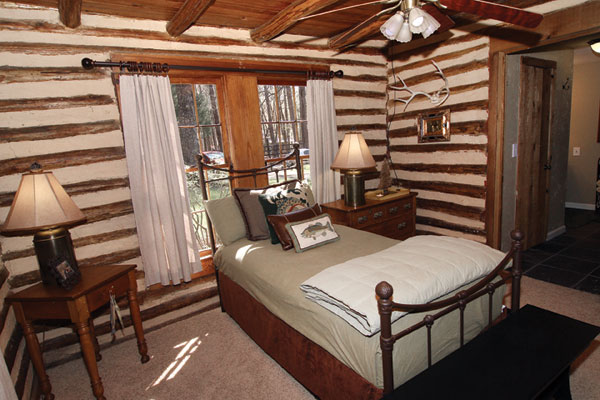
“I’d rather be outside than inside, so everything is decorated outdoorsy,” Cathy explains as she leads a tour of the house. The master bedroom has prints of green ferns, either elk or deer antlers (she’s not sure which) hanging over the bed, with a rustic wooden bench at its foot. The Great Room has leather sofas and a long, low, wooden coffee table. Coming out of the kitchen on the opposite side of the dining room, the original log section of the house begins. “I call this my living room because it’s a little more formal than the Great Room,” Cathy says.

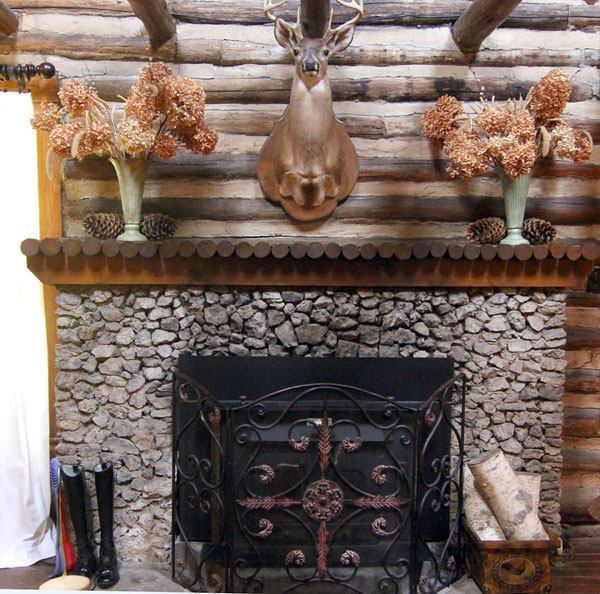
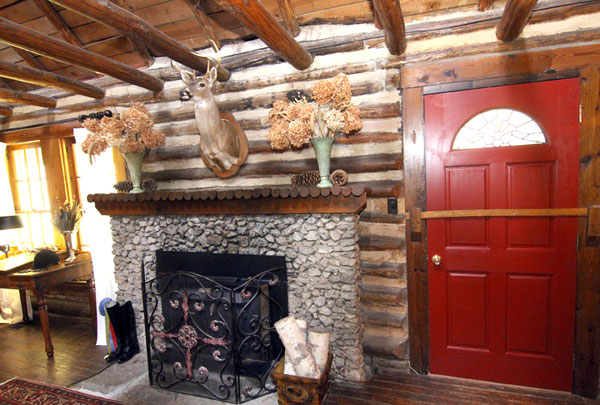
A stone fireplace and a red front door dominate the room, but the deer head over the fireplace, like the antlers throughout, was purchased, not shot. “We don’t hunt,” Cathy says. “I bought that deer head at an antique store for $40.” More antlers, prints of dogs and horses, a rustic wooden coffee and an end table share space with a Persian rug. A sheep-horn lamp from the old Rich’s store in Atlanta is draped with the halters the grown Harris children used with their childhood ponies. More antlers adorn the walls and built-in bookcases in this room.

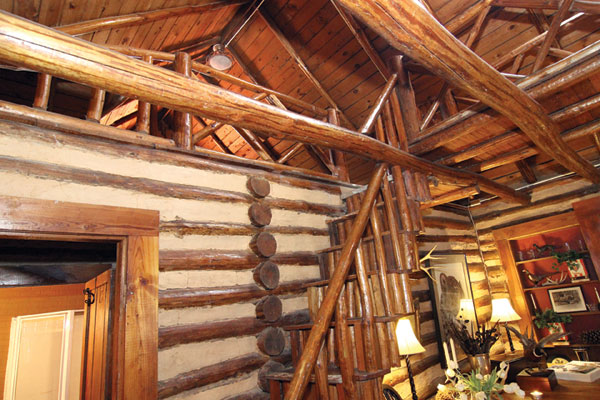
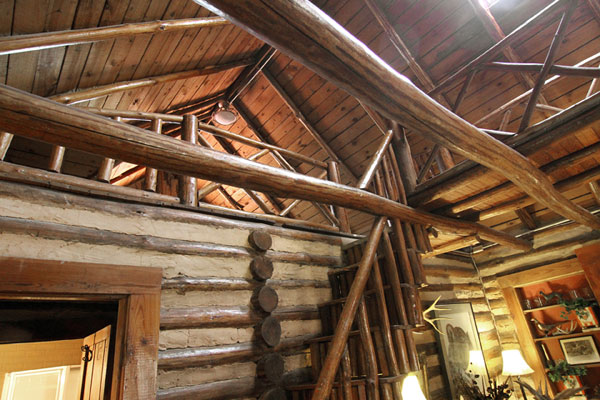
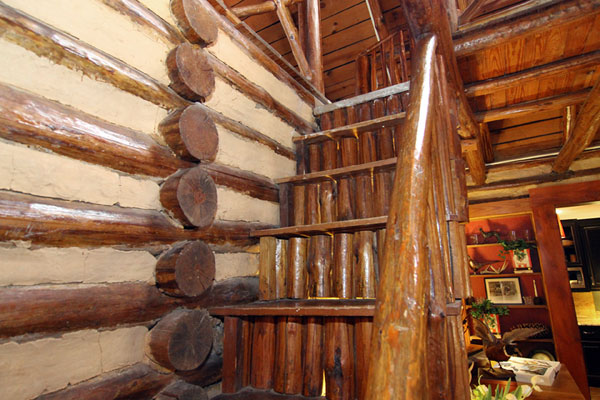
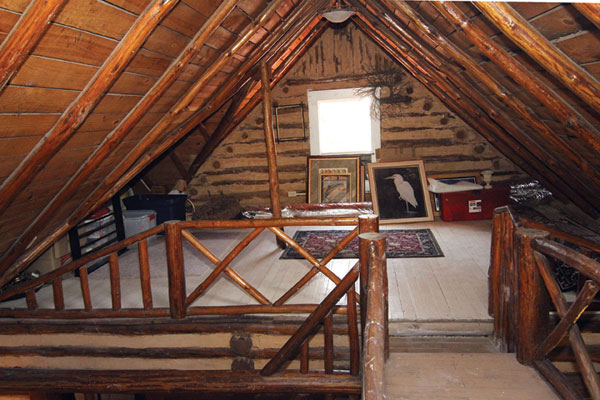
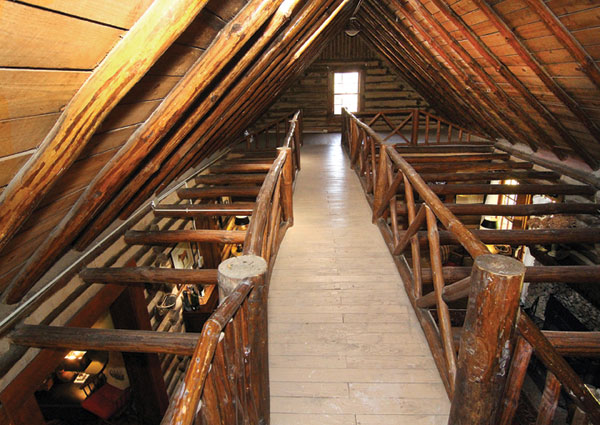
But the most striking feature of the living room is the wooden catwalk high above. Steep log steps lead up to the catwalk, which has a small loft at each end that the Harrises use for storage. Arthur Weeks, the late Birmingham artist who owned the original L-shaped house in the 1980s, used both areas as bedrooms, even though their peaks only allow standing room in their centers. It was Weeks who added the skylight that brightens the room, but the catwalk and lofts are original to the house.

Off one side of the living room is a small area with a log ceiling that Mike uses as his office, while off the other side are two small bedrooms and two bathrooms. The ceilings are low and the floors are sloping in these rooms, but a structural engineer pronounced the house safe. The sloping is due to settling. These bedrooms were carpeted and decorated by the former owner, who painted the log walls in one of them. “I don’t know what’s under the carpet,” Cathy confesses.

The Harrises have done no remodeling inside the home, other than painting some of the rooms and adding granite countertops in the kitchen. Outside, however, they literally hit the ground running from the moment they arrived.

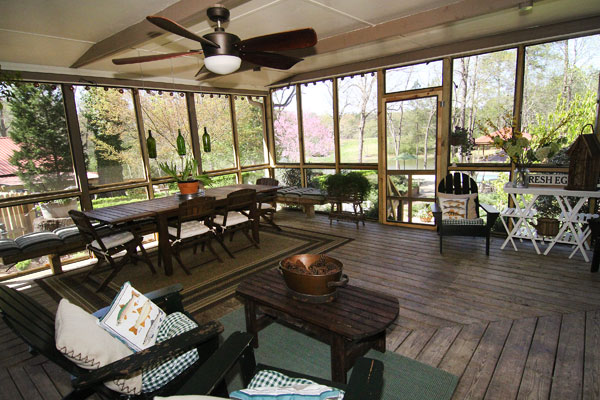
Their first project was to take down a huge tree house in the backyard and their pond’s boat house that was falling in. Most of the gardens were put in by Weeks, but they put up new fencing, limbed some trees, planted grass and cleaned up outside. Next, they screened in the open porch at the rear and built a pool equipment house. The swimming pool was already there. A real working well sits unused in a side yard.

“When the weather is nice, we live on the screened porch,” says Cathy. “We need to put a TV out there, we use it so much.”

Arthur Weeks disassembled a small log barn that was behind what is now Jimmy Calvert’s house, just up the road, then reassembled it to one side of the house and used it as his studio. Now a small, two-level apartment rented by Jimbo Bowers, the former barn also has a shed roof that shields lawn equipment from the elements.

Jimmy Calvert says the original 800-square-foot log portion of his 2,900 square-foot house probably was built in the late 1800s, while the two-story cottage-style addition was built by former owners Donnie Joe and Kim Kirkland in 1998-99. The four-room log cabin has three fireplaces around one central chimney, a common arrangement for the time in which it was built.

“It was an emotional buy,” Calvert says about his purchase.

An attorney with an office in Birmingham and Springville, he moved from Birmingham in 2004. His master bedroom was in the original log cabin while renovating the addition, which now has his living room, master bedroom and bath downstairs, two bedrooms and a bath upstairs. He has spent six figures over the course of eight years, and most of his free time during 2009 and 2010, restoring the place.

“There’s not an inch of this place that I haven’t restored,” Calvert says.

With the help of a friend, Walker Peerson, who was experienced in home construction and renovation, Calvert ripped out the floors down to the dirt in the original kitchen and dining room. That’s when he discovered that the logs underneath were laid out in a hub-and-spoke fashion, with the fireplace as the hub. He had to replace many of the floor joists and put down new heart pine floors. He removed the tile covering all the stone fireplaces and rebuilt the hearths. He tore out all the replacement windows and rebuilt their frames, putting plate glass in several rooms while keeping the one window that was original to the house. It’s now in his home office. He re-wired and re-plumbed the log cabin, too.

“A lot of the chinking was coming out, so I scraped out those places and re-caulked them, using a product called Perma-Chink,” Calvert says. “Then I painted the chinking an antique white.”

He removed the walls of the hallway between what was the original kitchen and a bedroom in the log section, then built a modern kitchen with pine countertops and stainless-steel appliances in the former bedroom. He and Peerson then built a 3-foot by 6-foot picture window at one end, overlooking the backyard. The original kitchen is now his dining room. His home office is in what used to be a second log bedroom.

“I’m 80 percent done with what I want to do here,” Calvert says. “What’s left is cosmetic, little things like knobs on the kitchen cabinets.”

He also rebuilt an old skinning shed outside, turning it into an air conditioned workshop and dog house for his two dogs. A 350-year-old oak tree lends shade to the screened porch on the front of the house. The concrete floor of the porch is patchy, but Calvert plans to leave it that way to maintain its rustic appearance. He also built a new deck on the back of the house and took down some old, dilapidated chicken houses.

Calvert has been told that the cabin was re-chinked in 1937 using mud from the pond behind his house. Initials and a date that were written in the chinking on one side of the house prove that point.

“Jones Road was the original road from Springville to Ashville,” Calvert says. “You came up Highway 11, and right onto Jones Springs Road. Then they built I-59 and cut off this road, which now dead ends next to my property. Alabama 23 now goes over I-59 from Springville to St. Clair Springs and up to Ashville.”

Kickstand Up!

Pet passenger an
easy rider in St. Clair

Story by Jerry Smith
Photos by Jerry Martin

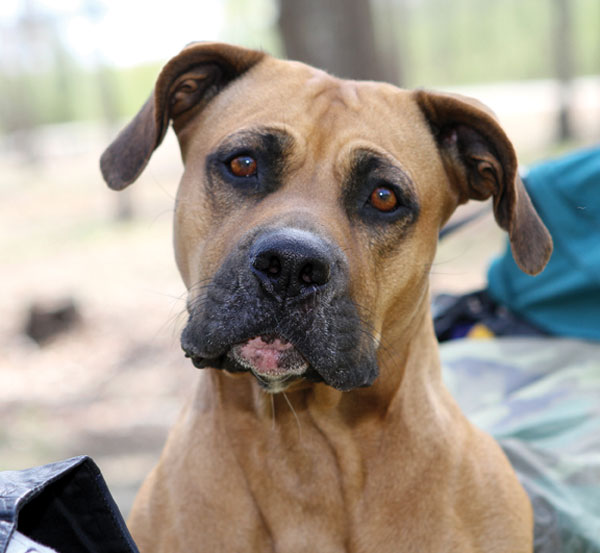
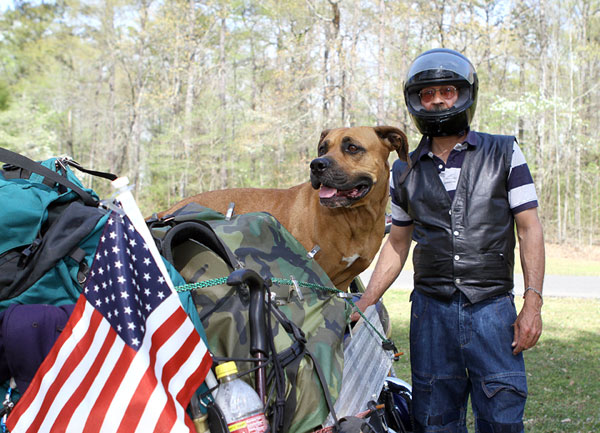
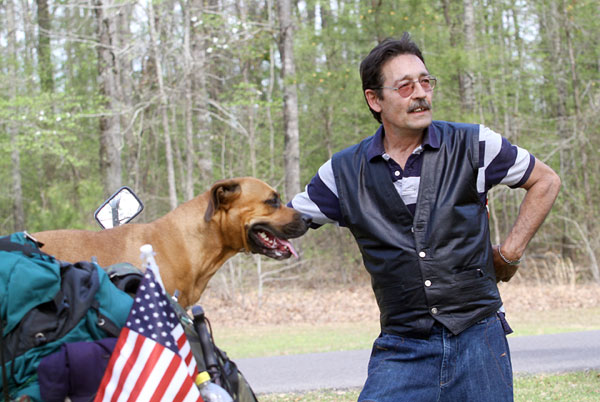
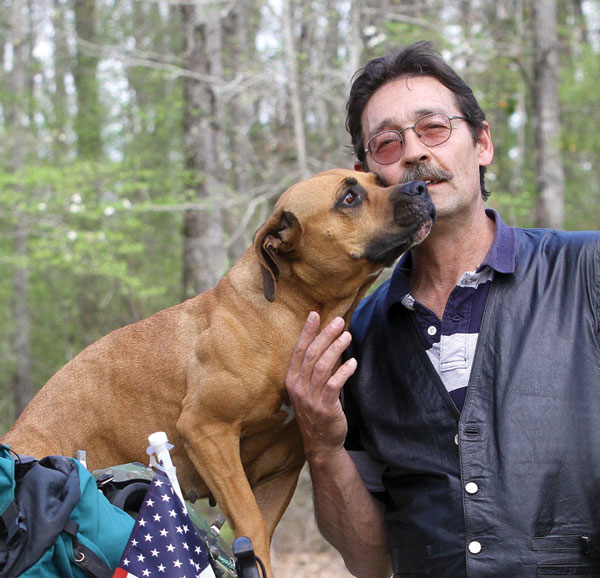
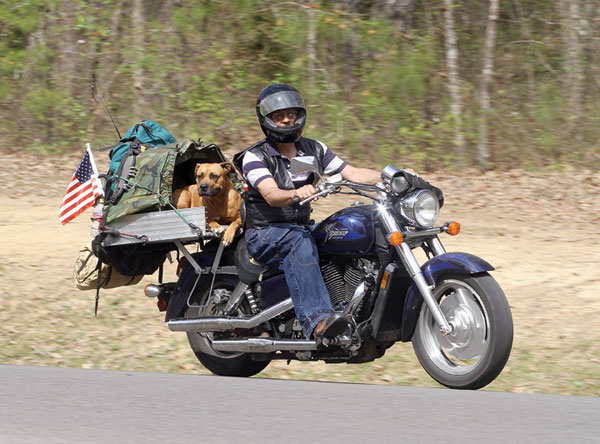
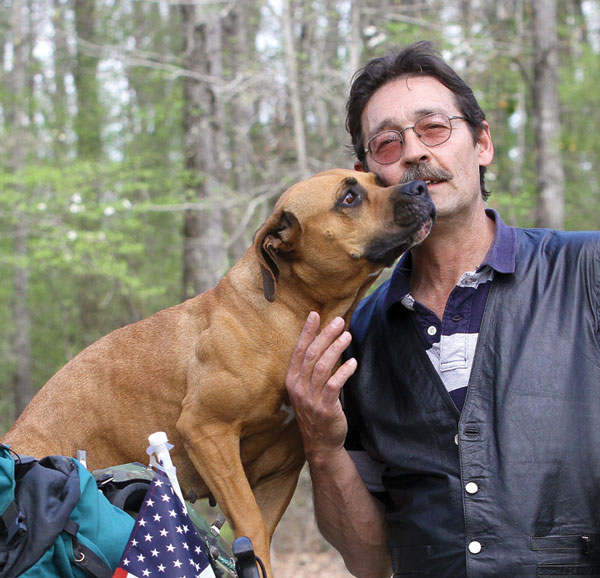
Mike Enoch enjoys few things more than a leisurely motorcycle ride with his friend Katt on the seat behind him. That doesn’t sound unusual for a Southern boy on a warm summer day, until you realize that Katt is actually a large brown dog. For Mike and Katt, it’s a wondrous association, both enjoying each other’s company in a unique way, with lots of attention from bystanders.

Dogs on bikes are not new, but they’re usually just shivery Chihuahuas or yapping Yorkies stuffed into a saddle bag or handlebar pouch. Katt, however, is full-sized — a real man’s dog with no self-esteem issues, and she rides on a seat like the rest of us. And besides, it’s safer and more comfortable than riding in the back of a pickup truck.

Pell City folks are becoming accustomed to seeing this eye-catching duo on city streets, but first-timers always do a double-take when passing them on the road or seeing Mike’s bike parked at a local store, with Katt standing guard while he’s inside taking care of business.

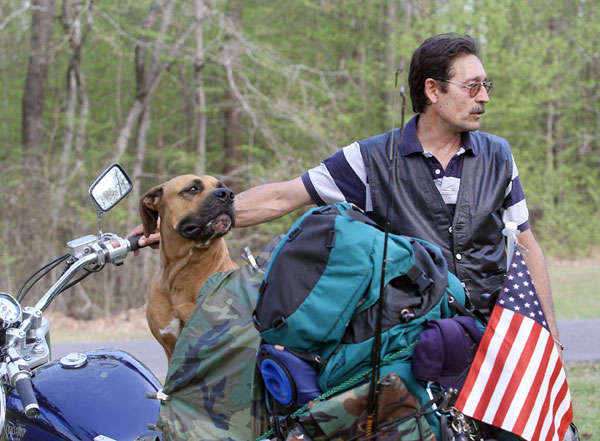
Katt is a three year old female pit bull/mastiff mix, so no other security system is needed for their motorcycle. Katt’s domain is a special shelter Mike fabricated to fit over the rear seat, which also serves as a framework for a carrier that holds camping and fishing equipment. She’s a well-behaved dog with a warm, salival persona, but it’s probably not a good idea to mess with her bike.

Mike raised Katt from a puppy. He explains that her name came from the way she scampered and played, more like a kitten than a puppy. As she matured, the name Cat became a bit unseemly for such a noble canine, so he morphed it into Katt instead.

They ride a dark blue 2001 Honda Shadow 1100cc Sabre. This model has ample power, yet is light and agile enough to get them around on two-lane country roads as they explore St. Clair and its environs. The Shadow is his first bike, and Mike has put more than 27,000 miles on it, mostly before Katt started insisting on going along.

He explains that once Katt has sensed he is going somewhere, she jumps up on the bike seat and uses all her doggie wiles to make him feel bad for leaving her behind. After a few such drama sessions, Mike relented and built his friend a special carrier to provide safety and shelter.

It allows her to watch the road ahead from either side, with her snout usually nestled against his leg or waist.

When stopped, Katt absolutely will not jump off the bike unless Mike gives her spoken permission. Mike claims he’s tested her several times, finding that nothing can entice her down, even for hours at a time. In fact, she often sleeps on the bike when they’re at home.

During an interview session at Pell City’s Lakeside Park, Katt sat politely and patiently on her padded perch while we talked, but it soon became clear from her body language that she had doggie needs. Mike finally relented, ordered her down, and she hit the ground running. After a few laps around the parking lot and nearby woods, all within a perimeter established by Mike’s voice commands, she obediently returned to her post.

Mike says Katt already has some 1,000-plus miles under her, uh…collar, with no mishaps or problems at all, and he looks forward to lots more pleasant mileage as they run errands, explore this part of the state, and venture out on fishing and wilderness camping trips.

They’ve taken a few longer treks together, such as Stone Mountain, Buck’s Pocket and a campground in Tennessee, but Mike says the norm is less than a hundred miles each way, with several scenic and pit stops so neither man nor pet becomes uncomfortable.

At age 51, Mike is the owner-operator of Carpet Solutions Cleaning Co., a local firm specializing in cleaning and treating commercial carpets. It’s hard work, and Mike performs it with due diligence, so having a means of rest and recreation is a necessity.

Both he and Katt enjoy the natural camaraderie of a man and his dog, along with a growing notability among St. Clair folks. In fact, the interview was interrupted several times by curious park visitors, all with basically the same questions, as well as several honks from passing cars.

So what’s in the future for the travel team of Honda, Mike and Katt? Mike says he may try to fit her with goggles (Doggles?) to protect her eyes, and possibly even a doggie helmet, as they expand their travel radius to include more vacations and camping expeditions.

Mike also wants to breed her to a full-blooded bull mastiff at least once before she’s neutered, to produce a dog that’s slightly larger than Katt. If her cool demeanor and powerful physique prevails, those pups should make great pets and watchdogs.

Does Mike plan to sell his Honda anytime soon? “Nope, she’d probably leave me and go with the bike, and I wouldn’t blame her if she did.”

Safe-Room Wine Cellar


Story by Carol Pappas
Photos by Jerry Martin

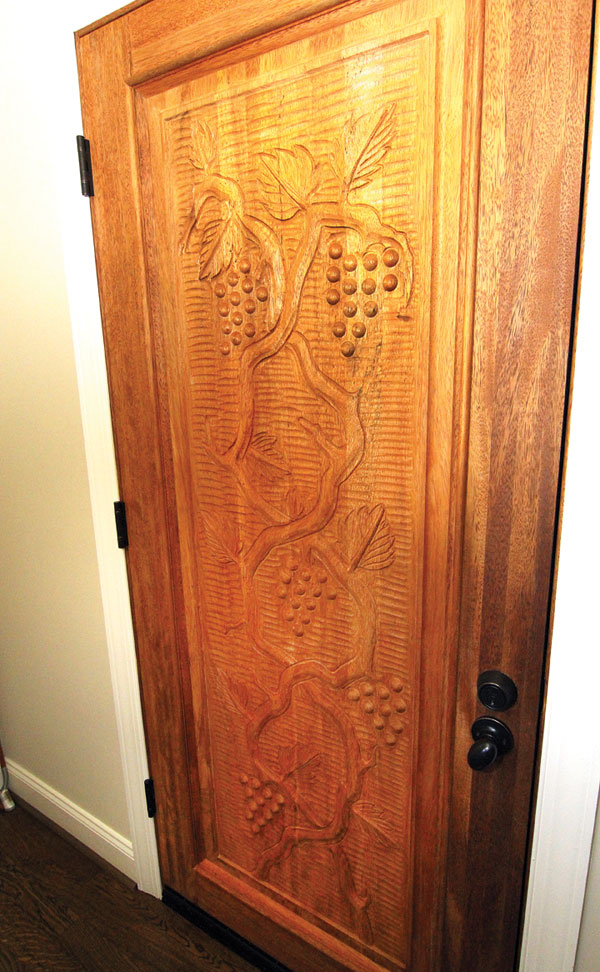
Intricately hand-carved details of vines and grapes etched into the thick, wooden door hint that just on the other side lies a special room.

When John and Sue Pat DuBose built their new home along the shore of Logan Martin Lake, they knew winds on the open water could quickly turn into a damaging storm. So a safe room naturally was part of the blueprint.

They also knew their love of wine had to be central to the grand plan as well, so they turned their safe room into a wine cellar that even the savviest connoisseur would envy.

It is still a safe room. But it’s so much more.

John got the idea from a neighbor who turned his laundry room into a safe room. “I thought, if he can do that with a laundry room, why can’t we do a wine cellar?,” he said.

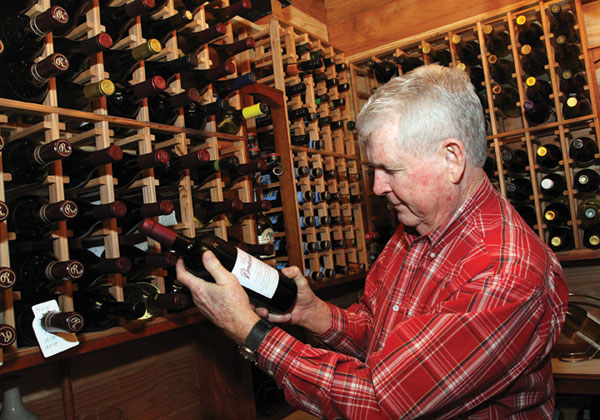
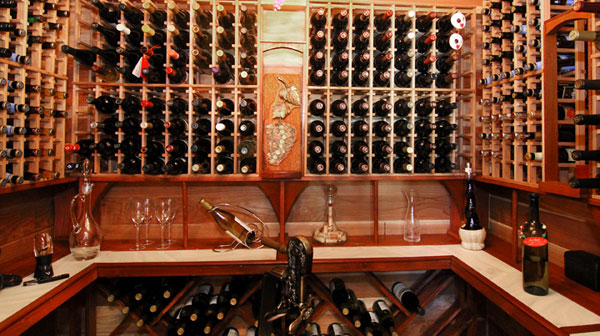
John installed the redwood shelving himself along the walls of the reinforced concrete. While it looks like a wine cellar, it fits all the specifications of a safe room. “It’s the real deal,” said John.

He put the bracing in, building what he needed in his shop. “The rest of it was just putting it together. I’m a woodworker wannabe,” he joked. But his handiwork tells a different story. It is a masterful blend of shelving and accents that make it as fine and rich as a bottle of Bordeaux and as light as a Sauvignon Blanc.

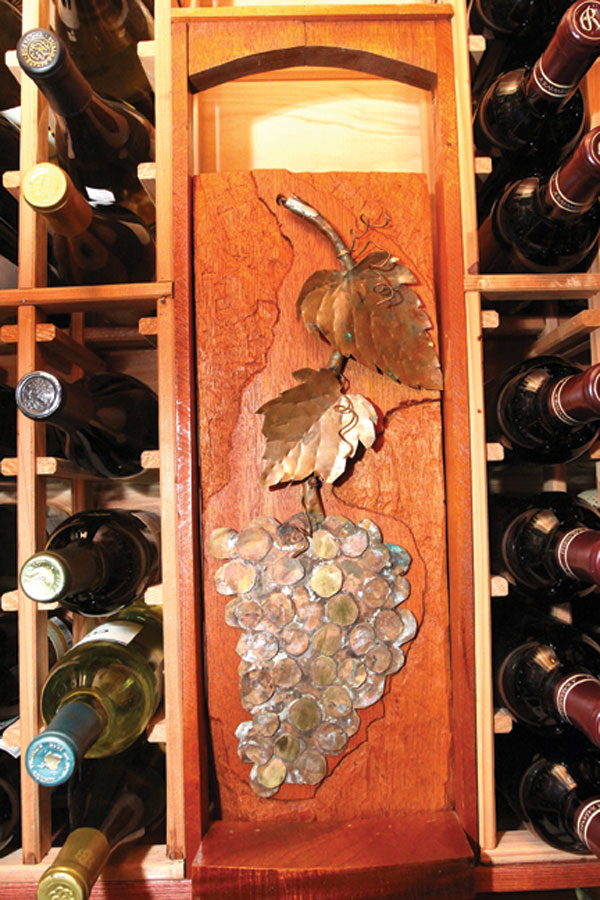
He cuts and solders copper as a hobby and added his own brand of art to the décor. An impressive piece, depicting grapes dangling from a vine, is just the right touch on a rear wall of the cellar. The lighting is equally perfect — a chandelier hangs in the center; its prominent elements simulating a grape vine with its bounty. A butcher-block table holding a bottle-sized wine opener centers the room underneath the chandelier.

The only ‘mistake’ turned out to be a complement to the wine collection and the couple’s circle of friends. John erred in ordering a portion of the shelves to accommodate half bottles of wine. His collection doesn’t include those, so he opted for diversity — those shelves now holding an array of beer cooled at 56 degrees. “We have a lot of friends who like beer,” Sue Pat said.

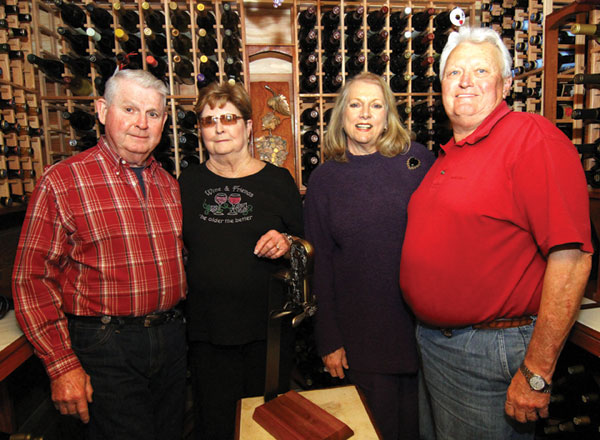
Much of their wine collection comes from trips made to the wine country in California and Washington with good friends Sandra Mullinax and Randy Royster. The foursome have quite a few tales from their treks that began in the early 1990s when Sandra was working for San Francisco-based Levi Strauss & Co. On her sales meeting trips, she would go on wine excursions during free time, and her discoveries eventually led to bringing her friends along for adventures in wine tasting.

“That got us started,” said John. “Sandra knew about wines. If I had gone out there, I would have been a tourist.”

As most do, they started in Napa but soon branched out to other areas, traveling further up to Sonoma, Dry Creek and Mendocino. Then it was on to Washington, where they once traveled 1,100 miles visiting vineyards “and never left the state,” Randy said.

They have stayed in every accommodation from bed and breakfast inns to larger hotels along their way. They have sampled the fruit of the Gods at vineyards large and small, getting to know the owners and always coming away with an entertaining story that inevitably begins with, ‘Remember when’ and an unmistakable smile that accompanies good memories.

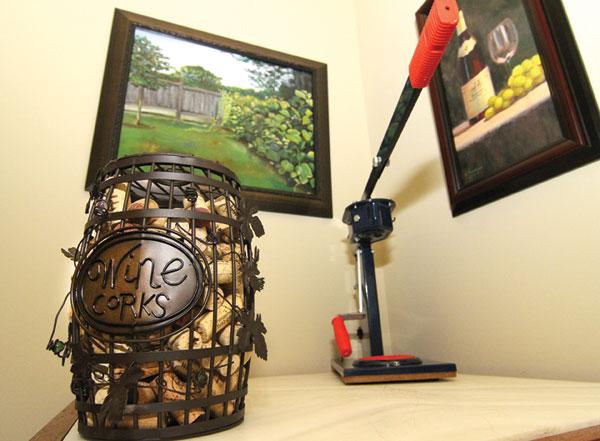
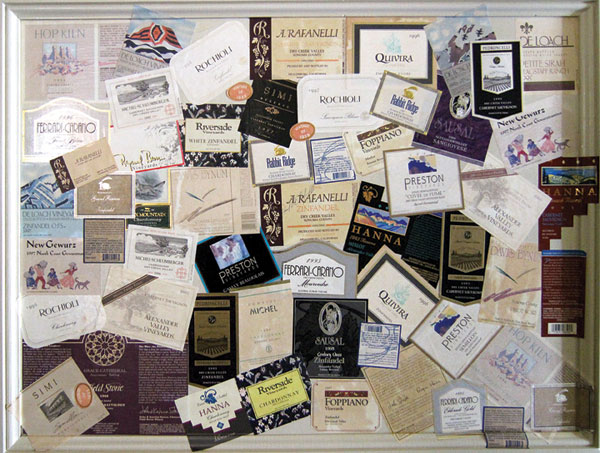
Outside the cellar, wine themes abound at the DuBose home. A wine cask-shaped, wire basket holds an assortment of wine corks from some of their favorite bottles. A display of wine labels from vineyards they have visited doubles as a work of art in the hallway just outside the cellar. Hanging nearby is a painting by their daughter, Suzanne Garrett, of John’s grapevines he planted in Pell City’s Pine Harbor community.

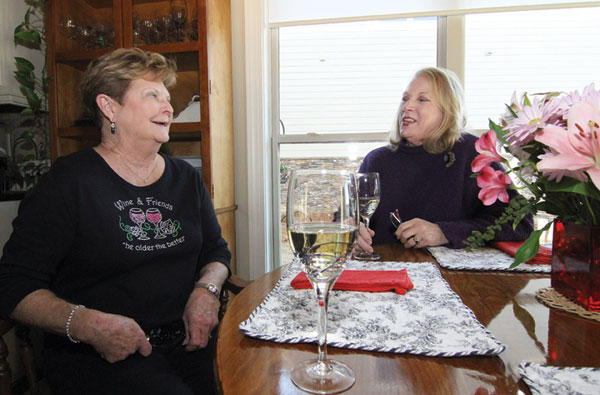
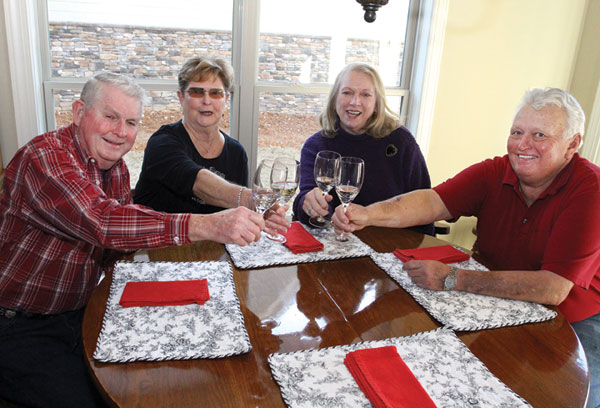
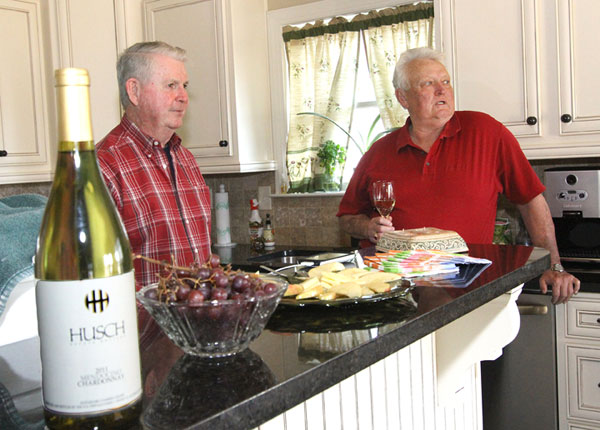
Settling into the comfortable great room overlooking the lake once the “wine cellar tour” is complete, DuBose and friends share a bottle of wine, reminiscing about the trips they have made together, their favorite vineyards and their favorite glass of wine. For John, it is a “really good Zinfandel.” Sue Pat is partial to a pinot noir, “especially with a meal.” Sandra savors “a good red.” And Randy likes “all of it.”

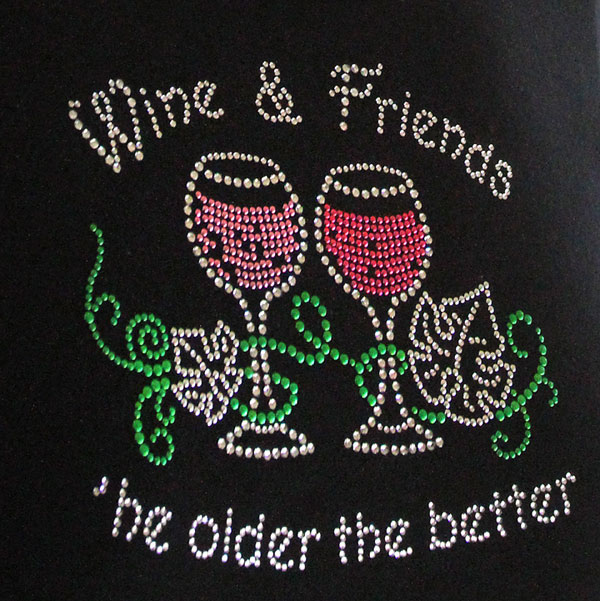
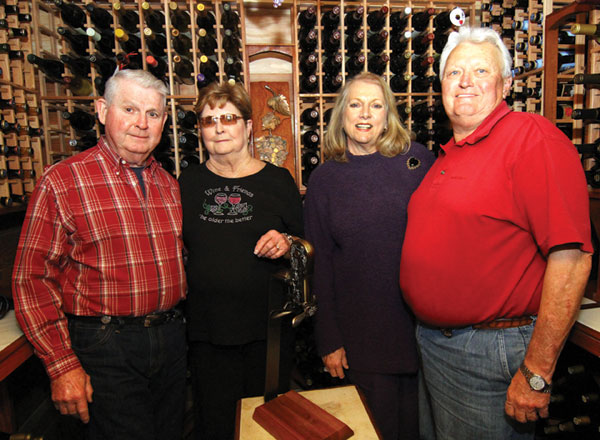
They share a love of wine, memories of trips past and those yet to come. It is a bond that is easy to spot even if Sue Pat’s Tshirt didn’t give it away — “Wine & Friends,” it says. “The Older the Better.”

Tiny Prancers

Bigger is never better for
several St. Clair farms
Story by Elaine Hobson Miller
Photos by Jerry Martin

Did you hear the one about the horse wearing tennis shoes?

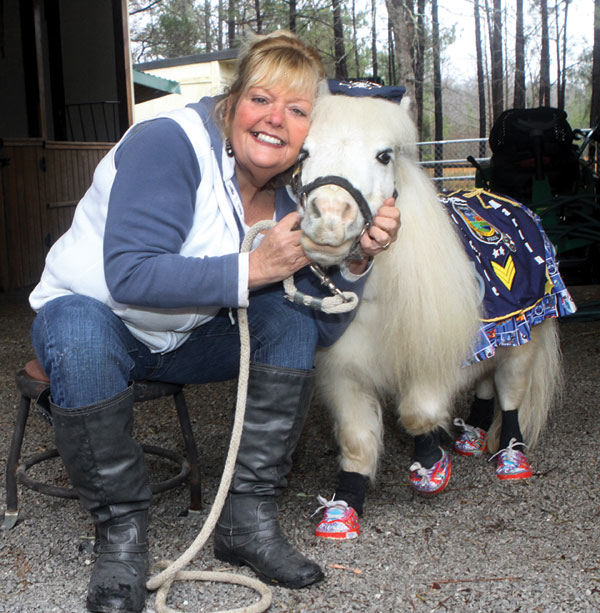
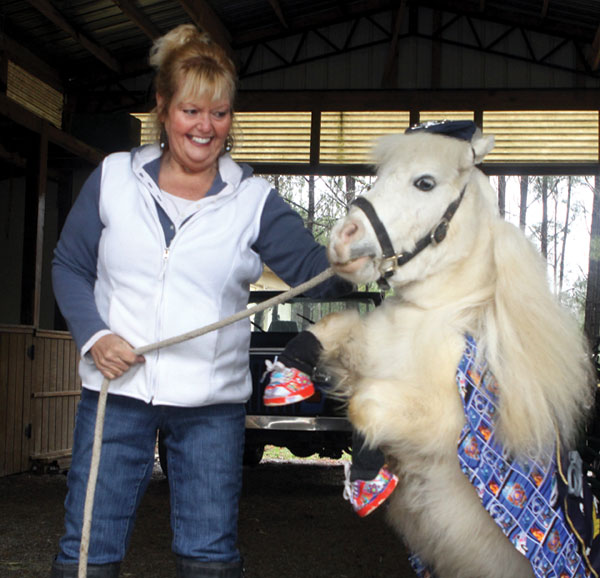
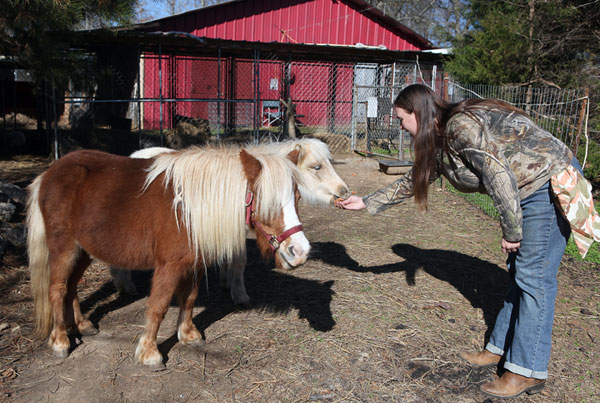
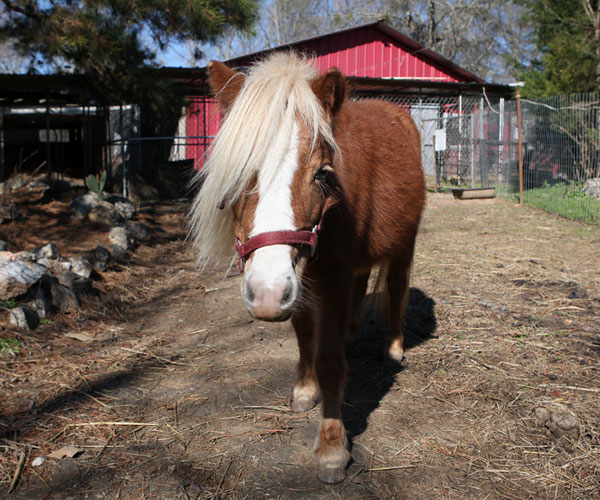
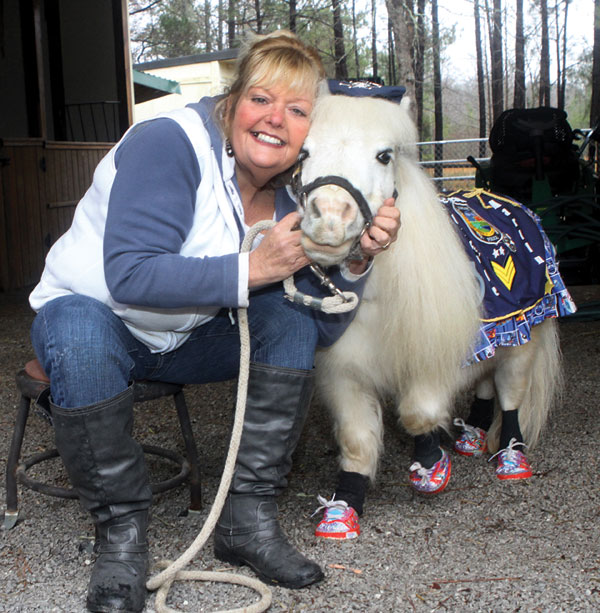
No, that’s not the first line of a joke. It’s a reality for folks who have seen Jelly Bean, a miniature horse owned by Odenville’s Dana Dowdle. Once a greeter at Pell City’s Home Depot, Jelly Bean visits schools, nursing homes and hospitals, wearing the tennis shoes to keep him from slipping on slick floors.

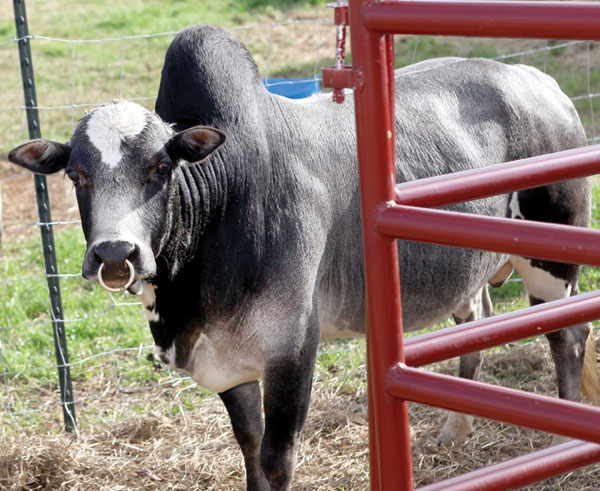
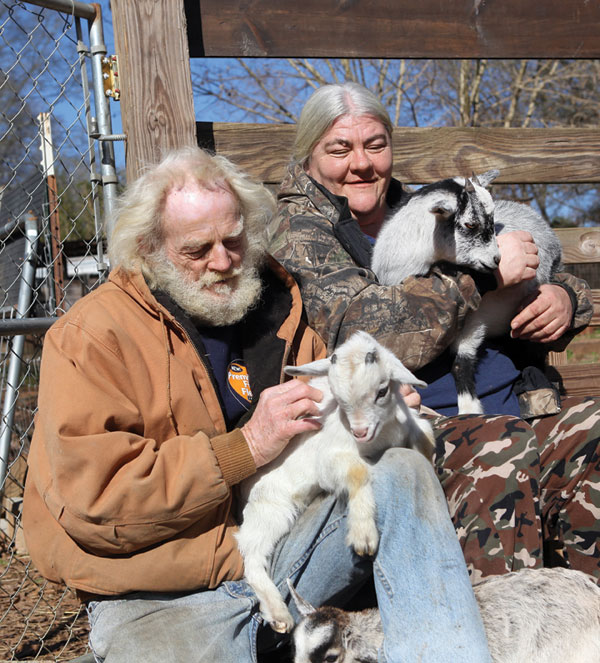
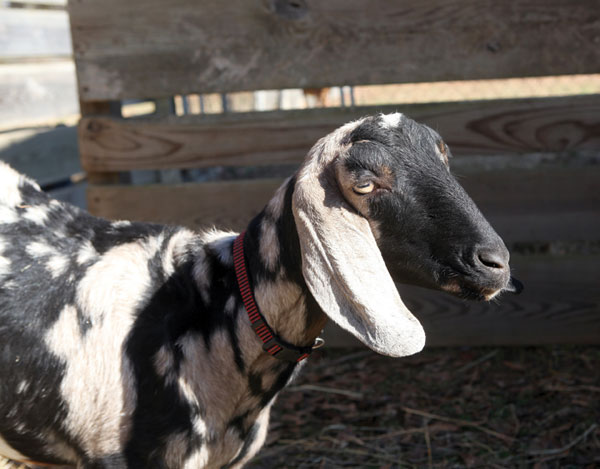
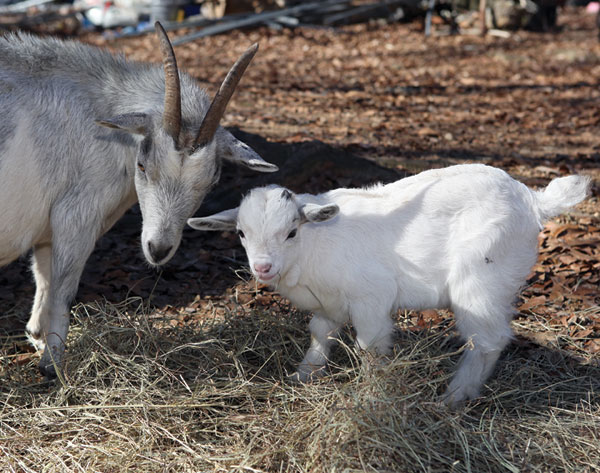
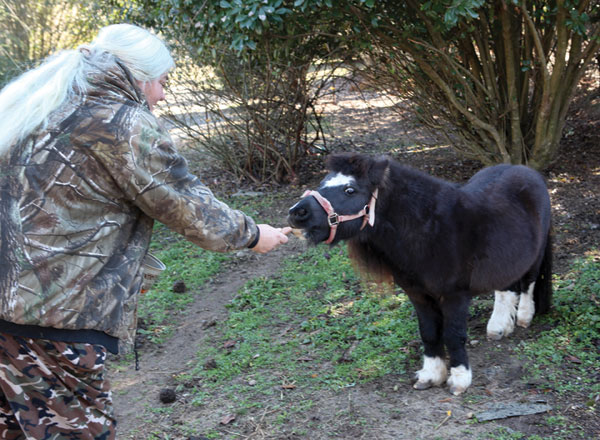
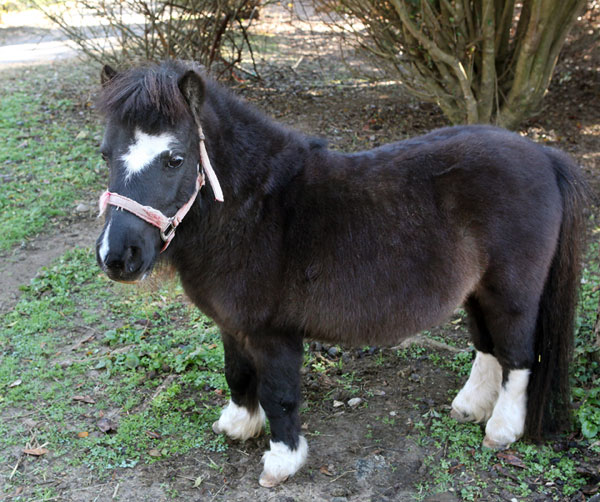
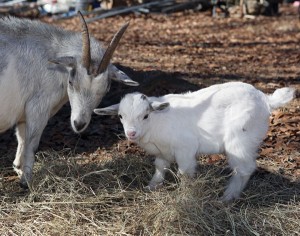
One might think that Jelly Bean is a novelty, but this tiny prancer isn’t the only miniature animal around these parts. Ken and Donna Hale of Ashville raise miniature brahmas, or zebus, while Susan and Al Maddox of Springville have miniature goats.

With the exception of miniature horses, which can’t carry riders weighing more than 70 pounds, you can do just about anything with the little fellows that you can with their full-size counterparts. You can show them, train them to pull carts and do tricks, or simply sit and watch them romp around your yard. They take up less space than the standard versions and eat less, too. Their primary appeal, however, seems to be the cuteness factor.

Standing just 26 inches tall from bare hoof to the top of his withers, Jelly Bean is a micro-miniature horse who weighs about 100 pounds and thinks he’s a dog. “He lives in our barn, but romps through the yard like a dog,” says owner Dana Dowdle. “If he could, he would bark.”

He prefers dog biscuits and French fries to apples and carrots and rides in the back seat of Dowdle’s pick-up truck, sticking his head out the window when they go through fast-food drive-through lanes. He was the first miniature horse in Alabama to be certified as a service animal by Hand in Paw, a non-profit organization that provides animal-assisted therapy to children and adults with mental, physical, emotional and educational needs.
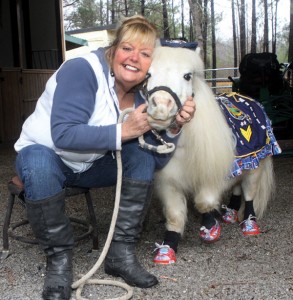
Dowdle’s brother, who died in 2011, raised miniature horses with the idea of training them as service animals. He gave her Jelly Bean in 2002, right after the horse was born. Dowdle took him into her house, cuddled him and rocked him like a baby, which helped to gentle him. She put diapers on him and made him underwear, because she was “too lazy to go through the house training process.” She has worked with several service minis over the past 10 years, but Jelly Bean is the only one that is certified.

“My brother made a ramp for him to climb up into my truck, and I made him outfits for different occasions,” Dana says. “He has a Bob the Builder outfit, a Scooby-Doo outfit, baseball and police uniforms and holiday outfits as well.”

Jelly Bean participates in Christmas parades and serves as a mascot for the St. Clair County Humane Society, the Moody Miracle League and the Margaret Police Department, where he is an honorary sergeant.
During the six years that Dana worked as a greeter at Home Depot, he often accompanied her to work. He’s so tiny, people sometimes mistake him for a goat. “Even though he’s a stallion, he’s very sweet and gentle,” says Dowdle, who is known as Jelly Bean’s mom.

Her helper at these events is 17-year-old Krissy McCarty, who gets credit from the Key Club at Springville High School for assisting Dowdle. “She helps by standing close to Jelly Bean, in case kids run up to him and spook him,” Dowdle says. “So far, he has never had a problem, but it’s nice to be prepared.”

Dowdle has trained Jelly Bean to bow, rear up and to lie down so children can pet him. She figures he has another 10-15 years of service left. “I’m doing this in memory of my daughter, Mandy, who died at the age of 4 from cystic fibrosis, and for all the mothers who are going through what I went through with her,” she says. “But I’m also happy that we could carry out my brother’s dream.”

MINIS HAVE LONG HISTORY

The result of 400 years of selective breeding, miniature horses draw on the blood of English and Dutch mine horses brought to the U.S. in the 19th century and used in Appalachian coal mines as late as 1950. They also draw upon the blood of the Shetland pony. It’s almost impossible to know how many minis are in this country, though, because many are unregistered pets in people’s backyards.

“All minis are not registered through us or other registry organizations,” says Stephanie Haselwander, events and promotions director for the American Miniature Horse Association (AMHA) in Alvarado, Texas. “We register minis that are 34 inches and smaller, measured at the last hairs of the mane. Right now, we have over 213,000 in our database. And that number doesn’t tell us much, since some of those horses could have been registered with us and died.”

TINY BRAHMAS TURN HEADS

Apparently, it isn’t quite as difficult to determine the number of miniature Brahma cows in this country. According to the website www.drdoolittle.net, there are just 2,000 registered zebus in the whole U.S.

In a normal week, eight to 10 strangers will stop by Ken and Donna Hale’s farm on U.S. 231 to look at their zebus, and four will come back and buy one. Most people just want them as pets, but the Hale zebus are registered and can be used as show animals. They can also supply beef.

“Some people look at me like I’m a cannibal when I talk about eating them, but a 400-pound bull will yield about 200 pounds of meat, enough to last most families all year,” says Ken Hale. “Zebu meat has less cholesterol than the meat of bigger cows, and their milk has a higher butterfat content — 8 percent — than the milk of larger Brahmas.”

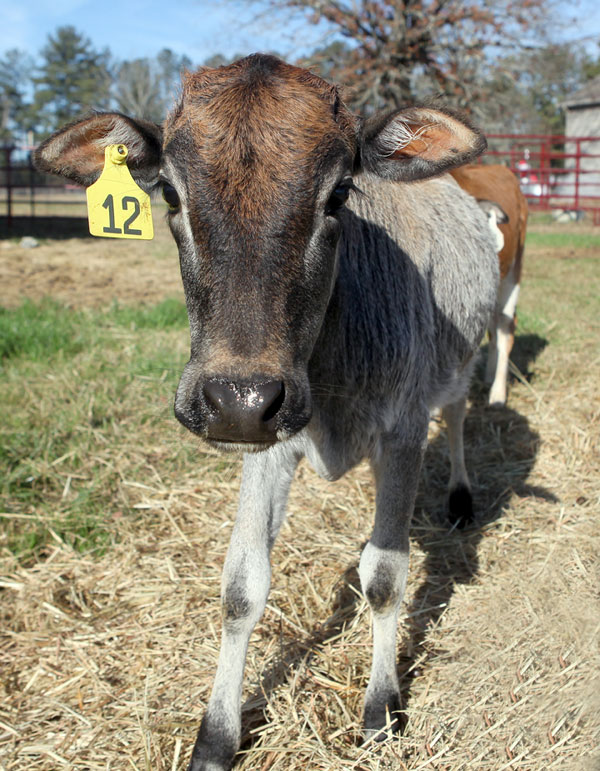
Zebus top out at 42 inches, measured at the withers, and weigh 300-600 pounds when fully grown. Hale has always loved Brahmas, but claims he is too chicken to deal with the standard variety, which can reach 6 feet in height and weigh around 2,000 pounds. He found the first stock for his herd in Athens, Georgia, via an Internet search. He purchased four — two brood cows and two young heifers named Miss Peaches, Bonnie, Millie and Sara, respectively — in April 2011.

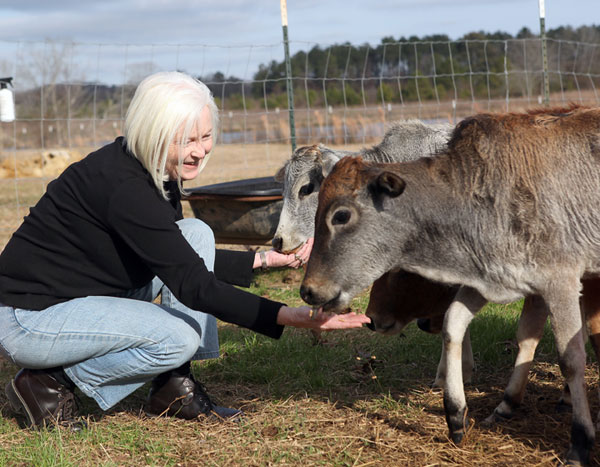
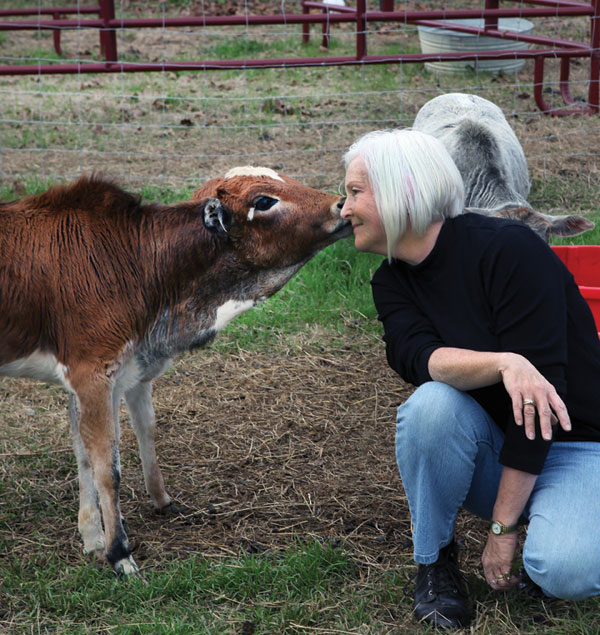
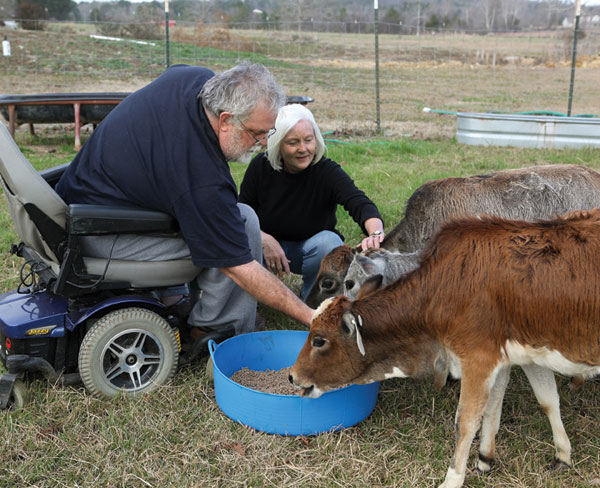
“They are one-person animals,” Hale says. “They will eat out of my hand, but crowd around my wife, Donna, who is the brains of our operation. Sara will nuzzle her and put her head on Donna’s shoulders. Three of the smaller calves will lie down with their heads in my wife’s lap. Yet they run from strangers.”

Despite their gentleness, they are animals that have horns when they are grown and know how to use them. “A momma gored my brother when he tried to pick up her calf,” Hale says.

They are easy to raise, requiring only half an acre per animal and about one to one-and-a-half pounds of feed daily. A standard-size cow needs 15-20 pounds of feed per day. Unlike large cows, their hooves must be trimmed regularly. They breed late, starting at the age of 3, and weigh about 15-16 pounds at birth.

“They look like fawns when they are born, and their mommas hide them,” Hale says. “Like fawns, if they’re under a clump of fescue, the calves won’t move. So unless you step on them, it’s hard to find them. I have to go hunting them down.”

But they grow fast, doubling in size in their first three months. They get more docile as they get older and are sometimes used in youth rodeos. “They can live up to 25 years, and most people keep them until they die, unless they’re raising them for food,” Hale says. “They’re nothing but muscle.” They are primarily gray in color, but also come in black, red, spotted or almost pure white.

Raising zebus is a business for the Hales, but the business brings them lots of pleasure. “I’m handicapped, I have emphysema, and I’m on a breathing machine,” Hale points out. “It’s so rewarding to go out to the pasture in my wheelchair and feed ‘em and watch ‘em eat and play. The calves are so much fun. It’s almost like watching a Norman Rockwell movie.”

GOT HER (DWARF) GOAT

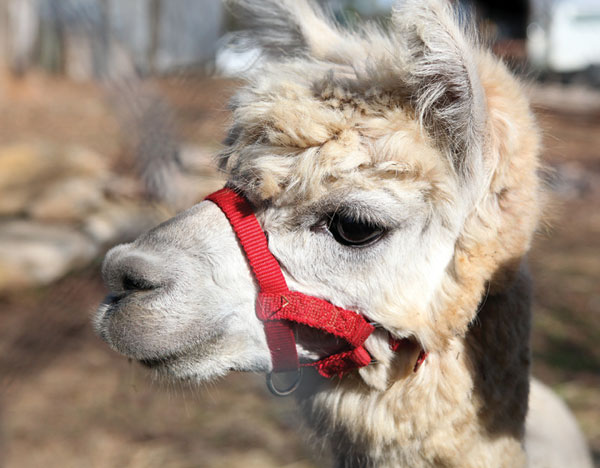
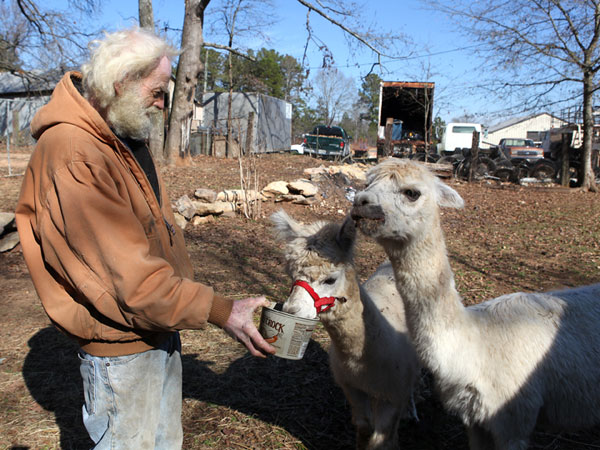
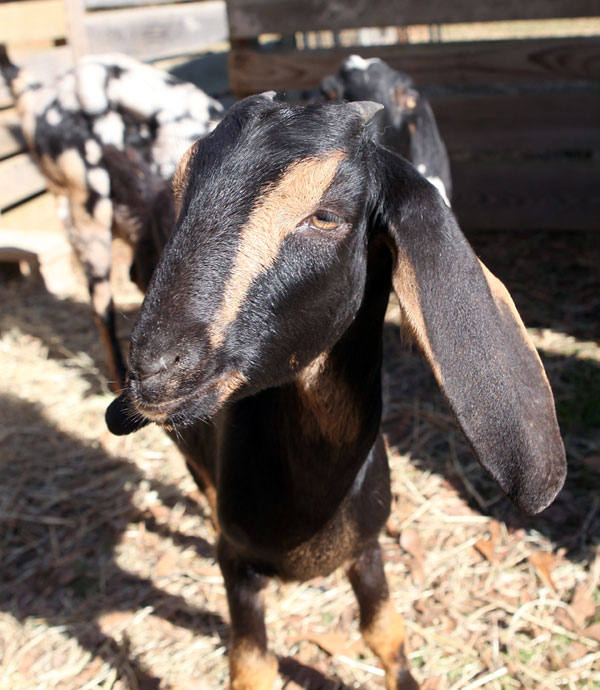
That’s the way Susan Maddox feels about the Nigerian dwarf goats she and husband, Al, raise at their Old Farts Farm on US 11 in Springville. When Susan gets tired of feeding her chickens, peacocks, ducks, rabbits, pigeons, quail, alpacas and miniature horses, she goes and sits in the goat pen, and all is right with the world.

And despite the fact that Al didn’t want Susan to buy any dwarf goats in the first place, he often gets down on his hands and knees in their pen and lets them crawl on his back. “I’m their play-pretty,” he says.

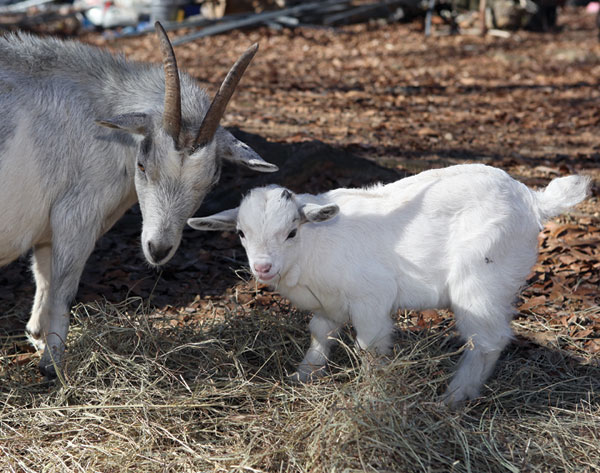
Nigerian dwarf males get up to 28 inches in height, females 26 inches, according to Tara Maynard, who helps the Maddoxes with their farm chores. “Larger than that, they’re considered pygmies, not dwarfs,” she says. “Even though they’re little, dwarfs can supply enough milk for a small family daily.”

The Maddoxes have to buy food made especially for dwarfs, because the feed made for larger goats contains too much copper for their tiny systems. The dwarf nannies give birth once a year, and have one kid the first time and twins or triplets after that. So the Maddoxes usually have 12-15 dwarf goat babies every year. They weigh from one to two pounds at birth, and although they raise them to sell, sometimes Susan finds it hard to part with one. “Sometimes I cry, and the buyer feels guilty,” she admits.

Most people buy them for pets, but occasionally someone wants them for meat. Susan can tell the difference, and usually discourages meat-buyers by jacking up the price. “I normally get $75-$100 for a dwarf, but if I suspect they want to eat it, I’ll ask $500.”

As with all their animals, the Maddoxes put a lot of time into raising the dwarf babies. “We handle them and gentle them from the time they’re born,” she says. “I spoil ‘em. They’re no trouble to care for. If you ever get any, you’ll find yourself sitting out in the pen, just watching them play.”

For an additional story on Llamas in St. Clair, check out this month’s edition of Discover The Essence of St. Clair