Shoal Creek A Year Later

Tragedy, triumphs mark life in the valley

Story by Carol Pappas
Photos by Jerry Martin

Folks around Shoal Creek Valley have said it often enough over the past 12 months — “getting back to normal.”

But in this St. Clair County valley, normal has a new meaning since a tornado’s fury swept all the way through it, shattering homes and destroying lives in its path.
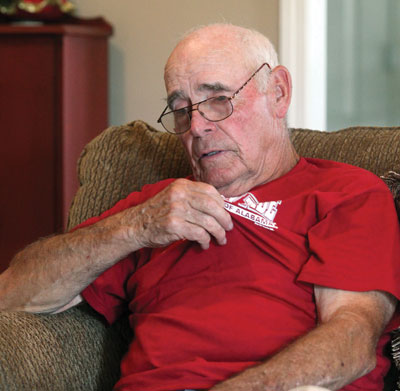
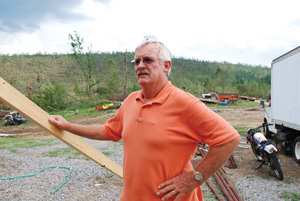
Tears find their own trail down Buford Sanders’ weathered face. With a determined gaze, he raises a single finger and vows this will be the last time he tells his own story of loss. “It’s time to look forward, not back.”

As he recounts the details of April 27, 2011, it is with the freshness of a memory made — not a year — but a moment ago. “It was 6:30 p.m. We saw it was coming. We lived at the top of the hill. My wife and I had no place safe to go, so we simply hunkered down in the middle of the house.”

The storm first hit the west end of his house overlooking Shoal Creek Road, blowing away a room, a porch and the roof. “It came back and blew off the east end,” he said. All that was left was a sturdy piece of wall where the couple crouched.

“We were thinking everything was OK,” Sanders said. The house had been lost, but they were safe. Just then, two of their grandchildren were “coming up the hill, hollering and crying that they needed help.”

The flow of tears comes in waves from this point as he tells what happened next. His son and daughter-in-law and one of their daughters had been blown 75 yards from their home into a blueberry patch.

The death of his daughter-in-law, Angie, came quickly. His son, Albert, lasted three or four hours. “He told me he thought he was going to die. I told him, ‘No, son, I love you too much.’

“ ‘I love you, too, Daddy,’ he told me, and those were his last words. It was just a matter of time, and he was gone.”

During Albert’s final hours, all Sanders could do was keep his son comfortable. No medical help was able to get there because the tornado so devastated the valley that it was virtually blocked from one end to the other. “We could hear the chainsaws running in both directions,” he said.

The Sanders family were like many in Shoal Creek Valley. They lived near one another; their generational ties strong. “We worked on things together,” he said of his son, Albert. “He was my buddy. It was sad his life came to an end.”

Buford Sanders and his sons raised their families on the same property, a single driveway leading to all three homes. In an instant, all three homes were swept away.

His other son had been thrown from his home by the winds, but he recovered and is doing well, his father said. His granddaughter, Cassie, spent five weeks in the hospital undergoing 12 to 15 surgeries and has little memory of what happened in the hours and weeks that followed the storm.

She used to be a runner. “She loved to run,” Sanders said. “She ran track. We had a track for her around the hay field.” Her recovery since April 27 has been painful and slow, but she is beginning to run again, entering 5K races, a proud grandfather noted, underscoring her resiliency.

He, too, is beginning to return to some semblance of routine. He and his wife have been back in their new home for about six months, he said. “If I just lost the house, I could feel good.

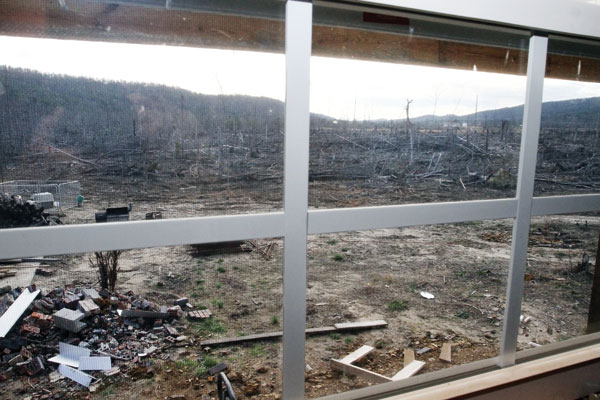
“But every step I take, I see the tragedy.” Just outside his back door still lay hundreds of acres of downed trees across the mountainside, a constant reminder of a storm so mighty and strong it could wipe out a forest and kill a dozen people in a matter of moments. “If it had just left all my family intact, I’d be the happiest man on earth.”

Just before the storm hit, he said he called both of his sons and told them to go to their safe places. “They did what I asked them to, but it wasn’t good enough.”

Sanders’ conversation vacillates between past and future. “The hurt of losing some of your blood is bad,” he said. “But the community and I are looking forward and looking ahead, not back. You have to suck it up and say this is the way it is. Keep going,” he said.

“So many people befriended us. They helped cleaning up. It was dangerous even to walk around. You lean on one another in times like that. So many people were so good to us.

“A fella I had never known built those kitchen cabinets,” he said, pointing across the room to what could only be described as the intricate work of a master craftsman. “When I went to pay him, he didn’t charge me. Things like that. A lot of people I had never seen before came and helped. I made lifelong friends. I’m grateful for that.”

Looking to the future, he said, “I guess from now on it will get somewhat better. It will be a long time. I have a strong little wife. We’re Christian people. We believe the Lord will take care of us through the battle and there will be a reward at the end.”

He shares a special kinship with the community that has suffered so much. The community came together “in mind and spirit” through the storm and the months of a painful aftermath, he said.

But the lesson from all of this, he said, lies not in the homes destroyed nor does it dwell in the material possessions snatched away by a greedy gust of wind. “The tragedy of all this is the lives that were lost in the twinkling of an eye.

“I would have loved to have swapped places.” Albert was 44. Angie was 43, and they had three daughters. “They had a lot to look forward to.”

Now it is up to Sanders to look forward, he said. “The important thing is the lives that were lost in this valley. The devastation of property is bad, but the other things are a lot worse.

“We have to look forward. You know, onward, Christian soldiers.”

• For more on Shoal Creek, read Building for the future amid remembrances of past and Pell City engineering firm rebuilds after direct hit in this month’s edition of Discover, The Essence of St. Clair Magazine.

New hospital and a new Physicians Plaza

A Reflection of the Future for St. Clair County

Story by Carol Pappas
Photos by Jerry Martin
and Wynter Byrd

Terrell Vick escorted the final patient out of the old St. Vincent’s St. Clair Hospital, and Sean Tinney welcomed the first patients arriving at the new one. It was a fitting role for each to play — Vick as former president and COO and acting as Chief Transition Officer and Tinney as president of St. Vincent’s Rural Hospital Operations.

From their vantage points and through their responsibilities, they witnessed history being made, the page officially turning on Dec. 10, 2011.

“The preparation leading up to it was phenomenal,” said Tinney, who noted that the new hospital opened its doors to the Emergency Department at 6 that morning. The transfer of patients from the old facility began at 9 a.m. and the doors did not shut until the last patient was moved. “It was as smooth as anything I have been a part of.”

For Vick to witness the last patients leaving the old facility where he worked for so many years and Tinney witnessing the first patients coming into the new one he is overseeing, “it was meaningful for him, and it was meaningful for me,” Tinney said.

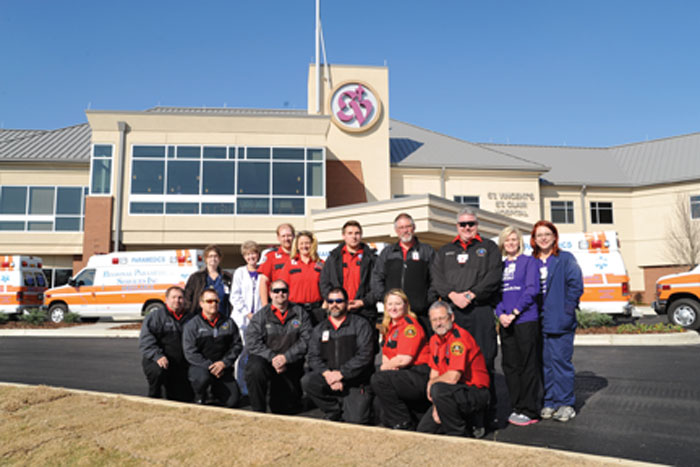
The move was like clockwork, Tinney said, giving credit to a host of team members. Neeysa Biddle, former COO of St. Vincent’s Health System, coordinated the move with Vick heading transition efforts. Regional Paramedical Services had five ambulances assisting with the move of patients. Dual labs and x-rays operated during the move, and associates and medical staff transitioned to a state-of-the-art electronic health record system.

The entire staff was oriented to the new hospital in the weeks leading up to the move, and when that day arrived, 50 Information Technology specialists reported for duty, ensuring that countless computers and a new order entry system was in place and working properly.

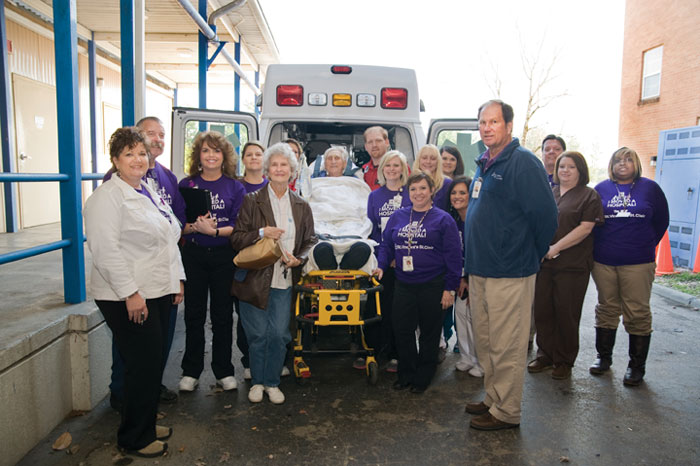
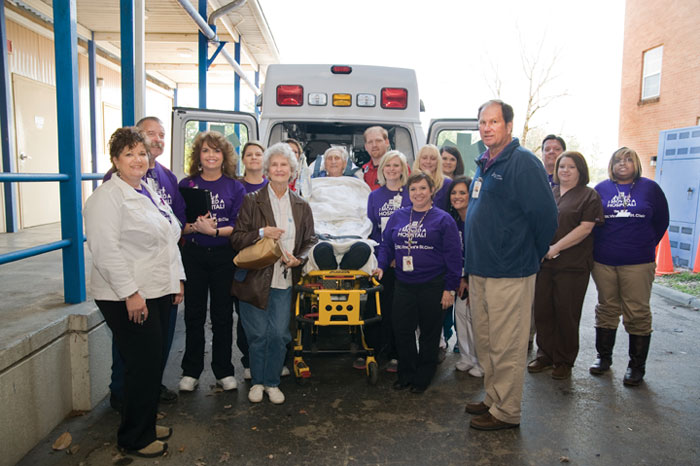
J.C. King (in the ambulance) makes history as the last patient transported from the “old” St. Vincent’s St. Clair. Among St. Vincent’s St. Clair associates who helped close the old hospital: King’s wife, Myra, in the brown coat; Vice President of Patient Care Services Paula McCullough on the far left and Terrell Vick, front, right.

“It made it a whole lot easier to adapt,” Tinney said.

In the days since, the activity has shown no signs of slowing. Admissions are up 28 percent. Emergency Department visits jumped 10 percent. Use of the 64-slice CT Scanner and MRI equipment climbed 22 percent. At that rate, Tinney said, the new hospital could see more than 25,000 patients in a year’s time in the Emergency Department as opposed to 19,000 in the old facility.

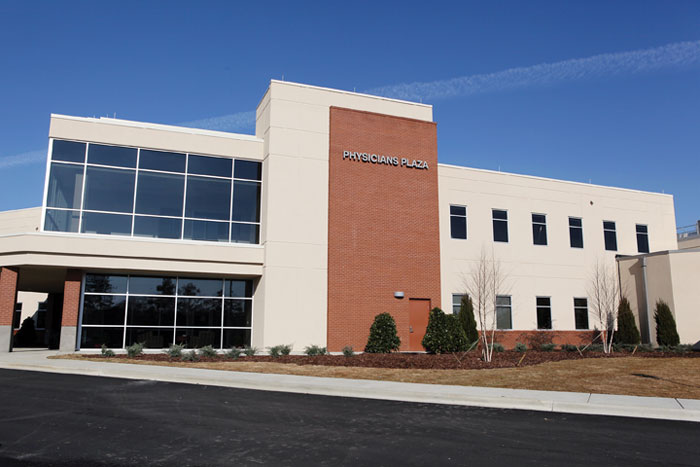
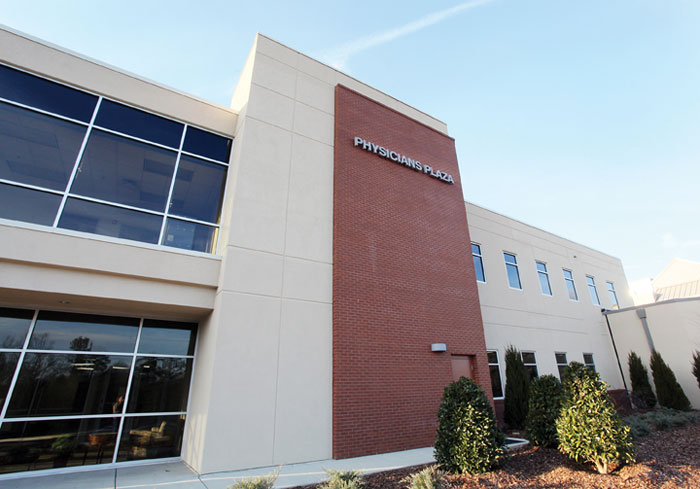
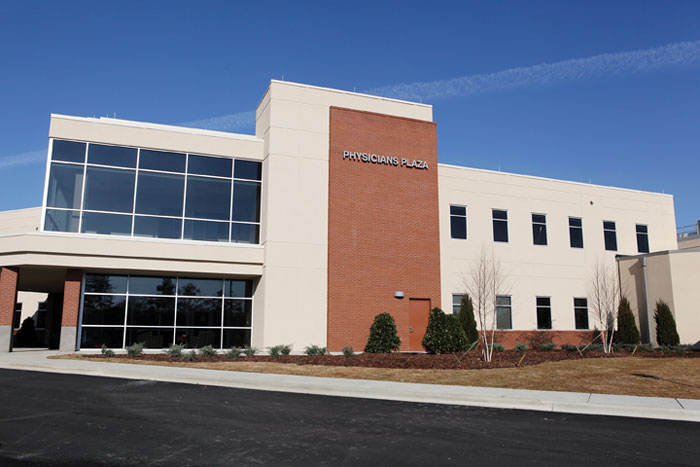
On Dec. 19, 2011, the Physicians Plaza professional office building opened adjacent to the hospital, featuring 40,000 square feet of space. St. Vincent’s is leasing 20,000 square feet for specialists and an outpatient center, and Johnson Development, which specializes in developing, acquiring and managing medical office buildings and outpatient facilities, is developing the building.

St. Vincent’s Family Care — Pell City, the practice of Drs. Tuck, Scarbrough and Williams, is slated to open there in February or March along with St. Vincent’s Obstetrics and Gynecology-St. Clair.

New services are being added as well. Wound care with hyperbaric oxygen chambers opens in April or May, and in June, a sleep diagnostic center will open with two beds initially that can be expanded to four beds.

A partnership with MedSouth, a durable medical equipment company, will allow St. Vincent’s to offer home medical equipment, like wheelchairs, crutches, walkers, oxygen and respiratory equipment as well as diabetic supplies.

Time-share space is being utilized by specialists working part time in St. Clair. And more specialists are being recruited in the areas of orthopedics, general surgery, cardiology and pulmonology. To Tinney, it all translates into “more comprehensive medical services we can provide our community.”

Laurie Regan, a principal with Johnson Development, couldn’t agree more with Tinney’s assessment of the hospital’s ability to provide more comprehensive services. Her firm is developing the building with a definite eye toward the future and expansions.

Fresenius Medical Care dialysis will open with 12 stations and plans for an expansion, she said.

Even the building itself was constructed with expansion in mind, evidenced by a third floor of 5,000 square feet of additional space that will make way for a vertical expansion. “We know the growth is going to be there,” Regan said.

The Physicians Plaza is expected to be fully functional in February and has features and amenities that make it appealing, like its easy access to the first floor of the adjoining hospital and a full complement of diagnostic and lab services.

Art from elementary school students will hang on the walls of the second floor surrounding family practice, illustrating the partnership between the medical facility and the community.

“It is a community building, really, and we want it to have a St. Clair flavor,” Regan said.

The tie to community has a special meaning to Regan personally in addition to her role as a developer. “As residents of Pell City and St. Clair County, my husband and I have been strong supporters of St. Clair Regional and St. Vincent’s. I’m doubly blessed that my career in health-care development allowed me to be a part of this wonderful project and work in my hometown.”

Volunteerism Defined

Terry & Sandy Gamble, Robert Hood help
Alpha Ranch rebuild after April’s deadly tornadoes

By Elaine Hobson Miller
Photos by Jerry Martin

“Hear that wind coming down the valley?” asks Sandy Gamble, turning her left ear toward the door, which sounds like it’s about to rattle off its hinges. She laughs nervously. “Yeah, it’s scary. There are no trees now to block it.”

Sitting in a folding metal chair in Alpha Ranch’s new shop building, she glances at the door and windows, as if expecting that wind to pick up the shop and carry it away. It wouldn’t be the first time. It happened April 27, when tornadoes tore through Shoal Creek Valley, destroying almost everything in their path.

Sandy and her husband, Terry, live in the Clay-Trussville area normally. But nothing has been normal for them since the storms. On May 23, they parked their 26-foot travel trailer at Alpha Ranch on County Road 22, better known as Shoal Creek Road. Volunteers extraordinaire, they have devoted themselves to rebuilding the ranch and helping Gary and Phyllis Liverett rebuild their lives.

They came out to Alpha Ranch with Bridgepoint Community Church (Clay-Chalkville) a few days after the April storms. Their congregation put in half a day helping with the cleanup. “We came home that day crying, saying we can do more than just half a day with the church,” Sandy says.

The Gambles met the Liveretts more than 20 years ago, when they worked together at Bridgepoint’s Camp Chula Vista. They had kept in touch, so the Gambles thought about the Liveretts when the storms hit. “We moved here to help clear debris and for her to cook and for me to work,” says Terry, taking a puff from his cigarillo.

After the tornadoes, nothing remained of the original 120-by-40-foot shop building but the concrete slab. Used to teach trades such as auto repair, carpentry and electrical wiring to the at-risk teenage boys who live at Alpha, its reconstruction was a priority so the Liveretts could store materials and machinery while rebuilding the ranch. Once the shop was 85 percent complete, most volunteers had gone home. Only the Gambles and Robert Hood, an Odenville man who has worked alongside them, remained.

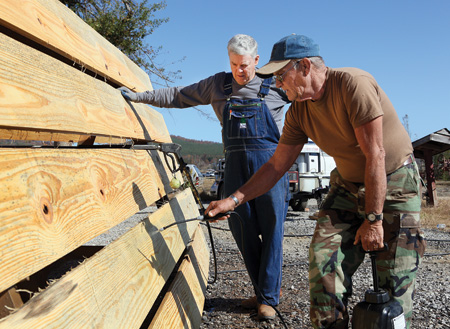
“Robert and I did all the finish work,” Terry explains, while keeping a watchful eye on his 28-month-old grandson, Hayden, who is running around in miniature overalls asking grandpa to kiss his boo-boos. “We built the work benches, the cabinets, the roof and walls, did the electrical work and the plumbing.”

With the shop almost complete, attention has turned to rebuilding the two homes destroyed by the tornadoes. One will be occupied by the Crawfords (daughter, son-in-law and nine grandchildren of the Liveretts) and the other by Phyllis and Gary. Maybe the houses will be complete by Christmas, maybe not.

Two years ago, Terry retired from Norfolk Southern Railway and the Army Reserves, two positions he held simultaneously for 36 years. He was deployed five out of the final 10 years of reserve duty, serving in the first Gulf War, in Afghanistan, Iraq, the Horn of Africa and Bosnia. His job was humanitarian assistance, rebuilding roads, schools and churches that had been destroyed by war. He had seen plenty of destruction, yet none of that prepared him for what he found in Shoal Creek Valley after the April storms.

“I was shocked at the devastation, but more shocked at the attitudes of the people out here,” Terry says. “These people lost everything, yet you did not see them down. They just took things day by day.”

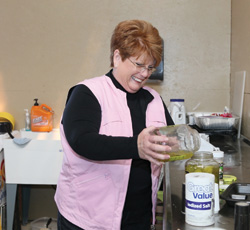
Sandy often cooked breakfast for 50 and lunch for 150 workers and valley residents. At first, she and Terry bought the food, then donations started coming in. “One Saturday we didn’t have any food, and a pipe workers’ union pulled up with barbecue and baked beans,” she says. “We never ran out of food. We couldn’t keep water, Gatorade and ice, though. People were drinking four to six bottles a day during the hot summer. Hardin’s Chapel kept us supplied. I bet they bought 20,000 bottles of water.”

Cooking for hundreds of people and building a shop isn’t exactly what the Gambles had planned for their leisure years. They spent the first year of Terry’s retirement traveling the world, aided by Terry’s “space available” status on military flights. They were accustomed to helping people in need, giving money here, a spare bedroom there, but had never encountered the overwhelming needs they found in Shoal Creek Valley. “What got to me was the sentimental things I saw in the lake after the storms, like the teddy bears and the sofa and the dormers to the Liverett house,” Sandy says.

Terry has a brand-new bass boat that didn’t see water all summer, and he is building a street rod that he hasn’t touched in months. He has reduced his work load to three days a week, however, and manages to get in a little hunting.

So, what are the Gambles taking away from this experience?

“We thought we were going to be blessing other people out here, but we’ve received the blessings,” says Sandy, a retired school teacher. “I had surgery on my hand in October, and I was homesick for this place.”

Terry appreciates his new friendship with fellow volunteer, Robert Hood. After school started, most of the other volunteers went home, but the Gambles and Hood remained. “I never knew Robert before all this, but I’ve enjoyed working with him immensely,” Terry says. “Gary will make a list and Robert and I will go down it, checking off as we get something done. We work well together.”

Like the Gambles, Hood thought he would put in a few days at the Ranch, then return to his normal routine. “Extreme Ministries (a Pell City-based organization that mobilizes volunteers for construction-related projects) sent out an email through our church (First Baptist of Pell City) asking for volunteers for three weeks,” Hood says. “I said I would work three days, Monday through Wednesday, for those three weeks. The need was so great, after one day I realized that wasn’t going to be enough.”

Hood says he could find plenty to do at his house, such as picking up limbs and raking leaves, but in Shoal Creek, he gets a sense of satisfaction knowing he’s giving something back to the community.

A retired plant manager for O’Neal Steel, he is accustomed to volunteering, though. For eight years he put in 2,000 hours a year as a certified reserve deputy sheriff for St. Clair County. He gave that up in 2008 when congestive heart failure made it difficult to wrestle detainees to the ground. He had never wielded a hammer much or installed a toilet before his stretch at Alpha.

“Now I’ve done roofing, plumbing, wiring, carpentry, I’ve set trusses, whatever needed to be done,” he says. “But I tell people I just come out here for the lunches.”

Neither the Gambles nor Hood know when their lives will regain a sense of normalcy. “We’ll go home for Christmas, but we won’t go home permanently until the Lord tells us to,” Sandy Gamble says.

“How much longer will I be here? My wife wants to know, too,” says Hood.

“She has no problem with it, though. Since the latter part of September, I’ve cut back to three days. I volunteer two days a week for the county, filing papers at the courthouses in Ashville and Pell City.”

Ann Bobo, Terry’s first cousin and fellow church member, says the Gambles always have been very giving, very kind people who love to do things for others.

“They are always willing to help somebody out, but privately so that they don’t get any accolades for it,” she says.

Gary Liverett can’t say enough good things about Hood and the Gambles.

“Terry and Sandy have such heart. Sandy has helped feed people up and down the valley. They are a good example of what real volunteerism is,” he states. “Most people have gone back home. They’ve sacrificed and stayed.”

He never knew Hood until he came out with Extreme Ministries. “He has worked constantly and tirelessly; he, too, is the epitome of volunteerism,” Liverett said.

St. Vincent’s: More than a decade in the making

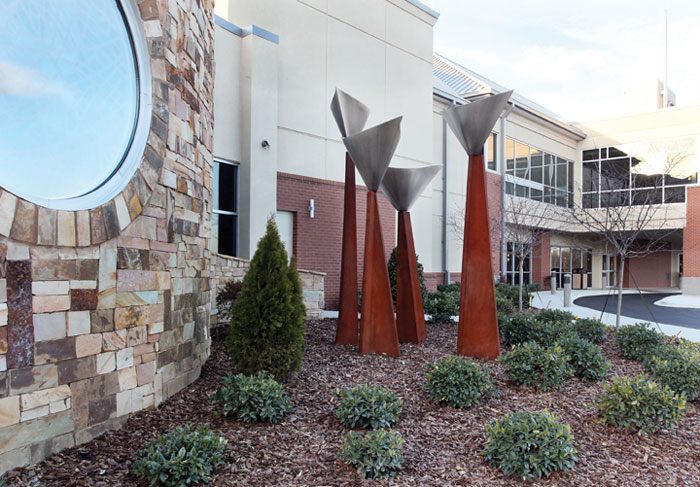
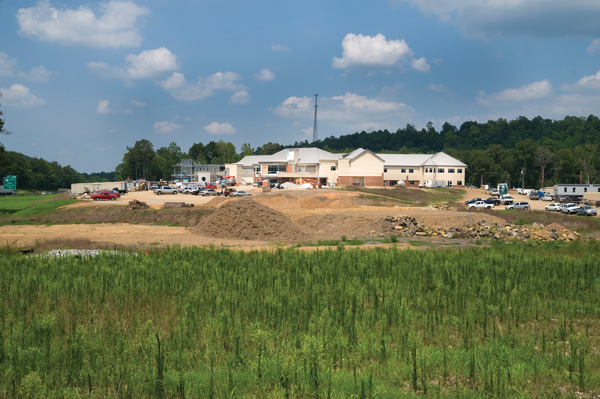
As motorists headed up and down Interstate 20 over the past two years, they might have thought the massive construction on a hillside overlooking the busy highway is an overnight success story. After all, what they see has gone up relatively quickly.

But it’s what they don’t see that tells the story of a long road to get to where St. Vincent’s St. Clair is today. The new state-of-the-art hospital, set to open Dec. 10, is far from a recent development, local officials will quickly tell you. This has been a vision decades in the making.

It has spanned multiple mayoral terms in Pell City and on the St. Clair County Commission. The talk of a new hospital dates back to the St. Clair Regional Hospital Board and later, the county’s Health Care Authority. And it has gone through a series of health systems before finding just the right fit with Ascension Health and St. Vincent’s Health System.

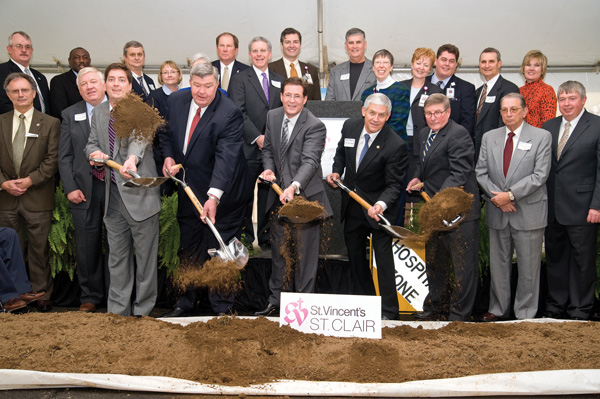
But the vision seemed to really start taking shape around 2003 when officials acquired land just north of the interstate. The first to locate there was Jefferson State Community College.

The obvious next choice for the adjoining campus was a new hospital.

Guin Robinson, who was mayor at the time and had previously served on the St. Clair County Hospital Board, recalled the needs. “Our hospital was an aging building. It was cost prohibitive to expand or update. There were no private rooms or baths.

“We knew that if we were going to be the county we envisioned us to be, something had to happen,” Robinson said. “We couldn’t have written a script any better for what transpired.”

Anywhere along the way, the dreams of a new hospital coming to fruition could have fallen apart. But they didn’t because when one area of the vision would falter, a partner stepped up to make sure the whole vision was realized.

“It took all entities,” Robinson said. And now, the Health Care Authority, St. Clair County Commission, City of Pell City, St. Clair Economic Development Council and Ascension Health, St. Vincent’s parent company, are solid partners in a vision that has the power to change the face of the region.

“Had one of the parties not stepped up, the entire project would have been in jeopardy,” said Pell City Mayor Bill Hereford, who served as chairman of the hospital board before becoming mayor. “Quality of health care is one of the top three or four issues of any community. This new hospital ensures the highest quality health care for the next generation.”

Hereford agreed the land acquisition was the tipping point. “It has been like dominos, only they aren’t falling down. They’re standing up.”

He cited breakthroughs like Jefferson State as a place to train nurses and the new hospital set to open. Behind it, a state veteran’s home is going up. A townhome development is under construction nearby. “It is a great day. The ripple effect has been tremendous.”

St. Clair Economic Development Executive Director Don Smith couldn’t agree more. “There are always identifiable moments that positively change a community’s future, and for St. Clair County, one of those moments took place when St. Vincent’s Health System took over management of our existing county hospital.

“Without their partnership, leadership and a strong commitment to premium health care, we would not have a new state-of-the-art hospital opening in Pell City. This new hospital is an economic developer’s dream project. It provides a quality health care service, creates new jobs, and helps our organization successfully recruit new employers to our county,” Smith said. When new manufacturers are looking for a new area to locate, they are always interested in the quality of that community’s health care, Smith explained. “They know that their employees’ health has a direct effect on their success. In addition, having this new hospital will directly create other opportunities like the Department of Veterans Affairs Colonel Robert L. Howard State Veterans Home across from the new hospital,” which will create 300 new jobs. “This project would not have come to St. Clair County without this new hospital being constructed.”

Smith credited the county commission for its foresight in moving the entire project forward. “The County Commission has recognized for quite some time that having a new hospital in our community would have an incredible effect on local economy for generations to come. We are very fortunate to have such proactive elected officials throughout our community.”

County Commission Chairman Stan Batemon, a driving force behind the project and a constant proponent over all these years, once called the 160-acre tract of land a “green field” that is now growing a community college, a hospital, a professional medical building, a veteran’s home and a residential development.

“I’m looking at the new hospital and all the things with it as a small UAB-type development for St. Clair County,” Batemon said. “The hospital is driving the school, and it’s driving the Veteran’s Home and any other developments that will go out there. It’s our small education and health complex.”

What’s next? “It is definitely going to be the catalyst that moves the county and the region forward,” Batemon has said.

Lawrence Fields, who chairs the Health Care Authority and is a former mayor himself, called it “one of the best economic engines to come to St. Clair County in a long time.”

He pointed to the five-member partnership as the key to success, too. “It is outstanding that everyone worked together as well as they have.” In addition, “We have a great board, a good mixture from all over the county” who lent their support.

“I don’t think anything will surpass this,” Fields said. “It’s like what (St. Vincent’s CEO) John O’Neil says — ‘It’s one of the most modern, rural hospitals in America.’ I just have to pinch myself when I ride by.”

St. Vincent’s: Beyond Local Impact

When architect Russ Realmuto of Birchfield Penuel & Associates took the lead on designing a new hospital for St. Vincent’s and St. Clair County, it was more than just a professional project to him. It was personal.

“My family homesteaded the land in the 1840s. I live a mile and a half from it.” It’s home. And Realmuto calls his role in designing the new, state-of-the-art hospital “very much an honor.”

As a side note, he mentions he is due for surgery in coming weeks. “My surgery is the first scheduled in the new hospital,” he said with apparent pride, adding that he hopes others will take his lead. “It is very important that we all support the hospital now that it’s built. St. Vincent’s has such a good reputation,” but it will take a consistent community commitment to help grow the hospital.

“We feel like it is going to expand. We designed it to expand in so many different directions. It has a lot of expansion paths,” like Emergency Department treatment areas and more space for more physicians. The medical office building is built to expand.

“It is a gorgeous site.”

Realmuto is not unlike others who have worked on this project. It’s not just a hospital building to them. It’s doing something good for their hometown.

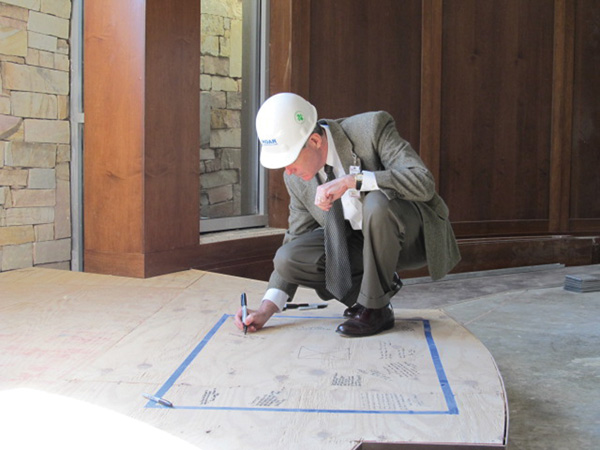
Jason Goodgame, vice president of Goodgame Company, is the project manager, who also is a Pell City native. His company joined forces with Hoar Construction, the lead contractor on the hospital, to sell it as a local Participation and Inclusion project, which meant that 25 percent of the project had to have local participation. To St. Clair County companies, that meant $6 million.

Much of the money to build the hospital came from hospital taxes of local people, and it was a way to give back, Goodgame said.

Hiring local has been the mantra of this project throughout. It is not uncommon to see names like Southern Landscapes, Joiner Plumbing or Johnny’s Electric — all St. Clair County companies — heading in and out of the site to do their work.

Nelson Glass; Kirkpatrick Concrete, which is owned by National Cement Co. in Ragland; Jenkins Brick; and Alabama Brick are just a few of the companies with ties to St. Clair County. The stained glass windows of the chapel were by Leeds Stained Glass, a Pell City-based company owned by Terry Barnes. A family business, Barnes said, it began as a church furniture endeavor that eventually led to making stained glass windows for churches and chapels all over the world.

“We are very excited” to be a part of the St. Vincent’s project, Barnes said. The hospital will be “a number-one draw for the community. You are always excited about doing something in your own community.”

For Goodgame Company, “it was important for us to be a part of it. To have our family company’s name on a building that is going to be here for the next generation is important,” Goodgame said of the 57-year-old business.

“It was a chance to be a part of something that is going to be here a long time, just like our business.”

St. Vincent’s Ribbon Cutting

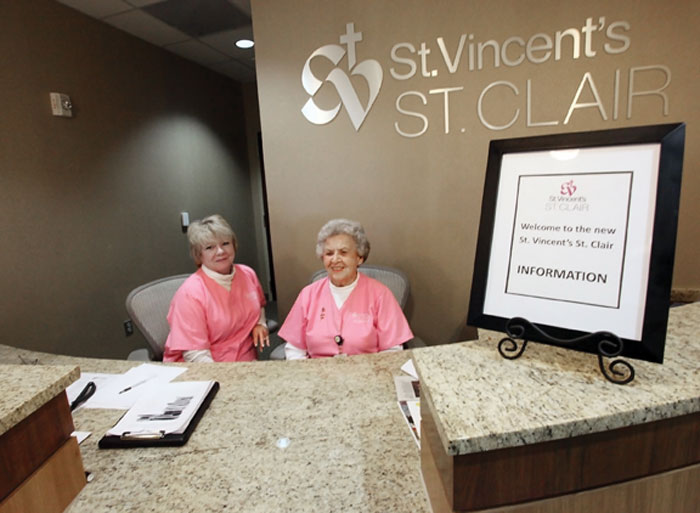
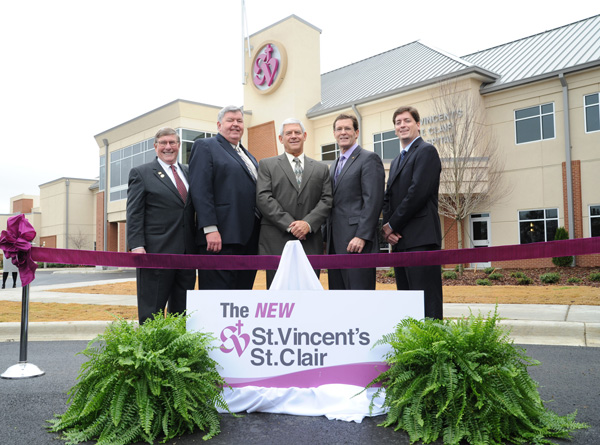
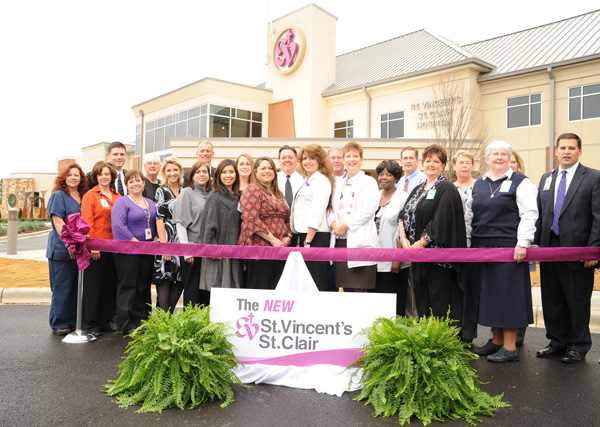
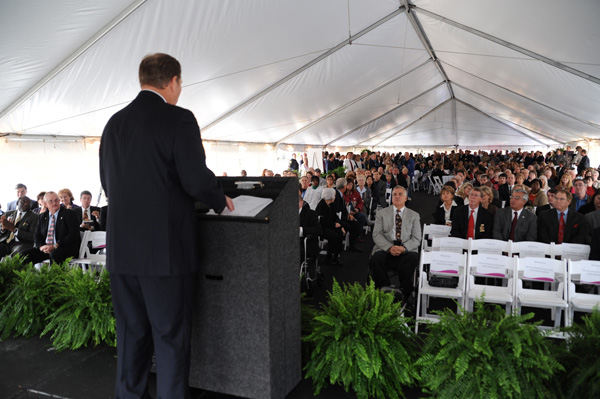
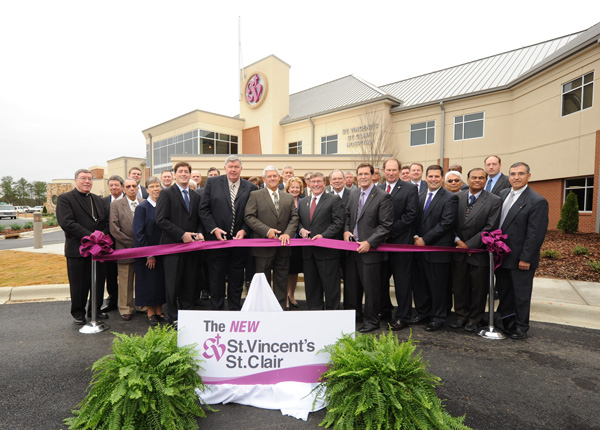
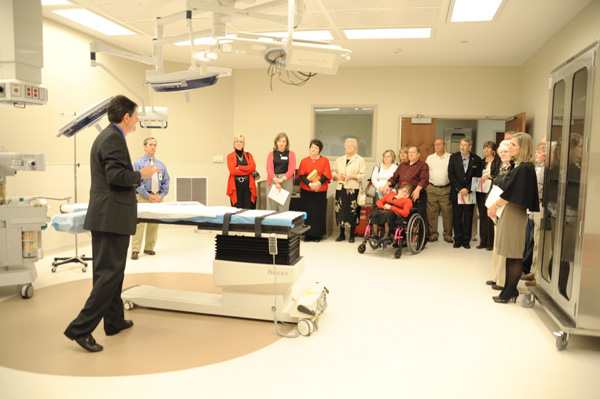
St. Vincent’s Health System held a ribbon cutting ceremony Tuesday, December 6, for the opening of the new state-of-the-art St. Vincent’s St. Clair hospital. The ceremony was followed by a reception and guided tours in the new facility.

Local community leaders and elected officials joined the facility’s five development partners, St. Vincent’s Health System, the St. Clair County Health Care Authority, St. Clair County Commission, City of Pell City, and the St. Clair County Economic Development Council to celebrate the new 40-bed, 79,000-square-foot hospital. The existing St. Vincent’s St. Clair hospital will be moving to its new location and begin seeing patients on Saturday, Dec. 10, at 6 a.m.

“With our partners, St. Vincent’s is proud to open a state-of-the-art hospital in St. Clair County that will provide this community with compassionate quality care for years to come,” said John O’Neil, president and CEO of St. Vincent’s Health System. “We’ve had the dedicated medical staff and associates to make this one of the best rural hospitals in the country and now we have the facility and technology to match it.”

The new hospital, located at 7063 Veterans Parkway in Pell City, is expected to be one of the most well-equipped rural hospitals in the country boasting features such an expanded emergency department, all private rooms, the latest in diagnostic imaging, inpatient and outpatient surgery services, and computers at the bedside. The facility is the only hospital in St. Clair County.