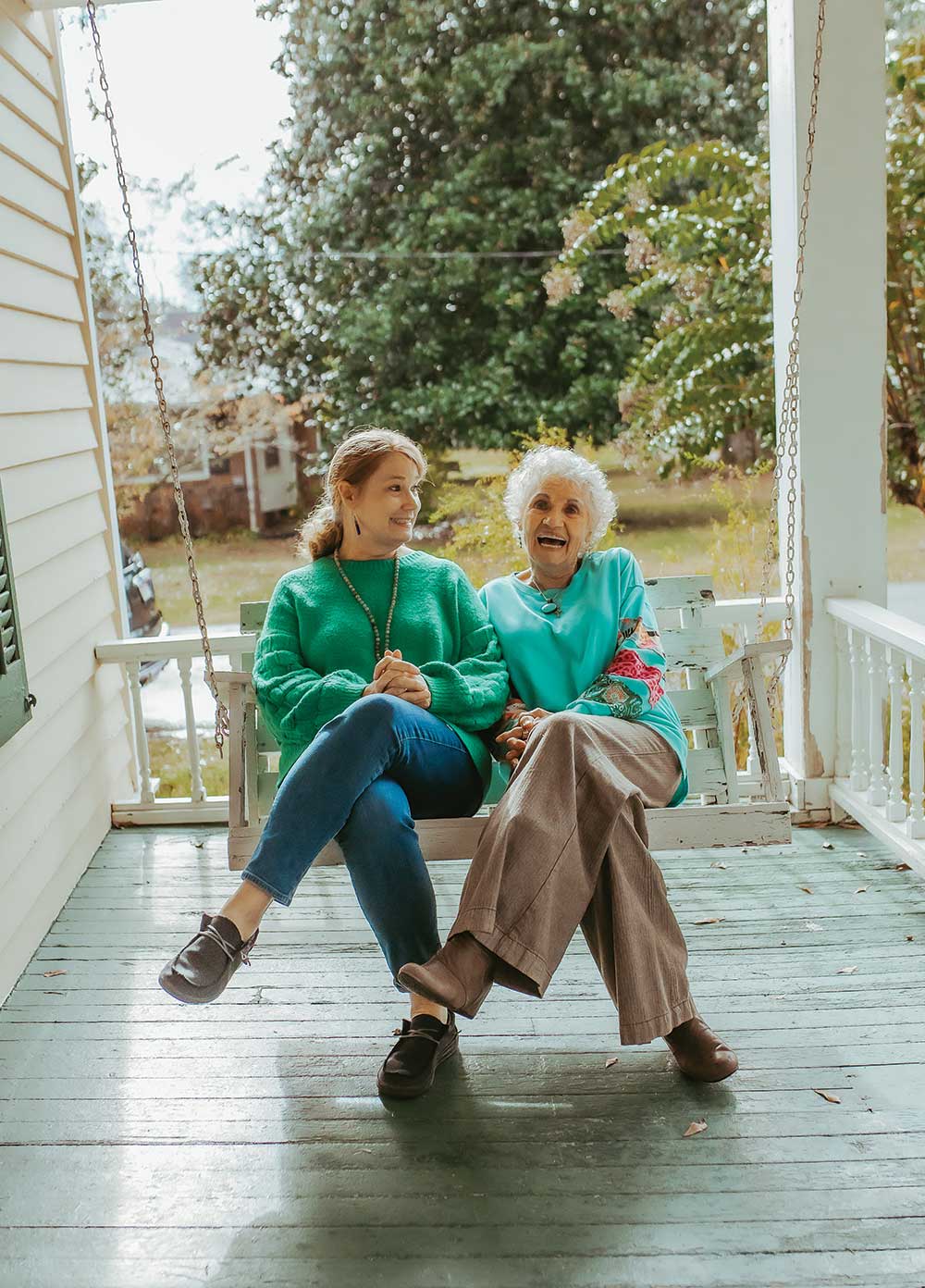
Willie Mae ‘Snookie’ Turner Beavers

Story by Joe Whitten
Submitted Photos

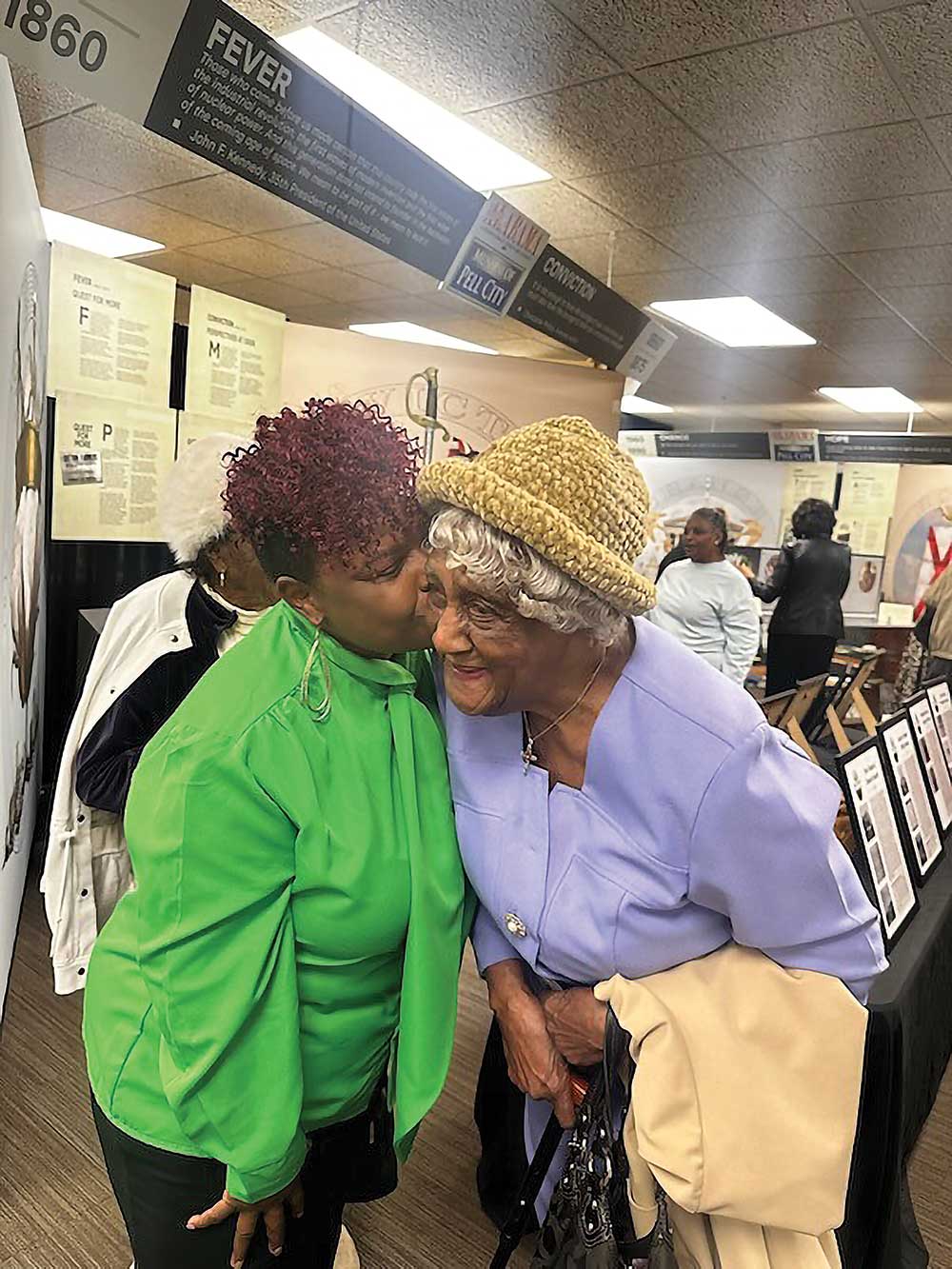
If you should travel a St. Clair County backroad some afternoon and arrive at Willie Mae “Snookie” Beavers’ home for a visit, she might respond to a question by saying, “Now, back in them days …”

If she does, sit up and listen, for she has lived almost a century of Pell City history. She will converse with you in her Southern dialect that is as soft and melodious as Mahalia Jackson singing, “Precious Lord Take My Hand.”

Both Pell City and St. Clair County need to know what she can tell us about how it used to be with farming, gardening, killing hogs, preserving vegetables and fruits, playing the church piano and sewing old-timey quilts. She is one-of-a-kind, as all treasures are.

Born Jan. 9, 1927, to James and Bessie Moore Turner, Willie Mae was the first of the 10 Turner children. The family farmed Turner land in the Coosa Valley, south of Seddon, and she began working in the fields as soon as she was big enough to work.

“We farmed, raising cotton and corn and sugar cane. My parents worked in the fields, and I worked right there beside them,” Willie Mae says matter-of-factly. “I think I worked harder than any of the others cause I was the first one. And I didn’t just work in our fields, I worked in other folk fields, too. If they needed somebody, I went. Whatever was in the field, I was in there, and I did it. What the plow couldn’t do, we did with a hoe,” she laughed. “And after I got married, I still went to other folk fields and worked. Back in them days, that’s the way I had to make my money.”

Willie Mae married William Beavers on June 18, 1948, and they were parents to six children: Shirley, Connie, Wilma, William (BeBop) Jr., Bennie and Rodrick. All seven are still living. As the babies arrived and grew up, Willie Mae continued “working in fields” until she took a job with Pell City Cleaners.

She started working at the cleaners before she was 62 years old, but doesn’t remember the exact date. She started drawing her Social Security at age 62 but didn’t retire until she was 96. When asked why she retired, she laughed and said that one of her daughters told her she was too old to keep working, that she needed to retire. Willie Mae told her, “Well, the bossman said I was doing the work …. But she told me that if I didn’t come out, she’s gonna tell ‘em to fire me, and I believed she would’ve, so I come out.”

Her hardy laugh showed she was enjoying telling this. “I don’t know if he’d a-fired me or not, if she would-a told him to.”       

Other than a brief time as a teenager washing dishes at the St. Clair County Training School, the Pell City Cleaners job was the only work she did other than farm work.

Gathered produce had to be preserved for the winter months. Willie Mae helped her mother can vegetables as they came in. As to fruit, they canned peaches for they were too juicy to dry, but they dried apples by the peck. “That’s where I learned how to can,” Willie Mae recalled. “I did what my mama done, I just couldn’t do it as good as she did.” What cucumbers they didn’t eat they pickled. She spoke of smokehouse pickles as quite delicious.

When the sorghum cane was mature, it was time to make syrup. Her dad set up the syrup mill and the boiling pan. Willie Mae and sisters stripped the cane and cut it in pieces ready to be fed to the mill as the mule walked round and round turning the mill, squeezing the juice from the cane into buckets. Poured into a boiling pan, the juice cooked down to syrup. “We poured the syrup in cans,” Willie Mae recalled, “and we ate biscuits and syrup.” She didn’t say it, but that was some good eating.

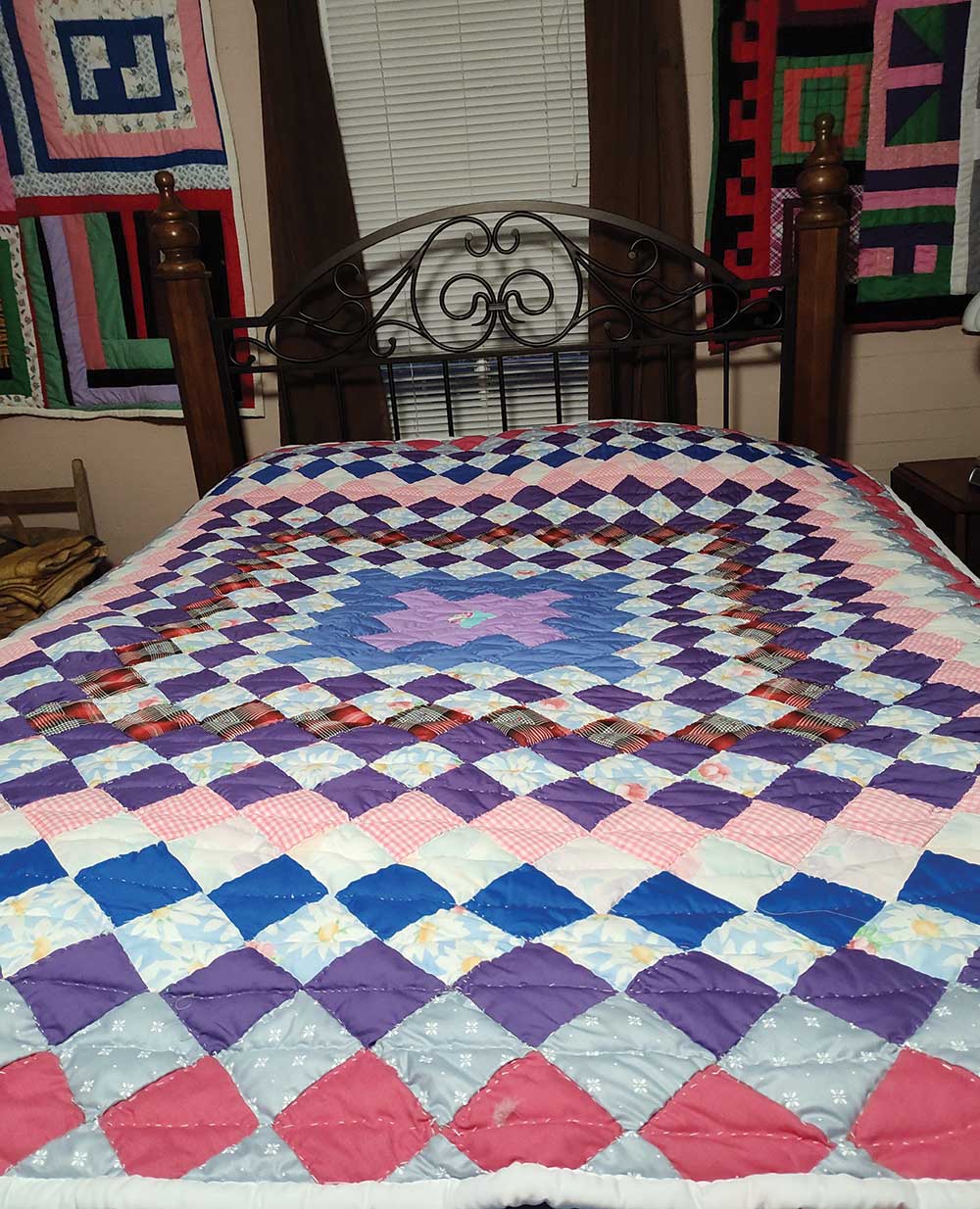
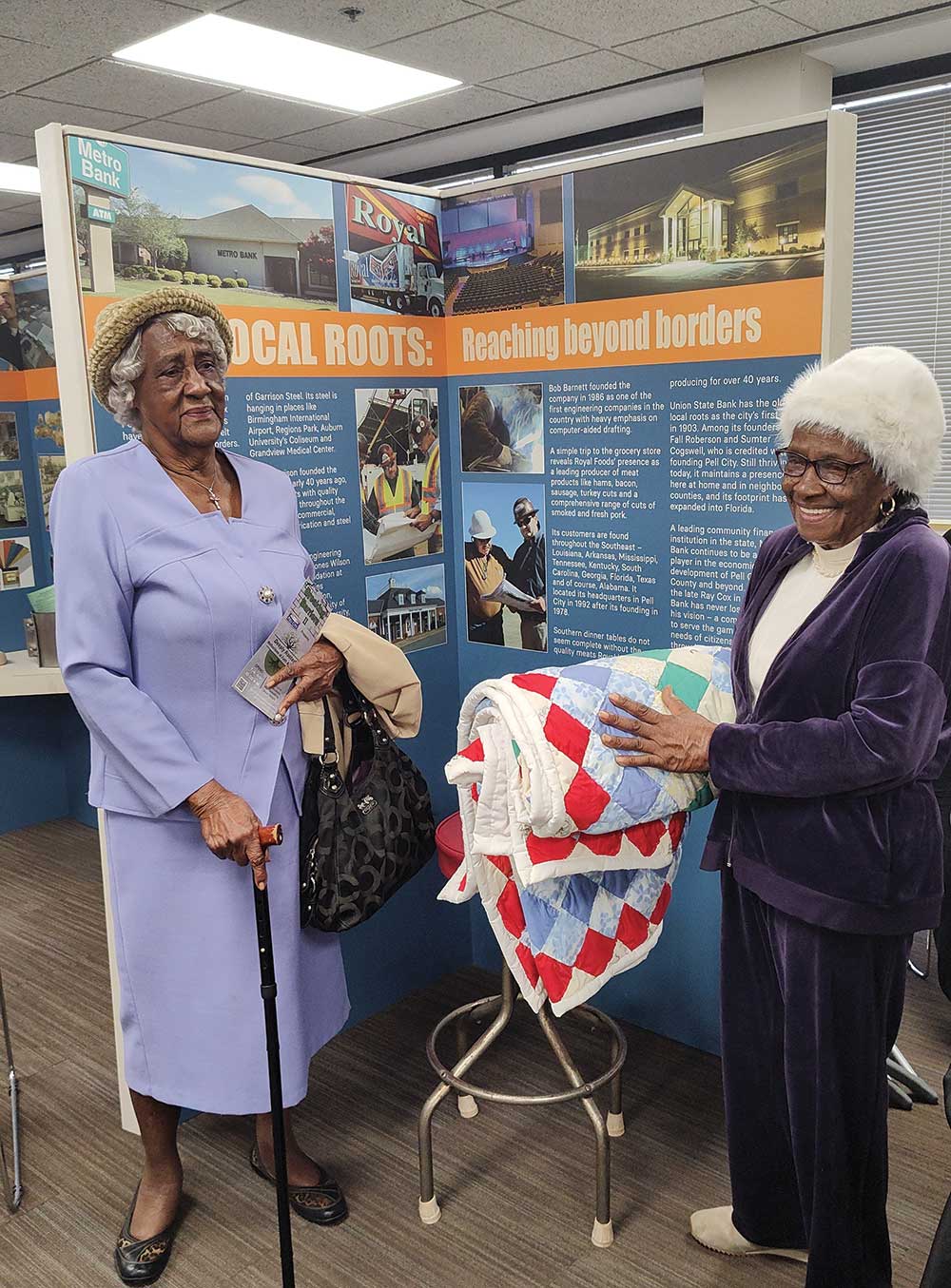
Willie Mae’s Trip Around the World quilt in a local collector’s home

When asked about wild game for food, she said, “We loved rabbit and squirrel. That was good eating.” She paused, then laughing, said, “And possum. Mama did all the cooking, and everything she made was good.” Obviously enjoying remembering, she continued, “She made good dressing, good cakes, good custard, good biscuits.”

When hog killing weather came, Willie Mae learned from her mama about sausage, souse meat, and chitlins.

They used some less desirable cuts of pork to grind up for sausage, adding pepper and sage to the mixture. Willie Mae’s dad had a smokehouse where they hung the sausage, but the other cuts of meat they salted down in a wooden saltbox.

Asked about old-timey head cheese or souse meat, Willie Mae smiled, “I always made the souse meat. Made it out-a the head, and out-a the feet, and out-a the ears. We had a big pot, and I’d put it all in a pot and boil it till it got done, I’d pick all the bones out of it, and start mashing up the meat with my hands. Then I’d grind that all up with the sausage grinder. And that’s when I’d put different spices in it.” They formed the meat into a loaf shape to let it set until it was firm. Some call souse meat the original deli meat, for it makes delicious sandwiches.

Nothing about the hog went to waste, not even the intestines. They cut them into short pieces and washed them over and over until they were clean. “We’d get as much fat off as we could,” Willie Mae said. “We cooked ’em in a boiler for several hours with salt and pepper. Some folks fry ’em, but we didn’t, we just boiled ours till they got done. To me, that was some good eating.”

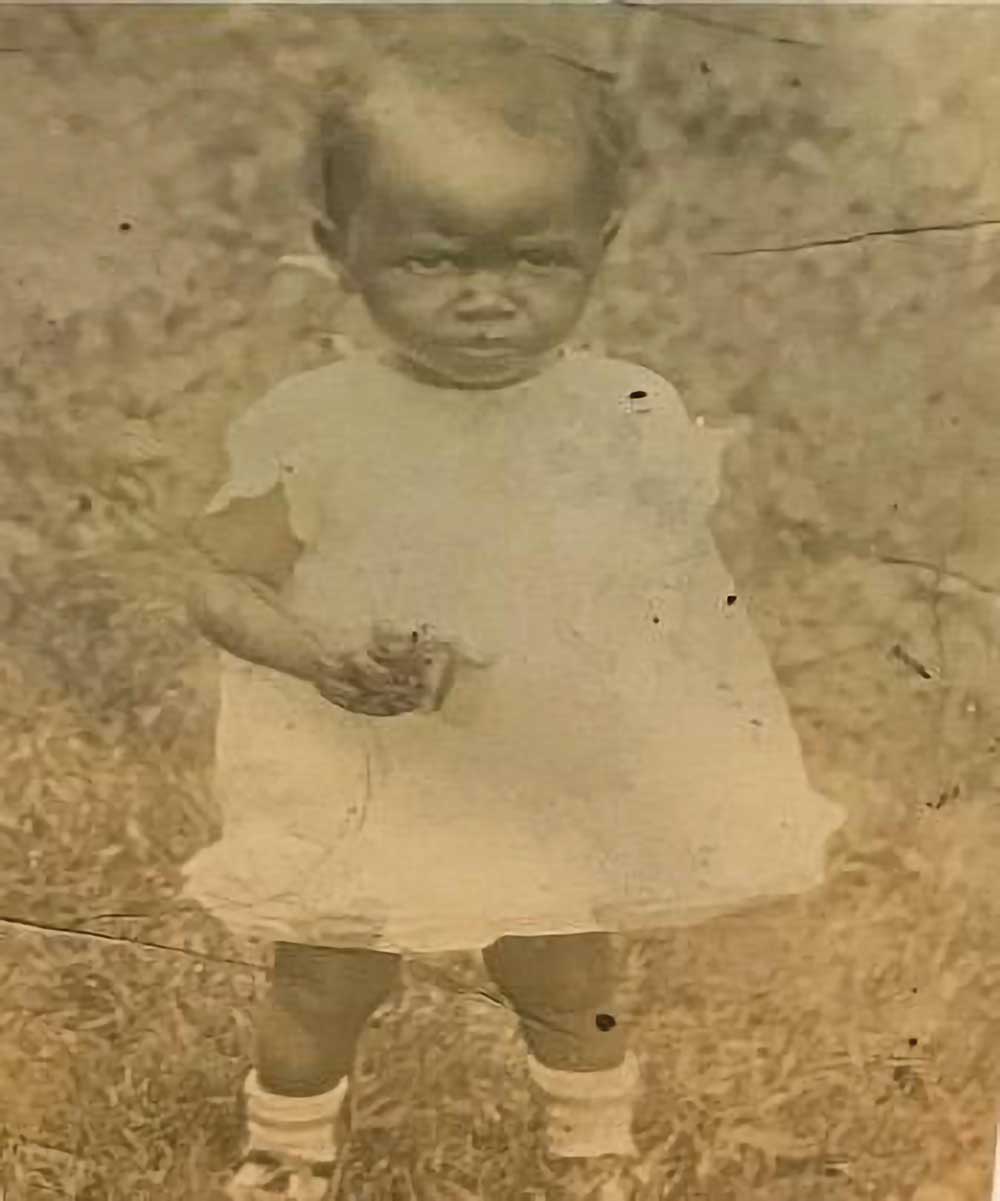
Willie Mae’s baby photo

Today chitlins are regarded as solely a Black culture soul food, but Rev. Larry Adams of Mt. Zion Baptist Church in Springville can attest that chitlins are served in restaurants in France. Rev. Adams was on a teaching mission trip in Paris with Pastor Chipley Thornton and Pastor David DuPre from Springville First Baptist Church. For lunch one day, the three went to a Paris restaurant. Unable to read French, Pastor DuPre pointed to a picture and ordered it. When their meals were served, Rev. Adams looked at his friend and said, “You’re eating chitlins.” His friend said, “No.” Rev. Adams said, “I know chitlins, and you’re eating chitlins.” Sure enough, when they translated the menu offering it was chitterlings, or in Alabama, chitlins.

What Willie Mae learned growing up, she continues today, which includes growing vegetables. “Folks need to raise stuff,” she vows decisively. “If they don’t, they not gonna have anything to eat. The stores ain’t gonna have it. If you don’t raise it, you ain’t gonna have nothing to eat.”

She now gardens with baby brother, Larry Turner, and their garden is weed and grass free. When asked what they grew, she laughed, “We grow everything that can be raised – turnip greens, mustard, onions, green beans, tomatoes, cucumbers and all such stuff as that. Anything that can be raised. We always had a good garden. Larry had a jam-up garden. Me and him been raising a garden.” She paused, then said, “They say I’m lazy, but I just done got old.”

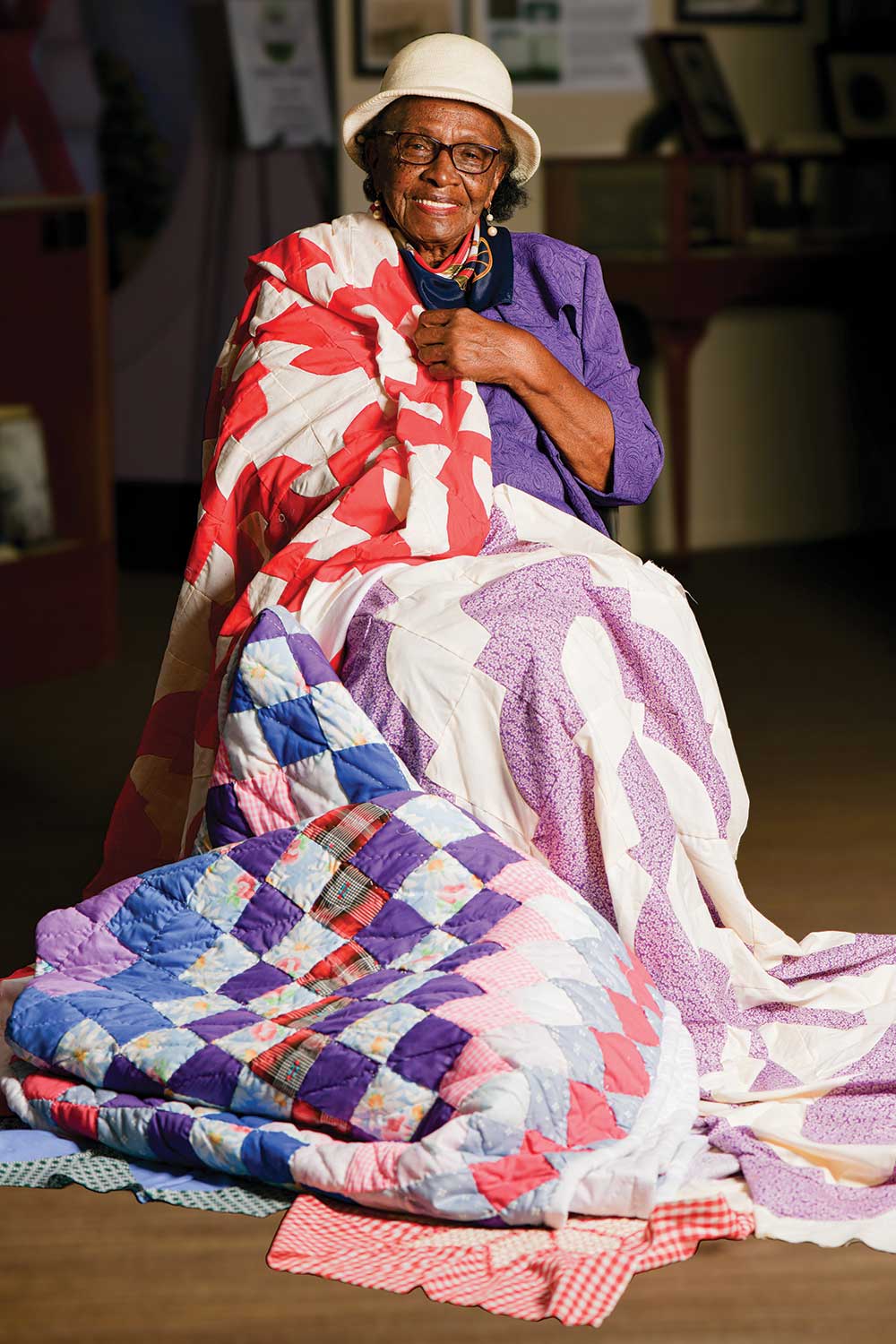
 She may have slowed down, but “lazy” is not a word that fits Willie Mae Beavers. No lazy person on God’s green earth sews quilt tops and quilts them by hand. Willie Mae does, and her quilts are treasured by family, friends and folks she’s never met. A commendation from the Alabama House of Representatives read by Representative Hall on May 16, 2017, records that “…her magnificent quilts are displayed in homes across the United States,” and that “…many have received one of her famous quilts in celebration of a significant life milestone.”

Willie Mae’s love of quilts perhaps started with her grandmother, Henrietta Turner, whose house was a short walk through the woods from Willie Mae’s. “We walked over there to her house every day. She never acted like she got tired of us. She was a good grandmama.” And her love of quilts may have started with her grandmama, for she recently reminisced, “I used to enjoy looking at her quilts. She used to have these frames that you hang up in the house from the ceiling, and you had to hang ’em by their four corners. She hung it up and let it down to quilt on it. She used what she had to make ‘em: old clothes, pants and things.” Then, laughing, she said, “You know what, I went to the library the other day and saw these cotton carders, and I said, “Oh, my mama had some of these.” Carders were used to separate cotton from the seeds so the cotton could be used as the inner batting (padding) for the quilt.

Willie Mae enjoys talking about quilts. “I treasure quilts, but young folks …” she paused and shook her head, leaving the “don’t” unsaid, then continued on a happier note. “Mama always quilted. She made pretty quilts. My quilting’s not as pretty as hers.” She used cloth flour sacks, feed sacks and fertilizer sacks, when she began learning to quilt.

Bought fabric in quilts was unheard of among rural folk in the 1930s and ‘40s.

“I’d get the empty ones,” she said recently, “and wash ’em and I started making quilts from them.” Then came the phrase, “Back in them days, you didn’t buy anything. You had to use what you had. So, I would quilt, and I didn’t really have patterns then, it would just be blocks that they called the Nine Diamond.”

She still makes the Nine Diamond, but other quilt patterns she likes include Trip Around the World, Monkey Wrench, Stars and  Bow Tie. “Nothing fancy. These real fancy quilts with a whole lot-a pretty little bitty pieces – I don’t do that,” she laughed. “I don’t know how old I was when I started quilting. But I been doing that all my life. I’m 98 years old, but I’ve been quilting – piecing and quilting all my life. My mama did it, and what I did, I tried to do it like her.”

An ear for piano

One thing Willie Mae does that she didn’t learn from her mother is playing the piano. Knowing her daughter wanted a piano, Mrs. Turner went to a piano store in Anniston and bought one. “I know she got tired of me playing, but she never told me to stop.” Willie Mae pauses to reflect, “If somebody ask me to play in the key of C or F sharp, I wouldn’t know what they was talking about. The Preacher one time asked me to play ‘Precious Lord’ in C. I played if for him, but I didn’t know if I played it in C,” she laughed.

She never took piano lessons, but she could play on the piano whatever she heard sung or played on the radio. At age 14, she began playing piano for Blooming Light Church, and she recalled how that happened. “I’m sure they had other players, but Mr. McHugh came to Papa and said, ‘I heard your daughter played the piano.’ And I started from there.” She couldn’t remember what month and year she started, but she continued as pianist and music director until in her 90s when COVID kept her and the congregation away from church services. “The first song I played at church,” she recalled fondly, “was ‘The Old Account Was Settled Long Ago.’” The last song she plays in church is yet to come.

Willie Mae and good friend Johnnie Mae Green

Willie Mae’s baby brother, Larry Turner, says folks need to know that she was not only the pianist at Blooming Light but that she was also the Minister of Music there and was Minister of Music for Riverside and for Rocky Zion for a while as well.

“I played for Rocky Zion,’ Willie Mae reflected, “and I played for Riverside, and for Peace and Goodwill.” Her dad, Rev. James R. Turner, was pastor at Peace and Goodwill at Riverside.

Asked if she played piano for her dad, she answered, “I played for him. Mama told me, ‘You got to.’ I went to all the revivals. That was fun.” She pauses a few seconds and adds sadly, “But church ain’t like what it used to be back in them days. We never sung anything but the old songs. ‘The Old Account Was Settled.’ ‘Oh How I Love Jesus.’ ‘Precious Lord.’ Old songs.” She laughed and said, “Now, I can play for old folks, but I can’t play for teenagers.” Lots of people agree with Willie Mae that the old songs are the best songs.

Larry Turner is proud of his sister and fondly affirms, “She’s legendary. Everybody knows her. Everybody loves her.”

Recently someone asked her, “What would you tell young people about your secret to living almost a hundred years?

“Now, you’re not the first one to ask me that,” she laughed. “And I tell ’em, well, ‘I can’t tell you, cause I do not know.’ She pauses, then says, “I tell ‘em, ‘I come up poor; I worked in the fields … I’ve worked in the fields all my life. I worked in my daddy’s field, and after I got grown, I worked in other folks’ fields. And I’m still here for some reason.”

You’re still here, Willie Mae “Snookie” Beavers, because you’re a St. Clair County and Pell City, Alabama, treasure and we need you. We need the harmony of your music, the beauty of your quilts, and your example of “work hard and live long.”

Most of all we need to hear you telling us how it was “back in them days” so we don’t forget the stamina and character of our ancestors and how they lived and worked and reared families.

You are one-of-a-kind, as all treasures are, and we thank God you’re still here.

Rising Star

Alex Wise Photo by Dorothy Shi

Story by Paul South
Submitted Photos

As a little kid, Alex Wise was shy, almost painfully so. Even the at the thought of him growing up to act or model professionally seemed a long shot.

Now 17 and after making a splash last summer at a New York acting and modeling competition, Alex has signed with an agent and is taking acting lessons from some of the most respected names in show business.

For Alex – to borrow from the old standard – this could be the start of something big.

Alex with Joan Hawkins
Photo by Beth Boldt

Wise competed in 13 categories – seven in acting and six in modeling at the International Modeling and Talent Association – and medaled and placed in all categories. Overall, he finished second in the Actor of the Year competition and third for Model of the Year in the 15-17-year-old category and was second as The Most Sought-After competitor.

“It was a big achievement,” said his mom, Christi Wise.

IMTA bills itself as a: “gateway for aspiring models and actors.”

Founded in 1987, it offers a platform for aspiring actors, models, singers, dancers and songwriters to present their talents to agents, casting directors and other leading entertainment professionals.

It boasts of some A-Listers who were discovered through IMTA, including Ashton Kutcher, Katie Holmes and Eva Longoria.

For Alex, the opportunity “fell into his lap,” Christi said.

“He plays baseball, so I entered him into a contest where if he were chosen, he’d get a big metal picture,” Christi said. “He won, and afterwards he asked if it were possible to make money for modeling. I told him yes.”

His response? “I think I could do that.”

Before long, Alex connected with Joan Hawkins of Cameo Model Management in Birmingham and with Clair Sinnett, an acting coach and former casting director who has worked with the likes of Leonardo DiCaprio, Keanu Reeves, Brad Pitt and the late James Earl Jones.

“Once (Alex) decided to go to IMTA, he had six weeks to prepare,” Christi said, “All of this happened within a year.”

Before the competition, he had an acting class with Sinnett. The veteran acting coach gave him rave reviews.

“She said he had the ‘It’ factor,” Christi said. The factor is charisma that can capture a magazine cover or the silver screen. James Dean had it. So did Paul Newman. And after the IMTA, a Los Angeles management agency saw that in Alex Wise.

A centerfielder for Ashville High’s baseball team, Wise’s commitment to acting matches his commitment to baseball.

“The key quality that Alex possesses is dedication,” the agency said in an e-mail. “The best actors are those who continuously strive to improve. Alex is committed to bringing the same discipline he has for athletics to learning and growing in his craft as an actor, whether through classes, mentorship or experience on set. His work ethic is truly impressive for his age, and we know that he will show up prepared and eager for every role. His commitment to improvement will make him stand out in an industry that constantly demands innovation and depth and will lead to his success.”

Photo by Dorothy Shi

Wise brings charisma and a “thoughtful presence,” the agency said. “He grabs attention, not by being the loudest or most outspoken person in the room, but by having the ‘good human’ qualities that make people want to be around him, and as an actor, want to watch him. That charisma often translates to how generously he engages with his peers, even in competitive situations.”

 At IMTA, “we saw Alex demonstrate camaraderie and support for his fellow competitors, a truly admirable quality to observe. When combined with his dedication, Alex’s charisma and genuine caring for others will make him an unforgettable young actor, creating positive impressions that will help him build a long career.”

The entertainment business is tough, but for the Wise family, there is peace. There’s also a strong belief that for Alex, this is not a career, but a calling.

“We have a lot of faith,” Christi said. “We have definitely prayed for every door opened to be opened and for every door that’s shut to be shut. I really feel like Alex’s life has prepared him for this, that his steps have been ordained.”

She added, “He’s very grounded. He’s very rooted. A lot of kids his age don’t know who they are. But he knows who he is, and he doesn’t let the world influence his thought process That’s why I don’t worry about him because he knows who he is and what he wants to achieve.”

Even with all the attention, Alex is still just a kid from Ashville who plays baseball, attends small group Bible studies with friends and who has done the hot, hard work of cutting and baling hay. Family members describe him as a “natural born leader.”

 For his part, Alex enjoys the process of modeling and acting for a variety of reasons.

“I like getting myself out there and opening myself up. Growing up, I was super, super quiet, scared of everybody. I didn’t really talk to anybody. Now, in the last year or two, this has helped me tremendously.”

Alabama has had more than its share of people who made it in the entertainment business, from Jasper’s Tallulah Bankhead to Birmingham’s Walton Goggins. Alex Wise has a message for aspiring performers, especially small-town kids like him.

“He wants people to know you can be from a small town and do this,” Christi said. “These dreams are reachable.”

Making dreams come true isn’t easy. Alex Wise knows that.

“It’s not as easy as it seems,” he said. “It’s going to take hard work and dedication. But it’s also going to take a strong person, period … It takes a strong person to stay in this business.”

Caden’s Light Shines

Story by Roxann Edsall
Photos by Mackenzie Free
Submitted Photos

To know him is to love him, say family and friends. They’re describing 15-year-old Caden Nelson, a young man with profound physical challenges but equally profound gifts. At first meeting, it will likely take a bit of effort to understand his speech, but his words pack such enthusiasm and joy, the effort is well spent.

Describing an encounter with Caden is like trying to describe light. He is both complex and simple. His thoughts are deep, but his activities are childlike. He is a beautiful combination of youthful exuberance and parental encouragement. He is both challenged and accomplished. He entered the world with a mountain of challenges before him, yet he describes the mountains with wonder and determination.

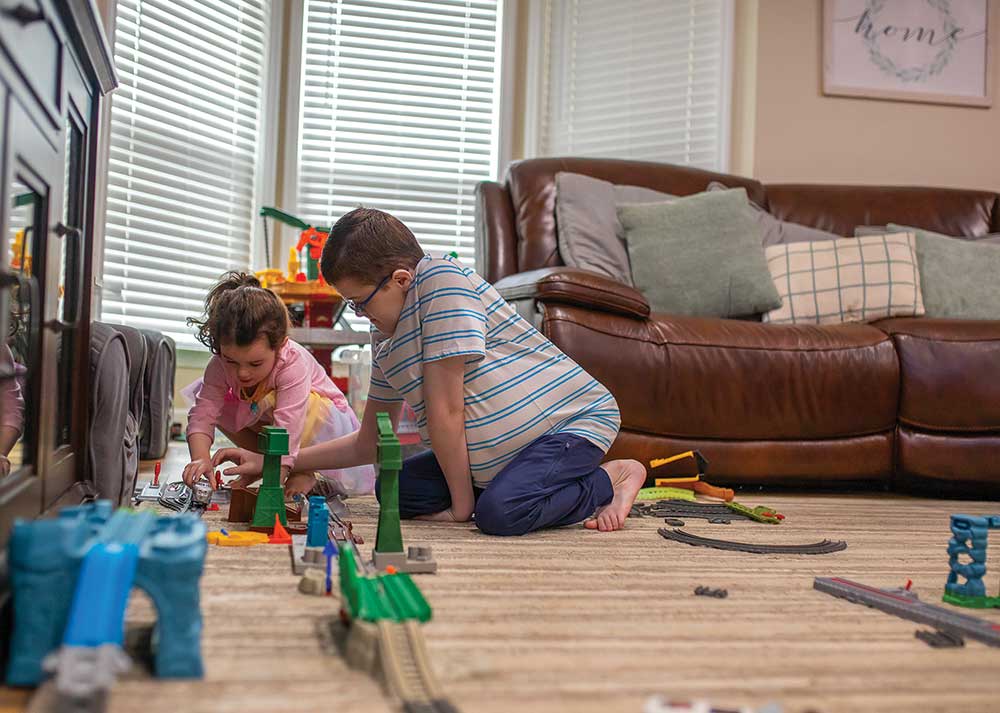
Caden patiently plays with little sister, Alyssa

Those who meet him are blessed by his ability to fill the room with joy. That joy comes from his appreciation for life and an intense gratitude for those who have encouraged him and who continue to support his journey. This is Caden’s story.

Caden was born prematurely at 30 weeks, weighing just over three pounds.  His mother, Anna, was under the care of a maternal fetal specialist in Miami, Florida. Her prenatal testing had revealed that the baby was suffering from a bladder outlet obstruction, which required doctors to insert a shunt through the amniotic fluid to help his body flush fluids.  A host of additional medical issues were discovered at birth.

“Caden was not expected to survive,” says Anna. “We were told when he was five days old and had gone for his first surgery that he would bankrupt us physically, emotionally, financially and spiritually. We knew about the bladder obstruction, but after he was born, we learned he had paper-thin abdominal muscles, neuronal intestinal dysplasia, prune-belly syndrome, scoliosis and kyphosis. The doctors said we should just let him pass away.” When Anna and Chad rejected that option, and Caden outlived the doctor’s expectations, doctors stopped issuing life expectancies.

Unlike most teenagers, Caden has never eaten a hamburger or grabbed a handful of cookies, never hung out with friends to share a pizza. In fact, he’s never taken a bite of anything. Neuronal intestinal dysplasia type B essentially means his intestinal system does not work. Because of that condition, he cannot digest food, so it is fed through a central line which goes through one of the veins near his heart.

All this, he takes in stride and doesn’t let it dampen his appetite for life. “Making people happy is a good day for me,” Caden says. He talks openly about his faith and his gratitude for life’s journey. “Jesus is like my first Dad before I met my Dad,” he adds. “He’s helped me all my life through all my surgeries on my back and with the halo surgery.”

It is difficult to imagine all the surgeries in Caden’s young life. They began with exploratory surgery at five days old, spinal fusion surgery at seven months old, more surgery at 10 years old to put rods in his back, which required a halo for six weeks to keep his back aligned so he could heal properly. After those rods broke, he required additional surgery to replace them.

In hospital with halo

“He can walk but has a walker and a wheelchair to help sometimes,” says dad Chad. “If we are going somewhere like the zoo or the mall, we take the wheelchair. If he just needs to walk from the house to the car, he can use the walker.” Anna adds that it is crucial that he not fall, so they must be very careful.

“He has some breathing issues because the scoliosis and kyphosis caused restrictive lung disease,” explains Anna. “If he gets sick with a cold or something, it’s harder for him to get over it.” You wouldn’t know it on a typical day, though, she says, other than he gets winded walking any distance.

Most days, he doesn’t walk far. School comes to him in the form of Anna’s cousin, Kyla Dunn. Everyday Lala, as he calls her, comes to the house to take care of him and his younger sister, three-year-old Alyssa, while Chad goes to work as a firefighter. Anna does contract work as a speech therapist.

When Alyssa goes down for her nap, Lala and Caden, who is in 9th grade, get to work. “Initially, I was just going to help a couple of days a week,” says Kyla. “But I was needed, and I believe with all my heart that this is the ministry God put me in. I’m grateful for every day we have.” Sitting on the arm of her chair and beaming at her, Caden says, “I love school, and I love Lala. We’ve been together almost 13 years.” He says he wants to be a caregiver like Lala when he grows up.

“We’re just happy to be celebrating another birthday with him,” Anna adds, talking about his summer birthday. “He still picks out what kind of cake or cupcakes he wants. He just can’t eat them.”

Usually given the choice to have a birthday party or to go on a trip to celebrate, most often he chooses to travel. He’s been on many trips that coincided with out-of-town specialist visits to New York City but has also taken the Christmas train out of Blue Ridge, Georgia, gone to both Disney World and Disneyland, and last year went to Branson, Missouri and rode the train to the Ozarks.

“We try really hard to give him all the experiences we can,” Chad explains. “His pediatrician asked him recently if there was anything else he wants to do that he hasn’t done already, and he couldn’t think of anything.”

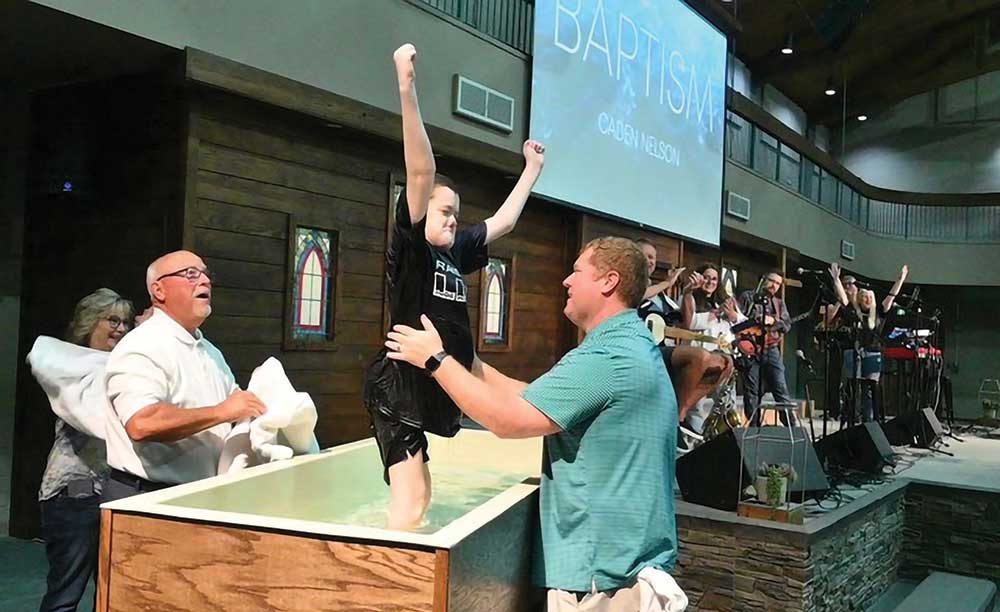
One thing Caden checked off his list recently was being baptized. He’d never done it because, even though he had professed his faith, there was a problem, and its name was water. Because he receives his nutrition through the central line in his chest, known as a TPN (total parenteral nutrition), that line must stay dry to keep from getting an infection from bacteria. For that reason, he’s never been in a pool, a lake or a bathtub. 

Paulina and Dan Gilliland and Caden’s dad, Chad, assist with baptism

Never shy of a challenge, Caden insisted on baptism by immersion. “I wanted to do it right, the way God wants it to be,” says Caden, adding, “Mama was terrified because me and water don’t mix well. But I took it like a pro.”

“It was definitely a challenge,” says Chad. “I used Tegaderm (a waterproof wound dressing) under his line, put gauze over it, then covered it again with the Tegaderm so it was double layered.” This milestone made for a perfect gift for Dad, as it occurred on Father’s Day. A photo of the special event shows a very proud Caden in a victory pose after coming out of the water.

Anna and Chad are intentional in doing their best to give him experiences like those available to their younger children, 11-year-old Luke, 7-year-old Jacob and 3-year-old Alyssa. They also hold him to the same rules. “He just got ungrounded yesterday and got his PlayStation back,” says Anna. “In the beginning, I was worried about getting on to him, but now he’s held to the same standards as the other children.”

Anna says he knows he is different and that there are things he cannot do. “Regardless of his situation,” she says, “he stays so positive.” Chad echoes the admiration for Caden’s positivity. “Caden has changed my life. With him sharing his positive attitude and love for Jesus, he’s definitely made me a better person.”

Another trip to New York for doctors’ visits

 “He is just very sweet and rarely has anything negative to say,” says Anna. “He normally doesn’t complain of pain or anything like that.” Chad agrees. “When he comes in the room, everyone is excited to see him. He loves to laugh and has a great sense of humor.”

His favorite things are trains, video games, his dog, Cooper, and his family and friends. Caden also loves singing and dancing and has recently sung a solo in church. The chance for the family to be in church together is a recent joy for Chad and Anna. First Baptist Church Pell City added a special needs class to their offerings this past year, allowing the family time to worship together while making sure Caden had opportunities that fit his needs.

Going to his class makes Caden smile. Dan Gilliland is one of his teachers at church, and he can’t say enough about being with Caden.

“He always gives the other students the best markers and serves others first,” says Gilliland. “From the minute he joined the class, he changed the lives of everyone in this class and all who meet him. Aside from my mother, no one has impacted my life by showing the way Jesus wants us to live more than Caden Nelson.”

Gilliland has a message for others. “If you get a chance to meet him, do it. He’s a joy, and he will pass some joy to you!”

And you’ll likely get a hug.


Tina Stallings and Winford Hill work with Caden in class

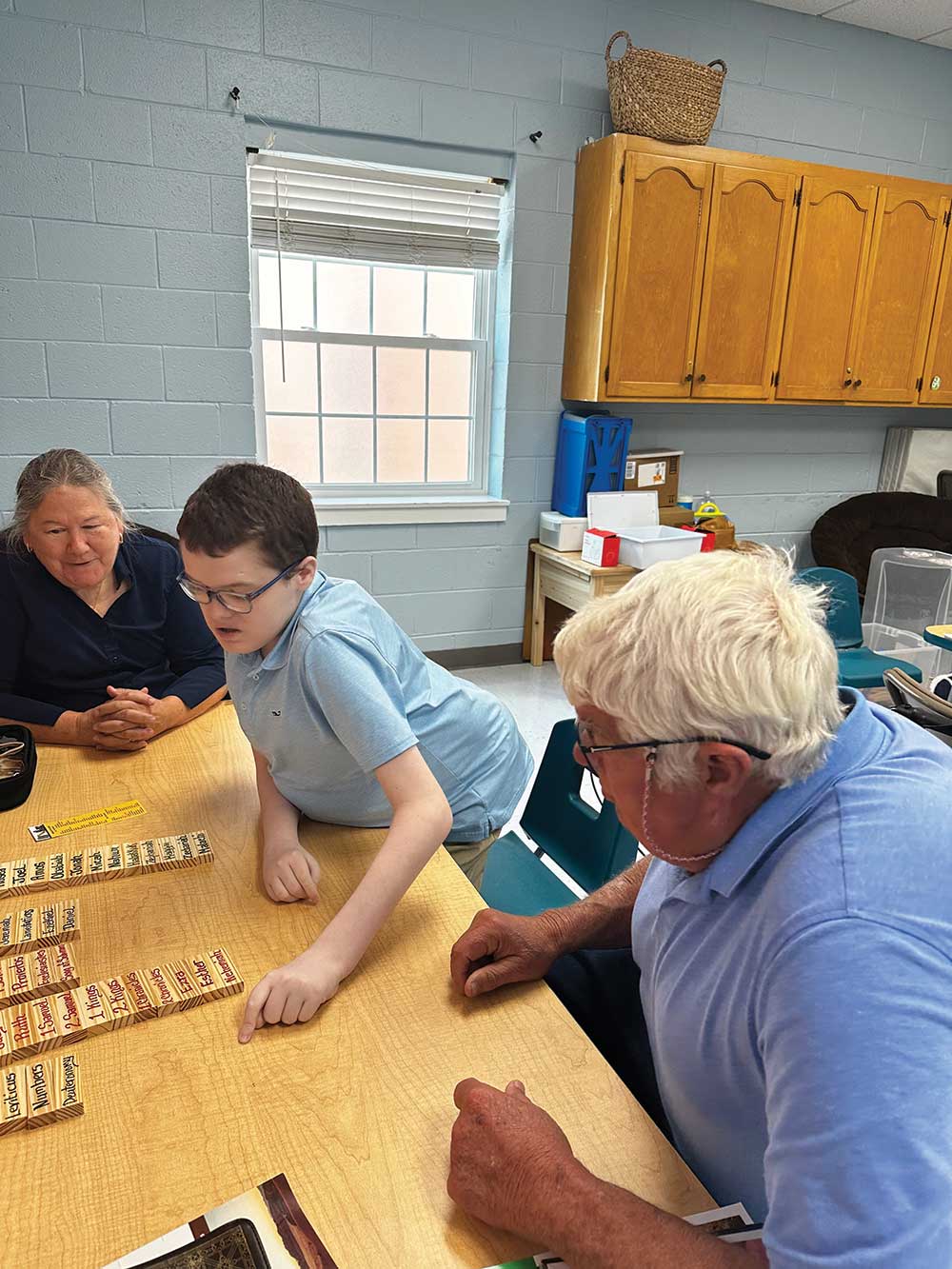
Special Needs Class
First Baptist Church Pell City

Story by Roxann Edsall
Photos by Mackenzie Free

When Dan and Paulina Gilliland started attending First Baptist Church Pell City over four years ago, they knew they wanted to be a part of a ministry that benefitted families with special needs. Dan had 40 years of experience working with special needs youth and adults in Shelby County and in Mountain Brook schools and as program director at Easterseals Camp ASCCA. Paulina, a registered nurse, worked with him at Camp ASCCA for several years.

The church leadership had been working on putting together a team to offer a special needs class, and the fit was right for the Gillilands to help support that vision. For nearly a year now, special needs students have had a place where they fit in, a place focused on meeting the needs of individuals with varied abilities. The class is regularly attended by three to four students.

“My wife, Paulina, is the core, the lifeblood of the class,” says Gilliland. “She holds everything together, gives us all assignments for the week.” Four other dedicated teachers – Jennifer Jensen, Joe McGaha, Winford Hill and Tina Stallings – round out the volunteer staff. 

Chad Nelson is parent to one of those students and he describes the challenge of attending church prior to this class offering. “When they started the class, it allowed Caden to have a place, a group of teachers and friends that he loves and is excited to see,” explains Chad. “It allows Anna and me to attend worship, just the two of us without kids.”

Anna Nelson adds that other churches never seemed to “fit” their family. “It just never felt like there was a place that fit all of us,” she adds. “But I don’t think that population is being overlooked intentionally. Unless people are in a situation where they have kids with physical or mental limitations, that group gets overlooked inadvertently. This program at First Baptist could be a great outreach program for the community.”

For more information or to enroll your student in the class, email Rev. Chris Dewaal, minister to children and families at cdewaal@fbcpellcity.org or call the church at 205-338-9444. The class is held each Sunday at 10:30 a.m.

More at the Museum of Pell City

From the work of budding student artists to seasoned professionals, a burgeoning art community is finding a home at Museum of Pell City.

The museum has already hosted the Helen Keller Foundation of Alabama Art Show twice with plans to bring it back in September. Featuring the creations of students across the state with visual impairments, blindness, and/or deaf-blindness, this show is growing in popularity in Pell City because of these inspirational works.

The museum has presented the annual Duran Junior High School Art Show as well, giving students a home to display their works for the public to see.

Now comes the next level – providing a home for the entire art community.

“Our community is so blessed with talented artists of all mediums, but artists have long lacked a place they could call their own in terms of shows,” said Museum President Carol Pappas. “Before we even opened our doors in 2022, we talked of an eventual evolution to cultural arts center. Yes, we are a history museum, but we recognized the need to expand our reach and become a center for the art community, too.”

The museum’s board invested in infrastructure to create gallery space leading into the museum with a hanging wall system, ideal for shows and art displays. Because of the mezzanine-type venue, it is prominently visible to museum goers, but it is also piquing interest from the heavily traveled lobby of the municipal complex.

“It gives us an opportunity to reach more people – more opportunities to expose these creative works to the public,” Pappas said. “We’re excited about the potential.”

To kick of what the board hopes will be a regular event, noted artist Nettie Bean of Gallery of Eden and her students were the inaugural show, which opened in July and continued through early August.

Bean is an Alabama-based artist who creates stunning oil paintings of landscapes, wildlife and birds. After college, she became known for her “house portraits,” painting door-to-door for clients.

Her life-size eagle paintings are displayed at The Lodge at Guntersville State Park.

She is passionate about teaching and conducts weekly painting classes at the gallery she owns with husband Wally Bromberg.

Bean said she believes that art is a gift meant to be shared, and she strives to make original art accessible to all. “That’s precisely what we’re trying to do through this new program to showcase our art community at the museum, one we hope will grow and thrive for years to come.”

The Helen Keller Foundation of Alabama Art Show is slated for Sept. 11-27.

More exhibits on the way

In addition to its latest venture into art, the museum is planning even more events in the months to come.

It will unveil an outreach program this month that puts mini-exhibits in public places like schools, city hall and county courthouse. “The idea is to give the public a glimpse at what they might find at our 4,000 square foot museum,” Pappas said. “People just don’t realize the depth and scope of our museum, so we want to take it to them – at least a little part of it.”

The outreach exhibits’ theme is Find it at Museum of Pell City, and it shares nuggets of the historic stories, photos and artifacts we have to offer through compelling, custom-designed displays.

Starry Night at Waffle House in the style of Van Gogh by Penny Arnold a crowd favorite

They encourage people to find out more at the museum, which is open Thursdays and Fridays, 10 a.m. to 4 p.m. and Saturdays, 10 a.m. to 2 p.m. Admission is always free.

Coming soon is a model train exhibit that has been built by a team of volunteers over the past several months. The 17-foot display with a running train depicts the 1920s version of Pell City.

“It all began with a train,” Pappas noted, referring to the ‘first’ founding of the town in 1890 when Sumter Cogswell missed his train to Talladega, spent the night in Pell City and envisioned a town.

Nationally known artist Dirk Walker has donated his original painting of one of the train depots, and the board will be using it as a fundraiser for the museum along with selling numbered, matted prints of the original.

“We owe Dirk a debt of thanks for his generosity,” Pappas said. “He and his wife, Debbie, have been so supportive of our efforts. You can see all about him and his work in our museum, which features Pell Citians who have made a national name through their talents in art, music, sports and film.”

In November, the museum presents its annual Salute to Service, which will see its military section redesigned and expanded to better cover modern days wars in the Persian Gulf, Iraq and Afghanistan.

It also will feature oral history videos from local veterans and St. Clair County District Attorney Lyle Harmon as keynote speaker at the Nov. 7 special program. He is a veteran of the second invasion of Iraq in the101st Airborne Division, 217th Calvary. He was a helicopter pilot flying reconnaissance missions.

“As you can see, we have lots in store for museum goers,” Pappas said. “Like history, it evolves. We aim to keep our programming fresh, giving people a reason to come and come back again to discover our rich history.”

The Quiltwright of Pell City

Story and photos
by Jerry C. Smith

All artists have their favorite tools. Michelangelo fared well with a hammer and chisel. Isaac Stern worked wonders with his violin bow. For Pell City’s Dale Griffith, the implement of choice is … needles.

Dale is a prima quilter. She produces bed covers fit for a king – or a queen or twin or whatever size bed you own. For more than 40 years, scores of happy sleepers have enjoyed her meticulously crafted bed-wares.

Born and raised in the sea islands district around Brunswick, Georgia, she moved to Pell City in 1987, where she married Bill in 1990.

She sets a very high standard for her quilts, throws, spreads, comforters, shams, duvets, baby coverlets and many other embroidered and crocheted wares. For instance, Dale never uses anything but pure cotton for her quilt liners and bottom backing sheets. All woven materials must be between 300 and 400 thread count.

Custom Alabama quilt

The inner layer is always cotton, never the fluffy plastic froth found in most store-bought products. Nor will ordinary thread suffice; she uses a rather expensive, tough, permanent variety that’s been waxed for easy penetration of three layers of heavy material.

Dale takes a deep personal interest in her work. “I want my quilts to produce warmth, and peace of mind,” she says. “Only the best will do.”

As one might imagine, such standards require much time and concentration. Dale only works on her quilts when she is feeling good, with no outside conflicts to diminish her focus.

She can pursue her craft with all kinds of extraneous background noise, such as conversation, TV, etc., but that’s not her ideal work environment. “My favorite way to quilt is on a nice day, with the windows open and nothing but fresh air and the sounds of nature.”

There are so many technical considerations when making even the simplest of quilts – even more so for some of her special custom designs.

Dale shops relentlessly for the finest materials, traveling all over our part of the state to search for topping fabrics, inner liners, bottom sheets and specialty items. She takes quality very seriously and refuses to skimp on any part of her creations and designs. “I need to actually feel the fabric before I buy it,” she adds.

One of her favorite quilts is in daily use in Scotland. It’s a custom design showing the colors of that country along with one of their native plants, the thistle. Dale made another quilt for an East Coaster, with embroidered squares featuring fish, lighthouses, nautical implements and edged with real rope. She’s also made special Roll Tide spreads, as well as others whose tops are made up of copied photographs, ink-jet printed onto special fabrics.

Dale makes everything from baby quilts to throws, twin, full, queen, king and California king sizes. There is no easy way to create such things, nor are their components inexpensive. Each one involves interminable hours of delicate, tedious, exacting hand work. For instance, a regular queen size pattern quilt can involve as long as two months of daily labor!

Dale Griffith quilt on writer’s 4-poster bed

When asked how many yards of thread are needed for a queen size, Dale estimated three large spools with 10 bobbins for the top, and at least six spools for the final assembly. Each spool is 255 yards. This comes to some 2, 295 yards, or roughly 1.3 miles!

And those nine spools can be as much as six dollars apiece. There is scarcely a square inch of quilt that doesn’t have a stitch running through it. That’s what keeps the liner from bunching up inside.

So, how is a quilt made? First, all the tiny pattern pieces for the top must be cut from various fabrics or produced from printed cloth or even old souvenir T-shirts. These must be accurately sewn together into a number of pattern squares of equal size.

In olden times, every part of a quilt was sewn by hand, but nowadays the tops are usually sewn with a special machine. Dale uses a Baby Lock designed for that purpose. When enough squares have been created (sometimes as many as 88), they are then stitched together into a single piece the size of the quilt.

Once the top has been assembled, the real work begins. Every part of the quilt must be hand-stitched together as a unit, with a needle pulling thread through the combined thicknesses of top, liner and backing sheet. This is usually done on a quilting frame, of which there are many designs. Dale’s husband, Bill, made her a rather ingenious one, using PVC pipe.

Dale says that most buyers balk at the asking price but, when given the actual materials cost as well as a couple months of tedious labor, her products would be a steal at double her prices. Anyone who has ever actually made a quilt will gladly accept, especially after examining the superior quality and durability of the finished product.

Dale loves chit-chatting with other quilters. She can be searched on Facebook as D Dale Griffith.

Besides looking great on one’s bed, there is another factor that makes her quilt special – the almost instant warmth experienced a few seconds after crawling under the covers. Because of the choice of fabrics, her quilts do not draw away body heat. They simply capture it and give it back all night long, thus fulfilling Dale’s mission of providing warmth.

The peace of mind part of her wish list comes every night, as one experiences that warmth as well as reminiscence of the heirloom quilts that comforted many of us in our earlier years. Little in life is better than a good night’s sleep, especially under such fine bedding.

A good quilt is made to last and be treasured for several generations. Dale has successfully repaired worn bed covers that were hand made in the 1800s.

Your writer is the proud owner of a Dale Griffith patchwork bed cover that is the perfect complement for my old steel and brass four-poster that’s been in my family for several generations. For me, at age 82, it’s like a sort of time machine that provides comfort on several levels.

“ I want my quilts to be used, not stored away,” she declares. “They are household items, not keepsakes. I make them to last, so there’s no reason not to use them.”

Les Johnson

Story by Joe Whitten
Contributed photos

For someone to live 78 years in St. Clair County without ever eating barbecue sounds like cuisine deprivation. But that was 90-year-old Les Johnson’s sad truth. He deserves compassion, however, for he grew up in St. Clair County, Michigan. “I came to Alabama for the first time in 2012, and I ate my first barbecue at Charlie’s in Odenville,” Les admitted, “and I’ve never stopped eating them since.” In St. Clair County, Alabama, he not only enjoyed barbecue but also collard greens, fried okra, butterbeans, and cobbler pie.

Les’s story starts in Canada where his father, Leslie Hontoon Johnson, was born. Leslie was awarded US citizenship for fighting for America in World War I. After the war, he worked as Chief Steward on a Great Lakes freighter. When he was on leave in Port Huron, Michigan, he became friends with Eva Fleming. They fell in love and were soon married.

Because Leslie was on the ship for months at a time, Eva moved back with her parents at the farm. Two daughters, Mary and Grace, were born there, and on July 4, 1934, Les joined them. Today he says all the 4th of July fireworks are for him.

Les enjoyed a special relationship with his grandfather. “I loved living on the farm,” he recounted. “My grandfather died when I was five, but I still remember him. He was over six feet tall, and there weren’t many men that tall then. He had huge hands, and he’d take mine and cover it with his.”

A creek flowed by their farm, and in winter he and his granddad would walk the frozen creek in the snow to the nearest town to buy supplies.

When his grandpa died, his mother ran the farm and his dad continued on the freighter.

Les spoke fondly of the farm. “We sold chickens and eggs and butter. My mother made butter with a churn. The Kroger and A&P stores would call us and tell us how many chickens they needed for the weekend, and we’d get the chickens, stick ‘em in the neck with a sharp knife, and hang ‘em on the clothesline to let the blood drip. Then we had to put them in tubs of hot and cold water and pull all the feathers out.” No automation in those days.

Les in uniform in his early 20s

The Johnson children peddled their products on Saturdays to regular customers in Port Huron. “We already had their orders,” Les related. “My sister would take one side of the road, and I’d take the other. We always had eggs and butter. And when strawberries were in, we sold strawberries for 25 cents a quart.”

Just like Alabama kids, Les took chances, without much consideration of consequences. He and sister Mary rode a horse that refused to cross a wooden bridge over the creek. “One day, we decided we’d get at the top of the hill and get him going as fast as we could downhill, so he’d have to cross the bridge.” However, the horse stopped stone still the second his hoofs hit the wood. “The hor se stopped, but we went across that bridge,” he laughed. “We were picking gravel out of our legs for months.”

Les got the better of his sisters many times. He would scrunch himself between his sister and her boyfriend until they paid him to leave. Sometimes he would lock a sister in a room until they paid up. But they loved him, and his 98-year-old sister, Grace, recently said of him, “Les was always so spoiled by everyone because he was so much younger and the only boy.  He got away with everything! He was and is so loved by everyone.”

As the ship’s Head Stewart, Leslie Johnson could take his wife on two trips a year and young Les went with her. They would drive to Lorain, Ohio, where the ship unloaded and uploaded. “We would get onboard there,” Les said, “and we’d go through the locks at Sault Ste. Marie and get a ship load up there and come back to Lorain. We had a ’36 Chevrolet, and I’d sit on the armrest on the back seat while my mother drove us back home.”

Les with sisters Mary and Grace

Those times ended when Les’s dad had a heart attack on ship. The crew lowered him on a stretcher into a Port Huron mail boat which brought him to shore. Leslie was at home for about a month before he died.

The Johnson family continued farming for about two years, then his mother sold the property, and they moved to Port Huron where she took a job as a butcher. Sister Mary had married. Sister Grace lived with an aunt, and 12-year-old Les lived with his mother.

Les recalled having to move. “It was terrible, moving to a city—a city I’d never been to except for shopping. I had to get new friends and go to a different school. The first couple of weeks, I hated it, but then I made some friends and liked it a little bit. But I missed the farm.”

Having learned how to work at the farm, in the city, 12-year-old Les soon had a newspaper route. When he turned 14, he got a job cleaning an appliance store, and when he got his driver’s license, he began delivering appliances. “My first car,” Les laughed, “was a ’29 Model A. It cost me $30.00, and then it cost me $50.00 for insurance.”

Les and Fay Johnson at a grandson’s wedding

On June 16, 1953, Les graduated from Port Huron High School, but perhaps the more memorable event had occurred a few weeks earlier on May 21, 1953. During the afternoon of that day, an F-4 tornado, over a mile wide, wreaked destruction throughout Port Huron, then whirled across the St. Clair River into Canada. In remembering the tornado, Les told how “It blew the roof off the back of our house where my mother was sitting in the kitchen. It never touched her, but she was so frightened that her hair turned white, and it never turned back to brown. The colloquial name for this phenomenon is the Maria Antoinette Syndrome, for her hair is said to have turned white overnight from the trauma of the Reign of Terror’s’ guillotine.

Les enjoyed building and remodeling houses. When asked about this, he said, “I worked for a construction company, and I always loved building stuff. The week before I graduated from high school, I got a job with a construction company, and they said they’d try me out for two weeks. I stayed there for 25 years. When I first started working there, I was in the union,  and I got $1.95 an hour. When I retired, I was getting $28.00 an hour.” That company built houses and factories, so Les developed expertise in carpentry and ironwork. He left that company in 1978, then worked for a power company until 1983.

In 1954, Les married Fay Burns, and needing a house to live in, he built it. Having learned never to waste anything, he tore down an old house for material for the new house, salvaging everything. He and Fay pulled out all the nails and filled five five-gallon buckets and sold them for scrap.

Les worked his regular job during the day and worked on their home in the evenings. He had it roughed-in when his draft notice arrived. Three weeks later he was in the army. He boarded up the windows and put tarpaper over the top, and there it sat for two years until he was discharged.

The Johnson children arrived by adoption. Fay and Les adopted Lori in 1962, Steven in 1963, and Lynette in 1968. A few years after, Les’s sister-in-law and her husband both died close together, so, the Johnsons took his niece, Michelle, into their home as their daughter. 

Any time the siblings are together, they enjoy recalling good times growing up. “When I was a kid,” Lynette related, “we used to go to a campground called Pigeon River Campground in Michigan. One night when we were sitting around the fire, dad decided to do a rain dance around the fire. It worked! Not only did we have rain that night, we also had a tornado. He still performs a rain dance on occasion.”

Les and his four children, Michele, Lore, Lynette and Steve

Sister Lori added hers. “When dad lost his leg from the work accident, he gave us kids a choice: either a pool or go to Florida. We got both,” she laughed.  “When we wanted horses, he drove us all through the country and would say ‘How does that smell?’  We would respond with ‘That smells bad because it’s cow manure!’ Then we went by the horses and would say, ‘Humm that smells good! Must be horse manure!’ That worked too. We got our horses!  He taught us a good work ethic.  We couldn’t have asked for a better dad!”

Steve’s memory connects with horses. “In 1975, dad bought a frame for a one-horse sleigh at an auction, and he and I restored it in his workshop in the basement. He built the body, the seats, and everything. Some friends of his gave him the harness. We had a few horses, and one was able to pull the sleigh. So, he put bells on it, and at Christmas time he would take us for rides through the snow around the neighborhood in the sleigh. Those were extra special moments—both helping build the sleigh and riding it.”

Michelle’s memory shows Les’s ability to assess character. “I had a date, and our dates were required to come to the door. Les answered the door and told my date, ‘You have 30 seconds to get off the porch and out of the driveway—and you better move it because it’s a long driveway.’ I was so upset, and I cried and cried. But Les said, ‘That boy’s no good, I just know it.’ And low-and-behold, a couple years later that same young man went to jail! I hated to admit that my dad was right,” she laughed, “but he certainly was. He is an amazing man, and we are all blessed to have him in our lives.”

Les’ tomato harvest

The Johnsons enjoyed the outdoors, especially hunting. They owned a parcel of hunting land, but it had no cabin. Les, who never saw a job he couldn’t do, solved that problem. The Grand Trunk Railway Company’s nearby railyard refurbished boxcars, and Les bought a truckload of boxcar two-by-sixes. “They delivered them,” he said, “and I had a John Deere tractor with a 30-inch sawblade, and I sawed the two-by-sixes down to two-by-fours and framed a cabin in my back yard—bolted the sections together, numbered them, and took it down.”

A friend loaned him a truck to haul the cabin sections to the site. On Les’s brother-in-law’s trailer they put some furniture on, and the two headed out at 3:00 in the morning. They arrived onsite at 7:00 and started working. They finished at 7:00 that night and headed home.

Les enjoyed hunting even after an industrial accident cost him a leg. He and son-in-law Tim often hunted together. “We were walking out of the woods one night,” Tim laughed, “and Les fell over. He said, ‘I stepped in a hole.’ I helped him up. He took one step and fell down again. When I helped him up that time, I noticed that his foot was missing—it had broken off his artificial leg. We hobbled to the cabin and took three of his old legs and engineered a new one for him to get home.”

All of Les and Fay’s children married and raised families in Port Huron. Grandchildren came and the grandparents enjoyed being part of their lives. However, one day Tim dumbfounded everybody by announcing his family was moving to Alabama. His company had transferred him.

When asked how that news was received, Les chuckled, “Well, my wife had a fit. ‘You can’t take my grandkids and go to Alabama! I don’t know where that is.’ I wasn’t happy about it either,” he admitted, “but we helped them move. I drove the U-Haul with Tim. We came at the end of October 2012, and my wife and I stayed that winter with them.”

The tightknit Johnsons adjusted and started making the drive from Port Huron to Alabama. Les and Fay came each winter and enjoyed the warmer Alabama weather.

When Les’s wife died in 2016, he lived alone in their Michigan home for two years. Lynette and Tim encouraged him to sell his home and move to Alabama and live with them, and in 2018 he moved in with them.

Les began attending First Baptist Church Springville with the Hoffmans. He made friends easily and was soon involved with Sunday school and church, the Saints Alive senior group, and the Over the Hill Gang, men who meet at the Farmhouse Restaurant every Friday for lunch.

Desiring to join First Baptist, Les attended the New Members Class with the pastors. Having come from a Methodist and Lutheran background, he needed to be baptized by emersion. But how could a one-legged man get in and out of the baptistery? No problem for two deacons, as Les tells it. “I took my leg off, and Lee Love and Al Rayburn carried me down the steps into the baptistry, and Pastor David DuPre dunked me.”

After the baptism, Pastor Chip Thornton told his favorite story about Les. “He was put under anesthesia for surgery. When they rolled him out of the recovery room, he was flat on his back, still under the effects of anesthesia, but he had his arms in the air, and was saying, ‘Thank you, Jesus! Thank you, Jesus! Thank you, Jesus!’ The congregation loved it and applauded.

One reason Les enjoys Alabama is the long gardening season. “I can garden almost year-round,” Les comments. “Certain things I can plant in the fall, and others in the spring” For early start, he needed a greenhouse, so he and Tim built one. They bought used windows, put a skylight on the roof, and heating bars inside. “I use it to grow tomatoes, peppers, cabbage and cauliflower seedlings, then I give most of them to people in the church,” he laughed. “It’s just fun watching them grow.”

Gardeners at church gave Les hints on Southern gardening, and his grand-son-in-law, Matt Hyatt, of Chandler Mountain, gave pointers as well. Les may be 90 years old, but he still enjoys learning.

And learning more about the Bible, God, and Jesus his Savior is what he enjoys most. When asked about the difference in church and preaching in Michigan and here, he responded: “Like between night and day! I thought I was getting the Word of God,” he lamented, “but I wasn’t. It is so different. Here they go through the Bible. When I first got down here and went to Sunday school class, they could a verse—or one word–and teach on that for a whole hour—what it means and where a word came from. They never did that up north. It’s just a blessing to be down here. I love all our pastors, and I love all the people in my church.” He paused, then added, “And they love me. I couldn’t get used to that at first. When people would say, ‘I love you,’ I thought, parents and my family say that.  But down here, they all say they love me!”

And they do. In the spring of 2022, Les was going through a down time resulting from events in October 2021 on a trip to Port Huron. On the first day of that trip, the airline misplaced his luggage, and someone hacked his credit card. On the second day, he stumbled and broke his hip, which resulted in hip-replacement surgery and two weeks of recuperation in a nursing home and three weeks at his daughter Lori’s home. When he finally arrived back home on Beaver Ridge Mountain, he said, “If you want to see me again, come to Alabama.” His spirits were so low that a Sunday school buddy, Chuck Whitiker, suggested to the Sunday school teacher that the class plan a surprise birthday party for Les. The class agreed and managed to keep it secret from Les.

Back, Les and Grace; Front, Mary and their mother, Eva

On the day of the party, Lynette and daughter Sara decorated the church’s Family Life Center. Jeri Jenkins prepared the food. Tim’s job was to get Les to the event. By creative subterfuge concerning a church meeting that needed Les in attendance, Tim got Les in the truck; however, Les, being significantly disgruntled, grumbled his discontent all the way to the church. Tim opened the FLC door and frowning Les entered to be greeted with shouts of “Surprise! Happy Birthday!” Thus, he was shocked out of the doldrums into good spirits to enjoy the day.

Les thinks of Heaven often and that his body will be in working order—he’s had 25 plus surgeries, has one artificial leg, an artificial hip, is blind in one eye and has macular degeneration in the other, and he has scalloped edged ears from removed skin cancers. “I’ll have everything new in Heaven,” he laughed.

He recently received a hand-held gadget that allows him to read and listen to the Bible, and that makes him happy. His grandson-in-law, Matt, built a prayer bench for him which they placed in a wooded nook, and in good weather, Les spends time there praying for his family and thanking God for all his goodness and kindness to him. If one happened to be nearby and unseen, he might hear Les singing “And He walks with me and He talks with me, and He tells me I am his own. And the joy we share as we tarry there, none other has ever known,” for “In the Garden” is one of his favorite hymns. The time he has spent in God’s Garden of meditation is reflected in his life. Les Johnson is a one-of-a-kind inspiration.