Officials break ground on 18-acre campus in Odenville
Story and photos by Carol Pappas
On a hilltop above Odenville a vision is rising up to meet the needs of the community and well beyond the city’s borders.
ONEeighty Church, just as the name implies, represents the degree to which lives can be turned around, and that’s the purpose of the 18 acres that hilltop overlooks. Officials have broken ground on a massive new campus near Interstate 59 on Alabama 174 at Odenville.
The church began in a vacant Ace Hardware building in Springville as a ministry of Clear Branch United Methodist Church in 2009. Two years into it, it grew to become a standalone church. Cam Price was pastor for a year and a half before Gresh Harbuck became the pastor, and she named it ONEeighty – symbolic of turning lives around. Four years ago, it launched as non-denominational and has now grown well past its walls.
Leaders were led to build a new church and other buildings on the acreage and even though it began in Springville, Harbuck said they never viewed ONEeighty as a Springville church. “It’s a community church – one gigantic circle of owners. They take ownership in the Great Commission. Members pay dues. Owners have responsibilities and are on a mission, winning one more for Jesus Christ.”
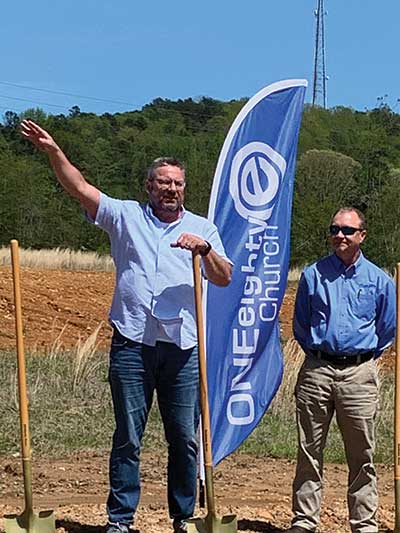
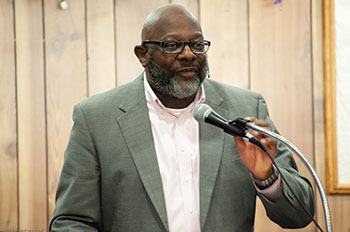
Pastor Gresh Harbuck motions toward the hilltop where the church will grow its new home.
When they were first looking for a new home, Realtor Lyman Lovejoy envisioned the ideal place as a piece of property that wasn’t even for sale. “They won’t sell it to me, but they might sell it to you,” he remembers telling them. He is credited with approaching the owner with the idea of transforming the piece of land into a place of worship and life-changing experiences.
The owners understood the vision, too, noting that it would be the perfect legacy for their father. And the deal was done.
“Our goal is to really focus on people who never would walk into a normal church,” said Harbuck, describing it as “very contemporary,” welcoming “all walks of life” to venture through its doors.
The growth has been evident. Easter Sunday, apparently all roads led to ONEeighty Church with people attending from Argo, Odenville, Pinson, Gadsden and Springville. “We’re not an Odenville church,” Harbuck said. “We’re not a Springville church. We’re a community church. We want lukewarm Christians to turn into purpose-filled Christians who will be the hands and feet of Jesus. We want to help the hurting and the broken.”
Of the church’s approach, Harbuck explained, “This is a great place to fall in love with Jesus.” Small groups are how they disciple people, giving them a more intimate, close-knit experience. The youth group is packed with activities and is “growing by leaps and bounds.” Celebrate Recovery – one of the largest in the state – continues to make a sizable impact on addictions throughout the region. It partners with Lovelady Center, Brother Bryan and jail ministries in Ashville and Oneonta.
Celebrate Recovery, coordinated by Ministry Leader Joyce Simonson, was 300 strong before the COVID-19 pandemic hit. They still feed 200 there every Friday night. “We view ourselves as recovery ministries,” said Harbuck, who once served as CR Ministry Leader himself.
Looking ahead to what that Odenville hilltop will become, Harbuck said, the new church campus will house the worship center, a sanctuary that can seat 600, lobby and children’s area in the first phase on top of the site. Second phase will be a dining hall, small group rooms and offices, and the third phase is a courtyard outside the worship area.
Beyond that, “God gives us the next steps,” Harbuck said. “We will look at the needs of Odenville. If the needs in the community change, we’ll change.
Johnny Evans and James Barker, who are active in the church and have a background in contracting, will oversee the project. Cline Construction is the builder.
“Even though we’re moving the building, it doesn’t mean the DNA changes,” Harbuck stressed. “We want to be a light to the community, helping the outcast and broken,” he said at the groundbreaking ceremony.
Lay Leader John Rich called it “a big milestone for us. This is a community church – one group, all together. This means a lot.”
And it means much to the community that surrounds it. “Thank you for your vision,” Odenville Mayor Buck Christian told those in attendance at the groundbreaking. “We’re excited to see what the future holds. The campus will be explosive” in terms of growth. “Welcome to Odenville. We are extremely excited about what this will mean to Odenville. The growth potential is unlimited.”
Harbuck agreed. “God has been blessing us and growing us.”
Today’s destination is the corner of 19th Street South and 7th Avenue, the location of First Baptist Church South, hereafter FBC South. Organized by ex-slaves and their families, this church has served Pell City for 119 years.
During antebellum days, slaves worshiped together with whites, but in separate areas. When freedom came, Blacks continued worshiping interracially for a while. In Uplifting the People: Three Centuries of Black Baptists in Alabama, Wilson Fallin Jr. writes, “After emancipation, many Blacks began to leave white churches and form their own congregations. … By 1874, the year in which reconstruction ended in Alabama, the process of separation was complete….
“A desire for independence and …the opportunity to worship as they desired motivated Blacks to establish their own churches. …Blacks wanted a setting in which they could listen to and react to their own preachers, singing, dancing, and shouting in their own church.” This gave the freedmen “some measure of freedom over their lives and the opportunity to develop pride and self-respect. … These churches provided former slaves with a caring community.”
This freedom resulted in Blooming Light Baptist Church in Seddon. The former slaves who organized this church probably first met in homes, but by 1881, they officially organized as Blooming Light.
They soon joined Rushing Springs Association which served churches in Coosa, St. Clair and Calhoun counties. According to The Cyclopedia of the Colored Baptists in Alabama, Their Leaders and Their Work by Charles Octavius Boothe, by 1895, there were 6,500 Black Baptist in this Association.
Now, picture Pell City in 1901. The booklet, Hon. Sumter Cogswell and His Service as Founder of Pell City, Alabama, records that the town had one grocery store, the Cornett House Hotel and a train station for three railways traveling through. No highways – instead, “the principal artery of travel being the road from Eden to Cropwell to Talladega and Anniston.” The town progressed, and by 1902, a second St. Clair County Courthouse stood in Pell City.
By 1900, Blacks had formed a community south of today’s Cogswell Avenue and the railroad, establishing homes from today’s 19th Street South to U.S. 231. Many of these families belonged to Blooming Light Baptist, the nearest Black church.
Many ministers had a circuit of four churches, preaching once a month to each congregation. Pell City members of Blooming Light walked to church, and bad weather on Sundays hindered attendance.
By 1902, Pell City’s Black community had enough Baptists to form a church. Therefore, several Blooming Light members requested dismissal from that church so they could organize their own.
A typescript history of FBC South names some who met to organize: “Bro. C.J. Collins and wife, Coline; Rev. A.Z. Beavers and wife, Mary; Bro. Sam Collins and wife, Mary; Bro. Joe Collins; Bro. Joe Lawson and others.” The group chose the name Union Baptist Church with Rev. J.T. Chatman as pastor. This meeting took place “… at the old House of Knowledge School. …on U.S. Highway 231 North of the Alacare Center location where the home of Bro. Dibb (and Millie) Curry…was located.”
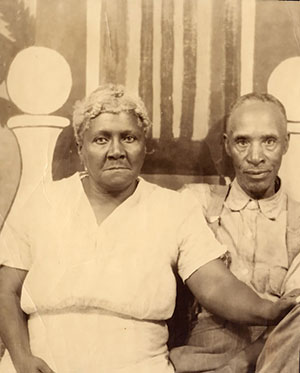
The Currys
The Currys’ granddaughter, Josephine Curry Watson, grew up in their home and called them “Mama and Papa.” “They were plain people who stayed home and took care of the household,” she recalled. “They didn’t have problems with anyone.”
She remembered their home as a welcoming one where visitors sought advice from Dibb. “I got my values from them,” she reflected. “I learned the Bible from them, and today, I’m a teacher and a missionary. They were good people.” This describes a stable, “salt-of-the-earth” family and probably describes other families who formed Union Baptist/FBC South.
Union Baptist soon joined the Colored Baptist Association, which served churches in Shelby and St. Clair counties. Today, the Association’s name is Mt. Zion Coosa Valley Association.
Sometime after 1902, Union Baptist purchased a lot on 19th Street South and constructed the building where New Beginnings Baptist Church holds services now. The church history records that, in 1934, “…the church was rebuilt on the site and was named the First Baptist Church of Pell City.” Rev. M.H. Sims was pastor.
Community news in TheSt. Clair News-Aegis regularly reported church activities, as shown in this of Jan. 31, 1952, “Rev. M.H. Sims, pastor of the First Baptist Church, Pell City, preached his farewell sermon last Sunday. He has pastored here for 23 years and is the oldest minister in the district.”
After Rev. Sims, Rev. R.E. Avery pastored for a few years. The St. Clair News-Aegis of Oct. 13, 1955, reported, “Sunday October 9th was a grand day at the First Baptist Church in Pell City. Rev. R.E. Avery, pastor, preached a wonderful sermon. His text was ‘Stay on the ship or you will be lost.’ Sunday afternoon the church held Appreciation Day for R.E. Avery.” Remembered as a dynamic speaker, Rev. Avery pastored until 1955.
About two years later, Rev. W.F. Poole began his 19-year ministry and worked for racial unity in Pell City during that time. On Oct. 19, 1962, The St. Clair News-Aegis published this letter from Rev. Poole:
“To the Citizens of Pell City: Please allow me this space to express my gratitude to all our white and colored friends for the fine support we have received during my five years of pastoring in the city of Pell City.
“I have worked in other places, but at no other place I’ve worked have I received any better cooperation. …
“Let us continue with peace between the races and the cooperation we have enjoyed in the past. Rev. W.F. Poole (Colored), Pastor First Baptist Church Pell City.”
Rev. Ronnie C. Beavers accepted the pastorate of the church Feb. 2, 1976. Under his leadership, the church expanded its ministries, updated the sanctuary and purchased property for future expansion.
Marion Frazier remembers well many of these pastors. Rev. Avery baptized her in the outside baptistry the deacons had recently dug and lined. “I was baptized in August of 1952, and he stayed, I believe, until 1955. He was a dynamic preacher. … He would end his sermons by singing a hymn, and the congregation would sing with him.”
Of Rev. W.F. Poole, Mrs. Frazier said, “I remember him and his wife and children very well. He was instrumental in our church because he loved singing hymns. He often closed his sermons with a hymn. His favorite hymn was In a Time Like This, I Need the Lord to Help Me.
“Rev. Poole came in ’56 or ’57 and stayed for 19 years. He worked for unity among the races, and we had a good relationship. We had associations with First Baptist here in Pell City on the north side. That’s where the distinction of FBC South came in; they were First Baptist North.”
“Rev. Beavers came in 1976 and stayed until 2000,” she recalled. During his ministry, he organized The R.C. Beavers’ Singers. Rev. Beavers loved to sing.” Under his leadership, the church choirs recorded an album.
Mrs. Frazier loves her church and enjoys recalling its history and events. Known in Pell City as an exceptional singer herself, she spoke fondly of their Choir Anniversaries. Observed every September, FBC South invited choirs from throughout the district to participate. Choir member Billy Joe Robinson, Dibb and Minnie Curry’s grandson, sang with the Star Lights of Pell City and often invited choirs from outside the district. These concerts filled the church to capacity.
District churches observe yearly homecomings, and they have arranged for each church to hold celebrations on different Sunday so congregations can celebrate together. Celebrating together results in unity and cooperation. FBC South has Homecoming the second Sunday in August.
On Oct. 18, 1981, FBC South celebrated its 79th anniversary. The memorial booklet for that event contains observations by pastor Rev. Ronnie C. Beavers, who gives praise and thanksgiving to God for the church. It also records historical events and a rich pictorial history with names under the photos. Rev. Beavers conducted the regular worship hour after which the congregation enjoyed a meal together. The afternoon service included Deacon Charles Jones singing the chosen anniversary hymn, Guide Me Oh Thou Great Jehovah, and Rev. Samuel Turner of Union Springs Baptist Church, Talladega, preaching the sermon.
In the memorial booklet, Rev. Beavers wrote, “We are truly grateful to God our Heavenly Father for those who toiled and labored so hard before us in breaking the ground to establish the foundation of this church which is dedicated to the up-building of God’s kingdom. Surely, He has smiled on us down through the years as even the old patriots continued to worship Him after having walked to the church in the rain, sunshine, sleet, and snow. Now, we, the present generation, must continue to move forward with that same spirit of determination to meet the need of a sinful world by spreading the message of Jesus Christ. This is the task of the church, and we dedicate and rededicate ourselves to accepting the challenge that the Lord has put before us ….”
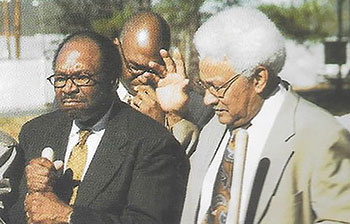
Prayer at the groundbreaking in 2002
Rev. Beavers concluded his remarks by thanking the church for working untiringly during his six years of his ministry and concluded, “I ask you to join me in looking to the Hills from whence cometh our help to seek the future directions through the grace of God that has brought us safe thus far and that His same grace will lead us on.”
Rev. Beavers’ comments for that 79th anniversary spoke of the past, present and future. Under his ministry, the church purchased the property on the corner of 7th Avenue and 19th Street South for constructing a larger sanctuary. In 2000, at the end of his 24 years as pastor, the church stood ready, through God’s grace, to plan for a new sanctuary.
In a special service on Jan.12, 2002, under Rev. Elliot T. Ivey’s ministry, the church broke ground for their new building. Goodgame Co. of Pell City did the work, and construction progressed steadily month by month. Goodgame completed their work in October 2002 in time for First Baptist’s 100th anniversary.
And what a celebration that was for church members and their friends! The Goodgame family, construction workers, Pell City mayor and city officials attended and joined the congregation’s afternoon walk from the old building to the new one for a dedication worship service.
Mrs. Frazier recalls, “We got congratulation letters from the State of Alabama, the governor and local officials. We framed those, and they hang on the church walls today.”
Among the papers about First Baptist on file at the Pell City Library is a page titled, A Prayer for Our New Sanctuary, which reads in part:
“Thou gracious and giving God…,We thank Thee for having given to our predecessors the vision and will to provide the church which has served us so far. Because of their devotion and Thy blessings our church family has outgrown the work of their hands. …
“We would build wisely and so well that long years hence our sons and daughters may gratefully say, ‘See! This our forefathers builded for us.’
“In HIS NAME, who loves us and gave Himself for us, we pray. Amen.”
George Forman grew up in this church and said of Rev. Elliot T. Ivey, “He was the most electrifying preacher I ever heard.” Forman also told how FBC South deacons mentored him as a boy. “My father died when I was one year old. Mr. Tobe Williams, Mr. William Matthews and Mr. Virgil Oden took me under their wings and taught me about life – what’s right and what’s wrong, how to respect and be respected, how to love your fellow man, how to go through life treating people. If people mistreat you, don’t go back and try to do the same thing to them; just believe in the Lord, cause, ‘Vengeance is mine, saith the Lord.’ They went out of their way to spend time with me. And Mr. M.C. McCoy was a businessman who taught me that education was essential.
“All those men were a blessing to me. They didn’t have a high school education, but they had more than a high school education. And they shared it.” That’s high praise for any man, but especially so for the deacon body of a church.
Twenty-four-year-old Christopher Evans II joined Forman in the interview, and both spoke of taking part in Christmas and Easter programs at church. Forman said that participating in these music and drama programs “… was like living what you’d been taught. You act it out and it’s gonna stick with you.” Christopher agreed, saying that for young people, the dramas “… helped us understand what was going on.” He added that sometimes “young people don’t like to read,” and the programs helped them understand the Bible. Mrs. Frazier directed the drama, and the late Ronnie White the music for these programs.
One of Christopher’s favorite times as a youth was yearly Vacation Bible School at FBC South. “That was the best thing,” he recalled. “We always went to Boys’ and Girls’ Club, and we just went from there to Vacation Bible School where you learned different things.” Other churches took part, so there was fellowship among the congregations at these events.
The 2020 COVID-19 pandemic curtailed in-person worship services, which precluded the joy and comfort in corporate fellowship. At FBC South, beginning in March, worship was streamed online, but by autumn 2020, the deacons and choir members were meeting each Sunday with Dr. Wilson to stream the service. The pandemic prevented these yearly events in 2020.
Dr. Wilson, pastor since 2007, recently reflected upon this unprecedented situation:
“In the midst of this COVID-19 pandemic, it is no secret that many people are suffering or experiencing loss in some way. The same holds true for the believer. Fear, stress and hopelessness have gripped many homes, even the households of Christians.
“As we endure this season in which social and spiritual interactions have been greatly thwarted, not by choice but rather by circumstances that are beyond our human control, we have been forced to make many adjustments in our daily lives.
“Consequently, the church, in these times of uncertainty, has also had to make adjustments. We understand that congregants have an affinity for joining hearts and hands and worshipping God together. Yet, this pandemic has placed a great strain on the church. No longer is it deemed ‘safe’ for large groups to congregate. This definite lack of socialization has caused some to suffer more than others.
“As a pastor, it has always been my job to guide and uplift the people of God through whatever season of life they are experiencing. There are more seeking this pastoral direction than ever before, and I must admit, facing so many obstacles has become a daunting challenge. It is sometimes hard ‘reaching’ to your congregants when the physical doors of the church are closed because we understand that the spiritual doors of the church are always open, along with other measures in place due to this pandemic.
“However, we understand that the spiritual doors of the church are always open, making way for the obstacles to become opportunities through continual prayer. As I strive to continue to render an effective pastoral ministry and to provide social support for those members who have become slightly anxious, to say the least, I try to remind my congregants that although we may be going through a brief period of separation as a body of believers, God is still in the business of protecting His own, and we are to stay strong until the Lord’s deliverance is fully exerted over this coronavirus outbreak.”
For long-time member Peggie Bothwell Frazier, Dr. Wilson has been a blessing to her and her family, for under his ministry her son, Charles Ryan Frazier, was ordained as a deacon, and her grandson, Griffin Ryan Frazier, was baptized. Griffin, at an early age, began talking about wanting to be a preacher. He spoke of it so often that Dr. Wilson and deacons met with Griffin and his parents to talk about his desire to serve Christ by preaching. Satisfied about his desire, Dr. Wilson baptized him. Griffin’s dad, Charles, stood in the baptismal pool with him.
Dr. Wilson was a special comfort to the Fraziers when Peggie’s husband, Charles, battled cancer. The Wilsons met with the Fraziers the night before Charles’ surgery, then visited him faithfully during his cancer journey. Peggie recalled that, Charles, knowing that Dr. Wilson especially enjoyed banana pudding, said to him, “Any time you want a banana pudding, you just tell her, and she will make you one.” She continued, “I do make him banana puddings. Dr. Wilson and his family will always have a special place in my heart.”
Chairman of the Deacons, Donald Allen, spoke of the blessing of working with Dr. Wilson. “We deacons work out of his office, and whatever he asks us to do we try to do it. If he calls us, we try to do what he asks us to do.” He also spoke of the disruption of COVID-19. “We’re used to coming in there, shaking each other’s hands, acting as a deacon body, you know, deacons and the pastor together. We miss that so much now – meeting with the pastor before he goes out to give the message. … I love working out of Dr. Wilson’s office because of his ability and gift to preach the unmitigated truth of God’s word. I pray every day that God keeps him and his family in his loving hands.”
Wilson Fallin, Jr. notes in his Black Baptists in Alabama that some owners allowed slaves to worship with singing and preaching, whereas irreligious owners didn’t, and their slaves worshiped secretly. One of the old hymns from that era speaks as much of the church today as it did then.
“We will travel on together, Hallelujah, Gwine to pull down Satan’s kingdom, Hallelujah, Gwine build up the walls of Zion, Hallelujah! I don’t feel noways tired, Glory Hallelujah!”
One hopes that those former slave families who founded today’s FBC South are aware that this church continues “to build up the walls of Zion” as they “travel on together, Hallelujah!”
Story by Joe Whitten
Photos by Michael Callahan
Submitted photos
Mt. Zion Baptist Church, a church started by freed slaves in Springville, exists today because in 1816 a North Carolina minister grew discouraged in the ministry and resolved to abandon preaching. Leaving preaching and North Carolina behind, Rev. Sion Blythe moved his family to what would become St. Clair County, Alabama, and settled along Canoe Creek.
Published writings referred to Blythe as “the reluctant preacher.” Born in Tennessee in 1781 and ordained as a minister in North Carolina, Blythe organized and pastored churches in Buncombe County, North Carolina.
When Blythe and family left North Carolina and headed west, he instructed his wife to tell no one that he had preached. No written record states exactly why he had become so disheartened; however, his friend and Alabama Baptist historian, Hossa Holcombe, hinted that the problem was a theological difference with North Carolina pastors concerning man’s free will.
But Pastor Blythe’s free will choice to stop preaching was over-willed by his integrity when in late 1816 or early 1817, a woman in the area where he had settled asked him point blank if he were not a minister of the Gospel.
Blythe wouldn’t lie to her, and when he admitted that he had preached, Holcomb records, “The old lady leaped, and shouted, and praised God that she had found a preacher in the wilderness.” At her urging, Blythe agreed to organize a congregation, and on March 22, 1817, in the settlement called Big Springs, a Baptist church was established and named Mt. Zion. The name referencing verse in Hebrews 12:22, “Ye are come into Mount Zion and unto the city of the living God, the heavenly Jerusalem …” and reminding them of their goal, Heaven, the city of God.
Until the end of the Civil War, both slave and master worshiped together — but separate — at Mt. Zion, for as Margaret Windham records in her History of Springville the “…slaves had seats in the rear of the church building and, like their masters, were members of the church.”
One wonders about the names of those slave members, but we have scant information. The oldest minutes of Mt. Zion fell victim to fire when the home where they were kept burned. Because Martha Terry Roberts had copied portions of the old minutes that mention slave names, we have some, as quoted here:
April Term, 1821—Received Brother James, a black man, by letter.
May Term, 1823—Received by experience, Littie, a black woman, and Lisha More and also Pike.
August Term, 1823—Received by experience, Sook, a black woman.
June Term, 1831—A charge against Fanny, a black sister, for having two living husbands. Case taken up and Fanny restored to her seat as usual.
October, 1844—Sister Jane, Nancy, Elizabeth, and Margaret (blacks) dismissed by letter.
September, 1854—James Thomason called for a letter of dismissal, and for four of his blacks: Alfred, Clark, Doctor, and Reny. Granted.
Sister Fanny’s case in June, 1831, is of special interest. This writer became acquainted with slave wedding vows several years ago when touring Rose Hill Mansion near Hilton Head, South Carolina. The guide, a descendant of the builder of Rose Hill, told that slave wedding vows had these words, “Till death or distance do us part”—meaning that if one partner in the marriage were sold, the wedding vows were dissolved. Ordained ministers rarely performed slave weddings, which were never legally binding, and he couldn’t have them say “Till death do us part,” due to their circumstances.
Usually a slave couple wanting to marry might have a ceremony in the slave quarters, but most often, the couple would simply “Jump over the broom,” and they were married. An online article published by the Caswell County, North Carolina, Historical Society discusses the jumping over the broom and also white ministers’ use of “Till death or distance do us part” in Antebellum slave weddings.
The fact that in the same June meeting Fanny was restored to her seat in the church fellowship makes this writer believe that this was Sister Fanny’s reason for having two living husbands and the church sympathized with her.
The expression “received by experience” means the candidate for membership had recently come to an experience of salvation. To be dismissed by letter means to be dismissed in good standing to another church.
From those minutes we learn the first names of several slaves and the name of one of the slave owners, James Thomason. Although it is meager, these nuggets of information can assist slave descendants in genealogical research.
Changing times
In time, some stout-hearted people of the United States began to take note of the injustice of slavery, and a distant rumble began to arise, like far-away thunder forewarning an approaching storm. The rumble grew until in 1861, it roared into a storm of civil war, which by 1865 had wreaked ruin on much of the nation and unshackled slaves and set them free.
But being declared free and grasping the reality of freedom are two concepts not comprehended quickly. Former slaves, now free to congregate and worship together, continued to meet with Mt. Zion until 1868.
According to oral history, in 1868 the freed slaves of Springville began meeting on their own to worship God. No written record seems to exist for this group of believers prior to 1883, the year they joined Wills Creek Baptist Association in Etowah County.
For white Mt. Zion, the war years took its toll on church membership through battlefield casualties and through the emancipation of slaves. Mrs. Windom records that by 1870 the membership of Mt. Zion had dwindled to 70. That congregation decided to construct a more modern sanctuary that might encourage more people to worship with them. They began meeting in the new building in 1871. In that same year, Mt. Zion changed its name to Springville Baptist. With a new building, it probably seemed to them a good idea to identify the church with Springville.
Oral history doesn’t record just when the freed slaves began calling their group Mt. Zion. However, in their History of Springville, Alabama, Donna Cole and Virginia Taylor wrote, “After the war, the Black congregation left to form their own church and they kept the original Mt. Zion name.” It’s possible that two Mt. Zion Baptist Churches existed for a while in Springville.
The name became official in 1883. The Tenth Annual Session of the Wills Creek Baptist Association met at the Ashville Mt. Zion Church in August 1883, and the minutes record: “Received Mt. Zion Baptist Church of Springville, on the AGSRR [Alabama Great Southern Rail Road], as a newly constituted church — delegates, Elder L.C. Thornton, R. Pruet. Sent for missions, 50 cents; minutes, $1.00.”
Other Wills Creek Association minutes give more Mt. Zion facts:
1888, meeting at the Cedar Bluff , R.H. Vogal, Pastor; Emma Galbreth, Clerk; and 71 members.
1892, meeting at Mt. Zion, Ashville, J.H. Kerley, Pastor; J.H. Hudson, Clerk.
1896, meeting at Lebanon Baptist, C.C. Curry, Pastor; F. Thaxton, Clerk, and 45 members.
1897, meeting at Mt. Zion, Springville, C.C. Curry, Pastor; L. Byers, Clerk; 53 members.
Building a church
The first church building was constructed on the same property where the Mt. Zion church stands today. We don’t know the date of that construction, but the minutes of 1896 report the value of Mt. Zion’s church property as $1,000. That value in 1896 probably included a building.
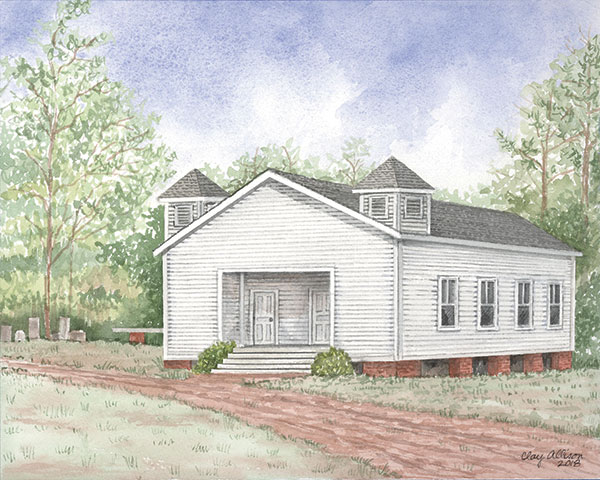
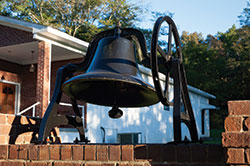
Deacon Mitchell Hammonds recalled the church building, for he attended there as he grew up. “The church, when I was born, was a wooden building. It had two bell towers. It had a bell in one. It had two front doors and had three rows of pews. That old building had, of course, the big pot-belly heater.” That church was taken down and replaced with the present structure around 1976.
On sun-lit days, light streaming through the “Life of Christ” stained-glass windows bejewels the sanctuary. The vintage stained-glass cross window gracing the front of the church was donated to Mt. Zion by First Baptist Church of Springville.
Estell Long, who was born in 1936 and grew up in the church, fondly remembers the bell ringing. “You had a rope up there. … Will Woods would go early Sunday morning and pull the rope and the bell would tone.”
She recalled that during revivals the seats at the front of the church were reserved for those who wanted to be baptized and join the church. At the end of the week, the church would have a baptism at Lee Laster’s Creek. Mitchell Hammonds recalled that he was baptized in the Cahaba in Trussville. Later, the church was able to build an outside baptistry on site.
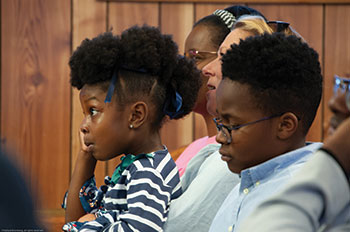
Mrs. Long reminisced about the singing in the church. “They had people in the choir, and they sang the old-fashioned songs. Mattie Kelly was the pianist. She would play the piano, and they would sing. When she finished, she would always shout. She was one of the shouting sisters in church.” Another pianist was Mattie Jo Williams Herring.
Some of the choir members Mrs. Long remembered are Sarah Frances Newsome, Velma Eleanor Newsome, Casey Lewis, Elizabeth Shepherd, Ruth Pulliam, Katherine Newsome, Margaret Hammonds Woods, Leola Pulliam Herring, Josephine Pulliam Herring and Nellie Mae Newsome Boyd.
Nellie Mae Newsome Boyd also served as a missionary to other churches in the surrounding area — Attalla, Ashville and Branchville. She would take reports from church to church so they could know the work of sister churches in the region. On these visits, she could share needs from the churches in her circle of ministry.
The young people of the church weren’t neglected. In the 1940s and 50s, Mary Bradford instructed the youths of Mt. Zion in the Baptist Young People’s Union – BYPU. Part of her teaching was having them memorize different Scripture passages, such as the Twenty-third Psalm. She assigned the passage at one meeting, and at the next meeting she expected each one to quote the passage from memory. Miss Bradford made sure each had memorized the Scripture.
Harvey Lovell Newsome served as Sunday School Superintendent in the 1940s and 1950s, and after Mr. Newsome, Sammy Kelly served as Superintendent.
Mrs. Long and Mr. Hammonds recalled the following men who served Mt. Zion as deacons: Sammy Kelly, Henry Beaman, Brook Toles, Bob Woody, Milton Herring and Willie LaShore.
Present day Mt. Zion
At present, active deacons are Mitchell Hammond, Henry Wright and Willie Jones Sr. These deacons minister to the church and community. One way is the Brotherhood Breakfast that meets on the first Saturday of each month. This interracial meeting begins with fellowship and breakfast. Henry Wright is credited with organizing this monthly event, with the purpose of encouraging each other in Christian faith, the preferred devotional topic for each speaker is “Why are you a Christian and what is in it for you?”
Yearly events at Mt. Zion include the National Day of Prayer, summer revivals and Youth Month in June, which includes a youth revival. Each February, the young people learn of African-American history on Wednesday nights. A favorite summer event has been the church trip to Lake Winnepesaukah in Chattanooga for a day of fun and relaxation.
Pastoring Mt. Zion
Mt. Zion has an incomplete list of former pastors. A careful research of the Wills Creek Baptist Association’s minutes could perhaps furnish a complete listing. Nineteenth Century pastors include L.C. Thornton, 1883; R.H. Vogal, 1888; J.H. Kerley, 1892; and G.W. Burton, 1896-1897. The church also has names of 15 pastors since 1901. Pastors since1937 include W.R. Simpson; T.C. Williams; I.H. Henderson; Joseph Jackson; and currently, Larry Adams.
Adams has pastored Mt. Zion since 2011. During his seven years shepherding the flock, he has seen spiritual growth in his congregation. His preaching emphasis is the whole Word of God, preaching it in context. He recently said, “We don’t skip anything. Even in our Bible study, we go verse by verse.” Pastor Adams, a bi-vocational pastor, is sometimes out for a Wednesday evening Bible study. Therefore, he makes sure he and the one teaching for him are together. “Right now,” he said, “we’re studying the book of Hebrews on Wednesday night. And if some of my other ministers are doing the teaching, I give them an outline of what we’re teaching, and we follow that outline. We have everybody together. They ask questions, and I get excited about teaching the Bible. And I say, ‘We’re gonna teach the whole Bible,’ and I have.”
Pastor Adams gets enthusiastic telling about the church and its ministries. The Children’s Church involves a wide range of ages — first-grade through 12th. The older group mentors the younger ones as a part of the Youth Ministry.
The church’s music ministry consists of Men’s Choir, Women’s Choir and Youth Choir. The Mass Choir combines the Men’s Choir and the Women’s Choir together for a service. The organ, keyboard and drums accompany the singing.
History within history
A current need for the church is a larger building with classrooms and a fellowship hall. The congregation has discussed this need and is working toward the goal. One discussion point is whether to build where the church now stands or to build on the church-owned lot diagonally across the street from the present structure.
Mt. Zion purchased the 1920s-era Springville Colored Elementary School building from the St. Clair County Board of Education after integration closed the school. They have renovated the building located next to the church and use it as their fellowship hall.
Springville Colored Elementary School was a two-room, two-teacher school with grades one, two and three in one room, and grades four, five and six in the other. Mrs. Long remembered her teachers in the 1940s as being Miss Mary Reid the first three years, and Zora Quinn the last three years. Mr. Hammonds recalled names of other teachers: Pauline Hudson, Alberta Williams, Sarah McCray and Rosey Dial (Pauline Hudson’s sister).
Students desiring high school education had to go to the Ashville Colored High School, which was later named Reuben Yancey High School. By the time Mrs. Long was in the seventh-grade, a bus transported students from Springville to Ashville. However, they were required to meet the bus at a store located near today’s Dollar General. The students living in the Flat Woods, or Jones Village, had to walk up to Highway 11 to meet the bus.
Before the St. Clair County Board of Education provided transportation, the only African-American students who attended high school were those who could afford to ride the Greyhound Bus to and from Ashville. Mrs. Long said Claudie C. Woody and William Hammonds were the only two students who earned high school diplomas before transportaton was provided free to students.
Mr. Hammonds recalls fondly his teachers and their instruction at Springville Colored Elementary School. “Our teachers always encouraged us to be the best that we could. They encouraged us to reach high and to hold high standards.” He quietly reflected a moment on integration, then, added that in the old school, the teachers “… tried to instill values in us. You know, be the best that you could be. They wouldn’t accept less.”
So, the old 1920s school building serves an interracial church — a church outgrowing its current facilities and looking to the future.
Pastor Adams is excited that Mt. Zion Baptist Church and First Baptist Church are doing things together. Pastor Chipley McQueen Thornton and Pastor Larry Adams became friends early on and have worked together in the community. The two churches have a combined service and fellowship meal once a year at First Baptist. This year, an additional Thanksgiving combined service is planned for November 25, with lunch to follow. Both congregations look forward to these joint services.
The two pastors are together on missions. Pastor Thornton has twice taught theology to local pastors in Africa. In February 2019, the African pastors will meet in Paris, France, and Thornton has asked Pastor Adams to go with him to do some of the teaching. Pastor Adams recently said, “Pastor Chip asked me, ‘You got your passport?’ And I said, ‘I got it! I’m ready!’ He and I are going over what we’re going to teach to be sure we’re on the same page. Chip is a tremendous teacher.”
When asked for a comment about Pastor Adams, Pastor Thornton replied, “I shook his hand and sensed I was in the presence of a genuinely spiritual man, a man of God. He carries that aura. After hearing him so eloquently expound the Scripture, I thought, ‘Ah! Here is another Apollos (Acts 18:24)! We must go train others to do the same.’ I eagerly invited him to go with me to teach pastors. He eagerly accepted, praise the Son! Now off to Paris we go, trusting in the good will of God to guide us, come what may.”
Reaping rewards
The work that Sion Blythe began in Big Springs, Alabama, in 1817, flourishes today in two churches. Blythe never dreamed that the one church would become two when slaves gained freedom. But in God’s timing, a church of freed slaves formed, and today both First Baptist Church Springville and Mt. Zion trace their history to March 22, 1817.
Pastor Adams’ purpose for being a minister is to let people “know that God loves them and that Christ died for them.” And for his congregation, he desires they grow in understanding God’s Word as he shepherds them toward Zion, the City of God.
Folks familiar with long-ago church songs can hardly think of the name Mt. Zion without thinking of lines from Isaac Watts’ 1707 hymn:
We’re marching to Zion, Beautiful, beautiful Zion, We’re marching upward to Zion, The beautiful City of God.
And if we listen closely, we may hear Sister Mattie Kelly’s shouts of “Glory! Hallelujah!” still echoing down the years.
Springville family turns passion into business, teachable moments
Story by Jackie Romine Walburn
Photos by Susan Wall
It’s hard to say exactly when 6th Day Creatures, an exotic animal education and entertainment venture headquartered in St. Clair County, really began for Jamie Hacker, his family and their collection of exotic pets.
The obvious start was when Jamie was asked to do a devotion at a children’s church event seven years ago, and he brought along a couple of small, friendly snakes and a black and white ferret with him “to illustrate how God created and loves all of us – even funny-looking animals and snakes.”
That impromptu devotion quickly morphed into more. “By Monday at school, our seven-year-old had volunteered us to do another program, and another.”
So officially began 6th Day Creatures, a business and mission that brings exotic animals and life lessons to children and adults at church, school and community events across Alabama and beyond.
The name 6th Day Creatures is based on when the Bible says God created all the creeping and crawling land creatures. As noted in Genesis 1:24. “And God said, ‘Let the earth bring forth the living creatures after his kind, cattle, and creeping things and the beast of the earth after his kind,’ and it was so.”
But, the true beginning for 6th Day Creatures can also be traced to Jamie and his wife’s family traditions of unusual pets and their family’s ongoing love, knowledge and care for exotic animals.
Both Jamie Hacker, who works as registered nurse at St. Vincent’s Hospital in downtown Birmingham, and his wife, Trussville native Leigh Fox Hacker, a nurse who works at St. Vincent’s East, grew up around unusual pets.
The couple’s passion for exotic pets was honed during their childhoods and passed on to their children, daughter Lauren, 18, now a freshman at Jacksonville State University, and son Brady, 14, who is a freshman in high school.
Jamie’s father raised show pigs, modern bantam chickens and cattle in Oklahoma, where Jamie stayed when not with his mom in Mississippi. Leigh’s grandparents bred and raised chinchillas, the rodent native to Peru and Chile that are prized for their dense, soft fur.
They both love animals and value exotic species, but it was Leigh who first bought the children their own exotic pets. For son Brady, she purchased one of the family’s first corn snakes, and daughter Lauren’s got a chinchilla named CeCe. Lauren also around this time adopted a rescue Maltese Yorkie (Morkie) named Sebastian, who became a family pet, too.
As the number and variety of exotic pets grew, the family sometimes raised exotic animals for the pet store market. “At one time, there were 100 snakes being raised in our son’s bedroom,” Jamie recalls. Their pet count got up to about 400 when they bred for pet stores. Now the pet count is about one-tenth of that. Also, they used to breed several kinds of cockroaches, mainly for food for pets. “We have bred Red Runner Cockroaches, Dubia Cockroaches and mealworms in the past.”
Now they have only Madagascar hissing cockroaches, one of the largest cockroach species that can reach two to three inches long. “We only have hissing cockroaches now just for fun since they are really big flightless roaches that gross people out,” Jamie says.
The pet lizards get live insects because they will only eat food if it is moving, he says. However, the Bearded Dragons sometimes get dried meal worms on their greens – “like you put croutons on a salad.”
Live food is never fed to the snakes or other carnivores. They do not feed any live rodents, he says, to keep the snakes from having the instinct to strike and be aggressive. Instead, they purchase frozen rodents, Jamie says, remembering how the UPS man commented “ya’ll must eat really good,” about delivering packages of what he assumed were frozen steaks or other expensive people food. Then they explained that the boxes were actually frozen rodents.
Through their days as pet owners, then breeders and now with an animal adventure business, their veterinarian has been Dr. Carl Grimmett of Grayson Valley Pet Clinic. Knowledgeable about exotic pet care, which is a shared interest, Dr. Grimmett usually makes house calls for the Hacker family pets.
The family business
Since 6th Day Creatures came to life, it’s been a family project, with Jamie up front as the animal adventure master of ceremonies and either Leigh, Lauren or Brady assisting.
“I love animals and kids,” says Jamie. His ease with both is plain to see as Jamie and Brady brought 6th Day Creature’s Animal Adventures to a Clearbranch United Methodist Church’s Wednesday night children’s service.
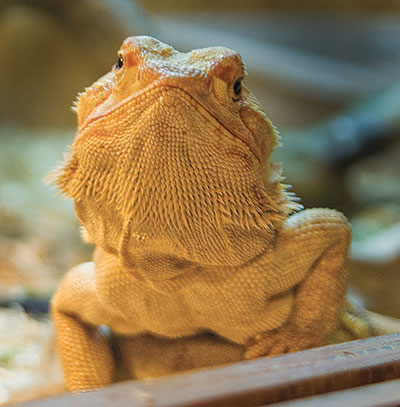
Like an exotic pet pied piper, children follow as Jamie walks around before the show, with Dewey the Bearded Dragon, an Australian lizard, clinging to his back or head or shoulder. “Put him on my head,” one child says. “Put him on my sister’s head,” another offers.
As Jamie introduces Dewey and then brings out Zelda, a colorful corn snake, he explains the 6th Day rules. If you don’t want to pet, see up close or interact with whatever creature Jamie offers, “just put your palm up, no thank you.” Even though you might make friends with 6th Day creatures, he tells the children, never touch a wild animal – like these or others – when you are outside in their territory. He also explains that audience members should consider it an “anointing” if a pet takes the opportunity to ‘relieve himself’ and reminds the kids that most of the exotic pets are not housetrained, so anything could happen.
After safety – 6th Day has never had an escape or incident with the exotic pets interacting with people – the main message this day is that God created us and all the creatures for a reason and that He loves us and all creatures of his creation.
“God has a reason for everything He does,” Jamie says, using the nonvenomous corn snake as an example. “The craziest thing is, without snakes, we wouldn’t survive,” he explains. Snakes eat rats and mice and keep the vermin’s population down and protect us from diseases they carry.
When Lucy the hedgehog makes an appearance, children see how God equipped hedgehogs to protect themselves – with their quill-covered skin and the ability to fold up into a ball.
When the so-ugly-it’s-cute hairless guinea pig is introduced, Jamie explains that the hybrid is called a skinny pig and reminds him of how God made us all different. “Some of us are tall, some small, some prettier than others,” he says. Telling a story about children teasing a boy in a wheelchair, Jamie encourages the young audience to appreciate the differences in all of us and never make fun of someone who is different. Instead, he urged, “use the way God made you special to do good and spread love.”
When Taco, the Chaco Golden Knee Tarantula, was introduced, the giant spider prompted squeals from the children, who could look but not touch. Ditto for the dwarf Caiman, an alligator relative from Central and South America whose jaws are taped shut for all outings. With 80 razor-sharp teeth, Caimans are generally more aggressive than their north American cousins who grow much bigger. Jamie points out its two sets of eyelids, so the amphibious carnivore appears to be asleep while he is actually watching for prey.
Up next is the African Spur Thigh Tortoise, slow and steady with temperature control built into its spurred feet. As a finale, 6th Day features its largest Burmese Python, named Sonnie, a male who is almost 11 feet long.
Big, little, scary or sweet, Jamie explains, God’s creatures are gifts and responsibilities and serve as testimony that God loves us all.
A growing family
Back at home, Jamie sits cuddling Pikachu, a Kinkajou that looks like a ferret-monkey mix. Pikachu is named for a Pokemon character. “We call him Pika because saying Pikachu the Kinkajou is a mouthful.”
Pika travels with 6th Day Creatures often. “He likes to snuggle and go hide in our shirts. A shy nocturnal animal like its cousin, the raccoon, the Kinkajou curls up inside his shirt as Jamie recites a list of animals that now live with the family in St. Clair County.
In addition to the family’s six dogs, the “regular” pets, the Hackers, and 6th Day currently have about 60 pets, including 25 snakes, all non-venomous, mostly colorful corn snakes and three Burmese Pythons, who often steal the show.
6th Day Creatures is a licensed and insured educational company. The business has an exotic animal exhibitor license with the USDA, which conducts annual inspections of the pets’ quarters in the Hacker’s home and yard in Springville.
Fees for the shows go to help feed and take care of the pets. The cost of a party or show varies according to how many miles the eight to 10 creatures need to be transported from the Hacker’s home in the 35146 zip code. The starting amount is $225, for up to 25 miles of travel, for an animal adventure of about an hour.
To count them down, 6th Day Creatures include the animals that starred in the show at Clearbranch plus: two pot belly pigs, two ferrets, several guinea pigs, two skinny pigs, more than 20 additional snakes, two more tortoises and several rabbits, including Rebunzal, the long-eared, 30-pound rabbit with 16-inch ears. They also have families of chinchilla which do not travel to shows because they cannot tolerate being hot or wet.
Seven years into 6th Day Creatures, with a daughter in college and son in high school, Jamie says they are working through a transition period with his key animal adventure helpers not available nearly as often as before. Feeding and caring for scores of unconventional pets is time consuming, especially after days of he and Leigh working 12-hour shifts as nurses.
But, the shows, the children and the chance to share his passion for animals while sharing beliefs in God’s love and wisdom prove to be worth the work.
Learn more about 6th Day Creatures – including how to book an animal adventure show – at www.6thdaycreatures.com.














 When Blythe and family left North Carolina and headed west, he instructed his wife to tell no one that he had preached. No written record states exactly why he had become so disheartened; however, his friend and Alabama Baptist historian, Hossa Holcombe, hinted that the problem was a theological difference with North Carolina pastors concerning man’s free will.
 But being declared free and grasping the reality of freedom are two concepts not comprehended quickly. Former slaves, now free to congregate and worship together, continued to meet with Mt. Zion until 1868.
 Mrs. Long reminisced about the singing in the church. “They had people in the choir, and they sang the old-fashioned songs. Mattie Kelly was the pianist. She would play the piano, and they would sing. When she finished, she would always shout. She was one of the shouting sisters in church.” Another pianist was Mattie Jo Williams Herring.
 Springville family turns passion into business, teachable moments
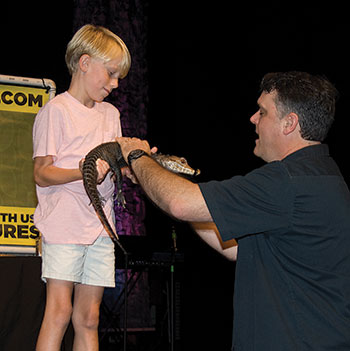 Like an exotic pet pied piper, children follow as Jamie walks around before the show, with Dewey the Bearded Dragon, an Australian lizard, clinging to his back or head or shoulder. “Put him on my head,” one child says. “Put him on my sister’s head,” another offers.