One foot in front of the other

Story by Molly Gilbert
Photos by Mackenzie Free
Submitted Photos

The trails at Big Canoe Creek Nature Preserve are more than a place for Tara Martin to exercise.

Just a half-mile from her home in Springville, the Preserve has become her personal playground, training ground and place to breathe. She walks, hikes and climbs its rugged trails as often as she can, sometimes covering 15 or 20 miles in a day.

And when she leaves, she doesn’t feel worn out.

“I come back feeling energized and recharged,” she says. “I feel awesome.”

For Tara, the explanation is simple. There is something about being outside – surrounded by trees, streams, birds, wind and uneven ground – that restores her.

“The Preserve cleanses me,” she says. “It gets my body in shape. It stops the chaotic brain.”

Over the past two years, the Preserve has helped Tara become stronger physically and emotionally. It has been the place where she built her endurance, discovered a love of climbing and prepared for some of the biggest adventures of her life.

But perhaps most importantly, it has become a place where she can simply be.

“I feel very connected to nature,” she says. “There aren’t that many places where I feel that way, but I always do at the Preserve.”

Finding her way back

Two years ago, Tara was living a very different life.

She was a wife and mother, and at work she was a lead support specialist overseeing about 100 caregivers. The job was demanding, stressful and essentially non-stop. For years, much of her energy went toward taking care of everyone else.
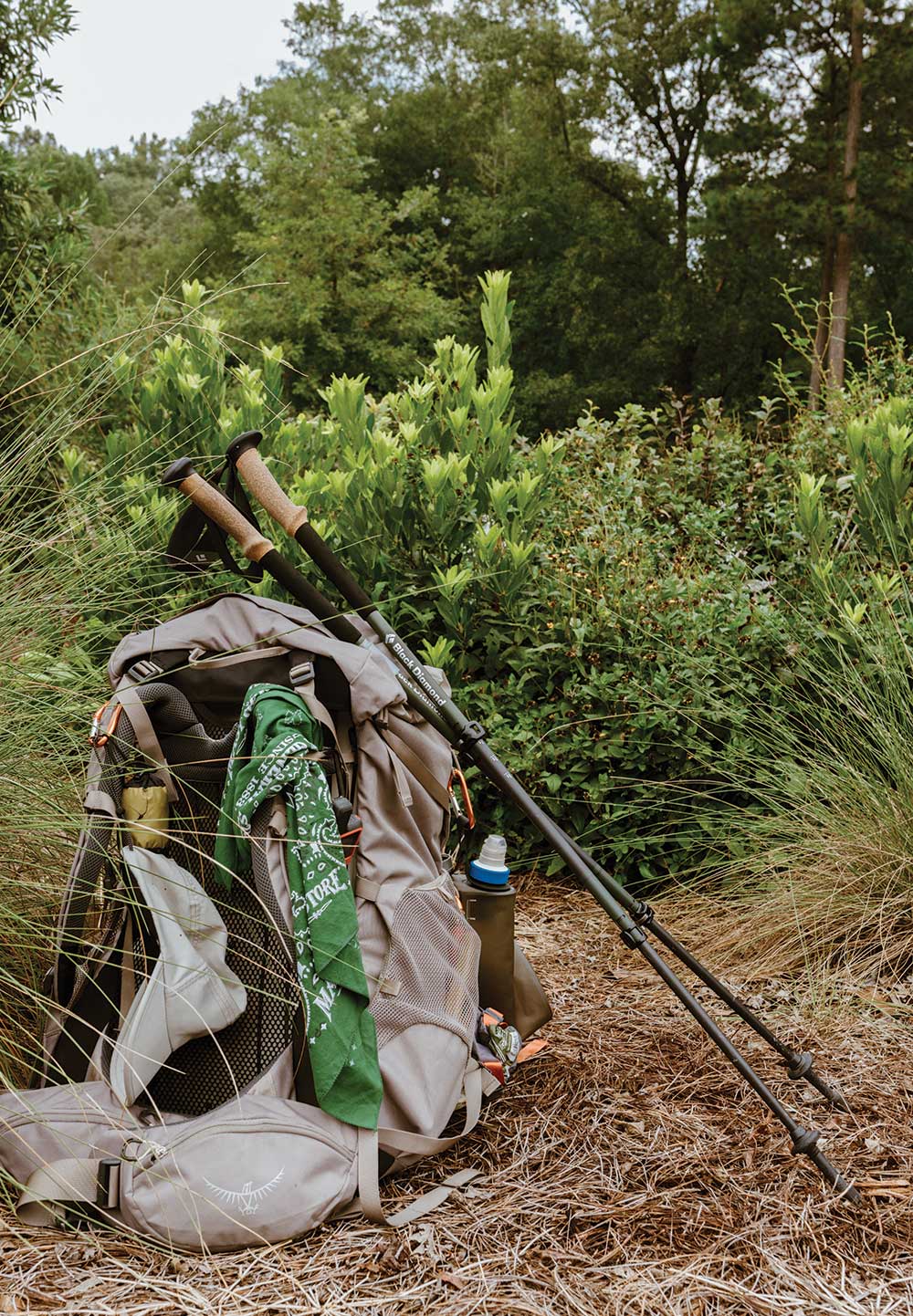
Tools of the training trade

“I never thought about my life and future – it was all about survival mode,” she says. “I went to work and was on call. I never thought about what I wanted. I just let myself go.”

Then came a vacation she had dreamed about since she was a child.

Tara and her husband, Mark, had planned a trip along the Pacific Coast, something she had looked forward to for years. But when the time came, she couldn’t enjoy it the way she had imagined.

It hurt to walk. Her body wasn’t prepared for the demands of the trip, and the experience forced her to confront something she could no longer ignore.

“I needed to get my life together,” she says. “I needed more movement.”

She began making some changes. She sought out therapy and started walking at a park in Springville. She could put in the miles, but she wasn’t getting stronger.

Then her son told her about Big Canoe Creek Nature Preserve.

It was close to home and offered something the park didn’t: elevation, hills and rugged, changing terrain. The Preserve’s trails climb and descend through the woods, with uneven footing, streams, creeks and fallen trees that make every walk a little different.

“I started going out there every day, even if it was only a mile or mile-and-a-half,” Tara says.

Soon, the miles added up.

“I walked up hills and noticed my leg muscles had gotten so much stronger,” she says. “I realized how much I loved climbing.”

Tara began wondering what she might be capable of beyond the Preserve.

Testing her strength

Tara was ready to put her new conditioning to the test. She traveled to Zion National Park in Utah, where she took on Angels Landing.

For Tara, completing the hike was about more than reaching the top. Not long before, she had struggled simply to walk during a vacation she had dreamed about for years. Now she was tackling a demanding climb in one of the country’s most spectacular landscapes.

She loved the challenge. The physical effort, the adrenaline and the satisfaction of accomplishing something difficult appealed to a part of Tara she was only beginning to discover.

“I developed confidence,” she says.

A month after returning from Zion, Tara reached another turning point.

She quit her job.
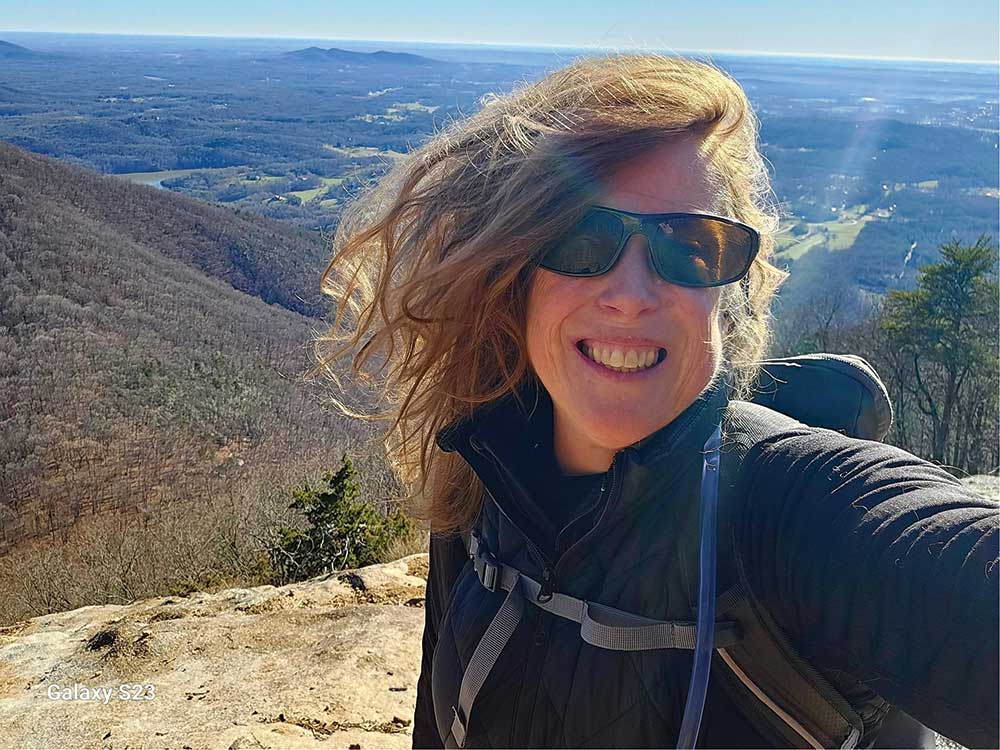
Sunrise summit at Yona

After years of a demanding position, she had reached a point where the work was no longer sustainable. She wanted a life with room for more than work – a life that allowed space for her family, her health and herself.

She drove to Colorado, car camped and climbed the Manitou Incline, completing all 2,768 steps.

Tara took three months off before finding a new job. Instead of simply slowing down, she used the time to explore what she could do.

Choosing a life of adventure

She went backpacking at Cheaha State Park and Sipsey Wilderness.

In a five-month period, she climbed Yonah Mountain three times, Slaughter Mountain and Brasstown Bald, and tackled Calloway Peak twice.

“I’m always after the next bigger mountain,” she says.

Each climb gave her another reason to believe in herself. She was seeking out steeper trails, longer distances and more difficult terrain.

“When you weren’t able to do this before – low self-esteem and no confidence – and then you accomplish it, it’s such a point of pride,” she says. “When you thought you could do nothing and realize you can do everything, that’s life-changing.”

The change showed in more than what she could accomplish on a trail.

“I walk differently now,” she says. “I stand up straight. I move with confidence. I feel amazing as a human being.”

A life with room to breathe

Now, Tara’s job has a more flexible schedule and gives her something her previous career had not: time.

She could work and take care of her family without putting herself last. Exercise and time outdoors could become part of her regular life rather than something she squeezed in when everything else was finished.

And she kept returning to Big Canoe Creek Nature Preserve.

Over the past two years, Tara has steadily lost weight, built muscle and developed the endurance she once thought was beyond her reach. What started as short walks became longer hikes. Miles became double-digit miles.

“I can walk 20 miles now and it’s nothing,” she says.

She credits the Preserve with giving her the terrain and consistency she needed to build that strength.

But the physical benefits are only part of why she keeps coming back.

Where she finds peace

For Tara, the Preserve is also a place of solitude and reflection.

There is a spot she affectionately calls “Tara’s Rock.” She sits there to pray, meditate or simply eat her lunch.

“I wanted to be able to have privacy and peace,” she says.

She describes the experience of being in the woods in almost physical terms: listening to the wind and birds, smelling the rain, feeling dirt beneath her fingers.

“Our bodies are composed of water; we are nature,” she says. “There’s nothing like being outside.”

Those sensory experiences help her feel connected – not just to the landscape, but to herself.

“It’s so cathartic,” she says.

A 15-mile day on the trail doesn’t necessarily leave her depleted. Instead, she often returns home feeling recharged.

“When I go out of state, it’s for the challenge,” she says.

The big mountains give her that challenge. The Preserve gives her something else.

Connection.

“If you’re running up and down Yonah, that’s about endurance,” she says. “At the Preserve, I connect with the earth and nature.”

That distinction is important to Tara. The mountains have become places where she can test herself, but the Preserve has become part of her everyday life.

It is where she trains, but it is also where she returns to herself.

The adventure in her own backyard

Tara’s adventures have continued to grow.

Her greatest accomplishment so far was completing the Cascade Canyon and Paintbrush Canyon Loop in Grand Teton National Park. The achievement represents just how far she has come.

And there is already another goal on the horizon: Mount Rainier.

She’ll train for that challenge the same way she has trained for everything else – by putting in the miles and tackling the hills at Big Canoe Creek Nature Preserve.

But Tara doesn’t believe someone needs to be preparing for a major expedition to appreciate what the Preserve offers.

That’s one of the things she loves most about it.

It is raw rather than perfectly manicured. Rugged rather than predictable. There are five trails with different terrain and challenges, making it a place for hikers, runners and mountain bikers.

Kids can ride their bikes. Families can explore. Someone can spend hours covering miles or simply take a short walk through the woods.

“You feel like you’re in the middle of the wilderness,” Tara says. “You feel so in tune with nature. You’re in a different world.”

Having a place like this nearby is a tremendous asset.

Just start walking

Tara is proud of the mountains she has climbed. She is proud of the miles she can cover now. She is proud of the Tetons and the adventures that once seemed impossible.

But when she talks about how she got here, her advice is remarkably simple.

“It’s just one foot in front of the other,” she says. “Don’t focus on 10 miles. Focus on one step.”

That’s how her transformation began.

One step became another. A short walk became a longer one. A hill became a mountain. A difficult hike became evidence that she could do something she once thought she couldn’t.

The process was gradual, but the effect was profound.

For Tara, Big Canoe Creek Nature Preserve has been part of learning how to take care of herself.

“It has saved my life,” she says. “Not just physically, emotionally.”

Sometimes the next adventure begins with something as simple as taking a walk in the woods.

One foot in front of the other.

Deanna Lawley’s dedication

Story by Carol Pappas
Submitted Photos

When Deanna Lawley was a child, a less-than-harmonious trip to the dentist one day with her mother ended abruptly when Lawley bit the dentist.

Her mother was “horrified” with the actions of her 6-year-old, she recalled, “and she turned me over to my daddy.”

But her father had a deal to dangle in front of the precocious, albeit challenging, child that just might make the next visit a bit less dramatic.

He coerced her into behaving at the dentist’s office with the promise that he would buy her that book she had been wanting – Black Beauty – “the one with the shiny cover.” The father-daughter ‘deal’ was struck, and it not only became the key to a smooth office visit that day, it unlocked a lifetime of love for reading. “24 hours later I had my book,” she said.

And she’s been reading ever since.

As a career path, she naturally chose teaching English and for decades, she shared her passion for the written word with countless Pell City High School students. In retirement, she paints books through travel.

Forming a group called Friends Bound for New Horizons, Lawley guides trips across the globe. They have become learning adventures that have raised nearly $100,000 for the Pell City Library.

The first trips generated funds for Pell City Schools Educational Foundation and later grew successful enough to support the library and after that, Museum of Pell City, a nonprofit she co-founded.

Among her early travelers were Library Director Danny Stewart and Carolyn Hall, a longtime library supporter. One day Hall wryly told her, “There’s no reason why you can’t give money to the library,” which led to years of travel – and funding – for the library.

Guild members sought to honor her in a special way, and they named a room in the library for her.

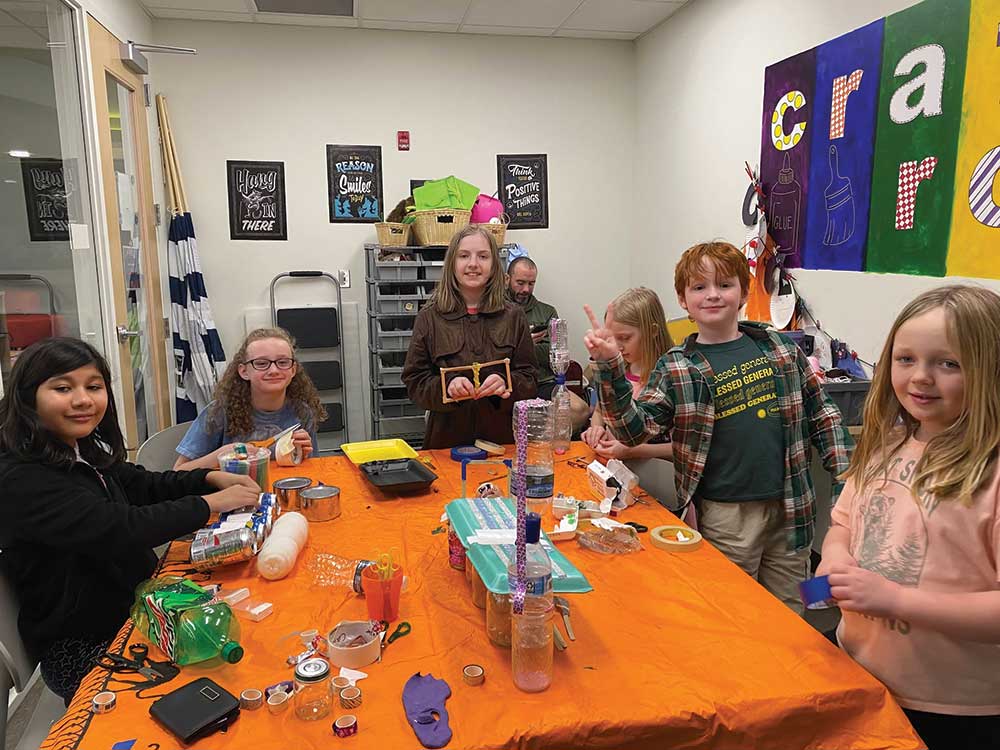
Actually, there were two rooms that needed naming – arts and crafts and teens – and Lawley chose arts and crafts. She picked arts and crafts, not only for the creativity and imagination found inside, but she joked she had years of teaching teens, and “most” were not too entertained. “Arts and crafts are fun for any age – my PCHS teens, not so much. They were getting ready with research and Shakespeare for college.”

“She wanted to see the happy, fun part,” said Stewart.

“There was a desire to have something to pay her back for all the money she has raised over the years,” Stewart said. “We thought it was only fitting to name a room after her.” She shares the honor with husband Barnett, who not only has helped her with the trips over the years, he has given back to the community as a public servant, a conservationist and a volunteer in many different arenas.

“How deserving,” Stewart said. “They are a great couple in philanthropic endeavors.”

A reception in her honor featured a meet and greet hour on a beautifully decorated patio at the Municipal Complex followed by dinner in the banquet room. “The ladies of the Guild were extremely good hostesses. It was so much more than we anticipated. It was such a lovely event, and the patio was a perfect venue for such an occasion.”

Making it even more special was when she learned her good friends, John Wandrisco of United Distributors and St. Clair Commissioner Bob Mize supported the event, making it “such a fine affair.”

Lawley sees her fundraising work on the library’s behalf as a labor of love. “I’ve always loved to read. I am very pleased to be connected to the library,” she said, recounting childhood memories in Newnan, Georgia, where the library was housed in a historic Carnegie building on the courthouse square. It was “holy ground to me. It was a major influence on me as a child.”

And now, she gets to give that gift back in her own way, helping new generations learn to treasure the riches of the library just like she discovered so long ago.

Friends Bound for New Horizons

It’s not often you get to take a trip of a lifetime – those ‘bucket list’ trips you’ve dreamed about – and help a worthy cause all at the same time.

But that’s precisely what Friends Bound for New Horizons does every time they take off for another destination. On their itineraries over the years has been Greece, Italy, a cruise down the Rhine River, the Calgary Stampede and Canadian Rockies, Christmas Markets, Alaska, London, Ireland, Normandy, Finland and the Northern Lights, Costa Rica, and national parks.

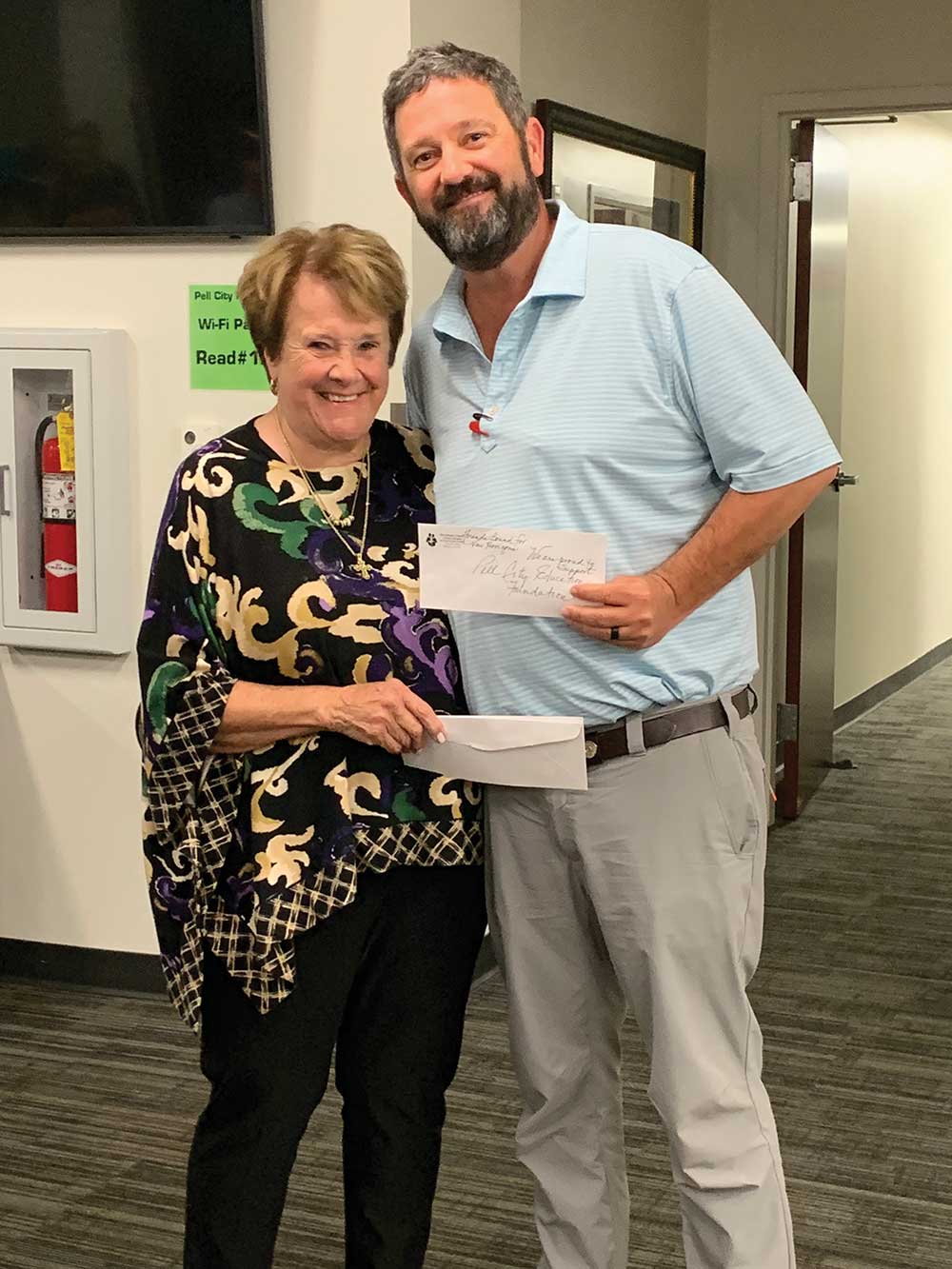
Deanna Lawley presents check to Jason Goodgame, president of Pell City Schools Education Foundation

 Their latest adventure was Scotland in August and in addition to the precious memories they made, they raised nearly $40,000 for four nonprofits, strengthening their good works in the community.

On the receiving end were Pell City Schools Educational Foundation, Pell City Library, Museum of Pell City and St. Clair Sheriff’s Boys Ranch.

The effort started years ago when retired English teacher Deanna Lawley created a fundraiser for the education foundation. She joined forces with a travel company, Collette, who suggested she might be the ideal fit for leading group trips with the commissions earned going straight to the education foundation.

With her background in education for researching the sights they will see, coupled with her ability to tell a good story, she shares tidbits of history and anecdotes that enhance their memories of each place they visit.

She later expanded the trips’ beneficiaries to include the library and museum, both groups with which she is involved, and managed to add funds for the rebuilding effort at the Boys Ranch this year, too.  

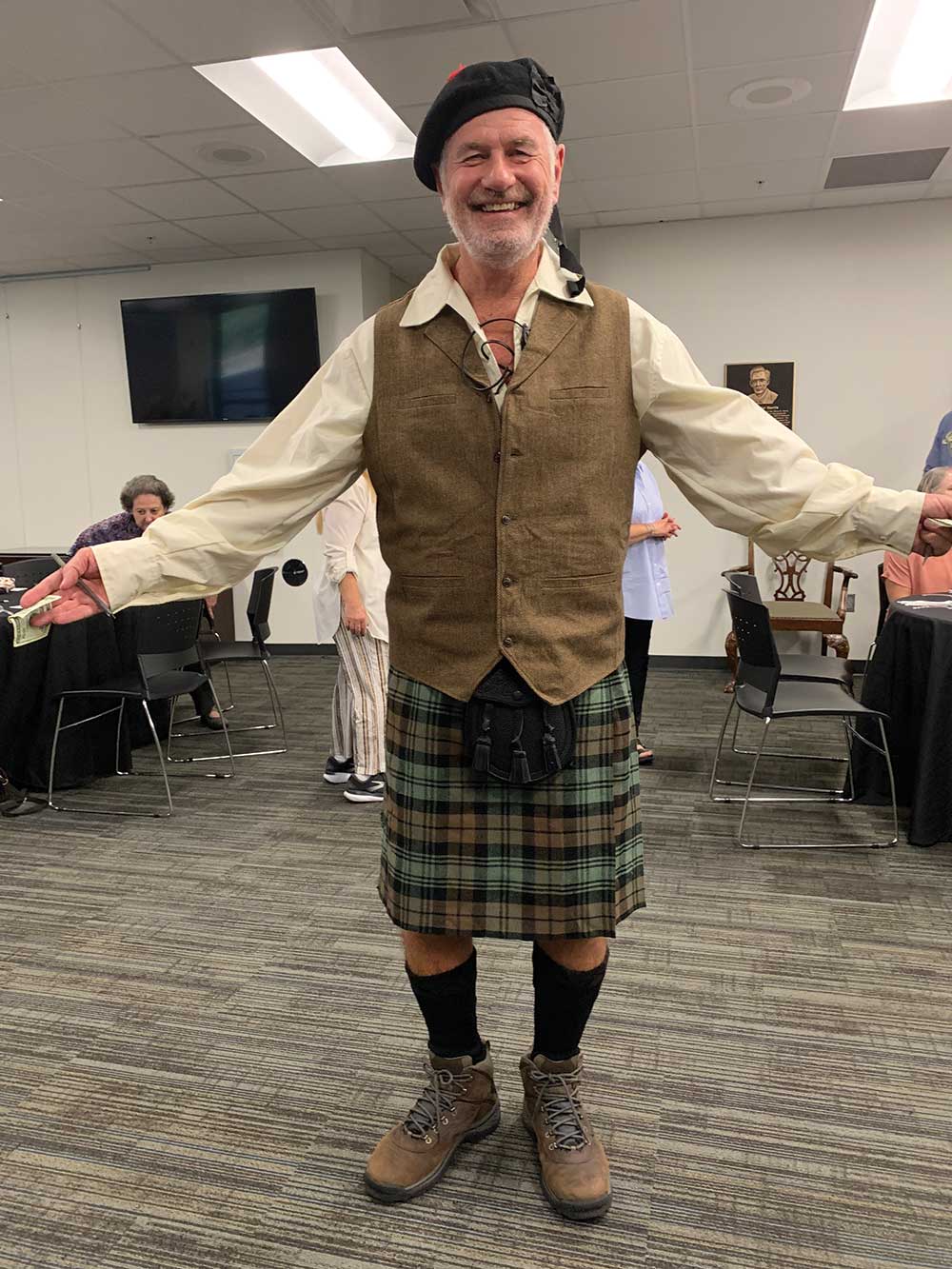
A celebration dinner held to present the checks drew quite a crowd with travelers reminiscing with old friends as well as the new friends they made on their trip to Scotland. A trio of travelers even wore kilts for the special occasion.

Travelers tend to agree that beyond the stunning sights, rich experiences and a host of good memories made, they cultivated new friendships – an added treasure they did not expect. While each group has familiar faces who routinely travel together, they welcome newcomers in what is becoming an expanding circle of good friends.

Ask the ‘regulars,’ and they’ll quickly tell you about the value in the investment. The excursions, the accommodations, the travel, the price – it’s an unrivaled buy, they say.

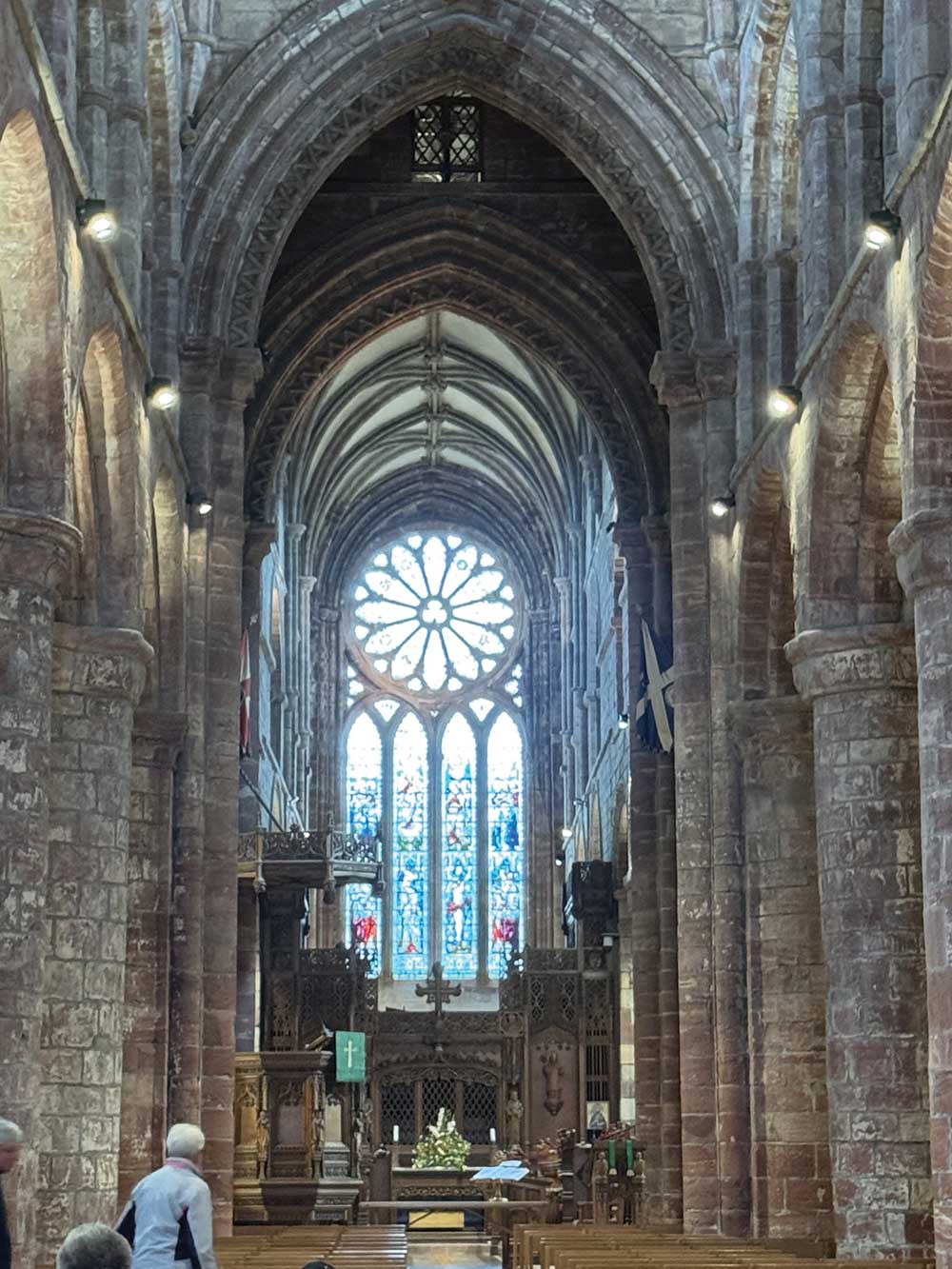
Inside St. Magnus Cathedral on Orkney Island begun by Vikings

The end result has been welcome news for the nonprofits they help. Jason Goodgame, president of the education foundation, said his goal when he took the helm of the foundation 10 years ago was to build the endowment to $1 million. With help from Lawley and Friends, teachers received grants, and investments built from $10,000 chair donations reached that milestone this past year..

Library Guild President Pat DeMotte echoed Goodgame’s sentiments, saying that the library is able to expand its programs to better serve the community year after year.

“We could not have done what we have been able to do at the museum for the past three years without the help from this group,” said Museum President Carol Pappas. “We like to think big, offering special programs and expanded exhibits, but our funding could not match the lofty goals we have without Friends Bound for New Horizons’ help. We owe them a debt of thanks.”

 Sheriff Billy Murray, whose wife had been one of the travelers, was surprised by the donation to the Boys Ranch. He expressed his heartfelt thanks, noting that being able to reach and teach these boys at risk will go a long way in changing lives and keeping them away from the judicial system later on.

Next up for this band of travelers are two excellent adventures – Portugal in May and Spain in late September. They offer recreational days along with history, art and architecture tours. Each has a tour manager whose knowledge enriches the sightseeing.

Traveler Dana Merrymon at the check presentation dinner, wearing his kilt for the occasion

In Sunny Portugal, they will visit Lisbon, the historical capital of Sintra and the beaches of the Algarve. Several will do an extension to the Madeira Islands.

In September, travelers will experience Spain’s Costa del Sol in a beachfront hotel. There is an opportunity to take a ferry to North Africa for dinner and sightseeing.

One night, the Spanish Fado music and dance will be entertainment at a three-course dinner. Learning about Spain’s Number 1 wine, Port, will be included along with the opportunity to see Picasso’s works. The group will only change hotels one time as it moves to the capital city of Madrid. Luggage will be collected and transported while travelers get to experience the 200 miles per hour fast train, the Ave (bird).

Madrid is full of history and the incredible Prado Museum.

As Friends Bound for New Horizons will tell you: “The only trips you’ll ever regret are the ones you don’t go on.”

Friends Bound for New Horizons welcomes one and all to join them on another adventure. Next stop? Spain. Want to know more? Jack Brinson of Collette has negotiated a $600 reduction in price for this group and will be at the Pell City Municipal Complex on Jan. 13, at 5 p.m. to present the trip and accept bookings.

Camino de Santiago

Story by Paul South
Submitted Photos

For the pilgrims who annually flock to Spain from around the world to walk all or part of the Camino de Santiago, the reasons for their journey are as varied as they are.

For the hikers, it can be a trek of faith, fellowship, revelry, reflection, exploration or a communion with God and nature. Known as the Way of St. James, it might well be a tour mixing all of the above, ending at the Cathedral of Santiago de Compostela in northern Spain, where it is believed the remains of St. James the Great rest.

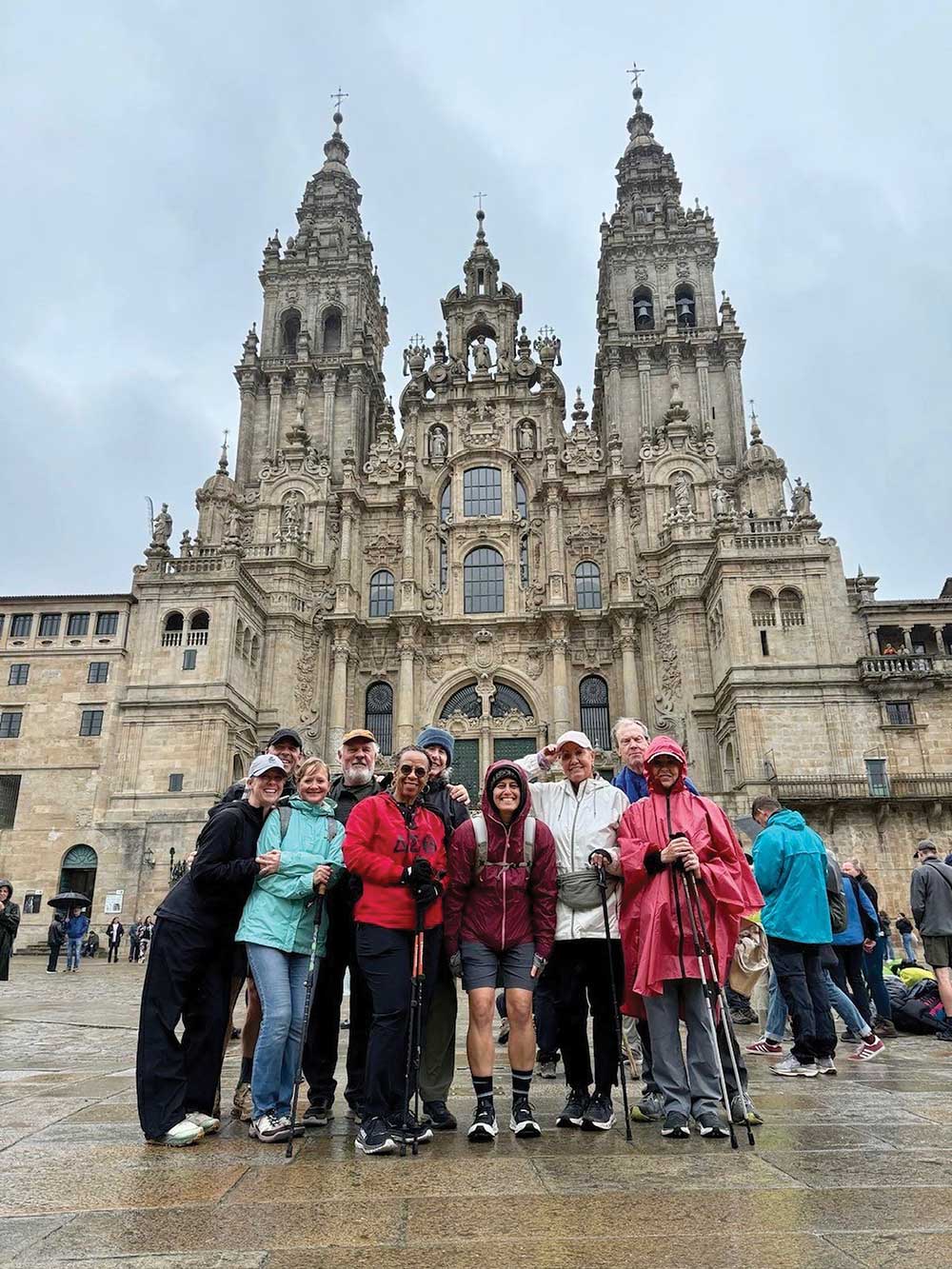
They made it! Cathedral of Santiago de Compostela

For Jean Barnett of Pell City, her 70-mile, weeklong journey on a portion of the Camino Frances or French Way, was a moveable feast of all of the above. The spark for her journey was first ignited by her yoga instructor, Terri Sellers, a five-time veteran of the journey, who was organizing a Camino trip for a small group of friends.

“I heard her talking about walking across Spain, going on this pilgrimage, and I was intrigued. I’d heard of it many years ago, and I decided if I didn’t do it now, I might never do it,” Barnett said.

Multiple reasons fueled her desire to tackle the journey.

“The challenge drew me in,” she said. “But the opportunity to do it with friends who were like minded attracted me to it.”

It came at a time, too, when she had wrestled with family health challenges.

“(The Camino) was just something I felt like I wanted to experience – to get back out and spend some time exploring and doing something that sounded challenging but was doable,” she said.

And there was the spiritual side.

“People have a lot of reasons for doing it, and mine was somewhat religious,” she said. “But being out on the trail gives you a chance to really meditate and have an opportunity to just kind of be with yourself paired with many opportunities for fellowship along the way. But I took time to pray and listen to the sounds of nature, which was one of the things I really loved – the early morning walks, listening to the bird calls, just the sounds of the world waking up.”

She added, “To be out there in a place where you could just be by yourself and think.”

And there were times of fellowship with her group and with other travelers along the road.

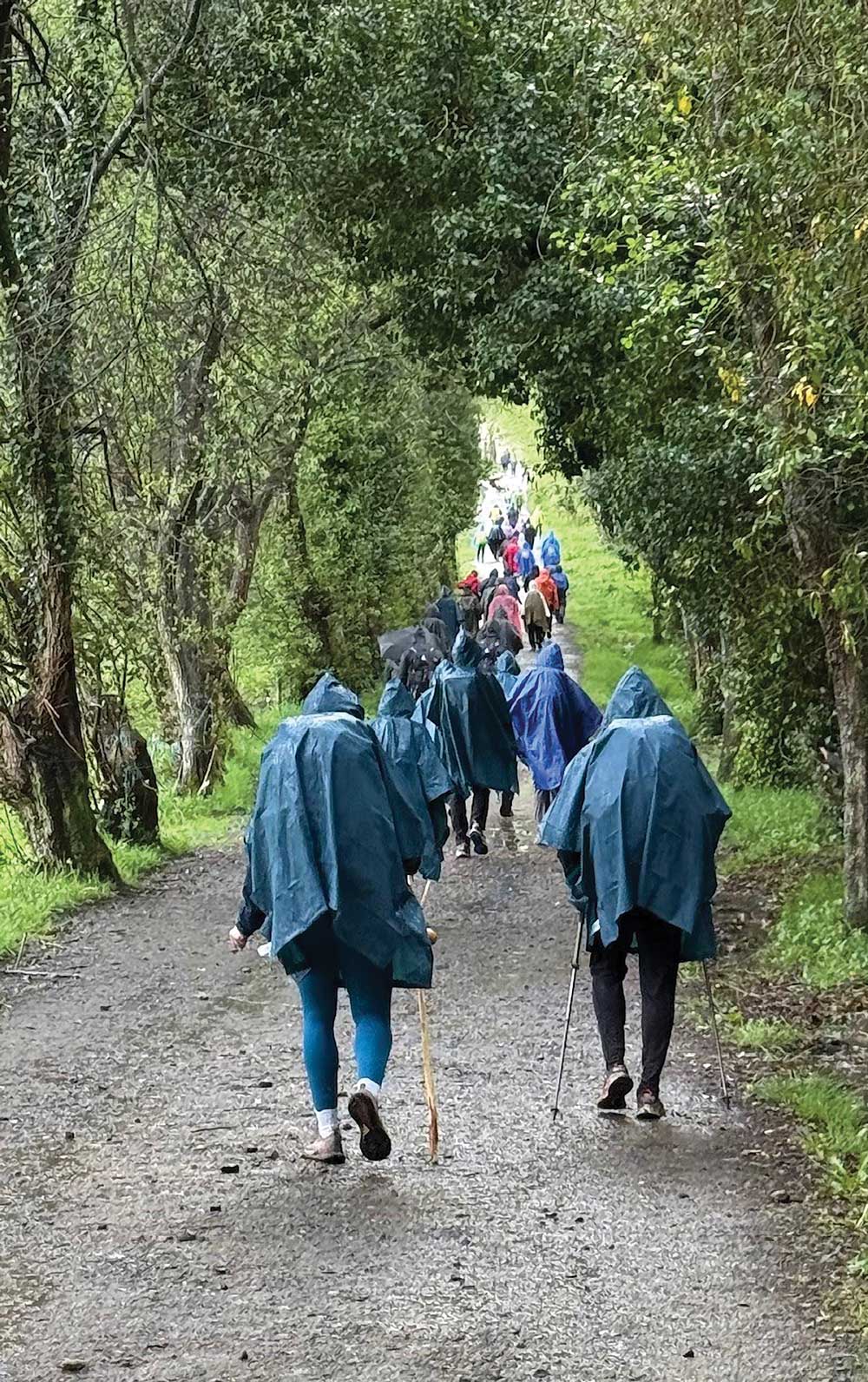
Rainy walk with crowd of Poncho-clad pilgrims nearing Santiago

“There’s a balance there,” she said.

Barnett, a former runner who competed in half-marathons, moved at a more deliberate pace in her pilgrimage. Deep reflection, introspection and fellowship don’t move at a racer’s pace. Camino de Santiago is an opportunity to escape from the daily grind.

“It’s something of a distraction that takes you out of your role in day-to-day life and the chance to just kind of contemplate the world and your purpose,” Barnett said.

Amid the deeper moments, there are the earthlier concerns, from fatigue to blisters on the trail. “You just take every day as it comes and deal with it,” she said.

What is the Camino de Santiago?

In 820, a tomb was discovered in Galicia believed to be the final resting place of St. James the Great. According to “The Camino de Santiago Survival Guide,” while the details are a bit fuzzy, the “Camino” was the beginning of Christian pilgrimages. It is believed that in 920, a Frenchman, Bretanaldo, was the first foreigner to walk the Camino. Some 438,683 people completed the Camino via a network of different routes and via different means. While nearly 95 percent of travelers walk the Camino, others travel via bicycle, horseback, sailboat, on crutches or in a wheelchair.

One interesting note: Some famous people have made the pilgrimage, including the King and Queen of Belgium, television host Jenna Bush Hagar and the acclaimed actor Martin Sheen.

There are several different routes for the Camino, all ending at the Cathedral de Santiago. As they get closer to Santiago and the Cathedral, they merge into one trail, crowded with pilgrims.  Here is a glimpse of the trails, taken from The Camino De Santiago Survival Guide:

The French (Frances) Way: This is the most commonly taken route of 780 kilometers from Roncesvalles to Galicia. This route passes through Pamplona, famous for the Running of the Bulls, written about in Hemingway’s The Sun Also Rises.

Barnett and her group began their 70-mile journey in the town of Sarria.

The Northern (Norte) Way begins in Irun and passes through Bilbao, San Sebastian and other towns before entering Galicia.

 The Primitive Way: Beginning in Oviedo, this 321-kilometer journey merges with the French and Northern routes near the end.

The English Way (Ingles): The route, which begins in either Coruna or Ferrol and ends in Santiago is named for the pilgrims who originally traveled from the United Kingdom. The distance from Ferrol is 110 km. From Coruna, the distance is 75 km.

The Portuguese Way begins in either Lisbon, or more commonly in Porto. The inland route from the Portuguese capital Lisbon is 600 km, 620 km by the coastal route. From Porto, the inland trek is 230 km, 260 km the coastal way.

The Via de la Plata: The 1,000 km route begins in Seville, Spain and runs inland before arriving in Galicia.

Preparation and an early challenge on the trail

While others will travel all of one of the routes and “rough it” along the way, Barnett’s group traveled with a support van. Hotel reservations along the route were made in advance.

There were checkpoints along the way offering water and snacks and stops for lunch and dinner. Their luggage was also transported. It was somewhat akin to sherpas who aid hikers on an Everest journey.

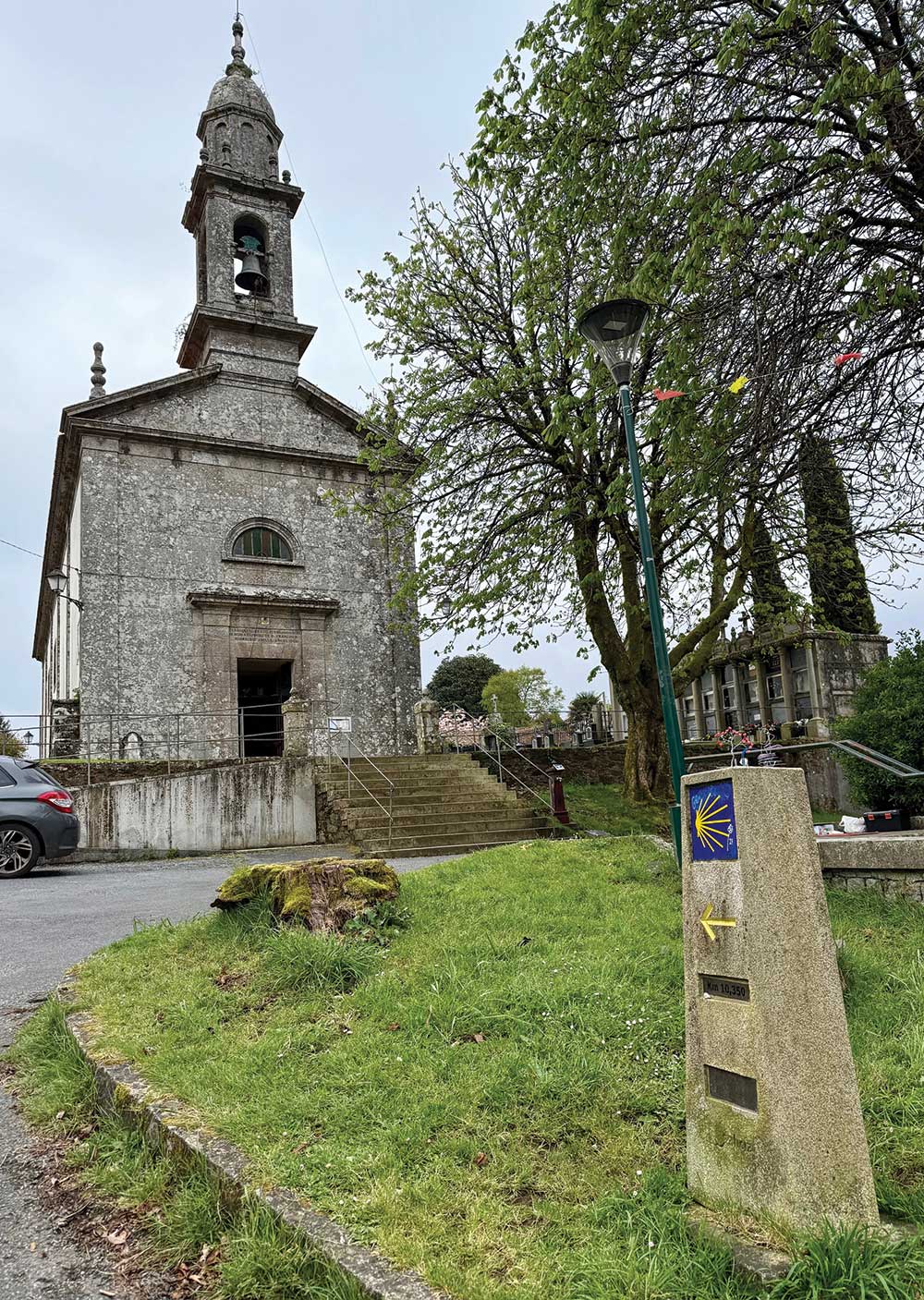
One of the path markers outside historic church

“I’ve heard it referred to as “Pilgrim Lite,” she said. “We really did have a lot of support along the way, which made it really doable.”

 The Camino requires preparation physically, mentally, spiritually and emotionally.

“You know, I don’t think I adequately prepared for it, actually. I was so busy with everyday life and the things I had to do to make sure while I was gone my family was taken care of,” she said. “There was a lot I had to take care of before I could get away.”

At home, she’s also involved at her church, Pell City First United Methodist in trying to help it grow, and she was in rehab for a back injury for six weeks before the trip.”

“I wasn’t as adequately prepared as I needed to be – spiritually, mentally, any of that,” Barnett said. “The therapists helped me get to a point where I could do it without suffering too much.”

The biggest physical challenge came shortly after the long flight from the States to Europe. “On the first day, I got scared,” she said. There was swelling in my lower legs, and the trail was hilly with long inclines and declines. I had a hard time keeping my heart rate down because the swelling was putting pressure on my heart … I wasn’t sure I was going to be able to do it. I just had to take it very slow.”

A pair of compression socks saved her journey. Asked if that first day was the hardest on her portion of the Camino Frances, Barnett said, “Absolutely, it was. After that first day, it wasn’t a problem. But it was still very challenging. That’s a lot of miles, and it was hilly.”

That first day caused her to consider giving up, but the support and advice of her group kept her going. “I was ready to try again,” she said. “I didn’t want to give up.”

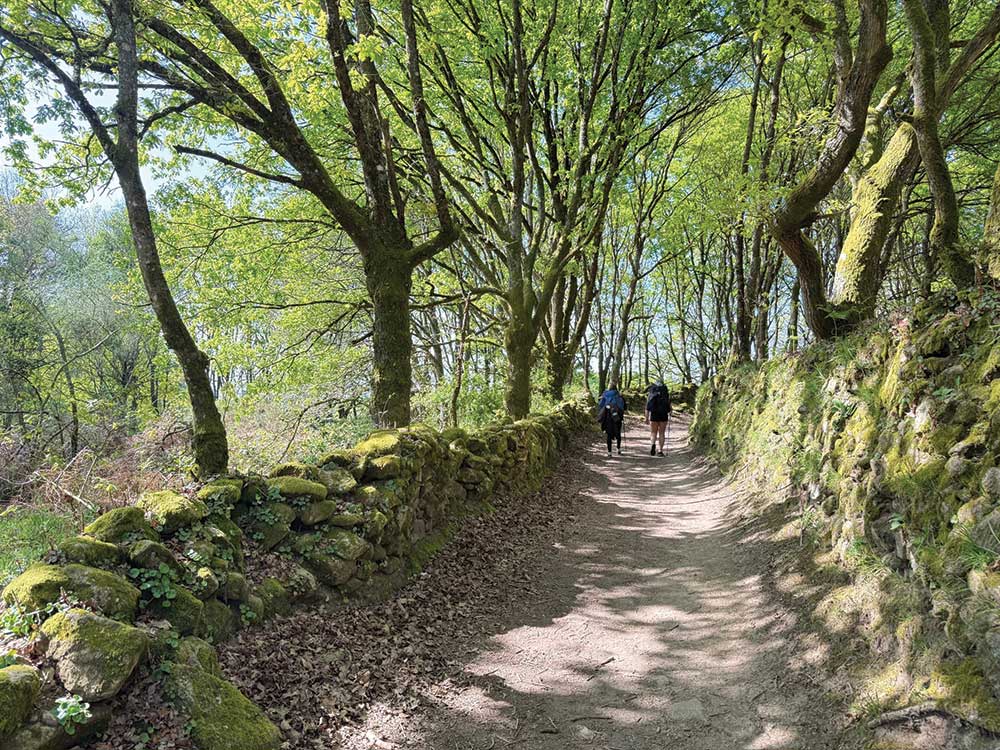
A favorite memory – moss-covered stone walls on a tree-lined path

For Barnett, the journey was part solitude, part introspection, part fellowship and more, a hybrid of all the reasons travelers make the pilgrimage. She and her group entered Santiago on the Thursday before Easter. After completing her Camino, she attended Easter Mass at the Cathedral of the Assumption of Our Lady in Porto, Portugal.

“It was amazingly beautiful and spiritual to celebrate in Porto’s majestic ancient cathedral,” she said.

While that may have been the spiritual climax of her trip, Barnett also encountered inspiration in human form. A pilgrim in front of her was walking slowly, with difficulty.

“As I got closer, I realized he was walking on crutches and carrying a backpack,” she said. “It occurred to me, that whatever issues I had or have in my life, I don’t have crutches. For him to take the journey and make it happen, it just touched me. He was my hero.”

 As she came alongside the man, she spoke to him.

“He had the most joyful, radiant smile,” Barnett recalled. “He had some age on him, but here he was doing something that most people on crutches would just consider impossible. And he was happy.”

There were other surprises on the walk. Musicians, alongside the trail, buskers who would happily take a Euro or two tossed into an open cello or guitar case, serenaded pilgrims. Groups of young people sang joyfully or laughed as they walked. Barnett encountered fellow pilgrims from around the world, on the trail and in bars and cafés in the villages along the route.

Nature offered signs of spring and of renewal, a pasture full of lambs or calves.

“It gave me another thought, to take this this time and think about the future and the importance of having this life and how you spend your time,” Barnett said.

As she passed centuries-old buildings, Barnett considered the early pilgrims in ancient days who made this journey.

“They did not have the modern conveniences we have – the high-tech shoes and gear – all the things that we access so easily. What did they do when they had issues? … We have so much.”

A favorite memory for Barnett is when she walked a tree-lined path along a stone wall covered in moss. “The moss was glistening, and it looked like carpeting in the shape of the rocks of the wall,” she said. “It was leading you from where you’ve been to where you’re going. It was a gorgeous, magical fairyland.”

She also warmly recalled the fragrance of a eucalyptus forest, ancient buildings, lovely murals. The Camino experience left her forever changed.

“It gave me a chance to focus on what’s important in life. We get so tied up in the daily routine, grocery shopping and cooking meals, and (the trip) gave me a chance for an inward focus, to think about the things that are important in life and relationships and this big world. There are so many places to go and people to meet. It’s eye opening.”

It helped her realize that “being on the Camino is a lot like life. You have to do what you need to do to get from Point A to Point B each day. But in this scenario, you are in nature all the time.”

And at each day’s end, as she laid down to sleep, she remembered the people, places and things she saw – welcoming people in breathtaking, yet peaceful places.

“It was a good time to take a pause in life, even though I was in motion most of the time. It was a pause for your mind to open up more to the spiritual aspect. Being outside. Communing with nature. Thinking about this wonderful world and God and what He has created for us and the responsibility that comes with preserving it.”

The Camino also impacted her perspective on the world.

“I wasn’t bombarded with news, but staying out of the daily news was good for my soul and good for my mind. (In the news), there’s always the bad and negative things going on. The Camino forces you to focus on the good and the beautiful.”

And when she arrived with her fellow pilgrims at the Cathedral of St. James the Great, she was greeted with cheers and applause. She wept with joy at the memory. They were there with pilgrims who had trekked the entire Camino de Santiago, but that did not dampen her triumphal entry.

“Oh my gosh, that was exhilarating,” Barnett said. “It was pouring rain off and on all day, and it was raining when we got to Santiago. But we were so excited to see the cathedral, to end the journey. About 10 kilometers out you could see the spires of the cathedral. I get goosebumps just thinking about it. It put more energy into our final few steps. … The energy level was amazing.”

It impacted her relationship with God.

“When I feel close to nature, I feel close to God. It’s an opportunity for a conversation with God. It was an opportunity to pray and to meditate while listening to nature.”

She thought of nature and art and history along the way – and the pilgrim on crutches.

“I felt blessed to speak to that man who was making his way at his pace with this huge smile on his face, and it made me think how blessed I was to be able to do this with a great group of people.”

Barnett offered a quote from Sellers, the yoga instructor who in part inspired her to tackle part of the Camino, a journey of beauty, discovery and the Divine. “It’s not about what you take with you, it’s what you leave behind.”

What did Barnett leave behind?

“I tried to leave stress and worry and take (home) the joy that I experienced.”

She offered counsel to those who may be considering the Camino de Santiago or any other challenge in life. “Follow your dreams,” she said. “If there’s something you want to experience, then make it happen. It’s a great big, beautiful world. Don’t shy away from something that, though it may be challenging, is an opportunity for growth.”

The trip, simply put, was “very nourishing for my soul.”

Quoting Sellers again, she described the magical, mystical journey: “As we venture away from our everyday lives and from the script of a typical trip or vacation, we are invited to open our eyes, hearts and minds to being a stranger in a strange land and see each day as unfolding minute by minute, step by step into a journey of challenge, renewal and hope. In other words, we are off on an adventure, and while it will offer times of comfort and awe, there may be times of challenge and obstacles. It comes with the Way.”