Eden and New Hope Baptist

Story by Joe Whitten
Photos by Wallace Bromberg Jr.
Submitted Photos

Eden. What a lovely name for a town. It calls to mind the biblical Garden of Eden with visions of fertile soil, lush gardens, exotic flowers and green groves of sheltering trees.

One wonders if, in the first quarter of the 19th Century, the settlers to this area saw it like that. Probably not, for trees must be felled, new ground cleared and cultivated, houses and barns built, but it was a place of promise.

It’s uncertain when settlers first began migrating to today’s Eden, but family by family, a community formed. As the 19th Century progressed, businessmen opened stores and shops, and by 1900, it had become the town of Eden. 

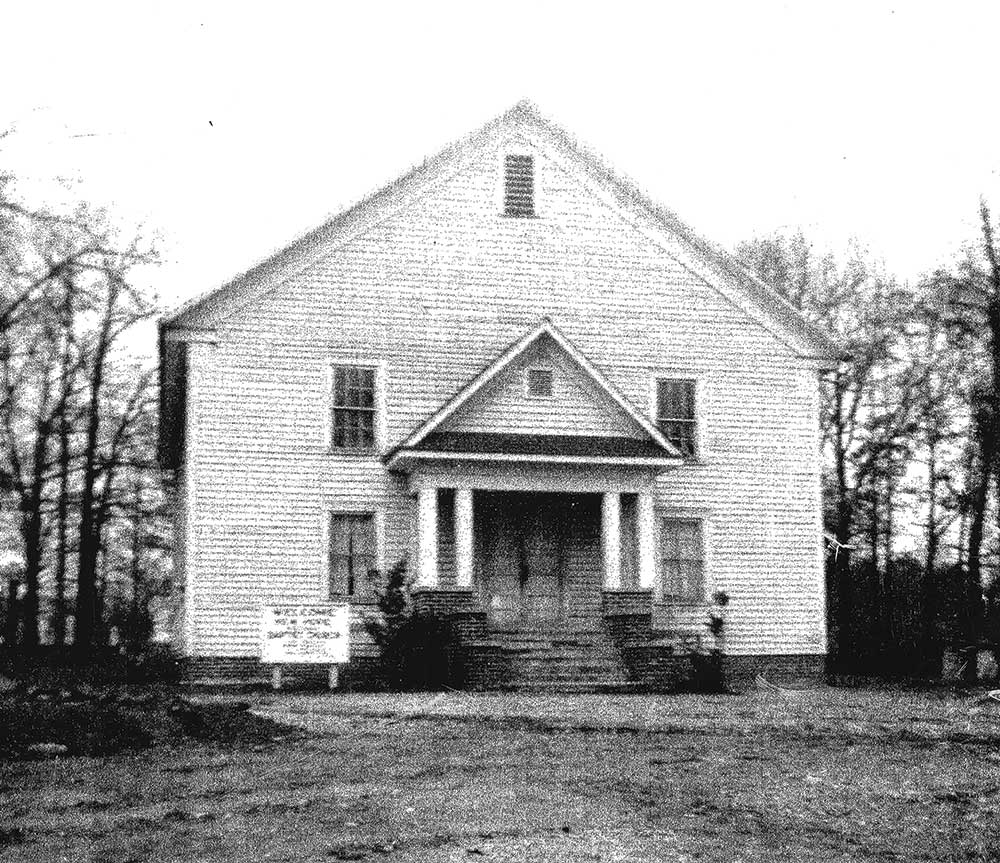
New Hope Baptist

An April 4, 1906, Pell City Times article records that “…Eden…first bore the name of ‘Manchester,’ but there being another Manchester in the state, it was changed to Eden.”

Personal help with knowing the history towns and churches. In June 1970, Lailah Harris, in a letter to Mrs. E. N. Vandegrift of Oneonta, AL, wrote that although Eden eventually became a part of Pell City, it was a town “before the Civil War.” She also wrote that family tradition says Eden “…was so named by the Inzer family who came from Georgia to Alabama.” The Inzer family’s English ancestral roots were in Edensor, England, implying they left off “sor” and kept Eden as the town’s name. The online link letsgopeakdistrict.co.uk/listing/edensor states that “Edensor” is pronounced “Enzer.”

 Mrs. Harris’ great grandfather, Henry Inzer, and his siblings, LaFayette, Mark, Jim, John and Cathrine all settled in St. Clair County. “They lived on Wolf Creek and made their living mostly from the land, although my great grandfather Henry was a preacher, blacksmith and worker in wood and metal.” He served as New Hope’s pastor in 1877.

New Hope Baptist Established

Early settlers needed fellowship, and churches fulfilled that need. By 1824, enough families had settled in today’s Eden to organize New Hope Baptist Church as the only Baptist church in St. Clair County’s Coosa Valley.

It was the second documented Baptist church established in the county. Mt. Zion Baptist (now Springville First Baptist) was established earlier in 1817. In the 1820s, to go from Eden over Bald Rock Mountain to worship at Big Springs (Springville) would have been difficult and dangerous.

New Hope is a grand name for a church in a new land, for it expresses the hope of God’s blessings in the years to come. The organizational date of 1824 comes from the 1853 Coosa River Baptist Association which met at Spring Creek Baptist Church in Shelby County. That year for the first time, the association asked for member churches to record the year their church was established, and New Hope’s date was listed 1824.

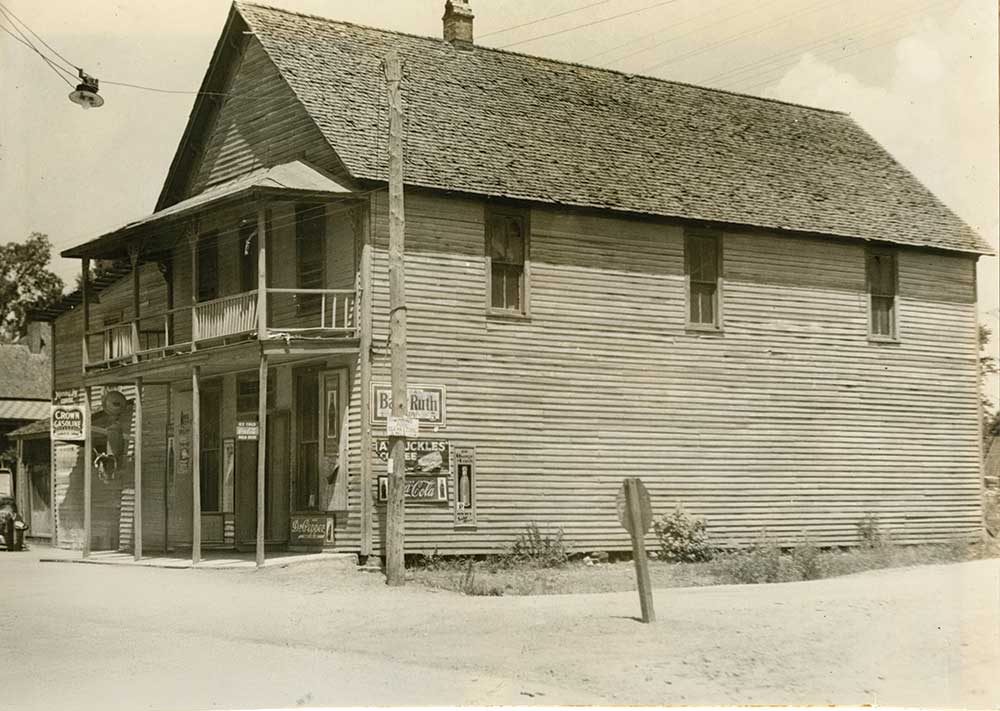
Laney-Barber-Gossett Store in Eden

Hosea Holcomb, in his 1840 History of the Rise and Progress of Baptists in Alabama, gives some early history of the church: “New Hope in St. Clair County was formerly in Mount Zion Association, but united with the Coosa River (Association) in 1834. They have always, until recently, been a small band. Their number has increased considerably … Elder William McCain labors with them in word and in doctrine.”

Rev. William McCain was the first recorded pastor of New Hope, and we know much about him from his obituary written by Samuel Henderson and published in the March 11, 1883, issue of The Alabama Baptist.

Here are highlights: “Among all the ministers who have lived in the bounds of the old Coosa River Association … none have surpassed William McCain in effectiveness of ministerial labors. With scarcely education enough to read English correctly, he achieved a position in his calling that opened every pulpit in the region. … Learned and unlearned, lawyers, doctors, and merchants, mechanics and farmers, rich and poor, all flocked to hear him. …Although he never pronounced a grammatical sentence in his life, knowing it to be such, yet behind his broken English and awkward phrases, there was an unction and power that lifted his hearers above all his imperfections of style and delivery. …His thoughts would glow with a brilliancy and come with a power … entrancing and overpowering. He would sway vast congregations like fields of waving grain in a brisk wind … The salvation of souls was his passion of his life, and to this he consecrated his whole life.”

Houses of worship

For church building locations, oral history provides clues.

In his History of the New Hope Baptist Church, 1824-1972, Curtis Rush quoted information about the first building provided by Pauline Baker from an April 14, 1964, letter written by Rev. B.W. Inzer. “The oldest thing I ever heard about a church at Eden, Uncle Fealy Stewart told me about 1935. He said, ‘I used to walk down here when I was 7 years old and older with my Grandma Mullins. She told me about the only church anywhere in this area was about where Jim Stevens built. It was (of) logs, and split logs and boards made the seats, windows and doors.” The exact location of this building remains uncertain.

In the same letter, B.W. Inzer wrote about the second building, relating what Andrew Ginn told him about it. “He (Ginn) said when he was a small boy, he attended the First Baptist Church, which was later called New Hope, as we know it. It was at the foot of the mountain in front of the Jim Kilgroe place.

He said he would never forget seeing all the men stand their shotguns up in the corners of the church. They brought them for two reasons: There had been rowdy fellows molesting the services, and that must stop. Then after the services on Saturday, they would go out and kill deer which they would barbecue, and all had a feast.”

For Rush’s history, New Hope’s oldest member at that time, C.S. Alverson, wrote down his recollections of the third building. “I remember attending New Hope Baptist Church when I was just a boy (1880s). The building was on the site where the pastorium is now. (Today, the church gym is in that location.) There was one road called ‘Mud Street’ now Wolf Creek Road and the church building faced this road … The windows had no glass panes but only wooden board shutters and board doors. The floor was dirt.”

The fourth church building was constructed in 1888 and had two front doors and a back door. It was well-built, for a tornado in April 1929 twisted and damaged the church, but it was so sturdy that it did not collapse and, as recorded by Rush, “Miraculously, the building was straightened up and put back in good repair.” This was completed by the men of the church under the guidance of “Mr. Coach, a carpenter from Pell City.”

In 1937, the church gave the 1888 structure “a complete face-lifting.” They added a balcony with two Sunday school rooms, and on the first floor, a vestibule and two more Sunday school rooms. This fine old building served New Hope until the church erected a new brick sanctuary in 1949.

Memories of the 1888 building are found in the Oct. 17, 1996, St. Clair News-Aegis article by Ann Boone. Olivia Vick, then 85 years old, told Boone how she had attended New Hope for 81 years. “We went to church in the morning and had Sunday school in the afternoon … There were two front doors, one for the men and one for the women, and no one ever went through the other’s door.”

Recalling the 1929 tornado, Mrs. Vick said, “My mother always took flowers every Sunday, and when we looked in the church (after the tornado), we saw that her flowers and the vase they were in on the Communion Table were still there and unharmed.”

Mrs. Vick’s favorite New Hope memory was her salvation. “Newt Butterworth explained the plan of salvation to me … This was when I was 16, and we went down to Barber’s Creek (for my baptizing). I wore a light blue dress. It was August, so the water wasn’t cold. Afterwards we went up and had church.”

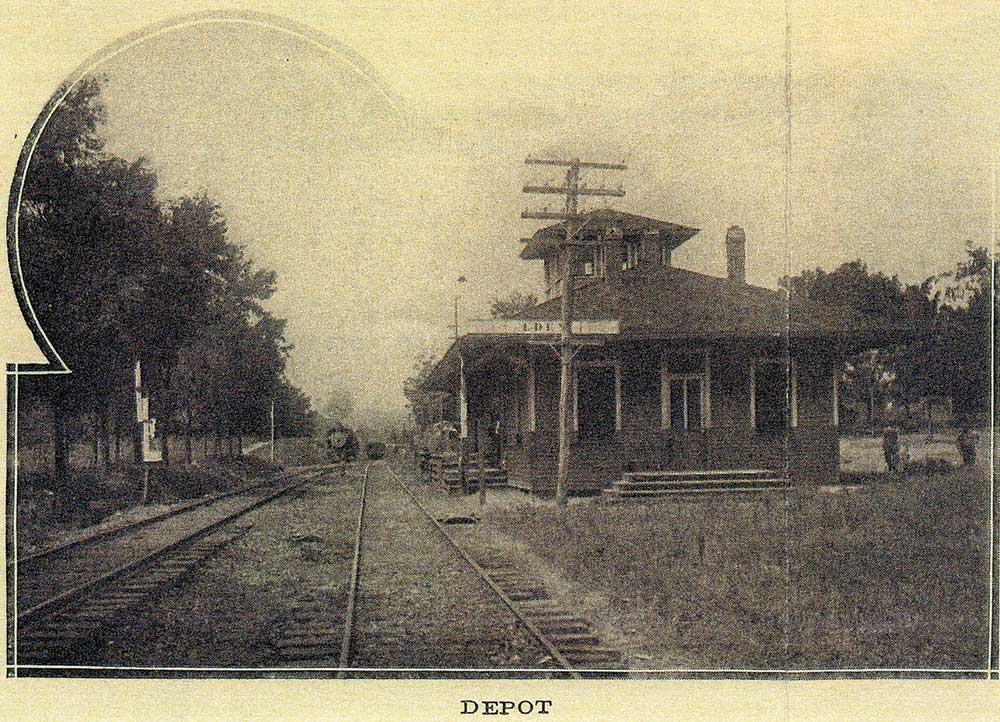
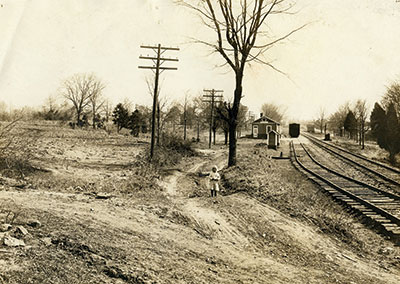
Eden Depot

Newton “Newt” Butterworth’s death remains an intriguing part of New Hope’s history, as recorded in his obituary published July 25, 1935, in The Pell City News. “N. A. Butterworth Dies while Testifying. Mr.  N. A. Butterworth died suddenly in the New Hope Baptist Church at Eden yesterday (Wednesday) while testifying in a revival service. Mr. Butterworth was 77 years old and was one of the oldest members of that church of which he was also a deacon. His last words were “I never felt happier in my life than I do this morning” and fell to the floor. … Burial will be at Mt. Carmel Cemetery.”

Included in the New Hope Baptist file at the Ashville Museum and Archives is a photocopied article titled, Pioneer Passes while Talking for the Lord, by Eloise Bowman. It noted that Butterworth prayed many times, “…‘Lord, let me die in the harness.’ (i.e. active until the moment of death) … (T)he Lord answered his prayer … when with his Bible under his arm, God called him home. He fell dead in the church.”

For a man to die in front of a congregation during a service would be a frightening object lesson that life is uncertain, and death is sure.

Revival week

Weeklong revivals were standard events in Baptist churches until about the 1970s or ’80s, when weekend and four-day revivals came into vogue. These yearly revivals usually resulted in conversions, baptisms and additions to church membership rolls.

In Rush’s history, he records that in 1864 during the Civil War, there were 41 baptisms and in 1866, a year after the war ended, there were 49 baptisms. These numbers are above average, for national conflicts and tragedies often draw people toward God and the church.

Churches ran revival announcements in local papers such as the one for New Hope in the April 7, 1955, St. Clair News-Aegis, “The revival at the New Hope Baptist Church will begin April 10th and continue through April 17th. Rev. Douglas Dexter will bring inspiring messages.” The announcement lists the titles of nine sermons, including the concluding one, Alibies, Lullabyes [sic], and Bye-byes.

Often in the 1950s and ‘60s, a traveling evangelist would hold a citywide tent revival with local churches promoting the event. Curtis Rush’s daughter, Margaret Rush, recalls one conducted by Evangelist C.J. Daniels from Orlando, Florida.

A May 16, 1965, Anniston Star article, Crusade Is Slated, reported about Daniels’ tent: “A unique poleless canvass cathedral with a seating capacity of 2,000 and auxiliary seating for another 2,000 has been erected on a lot just north of downtown Pell City on Highway 231 across from the dairy Queen … Dr. Daniels will be preaching with music directed by Dr. Lowell Leistner with John Roe at the organ.”

Margaret Rush recently recalled that Daniel’s promotional man, who came ahead to get things organized drove “…a Karmann Ghia car, and I had never seen one before. I thought it was very special.”

Daniels didn’t leave attendance to chance but promoted his revival wherever he went. Margaret remembered, “He had a plane – just a small plane – and he would take people up and show them the county from the plane. I went up with him… That was the first time that I’d flown in a plane.”

Daniels’ revivals were attended by throngs of worshipers as well as sight-seekers.

Homecoming and All-Day Singing.

Two other annual events were also observed on the same Sunday at New Hope in days gone by – the All-day Singing and Homecoming. No record exists stating when this second Sunday June event began. The June 7, 1945, announcement in The Pell City News reported, “Even the oldest of the old-timers are unable to say when the Eden Annual Homecoming started – 50 or 75 years ago, perhaps longer, most of them guess. No one seems to know, and no one cares much as long as the ‘Second Sunday’ celebration continues.”

In 1920, The Birmingham News reported the event in their June 14 edition. “Many citizens of Birmingham, Bessemer, Anniston, and other points who were formerly residents of St. Clair County attended the annual singing and homecoming at the Baptist church at Eden Sunday. Fully 2,000 persons were on hand. James Garrett, Circuit Court Clerk of St. Clair County, presided. Austen Hazelwood of Eden, one of Alabama’s sacred songwriters and singers, assisted in directing the music.

“Mrs. Lloyd Garrett, James Ragland of Pell City and Marvin Truitt of Anniston were among the leaders in the music. Rev. R.F. Funderberg of Cropwell, pastor of the church, was in charge of the devotional services. The affair this year proved one of the most enthusiastic ever held at Eden.”

The 1954 New Hope singing-homecoming announcement in the June 10 issue of St. Clair Times, reported that on Sunday, June 13, “…The Bama Boys will be guest singers. Also, local groups will be featured … Lunch will be served at noon. All attending are urged to bring a well-filled basket (of food).

In the May 25, 1951, issue of the Southern Aegis, Editor Edmund Blair reminisced about Homecoming at New Hope. “They come from far and near and from various states for this event.”  He noted that folk would come in automobiles, but in the past “…mules and horses hitched to wagons, buggies, and in some cases, shiny black surreys were the chief method of transportation.”

These events were church and community reunions and were anticipated with excitement because attendees would see friends they had not visited with since last year’s homecoming and singing.

The folk found spiritual food in the church building and baskets of food at lunch with “dinner on the grounds” of the church. So, newspaper announcements encouraged women to bring “well-filled baskets of food.”

A June 7, 1945, announcement in The Pell City News mentioned the gas and food rationing of World War II. “Because of the transportation limitations, the crowd won’t likely be as big as in pre-war years, but every friend of Eden will make every effort to be present, and many have no doubt been saving their gas rations for this special day. Likewise, because of food rationing, many items that have in the past graced the bords at the dinner hour won’t be served, but there will be plenty to eat.”

Progressing through the years.

Population growth in the Eden-Pell City area necessitated additional construction. A new worship center was completed in 1997, and a Family Life Center and Gym in 2007. The 1949 structure serves as the Youth Room and the Senior Adult Sunday school room. As New Hope enters the beginning of its third century, plans have been laid for further expansion of the church campus.

200th Celebration

On Sunday, October 20, 2024, New Hope celebrated its 200th birthday. As the 10 o’clock hour approached, a sense of excitement permeated the sanctuary. Church members greeted one another and made sure non-member attendees felt welcomed as well. No one was excluded.

Proclamations from Pell City mayor and council were read, and a video proclamation by Dr. Lance from the Alabama Baptist Convention were presented prior to the beginning of the worship service.

After Scripture reading of Psalm 100, the Celebration Choir sang the Call to Worship hymn, Great is Thy Faithfulness, directed by Joseph Smith with Hanna Stough at the piano. Especially effective was Dr. Michael Averett’s trumpet obbligato, which underscored the hymn’s proclamation of God’s faithfulness. The concluding crescendo of choir, piano and trumpet brought approving applause and exclamations of praise.

After Greg Davis, chairman of the Bicentennial Committee, welcomed the congregation, Joseph Smith led the packed house in singing How Great Thou Art and To God Be the Glory. The singing of those well-loved hymns “raised the roof,” as old-timers would describe it. The male quartet with Greg “Skeet” Davis, Joseph Smith, Matthew Pope and Brandon Haynes harmonized the old hymn Brethren, We Have Met to Worship. Their rendition resulted in applause and vocal affirmation throughout the sanctuary.

After the congregation sang three praise and worship songs, St. Clair County Baptist Association Missionary Dr. Danny Courson gave greetings from the association member churches before reading from Joshua 4:4-9, the Scripture for transitional pastor Dr. Bob Weber’s sermon, Memories, Markers, Mission.

The Joshua passage recounts the Israelites crossing the Jordan River on dry land as they enter the Promised Land, and God instructing them to gather stones and build a memorial of that event. Dr. Weber spoke of the importance of memories and memorials in the lives of Christians, and that they should honor God’s blessings in their lives, the most important one being when they came to a saving knowledge of Christ. These blessings from God should be recounted to children and grandchildren and memorialized by parents and grandparents.

At this point in the service, 12 families brought stones to make a symbolic memorial to what God has accomplished through New Hope Baptist. Taylor Funderburg and children, Everett, Hadley and Findley, representing a first-generation family, laid the first stone. Husband Tyler missed because of his work. The Pope family of four generations laid the 12th stone. They are, from oldest to youngest, Gilbert Stuart, John Pope, Matthew Pope, and Glover Pope. This element of the bicentennial worship was modeled after the memorial stones recorded in Joshua 4:20-24. This memorial will be placed on the church campus in days to come.

The service continued with Dr. Weber admonishing the congregation that the church doesn’t rest on memories and memorials, for the membership is involved in New Hope’s stated mission – “To Worship Christ, Serve Others, Share the Gospel, and Disciple Believers.”

The service closed with the singing of Victory in Jesus, joyfully accompanied by piano and trumpet.  Afterward, Johnny Gregg prayed the benediction and thanks before “dinner on the grounds” served in the FLC.

The history of a church is a history of God’s providence over a people whom He brings together to accomplish His purpose in a community.

As members die or move their membership for various reasons, God brings others to take their places, and the church continues to progress.

For a church to continue for 200 years is evidence of God’s blessings on those who organized New Hope in 1824. And although To God Be the Glory was not composed until 1872, every generation before and after would affirm its words:

Praise the Lord, Praise the Lord

Let the earth hear His voice,

Praise the Lord, praise the Lord,

 Let the people rejoice

Oh, come to the Father through Jesus the Son,

And give Him the glory, great things He has done.

And by God’s gracious providence, the church will sing that hymn 100 years from now when they celebrate their tricentennial.

To God be the glory, for indeed great things He has done at Eden New Hope Baptist Church.

Les Johnson

Story by Joe Whitten
Contributed photos

For someone to live 78 years in St. Clair County without ever eating barbecue sounds like cuisine deprivation. But that was 90-year-old Les Johnson’s sad truth. He deserves compassion, however, for he grew up in St. Clair County, Michigan. “I came to Alabama for the first time in 2012, and I ate my first barbecue at Charlie’s in Odenville,” Les admitted, “and I’ve never stopped eating them since.” In St. Clair County, Alabama, he not only enjoyed barbecue but also collard greens, fried okra, butterbeans, and cobbler pie.

Les’s story starts in Canada where his father, Leslie Hontoon Johnson, was born. Leslie was awarded US citizenship for fighting for America in World War I. After the war, he worked as Chief Steward on a Great Lakes freighter. When he was on leave in Port Huron, Michigan, he became friends with Eva Fleming. They fell in love and were soon married.

Because Leslie was on the ship for months at a time, Eva moved back with her parents at the farm. Two daughters, Mary and Grace, were born there, and on July 4, 1934, Les joined them. Today he says all the 4th of July fireworks are for him.

Les enjoyed a special relationship with his grandfather. “I loved living on the farm,” he recounted. “My grandfather died when I was five, but I still remember him. He was over six feet tall, and there weren’t many men that tall then. He had huge hands, and he’d take mine and cover it with his.”

A creek flowed by their farm, and in winter he and his granddad would walk the frozen creek in the snow to the nearest town to buy supplies.

When his grandpa died, his mother ran the farm and his dad continued on the freighter.

Les spoke fondly of the farm. “We sold chickens and eggs and butter. My mother made butter with a churn. The Kroger and A&P stores would call us and tell us how many chickens they needed for the weekend, and we’d get the chickens, stick ‘em in the neck with a sharp knife, and hang ‘em on the clothesline to let the blood drip. Then we had to put them in tubs of hot and cold water and pull all the feathers out.” No automation in those days.

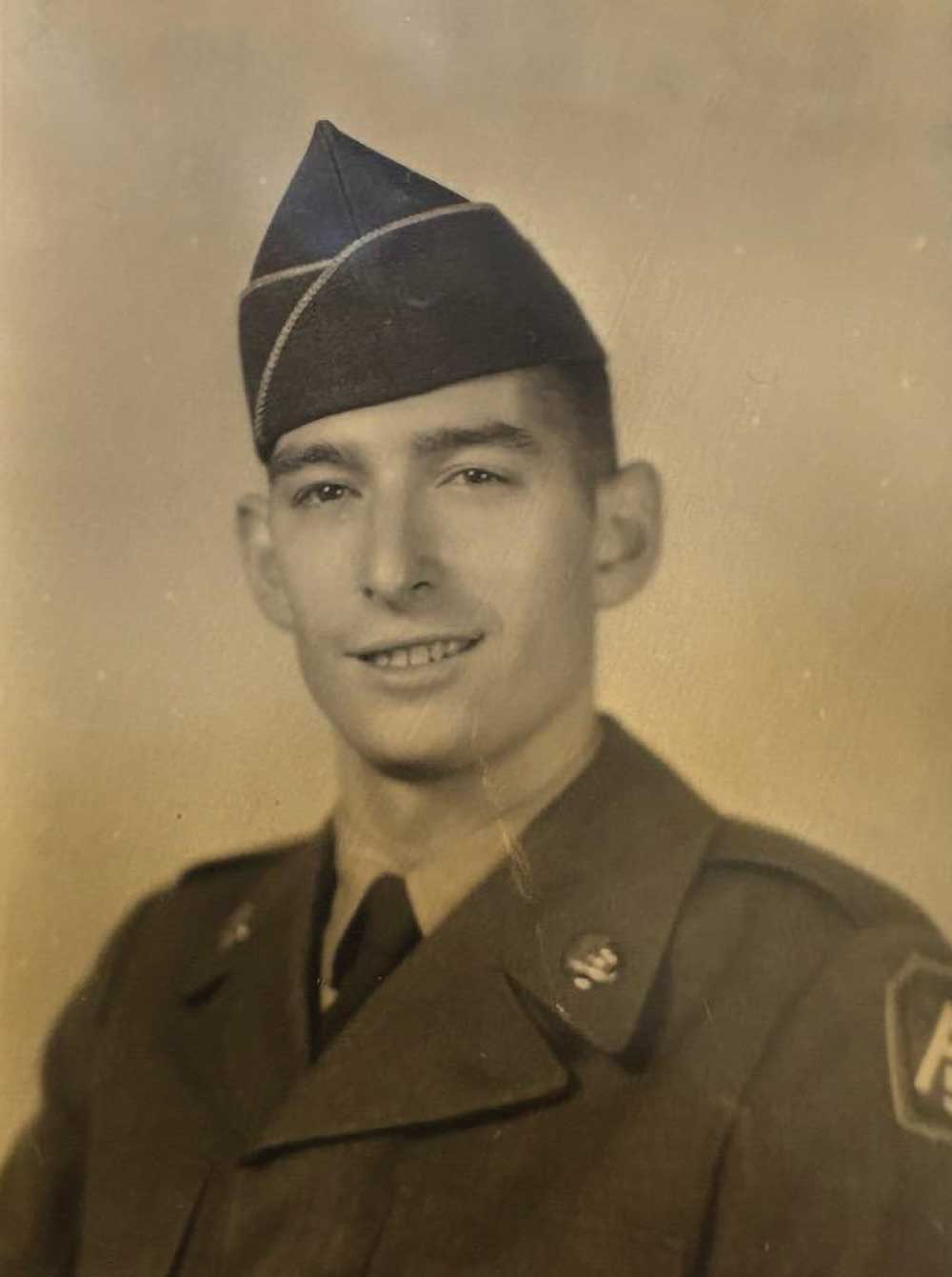
Les in uniform in his early 20s

The Johnson children peddled their products on Saturdays to regular customers in Port Huron. “We already had their orders,” Les related. “My sister would take one side of the road, and I’d take the other. We always had eggs and butter. And when strawberries were in, we sold strawberries for 25 cents a quart.”

Just like Alabama kids, Les took chances, without much consideration of consequences. He and sister Mary rode a horse that refused to cross a wooden bridge over the creek. “One day, we decided we’d get at the top of the hill and get him going as fast as we could downhill, so he’d have to cross the bridge.” However, the horse stopped stone still the second his hoofs hit the wood. “The hor se stopped, but we went across that bridge,” he laughed. “We were picking gravel out of our legs for months.”

Les got the better of his sisters many times. He would scrunch himself between his sister and her boyfriend until they paid him to leave. Sometimes he would lock a sister in a room until they paid up. But they loved him, and his 98-year-old sister, Grace, recently said of him, “Les was always so spoiled by everyone because he was so much younger and the only boy.  He got away with everything! He was and is so loved by everyone.”

As the ship’s Head Stewart, Leslie Johnson could take his wife on two trips a year and young Les went with her. They would drive to Lorain, Ohio, where the ship unloaded and uploaded. “We would get onboard there,” Les said, “and we’d go through the locks at Sault Ste. Marie and get a ship load up there and come back to Lorain. We had a ’36 Chevrolet, and I’d sit on the armrest on the back seat while my mother drove us back home.”

Les with sisters Mary and Grace

Those times ended when Les’s dad had a heart attack on ship. The crew lowered him on a stretcher into a Port Huron mail boat which brought him to shore. Leslie was at home for about a month before he died.

The Johnson family continued farming for about two years, then his mother sold the property, and they moved to Port Huron where she took a job as a butcher. Sister Mary had married. Sister Grace lived with an aunt, and 12-year-old Les lived with his mother.

Les recalled having to move. “It was terrible, moving to a city—a city I’d never been to except for shopping. I had to get new friends and go to a different school. The first couple of weeks, I hated it, but then I made some friends and liked it a little bit. But I missed the farm.”

Having learned how to work at the farm, in the city, 12-year-old Les soon had a newspaper route. When he turned 14, he got a job cleaning an appliance store, and when he got his driver’s license, he began delivering appliances. “My first car,” Les laughed, “was a ’29 Model A. It cost me $30.00, and then it cost me $50.00 for insurance.”

Les and Fay Johnson at a grandson’s wedding

On June 16, 1953, Les graduated from Port Huron High School, but perhaps the more memorable event had occurred a few weeks earlier on May 21, 1953. During the afternoon of that day, an F-4 tornado, over a mile wide, wreaked destruction throughout Port Huron, then whirled across the St. Clair River into Canada. In remembering the tornado, Les told how “It blew the roof off the back of our house where my mother was sitting in the kitchen. It never touched her, but she was so frightened that her hair turned white, and it never turned back to brown. The colloquial name for this phenomenon is the Maria Antoinette Syndrome, for her hair is said to have turned white overnight from the trauma of the Reign of Terror’s’ guillotine.

Les enjoyed building and remodeling houses. When asked about this, he said, “I worked for a construction company, and I always loved building stuff. The week before I graduated from high school, I got a job with a construction company, and they said they’d try me out for two weeks. I stayed there for 25 years. When I first started working there, I was in the union,  and I got $1.95 an hour. When I retired, I was getting $28.00 an hour.” That company built houses and factories, so Les developed expertise in carpentry and ironwork. He left that company in 1978, then worked for a power company until 1983.

In 1954, Les married Fay Burns, and needing a house to live in, he built it. Having learned never to waste anything, he tore down an old house for material for the new house, salvaging everything. He and Fay pulled out all the nails and filled five five-gallon buckets and sold them for scrap.

Les worked his regular job during the day and worked on their home in the evenings. He had it roughed-in when his draft notice arrived. Three weeks later he was in the army. He boarded up the windows and put tarpaper over the top, and there it sat for two years until he was discharged.

The Johnson children arrived by adoption. Fay and Les adopted Lori in 1962, Steven in 1963, and Lynette in 1968. A few years after, Les’s sister-in-law and her husband both died close together, so, the Johnsons took his niece, Michelle, into their home as their daughter. 

Any time the siblings are together, they enjoy recalling good times growing up. “When I was a kid,” Lynette related, “we used to go to a campground called Pigeon River Campground in Michigan. One night when we were sitting around the fire, dad decided to do a rain dance around the fire. It worked! Not only did we have rain that night, we also had a tornado. He still performs a rain dance on occasion.”

Les and his four children, Michele, Lore, Lynette and Steve

Sister Lori added hers. “When dad lost his leg from the work accident, he gave us kids a choice: either a pool or go to Florida. We got both,” she laughed.  “When we wanted horses, he drove us all through the country and would say ‘How does that smell?’  We would respond with ‘That smells bad because it’s cow manure!’ Then we went by the horses and would say, ‘Humm that smells good! Must be horse manure!’ That worked too. We got our horses!  He taught us a good work ethic.  We couldn’t have asked for a better dad!”

Steve’s memory connects with horses. “In 1975, dad bought a frame for a one-horse sleigh at an auction, and he and I restored it in his workshop in the basement. He built the body, the seats, and everything. Some friends of his gave him the harness. We had a few horses, and one was able to pull the sleigh. So, he put bells on it, and at Christmas time he would take us for rides through the snow around the neighborhood in the sleigh. Those were extra special moments—both helping build the sleigh and riding it.”

Michelle’s memory shows Les’s ability to assess character. “I had a date, and our dates were required to come to the door. Les answered the door and told my date, ‘You have 30 seconds to get off the porch and out of the driveway—and you better move it because it’s a long driveway.’ I was so upset, and I cried and cried. But Les said, ‘That boy’s no good, I just know it.’ And low-and-behold, a couple years later that same young man went to jail! I hated to admit that my dad was right,” she laughed, “but he certainly was. He is an amazing man, and we are all blessed to have him in our lives.”

Les’ tomato harvest

The Johnsons enjoyed the outdoors, especially hunting. They owned a parcel of hunting land, but it had no cabin. Les, who never saw a job he couldn’t do, solved that problem. The Grand Trunk Railway Company’s nearby railyard refurbished boxcars, and Les bought a truckload of boxcar two-by-sixes. “They delivered them,” he said, “and I had a John Deere tractor with a 30-inch sawblade, and I sawed the two-by-sixes down to two-by-fours and framed a cabin in my back yard—bolted the sections together, numbered them, and took it down.”

A friend loaned him a truck to haul the cabin sections to the site. On Les’s brother-in-law’s trailer they put some furniture on, and the two headed out at 3:00 in the morning. They arrived onsite at 7:00 and started working. They finished at 7:00 that night and headed home.

Les enjoyed hunting even after an industrial accident cost him a leg. He and son-in-law Tim often hunted together. “We were walking out of the woods one night,” Tim laughed, “and Les fell over. He said, ‘I stepped in a hole.’ I helped him up. He took one step and fell down again. When I helped him up that time, I noticed that his foot was missing—it had broken off his artificial leg. We hobbled to the cabin and took three of his old legs and engineered a new one for him to get home.”

All of Les and Fay’s children married and raised families in Port Huron. Grandchildren came and the grandparents enjoyed being part of their lives. However, one day Tim dumbfounded everybody by announcing his family was moving to Alabama. His company had transferred him.

When asked how that news was received, Les chuckled, “Well, my wife had a fit. ‘You can’t take my grandkids and go to Alabama! I don’t know where that is.’ I wasn’t happy about it either,” he admitted, “but we helped them move. I drove the U-Haul with Tim. We came at the end of October 2012, and my wife and I stayed that winter with them.”

The tightknit Johnsons adjusted and started making the drive from Port Huron to Alabama. Les and Fay came each winter and enjoyed the warmer Alabama weather.

When Les’s wife died in 2016, he lived alone in their Michigan home for two years. Lynette and Tim encouraged him to sell his home and move to Alabama and live with them, and in 2018 he moved in with them.

Les began attending First Baptist Church Springville with the Hoffmans. He made friends easily and was soon involved with Sunday school and church, the Saints Alive senior group, and the Over the Hill Gang, men who meet at the Farmhouse Restaurant every Friday for lunch.

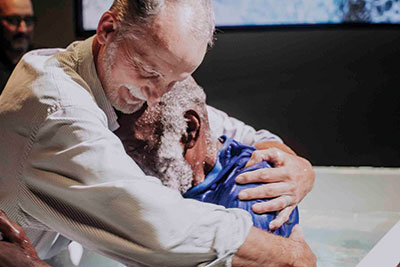
Desiring to join First Baptist, Les attended the New Members Class with the pastors. Having come from a Methodist and Lutheran background, he needed to be baptized by emersion. But how could a one-legged man get in and out of the baptistery? No problem for two deacons, as Les tells it. “I took my leg off, and Lee Love and Al Rayburn carried me down the steps into the baptistry, and Pastor David DuPre dunked me.”

After the baptism, Pastor Chip Thornton told his favorite story about Les. “He was put under anesthesia for surgery. When they rolled him out of the recovery room, he was flat on his back, still under the effects of anesthesia, but he had his arms in the air, and was saying, ‘Thank you, Jesus! Thank you, Jesus! Thank you, Jesus!’ The congregation loved it and applauded.

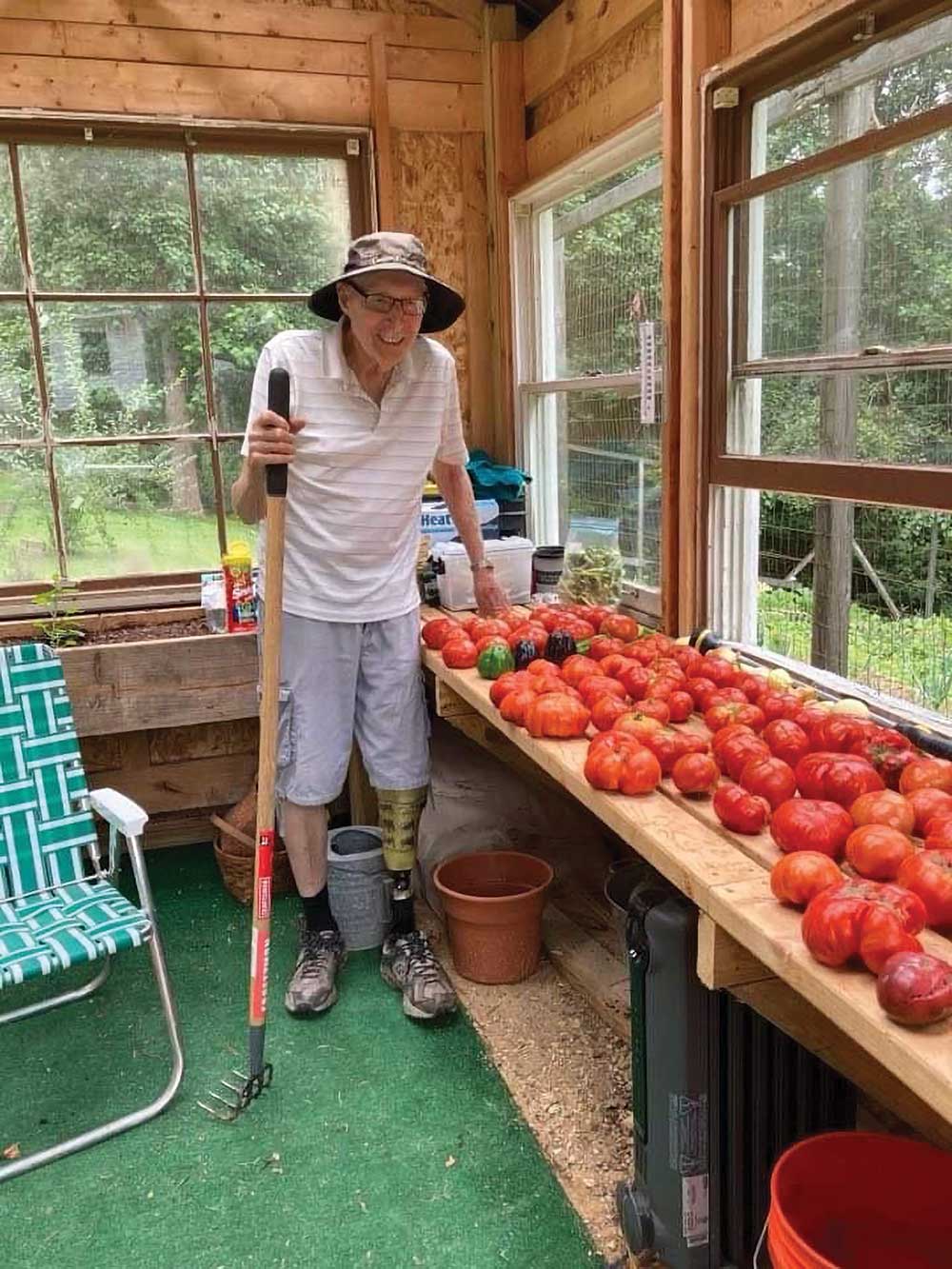
One reason Les enjoys Alabama is the long gardening season. “I can garden almost year-round,” Les comments. “Certain things I can plant in the fall, and others in the spring” For early start, he needed a greenhouse, so he and Tim built one. They bought used windows, put a skylight on the roof, and heating bars inside. “I use it to grow tomatoes, peppers, cabbage and cauliflower seedlings, then I give most of them to people in the church,” he laughed. “It’s just fun watching them grow.”

Gardeners at church gave Les hints on Southern gardening, and his grand-son-in-law, Matt Hyatt, of Chandler Mountain, gave pointers as well. Les may be 90 years old, but he still enjoys learning.

And learning more about the Bible, God, and Jesus his Savior is what he enjoys most. When asked about the difference in church and preaching in Michigan and here, he responded: “Like between night and day! I thought I was getting the Word of God,” he lamented, “but I wasn’t. It is so different. Here they go through the Bible. When I first got down here and went to Sunday school class, they could a verse—or one word–and teach on that for a whole hour—what it means and where a word came from. They never did that up north. It’s just a blessing to be down here. I love all our pastors, and I love all the people in my church.” He paused, then added, “And they love me. I couldn’t get used to that at first. When people would say, ‘I love you,’ I thought, parents and my family say that.  But down here, they all say they love me!”

And they do. In the spring of 2022, Les was going through a down time resulting from events in October 2021 on a trip to Port Huron. On the first day of that trip, the airline misplaced his luggage, and someone hacked his credit card. On the second day, he stumbled and broke his hip, which resulted in hip-replacement surgery and two weeks of recuperation in a nursing home and three weeks at his daughter Lori’s home. When he finally arrived back home on Beaver Ridge Mountain, he said, “If you want to see me again, come to Alabama.” His spirits were so low that a Sunday school buddy, Chuck Whitiker, suggested to the Sunday school teacher that the class plan a surprise birthday party for Les. The class agreed and managed to keep it secret from Les.

Back, Les and Grace; Front, Mary and their mother, Eva

On the day of the party, Lynette and daughter Sara decorated the church’s Family Life Center. Jeri Jenkins prepared the food. Tim’s job was to get Les to the event. By creative subterfuge concerning a church meeting that needed Les in attendance, Tim got Les in the truck; however, Les, being significantly disgruntled, grumbled his discontent all the way to the church. Tim opened the FLC door and frowning Les entered to be greeted with shouts of “Surprise! Happy Birthday!” Thus, he was shocked out of the doldrums into good spirits to enjoy the day.

Les thinks of Heaven often and that his body will be in working order—he’s had 25 plus surgeries, has one artificial leg, an artificial hip, is blind in one eye and has macular degeneration in the other, and he has scalloped edged ears from removed skin cancers. “I’ll have everything new in Heaven,” he laughed.

He recently received a hand-held gadget that allows him to read and listen to the Bible, and that makes him happy. His grandson-in-law, Matt, built a prayer bench for him which they placed in a wooded nook, and in good weather, Les spends time there praying for his family and thanking God for all his goodness and kindness to him. If one happened to be nearby and unseen, he might hear Les singing “And He walks with me and He talks with me, and He tells me I am his own. And the joy we share as we tarry there, none other has ever known,” for “In the Garden” is one of his favorite hymns. The time he has spent in God’s Garden of meditation is reflected in his life. Les Johnson is a one-of-a-kind inspiration.

Remembering the Revolution

Story by Joe Whitten
Photos by Mackenzie Free

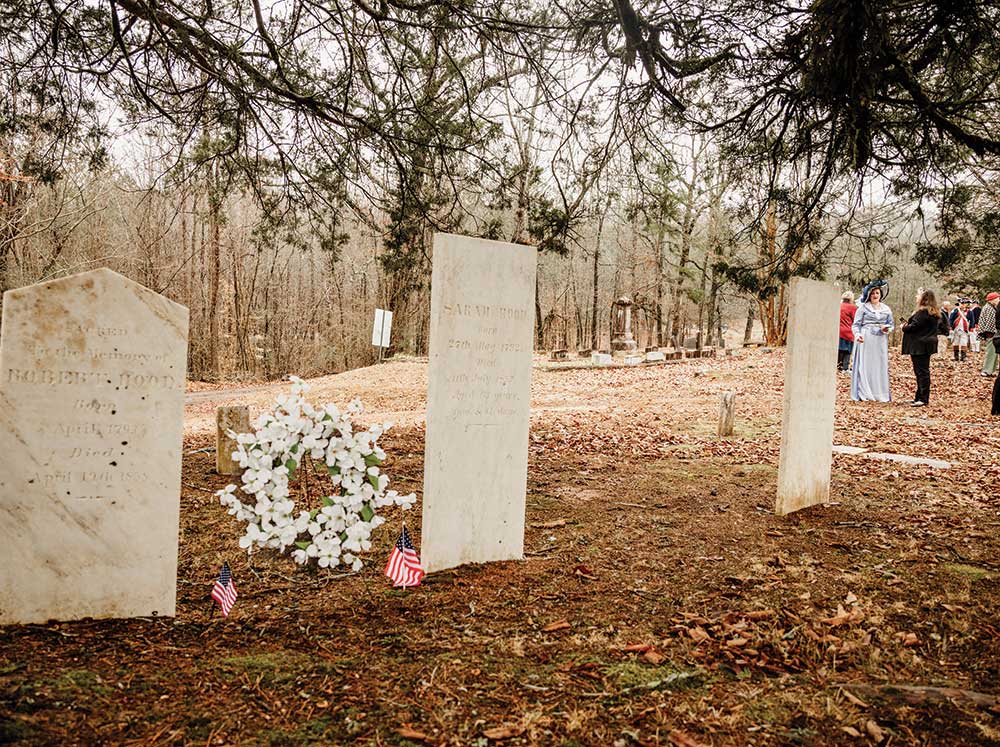
All through the night, clouds took turns sobbing over Hopewell Cemetery’s tombstones, cedar trees, and leafless dogwoods, and dawn broke dank and damp. In stark contrast in the older section, the recently cleaned tombstones of Jacob Green, Robert Hood, Sarah Hood and John Hood stood white against the gloom, and a new gray granite marker at Jacob Green’s grave glistened from the rain.

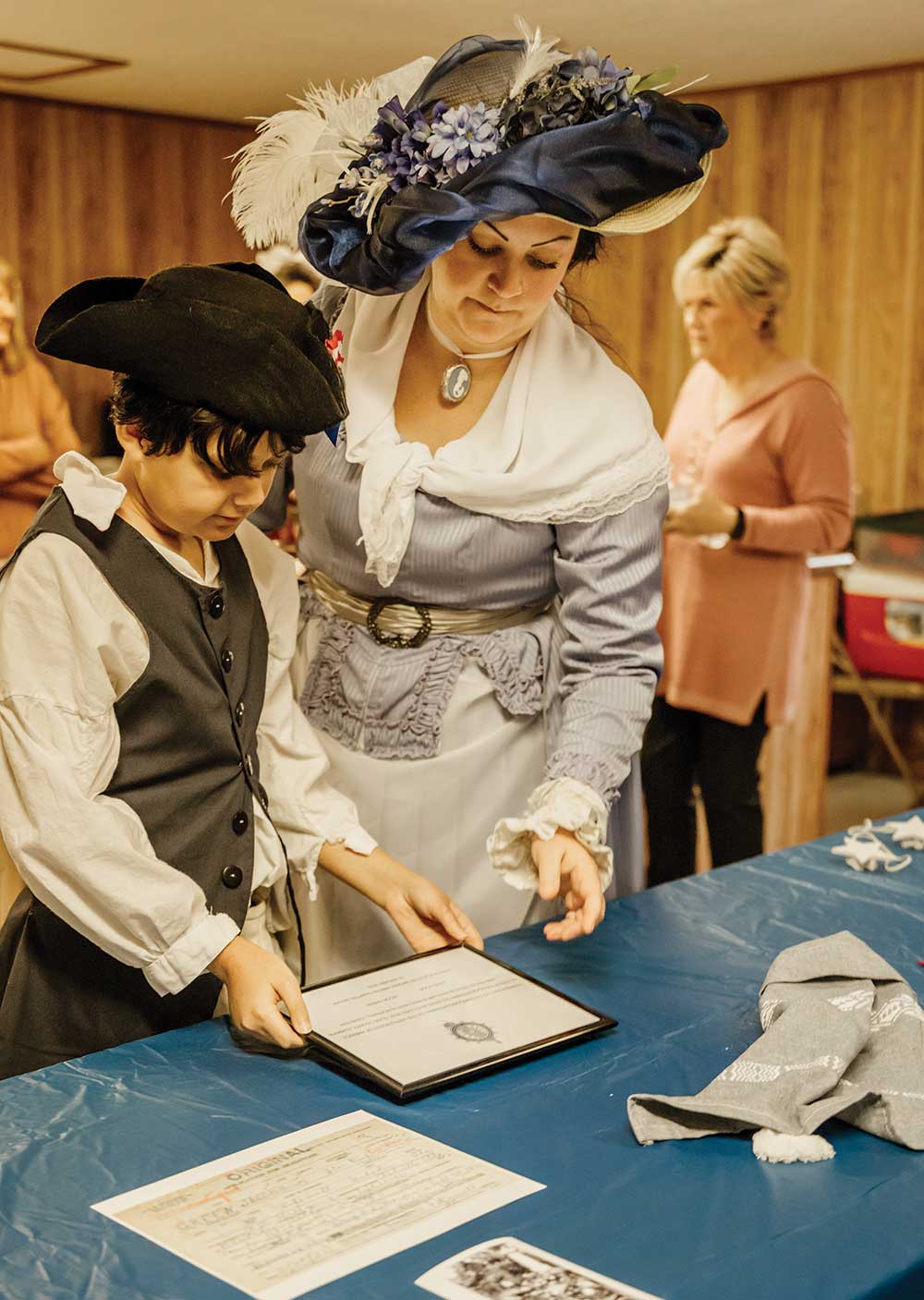
The marker drew members of the Broken Arrow Chapter of the Daughters of the American Revolution (DAR) to New Hopewell Baptist Church Fellowship Hall on a Saturday morning in January to honor the tribute.

Event preparation began in 2024 when Washington’s DAR National Headquarters announced available grants of $500 to local chapters to celebrate the Semiquincentennial (250th) celebration of the United States. The grant guidelines stipulated that not only must the Revolutionary War veteran’s grave be in the cemetery, but that some of his descendants must also be entombed there, for the marker is in memory of the veteran’s descendants in the same cemetery.

Broken Arrow member Ann Coupland suggested Jacob Green because she knew he was buried at Hopewell Cemetery, and that the Gadsden DAR chapter had placed a tombstone at his grave in 1937. Further, Ann also knew that his name and John Hood’s were not on the Revolutionary War Veterans marker behind the Inzer House.

Joseph and Miranda Wyatt

Choosing John Hood was almost serendipitous. One day, Mindy Manners, Regent of Broken Arrow Chapter, was walking in Hopewell Cemetery near Jacob Green’s resting place. Just a few graves away from Green’s, she saw the tombstone for Robert Hood, “Born April 1793, Died April 12, 1858.” The 1793 date caused her to think Robert had Revolutionary War connections. Back home, she researched Robert’s ancestry and found his father, John Hood, and his service record.

Buried next to Robert is his wife, Sarah (1792-1855); and next to her is their son, Rev. John Hood (1820-1851); however, there’s no stone for John Hood there. Where is he buried?

John Hood lies in an unmarked grave which some writers and researchers have speculated is in the Ashville Cemetery. However, Hopewell Cemetery is more likely for three reasons. First, his son, daughter-in-law, and grandson are interred there. Second, Daniel Hood in his paper titled, “The Noah Hood Family,” states, “The Hood family has been associated with the Hopewell Baptist Church since its construction (organization) in July 1830. Five Hoods were charter members.

Indeed, in the Hopewell Cemetery, Hoods account for some of the earliest residents.” Third, from 19th century obituaries that the community of Hood’s existed, for it is recorded as place of residence, as in Roland Hood’s obituary, Aug. 29, 1889, in The Southern Aegis. “Died on Aug. 25, 1889, at his residence near Hood’s this county, Roland Hood, age 71 years. He had lived in the neighborhood where he breathed his last all his life, except for two years.” So, there exists a strong connection with the Hood family, the church, the cemetery and the community.

Broken Arrow members were busy in the Fellowship Hall, where some decorated tables with patriotic colors, miniature stars and stripes, and flower arrangements, while others set out refreshments. One of those members is especially noteworthy, Emma Scott Milam. She is the only surviving charter member of the Broken Arrow Chapter which was established a little over 70 years ago. As soon as she turned 18, her aunt had her sign the papers to come in as a charter member.

Members of the Green and Hood families and other visitors gradually filled the room as the Fellowship Hall program hour arrived.

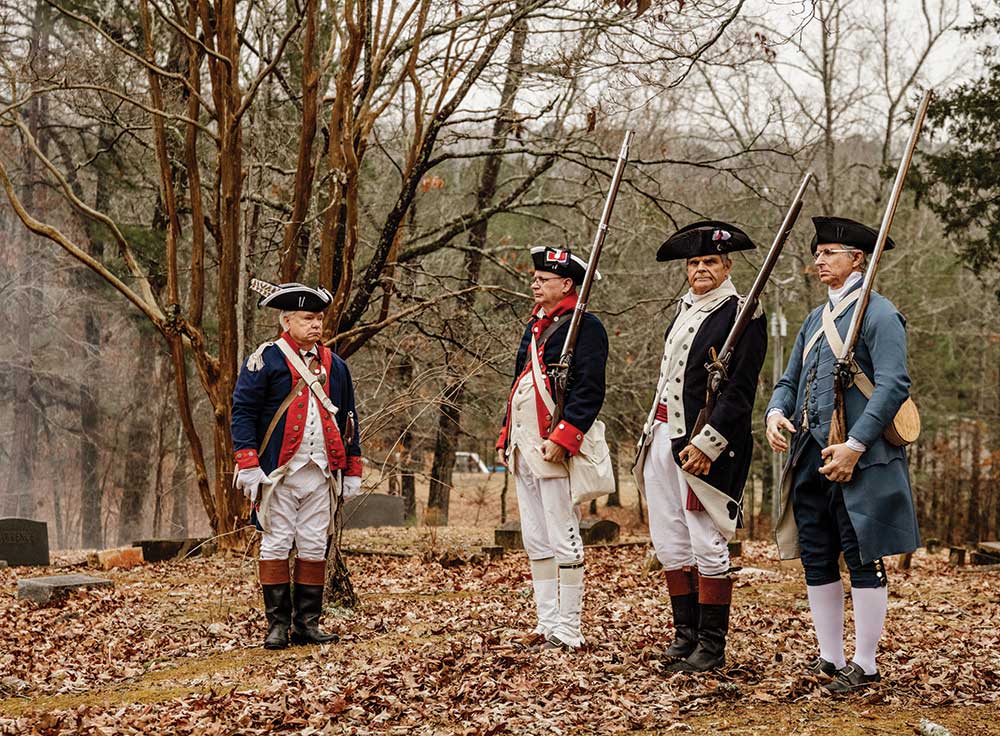
Following the opening prayer by Chaplain Emma Milam, the Alabama Society of the Sons of American Revolution Color Guard, in 18th Century military attire, brought the flag to the front for the Pledge of Allegiance, then they placed the flag in its holder.

Next, the assembly read in unison The American’s Creed. Mindy introduced special guests: Rev. Johnny Wilson, host and pastor of New Hopewell; Joe Barker, commander of the SAR Color Guard; Kristi Averette, The Flag of the United States American State Committee Chair, Alabama Society Daughters of the American Revolution; and attending journalist.

Regent Manners related interesting facts about Alabama and St. Clair County Revolutionary War veterans, many of whom moved their families here, and records indicate that more than 700 are buried in Alabama.

Many of the grave markers have been weathered away or destroyed by the passing years, and it is believed that the last veteran to die was William Speer, who lived to be 101. He died in 1859 and is buried in Bivens Chapel Cemetery in Jefferson County.

After the Regent’s remarks, members of Jacob Green’s family were recognized and 8th generation Josiah Jacob Evans, eight years old, read Jacob’s brief history written by his Aunt Beth Evans-Smith.

Jacob Green’s history resonates with America’s and St. Clair County’s early history. He was born in North Carolina in 1767 and was only nine years old when the Declaration of Independence was signed July 4, 1776. Official records show that an 18-year-old Private Jacob Green was “…paid with interest, on 21 June 1785 for duty done in the Militia in 1782.”

In 1787, 20-year-old Jacob married Frances “Fannie” Baker in North Carolina. Over the years, 10 children blessed their home.

Family records state that Jacob also fought in the War of 1812, and that at the end of the war, perhaps around 1815, Jacob and other men journeyed to Alabama to explore land along the Coosa River. Then in 1818, Jacob and Fannie, now living in South Carolina, resigned their membership in the Buffalo Baptist Church and began the tedious trek to Alabama.

Although the date they arrived in St. Clair County with their six younger children is unclear, Green family researchers believe the family arrived here between 1818 and 1820. The 1820 census records show that Jacob Green owned land in St. Clair County and that he formerly resided in South Carolina.

Jacob built the family’s first home on today’s Greensport Road, a little south of Canoe Creek where U.S. 411 crosses into Etowah County. This spacious home also served for many years as a stop on the Montevallo stagecoach route.

Mary Ellen Sparks wrote in an article, Stagecoach Stop, published Aug. 7, 2019, in the St. Clair Times, “Springer and Pollard Stagecoach Lines ran between Pulaski, Tenn., and Montevallo for a total of 133 miles. The mail was delivered semi-weekly at $25 per trip. There were 13 mail stops along this route. It traveled through six Alabama counties. The stagecoach would leave Ashville at 4 a.m. and arrive in Montevallo the next day at 9 a.m. It was a 29-hour ride amidst wild animals, inclement weather and probably hostile Indians and Outlaws.”

By the 1830s, there was a need for a ferryboat on the Coosa River to connect St. Clair County with Calhoun County. When the federal government approached Jacob about operating the ferry, he accepted the challenge. Therefore, he left the Stagecoach house and built another spacious house by the river at what came to be called Greensport.

Jacob successfully operated the ferry for some years as age crept up on him. The 1840 census records list a man about Jacob’s age living with Jacob’s daughter, Nannie Green Dill, and her husband. Jacob’s wife, Fannie, must have predeceased him. His name does not appear in the 1850 census.

 When Alabama Power constructed Neeley Henry` Dam and Lake, the house was torn down and lake waters soon flooded over where it once stood. Today on Jacob Green’s Coosa River land is the Greensport RV Park and Campground, and the Greensport Marina, a beautiful and peaceful St. Clair County recreational center on Lake Neely Henry, operated by Jacob’s descendants.

John Hood

When the John Hood family was recognized, Anthony Hood read John’s brief history.

His birth date remains a mystery, but researchers think it occurred in the area of 1745 to 1750. He was the eldest son of Tunis and Elizabeth Harrison Hood of Frederick County, Virginia, now a part of Berkeley County, West Verginia.

The Hood families seemed restless, for in 1772 John was in Burk County, North Carolina, then c1775 they moved to Mecklenburg County, North Carolina. Tunis Hood, John’s father, and other members of the family relocated to Mecklenburg County around 1775, as well.

John’s American Revolution service was with the North Carolina Militia, Salisbury district, made up from Mecklenburg and other counties. Records also show that Tunis Hood gave material aid to Revolutionary forces. John’s brothers, Tunis Jr., Solomon and Robert, served with Mecklenburg County forces as well.

After the war, John moved his family to Greene County, Georgia, around 1792 and stayed there about 24 years before migrating to Alabama c1816. Hood descendants believe John died in 1835 and Sarah in 1837.

John married Sarah “Sallie” Austin in 1777, and they were parents to eight children: Austin, James, Amos, Isaac, Robert, William, Osborn and daughter Lovina. Robert is buried at Hopewell Cemetery.

There is a possible John Hood and Abraham Lincon connection as recorded by Anthony Hood. “John Hood’s mother was Elizabeth Harrison, daughter of John Harrison and granddaughter of Isaiah and Elizabeth Wright Harrison. Elizabeth Wright Harrison died soon after the birth of their fifth child. Isaiah married second to Abigail Smith, and they had three children, with Abigail Harrison being [their] daughter who married Alexander Herring. Abigail Harrison Herring is strongly speculated to be the great-grandmother of Abraham Lincoln, making John Hood a distant cousin to Abraham Lincoln.”

Of special note on other family ties, Elvis Presley is a direct descendant of John Hood. Elvis’s grandmother, Minnie Mae Hood Presley, is John Hood’s great-great-granddaughter. At the Tunis Hood plantation site at Hood’s Crossroads in Mint Hill, North Carolina, there is a plaque commemorating the Elvis connection. Minnie Mae Hood Presley is buried at Graceland.

Tombstones of Robert Hood, Sarah Hood, and Rev. John Hood

When the biographical sketches ended, the DAR ladies served finger foods, hot chocolate and coffee, after which the group reassembled at Jacob Green’s gravesite for the dedication of the memorial:

“COMMEMORATING THE SEMIQUINCENTENNIAL OF / THE UNITED STATES OF AMERICA / WE HONOR THE REVOLUTIONARY SOLDIERS WHO LIVED IN / ST. CLAIR COUNTY, ALABAMA / AND WHOSE DESCENDANTS ARE BURIED HERE / IN HOPEWELL CEMETERY / JOHN HOOD / JACOB GREEN / MARKER PLACED BY BROKEN ARROW CHAPTER NSDAR / 18 JANUARY 2025.”

Regent Manners dedicatory remarks were thought provoking. “It is fitting that we praise especially here today no famous men. We come instead to honor those who fought and died without recognition.

“Their names and deeds are known only to those who were their comrades, families, and of course, known to God… These ordinary soldiers best symbolize such acts of quiet courage by ordinary people whose reward is that their nation and their freedoms remain secure for future generations.”

She ended her remarks with these words from General George Washington, who knew war and its conquests of exposure, wounds and death: “To be prepared for war is one of the most effectual means of preserving peace.”

Chaplain Milam prayed the dedicatory prayer, followed by the SAR Color Guard firing three rounds with their muskets, much to the delight of the children in attendance.

As the musket smoke wafted away, Rev. Johnny Wilson read the lyrics of Taps, of which the poignant last stanza was a fitting end to the ceremony.

All is well… Fare thee well
Day has gone, night is on.
Thanks and praise, for our days,
‘Neath the sun, ‘Neath the stars, ‘Neath the sky,
As we go, this we know, God is nigh.

As folk began drifting back to the Fellowship Hall or the parking lot, clouds drifted apart enough to reveal bits of blue sky above the gray, and feeble sunrays touched the tops of tombstones old and new.

And there in the silent quietness, one might think he heard from far away, the notes of Taps, echoing through the years, “All is well. All is well.”

Seddon Baptist Church

Story by Joe Whitten
Photos by Wally Bromberg Jr.
Submitted Photos

Today, the recreational waters of Logan Martin Lake wash over the abandoned 19th Century towns of Ferryville and Seddon.

Ferryville grew up around J.D. Truss’ ferry that connected St. Clair and Talladega Counties, lying across the Coosa River from each other.

James David “J. D.” Truss, the son of Enos and Tabitha Bradford Truss, married Martha Cordellia Coleman, daughter of William and Marannah Roberson Coleman of Riverside, on June 10, 1854.

When the Civil War began in 1861, Truss and a group of men met under an apple tree in Cropwell, and organized Company C of the 10th Alabama Infantry Regiment, with J.D. Truss as captain. Thirty-three years after the war, his obituary in The Southern Aegis, Feb. 1, 1899, told of his courage, leadership and love for his companions, but also spoke of his compassion for all people, rich or poor.

 The June 30, 1876, issue of The Southern Aegis, published an unsigned letter, titled “Ferryville, Ala.” It stated that Ferryville “…is a little village situated on the banks of the Coosa River.” They listed Ferryville’s businesses as “…a carriage shop, a blacksmith shop, a post office, a good Templer’s Lodge, a Baptist church, and the dry goods house.” Post office records show that in 1868 Sylvester Coolidge served as the Ferryville Postmaster.

 W.H. Cather wrote a series of St. Clair County history articles in 1897 for his newspaper, The Southern Aegis, which he established in 1872. In 1972, the St. Clair County Library Board transcribed Cather’s articles and printed them as his History of St. Clair County. One article, titled “An Indian Story,” tells of Ferryville’s connection with the Indians.

W.A. Coleman of Riverside took his four-year-old son, Sidney, to Coleman’s father-in-law, John Roberson, to visit with his grandparents in Ferryville. By the second day, Sidney wanted to go home, and while everyone was busy, he started out.

“He had not gone far,” Cather wrote, “until an Indian by the wayside saw him and knowing him, followed him for the purpose of protecting him … On arriving at home, little Sidney fell down on the doorsteps with the exclamation, ‘Ma, I thought I would never get to your house anymore.’ The Indian who had watched him through the forests, followed in immediately after him, and of course, there was great alarm until it was all understood.” Cather said Mr. Coleman’s eyes filled with tears when he recounted this.

Ferryville flourished until the town of Seddon arose about a mile north with the completion of the Georgia Pacific Railroad in 1880. A June 6, 1942, Birmingham News article titled, “This Date in Alabama History,” tells for whom the town was named. It records that the railroad village of Seddon is “…on the Southern Railroad between Birmingham and Anniston. It was named for Thomas Seddon who … was associated with interests that financed the building of the Georgia Pacific Railroad, now the Birmingham-Atlanta branch of the Southern Railroad.”

According to Pell City Library Director Danny Stewart, “Thomas Seddon’s first job was at the Sloss in their railroad section, before he became president of the company.” Seddon died May 10, 1896, and was buried in Hollywood Cemetery, Richmond, Virginia.

 The “Seddon” article in The Heritage of St. Clair County records the population as 500 when the town was incorporated (1880) and states that some worked at the “…Empire Lumber Company which operated both a sawmill and lumber yard.”

It also records that Ferryville families moved from there to Seddon.

Seddon Depot

Mattie Lou Teague Crow, in her History of St. Clair County Alabama, wrote “The first merchant [in Seddon] was J.K.P. Lacy. Dr. Harry Green Crump was the first doctor. Other settlers were Jack Maddox, W.H. and W.N. Roberson and Harvy Bell. When the timber supply was exhausted, the mills moved away.”

Today, any memory of Seddon is fading like a sepia tone photograph forgotten in the sun. However, one vibrant entity still survives – Seddon Baptist Church.

Organized in 1873 as Fishing Creek Baptist Church, the name changed to Ferryville Baptist Church in 1874. Richard M. Perry served as the first pastor.

Early records are scant, and no one knows where the members met for worship before they constructed a building. Nor is there a list of charter members. However, Stewart’s research found that Seddon Baptist sent J.D. Truss as representative, or messenger, to the Coosa River Baptist Association meeting in 1874. So, it’s probable that Truss was a charter member.

Seddon Baptist provided a first for that association in 1908, as recorded in Coosa River Baptist Association, 1833-1983, by Margaret Keelen Newman. “Early, only pastors of churches of the Association were given messenger status. … The most important change came in 1908 when the Seddon Church sent Mrs. Stella Brothers, Miss Minnie Crump and Miss Lenola Crump as messengers to the annual meeting. During the afternoon of the second day of a three-day meeting, the accepted messengers voted to enroll the women as messengers.”

The church didn’t send a messenger in 1909 but in 1910 sent Miss L.E. Smith and none after. Because of Seddon, other churches began sending women messengers, and in 1913 the Association agreed that “there could be no barring of anyone on the basis of sex.”

The date for Seddon Baptist constructing a sanctuary is unclear; however, the July 3, 1889, Weekly Age Herald article, “Festival at Seddon,” reports: “The supper last Friday night given by the ladies of Seddon for the benefit of the new Baptist Church was a complete success, the net receipts accounting $206.05.” 

The festival also sponsored a “bouquet” contest. “The contest for the bouquet which was to be given to the most beautiful young lady was very exciting and $130.00 was raised from this. Miss Leona Fowler … received the bouquet from Mr. J.S. Lacy.” A total of $336.05 in 1889 was a grand sum. It seems this money helped construct the first sanctuary.

Singings brought together church and community. One for Seddon was announced in Our Mountain Home, Talladega, Alabama, May 19, 1909. “There will be an all-day singing at Seddon on the 5th Sunday in May. It will be a Sacred Harp singing and everybody is invited to come and enjoy the occasion. The old-time music is getting a new start among the people of Seddon.” This singing was acapella because the voice itself was the “sacred harp.”

Regular worship services flourished in the first sanctuary until the demise of the town. From 1926 until 1938 there was no church in Seddon.

What caused this? The town’s economy lay in timber and lumbermills, so when the timber supply ran out, timber companies left. When the timber mills left, people left.

Jack Walker, who grew up in Seddon, recalled history he learned from parents and relatives when he wrote of Seddon’s decline.

“The clouds of a terrible depression were forming. Mills, factories, and stores were closing down. … Seddon which had been a thriving town was fast falling apart. We had a train depot, a drugstore, a general merchandise store, a grocery store, and other businesses as well as two large churches. Within a year, all these businesses were closed and boarded up. Both churches were closed. … Seddon had become a ghost town.” Walker’s memories were published in the Georgia newspaper, Jackson Progress-Argus, May 9, 2008.

According to Betty Clements’ Heritage article, Ruby Walker was the force behind resurrecting Seddon Baptist Church about 1938. At that time the only surviving church building was the Methodist church owned by Dr. John Roberson. Mrs. Walker met with Dr. Roberson, and he agreed to let the Baptists meet in the building; however, he soon asked them to meet elsewhere.

The Heritage article relates that Walter and Leona Crump had an unused barn, which they let the congregation use for church. The Crumps emptied the barn, cleaned it inside and out, painted the interior and exterior white, replaced the barn doors with two double doors, and added entrance steps.

Inside, they installed a wood floor. “They raised the floor in front,” she recounted, “so that the men’s choir would be on one side and the ladies’ choir on the other side. In between, they built a pulpit. The lighting was kerosene lamps.”

The Crumps donated both the building and the property to Seddon Baptist’s trustees.

Linda Haynes Grantham recalled girlhood memories of this church. “To get to church, we drove over the railroad tracks and down a slight hill … Seddon Baptist Church sat on the left, a beautiful church painted white. We had a potbellied stove in the sanctuary and a raised choir loft. A huge window fan was in the window on the right in the choir loft that kept us quite comfortable – even during hot summers.

“…Brother [Lewis] Nixon was our minister and Betty Williamson Turner was our talented pianist.” Lewis Nixon was pastor from 1952 until 1957.

The church thrived during these years, with yearly revivals announced in the newspaper, as in this News-Aegis of July 21, 1955: “The annual homecoming at Seddon Baptist Church will be held next Sunday. The revival will begin Sunday night. At Sunday’s homecoming, there will be singing and dinner served on the grounds at noon. The public is invited to come and bring a basket … Rev. J.S. Williams of Pell City, evangelist.”

In the 1960s, with the completion of Logan Martin Dam and the Coosa River’s waters filling the lake, Seddon Baptist purchased land on Cropwell Cutoff Road (Hardwick Road) and constructed a brick sanctuary. A News-Aegis article of June 4, 1964, announced the dedication to be “…on June 7th at 2:30 p.m. …Bro. Paul H. Mabe will bring the dedication message.”

“The new building,” the article continued, “is valued at $27,000.00. However, the work was done by members and friends in the community, thereby saving the cost of labor.” According to the article, Cady Bryan drew the plans and was in charge of construction. Rev. J.Z. Lipham was pastor.

The first revival in this building was announced in The Anniston Star on August 31, 1963. “The Rev. Barlow Mason, pastor of Grace Baptist Church, will be evangelist for special services at Seddon Baptist Church Sept. 28. The pastor, Rev. J.Z. Lipham, announced the services would begin nightly at 7 o’clock.”

As the years passed, Seddon Baptist attendance ebbed and flowed as was typical of many churches. Current pastor, Dale Foote, accepted the pastorate when attendance was perhaps at its lowest. “I started as pastor of Seddon Baptist Church in April 1995. That was Easter Sunday, April 16. At that time, we averaged less than ten people a Sunday,” he recalled.

A turning point occurred in February 1996, 10 months into Foote’s tenure. The church burned down. “Seddon Baptist Church Destroyed by Fire,” reported Gary Hanner in a Feb. 8 News-Aegis article. Hanner quoted Pell City Fire Chief Mike Sewell, “It appears the fire started around two gas heaters that were behind the baptistery. I saw a tint of blue in the flame and that let me know that natural gas was involved.”

Bro. Dale told Hanner, “When I became pastor, we had six people who came the first Sunday. The last Sunday we met here, we had 60 for the morning service. We’ve had 18 saved and 33 additions to the church … We aren’t going to let this get us down. We will rebuild in the same spot. The Lord sent me here for a reason. I just want people to pray for us.”

And it didn’t get them down even though insurance covered only a fraction of the rebuilding cost. “We had $180,000 in insurance,” Foote recalled, “and the estimated cost of building back was half a million dollars. We were $300,000 in the hole.”

Campers on Mission were a Godsend for the rebuilding. “I have a friend – a general contractor – who is a member of Campers on Mission,” Foote said, “and he helped us to rebuild.”

In the March 13, 1997, issue of the News-Aegis, Anne Boone wrote of Campers on Mission in her article, “Building churches, fellowship and faith.”

She quotes Camper Bill Pilgreen., “We are Christians who travel to … disaster areas that need us.” Boone told of Pilgreen and his wife, who, although living in Pell City, “…set up their camper with others from their organization across the street from Seddon Baptist Church.”

Boone reported that other churches, community folk and community businesses came together to help Seddon Baptist Church in the rebuilding. Some donated food, some time and material. Cropwell Baptist provided their kitchen for preparation of noonday meals for the Campers.

At completion, the church owed $90,000 – a lot of money, yes, but far less than the $300,000 insurance didn’t cover.

The church’s Fellowship Hall escaped destruction, so the congregation met there for worship from February 1996 until December 1997. “There were weeks that we didn’t have power or HVAC or water in the Fellowship Hall because of the demolition. We had porta potties,” Foote reminisced, “and we used a kerosene heater in cold weather. We never missed a service.”

“Just before Christmas (1997), almost 40 people with active membership at Seddon Baptist held Sunday morning service inside the new church sanctuary for the first time,” Laura Nation wrote in her Jan. 24, 1998, Daily Home article, “Good will breathes new life into church.” Her article announced a revival running from Feb. 16-20 and a Feb. 28 benefit singing featuring the musical group, “Assurance.” The building dedication would occur on Sunday March 15.

With this new beginning, attendance and membership increased as months turned into years under Bro. Dale’s bi-vocational ministry. In 2003, attendance had grown to over 100 each Sunday and the church called him as their first full-time pastor.

“We filled that building. It held about 150, and we stayed full for years,” Foote recalled. “In 2010, we went to two Sunday morning services, and by the end of that year, we were averaging 300 in the two services.” Although the church desired to expand, the property was land-locked, and no adjacent property was available.

One day, Bro. Dale saw the “For Sale” sign at the old 84 Lumber complex on Cogswell Avenue. The property had gone back to the bank, and someone bought it. In 2010, the church located the owner and began negotiations. In 2013, the church made an offer for the property, and the owner accepted it.

The church renovated the property for a sanctuary, a children’s worship center, and a youth worship center.

So, a facility providing building materials for houses became a facility providing building materials for the soul.

On Sept. 24, 2023, Seddon Baptist celebrated its 150th anniversary. On this day, Alabama Baptist State Missionary Ben Edfeldt presented a certificate of recognition from the Alabama Baptist Association. After the service, the church family enjoyed an afternoon of fellowship, games and food.

Associate Pastor Chris Mayfield first attended Seddon Baptist in 2005 because his girlfriend, Megan Foote, invited him. He continued attending with Megan, and in 2006 he accepted Christ and joined the church. He and Megan married and are parents to two children.

Chris serves in several areas, including adults, but his main area is with children and their Sunday school curriculum. “I’ve been in children’s ministry here for a decade or more, now” Chris commented, “so I’ve had a lot of my former kids come and serve alongside me in children’s ministry.”

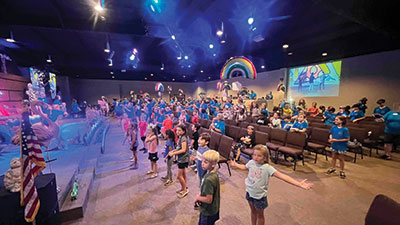
Chris and Megan work together in the church’s summer Vacation Bible School, an event for the entire and surrounding communities. “I write the VBS curriculum and lessons,” Chris said, “and right now, I’ve got about four years planned.” Megan oversees the teaching staff, music, and decorations.

According to Bro. Dale, VBS is one of the wonderful ministry events of the church. Attendance averages around 300 each summer.

Micah Kitchen is minister of Seddon Students. “We seek to encourage and equip students to live their lives to the fullest for Jesus,” he recently commented. “We are passionate about teaching students the Word of God and how to live out their lives to make the Gospel known at home, their schools and their communities.”

Kitchen and his students participate in the First Priority Club at Pell City High School. They also partner with the St. Clair Baptist Association for See You at the Pole Afterparty and St. Clair County Night of Worship. Yearly student events include Summer Camp and Disciple Now – an event where students stay at host homes, attend study sessions and spend intentional time in discipleship.

Seddon is a traditional Southern Baptist church, having a senior pastor and two associate pastors. However, it differs somewhat from other Southern Baptists in that Seddon has both deacons and elders. “I am privileged to have Biblical elders,” Bro. Dale said. “I have five to eight men who preach here.”

Chairman of Elders Rodney Ray joined Seddon in 2008. “My wife and I saw the vibrance of the church and how the Word of God was preached. It was so refreshing that we have never left.”

Of the church being elder led, Ray said, “We kind of grew into it. As we studied the book of Acts and the Apostle Paul’s epistles, we saw that Paul’s instructions were always to appoint elders. It was plural. We have eight serving as elders, and we call it our Church Council. Three are paid pastors, and five are bi-vocational, or lay pastors.”

Each lay elder teaches a class and serves in other areas as well. Ray emphasized that members other than elders also teach classes, “… but I do feel that the teaching and preaching of the Word of God lies with the Elders.”

When asked for a comment about Bro. Dale, he said, “There’s a difference between a preacher and a pastor – someone you know was called by God and placed in that position. Dale Foote is at the top of that list. I say that because of the effect he’s had on my life.”

Today, attendance averages around 400. In 2024, the church hopes to complete a Family Life Center in their complex – a gymnasium-fellowship hall. The church serves all age groups, but the median age is 37 years. “We have wonderful senior citizen members,” Foote commented, “but we are still a ‘young’ church and have been privileged to reach young people.”

Bro. Dale’s focus for Seddon’s congregation is that they “Invite, Invest, and Intercede.” Invite someone, invest in them, and pray for them. “Our goal is to continue to share the Gospel and to make disciples,” he said recently. “That doesn’t change; every year, that’s our goal.”

Proverbs 3:5-6 is Foote’s favorite Bible passage: “Trust in the Lord with all your heart and lean not to your own understanding; in all your ways acknowledge Him and He will direct your paths.” He has seen the assurance of these verses proved true multiple times in his 29 years of serving God at Seddon Baptist.

In 1873, not only was Seddon Baptist Church organized, but Fanny Crosby’s hymn, Blessed Assurance, also was published in July of that year. Whether or not Seddon’s congregation sang it that year, we don’t know. What we do know is the assurance of Proverbs 3:5-6 connects well with the hymn’s words:

Blessed assurance, Jesus is mine,
Oh, what a foretaste of Glory divine.
Heir of Salvation, purchased of God,
Born of His spirit, washed in His blood.
This is my story, this is my song;
Praising my Savior all the day long.

Knowing this blessed assurance, Foote continues to trust God and His guidance as he and the elders lead Seddon in sharing the Gospel and making disciples.

From 1873 to 2024 and onward, Seddon Baptist Church continues faithful as a beacon of hope in a dark world.

Cool Springs Missionary Baptist Church

Story by Joe Whitten
Photos by Wallace Bromberg Jr.
Submitted Photos

The name Cool Springs calls to mind a wooded bower where weary wanderers of long ago found peace and rest in the springs’ restorative waters.

And when a church is named Cool Springs Missionary Baptist, it is lovelier still, for it speaks of refreshing the soul and spirit. Psalm 104:10 reads, “He sends springs into the valleys, which run among the hills.” This was the motto verse for the church’s 150th Anniversary in 2019.

The man who would establish this church, Alexander Clark Ramsey, was born in 1812 in Jackson County, Georgia, to John and Sarah Anderson Ramsey, according to Ramsey family history provided by Beth Jones and Judith Abernathy.

Their research also shows that “Sarah Anderson Ramsey was ¾ Cherokee and Creek Indian. She moved to St. Clair County, Alabama, with her children after her husband died in Rhea County, Tennessee, in 1829. The family believes that Alexander Clark also came to St. Clair County c1829 as well.”

Records show that at age 22, Alexander “entered land at Cool Springs with the government” in 1834, and by that same year, he had married Nancy Ann Ross, born in 1803 in South Carolina.

Alexander and Nancy Ann built a home in Cool Springs and reared a family of three sons. Two died during the Civil War: The first, recovering from wounds was returning home by train; however, the train crashed, and he died in the wreck. The second son died of measles.

The third son, John Washington Ramsey, returned home and lived his life in Cool Springs. Oral history states that when he returned from the war, John Washington could not embrace his family until his clothes were boiled and he had rid himself of lice.

The nearest church, Ashville Baptist, lay five miles northeast of Cool Springs. To attend this church, worshipers traveled these miles, by walking, by wagon, or by horseback. Inclement weather made this journey tedious.

We know the Ramsey family worshiped there from Mattie Lou Teague Crow’s history, Ashville Baptist Church and Its Beginnings. In her research, she discovered among Col. John Washington Inzer’s notes about the church a paper dated 1858, which listed those who pledged money toward constructing the second Ashville Baptist sanctuary. The listed names included “Clark Ramsey,” who pledged $10.00 – not a meager sum in those days.

Realizing the advantages of a local church for the Cool Springs families, Alexander Clark Ramsey and his son, John Washington, with other Baptists, organized Cool Springs Missionary Baptist Church in 1869. We do not have the names of the Charter Members other than John W. Ramsey, for the church’s earliest existing record book dates to 1883, 14 years after the organizing date.

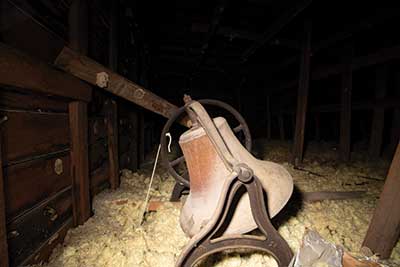
The original church bell still in attic today

These were Reconstruction years and money was scarce. The men of the church and community felled trees, notched logs and constructed a log sanctuary which stood on the same property as today’s building and near the springs’ refreshing waters. Winter heat came from a log burning fireplace.

The 1883 minutes book lists 37 male members and Rev. J.S.E. Robinson as pastor. Rev. Robinson (1849-1924) pastored St. Clair County Baptist churches for over 50 years and preached revivals almost every year. A brief history of Friendship Baptist gives an account of a revival Rev. Robinson preached there. “He was asked if it were true that he had converted 60 souls during the revival. His answer rang out, ‘I never done it. God done it!’”

The walls of the log church resounded with Gospel preaching for 22 years, until the congregation needed a more commodious sanctuary. In a transcribed talk presented by Bessie Whitfield Burttram at the church’s Centennial Anniversary, she stated that in the January1891 business meeting, “Bro. W. Johnson was endorsed to have a bill of lumber cut for the new church building.”  Then in March, “… a committee of five members was appointed to ascertain the indebtedness of the new building and to assign to each male member his portion of the cost.” The dates of completion of the building and the first service are unrecorded.

The 1891 building had two front doors – one for men and boys and other for women and girls. Judith Abernathy recalls her Aunt Roberta Ramsey Ensey telling how her “best beau” would walk her to the women’s door and then he entered by the men’s door.

Although remodeled and updated over the years, that building still serves the congregation today. The two front doors are gone, and all enter to worship through the same double doors.

In January 1913, a motion was made and approved “…to sell the timber on the church lot.” The timber sale resulted in $13.58, and they “purchased new seats for the church.”

Cool Springs has always had a concern for the spiritual and physical needs of its congregation and others. Church records show that in 1925, Mr.  A.L. Galbreath, a farmer, told the membership that he had planted a five-acre plot “for the Lord.” When that was harvested and sold, “He brought the money received to the church to be divided between the pastor and the orphan’s home.” In those days, pastors were often paid with farm produce. Cash would have been a Godsend in 1925.

Today, Baptist churches conduct Sunday school classes for all ages. This wasn’t always the case. Sunday schools originated outside of established churches and were interdenominational. 

In a Jan. 6, 2012, online article titled, “Sunday School an Evolving Institution,” it says that denominations moved slowly in organizing Sunday school classes. The same article states that “The Southern Baptist formed its Sunday School Board, now Lifeway Resources, in 1891.” Therefore, it’s not surprising that in April 1895 a motion to organize Sunday school at Cool Spring didn’t carry. They later approved Sunday school classes, but church minutes seem not to have recorded the date.

 Membership increased, and church minutes show that in1936 the congregation approved remodeling and adding Sunday school classrooms, and Alabama Power installed electricity that summer.

For classrooms, the church decided to dig a basement under the 1891 structure. In a recent interview, Beth and Ross Jones and Judith Abernathy, told the basement’s history. “In 1936, teenage boys with a short mule named Bell, a slip scrape, shovels and picks dug the basement under the supervision of the older men. Church members picked up rocks to make the basement foundation to the addition. One of the men hauled them over here on his Studebaker truck.”

The US economy had improved by 1936, but in 1937, it took a dive which lasted until late in 1938. This unexpected decline involved the church members’ finances, so, completing the remodeling and basement rooms progressed at a tortoise pace.

In speaking of this, Judith told that in a business meeting someone suggested that the ladies of the church might give their Sunday eggs to help pay off the indebtedness. “The women sold eggs gathered on Sunday and put that money in the collection.”

It took from 1936 until 1938 to complete the remodeling, “However,” Beth Jones observed, “we have a full set of Sunday School rooms still in use today under the sanctuary built 132 years ago.”

A significant 1938 event occurred when Dr. Jacob Gartenhaus, director of the Southern Baptist Home Missions Board, accepted an invitation from the Cool Springs WMU (Women’s Missionary Union) to come speak to their group. Cool Springs’ WMU invited all churches to attend his presentation but as reported in The Southern Aegis of Feb. 3, 1938, due to inclement weather, only Cool Springs folk attended. “However,” the article continued, “Dr. Gartenhaus expressed a desire and determination to visit again.”

Dr. Gartenhaus, a Jew, was born in Bukowsko, Poland, in 1896. As a young adult, he came to New York City where he converted to Christianity. He attended Moody Bible Institute and the Southern Baptist Seminary in Louisville, Kentucky. He served 27 years with the Southern Baptist Home Missions and was known as the “Southern Baptist Jew.”

Eighty-five-year-old June Smith, WMU member, recently told of WMU women quilting for the public. “We put the money in the WMU treasury,” she reminisced, “and that money went to missions. We’ve always been big on missions – and still are.” Cool Springs’ heart for mission continues strong today.

What would a Baptist worship service be without instruments to accompany the singing? However, beginning with the Reformation, protestants congregations sang acapella, for the organ represented the religion they protested. And 350 years later, most rural churches in the United States still sang without instruments.

Hymnbooks came with lyrics only. Instruments were also expensive, but the invention of the pump organ made that instrument affordable, but churches still resisted purchasing them. 

We see that at Cool Springs in 1901, the motion to purchase a pump organ did not pass. Opinions changed by 1902, and the congregation approved buying an organ, and Myrtie Whitfield was organist for many years. One can only imagine the harmonious blend of voices and music the first Sunday it was played.

Today Leah Attaway plays the piano for the church. She studied piano for 10 years with Electa Stevenson, the well-respected piano teacher in Odenville, then continued music studies at Samford University.  Leah’s first cousin, Kerry Montgomery, serves as song leader.

Singing schools that were held in churches became popular in the 19th Century and continued until into mid-20th Century.  An announcement for one at Cool Springs appeared in the July 7, 1915, The Southern Aegis: “The Eureka Normal School of Music will hold an eighteen-day service under the direction of Homer E. Morris of Oneonta at Cool Springs five miles southwest of Ashville beginning July 12, 1915.”

The cost for 19 days’ study was $1.50, and for those coming from a distance, boarding for the duration was “very reasonable.”

All Day Singings occurred once a month in many St. Clair County churches, and singers from all over the county attended. In the Dec. 6, 1928, issue of The Southern Aegis, “Cool Springs News,” we read, “Cool Springs Singing Society attended the singing at Poplar Springs and report a good time.” Another in the April 1931 issue announced that at the All-Day Singing at Cool Springs there would be quartets from “Leeds, Acmar, and Odenville. …We are expecting a grand day. Bring well-filled baskets (of food).”

The St Clair News-Aegis of April 16, 1959, announced that “Lee Smith and the Master Workers Quartet from Akin, South Carolina, and Rick Mays and the Jubilaires Quartet of Birmingham” would be at Cool Springs, and that Ray Wyatt was the program chairman.

Beth Jones recalled that once when she was a child, she had the mumps and couldn’t attend. “Our family lived about 3/10 of a mile from the church, and that day, cars were parked all the way to our barn. I was on our front porch, and with the church windows open, I could hear the singing. We used to have big singings.”

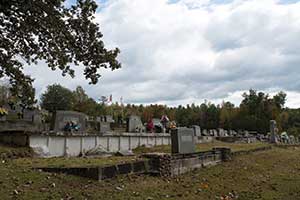
Cool Springs Cemetery

Vacation Bible School (VBS) began at Cool Springs in 1947 under the ministry of Bro. Oscar Mitchell, and it has continued every year since then. Bro. Mitchell’s wife, Nellie, directed that first year.

Later, Peggy Jarrett directed many VBS weeks and is remembered for her concern for children. “I never will forget,” a church member said, “how when she always prayed, ‘Bless the children.’ She worried about children.”

Other VBS directors from bygone days include Margaret Sellers and Mary Ramsey.

June Smith’s family joined the church in c1950 when she was 12 years old, and she remembers well VBS time. One of her teachers, Gladys Smith, became her mother-in-law when June and Ralph Smith married.

Recently, she told how Lena Morris and Ruby Kirkland prepared cookies and juice each day for the children. “Mrs. Morris would squeeze oranges and make fresh juice for us.”

Today, Regina Ash directs VBS, and the entire church participates.  Each year, between 50 and 60 children attend – Peggy Jarrett’s prayers answered. The purpose of VBS is teaching children about the Bible and God’s gift of salvation. Each year, children come to faith in Jesus Christ through this church ministry. These new converts wait until after the yearly revival to be baptized.

Until recent years, most churches held revivals every summer. Through the 1950s, the evangelist preached a morning service, had lunch with a church family, made visits in the afternoon, and preached at night services.

Churches announced revivals, as in this Aug. 8, 1917, ad in The Southern Aegis: “A series of revival services is being held at Cool Springs Church by Rev. E.P. Moore, who has many old friends in this community.”

Cool Springs scheduled revival week at the end of July. If the first week proved especially effective with many converts, a revival could continue for two or three weeks. Extended revivals were called “protracted meetings.”

The Ramsey sisters reminisced about revivals. “Ladies of the church took turns cooking for the evangelist and had the meal ready after the morning service,” Judith recalled.

Rev. Pearl Tinker was their favorite evangelist, for he brought his family and stayed with the Ramseys. “Judith was friends with the older daughter of the pastor, and I was friends with the younger daughter. We went to all the dinners!” “But,” Judith added, “we girls waited until the grownups had eaten.”

When revival ended, “Baptizing Sunday” came soon afterwards. This service occurred at the “Baptizing Hole” on Canoe Creek until the installation of the indoor baptistry in the 1980s.

Ross Jones recently reminisced, “The baptizing hole was originally a ford, so it was a rather shallow place with some areas deep enough for baptizing.” Beth joined in, “On Saturday before baptizing, some of the deacons would build steps going down from the bank into the water.

“Then on Sunday morning before the baptizing, John Ramsey, one of the deacons, would carry a long rod and go down the steps and check to make sure no holes had washed out during the night that could cause someone to fall. Then before baptizing started, a deacon would precede the pastor into the water to scare off the snakes.”

When the church added the baptistry inside the church in the 1980s, Pat Massey thought a painting of the Baptizing Hole would be a good background scene, showing “the olden days.”  He commissioned Karl Scott, St. Clair Springs artist, to paint the scene, and the church paid the cost.

The most recent update to the sanctuary occurred in 2016. For 10 years the congregation had saved money to install a cupola for the original church bell. Several carpenters assessed the structure and determined the bell was too big and heavy for a cupola. Since the old Cool Springs School bell would fit, it hangs in the cupola today. The historic church bell remains in the attic and is rung on Memorial Day.

The Cool Springs School stood across the road from the church and to the left of the cemetery. Organized toward the end of the 19th Century, classes first met in the church, it seems, for church records of July 1899 state, “Permission was granted for the church building to be used as a school.” Sometime after that, the community constructed a school on land donated by the Ramseys. It stayed in use until the 1940s when Cool Springs students were sent to Ashville school.

After building a home in the area in 2010, Chuck and Regina Ash wanted to worship in a local church, and after visiting other churches, they joined Cool Springs, and they both participate in church ministries. Chuck had grown up in the Cumberland Presbyterian Church, so when he and Regina chose Cool Springs Missionary Baptist, Chuck was baptized by emersion as required by Baptist. “I had to learn how Baptist do things,” he said.

Chuck learned well, for on March 20, 2022, he was ordained as a deacon along with David Murphree, Steve Ray and Jacob George. These four serve in fellowship with the other deacons: Ross Jones, Jim Montgomery, John Ray and John McWaters Sr.

Jacob commented on how the church had influenced his life, for he had grown up being taught the Bible and the things of God. “The church family itself has played a big part in me learning how important family and good friends and fellowship are,” he said. “At Cool Springs, most of our members are older, so, for me as a young man, it’s good to be around their wisdom.”

Brother Curry Harris has pastored Cool Springs since 1989. He also refers to the congregation as family. “In my 34 years, we have laughed, wept, celebrated and mourned. We celebrate marriages and births and watch children grow up. They feel like my own children.”

Of church members’ funerals, he said, “We weep and mourn for the family and our church family, but we celebrate that because of Jesus, they are with Him and we will be together again one day.”

Of the camaraderie and fellowship of his congregation, he recalled a September 17, 2023, picnic at Camp Sumatanga. “We prayed for each other’s needs, worshiped the Lord, enjoyed His beautiful nature and studied God’s Word. We ate together – Yes, fried chicken and banana pudding because we’re Baptist! Afterwards, some played horseshoes, children rode bikes, and others enjoyed walking or just talking and fellowshipping.”

Brother Harris’ plans for Cool Springs include to continue reaching out to the community and to continue fighting the good fight.

The ministries of this church are founded on the Gospel of Jesus Christ who said, “Whoever drinks the water I give them will never thirst. Indeed, the water I give them will become in them a spring of water welling up to eternal life.” (John 4:14, NIV Translation)

Composer John Peterson used this verse when he penned the chorus of his gospel song, “Springs of Living Water.”

Drinking at the springs of living water,

Happy now am I, my soul is satisfied.

Drinking at the springs of living water,

Oh, wonderful and bountiful supply.

Cool Springs Missionary Baptist Church, a refreshing oasis in a chaotic world, invites you to come.

Healing hands of St. Clair

County has a long history of medical excellence

Story by Joe Whitten
Submitted photos

St. Clair County throughout its history had a thriving medical community with doctors practicing medicine in all parts of the region. Many of the names are familiar to this day, stemming from their descendants perhaps or a particular road or place in the county that bears their name.

They were pioneers in the county’s history, and a sampling of the details of their lives gives a glimpse into who tended to the medical needs of St. Clair’s early settlers.

DR. WILLIAM A. BEASON

Dr. Beason was born in 1867 to Rufus and Carrie Ann (Staton) Beason in St. Clair County and was the eldest sibling of Flora (Beason) Montgomery, George D. Beason, Charles W. Beason, Martin V. Beason, and Sidney L. Beason. He was also the great grandson of St. Clair County pioneer Curtis Grubb Beason and the great-great grandson of American Revolutionary patriot Capt. Edward Beason.

On Oct. 30, 1901, with Rev. Noah A. Hood officiating, Dr. Beason married Ms. Lillie Eugenia Phillips at her family home, known today as the Phillips-Cunningham House.

The bride was the daughter of James Madison and Elizabeth (Yarbrough) Phillips and the granddaughter of Littleton Yarbrough. The couple lived for many years in the Byers-Prickett House with Mrs. Beason being noted as a gracious, Southern hostess.

“Dr. Beason was loved and respected by all who knew him intimately and was a man of strong convictions and always outspoken for things he believed to be right.” He was known to never drive over 35 miles an hour. When asked why he didn’t drive faster, he would always reply, “At 35 miles per hour, a car is still cheaper to run than a horse.”

Of his beloved wife it was said, “No man ever had a nobler and more helpful companion. She knew his work and helped him in its performance in many ways.”

Mrs. Lillie Beason “was widely known over the state. She took great interest in educational affairs” and always remained active in supporting “many movements for the betterment of her people.”

For several years she held the office of chairman of the St. Clair County Board of Education, earning her the noteworthy recognition of being the first woman elected to office in St. Clair County. “She was also president of the Baptist Missionary Union and a leading member of the Ashville Chapter of the United Daughters of the Confederacy,” and “was a brilliant woman… (with) many cultivated talents.”

Both were laid to rest in Ashville City Cemetery.

DR. JAMES MADISON McLAUGHLIN

Dr. McLaughlin was born in Leeds in Jefferson County on March 22, 1838, to John and Margaret (Brinker) McLaughlin. The doctor’s father was an early settler of the State of Tennessee and was the son of Alexander Andrew McLaughlin, who had emigrated from Scotland to Tennessee.

James attended public schools and later read medicine with Doctors Robertson and Freeman in Springville. He later attended Atlanta Medical College, now the Emory University School of Medicine. During this time, he enlisted in Company C of 18th Alabama Regiment, CSA and was soon afterwards promoted to Captain. In 1864, he was promoted to lieutenant colonel and held that position until the close of the war.

Dr. James Madison McLaughlin

On Jan. 4, 1871, James married Isadora Forman, the daughter of James and Parthenia (Dean) Forman. The bride’s father was noted as taking a “… leading part in all matters and issues in which people were interested,” and being “… true and energetic in behalf of his friends…”

The bride’s mother was the daughter of Nathaniel and Parthenia (Edmundson) Dean, and the granddaughter of Benjamin Edmundson, a Virginian patriot who fought for independence as a lieutenant in the American Revolution. In her obituary, Mrs. Forman was remembered as “… always cheerful…” and “… a faithful and affectionate wife and mother,” who was “… thoughtful of every interest of her children…”

In 1875, the doctor opened a pharmacy and two years later welcomed his only child, Katherine, into the world on March 27, 1877. She would later marry Jacob Forney, a president of Jacksonville State University, who was the son of General John Horace Forney and nephew of Alabama U.S. Rep. William Henry Forney.

It could never be said that Dr. McLaughlin did not live a full life. During his 70 years, he was a member and elder of the Presbyterian Church, a Mason and Knight of Pythias, Mayor of Springville three times, examiner for the New York Life Insurance Company, the Penn Mutual Life Insurance Company, and for the Equitable Life Insurance Company; member of the board of pension examiners, county health officer, member and one of the organizers of the St. Clair Medical Society and counselor of the State Medical Society.

After declining in health for two years, Dr. McLaughlin passed away and was memorialized as being “… closely associated with all movements for growth and prosperity of our county,” and giving “… freely of his time, energy and guidance for its welfare.” Furthermore, “(h)e was beloved by all with whom he came in contact and held the respect and admiration of all his business and political associates.”

The magazine, Confederate Veteran, honored Dr. McLaughlin and observed that he was “… a loving husband and father, a good citizen, a brave soldier and a Christian Gentleman.” 

DR. FINIS E. PERKINS

Dr. Perkins was born on March 2, 1859, near Trussville to William Washington Perkins (1829-1910) and Elizabeth (Praytor) Perkins (1832-1886). Dr. Perkins financed his dental training by selling Bibles and began practicing dentistry about 1880. 

He had offices in Birmingham, Springville, Odenville and in other small towns in St. Clair County. One of his main interests was to teach dental care and health care to public school children. For at least 50 years, he was a regular visitor at many schools and always emphasized that every bite should be chewed 32 times.

Dr. Finis Perkins

A part of every lecture was a Biblical quotation from 1 Corinthians 6:19-20, “What? know ye not that your body is the temple of the Holy Ghost which is in you, which ye have of God, and ye are not your own? For ye are bought with a price: therefore glorify God in your body, and in your spirit, which are God’s.”

He cooked most of his own meals and used olive oil exclusively to cook with because he considered animal fats to be bad for the teeth, gums and the human body. Wherever he ate, private or public, he first asked God’s blessing on that meal.

He was an active member and financial supporter of the Cumberland Presbyterian Church of Norwood in Birmingham.

Dr. Perkins was attracted to St. Clair Springs because of the healing powers of the sulfur waters available and in 1896 built a cottage there. He also took annual trips to Pike’s Peak and maintained a summer home there for many years.

Dr. Perkins never married and practiced dentistry up to his death on June 21, 1950, at the age of 91.

As Hippocrates, the ancient Greek physician known as the Father of Medicine, once said, “Wherever the art of medicine is loved, there is a love of humanity.”

The same could be said for St. Clair County’s early hands of healing.