
Central Alabama reading program working to level the playing field
Story by Paul South
Submitted Photos
Imagine the inability to read a sign, fill out a job application or even a check. Far too often, that scene plays out in Alabama, where one in four adults find those everyday tasks impossible.
They are functionally illiterate, shackled by an inability to read, but a growing number are reversing the challenges they face thanks to literacy programs like that of the Central Alabama Literacy Council.
Words like those of Helen Keller, who overcame profound disability to inspire the world, motivate retired pastor Ron DeThomas to meet the challenges head on. Keller once said, “More than at any other time, when I hold a beloved book in my hand, my limitations fall from me, my spirit is free.”
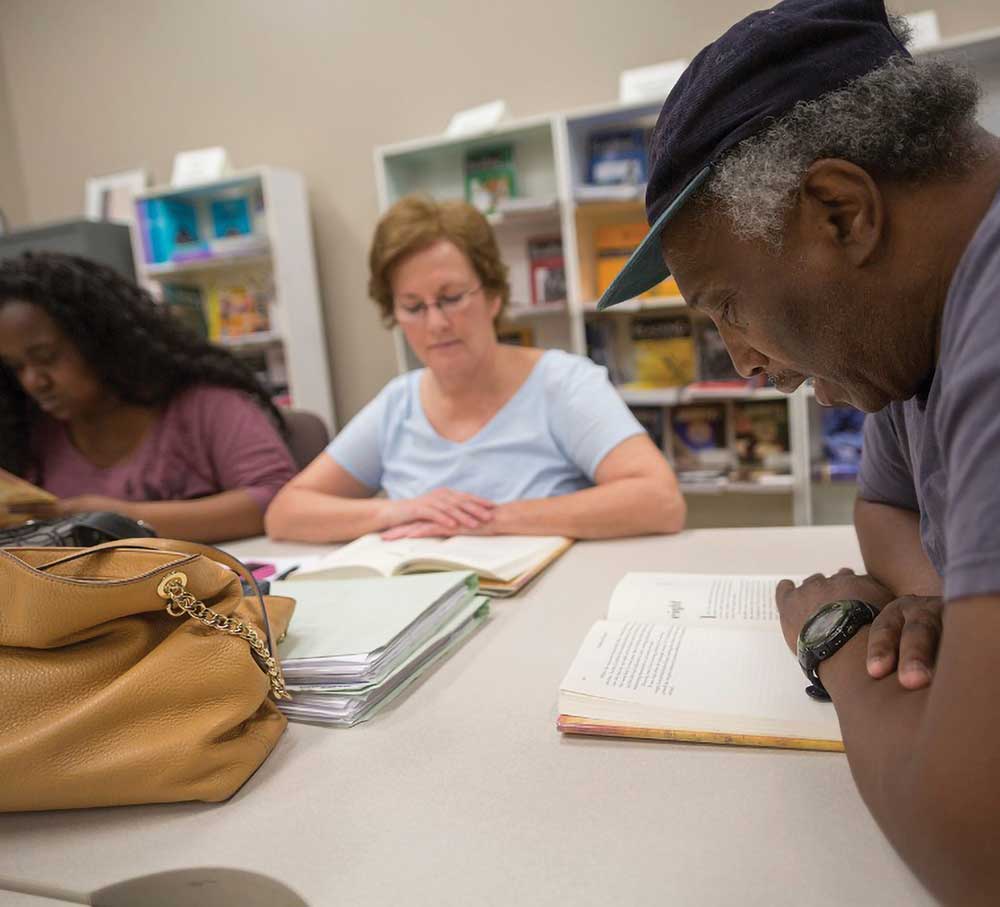
DeThomas and the volunteers at the Central Alabama Literacy Council are working to help dozens of students overcome what has become their own disability.
The council serves St. Clair, Calhoun, Talladega, Etowah and Cleburne County in east Alabama, and DeThomas serves as county coordinator for the organization in those counties, which is funded through the United Way of Central Alabama.
Right now, the organization is working to help 25 individuals. To DeThomas, the former assistant pastor of Victory Christian Center, this is another type of ministry.
He was approached by Pell City leaders about taking the position. “I didn’t have any reason to say no. I have a lot of flexibility in the job.”
Surprisingly, some 90 percent of clients served by the council are high school graduates or higher. They have become victims of social promotion, the educational practice in which a student is moved to the next grade at the end of the academic year, regardless of whether they have mastered the material, with the objective of keeping students with their peers.
“Our average student might be somewhere in the area of 30 to 35 years old,” DeThomas said. “I think that’s pretty much it. Some years back we got off the old and strict standards of the school system, and they got lax in it.”
In 2019, at Alabama Gov. Kay Ivey’s urging, the legislature passed the Literacy Act, mandating that Alabama third graders must demonstrate reading proficiency on the Alabama Comprehensive Assessment Program to advance to the fourth grade.
“We needed this for a long time,” DeThomas said.

The first hurdle the council has to overcome in attracting new students is that stigma. “There aren’t many who we approach about literacy who just turn us down and don’t want to do it,” DeThomas sad. “Most of the reason they turn it down is because they are afraid someone is going to find out they can’t read at 42 years old or something. But I can assure them there are really not going to have that issue to face because the student, the tutor and myself are the only people who know they are being tutored. We keep all the information confidential.”
Many of the tutors are retired teachers or reading specialists. But classroom experience isn’t required.
“You don’t have to be in the field of education,” DeThomas said. “When we find a person who wants to be a tutor, we put them through a one-day training course. But it’s pretty extensive stuff. When they get through (the training), they start teaching. We have had an abundance of retired teachers that are doing this. That’s hard to beat.”
DeThomas has also tutored, working with a student at the St. Clair County Correctional Facility. For the retired pastor, tutoring is a different type of evangelism. But there is the joy that comes when the light of learning flips on.
“There are times like that in a lot of people’s situations, you just think, ‘’That’s what I’ve been waiting for,’ for the bell to come on, or something like that. But I think it does make a difference. I think it really does encourage the tutor as much as it does the student,” DeThomas said.
“These teachers really get into this tutoring thing, because they see the importance of it. They can tell when a student is really on board.”
In his eight years of work with the organization, only one or two students dropped out early in the program. “That’s really more of an encouragement for both the student and the tutor,” DeThomas said.
Students invest an hour each week for anywhere from nine months to a year. There is an emphasis on phonics and comprehension. The one-on-one classes are offered at no cost.
“They’re learning the things we learned in first, second third and fourth grade that they didn’t learn for whatever reason,” DeThomas said. “A lot of the students think it’s their fault that they didn’t learn to read. But that’s not always the case,”
For example, DeThomas told the story of one student who changed schools seven times in eight years. “He was a floating battleship out there,” DeThomas recalled. “He didn’t know what was going on. He got a different view of everything at every different school he attended.”
DeThomas believes parents who don’t place a priority on learning are a major issue in the struggles kids have in the classroom. “That’s sad, but it’s the truth,” he said.
He is hopeful about the future because of programs like this. Every encounter he has with students affirms he made the right decision when he chose to work in adult literacy.
“We’ve had students in the past who will tell you in a heartbeat their lives changed when they learned to read. They’ve become proficient in what they’ve been missing all these years. Their situation changed when they learned to read.”
That could mean the ability to read a beloved book, or the words of a hymn, or on a menu, or a driver’s license manual or job application. Some go on to get their GED. Think of it, as Helen Keller said, a mind and spirit freed.
“They feel comfortable reading now,” DeThomas said. “The light really comes on then. That happens with about every student that comes our way. Our commitment is, we’re going to make you a better family member, a better employee and help you be the person that you really want to be.” l
Editor’s Note: For more information about the Central Alabama Literacy Council, to become a student or tutor or to donate, or who knows someone who wants to learn to read, call 205-378-9072.

THE GREAT GROWN-UP SPELLING BEE
The community has a chance to boost literacy by competing in or supporting the Great Grown-Up Spelling Bee at 7 p.m. on March 12 at the CEPA Center on the campus of Pell City High School. Doctors, lawyers, business and political leaders compete in three-member teams matching their spelling skills.
Proceeds from the Spelling Bee go to benefit the Literacy Council. For more information and for corporate sponsorship, call 205-378-9072.
The Bee helps build awareness of the Literacy Council and its work in bringing folks up to speed in their reading skills.