Springville’s $7.5 million man
Story by Paul South
Photos by Wade Rackley – Auburn Athletics
Photos by Wallace Bromberg Jr.
Submitted photos
In more than 40 years of covering Auburn athletics, Mark Murphy has seen arguably the best pitchers in Tiger baseball history – former Los Angeles Dodger Joe Beckwith, former American League Rookie of the Year Gregg Olson, former Oakland and Atlanta star Tim Hudson.
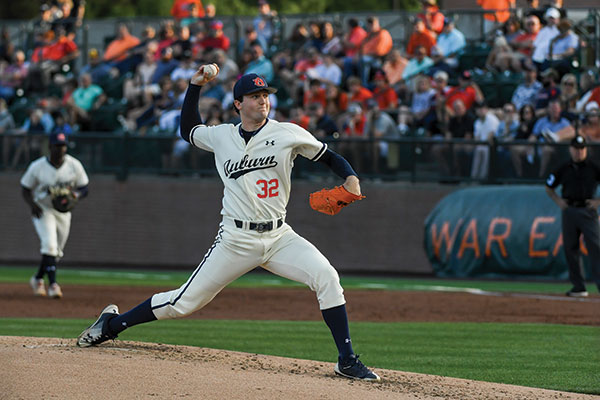
And Springville’s Casey Mize may be the next on the list. The Detroit Tigers think he will be. As even those with a casual interest in baseball know, Mize was the first overall pick in the June baseball draft, signing a contract with the Tigers, which includes a $7.5-million signing bonus, the second-largest in the history of the game.
With apologies to Lionel Richie, Mize’s journey from Springville to Auburn to Detroit makes him once, twice, three times a Tiger.
Like Olson and Hudson, Mize is a fierce competitor with a wicked fastball and a command of pitches that makes great hitters swing, miss and return to the dugout with astonishing frequency.
Auburn’s Plainsman Park teemed with big league scouts the past two seasons, armed with hand-held radar to clock Mize’s pitches. It looked like the baseball version of troopers on the interstate on a holiday weekend
“There were more scouts than I’ve seen in a long time,” Murphy said. But as he put it, “Guys like Casey don’t come along very often.”
Baseball is a game steeped in numbers – miles per hour, earned run and batting averages, strikeout-to-walk ratios are a few. But to be the top draft pick – The Guy – how does that happen?
Talk to his parents, coaches, sportswriters and former major leaguers, three traits rise to the top when it comes to considering what makes Casey Mize tick.
Submitted for your approval, consider the three Cs of Casey: Commitment, Command. Character.
Commitment
The stories of Casey Mize’s passion for the game of baseball come from every direction – from his family, from coaches, from family friends. Here are a few:
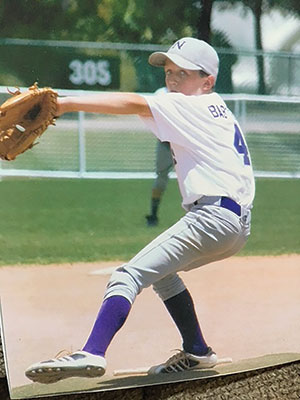 When he was 7, Mize made an announcement to his Mom, Rhonda, that he was going to go to Auburn and play baseball when he grew up.
At 11, while most of his friends were engrossed in Xboxes and PlayStations, Mize offered another word for his mother.
“He actually told his mother, ‘Mom, I’m gonna want one, but whatever you do, don’t ever buy me a PlayStation or Xbox. That’s going to take up too much of my time.’”
And in high school summers, he and his parents often made the six-hour roundtrip for him to play travel ball for Chris McRaney and Team Georgia Baseball Academy in Alpharetta. When a Springville friend’s Mom asked why he didn’t want to play with his friends locally, Mize was respectful, but matter-of fact.
“Miss Melissa, I have to look after my future,” he said.
“We’re thinking the other parents probably think we’re crazy, that we were putting this stuff into him,” Dad Jason Mize said. “But we never did. We were just the facilitators for his dreams and his goals. That’s the way we’ve looked at it. Both of our kids, whatever their dreams were, if they put in the work toward it, we provided them whatever they needed, just to make it happen.”
In fact, like other parents who had to get their kids to power down the gaming system, the Mizes had to coax their son to take a break from ball.
“There was never that burnout or anything like that. Rhonda and I would discuss it, and we had to make him stop playing. We had to make sure he got that rest time that he needed,” Jason Mize said. “But he never wanted to stop. He was passionate about it. He was always playing it. He loved even the camaraderie of it. He loved being around those likeminded kids.”
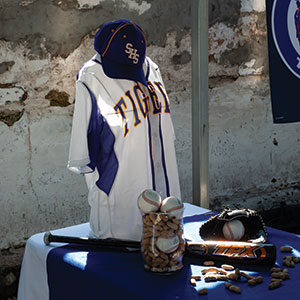
The desire carried on to Springville High, where he played for Coach Jonathan Ford. Mize was 19-2 in his Springville Tiger career. He was the first SHS player drafted since Brandon Moore (also an Auburn alum) was drafted in the early 1990s.
Like all his coaches, Ford could not have foreseen all that would transpire for his ace. But he saw something special, including the unquenchable blue flame, a drive to be great.
“He had some of the intangibles you look for in all your players. First, he had a head for the game. He really understood how to play the game. Then, the second thing he had was a desire. I mean he had a desire to be great. Third was the ability he had. When you put the three together, understanding, desire and ability, I had that expectation wherever he went, he was going to be successful.”
Command
ESPN college baseball analyst Ben McDonald is in a unique spot in relation to Casey Mize. Like him, McDonald was the first overall pick in the draft (1989 from LSU). McDonald pitched with Olson in Baltimore and against Hudson. On a rainy day in May before Mize’s SEC Tournament start against Texas A&M, McDonald turned to some of Mize’s stats in strikeout to walk ratio.
“[F]or the last two years, he has a 13-to-1 strikeout to walk ratio. He’s walked 19 guys in two years and punched out 242. For me, that’s what separates him from most. He’s going to be a fast climber in the big leagues.”
McDonald added, “He has command of four pitches he can throw for a strike whenever he wants to throw them. That’s what separates the minor league pitchers from big league pitchers. Can you command the stuff you have? Not only can you throw a strike, but can you throw a quality strike? Casey . . . when you watch him pitch, and he’s on his game, he never throws anything in the center part of the plate. It’s a plus fastball up to 96 (mph). He’s got a good slider, a split finger fastball, and he’s got a cut fastball which is something new that he uses. That’s what I like about him, too. He keeps evolving. Last year, he was a three-pitch pitcher and didn’t have the cut fastball. This year, he’s added a cut fastball to go with the other three pitches he has. That’s what separates him from the rest. By far, he’s the best player in the country.”
Even a month before the draft, McDonald predicted Mize would be the top pick.
 “He’s so advanced. What makes him advanced is that he commands his better than Olson did. I played with Olson in Baltimore and I played against Tim Hudson. This kid to me is even better. Olson had two pitches; Hudson had three. This kid has four quality pitches. And what I like about him, too, is that he calls his own game. He’s studying hitters already. He’s got a big-league approach already, and he has a big-league workout between starts, too.”
Scott Foxhall, now the pitching coach at North Carolina State, served in the same role at Auburn and recruited Mize to the Tigers. Mize’s strength as a pitcher – that earned him All-American honors and made him a finalist for college baseball’s highest individual award, the Golden Spike – is part God-given, part blue collar work ethic.
“I think its nature and nurture. You can tell he’s born with a lot of athleticism, and he’s gifted in that sense,” Foxhall said. “You can tell he’s spent an enormous amount of time paying attention to the right way to do things and just repeating them.”
The two reconnected when Auburn traveled to Raleigh for the NCAA Regionals.
“I watched him just for fun while he was here because they were here for four days. I watched him playing catch, even when it was a casual game of catch, you could tell that it was a sense of urgency with him that he was paying attention to every little thing that he was doing and paying attention to where the ball was going and going where he wanted it to go,” Foxhall said. “He was making adjustments with every throw, just when he was paying catch in the outfield. It’s all about attention to detail and God-given ability.”
Like every great ballplayer, Mize has also invested time in learning from others. Former Auburn teammate Keegan Thompson took the young hurler under his wing as workout partner and throwing partner. Baseball requires players to be human computers, processing a barrage of information and filtering what works for them. With every pitch, hurlers must process grasp of the ball, leg lift, arm motion, location, release point and on and on.
“Keegan helped him understand about pitching,” Foxhall said. “Every great pitcher is picking everyone’s brain and has to have the right filter to figure out what – of all that information – will help him. Casey’s got the right processor in his head to find out what will help him … That might be one of his strongest qualities.”
Auburn’s Butch Thompson has sent seven pitchers to the major leagues. From the first day he met Casey Mize, he saw something special.
“I knew he had talent. I knew he had a future. But I don’t think anybody would have expected this.”
As a freshman, Mize had a solid fastball and a good slider and worked out of the bullpen and as a spot starter for the Tigers. The next year, he added a split-finger changeup to his repertoire of pitches. There, the young hurler began to blossom.
“The biggest thing year two was his commitment to shove the ball into the strike zone. He was trying to end the at-bat on every pitch, so his command between his freshman and sophomore year grew like crazy, and he added a third pitch. The third thing that helped was Keegan Thompson (the Tigers Friday night starter).”
“(On Friday nights), Casey would sit, chart and watch the game that Keegan was pitching, and I think Keegan was such a professional, Casey watched, and they built an unbelievable relationship. I think Casey’s work ethic picked up, his command picked up, and he didn’t just pick up a split change, he picked up arguably the best pitch in college baseball,” Coach Thompson said. “Keegan was a huge piece.”
The sophomore season was a turning point.
“He had the opportunity to represent our country and pitched seven innings of shutout ball. I think heading into year three, he said to himself, ‘I know my body, I know how to work. I need to galvanize my own routine. I’m going to really figure out how to take care of my body and get my arm in the best shape of its life.’ He did that.”
And in January of 2018, Mize unveiled a fourth pitch, the cut fastball, that he could throw 90-plus mph.
“When he came with that fourth pitch, it scared me to death. I wondered, ‘Why does he need a fourth pitch?’, Coach Thompson said. “He just cares about his craft. He started thinking, ‘I’ve got a future at this’. . .He’s just a lifelong learner.”
Character
Mize’s first start of the 2018 SEC Tournament was tough, a 4-2 loss to Texas A&M on a sticky-humid night in Hoover. After the game, he was asked if there was anything good he could take from the game.
“Nothing,” he said, “I didn’t pitch well.”
When asked about the Tigers’ struggle to produce runs, Mize again shouldered the blame.
“They did the best they could against a great pitcher,” Mize said. “I didn’t do my job.”
Those quick quotes speak volumes. In an ESPN age that has created the “Me” athlete, Mize puts team, family and friends first.
“That’s what attracted me the most to him when I met him and during the short recruiting process – that I didn’t think I was missing on character,” Foxhall said. “I knew I couldn’t miss on character. When you have character, and you have talent, those are the guys who have a chance to be elite. That’s what he is.”
Coach Thompson agrees. He has seen that high character time and time again. And as Keegan Thompson mentored him, Mize mentored young Tiger Tanner Burns, who in early July was named to the USA Baseball Collegiate National Team, following in his mentor’s footsteps.
“You can’t be the first overall pick unless you have a certain level of skill,” Coach Thompson said. “But (Casey’s) really learned how to work. He learned how to focus on his craft. He’s a great teammate. He gives others credit. You know he told his Mom when he was seven years old he wanted to be an Auburn Tiger. And then he winds up doing everything he sought after. Casey, he’s only going to be part of our team for three years. But he’ll always be part of Auburn, he’s going to give back to Auburn, and Auburn is going to have its doors open to him for the rest of his life.”
When Coach Thompson assumed the reigns of Auburn baseball, the program was in shambles. By 2018, the Tigers were nationally ranked, within an eyelash of the College World Series
“You can have a good team when your best players have your best character, your best work ethic. That goes a long way,” he said. “You know, we have a rule: You’re not allowed to pass the buck, and when your best players have that kind of character and when your best player has an off night and doesn’t pass the buck, that resonates with the entire organization. When it comes from your best player, it means more.
“Whatever we were trying to teach, (Casey) put it into practice. That molded everybody else to be wired the same.”
Talk to those who know Casey Mize, and they talk about how he has friends from all walks of life, jocks and computer wizards, folks who eat, sleep and breathe baseball to those who don’t know how many innings are in a game. It’s been that way since Springville.
“Some people have the gift to be really likeable,” Coach Thompson said. “And when you value everybody, it doesn’t matter whether they’re at the top of the food chain or at the bottom or in the middle.
“When you respect everybody from every walk of life,” he explained, “that allows you to connect with many. Casey’s got that tool, where he values every single person he comes in contact with. That makes you pretty likeable, and that allows you to connect with a lot of people. And that means when you do something really special, that means that a lot of people are going to give you a lot of respect and are going to pull for you.”
Mark Murphy recounted a story that proves the coach’s point. In right field at Plainsman Park, there is a spot known as ‘the K-Corner.” For years, diehard Auburn baseball fans mark each Tiger pitcher’s strikeout with a bright, bold, orange “K,” scorebook language for a strikeout.
At the end of each senior pitcher’s Auburn career, he’s awarded one of the “K”s, a simple honor, but a powerful symbol of gratitude.
On a warm spring day when Casey Mize fanned school record 15 Vanderbilt hitters, the K-Corner broke with tradition.
“They gave Casey a “K”, even though he was only a junior,” Murphy said. “That was pretty cool.”
Mize’s caring for others runs deep, Coach Thompson said.
“He cares about others a ton. That’s his greatest strength and his greatest weakness. He’s going to be an unbelievable leader. He’s going to be an unbelievable teammate. I believe that’s going to make him an unbelievable husband and father, because he cares about others so much. But he takes so much on himself because he doesn’t want to disappoint his family, his coaches, teammates and friends.”
Jason Mize summed up his son’s approach to life.
“It’s simple. He’s not one of those kids who wants to be in the spotlight, or put himself out there. He loves baseball and wants to do his job. But he’s not one seeking attention. He’s a good guy, very, very humble. He’s unbelievably driven. I’ve never seen that kind of drive in a kid his age. I’ve never seen that kind of focus in a kid his age, and I know they’re out there who are right there with him at that level. It’s a rarity for me to see the kind of person he is. I don’t think we can take all credit for that as parents, a lot of that is in him.”
Murphy, the reporter who watched Tiger baseball superstars Olson, Hudson, Frank Thomas and Bo Jackson, called Mize “a superstar who doesn’t expect superstar treatment.”
At the heart of all this, beyond statistics and signing bonuses, people sometimes forget that Casey Mize is a kid, who still hangs out with his Springville pals like Nick Rayburn and likes to play “Fortnight” on the gaming system he finally got this year, as a birthday gift from his roommates. While top pro draftees in other sports may celebrate with black limousines and bottles of champagne, Mize celebrated with family, friends, teammates and coaches over burgers and pizza at Baumhower’s Victory Grille in Auburn.
Maybe a single piece of paper written in Springville years ago gives a clue to Casey Mize’s ultimate ambition.
Coach Jonathan Ford asked his players to write down their goals for the season. Some wrote they wanted to make it to the big leagues. Others wrote they wanted to hit .350.
Then, only a freshman, Mize wrote one sentence.
“I want to be a leader.”













 “We just love that kind of stuff,” Tommy said. “The old ways of doing things bring back memories of the old days, when people had to make it, grow it or do without it.”
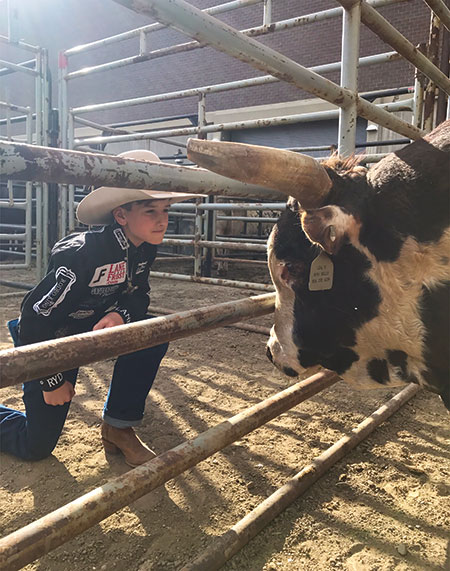
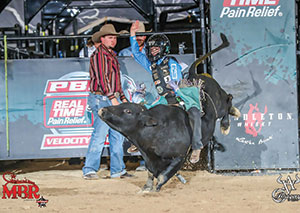 Once his protective gear is on – a helmet and vest mandated by the MBR (Mini Bull Riders Association) – he’s unflappable.
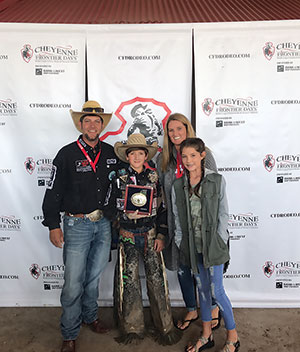 At only 12, Carpenetti has drawn comparisons to the late Lane Frost. Frost, who won the Professional Rodeo Cowboys Association (PRCA) Bull Riding World Championship in 1987 when he was just 24, was killed in the arena in 1989. To this day, long after his death, Frost casts an almost mythic shadow over the sport.
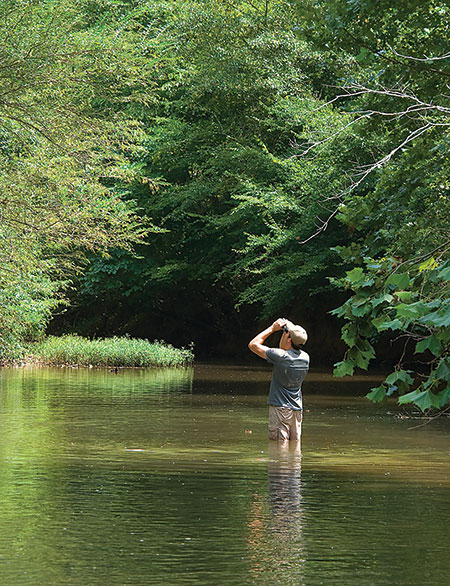 Big Canoe Creek Preserve
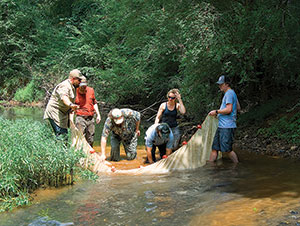 Two graduate students from the University of Alabama, Frank Gigliotti and Thomas Franzem showed up for the Bio-Blitz “just for fun. They were there looking for species of birds and insects. They are working with the State now for a return visit for a more thorough exploration.
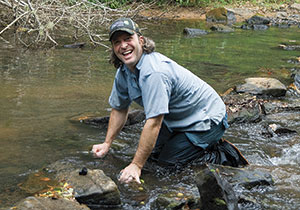 “For The Friends of Big Canoe Creek it has always been about protecting and educating ourselves and our community about Big Canoe Creek,” said Vickey Wheeler.
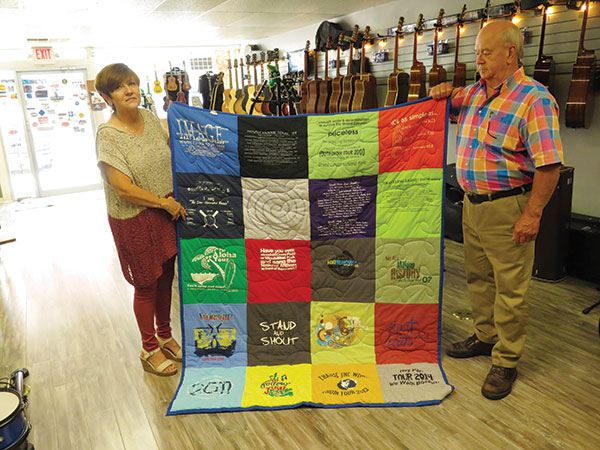
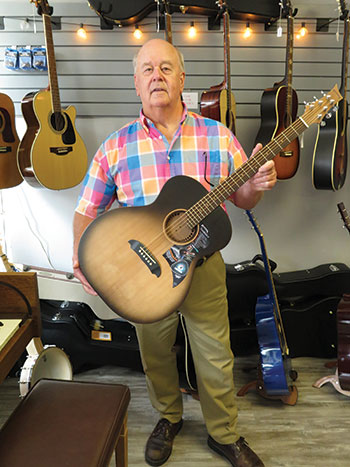 And that is exactly the way he wants it — for Ron Partain, since his mid teenage years, his life has centered on music — and it’s a love that he wants to share with the world. So he, with the help of long-time employee Karen Poe, distill that love into the store that has been open on Cogswell for 41 years now.
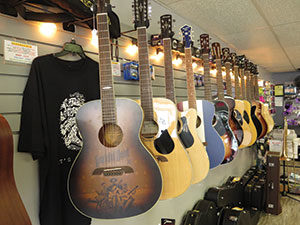 Hesitant at first, Partain and a few of the other players realized a choir might be a great place to meet some young ladies. So he joined up, and his life’s path was set.

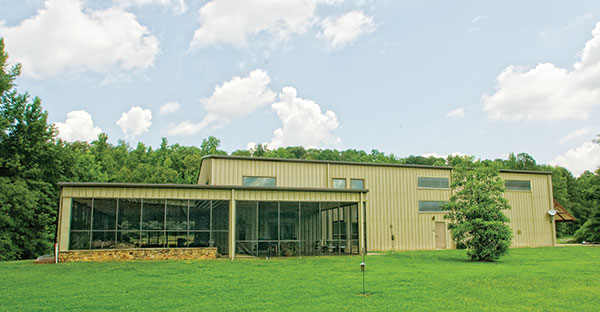
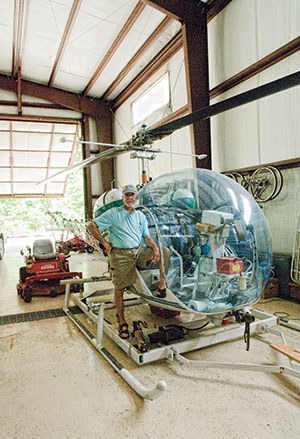 Most of the 2,400 square-foot lower level of the house is one large room spanning the width of the metal building. Occupying one end of this Great Room is a fireplace made of Iranian copper that Jim had been saving since the mid-70s. At that time, he was teaching the Shah of Iran how to fly a helicopter, something Jim had been doing since his Army days in Vietnam. “I worked in the Bell Flight School’s secretarial office,” Paulette says. “He had intended to build a bar with that copper, but I wouldn’t let him.”
 What she got was an open-air freight elevator made of gray metal with a wooden floor. A machine shop in Springville built the frame, and its owner, Mickey Dooley, helped Jim install it. Those who don’t like the loud whir of the motor or the open-air feeling while traveling upward can take the stairs, which start as a spiral staircase on one side of the elevator and end as steps on the other side.