Pell City is set to become a premier dining destination as Darden Restaurants, a global leader in full-service dining, officially broke ground on a new Olive Garden and LongHorn Steakhouse on May 18, 2025.
This highly anticipated project, valued at over $6 million, is the result of a dynamic partnership between Darden Restaurants, I-20 Development, the City of Pell City, and the St. Clair County Commission. The spirit of collaboration was present at today’s groundbreaking ceremony, held on the development site located at the intersection of US Highway 231 and Hazelwood Drive, adjacent to the I-20 West ramp.
“This is a ‘we thing,’ not a ‘me thing,’” said Bill Ellison, President of I-20 Development, who spearheaded the project. “It’s been a total team effort, and I want to compliment the City and County for their commitment and cooperation. As long as we can keep these relationships in place, there are limitless possibilities for what comes next.”
The new restaurants are projected to generate a combined $10 million in annual sales for Pell City, significantly boosting the local economy. Moreover, they will create numerous job opportunities for area residents and enrich the city’s dining scene with diverse culinary options, attracting visitors from across the region.
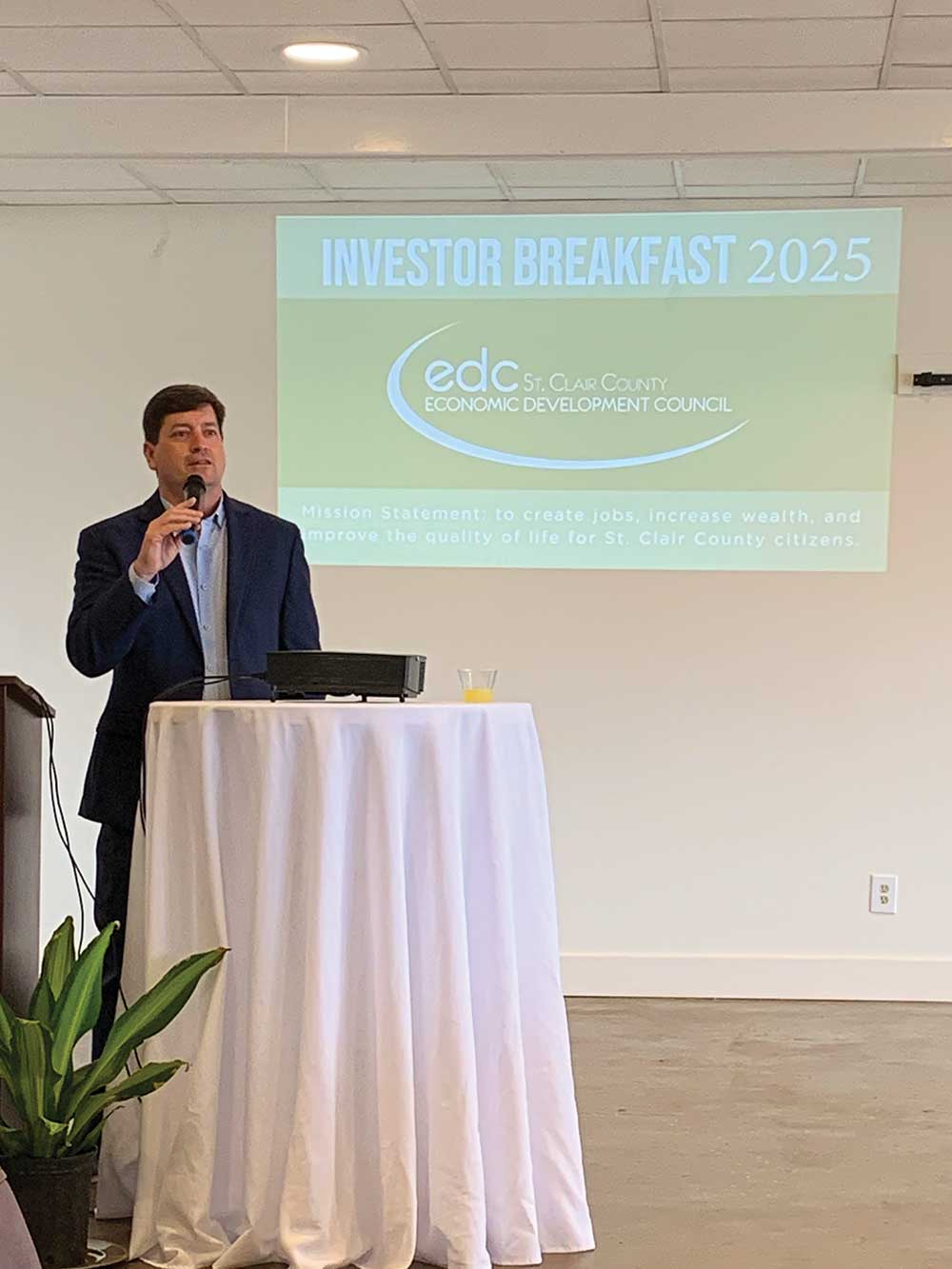
St. Clair EDC Executive Director Don Smith outlines path of success
Darden Restaurants, renowned for its commitment to exceptional dining experiences, operates over 2,100 locations worldwide. In Alabama alone, the company employs more than 3,300 team members across its 38 existing locations.
“It’s a tremendous feeling to know that these businesses that have so many choices on where to locate choose make their investment in our community,” said Bill Pruitt, Mayor of Pell City. They recognize that this is a special place to be. We’re grateful for the work of Bill Ellison and for the County Commission’s partnership, and we’re honored to welcome Olive Garden and LongHorn into the Pell City family.”
The Pell City restaurants will uphold Darden’s high standards, offering the beloved menus and inviting atmospheres that have made Olive Garden and LongHorn Steakhouse favorites. Guests can look forward to indulging in Olive Garden’s signature pasta dishes, soups, salads, and breadsticks, or savoring LongHorn Steakhouse’s expertly grilled steaks, sides, and appetizers. Both locations will also feature full-service bars and delectable desserts.
“This entire project is exciting,” St. Clair County Commission Chairman Stan Batemon said. “Bill Ellison saw a vision over here, and myself and the other Commissioners are grateful for his and the City’s work in bringing these restaurants to St. Clair County.”
The Pell City locations are expected to open in 2026.
Pell City Breaks Ground on Olive Garden, LongHorn Steakhouse
Pell City is set to become a premier dining destination as Darden Restaurants, a global leader in full-service dining, officially broke ground on a new Olive Garden and LongHorn Steakhouse on May 18, 2025.
This highly anticipated project, valued at over $6 million, is the result of a dynamic partnership between Darden Restaurants, I-20 Development, the City of Pell City, and the St. Clair County Commission. The spirit of collaboration was present at today’s groundbreaking ceremony, held on the development site located at the intersection of US Highway 231 and Hazelwood Drive, adjacent to the I-20 West ramp.
“This is a ‘we thing,’ not a ‘me thing,’” said Bill Ellison, President of I-20 Development, who spearheaded the project. “It’s been a total team effort, and I want to compliment the City and County for their commitment and cooperation. As long as we can keep these relationships in place, there are limitless possibilities for what comes next.”
The new restaurants are projected to generate a combined $10 million in annual sales for Pell City, significantly boosting the local economy. Moreover, they will create numerous job opportunities for area residents and enrich the city’s dining scene with diverse culinary options, attracting visitors from across the region.
Darden Restaurants, renowned for its commitment to exceptional dining experiences, operates over 2,100 locations worldwide. In Alabama alone, the company employs more than 3,300 team members across its 38 existing locations.
“It’s a tremendous feeling to know that these businesses that have so many choices on where to locate choose make their investment in our community,” said Bill Pruitt, Mayor of Pell City. They recognize that this is a special place to be. We’re grateful for the work of Bill Ellison and for the County Commission’s partnership, and we’re honored to welcome Olive Garden and LongHorn into the Pell City family.”
The Pell City restaurants will uphold Darden’s high standards, offering the beloved menus and inviting atmospheres that have made Olive Garden and LongHorn Steakhouse favorites. Guests can look forward to indulging in Olive Garden’s signature pasta dishes, soups, salads, and breadsticks, or savoring LongHorn Steakhouse’s expertly grilled steaks, sides, and appetizers. Both locations will also feature full-service bars and delectable desserts.
“This entire project is exciting,” St. Clair County Commission Chairman Stan Batemon said. “Bill Ellison saw a vision over here, and myself and the other Commissioners are grateful for his and the City’s work in bringing these restaurants to St. Clair County.”
The Pell City locations are expected to open in 2026.
Not everyone will rise up to meet you. Not everything we wish for will work out in our favor. Not every doctor’s appointment is going to deliver good results.
Not every prayer will be answered the way we hope. Not every letter will bear good news. Not every friend will defend you or stand by your side. Not every “I love you” will be sincere.
Not every person who walks into our life will decide to stay.
But in every hard, heavy and seemingly unbearable situation we find ourselves in we have a choice …
We decide how to bear the news. We decide how it affects us. We decide how to carry on. We decide what to hold and what to leave behind.
WE decide. Sometimes our greatest growth and personal advancement emerges from our sadness and broken hearts.
Sometimes a greater awareness of ourselves and what we are capable of becoming … and surviving … arises through our disappointments and despair. Sometimes we rise up to exceed our own expectations when life is hardest and messiest.
But first WE must decide.
– Mackenzie Free –
Wife, mother, photographer & current resident of the unassumingly magical town of Steele, Alabama
Jefferson State names nursing wing after former senator
Story by Carol Pappas Submitted photos
When Jim McClendon was first elected to the Alabama House of Representatives in 2002, state Sen. Jack Biddle asked him what he wanted for his future in politics.
“I want your seat,” he told Biddle, one of the most powerful senators at the time. Biddle retorted, “You’re not ready yet. You don’t know where the money is.”
In the years that followed, Senator McClendon not only found the money, he invested it in what is becoming a lasting legacy for St. Clair County and the region.
Jefferson State Community College recognized the longstanding support of McClendon by naming the Nursing Wing at the St. Clair-Pell City Campus in his honor with a ceremony on Wednesday, Dec. 18.
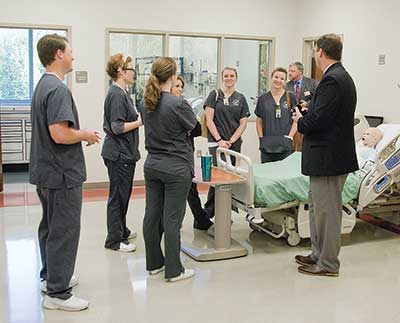
Dr. McClendon has been an ardent supporter of Jefferson State initiatives for many years. He was instrumental in the opening of the St. Clair-Pell City Campus in 2009 and the establishment of the Nursing Wing in October 2017, an expansion that included two simulation labs, a fundamental instruction lab, two classrooms, six offices and a conference room.
Nursing students at the opening of the new wing in 2017
“Dr. McClendon was instrumental in Jefferson State starting in St. Clair County,” said Jefferson State President Keith Brown. “Because of his efforts, we’ve been able to educate hundreds of RNs, and they’re working and caring for people right here in this community.”
Just before unveiling the plaque commemorating the new name, Brown talked of McClendon’s dedication to education and health care in the form of support for the college. “It’s just my job,” Brown said McClendon told him.
“I’ve always had an affinity for nurses,” he joked to the crowd gathered for the ceremony. “I married one.”
Jefferson State’s first presence in the county was in Moody, but it was only temporary – representing a “foot in St. Clair County” – as McClendon described it. The college was built in 2009 with an LPN program. In 2012, the RN program became a reality, and the opening of St. Vincent’s St. Clair Hospital in 2011 and the Col. Robert L. Howard State Veterans Home in 2012 catalyzed the program’s growth.
“All of this was critical to educating these folks here and creating good jobs,” McClendon said. He noted that graduates have a 100 percent rate of job placement before graduation. “It’s a model for other state programs. They are educated here. They come back here. Health care in our area is getting better and better because of what’s going on at Jefferson State in Pell City.”
The college, he said, represents so many opportunities for St. Clair Countians. Many times, it is the first time higher education doors are open to families. “It’s changing Alabama. It’s changing our community. And they’re doing it the right way.”
A vision for the college
Looking back to the earliest conversations about locating a community college in St. Clair County, “there was always a recognition that there was a need for what a community college could bring to our region,” said Guin Robinson, dean of Economic Development at Jefferson State.
“Workforce development was at the top of that list,” Robinson said. “It was very obvious that health care was a driver for St. Clair County and the entire region, so it made sense there would be a need for nursing in Pell City and St. Clair County. It has certainly been a priority,” bolstered by the location of hospital and the state veterans home near the campus and doctors’ offices throughout the area.
The nursing program is expensive to operate and is not fully funded by tuition. The community’s and McClendon’s support have been “vitally important,” Robinson stressed. “Sen. McClendon has been our partner since the beginning. He could not have been a greater partner.”
McClendon’s influence and determination ensured that this legacy will continue, Robinson said. “And he did it without fanfare because we needed it for our community. He played a major role in the generational impact it is having in our community, and we wanted to honor him now so that we can show our appreciation.”
The McClendon story
Born in Mobile, McClendon earned his Bachelor of Science degree at Birmingham-Southern College in 1965 and his Doctor of Optometry degree from the University of Houston in 1967.
McClendon then joined the United States Navy Medical Service Corps in 1968 where he was commissioned as an officer. Lt. McClendon served with distinction in Vietnam, for which he was decorated with the Navy Commendation Medal with Combat Distinguishing Device.
Over the course of his optometry career, McClendon distinguished himself as a leader in Alabama›s optometry community, serving as president of the Alabama Optometric Association.
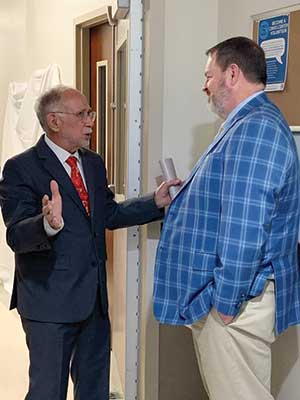
Retired senator chats with new senator, Lance Bell
In November 2002, McClendon retired from his private practice to pursue public service. That year, he was first elected to the Alabama House of Representatives, representing the state’s 50th District, where he was subsequently reelected for two additional terms.
Among other notable postings and accomplishments (including Chair of the House Ethics Committee and Chair of the House Redistricting Committee), Rep. McClendon served as Chair of the Health Committee, where he played a pivotal role in the passage of the Medicaid reform legislation.
In 2014, McClendon was elected to the Alabama Senate where he represented Alabama›s 11th District for two consecutive terms. He served on and provided leadership for various critical Senate committees, including the Rules Committee, Education and Youth Affairs, Fiscal Responsibility and Economics Development, Transportation and Energy, Health and Human Services, for which he served as Vice Chair, and the Senate Healthcare Committee for which he served as Chair.
McClendon personally introduced 210 bills in the House and Senate on a range of critical issues, including education, public safety, economic development, and, of particular personal importance to him, healthcare and the advancement of Alabama’s healthcare professions.
“During my time as a legislator, I always heard the importance of job creation, employment and improving Alabama by creating good jobs,” said McClendon. “That’s exactly what Jeff State is doing, and it is a model for all other programs in the state.”
A lifelong love of fishing has Springville’s Walker climbing in pro fishing circles
Story by Paul South Submitted photos
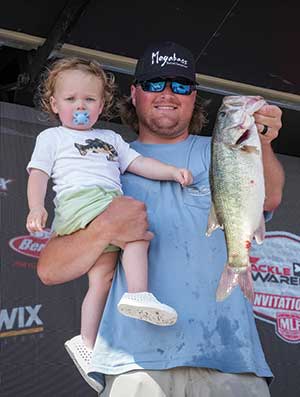
Like most anglers, from weekenders to tournament champions, Jacob Walker’s love affair with fishing brings with it a creel full of family and friends who taught him the art and science of the sport.
Like a teenage boy smitten by the homecoming queen, Walker fell fast and hard for angling. Even as a small boy, from the Warrior River to Logan Martin Lake, fishing and family were his Alpha and Omega.
He and his friends even engaged in a little truancy to take to the outdoors. “We didn’t skip school to do bad things,” he said. “We skipped school to go fishing and hunting.”
After high school, he enrolled briefly at UAB. But boats and tackle, not books and tests, won out. While working at Mark’s Outdoors, a Vestavia store, Walker’s fire for fishing – sparked as a small boy by his grandfathers, father, Geoff Walker, stepfather, Dexter Laird, and friends – only grew.
One grandfather owned a place on Logan Martin Lake. “When I was little, my grandfather took me to Logan Martin all the time,” Walker said. “It seemed like we got up at 1 in the morning when we’d get up early and get out on the water.
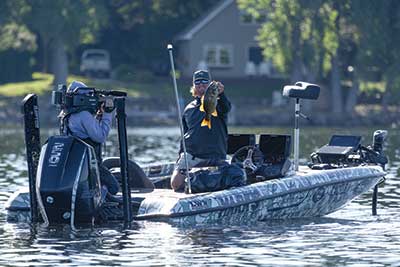
Filming a pro at work
“They would never see me from the time we got there until it was time to leave,” he recalled. “I was walking around, fishing. I’ve been doing it my whole life, man. It’s crazy.”
From those earliest days, Walker began to craft his own style of fishing. Now on the Major League Fishing Circuit, that style has served him well.
In 2024, he captured his first MLF tournament title in a weather-abbreviated event at Lake Champlain, N.Y. On the circuit, he carries counsel from his early teachers in his mind and heart: Find your own style – from water depth, to location, to lures – and strive to be the best.
“You can’t beat everybody at their technique. You can’t always be the best at every technique. So, when I was growing up fishing on the Warrior River, I spent a lot of time fishing in shallow water… around a lot of grass and logs and lily pads and stuff. What’s really got me (to the pros) is shallow fishing.”
What advice would he offer to someone dreaming of a pro career?
“Try to do it all. Try to learn everything. But do what fits you. Don’t try to copy someone else’s style. Try to find a style that’s going to work for you. Sometimes, that’s not going to work out. But when it does, it’ll pay off.”
That philosophy has worked in Walker’s brief tournament career. According to the MLF website, in 12 tournament appearances he has five top 10 finishes, including the Lake Champlain title, earning more than $150,000.
Tournament fishing, like the rest of society, is increasingly technology driven. But even at 26, Walker considers himself “old school.” Sure, he uses tech gadgetry, but his fishing is driven by attributes as old as fishing itself.
“There are a lot of younger guys coming out of high school and college, I would say 24 and under. Those guys are very, very good at technology … But the guys like me who are between 25 and 35, we grew up fishing the old-school techniques, not a lot of technology. The really good technology we have now, we go to watch it advance.”
He added, “A lot of guys like me, we grew up learning from the old school fishermen. No technology. They would just go off their eyes, their hearts, their instincts. (Younger tourney anglers) don’t really know the old-school techniques – fishing off your instincts and reading the water.”
So he holds fast to the old ways, even In these modern times. Shallow water. Fishing around cover and around docks. For Walker, style matters, but so do the old ways.
“Luckily, I’ve got the old-school instincts. But fortunately, I’ve been on board with the technology. So I can do both.”
He calls that period for fishermen between the mid-20’s and mid-30’s “the magic number.” And Alabama is loaded with talented anglers, buoyed in part by the state’s diverse waters with different depths and stains and currents.
“The Coosa River, all these rivers, there’s all kinds of styles of fishing you can learn. So I was very fortunate to grow up fishing here. It’s taught me everything.”
And that knowledge along with the support of his wife, Alyssa, and other family, friends and corporate sponsors have driven his dream. He knows his career will involve fishing. What form that professional life will take is the great unknown.
He’s a brand ambassador for NSR Fishing, Coosa Cotton apparel, Phoenix Boats from Stateline Marine in Lanett, Mark’s Outdoors, Megabass, Deps lures and Dirty Jigs Tackle and other firms and individuals. Walker has a long list of supporters.
“Part of the reason I decided not to go to college was I knew I wanted to pursue fishing as a career. Whether it’s fishing in tournaments, or being in the industry, I still don’t really know 25 years from now what I’ll be doing. But I know I want it to be (fishing) industry related. Working at Mark’s Outdoors gave me that golden ticket.”
A family tradition is born
His tournament career began in the pandemic year2020 in the Bassmaster open series. He finished second in his first event at Lay Lake, winning more than $18,000. In the next year, he narrowly missed qualifying for the Bassmaster Elite Series.
“I was confident after that. I know I could do this.”
After moving to MLF in 2023, Walker, now the proud father of a new baby, fished closer to home, but managed to finish sixth overall.
He credits Alyssa for her support and keeping the waters steady at home. Thanks to his job and the support of corporate and personal sponsors, he’s been able to compete in tournaments that carry with them $5,000 entry fees.
“It’s been a great year,” he said. “I finished seventh overall. I fished in six tournaments. I got a check in five, including Lake Champlain.
“It’s crazy that a guy from way down in Alabama could go all the way up there close to the Canadian border and win,” he said. “That was such a cool experience.”
High winds that made waves treacherous on a lake that features an “inland sea” cut the tournament short. In the joy of winning, something gnawed at Jacob Walker’s heart. It didn’t feel like a full-fledged win. That led to an unusual victory celebration. There was no cracking open a bottle of champagne, no lighting a victory cigar. He had to settle his mind and know that had the tournament not been cut short, he still would have won.
But it seems his celebration would have been a hit with family and friends who stoked his passion for fishing when Walker wasn’t much bigger than his rod and reel.
“I went fishing,” he said. “After that, I got to prove to myself I would have won anyway. It was a ball.”
And if there is a takeaway from Jacob Walker’s story, it’s thankfulness, family and friends.
“I’m very thankful to the people who took me fishing when I was a kid. I’m very thankful to my sponsors and to my wife, too. Without them, I wouldn’t be here.”
Story by Roxann Edsall Photos by Mackenzie Free Drone photos by Eric Love Additional photos by Michael Goodman Photos by Ed Tyler Contributed photos
Like so many, they were looking for a new home. The group had a place they’d outgrown and needed more space, open concept, for sure, with room to breathe. Their dreams were realized when they found 877 acres for sale in St. Clair County.
The search committee for Brock’s Gap Training Center had been peppering the area with inquiries, targeting any large tracts within 30 minutes of their Hoover location. They zeroed in on the perfect location on Camp Creek Road in Pell City. They sold their 90 acres in Hoover and were able to purchase almost 10 times the acreage in St. Clair County for their shooting range and training facility.
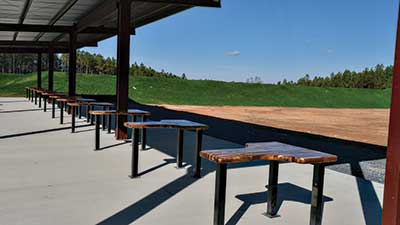
Covered wood shooting benches
Recently opened, the facility boasts one of the longest ranges in the southeast. “We’ll have a 1,400-yard range as one of our offerings,” says Michael Goodman, president of Brock’s Gap Training Center, a membership-based shooting club. “It’s uncommon to have a range of that length. People usually have to travel to Tennessee to practice shooting that distance.”
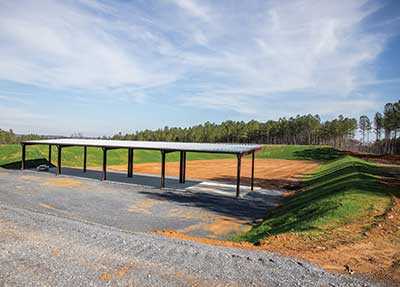
“There’s a community that really values those longer ranges,” adds Goodman. “We’re hoping to attract those shooters from Alabama, Georgia and Tennessee to come to our range.” Additionally, the new center will have 100-yard, 50-yard and 30-yard ranges with covered shelters, along with pistol bays and two “plinking” ranges. (A plinking range is a shorter distance range with metal targets.) Ranges also offer either bench rest or positional shooting.
As you look out over the acreage, you see rows of uniformly sculpted berms, well-drained and seeded. In between those berms, the shooters are protected from ammunition from other ranges.
Range safety officers hold each group to strict code of hard and fast rules, including gun expert Jeff Cooper’s “Coopers 4” rules: 1) Treat every firearm as if it is loaded, 2) Keep your finger off the trigger until you are ready to fire, 3) Never point your firearm at anything you do not intend to shoot, and 4) Be sure of your target and what is in front of and behind it.
Brock’s Gap Training Center offers courses in gun safety, concealed carry, women’s personal safety, competitive shooting and training for security teams. They currently assist local law enforcement by providing facilities for their officers to practice for certifications. They also have had high school students preparing to enter the military come to their facility for training.
“Safety is number one,” emphasizes Goodman. “We hope to encourage and empower people to be responsible gun owners. We prioritize safety, gun maintenance and understanding of the responsibilities of gun ownership.”
Having the facilities to practice with their firearm keeps the gun owner familiar with it and establishes safe and responsible use and care habits. “It’s especially important, if you’re using your gun for self-defense,” explains Goodman. “You need to be introduced safely to your firearm and learn to establish safe handling practices.”
While Brock’s Gap is a private facility, membership is open to the public. The membership application process is overseen by an elected board. You do not have to be a member to participate in classes or to come to the matches. Those are all open to the public.
History of growth
In the 62-year history of Brock’s Gap Training Center, they’ve grown to 900 members and host shooting matches and competitive shooting events nearly every weekend.
They’ve already begun hosting their first matches at the new facility. Those matches are a boost for the local economy, with state-level matches drawing more than 100 people from out of the area into St. Clair County for food and lodging revenue. Brock’s Gap has hosted matches for the International Defensive Pistol Association (IDPA), Steel Challenge Shooting Association (SCSA) and the United States Practical Shooting Association (USPSA).
With the move, Brock’s Gap has been able to expand the number of shooting bays and stage areas for matches. Most matches are held in “berm-defined” bays, using 6-12 of these bays set as “stages.”
Covered area overlooks the range
They play in a squad of 8-10 shooters. As in a golf match, those in the squad have handicaps and compete against those with similar handicaps. When each shooter has completed the targets in each stage, the group moves to the next stage in the next bay.
Some of the larger matches can use up to 20 stages. With more bays, they will be able to host larger matches and even have matches that overlap dates. The additional bays will give them the latitude to set up stages for incoming matches while current matches are concluding.
Facilities at Brock’s Gap Training Center include the Range Headquarters building, with restrooms, ice and water availability, and a training room. Future plans include the addition of a small RV park to accommodate out-of-town match participants and an EMS helipad. Current plans use just 250 acres of land, leaving plenty for future development and growth.
“There’s a large recreational shooting community in Alabama,” says Goodman. “We need facilities like this one to be able to participate safely in this sport.” There are those like Goodman who shoot every weekend and some who have specific seasonal needs. “We have people who use our facility to zero their rifles to get ready for hunting season,” he says.
The training facility also supports Scholastic Action Shooting Program (SASP), a national program that provides an environment for student athletes that supports learning through shooting sports activities. They have also been a resource for scouting groups through the years.
“A friend introduced me to competitive shooting,” says Goodman, “so I’d been shooting off and on my whole life. Once I joined Brock’s Gap, it became an every week kind of thing.”
If you’ve set your sights on shooting as a hobby or sport, you now have a neighbor in St. Clair County with a high caliber facility ready and waiting for you to take aim.
Editor’s Note:Visit brocksgap.com for more information about Brock’s Gap Training Center.