Lakeside Hospice

Volunteers traditionally are at the heart of nonprofit works, often going about their business to little fanfare or notice.

But Lakeside Hospice and a group of supporting partners turned one occasion for celebration into one that lauded one of its most dedicated volunteers – Mike Aiello.

In a surprise recognition at the ribbon cutting ceremony of Lakeside Hospice’s new renovations, representatives of the hospice and other groups honored Aiello for his selfless acts of offering a helping hand. It was proclaimed, appropriately, “Mike Aiello Day.”

Honoring Mike Aiello

Aiello has been volunteering at Lakeside Hospice for at least 15 years, said Executive Director Paul Garing. He is a person that sees a need and always shows up to fill it. Whether it’s making sure the pump in the fountain is working properly, tree limbs are cleared or checking doors to ensure they’re locked, “he just shows up and does it,” Garing said. “He does everything for us.”

As others attested, Lakeside Hospice is not the only recipient of his good works. He volunteers with ASPCI, volunteered with and served as director of the Love Pantry food bank, works with buildings and grounds at Our Lady of the Lake Catholic Church, volunteers with Habitat for Humanity and is known for good deeds in his community of Pine Harbor.

Municipal Judge Brandi Hufford read a proclamation declaring it Mike Aiello Day and noted she will be presenting it to the City of Pell City for official designation.

“They all came together in a surprise party to honor him,” Garing said. Photos and newspaper clippings were hung in a display to pay tribute, and representatives of ASPCI, Habitat for Humanity, Our Lady of the Lake, Love Pantry, Pine Harbor Association and of course, Lakeside Hospice spoke about him and his good works..

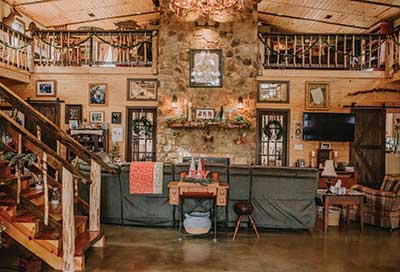
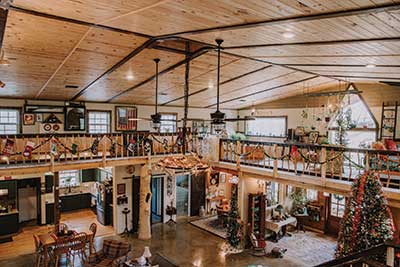
As part of the day’s festivities, Lakeside Hospice did cut the ribbon on renovations to its building, including new paint, cosmetic additions and landscaping to create an inviting and welcoming environment for staff and patients.

Lakeside Hospice was founded in 1991 as a nonprofit hospice, not only serving patients with Medicare or insurance, but also patients regardless of their ability to pay.

A cornerstone of Lakeside Hospice is its volunteers, who provide direct care, respite care, comfort care programs, general maintenance, accounting and office services.

Aiello would certainly be tops on that list, Garing said. “I’ve never seen anyone as dedicated a volunteer as he is.”

Metro’s Jason Dorough honored

Jason Dorough, president of Metro Bank, was awarded the 2023 Chairman’s Award from the St. Clair County Economic Development Council for his work and support of economic development efforts in St. Clair County.

EDC presented it at its annual event, held this year at The Grill at The Farm near Logan Martin Dam.

Dorough joins a prestigious group of honorees for this award that is given once a year to honor a non-elected person who has shown exemplary support for the organization’s mission to create wealth, increase job growth, and improve the quality of life for St. Clair County citizens.

Past honorees include St. Clair County Commissioner Tommy Bowers, St. Clair County Commission Chairman Stan Batemon, Judge Bill Weathington, Spencer Weitman, Lyman Lovejoy, Ed Gardner, Sr., Carol Pappas, Bill Ellison and former St. Clair County Commission Chairman Paul Manning.

“The St. Clair County EDC has been very fortunate to have the partnership and support of Metro Bank from its inception. As a local banking partner, they have been a supportive part of our team of resources for the entirety of the EDC’s existence,” said Joe Kelly, chairman of St. Clair EDC Board of Directors.

“Jason Dorough has been a tremendous and integral part of that partnership, offering assistance and support when necessary. Knowing our organization and Metro Bank have common goals, to bring new wealth and jobs to the local economy, Jason has always made things happen in a way that is welcoming to local industry and investors.”

“We are always excited to welcome new investment into St. Clair County, and we want to be the bank that our local businesses can rely on,” said Dorough. “Our partnership with the St. Clair County Economic Development Council has been very fruitful through the years, and we have a great working relationship. It was a real surprise and tremendous compliment to receive this honor and appreciation for our work in economic development in St. Clair County.”

The EDC is the economic development organization for St. Clair County and its municipalities, facilitating industrial, institutional, commercial and leadership development throughout St. Clair County.

The EDC team, in partnership with state and local partners, focuses on helping existing businesses grow and compete, diversifying the economy through attraction of new businesses, and supporting newly formed high-growth enterprises.

Letting Children Become

I decided years ago to just let my children ‘be’.
‘Be’ whoever they are, however they are. 
I decided to let them be wild or tame… soft or loud … friendly or shy … serious or silly. 
I decided to let them draw dragons and pick flowers, play with dolls and dump trucks, climb trees, catch frogs and take mud baths.

I let them be right, I let them be wrong.
I let them be bold and meek, scared and brave, emotional and unmoved.

I let them go barefoot and pick their own clothes.
I let them fall in line or be daringly different. 
I let them try, and l let them fail.
I let them take risks and learn to trust themselves.

And it’s an amazing thing to witness … the miraculous metamorphosis of their “becoming.”
There is so much beauty and freedom found in watching our children become who they are.

– Mackenzie Free –

Wife, mother, photographer & current resident of the unassumingly magical town of Steele, Alabama

Giving back

Moody group makes quilts for veterans

Story by Elaine Miller
Photos by Richard Rybka

Every time Barbara Willingham makes a quilt for a military veteran, she remembers the time her son called her from Iraq at 2 a.m.  She could hear explosions in the background. “Mom, I gotta go, we’ve been bombed,” he told her. Then he hung up, and she didn’t hear from him again for two fear-filled weeks.

“He came back, and I have my son, but not every mom does,” she says. “Every quilt I make I’m grateful I’m not going to the cemetery.”

Barbara is part of the Moody Crazy Quilters, a group of women that makes quilts for veterans, foster children, nursing home residents and hospice groups, to name a few. It’s their way of giving back to veterans and offering comfort to others who may be hurting physically or mentally.

“I like to make children’s quilts because kids wanna hold something, especially if they’re in the hospital,” says member Carolyn Snider. “I also enjoy making quilts for veterans. Our freedom is not free, and this is a way to give back to them.”

Laura Temple Kinney quilt details

The group meets at Moody City Hall the first Monday of each month, except for holidays. It started in 2009 as a library function at Moody’s Doris Stanley Memorial Library, but soon outgrew its meeting space. They have about eight steady members, including one who moved to Marietta, Georgia, but still comes back for monthly meetings.

Most members also belong to a similar group called Loving Hands that meets at Bethel Baptist Church.

They try to identify a couple of veterans each year to quilt for, such as the two found by group coordinator Jill Dailey’s husband, an Army vet himself. The group also made a patriotic quilt for Moody Mayor Joe Lee, another Army veteran, as a thank-you for his military service and for the meeting space the city provides.

“We label our quilts, ‘Gift from Moody Crazy Quilters,’ and on our patriotic quilts we add, ‘Thank you for your service,’ ” says Jill. “We also put the year we made them on the labels.”

Once a recipient is chosen, each woman usually makes a quilt block at home, choosing her own fabric, colors and design. Then the group puts their blocks together to make one Sampler Quilt, as they are called.

“Each month people turn in their blocks, and we’ll put them in a pile and lay them out and decide what to do with them,” Jill says. “We make 12-inch blocks, using four across and five down, plus binding, and sometimes a wide sashing between rows.”

The group donates at least three patriotic quilts to veterans every year, along with several more to hospice organizations for their patients. Children’s of Alabama is another organization that benefits from the group’s quilting efforts.

“Lots of our fabric is donated  by various people, but a lot comes from our own stashes,” says Carolyn, who joined the group in December 2021 after retiring.

Most are lap quilts. Those made for nursing homes have a small, fleece-lined pocket to keep hands warm. On the outside of the hand pocket is a smaller one for a phone, glasses or tissues. “Most of us don’t make standard-size quilts, but Barbara sometimes gets carried away,” Jill says.

The quilt the Moody Quilters made for Mayor Joe Lee. – Left to right: Jill Dailey, Mayor Lee, Gaye Austin

Nearly all of these women have been quilting for years, some since they were children. “My mother taught me to quilt,” says Laura Kinney who, at 86, may be the oldest member of the group. “Ours weren’t pretty, either. They were just called ‘covers’ back then.”

She recalls the days before she retired, when she often would often get home from work at 8:30 p.m. and sew on a quilt. “I would sometimes tell my husband, ‘My hands hurt, you need to do the cookin’ tonight,’” she says. She has made a quilt for each of her children, and has a stack of 10 that measure 50 inches x 70 inches each, five blocks across by seven blocks down, ready to present to her great nieces and great nephews. She also has a quilt that she hangs on a wall at home to display her husband’s Coast Guard patches.

Some of the women own long-arm machines, others just domestic sewing machines. At least one has a Cutie Frame, a tabletop quilting frame used in conjunction with a sewing machine to do the quilting.

“Making quilts for veterans ispayback for me,” says Barbara, who volunteers at the Colonel Robert L. Howard State Veterans Home in Pell City. “Not every mother can say her son went to Iraq and came back. I know how hard it is. My son, Toussaint Edghill, is a disabled vet, and I do this to honor him.”

Gaye Austin’s husband and son are veterans, and she wants to show her appreciation to them and to all veterans “for giving us our freedom and the protection we have today,” she says.

“We want to thank the veterans for their service, and we enjoy quilting so much,” says Jill. “It’s a win-win.”

Thank them for their service

Volunteers honor vets with muscle, sweat, tears and roses

Story by Paul South
Photos by Carol Pappas
Submitted Photos

At the blighted Blue Star Memorial marker on Veterans Memorial Parkway, weeds were  winning the war just a few months ago.

Flowers wilted in dry ground. Shrubs browned. In Dana Ellison’s blunt assessment, the landmark leading to the Col. Robert L. Howard State Veterans Home that was supposed to honor our military, “looked like crap.”

In short order, a small detachment of volunteers – Ellison, Ellen Tanner, Cayce Johnson and Josh Franklin, along with reinforcements from St. Clair County, Pell City and Wattsville Water  – went on the offensive in the oppressive late May heat to restore the marker’s site to its former glory.

After five hours of volunteer sweat that just beat a major storm, the blight and weeds were in retreat.

The flower bed was condensed, pulled up and edgers relaid. Shrubs and flowers – red roses and white gardenias – were planted. A blue star also adorns the hallowed ground. The low maintenance shrubbery came from Hazelwood’s Nursery in Pell City, and a red, white and blue bow now festoons the marker. 

Small versions of the Stars and Stripes stood at attention, each flag encircling the marker like a patriotic clock.

The ‘before’ photo as volunteers prepared to tackle the project

“If you were to look at the monument from an aerial shot, we laid out the gardenias on either side where it almost designs a star counting the post in the middle,” Ellison said. And to be clear, not one penny of public money was used for the project.
 The volunteers provided the materials.

Wattsville supplied water, and Pell City provided a hydrant to slake the thirst of the ground, flowers and shrubs.

Until the waterline was placed, Pell City’s fire department stepped in to keep the garden watered.

Ellison and her comrades took the monument to heart. She fertilizes, prunes, weeds and waters the site several times a week.

“I have made that my lifelong project, goal, passion to keep that veterans’ garden looking as good as it can.”

The marker’s restored message to motorists?

“Respect,” Tanner said.

Respect for veterans and their families.

Respect for country.

Respect for God’s ground.

The marker, placed in 2013 as a Leadership St. Clair project, hadn’t always been honored.

“All of the blocks had shifted,” Johnson said. “The roses were dead. It was in poor shape. It was not very honorable to the men and women who served our great nation to keep us free.

“I think that as a community and as a citizen of this town and as citizens, we can do better in honoring them,” Johnson says. “And especially since that’s the main road leading down to the veterans’ home, that’s important that they know that a community appreciates them and supports them.”

Tanner spearheaded the original Blue Star project when she was part of the 2013 Class of Leadership St. Clair. Attendees learn about the county and craft a project that leaves a positive legacy. Working with the National Garden Clubs, the class made it happen.

But neglect and time ravaged the area until three women and one man stepped into the breach. The reason was simple, Tanner says. “You cannot honor our veterans enough,” she says. “They are such a precious treasure to this country, and we need to hold them up and honor them as much as we can.”

The Blue Star Highway: A Brief History

Blue Star Highways in the United States pay tribute to all men and women – past, present and future – serving in American armed forces. The National Council of State Garden Clubs, now known as National Garden Clubs, Inc., created the Blue Star program near the end of World War II. Flowers have always been at the heart of the effort. In 1944, the New Jersey Council of Garden Clubs planted 8,000 Dogwood trees to honor those serving in that war.

The markers are only placed on dedicated highways.

The tears of a military wife, mother and daughter-in-law

Johnson is deeply invested in the military. One son is in the Air Force – Airman 1st Class Parker Holmes. Another son, Marine Lance Cpl. Daniel Holmes, is at Camp Lejeune, N.C. Her husband, Billy, served as a Marine sergeant, and her father-in-law, Don, is a Vietnam vet.

She understands the sacrifice of vets and their families. And tears readily flow when she thinks of the monument as it was before the restoration effort and as she thinks of combat vets who sometimes struggle to return to civilian life. Until the May restoration, like those soldiers, sailors and marines, the marker was forgotten.

“As veterans, they come home, and they have to assimilate back into society and a lot of times, they’re not able to, because of the things they’ve seen and the things they’ve been through,” Johnson said. “When I look at (the monument), first and foremost it reminded me of our military men and women who come back home, and they’re just forgotten. They don’t feel they have a purpose.”

Before the restoration, the wilted flowers, the tall grass and scattered stones cut deep. “When I looked at that, and  I saw those roses and that blue star there and all of the grass, it just made me feel like we  just forget them.”

And after the project?

“Once it was all pretty with the roses and the flowers, and St. Clair County Commission Chairman Stan Batemon came with our pine straw to put down, it was just beautiful,” Johnson says. “It’s rejuvenated.”

In a larger sense, the teamwork of the small cadre of volunteers, the public and private sectors, offers a glimmer of optimism and hope for the country during a polarized period.

She thinks of her best friend of three decades, Ellison, who sees Johnson’s serving sons as her nephews. “It does bring back a little bit of hope for our humanity. There are people who still care, who are still very patriotic and love our country and what it stands for.”

Johnson remembers when her sons were small boys. They’d go to the veterans’ home and fill bird feeders. As in those days, she said, the Blue Star project was “an honor. It’s a very, very small ‘thank you’ for what they’ve done for me,” Johnson says. “I always say I kept (my sons) safe when they were little and defended them. And now it’s an honor that they defend me.”

The county, teamwork and respect

For Ellison, it all comes down to one thing. “It was just teamwork, wanting to do a good thing.”

The project not only says something about the volunteers, but about Pell City and St. Clair County.

“When there’s a need,” Ellison says, “people come together to get a job done … It was just a matter of helping fellow man and wanting to do for and respect those people, men and women who served our country.”

She adds, “It was a matter of respect for them. We just wanted to return that respect any way that we could.”

Tanner agrees.

“People in St. Clair County truly care about veterans. I don’t mean this to be a North-South thing. But in the South, we honor and hold dear our veterans, family, God and country.”

And when locals and visitors pass the Pell City Blue Star Memorial marker – or any of them across the country – Tanner hopes a feeling washes over them of thankfulness, appreciation and honor for veterans in general. “We hope it will stir that feeling of thankfulness for their service.”

Preserving memories

Museum of Pell City to premier veteran oral history series in November

Since opening in March, Museum of Pell City has hosted over 1,000 visitors from as close as library patrons from downstairs to as far away as Norway and Austria. Now, the museum’s volunteer team is working on its second thousand.

Capturing the essence of life and history in a city that has passed the century mark is not an easy task, but this 4,000 square foot museum suite blends thousands of photographs, artifacts, artwork, narratives and video to tell the story of days long past through present day.

Its next venture, one that had its beginnings right alongside the planning for the museum itself, is the official unveiling of its oral history series, War and Remembrance, just in time for Veterans Day. The museum board is taking it a step further by celebrating veterans all November long with programs and exhibit displays.

The War and Remembrance series is ongoing through a partnership with the Col. Robert L. Howard Veterans Home with filming and interviewing starting even before the museum opened its doors. Veterans of three wars, representing World War II, Korean War and Vietnam War, are a part of this initial collection to be shown in the museum’s special Living History Studio housed inside the museum.

The studio, equipment and related projects were made possible through a $25,000 grant from the Greater Pell City Rotary Community Foundation and as part of a $45,000 grant from the Alabama Power Foundation. The veteran series is being funded by a nearly $9,000 grant from Alabama Humanities Alliance.

“From the very beginning, we felt like oral history had to be the centerpiece of our efforts to preserve history,” said President Carol Pappas. “What better way to capture those pivotal moments in history or simply the remembrances of everyday life that helped shape the city we know today? We cannot thank our grantors enough for their generosity in providing a foundation we can build on for years to come.”

Deanna Lawley, 1st vice president of the museum and coordinator of the Living History program, stressed the importance of preserving these voices of history. “Pell City clearly has a before and after community feel related to the 60s and the creation of Logan Martin Lake along with the connection to I-20. Residents who were in their teens at this time are now senior citizens. Their stories need to be saved and savored.”

The initial veteran series premiering in November includes interviews from veterans of World War II’s D-Day and Iwo Jima; conflicts of the Korean War; the Bay of Pigs invasion and Vietnam. See and hear accounts of those historic moments in war told by those who were there – “real people, real stories, real history,” Pappas said.

The series soon will be available in various forms on the museum’s You Tube channel website along with complete, word searchable transcripts of full interviews that may be accessed.

Inside the museum’s For Their Service section, see the flag that flew over a Navy ship on its way to Nagasaki and learn about the sailor aboard – a former district attorney in St. Clair County.

Read about Admiral Dennis Brooks, commander of the joint armed forces in the Persian Gulf during the Reagan administration and see his fighter pilot jacket on display.

And peruse the digital exhibit of letters home from a World War II combatant, giving visitors a look inside the lives of two young people from the battlefront to the home front. There will be more as planning continues.

“Our community and our county have a long history of military service, and this is a small tribute to them and all veterans that will be ongoing, added to and expanded as we continue this series,” Pappas said. To demonstrate Pell City’s impact on the military, visitors can learn more about Capt. Gardner Greene and the battalion formed in the city as a forerunner to the famed Rainbow Division.

As a special event on Nov. 2 at noon, the museum and library will partner in bringing Dr. Marty Olliff to the museum for the presentation, The Great War in the Heart of Dixie: Alabama in World War I. Olliff is a Professor of History at Troy University and the director of the Wiregrass Archives at the Dothan Campus.

He has served on the governing boards of: Alabama Historical Commission, Alabama Governor’s Mansion Commission, Alabama Humanities Foundation (now Alliance), Dothan Landmarks Foundation and Wiregrass Museum of Art. He also served as chairman of president of the Alabama Historical Association, Historic Chattahoochee Commission, Alabama Historians and the Society of Alabama Archivists.

He is the published author of two books: The Great War in the Heart of Dixie: Alabama in World War I and Getting Out of the Mud: Alabama’s Good Roads Movement and Highway Administration, 1898-1928.

Olliff’s presentation during a light luncheon will be the first special program the museum will host, and special guests to be honored that day are veterans from the veterans home.

Other programs are being planned on a regular basis on wide-ranging topics as part of the museum’s community outreach.

All museum exhibits, exhibitions and special programming are free to the public.