Twenty five years. Three chairmen of the board. One goal.
In 1999, the newly formed St. Clair County Economic Development Council charted a course where no one really knew exactly where it would lead. But they had an idea that if they all worked together, good things would follow.
The sailing wasn’t always smooth, but they stayed the course – through economic good times and downturns, through political administrations and leadership changes. Through it all, their North Star was working together.
The launch
Creation of the EDC “pulled the whole county together,” said Tommy Bowers, who served as the first chairman of the board. “We worked together as a team and supported each other’s prospects.”
When there was a ribbon cutting or a groundbreaking in one area, the rest of the county’s communities showed up in support. It was the premise upon which EDC was built – what is good for one is good for all.
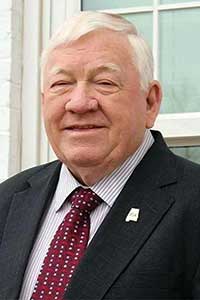
Tommy Bowers
Bowers recalled that the idea of a countywide economic development effort first arose out of the Pell City Industrial Development Board when members Bob Barnett and Ray Cox of Metro Bank proffered the notion that bringing the county together made sense. “They were instrumental in bringing the whole county thing in.”
Every good plan starts with an architect, so they brought former county attorney Bill Weathington in to set up the structure. “A lot of the credit goes to him,” Bowers said.
Because of the success that followed, Alabama Power, long known for its economic development prowess, “used us as an example of how industrial recruiting should work,” he said. “And it wasn’t just county cooperation, it was regional.”
Case in point: Honda Manufacturing of Alabama. Bowers, Commission Chairman Stan Batemon and EDC Board Member Lyman Lovejoy were part of the team that brought the automobile manufacturer to Lincoln in Talladega County. The team also included Calhoun, Talladega, Etowah and Jefferson counties.
In a yearlong, highly secret process under the code name, “Bingo,” the project almost went to St. Clair, but unionization concerns along the I-59 corridor in Etowah steered company officials away from the Steele site.
They considered the Pell City airport property for a time, and they put together a presentation that included relocating the airport.
Then, they looked at the Lincoln site, and a tree may have helped swing the final deal. One of the Japanese representatives “fell in love” with a tree on the property, and it helped sway the decision to that property, Bowers said. Before construction of the plant, they even built a fence around the tree and its root system to protect and preserve it.
At the time, the team didn’t know the identity of the recruiting target, although they eventually guessed it was Honda. The proposal was written in three languages and placed in a leather pouch with “Alabama” embossed on it. The team was even involved in the funding mechanism for incentives. “It’s unbelievable what goes into locating an industry,” Bowers said. “It’s a huge process.”
And while it didn’t wind up in St. Clair, “it was good for St. Clair County and the City of Pell City. It was good for the whole area,” he said. Today, Honda is the largest employer of St. Clair County people not located in the county – over 1,500.
At the beginning of EDC, they didn’t recruit commercial businesses, but they never limited themselves either. EDC officials realized that commercial recruitment needed the same information as industry, so EDC became a “catalyst” for it, he said.
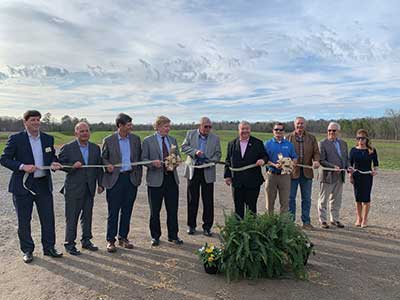
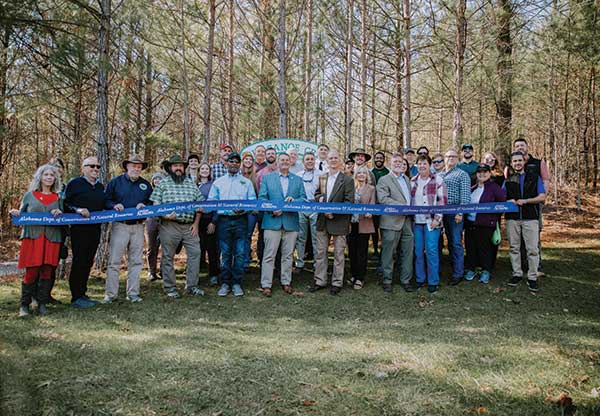
Moody Mayor Joe Lee cuts the ribbon on Kelly Creek Commerce Park, signaling a promising future for economic development
EDC began to invest in retail recruitment and hired Retail Specialist Candice Hill, who is still with the organization today. She has since expanded her role into coordinating the new countywide Grant Resource Center and Leadership St. Clair County program.
Calling the grant center a “tremendous” step in the EDC’s evolution, Bowers said it is eyed as “the biggest move in EDC history.” He views the first 25 years as phases – industry, commercial and now grants, another innovation to EDC’s credit. “It’s the only program set up like that in the state,” Bowers said.
From the smallest of towns to the entire county, they will be able to identify and effectively pursue grants to fill diverse needs with the help this program will provide.
As for the future, Bowers issued a warning. “We need to be careful we do not lose our current recruiter, Don Smith. He is one of the top professionals across the state. We need to keep him and his team in place.”
Judging by the track record and the potential the future holds, Bowers is right when he talks of continuing the momentum. “We need to be planning now what needs to be next. Things are changing. Who would have thought we would go from industry recruiting to grants?”
Smith, he said, is “forward thinking, and he has a great team.”
Looking back, “it took off up in Steele” and evolved into an economic development leader in the state, Bowers said. “It is quite rewarding to be a part of all that.”
What if?
Lyman Lovejoy served on the board at its inception and became its second chairman when Bowers was named to the county commission. In keeping with its original, guiding principle, elected officials cannot serve on the EDC board, and Bowers stepped down.
Lovejoy was in on the ground floor of plans to create the EDC, so he knew full well what to expect as chairman. He remembered the early days when the idea of the EDC was hatched. “There was not a concerted effort around the county to recruit business and industry. Everyone operated on their own.”
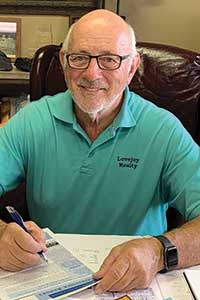
Lyman Lovejoy
If a prospect wanted to look at property in the county, there was not a ‘go to’ person to coordinate although Pell City Realtor Ed Ash was able to successfully locate industries in Pell City early on.
Lovejoy knew the first hire of an EDC director would perhaps be the most important decision they would make. Lovejoy knew of the reputation of Ed Gardner Sr., who served at the Alabama Department of Economic and Community Affairs as director and before that, assistant secretary of Housing and Urban Development in Washington. He was an early advocate for Gardner in the position.
The questions Lovejoy had were, “Would he come? Can we afford him?”
The answer to both were yes, and Lovejoy’s conclusion was simple: “Boy, did we hit a homerun.”
Gardner had the knowledge, expertise and the contacts that quickly moved St. Clair into a leading contender as prospects considered Alabama for new locations or expansions.
“We knew it was a good thing for St. Clair County” having two interstates, railroad spurs, industrial sites and a workforce pool, and EDC began to capitalize on the county’s assets. “We started building on that,” Lovejoy said.
The Saks Fifth Avenue distribution center came. So did Yachiyo. Red Diamond moved to Moody. Dozens more from around the region, across the state and around the world would follow over the next 25 years.
It was a success story played and replayed, just like Lovejoy’s own pitch about St. Clair County. “I love my county, and I love telling its story.”
Continuing the legacy
Joe Kelly, too, was on the ground floor of EDC’s creation, serving as a member of the charter board. “I’m the last of the originals,” he said. “I had some vision of what it could be but nothing like what’s come to pass.”
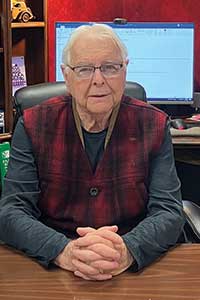
Joe Kelly
He now serves as chairman of the board, a post he has held for the past five years.
Originally, the primary focus was industrial recruitment, he said. The vision expanded with the needs, focusing on retail and quality of life issues, too. “It has evolved into how can we affect the health, wealth and quality of life in the county?”
To get to this point, they had to ask themselves, “Can cities, towns and neighborhoods work together? Is it possible? How do we go about it? It’s remarkable the way it developed into that. The quality of the directors affected that a lot. Still does today.”
The county commission, Kelly said, working with cities and towns became “the glue. Without it, I’m not sure it wouldn’t fragment.”
An important challenge was leveling the playing field, but it was critical to the triumphs over the years. EDC has a working knowledge of cities and towns across the county. “It doesn’t play one against the other,” and as a result, “St. Clair EDC is the envy of a lot of different governments in the state and frankly, nationally and internationally.”
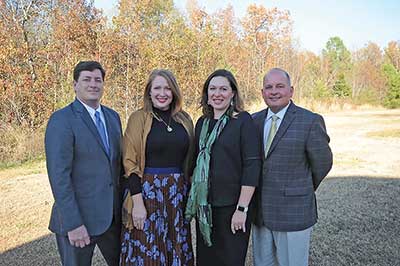
The EDC: Don Smith, Blair Goodgame, Candice Hill, Jason Roberts
Kelly also talked of the promise of the Grant Resource Center. Grants are available, but communities must know about them and go through an often times tedious process without the expertise or manpower. “Why should towns go through all that when the EDC can be involved?,” he asked.
With guidance from the county commission, EDC has stepped up in that role. It is yet another compelling example of putting the EDC to work to fill needs in the county that have gone unmet. It’s a legacy of putting the right people in the right place at the right time and working together to make extraordinary feats happen.
“I’m proudest of helping identify and bring on board people we have had. The quality of the staff – those four people do a lot of work, good work. Our three executive directors all have been superstars. It has been an honor to serve on this board for 25 years and an honor to serve as chairman.”
Its chairmen have been another key component of this legacy of success.
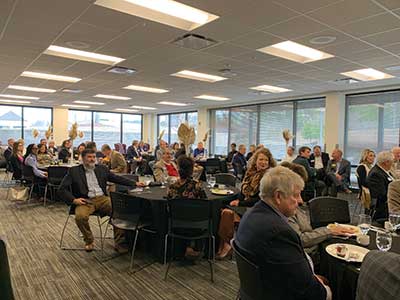
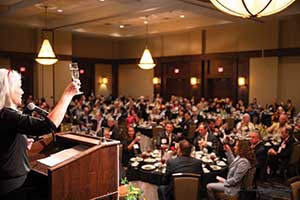
Partnership for Tomorrow audience hears EDC 2024 update
Story by Carol Pappas Discover Photo Archives
It’s an oft quoted phrase – You can’t get to where you want to be if you don’t have a plan to get you there.
From its infancy, St. Clair County Economic Development Council not only had a plan, they developed new ones every five years and executed them to perfection. They set goals. They met goals – and they exceeded them.
Today, as in years past, St. Clair County holds its familiar place as one of the fastest growing counties in Alabama. It is consistently in the top 10 fastest growing by population percentage, sometimes top 5, in the state.
In 2019, EDC put in motion its five-year plan in:
Education and Workforce Development
Job Recruitment and Retention
Marketing
Tourism
Leadership
Like a well-schooled student checking off homework assignments, the team at EDC went to work and by 2023, goals were completed and in many instances, the outcomes exceeded the expectations.
In Job Recruitment and Retention, an A+ would certainly be in order.
Goal – Announce $150 million in new capital investments
Outcome – Announced $672 million
Goal – Announce $50 million in new payroll from new jobs created
Outcome – Announced $54 million
Goal – Announce $3 million in additional tax revenue for schools
Outcome – Announced $11.5 million
Goal – Announce 1,500 new jobs
Outcome – Announced 1,608 new jobs
More than a passing grade goes across the board in all areas of the plan.
In Education and Workforce Development, EDC hosted an annual meeting to create partnerships between employers and educators. That partnership ensures that the county has a trained, skilled workforce to meet available job opportunities.
They raised awareness about regional job opportunities, advocated for education courses relevant to employers’ needs and strengthened relationships and partnerships with education.
The EDC completed work to identify and market 500 acres of sites in the county, surveyed existing business to determine growth potential and needs, raised awareness about the county’s healthcare and educational assets and coordinated successful grant requests from municipalities.
EDC joins officials in Germany at the Alabama Germany Partnership event
To ensure that industries are armed with the information they need on available incentives, proper use of incentives and updates on new incentive programs, EDC held an Economic Development Summit.
In Marketing, they developed communication strategies for messaging on a wide range of subjects, working with Realtors, Chambers, educational institutions and geographical areas, like the I-59 corridor.
For Tourism, they promoted tourism events, activities and sites throughout the county, networked with state and regional tourism organizations and have developed a detailed tourism strategy.
And in Leadership, they continued to build on the strong alumni base and identified prospective leaders in each community, worked in community planning and evaluated Main Street program potential.
“It’s been a great run,” Executive Director Don Smith told a group of investors in EDC’s Partnership for Tomorrow. “We want to accelerate that going forward.”
If the past is any indicator of the future, better fasten your seatbelts.
It’s a small circle, to be sure, but the quality of work found within the arc is a legacy that will impact St. Clair County for generations.
In the 25-year history of the St. Clair Economic Development Council, only three directors have served. Ed Gardner Sr. laid the foundation. Ed Gardner Jr. followed in his father’s footsteps, building upon it, but put his own signature on it, too. And Don Smith continues the legacy with a lofty track record of successes others in economic development envy.
Building the foundation
As Ed Gardner Sr. departed the Gov. Fob James cabinet as director of the Alabama Department of Economic and Community Affairs at the end of his term, he had three choices for his next career move.
“I weighed all three,” Gardner said. Adding a chuckle, he said, “And I took the one that paid the least.” There was something about this newly hatched St. Clair Economic Development Council he found intriguing, challenging and potentially rewarding.
“I liked the board from the first day I met them,” he recalled, adding that Board Member Lyman Lovejoy’s “personality” hinted to him that “this is going to be a fun job.”
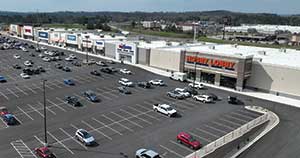
Retail made a major move with opening of Pell City Square
At the time, 90 to 95 percent of the projects were coming through agencies that were well funded, affording luxuries like international travel as simply a matter of course. The old adage, ‘it’s not what you know, it’s who you know,’ certainly applied to those like St. Clair who couldn’t afford the luxuries. And that’s where Gardner was at his best.
Even during the interview, the board knew they had the right man. Apologizing, Gardner asked if he could interrupt to take a call he had been expecting and really needed to take. They said yes, and he answered the call.
“It was a senator from Washington,” said Tommy Bowers, who served as chairman at the time. “If we could get him,” Lovejoy said, “it would be a homerun.”
“Ed was clearly our choice,” added Bowers, “and we offered him the job. That started the EDC as we know it today.”
His relationship with the Metropolitan Development Board was “really key in the early success,” Gardner said. “We got to look at every project that went through there.”
He had grant connections through ADECA, but by law, he couldn’t lobby for a year. So, he had an idea – bring all the sources together and introduce them to St. Clair County. He found the largest houseboat he could, the finest chef to cater and the best beverages to serve plus live entertainment, and he brought them all together for an unforgettable cruise on Logan Martin Lake.
Recognizing the importance of such a gathering, representatives of the four banks – the late Ray Cox and Metro Bank, Colonial Bank, NBC Bank and Union State Bank – anted up for the cost.
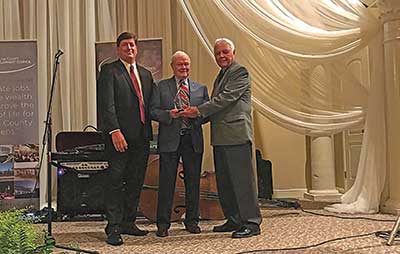
Ed Gardner receives EDC Chairman’s Award from Joe Kelly and Don Smith
In St. Clair, he brought together mayors, commissioners, bankers and developers like Jason Goodgame and Bill Ellison. St. Clair’s Alabama Legislative delegation and its Congressional delegation were on board. So were government officials like then State Treasurer Kay Ivey.
“It meant they would spend a day or longer in Pell City,” he said. “It proved to be very, very successful.”
He didn’t stop there, knowing the relationships forged had to be maintained and strengthened. At the annual convention in Fairhope, EDC hosted dinner at the finest restaurant for all the partners to get to know St. Clair County better.
Gardner’s philosophy of building relationships worked, and successes followed. The Saks Fifth Avenue distribution center landed in Steele. He was on the team along with Bowers and Commission Chairman Stan Batemon that recruited Honda.
While Honda didn’t locate in St. Clair, it put roots down just across the border in Lincoln. Today, Honda is the largest employer of St. Clair County people not located in the county – 1,500- 2,000.
When Yachiyo, an automotive supplier, was considering St. Clair as a site, Gardner learned of an unpublicized radius around Honda in which suppliers were excluded from locating. A circle on a map excluded St. Clair completely. Company officials denied the existence of the circle but when Gardner offered to show them the map, Yachiyo was approved in Steele soon after.
Site selection isn’t the only consideration in a project. Sometimes it’s the amenities nearby. Eissmann, a German manufacturer of leather components for automobiles, was looking for a North American site. The decision makers on site selection were world-class water-skiing competitors.
So, Gardner solicited the help of St. Clair’s own skiing champion, Brad Brascho, who won the national title in slalom skiing. “I got Brad Brascho to take them out on the lake.”
They put together a one-and-a-half-hour presentation in two weeks and faxed every photo of a ski boat, Logan Martin and St. Clair County that could sell it, and “I got a call the next day they were coming to Pell City.” Today, after multiple expansions, Eissmann is the county’s largest employer.
The project he’s proudest of is not an industry at all, but rather a public safety one. At the time, I-20 had been experiencing a fatality nearly every month. Five-laning the heavily traveled stretch of highway had been on the drawing board for years but was no closer to fruition.
Then Mayor Guin Robinson lobbied heavily for a concrete barrier in the middle in a very public campaign, and he, Gardner, Batemon and Bowers met with state transportation officials and convinced them to make it happen.
Ed Gardner Jr.
St. Clair got the concrete barrier, and fatalities fell to historic lows. Later, a six-lane highway moved from drawing board to construction.
Other highway improvements led to more economic development. Officials knew the bridge over I-20 connecting U.S. 231 South with Home Depot, Walmart and other massive commercial development wouldn’t stand the test of time nor the traffic.
Transportation officials were able to recapture $2 million from other projects to apply to improving the bridge, but they needed a match. “Stan said, ‘I’ve got mine,’ and Guin said, ‘I’ve got mine.’ ” With the commitments, the bridge that now connects two major commercial districts secured its improvements.
The decision to locate a campus of Jefferson State Community College in Pell City came in 2004. “We needed a community college presence,” recalled Robinson. Gadsden State Community College had been offering classes, but Jefferson State decided to build a campus in the county. Education, economic development and workforce development all go hand in hand, he said. “The pieces all aligned with Jeff State, the city and the county. It really made for a remarkable time to be involved.”
Robinson had just resurrected the St. Clair County Mayors Association. “It was a great forum for keeping everyone informed,” Gardner said, and it was utilized to keep all entities on the same page. It still is.
Gardner underscores that act of working together as the single-most crucial factor in how this success story unfolded. “We put together a team and partnerships, and it worked out pretty well.”
Following success with success
In March, fresh from a $10 billion deal bringing Amazon Web Services Inc. to Mississippi, Entergy Mississippi Vice President of Economic Development Ed Gardner Jr. reflected on another successful stint in his career.
From 2004 to 2010, he served as executive director of St. Clair’s EDC. “I was super young, and I really didn’t know a lot,” he said. In actuality, he came from eight years with economic development efforts for the City of Auburn, known widely for its standard-setting track record, where he served as deputy director.
“It was special succeeding my dad,” he said. “I really learned a ton working with the board.” While he learned from his father’s strengths and the foundation he laid, he led the organization to even greater heights.
“I realized I needed a team to do what I wanted to do. I needed to raise money to hire one or two people,” he said, noting that at the time, revenues were $200,000 vs. spending of $220,000 per year.
Gardner’s capital campaign raised $2.5 million over five years, giving him an opportunity to hire Don Smith as assistant director and Candice Hill as retail specialist, a first in the state. Together, they could – and would – put together projects that propelled the county forward.
The first were VST Keller now Oerlikon and WKW, German automotive suppliers that became leading industries in Pell City.
Before he left, the county broke ground on a new, state-of-the-art hospital and a state veterans home that is a model for the nation.
On the Col. Robert L. Howard State Veterans Home project, Gardner said Batemon sent him an article about the Veterans Administration zeroing in on a site in Jefferson County. Gardner contacted them, and Smith prepared a presentation. Admiral Clyde Marsh, head of Alabama Veterans Affairs, looked at the map and said, “ ‘That could work.’ We made a pitch. All three of us had something to do with it.”
The ironic part of the story was the argument of the pitch. “We used the new hospital, which was not certain, to lure the veterans home, and the veterans home solidified the deal with the hospital,” which also was not certain, Gardner said.
He still thinks it is “cool” when traveling on I-20 to look over at the hospital and veterans home perched prominently on the hillside and knowing he had a role in it.
As for first hiring who would eventually become his successor, Smith, Gardner said the choice was easy. He recognized his abilities early on back in their days in Auburn. Smith was an accountant for the revenue department for the city, and economic development needed someone to oversee the financials.
Gardner said he told his boss “that Don guy comes in early and stays late,” and he might have the kind of work ethic and ability they needed. They hired him as staff accountant in economic development. He eventually worked in lease management, deal structuring and financial management.
Gardner, too, talked about the business model of EDC as the reason for its success. “They got the model right. The key was they didn’t have elected officials on the board. It took politics out. The people who served have been great,” he said citing the way the makeup of the board brought everyone together toward a common good.
“There was cooperation in the county that other parts of the state asked, ‘How do you do that?,’ ” he said. “Getting along is important to business and to prospects.”
Taking the torch
Like a baton passed from one runner to the other in this economic development relay race, the executive directors who have served seem to handle it with ease and even greater speed than the one before.
When Smith entered the race, his challenge was to meet different needs of different communities – “trying to bring value to all of our communities.”
Through planning, innovation and that work ethic Gardner identified, Smith’s tenure has overseen explosive growth. Twenty five years ago when EDC began, the county’s population stood at 65,000. In 2030, it is predicted to top 100,000.
Smith oversaw the hospital opening in 2010 and the veterans home in 2011. “It’s been a whirlwind ever since then,” he said.
With a grateful nod to the foundation built by his predecessors, Smith said, “Ed Jr. and Ed Sr. have always been incredible, accessible and charitable with their time and wisdom.” The board “gives us a solid foundation to allow us to reach full potential. They have been an incredible guiding hand and extremely supportive without micromanaging.”
Under his leadership, groundbreakings and ribbon cuttings for new industry, expansions, retail, commercial and professional operations are so frequent they have become almost commonplace. Industrial growth has soared so much that the challenge has become industrial sites to locate them.
“That’s why the two SEEDS grants through the State, for a combined $2.5 million for infrastructure to aid in the development of the Kelly Creek Commerce Park in Moody and the purchase of property in Springville are so important,” Smith said. The two SEEDS, Site Evaluation and Economic Development Strategy, grants were the most in the state — $400,000 for sewer in Moody’s park and $2.1 million to acquire 240 acres in Springville.
“Our communities need large tracts of land with infrastructure to attract new industry and quality employers,” Smith said. “Large residential developments are looking for that land as well, so we have to be proactive.”
Retail growth has been spurred by job creation and residential growth from EDC efforts as well with EDC working closely in helping bring about major developments, like Pell City Square, which is anchored by Hobby Lobby, Ross Dress for Less, TJ Maxx, Old Navy and other big-name retailers.
More developments – restaurants and hotels – have moved from drawing board to construction.
Developer Bill Ellison calls it teamwork. Ellison has helped bring the likes of Pell City Square, Walmart, Buffalo Wild Wings, Premier Cinema, Publix and a seemingly endless list of tax revenue generators. His developments account for seven of the top 10 revenue producers that make up City of Pell City’s budget.
“The main thing was the coming together,” Ellison said. “They brought all the cities together under EDC, and that set up teamwork. Other EDCs in the state want to emulate how we do business.”
Ellison talked of his largest, early project – the Walmart development in Pell City, which led to massive commercial growth with retail, restaurants, hotels and other businesses.
Ed Garner Sr., he said, was able to help him navigate all the government approvals required of such a project en route to becoming reality, Ellison said. “That one project showed how EDC was going to function. It set a precedent on how we move forward. It showed us a path.”
Today, Smith is the guide along that path. “Don is such a huge asset to the county,” Ellison said. “He is a problem solver. He looks at every single development to determine if it is in the best interest of the city or county. Is it a fit? Is it good for the community? All projects have a mountain to climb, but he’s a problem solver. Once he’s committed, he will find a way to make it work.”
Constant evolution
Smith knows that change is inevitable, and he embraces it. Innovations are a hallmark of his tenure, generating even greater successes.
“I’ve watched him grow in the job,” Ellison said of Smith. “I have a ton of respect for the work he does, and he’s earned it.”
Retail and quality of life opportunities are flourishing in Pell City’s commercial districts and in places like St. Clair Arena and Event Center, Canoe Creek Landing and Big Canoe Creek Nature Preserve. All had help from Smith and EDC.
Leadership St. Clair County, under EDC’s umbrella, helps identify potential leaders in the county and brings them together each year in a program that helps them learn more about the place of their home or business and encourages them to get involved. It makes for a better outlook for the future.
EDC’s tourism, headed by Blair Goodgame, is focusing on supporting and growing events and promoting attractions, and they point to growth in the lodging taxes as evidence that it’s working. It plans to produce a new video to showcase the county and is creating community guides for all municipalities as well as one for the county and a host of other promotions of all aspects of the county.
Workforce development also continues to be a focus of EDC, developing partnerships with education and employers to provide skillsets where the jobs are or will be. Jason Roberts leads this initiative by bringing educators and employers together.
Perhaps the most groundbreaking initiative of EDC is its latest one – St. Clair County Grant Resource Center. Coordinated by Candice Hill, the center “potentially will have the largest impact of anything EDC has done,” Smith said.
A grant firm is being hired with expertise in securing grants across a wide spectrum. What that means for cities and towns across St. Clair County and the county itself is that they will be made aware of grants that can fit their needs – whatever they might be. The program will identify “what’s out there, how to obtain them and manage the grants correctly,” Smith said.
Where communities didn’t know about what was available or how to get grants before, they’ll know now, and the center will facilitate the entire process.
“Different communities have different needs,” Smith explained. “Some have more retail options than others,” some need basic infrastructure. That’s the challenge, the diversity of the needs, and managing to serve all of them. That’s the way the center will work, just like EDC has for 25 years.
Its mission is pretty straight forward: “To create Jobs, increase wealth, and improve the quality of life for St. Clair County citizens.”
Since 1999, the impact of the St. Clair Economic Development Council has been just as clear: 8,373 new jobs, over $233 million in new annual wages and over $1.7 billion in new investments.
As EDC passes this anniversary milestone, rest assured there are more up ahead.
In the next five years, EDC’s strategic goals in recruitment and retention of business and industry are:
Announce 1,200 new jobs
Announce $350 million in new investment countywide
Leverage business relationships for 10 prospect leads
Leverage business relationships for seven outbound recruitment efforts
Develop relationships with six new industrial or commercial brokers annually
Develop relationships with six new site selection consultants annually
In addition to reaching numbers EDC sets based on strategic planning input, the team implements programs to strengthen its relationships across the county and meet the needs of existing business.
In keeping with its push for economic development in the retail sector, EDC will be hosting a retail summit for elected officials to educate them on current retail recruitment strategies along with its other programs and initiatives.
To ensure the needs of existing industry are satisfied, they meet with existing industry and large employers annually to discuss the benefits of St. Clair County, and they meet with large employers to discuss programs of benefit.
And they build relationships with regional and statewide development agencies to promote the county’s strengths and opportunities.
“Strategic planning is time consuming,” Executive Director Don Smith admitted, “but it makes the expectations clear. It’s a matter of executing the plan. Everything else falls into place.”
Perseverance’s payoff: Big Canoe Creek Nature Preserve ready for visitors
Story by Carol Pappas Photos by Mackenzie Free
It was a word repeated early and often in what would become a decade-long journey to Big Canoe Creek Nature Preserve – “perseverance.”
But on a clear, Spring-like day in February, close to 400 people witnessed just how perseverance paid off.
It was billed as a ribbon cutting. What it became was testament to what can happen when visionaries don’t give up.
The much anticipated, much heralded Big Canoe Creek Nature Preserve officially opened, marking the end of one journey and the beginning of many more. This 422-acre slice of Alabama nature tucked away alongside a pristine creek in Springville blends miles of trails for hiking, biking, horseback riding, birding and just plain enjoying nature.
Plants, flowers, trees of all descriptions dot the landscape. A crystal-clear creek meanders through the heart of it. Below its surface, rare aquatic species have found a home. Towering trees form the ideal canopy for the trails below.
It’s a scene no doubt played and replayed in the vision of people like Doug Morrison, whose passion to preserve, protect and share nature’s gem never ceased. Perseverance.
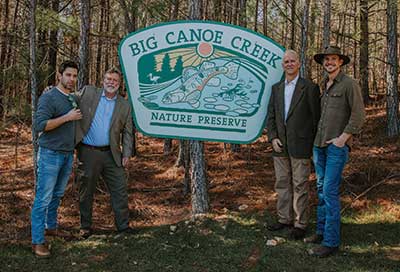
Posing with new sign, from left, Richie Gudzan, who designed the new logo, Preserve Manager Doug Morrison, Springville Mayor Dave Thomas and Granger Waid of Norris Paving, who played a major role in getting the Preserve open.
It’s a scene where one by one, a burgeoning army joined in the advocacy, embracing the vision. The Friends of Big Canoe Creek, Dean Goforth, St. Clair Economic Development Council, Springville City Council, St. Clair County Commission, Alabama Department of Conservation and Natural Resources, State Lands Division, Freshwater Land Trust, Forever Wild, Nature Conservancy and Big Canoe Creek Preserve Partners became an unstoppable coalition of noteworthy impact on generations to come. Perseverance.
And it’s a scene where a new journey began once those gates opened, drawing multitudes now and in the future to – as Morrison puts it – “explore and discover” the natural treasures found within its borders. Again, perseverance.
The day following the ribbon cutting, the gates opened officially to the public for its very first day, Feb. 3, and 731 streamed in throughout the day. That’s over 1,000 people in just two days, and the enthusiasm and allure have shown no signs of slowing since.
Springville Mayor Dave Thomas said he had not visited for about two weeks after the opening and decided to check in one morning. The upper parking lot was full, and the traffic kept coming. “It was 10 o’clock in the morning on a Thursday,” he said, the note of surprise evident in his voice.
At the opening, Morrison talked of the Alabama Forever Wild program and the wonder of its impact on the future. “They are taking this property and buying it to set aside for people forever. It will be for this community from now on.”
The abundance of biodiversity is now protected. “We really are blessed here,” Morrison said.
A main focus of the preserve, in addition to its recreational value, will be its education component. No sooner had the ribbon been cut than the first education outreach program was announced – a turkey call expo.
Youths from all over were invited for a day of learning all about turkey calls, making them and enjoying the outdoors. Outdoor classrooms will be a hallmark of the preserve.
Thomas called the preserve “a fantastic opportunity to protect the ecosystem and promote conservation education among students and parents. This will be generational. It will outlive us all.”
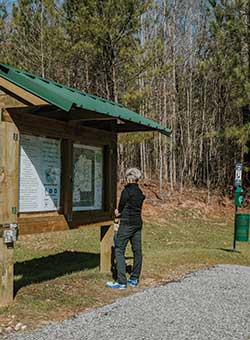
Surveying the map of the 422 acres that make up the preserve
Commission Chairman Stan Batemon, who was a game warden in his professional career, knows firsthand from both roles the benefits and potential of the preserve. “This is the ground level of economic development,” he told the crowd. He talked of young people and an emphasis on work ethic through groups like the Cattlemen’s Association and 4-H, which can use the preserve as a resource for “building up and creating a workforce.”
And Morrison centered on a community of people who came together around a common good. When skills and expertise were needed in each area along the journey’s way, he recounted, community stepped up to make it happen. Whether it was securing the land, building a website, painting, paving, addressing environmental needs, carpentry, trail design, providing funding or dozens of other issues, someone always came forward.
“People in this community care,” Morrison said as he reflected on years ago when he and wife, Joannie, moved to Springville, his home on the banks of Big Canoe Creek. “Destiny brought us here, honey,” he told her.
And perseverance brought the preserve to this moment.
Making it official with the cutting of the ribbon
Key Players
A project of this magnitude had to have a team. When their number was called over the past decade en route to opening day, these agencies all played a role in acquiring and transforming the Preserve into a winner:
City of Springville
St. Clair County Commission
St. Clair Economic Development Council
Alabama Department of Conservation and Natural Resources, State Lands Division