Retail bonanza for Pell City

Vacant hospital land sees
new life as shopping center

Story by Carol Pappas
Staff and submitted photos

In the 1970s, this land gave way to a new, three-story hospital for St. Clair County in Pell City. In the 1980s to accommodate this quickly growing city, a fourth floor was added. Ten years ago, the hospital saw its last patient moved to its new state-of-the-art hospital across Interstate 20 – again to accommodate the growth of a thriving city.

An abandoned building stood dormant for years then was demolished to once again make way for growth, this time in retail.

For five years, local developer Bill Ellison had been recruiting national retail brands, like Hobby Lobby and T.J.Maxx, to various properties around Interstate 20, but it wasn’t until McSweeney Automotive cleared trees on its development at the corner of I-20 and U.S. 231 that he saw the ideal spot. An unobstructed view left by clearing the trees revealed the old hospital property – visible from U.S. 231 and I-20. “That day, I saw the opportunity,” Ellison said. “That’s it!,” he told himself.

That act of clearing the land led to making it the perfect location for the retailers he was after and more. He approached county officials with the idea that it would be the perfect spot for retail development. It had all the right essentials of Interstate 20 frontage, plenty of acreage and the key – access and visibility from the interstate and U.S 231.

The St. Clair County Commission, which owned the property at the time, gave Ellison options on the land. Later, the City of Pell City assumed ownership of the property. Knowing the kind of retail the city and county needed, Ellison recruited a national commercial development company with a proven track record for this type of development.

Ellison had been making calls on the national retailers, but he was a local developer without the national relationships he needed to swing the deal, he said. He learned of the reputation of key executives of a development company that had those national ties, and he met them at a national shopping center conference in Las Vegas.

Those executives, now with Noon Development based out of Chattanooga, Tenn., began marketing the property, and in recent weeks, officials in Pell City announced the first two confirmed tenants with others to come.

Noon developed the Trojan Marketplace in Troy, where Hobby Lobby and T.J.Maxx are the anchor tenants along with Ulta Beauty, Five Below and Rackroom Shoes. 

Delayed by the COVID-19 pandemic, but not deterred, the Pell City development is now becoming a reality. Officials announced Hobby Lobby and T.J.Maxx as anchor tenants on the 19-acre tract with more news on the way about other household name tenants committing to set up shop there.

“The two anchor tenants are confirmed,” said Pell City Manager Brian Muenger. While others have not yet confirmed, Muenger said other tenants frequently locate with anchor tenants and are “proven, name brands. We are very happy to see them committed to it.”

Muenger pointed out that there are four outparcels in addition to the 135,000-square-foot retail complex. The one closest to the interstate has been reserved for a restaurant. In the agreement with the city during adoption of tax abatement incentives, the city will provide the land for a national, sit-down restaurant provided the developers locate one there within two years. If not, it reverts back to the city. “Rather than simply filling the space, we specifically said a national restaurant has to be part of the development.”

For years, citizens have been asking for amenities that would improve the quality of life in the city – more upscale restaurants and quality retail. “The developers are confident they can deliver on that agreement,” Muenger said.

To further ensure the city gets the kind of development its population wants, there was a pre-approved list of retailers.

The “gap” going unfilled for the city, Muenger said, has been soft goods and a sit-down restaurant.

The city has solidified its opportunities by partnering with the St. Clair County Commission as well. All involved see it as a “game changer” for the region.

The city is filing a petition to validate the project with the court, which will review the development agreement to ensure it complies with state law. Once approved, “that’s when work will begin,” Muenger said. Groundbreaking is expected later this year – mid-2022. As a comparison, the Trojan Marketplace broke ground in December 2019. It opened in May 2021.

There is grading work to be done at the U.S. 231 intersection and clearing more trees at the interstate.

“We’re excited about it,” Muenger added. “This is the highest and best use of this property. It will establish Pell City as a viable shopping destination, keeping dollars in the community that frequently were spent somewhere else.”

Ellison agreed. “There is a natural progression in commercial development in a community. Brands follow brands. In the future, any retailers that looks to expand in St. Clair County, they’re going to look at Pell City first. It’s the gift that keeps on giving, and it keeps local tax dollars at home to do some good in the community – providing funding for schools, infrastructure and a better place to live.”

The development, Ellison noted, “greatly expands our shopping trade area. People who would not ordinarily shop here will come here. While they’re shopping at the new stores, they’ll shop at existing stores, too. It’s a win-win for everybody. It makes us a stronger economic hub than ever before, building on our already firm position in the region,” Ellison said.

“This property has been a tremendous partnership between the city and county commission,” said Commission Chairman Paul Manning. “It began with us working together to construct a top-rated, new hospital but then continued with the redevelopment of the hospital’s old site.” 

Officials project the investment will generate more than $30 million in tax revenue over 20 years – $11 million of which is allocated to schools – and create a significant number of jobs. “This project will be good for the City of Pell City, the County Commission, and all of our citizens,” Manning said. “This project will provide both job and shopping opportunities that will help keep our families shopping local and attract more shoppers from outside of the county.”

St. Clair Economic Development Council Executive Director Don Smith echoed the essence of the development’s potential impact and talked of the partnership that helped bring it about. “The County Commission and Pell City have a long history of successfully working together on transformational projects. This project was no exception and would have been impossible without both entities supporting one another.”


Springville Is Booming

Emphasis on ‘good growth’

Story by Linda Long
Photos by Graham Hadley

“Growing like gangbusters!” That’s how Springville Mayor Dave Thomas describes what’s going on in his town.

To those who think of Springville as the quintessential small, quaint, Southern town with sidewalks and antique shops lining Main Street, that might seem a contradictory remark. But to quote Bob Dylan, “the times, they are a-changin.”

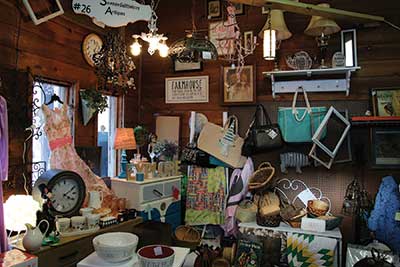
“The antiques have given way to boutiques,” said Thomas. “A portion of our population wants Springville to never change, but I’m afraid that’s not reality. We’re going to continue to grow. So, the best we can do is to properly plan and manage the growth. We just need to do what it is we want to do and can do with our community, and what we don’t want to do is just as important,” he said.

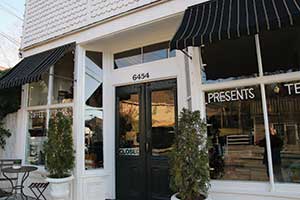
Pink Hill Organics

“It’s quite a juggling act. Sometimes, it feels like your juggling chain saws,” Thomas said with a laugh.

Don Smith, executive director of the St. Clair County Economic Development Council, understands the mayor’s challenge. “Springville is not the largest city in St. Clair County, but that’s not their goal. Springville is focused on quality over quantity. It may mean they grow slower, but the growth they have brings tremendous value to the community.”

While Springville is not the largest of all the municipalities in St. Clair County, it does have the highest median household income in the county of almost $84,000, and the homes are probably among the most expensive.

“Their median household income is the same as Homewood even though Homewood is about five times larger,” Smith noted.

Calling it Springville’s vision for its community, Smith said, “they have always put their money and their efforts toward supporting small business and focusing on quality of life, safety and supporting their schools. Folks that live there in Springville take tremendous pride in making their community the best it can be,” Smith asserted, “and they are well on their way.”

“Personally, I think Springville is a hidden jewel in the region,” said Nikkie Posey, president of the Springville Chamber of Commerce. “As a community, it is very welcoming, and there are affordable options for shopping, living and visiting here. There is a great vibe in the city right now for small business with a lot of community following, which is one reason I opened my business downtown in Springville and got so involved with the Chamber.”

Springville Antique Mall is full of amazing antiques and collectables.

Posey, owner of Pinkhill Organics said she named her shop for the town’s original name, Pinkhill. “Nobody knows where the name came from,” said Posey. Because of many other businesses already using the word spring in their names, she opted for something different.

“So, I did some research and discovered Pinkhill and just ran with it,” she said. “Springville is becoming a place to come to stay, shop, to live,” said Posey. “People want that small-town feel that, as a community, we feel we have. As a community, that is something we want to maintain. We want to have good growth – controlled growth – without losing that small, hometown feel.”

According to Smith, in looking at new businesses or projects for Springville, “we always want a good fit. Many times, projects by residential developers have been turned away because they didn’t want to build the quality development that city officials wanted.”

The mayor remembers one such proposed development. “This young man, actually homegrown, wanted to do something in his community. He wanted to build, in his words, ‘high density, affordable housing.’ These would be on tiny lots just packed. I told him your business is not mine. My business is what’s good in Springville.”

Continuing, Thomas said, “I like to see opportunities available to locals, not just corporate chains, big box stores, and developers who are interested in nothing more than making their money and moving on to the next project.”

One project it seems almost everyone can agree is good for Springville is the Forever Wild Big Canoe Creek Nature Preserve set to open just north of town. According to Smith, the preserve “checks all the boxes on what is a good fit for Springville. It will have walking trails, biking trails, horseback riding, kayaking and canoeing in Big Canoe Creek and will allow people in Springville and outside the area to come and enjoy outdoor activities.

According to Thomas, a lot of folks in Springville are concerned at how neighboring Trussville has, in his words, “continued to explode” in growth over the years with strip malls and more and more subdivisions.

“Now, I’m not knocking Trussville,” he said, “but we don’t want to be them. We want to continue to be Springville. Of course, we’d like to get more storefronts filled, and we’re working on that. Things are happening in that regard.”

He points with pride to a new restaurant similar to Vestavia’s successful Backyard Market that will be opening, as well as a new bottling operation. “It’s from the same folks who bottled the water at Blount Springs. Now they’ll be doing the same thing with Springville water,” said Thomas.

Nichols Nook

He said the group already has a contract with Publix to develop local label products to put on their shelves. “They’ll be using Springville’s finest bottled water as a marketing hook.”

Promoting small business throughout St. Clair County falls to EDC Retail and Marketing Specialist Candice Hill. Toward that goal, Hill is working with chambers of commerce with what she calls Relevant Roundtables.

“We hold these every quarter as a way to touch small businesses and provide educational opportunities,” she explained. The meetings cover topics like social media and accounting practices among others. Hill said the resource is for all small business whether they are continuing to grow or just starting up.

Remembering back to when he first moved to Springville some 30 years ago, Thomas said, “Springville was lined with antique stores. The town had a Norman Rockwell-esque feel to it. Well, the antique stores are mostly gone, but what makes downtown appealing hasn’t changed. It hasn’t gone anywhere. The essence is still here. Everybody shares the same sentiment. Springville really is exceptional.”


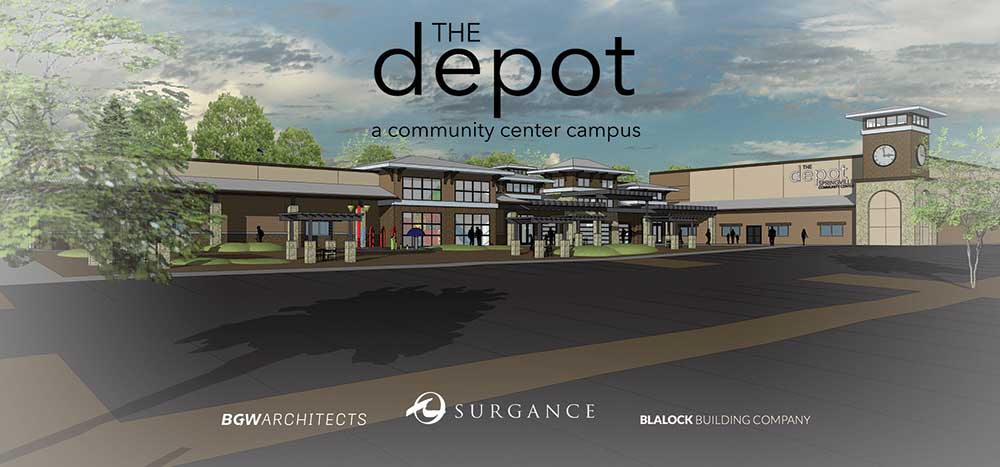
Architectural rendering of the Depot

The Depot construction begins

Another sign of Springville growth

Story by Linda Long
Photos by Graham Hadley and submitted

There’s yet another sign of ‘good growth’ in Springville these days. The Depot, a facility now under construction in Springville, gives new meaning to the term multi-use. The first two phases of the 60,000-square-foot project on 20.43 acres on U.S. 11 will open next fall. The complex is planning space for just about everything – from physical fitness and education to arts and worship.

Mike Ennis, pastor at Faith Community Fellowship Springville Campus, says the project has been under way for the past four years. “It started with the opening of our church campus here in Springville and realizing the community was very centered around athletics. It was birthed out of some of the challenges facing Alabama.”

Because Alabama ranks low nationally in economics and health, “We felt like rather than building a church, we’d rather build a community center. Something the entire community could use. Something that would hopefully improve both the economics and health of our community and provide athletic opportunities.

Explaining that the center is “not just for young people and not just people who are a part of our church, we really wanted to build something that would serve the community at large. That’s been the driving factor behind it from the beginning.”

The Depot includes a community café and catering kitchen, multipurpose areas, conference rooms, coworking spaces, a teen center and independent living.

The center also includes an auditorium which the church will use, Ennis says, but his church won’t own the building. It will be a tenant. “We realized to make a decent impact and provide the most opportunity, we needed to hand it off to a property management group,” he said.

Surgance, Inc., 501(c)(3) nonprofit group, is overseeing and managing the project.

Ennis, who served on Springville’s strategic planning committee, said the committee decided Springville needed a facility like this one, which will include two auditoriums, banquet and meeting rooms, school grades K-8 and a preschool called Esteem Academy. Surgance is also partnering with the St. Clair County Board of Education, providing space for its virtual academy.

Representatives of regional, state and national organizations have been involved with the childcare and education committees to help with planning. It will include early childhood education, virtual school, STEM (Science, Technology, Engineering, Math) and STEAM (Science, Technology, Engineering, Art, Math) Academy.

“There’s really nothing like it on this end of the county,” said Ennis. “We’re hoping to reach out to Springville and beyond. We’ve had a super positive response from everybody we talk to. I think there’s a real need for something like this.”

Phase I of the project is a 10,000-square-foot building, which is expected to be completed by June 2022.

Grave Dowsing

Finding where the bones are buried

Story by Elaine Hobson Miller
Photos by Wallace Bromberg Jr.

About 50 people gathered inside Reeves Grove Baptist Church on a fall Saturday, listening attentively as The Backwood Boys sang Ain’t No Grave (Gonna Hold This Body Down), Swing Low, Sweet Chariot and other old spirituals.

They heard a brief history of the church and received apples from the apron pockets of several women dressed in the fashion of the late 1800s, when the church was established.

But the main attraction was outside, after these presentations, when two grave dowsers approached the old church cemetery, dowsing rods made of wire in their hands. Dowsing has been used for centuries to locate water, graves, pipelines and other underground objects by watching the motion of a pointer – usually a forked stick or paired bent wire. At Reeves Grove, the group was locating graves as part of its ongoing restoration project at the historic church.

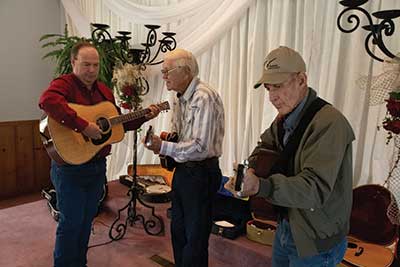
Backwood Boys Mark Willingham, Marlin Galloway and Adron Willingham play at grave dowsing event.

It didn’t take long for Wayne Gregg’s rods to cross, indicating a grave. According to the marker, that grave belonged to Elizabeth McCorkle, wife of the original owner of the McCorkle Plantation upon which Reeves Grove now stands. Something wasn’t quite right, though. The markers weren’t where they were supposed to be. His rods indicated the presence of a second body that wasn’t represented on the grave marker. “We think it might have been Elizabeth’s husband,” says Linda Moyer, chairperson of the Reeves Grove Historical Committee.

The group soon moved on to the slave section of the cemetery, where the graves have no stones. The committee wants to mark those graves and give the folks buried there the recognition they are due, even if their names are unknown.

Gregg, who is from DeKalb County, wasn’t the first dowser to notice the anomaly of an extra person in a grave, however. “I went up there one afternoon with some members a week before they had the official event,” says Frank Waid, a Springville grave dowser who studied under Gregg. “We laid out the McCorkle Cemetery and marked a bunch of graves with flags. (Moyer says they put ribbons on the graves of the church founders.) One kept giving all kinds of problems. I was getting readings of male and female bodies. I said, ‘Something’s wrong here. I think there’s two people in this grave, but I’m not sure, because I’m not as experienced as Wayne Gregg.’ So, when they had the special day and demonstrated dowsing for the people, Wayne started walking in the spot where I had been walking and said, ‘There are two people buried here!’”

The dowsing event was another effort to raise awareness and money for the restoration of the original church building. The church historical committee is restoring the sanctuary and its attached fellowship hall to be used as an event venue.

But restoration wasn’t uppermost in the minds of those in attendance on dowsing day. People were so interested in Gregg’s presentation on grave dowsing that their questions and his answers pushed his allotted 30-45 minutes on the program to an hour. “They were fascinated,” says Moyer. “They also enjoyed Macki Branham’s brief history of the church and Glenda Tucker showing off a fashionable dress from the McCorkle era.” The dress was once worn by Eliza Elizabeth (Moore) Keith, (December 16, 1827-January 8, 1891), the great-great-grandmother of Glenda’s husband, Harry Tucker.

The Backwood Boys – Gallant musicians Adron and Mark Willingham on guitars, Marlin Galloway on mandolin – continued to play as the audience filed outside behind Gregg and Waid for the actual grave dowsing. Gregg narrated while Waid demonstrated dowsing techniques.

“I use two wires I got from Wayne,” Waid says. “If they cross high, it’s a female; if low, it’s a male. Lots of times (during the 1800s) women died in childbirth and they buried mom with her baby on her chest. Wayne can tell that, but I don’t have that experience yet.”

Waid noticed that all the graves in the slave section were small and wondered whether they might be buried in a fetal position. “They wouldn’t have had the resources for caskets, so they probably wrapped the bodies in blankets,” he said. “Most of these slaves came from South Carolina, and they were Caribbean slaves, so some of their beliefs determined how they were buried.”

Waid took a grave-dowsing class from Gregg about three years ago at his wife’s urging. She is a member of area historical and genealogical societies and thought grave dowsing might add depth (no pun intended) to that type of research.

“He gave a long, interesting class that morning, we had lunch, then went to an old cemetery,” Waid says. “We started practicing dowsing. Somehow it seemed to work for myself and Joseph Williams, also from Springville and part of the Springville Preservation Society. It was amazing! There were some people there who couldn’t get the hang of it, or it didn’t work for them, but for Joseph and me and one other lady, it did.”

In a self-published booklet titled, Dowsing for Fun and Profit, Gregg writes, “In Peru, a rock carving more than 9,000 years old depicts a man holding a forked dowsing stick,” he writes. Modern dowsing begins to appear in records around the 15th century in Europe.

Members of the Reeves Grove Historical Committee placed white ribbons on the graves of the church’s founders.

Although most scientists are skeptics, Gregg says dowsing has been proven many times. “I recently read a German government 10-year report recorded by a physicist at the University of Munich,” he says in his booklet, which he published several years ago. “He described how dowsing was used to locate water sources in arid regions of Sri Lanka, Zaire, Kenya, Namibia, Yemen and other countries. The success rates by dowsers in 691 drillings was an amazing 96%, where a success rate of only 30% would be expected from conventional techniques.”

Gregg got interested in dowsing when he went to work for Southern Bell telephone company in 1963. “The older guys who repaired underground cables taught me,” he says. “We didn’t have the modern devices we have now.”

Although dowsing is sometimes related to spirituality and witchcraft, Gregg says he doesn’t have any special powers, nor is he gifted in any way. It has nothing to do with witchcraft, because “it works for the majority of those who try it, and I know we are not all witches.” At times he has thought he discovered what makes it work, such as disturbance of the earth’s energy fields, only to find it was not true, particularly when it comes to determining the gender of a person in a grave. “Albert Einstein referred to dowsing as quantum physics, yet unexplained,” he says.

Still, people for whom the stick worked were called “water witches” by our ancestors, who hired them to locate underground water. “Rods work for a large percentage of first timers,” Gregg says. “Forked sticks work for only a very small percentage.”

For grave dowsing, he uses wire rods, which can be made of any stiff wire. The most common are coat hangers. The rods are made by bending the wire into an “L” shape, with the handle being the length of the dowser’s hand and the long part extending in front of him for 12-18 inches. “Rods will work for a large percentage of those who try for the first time,” he writes in his booklet. “They will never work for some, no matter how hard they try. Excessive jewelry, cellphones and other items worn on the body will sometimes make a difference.”

In his booklet, he explains how to hold the rods (elbows at waist, forearms parallel to the ground). He cautions NOT to place one’s thumbs over the bend of the handle, as this will restrict movement. Don’t grip too tightly, he cautions, only enough to keep the rods parallel. Approach the gravesite walking very slowly. “The rods will cross in front of you when you are over the grave. Once you step off the grave, they will uncross.”

He says the rods will respond the same to any burial, including stillborn infants through adults, even animals. “It makes no difference if the body was buried wrapped only in cloth, in a wood or metal coffin, or a coffin inside a vault,” he writes. “The age of the grave makes no difference. It can be recent or hundreds of years old.”

He says in order to more easily find unmarked graves and determine gender, it’s important to remember that most cemeteries in the United States bury their dead in a Christian manner. Their bodies are laid on their backs with their heads pointing west and their feet pointing east, as if they’re looking east for the second coming of Jesus Christ.

“You will discover that unmarked graves in an established cemetery will be buried in the same rows as marked graves,” he writes. “In a cemetery with no markers, it will be necessary to determine east and west directions to know the position of graves. Locate unmarked graves by walking slowly across the area you suspect. If graves are present your rods will cross and uncross as you move from one grave to the next.” Above all, he says, practice, practice, practice to get good at dowsing.

At 80 years of age, Gregg doesn’t dowse as much as he used to. He doesn’t have plans to conduct another workshop, either, but his booklet, which also discusses dowsing for water pipes and buried cables, is available, along with two wire dowsing rods, for $10.

Several folks at the Reeves Grove dowsing event bought the package, and just about everyone came away with a new perspective on the subject.

“Through the years, the McCorkle property gradually got sold bit by bit to various people, and we found out the day of the dowsing event that the original cemetery probably extends into what is now the Fant property,” Moyer said. “Now we know where the graves actually are in the old slave section.”

Editor’s note: For more about the restoration project, go to discoverstclair.com/back-issues and scroll down to April 2019, page 42.

Call Gregg at 256-706-3262 for information on how to obtain the booklet and rod set.

Eric Bell: Auburn’s No. 1 fan

By Carol Pappas

For the Bell family and all who know them, it’s nearly impossible to think of the Auburn-Alabama rivalry without mentioning Jimmy and Yvonne’s late son, Eric.

Born with Down syndrome, Eric grew into arguably the biggest Auburn fan around. His Uncle Mack said, “When I think of Auburn, I think of Eric. When I think of Eric, I think of Auburn.”

At event honoring Bo Jackson and his Heisman Trophy at Auburn, fans could take photos with the trophy to look like a Sports Illustrated cover. Of course, Eric’s on the cover.

Jimmy and Eric spent years traveling to the Plains together in their motorhome, spending time in the Loveliest Village that are a cascade of memories – good ones. Jimmy’s description of those days sounds much like the title song of the television show, Cheers, “where everybody knows your name.”

Because of Eric’s natural, gregarious spirit, everybody knew Eric’s name. He got to know everyone around the stadium. “Eric even knew the trainers,” Jimmy said. “They gave him a helmet. Aubie (Auburn’s mascot) came over one day and sat at the motorhome with Eric. He got everybody’s autograph, even the people who cut the grass.”

Bar none, “Eric was the biggest Auburn fan ever,” said his aunt, Vicki Merrymon.

Jimmy said the highlight of his own life was seeing how much fun Eric had. “He had a good time. If you were an Alabama fan, he’d tell you, ‘Roll Tide.’ I learned so much from him. He had no hate.”

Even in an Alabama defeat, he found a way to comfort an opponent. Leon Clements, a local convenience storeowner and huge Alabama fan, was friends with Jimmy and Eric. For years, they parked the motorhome on a lake lot they owned near the store.

When Jimmy and Eric returned from an Iron Bowl game where Auburn emerged victorious, Jimmy explained to Eric that Leon would be upset about Alabama’s loss. Just tell him you’re sorry, his father advised. Otherwise, it would make Leon feel bad.

And Eric expressed remorse to his friend – his way. He put his arm around him and said, “Leon, I’m sorry Alabama sucks.”

Eric passed away in 2009 at the age of 31. His framed photo in traditional attire – an Auburn jersey – sits prominently in Jimmy and Yvonne’s living room, reminding them of his love for Auburn and their love for him.

Royals and Rebels

The story of Judge James T. Green and his family

Story by Robert Debter
Photos submitted

From its nondescript exterior, it looks just like many a building scattered throughout Alabama, just an old National Guard armory that has seen better years. But what or who – lies underneath – is the story here.

It may mark the end of an era for this St. Clair County couple, but it preserves the story behind the beginning of their life and lineage in the county, rooted long ago in royalty.

 James Thomason Greene was born on Feb. 2, 1849, to John Greene, who was born in Cork County, Ireland, in 1814, and came to America in 1832, and Elizabeth (Thomason) Greene, a descendant of Mary, Queen of Scots.

   Elizabeth’s father, James Thomason, served as St. Clair County’s first probate judge from Nov. 20, 1818–Nov. 20, 1819, and her brother, John Isham Thomason, also served a probate judge from Dec. 13, 1845–Jan. 15, 1848, and Jan. 30, 1850–June 8, 1850.

Her grandfather, John Duett Thomason, was a Revolutionary War soldier who held a commission in the Carolina Regiment and was wounded at the Battle of King’s Mountain. After the war he made his way through South Carolina and Georgia, he came to St. Clair County. He had acquired many acres in modern day Springville and St. Clair Springs through a land lottery for men with Revolutionary War service.

Gardner Greene

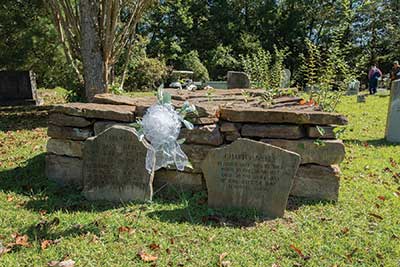
It was this patriot who married Elizabeth Stuart Diamond, and their final resting place is underneath the Ashville Armory. Elizabeth’s mother, also named Elizabeth, was born into the House of Stuart and was listed in Burke’s Peerage until her name was removed after she married a commoner named John Diamond.

Charles Dickens once said, “In love of home, the love of country has its rise.” It seems a fitting proverb for John Duett Thomason and one that was transferred to his granddaughter and great-grandson. Elizabeth was an ardent Southern patriot who, in the tumultuous and dark military rule of Ashville following the subversion of the Confederate government, raised the Confederate flag on a fishing pole line each morning. According to legend, she slept under the flag each night for she said that this gave her a sense of complete safety and security.

At the age of 13, James enlisted as private in the Confederate States Army and served until ill health forced him to leave service.

The young James was a public, spirited man and in 1871 and began reading law. The next year saw him admitted to the bar and also appointed to register in chancery, a position which he would hold until 1880.

From 1876–1881, he served as chief clerk to Judge Leroy Franklin Box, later state superintendent of education, at his office in Montgomery. Greene would go on to represent St. Clair County in the Alabama State Legislature from 1884 to 1886 and during his term was chairman of the Committee on Education.

He continued to serve the people of St. Clair County as probate judge, following in the footsteps of his grandfather and uncle, from Sept. 14, 1887–Nov. 1, 1892. Judge Greene practiced law in Ashville from 1872–1876, 1881–1886 and 1892–1901. He also opened the “Law Office of Inzer & Greene” with Judge John W. Inzer in Ashville. His son, Gardner Greene, would one day study law.

On October 13, 1873, he married Margaret Ashley and to them were born 10 children: Otis, Claude, James Gardner, who be known for his heroism in World War I, Postelle, Evelyn, Ethel, Margaret, Marie, Nelle and John Benjamin. 

Judge Greene was a Mason and a member and Worshipful Master of Cataula Lodge No. 186 in Ashville, a member of Lodge No. 443 in Anniston; a royal host of Anniston chapter, Royal Arch Masons, Chancellor Commander of Anniston lodge, No. 46, Knights of Pythias. He was also an Elk and a member of the Independent Order of Odd Fellows.

Judge Greene died on April 10, 1910, in Pell City while trying to recover from a severe cold that had settled on his lungs. His obituary notes, “He was one of St. Clair’s most distinguished citizens and by his strength of character and kindly disposition had held the love of our people for several generations.”

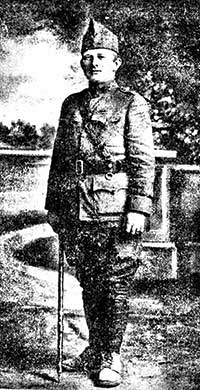
His son, the gallant World War I hero Gardner Greene, was born in Ashville on April 16, 1878, and after finishing his primary education, studied at the Inzer & Greene Law Office, run by his father and Judge John Washington Inzer at Ashville. He was licensed to practice law in 1897.

At the age of 20, the young lawyer volunteered for the Spanish-American War and served with distinction as a private and non-commissioned officer. In 1900, he entered the George Washington University Law School, graduated in 1901, and soon after, he entered service in the United States Census Bureau. In 1908 he opened a law office in Pell City and continued to practice there until he entered service in the Army.

Greene organized the Pell City Guards, known as “Company C” Fourth Alabama in 1915 – before the regiment was demobilized, war was declared on Germany, and the Fourth Alabama became the 167th United States Infantry. It was one of the regiments of the now famous “Rainbow Division.” 

Captain Greene, in command of Company C, sailed for France and entered the trenches of the Toul sector early in 1918. He served continuously with his company until July 31, when he was gassed, but under skillful treatment recovered and returned to command his company in late August.

On September 12, 1918, while leading his troops into battle with the German forces in the Saint Mihiel sector, fire from a machine gun struck him in the forehead, and he died instantly. He was buried at the Saint Mihiel American Cemetery and Memorial in Lorraine, France.

Greene was universally loved and respected and was popular in his regiment. He was a Mason, a member of the Kappa Sigma Fraternity and one of the leaders of the St. Clair County Bar.

Nearly a century before, his ancestors would be laid to rest in Ashville’s first cemetery, where the armory stands now. On a corner of the building, a plaque commemorates the royalty – both of historic nobility and local legends.

It simply reads:

ELIZABETH DIAMOND THOMASON

1739-1829

7th Gen. from Mary Queen of Scots

John Thomason, R.S.

1724-1825

Editor’s Note: The name in all capital letters denotes her royal roots, niece of Queen Anne of the House of Stuart. The R.S. following his name signifies, Revolutionary Soldier. The plaque was dedicated in 1989 by the Broken Arrow Chapter of Daughters of the American Revolution.

The Little Pizza Joint That Could

Carpenetti’s named Bama’s best pizza

Story by Loyd McIntosh
Photos by Meghan Frondorf

The parking lot of Carpenetti’s Pizzeria in Moody is packed! Cars are squeezed into any opening their drivers can find – around the back of the building, in the grass, in the dead zone between the restaurant and the Chevron station next door.

Inside, hungry diners jockey for attention from the hostess for one of only about a dozen tables as a steady stream of people queue in line for what seems like an endless run of take-out pies. The phone rings off the hook, the small staff constantly runs back and forth from the kitchen to the house, and pizzas fly in and out of the brick oven at a quicker pace than the ending sketch of an episode of the Benny Hill Show.

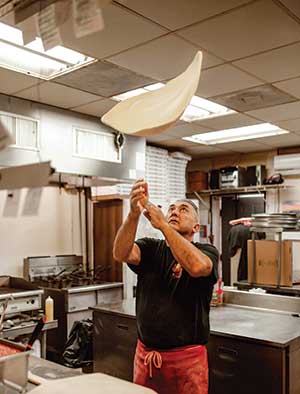
Frank Carpenetti’s signature, hand-tossed dough is foundation for a great pizza.

And the kicker is, it’s only Tuesday.

It’s abundantly clear the word leaked out that Carpenetti’s Pizzeria has been named the best pizza restaurant in Alabama. “Business has picked up a lot,” saysownerFrank Carpenetti.

“As you see tonight, there’s a waiting list, and it’s pretty much like this every night. People have to sign in now.It’s organized chaos. Sometimes. It looks like everybody’s running in 10 different directions, but only up to a point.”

The competition for Bama’s Best Pizza, sponsored by the Alabama Fruit & Vegetable Growers Association and the Alabama Farmers Federation Dairy Division, asked for nominations from the general public in the early rounds to determine a final four. At that point, a group of judges would visit each of the four finalists to nosh on some pizza and award a champion.

Carpenetti’s beat out some restaurants with great reputations, including Giovanni’s Italian Restaurant in Sylacauga, Valentina’s Pizzeria & Wine Bar in Madison and Top-Notch Pizza & BBQ from Vernon. Carpenetti said he had no idea the restaurant was under consideration for the competition until the very last day of public voting.

“We were real surprised,” says Carpenetti. “Someone came in with an advertisement, and so we called a few people and they said, ‘Yeah, we’ll get in on that,’ and all the customers that were in here all voted for us.”

Once Carpenetti’s advanced to the final four, the judges visited each restaurant, sampling an array of pizzas. The only requirement was a pepperoni pizza. Everything else was wide open. Carpenetti decided to give the judges a stuffed “all the way” pizza and a spinach alfredo pizza with chicken and bacon. Carpenetti said while he didn’t know what to expect during the judging, it wasn’t long before he had a good feeling.

“We just gave them everything we could that we thought would wow the judges,” he says. “I got a good feeling from it. I thought I would have a chance if I could get them in here to eat. They seemed to really like everything, and when they got all done, they said everything was great.”

Winning this competition is a validation of almost a quarter-century of hard work.

The road to Moody and Bama’s Best Pizza

Carpenetti grew up on a dairy farm in Watertown, N.Y., a working-class town of 30,000 just 30 miles from the Canadian border and 300 miles from New York City. He had 17 years under his belt as a machinist when he accepted a job offer in Moody. It wasn’t long before Carpenetti realized things weren’t working out with his new company but moving back north wasn’t an option. He and his family had already come to love Moody, and his brother had moved to the area as well. Carpenetti asked himself, “What do I do now?”

What he did was open a pizza joint.

“I started this because I couldn’t find what I like. I don’t like conveyor belt pizza. I like New York-style pizza. So that’s what I did,” Carpenetti says. “I had already moved everything down here. My brother moved down here, so we just stayed. I love it here.”

In reality, the original Carpenetti’s Pizzeria aspired to be a joint. Opened on Aug. 7, 1997, Carpenetti’s Pizza occupied a tiny space affectionally called “the hole” hidden behind the old CVS Pharmacy on U.S. 411.

Those early days in the restaurant business were tough as he worked to establish his restaurant and perfect the recipes that would eventually be heralded as the best in the state. “It was hard because I actually had to go out and get other jobs doing some different things. I was doing anything from raking leaves to cutting grass, whatever it took,” he said. “But I had to do it because I wasn’t going to give up. There were a lot of a lot of days when I thought, ‘What did I get myself into?’ But it’s worth it.”

The Carpenettis at the helm of a ‘family affair’

After two-and-a-half years, Carpenetti’s moved across the highway to a strip mall next to Fine Pools & Spas where they stayed for another seven years. For the past 15 years, Carpenetti’s has occupied the former location of Shaw’s Barbecue on Park Avenue across the street from Moody City Park. The old barbecue pit was just big enough to fit Carpenetti’s brick-fired pizza ovens. “We’ve only got about an inch-and-a-half clearance for these ovens,” Carpenetti says. “They just happened to fit. They just happened to fit perfectly in there.”

Carpenetti’s day starts at 6 a.m., with the exception of Tuesday when he arrives at the restaurant at 5 a.m. Other staff – mostly members of this close-knit family – arrive around 8 a.m. to prepare for the lunch rush at 11 a.m. One of the aspects that differentiates Carpenetti’s from others is the pizza dough, which is made fresh each day. Carpenetti also forgoes the use of equipment to stretch the dough, opting for the traditional method of tossing the dough in the air, a technique that not only makes for a better pizza but it also an entertaining crowd-pleaser.

“All of our pizzas are hand-tossed. A lot of places use a press. We don’t do that. We do everything by hand. Maybe it’s because I’m old school,” Carpenetti says. “Sometimes when we’re not real busy, we’ll see a kid watching, and we’ll say, ‘Hey, come here. Do you want to make your pizza?’ It’s great to see the smiles on their faces.”

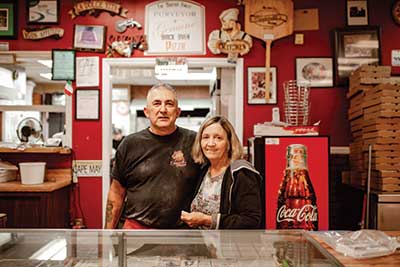
A family business, Carpenetti is surrounded by relatives who put the family name on the line each day. Carpenetti’s wife, son, daughter, brother, daughter-in-law, grandson and granddaughter all work at the restaurant, as well as several long-time employees who have become honorary Carpenettis. He credits their work ethic and dedication to the restaurant’s success.

“Everybody here works so hard. I mean, you don’t see any of my people just standing around. They’re always doing something,” Carpenetti says. “It ain’t it all glitz and glamour. There were some hard times, but right now, I’m just so proud of everybody here.” 

More than 24 years since taking a chance on bringing New York-style pizza to St. Clair County, the recognition Carpenetti’s is getting is well-deserved. But none of it would be possible without the loyal customers – the early supporters from their days in “the hole” and the new fans alike – who have made this little pizza joint into an institution.

“Thank you for your support over all these years,” he says. “We couldn’t have done it without you. I think we have the best customer base anywhere.”

That customer base is about to grow. Big time.