Go Build Alabama

Garrison Steel owner hopes he and his workers can open career doors for others

Story by GiGi Hood
Photos by Jerry Martin

If you looked on a map for the road to success, the most prevalent highway would seem to be the one that leads to and goes through most institutions of higher learning. Attending college and earning a degree have long been touted as the “Main Street” to the world of success.

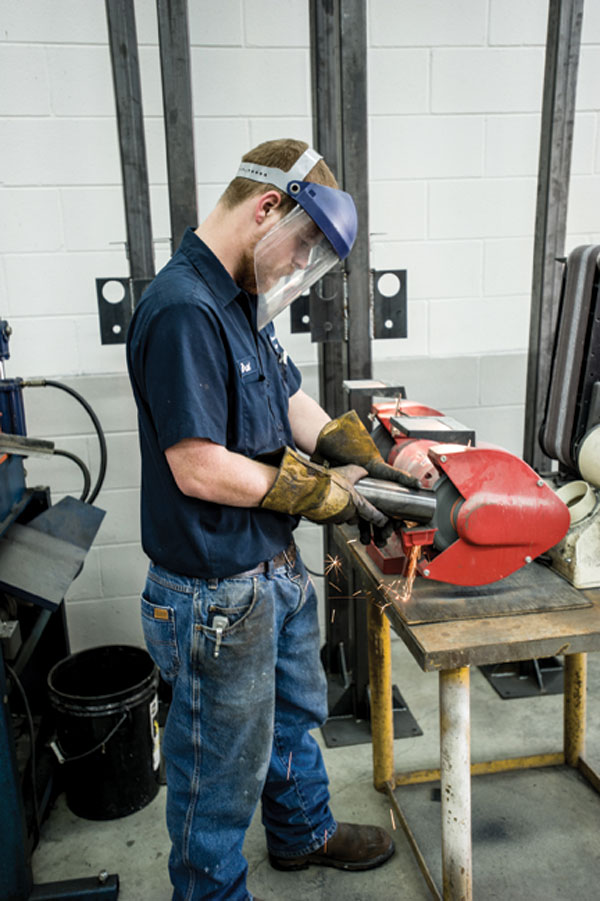
But there are other maps, with other routes, that can lead to the same destination point. John Garrison, owner and founder of Pell City’s Garrison Steel, will quickly tell you that he has a PhD, but not in the traditional sense. His came from “the School of Hard Knocks.”

“My grandfather lived through the depression, and the hardships he endured, along with the lessons he learned about living within your meager means, were passed along to my dad,” Garrison explained. “And as a result, they were passed on to me. When I got out of high school, my dad told me he had done all the raising of me he was going to do and that it was time for me to make my own way. So, when I graduated from Hewitt- Trussville High School in 1969, I entered the workforce.”

While other friends went on to college, Garrison began cutting his teeth in the steel erection business and traveling the Southeast to do it.

“I was just a kid, but I loved what I was doing,” he said. “I never stopped to think about this becoming my life’s work. I just showed up each day, was dependable, worked hard and thought it was great that daily, I was getting paid to exercise. When I started, I joined the union, and they taught and guided me as I worked my way up the ladder from an apprentice to a journeyman.”

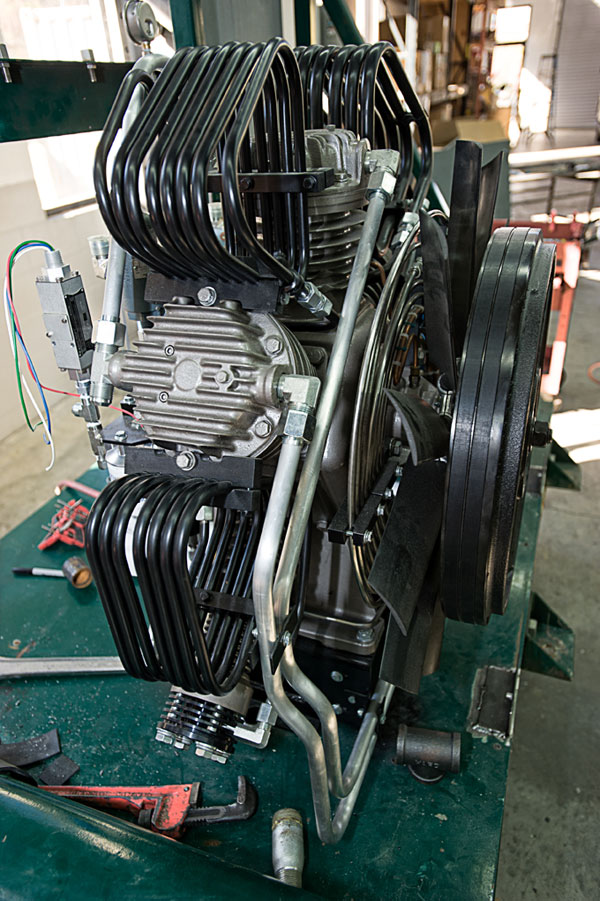
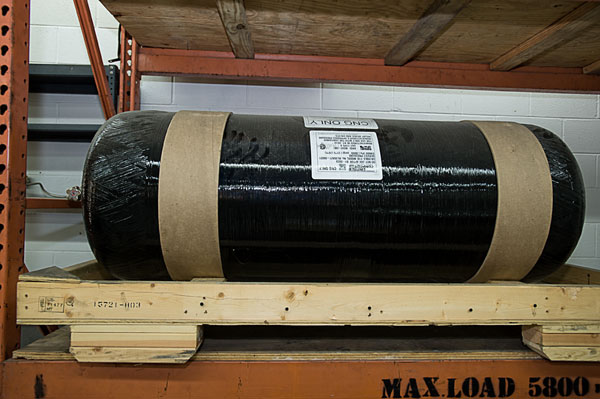
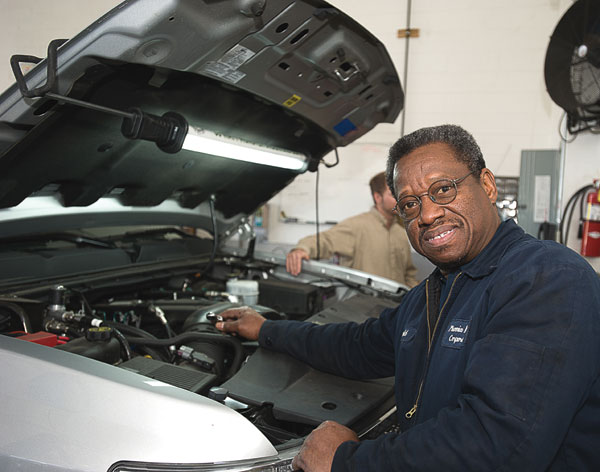
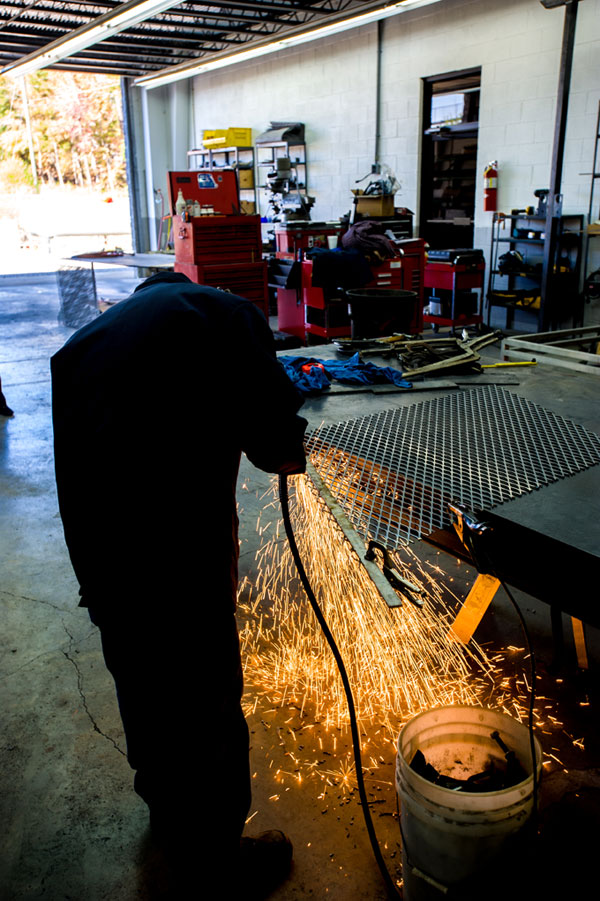
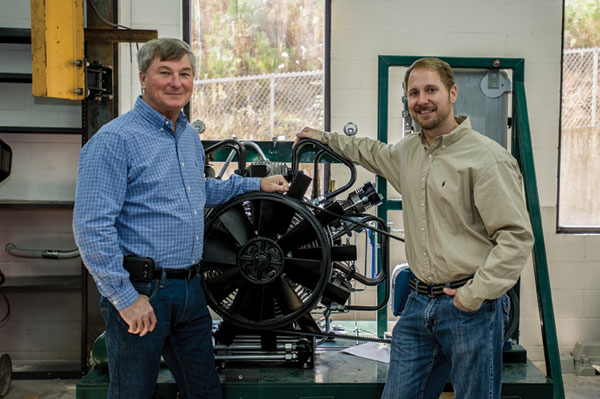
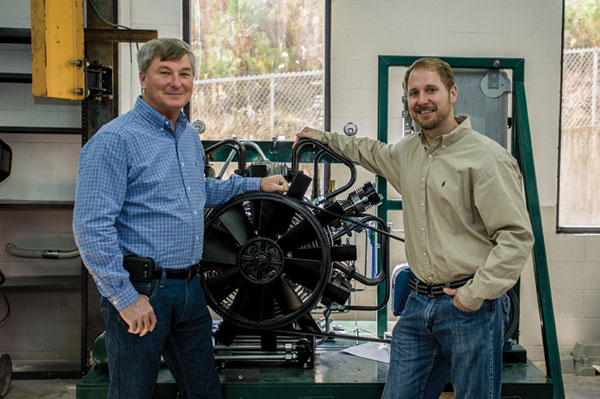
Today, 43 years later, Garrison marvels at how his first job evolved into his life career. He owns his own highly successful steel erection and fabrication business in Pell City with job sites all over the country, and he is sharing his own success story through Go Build Alabama in hopes of raising awareness and understanding among young people that skilled labor can be their ticket to success.

At this point in his life and career, it would be easy to say it is complete. The fairy-tale version would say: “After Garrison attained such great success, he then retired and lived happily ever after.” But that is far from the truth. Today, Garrison is driven by a new initiative called Go Build Alabama. And it is his hope that this vision will produce results much greater than any other with which he has been involved.

Just as he had made is mark on the steel end of the construction business, now he hopes to leave his mark on today’s younger generation. He hopes to help educate them, make them aware that there are plenty of opportunities to earn a good living while obtaining a great on-the-job educational experience.

He wants them to know that skilled laborers like heavy equipment operators, carpenters and electricians start their earnings at an average of $18-$22 an hour. That’s up to $43,000 a year. In 2010, statistics showed that college graduates’ starting salary was in the same range and not significantly higher.

Other skilled positions like boilermaker starts at an average of $27 an hour or $56,000 a year. A certified welder? Starting salary is at $22 an hour with the ability to go into six figures in some arenas, according to statistics provided by Go Build Alabama.

“My interest in this was piqued as I looked back over the last 43 years and realized my employees were getting older just as I was, and there was no evidence of young, skilled workers applying for jobs. It dawned on me that while I had learned, grown and built a business by being a sweat of the brow tradesman, skilled worker positions were not being filled because skilled workers were no longer plentiful.”

Realizing that the lack of skilled workers in today’s industry cannot only cause a slow down, but a complete collapse, he began to think about what could be done. Reflecting on his past, he thought about how he and many others in his generation would not have made it in the workforce without a skilled trade.

He reflected on unemployment levels in our country — especially among the young — and what could be done on that front. Research shows today’s generation Y is 92 million strong.

So, just as he had built his own businesses by working, thinking, dreaming, he put his shoulder again to the wheel and is investing his energy into the Go Build Alabama program. He realized that he wanted to teach the Gen Y’ers that there is absolutely no harm or shame in going to work clean and coming home dirty. His dream is to help them see they can have a successful and bright future, just as he had as a Baby Boomer.

“The time right now is a tough time, in many ways similar to the years during the Great Depression,” Garrison said. “Unemployment is high, and everyone is very aware of that. But the truth of the matter is high unemployment can and does now co-exist with a shortage of skilled tradesman. Currently there are more than 200,000 skilled labor jobs that are not just available right now but are in desperate need of being filled.”

In his day, the job was considered to be hard and dangerous work. “Back then, blue-collar jobs were synonymous with dirty factories and back-breaking work. And while factory jobs are still considered blue-collar work, today’s modern and highly technical plants enable the worker to replace just plain, raw muscle with brain power added to just a little muscle.”

Garrison knows he has worked hard, been successful and been filled with blessings galore. He knows he has built buildings that will outlive him by a very long time. But now he wants to give back a portion of what his industry has given him. He knows he left his mark on changed landscapes with high-rise buildings, and now he wants to work on leaving a legacy for a new generation of workers.

His vision includes a public-awareness campaign that inspires and guides young adults to pick up a shovel and get busy — to seek a trade that is worthwhile and to build their futures as he did, one day at a time, one skill at a time, one dream at a time. He wants to get the word out and let Generation Y know that hope and prosperity are well within its grasp and that futures can be as bright as any past generation’s.

Garrison believes that instead of giving up on another generation, community leaders and past and present business and trades people need to come together, offer a hand, and shine the light into the darkness as mentors. They need to prepare these young people to carry on the industrial future. “They are not just employable, but sorely needed building blocks in our world,” Garrison said.

“My goal with Go Build Alabama is that the Gen Y’ers will come to the realization that their presence, their knowledge, their thoughts and their dreams are desperately needed in the today’s world.

“They need to be taught the fact that they can be successful. They can face the future with the certainty of knowing that they have the skills they need to carry the industry today and that they will also be needed to teach the generation of tomorrow.”

A Railroad Runs Through It

Tracks from a bygone era cross St. Clair

Story by Jerry Smith
Photos by Jerry Smith and Jerry Martin
Submitted timetables from the Stanley Burnett Collection

Folks in Odenville, Alabama, often use the train trestle which crosses US 411 as a landmark for giving directions, but few except the very old are aware of the history of these tracks and of the tunnel at Hardwick Station, just a few miles east of town.

Both were built as part of Seaboard Air Line Railroad’s new trackage running from Birmingham all the way to New York City. For some 20 years, this line hosted Seaboard’s elite streamliner passenger train, The Silver Comet. Pulled by sleek new diesel engines, the Comet had everything a cross-country rail passenger might desire, including day coaches, observation lounge cars, diners and Pullman sleepers.

According to a 1947 Seaboard timetable, passengers who boarded the Comet in Birmingham at 2:35 p.m. could depend on being in New York exactly 25 hours later. The train passed through Trussville, Odenville, Wattsville, Wellington, Anniston and Piedmont before leaving Alabama; next stops, Cedartown, Atlanta, D.C., and eventually the Big Apple. The Comet competed directly with Southern Railway’s prestigious Southerner streamliner service.

Odenville resident Jack Stepp, a retired Southern engineer, said that even though it took a more circuitous route, Seaboard often beat Southern’s trains to common destinations.

Like many civil engineering projects of the early 20th century, both Hardwick and its sister tunnel at Roper near Trussville were plagued by design errors from the beginning.

E.L. Voyles was a Seaboard road superintendent at the Sanie Division from 1916 until the mid 1920s, and his journals give a detailed look at how Hardwick and Roper Tunnels came about: “As Seaboard construction crews traversed their way west of Broken Arrow, through the mountainous terrain, it became evident that two tunnels would be necessary to reach Irondale.

“In early 1903, Hardwick and Roper Tunnels were bored. In an effort to save time and money, the big brass at Seaboard’s Richmond headquarters decided to build [both] tunnels to minimum standards. So the tunnels were supported by wooden frames cut from trees in the area. Keep in mind that in 1903, Seaboard had no tunnels anywhere on their entire system, so tunneling through mountains was not their forte. And they didn’t consider the consequences of using wooden frames positioned within feet of steam engine smokestacks blowing out fiery cinders when an engine was pulling at speed.”

Voyles continues, “Seaboard ran its first train into Birmingham on December 5, 1904. … In 1909, they realized their mistake concerning tunnel construction when an eastbound coal-burning freight highballing through Roper Tunnel … spewed an abnormal amount of fire and cinders. The huge wooden tunnel support system caught fire. Within minutes, the wooden supports were consumed by fire and collapsed onto the tracks.”

The disaster proved a blessing of sorts. Seaboard hired a team of professional tunnel people to rebuild both tunnels, reinforcing them with concrete instead of wood. Historian Joe Whitten of Odenville writes that the re-lining of Hardwick Tunnel alone consumed some 38,000 sacks of concrete over a period of nearly a year.

Because they had to excavate farther to clear the old structures, the rebuilt tunnels gained much-needed head and side clearance, which proved a godsend as trains eventually got taller and wider.

Trussville resident Hurley Godwin relates that adventuresome folks often entered a ventilation airshaft beside his home on Roper Tunnel Road using ropes to rappel down into the tunnel. The rail company finally fenced the area to protect these reckless climbers from themselves.

As for Hardwick Tunnel’s problems, Voyles relates, “The section of track between Odenville and Wattsville gave us fits. … They used a rail construction method known as “follow the contour”, rather than merge the track with the terrain. This was great when they operated short trains, but when a 100-plus-car freight pulled by four or five diesels snaked through the 180-degree turn and the back-to-back high angle curve tangents of Backbone Mountain, a tremendous amount of tension was placed upon the tracks in both directions.”

If one looks at this stretch of trackage on a satellite computer map such as Google Earth, it appears to be a long stretch of railway curled into two tight loops as it follows contour lines in the valley east of Hardwick Tunnel, a feature which train crews called the Rope.

One major derailment resulted in several engines and railcars plummeting into a ravine. Especially prone to damage and derailments during extremely hot or cold weather, the Rope eventually forced an end to Seaboard’s passenger service on that line in 1967, although at one time they had been running four passenger trains and six to eight freights per day.

The area was also prone to landslides, so elaborate cable networks were strung along rock cliffs to automatically trigger alert systems when rocks fell onto them.

But Hardwick Tunnel’s woes were not limited to the tracks beyond.

Approached on a curved track from the west, the tunnel itself is also curved inside. You cannot see light at the end of this tunnel (according to an anonymous observer). Voyles explains, “The track alignment through Hardwick was a tough section to maintain. … We constantly checked the rail for deterioration created by long periods of moisture that accumulated inside the tunnel. By the time an engineer could spot a broken rail inside the curved … tunnel, it was too late.”

Voyles says Odenville was a flag stop for local passenger trains, whereas Wattsville was a regular mail stop. He also relates that the conductor would drop off lunch orders while stopped for mail in Wattsville, and they would be ready at a trackside cafe when the train reached Piedmont.

In earlier days, a short line called the East & West Railroad connected Georgia Pacific’s line from Pell City to the Seaboard line at Coal City. Its wide roadbed, called Railroad Avenue on old maps, also hosted street traffic. Eventually this line was closed, the rails removed, and the street renamed Comer Avenue. It runs at an odd angle to every other street in town, passing by Pell City Steak House and the old Avondale Mills property before crossing I-20, and then toward Coal City.

As years passed and rail traffic dwindled, Seaboard went through various business mergers, eventually becoming part of CSX Transportation. The Roper-Hardwick portion is now leased by the Alabama & Tennessee River Railway (ATN) as part of a 120-mile freight short line from Birmingham to Guntersville.

Many segments of Seaboard’s old trackage have since been removed entirely, with some of their roadbeds eventually joining the Rails-To-Trails project. The well-known Chief Ladiga Trail is a fine example.

It runs on the old Seaboard roadbed from Anniston through Piedmont to the Georgia state line, where it continues as the Silver Comet Trail, with a combined length of some 100 miles. Legislation is afoot to make it part of the Appalachian Trail.

Those seeking physical fitness or outdoor recreation can get on the rail-trail at any crossing, and walk, run, jog, bike, rollerblade or whatever. It’s paved all the way, with no grades of more than 2 percent, so it’s also great for wheelchairs and baby strollers. Motorized vehicles are banned.

Want to visit Hardwick or Roper Tunnel? DON’T! All railroad tracks are the property of rail companies. Walking on any tracks is considered trespassing on private property.

Besides, it can be very dangerous.

Hardwick, for instance, is approached through a long, narrow, curved gap with steep sides that allow little room for escape if a train is coming. Also, as mentioned before, you cannot see through the tunnel, so an oncoming train might not be detected until it’s too late.

Best to explore railroad features on the printed page instead.

Forever Wild

High Falls is located in Dekalb County toward the head waters of Town Creek that empty into Lake Guntersville. Town Creek is known by kayakers who favor paddling in the mountain creek for its class 4 and 5 whitewater. Promoters of Big Canoe Creek Preserve hope to join Forever Wild properties like this to be protected, preserved and enjoyed.


Exploring the possibility of a Big Canoe Creek Preserve

Story by Carol Pappas
Photos by Michael McKenzie
Submitted photos

For Springville’s Laura McKenzie, Big Canoe Creek is more than just a picturesque stream that meanders lazily through St. Clair County. It’s her science classroom, her family’s recreation area and an environmental wonder all rolled into one.

When she and her husband, Michael, moved to the area, she said she joked with him, “Now we can commence with raising a biologist.”

As it turns out, it wasn’t much of a stretch. “Because of our creek, so far, we have two biologists and counting,” she said. Over the years, she has used the creek to teach groups of homeschoolers as well as her family about ecology and biology.

She shares an attraction to the creek with people like Doug Morrison. He began his love of the creek through recreation but soon found an inner passion to save it, preserve it and share it for generations. Today, he is president of Friends of Big Canoe Creek, an environmental group dedicated to preserving this natural resource.

All across the state, there are people just like McKenzie and Morrison, who recognize the value of preserving Alabama treasures. In 2009, Big Canoe Creek was nominated to be a part of the Forever Wild program, which buys land all across Alabama to preserve it for the public’s enjoyment.

Funding has been on hold while the program awaits its fate in the Nov. 6 election. On the ballot as Amendment 1, voters across Alabama will have an opportunity to vote ‘yes’ or ‘no’ on continuing to fund Forever Wild through interest earned on natural gas royalties, capped at $15 million each year.

Those who question continuing it say they just aren’t sure how much longer or at what level the program should be funded.

Since its creation in 1992, the Forever Wild Land Trust has bought more than 227,000 acres of land for public use. But even so, Alabama ranks last with the smallest percentage of public conservation land in the Southeast, according to Forever Wild.

“I think Forever Wild is a great program because it provides land available to the public for recreation,” Morrison said. “Every community needs green space for an opportunity to explore, experience and absorb nature. Outdoor activities are important physically and mentally for all ages, and the Friends of Big Canoe Creek has nominated land in Springville which adjoins Big Canoe Creek, for consideration by Forever Wild.”

Morrison said the hope is for a Big Canoe Creek Nature Preserve open to the public for hiking, biking, horseback riding and scouting. As part of the plan, they want public access to the creek for canoeing, kayaking and fishing. “It could be a recreational oasis, and is a great opportunity to preserve land adjacent to a state treasure that is Big Canoe Creek.”

He’s not alone in that belief. “Big Canoe Creek is a beautiful stream, rich with unique and rare species of plant and animal life,” according to Wendy Jackson, executive director of the Alabama Freshwater Land Trust. Jackson, who also lives in St. Clair County, has been a vocal proponent of the Forever Wild program and has worked alongside countless groups to keep it going.

“The property under consideration by Forever Wild will help preserve the integrity of the creek while providing outdoor recreation activities,” she said. But more than just recreation, she pointed out, “Forever Wild properties are proven economic engines for the communities where they are located because people from across Alabama and from out of state visit them, in turn generating tourism revenue for the local community.”

Barnett Lawley, former commissioner of the Alabama Department of Conservation and Natural Resources, has worked tirelessly across the state during his tenure as commissioner and in the days since for Forever Wild.

But his roots in the creation of Forever Wild go all the way back to the beginning. The St. Clair County native was vice president of the Wildlife Federation when the bill was passed. As commissioner, he automatically became chairman of the Forever Wild board.

He shares McKenzie’s belief that the lands acquired are indeed outdoor classrooms. “It’s pristine land, and it needs to be protected” for generations to come. He points to the wetlands that are part of Forever Wild acquisitions, noting that they can teach about the natural filtration of groundwater. There are so many good things besides hunting and fishing.”

Lawley, too, talked about the economic impact. At Paint Rock River, the parking lot for public access had to be expanded twice.

In Hale County, just south of Greensboro, the national grand championship for field trial dogs is being held in September at the old state cattle ranch, which now bears the name of the man who had the vision behind it, M. Barnett Lawley Forever Wild Field Trial Area.

That’s 750 dogs, their owners, their trainers and others associated with them staying in the area for two weeks. For the Black Belt, it is a much-needed injection of outside money, Lawley said.

And natural resources like those across Alabama are economic drivers used to lure industrial prospects to the state. At Gov. Riley’s annual Turkey Hunt, 100 prospects from around the world stayed at different farms and lodges across the state. You might recognize names like Airbus and Thyssen-Krupp among the guest list. Both now call Alabama home.

They see the quality of life found here. “It’s an economic development tool using natural resources. Forever Wild adds to that program,” Lawley said.

Recreation, education, economic development, tourism — it all sounds like a winning proposition for Alabama. Add to that, the use of money to fund it from a depleting resource — natural gas — and putting it into a permanent resource — land — and Lawley reasons that it is good for the people of Alabama. The land becomes a permanent asset of the state, it doesn’t use a dime of taxpayer money, and it is a resource that can be used and enjoyed by the people from now on.

While Forever Wild is a statewide political issue, McKenzie illustrates through the comments of a mother and a teacher how all politics are indeed local. “The creek has offered a place of sanctuary, peace, fun and renewal. I would love for other parents in our area to be able to share in these benefits. That is why I’m so excited about the possibility of Forever Wild buying the property along Big Canoe Creek. Kids are much more motivated to learn when they are actively engaged in their subject,” she said. “When they value the beauty of the creek, they begin to value the science behind it.”

And when they value something, they want to protect and preserve it.

As Lawley put it, “Forever Wild is a reinvestment into the state for the people.”

Gover’s Gardens

There is gardening and then there is something very special

Story by Carol Pappas
Photos by Mike Callahan

Jennifer Gover did not intend to follow in her mother’s footsteps, at least not in the path of a master gardener. But one look at the bountiful gardens that frame her home and property each spring, and it is evident she inherited her mother’s green thumb and a passion for flowers.

“My mother was an avid flower gardener,” she said. “You know how mothers have you busy doing stuff and you say, ‘I’ll never do that.’ ”

Take in the abundance of blossoming azaleas, dogwoods, wisteria, irises, daylilies — they’re all here and more — and you immediately recognize the promise made to herself as a child was never kept.

Her mother’s favorite flower? “All of them,” Jennifer replies without hesitation. She apparently inherited that, too.

The drive leading up to their King’s Circle home in Pell City is quite a welcome mat of color, vibrant azaleas and dogwoods leading the way. Bursts of color in beds found in virtually every corner and along every path on the property show off her handiwork.

The retired Pell City High School principal is quick to point out that she has help. Husband Kenny Gover, whose day job takes him to Coldwater as principal of the elementary school, is “the hands,” she said. “I’m the planner. He’s the worker.”

In the early years, the Govers began with white dogwoods from the wild. She thought, “I’m not going to get into a big yard.” Azaleas followed “little by little.”

A dozen years later, and the Gover home and grounds are a spring color showcase. And they share it with family, friends, neighbors and anyone else who happens to stop by for her “open house” at the peak of their blooming.

Passersby on drives to see spring color will stop and inevitably recognize the legacy and say, “Oh, your mother is the plant lady. We always would go by there.”

One little girl told her, “The colors are so beautiful, I need sunglasses.”

It’s easy to understand the youngster’s sentiment on a tour of the gardens, which saw an average of 20 people a day coming to get a closer look. “Some came back to walk through a second or third time,” she said. “It’s a word-of-mouth thing.” And she greets them not only with her flowers, but with open house fare, like cakes and other refreshments. “I love them coming.”

She is part of a flower group called Mahogany, and its retiree members meet once a month. But their discussions and activities go well beyond blooms and blossoms. “It’s a group of people who like to help each other.”

They clean yards and make an impact. They visit, have lunch with guest speakers — like a registered nurse or a banker — who “impact us individually or as a group.”

They go on trips to learn more about their state and its history. They have been to Gee’s Bend, Brown’s Chapel Church and the National Voting Rights Museum in Selma. They traveled to Dexter Avenue in Montgomery to see the church and parsonage of Martin Luther King.

Here at home, Mahogany gets back to the business of flowers, this year naming Gover’s creation a not-too-surprising ‘Yard of the Month.’ “It’s probably month and year,” laughed Gover.

Like a proud mother gathering her young, she is constantly traveling to and fro to flea markets and home centers to add to her collection.

She specializes in bringing distressed plants back to life so that all may enjoy the pleasures of what she has known since childhood. It is not unusual for people to “leave things for me,” she said. They may be irises or daylilies, and they tell her, “I can’t keep this alive. What can you do?”

“They never come back and get them,” she said.

And she gladly accepts the challenge, simply adding to her gardens year after year and thinking of each flower left behind as a gift.

“There is nothing like early morning in the yard,” she said. “There’s a presence of God. A bloom leaf opens. Birds are singing. You reflect, think about life — where you’ve been and where you’re going.”

Her husband enjoys the pleasures of the gardens, too, not just the work, but to sit back and “see what you’ve accomplished.

“It’s a time to bond with each other,” she added.

She tells young people when they build a house, put the plants out now. “You’ll look back and enjoy it in your life,” she said.

Her other piece of advice? “You should love what you’re doing. I love the plants. It should have been my calling.”

One look around Govers’ gardens, and it doesn’t take long to conclude that that is exactly what it is.

Blackwood Gallery

Springville home to art gallery of national note

Story by Mike Bolton
Photos by Jerry Martin

As college kids in love tend to do, Dean Black and Sharon Williams would hold hands on the front porch of the old house that Black called home in his college days and talk of marriage and exactly how their lives would play out.

What their friends and family chalked up to as a cute couple with big dreams was actually a game plan for the couple who in 1980 became Mr. and Mrs. Dean Black. It was a game plan that has come to fruition with Blackwood Gallery in Springville.
“We’d sit at that old house near Auburn and talk about how we’d have an art gallery one day and I’d draw and Dean would make the frames for my artwork,” Sharon Black said in their gallery on US 11 in Springville. “That was our goal in 1977, and that is how it has played out.”

Today, Blackwood Gallery houses the couple’s work as well as the works of more than 40 other craftsmen. Visitors are often surprised to find bronze work, blown glass, leaded glass, handmade furniture and other woodworking treasures from Alabama’s top craftsmen in a place like Springville.

But it was the only location they ever considered for their gallery, both say. Traditional places where you might expect to find an art gallery, like Mountain Brook, lacked that laid-back atmosphere that is so important to both. Besides, many larger cities tend to frown on people riding their horses to work these days.

“I grew up in Hueytown on a lake with horses, and Dean lived in Homewood, but he spent a lot of time in Springville around his grandparents’ summer getaway that had a lake and horses,” Sharon said. “When we built the gallery here, in addition to Dean’s woodworking shop he built in the back part of the gallery, he built a stable where we could put the horses when we rode them to work.”

For all their dreams of one day owning a gallery, surely the couple could never have envisioned the success Dean would find in the field of woodworking. In his college days, his woodworking consisted of building custom gun stocks at what he called Deano’s Gun Shop, an out-building at the home he rented in Society Hill.

In those days, being accepted into the prestigious Alabama Designer Craftsmen group and constructing many breathtaking pieces for the Birmingham Museum of Art and the Birmingham Botanical Gardens was even too much for him to imagine.

Chances are you might have seen his work and not even known it.

“I did the columns for the Asian murals at the Birmingham Museum of Art and that opened a lot of doors for me,” he said. “I came back and built the bell stand at the museum from wood that they presented me from the 1939 World’s Fair. I followed that by building the bases for the samurai helmet collection.”

In 1996, the Birmingham Museum of Art had a coup as it became one of a handful of cities in the U.S. to land the traveling Qin collection. The artifacts from the tomb of Qin Shihauangdi, who established the first empire called China, are hailed as one of the most awe-inspiring collections in the world. The collection was taken from a burial site the size of Manhattan and included full-size horses and protecting warriors made from terracotta.

Black was chosen to do much of the accompanying woodwork that supported the treasures. That woodwork was seen by thousands of visitors from across the U.S.

The museum is home to one of the largest and most comprehensive collections of Wedgwood pottery in the world and the only collection of its kind in the United States. Black was chosen over other craftsmen to build the supporting woodwork for that, too. He also did the delicate woodwork in the museum’s Korean Room.

As word of his skills spread, Black was also chosen to construct the Tori, a large gate at the Birmingham Botanical Gardens.

Today, Black says he’s amazed at how word of his work has spread and at the inquiries he receives from across the country. His work has ranged from columns for a hunting lodge belonging to dog-racing magnate Milton McGregor to crosses and offering tables from large churches across the U.S.

All of the work is done in his shop in the back of his gallery in Springville.

“I have equipment that can do pieces substantially larger than many people can do,” he said. “It has opened doors for many of these larger projects.”

Black says he has made some inroads into one project that he really hopes never comes to be. An Auburn graduate and devout Auburn fan, he has offered to build museum-quality pieces for the school free-of-charge from the wood from trees at Toomer’s Corner should they not survive the poisoning.

“I love Auburn, but I haven’t been as diligent as I should have been in sending my money down there,” he said. “This would be a way that I could give something back. I just hope it never comes to that.”

Black said he is a firm believer that small things steer people along the paths of life and if not for a woman and her dog, there probably wouldn’t be a Blackwood Gallery today.

“I grew up an Alabama fan, but I wanted to be a veterinarian,” he said. “I went to Auburn to become a veterinarian and took all the pre-vet classes.

“I was working with a vet down there, and a woman brought in a large sheep dog that had been hit by a car. The vet did everything he could but couldn’t save the dog. He told me that I needed to watch how he handled it because it would be something I would have to do frequently in my career.

“We had this little window in the office, and I watched through the window as he told the woman and kids. I was looking at the back of his head as he was facing them. I saw him shake his head, and I saw them burst into tears.

“I knew I could handle the gory stuff, but I wasn’t prepared for that. I knew in that instant that I couldn’t be a vet. I went in and told my professors that I wasn’t even going to take the final exams because I was changing my major. I lost more than a year’s work but I changed to marketing.

“I will always be glad that I did.”

Winnataska

Almost a century of fun: Camp boasts spirit and history

Story by Carolyn Stern
Photos by Jerry Martin
Submitted photos

A wild place with a rushing creek and a waterfall; a chance to test your skill in canoes or on horses or to take on a Robin Hood pose by learning to handle a bow and arrow in archery class — the stuff of dreams for a boy or girl stuck in the city in the summer. Wild and wonderful, Camp Winnataska has made those dreams come true for almost 100 years.

The secluded woodland camp close to Prescott in St. Clair County is not pretentious. It has no grand entrance nor elaborate buildings. But this collection of some of the best of the natural world and of human efforts holds a special place in the hearts and minds of those lucky enough to spend time here.

Hundreds of young people flood the camp during June and July, a week at a time. They swim, hike, work on crafts, learn to function as a team and sing, sing, sing. Everything they do during their week is based on the principles on which the camp was founded, but the way they’re presented is pure enjoyment.

A fortunate coincidence laid the groundwork for this dream to come true.

In 1914, Dr. Elwyn Ballard, the first commissioner of Boy Scouts in the Birmingham area, had been looking for an isolated retreat away from the city to establish a Scout camp. One spring day, he and his wife, Florence, took a ride in their Model T from Birmingham out past Grants Mill and through Leeds to Prescott to meet up with friends Lucien Brown and a Scout worker, Hewlett Ansley, at their favorite fishing hole. In the heavily forested area, the road narrowed to just a path between the trees, and they found the friends at Kelly Creek, which would eventually become part of Camp Winnataska.

In her book, “Winnataska Remembered,” Katherine Price Garmon, daughter of future camp Director D.R. Price, quotes Florence Ballard, who was her aunt. “We fell in love with the place; the small pool, the falls, and the big pool below with towering cliffs … but its inaccessibility was one of its greatest charms.”

With Dr. Ballard’s strong endorsement, the Boy Scouts purchased some of the property, leased other acres and used it for overnight camping for two years. By 1918, however, the leaders decided that a camp closer to Birmingham was more suitable for their needs.

As luck would have it, the interdenominational Birmingham Sunday School Association had been thinking about starting a pioneer effort in religious camps for boys, and Dr. Ballard was able to bring the two groups together. The association board agreed to sponsor the program to accomplish “the fourfold goals of the association: physical, mental, spiritual and religious development.”

However, Rosa Strickland, a board member and a respected Birmingham teacher and Sunday school worker, had an objection to the plan. She insisted that a similar camp should be provided for girls. D.R. Price said, “Nobody argued with Miss Rosa.”

Other camps established around this time were taking Indian names, and Mrs. Ballard was asked to choose a name from a list of Indian words. Considering the waterfall was (and is) a primary feature of the camp, she chose Winnataska, which means “laughing water.” The number of arrowheads found on the property, along with the fact that there’s plenty of water at Kelly creek for use and to draw game to the area, indicated there had been a sizable settlement. This connection made using an Indian name even more fitting for this ancient land.

Affirming Price’s prediction, Miss Rosa’s proposal for a girls’ camp was accepted and had outstanding results when the first Sunday School Association camp took place in 1918. Out of an expected 75 boys, aged 12 through 15, only 31 registered. To be fair, some boys this age were already working. In contrast, the girls’ registration had to be stopped at 108, leaving some disappointed.

The earliest female campers (aged 15 to 17) boarded a train at Birmingham’s Terminal Station on July 17, 1918, got off at the Brompton stop and walked the final five miles to Winnataska, dressed in the long skirts and the hats of the day. (A photograph in Stockham Hall at the camp shows smiles on many faces and skeptical looks on others.)

As time passed, school-type buses were used to pick up campers at designated sites around Birmingham. Today, automobiles filled with whatever the camper feels is necessary (no cell phones are allowed) crowd the parking lot on registration days. Then the fun begins.

The camper’s huts are named for Indian tribes: Cherokee, Choctaw, Creek, Seminole, Chickasaw and Navajo. At the time camps for younger children began, the Sunday School Council was helping a religious education camp in Mexico. Winnataska began sending their Sunday worship offerings to that camp and used Spanish words to name the Chico (“little one”) cabins (ages 6 to 8): Siesta, Casa Nueva, Tienda and Adobe.

Each hut has leaders who encourage their groups to take pride in themselves and their surroundings. A simple task (to some campers) is to keep their hut clean. The fun comes when they are required to sing or cheer (loudly) whenever they’re walking outdoors. Each tribe has special songs and are encouraged to drown out the others.

“I’m Chickasaw born and Chickasaw bred/And when I die I’m Chickasaw dead./So, rah, rah for Chickasaw/rah, rah for Chickasaw/Rah, rah, rah./Bum-diddly-um-dum. Chickasaw!”

Staff members, Blackfeet (for boys) and Comanches (for girls), plan activities that encourage competition as well as teamwork — swimming, riding horses, canoeing and rope climbing. Campers take part with enthusiasm, all with the hope of being named the Honor Hut on the last day of camp.

Each day begins with Bible study in the 1930 Branscomb Chapel and ends at Hillside (which overlooks the waterfall) with an inspirational talk or a short worship service. Through all these specially planned activities, the camp continues to fulfill the fourfold purpose of the Sunday School Association — physical, mental, spiritual and religious development.

Mary Margaret Shephard is director of the summer camps, and Courtney Bean is the programs director. In 1922, D.R. Price became the first director. The camp was growing so quickly it was clear a formal leader was needed to oversee the property and activities.

Price held the position for 35 years. His immediate priority was to replace or update the existing housing for leaders and campers. Some structures were usable, and they were made more comfortable by being fitted with screens and new bunk beds. Before the luxury of the new beds, the 1920s girls sang a song about their old double-decker bunks, which had straw mattresses.

“In our bunk, in our bunk, where the hay comes trickling down, ‘till it hits you in the crown, in our bunk, in our bunk.”

In 1930, property was cleared for Branscomb chapel, a circular open-air stone structure. Lester Coupland, a stonemason and carpenter who lived near Branchville, was the principal builder. Coupland’s son, Carl, says his father and his father’s uncle, Sam Simpson, rode their mules eight miles to the job.

As construction moved along, campers were recruited to gather rocks for the walls. Price reminded them that some rocks with color or distinct shapes were more attractive than others. He always told them to get the “pretty rocks,” his daughter says. The floor and seats are made with flat stone pieces from the creek below the waterfall.

Mrs. Garmon says the building’s round shape was chosen because Native Americans revered that shape, and Winnataska’s founders wanted to honor their tradition. Another custom, also thought to be from Indian lore, has continued to dictate movement in the chapel. One doesn’t walk straight across the floor from one doorway to another. To do so is believed to be unlucky. Movement goes around the circle.

Lester Coupland was asked to be caretaker of the camp in 1935, and he moved his family from their farm near Branchville to the premises. He remained caretaker until 1940. Friends of many years, Carl Coupland and Mrs. Garmon laugh about the times they and Garmon’s sisters played in the sand pile and all around the camp when their fathers were at work. Coupland says, “I was always smaller and the girls picked on me.”

The “big hole” at the foot of the waterfall is a really good place to fish, Coupland says, but his favorite memory of living at Camp Winnataska is not about the fish. “I was able to hear the water rushing over the falls every night,” he says. “There’s no better sound in the world to put you to sleep.”

Kelly Creek runs through the property and eventually into the Cahaba River. Over the years, a number of bridges were built to join the two parts of the campgrounds, but heavy rains that raised the level of the rushing water washed them away. Finally, John Elon Stanley (caretaker of the camp from 1940 to 1961) and architect Walter Holmquist, with help from Roy Connor and Blackfeet Bingham Ballard and Fletcher Yielding, completed the bridge that carries campers over the falls today. The bridge was officially named for him at the camp’s 50th anniversary celebration.

The bridge isn’t the only sign of Stanley’s creative talent. He had been a railroad bridge builder and his impressive techniques can also be seen in the ceilings in Stockham Hall and Brewer Chapel. The beautiful and sturdy ceiling rafters were made of wood harvested from Winnataska land.

A number of structures and markers on the property honor those who have been key to the growth of the camp and in keeping alive what D.R. Price called “The Winnataska Spirit”.

They include Branscomb Chapel, Brewer Chapel, Reimel Hall, Stockham Hall, the Stanley Bridge, Rosa Strickland Lodge, Price Lodge, Norton Flagpole, Grayson Lodge and Grace Lake.

The present caretaker, Mark Buerhaus, was a Blackfoot from 1994 to 1998, and he just couldn’t stay away. He’s responsible for management of the 1,400 acres of camp property and for 55 structures that encompass 87,000 square feet. He says he couldn’t possibly do it all without his assistant, J.T. Braxton.

Buerhaus is a busy man with a family on the property and is on call 24-7. He’s an enthusiastic supporter of Winnataska and knows where the campers are at almost any time of the day or night. Yes, night: neon (ask a camper) and pirate nights, mission impossible hide-and-seek, country night and Indian night. All include some sort of costumes and the absolutely necessary singing and dancing. Wherever Mark is needed, he goes. Even if it’s into the night activities.

Mrs. Garmon, as the daughter of the camp’s first director, a camper herself and a niece of the Ballards, who found the property, feels a family responsibility about retaining the camp legacy. She tells about walking around the grounds one summer day and hearing very loud music coming from Stockham Hall. “I went over to check on the activities. The girls were being taught line-dancing.” She wasn’t quite sure about that or the music. But one little dancer caught her eye: “I thought, ‘If doing this gives her the feeling she’s a real dancer, that’s a good thing.’”

To date, more than 100,000 campers have sung the songs, hiked the trails and established friendships that last through the years. “Many campers are fourth-, fifth- and sixth-generations of families,” says Mrs. Garmon, “mostly from the Birmingham area. They wouldn’t think of going anywhere else.”

At a celebration of Winnataska’s 50th year, D.R. Price quoted a postcard sent home by a Chico camper: “Dear Mother, went swimming in the morning. I almost drowned. Camp is fun. This afternoon, I’m going to play with snakes.”

Why do kids like to go to camp? That about sums it up.

For a first-person account of what it was like to live at Camp Winnataska during the depression, check out the full edition Discover, The Essence of St. Clair online at ISSUU or in print.