Springville Community Theatre

Story by Paul South
Submitted photos

For Shakespeare, “The play’s the thing.”

But for 50 years at Springville Community Theater – no matter if it’s iconic works like Rodgers and Hammerstein’s Oklahoma, P.L. Travers Mary Poppins or the stage adaptation of E.M. Barrie’s Peter Pan – the people, not the play, matter most.

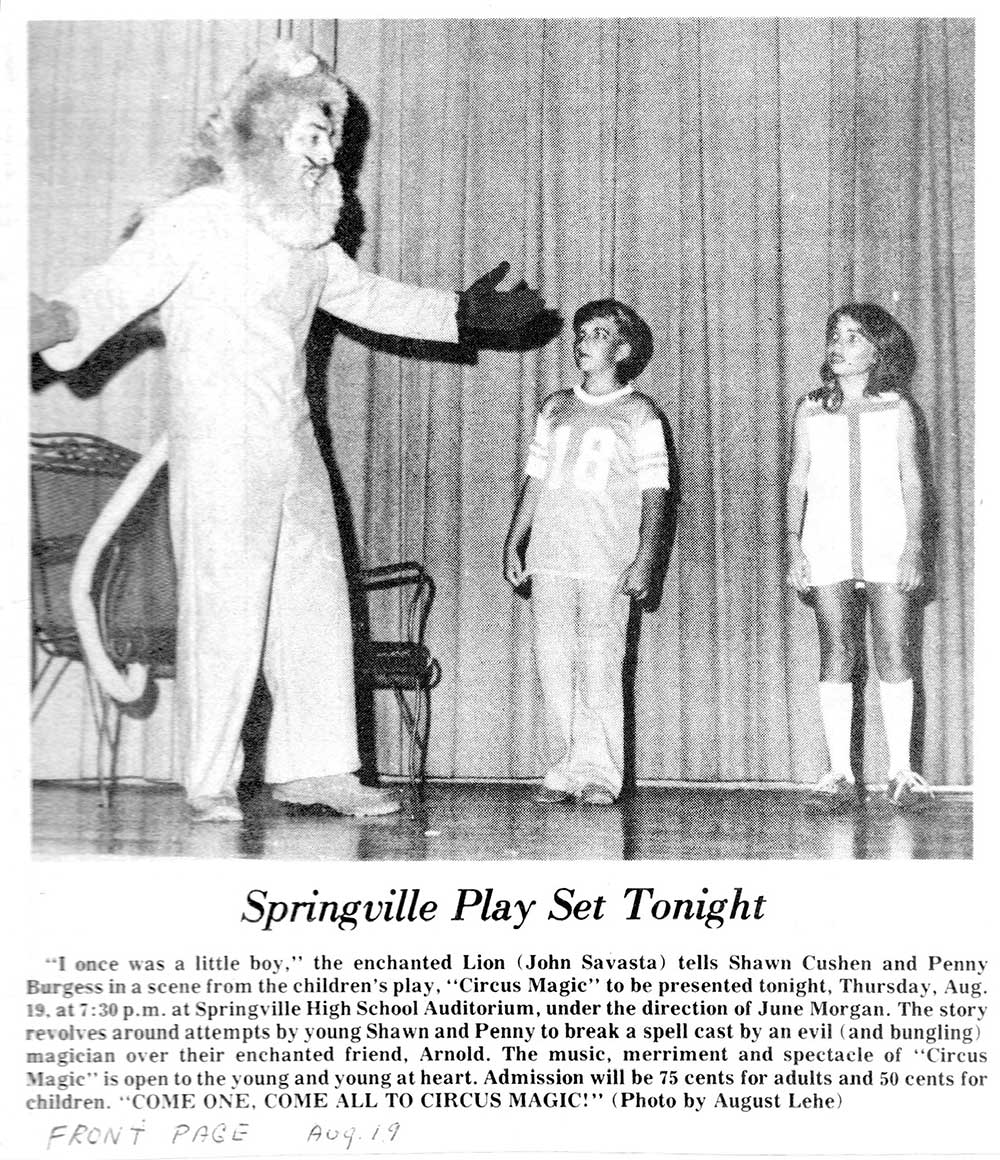
It’s been that way since June Mack founded the theater, where everyone who auditions gets a part – beginning with that inaugural play in 1976 – a one-night production of her work, Circus Magic, a joyous musical fantasy for kids of all ages.

Circus Magic

Tucked away in a drawer in Mack’s Springville home are handwritten notes to the new cast at its first post-audition meeting.

Fifty years ago, she told them, “If this troupe continues in future summers – it has to be easier at any time than it will be for us this summer. But that’s half the fun of it – We’re the troupe that has a chance to make something out of nothing – absolutely thin air.”

The freedom and adventure continue.

In the beginning, sets were crafted from cardboard. Now, muslin stretched over wood framessets the scene. In 1976, Mack and two others crafted sets. Now a small volunteer army does the work.

Mack, a UAB professor, recalled the early days. The first cast had 18members, the next, 60, with ages ranging from 7 to 75.
“It was really fun, because I got to do everything. And when I needed help, I would send someone a handwritten note asking them to do this job. And I had in my head (that) I would never ask the same person to do the same job two shows in a row.”

After bursting out of the gate with four Mack-written shows, the company now produces a new show every three years.

“Now, there are so many people, directing the actors is more than a full-time job,” Mack said. “I really rely on people in all these other positions. They’re so brilliant. I can never say enough about the amazing creative power and devotion of the crew who handle the sets, art, sound and lights, costumes, props, box office… All of that has been a steady group of incredible people.”

What if someone had told her 50 years ago this thing would take off? “I can’t even think past tomorrow, so I couldn’t have fathomed 2026,” she said. “I probably would have said something crazy like that. But back then, it did cross my mind. If it did happen, what a birth moment we were experiencing.”

From the beginning, Mack, a graduate of Hollins College, Florida State University and Harvard University, had a simple mission – to make people feel appreciated.

“I made it clear from the very beginning that what we wanted to do was to give children, particularly, a chance for their parents to be proud of them and that might carry over to home life. That was the goal then and still is,” Mack said.

Mary Poppins

 The actors and crew at the heart of Springville Community Theater are energized by the work, so much so that there’s talk of producing shows more often, like they did in the beginning. It’s all part of what has become after 50 years “an amazing thing.”

Mack sees the energy and excitement before, during and after every production as the cast navigates the treacherous waters of stage fright and fear, and the crew figures out how to create near-impossible stage magic. And after some time to recharge their batteries, they’re ready to roll again. Through it all, they bond.

“You get very nostalgic and retrospective on something like a 50th,” Mack said. “These crew people are saying, ‘People don’t understand, but we love the hard work’.”

She adds, “It makes you really proud of it when it’s over. I see the actors go through that. They learn how to work and memorize and come every day and do the hard work. At first they think, ‘We can squeeze this into our busy lives.’ Then, they realize they have to squeeze their busy lives into something smaller because this is really demanding. I think it’s because of that, when it’s over,that they are enormously proud of what they’ve done … That’s when they say they want to do this again.”

Longtime SCT performer Merle Dollar has known Mack since childhood at Springville Methodist Church. Dollar compares work to having a baby.

“You forget about the labor pains,” she said. “After two or three months, it’s ‘Let’s do another play.’”

For Mack, a Springville native, it’s all about opening doors for people to create and for the audience to watch their friends “do something really outrageous that I can’t imagine them doing. That’s a great feeling.

“To me, the entire thing is about making an opportunity for people to create,” she said. “We don’t get enough of that. It’s a sanity thing. People have to have self-expression somewhere in their lives or they’ll go crazy.”

Two of SCT’s seasoned performers, Dollar and Charline Harbison, credit Mack for SCT’s success. Dollar was in the cast for Oklahoma, South Pacific, The Wizard of Oz and others. Mack has a simple formula that has fueled the theater for all these years. That formula sometimes involves writing extra scenes to include more cast.
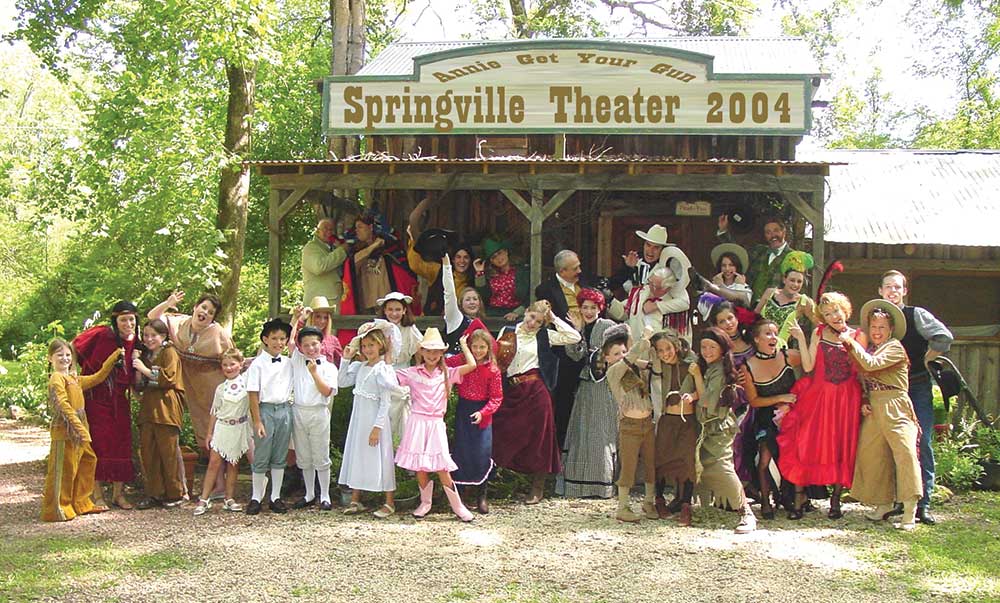
Oklahoma! performed outdoors

“She never turns anyone away,” Dollar said. “If you audition, whatever part you audition for, even if you don’t get the part you wanted, she will find a place for you in the play … She goes the extra mile to do that. It’s fun.”

A recent revival of that first play, Circus Magic, marked the theater’s landmark anniversary. Some of the original cast were in the audience.

What is it about Mack that keeps people coming back? “Boundless enthusiasm,” Dollar said. “It’s like she doesn’t age. She’s like this little pixie person. She has this enthusiasm and energy like Tinkerbelle. (It’s like) ‘Come play with me. Let’s have a good time. Let’s create this magical thing, this magical world.’ And once you are into the rehearsals, it never stops. She’s constantly uplifting.”

Dollar added, “She’s the ultimate teacher.”

Harbison has been part of the company since 2007. She’s performed in Beauty and the Beast, Oklahoma, South Pacific and other productions. She’s even served behind the scenes as assistant director and acted in another troupe, the Canoe Creek Players.
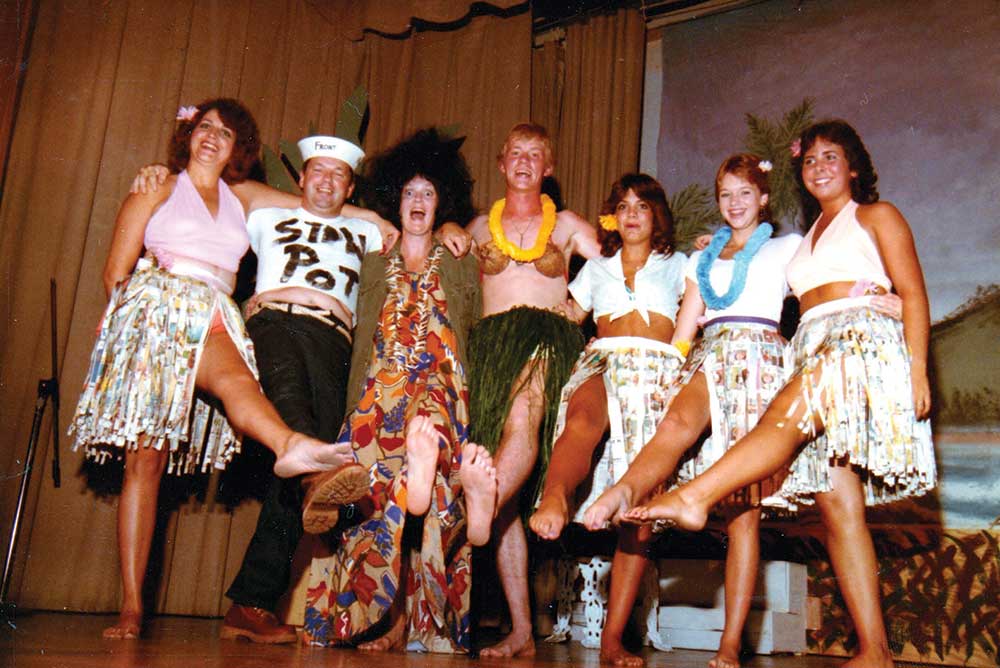
South Pacific

 Why are theater and other arts organizations important, especially in a small town?

“It’s a way of bringing folks together,” Harbison said. “And maybe if they need a little escape from things that maybe aren’t so great in their life at a particular time, it gives them a moment of enjoyment and letting those cares and concerns go for a while. June’s plays are always fun.”

Now, 50 years on, the theater is attracting actors and crew from across St. Clair County and as far away as Birmingham. For Mack, that’s a daily surprise. For the theater group that performs mostly at Springville Middle School, a venue with no backstage and where classrooms are dressing rooms. The group also performed Oklahoma and Annie Get Your Gun outdoors at Homestead Hollow.

But wherever the venue, every type of person has a part to play on stage and behind the scenes in this complicated thing called a show.

“That’s why I talk about human nature, as opposed to ‘We’re doing this theater thing in Springville’,” she said. “Because we’re really not doing this theater thing in Springville … We do people. Theater is the vehicle. It works perfectly because there are so many facets. Every type of person can find a place where they belong.”

Mack recounts a story from a cast member in SCT’s 1981 production of Oklahoma that illustrates the point. The cast member – then a teenager – was faced with a tricky home life.

Peter Pan

“She said, ‘That changed my life because that was when I could do something that I could be proud of, and my parents could see it, and everything changed.’ She stepped into a space where she could express herself and be valued.”

“All I do is set up a frame. I say all of you can step into it and see what happens,” Mack said. “People show up. They do stuff, and their lives change. It’s been that way for 50 years. We’re not doing theater. We’re just setting up an opportunity for people to come and play like we know what we’re doing, which is really fun.”

The fun continues after the final curtain. It’s a 50-year legacy of unbridled joy.

“That’s when the magic happens. (The actors) come off the stage, and people tell them how great they were, or how funny they were. They’re signing autographs. It’s so cute,” Mack said.

“This has just been a feel-good thing from the start.”

Stepping Stones, Milestones

Story by Carol Pappas
Photos by Bob Crisp and submitted

Looking forward from a starting point, some might call those stepping stones up ahead. But looking back on the 20-year history of Jefferson State Community College in St. Clair County, one would be hard-pressed not to conclude they were all milestones.

The late Jefferson State President Judy Merritt could not only see the proverbial forest – and the trees – she saw a community college campus thriving like the pines and hardwoods towering above her at the time.

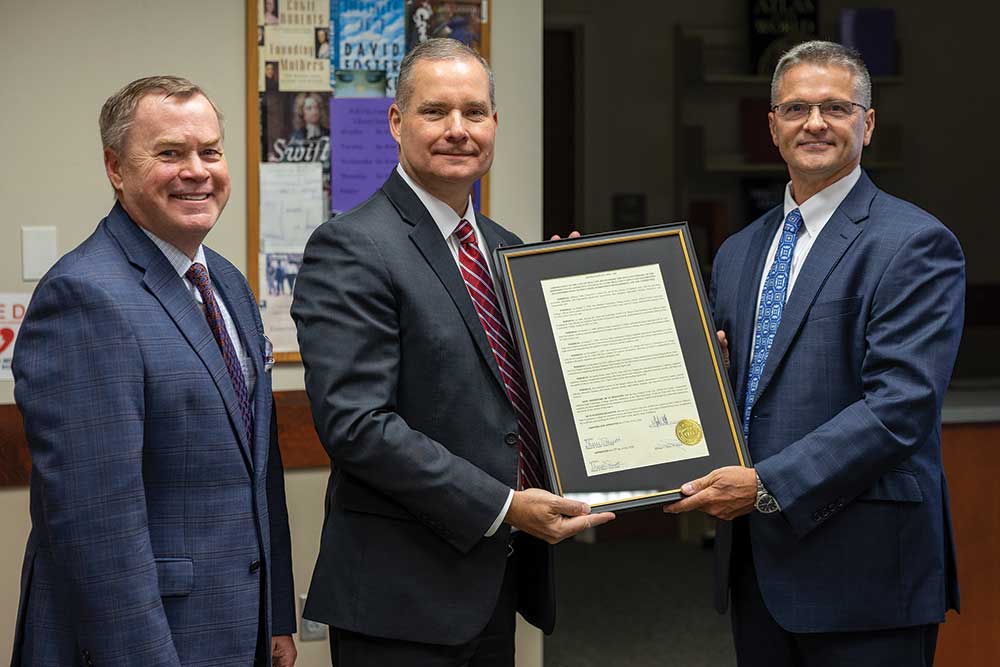
Mayor Bil Pruitt (right) presents Jefferson State President Keith Brown and Dean of Economic Development Guin Robinson with resolution commemorating anniversary

Joined by staunch advocates of greater access to higher education closer to home, former Pell City Mayor Guin Robinson, St. Clair Economic Development Executive Director Ed Gardner Sr., St. Clair Commission Chairman Stan Batemon, EDC Chairman Tommy Bowers and Realtor and community leader Dick Whatley, the vision took shape.

What would grow from those woods a stone’s throw from Interstate 20 is the thriving community college they envisioned. At the 20-year mark, the proof is in the numbers:

  • 10,000+ students served.
  • 2,076 non-credit students benefitting from learning opportunities.
  • 1,131 high school students earning college credits in dual enrollment.
  • 514 nursing graduates filling much needed roles in the healthcare sector throughout Alabama and beyond.

“From the beginning, this community embraced Jefferson State,”  said President Keith Brown at a community breakfast celebrating the 20th anniversary. “We thank you for welcoming us, and all you do for the college.”

“Community partners, Pell City leaders, the St. Clair Economic Development Council, and Judy Merritt and the college, all came together,” said Robinson, now Jefferson State Dean of Economic Development. “The vision was never about a building, but it was to create opportunities that did not exist close to home. Jefferson State has become integral to the community, and its success belongs to the entire community.”

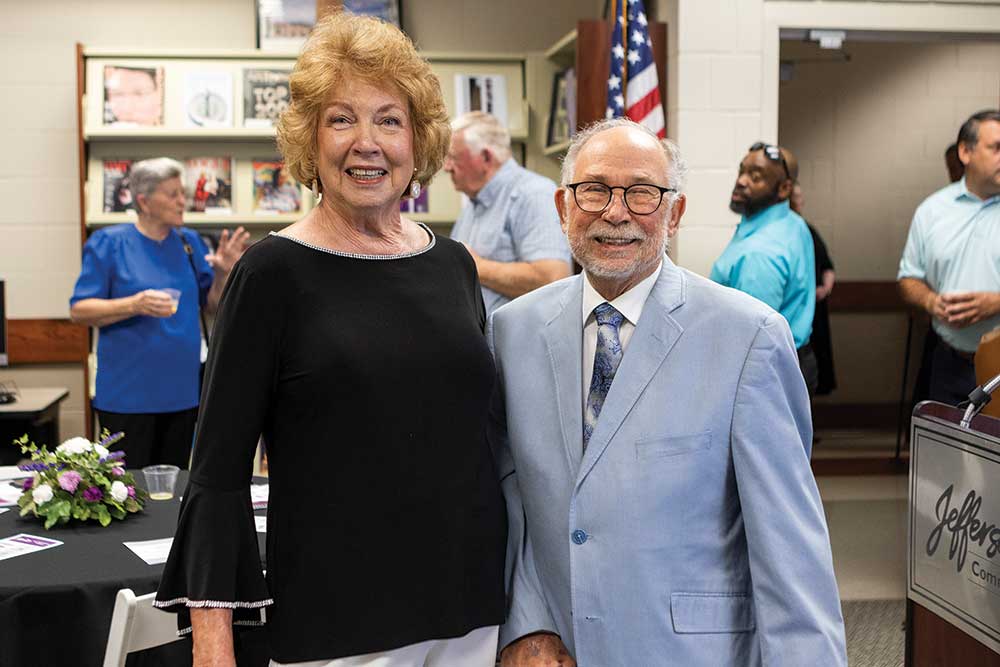
State School Board Vice Chair Marie Manning with former State Sen. Jim McClendon

Officials talked of the opportunities it has provided over the past two decades. They cited examples like the scores of first-generation college students and a 40-year old mother going back to school, a step she would not have taken had it not been close to home.

In a video marking the anniversary, Batemon, a Jefferson State alumnus himself, noted that the college’s local presence has “affected economic development in a very positive way.”

Former State Senator Jim McClendon, instrumental in securing state funding for expansions and improvements at the college, talked of its importance in the everyday lives of citizens. “It produces people working in our county and taking care of folks.”

Marie Manning, former superintendent of education for St. Clair County Schools and vice chairman of the Alabama State School Board, reasoned that the college has meant “more than can ever be expressed,” providing countless educational opportunities for St. Clair Countians.

Shiloh Swiney, chief nursing officer at UAB St. Vincent’s St. Clair, has seen firsthand the value in the hospital’s partnership with Jefferson State and its Nursing and Allied Health School at the Pell City campus.

“We have students doing their clinicals here nearly every semester, and their students are always top notch. They are good with the patients. They’re able to come here and gain real world experience.” In turn, the hospital’s hiring benefits from filling positions with skilled graduates.

“It’s a powerful opportunity for both,” Swiney said. “We are honored to play a role in their education and development. We are so glad to have them here.”

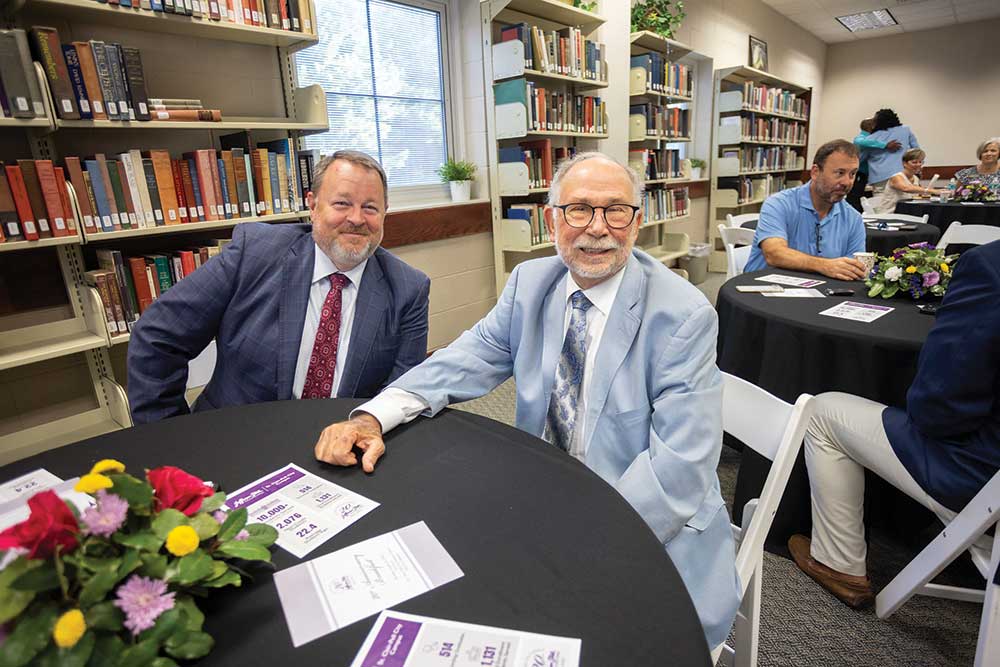
State Sen. Lance Bell with former Sen. Jim McClendon

In presenting a Pell City Council resolution recognizing the anniversary, Mayor Bill Pruitt called his tenure “an incredible opportunity to be a part of a lot of growth and development from the groundwork laid decades before,” adding “thanks to those that came before us.”

Robinson offered his thanks to the community “for everything you’ve done and continue to do. This grew from years of community conversations. Residents needed greater access to higher education and workforce development without leaving the area.”

That presence began in Moody, gained momentum and settled in a larger, bolder vision in Pell City. “It came together around workforce development and economic development,” Robinson said. They asked questions like, ‘What does it look like?’ and ‘How can we best serve for the long term?’

“Judy Merritt’s leadership cannot be overstated. If Judy Merritt got behind a project, it happened.” Her successor, Brown, was on the team overseeing the building of it. Now, he oversees its success story.

Robinson singled out other early movers and shakers that led to the opening – Industrial Development Board Chairman Bob Barnett and former Mayor Bill Hereford, who gave the first donation for the campus. “They recognized what a community college presence could mean.”

At 20 years and counting, it provides an opportunity not only to reflect but to look ahead, Robinson said. “Jefferson State allowed students to get a college education and training in their own community, and it has made a tremendous difference in the lives of students and their families. Our responsibility is to build on 20 years and continue. Our greatest days are ahead.”

Elizabeth ‘Liz’ Mealer

Story by Joe Whitten
Photos by Wally Bromberg
and Submitted photos

Music sings to all of us, although some genres sing more melodiously than others. This is true with both secular and sacred music. Today’s generation enjoys a different style of church song from that of their parents and grandparents. However, many folks from all generations enjoy Southern Gospel – which originated long before Bill and Gloria Gaither made it an international staple.

The roots of gospel music can be traced to the spirituals composed and sung by 19th Century Southern slaves. For instance, “Swing Low, Sweet Chariot, coming for to carry me home” speaks of the slaves’ longing for freedom from bondage, which seemed to be possible only in eternity with God.

This same theme of escape inspired a farm worker to write “I’ll Fly Away.” In 1928, Albert Brumbley worked on his father’s sharecropping farmland and, according to his son, longed to be somewhere other than picking cotton. (Sharecropper farmers often lived at the mercy of the landowner.)

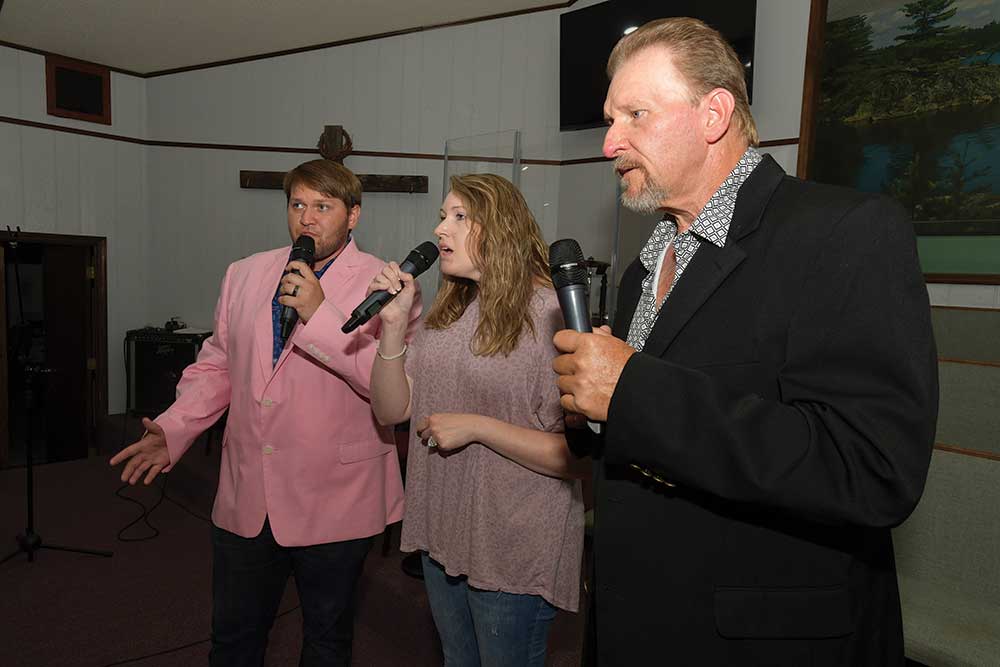
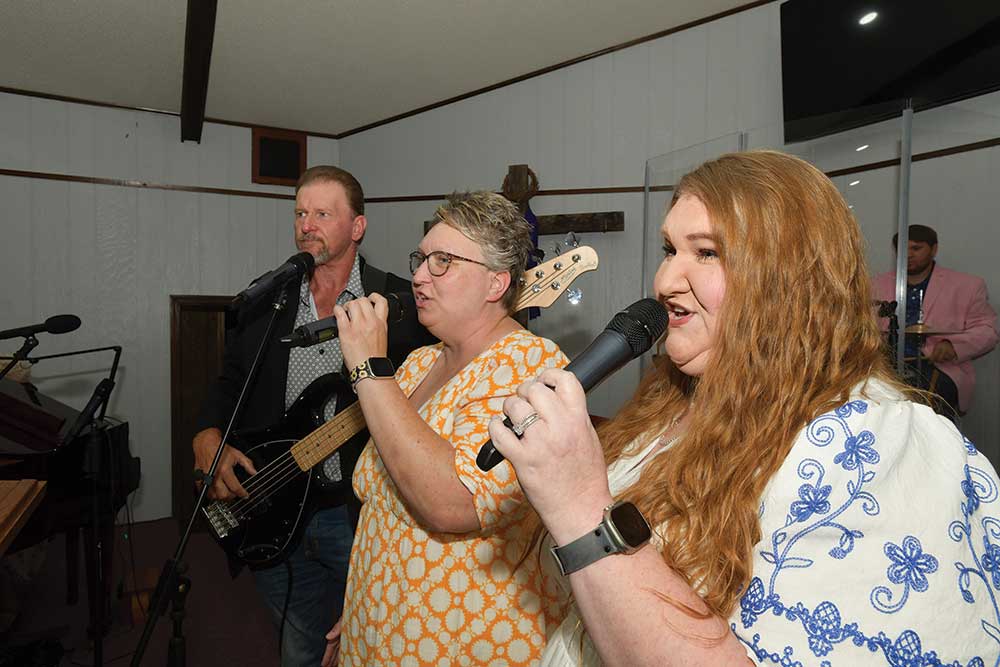
Everyone brings a range of talent to performances

So, in 1929, the first year of the Great Depression, he wrote “I’ll Fly Away.” It was first recorded in 1932 and became an instant favorite. The slaves sang “I looked over Jordan and what did I see, a band of angels coming after me, coming for to carry me home.” Brumbley sang, “Some glad morning when this life is ‘o’er, I’ll fly away to a home on God’s celestial shore,” expressing the same longing to be free of the troubles of life.

When it comes to “I’ll Fly Away,” Elizabeth “Liz” Mealer’s piano version of the song will have your hands clapping and your feet tapping.

Liz’s musical history begins with her grandparents. The Murphrees moved from Blount County to St. Clair County, and the Wyatts moved from Georgia to St. Clair County, and both families attended Cool Springs Missionary Baptist Church just off Highway 23 between Springville and Ashville. Grandfather Wyatt knew music and taught singing schools.

At Cool Springs Church Willie Mace Murphree met Alice Lucille Wyatt, and Liz described their courtship. “Most everybody walked to church back then or drove a wagon. When my mother and daddy started dating, he would come to her house, and they would walk to church. And my grandmother and granddaddy wouldn’t let them walk by themselves. They had to have the younger sisters and brothers walking with them.”

On those walks to and from church, love budded and blossomed, and on Sept. 10, 1940, the couple went to Rev. George Williams’ home, where they became husband and wife.

Liz recalled a family story: “After they married, they went to tell Daddy’s family. Daddy’s brother said he knew something was different when they drove up, because they were smooching in the car, and that didn’t happen while they were dating.” The marriage lasted for almost 65 years.

To the Murphrees were born Billy, Elizabeth, Linda and Alice, and they all grew up being nurtured by their parents and Cool Springs Baptist Church.

Church is where the three sisters learned to sing and began singing as a trio. Liz reminisced, “We just kinda picked up singing. From singing at church, we learned harmony from people showing us what alto and tenor and the lead, or soprano, was.” So, when Liz was 14, Linda 10, and Alice, 6, they began singing as a trio.

“My granddaddy Wyatt,” Liz recalled, “had always said he wanted a female trio, and he didn’t have three girls. So, he was very proud of my sisters and me when we sang.”

She also recalled when she and her sisters sang and entertained the community when they rode home after gathering vegetables. “My Uncle D.C. Murphree owned land through the woods from Daddy’s.  One day he came up to borrow Daddy’s trailer to go and gather vegetables and corn at his field through the woods. So, we three girls got in the trailer and went with him and helped him. On the way back, we started singing. And when we got to the house, my uncle said, ‘Boy, I felt like a King sitting up there driving and you girls singing.’ ”

They later found out that people in the community who lived about a quarter of a mile from each direction had heard them singing and had enjoyed the concert as the vegetable trailer rolled along.

How Liz taught herself to play the piano and read music makes an interesting story. “My Granddaddy Wyatt taught singing schools, and when I was about eight years old, I was at my grandparents’ house one day, and I was picking around on the piano. So, he wrote down the music scales for me and showed me the notes on the piano. That’s when I started trying to learn to play the piano.”

Did she teach herself to read music? “I did. When I had a question, I would ask Granddaddy. He taught me the flats and sharps. Also, my Uncle Ray Wyatt had a piano in his garage that he was not using, so he had it sent up to my mother and daddy’s house for me to practice on. I would practice one thing over and over. I would work on one thing for so long, trying to get it right,” she chuckled, “that sometimes my mother would say, ‘Go find something else to do. I’ve heard that all day long.’”

Those hours of practice made Liz a skillful pianist, a talent she continued to perfect. She recalled playing for Convention Singing, which is a Southern gospel genre unto itself. “Brother T.D. Scott was involved in the Convention style singing at that time, along with Curtis Lee and V.L. Bailey. Around 1971 or ’72, the St. Clair County Singing Convention sponsored a singing school – one week in Pell City and one week down at Moody at the Church of the Valley, and they asked me to be the pianist for that school. That was a really good experience for me, because I learned a lot. There was a lot about music that I didn’t know – and I still don’t,” she laughed, “but it was good for me to learn the techniques pertaining to Convention singing.”

The Murphree Sisters Trio continued through their high school years and for some time afterward. However, when the sisters married and had families of their own, it became more difficult to get together. The named changed to The Murphree Family when sister Linda dropped out and brother Billy Murphree started with the group.

Liz married Paul Mealer, and he also sang with The Murphree Family. Eventually Billy dropped out and the Sunrise Trio evolved with Paul, Liz and son-in-law C.T. Watters. This group continued until COVID brought about C.T.’s death. The Mealer children and Liz then formed The Mealer Family gospel group. Paul sang until his death in 2012.

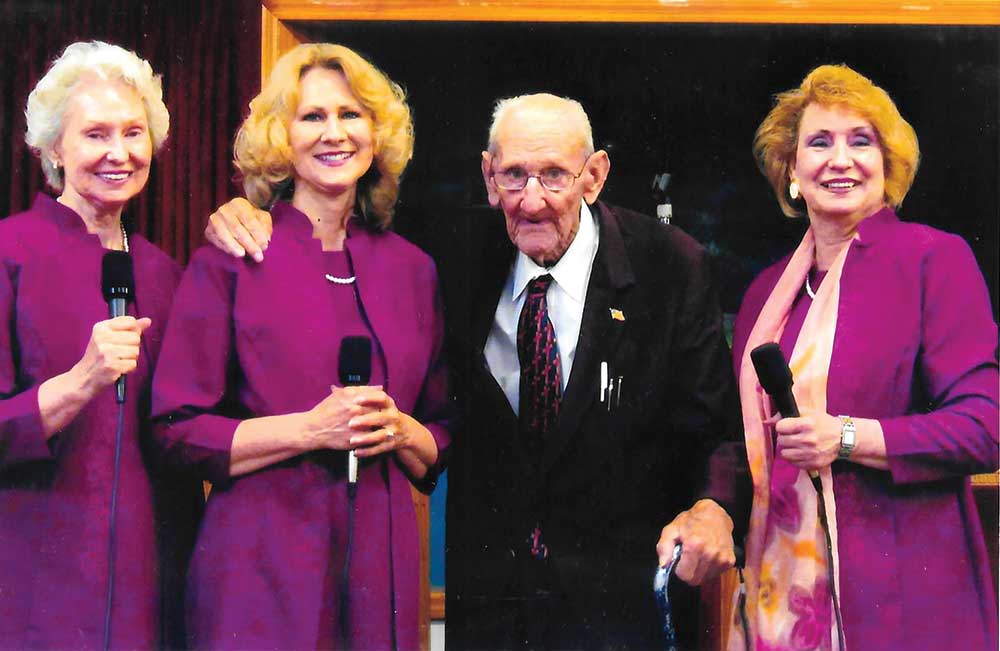
The Murphree sisters, Liz, Linda, and Alice with their father

The Murphree Family and the Sunrise Trio sang not only in St. Clair County but also in surrounding counties as they became well-known.

“We traveled some, when my husband was alive,” she said. “God blessed us with obtaining a bus, and we traveled to Georgia, Tennessee and some in North Carolina and a lot in Alabama.” Since Paul’s death, the Mealer Family has sung locally.

Paul usually drove the bus and was given the nickname “Possum Killer” because so many possums were frozen in place by the glare of the bus’ headlights.

Whatever the name of the group, their mission was to sing the gospel of Jesus Christ wherever they were invited. Many rural churches had a yearly Homecoming Sunday, and the group became regulars at these events. They also enjoyed singing for revival meetings.

Liz recalls a special revival. “We were singing for a revival at Bethany on County Road 22 in Shoal Creek Valley. We had sung, and the preaching was finished, and they had given the altar call. I was playing the piano with my back toward the congregation.” (At an altar call, those who desire to pray or those seeking salvation come to the front and kneel in prayer in front of the pulpit.) “I was playing softly while people were praying,” Liz continued, “and one of our group came up to me and said, ‘You know who they’re praying for, don’t you?’ I said, ‘No, I don’t.’ And he said, ‘It’s your granddaughter.’ So, Wayne’s daughter had come up to the altar for salvation, and I didn’t know it.” That was a happy occasion and happy memory for all the family.

Even in church services or revival meetings funny things can happen – sometimes proving that God has a sense of humor.

“We were at a small church one time in another county. It was their Homecoming, and we were on stage singing, and we kept seeing a head popping up and down behind a bench. They had spotted a mouse, and the preacher, who was very short, was trying to kill the mouse, and his head bobbed up and down as he chased it.” When asked if she remembered what they were singing, Liz laughed and said, “No. In fact, I think we got so tickled that we had to stop.”

The recollections continue. “Once at a church in north Alabama, there were two wicker containers beside the pulpit. And our guys shook them to make sure they didn’t have any rattlesnakes in them. They agreed that if the baskets rattled, we would not participate in that service,” Liz concluded with a laugh.

And children can cause spontaneous laughter. Wayne Mealer, being a guitarist, had given his little son a little guitar which he took along to singings with his dad and family. “We were singing at St. Clair Springs Baptist Church this time,” Liz reminisced, “and my grandson, Cody, about 4 or 5 years old, had a toy guitar and a harmonica. Of course, he wanted to play his guitar as we sang. So, he just stood up there, you know, and he was really getting into it with his guitar; he was going back and forth, when all of a sudden, he pulled that harmonica out of his pocket and started playing it.”

Laughing at the memory, Liz admitted, “There was just no way the Holy Spirit could move then, because everybody in the church was just doubled over laughing.”

However, let’s not forget that Jesus said, “Let the little children come to me, for of such is the Kingdom of Heaven.” It is quite likely that God was smiling down at her grandson.

The current group consists of the Mealer children: Wayne, Sharon and Christie who sing. Terry Chapman plays bass guitar, Wayne’s son, Cody – who got his start with a toy guitar and harmonica – plays drums. Terry and Cody also sing occasionally as does Wayne’s daughter, Amber. A faithful friend, Brandon Jones, often goes with the group to help with sound equipment.

Where career paths lead

After graduating from St. Clair County High School in 1965, Liz attended a business college in Birmingham, which eventually resulted in her working in the two St. Clair County courthouses. However, her first job was with Baggett Transportation Company in Birmingham. And on a lunch break from this job, she and Paul Mealer had their first date.

Liz recounts how this came about. “My daddy worked at United Chair in Leeds, and Paul’s cousin worked there with my daddy. They wanted me to meet his cousin who had just moved here from California. So, he called me and we talked, and then we met one day for lunch at Shoney’s, which was close to where I worked. And that’s how we started dating.” They married in 1967 and the marriage lasted until Paul’s death in 2012. They had three children: Paul Wayne, Sharon Elizabeth and Christina “Christie” Lynn.

Working in Ashville, courthouses

In the winter of 1975, an attorney who had recently moved to Ashville needed an office worker. Liz applied and got the job. In filing documents and doing research at the courthouse, Liz got to know those working there. And although she stopped working for the attorney in 1977 to be a stay-at-home mom, it was this job that eventually led to Liz’s courthouse work.

She took care of home and family until daughter Christie was in the third grade, and not until then did she feel free to return to outside work.

Liz knew Circuit Clerk Jean Browning from local singing events as well as from the years she worked in the Ashville attorney’s office. Knowing that Liz was interested in returning to work, Jean encouraged her to take the state test to qualify to work in the courthouse.

She took the test, passed it, and was on the official list of available workers. In 1991, Jean had an opening in the Circuit Clerk’s office. Liz applied and was hired.

Stories unfold there, too. A friend of hers was doing research in the Probate Judge’s office where old newspapers, estate records, etc., were housed until they were moved to the Ashville Museum and Archives.

The friend showed up in the Clerk’s office and said, “Liz, I had to tell this to somebody and you’re it. I was copying newspaper articles and a researcher from out-of-state turned to me and said, ‘Where is the town of Crapwell?’ Without cracking a grin, I managed to tell her, ‘That’s Cropwell, and it’s below Pell City,’ but I had to tell somebody so I could laugh out loud.” Liz confessed the two still laugh about it today.

Liz worked in the Circuit Clerk’s office until 2003. In that year, she began working in the Revenue Commissioner’s office where she worked until she retired in 2017. During her time there, she was elected Revenue Commissioner.

She divided her time between Ashville and Pell City and was fortunate to be in Ashville when a sudden weather event occurred in February 2010. This was after Paul had become incapacitated and homebound. Liz hired someone to stay with him in the daytime while she worked, and then she took care of him at night and on weekends.

This February morning seemed to go well. “They had not predicted any severe weather,” Liz recalled. “But then, all of a sudden, it began to freeze, I told those who lived furthest away from the courthouse to go on home. The bad weather got closer to us, and I told everybody to go home.”

Liz herself made it home to Paul safely, but she admits “It was treacherous. “I just crept along. It was about eight and a half miles from my house to the Ashville Courthouse, and I drove about 25 miles an hour all the way home.” Other courthouse workers that day got home by firetruck or police car.

A woman of faith

The care and concern for her work staff reveals Liz’s character formed at home, at church, and through her Christian faith. When asked about her faith in God, she told how it began. “I was saved when I was six years old. Brother George Williams was preaching the revival at Cool Springs that year, and we had daytime and nighttime services, and in the morning service on Friday of the revival, Brother Williams gave the invitation to accept Christ as Savior. I felt the drawing of the Holy Spirit. He must have said, ‘If anyone feels like they needed to be saved, raise your hand,’ because I remember raising my hand, and my mother saying, ‘Raise it high.’ I went up to the altar and was saved at six years old.”

However, she wasn’t baptized until three years later at the Cool Springs Baptist Church’s baptizing pool in Canoe Creek on John Ramsey’s property.

Liz described baptizing day at the creek. “The day before baptizing, Brother John Ramsey, a deacon, would build steps to go down into the creek. Then on Sunday before baptizing began, he would go into the creek and slash around and scare the snakes away.” Those reading this account will agree that this was an act of Christian compassion and love.

Other deacons would gather in the creek behind the pastor during the baptism. Liz’s father was one of those deacons when she was baptized.

“Baptizing was usually in August after revival,” Liz reminisced, “and usually there were several people saved in the services, so we would have a big baptizing. We would all gather down at the creek – and it was so pretty there. We would sing a song or two acapella. Nearly always we sang ‘Shall We Gather at the River,’ and maybe another one or two.”

As far as anyone knows, the Canoe Creek snakes were non-religious and never participated in a Cool Springs baptism.

Through all the changes that have come through the years, Liz’s faith has sustained her. And as a gospel singer, she loves many songs, such as “Who am I that a King would bleed and die for,” or “Hold to God’s unchanging hand,” or “The Old Rugged Cross.”

One that is especially meaningful to her is “The Unseen Hand,” referencing that although we cannot see God, He is leading His children through the joyful days and sorrowful days of this world.

There is an unseen hand to me

That leads through ways I cannot see.

While going through this world of woe,

This hand still leads me as I go.

I’m trusting to the unseen hand

That guides me through this weary land,

And some sweet day, I’ll reach the strand,

Still guided by God’s unseen hand.

One who rests in such a faith, faces life with a steadfast confidence in God. l

VETERANS: Honoring those who serve

When Museum of Pell City opened its doors in March 2023, its first major project focused on paying tribute to veterans, a tradition that has continued each November since.

Keynote speaker Jason Nunley

That first year, the museum built a major military exhibit and culminated a months-long oral history project with a video featuring  veterans of World War II, including D-Day, Korean War and Vietnam War called War and Remembrance.

Interviews of veterans from Pell City’s Col. Robert L. Howard State Veterans Home as well as other local veterans recounted their experiences in military service and the grim realities of war.

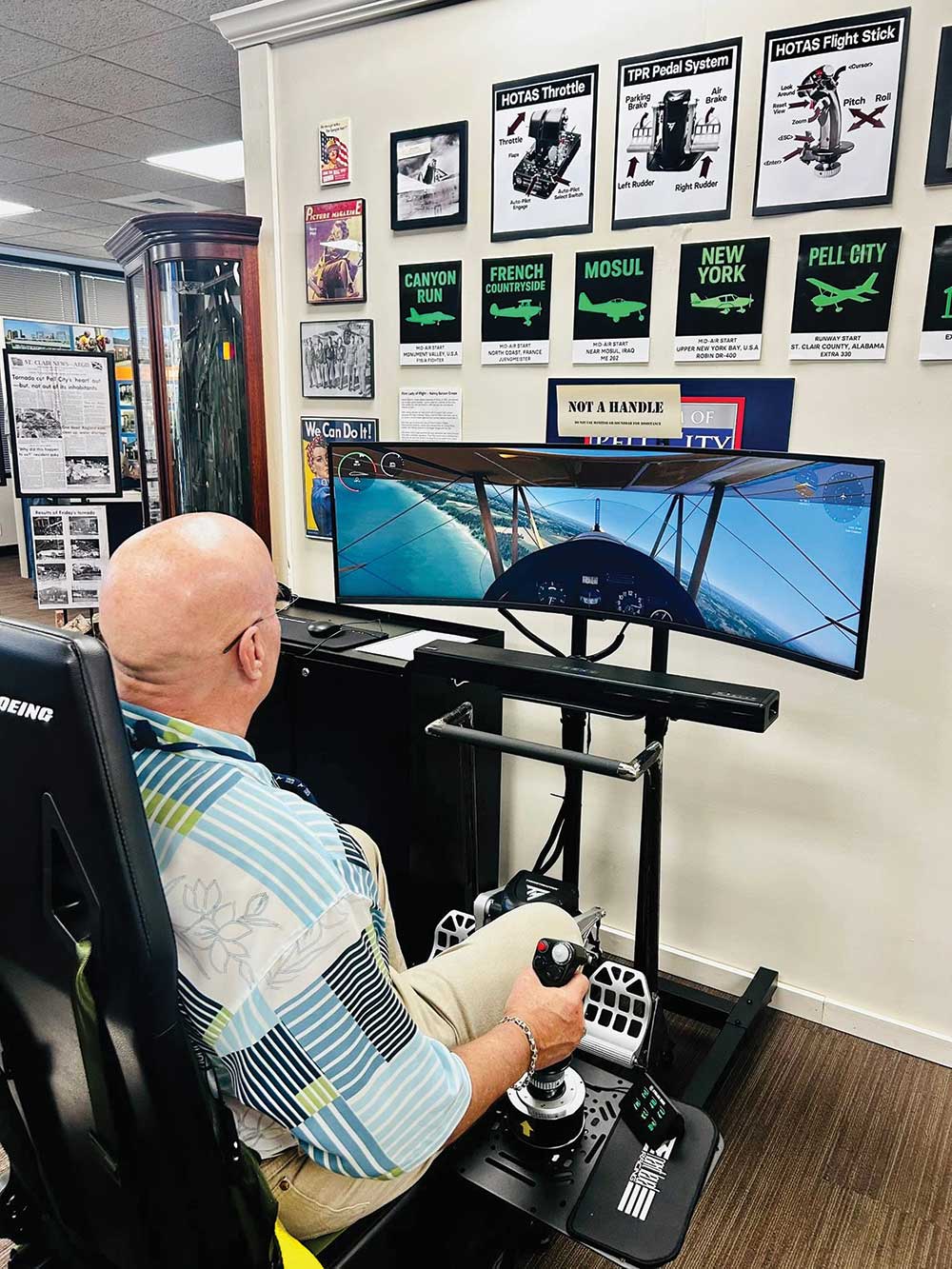
Crowd enjoys watching veteran take a flight on simulator at 2025 event

On Nov. 6, the museum will present its annual Salute to Veterans with a focus on coming home and the difficult transition from battlefield to homefront. A reception will be held in the banquet room of the Pell City Municipal Complex at 10 a.m., followed by keynote speaker, Jason Nunley, a special operations veteran with deployments including Iraq, Afghanistan and Africa. After military retirement, he rose through his family’s pipeline supplier business and is now its president and chief executive officer.

The museum will premier the latest video in its veteran series: A Soldier’s Return, A Mother’s Battle. The video features an intimate interview with Michelle Tumlin, mother of a returning soldier who took his own life after struggling through the transition of coming home.

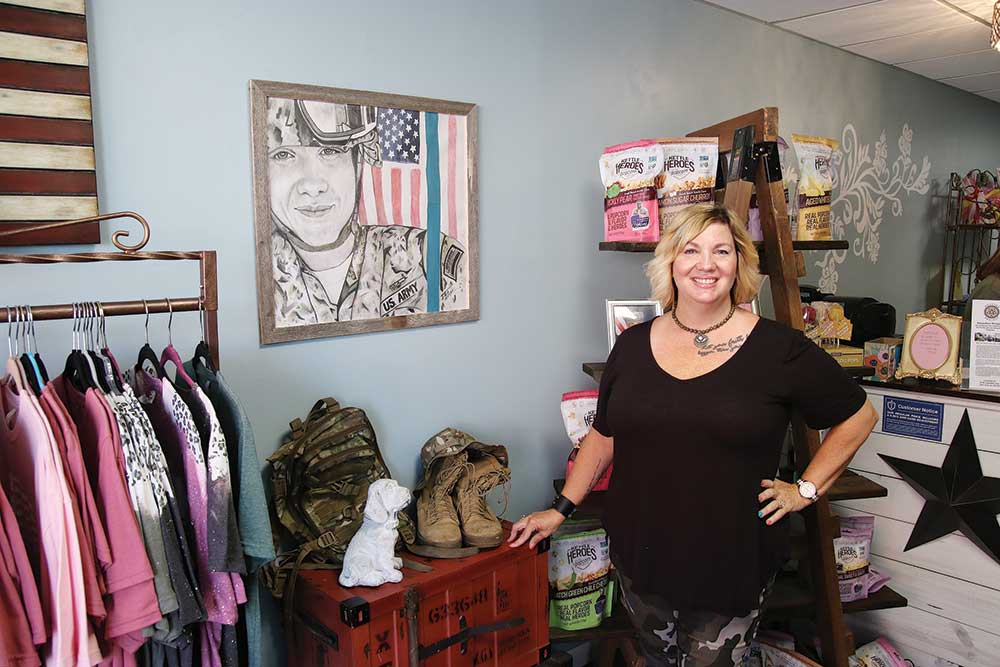
She has turned the tragedy into her own battle to help veterans, founding a nonprofit to assist returning veterans. She created a shop in downtown Pell City called Houston Project in honor of her son, Houston Tumlin. The shop sells military-themed  apparel and products with all proceeds going to vets.

Michelle Tumlin at the Houston Project

In addition, she joined another mother, Sharon McDaniel, in lobbying successfully for a law in Alabama that provides gun safes at gun stores for veterans who may be contemplating suicide or other harm. It’s a voluntary, temporary firearm surrender program for veterans – no questions asked.

The Houston Hunter Act, is actually named for those two mothers’ sons, who were lost to suicide – Houston Tumlin and Hunter Whitley.

“We talk often about service and sacrifice in war, but in growing instances, we see that the battlefield is not the only struggle soldiers face,” said Museum President Carol Pappas. “Michelle’s story gives us a better understanding of a battle of a different kind – coming home.”

The museum’s military exhibit is being redesigned and expanded and will be open for tours following the program. l

Editor’s Note: Museum of Pell City is located in a 4,000-square-foot suite on the second floor of the Pell City Municipal Complex. It is open to the public free of charge on Thursdays and Fridays, 10 a.m. to 4 p.m., and Saturdays, 10 a.m. to 2 p.m.

Big things ahead for Big Canoe Creek

Story by Molly Gilbert
Photos from Big Canoe Creek Preserve

Big Canoe Creek Nature Preserve has come a long way, and there’s more on the horizon. Another 72.5 acres adjoining the Preserve has been nominated for Forever Wild Land Trust consideration, which could eventually bring the protected area to nearly 500 acres. That process is still in its early stages.

New construction projects are taking shape that will give visitors even more ways to explore, learn and enjoy this special area of Springville.

“We have three major projects going on – everything is in the development stage,” says Doug Morrison, manager of Big Canoe Creek Nature Preserve.

Plans for the open-air pavilion are expected to go out for bid soon, with completion projected for May 2027. The Preserve has received septic tank approval, and Forever Wild Land Trust has already funded a waterline, both important steps toward future restroom facilities.

Concept design for the Nature Center

Once complete, the pavilion will give the Preserve a place to gather, adding another dimension to a property that has become increasingly popular for outdoor recreation and education.

The nature playscape is also working its way toward the construction phase. Most of the funding is in place, and the design is being adjusted to fit the available funds and take a phased approach. Morrison hopes work can begin in 2027.

For families, the playscape will offer another way for children to experience the outdoors through play, exploration and discovery – the kind of experience that can turn a visit to the Preserve into a lasting memory.

Then there is the Big Canoe Creek Nature Center, which will bring the Preserve’s educational mission into the heart of Springville.

The Nature Center will be located in the historic Rock School (built in 1921) rather than on the Preserve itself. Thanks to community support, the Big Canoe Creek Preserve Partners are renting the building from the Springville Preservation Society, and grants have helped move the project into the design phase. A designer is currently working on the interior, while construction documents move through the approval process. Physical work inside the building has not yet begun.

Doug sees the project as a natural fit for the community: a historic building being preserved while creating a new place to learn about the natural world around it.

“It is a really special place,” he says.

A COMMUNITY BUILDING WITH IT

The projects may still be in development, but people are already investing their time and energy in the Preserve.

This past spring, about 150 people came out for the Biggie Stomp 5K, an event that brought runners onto the trails with the added fun challenge of spotting Big Foot in the woods.

Scout troops have donated several projects. One group installed a picnic table, hitching post and horse step along the Easy Rider Trail.

“It’s good to see the broader community buy into the vision with their contributions,” Doug says.

Springville Library has become another important partner. Librarian Jamie Twente secured a grant for science-based kits that can be used with homeschoolers, opening opportunities for children to explore subjects such as fireflies, butterflies and other local wildlife.

The library also helped secure funding for interpretive signage along the 0.6-mile paved trail. A storyboard walk is planned with interchangeable 18-by-24-inch story panels that can bring nature-themed stories to the trail.

These additions may seem small compared with the larger construction projects, but together they reveal something important about the Preserve’s future.

It is a place where people can come to do something – walk, run, play, learn, gather – or simply slow down and notice what is around them.

And there is still plenty to discover right now.

The Preserve is open Wednesday-Sunday, with regular visitors continuing to return to the trails and new visitors finding their way there.

The next chapter is already underway. For those who have watched Big Canoe Creek Nature Preserve develop over the years, these projects offer something new to look forward to. For those who have never visited, there may be no better time to start exploring.

The stories beneath our feet

Story by Molly Gilbert
Submitted photos

Sometimes history hides in plain sight.

For St. Clair County native, Austin H. Stone, it was tucked away inside an old iron lockbox hidden in his great-grandfather’s house in Whites Chapel.

After purchasing the home from his grandparents in 2022, Austin was exploring a small area where an old water heater had once been when he made an unexpected discovery. Inside the lockbox were employment records, safety certifications and other documents connected to the Acmar mines – a chapter of local history that had largely faded from public memory.

“I couldn’t believe nobody had looked at this before,” Austin said. “I felt like I was meeting my great-grandfather and learning all about the community I grew up in at the same time.”

That discovery sparked years of research and ultimately led to the publication of The Ghosts of an Empire: The History of the Alabama Fuel and Iron Company in St. Clair County.

But for Austin, the story was never just about coal.

It was about people.

It was about family.

And it was about preserving the stories of his hometown.

Discovering the Story Beneath Familiar Places

Austin grew up surrounded by reminders of the area’s coal-mining past, though he didn’t fully understand what they meant.

Like many local kids, he spent his childhood exploring the woods, riding around town and gathering with friends in familiar places.

“We used to hang out in the old church, but didn’t know it was built by the company,” he said. “We’d see street signs for Acmar Road, but we never really thought much about it.”

As a teenager, Austin admits he was one of many who looked around and thought there wasn’t much worth noticing.

“I was one of those teenagers who said there’s nothing here,” he said.

The lockbox changed that perspective. Suddenly, the places he had known his entire life began revealing a hidden story.

“I didn’t even have a name of the mining company until I found that paperwork,” he said. “It kind of snowballed from there.”

Following the Trail

Austin began digging through newspaper archives and historical records, searching for answers.

Eventually, his research led him to the University of Alabama Libraries Special Collections, where he worked through five archival boxes containing corporate records from the Alabama Fuel and Iron Company.

The deeper he dug, the larger the story became.

At one time, communities such as Whites Chapel, Margaret, Acmar and surrounding mining settlements were part of one of Alabama’s most significant coal-producing regions. The Alabama Fuel and Iron Company grew into one of the state’s largest coal producers, employing generations of local families and helping shape the economy and identity of western St. Clair County.

“It used to be a big deal in our town,” he said. “I couldn’t believe how important they were.”

Austin learned that the company played a significant role in supplying coal during World War II and that entire communities grew around mining operations, supporting schools, churches, homes and businesses.

What surprised him most, however, wasn’t the scale of the industry. It was the sacrifices made by ordinary people.

Appreciating What Came Before

The more Austin learned about his great-grandfather’s life, the more personal the research became.

His great-grandfather spent 25 years working underground in the mines while raising five children – one of whom had special needs – during some of the most challenging years of the 20th century.

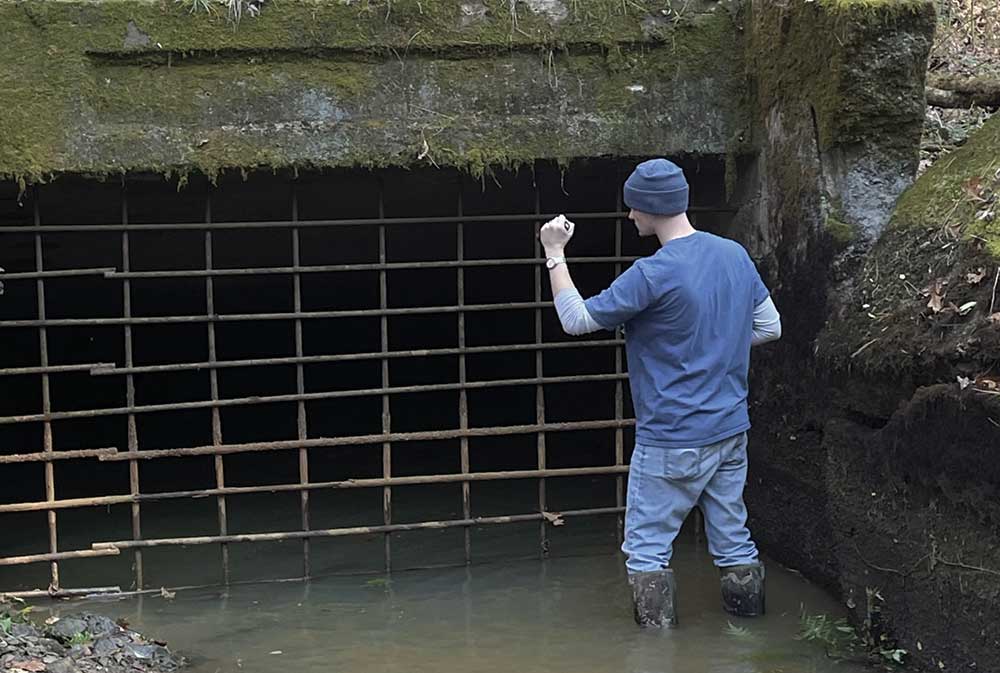
Exploring mouth of main entrance to Acmar No. 3 Mine. An explosion in 1922 killed 11 men in same mine

“The more I learned about the Great Depression and what my great-grandfather had to deal with, the more I became really appreciative of all the things he did,” Austin said. “It really brings to the forefront of your mind what it really took to get to where we are today.”

Just as important were the women whose stories often go untold, so Austin made a point of including their contributions in his book. While miners spent long hours underground, wives and mothers were growing food, washing clothes by hand and taking care of the children.

“It wasn’t just the men. They couldn’t have done what they did if the women weren’t keeping everyone fed and taken care of.”

For Austin, these stories offer a new appreciation for previous generations and the obstacles they faced.

It’s an important reminder that the communities we enjoy today were built through countless sacrifices made by people whose names may never appear in history books, but whose impact can still be felt generations later.

Preserving What Could Be Lost

As St. Clair County continues to grow, Austin sees another challenge emerging.

New subdivisions, businesses and developments are transforming parts of the landscape. While growth brings opportunity, it can also erase physical reminders of the past.

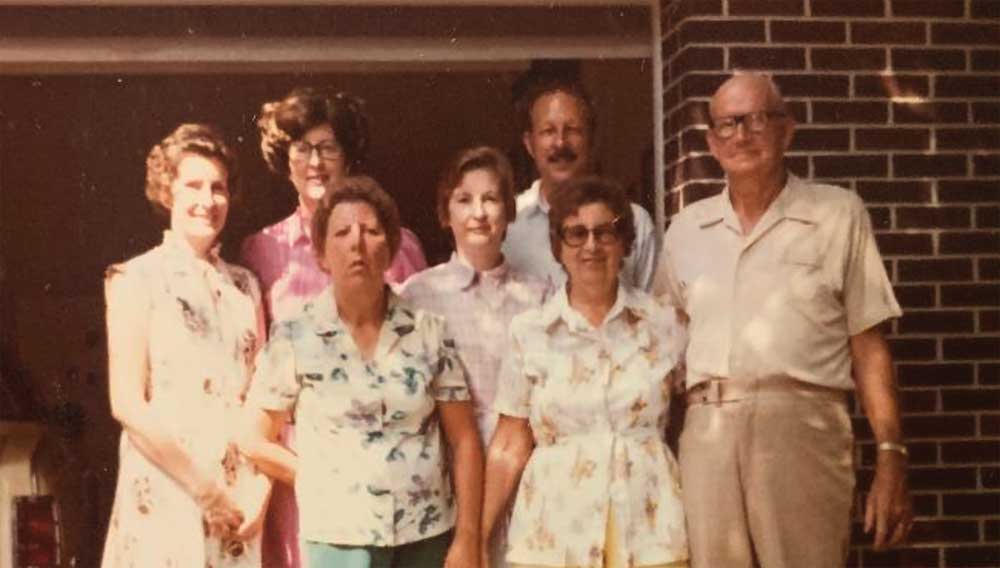
Stone’s generations of family from left, front row: Carolyn Lawley, Vivian Newton Lawley (great grandmother), John Lawley (great grandfather, coal miner at Markeeta, Acmar; Imojean Lawley Walker (grandmother), Helen Lawley Brown, Brenda Lawley Stewart, John Clayton Lawley

Many historical sites have already disappeared, and others survive only in photographs and memories.

“I have a problem with the way things get lost to history,” Austin said.

That concern became one of the driving forces behind his book. Rather than leaving fragments of stories scattered across archives, newspaper collections and family records, Austin wanted to create a single resource where others could learn about an industry that shaped the area for decades.

“I really wanted to make an even and concise record so anyone can go to one spot and get the information.”

His work continues beyond the pages of the book.

Austin has helped identify individuals in historical photographs, worked with local historians and residents who have shared family artifacts, and is involved in early efforts to establish historical markers connected to significant events in the area’s mining history.

A Gift for Future Generations

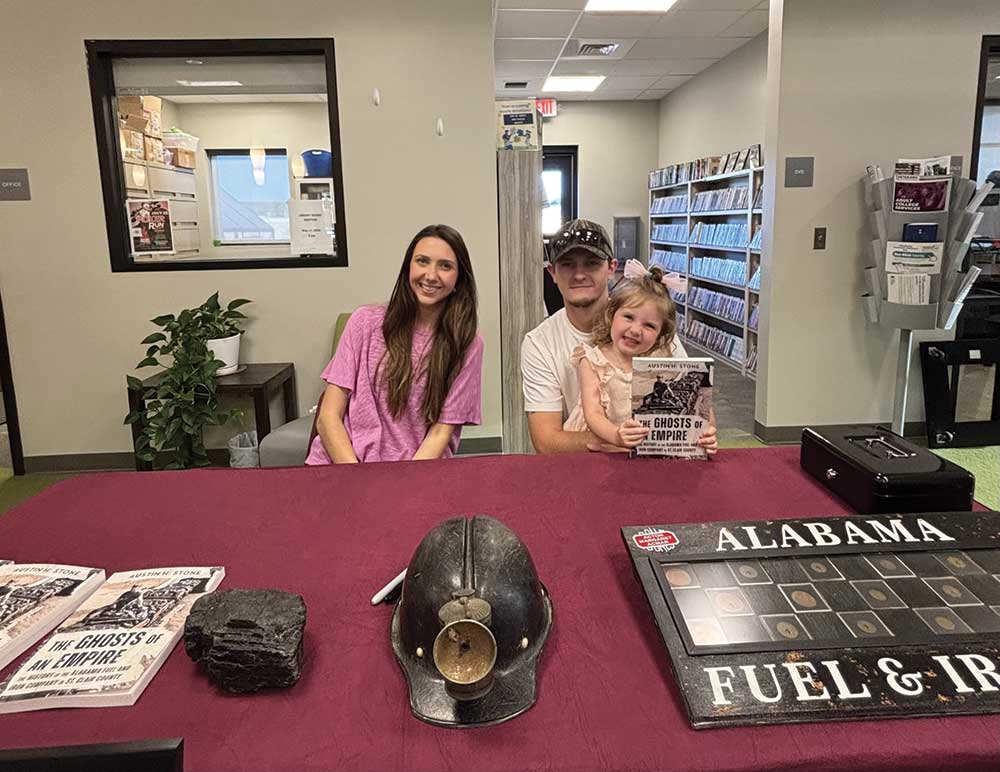
Austin and Jennifer Stone with daughter, Margaret, 3, at local book signing

As the father of a young daughter, Austin often thinks about the family members she will never meet. That reality has reinforced his belief that preserving history isn’t something to put off until later. He encourages readers to become historians of their own families, whether it’s a family story, an old photograph tucked into a drawer or memories shared around the dinner table.

“I would encourage people to ask questions of their older relatives while they still can,” Austin said. “If it’s important enough to you to remember, it’s important enough to write it down.”

In many ways, that’s exactly how The Ghosts of an Empire began – with a few forgotten documents, a sense of curiosity and a determination to honor those who came before us.

“The people who built these communities are gone, but their stories don’t have to be,” Austin said. “If we take the time to ask questions, write things down and share what we know, future generations can understand where they came from and what it took to build the places they call home.” l

Editor’s Note: The Ghosts of an Empire: The History of the Alabama Fuel and Iron Company in St. Clair County is available through Amazon. Readers can also follow Austin on Facebook for future author talks and community history presentations as Austin continues sharing the stories he uncovered along the way.