Forever Wild

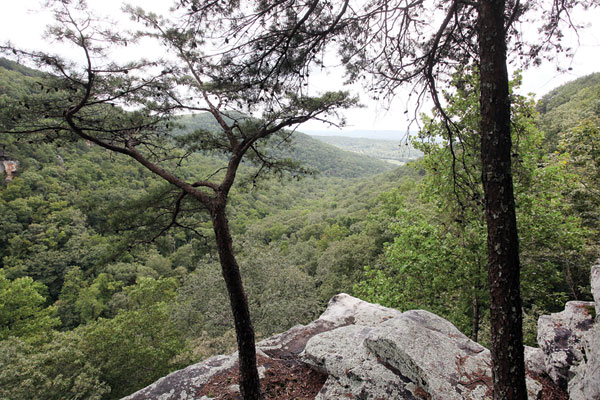
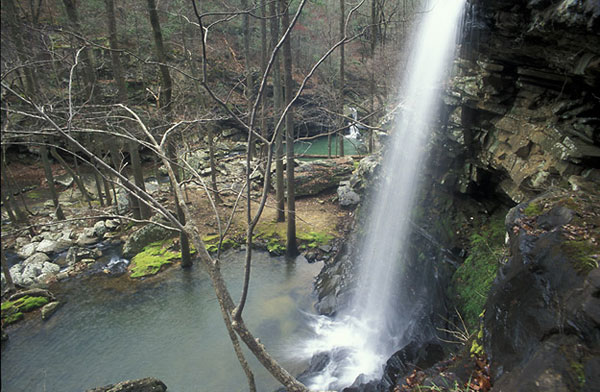
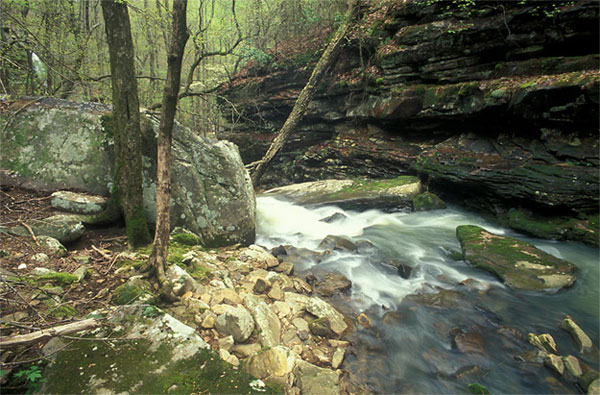
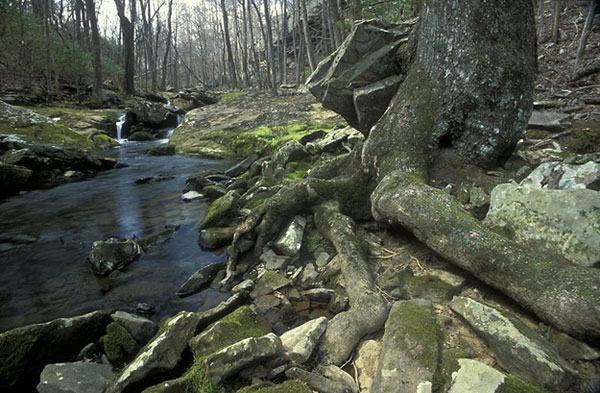
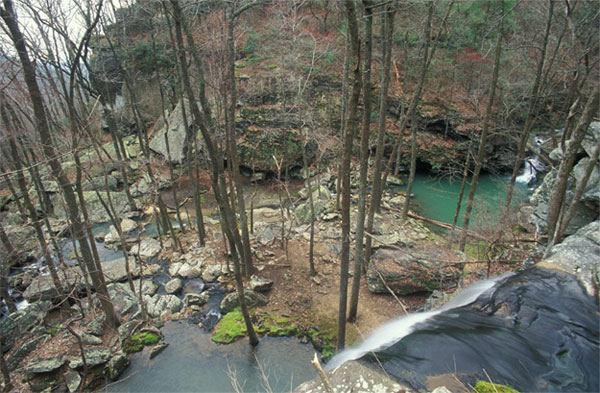
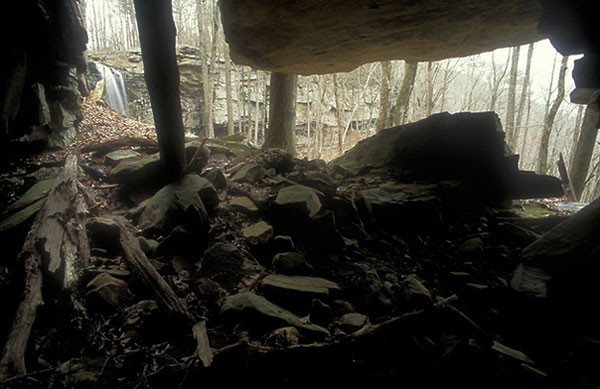
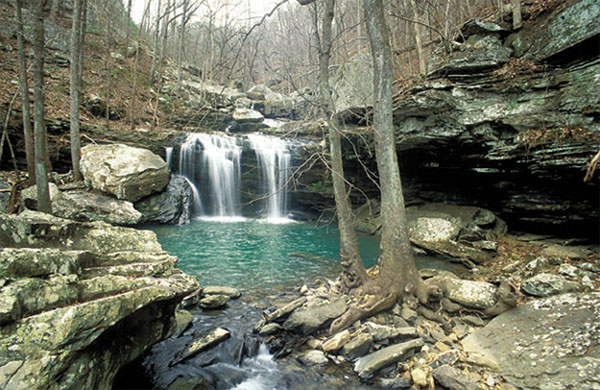
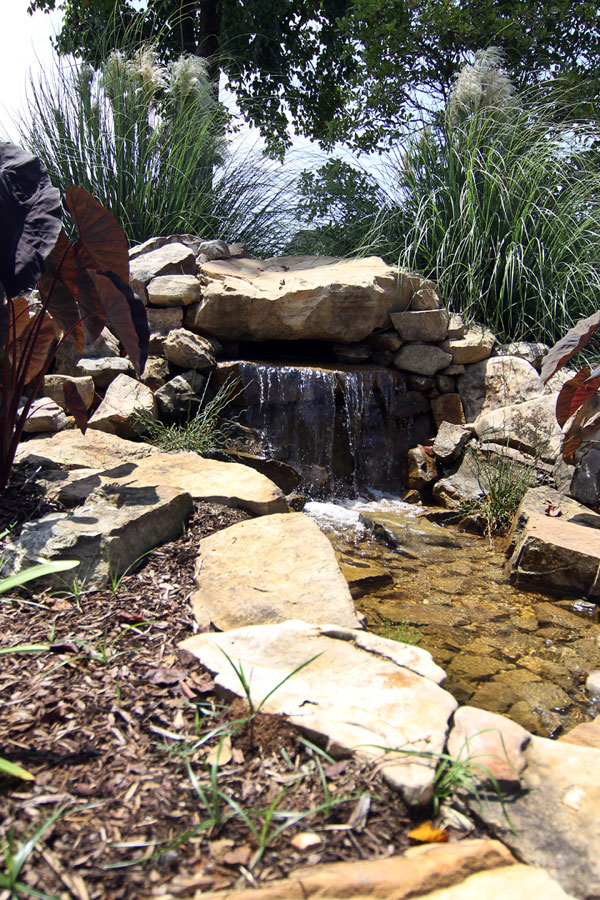
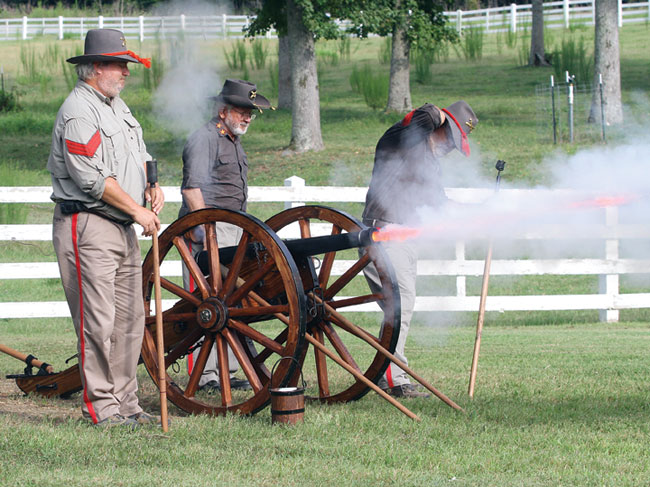
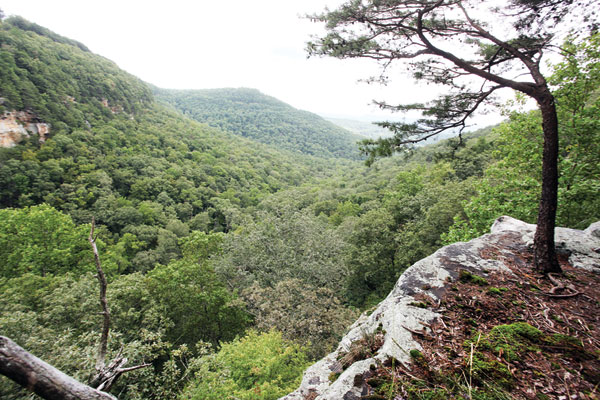
High Falls is located in Dekalb County toward the head waters of Town Creek that empty into Lake Guntersville. Town Creek is known by kayakers who favor paddling in the mountain creek for its class 4 and 5 whitewater. Promoters of Big Canoe Creek Preserve hope to join Forever Wild properties like this to be protected, preserved and enjoyed.


Exploring the possibility of a Big Canoe Creek Preserve

Story by Carol Pappas
Photos by Michael McKenzie
Submitted photos

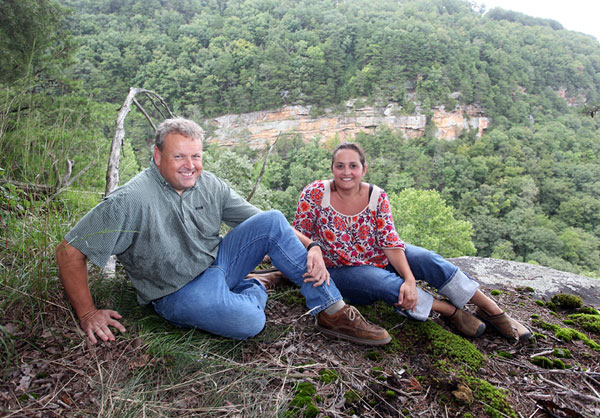
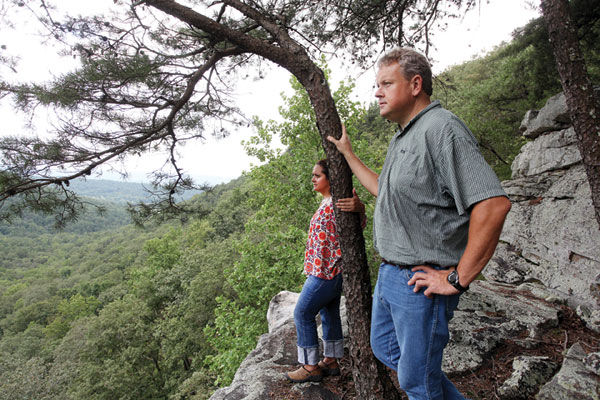
For Springville’s Laura McKenzie, Big Canoe Creek is more than just a picturesque stream that meanders lazily through St. Clair County. It’s her science classroom, her family’s recreation area and an environmental wonder all rolled into one.

When she and her husband, Michael, moved to the area, she said she joked with him, “Now we can commence with raising a biologist.”

As it turns out, it wasn’t much of a stretch. “Because of our creek, so far, we have two biologists and counting,” she said. Over the years, she has used the creek to teach groups of homeschoolers as well as her family about ecology and biology.

She shares an attraction to the creek with people like Doug Morrison. He began his love of the creek through recreation but soon found an inner passion to save it, preserve it and share it for generations. Today, he is president of Friends of Big Canoe Creek, an environmental group dedicated to preserving this natural resource.

All across the state, there are people just like McKenzie and Morrison, who recognize the value of preserving Alabama treasures. In 2009, Big Canoe Creek was nominated to be a part of the Forever Wild program, which buys land all across Alabama to preserve it for the public’s enjoyment.

Funding has been on hold while the program awaits its fate in the Nov. 6 election. On the ballot as Amendment 1, voters across Alabama will have an opportunity to vote ‘yes’ or ‘no’ on continuing to fund Forever Wild through interest earned on natural gas royalties, capped at $15 million each year.

Those who question continuing it say they just aren’t sure how much longer or at what level the program should be funded.

Since its creation in 1992, the Forever Wild Land Trust has bought more than 227,000 acres of land for public use. But even so, Alabama ranks last with the smallest percentage of public conservation land in the Southeast, according to Forever Wild.

“I think Forever Wild is a great program because it provides land available to the public for recreation,” Morrison said. “Every community needs green space for an opportunity to explore, experience and absorb nature. Outdoor activities are important physically and mentally for all ages, and the Friends of Big Canoe Creek has nominated land in Springville which adjoins Big Canoe Creek, for consideration by Forever Wild.”

Morrison said the hope is for a Big Canoe Creek Nature Preserve open to the public for hiking, biking, horseback riding and scouting. As part of the plan, they want public access to the creek for canoeing, kayaking and fishing. “It could be a recreational oasis, and is a great opportunity to preserve land adjacent to a state treasure that is Big Canoe Creek.”

He’s not alone in that belief. “Big Canoe Creek is a beautiful stream, rich with unique and rare species of plant and animal life,” according to Wendy Jackson, executive director of the Alabama Freshwater Land Trust. Jackson, who also lives in St. Clair County, has been a vocal proponent of the Forever Wild program and has worked alongside countless groups to keep it going.

“The property under consideration by Forever Wild will help preserve the integrity of the creek while providing outdoor recreation activities,” she said. But more than just recreation, she pointed out, “Forever Wild properties are proven economic engines for the communities where they are located because people from across Alabama and from out of state visit them, in turn generating tourism revenue for the local community.”

Barnett Lawley, former commissioner of the Alabama Department of Conservation and Natural Resources, has worked tirelessly across the state during his tenure as commissioner and in the days since for Forever Wild.

But his roots in the creation of Forever Wild go all the way back to the beginning. The St. Clair County native was vice president of the Wildlife Federation when the bill was passed. As commissioner, he automatically became chairman of the Forever Wild board.

He shares McKenzie’s belief that the lands acquired are indeed outdoor classrooms. “It’s pristine land, and it needs to be protected” for generations to come. He points to the wetlands that are part of Forever Wild acquisitions, noting that they can teach about the natural filtration of groundwater. There are so many good things besides hunting and fishing.”

Lawley, too, talked about the economic impact. At Paint Rock River, the parking lot for public access had to be expanded twice.

In Hale County, just south of Greensboro, the national grand championship for field trial dogs is being held in September at the old state cattle ranch, which now bears the name of the man who had the vision behind it, M. Barnett Lawley Forever Wild Field Trial Area.

That’s 750 dogs, their owners, their trainers and others associated with them staying in the area for two weeks. For the Black Belt, it is a much-needed injection of outside money, Lawley said.

And natural resources like those across Alabama are economic drivers used to lure industrial prospects to the state. At Gov. Riley’s annual Turkey Hunt, 100 prospects from around the world stayed at different farms and lodges across the state. You might recognize names like Airbus and Thyssen-Krupp among the guest list. Both now call Alabama home.

They see the quality of life found here. “It’s an economic development tool using natural resources. Forever Wild adds to that program,” Lawley said.

Recreation, education, economic development, tourism — it all sounds like a winning proposition for Alabama. Add to that, the use of money to fund it from a depleting resource — natural gas — and putting it into a permanent resource — land — and Lawley reasons that it is good for the people of Alabama. The land becomes a permanent asset of the state, it doesn’t use a dime of taxpayer money, and it is a resource that can be used and enjoyed by the people from now on.

While Forever Wild is a statewide political issue, McKenzie illustrates through the comments of a mother and a teacher how all politics are indeed local. “The creek has offered a place of sanctuary, peace, fun and renewal. I would love for other parents in our area to be able to share in these benefits. That is why I’m so excited about the possibility of Forever Wild buying the property along Big Canoe Creek. Kids are much more motivated to learn when they are actively engaged in their subject,” she said. “When they value the beauty of the creek, they begin to value the science behind it.”

And when they value something, they want to protect and preserve it.

As Lawley put it, “Forever Wild is a reinvestment into the state for the people.”

A Day at the Rodeo

Project organizers hope to ultimately
create a major regional attraction

Story by Loyd McIntosh
Photos by Jerry Martin

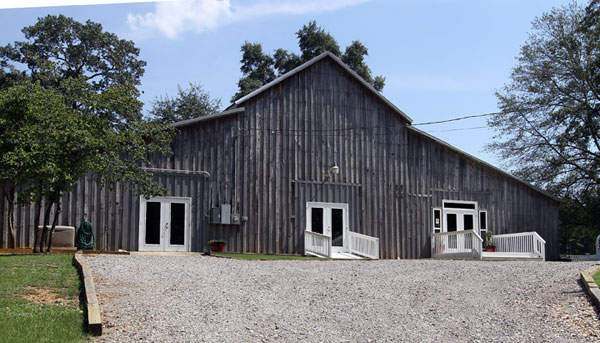
The sun beats down on a stretch of gravel road and grass near Odenville as two men sit on some wooden bleachers next to a structure they hope will become the best unkept secret in St. Clair County.

Lude Mashburn, an agriculture teacher at Odenville High School, and Herschel Phillips, a retiree and Argo resident, are two of five members of the St. Clair Parks and Recreation Board, a body formed in 2011. They’re braving the early July heat to talk about the St. Clair Arena, originally built as a private horse arena that they are working to turn into an attraction for everything from rodeos to church revivals and everything in between.

For Mashburn, the acquisition was a long time coming. “I teach ag out here, and I’ve been trying to get one for 40 years and never could get one,” he says.

The 125,000-square-foot structure went on the market a couple of years ago, and Mashburn saw an opportunity and convinced county officials to purchase the facility and put it to public use. The purchase price was somewhere in the neighborhood of $500,000, but early demand for outside groups looking to rent the facility gives them hope that the St. Clair Arena will pay for itself.

The arena already has hosted a semi-pro rodeo circuit as well as a junior rodeo, where close to 400 people came out to watch kids ages 2 to 16 ride sheep and goats for the crowd. A local church brought its horse ministry to the arena, attracting several hundred people as well. But before they can really begin marketing the arena, the Board needs to address the sparseness of the facility in order to meet the needs of groups interested in investing in rent.

“Our mission right now is to get this up and running because we know people are wanting to rent the place,” says Phillips.

“I really think this will provide. If we’re able to do our job the way we should, we will be able to provide a lot of activity for people to come from Birmingham or anywhere else around here,” Phillips adds. “I really believe that. People are starved for something to do.”

“(The County) is going to give us some money where we can fix it up where we can have some bleachers, a concession stand and bathrooms,” adds Mashburn. “We’re going to get it going, and we can have car shows, anything we want to have.”

Plans have already been drawn for these, and other expansions and are expected to be bid soon. “The arena’s pavilion, which includes concession, restroom and showers, is designed to be octagonal rather than the typical rectangular park building,” according to Kelley Keeton Taft, whose company, the Kelley Group, drew the plans. “This design was chosen to reflect the octagonal era of barn construction from 1850 to 1900,” she says. “The pavilion, crested with a cupola, will set a theme for the arena.”

Focusing on the Commission and the Board’s vision to attract a variety of events, Taft says the design “utilizes existing structures while incorporating the necessary improvements to take the venue to the next level of event capabilities. The design integrates connectivity and focuses on safety for spectators, trailered vehicles and animals.”

Other features include entrance and exit roads, designated parking and pedestrian pathways, lighting, covered sidewalks, covered extensions of the arena with bleachers to seat approximately 600 and an area for vendors or exhibitors to set up during events.

The county is committed to making the arena a success and will set the budget based on what the payments will be for the planned upgrades, says Commission Chairman Stan Batemon. “As those upgrades become an attraction to that facility, then we’ll know more about what kind of events that the Park and Rec board can have there that will generate some revenue and operate the facility.”

The goal is not necessarily for the arena to recoup the initial $500,000 spent to acquire the facility, the additional 18 acres and smaller buildings on the property. Nor is it expected to be a cash cow for the county. As long as the arena is being used, people are enjoying it and it’s paying its future expenses, that’s fine with him and the rest of the County Commission, Batemon says.

“We’re still a small county, and this is our first venture,” he says. “The goal is that it will be self-sustaining, but not necessarily drive revenue back to the county. If it is self-sustaining, the County Commission will be completely satisfied with that. The main goal is that it will eventually operate itself.”

Since the board’s inception, county leaders have been busy expanding outdoor recreational opportunities throughout unincorporated St. Clair County. And officials are investigating areas that might be accessed for multipurpose trails for horseback riding, hiking and mountain biking throughout the county. This could include areas along the 80 miles of river shoreline that may qualify for federal funds. However, the jewel, so far, in the county’s crown is the St. Clair Arena.

The end goal, say Phillips and Mashburn, is to bring people from Birmingham and beyond to St. Clair County to enjoy rural type entertainment and programs in one of the very few covered arenas in north Alabama. Mashburn’s additional hope is that the arena will help reignite interest and passion for farming and agriculture among the youths and future generations of St. Clair countians.

Mashburn says it is important to get as many kids as possible interested in rural lifestyles, which he fears are being lost. He and Phillips agree there aren’t enough activities available for area kids who aren’t involved in mainstream sports but are hungry for activities in which to participate and thrive.

“What do they have to do other than football games, baseball games and basketball games? What are their opportunities other than those three sports?” asks Mashburn. “I see kids that didn’t know anything about animals. Once you get them around a horse or a cow, they realize it’s not a bad animal, and they get excited about it.”

Mashburn’s main concern is the future of farming. The number of people choosing agriculture as a career gets smaller every year and the amount of land used for farming is dwindling, too. He thinks the arena can be used to help introduce a new generation of kids to agriculture through recreational activities, like rodeo and horsemanship.

“There’s not too many of them that are going to be everyday hog farmers or poultry farmers. You’ve got to have all that stuff, so you’ve got to bring new kids in. If we don’t, we’re going to be in trouble,” says Mashburn.

The arena just may be that first step in bridging the gap.

Architectural Eye Candy

Living in a work of art

Story by Elaine Hobson Miller
Photos by Jerry Martin

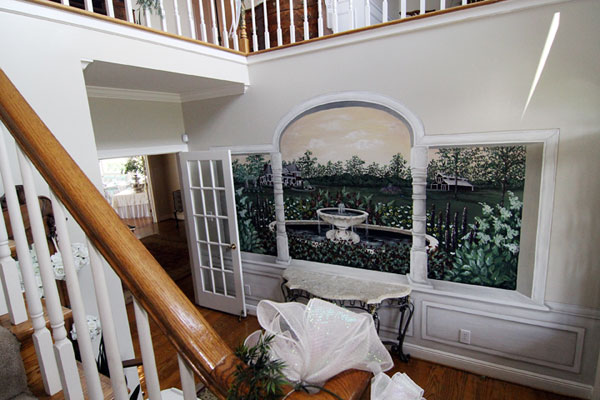
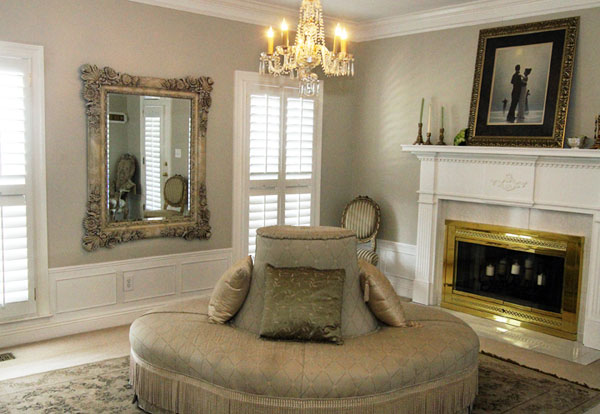
Jimmie Nell Miller is an artist and former interior decorator who likes to go to open houses and read Architectural Digest for the eye candy. But the Pell City home she shares with husband, Ray, is like eye candy to visitors, because its wide hallways, huge bathrooms and very modern kitchen are filled with Jimmie Nell’s colorful artwork. From tulips to Tuscany, cornices to credenzas, every inch of the Country French chateau reflects Jimmie Nell’s personality and her love for entertaining family and friends.

“It’s like an art gallery in here,” Jimmie Nell admits.

Atlanta architect Frank Jova designed this “art gallery,” which the Millers first spotted as a Southern Living Idea House in Chateau Elan outside of Atlanta in 1994. Jimmie Nell fell in love with its French influence, while Ray liked the way it flowed. Both appreciated the roominess of its 5,000 square feet, which may seem superfluous for two people. But Jimmie Nell says they use every square foot of it. “We entertain lots of functions, and have lots of family visits,” she says. “We live in the whole house.”

Built on a former dairy farm, the house is awash with European influences. Its wide hallways represent streets of old Europe, for example, and the extra depth of the tray ceiling in the entry hall is painted blue to keep the ghosts away. “It’s supposed to fool them into thinking it’s daytime,” Jimmie Nell explains.

The gallery tour begins in this entrance hall, where Jimmie Nell’s acrylic painting of Glen Coe, Scotland, one of seven inspired by her trip to that country earlier this year, rests on a stand. Her oil paintings of lemon trees flank the front door, along with sculptured fruits made of composite materials resembling stone, which she purchased.

Turning right, you come face-to-face with sunflowers and peppers in a red vase, done in oils, while the butler’s pantry features another oil painting of a rooster in bright plumage of blue, gold and red.

Kitchen cabinets are made of cherry, countertops are granite, and the appliances are Bosch and Kitchen Aid. The refrigerator is disguised as a tall cabinet, and an appliance garage hides the toaster, mixer and electric can opener. Bunnies nibble cabbage from a ceramic pot on the wall behind the gas range, thanks to Jimmie Nell’s ingenuity. She painted the tiles, then installed them herself because she didn’t trust the tile man to get the ears on the bunnies right.

“I designed my kitchen because I wanted the cabinets to look like little pieces of furniture,” Jimmie Nell says. “My cabinet maker said he’d build them that way, but he didn’t think I would like them. When he finished, he liked them, too.”

Pell City artist John Lonergan did the portrait of Ray, their son Adam when he was 12, and Adam’s dog that hangs over the fireplace in the den. That portrait and the 106-year-old watercolor duo by Ray’s great-grandmother that hang in the music room are among the handful of artwork in the house that weren’t done by Jimmie Nell.

She has a glass table with eight upholstered chairs in her formal dining room, which she uses a lot. Her china cabinet, housed behind mahogany doors, holds Noritake china, cut-glass and redneck wine glasses (small Mason jars on stems). Jimmie Nell’s favorite piece of furniture is in this dining room, and it, too, features some of her artwork. It’s a bar made of two separate pieces that probably weren’t originally meant to be together. The bottom portion is a mahogany cabinet, while the top is a pine hutch with stained-glass tulips and a center canvas on which Jimmie Nell painted more tulips before installing it between the glass panels. “We bought this from an antiques dealer who used to be in St. Clair Springs,” she says. “We had it in our house before we moved here.”

Another painting of tulips, this one in acrylics, hangs between the dining room and music room, because “tulips are easy to paint,” says Jimmie Nell. She has had the room’s baby grand piano more than 40 years and believes it was built in the 1930s. While neither she nor Ray play piano, their two daughters, one son-in-law and a granddaughter do. Nevertheless, the music room happens to be her favorite, the place where she loves to curl up with a good book or take a nap.

From the screened porch off the dining room, the sound of ceiling fans overhead and an Italian bronze garden fountain outside soothe the soul. The peaceful garden features knock-out roses, daylilies, limelight hydrangeas, magnolias and blue point juniper spirals. Both Ray and Jimmie Nell work in the garden, but Ray, a retired banker, trims the 10-year-old topiaries himself.

Back indoors, the art tour continues down the hall from the entryway into the powder room, where Jimmie Nell has an old credenza on which she depicted parrots, monkeys and a leopard “back when jungle themes were so popular.” Nearby is the media room, where a 72-inch wide-screen TV is set into a niche in one wall. Movie posters of John Wayne and Clint Eastwood adorn other walls and a bronze replica of Remington’s Mountain Man dominates the center. Two leather couches and four mission-style gliding rockers with fake-leather bottom cushions and Southwestern-print back cushions provide ample seating. Jimmie Nell made the glider’s back cushions and the room’s matching cornices herself. The media room happens to be Ray’s favorite in the house, a place where he keeps up with the news and email via television and computer.

The master bedroom is near the media room and features another tray ceiling, a portrait of Jimmie Nell done in 1986 by Pell City artist Evelyn Whatley, and a huge bathroom with his-and-hers sinks and vanities on opposite sides of the room. The vanities are separated by a glass-enclosed shower, and Ray and Jimmie Nell have separate closets, too. More of Jimmie Nell’s artwork is featured in a buffet from her old dining room suite that has panels she painted with shell designs.

Upstairs are two guest bedrooms, one with a 100-year-old washstand on which Jimmie Nell painted a Colonial couple at a fence, and a doll house made from a kit one of her daughters gave her 20 years ago. An open balcony connects the two bedrooms and overlooks the dining room on one side, with a glass-less window overlooking the entry hall on the other.

In the second upstairs bedroom Jimmie Nell used French toile for the bed’s coronet and a chair skirt, but a nautically-themed fabric on the bed pillows and valance.

After 12 years in the house, the Millers still find it very livable. “We like the way it flows,” says Ray. Jimmie Nell agrees. “I like the roominess of it, and the private areas where we can get away from each other,” she says, with a wink. “That has probably saved our marriage.”

Barn Owls on the Lake

Story by Carol Pappas
Photos by Jerry Martin
and Kathy Henry

Hagan, the last of the barn owls to leave their roost in July, flew the coop from an unlikely perch — the rafters of a covered pier on Pell City’s Logan Martin Lake.

He, his brothers and mother took up residence some weeks earlier. The mother first, of course, and brothers coming along later, hatching a few days apart.

They didn’t seem to give a hoot about their unusual surroundings of water instead of land. In fact, barn owls don’t hoot at all. Their vocal repertoire is more like a blood-curdling scream, the kind Alfred Hitchcock might fancy to play a role in a terrifying scene.

It seems only fitting that a ghoulish face and silent wings in flight, swooping toward their prey at night, would make this scene complete. Hitchcock would be proud.

For Kathy Henry, owner of the last known address for Hagan and his older brothers, Aaron and Mit, her visitors haven’t been frightening at all. That is, unless you count the time one night when the mother silently swooped down behind Henry and friends, letting out that scream because she thought her young were in danger.

The owl lunged toward the family boxer, “and he took off running like a sane person — as did we. She screamed four times until we got to the door,” Henry said.

Other than that near miss, owl watching has been an entertaining pastime around the Henry property. She rigged a Wingscapes BirdCam she dubbed “owl cam” to a PVC pipe to watch as the family grew. She named them. “The first born was Aaron, after the friend that found them. The middle born was Mit, after a friend of ours who has overcome an extreme fear of birds and now loves birds. And the youngest was named after the 4-year-old grandson of our favorite neighbor.

“Hagan, the owl, was hatched about five days after we found the first two, and Hagan, the human, climbed up and was the first to see it,” Henry said.

Barn owls hatch their young in the order the eggs were laid, so when the youngster climbed the ladder to look and came down saying there were three, she tried to correct him. When he didn’t give up, she ascended the ladder to see for herself and discovered the trio staring back at her.

Over the owls’ month-long stay, Henry, a pharmacist by trade, has learned all about her winged friends. “They nest in caves, hollowed trees and old buildings,” she said. But somehow, they took a turn across the water and ended up at Henry’s lakeside place. “I think it was because she (the mother) knew they would be safe. At least I like to tell myself that.”

She has taken dozens of photos and hours of footage, studied their habits and shared her knowledge with other curious onlookers. But it never seemed to faze those being looked upon.

Perhaps Henry’s right. They knew they were safe. “It’s been fun,” she said. “I really enjoyed it. I hope they come back.”

Gover’s Gardens

There is gardening and then there is something very special

Story by Carol Pappas
Photos by Mike Callahan

Jennifer Gover did not intend to follow in her mother’s footsteps, at least not in the path of a master gardener. But one look at the bountiful gardens that frame her home and property each spring, and it is evident she inherited her mother’s green thumb and a passion for flowers.

“My mother was an avid flower gardener,” she said. “You know how mothers have you busy doing stuff and you say, ‘I’ll never do that.’ ”

Take in the abundance of blossoming azaleas, dogwoods, wisteria, irises, daylilies — they’re all here and more — and you immediately recognize the promise made to herself as a child was never kept.

Her mother’s favorite flower? “All of them,” Jennifer replies without hesitation. She apparently inherited that, too.
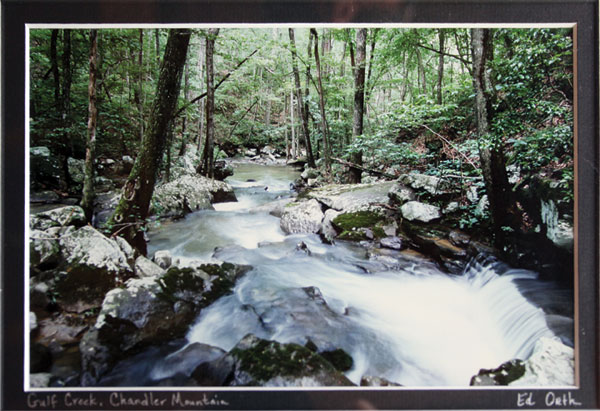
The drive leading up to their King’s Circle home in Pell City is quite a welcome mat of color, vibrant azaleas and dogwoods leading the way. Bursts of color in beds found in virtually every corner and along every path on the property show off her handiwork.

The retired Pell City High School principal is quick to point out that she has help. Husband Kenny Gover, whose day job takes him to Coldwater as principal of the elementary school, is “the hands,” she said. “I’m the planner. He’s the worker.”

In the early years, the Govers began with white dogwoods from the wild. She thought, “I’m not going to get into a big yard.” Azaleas followed “little by little.”

A dozen years later, and the Gover home and grounds are a spring color showcase. And they share it with family, friends, neighbors and anyone else who happens to stop by for her “open house” at the peak of their blooming.

Passersby on drives to see spring color will stop and inevitably recognize the legacy and say, “Oh, your mother is the plant lady. We always would go by there.”

One little girl told her, “The colors are so beautiful, I need sunglasses.”

It’s easy to understand the youngster’s sentiment on a tour of the gardens, which saw an average of 20 people a day coming to get a closer look. “Some came back to walk through a second or third time,” she said. “It’s a word-of-mouth thing.” And she greets them not only with her flowers, but with open house fare, like cakes and other refreshments. “I love them coming.”

She is part of a flower group called Mahogany, and its retiree members meet once a month. But their discussions and activities go well beyond blooms and blossoms. “It’s a group of people who like to help each other.”

They clean yards and make an impact. They visit, have lunch with guest speakers — like a registered nurse or a banker — who “impact us individually or as a group.”

They go on trips to learn more about their state and its history. They have been to Gee’s Bend, Brown’s Chapel Church and the National Voting Rights Museum in Selma. They traveled to Dexter Avenue in Montgomery to see the church and parsonage of Martin Luther King.

Here at home, Mahogany gets back to the business of flowers, this year naming Gover’s creation a not-too-surprising ‘Yard of the Month.’ “It’s probably month and year,” laughed Gover.

Like a proud mother gathering her young, she is constantly traveling to and fro to flea markets and home centers to add to her collection.
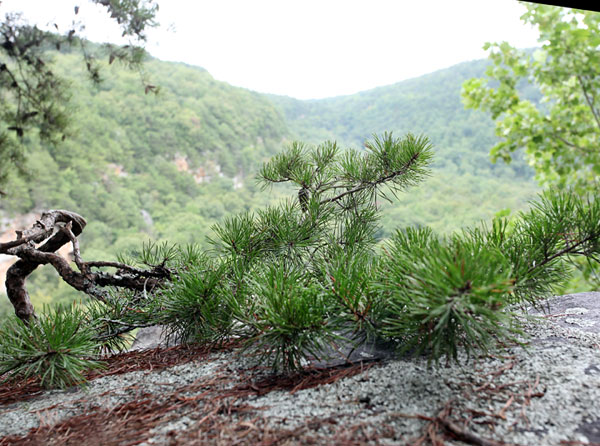
She specializes in bringing distressed plants back to life so that all may enjoy the pleasures of what she has known since childhood. It is not unusual for people to “leave things for me,” she said. They may be irises or daylilies, and they tell her, “I can’t keep this alive. What can you do?”

“They never come back and get them,” she said.

And she gladly accepts the challenge, simply adding to her gardens year after year and thinking of each flower left behind as a gift.

“There is nothing like early morning in the yard,” she said. “There’s a presence of God. A bloom leaf opens. Birds are singing. You reflect, think about life — where you’ve been and where you’re going.”

Her husband enjoys the pleasures of the gardens, too, not just the work, but to sit back and “see what you’ve accomplished.

“It’s a time to bond with each other,” she added.

She tells young people when they build a house, put the plants out now. “You’ll look back and enjoy it in your life,” she said.

Her other piece of advice? “You should love what you’re doing. I love the plants. It should have been my calling.”

One look around Govers’ gardens, and it doesn’t take long to conclude that that is exactly what it is.

Blackwood Gallery

Springville home to art gallery of national note

Story by Mike Bolton
Photos by Jerry Martin

As college kids in love tend to do, Dean Black and Sharon Williams would hold hands on the front porch of the old house that Black called home in his college days and talk of marriage and exactly how their lives would play out.

What their friends and family chalked up to as a cute couple with big dreams was actually a game plan for the couple who in 1980 became Mr. and Mrs. Dean Black. It was a game plan that has come to fruition with Blackwood Gallery in Springville.
“We’d sit at that old house near Auburn and talk about how we’d have an art gallery one day and I’d draw and Dean would make the frames for my artwork,” Sharon Black said in their gallery on US 11 in Springville. “That was our goal in 1977, and that is how it has played out.”

Today, Blackwood Gallery houses the couple’s work as well as the works of more than 40 other craftsmen. Visitors are often surprised to find bronze work, blown glass, leaded glass, handmade furniture and other woodworking treasures from Alabama’s top craftsmen in a place like Springville.

But it was the only location they ever considered for their gallery, both say. Traditional places where you might expect to find an art gallery, like Mountain Brook, lacked that laid-back atmosphere that is so important to both. Besides, many larger cities tend to frown on people riding their horses to work these days.

“I grew up in Hueytown on a lake with horses, and Dean lived in Homewood, but he spent a lot of time in Springville around his grandparents’ summer getaway that had a lake and horses,” Sharon said. “When we built the gallery here, in addition to Dean’s woodworking shop he built in the back part of the gallery, he built a stable where we could put the horses when we rode them to work.”

For all their dreams of one day owning a gallery, surely the couple could never have envisioned the success Dean would find in the field of woodworking. In his college days, his woodworking consisted of building custom gun stocks at what he called Deano’s Gun Shop, an out-building at the home he rented in Society Hill.

In those days, being accepted into the prestigious Alabama Designer Craftsmen group and constructing many breathtaking pieces for the Birmingham Museum of Art and the Birmingham Botanical Gardens was even too much for him to imagine.

Chances are you might have seen his work and not even known it.

“I did the columns for the Asian murals at the Birmingham Museum of Art and that opened a lot of doors for me,” he said. “I came back and built the bell stand at the museum from wood that they presented me from the 1939 World’s Fair. I followed that by building the bases for the samurai helmet collection.”

In 1996, the Birmingham Museum of Art had a coup as it became one of a handful of cities in the U.S. to land the traveling Qin collection. The artifacts from the tomb of Qin Shihauangdi, who established the first empire called China, are hailed as one of the most awe-inspiring collections in the world. The collection was taken from a burial site the size of Manhattan and included full-size horses and protecting warriors made from terracotta.
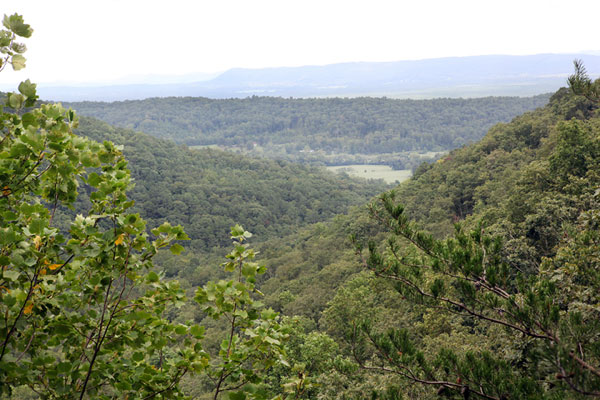
Black was chosen to do much of the accompanying woodwork that supported the treasures. That woodwork was seen by thousands of visitors from across the U.S.

The museum is home to one of the largest and most comprehensive collections of Wedgwood pottery in the world and the only collection of its kind in the United States. Black was chosen over other craftsmen to build the supporting woodwork for that, too. He also did the delicate woodwork in the museum’s Korean Room.

As word of his skills spread, Black was also chosen to construct the Tori, a large gate at the Birmingham Botanical Gardens.

Today, Black says he’s amazed at how word of his work has spread and at the inquiries he receives from across the country. His work has ranged from columns for a hunting lodge belonging to dog-racing magnate Milton McGregor to crosses and offering tables from large churches across the U.S.

All of the work is done in his shop in the back of his gallery in Springville.

“I have equipment that can do pieces substantially larger than many people can do,” he said. “It has opened doors for many of these larger projects.”

Black says he has made some inroads into one project that he really hopes never comes to be. An Auburn graduate and devout Auburn fan, he has offered to build museum-quality pieces for the school free-of-charge from the wood from trees at Toomer’s Corner should they not survive the poisoning.

“I love Auburn, but I haven’t been as diligent as I should have been in sending my money down there,” he said. “This would be a way that I could give something back. I just hope it never comes to that.”

Black said he is a firm believer that small things steer people along the paths of life and if not for a woman and her dog, there probably wouldn’t be a Blackwood Gallery today.

“I grew up an Alabama fan, but I wanted to be a veterinarian,” he said. “I went to Auburn to become a veterinarian and took all the pre-vet classes.

“I was working with a vet down there, and a woman brought in a large sheep dog that had been hit by a car. The vet did everything he could but couldn’t save the dog. He told me that I needed to watch how he handled it because it would be something I would have to do frequently in my career.

“We had this little window in the office, and I watched through the window as he told the woman and kids. I was looking at the back of his head as he was facing them. I saw him shake his head, and I saw them burst into tears.

“I knew I could handle the gory stuff, but I wasn’t prepared for that. I knew in that instant that I couldn’t be a vet. I went in and told my professors that I wasn’t even going to take the final exams because I was changing my major. I lost more than a year’s work but I changed to marketing.

“I will always be glad that I did.”