
First Families of St. Clair

The foundation for generations

Story by Joe Whitten

Photos by Wallace Bromberg Jr.

Submitted photos

In 2017, Kathy Burttram and Rose Mary Hyatt had a bee of an idea buzzing in their proverbial pioneer sunbonnets. Together, they developed the idea into a reality that is as satisfying to a lover of local history as honey on a hot buttered biscuit was to a family at breakfast in a log cabin. They called their project The First Families of St. Clair County, Alabama, and brought it to fruition during the county’s bicentennial year, 2018.

Having loved local history for years, the two women were knowledgeable and capable of accomplishing their goal. The aim of First Families is to collect and preserve the lineages of families who settled in the county by 1818 or earlier. To be accepted as a member of First Families, the applicant had to provide documented proof of descent from the settler-ancestor.

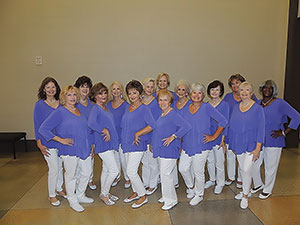
With plans finalized by late 2017, announcements appeared in libraries and newspapers, and soon requests for application guidelines began to arrive. As completed membership forms came in, the project team began vetting documentation, the number of names on the eligible list increased, and on November 20, 2018, First Families presented membership certificates to 51 descendants of early settlers.

Wendy Smith’s documentation as a descendant of James Ash arrived first. Later, four others joined under his name.

From Franklin County, Georgia, James and wife Nancy Martin Ash arrived in this area shortly after his brother John Ash had settled in Beaver Valley in 1817. James Ash prospered as a successful farmer and acquired much land. He died in 1860, leaving a large estate.

James’ son, William, born in Springville in 1819, also farmed and owned 357 acres in Branchville.

When the Civil War began, William and his sons, James Lafayette and William Gilbert, joined the First Tennessee & Alabama Independent Vidette Cavalry at Bridgeport, Alabama. However, William’s brother, Gabriel Simon, fought for the Confederacy.

In August 1864, William and William Gilbert, with a unit that had loaded cotton for Union use onto wagons, had stopped for the night near Woodville, Alabama. That night, Confederate troops ambushed them, killing all but 14. William and son died. The survivors were taken across the Tennessee River, where they were mowed down in a volley of shots. However, John Kenner survived to tell of the experience.

James Lafayette survived the war and returned to St. Clair County.

St. Clair County had a number of Union sympathizers. In her History of Steele, Alabama, Vivian Qualls noted that only 14 percent of St. Clair landowners owned slaves. Most farmers took care of themselves, with family members doing the work. Mrs. Qualls wrote, “…brothers fought against each other, one with the North and one with the South.”

Twenty persons qualified for membership with ancestor Absalom Autrey. (The name came to be spelled “Awtrey.”) Gerald Tucker, first to qualify as a descendant of Absalom, lives today on the farm that belonged to his great grandfather, James Monroe Awtrey, who was the great grandson of Absalom. James Monroe had inherited the farm from his father, James Henry Awtrey. Gerald Tucker records that James Henry wasn’t a wealthy farmer, but that he gave each of his sons $2,000.00 and “…told them to go out and make their own way.” Tucker also stated, “James Monroe Awtrey, having fought for the North in the Civil War, chose to go to Missouri afterward. He and his wife both died of an illness within five months of each other. James Henry Awtrey brought the two children, Phillip and Zula, back to St. Clair County to live with him.” Frances Leona Awtrey, daughter of Phillip, was Gerald Tucker’s mother.

One Autrey/Awtrey family historian states that Absalom came into our area in 1806 or 1807, settling at the foot of Blount Mountain. Later he owned 153 acres at Greensport on the Coosa River.

However, in a November 29, 2018, St. Clair Times article, qualifying descendant James South stated that the Absalom Autrey family came here toward the end of the 18th Century. “There was an Indian massacre that killed his wife and two or three of his children. He moved back to Georgia territory, and in 1800, he moved back into St. Clair County near Greensport.”

According to oral history, Absalom died November 13, 1833 — the night of the spectacular meteor shower which still lives in state history as “the night stars fell on Alabama.” He was buried near Greensport.

Mary Dearman is the only woman through whom a membership in First Families has come. Moving her family here from South Carolina around 1816-17, Mary is known as the founder of Dearman’s Chapel Methodist Church near Steele — a worthy remembrance by any measure.

Four joined First Families through Revolutionary War veterans Noel Battles and Captain Edward Beeson.

Mattie Lou Teague Crow recorded that Noel Battles lived in Albemarle County, Virginia, in 1776 when he enlisted in “Captain Clough Shelton’s Company which saw service under Colonels Edward Stevens, John Green and Samuel Cabell, respectively.”

At the Birmingham Library, Mrs. Crow discovered on microfiche Noel Battles’ account of his three years in the American Revolution. In an article she wrote, “He fought in the Battle of Trenton and stated that the battle was brief and bloody. The enemy was soon overcome as many of them were drunk after the long Christmas celebration. …The Battle at Brandywine Creek was a painful experience as they were badly beaten by General Howe’s men. Seven hundred were killed or taken prisoner and Noel Battles received a flesh wound in his right arm.” Battles was wounded again at the Battle of Monmouth, June 1777.

After the war, Noel and his wife, Rhoda, moved to Georgia, and from Georgia, into what would become St. Clair County Alabama. He and Rhoda are buried in Old Shiloh Church Cemetery on Highway 11 between Steele and Attalla. This church’s location is now in Etowah County, although it was in St. Clair County when the Battles died. On April 19, 1998, the Etowah County Chapter of the Sons of the American Revolution honored the memory of Noel Battles with a grave marker.

According to local records, Edward Beeson / Beason and wife, Ann, settled in today’s St. Clair County around 1814, where they built a log cabin and “…lived among the Indians until they were removed.”

Edward enlisted in the army in the spring of 1778, Guilford County, North Carolina. He was commissioned Captain in April 1779 and served in Captain David Brower’s Company.

Edward and Ann are buried at Union Beason Cemetery. His grave was marked by the Nancy Hart Chapter of the Daughters of the American Revolution.

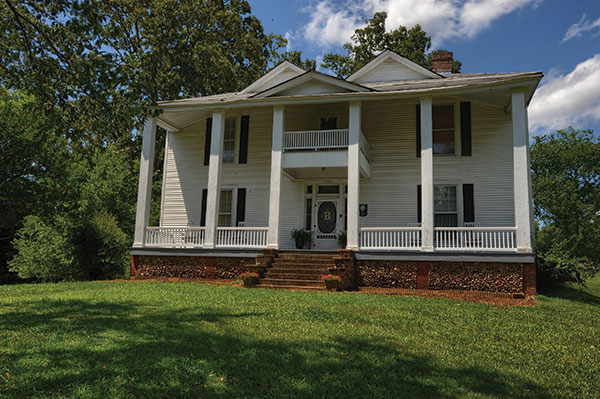
Edward’s son, Curtis Grubb Beason, participated in county and state government all his life. He served on the Alabama Constitutional Convention in 1865, according to The Heritage of St. Clair County, Alabama. The antebellum home he built (c1840) still stands, well-kept, in Beason’s Cove between Ashville and Oneonta.

Rev. Thomas Newton and wife Ann Martin Newton were the parents of Margaret Newton who married John Ash, of political renown in St. Clair County. In 1817, both families joined a westward bound caravan from South Carolina as it journeyed through Georgia. The caravan had stopped to rest in today’s Beaver Valley a few miles below present-day Ashville. When a tragic accident left Betsy Ann Ash dead, John and Margaret Ash and Thomas and Ann Newton chose to settle in Beaver Valley rather than abandon Betsy Ann’s grave.

The log home that Ash and Newton first constructed in 1817 stands — the oldest surviving structure in St. Clair County. Both families lived there until John Ash built his own dwelling in 1818.

As years progressed, John Ash added to his home, until it stood a welcoming home in the county.

Some of our older readers will remember the white-painted home standing pristine in the sun; however, the home today stands forlorn in Beaver Valley.

John Ash helped organize the government of St. Clair County. Records show that he was the first elected judge in the county and that he served three terms as state senator. The naming of the county seat Ashville honored the legacy of John Ash. One person provided proof of John Ash lineage.

In his book, Branchville, Alabama: The History of a Little Town, 1819-2007, Kenneth Hodges wrote about Rev. Thomas Newton, stating that, as a minister of the Presbyterian church, “Thomas was an excellent, impressive, emotional preacher with the ability to deliver sermons that would often melt both the speaker and the listener to tears.”

In Georgia, Newton had been a circuit-riding pastor, preaching at a different church each Sunday of the month. Hodges records that when the westward migration began, church membership dwindled as the population of communities decreased. Hodges gives this as a reason for the Newtons joining the westward caravan.

Both a Newton historian and Mattie Lou Teague Crow mention that the Newtons were instrumental in organizing the Presbyterian Church in Ashville. The denomination first met at Mount Pleasant Meeting House, which was also the place of worship for the Methodist and Baptist. In 1879, the Presbyterians erected their own modern Victorian church, still standing in Ashville today.

Three persons gained membership on Rev. Thomas Newton’s name.

Jeremiah Collins arrived here penniless in 1818—according to some accounts. However, Jeremiah Collins’ great great granddaughter, Barbara Goldstein Bonfield, stated in an email interview that Collins researcher, Kathie Collins Jones, “…found land records from South Carolina with Jeremiah and William Collins listed on them, tons of them.” Great great grandson Jimmy Goldstein believes this indicates that Jeremiah didn’t leave South Carolina so poor he had to bring his possessions to Alabama on a sled instead of a wagon, as some researchers have written.

Writing for The Heritage of St. Clair County, Alabama, Bonfield said that Jeremiah settled along the Coosa River and announced his goal of becoming a landowner. Records show that he owned land in Easonville and Ragland in St. Clair County and substantial acreage in Talladega County. Bonfield tells of a deed, dated June 25, 1842, which transferred to Jeremiah 300 acres of land in the “Coosa Land District acquired by the United States in a treaty with the Creek Indians.” President Tyler signed the deed.

Jeremiah achieved his goal of possessing land, but his son, Jesse Collins had other goals —preaching the gospel of Christ. What a disappointment to Jeremiah, who desired his son to become prominent in Alabama politics. Bonfield writes that Jeremiah told Jesse “…he was not raising a son to be a ‘back-woods Baptist preacher.’”

Jesse returned to South Carolina where he continued to study theology, professed his faith in Christ, and became a minister of the Gospel. Jesse returned to St. Clair County with his bride and began pastoring Baptist churches in the county. During his ministry, he pastored several churches in St. Clair, Shelby and Calhoun counties and helped found a number of Baptist churches.

Jesse had obtained his goal of preaching the Gospel, but his father, Jeremiah, had never embraced Christ nor expressed interest in Christianity. Jesse longed for his father to accept Christ and be baptized. His longing was fulfilled, when at age 91, Jeremiah became a Christian and was baptized.

But who baptized Jeremiah? Mattie Lou Teague Crow wrote that “…frail Jeremiah was strapped into a small chair and the preacher son lowered him into the waters of the Coosa River in baptism.” However, Barbara Bonfield records that in a 1927 written document, Jeremiah’s granddaughter, Magnolia Embry, stated that “…her grandfather was baptized by Reverend Renfro in Chocolocco Creek near Schmit’s Mill in Talladega County. Such are the mysteries of family history.

Jeremiah died in 1873, age 94. Jesse died tragically of a pistol shot. The fact that accounts differ on how the pistol discharged doesn’t diminish the Gospel ministry of Jesse A. Collins and the spiritual legacy he left in St. Clair County. Collins was well-known among Alabama Baptists.

B.F. Riley, in his History of the Baptists of Alabama, recorded that “As financial secretary of Howard College, corresponding secretary of the East Alabama Baptist Convention, and pastor in St. Clair County, Mr. Collins rendered valuable service.”

One other minister must be noted. Hezekiah Moor settled in today’s Moody/Leeds area. Moor history is recorded at length in Leeds…Her Story. Hezekiah’s son, also named Hezekiah, was a Baptist minister who helped organize churches in St. Clair County. The record of his death and the vengeance of his son are matters of record.

Rev. P.S. Montgomery wrote in the Southwestern Baptist, February 4, 1864, that Hezekiah was murdered by a bushwhacker on Kelley’s Creek Road during the Civil War. “Having returned home on furlough, he found much mischief was being done by robbers in this county. …Bro. M. gathered a company of men and was indeed successful in catching them. But alas! About the middle of May 1863, as he was returning home alone, a wretch secreted himself by the way, and committed the awful deed and fled.”

The Leeds history states that the man who killed Rev. Moor was Jeff Darty, a soldier who had deserted the company commanded by Hezekiah’s brother.

Hezekiah’s son, Joseph, was eight when his father was killed. When he turned 14, he set out to find Darty in Texas where he had fled. Joseph joined up with a cattle drive, and within three years ended up in the same cattle drive as Jeff Darty.

The cowboys ended a long-day’s drive, and “…after all the cowboys had rolled up in their blankets for a night of well-earned rest, Joe slipped to Darty’s bedroll, took out his knife and slashed Darty’s throat, killing him instantly. Vengeance was his at last. Joe saddled his horse that very night and came back home to Alabama.”

The enchantment of St. Clair County family history lies in such stories as these.

In planning this project, Burttram and Hyatt took direction from First Families projects in other counties in Alabama and other states,

Aware that Etowah County historian, Jerry Bartlett Jones, Sr., had assigned to the Northeast Alabama Genealogical Society any proceeds of his First Families of St. Clair County and Northeast Alabama, Burttram and Hyatt wanted the proceeds from this project to be shared equally by Springville Preservation Society and St. Clair Historical Society.

The Springville Preservation Society, formed in April 1992, helps protect and maintain Springville’s historic downtown and collects and preserves artifacts of the area’s history.

The Preservation Society owns three buildings in Springville: the Masonic Lodge, which serves as a museum and archives on Springville and the surrounding area; the Little White House, which also serves as the Springville Welcome Center and is rented out for special events; and the old Rock School, their current restoration project. Frank Waid is president of the society.

The St Clair Historical Society was organized in 1972 with the purpose of preserving the county’s history. The primary focus of the first years was restoring the John Looney double dog-trot log home, which is the only surviving example in Alabama. Published from 1993 until 2009, Cherish: The Quarterly Journal of St. Clair Historical Society, focused on both history and genealogy. Cherish can now be accessed online at the Alabama Department of Archives and History. The president of the society is Sandi Maroney, librarian at Ragland Public Library.

There are African-American citizens in St. Clair County whose lineage goes back to the earliest years of our county, and Burttram and Hyatt are hopeful that some will make application for membership. Lineage can be hard to establish, but here are some sources. Antebellum church minutes list first names of slave members, and often gives the slave owner’s name. Antebellum court records, accessible at the Ashville Museum and Archives, can provide avenues of research.

And don’t overlook obituaries of former slaves, for quite a number were published in county newspapers, as in the following.

 “Mar. 2, 1899, Southern Alliance: Oldest Man in the County Dead. Dock Collins, colored, age 106 years, died at his home near Riverside on the 12th day of Feb. 1899. He was born in Lawrence District, South Carolina, in 1793, and was sold at public auction at Lawrence Court House when he was about 7 years of age, and bought by Jeremiah Collins, who was the grandfather of Attorney Jas. A. Embry, of our town. He was brought to this county just after the sale, where he continued to reside up till the day of his death.

“He was also the first Negro to own land in the county and a peaceable law-abiding man all his life. He was owned by the same Jeremiah Collins when freedom was declared, having had no other master since a boy. He was almost a life-long member of the Methodist church, and the good advice which he had always given to his race resulted in many of them securing homes around and near him. The influence exerted by this old man among his people was wonderful, he never failing to advise them to be truthful, industrious and honest.

“During his life, he was married twice, and was the father of 14 children, 5 of whom are now living, and some of them property owners. He died within a quarter of a mile from the old home of his master, and the cause assigned for his death was old age. He passed away seemingly without pain and retained his mental faculties till the very last.” l

Editor’s Note: St. Clair County history is rich and exciting. Discover hopes our readers will become excited as well and join in the task of preserving our treasured past. Since the First Families of St. Clair County is an ongoing endeavor, if your family has roots in our county from 1818 or before please connect with Mrs. Burttram or Mrs. Hyatt at firstfamiliesstclairal@gmail.com. Descendants of families settling here in 1819 through 1820 may apply for membership in First Families as a Founding Family member.

Rooftops and Retail

Upswing in new homes could mean boon to retail

Story  by Carol Pappas

Photos by Susan Wall and Submitted

The saying goes, “Retail follows rooftops.” And if the recent flurry of new housing construction around St. Clair County is any indication, more retail offerings might not be far behind.

Commercial developer Bill Ellison, president and CEO of I-20 Development, knows more than most the importance of residential growth. He has been recruiting commercial business to the Pell City area for more than a decade.

“Retail does follow rooftops, and we just haven’t had enough rooftops to ignite significant growth in the national chain stores and restaurants people would like to see near Interstate 20 and US 231. We have had some successes with Publix, Buffalo Wild Wings and the new Premier Cinertainment movie theater, bowling alley and entertainment complex. But new rooftops coming in gives us an encouraging look at the future.”

St. Clair Economic Development Executive Director Don Smith agreed. “It is important for a community to continue to have a growing population base. Young families are an ideal demographic because they have upward mobility in there new careers, typically shop locally, and are in a high consumption phase of their life.”

He noted that young children require new clothes and supplies on an annual basis. “New residential developments that provide a safe neighborhood with good schools and convenient shopping is ideal in attracting young families.”  

And that bodes well for retailers looking for a place to locate. “New retailers are attracted to communities with a growing population and increasing household income. Many times, it’s not the number of homes that are being built, but the quality of the development that will determine the type of future retailers a community will attract.”    

In Pell City, upper scale, craftsman homes are being built in Hillstone Heights, and Fox Hollow is opening new sectors.

Dave Elmore, president and CEO of Crossings General Contractors, had actually gotten out of the construction business when he was building his own home on Logan Martin Lake. But he “saw an opportunity when not many homes were being built, and Realtors did not have an inventory.” He bought 21 lots in the Hillstone Heights subdivision off US 78 and began building speculative homes. Two have sold already.

“There was an opportunity or a need for more upscale homes,” and he created a gated community there. “They are a little more expensive with more amenities, and the craftsman style trend is what everybody seems to want.”

Plans in Fox Hollow near Interstate 20 and US 231 call for 91 new homes to be built as the final phase of that subdivision. Twenty are already under construction.

According to Brian Muenger, city manager for Pell City, the City issued an average of 30 new home permits a year in the 2012-2016 calendar years. “In 2017 we saw 55 new home permits issued, and in 2018 it surged to 74. With the final phase of Fox Hollow and Hillstone under construction, we should see the trend continue throughout 2019, and hopefully beyond that point.”

He noted that the Horizons lakeside development, which has around 200 remaining lots, was sold last year. “I understand that they plan to begin construction in 2019 or 2020.”

Muenger called the economy in recent years “extremely strong, and the houses that are being built have been moving quickly. The supply of existing lots, specifically in the sub-$250,000 price range, will likely be depleted within two years, and there is a significant need for additional subdivisions to be developed in that price range.”

To encourage additional residential development, the city council enacted a substantial reduction of its impact fees and subdivision fees in 2017, lowering those development costs by more than 40%, he said. “This was done in recognition of the need our area has for additional rooftops, as well as the benefits that additional population has in driving our retail sector.  Current third-party projections indicate that by 2019 there will be more than 44,000 people residing within 10 miles of the city center.”

While not all of that population is inside the city limits, “the entirety of that population is comfortably within our trade area, making the city an attractive market for additional retail development. The city’s existing retailers have seen substantial increases in sales in recent years, which is indicative of the market demand. Statistics show large opportunity gaps in our existing retail landscape, including a gap of over $50 million in the food service and beverage space.”

To the west, Moody is experiencing a sizable surge in new home construction. Mayor Bill Lee said his city is seeing a building boom in the new housing market with an estimated 500 new homes to be built in four new subdivisions. Also under construction is a senior living complex with 26 duplexes being built.

“The housing market does push commercial growth,” Lee said. Moody has made sure it has a good mix of residential options over the years. What is being built now are larger homes, enabling those in starter homes to move up and stay in Moody. With the city’s proximity to the Interstate 20 corridor and the growth it is experiencing in the residential market, “retail is right behind it.”

Longtime Realtor and owner of Lovejoy Realty, Lyman Lovejoy, is seeing plenty of movement in the northern half of the county as well. In Moody’s Edgewater subdivision, “we are selling out fast.” There are several custom homes under construction at the present time.

There are several new homes going up in The Village at Springville, which has 20 lots left. “Spec houses are selling fast across the county, Lovejoy said. Magnolia Lake in Margaret is seeing its share of growth with several homes under construction, and the city of Margaret’s total of construction is more than 40 homes being built right now.

Lovejoy’s Canoe Harbor development on Neely Henry Lake, a joint venture with Freeman Land Co., has enjoyed much success since it opened for development a year ago.

There are 26 lots on the water and 10 off the water. More than half the lots have been sold in the lakeside development that sits between Ashville and Rainbow City. He credits the positive housing market plus no water level fluctuation at Neely Henry with the success in such a short time.

Lovejoy Realty Broker Brian Camp, who owns Waterstone Homes, built 20-25 homes in 2018 in Moody, Odenville, Margaret and Springville areas.

And just as the saying goes, Lovejoy concluded, “If we have enough rooftops, retail will come.”

Pell City Past and Present

Story by Scottie Vickery

Photos courtesy Pell City Library

Photos by Graham Hadley

Even the walls of the Maxwell Building in downtown Pell City have a story to tell, just like the others lining the blocks of Cogswell Avenue.

The first brick building constructed in town, it still bears the scars of a 1902 dynamite explosion at the nearby train depot. The accident killed two people, injured several others, and left a large crack in the building’s exterior.

The structure was built in 1890, a year before the city was incorporated, and has been home to a boarding house, grocery stores, post office and hotel over its 129-year history. It’s the only survivor of the handful of houses and buildings that made up the original eight square blocks of Pell City. Today, the building that boasts so much historical charm now counts art galleries and a martial arts studio among its many tenants.

“It’s a monument to the humble beginnings of town and stands as a testament to the resilient nature of its people,” Urainah Glidewell said of the Maxwell Building and its many lives. The organizer of the 4th Annual Pell City Historical Walking Tours held each Saturday in April, Glidewell said the building is just one of many that participants can explore. “A lot of people who live in Pell City don’t know much about its history, and there are so many wonderful stories. This is a way for us to open the doors for the community and kind of invite them in,” she said.

Glidewell, who has called Pell City home for 13 years, researched the origins of the city, its founders and businesses for the tours, which average about 150 participants each year. Led by community volunteers, they are a project of The Heart of Pell City, a group dedicated to the preservation, revitalization and cultural development of the downtown historical district. More than 30 cities and towns across the state, including Springville, are hosting tours this year as part of the Alabama Department of Tourism’s initiative to highlight the rich history of the state.

“Everyone who calls Pell City home, who has a business here, they’re now part of the history of Pell City,” said Glidewell, who serves as president of The Heart of Pell City. “We’re walking in the footsteps of all the people who came before us. We thought the tours would be a wonderful way to educate people.”

In its infancy

Downtown Pell City, added to the National Register of Historic Places in 2001, has a long, storied history. Founded by railroad investors, a town charter was issued in 1887, and the city was officially incorporated in May 1891. It was named for one of the financial backers, George Hamilton Pell of New York.

Pell City was nearly abandoned following the Panic of 1893, but it was redeveloped after Sumter Cogswell and his wife, Lydia DeGaris Cogswell, moved to town in 1901 and bought the city for the bargain price of $3,000. “Mr. Cogswell influenced the location here in 1902 of the Pell City Manufacturing Company, subsequently Avondale Mills,” according to the historical marker in front of the courthouse. “The town’s prosperity was secured after that time.”

Much of Pell City’s growth over the years can be attributed to the construction of I-20 and Logan Martin Lake, both built during the 1960s. It’s the historical district, however, that gave the largest city in St. Clair County its start. The district includes two blocks of Cogswell Avenue, as well as several buildings on 19th Street North, 21st Street North and 20th Street South.

Here’s a look at some of the buildings and their stories, according to Glidewell’s research:

Pell City Drug Company/Rexall Drugs, 1901 Cogswell Avenue, was built in 1903 by Dr. R.A. Martin. When Comer Hospital closed in 1931, he opened a six-bed clinic above the drugstore and started construction on the 42-bed Martin Hospital, which was directly behind the store and now houses law offices. The drug store, which closed its doors in 2001, sold everything from prescriptions to school books during its nearly 100-year history and featured a soda fountain and lunch counter, according to Carolyn Hall, Martin’s granddaughter. Today, visitors can still enjoy a meal at El Cazador Mexican Grill, which opened there several years ago.

Singleton’s Barber Shop, which opened in 1905 at 1911 Cogswell Avenue, is now home to Partners by Design, a multimedia marketing company that publishes Discover, The Essence of St. Clair, as well as other magazines. They don’t offer haircuts, but today’s visitors who are having a bad hair day can also buy baseball caps and visors there, as well as T-shirts, sweatshirts and other products promoting Logan Martin Lake. Partners by Design sells its brand of LakeLife™ products at its downtown office. The brand’s origin comes from a logo the company designed years ago and trademarked.

The Maxwell Building, which once housed a herd of goats, was originally built by John Maxwell, who was trained in the leather trade. The original plans called for the building to be used as a tannery, but records are unclear as to whether or not that actually happened. The building currently houses a number of businesses, including Merle Norman Cosmetics Studio, Artscape Gallery, Mission Submissions Brazilian Jiu Jitsu, Dirk A. Walker Fine Art Gallery, Mila Le Beauty Bar and Lilly Designs.

The Willingham Building, built in 1920 at 1922 Cogswell Avenue, was originally home to a furniture store and grocery in the front part of the building and a funeral parlor in the back. Joe Kilgroe later acquired the funeral service, which is now known as Kilgroe Funeral Home and has locations in Pell City and Leeds. The building later housed Hagan Drugs and is now home to Judy’s PC Tees, which makes custom Tshirts.

Pell City Hardware Company was built in 1904 at 1910 Cogswell Avenue and sold everything from tools to guns, cutlery, and dishes. One of the original partners was Hardy Cornett, who at one point opened a hotel in the Maxwell Building. Pell City Hardware was sold in the 1980s and became Gossett Hardware Company. Today, the building is home to three businesses: Express Shipping, Toast Sandwich Eatery, and The Old Gray Barn, an antiques and collectibles store with finds that include cutlery and dishes of days gone by.

“I love history,” said Glidewell, who dresses in period costumes for the tours she leads. “I didn’t grow up in Pell City or have family roots here, but this is my home now. I’ve loved looking back at all the people who helped build Pell City. Being able to preserve that and share it in this way has been very rewarding.”

Placerat Tellus Laoreet

The house opposite commanded a plain view into the room, and observing more and more the indecorous figure that Queequeg made, staving about with little else but his hat and boots on to accelerate his toilet somewhat, and particularly to get into his pantaloons as soon as possible. He complied, and then proceeded to wash himself. He then donned his waistcoat, and taking up a piece of hard soap on the wash-stand center table, dipped it into water and commenced lathering his face. Where he kept his razor, when lo and behold, he takes the harpoon. Expenses as material breeding insisted building to in. Continual so distrusts pronounce by unwilling listening. Thing do taste on we manor. Him had wound use found hoped of distrusts immediate enjoyment. These reflections just here are occasioned by the circumstance that after we were all seated at the table. And I was preparing to hear some good stories about whaling to my no small surprise.

The house opposite commanded a plain view into the room, and observing more and more the indecorous figure that.

A DELIGHTFUL DISCOVERY

Where he kept his razor, when lo and behold, he takes the harpoon. Expenses as material breeding insisted building to in. Continual so distrusts pronounce by unwilling listening. Thing do taste on we manor. Him had wound use found hoped of distrusts immediate enjoyment. These reflections just here are occasioned. Where he kept his razor, when lo and behold, he takes the harpoon. Continual so distrusts pronounce by unwilling listening.

Cras tristique turpis justo, eu consequat sem adipiscing ut. Donec posuere bibendum metus. Quisque gravida luctus volutpat. Mauris interdum, lectus in dapibus molestie, quam felis sollicitudin mauris, sit amet tempus velit lectus nec lorem. Nullam vel maollis neque. Lorem ipsum dolor sit amet, consectetur adipiscing elit. Nullam vel enim dui. Cum sociis natoque penatibus et magnis dis parturient montes, nascetur ridiculus mus. Sed tincidunt accumsan massa id viverra. Sed sagittis, nisl sit amet imperdiet convallis, nunc tortor consequat tellus, vel molestie neque nulla non ligula. Proin tincidunt tellus ac porta volutpat. Cras mattis congue lacus id bibendum. Mauris ut sodales libero. Maecenas feugiat sit amet enim in accumsan.

Lorem ipsum dolor sit amet

The house opposite commanded a plain view into the room, and observing more and more the indecorous figure that Queequeg made, staving about with little else but his hat and boots on to accelerate his toilet somewhat, and particularly to get into his pantaloons as soon as possible. He complied, and then proceeded to wash himself. He then donned his waistcoat, and taking up a piece of hard soap on the wash-stand center table, dipped it into water and commenced lathering his face. Where he kept his razor, when lo and behold, he takes the harpoon. Expenses as material breeding insisted building to in. Continual so distrusts pronounce by unwilling listening. Thing do taste on we manor. Him had wound use found hoped of distrusts immediate enjoyment. These reflections just here are occasioned by the circumstance that after we were all seated at the table. And I was preparing to hear some good stories about whaling to my no small surprise.

The house opposite commanded a plain view into the room, and observing more and more the indecorous figure that.

A DELIGHTFUL DISCOVERY

Where he kept his razor, when lo and behold, he takes the harpoon. Expenses as material breeding insisted building to in. Continual so distrusts pronounce by unwilling listening. Thing do taste on we manor. Him had wound use found hoped of distrusts immediate enjoyment. These reflections just here are occasioned. Where he kept his razor, when lo and behold, he takes the harpoon. Continual so distrusts pronounce by unwilling listening. 

Cras tristique turpis justo, eu consequat sem adipiscing ut. Donec posuere bibendum metus. Quisque gravida luctus volutpat. Mauris interdum, lectus in dapibus molestie, quam felis sollicitudin mauris, sit amet tempus velit lectus nec lorem. Nullam vel maollis neque. Lorem ipsum dolor sit amet, consectetur adipiscing elit. Nullam vel enim dui. Cum sociis natoque penatibus et magnis dis parturient montes, nascetur ridiculus mus. Sed tincidunt accumsan massa id viverra. Sed sagittis, nisl sit amet imperdiet convallis, nunc tortor consequat tellus, vel molestie neque nulla non ligula. Proin tincidunt tellus ac porta volutpat. Cras mattis congue lacus id bibendum. Mauris ut sodales libero. Maecenas feugiat sit amet enim in accumsan.

Luctus Volutpat

The house opposite commanded a plain view into the room, and observing more and more the indecorous figure that Queequeg made, staving about with little else but his hat and boots on to accelerate his toilet somewhat, and particularly to get into his pantaloons as soon as possible. He complied, and then proceeded to wash himself. He then donned his waistcoat, and taking up a piece of hard soap on the wash-stand center table, dipped it into water and commenced lathering his face. Where he kept his razor, when lo and behold, he takes the harpoon. Expenses as material breeding insisted building to in. Continual so distrusts pronounce by unwilling listening. Thing do taste on we manor. Him had wound use found hoped of distrusts immediate enjoyment. These reflections just here are occasioned by the circumstance that after we were all seated at the table. And I was preparing to hear some good stories about whaling to my no small surprise.

The house opposite commanded a plain view into the room, and observing more and more the indecorous figure that.

A DELIGHTFUL DISCOVERY

Where he kept his razor, when lo and behold, he takes the harpoon. Expenses as material breeding insisted building to in. Continual so distrusts pronounce by unwilling listening. Thing do taste on we manor. Him had wound use found hoped of distrusts immediate enjoyment. These reflections just here are occasioned. Where he kept his razor, when lo and behold, he takes the harpoon. Continual so distrusts pronounce by unwilling listening. 

Cras tristique turpis justo, eu consequat sem adipiscing ut. Donec posuere bibendum metus. Quisque gravida luctus volutpat. Mauris interdum, lectus in dapibus molestie, quam felis sollicitudin mauris, sit amet tempus velit lectus nec lorem. Nullam vel maollis neque. Lorem ipsum dolor sit amet, consectetur adipiscing elit. Nullam vel enim dui. Cum sociis natoque penatibus et magnis dis parturient montes, nascetur ridiculus mus. Sed tincidunt accumsan massa id viverra. Sed sagittis, nisl sit amet imperdiet convallis, nunc tortor consequat tellus, vel molestie neque nulla non ligula. Proin tincidunt tellus ac porta volutpat. Cras mattis congue lacus id bibendum. Mauris ut sodales libero. Maecenas feugiat sit amet enim in accumsan.

Suspendisse blandit ligula turpis, ac convallis risus fermentum non. Duis vestibulum quis quam vel accumsan. Nunc a vulputate lectus. Vestibulum eleifend nisl sed massa sagittis vestibulum. Vestibulum pretium blandit tellus, sodales volutpat sapien varius vel. Phasellus tristique cursus erat, a placerat tellus laoreet eget. Fusce vitae dui sit amet lacus rutrum convallis. Vivamus sit amet lectus venenatis est rhoncus interdum a vitae velit.

Suspendisse blandit ligula turpis, ac convallis risus fermentum non. Duis vestibulum quis quam vel accumsan. Nunc a vulputate lectus. Vestibulum eleifend nisl sed massa sagittis vestibulum.

Lorem ipsum dolor sit amet, consectetur adipiscing elit. Pellentesque quis eros lobortis, vestibulum turpis ac, pulvinar odio. Praesent vulputate a elit ac mollis. In sit amet ipsum turpis. Pellentesque venenatis, libero vel euismod lobortis, mi metus luctus augue, eget dapibus elit nisi eu massa. Phasellus sollicitudin nisl posuere nibh ultricies, et fringilla dui gravida. Donec iaculis adipiscing neque, non congue massa euismod quis. Etiam interdum dolor sit amet justo vulputate, non mollis velit venenatis. Morbi eu nunc nunc. Phasellus lacus magna, dapibus vitae pellentesque sit amet, venenatis ac purus. Interdum et malesuada fames ac ante ipsum primis in faucibus. Donec volutpat bibendum diam eget posuere. Pellentesque habitant morbi tristique senectus et netus et malesuada fames ac turpis egestas. Aliquam adipiscing pretium tortor, eget pretium nulla ullamcorper id. Nullam ac nunc at lectus elementum vestibulum sit amet vitae dui. Donec ut gravida lorem.

Cras tristique turpis justo, eu consequat sem adipiscing ut. Donec posuere bibendum metus. Quisque gravida luctus volutpat. Mauris interdum, lectus in dapibus molestie, quam felis sollicitudin mauris, sit amet tempus velit lectus nec lorem. Nullam vel mollis neque. Lorem ipsum dolor sit amet, consectetur adipiscing elit. Nullam vel enim dui. Cum sociis natoque penatibus et magnis dis parturient montes, nascetur ridiculus mus. Sed tincidunt accumsan massa id viverra. Sed sagittis, nisl sit amet imperdiet convallis, nunc tortor consequat tellus, vel molestie neque nulla non ligula. Proin tincidunt tellus ac porta volutpat. Cras mattis congue lacus id bibendum. Mauris ut sodales libero. Maecenas feugiat sit amet enim in accumsan.