Stepping Stones, Milestones

Story by Carol Pappas
Photos by Bob Crisp and submitted

Looking forward from a starting point, some might call those stepping stones up ahead. But looking back on the 20-year history of Jefferson State Community College in St. Clair County, one would be hard-pressed not to conclude they were all milestones.

The late Jefferson State President Judy Merritt could not only see the proverbial forest – and the trees – she saw a community college campus thriving like the pines and hardwoods towering above her at the time.
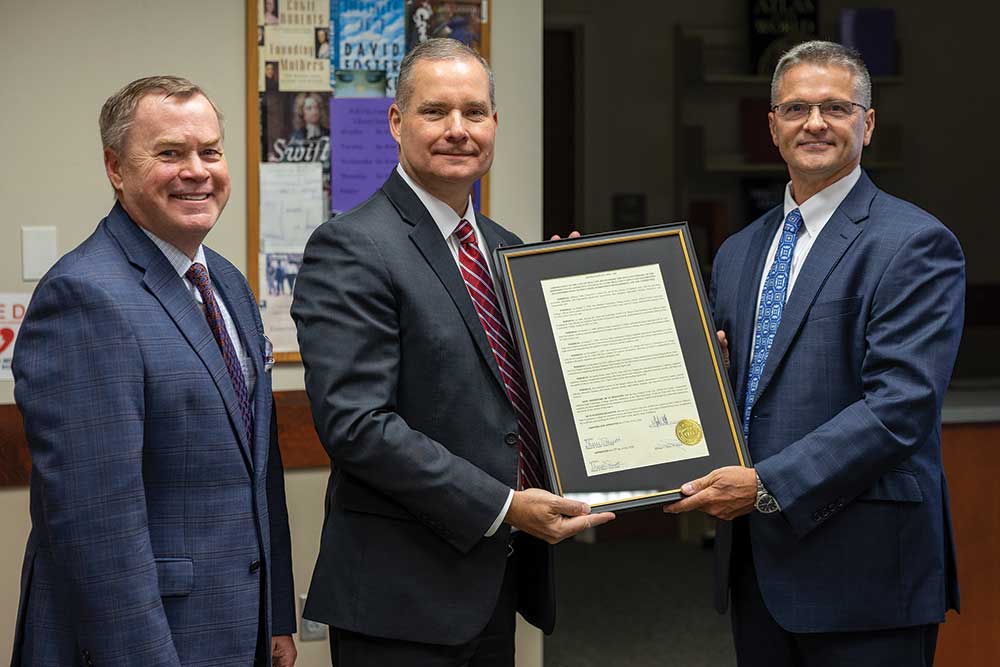
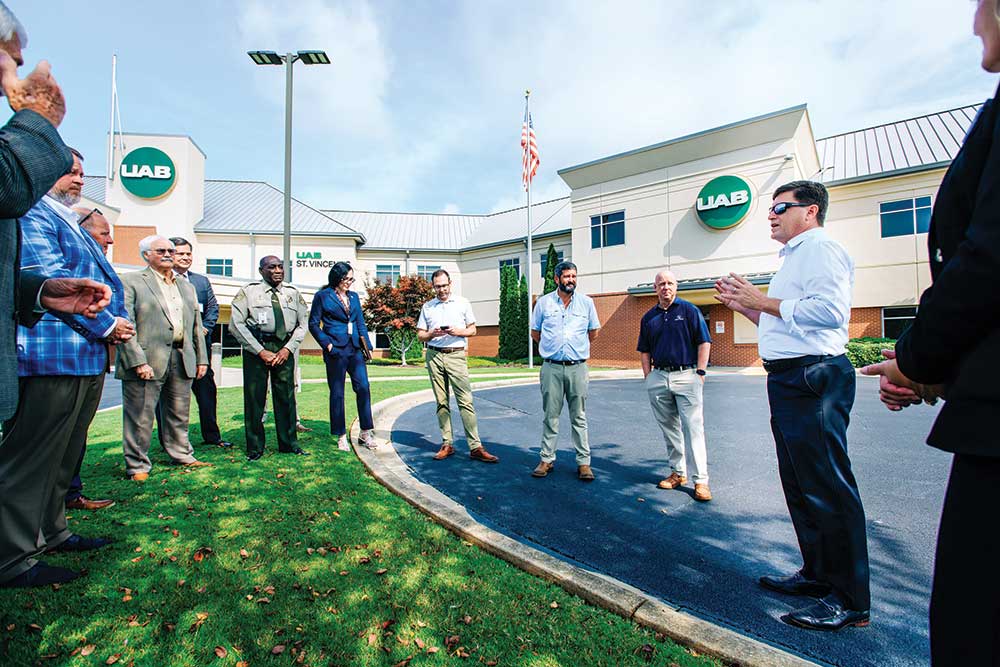
Mayor Bil Pruitt (right) presents Jefferson State President Keith Brown and Dean of Economic Development Guin Robinson with resolution commemorating anniversary

Joined by staunch advocates of greater access to higher education closer to home, former Pell City Mayor Guin Robinson, St. Clair Economic Development Executive Director Ed Gardner Sr., St. Clair Commission Chairman Stan Batemon, EDC Chairman Tommy Bowers and Realtor and community leader Dick Whatley, the vision took shape.

What would grow from those woods a stone’s throw from Interstate 20 is the thriving community college they envisioned. At the 20-year mark, the proof is in the numbers:

  • 10,000+ students served.
  • 2,076 non-credit students benefitting from learning opportunities.
  • 1,131 high school students earning college credits in dual enrollment.
  • 514 nursing graduates filling much needed roles in the healthcare sector throughout Alabama and beyond.

“From the beginning, this community embraced Jefferson State,”  said President Keith Brown at a community breakfast celebrating the 20th anniversary. “We thank you for welcoming us, and all you do for the college.”

“Community partners, Pell City leaders, the St. Clair Economic Development Council, and Judy Merritt and the college, all came together,” said Robinson, now Jefferson State Dean of Economic Development. “The vision was never about a building, but it was to create opportunities that did not exist close to home. Jefferson State has become integral to the community, and its success belongs to the entire community.”
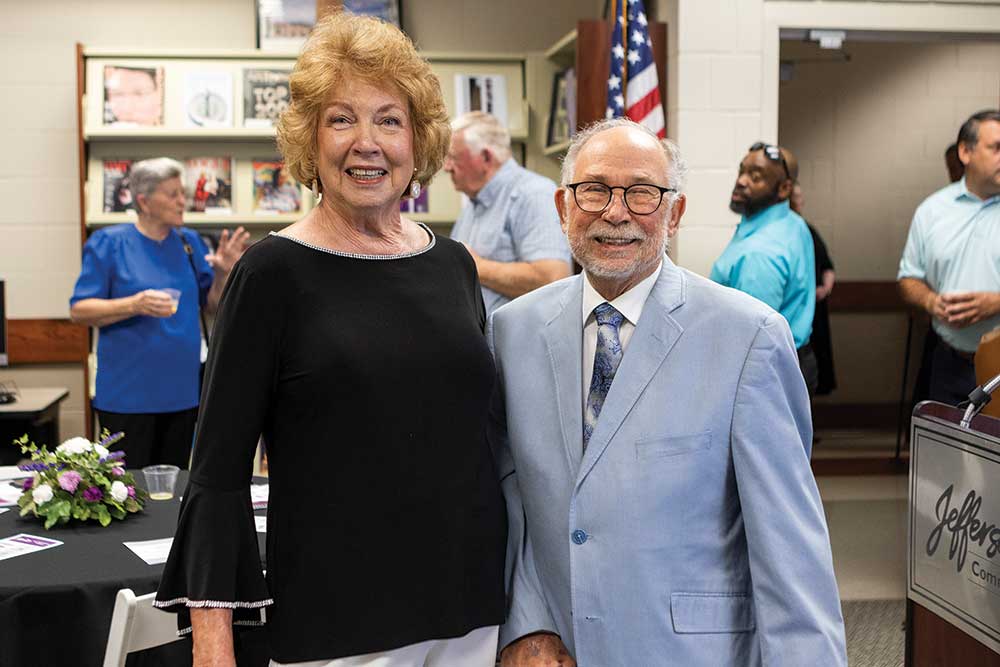
State School Board Vice Chair Marie Manning with former State Sen. Jim McClendon

Officials talked of the opportunities it has provided over the past two decades. They cited examples like the scores of first-generation college students and a 40-year old mother going back to school, a step she would not have taken had it not been close to home.

In a video marking the anniversary, Batemon, a Jefferson State alumnus himself, noted that the college’s local presence has “affected economic development in a very positive way.”

Former State Senator Jim McClendon, instrumental in securing state funding for expansions and improvements at the college, talked of its importance in the everyday lives of citizens. “It produces people working in our county and taking care of folks.”

Marie Manning, former superintendent of education for St. Clair County Schools and vice chairman of the Alabama State School Board, reasoned that the college has meant “more than can ever be expressed,” providing countless educational opportunities for St. Clair Countians.

Shiloh Swiney, chief nursing officer at UAB St. Vincent’s St. Clair, has seen firsthand the value in the hospital’s partnership with Jefferson State and its Nursing and Allied Health School at the Pell City campus.

“We have students doing their clinicals here nearly every semester, and their students are always top notch. They are good with the patients. They’re able to come here and gain real world experience.” In turn, the hospital’s hiring benefits from filling positions with skilled graduates.

“It’s a powerful opportunity for both,” Swiney said. “We are honored to play a role in their education and development. We are so glad to have them here.”
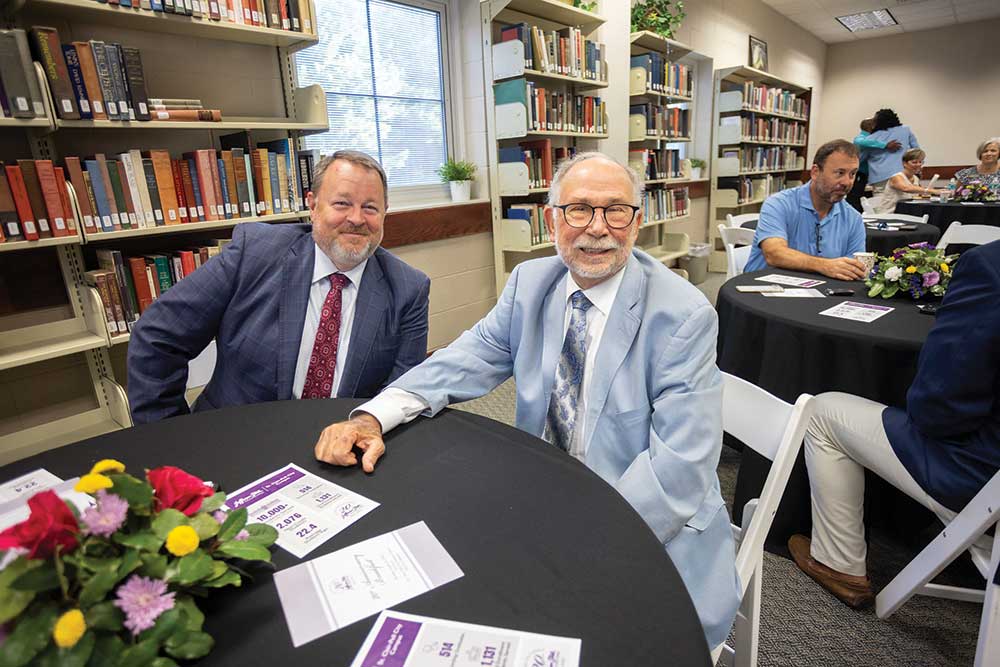
State Sen. Lance Bell with former Sen. Jim McClendon

In presenting a Pell City Council resolution recognizing the anniversary, Mayor Bill Pruitt called his tenure “an incredible opportunity to be a part of a lot of growth and development from the groundwork laid decades before,” adding “thanks to those that came before us.”

Robinson offered his thanks to the community “for everything you’ve done and continue to do. This grew from years of community conversations. Residents needed greater access to higher education and workforce development without leaving the area.”

That presence began in Moody, gained momentum and settled in a larger, bolder vision in Pell City. “It came together around workforce development and economic development,” Robinson said. They asked questions like, ‘What does it look like?’ and ‘How can we best serve for the long term?’

“Judy Merritt’s leadership cannot be overstated. If Judy Merritt got behind a project, it happened.” Her successor, Brown, was on the team overseeing the building of it. Now, he oversees its success story.

Robinson singled out other early movers and shakers that led to the opening – Industrial Development Board Chairman Bob Barnett and former Mayor Bill Hereford, who gave the first donation for the campus. “They recognized what a community college presence could mean.”

At 20 years and counting, it provides an opportunity not only to reflect but to look ahead, Robinson said. “Jefferson State allowed students to get a college education and training in their own community, and it has made a tremendous difference in the lives of students and their families. Our responsibility is to build on 20 years and continue. Our greatest days are ahead.”

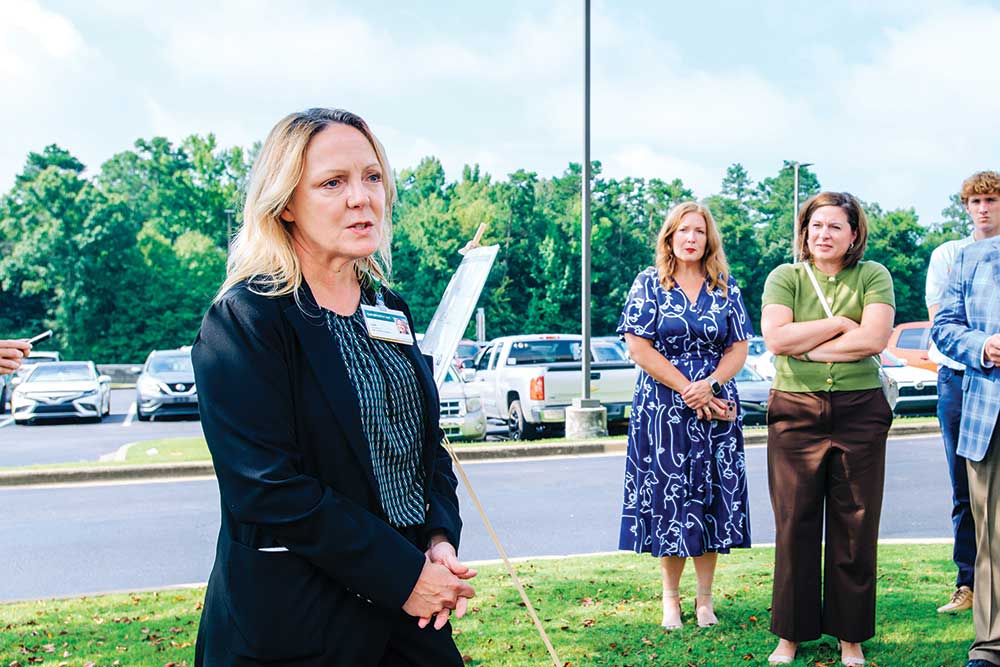
Investment program a boost for UAB St. Vincent’s St. Clair

Story by Carol Pappas
Photos courtesy of UAB

When St. Vincent’s St. Clair Hospital opened in a new facility overlooking Interstate 20 in 2011, the community welcomed it with a celebration worthy of a hero’s return.

It had outgrown the aging St. Clair Regional Hospital building it occupied since 1970, and it just couldn’t keep pace with one of the fastest growing counties in the state. But 15 years ago, that all changed with a new state-of-the-art hospital built to serve the county’s burgeoning population.

The population continues to soar, and needs have grown along with it.

Nichols talks of importance of investment by Goodgame, Metro Bank, county and city

That’s why when UAB Health System, Alabama’s largest employer with a worldwide reputation in medicine, bought Ascension St. Vincent’s Health System two years ago, officials in St. Clair welcomed the move with equal fervor. After all, it was a sizable step in keeping up with the momentum today’s fourth fastest growing county in the state.

It should come as no surprise that the local community has embraced the hospital, recognizing its integral role in quality healthcare here at home and is investing in its future.

Made possible through the Rural Hospital Investment Program, investments in new equipment have come from Metro Bank, $500,000; Goodgame Company, $250,000; and a 10% match from City of Pell City and St. Clair County. The program was created to help eligible rural hospitals across Alabama receive additional funding by providing a tax credit for qualifying donations made by Alabama taxpayers.

It helps eligible rural hospitals secure additional funding through tax-credit-qualified donations made by Alabama taxpayers and enables local investments in equipment, technology, and other critical healthcare needs that improve access to care for rural communities.

“We are incredibly grateful to our community partners for their vital support in helping us enhance the medical care we provide to our patients in St. Clair County and beyond,” Hospital Administrator Lisa Nichols said at a presentation recognizing the investment. “Their generosity allows us to invest in resources that strengthen access to care in the communities we serve.” 

This funding will be used to purchase medical equipment for both providers and patients to help enhance the level of care they provide. 

“We could not do what we do without the support of our community,” said Shiloh Swiney, chief nursing officer at UAB St. Vincent’s St. Clair. “Investments like this reflect our community’s commitment to ensuring local residents can access the care they need close to home.”

Smith describes impact this program has on hospital’s ability to make improvements in healthcare

“Quality health care is a critical part of a strong and growing community,” added State Sen. Lance Bell.  “This local engagement is exactly the outcome we had envisioned when this program was recently created by the State Legislature.  It allows state tax dollars to be redirected by local taxpayers to support local rural hospitals.  UAB St. Vincent’s St. Clair hospital is an incredible asset in our community.”

St. Clair County Economic Development Council Executive Director Don Smith agreed. “This investment in UAB St. Vincent’s St. Clair by Metro Bank and Goodgame Company strengthens an asset that serves our residents, supports our workforce, and makes St. Clair County a better place to live and do business,” he said. 

“We thank Senator Bell and the state legislators for creating a program where our local businesses, the City of Pell City and St. Clair County can work together to invest in the future of our community.” 

At a special presentation where community leaders and healthcare partners gathered to celebrate the investments, Hospital Administrator Lisa Nichols said the funds generated will enable the purchase of 38 new hospital beds with cutting edge safety features and an ABG machine to treat patients with respiratory issues.

County Commission Chairman Stan Batemon called the presentation “an exciting day for our hospital and the health care of our citizens.” He noted that when UAB purchased the St. Vincent’s Health System, the St. Clair hospital was “one of the most desirable in that purchase.”

He, too, lauded the state’s formulation of a plan that encourages local investment, which bodes well for the future. “I see only good things for healthcare in St. Clair County.”

“The hospital is a vital part of our community, and Metro Bank recognizes just how much it means to the residents of Pell City and St. Clair County,” said Metro President Jason Dorough. “Our Board felt that participating in the Rural Hospital Investment Tax Credit program was an excellent way to give back to the community that has been so supportive of us.

“Rather than spending heavily on advertising, Metro Bank has always preferred to invest in projects that benefit our community. We also believe that strong healthcare services are critical to attracting new businesses and creating employment opportunities in Pell City.”

Jason Goodgame, president of Goodgame Company, talked of his strong ties to the hospital.

“Our connection to UAB St. Vincent’s St. Clair goes back to the construction of the hospital itself, when Goodgame Company had the privilege of serving as construction manager for the St. Clair County Health Care Authority during the development of this facility,” Goodgame said.

“Because of that history, this investment is especially meaningful to us as a company and as a family. We have been proud to play a role in helping bring quality healthcare to St. Clair County, and we are honored to continue supporting the hospital’s mission through the Rural Hospital Investment Program.”

The partnership “demonstrates what can be accomplished when organizations work together to invest in the future of our community,” Goodgame said. “Together, we are helping ensure local residents continue to have access to quality healthcare close to home.”

Baking up a business

Story by Roxanne Edsall
Photos by Mackenzie Free

What began as an outlet for creativity and therapy has grown into a thriving cottage business for Pell City’s Sydney Warren. Each Saturday morning, customers can stop by the Little Bear Bakery porch stand for fresh sourdough breads, cookies, muffins, cinnamon rolls and other baked goods, or place orders in advance for pickup. Warren also brings her sourdough treats to occasional popup markets.

Warren named the micro bakery Little Bear Bakery in honor of her firstborn, Thomas, now 3, whom she often called her “little bear.”  She says he’s the inspiration for her leap of faith in starting her business.  Her pregnancy with him was defined by a rare medical condition called hyperemesis gravidarum or HG, which causes severe and debilitating nausea for the entire duration of the pregnancy. 

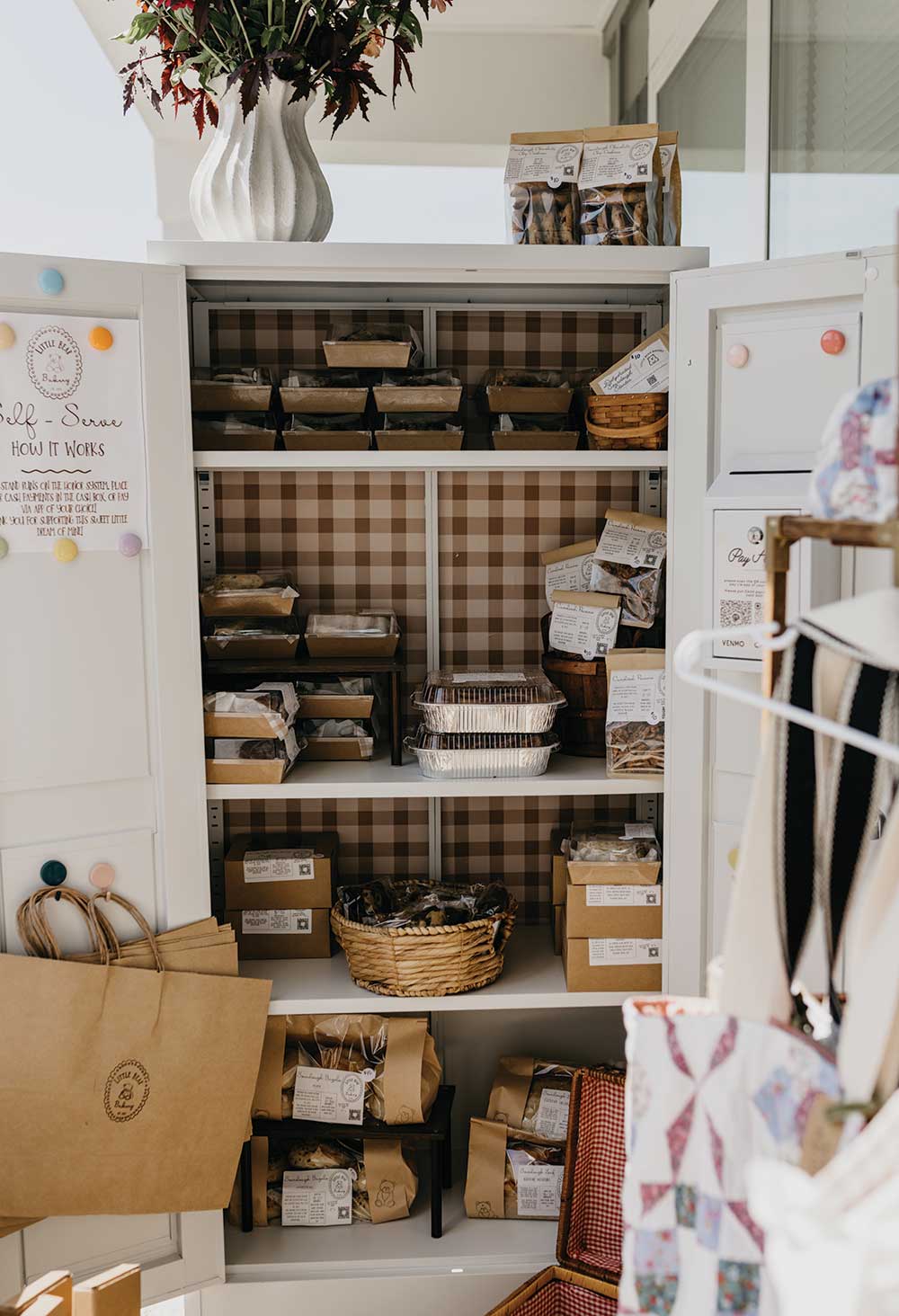
Well-stocked store

Her condition was so severe that, even as much as she loved her work, she had to leave her job.  Essentially bedridden, she required intravenous fluids multiple times a week.  “I couldn’t do anything (during the pregnancy) without being sick.

“I used to be super consumed with my job as a baker in Birmingham,” says Warren.  “I worked for a small bakery.  I started out doing their marketing, but with a small business, you kind of wear all the hats and help where needed.  That’s where I really dove into the baking part.  It was a cinnamon roll-based bakery that began as a micro bakery.” 

The plan had always been for her to go back to work after Thomas was born, but the health challenges she had just endured caused her to rethink that plan.  “When I got pulled out of my work situation so unexpectedly because of being so sick, it kind of made me reevaluate what I wanted in life,” Warren remembers.  “It was kind of God’s way of pulling me out of something when I probably wouldn’t have done it on my own.  I just didn’t want to miss any of the firsts with my baby – the first words, first steps, all the first moments.”

Sydney and her husband, Austin, decided they would try to make it work without her income.  To help her deal with postpartum anxiety and the loss of her career identity, she began baking again, this time at home. 

“My sister helped me figure out how to do sourdough starter,” said Warren.  “I could tend to the baby, and then whenever I put him down for a nap, I could go and do my stretching folds or feed my starter.  It really worked with the needs of his schedule.”

This new sourdough breadmaking began to grow until she had way too many loaves than her family could use.  Warren decided to try posting on social media to see if anyone would be interested in some bread.  “I was like, hey, I have extra loaves,” Warren recounts.  “The next day I took four orders.”  Those customers turned into repeat customers, and the business grew from there. 

From her experience helping to build the micro bakery she worked for in Birmingham, Warren knew how to get licensed. “I helped her to grow that business large enough to get a storefront,” explains Warren. “So, I had that knowledge about needing a cottage license and how you have to follow these specific rules and everything like that.”

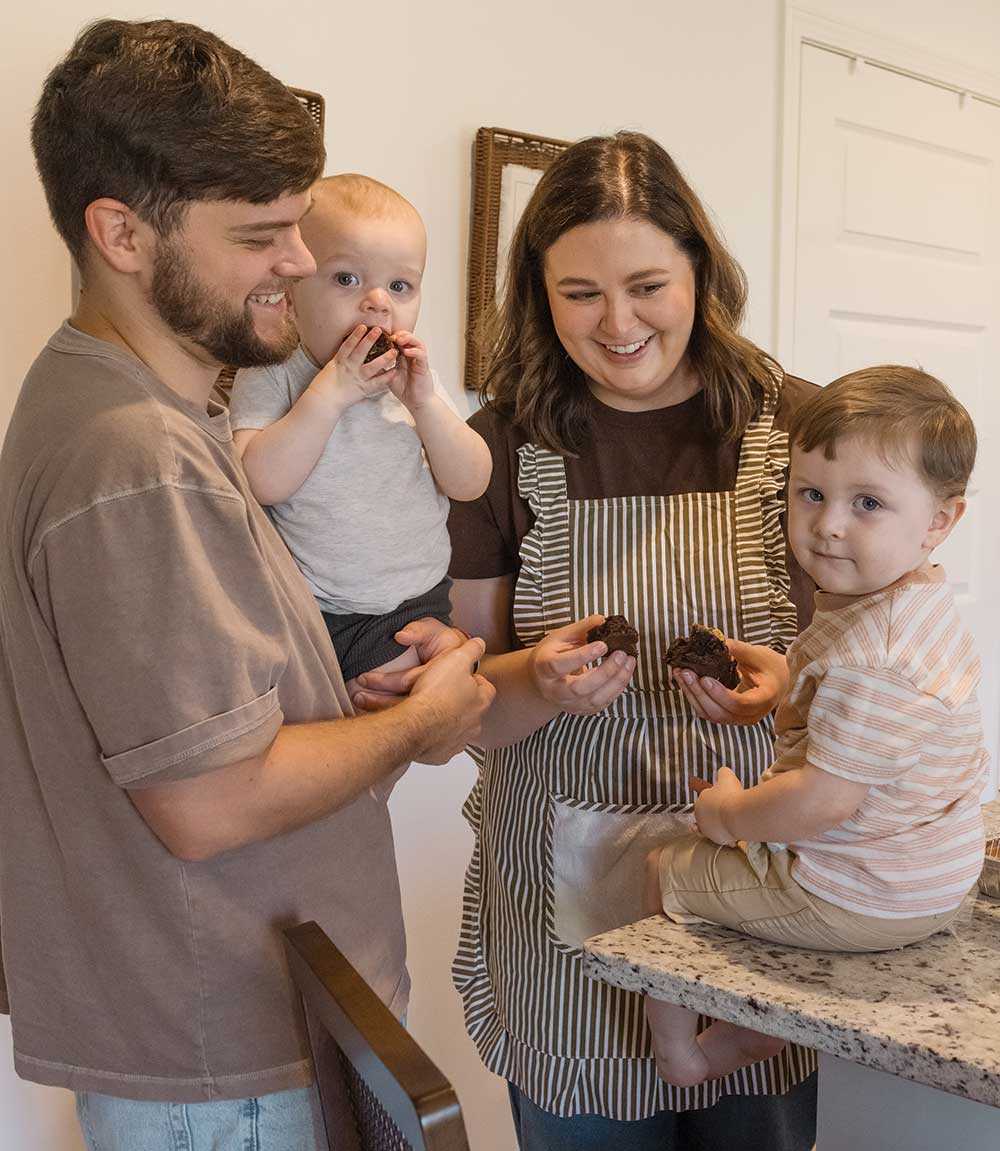
Family taste test

The new family of three were living in Moody at the time, but wanted to return to Pell City, where both she and Austin grew up.  By the time Jack, their second “little bear” arrived, they had moved back to be near family.  “I didn’t really have to start over, but Pell City was a new market for me,” Warren admits.  “It was a little overwhelming.  It got so wild with people wanting stuff every day.

“If you’ve ever worked with sourdough, you know it’s a process that takes time,” explains Warren.  “The process takes about three days by the time you feed the starter, allow it to rise, mix the dough, stretch it, fold it intermittently, allow it to rise again, shape it, ferment in the fridge, then finally score and bake it.”

To meet the growing demand for her baked goods, Warren started making extras over and above the pre-orders.  Those extras consistently sold out too.  “I started thinking about ways people wouldn’t have to contact me to see if I had something available.  I said maybe I could do a bakery stand that could be self-serve.  Then they could just come to the stand and buy what was available.”

Thus, the Little Bear Bakery stand was born.  Each Saturday morning beginning at 10, the self-serve bakery stand opens its doors on Warren’s porch in the Oak Village neighborhood not far off Interstate 20 in Pell City.  The shelves are overflowing with beautifully packaged baked goods to satisfy the sweet tooth or savory appetite.

Warren says 99 percent of what she makes uses her sourdough starter.  Her specialty sourdough loaves include cheddar jalapeno, butter croissant, garlic butter and herbs, and other flavors when she has time.  She dresses those up for the holidays, making them in the shapes of pumpkins, turkeys and bunnies. 

Sweets include the cinnamon rolls, muffins, scones, candied pecans, cookies and the extremely popular oatmeal cream pies.  “I really, really love the oatmeal cream pies,” Warren gushes.  “It’s two sourdough oatmeal cookies sandwiched with the yummy, fluffy, icing.  Store-bought doesn’t even hold a candle to these.”

Unique handmade craft items are also available at the stand.  Warren’s sister, Taylor Funderburg, sells her “Taylor Made” vintage and upcycled products like fabric bags, potholders, bowl cozies, oven mitts and even some vintage clothing at the stand.  Payment for both the baked goods and craft items can be made through an honor box or by digital payment platforms using a scan code.

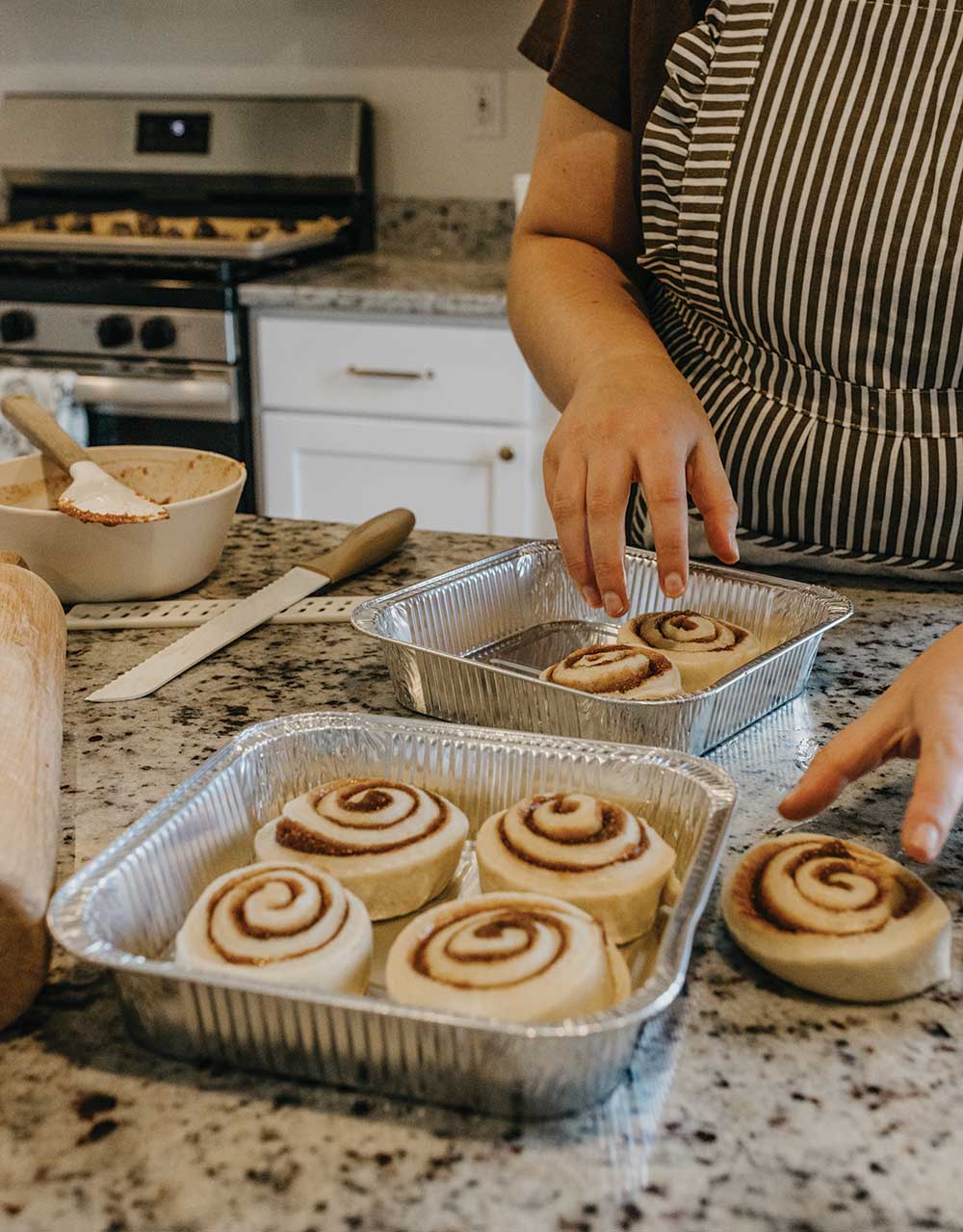
Cinnamon rolls ready to bake

Denise Pollard of Pell City is one of Little Bear Bakery’s repeat customers.  “This is the third or fourth week I’ve pre-ordered the sourdough bread,” she says.  “I’ve tried two other places, and hers is superior.  It’s a  little denser and cuts really nice.  The flavor of her sourdough is much stronger and it’s really good.”  She’s also a fan of the brookie and the oatmeal cream pies.

As her family schedule allows, Warren brings her products to Seed and Sun Bloom’s market days on May’s Bend Road and to other popup markets. 

Her husband, who works as an intensive care nurse at Children’s Hospital, is her biggest cheerleader.  When he’s not working, he steps up to support her by helping set up the markets, loading her car or helping with the boys.  Her “little bears” are always ready to help out as taste testers.

Warren emphasizes that she is a mom first and a business owner second.  She admits that sometimes it feels like it’s a fulltime job, with 12 hours of work on bake day alone.  “I work 30 to 40 hours a week, but I work around nap times,” she explains.  “Each day I have a set of things I can do to prep, which makes bake day easier.”

There are three critical components to Warren’s sourdough success.  Accurate timing at various stages of the process is paramount, a fact that she learned the hard way.  She says it is also important to add ingredients by weight, rather than by volume.  That, she says, guarantees a more accurate and consistent product.  The last essential element in the process is steam.  As soon as she puts her loaves in the oven to bake, she adds a cast iron skillet below them and adds water several times during the baking time.

There have been failures, Warren admits.  But often failures bring adjustments and improvements.  Sometimes they even bring new products, like one of her very first porch sales when she made 18 sourdough loaves and didn’t proof them long enough.  “They tasted good but didn’t rise well,” recounts the baker.  “They didn’t look good, so I cut them up and turned them into sourdough croutons.”  The incident made her add to her offerings because while she didn’t have time to make more sourdough loaves for the sale, she had time to make cookies and muffins, which were a huge hit.

As a licensed cottage bakery, Warren follows an extensive set of rules and regulations established by the State of Alabama, which includes what types of foods she can sell.  That list excludes anything that requires refrigeration.  The Cottage Food Law also requires each item to be labeled with the business name, address, name of the food, allergens, and a list of ingredients.  Warren uses a thermal printer to make the labels that she specifically designs for each of her products.

One of the benefits of being a cottage business is a better work/life balance.  “The whole point is to be here for my family and to connect with community,” said Warren.  “It’s been my prayer that it will grow authentically.  I may think I know what I want, but the Lord’s plans are so much greater and more fulfilling than anything I think I need.”

Editor’s Note: For more information check, the bakery out on Facebook or Instagram.  Connect with Little Bear Bakery online at littlebearbakery.square.site and place your order to ensure you get exactly what you want or just visit them at the stand Saturday mornings.  The Little Bear Bakery stand will be dressed for fall and offering new items like pumpkin bread and apple cinnamon muffins in addition to the usual sourdough goods. 

Pell City boom continues

Story by Paul South
Photos by staff and contributed

From structures where souls are nourished, to buildings helping first responders and physicians help and heal the body, Pell City is in the midst of a construction boom.

New police and fire stations, a new medical clinic and a new Sunday school building at the 123-year-old First Baptist Church of Pell City are only part of the story. The Goodgame Company construction trailers have popped up all over town.

Jason Goodgame, president of Goodgame Company, said the company, as well as the city, “has a lot going on.”

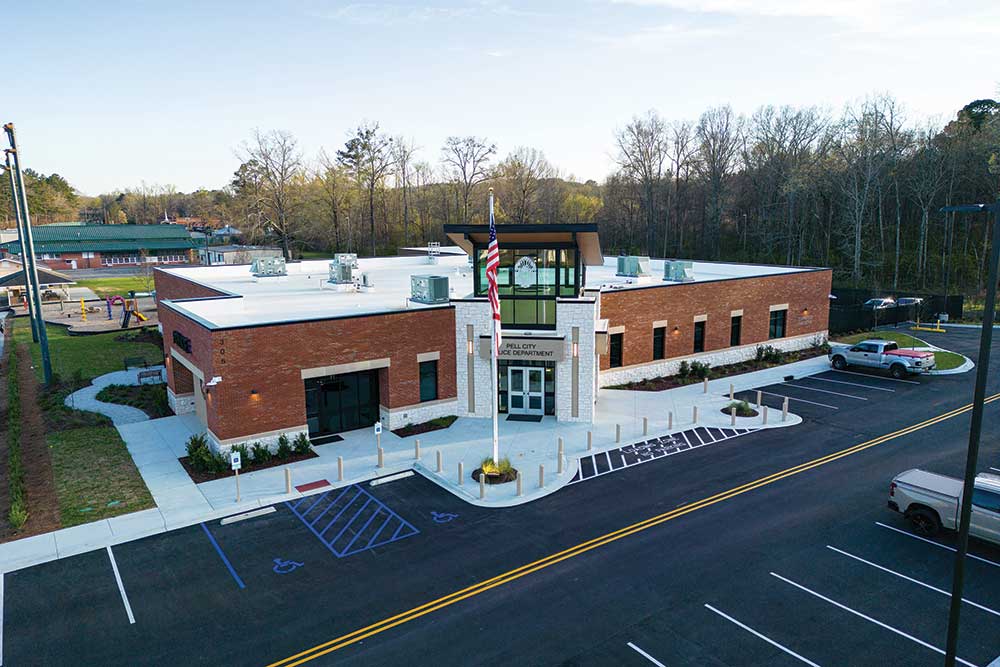
For example, Goodgame built a new state-of-the-art facility for the Pell City Police Department and as of mid-June, a new Pell City Fire Department Station was near completion.

Pell City’s new Police Department

“On top of that, we completed the addition to Pell City First Baptist Church. We’re in the process of adding on to Royal Foods following the fire damage, and we have a fire-protection project underway at Benjamin Moore,” Goodgame said. “We finished large expansions at Ford Meter Box, Allied Minerals, Douglas Rulmeca and Town and Country Ford in 2025. Those projects closed out a cycle where Goodgame Company, Inc. had the best three years in the company’s history.”

Ford Meter Box, headquartered in Wabash, Indiana, manufactures waterworks products and has done so since 1898. Allied Minerals purchased Riverside Refractories in 2017 and later expanded into a 300,000-square-foot footprint on Truss Ferry Road. Douglas Manufacturing joined forces with Rulmeca to provide conveyor components across North America.

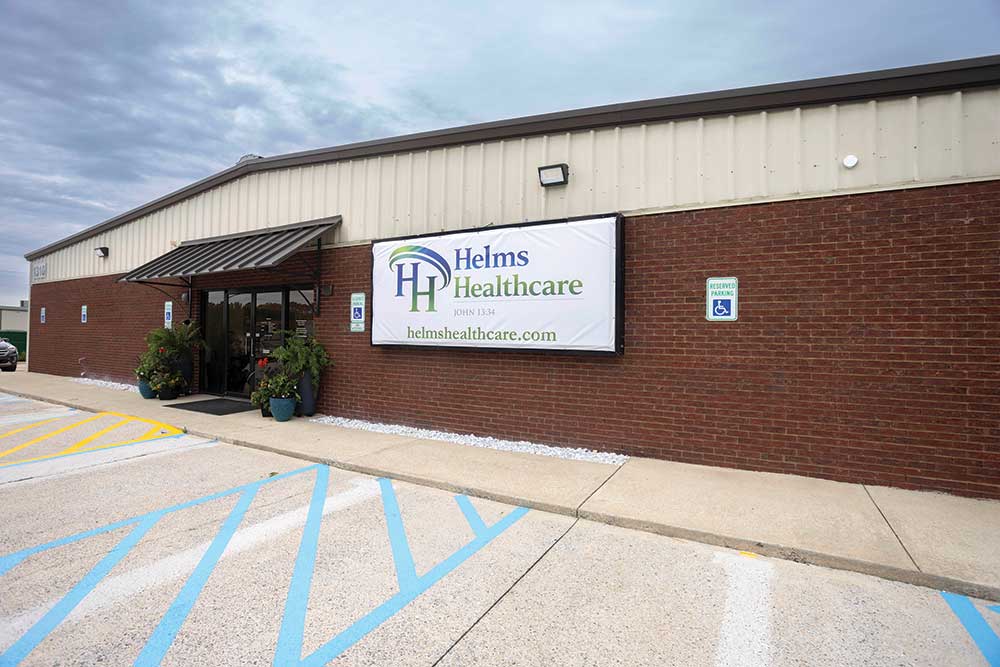
Goodgame Company also built the new Pell City location of Helms Healthcare, bringing Dr. Ronald “Rock” Helms back to his hometown.

Goodgame put the mushrooming construction activity in perspective. “Just remember, construction is always in arrears, so when we sell a job and build out the job, it can be 12 months between our first meeting with a customer and when we break ground. Then, those projects are usually between eight and 12 months,” he said. “So you have to keep a healthy backlog, because you are always trying to churn the next job.”

While Goodgame Company’s backlog is not as strong as in years past, Goodgame said there is still a boom happening in Pell City.

“Absolutely,” Goodgame said. “There are other developments going on that we’re not involved in, and that shows the activity is broader than just our projects.”

Those new businesses include a development with Ulta and Hobby Lobby, as well as restaurants including Olive Garden, Outback Steakhouse and others. There is also a new dental practice and other space for retail opportunities to expand.

“There is a boom,” Goodgame said. “There’s no question. Pell City is growing, and people are seeing an opportunity to come here and do business, especially in retail, which has always been a difficult area for Pell City. Harbor Freight moving into an existing retail space is a good example. That kind of activity adds sales and ad valorem tax revenue, and the city’s leadership in promoting controlled, positive growth has helped get us to where we are.”

At First Baptist, growth decades in the making

There was a time, with two Sunday services and two Sunday schools, Dr. John Thweatt said, when his congregation felt like two churches.

The COVID-19 pandemic changed all that.

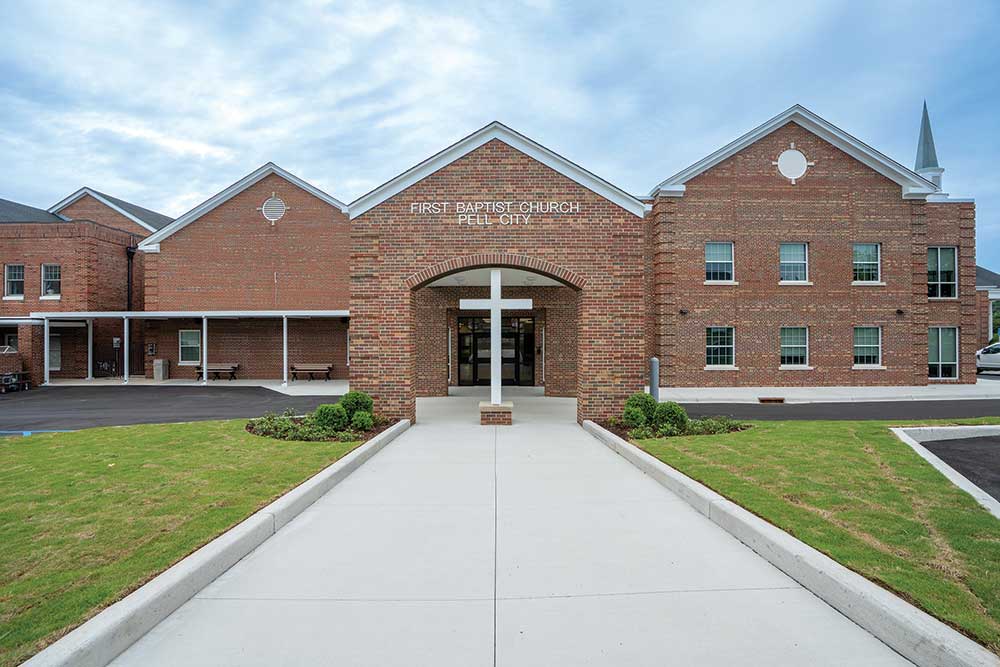
New addition to First Baptist Church of Pell City

“It brought us back together and let us go back to one Sunday school between the two services. It didn’t feel like two churches anymore. It was one church. People could go to one Sunday school and choose which service they wanted to go to – the early traditional or later contemporary service,” he said.

He added, “It was so positive, I and the leadership decided that we needed to do whatever we could to keep it to one Sunday school.”

The answer? A new addition.

“At one time we looked at relocation, but it was out of our price range. It just didn’t work.”

The church opted to stay on the corner it called home. And it began to explore things it needed – an elevator in the sanctuary building, new restrooms and classroom spaces. The church settled on a connecting building between the sanctuary and the rest of campus. A welcome center with a covered entrance was also created.

“We put a cross out in front of the new building,” Thweatt said. “We just tell everybody to meet us at the cross.”

He added, “Now we can put smaller classes upstairs, older classes upstairs because of the elevator. It opened up a lot of different variety for us.”

The new building is just under 10,000 square feet. The total investment was just over $4 million.

But beyond square feet and dollars and cents, the church asked key questions. “Who are we not reaching? How are we not helping people? We’ve got people who can’t get around. We still have limitations in our sanctuary, but these are things we’re still trying to address so that we can minister to everybody in our community.”

The church is growing, getting back to pre-COVID numbers thanks to the one Sunday school, Thweatt said. Both worship services are full. New people are being reached and others baptized. That’s different from many Southern Baptist churches that have either plateaued or are declining in membership.

“It’s made us multigenerational again,” Thweatt said.

Thweatt has pastored First Baptist for a quarter century. What does the new addition mean to the life of the church?

“You’d have to see it, but when I walk out of my office, it goes right into the new welcome center and down the long hallway on the first floor,” Thweatt said. “I’m still in shock. It’s brought us back to something people are proud of. People say they love it.

“You see people talking and fellowshipping,” he added. “It’s brought us back together and prepared us so we can keep growing.”

Facilities to be proud of

Pell City Manager Tim Kurzejeski was preparing for an open house at the new 16,000-square-foot police department completed earlier this year. It includes command and emergency operations centers, evidence storage, a workout facility and other space to create what Kurzejeski called, “an all-encompassing police department” for the city.

“A state-of-the-art stand-alone police department,” he said. “It’s a workable space where different parts of the police department have their own working, usable area. As the police department grew, it was pretty tight quarters, and it was tough for those guys to do their job.”

The new department also includes cutting-edge technology.

“It’s going to make their job a lot easier,” Kurzejeski said. “They are able to process (crime) scenes and solve crimes more efficiently. That’s better for the public.”

A new fire station is under construction to replace the facility at the Civic Center. As with the police station, the fire department had outgrown the Civic Center space.

Kurzejeski served as the city’s fire chief before being named city manager.

“We are completing the project,” he said. “It’s about a two-to-three-year project from the concept to completion. (The Civic Center station) was the oldest fire station in the city, built in the early 1980s. Kind of like with the police department, with the growth of the city, the fire department had outgrown that space, with apparatus and assigned personnel.

“I feel like with the (police department) and the new fire station, these two projects are buildings that not only the departments can be proud of, but that the city as a whole can be proud of,” he said.

The new emergency services buildings are built for the long haul.

“What people need to understand is that with these two projects (police and fire stations), they were built and designed for long-term use,” Kurzejeski said. “You’re talking about a fire station they had been in nearly 50 years. We truly took our team and brainstormed and made sure these new buildings were going to be functional and efficient for a long time. Sixty years from now, this (new fire station) will still be the fire station. So, you’ve got to do it right.”

For Pell City’s firefighters, the new station is more than a workplace.

“They are there for 24 hours at a time,” Kurzejeski said. “It’s their home.”

A focus on quality of life

What does all this building mean for Pell City?

Exterior of new Helms Healthcare location in Pell City

“These particular projects we see going on around our city, it just shows the growth that our city is seeing,” Kurzejeski said. “It also shows the main reasons people are coming to Pell City. There’s a focus on the quality of life.”

He added, “The First Baptist Church addition and the different projects that we’ve seen around I-20 with restaurants coming in – Pell City is one of the growing cities, and St. Clair County is one of the top five growing counties in the state. It’s because we offer a good quality of life. People see that there’s a cost benefit to investing in the city.”

Kurzejeski arrived in Pell City 30 years ago.

“I know how it’s changed since I got here in 1996,” he said. “It’s a great place to work, a great place to call home. We are really working – everyone at times doesn’t see it – but we’re going to manage our growth to be the most beneficial for the people who live here.”

Medical Special: Helms Comes Full Circle

When Dr. Rock Helms returned home to Pell City in 1999 after his residency, he was joining the physician who had cared for him as a child. That physician was Dr. Bill McClanahan, whose decades of faithful service helped shape healthcare in Pell City.

“Dr. McClanahan taught me that medicine is ultimately about people,” Helms said. “He loved this community, loved his patients, and modeled what it means to care with compassion.”

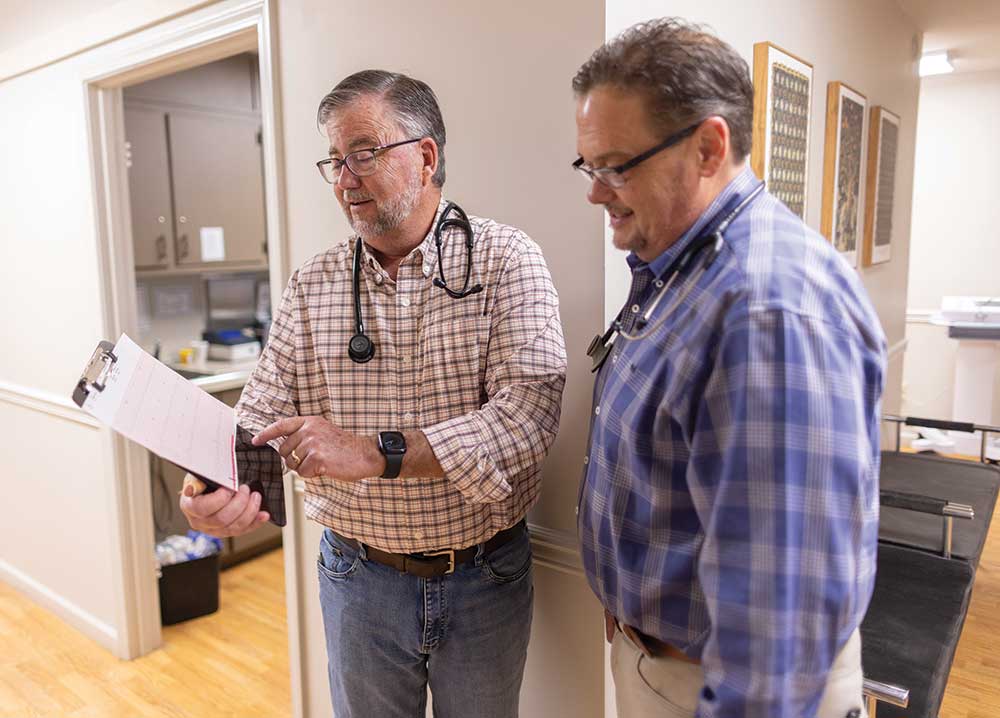
Helms confers with fellow provider, Jonathan Windham, CRNP

In 2001, Helms, McClanahan, Dr. Carl Frosina and others founded Northside Medical Associates. What began as a small, independent practice grew over the next two decades into one of the region’s largest physician-led groups, eventually serving the community with around 20 providers and more than 200 employees before being sold in 2020.

Following the sale, contractual obligations required Helms to establish his next practice in nearby Vincent. Helms Healthcare quickly became a thriving clinic there, and after one year, he was able to return to the community he had always hoped to serve.

“My goal was always to come back,” Helms said. “Pell City is home. Vincent has become a wonderful practice that continues to grow, but returning here, feels like coming full circle.”

Today, Helms Healthcare operates from a new 8,000-square-foot facility designed around one simple philosophy: healthcare should be personal, accessible, compassionate, and centered on the patient. The practice offers comprehensive primary care, seven-day urgent care, digital X-ray, a hospital-grade laboratory, advanced vascular ultrasound, and plans to add one of the region’s most advanced CT scanners, capable of high-quality cardiac CT imaging.

When patients call, they speak with a real person, not an automated system, and every member of the team is trained to create an environment where patients feel welcomed, respected, and heard.

“Technology matters,” Helms said. “But people never stop needing kindness. We want every interaction, from the first phone call to the front desk to the exam room, to communicate that every patient matters.”

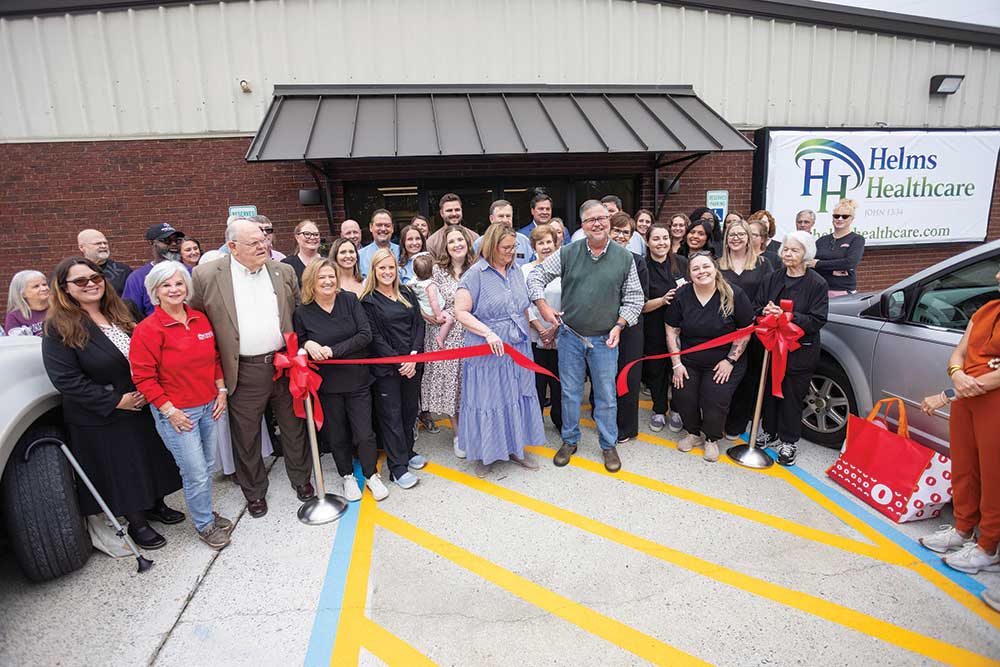
Dr. Rock and Jennifer Helms cut the ribbon on new Pell City clinic

He also believes the future of primary care is physician-led team care, built around relationships, accessibility, and patient choice. He works closely with exceptional nurse practitioners and physician assistants, building strong relationships and continually discussing cases throughout the day.

“Even when I’m not physically in the exam room, I’m often involved behind the scenes, reviewing complex cases, discussing treatment plans, and helping guide patient care.” Each patient develops an ongoing relationship with a primary provider who knows them well, while Helms serves as the physician leader of the team.

Patients who would like Dr. Helms personally involved in a visit are always welcome to request that, whether as a new patient, during an annual visit, or anytime they want another set of eyes on their care. “The choice belongs to the patient,” Helms said.

He credits UAB St. Vincent’s St. Clair, along with generations of nurses, specialists, and primary care physicians for helping create a community where patients increasingly receive excellent care close to home.

He names longtime colleagues with genuine gratitude. “One of the things I’m most grateful for is the physicians who have invested their lives in serving this community,” he said. “I’m thankful for mentors like Dr. Bill McClanahan, Dr. Carl Frosina, for my longtime partner Dr. Michael Dupre, and for colleagues, such as Dr. Rick Jotani, Dr. Barry Collins, Dr. Ilinca Prisacaru, Dr. Hunter Russell, Dr. Steve Fortson, Dr. Laura Johnson, and many others. We’ve taken different paths, but we’ve always shared the same purpose, caring for the people of Pell City.”

Over the years, Helms says another part of his life has grown just as much as his practice – his faith. “My relationship with Christ has changed the way I see medicine,” he said. “Today, my deepest desire is to honor God by serving the people He places in front of me each day.”

He emphasizes that those conversations are always patient-led. “I never want anyone to feel uncomfortable or pressured,” he said. “But when a patient asks me to pray with them or wants to talk about faith, it’s one of the greatest privileges of being their physician.”

Looking ahead, he hopes to see continued growth and collaboration across the entire medical community. “If people remember anything about my career,” he said, “I hope it isn’t a building or a piece of equipment. I hope they remember that I loved this community, respected my colleagues, cared for people with compassion, and tried to honor God in the way I served.”

Medical Special: Major Healthcare Providers

Time was in St. Clair County when patients seeking medical care had to travel great distances to get the care they needed. That time has passed.


St. Clair is now a regional medical hub offering primary, specialty and urgent care. Throughout the St. Clair County region, comprehensive medical services are often found just a few minutes away.


Here’s a glance at what the region’s major medical providers offer:

St. Vincents St. Clair

7063 Veterans Parkway

Pell City

  • Advanced wound care center
  • Emergency care
  • Gynecology
  • Lab
  • Nuclear medicine
  • Neurological services
  • Orthopaedics
  • Pain management
  • Physical therapy
  • Radiology (MRI, CT, mammography, bone density, and ultrasound scans)
  • Respiratory care
  • Sleep disorders center
  • Speech therapy
  • Sports medicine

St. Vincents East

50 Medical Park Dr. E.

Birmingham (Trussville)

  • Behavioral health
  • Cancer care
  • Cardiovascular services
  • Diabetes care
  • Digestive disorder care
  • Endoscopy procedures
  • Emergency services
  • Orthopaedics
  • Primary care
  • Pulmonology
  • Same-day surgery
  • Sleep disorder care
  • Surgical weight loss
  • Thoracic surgery

UAB Medicine Leeds

1141 Payton Way

Leeds

  • Primary Care- for adults and children
  • Dermatology
  • Endocrinology
  • GI Surgery
  • Nephrology
  • Neurology
  • OB/GYN
  • Orthopaedics
  • Lab and Imaging

UAB Leeds Outpatient Imaging & Laboratory

  • 3D mammography, MRI, and bone density scanning
  • Ultrasound
  • Low radiation dose CT scanner
  • Digital X-ray units
  • Radiologist review of all exams, with same-day reporting

UAB Family Medicine East

48 Medical Park Dr. E., Ste 154

Birmingham (Trussville)

  • Annual health evaluations
  • Physical exams
  • Preventive care, including health screenings and physical exams, for patients of all ages
  • Routine care for women, including Pap smears and pelvic and breast exams
  • Well-child care
  • Obstetrics & gynecologic care
  • Management of chronic conditions such as hypertension, diabetes, asthma
  • Flu shots and routine immunizations
  • Treatment of minor injuries
  • Drainage of simple abscesses (pus-filled areas)
  • Treatment of minor wounds and cuts

1310 WA Goodgame Parkway

Pell City

131 Florey Street

Vincent

  • Primary Care
  • Urgent Care
  • Extended Hours
  • Preventive Care
  • Lab Walk-Ins
  • X-ray
  • Advanced Imaging
  • Infusion Therapies
  • Comprehensive lab services
  • Telehealth

74 Plaza Drive

Pell City

2834 Moody Parkway

Moody

7201 Happy Hollow Road

Trussville

Services may not be available at all locations

  • Primary Care
  • Medicare Navigation
  • Urgent Care
  • Walk-In Clinics
  • Chronic Care Management
  • Transitional Care
  • Palliative Care
  • Same-Day Sick Visits
  • Telehealth

41 Eminence Way, Suite A

Pell City

  • Primary Care
  • Specialist Care
  • Family Wellness Care
  • Women’s Health
  • Sports Medicine
  • Outpatient Care
  • Onsite Diagnostics
  • Onsite Physical Therapy
  • Extended hours, including Sunday clinic