In the St. Clair County region’s medical community, pediatric services play a prominent role. From birth to adolescence to young adulthood, the region is home to four clinics specializing in the care of younger patients. They are:
Ensuring healthcare is affordable and accessible, St. Clair County residents can benefit from services at the St. Clair County Community Health Clinic and the St. Clair County Health Department.
St. Clair Community Health Clinic
Established in 2018, the St. Clair Community Health Clinic (SCCHC) is a 501(c)(3) nonprofit organization providing charitable primary healthcare to low-income, uninsured St. Clair County residents between ages 19 and 64.
Its work is made possible through grants, donations, and “most importantly – the time and talent of community volunteers,” according to its website.
Those who qualify are able to receive care for a co-pay not exceeding $20, which enables the clinic to provide affordable access to essential health services.
The clinic is located at 205 Edwin Holladay Place in Pell City.
St. Clair County Health Department
In the Northeastern Division of Alabama Department of Public Health, St. Clair County Health Department offers to the public:
WIC (Women, Infants and Children) services
Environmental
Home care
Clinical services to the public.
Clinical services include STD (sexually transmitted disease) testing and treatment, family planning, childhood and other vaccines, and breast and cervical cancer screening.
The health department is located at 1175 23rd N. in Pell City.
WIC Satellite Clinic
In addition to the main clinic location in Pell City, 1175 23rd St N,, a satellite clinic is open on Thursdays for WIC services. Call 205-594-4919 to make an appointment.
The satellite clinic is located at 31675 U.S. Highway 411 in Ashville.
Local beekeepers are helping boost St. Clair County’s reputation while protecting pollinators, building healthy hives and turning hard work into a sweeter agricultural story
Story by Paul South Photos by Ben Orvis Submitted photos
The sweetest agriculture story in St. Clair County is flying under the radar – literally.
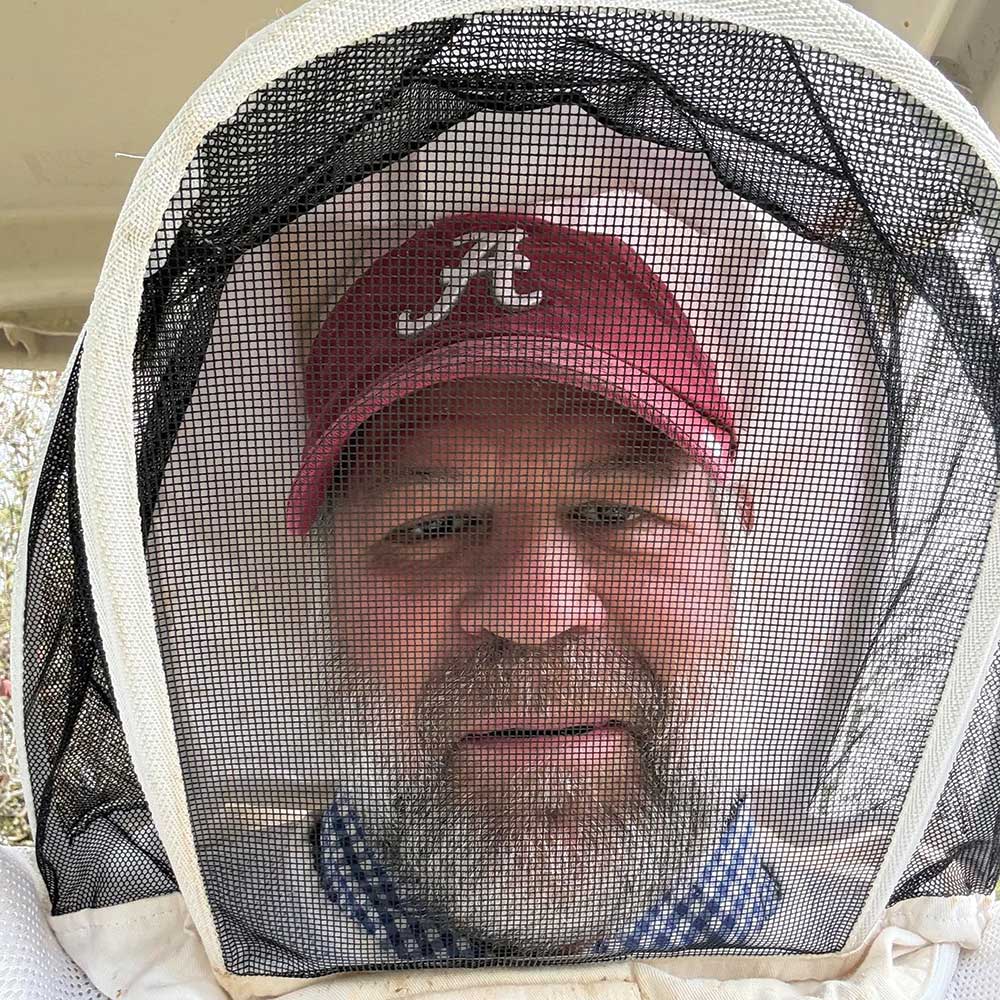
Just ask Bill McTyeire, Daniel Kirby and Nikkie Posey. The trio are part of a buzzing business – beekeeping and honey production.
“I’m passionate about bees,” McTyeire said.
Bill McTyeire
That’s the story, it seems, for McTyeire, Kirby, Posey and beekeepers and researchers across the country. The bee population is critical to food production. So, by extension, the small insects are vital to humanity’s survival.
And the sweet amber liquid they produce is a popular product, found on and in everything from hot breakfast biscuits to bourbon.
Honey bees themselves are under siege, thanks to the Varroa mite, herbicides and pesticides, climate change and human development.
Nosh Crockette, the Honey Bee Outreach and Development Coordinator at Auburn University, spelled out the impact if bee populations and pollinating plants disappear.
“If pollinators disappeared, we’d be at risk of losing many of the crops we rely on, and our produce options could become extremely limited,” Crockette said.
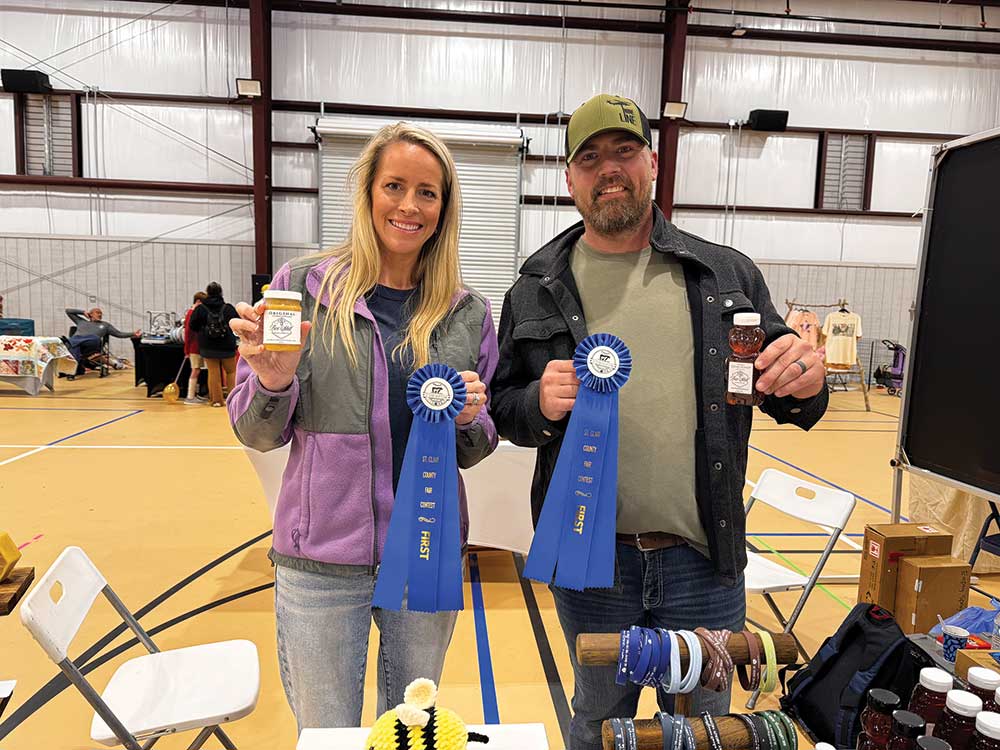
Deanna and Daniel Kirby with their prize-winning honey
There are more than 400 species of native bees in Alabama and some 2,000 beekeepers registered in the state, Crockette said. Auburn researchers collaborate with beekeepers to help minimize the impact of the mites on honey bees.
The honey bee doesn’t only produce the thick, sweet amber liquid used in American kitchens. Nor is it just about beeswax, candles, lotions and balms.
“Honey bees help pollinate many fruit, nut and vegetable crops, with some crops such as almonds being reliant on the bee population to produce fruit,” Crockette said.
McTyeire, Kirby and Posey are on the front lines of the quiet battle to save bee populations.
Bees as a Passion
Bill McTyeire spent more than 34 years as a landscape contractor. Now, bees are his focus. He travels throughout the region capturing swarms of the insects when local landowners call.
“Bees are my passion now,” he said. “I love dealing with bees.”
That’s seemingly the story of the growing beekeeping industry.
McTyeire has been keeping bees since 2020. His bee and honey production has been up and down. Early on, he bought packages of bees. Then he switched to purchasing “nucs,” a nucleus of bees. Nucs are five or six frames of bees – a queen, honey, pollen, drones and babies, everything needed for a successful start. In central Alabama, beekeepers have only about a two-month window in summer for developing hives.
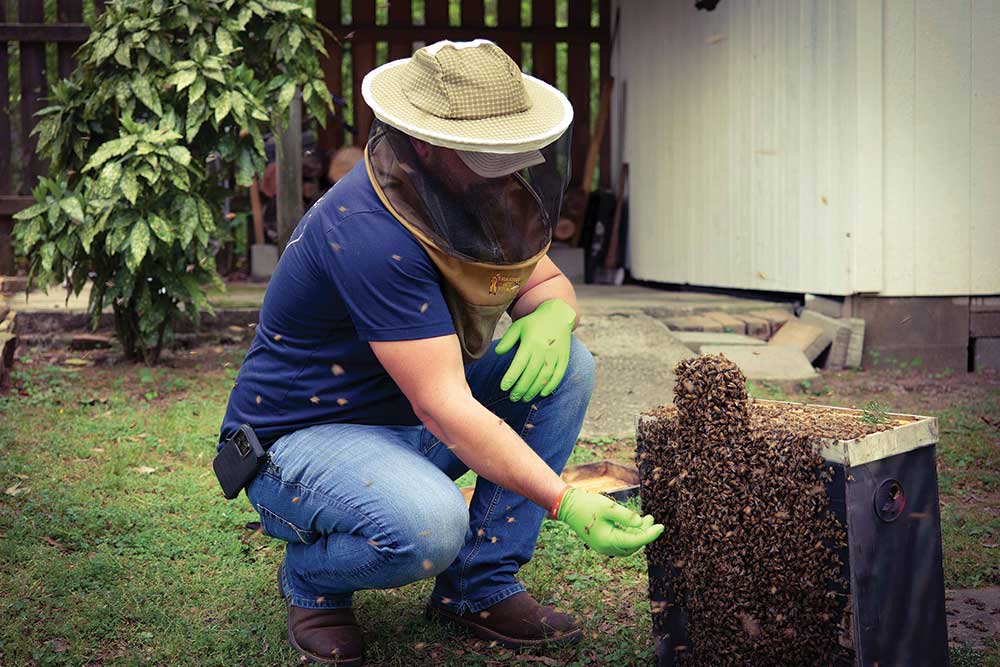
But McTyeire is “really into” capturing wild swarms of bees that attach their colonies to tree limbs and the like.
“If you’re a deer hunter, you like to go out and get the biggest buck. If you’re a beekeeper, for me, catching a wild swarm of bees. Or someone calls me and says, ‘Hey, I’ve got a wild swarm of bees in a tree in my yard. Are you interested?’ If I can get ‘em to the ground, I’m interested. I’ll put on my bee suit, and I’ll go. I’ll take ‘em home and put them in the bee yard.”
Right now, the hobbyist has 35 hives, up from 11 last winter. In peak season, from May through July, there are an estimated 100,000 bees per brood box.
“My ultimate target is probably going to be 50 (hives). I’ve grown so fast,” he said.
Though small, bees are some of the most intelligent members of the animal kingdom, flying up to five miles looking for pollinators. Most return to the hive. It’s baked into their DNA.
“They’ll visit like 5,500 flowers and produce like a 12th of a teaspoon of honey in their lifetime,” he said. “That’s each individual bee.”
The Allure
What drew McTyeire to beekeeping?
“I do it for the love of the bees,” he said. “I’ve never been a patient person at all. I’m very impatient. When I get into a hive working with bees, you have to be patient. You can’t get in a hurry. You have to be very methodical when going through a hive box.”
Hive management is critical, especially when battling the honey bee’s public enemy number one.
Kirby during swarm removal process
“If you do good, proper hive management and then you treat your bees for Varroa mites – I don’t treat them for anything else. The mites are the number one killer,” he said.
According to a survey led by Auburn in collaboration with Oregon State University and the Apiary Inspectors of America, beekeepers lost 39.9 percent of their colonies in 2025-26. Keepers saw record losses in 2023-24 (55.1 percent) and 2024-25 (55.6 percent).
Failure to maintain a healthy bee population can devastate the food chain.
In terms of honey production, 2025 was a good year for McTyeire’s company, McLuckie’s Honey, that he and his “sidekick,” Laura Niemann, sell.
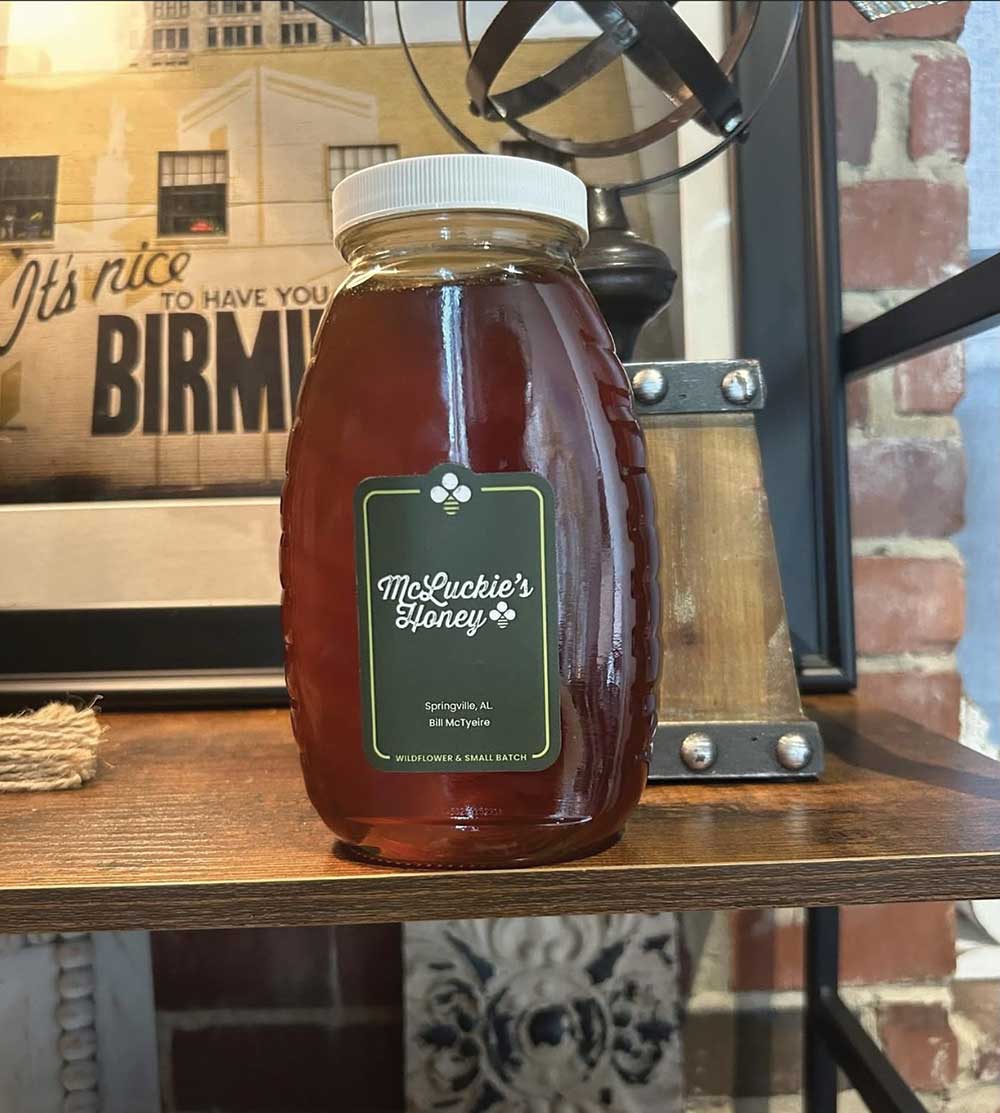
He sold 60 two-pound jars and 120 one-pound jars of his wildflower small batch honey last year. He’s also seen his smooth, not-too-sweet honey, with a pleasing floral aftertaste become a barter currency.
Neighbors will trade their offerings for a jar of his honey.
“It’s like money,” he said. “Every year is kind of a yo-yo. I do small-batch honey. I don’t want to be a bigwig. I want to sell what I have and try to grow my bee yard and to help other people learn about bees.”
The bottom-line lesson?
“Without the bees, we’re all goners,” he said. “I’m passionate about bees. I’m passionate about honey. But that’s not my main goal. It’s about building a healthy population of bees. We’ve got to do a better job as Americans and humans to save the bees,” McTyeire said. “When they’re gone, so are we.”
The Sweet Taste of Success
Daniel Kirby of Odenville serves with McTyeire and Nikkie Posey on Springville’s Bee City, U.S.A. board. His honey of a story began in 2015 as a hobby that’s now a flourishing family business, Bee Still Honey Company, LLC. It’s built on feral bees caught in the wild. Unlike packages of bees, the wild, hardy creatures have already adapted to the colder winter weather in east central Alabama.
For Kirby, the life of the bee is a source of boundless fascination.
“Just the life of a honey bee, the way they interact and communicate and live their lives,” Kirby said. “They work as one organism. It takes all of them working together to make it. Just the way they communicate with each other to complete what they have to do.”
He added, “If humanity was like honey bees, we wouldn’t have any problems whatsoever.”
A native of Rome, Georgia, Kirby worked a variety of jobs from pipefitting and welding to law enforcement before discovering the bee business.
“God has really blessed us,” Kirby said. “Last year, we grew like 200 percent.”
Bee Still had 100 colonies in 2025, 200 this year. But like McTyeire, the number is constantly changing.
Echoing McTyeire, Kirby’s biggest challenge is fighting off the Varroa destructor mite and pesticides.
Worker Bees
The bees are brilliant. Like homing pigeons, many will return home after searching two to five miles, even in harsh conditions, for food and water.
“Could you imagine flying five miles for food and water and by the time you get home you’ve used half of it? They work themselves to death. They don’t sleep,” Kirby said.
Divine providence brought Kirby and his wife to St. Clair County. “We think it was a God thing, honestly,” he said. “There were a ton of little things that brought us here.” Those “little things” included Springville’s “Bee City” designation.
Small-batch honey from Bill McTyeire in Springville
Like McTyeire and Crockette, Kirby paints a dire picture for humanity if honey bees were to disappear. However, he believes increased awareness has helped bee populations turn the corner.
People have really started paying attention to honey bees in the past few years in trying to keep them alive, Kirby said. “The Varroa was the main threat, but we’ve got that pretty much under control.”
The bee business is blossoming, not only in St. Clair County, but across the country. And honey is fast becoming a big boost for the human immune system. One note: Heating honey, or adding it to hot coffee or tea, kills the healthy enzymes and bacteria in the natural sweetener.
“I predict that in a few years there’s going to be a honey shortage … unless there are more beekeepers. The youth are not getting interested in beekeeping. We teach classes to 4H and to school classes,” Kirby said. “But all the wellness and health stuff has really taken off in the past five years. Everybody is wanting healthier products and they want honey.”
Bee Healthy
Posey’s beekeeping and her store, Pinkhill Organics in Springville, came together in 2019. Health was the big draw.
“The medicinal qualities of honey first and wanting to have that for myself and my family. But I also make Elderberry syrup for my store and having good honey to make it with was also important,” Posey said.
She has 10 hives and more than 1 million bees. The insects provide a big challenge, Posey said.
“Bees are curious creatures, and some years you lose hives and they abscond. This past winter, I lost five hives. You can catch swarms and do everything right. But sometimes, the little Airbnb you’ve set up for them, they just don’t like. The bees themselves are most frustrating.”
For example, when Posey and her family were starting their apiary, they bought packages of bees, costing $300 a pop. All flew away. Since then, the focus is on feral bees. It takes 18 months to two years to establish honey-producing hives.
Posey produced more than 10 gallons of honey last year. She expects to produce 25 gallons this year.
Posey made a key point about bees.
“They are the only insects that give us a product we can eat,” she said. “Honey bees aren’t the only pollinators. But people are more and more understanding of the role (of bees). When it’s swarming season in March, I see a lot more posts (on social media). ‘Does anyone know a beekeeper?’ It seems a lot of people are trying to save the bees.”
For those who want to increase the bee population, delay spring yardwork. “Let the dandelions come up. Let little flowers come up and let clover grow,” Posey said.
“The bees are going to work that and use that as their initial sources of nectar and pollen. If people would delay mowing for that pristine yard. But if you have some property, let it grow up. Those wild things are important to the bees as well. Let the natural things grow.”
Beekeepers are popping up across St. Clair County, from Washington Valley to Chandler Mountain. There are also beekeeping groups. A local elementary school promoted beekeeping in its summer reading program.
“More and more people come into my store are interested in beekeeping,” Posey said.
While honey can seemingly be used in countless ways, one simple way to eat the sweet treat seems most popular, at least for Niemann and Posey.
“By the spoonful.”
Lessons From the Bees
And as for a last piece of advice to potential beekeepers, Posey said, “The frustration is absolutely worth it. A piece of advice my mentor gave me when we bought packaged bees and they flew away, he said, don’t give up. And I would encourage people to support local beekeepers and buy their honey. Be mindful of the honey you’re buying. If you see honey in the store with a label that says, ‘USDA Certified Organic,’ there’s no such thing.”
What’s the bee lesson for humanity?
“Teamwork is important for the success of society,” she said. “If you think of each colony of bees as its own society, it takes their teamwork aside from personalities. If we can take that lesson of teamwork and how successful that is and how successful that can be for our community – even here in Springville – that it takes all of us to have a successful community.” l
From Chandler Mountain’s famed tomato fields comes the South’s simplest summer obsession: thick slices, soft bread, plenty of mayo and a sandwich worth the wait
Story by Roxann Edsall Photos by Mackenzie Free
Any way you slice it, the facts are clear. Southerners love a good “mater sammich.” Long considered the staple of summertime goodness, the tomato sandwich is the belle of the Southern culinary ball. Top fans include former President Jimmy Carter, who was well known for his love of this simple summer fare made with ripe tomatoes, mayonnaise, and bread.
“I love a good tomato sandwich!” says Springville resident Tiphanie Gatgens. “I love good, soft white bread with several big slices of tomatoes with Duke’s mayonnaise (although my mother swore by Bama mayo). Add a good bit of salt, and sometimes pepper. And now I’m in the mood for a tomato sandwich.”
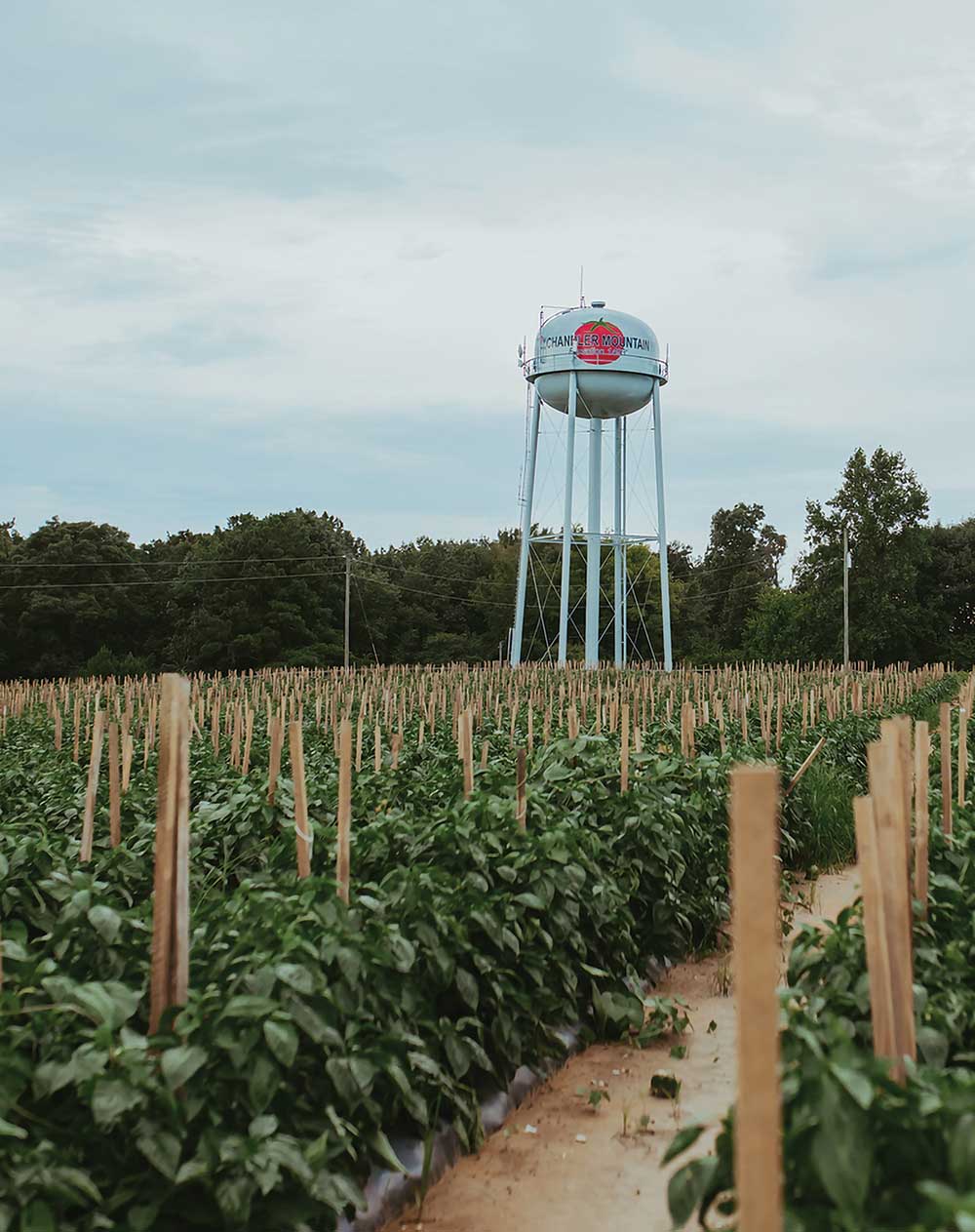
Chandler Mountain water tower stands over field of tomatoes
“Tomatoes speak of summer,” adds Texas transplant Heidi Cupstid-Bader, now a Pell City resident. “As a child, we’d pick them from my dad’s garden. We’d come home with buckets of vegetables, but before we started shelling peas, we had a delicious tomato sandwich and a cold glass of sweet tea. It’s not just the sandwich; it’s childhood summer memories.”
Even the movie industry recognizes the emotional connection to the tomato sandwich experience. In the 1996 movie “Harriet the Spy,” while 11-year-old Harriet makes her school lunch, her mother suggests some variety in sandwich choices. Harriet quickly admonishes her mother for even suggesting that she take something other than her beloved tomato sandwich. “I know what I like,” she flatly stated.
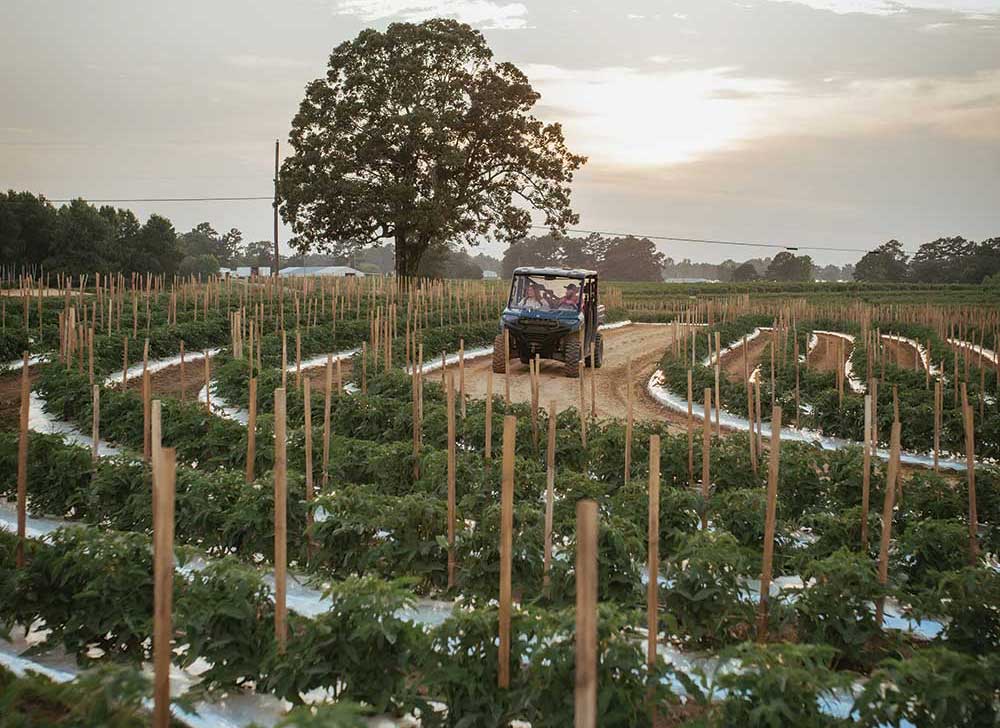
Southerners know what they like, too, and for tomato lovers in north and central Alabama, quenching the hunger for a tomato sandwich begins with a trip to Chandler Mountain beginning around July 4 when the first fruits are ready. Due to the volume of tomatoes produced and shipped from there, Chandler Mountain is known as the unofficial “Tomato Capital of Alabama.” And because of the sandy soil and breezy, cooler temperatures, Chandler Mountain is uniquely suited for producing high-quality flavorful tomatoes.
The Chandler Mountain tomato is something of a love story, the desire for the unattainable finally quenched after months of waiting. The season is four months long, at best, so these beauties are unavailable for the remaining eight months of the year. For tomato sandwich lovers, the wait is torture. Thankfully, the wait is over and until the end of October or early November, the tomato sandwich is back on the menu.
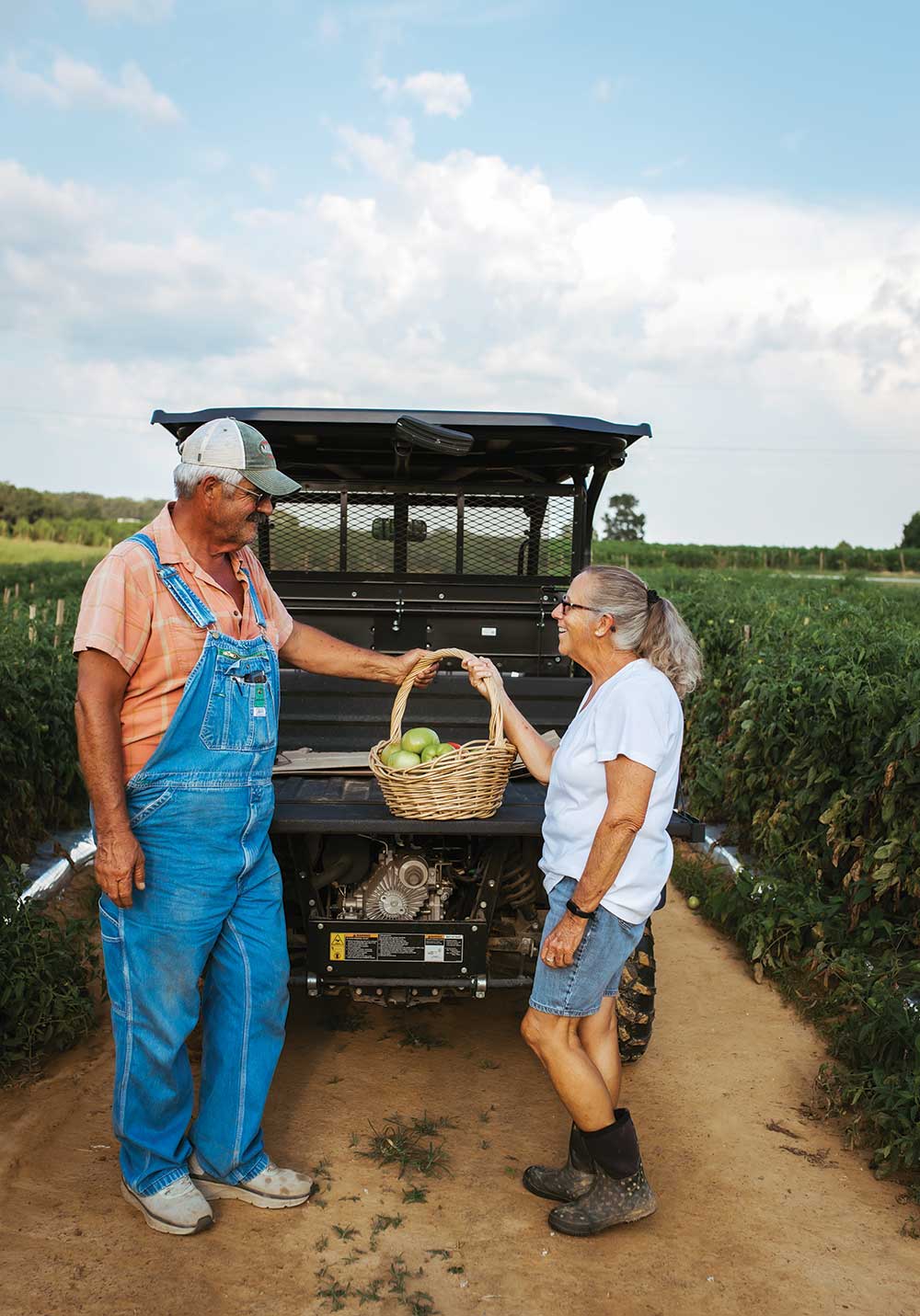
Paul and Cindy Alexander with a basket of their bounty
Chandler Mountain is home to several multi-generational tomato farms. Paul and Cindy Alexander own Alexander Farms in Steele. Paul, who also serves as pastor of Reeves Grove Baptist Church in nearby Whitney, is the third generation of his family to work the farm. He runs the farm with Cindy and his brother, Glenn. With no children to pass the farm down to, the couple is taking it a season at a time, with no immediate plans for retirement. “The Lord’s blessed us,” says Alexander.
The Alexanders have 240 acres and use 60 acres for their tomato crops. They hope to produce 100,000-150,000 25-pound boxes of tomatoes to sell. In addition to tomatoes, they grow squash, cucumbers, corn, okra, peas, peppers, pumpkins, peanuts, and flowers, most of which they sell from the farmstand on their property. The farm produces two varieties of tomatoes called Lancer and Patsy, both are big rounds and perfect for tomato sandwiches.
They still laugh when they tell the story of the day the lady came with knife in hand to test their product. “She said she’d bought tomatoes somewhere else last year and didn’t like them,” said Alexander. “She had a knife with her and asked if she could cut into one. I told her to help herself and if she didn’t like it, I didn’t want her to buy it. Both she and her husband tried it, and the husband said, ‘Now, that’s a tomato!’ And they come back about every two weeks (during the season) to buy more.”
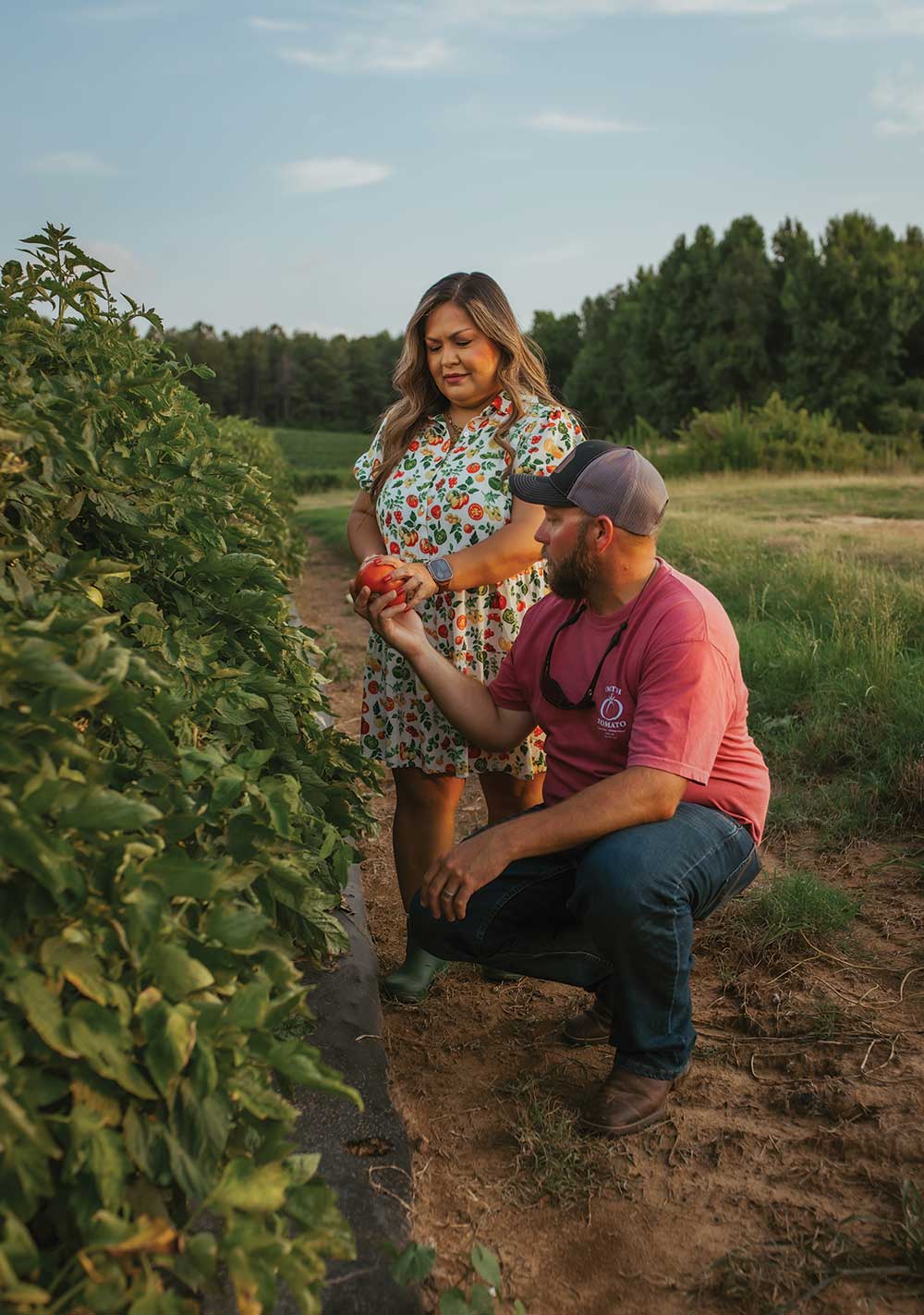
Just up the road at Smith Tomato Farm, Chad Smith grows many types of heirlooms, rounds, Romas, grape tomatoes, cherry tomatoes, and yellow non-acid tomatoes. Their 300-acre farm, which his uncle started in 1965, features 80 acres of tomatoes and 20 acres of other vegetables and pumpkins. Their typical crop yield is five million pounds of tomatoes.
Esther and Chad Smith check the crop at Smith tomato Farm
“Last year we had bad weather, and certain insects were more of a problem. Because of that, about 50 percent of the farmers went out of business,” said Smith. “That’s why I tell people it’s important to buy from local farmers. This year’s crop is better than last year’s.”
Tomatoes are widely recognized as a superfood, which is reportedly good for your heart, eyes, skin, and bones. They are also high in vitamin C and lycopene, both powerful antioxidants. Ironically, the tomato is even better for your body when cooked, especially in olive oil. According to a finding released by the National Institutes of Health, cooking tomatoes in healthy fats like olive oil greatly increases the body’s ability to absorb the beneficial lycopene.
Whether you crave tomatoes because of their health benefits or simply for the taste, there are many ways to prepare them. Salads, pastas, soups, stews, and chili have their flavors amplified by the addition of tomatoes. The best tomatoes, however, can stand on their own, dressed only in mayonnaise and bread.
All hail the tomato sandwich. While not universally loved, the tomato sandwich is a summertime ritual in the South. However, there is serious contention in the tomato sandwich arena. People are fiercely passionate about their own recipe for this most sacred of summertime fare.
For instance, should the tomato be peeled or not? What type of bread should the tomato be nestled between? What spices or herbs are used (salt and pepper, garlic, paprika, oregano, basil)? While most agree the mayonnaise should be applied liberally, people tend to be zealous regarding the brand of mayo to use. Lastly, are other ingredients invited to the party? Many around the country include bacon, leafy greens, or cheese.
Traditionalists call for a simple approach, allowing the tomato flavor to shine. Around here, it’s a simple recipe, with essentially 3 ingredients – tomato, cheap white bread, and mayonnaise, along with salt and pepper. And then there’s the finesse.
The tomato should be an heirloom variety from a local farm, preferably from Chandler Mountain, and should be large enough to fill out the bread. Cut a beefy slice of at least one inch. Slather one slice of cheap white bread with Duke’s (or Hellmann’s or Blue Plate). Place tomato slice on the bread, then liberally cover the tomato with more mayonnaise. Salt and pepper before finally placing second piece of cheap white bread on top of tomato.
Pell City native Joe Dorough looks forward to the arrival of ripe fresh tomatoes on the Fourth of July. “My favorite is the better boy variety!” he says. “Use Duke’s mayonnaise on sourdough bread and if you want more flavor, add four slices of thick bacon and a slice of Vidalia onion. This is southern soul food!”
Dorough’s friend, Fayne Howell, agrees with the mayonnaise choice but insists that white Sunbeam bread is the only option. “Sometimes I add a slice of Vidalia onion,” she adds with a smile, “but only if I won’t be in close proximity to people.” Her favorite sandwich tomato is the Cherokee Red.
A common sentiment when eating a tomato sandwich is that it is best eaten over the kitchen sink. Biting into the juicy goodness is sure to leave your arms, if not your clothes, dripping with tomato succulence. The juice from the tomato blends perfectly with the mayonnaise and seeps into the white bread, creating a thin, wet, pulpy, somewhat precarious vessel for holding the tomato.
There are many variations and adaptations to this recipe worldwide. Some regions prefer sourdough, wheat bread, or even biscuits. Some toast the bread. Still more variations surround the seasonings and additional ingredients. One of the most surprising twists comes from beyond our planet. Crumbs in zero gravity can float away and become problematic for equipment, so tomato sandwiches in space are made with tortillas.
One thing people do agree on is that one should not skimp on the mayonnaise. In a comedy sketch, author and humorist Sean Dietrich, known as “Sean of the South,” suggests that only by using a masonry trowel can you really get enough Duke’s on your tomato sandwich. At Smith Tomato Farm, Smith tells the story of his uncle, Carl, who when asked what they put on their tomatoes at the farm to make them taste so good would answer “mayonnaise” with a grin on his face.
Truly what makes Chandler Mountain tomatoes taste so good, says Smith, is the sandy, rich, and well-drained soil, along with the elevation at which the plants grow. “When you have well-drained soil,” explains Smith, “it dries out and you can add water as you need it. The next thing is the steady air flow and cooler weather. The expertise and the timing of certain things you do is a big thing, too.”
Cathy Limbaugh of Lincoln is a huge fan of Smith Farms tomatoes. She and husband, Curtis, enjoy a spin on the classic tomato sandwich using homemade biscuits with butter, tomatoes, and cheese. “It was always a special Friday night dinner when my mother lived with us,” she remembers. “We still enjoy them when tomatoes are in season.”
So, what will your tomato sandwich cost this year? “It’s simply supply and demand,” explains Alexander. “If everybody’s got good crops, the product is out there, and the price is going to be pretty cheap. And the market can change from week to week.”
As long as the supply is there, the demand for Chandler Mountain tomatoes is sure to be strong. The mighty ‘mater sammich may not actually be manna from Heaven, but after the long wait for the perfect tomato, it just feels Heaven sent. It’s just so good it’ll make your tongue slap your brains out.we are just the caretakers of it.”
From the kitchen of Cindy Alexander
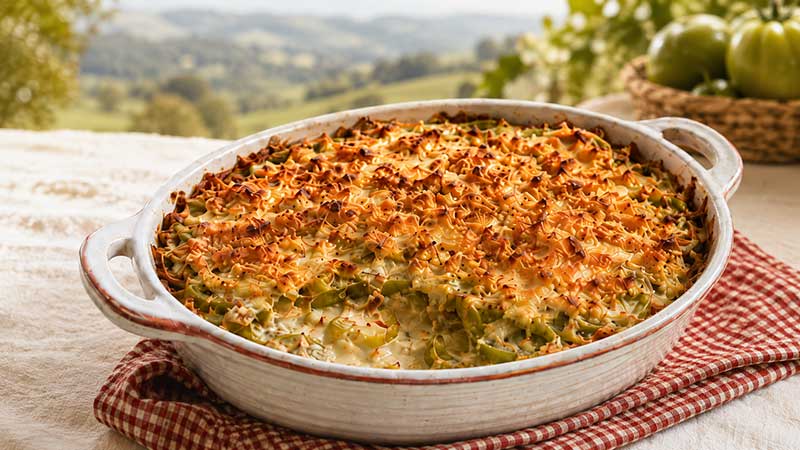
Green Tomato Casserole
Ingredients:
4 medium green tomatoes cut in 1/4 inch slices
1 tsp. sugar
1 tsp. salt
1/2 tsp. pepper
2 cups bread crumbs
1 cup sharp cheddar cheese
1 tbsp. butter or margarine
Arrange one layer of tomato slices in bottom of greased 1 1/2 quart casserole dish. Combine salt, sugar and pepper, mix well. Sprinkle tomatoes with 1/2 sugar mixture, 1/3 bread crumbs and 1/3 cheese. Repeat layers, but omit cheese. Dot butter over top of casserole. Cover and bake at 400 degrees for 1 hour. Add remaining cheese. Bake uncovered for 5 minutes or until cheese melts.
Oven-Canned Tomatoes/Vegetables
Prepare tomato or vegetable as usual. Blanch. Fill jar with mixture and close lid. Place in cold oven. Set temperature to 275 degrees. Cook 1 hour and turn off oven. Leave until oven has cooled down.
Veteran healthcare professional opens doors on new Pell City medical practice
Story by Carol Pappas Photos by Bob Crisp
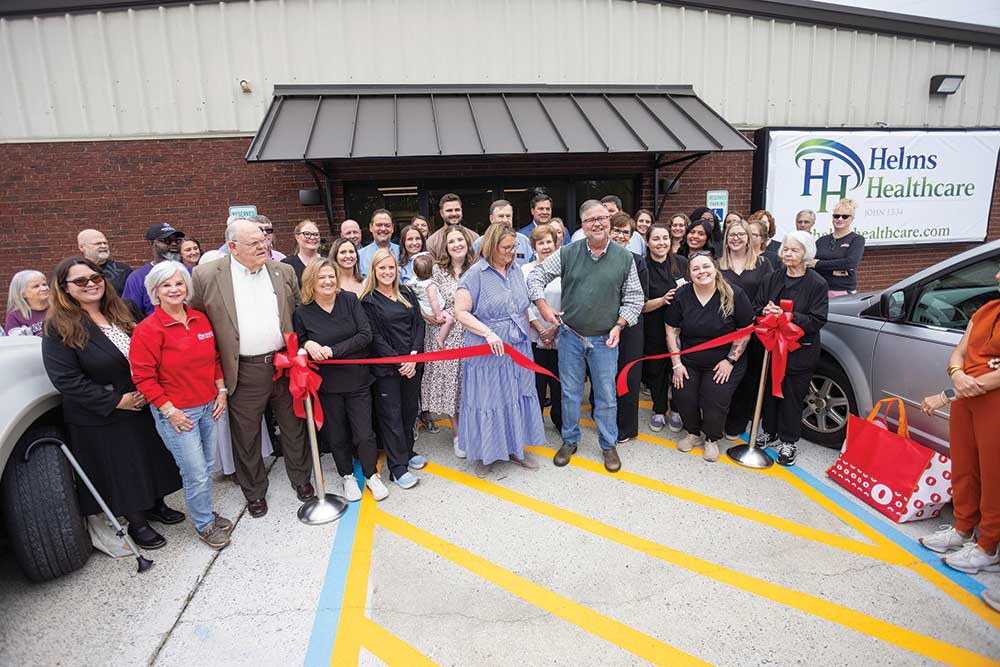
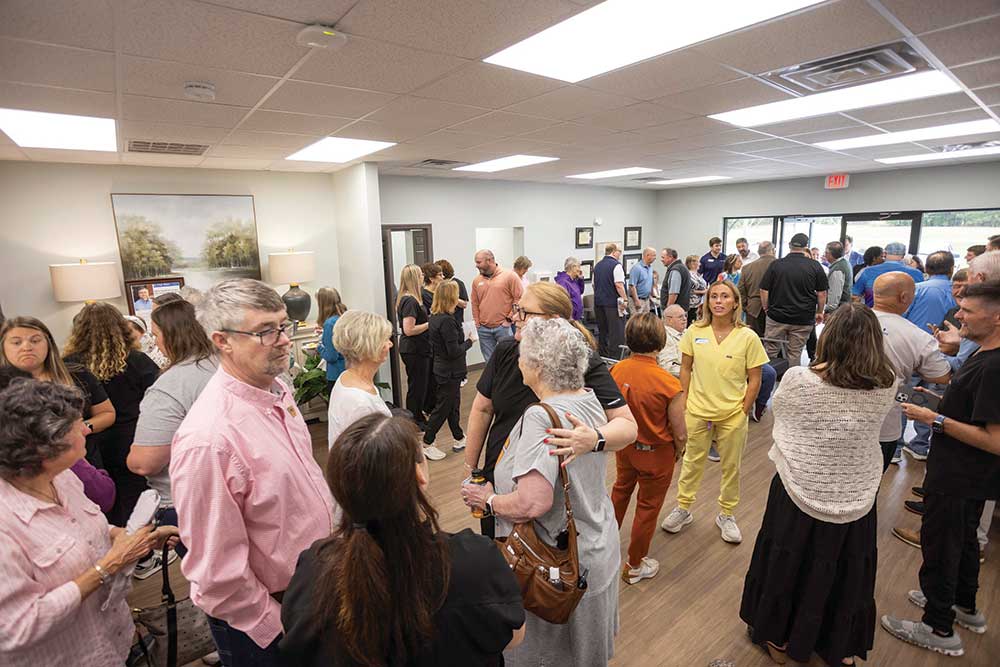
The grand opening celebration of Helms Healthcare in Pell City was more like a hero’s welcome with an overflow crowd to greet him. After all, Dr. Rock Helms was returning to his hometown where he grew up and began his practice of medicine.
Now, he’s come full circle.
“We are so thankful to be back. We’re thankful for this community,” Helms said, just before he officially cut the ribbon on the second location of Helms Healthcare in May. “This is where I grew up, where I met my childhood sweetheart,” he said, referring to his wife, Jennifer, by his side.
“What a crowd,” observed Councilman Jay Jenkins, speaking on behalf of the city. He said he didn’t think that there was that large of a turnout for a trio of much anticipated grand openings of the shopping center, Longhorn or Olive Garden. “This is a great time for Pell City, welcoming Dr. Rock back to Pell City where he belongs,” he said.
Cutting the ribbon on the new Pell City location
“We are blessed to have him back in this town. Welcome back, Dr. Rock.”
“God has blessed our practice,” Helms told the crowd of well-wishers, noting that once the ribbon was cut, “We’ll get back to the basics of taking care of people.”
Getting back to basics is a common refrain for Helms, who founded Helms Healthcare a year and a half ago and opened the first location in Vincent. In little more than a year, he built it to well over 2,000 patients.
His familiar philosophy centers on building trusting relationships with his patients, listening to their needs and treating them with kindness and compassion. He stresses personal interactions every step of the way – beginning with the phone call, where patients talk to “a real person,” not press a number.
Helms will divide his time between the two clinics. In addition to Helms, providers for the Pell City location will be Nancy McClain, CRNP, Holly Nichols, CRNP, and Kim Buckalew, CRNP and DaKota Nichols, CRNP.
Pell City will have extended hours, and urgent care headed by Dakota Nichols, F-NPC. The Vincent clinic will be led by Jonathan Windham, CRNP.
Great turnout for the grand opening of Helms Healthcare Pell City location
The Pell City clinic, located at 1310 WA Goodgame Parkway, formerly known as Comer Avenue near the Pell City Industrial Park.
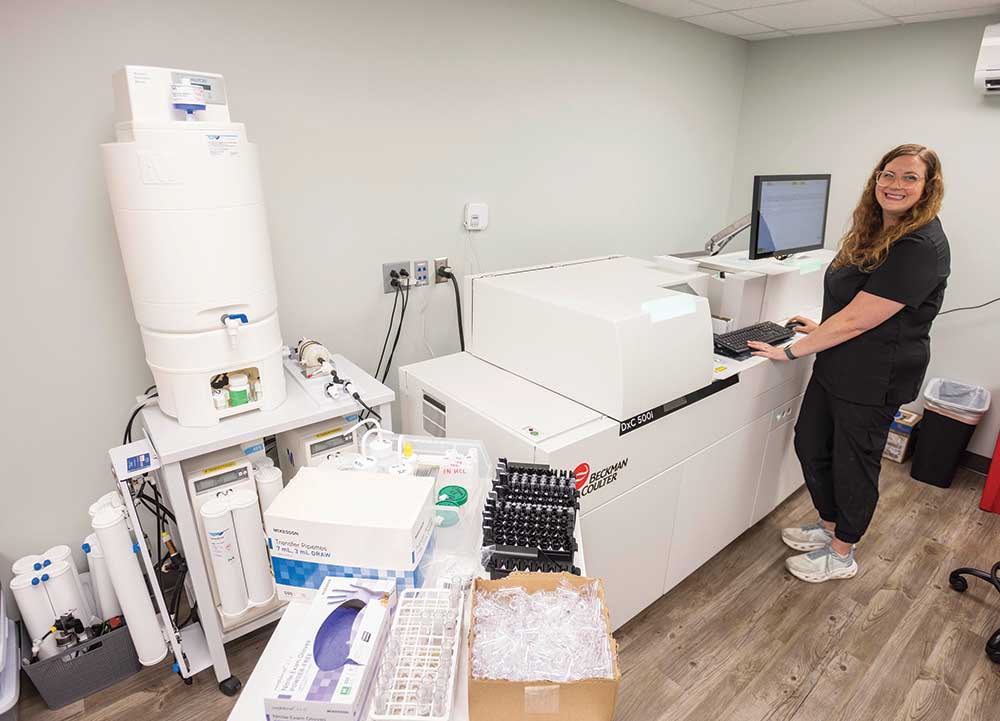
The former Precision building was thoroughly renovated by Goodgame Company and features more than a dozen examination rooms, a spacious waiting room, full lab, ultrasound, Xray and other advanced diagnostics. Cutting-edge technology is found throughout the clinic. And more is on the way.
A separate entrance and waiting area are designated for lab work and imaging studies for ease of access for patients.
Reasoning that quality healthcare should be available when needed, Helms welcomes walk-ins daily with no appointments needed. In addition, he has expanded the Pell City location to include urgent care, which is open seven days a week, to serve the community. Anyone is welcome regardless of whether they are an established patient or not.
Extended hours for the treatment of illness and injuries for pediatric and adult care are Monday-Friday, 8 a.m. to 6:30 p.m.; Saturday, 9 a.m. to 4 p.m.; and Sunday, 1 p.m. to 6 p.m.
The Pell City location has all the high-tech equipment needed for a modern medical practice
With patients’ best interest at the forefront of any planning, Helms has a record of building thriving practices. He founded a major medical practice in Pell City 25 years ago, growing it from a few providers and staff to over 200 employees and a sprawling campus of medical facilities, a pharmacy, urgent care and multiple specialties. There were locations in other communities, too.
He sold the practice, fulfilled contractual obligations and decided to go out on his own again. That led him to Vincent and a return to his roots in family medicine. Opening in March 2025, that clinic has grown to well over 2,000 patients.
“This is not just the opening of a new doctor’s office,” said St. Clair Economic Development Council Executive Director Don Smith. “Dr. Helms is creating the foundation of Pell City’s future as a regional leader in quality healthcare with the partnerships he has formed.”
Story by Cherith Glover Fluker Submitted and staff photos
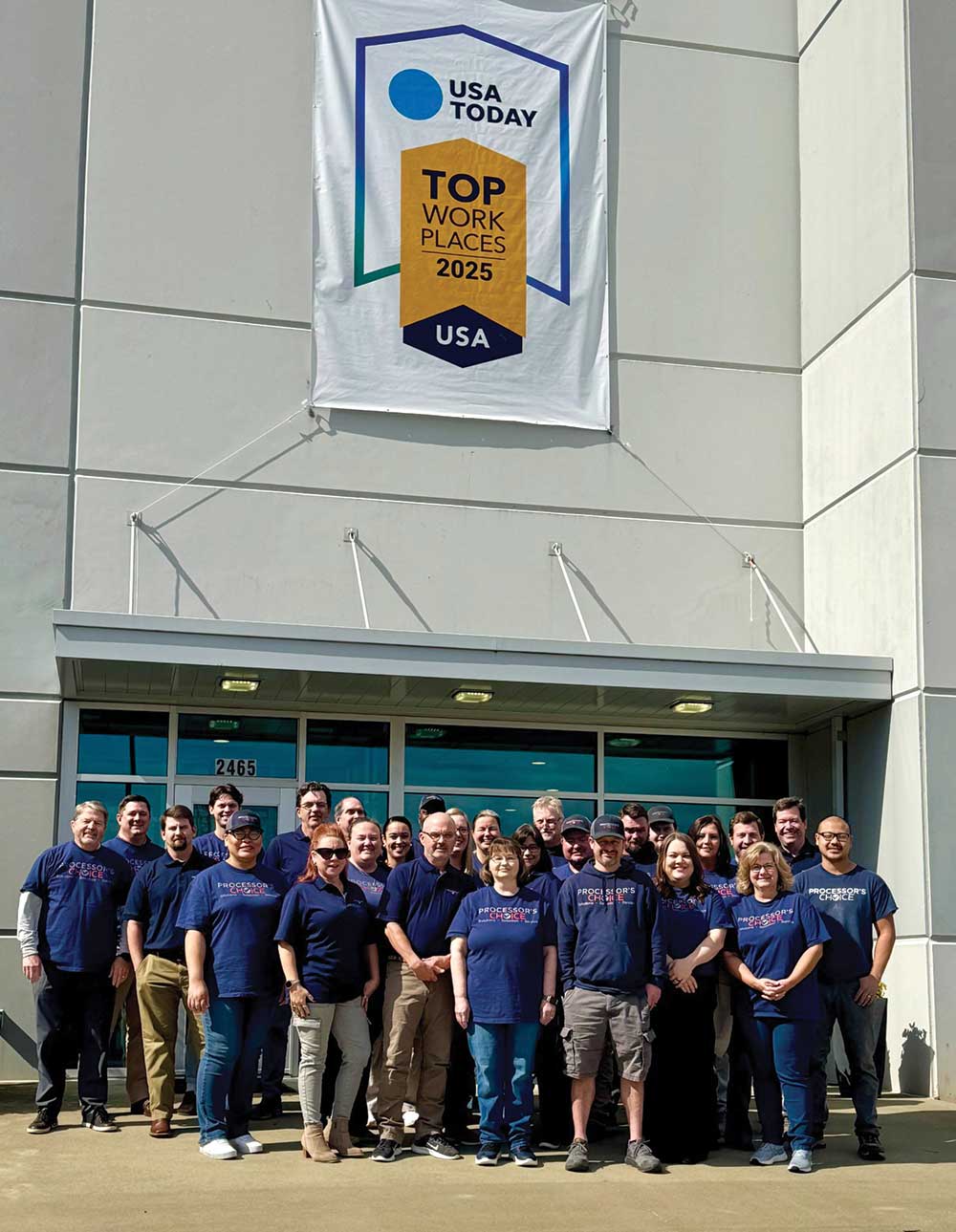
Just off Highway 78 in Moody, a company is quietly doing something remarkable – and not just the millions of pounds of food ingredients it moves across the Southeast every month. Processor’s Choice has earned a spot on USA Today’s Top Workplaces list three consecutive years running, and the recognition isn’t coming from the top down. It’s coming straight from the people who show up there every day to work.
Founded in 1984 by Don Allinder, Processor’s Choice started as a straightforward warehouse operation. Today, under the leadership of President Mark Bales, it has evolved into something far more sophisticated: a leading solution provider for food and beverage manufacturers across the country.
Think of it as a bulk grocery distributor on a much larger scale. Rather than selling finished products to consumers, Processor’s Choice distributes bulk food and beverage ingredients, servicing everything from large Fortune 100 companies to local mom-and-pop businesses. By consolidating orders and maintaining a robust inventory, they can get ingredients to customers quickly, even when demand is urgent.
“We help customers develop and reformulate products to meet regulatory requirements while maintaining performance,” Bales explained. It’s a niche that requires both technical knowledge and a genuine problem-solving mindset. These qualities are baked into the company’s four core values: customer-focused, collaborative, dependable and problem-solving.
The company’s footprint is impressive for a team of 30. With seven sales representatives, Processor’s Choice serves customers from North Carolina to Texas, with reach extending as far as Los Angeles and Jamaica. In 2011, Allinder sold the company to Doug Skidmore, making it part of the Skidmore Enterprise group. This acquisition expanded supplier relationships and broadened the company’s network of facilities, making it an even more reliable partner for its customers.
Winning USA Today’s Top Workplaces award once is an achievement. Winning it three years in a row is a statement. What makes it even more meaningful is how the honor is earned. Rather than through a company-nominated application, the award is driven entirely through anonymous employee surveys. The people doing the work are the ones casting the votes.
So what are they voting for?
Bales points to a culture built on transparency, trust and genuine investment in people. Profit sharing ensures that when the company wins, everyone wins. A hybrid work model offers flexibility that employees value. And regular check-ins keep communication open between leadership and staff, so no one feels like a number.
But it’s the smaller, more personal touches that seem to define the culture at Processor’s Choice. Every Thursday, the team gathers for lunch. This simple ritual fosters a camaraderie that can’t be manufactured. Quarterly family nights extend that sense of community beyond the office walls, welcoming the people who matter most to employees into the fold.
“We focus on empowering employees and fostering a family-like environment,” Bales said. For a company of 30 people, that’s not just a talking point – it’s a daily practice.
Growth and development are also central to the company’s culture. Processor’s Choice offers tuition reimbursement and a Learning Library to help employees advance their careers, and the company prioritizes local hiring, keeping its investment rooted in the community it calls home.
That community commitment extends beyond the workplace. Processor’s Choice actively supports the Backpack Buddies program, which provides meals to more than 700 children in St. Clair County each week. It’s a cause that aligns naturally with a company in the business of food and one that reflects the values Bales has worked to instill throughout the organization.
“We have a waiting list every month for employees who want to help pack backpacks,” Bales said. “People are always eager to support this project. It’s something we’re all so proud to be a part of.”
In an era when workplace culture has become a buzzword, Processor’s Choice offers an example of what it looks like when a company invests in its people. Three consecutive Top Workplace awards are the result of intentional leadership, a commitment to transparency and a belief that a thriving team and a thriving business are one and the same.
For St. Clair County, it’s a quiet source of pride worth celebrating.
Editor’s Note: Processor’s Choice is located in Moody. For more information, visit processorschoice.com.