Car wash initiative nets $25,216 for Community Food Bank of Central Alabama
Raindrop Car Wash presented a $25,216 donation to the Community Food Bank of Central Alabama, concluding its first-quarter “Wash Away Hunger Wednesday” initiative.
The contribution represents proceeds from every car washed on Wednesdays during the first quarter of 2025, with $1 from each wash allocated directly to support hunger relief efforts within the community.
Senior executives from Raindrop Car Wash presented the check at the Community Food Bank’s facility, where they were greeted by the Food Bank’s CEO and leadership team. The visit included a guided tour of the facility, providing a firsthand perspective on the organization’s daily operations and unwavering dedication to providing sustenance to those in need.
Community Food Bank CEO Nicole Williams expressed her gratitude for the ongoing partnership. “I am delighted about our partnership with Raindrop Car Wash. They have been an amazing partner, lots of their locations serving our community, just like the food bank, and we are so excited to work together to make sure that our neighbors are getting food that they need and providing meals on their tables.”
“Our campaign is deeply rooted in our organization’s core values and our team’s desire to be generous members of the communities we serve,” said Blake Buchanan, CEO of Raindrop Car Wash. “We are immensely proud of our customers and team for rallying behind this cause every Wednesday, and the exciting beginning of this partnership with the Community Food Bank of Central Alabama.”
Raindrop’s Wash Away Hunger campaign is a longstanding community initiative designed to transform routine car washes into acts of compassion. The company looks forward to continuing this endeavor throughout the year to help make a lasting impact.
Editor’s Note: To learn more about the campaign, visit www.raindropcarwash.com/wash-away-hunger.
Gaston Williamson enjoying life as a professional puppy transporter
Story by Scottie Vickery Photos by Graham Hadley Submitted photos
Gaston Williamson spent most of his career helping to connect consumers with the products and services they wanted. He’s doing much the same thing in retirement, but the process is a lot more fun.
These days, the former regional product manager for UPS is focusing on transporting cute, cuddly, playful puppies to their forever homes and families. He’s a canine courier of sorts, and his reward is lots of puppy kisses and happy smiles.
“The best part is the excitement I see when I make the final delivery, especially with the children,” Williamson said. “It gives me such a thrill to get to see them.”
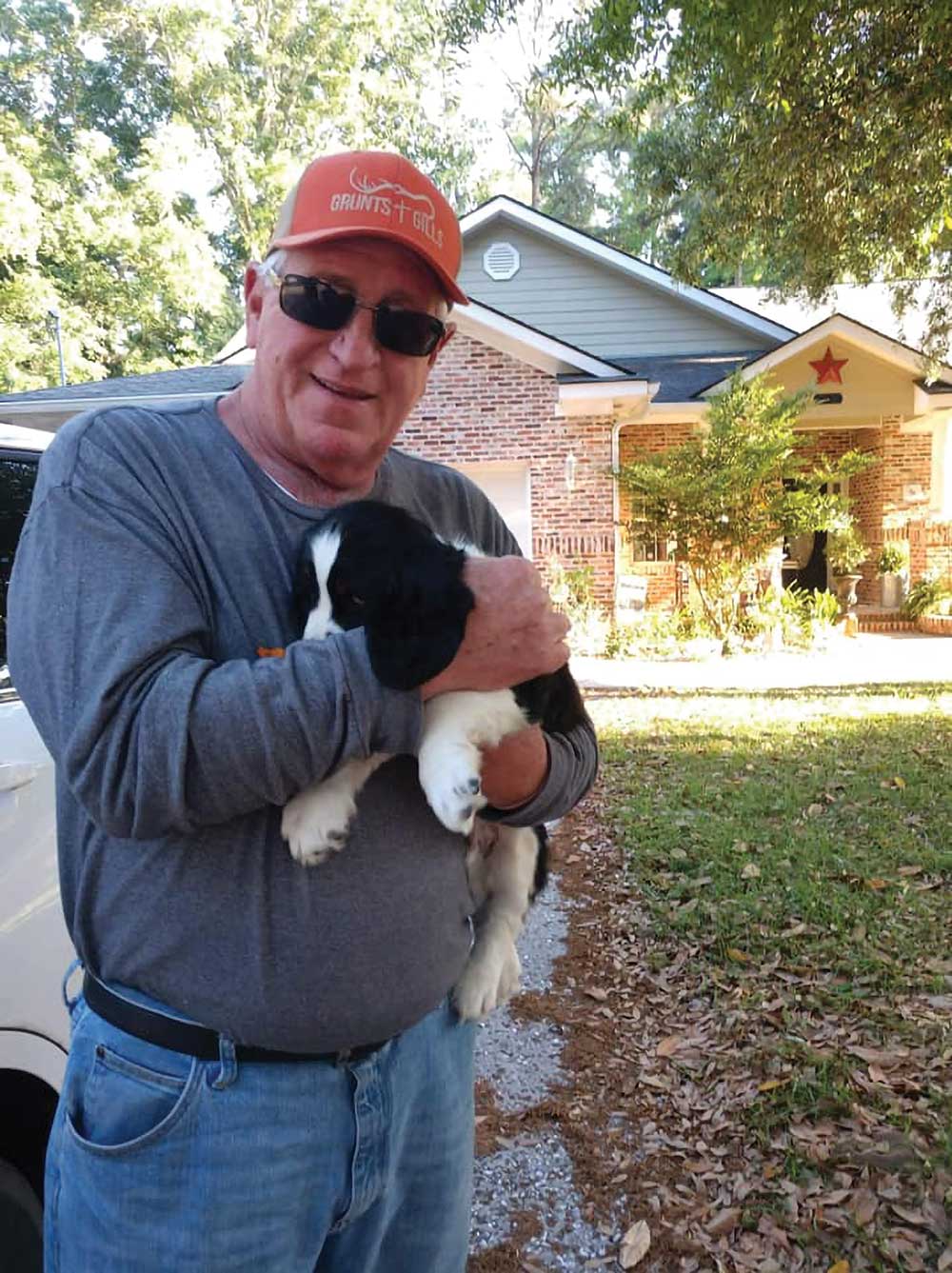
Gaston holding one of his puppy ‘fares’
Williamson, who lives in Cropwell, was looking for an English Springer Spaniel for his wife, Cynthia, when he met a breeder in Tennessee. They struck up a friendship, and sometimes when Williamson’s work took him nearby, he’d stop in to see the puppies.
“One time I mentioned I was going to be retiring, and the breeder mentioned this and said I should do it,” he said. “She’s the one who got me into it.”
Williamson had helped transport rescue dogs before, so it wasn’t an entirely unfamiliar concept. After hurricanes in Texas and Louisiana in 2017 resulted in a large number of displaced dogs, he became part of a rescue chain made up of volunteers from across the country who helped transport the animals to shelters on the Northeast Coast.
“I’d drive a 100-mile leg and pass the dogs off to someone else,” he said. The process continued until the dogs were ultimately delivered to shelters until they could be reunited with their owners or placed in new homes. “I was still working at the time, but I did that for a couple of years on the weekends,” Williamson said.
That’s why, when he retired in 2021, he became more intrigued with the idea of working with breeders. And now, the name of his Facebook page, Have Puppy Will Travel, pretty much sums up his philosophy these days.
“There’s no telling how many thousands of miles I’ve covered delivering puppies,” he said.
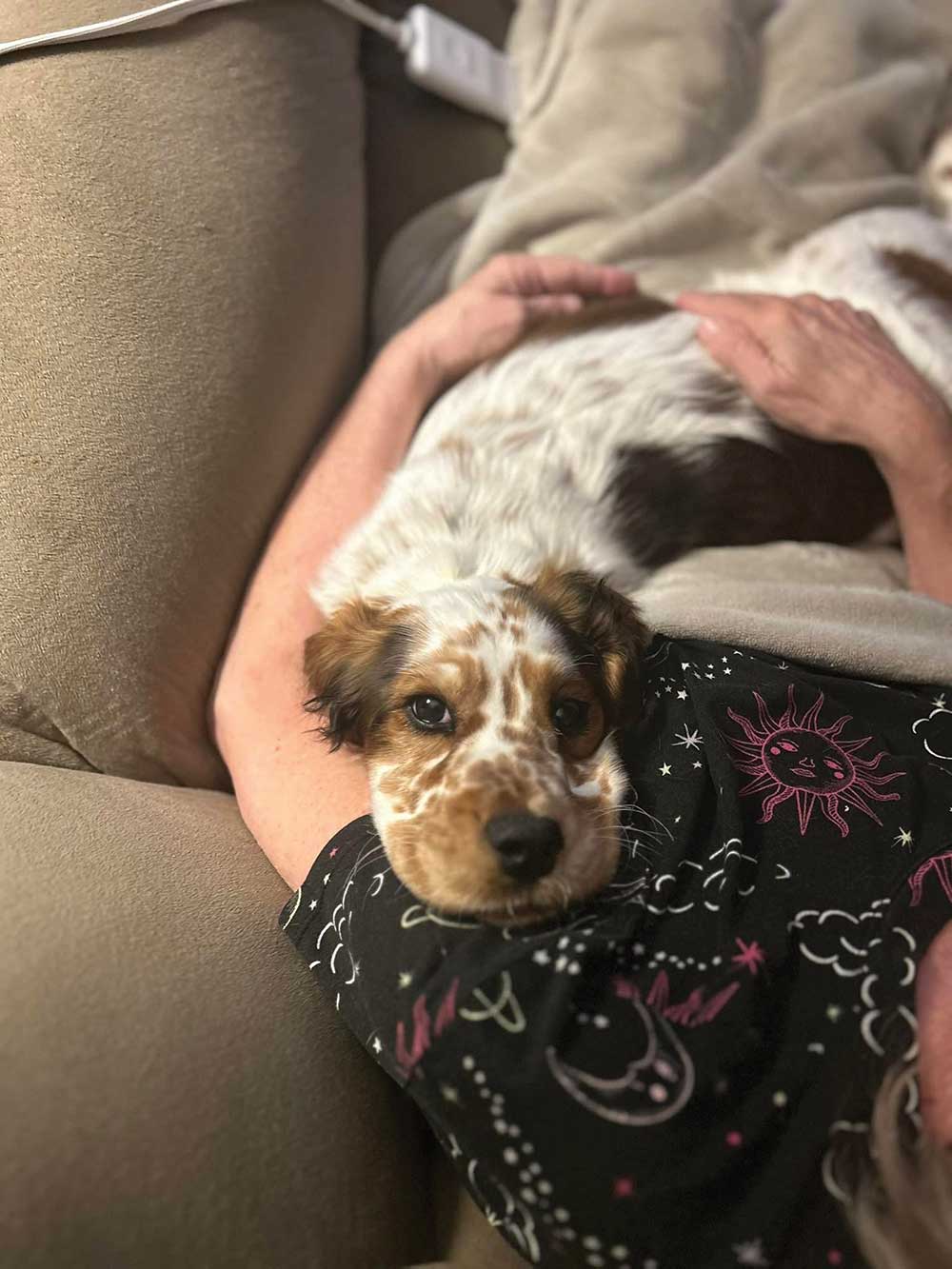
One of two puppies delivered during an 800-mile trip
So why does he do it? “Number one, I love dogs, and I enjoy the puppies,” said Williamson, adding that he and Cynthia have four dogs, three of which are Springer Spaniels. “Also, I get to see a lot of places I’ve never been. I traveled a lot with my job – I traveled eight states – and I wanted to keep traveling as much as I could.”
The experience is a rewarding one, as well. “A lot of times, I deliver to families who have just lost another dog. It just gives me a kick to see the smiles on their faces.”
Williamson, who also is a driver for St. Clair Area Transportation (SCAT), primarily works with eight breeders in Georgia, North Carolina, Kentucky and Tennessee. “You’ve got to be careful because you can run into some puppy mills, which I don’t do,” he said.
He vets all of the breeders he works with and makes sure they are certified by Good Dog, an organization that helps ensure its breeders follow responsible breeding practices. Although there have been exceptions, the majority of dogs he transports are Spaniels.
“I’ve had requests for cats, pot-bellied pigs and rabbits,” he said. “I’ve mostly stuck with Springer Spaniels since I know the breed so well.”
Williamson had no idea the gig would become such a big part of his retirement years. “It started out as a hobby, but I go about two or three times a month,” he said. Sometimes it’s a quick trip to Tennessee, but other times there’s a lot more involved.
“A few weeks ago, I left home about 6 a.m. and drove to Bardstown, Kentucky,” he said. “I picked up a puppy and headed to Alpena, Arkansas. I dropped the dog off at 9:30 p.m. and drove 1,007 miles in one day. I got a motel room real quick.”
Another time he picked up a puppy at the Atlanta airport that had come from the Czech Republic and delivered it to a woman in Kentucky. In cases like that, the dog is shipped via air cargo. “It’s a controlled cargo part of the plane that’s heated, cooled and has oxygen,” Williamson said. “I’ve been real impressed with the way the airlines take care of the dogs.”
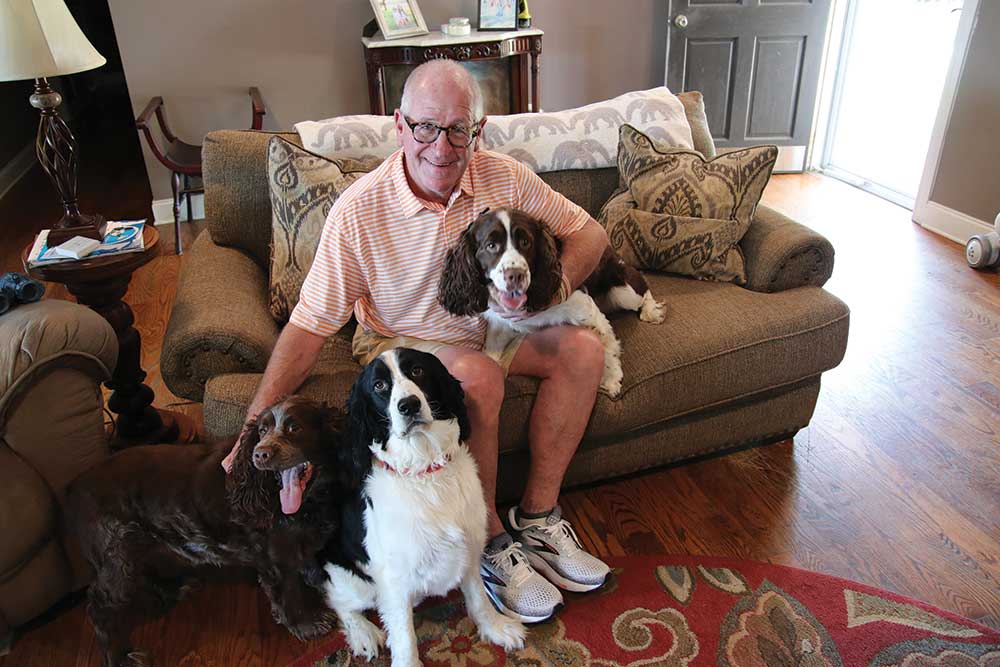
Gaston and three of his four dogs
He’s not just going to airports to pick up puppies, though. A lot of times, he acts as a “flight nanny” and accompanies the puppies on the flight. “You can take a puppy on an airplane as long as it can fit in a flexible carrier that can go under the seat in front of the passenger” Williamson said.
He’s taken lots of plane trips with puppies, and he said they usually sleep for most of the flight. So far, he and his charges have flown to Denver twice, Boston twice, Boise, Dallas and to Bozeman, Montana and Washington, D.C.
It normally costs $85 to $125 for the puppy to fly, but that’s included in the expenses paid by the new owner or the breeder. Williamson charges a fee in addition to the expenses he concurs, whether it’s gas, plane fares or lodging. “My limit is about 13 hours a day,” he said. “Anything over that, I’m probably going to get a hotel room.”
At last count, Williamson had traveled to or driven through about 30 states while transporting puppies. He’s dropped off precious cargo in New Mexico, Phoenix, Utah and Indiana, to name a few. He’s driven through all kinds of weather, including snow, high winds and record flooding. Sometimes it’s a day trip while others take two or three days.
Cynthia has joined him on a couple of the shorter drives, but sometimes he and his wife take a trip later that was sparked by one of his deliveries. “I’ll go on a trip, and I’ll see something interesting. I’ll come back and talk about it, and we’ll end up taking a trip there,” he said.
Williamson said one of his favorite trips was when he delivered some puppies to a family in Philadelphia on Dec. 22 one year. The only thing the parents told their children was that they were going to the airport. “They probably thought they were going to Disney World or the Bahamas or something,” Williamson said with a laugh.
The kids weren’t disappointed, however. “Those three little kids went crazy over their puppies,” he said. “They were just screaming and going crazy. It was so much fun. It’s things like that that make this so rewarding.”
Story by Elaine Hobson Miller Photos by Mackenzie Free
“Hey, well, alright sir. Here we go there and what are ya’ gonna give for ‘em? I have a 600 dollar down here now ten and now 25 and Now 35 and now there 50 now 60 will ya’ give me 60? Now 75, 75 another 85 dollars and buy ‘em there.
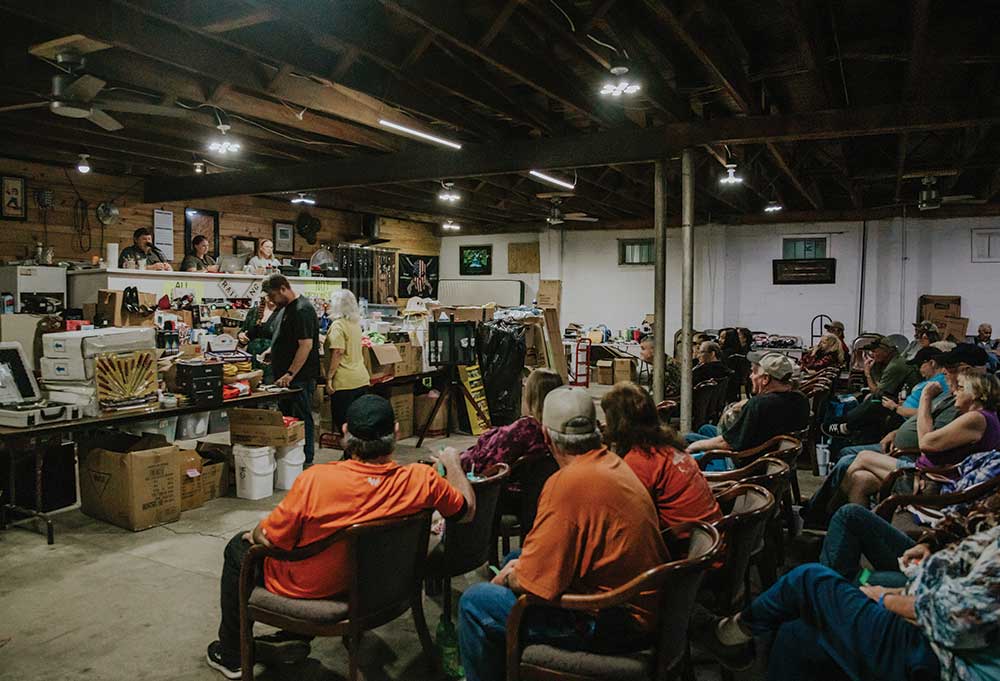
It’s Saturday night at the Railroad Auction House in Steele.
General merchandise – thermal socks, gloves, cookware, purses and makeup bags, speakers and phone chargers, are displayed in boxes and packages on and around tables on one side of the room.
In front of the raised auctioneer’s booth, more tables display toys and tool sets, pet beds, jewelry and glassware. Others hold a pile of blankets, a heater, a drone, an espresso machine and more.
It’s like a going-out-of-business sale at Big Lots, except there are no price tags, and people bid on the items, hoping to get them at a price they want to pay.
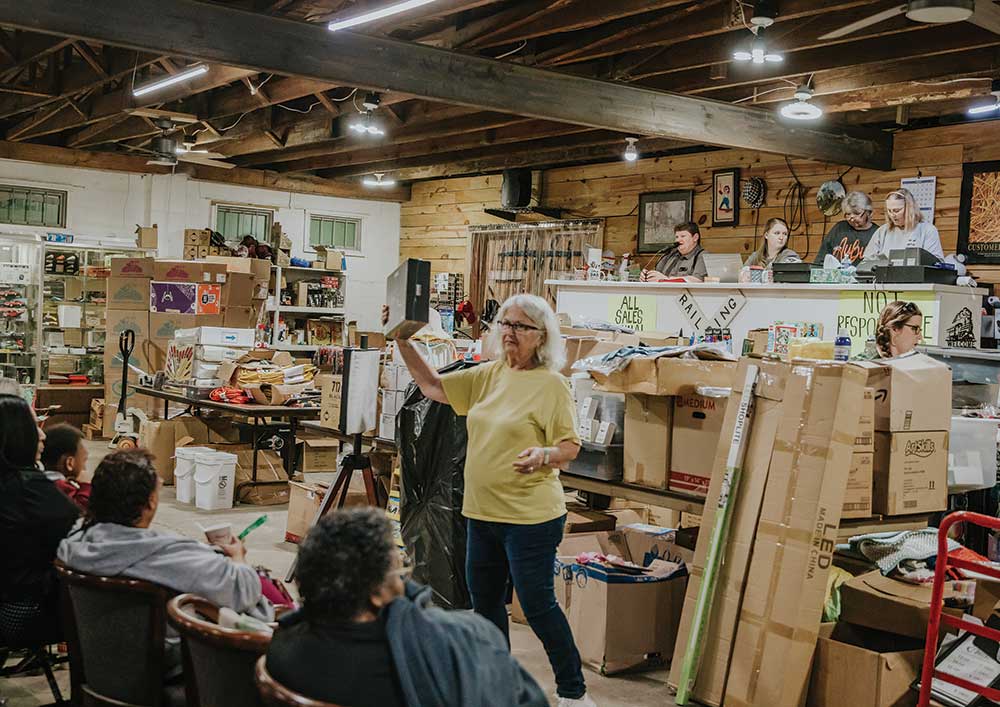
Seller Linda Robbins holds up a drone from her stock of merchandise
Many of those people are regulars here, bringing their canvas shopping bags and their registered bid cards each week. Most of them leave with their bags full. But it’s not just the merchandise that attracts them. The whole affair is sheer entertainment, which suits the auction house just fine.
“I want everybody to have a good time,” says owner/auctioneer Henry Whisenant. “That’s my goal, to make it entertaining and fun to be here. We’re family-oriented, and we give people things to laugh about.”
Henry knows most of the regulars, calling them out by name. “You want two of these, Bernice?,” he asks one patron regarding aprons that go for $5 each. Speaking about another woman who places a bid on ear muffs, he jokes, “She says she wants ‘em so she can’t hear hubby snore at night.”
Tim Abernathy and his wife, Teresa, frequently drive from Sand Rock to shop and have fun. “We bought all our Christmas gifts here last year, spent about $600-plus,” Teresa says.
“We come here every weekend,” says Christina Lynn, the other half of the “we” being husband Charles. “We like the people who own it, and it’s a good place to buy stuff you need. I buy food, things that I want like home decorations. You never know what you will find. They have good products, and it’s a fun environment.”
25 dollar bid it now, 30 dollar 30 Will you gimmie 30 make it 30 Bid it on a 30 dollar will you gimmie 30 Who’ll bid a 30 dollar bid? 30 dollar bid it now, 35, will you gimmie 35 To make it 35 to bid at 30 Who would a-bid it at a 35 dollar bid?
Each person who wants to bid has anassignednumber, one that he keeps from week to week. Numbers are recorded alongside names so the house can collect payments at the end. The house makes its money by taking a percentage of the sales.
“We have different sellers each week,” Henry says. “Most of the time we have what we call a main hauler, who brings in most of the items for sale that night. They buy in bulk at other locations and sell individually here.”
Tonight’s “main hauler” is Linda Robbins, who brought a lot of personal-use and gift items. “Our prices are cheaper than the box stores,” she says. “It’s one avenue to get out surplus merchandise, and it’s lots of fun.”
John Whisenant (Henry’s son) acts as a sort of runner, going up and down the aisles holding up small goods as his dad goes through the bidding, which includes a description of the product. Carol Ditto or Corey Whisenant, John’s wife, type it into the computer. Once the bid closes, the high bidder gets as many of the items as he or she wants, then other bidders get a chance at what’s left.
“Say the seller wants $10 each for certain items, and the winning bid was $8,” Henry explains. “They will take care of the winning bidder and if there are multiples, high bidder gets what he wants first. Then they go back to second highest for next choice at $10 each. First comes the high bidder, then the backup bidder, then all who bid on it, then seller opens up what’s left to the floor.”
35 dollar bid it now a 40 dollar 40 Will you gimmie 40 make it 40 Bidin’ it on a 40 dollar will you gimmie 40 Who’ll bid a 40 dollar bid? 40 dollar bid it now, 45, will you gimmie 45 To make it a 45 to bid it a 45 Who would a-bid it at a 45 dollar bid?
While Henry is doing his selling chant, John will call out “821 for 3,” etc., referring to the number of the bidder and how many he wants to buy. As John holds up Bluetooth speakers shaped like toy cars with built-in AM/FM radios and headlights that actually light up, his dad tries to start the bidding at $35 each. He has to keep coming down before he finally gets a bid of $20. Then he gets it up to $22.50, then $25, then SOLD!
Allison Whisenant, Henry’s granddaughter and John and Corey’s daughter, entertains herself
Outside, a train roars by about the time Whisenant ends his
auctioneer’s chant, reminding folks of how the auction house got its name. Henry started this business in May of 2003, and now has a second building for his antiques and vintage collectibles auctions up the road at Steele Wholesale Auction.
“I grew up going to auctions and always wanted to be an auctioneer,” he says. “I’ve been one about 10 years. It took me a long time to get up in front of people. I’ve done different things in the meanwhile, such as mechanic, maintenance man, steel construction and truck driving.”
He went to an auction school to get some training. “The only reason I went was it was out of town and no one knew what I was doing,” he says, laughing. “At that time, I was driving a semi, and it just worked out.”
Henry says he got into auctioneering at an older age than most, so he isn’t as good as some of the younger folks. “We didn’t work a lot on chants in school,” he says of the famous way auctioneers carry on the process of bidding. “It was a nine-day course, and you learn more about how to put on an auction and the business side of it. As for the chant, you gotta run it together, so that, ‘What do you bid?’ becomes, Whattaya bid, whatta gone bid.”
45 dollar bid it now a 50 dollar 50 Will you gimmie 50 make it 50 Bidin’ it on a 50 dollar will you gimmie 50 Who’ll bid a 50 dollar bid? 50 dollar bid it now, 55, will you gimmie 55 To make it a 55 to bid at 55 Sold that hog for a 50 dollar bill
Jeanette Green of Centre, Brenda Leek and grandson Keem of Rome, GA, and Edith Taylor of Gadsden came to the auction together tonight. “They have good sales and some good people here,” says Green. “I bought a lighted bar for the back of my husband’s truck once. I also bought large speakers for cell phone music.”
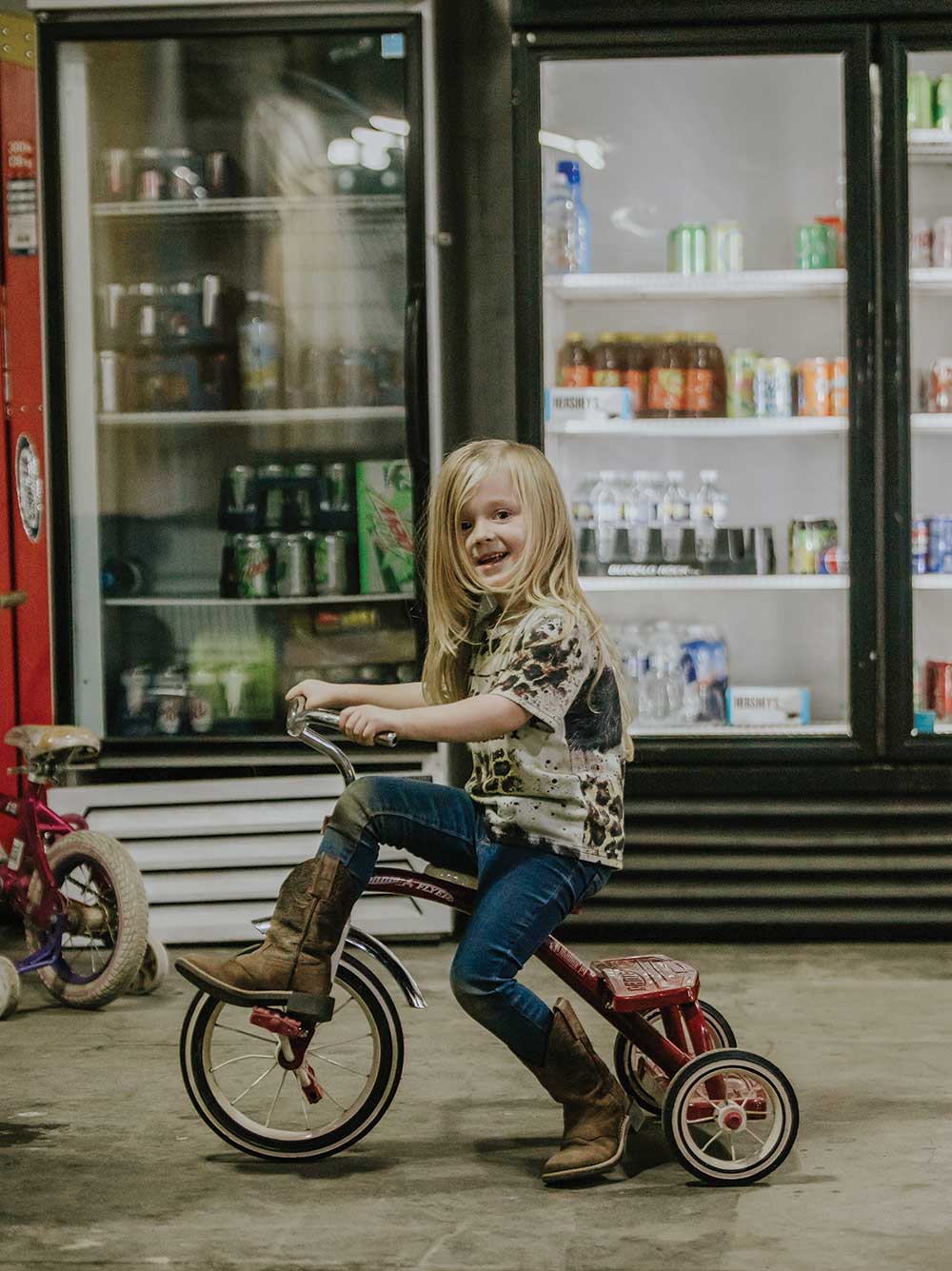
Leek doesn’t have to worry about entertaining her grandson while at the auction. A child-sized table with games and crayons is set up in one corner, along with a couple of tricycles. So, the little tykes pedal up and down the side lanes during the auction, ignoring the chanting and the bidding.
In the fall, as Christmas nears, some of the regulars buy toys and clothes at the auction and put them in the house’s “Toy Box.” Some folks from Church of the Nazarene in Steele (pastor James and wife DeeDee Kilgore, and Rodney and Brenda Free) take them to the elementary school in Steele, where the faculty distributes them to needy kids at Christmas. If an abundance is left after Christmas, the teachers will award points for good grades, and the kids can use their points to buy what’s left. “The auction house also donates to the Toy Box, and some of the haulers, too,” Henry says.
The aroma of popcorn permeates the air during the auction, temporarily taking a person’s mind off the bidding. Donna Bellew, also from Steele, handles the concession stand, selling snacks such as hot dogs, cheesy nachos, popcorn and canned sodas.
Roy Phillips, Steele, comes for fun, and buys an item or two every now and then. “We sit over here and laugh and carry on,” he says, motioning toward the other two or three people who are on the “old-timers’ bench” with him. The bench alongside one wall was so-named by Henry, the auctioneer, probably because his dad, Henry Sr., of Steele, sits there. Often, they are joined by Ellen Jenkins of Chandler Mountain.
“We come every Saturday for the entertainment,” Phillips says. They talk about how old the building is, how it was a hardware store for many years with a post office in one corner. Paul Pope owned the building back then, and had a gas pump, sold tires, meat, and general merchandise.
Bidder No. 846, Gaynelle Sweatt of Ragland, says this is her first time at the auction. She learned about it on Facebook.
“We’ll be back,” she says.
Editor’s Note: The paragraphs in italics throughout this article are from the 1956 Leroy Van Dyke version of the song, “The Auctioneer,” which was written by Van Dyke and Buddy Black.
Gas and convenience retailer breaks ground in Ashville
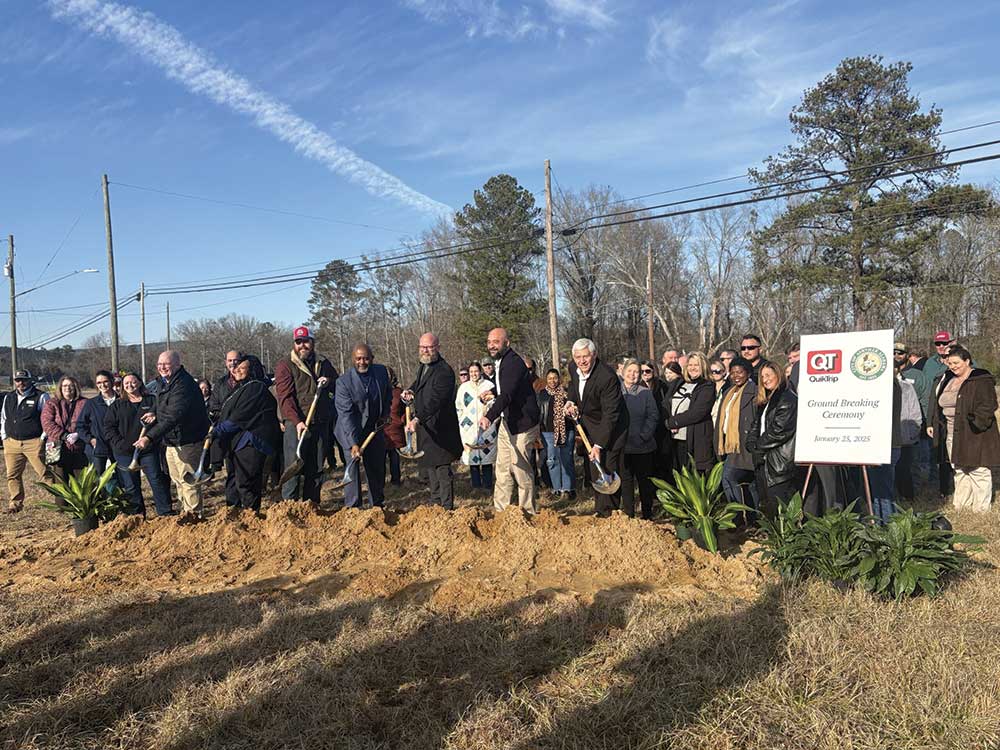
QuikTrip (QT), one of the nation’s leading convenience and gasoline retailers, has broken ground on a new travel center in Ashville, ushering in what is believed to be an economic boon for the area. It will be located along U.S. 231 and Interstate 59.
QuikTrip currently has eight locations operating in Alabama with multiple additional stores under construction. The Ashville travel center is expected to open in the spring of 2026. QT opened a traditional location in Pell City in 2023.
As a travel center, Ashville’s location features a larger lot and a more spacious store design than a traditional QT.
“We are excited to continue to bring QuikTrip’s signature commitment to quality and efficient service to Alabama residents and travelers by breaking ground on a new location in Ashville,” said QuikTrip Corporate Communications Manager Aisha Jefferson.
“From the very beginning, we have felt a warm welcome and overwhelming support from Mayor (Derrick) Mostella and the other community leaders, which played a huge role in our decision to invest in this community. We’re looking forward to providing a convenient and reliable resource for Ashville and becoming a part of its growing community.”
Huge crowd and city, county officials take part
For decades, people have looked to QT for an on-the-go snack or meal as well as a comfortable atmosphere. The Ashville location will include full-service QT Kitchens featuring freshly prepared grab and go items and custom-made menu items. QT Kitchens customer favorites include warm, soft pretzels, custom breakfast tacos, hardwood smoked BBQ sandwiches, cold brew coffee and frozen treats like QT’s QuikShake®.
Customers will also be able to enjoy fresh donuts, sub sandwiches, wraps, QT’s signature pizza by the slice and roller grill items.
“The City of Ashville would like to extend its heartfelt gratitude to the QuikTrip team,” Mostella said at the groundbreaking. “They have been incredible to work with on this project and have a real commitment to providing a quality shopping experience as well as providing an opportunity for employees to grow within the company. Their professionalism and collaboration have made this project possible.”
St. Clair County Commission Chairman Stan Batemon agreed. “I would like to commend Mayor Mostella and the QuikTrip team for all of their hard work on this project. This company is known for its excellence and will be a destination for travelers. I believe it will also be the catalyst for additional development at Ashville’s interstate interchange.”
This location will create approximately two dozen new jobs.
Since its founding in 1958, QT has established a reputation for its benefits to employees, receiving national recognition as a top place to work year after year. In addition to providing superior benefits and opportunities for advancement, QT offers competitive pay, tuition reimbursement, medical insurance and excellent 401k benefits.
QT expresses pride for its positive impact in the communities it serves, with the company donating five percent of its annual net profits to charitable organizations. Among the organizations QT supports are United Way, Safe Place, local food banks and schools. It also supports Folds of Honor, a non-profit whose mission is to provide educational scholarships to the military and first responder families of those who have been killed or disabled while on active duty.
Over the past 66 years, QT has grown its footprint to more than 1,100 stores across 19 states and employs over 31,000 people.
Story and photos by Roxann Edsall Submitted photos
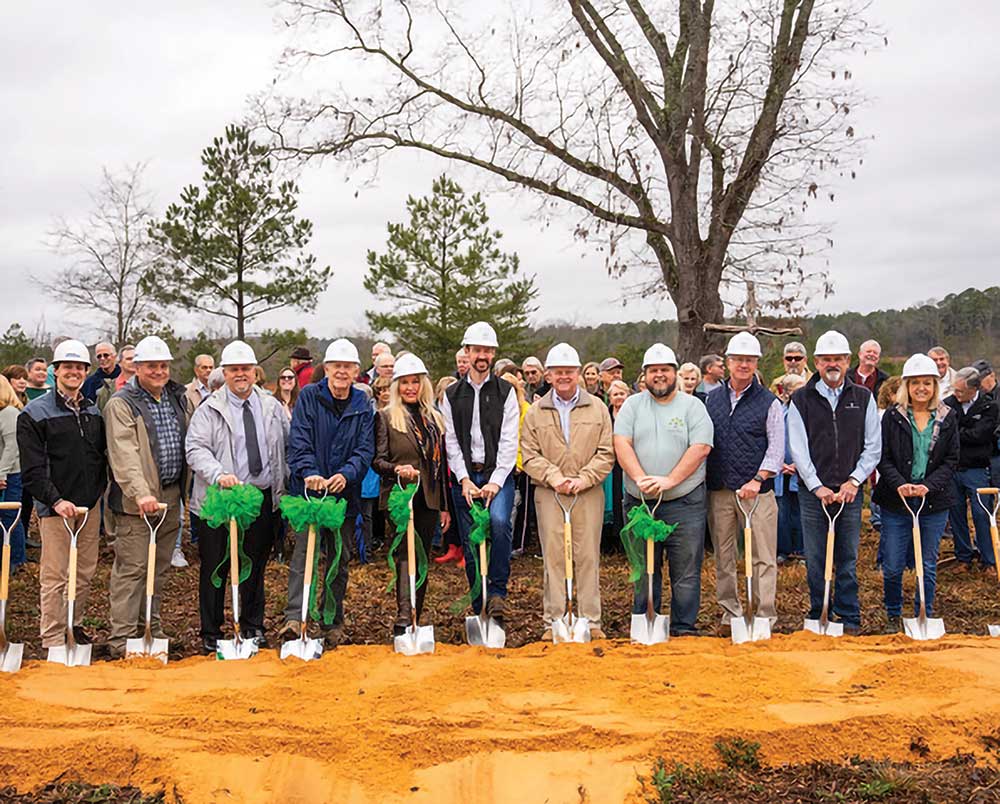
There’s been a lighted cross just off U.S. 231, south of Pell City, for over a year, marking the spot where a new church will soon stand. Shovels tipped the dirt on a drizzly February morning, signifying the beginning of construction on the $7 million New Life Church.
Site work has already begun at the property adjacent to Cosper Construction on Easonville Road in preparation for the first phase of the project, which will include the building of an outdoor chapel to accommodate 150 people.
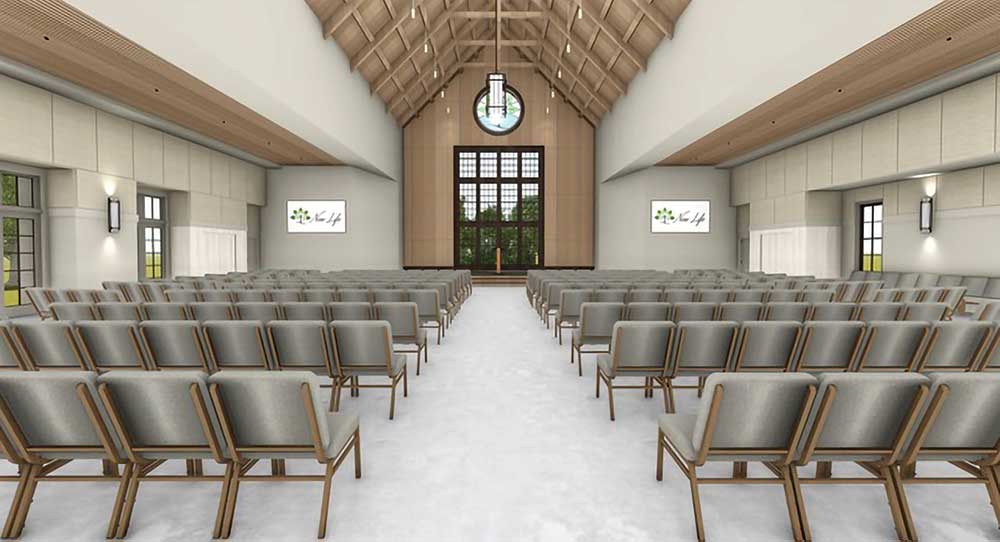
The main building will house 20,000 square feet of worship space, classrooms and offices with seating capacity for 300 in the sanctuary.
Byron Smith, owner of studiosmith Architecture, LLC in Pell City, designed the facilities with a nod to the casual “lake life” feel of the area. “In conceptual listening sessions, church members indicated that the proximity to the lake and its relaxed and informal nature was important to incorporate into the design,” said Smith. “The steeple will actually be a cupola with windows on four sides, which you might find at the peak of a home overlooking the lake.”
New Life sanctuary plans
Smith describes the style as “traditional southern vernacular with a modern edge.” “Traditional forms, soaring ceiling heights and exposed timber roof structures were important to me in designing a public building that is recognizable, like a home,” he added. “It’s a reflection of the people who will use it.”
The population of both St. Clair County and Pell City continues to grow, with more than 200 new homes being built just a stone’s throw from this new church.
“Pell City is growing, with new homes and new businesses,” said Rotunda Forman, Pell City Chamber of Commerce vice president. “Even though we do have quite a few churches in Pell City, new churches are about a new voice, a new direction. People need to find what fits them. Our younger generations are looking for that.”
Wes Savage, who serves as lead pastor of New Life Church, agrees wholeheartedly. “We believe firmly that new churches help reach new people with the Gospel of Jesus Christ,” he says. “We’ve seen increases in visitors who were ‘unchurched’ or ‘de-churched’ people coming to experience renewed faith and a passion for their personal relationship with Jesus Christ. We expect that to continue as we are able to provide new facilities for children and youth to meet the needs of families moving into the area.”
“At New Life,” adds Rev. Savage, “we are committed to raising up a new generation of believers and providing a place for families and adults to make new personal connections, find purpose, build community in a local body of Christ, and become equipped for the work Christ has called them to do for his kingdom and for his glory.”
New Life Church was planted in November of 2022 and has quickly grown to 300 members with seven staff. It is an independent church which upholds Protestant Christian beliefs as contained in the Apostles’ and Nicene Creeds.
Building committee members celebrate groundbreaking with architect and general contractor
Savage goes on to explain, “First and foremost, we are followers of Jesus Christ, grounded firmly on the unchanging word of God and guided by his eternal spirit. We believe all people should have the opportunity to hear and respond to the good news offered through Jesus. We believe God’s grace is abundant and the new life he offers is life changing.”
Helping to change lives is an important part of New Life’s mission of “glorifying God, making disciples, and blessing others in Jesus’ name.” In their first two years, a focus on missions has been in the forefront of the more than 25 projects New Life members have embraced.
From supporting the physical and spiritual needs of children in Juarez, Mexico, through Hunger House International to supporting the heroes at the Colonel Robert L. Howard State Veterans’ Home in Pell City, there is always a place to serve.
New Life members have collected food for the Christian Love Pantry and participated in distributing at the food giveaways, in addition to providing Thanksgiving dinner for inmates in St. Clair County. Other missions include Dovetail Landing, the Sheriff’s Boys’ Ranch, the Gideons and St. Clair County DHR’s Foster Children Christmas gifts.
Teams have also built solar cubes to help bring electricity to people in 18 countries through Designs for Hope.
Following the disastrous effects of flooding from Hurricane Helene in October, New Life sent a team to work with Samaritan’s Purse Disaster Relief in Boone, North Carolina. “It was such a humbling experience,” said Suzanne Freeman, chairperson of missions for New Life. “We helped three families who had extensive flood damage. We thought we’d come to help them but found ourselves even more blessed by them.”
Services on the new property will begin in the Spring. Until then, services are held each Sunday at 8:30 a.m., 9:40 a.m., and 10:30 a.m. at the Pell City Municipal Complex at 1000 Bruce Etheredge Parkway.
In a time when personal attention in medical care may seem like a relic of the past, Dr. Rock Helms sees his new practice – Helms Healthcare – as reconnecting the patient and the doctor and employing modern advances to enhance the whole experience.
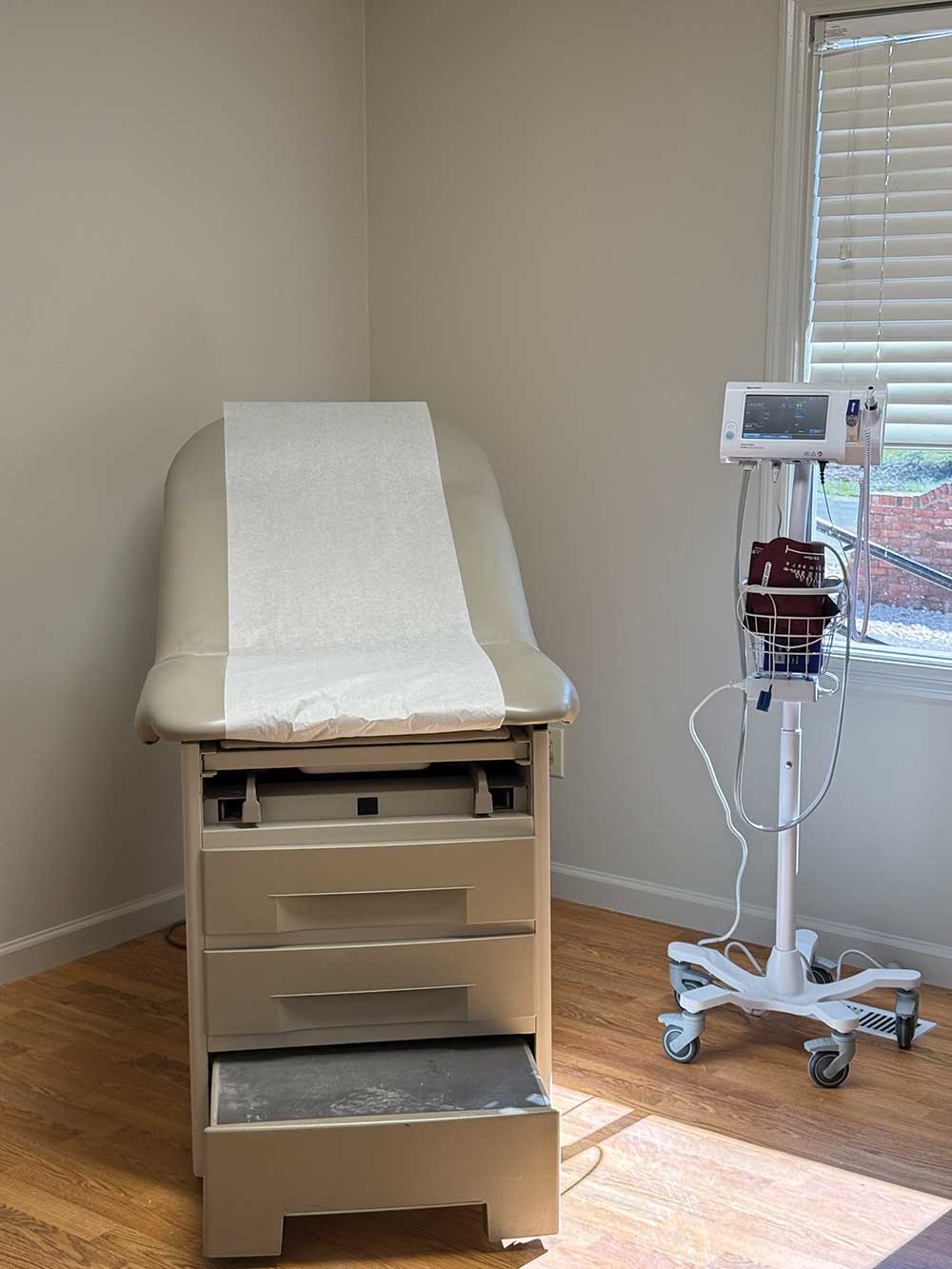
An exam room
The longtime Pell City family medicine physician opened Helms Healthcare in nearby Vincent in late-March, offering “a concierge-type practice for everybody,” he said. “When you call, you get a human. When you want to be seen, you can be seen right away. We prefer appointments, but it’s not a mandate.”
The aim is to make it easier for patients to have “easy access to their doctor or nurse practitioner for medication refills, questions about test results or a question about referrals to a specialist,” Helms explained. “Typically, there are too many barriers to achieve that. I want to break those barriers down.”
Dr. Helms envisions a practice where the doctor-patient relationship is at the core, reminiscent of the times when doctors knew their patients personally and were deeply invested in their well-being. It gives the doctor a more comprehensive understanding of the patient’s health history and needs.