The best ‘mater sammich

Story by Roxann Edsall
Photos by Mackenzie Free

Any way you slice it, the facts are clear. Southerners love a good “mater sammich.” Long considered the staple of summertime goodness, the tomato sandwich is the belle of the Southern culinary ball. Top fans include former President Jimmy Carter, who was well known for his love of this simple summer fare made with ripe tomatoes, mayonnaise, and bread.

“I love a good tomato sandwich!” says Springville resident Tiphanie Gatgens. “I love good, soft white bread with several big slices of tomatoes with Duke’s mayonnaise (although my mother swore by Bama mayo). Add a good bit of salt, and sometimes pepper. And now I’m in the mood for a tomato sandwich.”

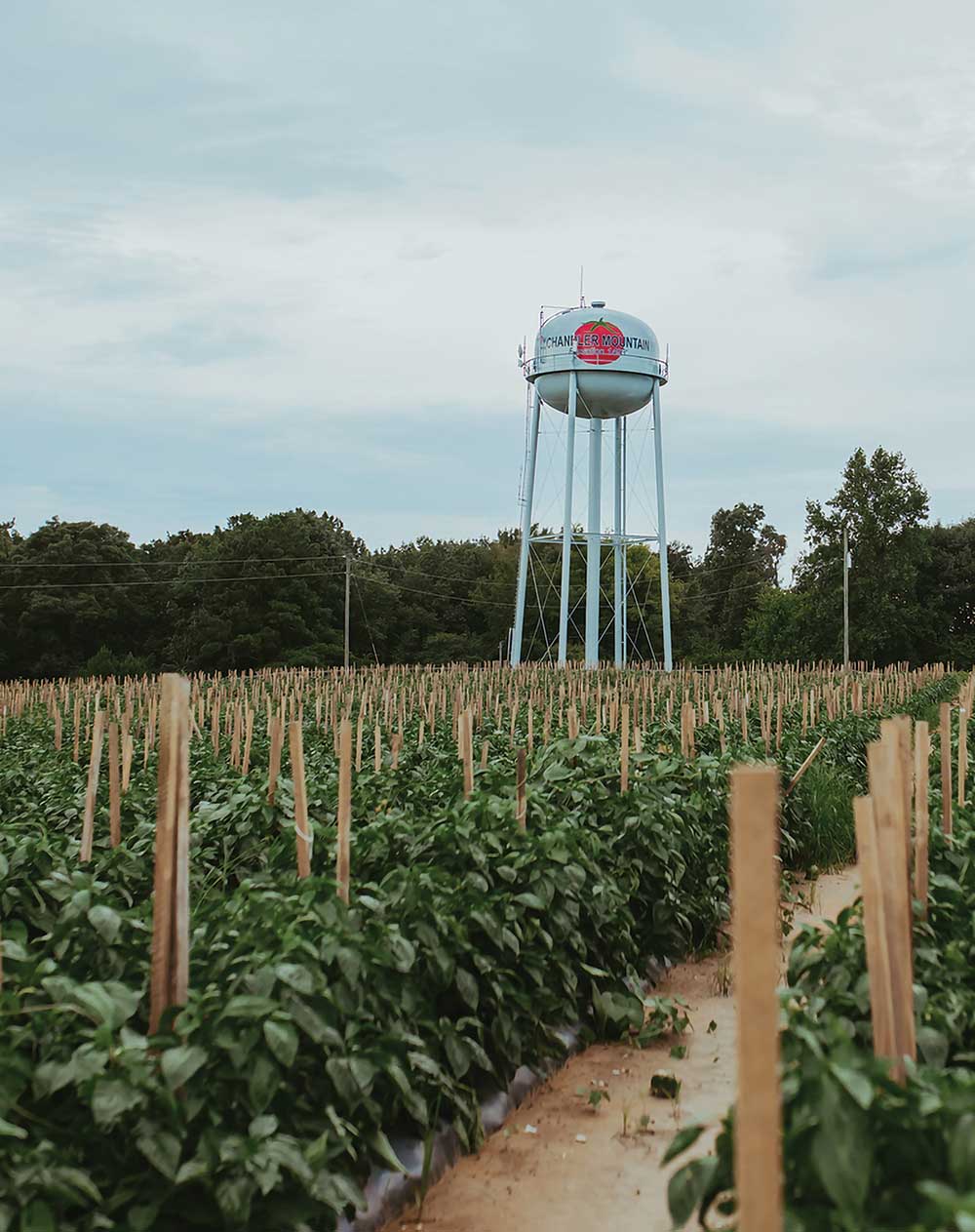
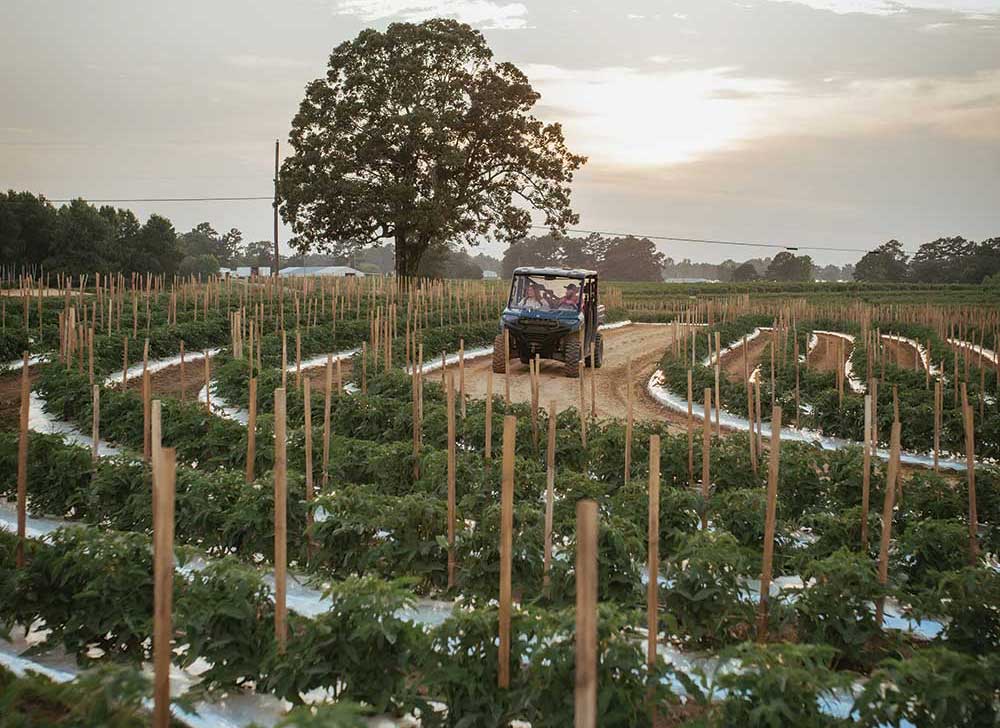
Chandler Mountain water tower stands over field of tomatoes

“Tomatoes speak of summer,” adds Texas transplant Heidi Cupstid-Bader, now a Pell City resident. “As a child, we’d pick them from my dad’s garden. We’d come home with buckets of vegetables, but before we started shelling peas, we had a delicious tomato sandwich and a cold glass of sweet tea. It’s not just the sandwich; it’s childhood summer memories.”

Even the movie industry recognizes the emotional connection to the tomato sandwich experience. In the 1996 movie “Harriet the Spy,” while 11-year-old Harriet makes her school lunch, her mother suggests some variety in sandwich choices. Harriet quickly admonishes her mother for even suggesting that she take something other than her beloved tomato sandwich. “I know what I like,” she flatly stated.

Southerners know what they like, too, and for tomato lovers in north and central Alabama, quenching the hunger for a tomato sandwich begins with a trip to Chandler Mountain beginning around July 4 when the first fruits are ready. Due to the volume of tomatoes produced and shipped from there, Chandler Mountain is known as the unofficial “Tomato Capital of Alabama.” And because of the sandy soil and breezy, cooler temperatures, Chandler Mountain is uniquely suited for producing high-quality flavorful tomatoes.

The Chandler Mountain tomato is something of a love story, the desire for the unattainable finally quenched after months of waiting. The season is four months long, at best, so these beauties are unavailable for the remaining eight months of the year. For tomato sandwich lovers, the wait is torture. Thankfully, the wait is over and until the end of October or early November, the tomato sandwich is back on the menu.

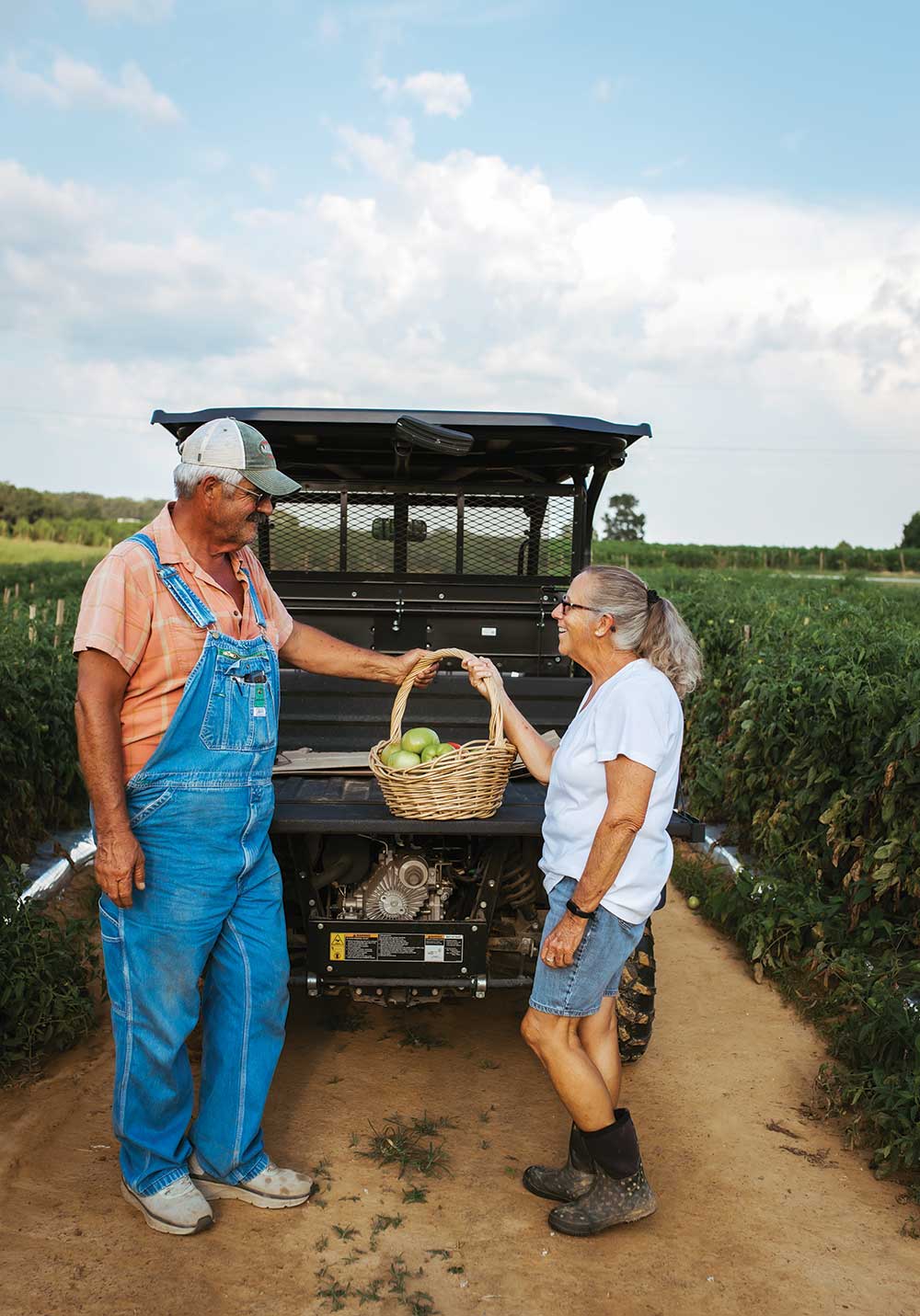
Paul and Cindy Alexander with a basket of their bounty

Chandler Mountain is home to several multi-generational tomato farms. Paul and Cindy Alexander own Alexander Farms in Steele. Paul, who also serves as pastor of Reeves Grove Baptist Church in nearby Whitney, is the third generation of his family to work the farm. He runs the farm with Cindy and his brother, Glenn. With no children to pass the farm down to, the couple is taking it a season at a time, with no immediate plans for retirement. “The Lord’s blessed us,” says Alexander.

The Alexanders have 240 acres and use 60 acres for their tomato crops. They hope to produce 100,000-150,000 25-pound boxes of tomatoes to sell. In addition to tomatoes, they grow squash, cucumbers, corn, okra, peas, peppers, pumpkins, peanuts, and flowers, most of which they sell from the farmstand on their property. The farm produces two varieties of tomatoes called Lancer and Patsy, both are big rounds and perfect for tomato sandwiches.

They still laugh when they tell the story of the day the lady came with knife in hand to test their product. “She said she’d bought tomatoes somewhere else last year and didn’t like them,” said Alexander. “She had a knife with her and asked if she could cut into one. I told her to help herself and if she didn’t like it, I didn’t want her to buy it. Both she and her husband tried it, and the husband said, ‘Now, that’s a tomato!’ And they come back about every two weeks (during the season) to buy more.”

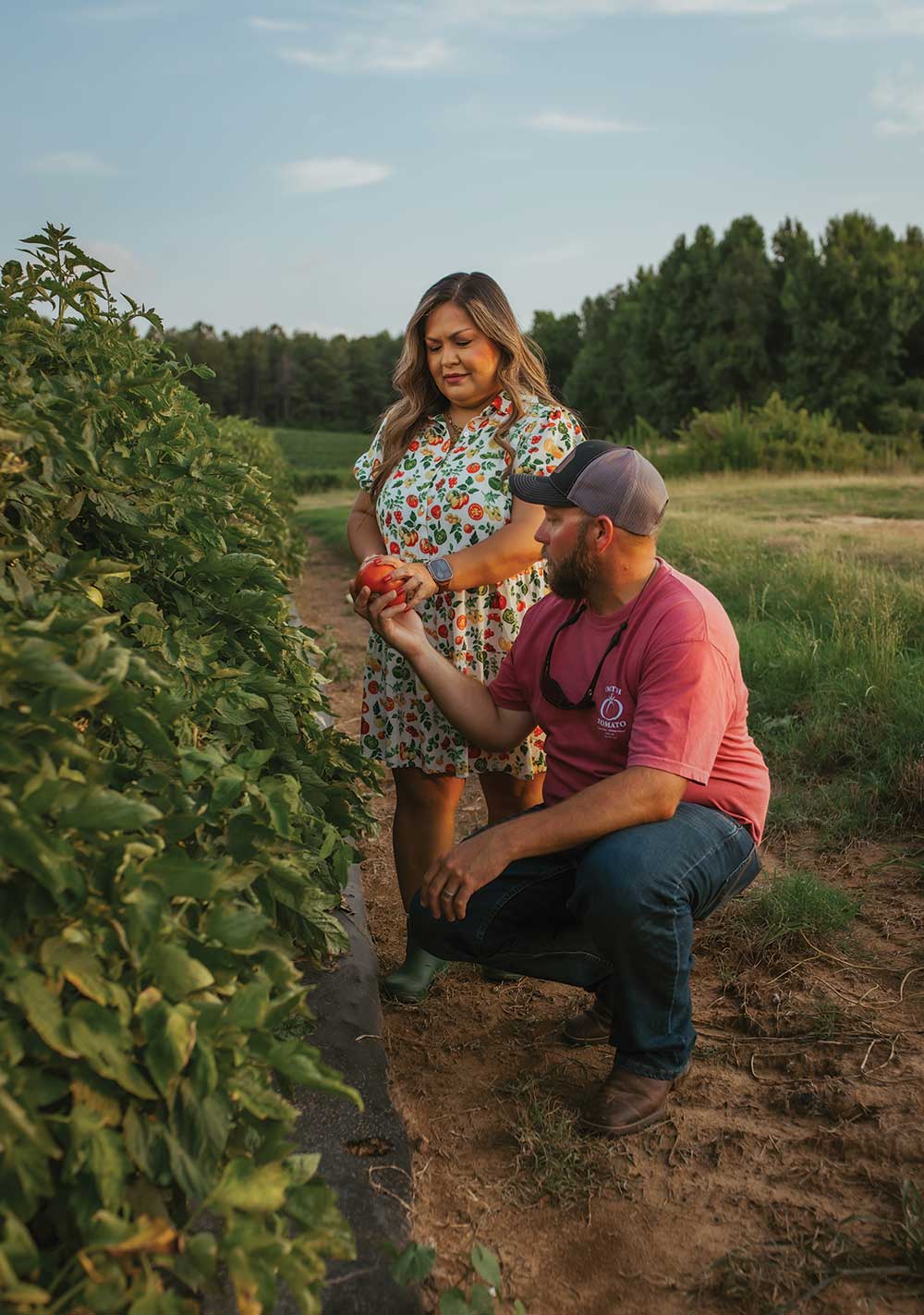
Just up the road at Smith Tomato Farm, Chad Smith grows many types of heirlooms, rounds, Romas, grape tomatoes, cherry tomatoes, and yellow non-acid tomatoes. Their 300-acre farm, which his uncle started in 1965, features 80 acres of tomatoes and 20 acres of other vegetables and pumpkins. Their typical crop yield is five million pounds of tomatoes.

Esther and Chad Smith check the crop at Smith tomato Farm

“Last year we had bad weather, and certain insects were more of a problem. Because of that, about 50 percent of the farmers went out of business,” said Smith. “That’s why I tell people it’s important to buy from local farmers. This year’s crop is better than last year’s.”

Tomatoes are widely recognized as a superfood, which is reportedly good for your heart, eyes, skin, and bones. They are also high in vitamin C and lycopene, both powerful antioxidants. Ironically, the tomato is even better for your body when cooked, especially in olive oil. According to a finding released by the National Institutes of Health, cooking tomatoes in healthy fats like olive oil greatly increases the body’s ability to absorb the beneficial lycopene.

Whether you crave tomatoes because of their health benefits or simply for the taste, there are many ways to prepare them. Salads, pastas, soups, stews, and chili have their flavors amplified by the addition of tomatoes. The best tomatoes, however, can stand on their own, dressed only in mayonnaise and bread.

All hail the tomato sandwich. While not universally loved, the tomato sandwich is a summertime ritual in the South. However, there is serious contention in the tomato sandwich arena. People are fiercely passionate about their own recipe for this most sacred of summertime fare.

For instance, should the tomato be peeled or not? What type of bread should the tomato be nestled between? What spices or herbs are used (salt and pepper, garlic, paprika, oregano, basil)? While most agree the mayonnaise should be applied liberally, people tend to be zealous regarding the brand of mayo to use. Lastly, are other ingredients invited to the party? Many around the country include bacon, leafy greens, or cheese.

Traditionalists call for a simple approach, allowing the tomato flavor to shine. Around here, it’s a simple recipe, with essentially 3 ingredients – tomato, cheap white bread, and mayonnaise, along with salt and pepper. And then there’s the finesse.

The tomato should be an heirloom variety from a local farm, preferably from Chandler Mountain, and should be large enough to fill out the bread. Cut a beefy slice of at least one inch. Slather one slice of cheap white bread with Duke’s (or Hellmann’s or Blue Plate). Place tomato slice on the bread, then liberally cover the tomato with more mayonnaise. Salt and pepper before finally placing second piece of cheap white bread on top of tomato.

Pell City native Joe Dorough looks forward to the arrival of ripe fresh tomatoes on the Fourth of July. “My favorite is the better boy variety!” he says. “Use Duke’s mayonnaise on sourdough bread and if you want more flavor, add four slices of thick bacon and a slice of Vidalia onion. This is southern soul food!”

Dorough’s friend, Fayne Howell, agrees with the mayonnaise choice but insists that white Sunbeam bread is the only option. “Sometimes I add a slice of Vidalia onion,” she adds with a smile, “but only if I won’t be in close proximity to people.” Her favorite sandwich tomato is the Cherokee Red.

A common sentiment when eating a tomato sandwich is that it is best eaten over the kitchen sink. Biting into the juicy goodness is sure to leave your arms, if not your clothes, dripping with tomato succulence. The juice from the tomato blends perfectly with the mayonnaise and seeps into the white bread, creating a thin, wet, pulpy, somewhat precarious vessel for holding the tomato.

There are many variations and adaptations to this recipe worldwide. Some regions prefer sourdough, wheat bread, or even biscuits. Some toast the bread. Still more variations surround the seasonings and additional ingredients. One of the most surprising twists comes from beyond our planet. Crumbs in zero gravity can float away and become problematic for equipment, so tomato sandwiches in space are made with tortillas.

One thing people do agree on is that one should not skimp on the mayonnaise. In a comedy sketch, author and humorist Sean Dietrich, known as “Sean of the South,” suggests that only by using a masonry trowel can you really get enough Duke’s on your tomato sandwich. At Smith Tomato Farm, Smith tells the story of his uncle, Carl, who when asked what they put on their tomatoes at the farm to make them taste so good would answer “mayonnaise” with a grin on his face.

Truly what makes Chandler Mountain tomatoes taste so good, says Smith, is the sandy, rich, and well-drained soil, along with the elevation at which the plants grow. “When you have well-drained soil,” explains Smith, “it dries out and you can add water as you need it. The next thing is the steady air flow and cooler weather. The expertise and the timing of certain things you do is a big thing, too.”

Cathy Limbaugh of Lincoln is a huge fan of Smith Farms tomatoes. She and husband, Curtis, enjoy a spin on the classic tomato sandwich using homemade biscuits with butter, tomatoes, and cheese. “It was always a special Friday night dinner when my mother lived with us,” she remembers. “We still enjoy them when tomatoes are in season.”

So, what will your tomato sandwich cost this year? “It’s simply supply and demand,” explains Alexander. “If everybody’s got good crops, the product is out there, and the price is going to be pretty cheap. And the market can change from week to week.”

As long as the supply is there, the demand for Chandler Mountain tomatoes is sure to be strong. The mighty ‘mater sammich may not actually be manna from Heaven, but after the long wait for the perfect tomato, it just feels Heaven sent. It’s just so good it’ll make your tongue slap your brains out.we are just the caretakers of it.”


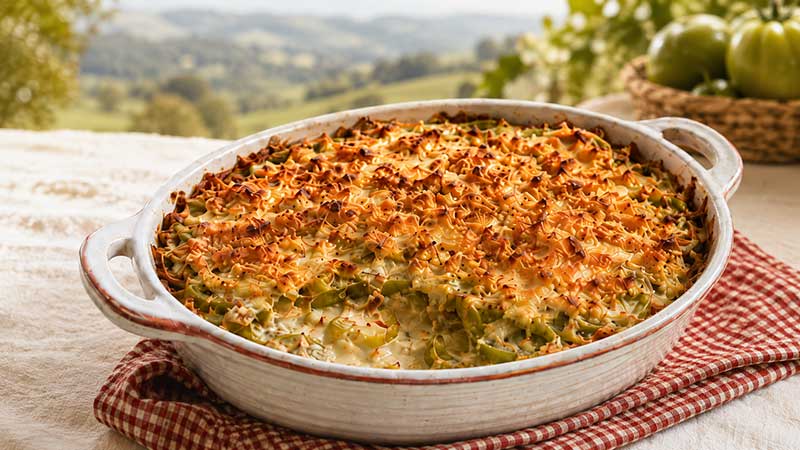
Green Tomato Casserole

Ingredients:

  • 4 medium green tomatoes cut in 1/4 inch slices
  • 1 tsp. sugar
  • 1 tsp. salt
  • 1/2 tsp. pepper
  • 2 cups bread crumbs
  • 1 cup sharp cheddar cheese
  • 1 tbsp. butter or margarine

Arrange one layer of tomato slices in bottom of greased 1 1/2 quart casserole dish. Combine salt, sugar and pepper, mix well. Sprinkle tomatoes with 1/2 sugar mixture, 1/3 bread crumbs and 1/3 cheese. Repeat layers, but omit cheese. Dot butter over top of casserole. Cover and bake at 400 degrees for 1 hour. Add remaining cheese. Bake uncovered for 5 minutes or until cheese melts.

Oven-Canned Tomatoes/Vegetables

Prepare tomato or vegetable as usual. Blanch. Fill jar with mixture and close lid. Place in cold oven. Set temperature to 275 degrees. Cook 1 hour and turn off oven. Leave until oven has cooled down.

Earnest Roots Farm

Story by Scottie Vickery
Photos by Mackenzie Free

Not long after they had their first child in 2017, Kiley and Josh Morrison started wondering about the food they were giving him. They worried about where it came from, the chemicals it contained, and whether or not it would affect their son’s future health.

After doing some research, they weren’t happy about what they learned. So they planted a vegetable garden, got a milk cow, and vowed to make changes for the good of their family.

Atticus is raising quail

Nearly 10 years later, what started out as parents’ intuition has morphed into Earnest Roots Farm in Ashville, which offers pasture-raised beef, chicken, pork, and other food that was “produced the way God intended.” No GMOs, antibiotics, hormones, or synthetic chemicals are used, Josh said. Instead, they practice regenerative agriculture to produce healthy soil, which produces better grass, leading to healthier animals. The result, he said, is nutrient-rich foods with superior flavor.

“What’s at the end of your fork determines your health,” Josh said. “If you know your farmer, you know your food. It’s not just about taste, it’s about what you’re putting in your body,” Kiley added. It’s a lifestyle they’re willing to bet the farm on because they’ve seen the benefits of a healthier food system firsthand.

“We weren’t always foodies,” Josh said. “We didn’t care what we ate. I drank Mountain Dew like it was going out of style.”

Josh grew up with migraine headaches, some so severe he had to be hospitalized. While in a neurologist’s office one day, he flipped through a health magazine because it was the only reading material available. “There was an article about how your body needs water for your organs to work properly,” he said.

Josh decided to give it a try and vowed to drink only water. “I started seeing changes within several months,” he said. “Within two years I wasn’t having any more headaches, and this was something that had plagued me for 30-something years.”

Although their original goal was to provide the best food for their family, the Morrisons quickly realized that other folks wanted to do that, as well. As a result, they’ve steadily grown their business and their desire to be local farmers that people can trust.

Much of that trust comes from transparency. In addition to offering farm tours “so people can see that we do what we say we’re doing,” they have a YouTube channel with videos about everything from their farming practices to recipes and instructions for cutting up a whole chicken or making homemade butter.

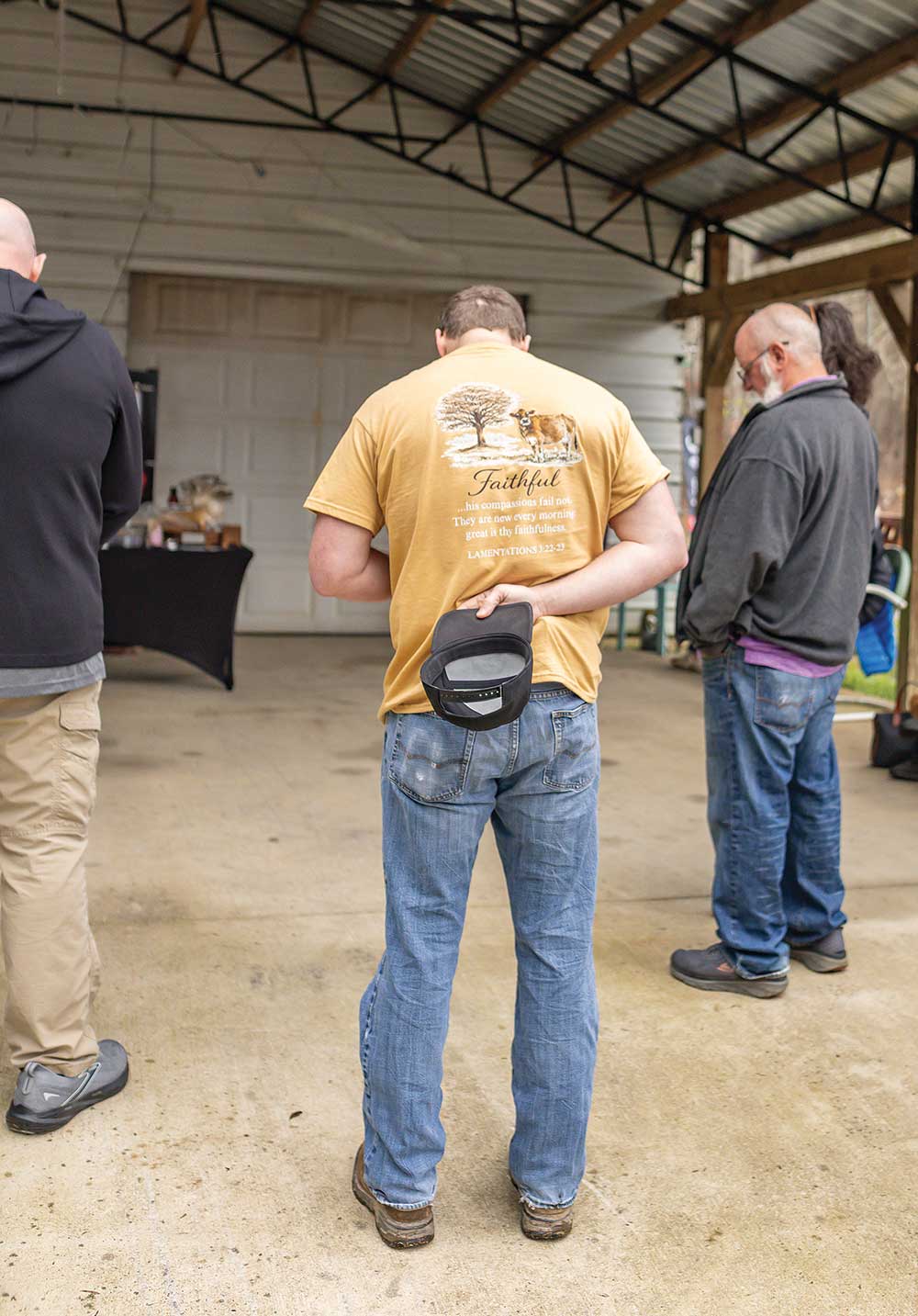
Andrew Jones offers a blessing before everyone eats at Market Day

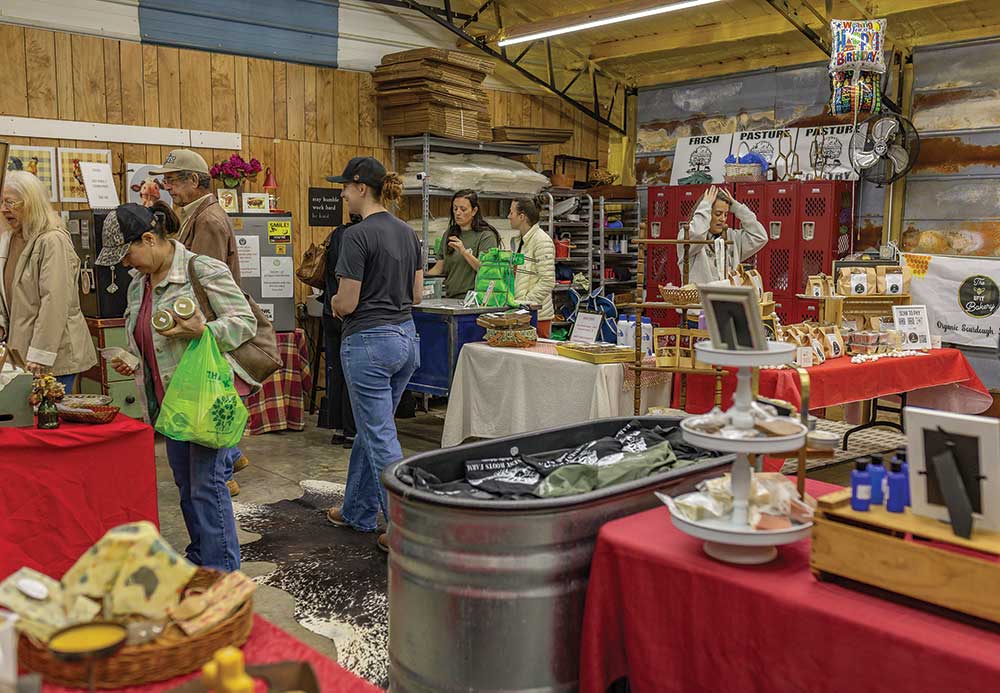
In 2024, they started hosting monthly Market Days with educational demonstrations and local vendors selling everything from honey, jams and jellies, sourdough bread, tinctures and oils, soap candles, and all-natural dog treats. They also sell their chicken, beef, pork, lamb, and quail, as well as offerings like fresh eggs, bourbon pepper bacon, garlic pepper brats, and maple brown sugar breakfast patties.

Market Days were so popular that they now host a farm market every Friday in addition to their shipping and local delivery options. “We’ve just continued to steadily improve it,” Kiley said. “We’ve learned a lot along the way, and God continues to open doors for us. We couldn’t do this without the tremendous support of the community.”

Deep roots

Kiley, a third-generation farmer, grew up on the family farm where she and Josh are now raising 9-year-old Augustus and Atticus, 6. Her grandfather, Ernest Ostrowski, was a dairy farmer in Wisconsin before moving to Alabama and marrying Kiley’s grandmother, June, a cattle farmer. Phillip Byram, Kiley’s father, was 16 when his mother married Ernest, and he has lived on the family farm, where he raises beef cattle, since he was 10. Phillip’s wife, Sharon, who passed away in 2020, was a farmer, as well.

Although Kiley loved growing up on the farm, she had no plans to end up there herself. She and Josh, who grew up in Altoona, met online 20 years ago, and they both attended Gadsden State before marrying and pursuing civil engineering degrees at the University of Alabama.

Kiley and Josh found jobs in the telecommunications field – she was in management with an engineering company in Birmingham, and he started designing fiber telecommunications. She traveled a lot and loved her job, but the lure of a simpler life eventually began to take hold.

“I wanted to be home and have a family and be grounded,” she said. “It took getting away from the farm to realize what a blessing it was to be able to live on the farm. It’s not something I take for granted.”

She realized she wanted her kids to have the same experiences she had, so they returned to Ashville and bought her grandparents’ farm, which was 10 minutes from her father’s farm. Although the plan was to focus on homesteading and self-sufficiency, they soon began selling beef, chicken and pork at a farmer’s market in Gadsden, which they did for two or three years. Business was good, so they launched a website just about the time the Covid pandemic started.

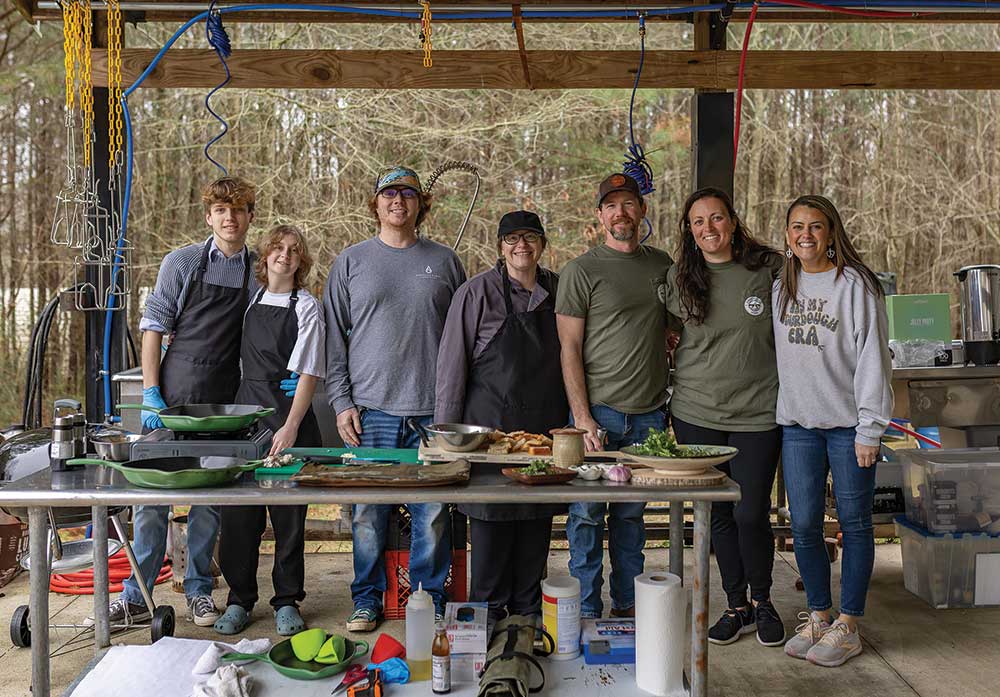
Culinary students Braden Godwin and Max Smith; Joey Duke of Aquality Farms; Meigan Tucker of ECTC; Josh and Kiley Morrison; and Anna Warren of The BFIT Bakery

“All of a sudden, people didn’t want to go to grocery stores; they wanted to go to their local farmer,” Kiley said. They set up local pickup points so customers could place orders online and pick it up later at a convenient location. “We did that for the community, and a lot of people took advantage of that,” she said.

The shipping side of the business grew quickly, and in 2021 they sold Ernest’s farm and bought a farmhouse and 10 acres (they recently added another 40 acres) adjacent to Phillip’s 180-acre cattle farm. Kiley’s sister and brother-in-law, Molly and Andrew Jones, live on the farm, as well, and the five of them work together to make Earnest Roots a reality. “Kiley and I are just really the faces” of the operation, Josh said. “It’s very much a family endeavor.”

The farm’s name is a nod to Ernest and the family’s deep farming history. Ernest and June taught Phillip to farm, and they taught Kiley and Molly, Josh explained. When he and Andrew joined the family and “didn’t know jack diddly about farming, they taught us, as well,” he said.

They changed the spelling from Ernest to Earnest as a nod to the future. “If you look in Webster’s dictionary, one of the definitions for ‘earnest’ is a promise of things to come,” Josh said. “As we grow, as we learn and diversify, we’re adding more and more products for our family and yours,” he said.

Future fruits

Market Day at the farm

They’re also raising what likely will be another generation of farmers. “They’re the reason we started this,” Josh said as he watched their boys run across the pasture.

The days are long. Josh is still designing fiber telecommunications in addition to his work on the farm. Kiley homeschools the boys while juggling her many roles. The boys get up early every morning to feed the chickens while Josh milks cows.

And they wouldn’t have it any other way. “I love that we’re raising them here where I was raised and that they’re getting their hands dirty and learning that it doesn’t hurt to work hard,” she said. “Never in a million years would I have thought that we would be here. There were a lot of steps between our original goals and where we are now, but God was laying the groundwork. He put us where we need to be without a shadow of a doubt.”

Brittle Heaven and More

Story by Paul South
Photos by Graham Hadley
Submitted photos

On Pell City’s Cogswell Avenue, there’s a sweet spot that fills hearts and tummies with comfort and joy with a combination of homemade candies, cookies and cakes, down home Southern dishes and soft serve ice cream shakes and malts.

And it all started as a cottage food business in Sarah Deese’s home kitchen.

The place is Brittle Heaven & More. And while it’s hundreds of miles from the 80-acre Arkansas farm where Deese’s mother, Sadie Miles, taught her time-tested, generations-old recipes, the spirit of that kitchen is never far away.

“I couldn’t have done it without her influence,” Deese said. “She would always let me help in the kitchen. And with the brittle, she would always let me help her during the holidays when we were making it to give out as Christmas gifts.”

She added, “She was an excellent cook, so we were always busy doing something.”

Putting the icing on one of the best carrot cakes around

It seems that Deese and her staff are always busy, especially since she moved from her home kitchen in Pell City where she started in 2019, to a brick-and-mortar storefront that opened downtown in September 2021.

“I really had no idea that it would take off like it has,” Deese said. “My main goal was just to help my son, who was diagnosed with ulcerative colitis. He had a lot of doctor bills, hospital bills, student loans that he was having to pay for. I just wanted to help him out.”

Pardon the pun, but to Deese’s surprise, folks went nuts over the candy sparked by her dream.

“When you saw how it was received, it was kind of hard to stop,” Deese said, “because when you see you’re making people happy, you know you just want to keep making them happy.”

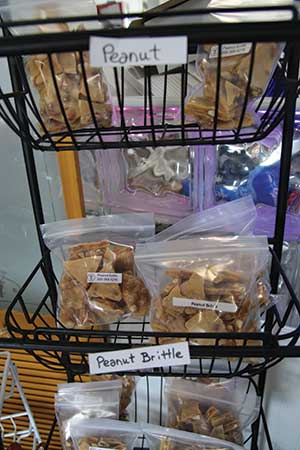
Brittle Heaven & More attracts that happiness with nut brittles of all kinds, old-fashioned confections like Martha Washington balls, Turtles, fudge, buckeyes and  pecan Divinity and new creations like Almond Joy cookies, sweet treats not found in the grocery store.

“(Customers) say it reminds them of their grandmother or their grandfather, who used to make the brittle.”

But when Deese opened her brick-and-mortar shop, she knew she had to do more. So, she added cakes, pies and cookies, sourdough and banana nut bread to her growing basket of goodies.

Then came prepared meals. At J&S Country Store, she and Melissa Parker, a colleague she had met at an Alabama Cooperative Extension cottage foods course, began to make breakfasts, lunch and dinner, with daily specials customers could take home. Seating is limited.

“We try to specialize in home cooked plates,” Deese said. “Like today, we had chicken and rice and corn and tomorrow we’ll have meatloaf with mashed potatoes and green beans. Wednesday is chicken and dumplings.”

She added, “We don’t go all out meat and three. We just try to make whatever we do that day as a plate.”

Breakfasts feature omelets, breakfast burritos and croissants.

But Brittle Heaven & More is best known for its sweets. And for the weight conscious, she also has sugar-free offerings.

What drives the store’s popularity? Maybe it’s a longing for a taste of childhood and home.

“I guess people just love home-cooked food,” Deese said. “Everything we make is from scratch. You don’t find that everywhere. I think that’s one of the reasons we’re so well received. It’s different from the store bought.”

Deese and her team – something of a family itself – tries to create a warm, homey atmosphere. “We try to be as friendly as we can,” Deese said.

And with the holidays just around the corner, Brittle Heaven & More is gearing up for its busiest time of the year, when the shop’s high demand for sweets would make Buddy from the movie Elf sing at the top of his lungs.

Asked if there is a holiday hustle and bustle, Deese didn’t hesitate. Perhaps it would be best call it the “nuttiest time of the year.”

“Oh Lord, yes,” she said. It is the craziest time of the year. We have to shut down breakfast and lunch in November and December, especially December. We just can’t do anything except mostly make brittle and supply the store.”

Deese also gets a number of orders to ship out to other parts of the country.

“I’m just constantly making brittle during the holidays,” she said. “It’s almost 24-7.”

Deese is surprised by the store’s success.

“I feel like I gave birth to a baby, and I’m watching it grow,” she said. “Whenever we had the grand opening, I felt like that was the birthday. It’s just like a child. It’s going to grow slowly.”

Two years in, like any new parent, she knows what to expect. But in the stores’ early days, she admits, she didn’t even know how to run a cash register.

“Eventually, (the business) is going to carry itself,” she said. “In the beginning, I was thrown into a management position that I knew nothing about. All I knew is I wanted to make brittle.”

But those challenges have turned to joy. With her kids and grandkids grown and gone, she fills time with the business and her customers who have become friends.

And her staff has become family. Brittle Heaven & More has created four and sometimes five jobs for the local economy. Along with Parker, the staff includes River Goodwin, Tammy Ray and Gloria Todd.  Niece Jada Wade helps when home from college and Deese’s sister, Frances Brown, pitches in during the holidays.

“That makes me happy” Deese said.

And like any successful business, she loves her customers.

“I love people. And it’s just inspiring to know that they appreciate our hard work. It inspires you to keep going. Anytime you feel appreciated, you want to do more.”

Deese cleaned houses for 28 years while raising her boys, Now in an empty nest at home, Brittle Heaven & More has provided sweet relief from boredom. And it’s kept customers happy and well fed.

Two ingredients fuel the business more than sugar and nuts, cinnamon and flour, chocolate and caramel. The first is faith.

“I gave God this business from day one,” Deese said. “I remind Him now and again that this is your business. I’m just in a position of managing it for Him. God has inspired me.”

The other key ingredient, a piece of counsel Sadie Miles gave her little girl in that Arkansas kitchen long ago, is more timeless than the recipes Deese and her staff cook up on Cogswell Avenue.

“Cook with love. If you don’t put that extra ingredient in it, you can really tell a difference.”

BFIT Bakery

Story Paul South
Photos by Graham Hadley
Submitted Photos

From her home kitchen in Pell City – armed with the ancient staples of salt, flour and water along with a wicked sense of humor – Anna Warren fills the air with the warm, embracing aroma of fresh baked sourdough bread, cakes and cookies.

And she does it with a wink and a smile.

You see, sourdough begins as starter dough in a Ball jar. The living concoction is the heart and soul of the centuries-old recipe that’s fed and nurtured until time to bake.

In Warren’s world, every starter has a name. Her first was Lucille, named for television legend Lucille Ball. Another jar is named Ricky Ricardough. There’s also Betty, Martha and Jane Dough. And don’t forget Lucy’s friend Ethel, and Fran.

“Living, wild yeast has to be fed to stay alive, so they get named,” Warren said. “It’s more tradition than anything. And it’s fun.”

Make that deliciously fun.

Like many cottage food businesses, the COVID-19 pandemic sparked Warren’s BFIT Bakery. It’s her second venture into the cottage industry. Her first was a home bakery in Florida. The Pensacola native learned to cook from a neighbor, back when Warren was barely tall enough to reach the counter.

Baked to order

“When COVID hit, I started watching TikTok, and I learned to do sourdough from another lady on the platform, and I decided to make a  business of it.”

Her interest in sourdough came from her family’s digestive health challenges related to gluten allergies and her own battle against Celiac Disease. She wanted a better gluten-free product than what was available in stores.

Buying the store-bought foods, first if they’re gluten free they’re nasty, and they’re full of all kinds of crap,” she said with a laugh. “So, I wanted to find something that I could really enjoy for myself that wasn’t going to hurt my stomach.”

Also, she wanted to include her three children in the mix. She has two in college and another is a high school junior.

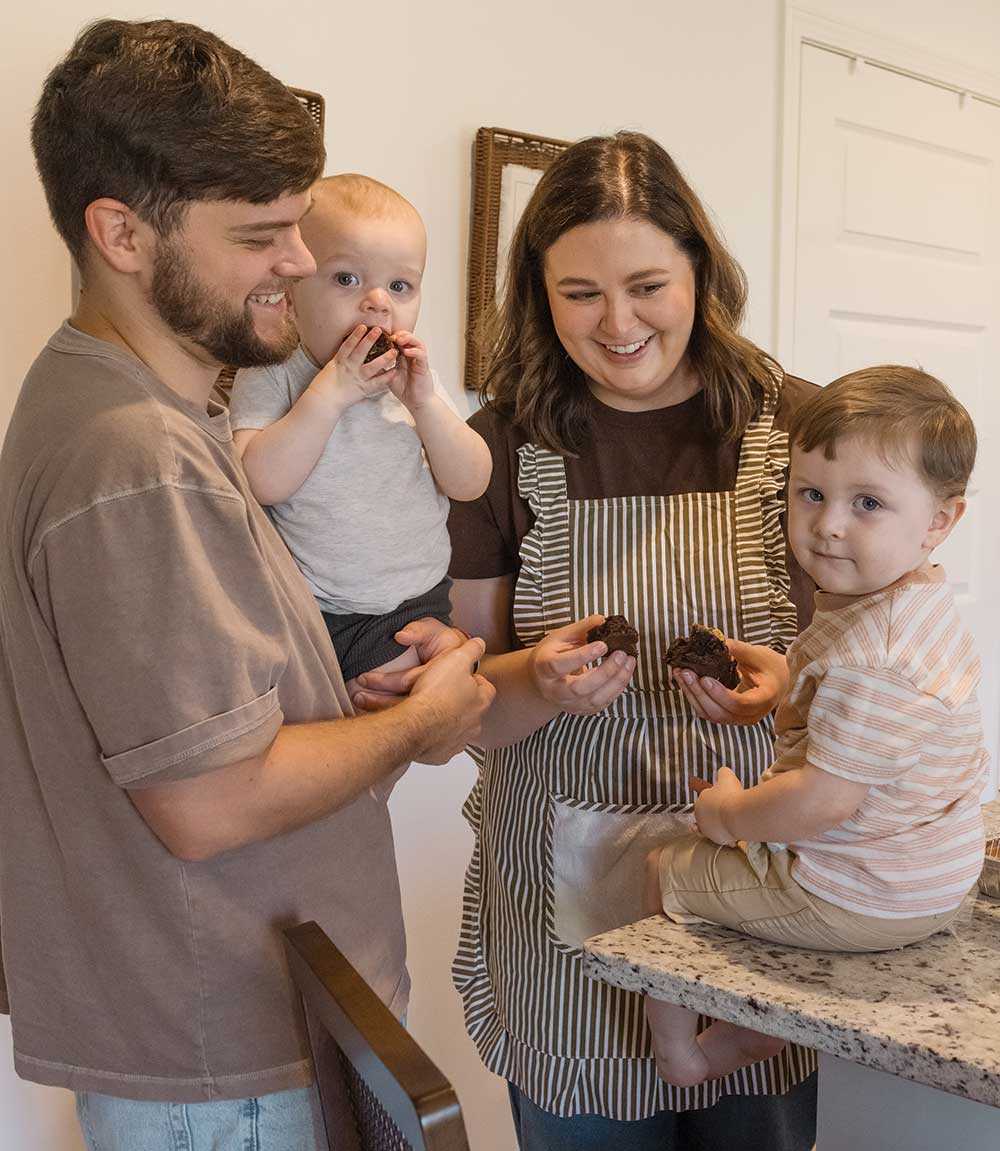
“Anything that I could do that would include them. They love coming into the kitchen when they’re here and making it with me and learning about it. Other people enjoy it.”

BFIT Bakery began in January 2024. Before that, it was just BFIT. I got certified as a trainer and worked at Workout Anytime in Pell City, so that’s where the name comes from.”

She added, “A lot of people think I call it BFIT because it’s healthy, and it truly is because it’s flour, water and salt. Those are the three ingredients and if you want something else to go in it, I add that.”

And it’s not just bread, but a pantry full of items.

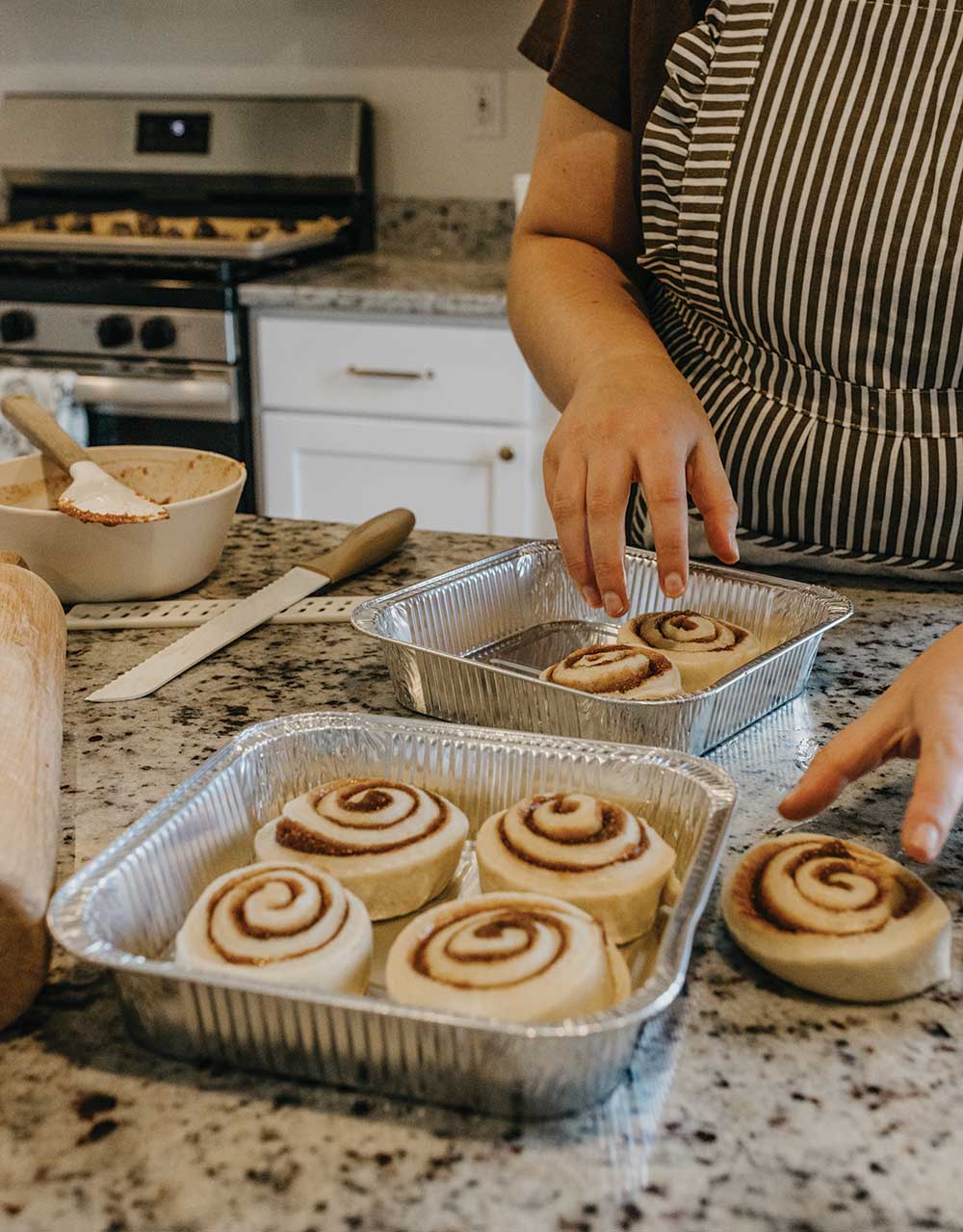
“Cookies, cinnamon rolls, rolls. Around Easter, I do Resurrection Rolls, and I do kits for the kids with little flash cards that are really, really popular so they can learn about the Resurrection.”

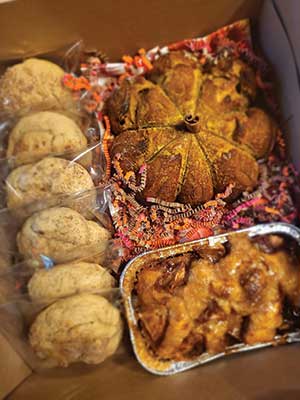
At Christmastime, she makes assorted flavors – cinnamon and gingerbread – and at Halloween, pumpkin goodies are part of the menu.

She grows the herbs and flavors – like rosemary and lavender – in her own garden. Jalapenos and other produce for her goods come from the local farmers market in an effort to support local growers.

“It’s limitless what you can do with sourdough,” Warren said.

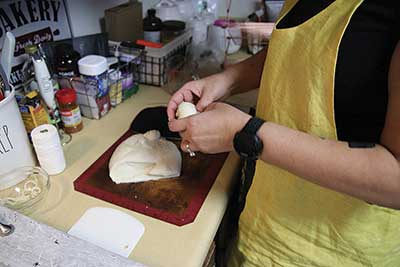
A first step in making bagels

Think about these flavors – triple chocolate espresso and lemon blueberry – like all her recipes crafted from scratch.

The process to make sourdough takes about 36 hours. Her sourdough starter begins with flour and water.  Her recipe has evolved.

“When I first started learning, I wasn’t measuring with a scale,” she said. “I was just doing what I was taught through watching other people.”

And sourdough has risen into a community of bakers, some for business, others for family enjoyment.

“I’ve met so many people I wouldn’t have met if it wasn’t for sourdough,” Warren said. “I’ve kind of come up with a recipe that works for me.”

Along with selling her goods from her home, Warren teaches others how to make tasty goods. She conducts community classes, where for $125 per person, Warren will come to your home and teach her tasty brand of kitchen magic. The classes are held once a month, except for a summer hiatus because of the heat and bad timing.

“When I teach these classes, I really explain to people that what works in my house, isn’t going to necessarily work at your house because your temperature and the humidity will play into how your bread turns out. So, you may have to tweak things.”

Her first class begins this month (October). She will conduct one or two monthly out of her home. The three-hour classes are limited to six people.

“They’re learning the very basics of sourdough,” Warren said. “They get a starter, and they get to name their starter, and they learn about feeding and maintenance. We make a loaf in class that I’ve already started for them. They get to watch it in different stages, and they get to take home a sourdough journal. It’s a whole kit in a basket, the starter, the journal, the scoring tool. They get it all as part of the class.”

For Warren, the passion for sourdough, baking and cooking burns brightly. “If food was a love language, it would be mine.”

It all started with Pensacola next door neighbor, Miss Karen, who taught young Anna the basics of the culinary arts.

“She had me at her house every chance she could from before I could reach the counter,” Warren remembered. “She taught me to cook and measure and all those things. It’s just something that I’ve always done.”

The philosophy of BFIT Bakery is simple:

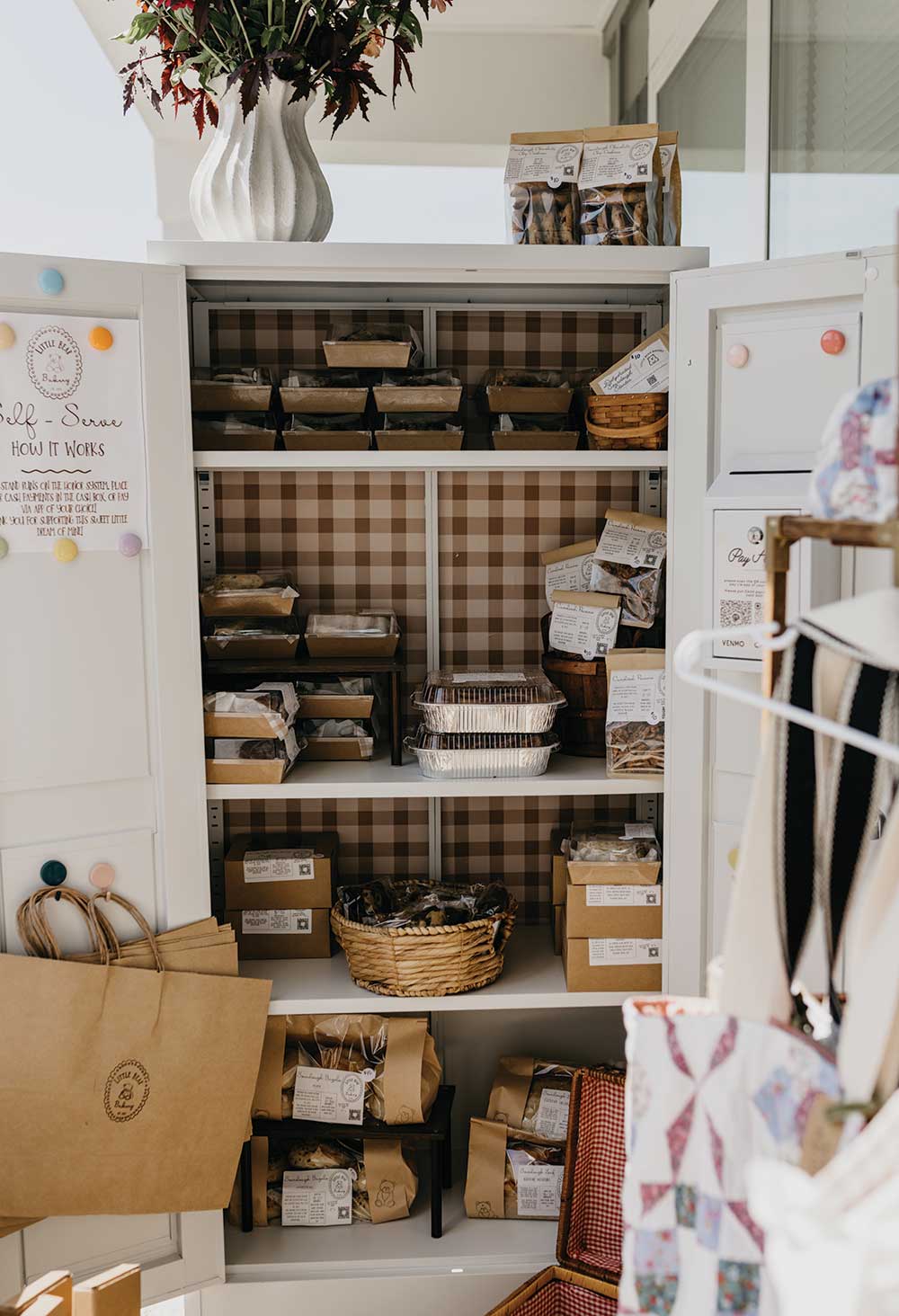
“Making homemade bread and sharing it with the community. It’s good for you. It’s good for people who are diabetic. It can help breakdown the sugars because of the fermentation process. Just giving people another option because we don’t know what they’re putting in our food anymore. It’s not the same.”

Warren, who works full time for the Alabama Department of Human Resources, has seen her side hustle grow. Her bread and baked goods are wildly popular.

On Wednesdays and Saturdays, she fills her front porch bins with bread and other goodies, complete with cooler packs to fend off summer heat.

She also takes orders online at Bakesy.com. The address is https://bakesy.shop/b/the-bfit-bakery.

“I really had to set boundaries for myself, because I could bake from the time I wake up until the time I go to bed,” Warren said.

But the bread has become a staff of her life. The chill of fall and winter heats up her bread business.

‘It’s just become part of my every day at this point,” Warren says. “I feed Lucille. I bake bread. My co-workers love it because they get to try everything. They’re my guinea pigs.”

Her own starter

As often happens with cottage businesses, The BFIT Bakery started with a heart for family.

She acted on encouragement from friends and sparked by a desire to buy a lifetime sportsman Florida license for her youngest son, an avid outdoorsman. At Christmas, the licenses went on sale for half the normal $1,000 price.

Warren and “Lucille Ball” went to work baking bread, two loaves at a time. She then hosted a one-day event featuring her bread at Pell City’s 4 Messie Monkeys in Pell City.

“I sold out in an hour and a half, and I made $700,” Warren said.

The business has given her a chance to do more for her kids. But again, it all comes down to Warren’s love language – food – good, homemade food.

“Whether it’s baking, grilling smoking meat, whatever it is I’m doing, it’s always going to be food related. My Dad is Italian. My Mom is Maltese, so it’s a lot of food. A lot of food and talking with our hands. That’s how I show my family and friends that I care.”

And while some cottage food businesses have exploded into corporations or retail chains, Warren wants to stay grounded.

“There’s something special about getting up at 4 in the morning on a Tuesday to bake bread for the community. I want to harbor that and keep it safe and special.”

For ordering information about The BFIT Bakery, visit its Facebook page, at Bakesy.com, or email at awarren@121218@gmail.com.

Beaver Creek gristmills, cornbread and memories

Story by Joe Whitten
Photos by Mackenzie Free
and submitted Photos

Some of our readers are of an age to remember a family farmhouse with a wood-burning cookstove in the kitchen. As memory pulls them into distant reveries, the smell of cornbread browning in the oven is so real that mouths begin to water. On the table sits the fresh-churned butter that will crown a slice cut steaming from the cast iron skillet.

Then, as memory fades into 2023 reality, they realize a skillet of cornbread baking in a gas or electric oven smells just as good.

Two hundred years ago in St. Clair County, the meal for that “bread of memory” came from a local gristmill that had ground the farmer’s homegrown, dried and shelled corn.

Yarbrough waterwheel attached to wooden frame, submerged in Beaver Creek

In the book, Anthology of People – Places – Events of St. Clair County, Mattie Lou Teague Crow (1903-1999) in her article, “Mills in the Valley,” records that before the construction of local gristmills, “The man of the family often traveled all the way back to Georgia or Tennessee to have corn ground into meal. In time, each community had its own gristmill.”

Later in the article she laments that “Today we buy … a box of corn muffin mix, which (Tennessee) Ernie Ford assures us is ‘pea-picking good.’ But it’s a sad thing that today’s generation will never know what real cornbread was like. Corn pone. Egg bread. Spoon bread. Johnny cake. Crackling bread. Corn dodgers. Hush puppies. Today’s variety is a pale imitation of the bread our grandparents made from that wonderful water-ground meal.”

Yarbrough Mills

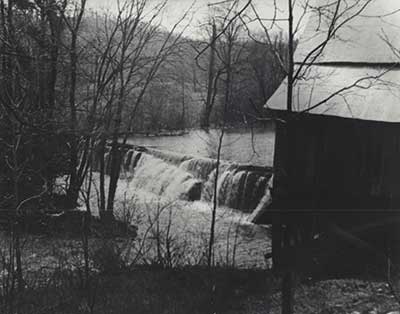
Manoah Yarbrough no doubt built the first gristmill on Beaver Creek c1823. He moved his family from North Carolina to St. Clair County in 1822. His original destination was Choccolocco Valley in Calhoun County, but after learning of the Indian unrest in that area, he settled in St. Clair County.

According to an article written by Fitzgerald Yarbrough for The Heritage of St. Clair County, Manoah, having run corn and flour mills in North Carolina, had “brought his mill, including the mill rocks, with him,” and soon after getting “the family settled, he began constructing a dam across Beaver Creek to furnish power for his grist and flour mills. The dam is approximately 450 feet long and is built of mountain rock and dirt.”

Fitzgerald was proud of the fact that “The original dam is still used today as a roadbed leading to a bridge which crosses Beaver Creek. … The bridge foundation is the original dam where the water gates were.” Fitzgerald and his two sons, Fitz and Burk, constructed the bridge in 1985.

In the fall after the harvest and through the winter months, the family and farm workers added height to the dam “… to give a greater head of water so more machinery could be added.” Manoah died in 1840, and his son, Littleton, continued running the mill and making improvements.

In addition to corn and flour mills, over time, the Yarbrough mills included a sawmill, a shingle mill and a wool carding mill. Fitzgerald wrote of Littleton’s son, “My grandfather, John Yarbrough, Sr., ran the wool carding mill to make wool yarn for the Confederate Army during the Civil War. He was only 13 years old when the war began.” John Yarbrough, Sr., added a cotton gin, which operated until about the time WWI began.

The traditional waterwheel powered the mill until the 1880s. By then, Littleton had died and his son, John Yarbrough, mentioned above, operated the mills and continued making improvements to them.

“The turbine water wheel (that John purchased) was known as Morris Wheel,” Fitzgerald wrote, “because it was constructed at Morrisville, Alabama, and sold to my grandfather by John and Elbert Morris.”

When John and Elbert Morris came to Beaver Valley to install the Morris Wheel, romance blossomed between them and two of Fitzgerald’s aunts, for “A few years later, John Morris married my aunt Mae,” he wrote, “and Elbert Morris married Aunt Jennie.”

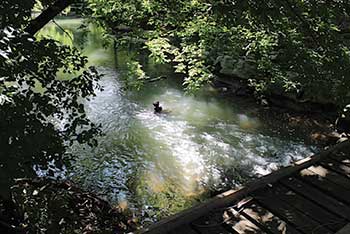
At the location of the mill, Beaver Creek flows wide and sparkling in the sun. The mill dam allowed a large lake to form above it which became a place local folk enjoyed for fishing, camping, swimming, fish fries and picnics.

With the passing decades, sediment built up behind the dam, thus reducing the volume of water in the lake. The Yarbroughs estimated that between the years 1823 and 1925, eight feet of sediment accumulated. Then in 1925, an exceptional flood washed out the water gate and swept the waterwheel downstream about 50 feet from its original location in the water house, which was also damaged by the flood waters and never rebuilt.

The waterwheel, still attached to its wooden frame, lies today in the waters of Beaver Creek and has not been removed for two reasons recorded by Fitzgerald: “(1) Its weight. It is very heavy, and (2) It is better preserved under water than if it was raised and exposed to the elements.”

The Yarbrough mill functioned for more than 100 years. The corn and flour mill stones carted here from North Carolina remain in the family. And from the sawmill, several 19th century homes constructed by Littleton Yarbrough, with lumber sawn in his mill and dried in his kiln, remain in the Beaver Valley today. The kiln lay east of the dam and the outline of the rock foundation and sides remain visible today. In addition to these Beaver Valley homes, the Ashville Courthouse and the second Ashville Baptist Church building were constructed with lumber from the Yarbrough mill.

Abernathy Grist Mill

In the previously mentioned book, Anthology of People – Places – Events of St. Clair County, Larry McCullough wrote the article, “History of the Abernathy Grist Mill,” from history he collected from L.E. Abernathy and V. Ray Thompson. Larry wrote, “The Abernathy Grist Mill once located in Beaver Valley was purchased in 1918 by M.R. Abernathy after the sawmill he operated in Ashville was destroyed by fire. The mill was previously known as the Gilchrist Mill, though it is unclear who actually built the mill or when it was built.”

Gilchrist-Abernathy Grist Mill and pond

However, in the same Anthology, Lura Jean Cobb Smith, a Gilchrist descendant, has an article titled “Who Built the Mill?,” wherein she stated, “My Great-Grandfather, Truss Vann Gilchrist brought his family from Calhoun County to St. Clair County, bought farmland in the valley of Beaver Creek, on October 28, 1879. He and my grandfather, John Dudley Gilchrist, built the Mill now known as Abernathy Mill.” The rest of the article relates Gilchrist genealogy and family history.

In a recent interview, Judith Ramsey Abernathy recalled information her husband, Bob Abernathy, had gleaned about his grandfather, Marion R. Abernathy, who bought and ran the mill. “The Abernathy family lived in Cherokee County where, as carpenters and millers, they designed mills, dams and raceways flumes for carrying water. The family mills there included a gristmill, sawmill and cotton gin.”

Marion was five years old when his father died. In those days, children in large families grew up learning how to work, and so did Marion. In the 1880 US Census, he is listed as a farm hand and living with his cousin in Cherokee County, Alabama. Then in later censuses, he is in St. Clair County.

The Abernathy family were related to the St. Clair County Lindsey family who “… had a mill on Canoe Creek northeast of Ashville,” said Judith, “and we believe that is why Marion came to St. Clair County.”

“The mill sat on a large lake created by dams on the creek,” she related. “Bob’s mother recalled seeing large trout in the lake. They built a big farmhouse on the Beaver Creek property. It had a dogtrot through the center and many large rooms.”

Larry McCollough describes the remains of the mill. “The dam is still intact except for a 20-foot section on the south side of the creek. The dam stretches 80 feet from end to end, stands 15 feet tall and is 10 feet thick at the base. Some of the rocks making up the dam are half as large as automobiles.”

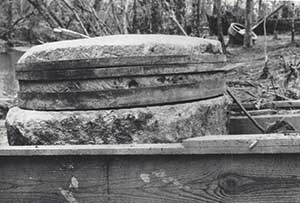
Abernathy Grist Mill stones

According to Larry’s article, the millhouse was a wood frame structure that stood two stories high and sat “…atop the dam on the northside of the creek. …A cotton gin occupied the top floor, though the gin machinery was never used by Mr. Abernathy.”

The Abernathy mill never had the traditional waterwheel, so when time came to grind corn, the miller raised a sluice gate in the dam to release the water. “The water was directed through a water turbine. …The turbine converted the rushing water into power that turned various gears and shafts, finally setting into motion one of the 800-pound millstones. One stone turned in a circular motion (this one had to be balanced) while the other remained stationary during the grinding.” The ground corn meal fell into a hopper under which the miller had placed a sack into which he released the meal.

Margaret Franklin Berry, who grew up in Slasham Valley, remembers this process from the mid-to-late-1940s.  “When we needed corn meal, my parents would send my brother and me out there to shell corn. I remember we shelled gallon buckets of corn. My daddy would take it to the mill to have it ground, and I’d go with him. I just thought that was fascinating to watch that man pour that corn into that hopper, and it come out cornmeal.” She couldn’t remember the name of the mill, but her description seems to indicate the Abernathy Gristmill.

Larry also pointed out that the millstones’ grooves would wear down from the grinding and required regrooving periodically. The miller used a hammer and chisel for this job. This chiseling left grit in the grooves for several days afterward, and during those days, the miller ground only chicken feed until the grit was gone.

Just as at the Yarbrough mill, the Abernathy millpond was a social gathering place where people could swim and fish in the cool water and then picnic on the bank.

In the early 1940s, unusually heavy spring rains caused Beaver Creek flooding, which swept the Abernathy millhouse off its foundations. At the time Larry wrote the article in 1985, “Boards, rafters and heart pine logs can still be seen beneath the clear waters, looking like the wreckage of a Spanish galleon.”

Time no doubt has taken its toll on those timbers the passing years. The millstones were retrieved by Larry and remain preserved at his home today.

According to Judith Abernathy, after the storm washed the Beaver Creek mill away, “Marion purchased land in Ashville and built a new home. He also began operating a heading mill, making wooden barrelheads. This mill was located at the corner of Highway 23 and 7th Avenue in Ashville. Every day at noon, a steam whistle would blow at the mill.”

The Cox Mill

In an article on file at the Ashville Museum and Archives, Margaret Coker wrote of the Cox Gristmill in a paper titled, “Childhood Memories of an Old Gristmill.” Henry Cox operated this mill in Beaver Valley. According to Mr. Cox’s obituary in The Southern Aegis, Nov. 8, 1928, he became blind at the age of 12, and in spite of his blindness, as an adult he delivered mail in Beaver Valley for 15 years.

The Cox gristmill had the traditional waterwheel, and the dam across the creek formed a millpond. When the miller opened the water gate, the rushing water turned the waterwheel to power the mill.

“I remember helping my father by turning the handle of the corn sheller while he fed the ears into it,” Mrs. Coker wrote. “Then the corn was sacked and taken to the Cox Gristmill.” Folk could have their corn ground fine, medium or coarse.

“I remember as a small child going to the mill with my father in a wagon,” she wrote, “and then later in an early model Ford car. Some customers came bringing their sacks of corn across the backs of the horses or mules they were riding. Others came in buggies or wagons.”

She drew a word picture with this recollection from the past. “One of the pleasant memories of my childhood was walking into my mother’s kitchen and smelling the enticing aroma of hot cornbread just out of the oven of the wood burning stove. Even better was the taste of the bread when a slice of it was filled with home churned butter.”

The wonderful thing is a wood burning stove is not required for making family memories of your own. So, go to the store and purchase some self-rising corn meal – and a pound of real butter. For dinner tonight, open a jar of the vegetable soup you canned this past summer. Turn your oven – gas or electric – to 425 degrees and put the oiled iron skillet in the oven while it heats. A sizzling hot skillet gives a good crust to the cornbread. If you don’t have a recipe, there will be one on the bag of cornmeal you bought, or you can call your mother, your grandmother, an aunt, or a friend for their recipe.

Over the past 100 years, sugar has crept into cornbread recipes in the South, but for true, old-timey Southern cornbread, cooks don’t add sugar to the batter. Beloved storyteller, Sean of the South, addressed this in his Nov. 2, 2022, online blog titled, “For the Love of Cornbread,” when he wrote:

“Only a few days ago, I visited a restaurant in Franklin, Tennessee. It was one of those fancy joints where waiters and waitresses walk like they’re in need of fiber supplementation. The waitress brought me a hot basket of sweet cornbread.

“ ‘Excuse me, ma’am,’ I said to the waitress. ‘There’s something wrong with my cornbread.’

“‘What’s wrong?’ she said.

“ ‘Well, I think the chef spilled a box of Duncan Hines into the batter.’

“No, sir, we put sugar in our cornbread.”

“ ‘Why would you do such a thing?’

“Because our chef is from Chicago.”

And cornbread lovers all over the South murmured commiserations along with Tennessee Ernie Ford, “Well bless his pea-picking heart!”

Christmas in St. Clair

Story and photos by
Elaine Hobson Miller
Contributed photos

Christmas time’s a-comin’, and you can almost smell the aroma of holiday foods. Cakes, pies, scrumptious side dishes, standing rib roasts and turkeys take center stage, or should we say, center table, in homes throughout the world.

It’s not just homes that feature holiday dishes, though. Many restaurants, including several here in St. Clair County, also bring out holiday foods that add a touch of festiveness to their daily menus. Discover managed to gather up a few that their chefs were willing to share. Many of them, like those on our readers’ tables, were handed down from mothers and grandmothers, making them extra special at family holiday gatherings.

Special dishes The St. Clair’s signature

Chef de Cuisine Sean Fincher at The St. Clair in Pell City developed an amazing appetizer recipe called, “Spiced Red Wine Braised Sausage Rolls with Caramelized Onion Fig Jam.” In fact, it could be used a side dish, too. It takes a little work but is well worth the effort. Co-owner Rebecca Robinson says the item isn’t on the menu yet but may be during the holidays. Or, they may add it to their catering menu.

The restaurant and The Tavern at The St. Clair are the brainchild of Rebecca and Carson Robinson, business partners for nearly two decades. Their menu is a mix of steaks, seafood, game, chicken, lamb and pork and a variety of appetizers and salads. Offerings are upscale, but not pretentious. This white-tablecloth restaurant doesn’t care whether you dress up or wear jeans, and patrons can be seen in both.

Always something good at Greasy Cove

Greasy Cove General Store’s contribution, Cranberry Salad, is a recipe handed down from owner/manager Donald Reeves’ grandmother. “She made it at family gatherings,” Reeves said. He also said he may be serving it in his Gallant-area restaurant, affectionately known by customers as the Greasy Spoon, during the current holiday season.

Greasy Cove

 “The store building was in our family, but it was falling in, and I wanted to do something difficult,” Reeves said regarding the development of his business. “I always wanted a general store with a produce market and kitchen in it. We opened in 2019, but it took another year to get the restaurant open.” Prior to running a general store and restaurant, Reeves was a machinist. “I like hole-in-the-wall places with really good food,” he said.

Head to The Grill for palate pleasing dishes

Maple Bacon Brussels Sprouts will make a vegetable eater out of hard-core meat and potatoes folks. Contributed by The Grill at the Farm, in Cropwell, it is part of a menu 75 percent of which was created by owner Wade Reich, his son/manager Eakin Reich, and Chef Patrick.

Wade Reich says part of his reasoning for opening The Grill (formerly Louie’s) was a lack of properly functioning synapses in his brain. This may be attributed to his having grown up in his family’s hotel business, which started in 1894 in Gadsden, as well as in the food business, with chefs out of New Orleans and 100-year-old recipes. “You get the food business in your blood, and you can’t get it out,” Reich said.

He wouldn’t have done it by himself, but his son joined him. “This used to be Louie’s Grill at the Countryside Farm,” Reich said. “We have 62 acres, and we’re trying to figure out how to develop the rest of the property.”

Besides its 100-seat restaurant, The Grill offers a 140-seat party room and a 40-seat sports or oyster bar. “Then there’s the Residence Inn and a barn we’re trying to do something with,” Reich says. “I also own Butts To Go on May’s Drive. The Grill at the Farm is at 230 Hamby Road, off US 231, then the Dam Road.”

What’s for dessert?

For a sweet-salty ending to your holiday meal, try Peanut Butter Pie, contributed by Scott Holmes, owner of Charlie’s BBQ in Odenville. In 2016, Charlie’s beat out nine other barbecue joints across the state to be selected Best Barbecue in The Dives division during Alabama Tourism’s Year of Alabama Barbecue.

Holmes thinks his location at the corner of US 411 and Alabama 174 South, in front of the Piggly Wiggly grocery store and adjacent to a service station, probably placed him in the right category. “If you’re a barbecue place in Alabama attached to a service station, you’re probably a dive,” he said.

“Briskets are our signature dish,” he added. “We smoke six a week. A brisket is the chest muscle of a cow, and it’s hard to do. We cook them up to 16 hours to get them tender.” There’s a different special every Monday, such as the popular Soul Bowl, consisting of a bed of garlic cheese grits layered with turnip greens, pork and a cornbread muffin on top.

Look what’s cookin’ in Ragland

Anthony Soles and his business partner, longtime City Councilman Carl Byers, opened Chef T’s (for Tony) in Ragland in 2010, building on the success of their original Alexandria location. Chef T says he inherited his love of cooking from his mother, and he has used that “inheritance” for years as he worked his way up in the food industry.

For the holidays, Soles chose to share Apple Dumplings as the go-to favorite.

The mainstay of his everyday menu is the barbecue pork, and they offer a small-chopped pork sandwich for just $1.25.

The barbecue sauce is homemade and is described by Byers as a “sneaky heat, but not overpowering.” The signature Chef T’s burger is served with a steak knife holding it all together.

In addition to running a Southern, home-style eatery, catering is an aspect of the business and is supported by two food trucks. They cater for many of the large corporations and businesses in the surrounding areas.

If these recipes aren’t enough to inspire your holiday cooking, maybe you should pick up Christmas dinner at one of these St. Clair restaurants.


Holiday recipes

Spiced Red Wine Braised Sausage Rolls with Caramelized Onion Fig Jam
From Chef de Cuisine Sean Fincher at The Tavern at The St. Clair (Pell City)
Ingredients for the Braised Sausage:

  • 8 – 5” Lengths of Conecuh Mild Sausages (or your favorite link sausages)
  • 2 Tbs. olive oil
  • 2 cups dry red wine, such as a Cabernet Sauvignon or Pinot Noir
  • 1 cup beef broth
  • 1 stick of cinnamon, whole
  • 8 whole cloves
  • 1 sprig of fresh rosemary
  • 1 orange, peel only
  • Salt

Directions:
Add oil and sausages in a small braising pan (or other pan with 2” sides) heated on medium-high. Brown links on each side, then add cinnamon, cloves and rosemary and saute lightly for 2 minutes. Deglaze with wine, adding the beef broth and orange peel. Cover with a lid and braise for 1 hour. Remove sausages and allow to cool to room temperature, then chill thoroughly. Reduce braising liquid by half and strain through a fine mesh strainer. Reserve for jam preparation. While the sausages cool, begin making the jam.

Ingredients for the Jam:

  • 4 red onions, thinly sliced (Julienned)
  • 2 Tbs. olive oil
  • 4 cups fresh figs, chopped*
  • ¼ cup balsamic vinegar
  • 1 Tbs. sugar, or to taste if you prefer it sweeter
  • Reserved braising liquid

Directions:
In the braising pan after straining liquids out, add onions. Cook the onions on low heat, stirring often until they are caramelized. They should have a deep brown color to them. Deglaze with reserved braising liquid and scrape the bottom of the pan from all the fond (brown bits) that has developed. Add figs, balsamic vinegar, and sugar. Bring the mixture to a bare simmer for 1 hour and stir often. The mixture should have thickened with very little residual liquid left in the pan. Taste for salt and sweetness and adjust to your personal taste. Remove to a storage container and allow to cool to room temperature. Serve warm.

Bring it all together:
Ingredients:

  • 1 package of puff pastry, thawed
  • 1 egg + 1 tsp of water for egg wash

Cut puff pastry into 8 equal pieces with a sharp knife. Place each sausage in the center of the pastry horizontally. Lightly brush egg wash onto the back edge, furthest from you. Fold the pastry closest to you over the sausage and then onto the back edge, leaving the seam side down on the cutting board. After completing all the sausages, place them on a parchment-lined sheet tray. Brush each roll with the remainder of the egg wash. Bake at 400* F for 25 minutes or until the puff pastry has turned golden brown.
Enjoy the Sausage Rolls with the Jam
*When fresh figs aren’t available, replace with ¾ cup of fig preserves. Don’t add sugar to the jam because the preserves are going to have more than enough.


Clara’s Cranberry Salad
From Donald Reeves at Greasy Cove
General Store (Gallant)
Ingredients:

  • 2 small boxes raspberry Jello
  • 1 can whole-berry cranberry sauce
  • 1 small can crushed pineapple, drained
  • 1 pint sour cream
  • 1/2 cup chopped nuts
  • 2 cups boiling water

Directions:
Put 2 cups boiling water in a large bowl and add Jello. Stir until dissolved. Stir in cranberry sauce. Let set in refrigerator until syrupy. Add cranberry sauce, pineapple, sour cream and nuts, and fold in. Put in refrigerator until set.

Peanut Butter Pie
From Charlie’s BBQ (Odenville)
Ingredients:

  • 16 oz. jar of natural peanut butter
  • 8 oz. reduced-fat cream cheese, softened
  • ¾ cup of honey
  • 8 oz. Cool Whip
  • 6 oz. chocolate pie crust
  • 2 Tbs. semi-sweet chocolate chips
  • ½ Tsp. shortening

Directions:
Beat together cream cheese and honey until well blended.  Stir in peanut butter and mix well. Gently fold in Cool Whip. Spoon into crust. Heat chocolate chips and shortening over low heat until melted, drizzle over pie.  Chill overnight or freeze.
Serves 8.

Apple Dumplings
From Chef T’s (Ragland)
Ingredients:

  • 1 1/2 cups sugar
  • 2 cups water
  • 1/2 tsp ground cinnamon divided
  • 1/2 tsp ground nutmeg divided
  • 1/4 cup butter
  • 2/3  cup sugar
  • 2 (15 oz) packages refrigerated pie crusts
  • 8 med apples of your choice peeled and cored
  • 3 tbsp butter cut up

Directions:
Boil 2 cups water, 1 1/2 cup sugar, 1/4 tsp cinnamon and 1/4 tsp nutmeg in saucepan on med high heat stirring constantly.  Reduce heat to low simmering and stirring occasionally for 10 min. This will turn to syrup. Once it does add 1/4 cup sugar and set to the side. In a separate bowl mix your leftover cinnamon, nutmeg and 2/3 cup sugar.
Cut pie crusts quarters and roll out into circles. Place an apple in the middle of each circle sprinkling each evenly with your cinnamon sugar mixture. Dot each evenly with butter. Fold dough over apples, pinching each closed. Place in lightly greased baking dish. Drizzle with syrup. Bake dumplings at 375° for 45 minutes.
You can always find a way to cut corners and use canned fried apples for a sweeter simpler dish.
Serve hot or cold. Goes great with a scoop of vanilla ice cream!
Hope you enjoy this great dessert like we do.

Maple Bacon Brussels Sprouts
From The Grill at The Farm (Cropwell)
Ingredients:

  • 2 pounds Brussels sprouts, halved
  • 2 pieces thick-cut bacon, such as Nueske’s
  • Applewood smoked bacon
  • 3 Tbsp. maple syrup
  • 1/4 tsp. Kosher salt
  • 1/2 tsp. freshly ground black pepper

Directions:
Heat oven to 400 degrees. Line a large-rimmed baking sheet with aluminum foil. Place bacon on sheets and cook until beginning to crisp, about 7 minutes. 
Remove bacon from oven and transfer to a paper towel- lined plate; reserve 2 tablespoons of bacon drippings. Chop bacon into small strips. Discard aluminum foil and return rimmed baking sheet to hot oven.
Meanwhile, fill large stock pot with water and bring to a boil over medium high heat. Add Brussels sprouts and boil until leaves are dark green in color, about 4 minutes. Transfer Brussels and any loose leaves to a large bowl filled with ice water. Drain, pat dry and transfer to medium bowl. Add half of the chopped bacon, 2 tablespoons of maple syrup, reserved bacon drippings and salt and pepper to the bowl; toss to combine. Remove baking sheet from oven and evenly spread mixture over sheet; cook Brussels sprouts until caramelized and bacon is crisp, about 20 minutes, stirring halfway through. Transfer Brussels sprouts to a serving bowl and drizzle with remaining maple syrup and bacon.
Serves 6-8