If all goes as planned, Moody will begin seeing the beginning of a $100 million retail development along U.S. 411 and the Little Cahaba River.
Proposed by noted developer Stan Pate of Tuscaloosa, city officials are hailing it as a “real win” for the city, according to Moody Mayor Bill Lee.
The 200,000 to 250,00 square foot retail space is targeting property between 7 Brew and Joey Adkins Drive on Moody Parkway.
It took some incentives to land the deal, but Lee and the city council believe it to be a wise investment. The property has had its challenges because of the environmental concerns about the creek running through it, but the incentives will help overcome what had been financial roadblocks in the past.
According to the incentive agreement the council approved, worth about $65 million in incentives, it involves abatement of selected sales and property taxes, fees and permits, for up to 40 years or until the total it is paid. Pate has five years to begin the incentive process after his company invests a minimum of $10 million.
The 30-acre site will be mixed use of shopping and dining options. Clearing has already begun on the property. Existing property owners sold their land to Pate and businesses on that property now will be demolished after their leases are up.
All artists have their favorite tools. Michelangelo fared well with a hammer and chisel. Isaac Stern worked wonders with his violin bow. For Pell City’s Dale Griffith, the implement of choice is … needles.
Dale is a prima quilter. She produces bed covers fit for a king – or a queen or twin or whatever size bed you own. For more than 40 years, scores of happy sleepers have enjoyed her meticulously crafted bed-wares.
Born and raised in the sea islands district around Brunswick, Georgia, she moved to Pell City in 1987, where she married Bill in 1990.
She sets a very high standard for her quilts, throws, spreads, comforters, shams, duvets, baby coverlets and many other embroidered and crocheted wares. For instance, Dale never uses anything but pure cotton for her quilt liners and bottom backing sheets. All woven materials must be between 300 and 400 thread count.
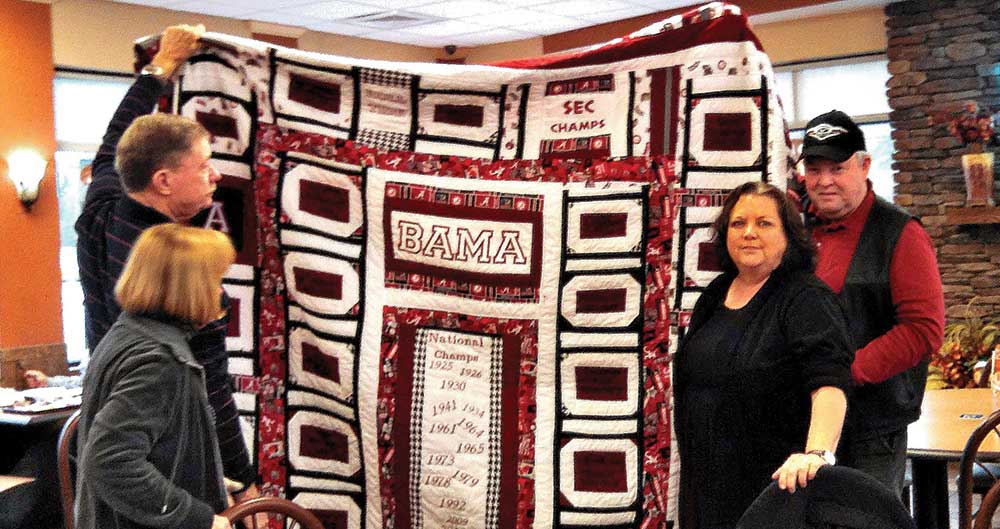
Custom Alabama quilt
The inner layer is always cotton, never the fluffy plastic froth found in most store-bought products. Nor will ordinary thread suffice; she uses a rather expensive, tough, permanent variety that’s been waxed for easy penetration of three layers of heavy material.
Dale takes a deep personal interest in her work. “I want my quilts to produce warmth, and peace of mind,” she says. “Only the best will do.”
As one might imagine, such standards require much time and concentration. Dale only works on her quilts when she is feeling good, with no outside conflicts to diminish her focus.
She can pursue her craft with all kinds of extraneous background noise, such as conversation, TV, etc., but that’s not her ideal work environment. “My favorite way to quilt is on a nice day, with the windows open and nothing but fresh air and the sounds of nature.”
There are so many technical considerations when making even the simplest of quilts – even more so for some of her special custom designs.
Dale shops relentlessly for the finest materials, traveling all over our part of the state to search for topping fabrics, inner liners, bottom sheets and specialty items. She takes quality very seriously and refuses to skimp on any part of her creations and designs. “I need to actually feel the fabric before I buy it,” she adds.
One of her favorite quilts is in daily use in Scotland. It’s a custom design showing the colors of that country along with one of their native plants, the thistle. Dale made another quilt for an East Coaster, with embroidered squares featuring fish, lighthouses, nautical implements and edged with real rope. She’s also made special Roll Tide spreads, as well as others whose tops are made up of copied photographs, ink-jet printed onto special fabrics.
Dale makes everything from baby quilts to throws, twin, full, queen, king and California king sizes. There is no easy way to create such things, nor are their components inexpensive. Each one involves interminable hours of delicate, tedious, exacting hand work. For instance, a regular queen size pattern quilt can involve as long as two months of daily labor!
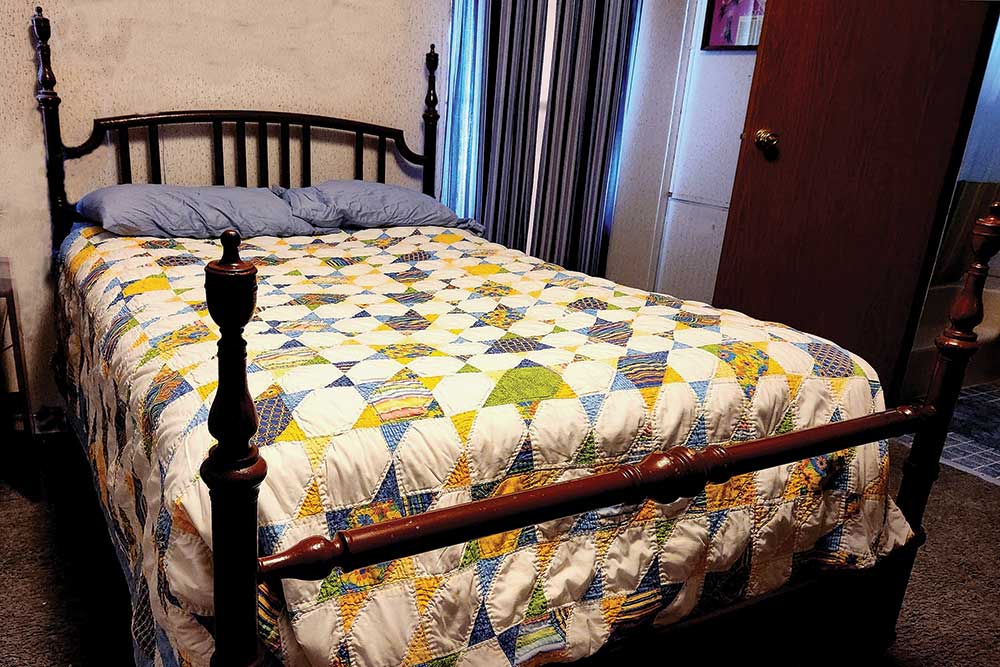
Dale Griffith quilt on writer’s 4-poster bed
When asked how many yards of thread are needed for a queen size, Dale estimated three large spools with 10 bobbins for the top, and at least six spools for the final assembly. Each spool is 255 yards. This comes to some 2, 295 yards, or roughly 1.3 miles!
And those nine spools can be as much as six dollars apiece. There is scarcely a square inch of quilt that doesn’t have a stitch running through it. That’s what keeps the liner from bunching up inside.
So, how is a quilt made? First, all the tiny pattern pieces for the top must be cut from various fabrics or produced from printed cloth or even old souvenir T-shirts. These must be accurately sewn together into a number of pattern squares of equal size.
In olden times, every part of a quilt was sewn by hand, but nowadays the tops are usually sewn with a special machine. Dale uses a Baby Lock designed for that purpose. When enough squares have been created (sometimes as many as 88), they are then stitched together into a single piece the size of the quilt.
Once the top has been assembled, the real work begins. Every part of the quilt must be hand-stitched together as a unit, with a needle pulling thread through the combined thicknesses of top, liner and backing sheet. This is usually done on a quilting frame, of which there are many designs. Dale’s husband, Bill, made her a rather ingenious one, using PVC pipe.
Dale says that most buyers balk at the asking price but, when given the actual materials cost as well as a couple months of tedious labor, her products would be a steal at double her prices. Anyone who has ever actually made a quilt will gladly accept, especially after examining the superior quality and durability of the finished product.
Dale loves chit-chatting with other quilters. She can be searched on Facebook as D Dale Griffith.
Besides looking great on one’s bed, there is another factor that makes her quilt special – the almost instant warmth experienced a few seconds after crawling under the covers. Because of the choice of fabrics, her quilts do not draw away body heat. They simply capture it and give it back all night long, thus fulfilling Dale’s mission of providing warmth.
The peace of mind part of her wish list comes every night, as one experiences that warmth as well as reminiscence of the heirloom quilts that comforted many of us in our earlier years. Little in life is better than a good night’s sleep, especially under such fine bedding.
A good quilt is made to last and be treasured for several generations. Dale has successfully repaired worn bed covers that were hand made in the 1800s.
Your writer is the proud owner of a Dale Griffith patchwork bed cover that is the perfect complement for my old steel and brass four-poster that’s been in my family for several generations. For me, at age 82, it’s like a sort of time machine that provides comfort on several levels.
“ I want my quilts to be used, not stored away,” she declares. “They are household items, not keepsakes. I make them to last, so there’s no reason not to use them.”
In today’s corporate-driven medical care climate, Pell City’ s Dr. Rock Helms is forging a new path in healthcare for the region by returning to the days of old – ways from which he never wavered.
He opened Helms Healthcare in Vincent in March and in less than 90 days, 1,000 patients had come on board. And they’re still coming.
It has been an ideal match for the tiny town of Vincent, population 2,500, and Helms Healthcare. The town had been without a doctor for 20 years. The closest medical facility was in Harpersville but for the most part, residents traveled to Sylacauga, Birmingham, Pell City and Chelsea for major medical needs, according to Mayor Jim Lattimer.
Dr. Rock Helms takes care of tiny patient
Helms Healthcare locating a block from the city’s main street has been “a big benefit for everybody,” the mayor said. “He’s part of the community. That’s what we want for every business.”
Helms lauded the efforts of the mayor and council. “I am super appreciative. The city has been amazing. They made it very, very easy to come here, and we owe them a debt of gratitude.”
To make the partnership come to fruition required some investment by the city to prepare. The long vacant building on Florey Street that the city owned needed repair. “We looked at it and saw the potential, but it needed quite a bit of work, and it needed it quickly” if Helms was to open in March.
That was January. The council voted unanimously to move ahead with the opportunity, and they replaced air conditioning, fixed water damage and made other improvements to get the 3,000 square foot building ready to open. “$60,000 was worth it to get a doctor in here.”
Helms invested as well and continues to add and upgrade to what is now a state-of-the-art medical clinic with a doctor, three nurse practitioners, two registered nurses, technicians and a full staff.
He takes pride in the personal approach the entire staff takes to serving its patients. “When you call, you get a real person,” he said, not a number to press.
Helms said he could not have envisioned a better welcome from the community and the region. “It’s amazing the flow of people coming in.” He anticipated existing patients from his years in Pell City would amount to about a third and “hopefully we would grow the clinic over a year’s time to be sustainable. It has exceeded expectations in multiples. It’s obvious we are going to be successful.”
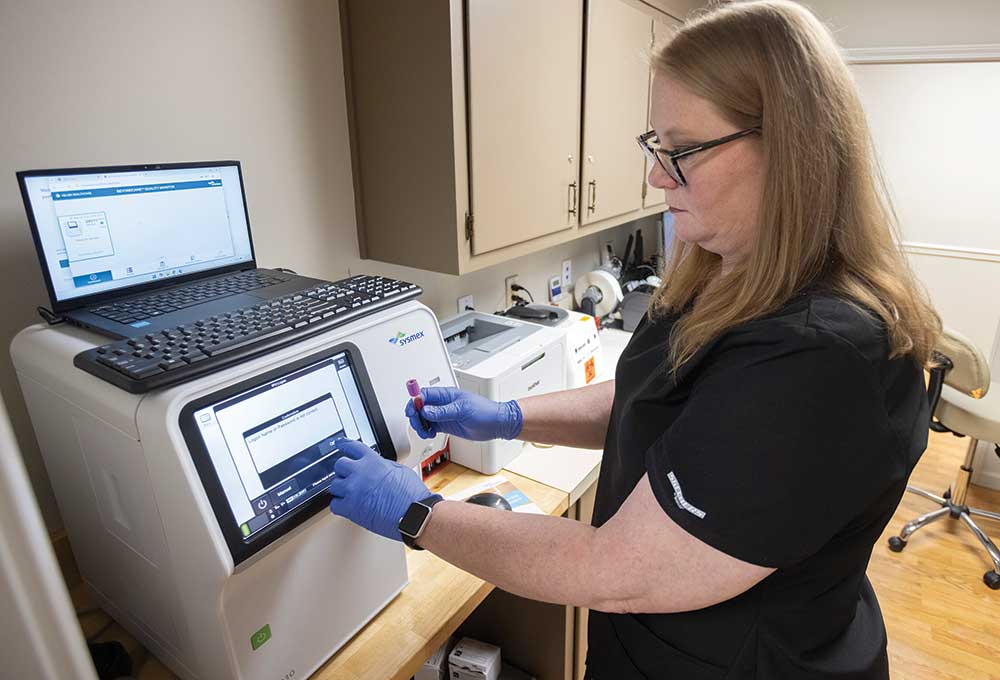
A full, onsite lab makes testing convenient
The numbers bear that out. In the month of May, 30% came from around the area – Vincent, Harpersville and Chelsea. Now it’s “north of 40 percent and growing like crazy.”
Helms has brought cutting edge health care to the area, providing general and cardiac ultrasound, lab services, digital X-ray and IV infusion of fluids, including iron, Lasix, hydration. Soon to be added is wellness infusion therapy. Iron infusions done there can save patients a trip to the hematologist. They offer weight loss management as well.
“We have helped a lot of people,” Helms said. “The sole reason they haven’t seen a doctor is because they have to drive. We’ve seen several like that. Transportation is a huge barrier.”
Since opening, he has seen better medical outcomes because they can get the help they need close to home. “That’s our hometown doctor,” said Lattimer, a hint of pride in his voice.
“The people have been very appreciative,” Helms said. “They’ve helped me personally and professionally to re-establish a hometown practice like I started in 2001.”
History appears to be repeating itself. Fresh from medical school in 1999, Helms came back to his hometown of Pell City to begin practicing medicine. His vision then – as now – was that of a small-town doctor building relationships with his patients, listening to their needs and guiding their care toward positive outcomes.
It is family medicine at its core, treating patients like family because, in essence, they are.
In 2001, he founded Northside Medical Associates in Pell City, beginning with only a handful of providers and staff. He grew it into a thriving campus of medical facilities, a pharmacy, urgent care and multiple specialties and locations in other communities with over 200 employees.
He sold it, fulfilled his contract commitments and is now starting over with Helms Healthcare in Vincent and plans to locate another in Pell City.
There have been patients wondering if he will stay in Vincent. While he does have plans to open in Pell City later, he stressed, “we will keep this open. I know it’s the Lord’s will. It’s nothing short of a miracle we are growing like this.”
Latest addition to Pell City medical community puts focus on treating whole patient
Story and photos by Graham Hadley
When Dr. Shilpa Patel was offered the opportunity to open St. Clair Eye in the same building with Pell City Internal and Family Medicine in Pell City, making the decision was an easy one.
“We had recently moved to Odenville and saw there was a growing need for eye care in the county,” she said. “Dr. Rick Jotani at PCIFM said they had space there, and within a month we were rolling. There are lots of specialties in the building, and they needed eye care, so it really worked out great.”
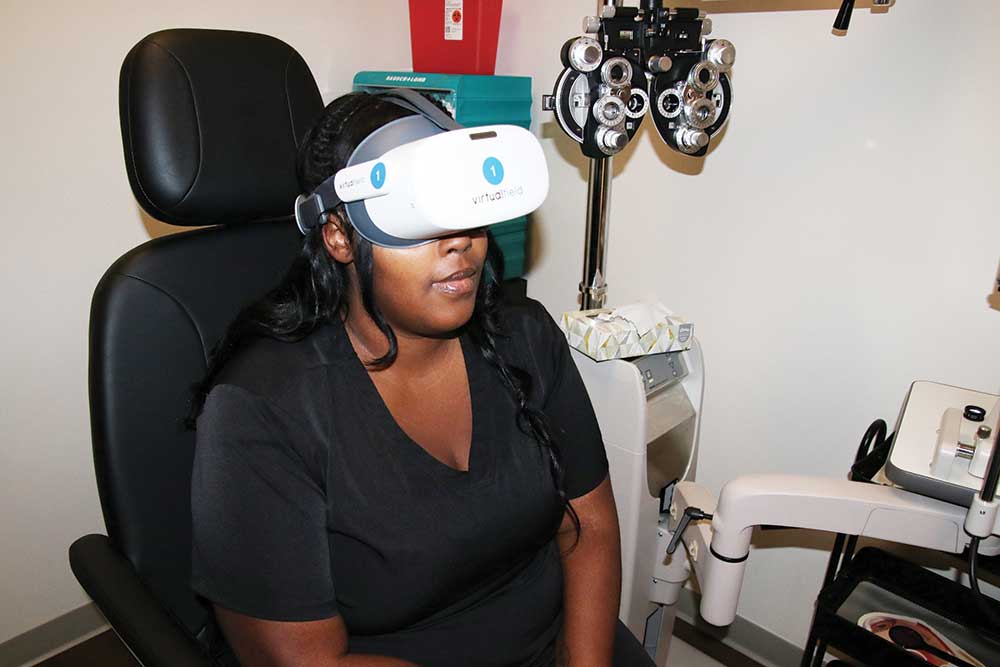
Jordan Greer demonstrates a VR headset used for visual field testing
St. Clair Eye is a full-service vision medical center, with a focus on eye injuries and eye disease, often working in conjunction with other physicians. Patel is quick to point out that there are often many other health issues affecting the eye, so they make sure they are looking at the wellness of the whole patient.
“You have to tailor each exam to each patient and their needs,” she said.
To that end, St. Clair Eye makes sure they are able to treat patients with special needs, making sure the office is sensory inclusive, and their equipment is accessible to people with mobility issues as well.
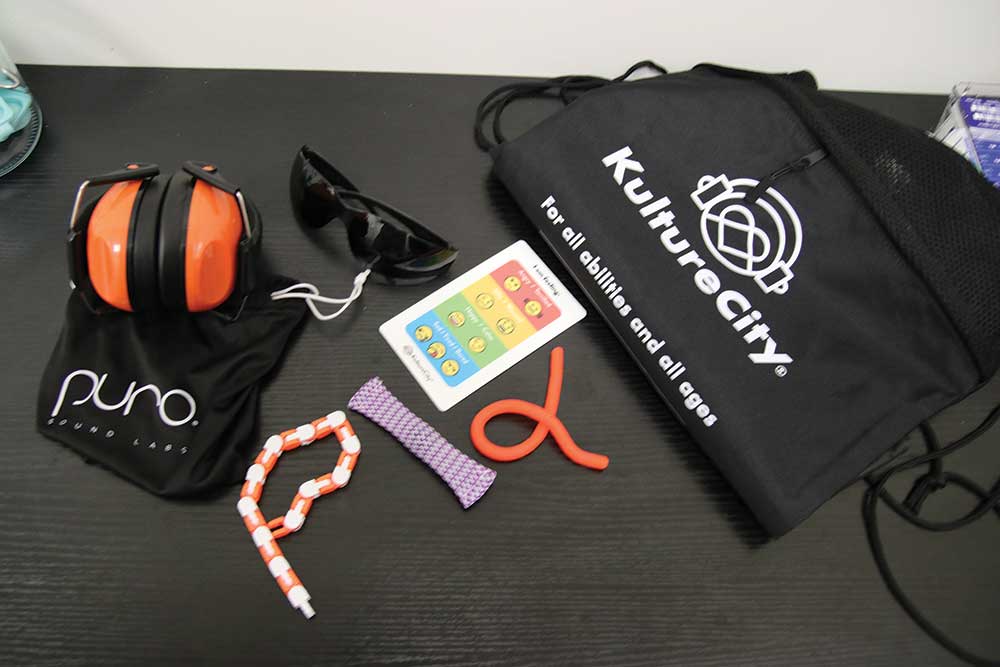
“We are Kulture City certified,” she said, noting that doctor’s offices can be overwhelming for people on the autism spectrum, people with dementia and other cognitive conditions. Every patient who needs one is provided with a bag containing sunglasses, noise-reducing earphones, fidget toys and more – anything they need to be more comfortable during their visit.
According to the Kulture City website, certification makes sure businesses “cater to everyone with sensory needs, not just autism. This includes military vets with PTSD, adults with dementia, Parkinson’s disease, stroke patients, just to name a few.”
In addition to Patel and her staff being Kulture City certified, she is also fluent in American Sign Language.
“When treating patients, you have to have the right tools and skills to get the desired end result. And that varies on who you have in the chair. All of that comes with experience,” she said.
Though St. Clair Eye has only been open a few months in Pell City, Patel brings with her decades of experience as not only a medical professional in optometry, but also as “a distinguished scholar and fellow of the National Academies of Practice and a fellow of the American Academy of Optometry.” A Birmingham native, she is a graduate of UAB, Ohio State and Harvard.
She was in private practice in Birmingham for years and worked at the Callahan Eye Clinic.
The KultureCity sensory bags with ear and eye protection, fidget toys, and more
“Everyone in our office is local,” which makes them feel more connected to the community and patients. “We work as a team.”
Those connections to the community have always been important to Patel. She is particularly proud of her time volunteering for Red Mountain Museum, which eventually became part of what is the McWane Center today.
St. Clair is one of the fastest growing communities in Alabama, and as more people move to the area, so does the demand for medical services, particularly specialties like optometry.
“We do comprehensive eye exams, set people up with contacts and glasses, treat glaucoma, dry eyes and other vision issues. We see a lot of people with diabetic-related vision problems, and some people who just need regular checkups” and maintenance-level care.
“Most eye diseases progress gradually,” and many people don’t realize they have a problem until it has been going on for a long time, sometimes years, Patel said. As much as hands-on medical treatment is necessary, she says they also focus on educating their patients about not only specific problems with their eyes, but how their overall health can affect their vision. … We treat the whole patient, look at their overall wellness.”
Patel said St. Clair Eye has been growing quickly from day one. “We are getting busier every day. Marketing and word of mouth have been a huge help,” but so has support from the community.
“The Pell City Chamber of Commerce has been great. They were here for our open house” and have continued to support the new business, she said.
Multi-million-dollar investment latest for Pell City Ford dealership
Story by Carol Pappas Photos by Mackenzie Free
When Town & Country Dealer Principal and CEO Steve Watts and Partner Bill Sain bought Pell City Ford back in 2009, they saw potential. Today, as they look out over the 13-acre campus, they see they were right.
What began with 19 employees, a 9,000-square-foot new car showroom, service center and a lot for used cars and trucks is now a sprawling series of state-of-the-art complexes providing a comprehensive range of services.
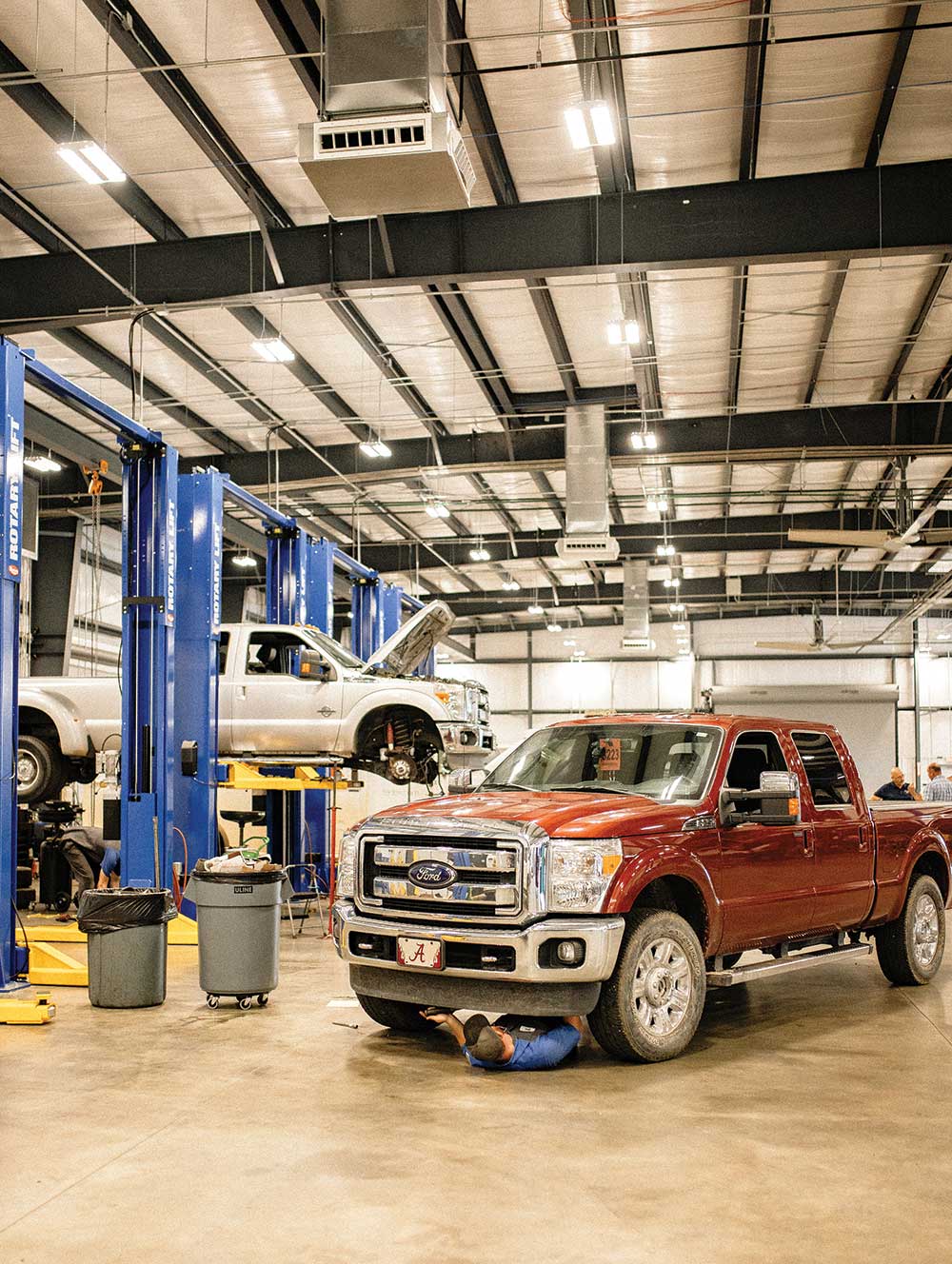
Service area for commercial fleets, heavy equipment vehicles and TC Customs work
From new and pre-owned vehicles to a massive QuickLane service area, to a vehicle customization center to service bays for commercial vehicles, you might say Town & Country has come a long way since those early days. And you would be right.
In June, executives cut the ribbon on their newest addition, the 36,000 square foot headquarters for TC Customs and a service center for commercial fleets with the ability to lift heavy equipment vehicles up to 25 tons.
The $16 million investment means additional electric vehicle charging stations, more than doubling the service bays available to 48 and pushing employment numbers to the 100-mark.
“We’ve come a long way,” said General Manager Doug Bailey, noting the support of Pell City and St. Clair County, St. Clair Economic Development Council. “Everybody pitched in to help us become successful.”
“This is a great event,” added Mayor Bill Pruitt. “Town & Country has been a longtime partner of the Pell City family. They continue to pour investment into our community. We appreciate everything they have done and the continued investment.”
TC Customs is a vehicle customization center specializing in Ford vehicles, like Broncos, but works on all makes and models. It features 29,000 different wheels for custom wheels and leveling, lift and lowering kits for vehicle suspensions, exhaust systems from the top names in the business, bed covers and more. As they say, “If you can dream it, we can build it.”
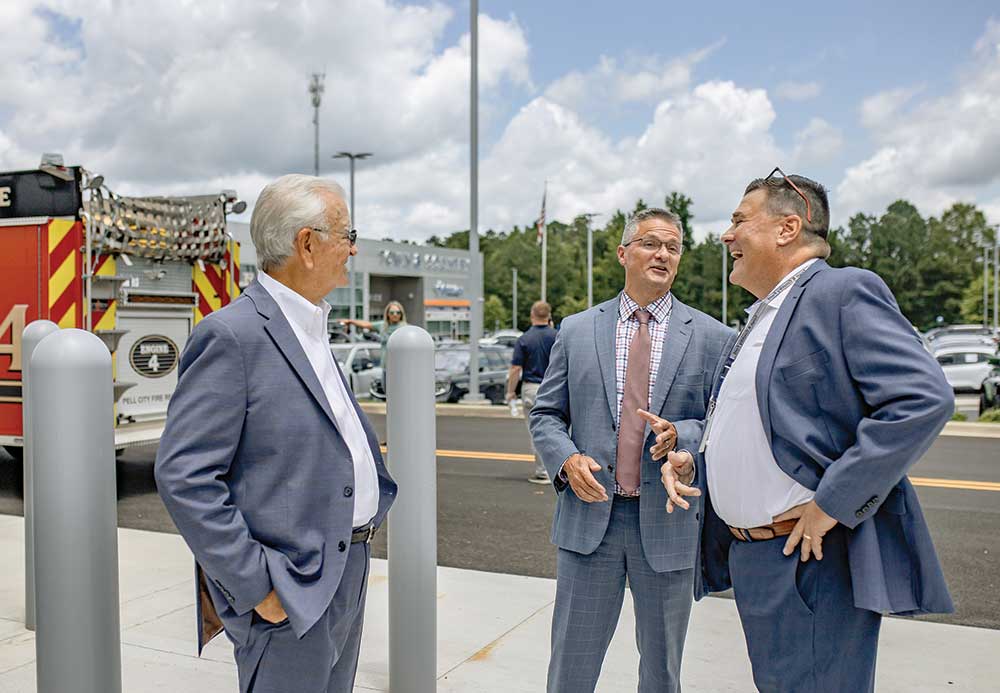
Partners Bill Sain (left) and Steve Watts (right) share a moment with Pell City Mayor Bill Pruitt at celebration
It’s not the first expansion in Town & Country’s history under Watts and Sain. In 2017, they replaced the existing dealership and repurposed it to preowned vehicles, some servicing, new and used inspections, heavy engine work, cleanup and detailing.
That made way for a 27,200 square foot expansive glass showroom, LED features and halo digital graphic accent lighting.
Waiting areas with tables are equipped with iPads for games and movies and large screen monitors are strategically located for viewing.
QuickLane headlines its massive service center offering parts and service for all makes and models of cars, trucks and SUVs.
Before cutting the ribbon, officials noted that the successful road to this point resulted from teamwork. They announced national awards won by the management and staff, and they thanked City of Pell City, St. Clair County and St. Clair County Economic Development Council for their support over the years.
Goodgame Company of Pell City built the expansion facility.
New Pell City plant, investment celebrated with open house
When Rulmeca Holdings, a global supplier of idlers and pulleys for belt conveyor systems acquired Douglas Manufacturing in 2023, officials pledged new investment in the Pell City plant. Ten months later, they broke ground on a state-of-the-art 50,000 square foot idler plant at the site on Industrial Park Drive.
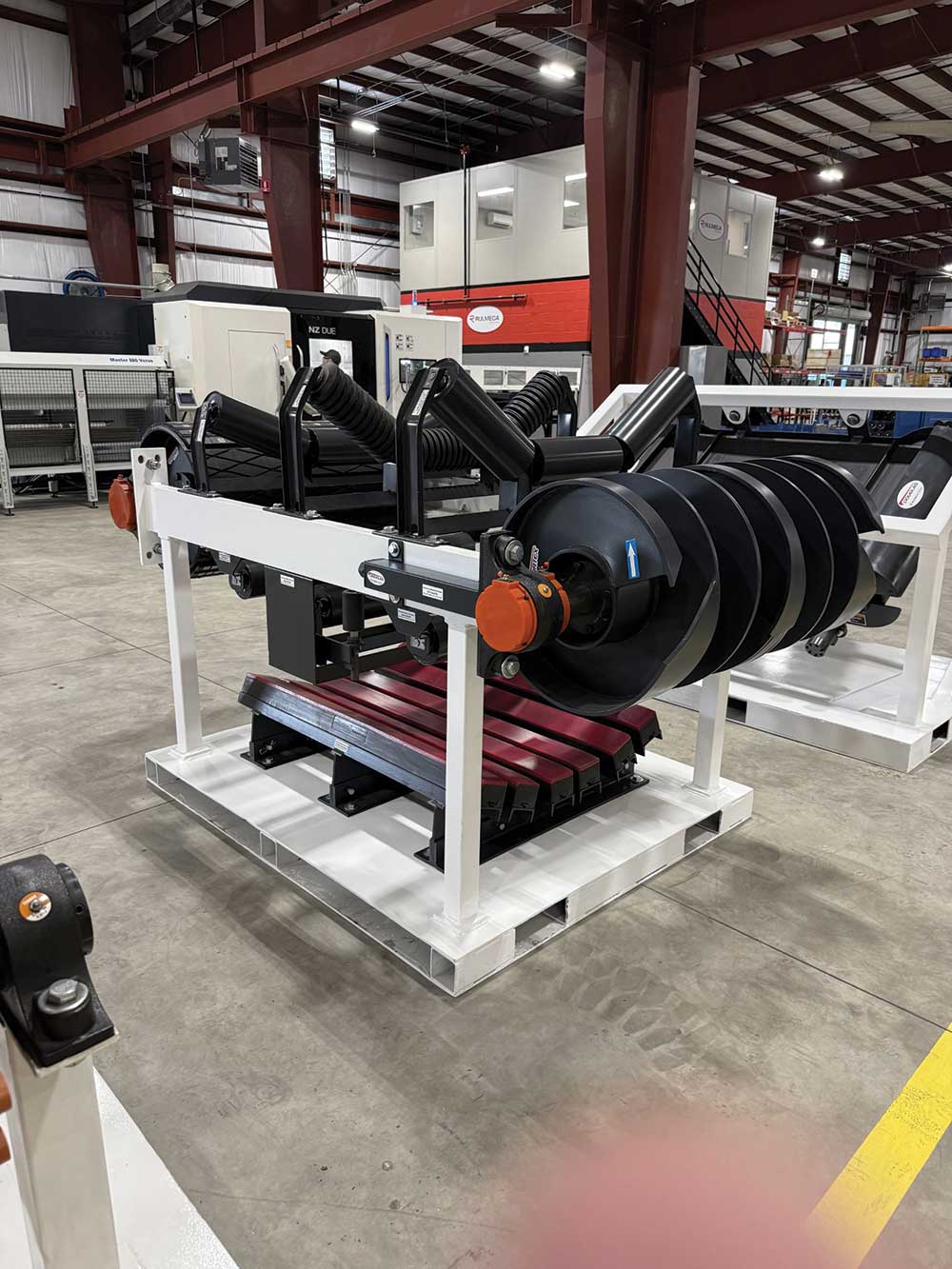
Inside new $11.7 million plant
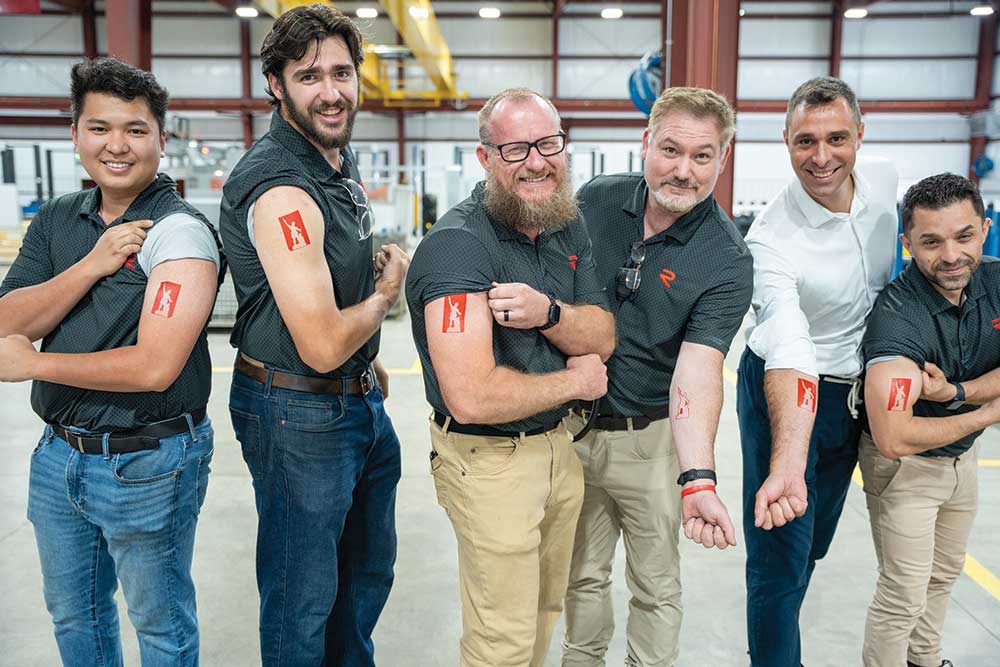
In June, officials cut the ribbon on the new facility, celebrating the $11.7 million investment in the expansion, creating 50 jobs in what is known as The Vulcan Project.
Founded in Alabama and headquartered in Pell City since 1991, Douglas Manufacturing has been a trusted name in the bulk material handling industry for decades. In 2023, the acquisition brought together two respected brands with shared values, complementary expertise and a united vision for the future.
Project Vulcan represents the most ambitious expansion in the company’s history. This new facility significantly increases Douglas Rulmeca’s production capabilities, particularly in the manufacturing of conveyor idlers and related components. The investment in advanced automation and production systems not only enhances quality and efficiency but also creates new jobs and growth opportunities in St. Clair County and throughout the region.
“The ribbon cutting is more than the opening of a new building, it’s a celebration of where we’ve been, what we’ve built and where we’re going,” said Paul Ross, president and CEO of Douglas Rulmeca. “Project Vulcan strengthens our position in the global market while deepening our roots right here in Pell City. We’re proud to invest in American manufacturing and to do so in a way that brings lasting benefits to our employees, our customers and our community.”
Sporting Project Vulcan tattoos
The presence of Marco Ghisalberti, president of the Rulmeca Group, and Fabio Ghisalberti, vice president of Rulmeca Group, underscored the strength of the collaboration between Douglas and Rulmeca and the shared belief in the future of this facility and its people. Their leadership and vision made Project Vulcan a reality.
The new facility symbolizes the power of teamwork with contributions from their global partners in Italy, Canada and Wilmington, N.C.
Officials say they are continuing to invest in technology, talent and customer service as the company supports industries ranging from mining and aggregates to recycling and logistics. With the launch of Project Vulcan, the company is better equipped than ever to deliver high-performance solutions to customers across the United States and around the world.
Special guests for the ceremony were City Manager Brian Muenger, Nick Hadley of Alabama Department of Commerce, St. Clair Commission Chairman Stan Batemon and Jason Roberts of St. Clair Economic Development Council, whose support, executives said, was instrumental in bringing Project Vulcan to life.