Edibles Everywhere

St. Clair forager finding culinary fame in Birmingham restaurants

Story by Graham Hadley
Photos by Jerry Martin

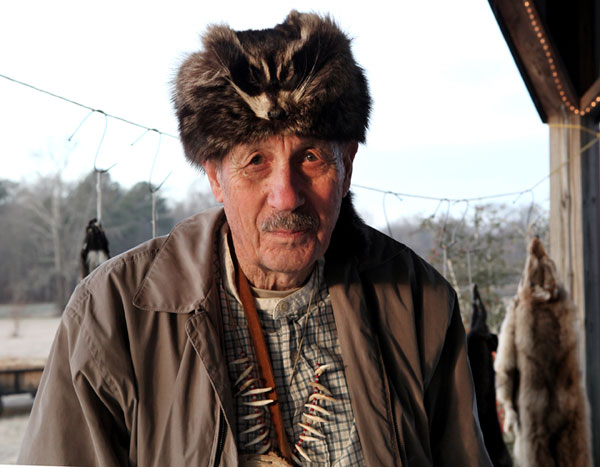
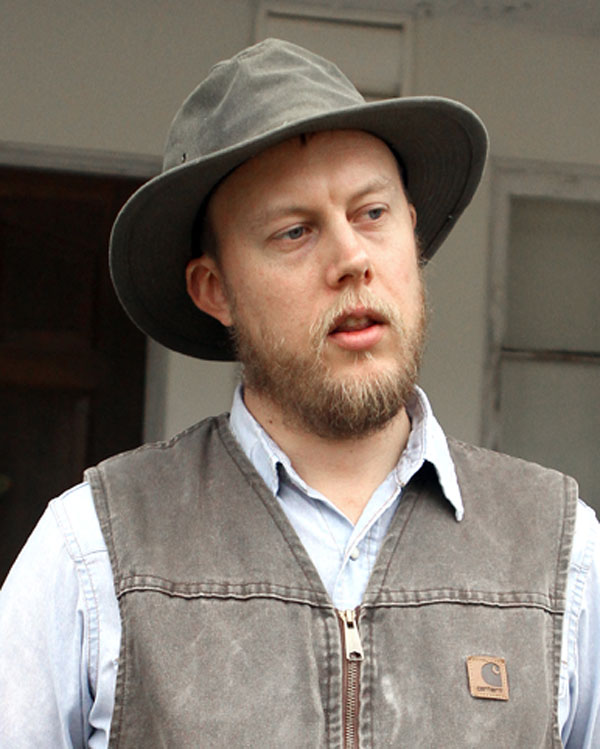
Where you see weeds, St. Clair’s Chris Bennett sees valuable food.

So valuable that he has been able to make a successful side business out of foraging for wild edibles and selling them to high-end restaurants in the Birmingham area.

His acumen for finding flavorful food in the wild is good enough, in fact, that some of Chris’ edibles were used by award-winning Chef Chris Hastings at the Hot and Hot Fish Club in Birmingham to prepare a meal for famous Chef Andrew Zimmern for an installment of his Travel Channel show Bizarre Foods.

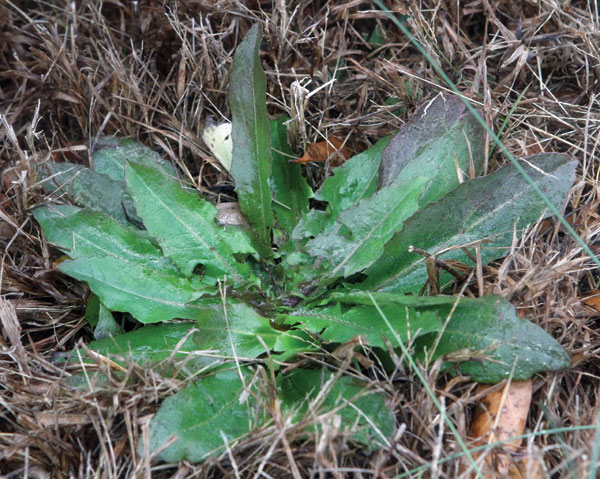
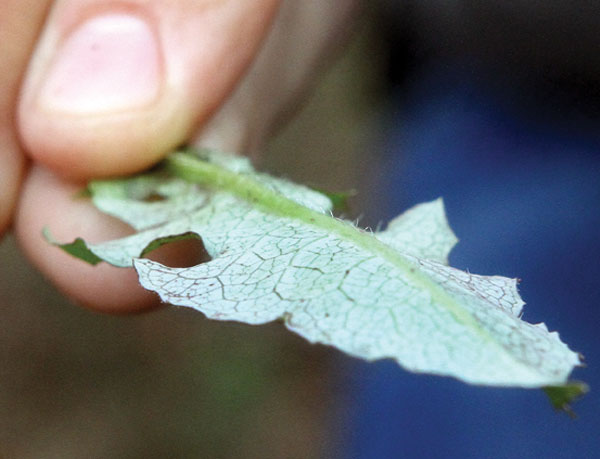
The dish, called the Foragers Walk, included chickweed, Virginia pine, wild mushrooms, hoary bittercress, wild lettuce, cat’s ear dandelion, field mustards — “a lot of different stuff,” Chris said.

Most of that “stuff” Chris finds growing wild around his house.

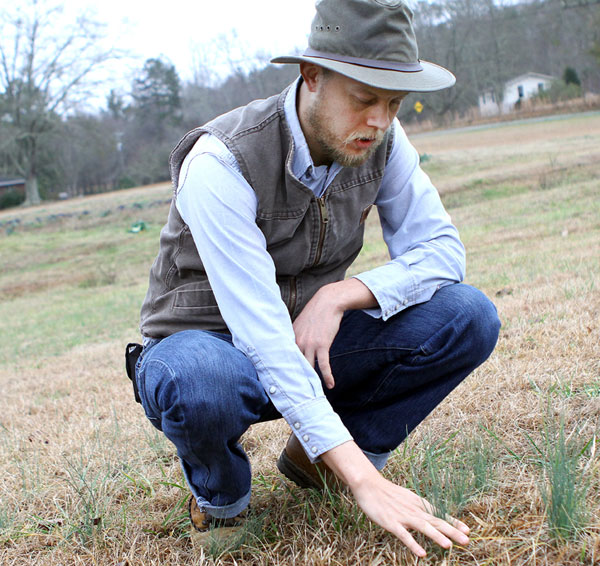
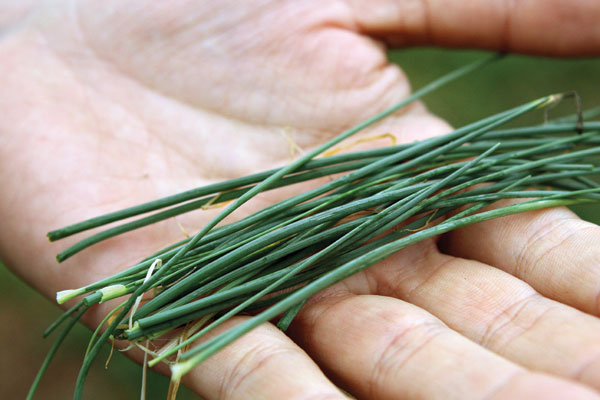
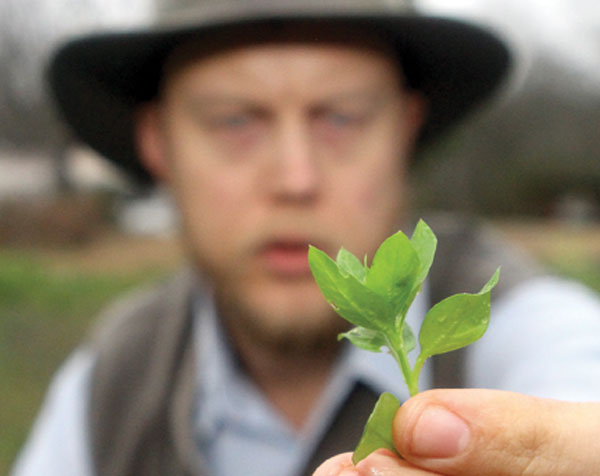
Pointing to a small cluster of slender, dark-green stems poking out of the winter ground in a field near his house, Chris quickly identifies them as “field onions.” He breaks off a few of the stems and holds them to his nose, saying,   “I just snip them off and use them as wild chives.

“They have a more aggressive flavor than regular chives. Why go to the store and buy chives when you can get these in your yard?”

And field onions are just the beginning. In just a couple of hours, he proceeds to identify all kinds of edible plants, all growing in winter within a few hundred yards of where he lives on his family’s old farm property in St. Clair not far from the Interstate 20 Chula Vista exit.

But, before he started showing off his talent for identifying wild edibles, or foraging, Chris was quick to point out that it took him years of research — studies that are always ongoing — before he was comfortable eating things he found growing in his yard and nearby fields and woods, let alone selling them to restaurants.

The Foragers Walk dish that was served to Chef Andrew Zimmern at Hot and Hot in Birmingham

“People need to know … Rule Number 1 … make absolutely sure what you pick is edible. There are lots of tasty things in nature — but lots of stuff is poison,” he said.

It’s his knowledge of not only what is safe to eat, but how it tastes, that has created a market for Chris’ wild edibles in some of Birmingham’s finer dining establishments.

You can’t just walk up to a chef and say, “Look what I found in the woods” and have them buy it. You have to build a reputation for your product and also be able to speak their “language.”

For Chris, that is easy today — he has worked in restaurants all over the country, from Richmond, Va., to Chicago to Birmingham.

He grew up in St. Clair County, on the very property he now forages on — though it was an 84-acre cattle farm back then — before leaving for college to earn a business degree. He knew he did not like traditional farming and had discovered a love and talent for cooking.

“I grew up on the farm, but hated doing chores. I would rather be off having adventures in the woods. Back then, in the 1980s, you could still walk down the road and pick blackberries — which you really can’t anymore,” he said.

After college, “when I lived in Richmond, I got into cooking, I got more into food; got more into gardening,” he said.

And though he describes himself as an omnivore now — “I will pretty much eat anything” — Chris said he was a practicing vegetarian for a while, which made him pay more attention to what he was eating, reading ingredients labels more carefully.

That love of the outdoors, ability in the kitchen and growing interest in more wholesome foods combined to give Chris the foundation he needed to begin foraging.

“When I lived in Chicago, I read up on a lot of European chefs. They use a lot of wild edible plants. I learned there was a lot more out there than wild mushrooms,” he said. “There are things out there all around us.”

In 2005, Chris returned to Alabama to get the old family farm up and running. But he did not want to do traditional farming. Cultivating the land for foraging did away with a lot of the farm labor that did not interest him and allowed Chris to focus on his new passion.

Though he has a regular “day” job working as a cheese buyer for Whole Foods in Birmingham, Chris makes time to gather and sell his wild edible “finds” to restaurants.

Because he not only knows what is edible, he knows how it will taste, Chris can tell chefs exactly what edibles go with what dishes and how they can be prepared.

“I never sell anything I have not eaten,” he said. “My cooking background lets me tell them how to use it, how to cook it — or serve it raw, how it tastes.”

He also helps the restaurants keep track of what wild edibles are in season. “They come to me and ask is something still in season — like wild persimmons. Those are gone by now.”

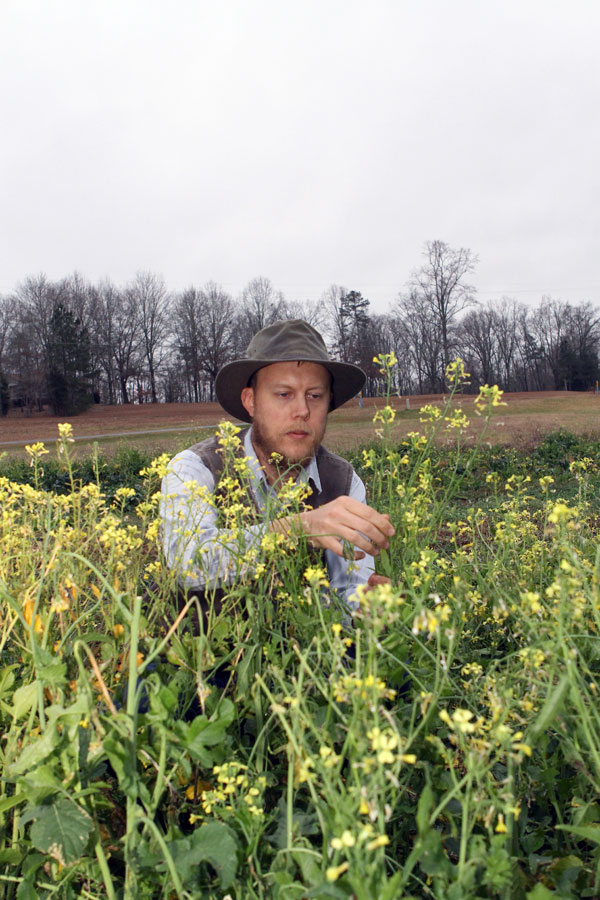
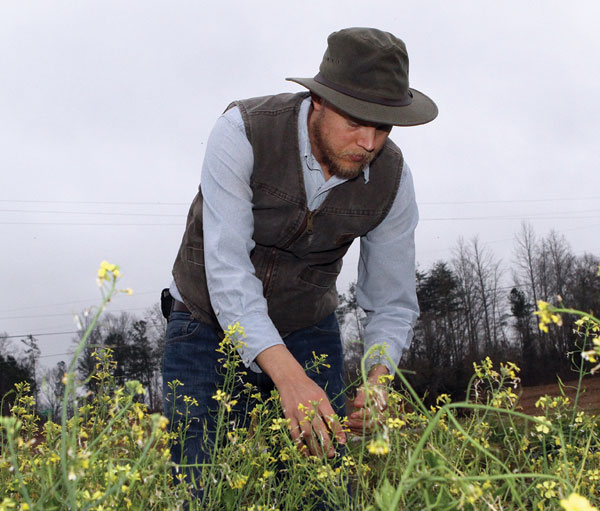
As a case in point, Chris walks over to a cluster of what look like tall, leafy weeds with small, bright-yellow flowers on top.

“Wild edibles are mostly considered weeds by people who see them growing up in a yard or field. …”

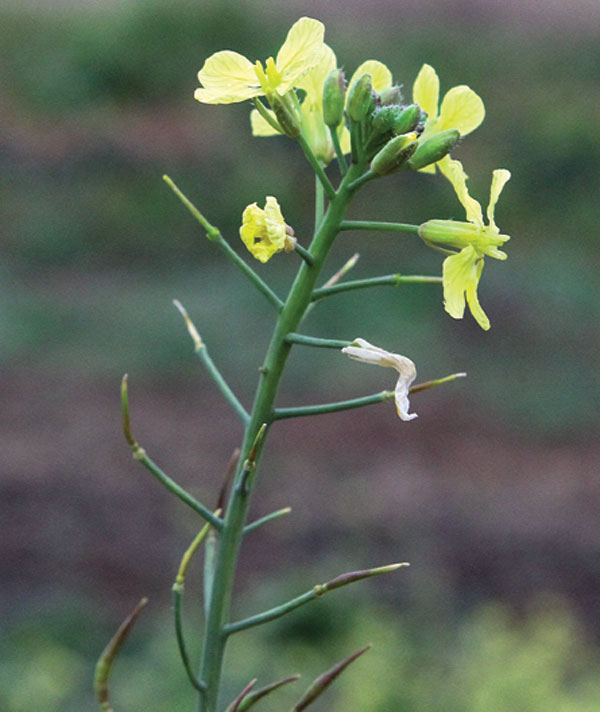
This group of yellow flowering “weeds” grew where Chris had planted tomatoes and covered the ground with hay. “These plants came up. I am always looking at what things are. These, the leafs look like greens and the flowers look like Brassica” (a genus of plants that includes a number of vegetables, including mustards and cabbages).

“I finally figured out they are field mustard,” he said.

Chris uses several tools to help him identify new plants. He always carries a small bound notebook with him where he writes down everything about what he has found, sketches pictures, even takes pressings of the plants.

And, while he still relies on several books, Chris is quick to take advantage of modern technology to help him — using his iPhone to take pictures of the plants and Google and other online tools to identify them.

“It takes a while to learn what something is,” he said, reiterating, “People need to know — make absolutely sure what you pick is edible.” He also said it is equally important to know about where you are picking — since fertilizers and pesticides used in fields can be toxic, and some of the plants will actually draw heavy metals and other harmful chemicals up out of contaminated soil.

Chris is more than ready to help with that — organizing classes on his farm several times a year where he takes people out and teaches them his foraging skills.

People can check out his class schedule and sign up on his website and blog: hollowspringfarm.blogspot.com. He also uses the site as a way to spread information about what is in season and anything new he has found.

Which, despite the time he has spent roaming his family property, still happens frequently.

Walking across the road to another field that is part of the farm, Chris says, “I have been back here around eight years, and I am still finding new things.”

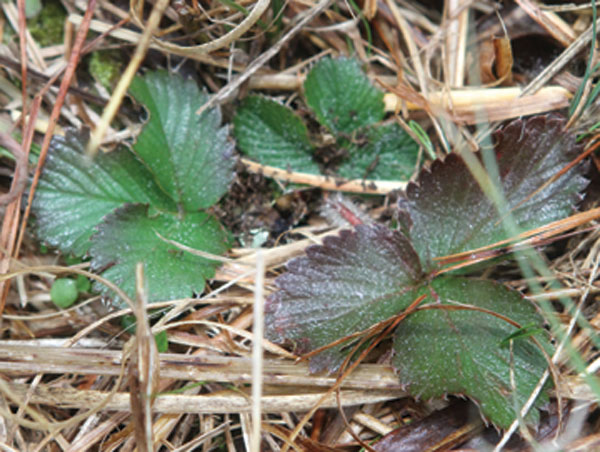
Pointing all around one side of the field, he identifies a number of small plants that make up a wild strawberry patch he uncovered after cutting the field. Though not in season now, when the plants produce fruit, they are what Chris describes as some of the best, most flavorful tiny strawberries you can find.

“They will ruin you for eating regular strawberries,” he said.

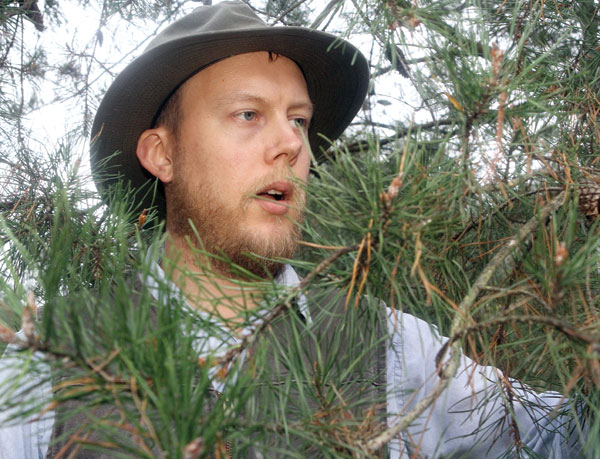
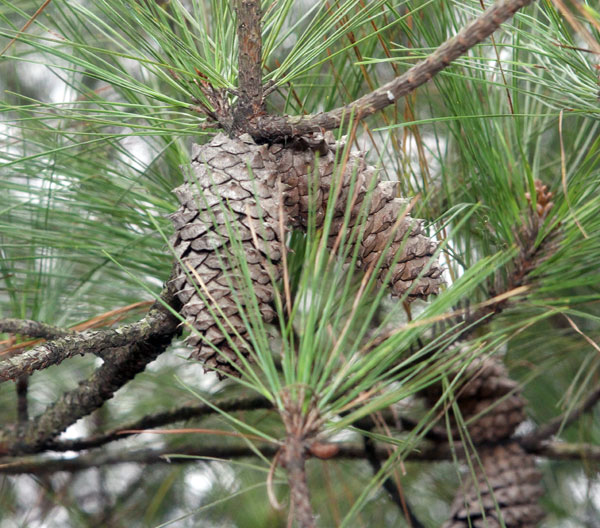
Another one of his favorite plants — a tree actually — borders the field. Chris strips off some needles from a Virginia pine and rolls them in his hands, producing a surprisingly strong citrus scent, with a hint of pine in the background.

“I make tea with the needles. It has a clean, pine flavor, but you can infuse it into any kind of liquid, everything from vodka to milk, even make a meringue with it.”

And, like many of the plants he gathers, the pine needles are good for you as more than just an edible, often containing high levels of vitamin C, especially in the winter.

“If I am starting to feel sick — I make tea with this,” he said, pointing out that many pine species have edible needles, but the complex citrusy-pine flavor makes the Virginia pine his favorite.

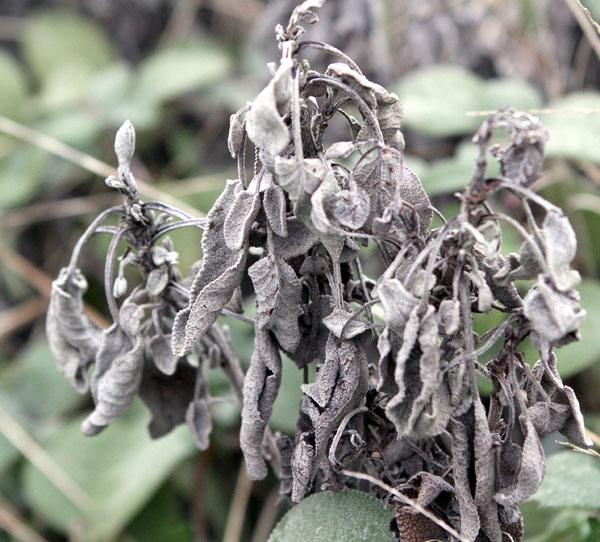
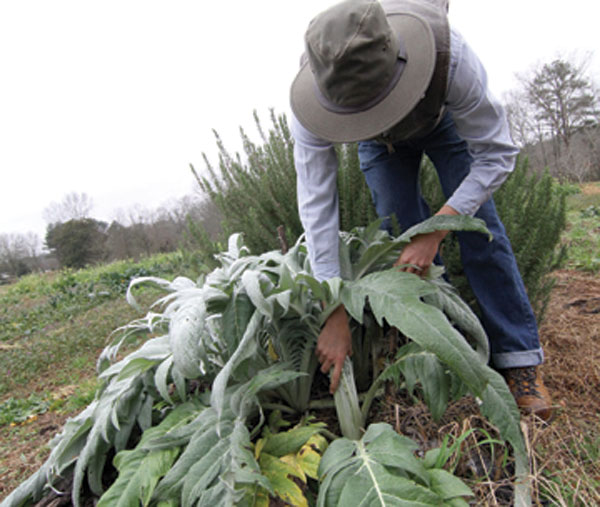
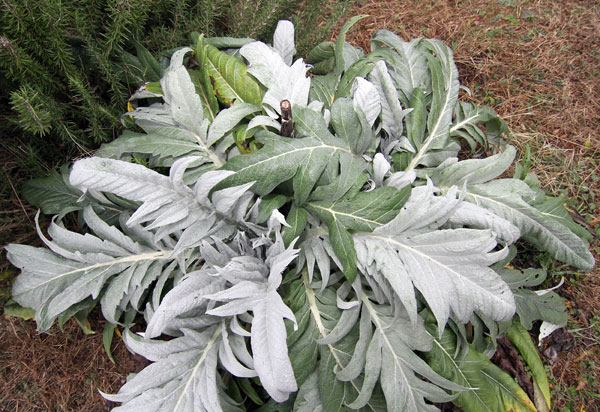
Chris has found and grows all sorts of other plants on the farm — sage, herbs, kale, cardoon (similar to an artichoke), chickweed (tastes like a pea pod), wild lettuce (which has the classic lettuce bitterness and is less tough than a dandelion green) — the list goes on and on.

And it keeps growing. Chris is always on the lookout for new edibles.

“You never know what you are going to find,” he said.

Tricky Fishing

Kayak fishing making a splash
at Neely Henry & Logan Martin lakes

Story by Loyd McIntosh
Photos by Jerry Martin

Spring time in St. Clair County: fresh air, blue skies, green grass and, of course, fishing — lots and lots of fishing. By the time the ol’ groundhog’s predictions have taken root, there will be – excuse the pun – a boatload of fishing tournaments on and around Neely Henry and Logan Martin lakes.

That also means hundreds of noisy bass boats, speed boats and other motorized watercraft making waves all in an attempt to sneak up on the legions of fish that call the Coosa River and its lakes home. Fishing is as ingrained in who we are in these parts as barbecue and football are.

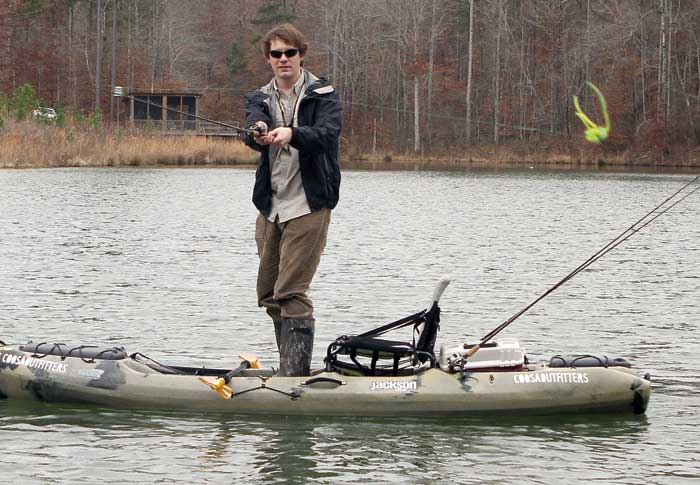
But a new way of angling is making its way from salt water to fresh water. It began off the California coast around 15 years ago, and now kayak fishing is heading to fresh water fishing hotspots around St. Clair County.

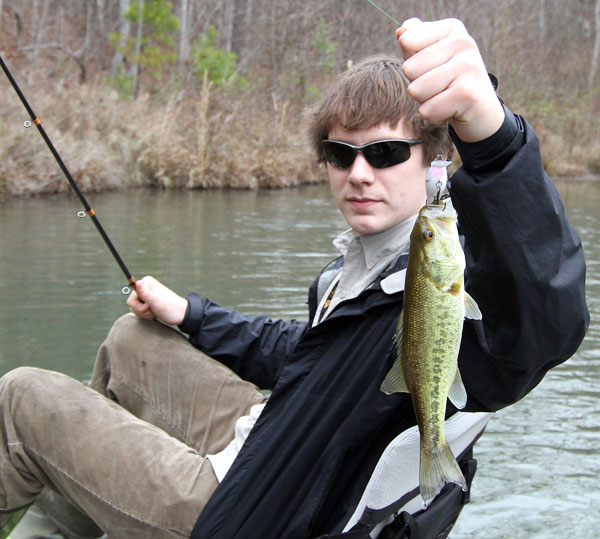
Kayak fishing is on the rise with a growing community of anglers spreading the gospel of the sport as an alternative to traditional fishing. Interested to see it or to try kayak fishing out for yourself? Then clear your schedule and plan to compete in the Coosa Canoe and Kayak Fishing Tournament, organized by the non-profit group, Coosa Riverkeeper.

Frank Chitwood, Riverkeeper and chief watchdog for Coosa Riverkeeper, hopes his organization’s efforts will ensure a healthier Coosa River and surrounding waterways for future generations. “Coosa Riverkeeper is a citizen group advocating on behalf of the Coosa River for clean water,” explains Chitwood. “We stand up to polluters and the government when their actions are not in the best interest of clean water and a healthy river.”

The Coosa Canoe and Kayak Fishing Tournament is a charitable event to raise money and awareness of issues facing the Coosa River through an innovative three-stage tournament. Proceeds from the tournament will go toward helping the Coosa Riverkeeper fulfill its vision of a fishable, swimmable, drinkable Coosa River.

The first stage, Lake Neely Henry Open, is scheduled to begin at first safe light on Saturday, March 30, and for many in observance, this will be the first time to see some of the tournament’s interesting rules. For instance, competitors are allowed to drive to any spot they wish within the tournament boundaries to put their kayaks in the water. There are also no live wells and no weigh-ins, keeping the negative impact on the fish to a minimum.

“You don’t actually keep the fish,” Chitwood explains. “You put them right back after you catch them, so we call it a virtual stringer because it only exists on your camera.” Tournament scoring is based on length, which Chitwood says is just as fair a competitive measure as other tournaments that are weight-based.

At the beginning of each tournament, every competitor is given a special fish ruler, and once an angler reels in a catch, he or she places the fish in the trough-like ruler and then takes a photo of the fish on a digital camera or cell phone camera. At the end of the day, anglers arrive with a “digital stringer” instead of live fish they may have kept in a live well for several hours. “So, generally it takes a minute or two to do all that once you reel it in, take a picture or two of it and put it back in the water where it came from as opposed to a bass tournament, where they might give you a poorly ventilated live well where the fish stay for several hours,” he says.

Chitwood says this method is less stressful on the black bass varieties – primarily large mouth and spotted bass – that are allowed during a Coosa Riverkeeper tournament. The goal, Chitwood says, is to create an alternative to traditional fishing tournaments by keeping mortality rates low and, thus, a healthier Coosa River ecosystem. At a poorly run tournament, in the middle of a hot summer’s day with poor live well conditions, fish mortality can be high, Chitwood says. “At kayak fishing tournaments, we keep fish mortality rates really low. Almost all of them will survive and become larger bass.”

The first two stages of the three-stage tournament – the Lake Neely Henry Open in March and the Logan Martin Open in June – are each one-day, three-fish-limit tournaments where only the three biggest fish are counted. “That way it gives people who catch a larger quantity of fish an advantage, but not so much that you can just go out and catch a bunch of little ones. Good combination of quantity versus quality.”

The final tournament of the year is the Coosa Classic, a two-day event Oct. 26-27 at the Coosa Outdoor Center in Wetumpka and is a four-fish stringer, with only the two biggest fish from each day counted for the final score. The Coosa Classic is the final event, where the Blackjack Lands Angler of the Year will be crowned at the end of the tournament. The grand prize is a Primo ceramic grill, donated by Blackjack Lands.

To learn more about kayak fishing, Coosa Riverkeepers or to register for the Coosa Canoe and Kayak Fishing Tournament, go online at www.coosakayakfishing.com.

Birmingham Sailing Club

Group’s history in St. Clair predates creation of Logan Martin Lake

Story by Carol Pappas
Photos by Jerry Martin

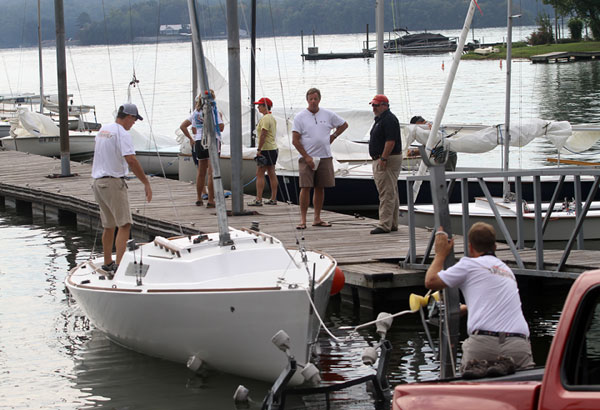
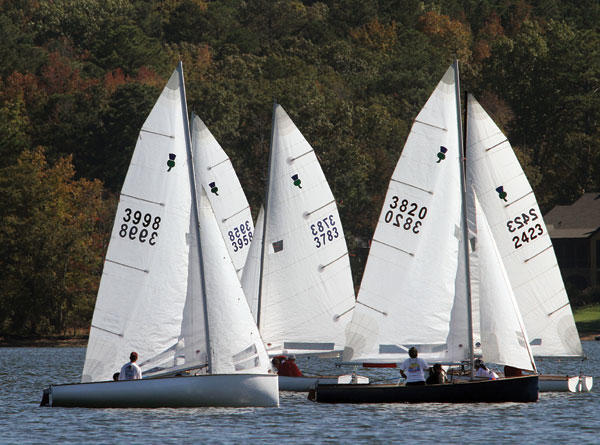
Atop a shoreline hill overlooking a mile-wide opening of Logan Martin Lake stands a piece of history.

On Aug. 7, 1962, it wasn’t there at all, but neither was the lake.

Even so, a group of sailing enthusiasts thought it was the perfect place to build a clubhouse when the lake did come, and the Birmingham Sailing Club was born.

The late Sam Caldwell Jr., who worked for Alabama Power Co., the lake’s creator, began his search for that perfect piece of real estate long before the contract was signed on that late summer afternoon.

His children, Skip Caldwell and Marietta Williams, remember the long rides in the back of the family station wagon as their father — armed with geotechnical drawings of the proposed lake — would scour the countryside.

Marietta remembers “endless dirt roads while Dad looked at property and spoke with owners — farmers in battered frame houses; of Dad explaining, ‘This will all be underwater,’ and me thinking, ‘No way!’ ”

Skip recalls those days, too. “I can remember spending a lot of time driving in the car, and Dad would tell us when we were driving into an area that would be underwater, or if it was close to the shoreline. I was too young to really grasp the concept as I remember looking as far ahead as I could see on the road looking for water so we would not accidentally drive into the new lake!”

On that August afternoon, as the sun was setting, Caldwell and Herb Hager sat on the front porch of the land’s owner and his family. When they explained their purpose, the family seemed “dubious about the use of the property for a club, apparently thinking about a night club or honky-tonk,” the elder Caldwell wrote in a history penned 50 years later. One family member even suggested that the contract specify no dancing allowed on the premises.

Caldwell used a blank Uniform Real Estate Sales Contract and filled it out in pen and ink. Four acres fronting approximately 418 feet on proposed Logan Martin Reservoir, it said. Purchase price? $6,000 with $1,000 earnest money and $5,000 due on closing. And the initial deal was done.

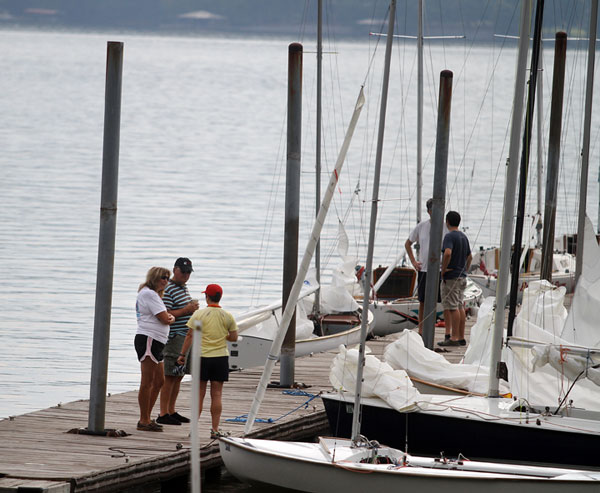
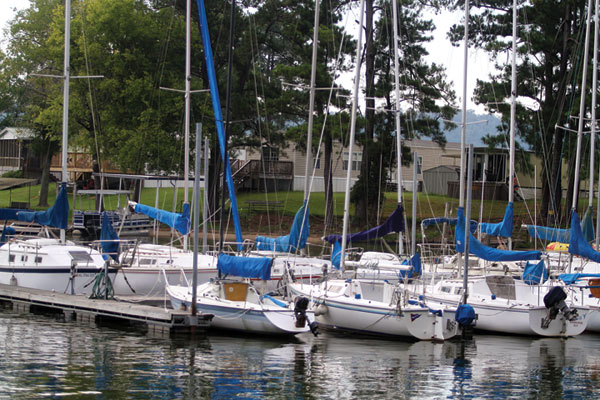
Additional lots would be purchased by July 1963, giving the club 1,000 feet of shoreline. The clubhouse would be built along with boat ramps and floating docks as the lake began to fill. The first boats in the water were launched Thursday, July 16, 1964, “with the Commodore beating the Vice Commodore by about 30 minutes,” Commodore Caldwell wrote.

A report dated Aug. 7 of that year put the lake elevation at 460 feet, which is normal winter pool. It was thought the level would remain there until May 1965, when it would rise to its summer elevation of 465 feet for the very first time.

Today’s club
A lot of winter and summer levels have come and gone since that time, but the constant has been the Birmingham Sailing Club.

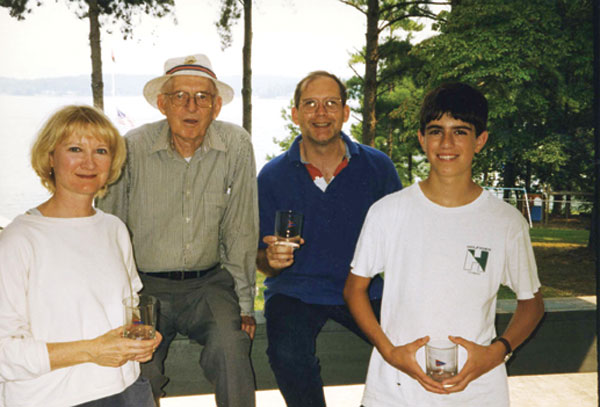
Caldwell’s children say it is still what their father and founding members envisioned when they built it. Caldwell didn’t want a yacht club, he wanted a sailing club. “He wanted a club that is open to anybody that is interested in sailing, not a country club on the water,” Skip said, noting that over the years, members continued with the visions of the founders.

That, he said, “has resulted in one of the premier inland sailing sites in the country. I recently found some of the original plans of the sailing club and with small exceptions, today’s club is exactly as the original plans show.”

A new day, same goals
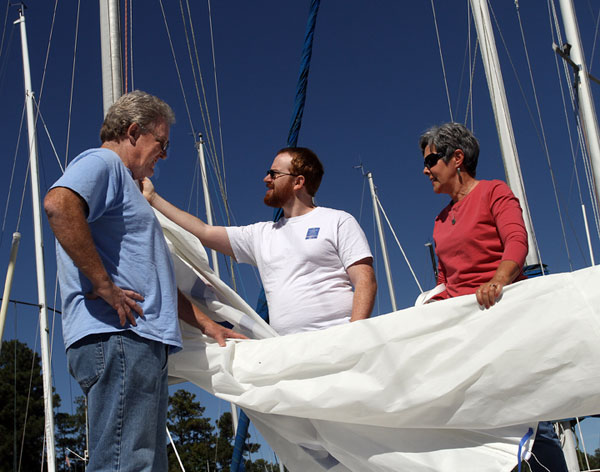
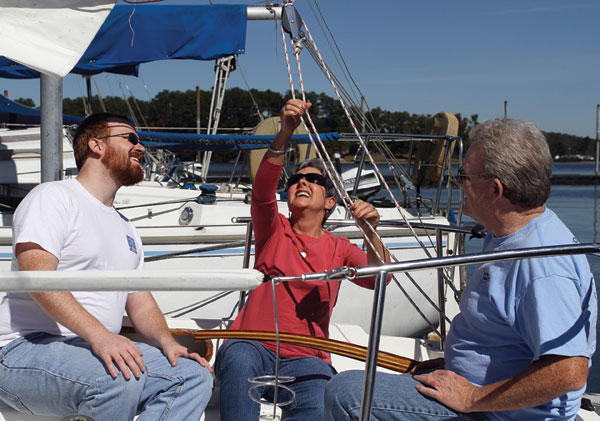
Tate Beckham counts himself lucky to be a part of it all. A relative newcomer to the club of 165 members, he joined in 2007. He sailed a bit as a kid in Florida, but he grew up in Sylacauga not knowing the club existed.

When he grew older, he wanted to get back into sailing, and someone gave him a boat. He eventually found his way to the Birmingham Sailing Club after being introduced by Rick Scarborough. “When I went to the club the first time, people were sailing. There were all walks of life — doctors, lawyers, construction workers. They had the same wants and enthusiasm. That was it. I was there. The common denominator was they love sailing.”

Now, Commodore Tate Beckham talks of the club and its impact with an apparent longing to share with others the rewards he has known.

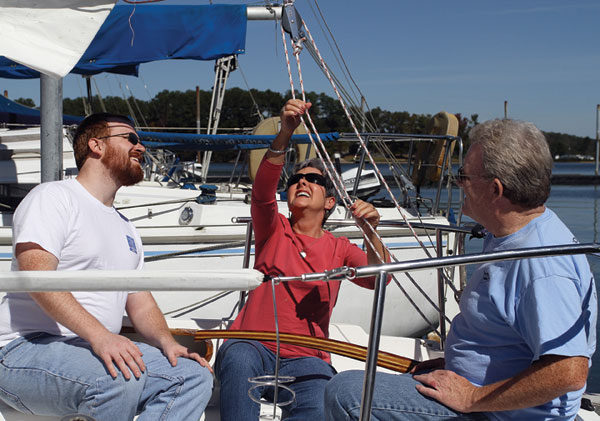
There are plenty of crewing opportunities, which is “a great way to get into it.” It is a chance to crew with people who know what they are doing and to learn the functions of the boat.

“Come out any time and 85 percent of the time, if you show up, someone will take you out sailing,” he said. It is a sport and a love to be shared.

There are “learn-to-sail” classes twice a year in the spring and fall. A junior sailing program complete with a summer sail camp gets the younger generation started early.

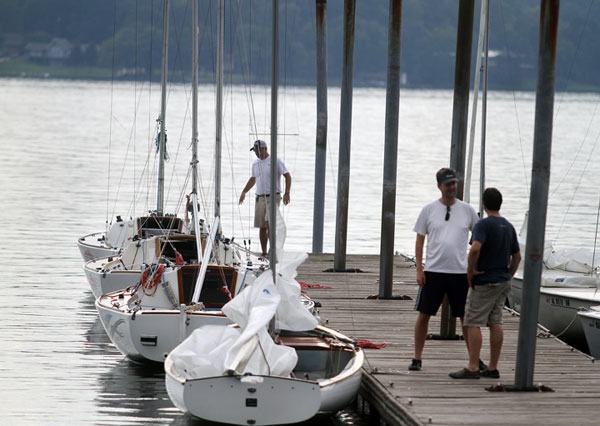
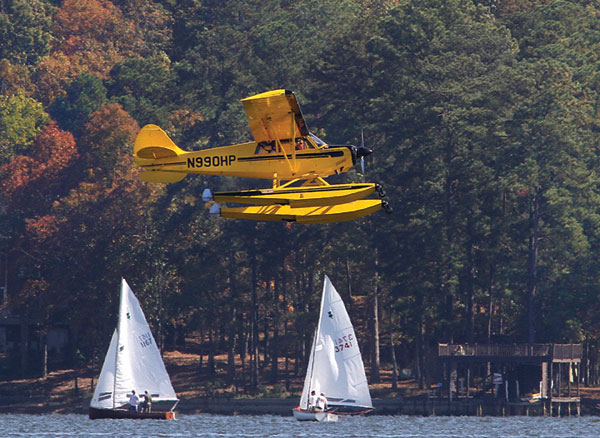
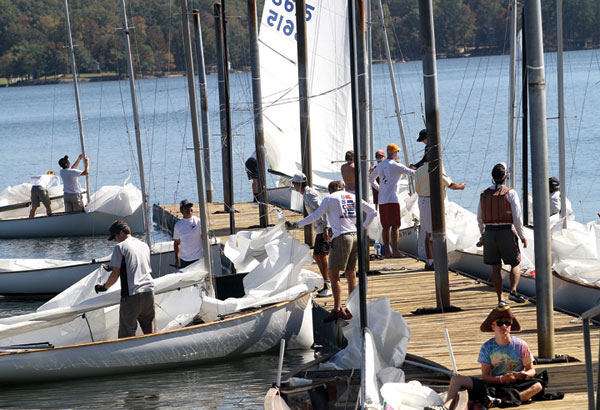
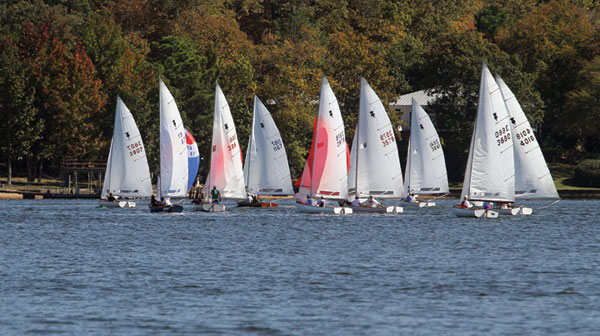
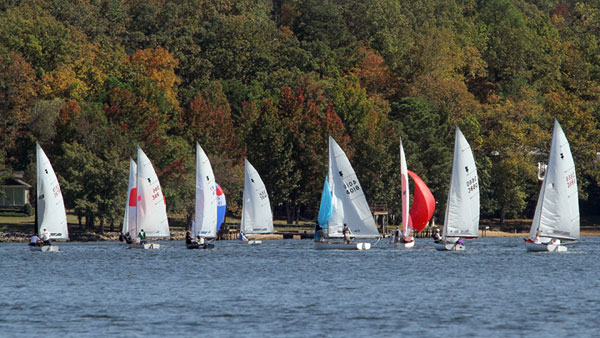
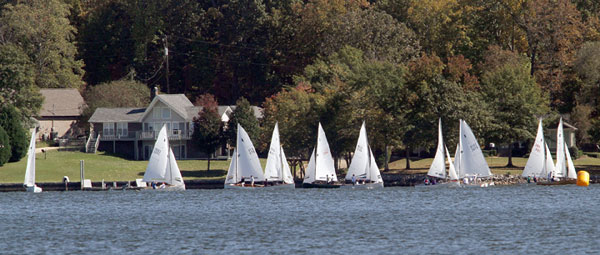
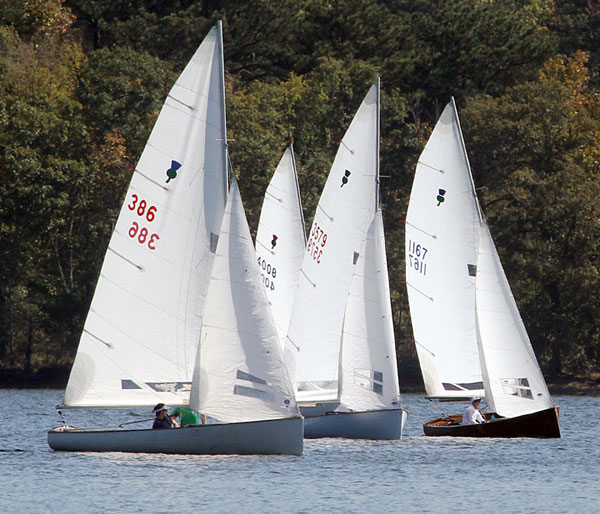
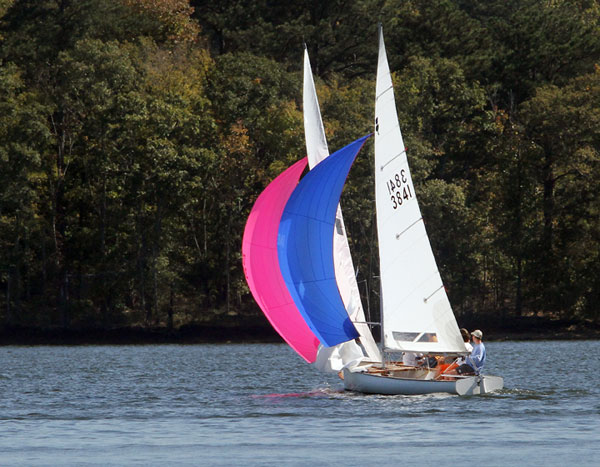
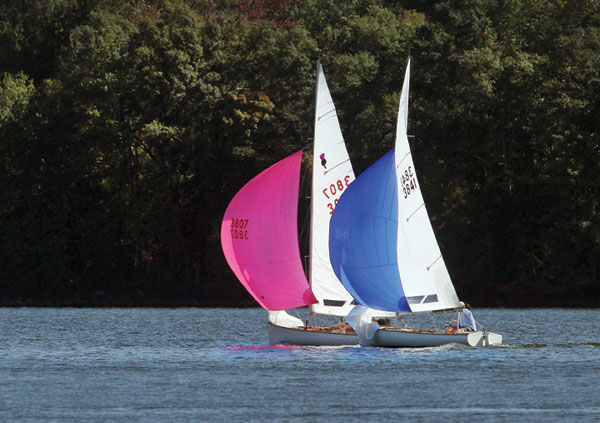
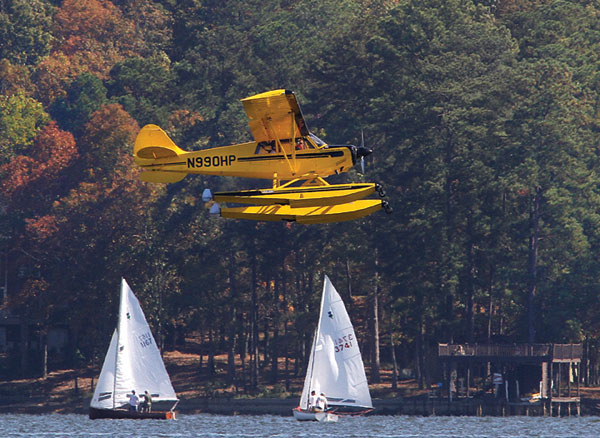
Major October regattas draw sailors and spectators from all around the southeast, and locals often find their perfect spectator spot on land and on water just to watch.

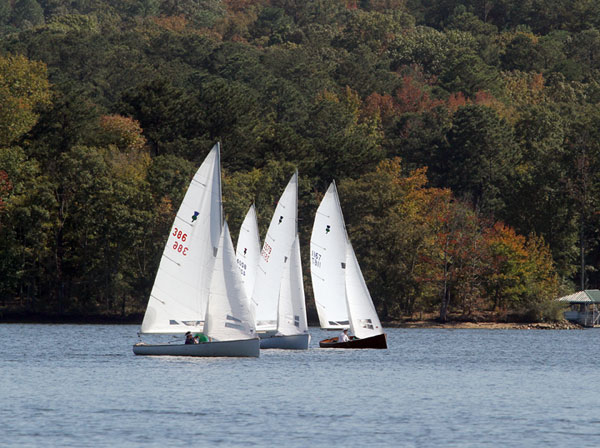
Just about every Sunday at 2 p.m., you can see a core group racing — puffed white sails, then colorful spinnakers bob along the horizon. An intermittent horn blowing its signals, and sails flapping and snapping in the wind seem to be the only sounds you hear.

It is quite a sight to behold for novice and enthusiast alike. It is like a secret, buried treasure one would ordinarily want to keep for himself. Only this one is best when it is shared.

Hidden Treasure

Gulf Creek Canyon’s beauty
preserved for future generations

Story by Samantha Corona
Photos by Jerry Martin
Photos courtesy of Frank Emory
and Ed Orth

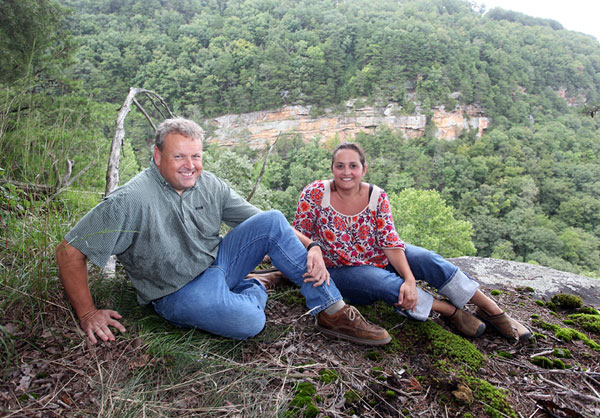
As the sun rises over Gulf Creek Canyon, Joyce Lanning makes her tea and carries it down to Picnic Point to take it all in.

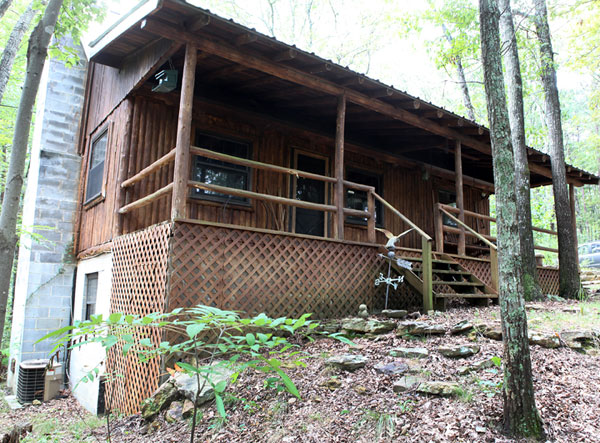
The cabin, nestled in the woods of Chandler Mountain, is a retreat for Lanning, and her husband, Jerry. The Birmingham-based couple escapes to their St. Clair County hideaway to enjoy nature and all it has to offer.

“It is a beautiful place and a wonderful spot to enjoy,” she says. “I go to Picnic Point in the mornings to watch the sunrise and thank the sun for coming up.”

Picnic Point is just one of three areas the Lannings have discovered and named along their more than 200 acres of property, and it is one of many areas the couple has donated to the Alabama Nature Conservancy as part of the official Gulf Creek Canyon Preserve.

“We wanted to preserve it for future generations, so that they can enjoy it after we’re no longer in the picture,” Jerry said.

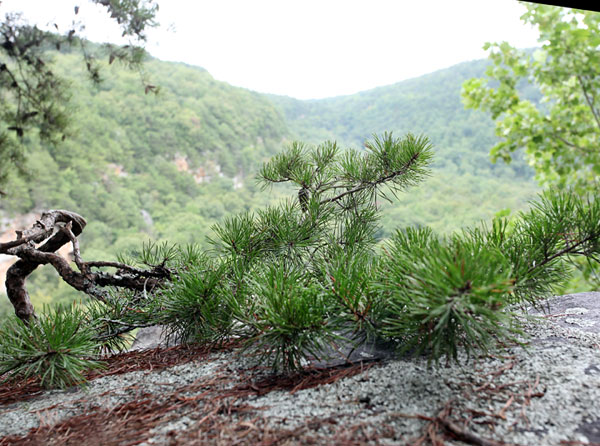
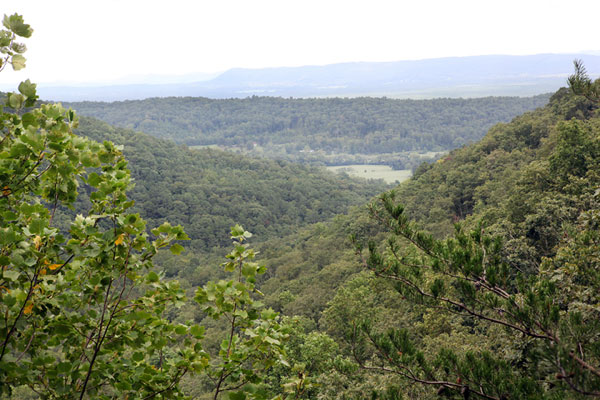
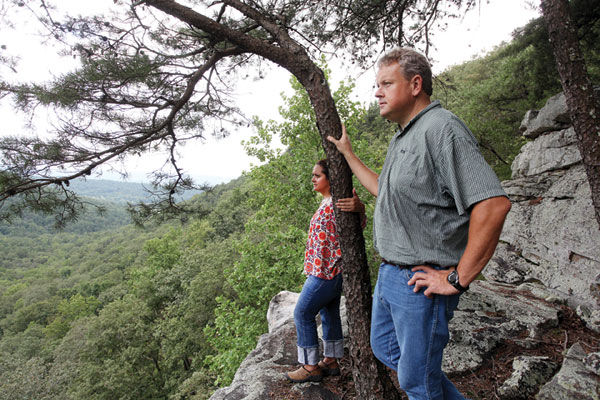
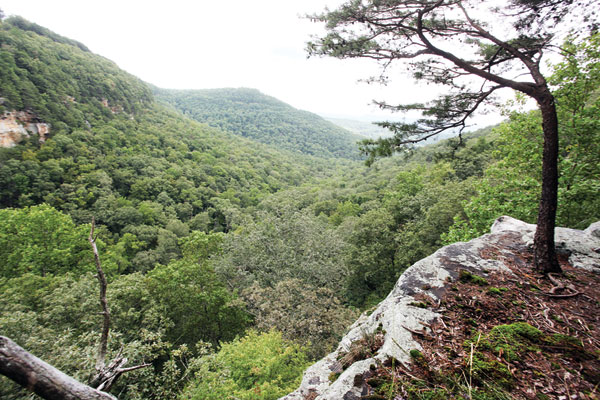
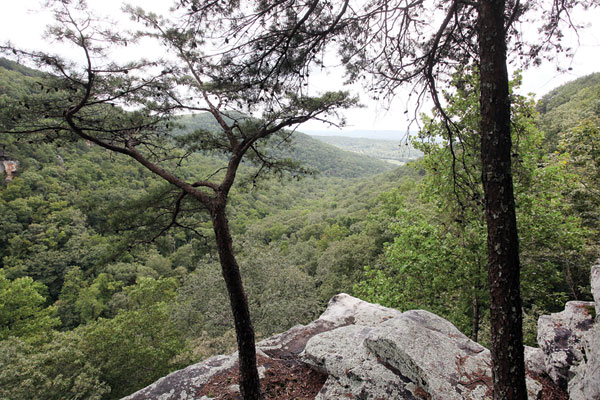
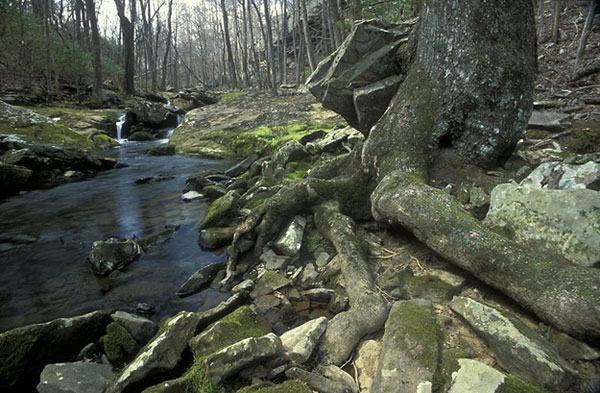
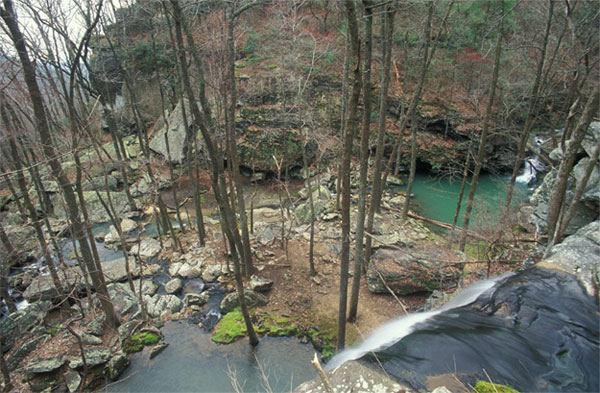
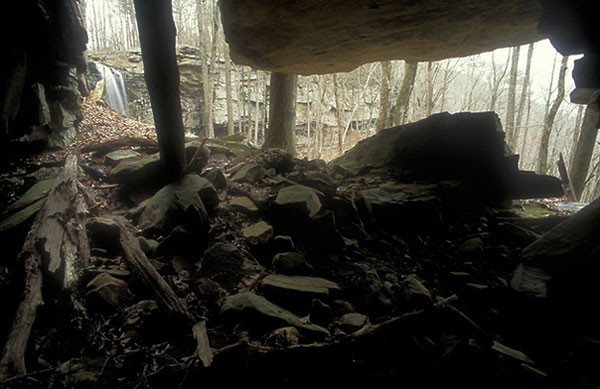
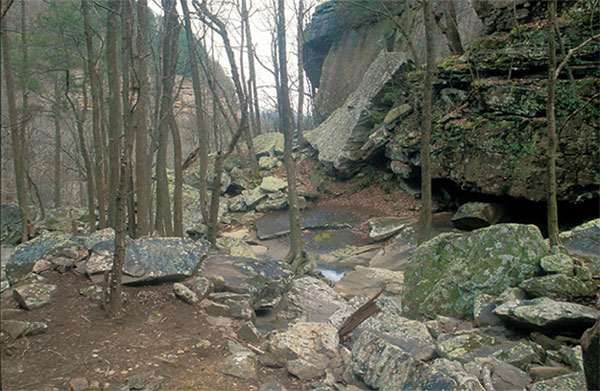
Standing from Bonsai Point, it is easy to see why. Complete with a small pine tree twisted into a Bonsai-style shape, the Point’s large rock ledge looks out over a sea of trees, nature and wildlife that is nothing short of breathtaking. The view encompasses acres of forest, steep drop-offs and naturally worn caves embedded in some of the whitewashed mountains.

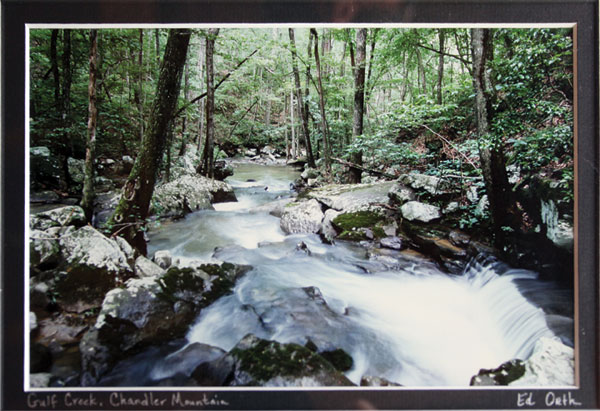
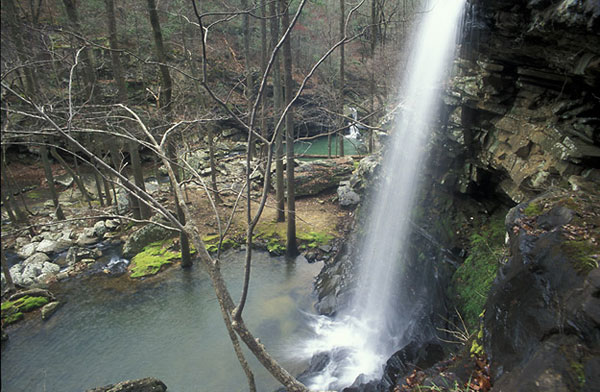
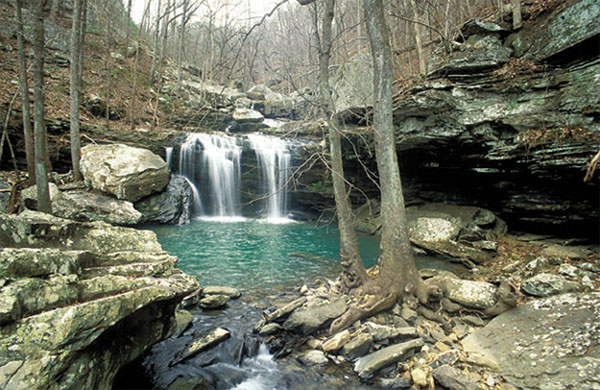
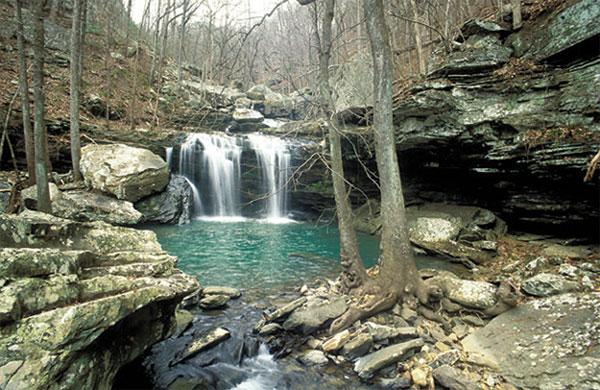
The sounds of nearby waterfalls bring a steady, but serene background noise to the space, and the occasional bird and rustle of leaves seem like an orchestrated collaboration.

On this late summer day, the green shade of leaves is dominant. But Keith Tassin, The Nature Conservancy’s Director of Terrestrial Conservation, says fall color brings an even more scenic view, and in winter the trees open up.

“After the leaves have all fallen off in the winter months, you can see straight through to the creek below or across to the waterfall,” Tassin said. “It’s hard to find a time of year when there isn’t a great view.”

The Lannings bought the property in 1996, after visiting with friends who owned neighboring land.

“Our friends loved the property up there, and we enjoyed visiting,” Jerry said. “After talking about it, Joyce wanted to see if there was something that could be done to preserve it.”

As a retired real estate and property attorney, Jerry was familiar with the requirements, and the Lannings set the wheels in motion.

The couple acquired 200-plus acres of land in the deal, and in the time since, the couple donates some of those acres each year to the Nature Conservancy. To date, about 190 acres are currently under the protection and observation of the environmentally-focused group.

The Nature Conservancy is a global organization formed to help preserve and protect ecologically vital lands, waters, plants and animals for future generations.

Conservancy chapters span across 30 countries, all 50 states in the U.S., and a number of counties throughout Alabama, specializing in providing care and protection for individual areas and the world’s most endangered resources.

Jerry served as a former board member for the Conservancy and has a long-standing relationship with the group. Dry Creek Preserve off Highway 231 in St. Clair County is also a Nature Conservancy property.

“Like Dry Creek, Gulf Creek Canyon is another great area in St. Clair County that many people might not know about,” Tassin said. “It is a very rich area, full of plants and resources.”

While some preserves are open to the public for hiking, biking and general touring, Tassin said the rocks and cliffs at Gulf Creek are too much of a safety risk right now for outside visitors.

The Nature Conservancy is open to schedule escorted visits with environmental enthusiasts and donors, but ask that interested hikers or adventurers leave this one to the professionals.

However, the creek below is a public draw for one extreme sport – white water rafting.
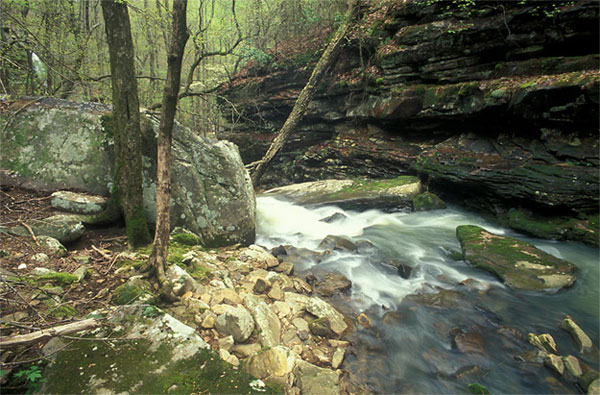
Tassin said the rapids flowing from Loop Road down to Beason Cove Road is a major attraction for those who enjoy rafting, kayaking and canoeing along the Alabama waters.

According to riverfacts.com and oars.com, the stretch of Gulf Creek river runs 2.2 miles and is rated a Class V for intense and violent rapids with steep drops, waterfalls, massive waves and constricted channels.

“This is definitely no place for amateurs,” he smiled.

Encouraging conservation
For the Lannings, the Gulf Creek Canyon property isn’t about just one hobby or interest, it’s about protecting a place where people can get outside, enjoy themselves and learn more about the natural beauty in Alabama.

“Nature can be one of our teachers, too,” Joyce said. “I have profound gratitude for the world we live in, and I want others to share that with me.”

The couple has offered up day trips and weekend-long stays at the cabin for environmental fundraisers like the Cahaba River Society, the Freshwater Land Trust, and of course, the Nature Conservancy.

Both Jerry and Joyce are involved in a number of organizations and activities dedicated to preserving the environment and ensuring the resources we have today will still be around tomorrow. Their hope is to raise money for these worthy causes and to increase awareness on the importance of preserving lands.

“A land donation can be many acres, or as small as one acre. And it doesn’t have to have a rare plant or animal to be considered a preserve,” Jerry said. “All the landowner has to have is the desire to protect a part of their property.”

If a property owner is interested in preserving a site, or even a portion of a site, Jerry said owners can reach out to any certified 501c3 non-profit environmental agency about obtaining a conservation easement. They are restrictions a landowner puts on their own land, specifying its uses and protecting its resources.

“Donating land can be a benefit for the non-profit organization, a benefit for the land owner and a benefit for those who are able to enjoy the property for many years to come,” he said. “It’s an important gift.”

For Joyce, the minute she saw Gulf Creek Canyon, she knew it needed to be preserved and showcased as beautiful space and scenery here in Alabama.

“When our friends were looking for their property, they said they were looking for North Carolina,” she laughed. “And they found it in St. Clair County.”

Forever Wild

High Falls is located in Dekalb County toward the head waters of Town Creek that empty into Lake Guntersville. Town Creek is known by kayakers who favor paddling in the mountain creek for its class 4 and 5 whitewater. Promoters of Big Canoe Creek Preserve hope to join Forever Wild properties like this to be protected, preserved and enjoyed.


Exploring the possibility of a Big Canoe Creek Preserve

Story by Carol Pappas
Photos by Michael McKenzie
Submitted photos

For Springville’s Laura McKenzie, Big Canoe Creek is more than just a picturesque stream that meanders lazily through St. Clair County. It’s her science classroom, her family’s recreation area and an environmental wonder all rolled into one.

When she and her husband, Michael, moved to the area, she said she joked with him, “Now we can commence with raising a biologist.”

As it turns out, it wasn’t much of a stretch. “Because of our creek, so far, we have two biologists and counting,” she said. Over the years, she has used the creek to teach groups of homeschoolers as well as her family about ecology and biology.

She shares an attraction to the creek with people like Doug Morrison. He began his love of the creek through recreation but soon found an inner passion to save it, preserve it and share it for generations. Today, he is president of Friends of Big Canoe Creek, an environmental group dedicated to preserving this natural resource.

All across the state, there are people just like McKenzie and Morrison, who recognize the value of preserving Alabama treasures. In 2009, Big Canoe Creek was nominated to be a part of the Forever Wild program, which buys land all across Alabama to preserve it for the public’s enjoyment.

Funding has been on hold while the program awaits its fate in the Nov. 6 election. On the ballot as Amendment 1, voters across Alabama will have an opportunity to vote ‘yes’ or ‘no’ on continuing to fund Forever Wild through interest earned on natural gas royalties, capped at $15 million each year.

Those who question continuing it say they just aren’t sure how much longer or at what level the program should be funded.

Since its creation in 1992, the Forever Wild Land Trust has bought more than 227,000 acres of land for public use. But even so, Alabama ranks last with the smallest percentage of public conservation land in the Southeast, according to Forever Wild.

“I think Forever Wild is a great program because it provides land available to the public for recreation,” Morrison said. “Every community needs green space for an opportunity to explore, experience and absorb nature. Outdoor activities are important physically and mentally for all ages, and the Friends of Big Canoe Creek has nominated land in Springville which adjoins Big Canoe Creek, for consideration by Forever Wild.”

Morrison said the hope is for a Big Canoe Creek Nature Preserve open to the public for hiking, biking, horseback riding and scouting. As part of the plan, they want public access to the creek for canoeing, kayaking and fishing. “It could be a recreational oasis, and is a great opportunity to preserve land adjacent to a state treasure that is Big Canoe Creek.”
He’s not alone in that belief. “Big Canoe Creek is a beautiful stream, rich with unique and rare species of plant and animal life,” according to Wendy Jackson, executive director of the Alabama Freshwater Land Trust. Jackson, who also lives in St. Clair County, has been a vocal proponent of the Forever Wild program and has worked alongside countless groups to keep it going.
“The property under consideration by Forever Wild will help preserve the integrity of the creek while providing outdoor recreation activities,” she said. But more than just recreation, she pointed out, “Forever Wild properties are proven economic engines for the communities where they are located because people from across Alabama and from out of state visit them, in turn generating tourism revenue for the local community.”

Barnett Lawley, former commissioner of the Alabama Department of Conservation and Natural Resources, has worked tirelessly across the state during his tenure as commissioner and in the days since for Forever Wild.

But his roots in the creation of Forever Wild go all the way back to the beginning. The St. Clair County native was vice president of the Wildlife Federation when the bill was passed. As commissioner, he automatically became chairman of the Forever Wild board.

He shares McKenzie’s belief that the lands acquired are indeed outdoor classrooms. “It’s pristine land, and it needs to be protected” for generations to come. He points to the wetlands that are part of Forever Wild acquisitions, noting that they can teach about the natural filtration of groundwater. There are so many good things besides hunting and fishing.”

Lawley, too, talked about the economic impact. At Paint Rock River, the parking lot for public access had to be expanded twice.

In Hale County, just south of Greensboro, the national grand championship for field trial dogs is being held in September at the old state cattle ranch, which now bears the name of the man who had the vision behind it, M. Barnett Lawley Forever Wild Field Trial Area.

That’s 750 dogs, their owners, their trainers and others associated with them staying in the area for two weeks. For the Black Belt, it is a much-needed injection of outside money, Lawley said.

And natural resources like those across Alabama are economic drivers used to lure industrial prospects to the state. At Gov. Riley’s annual Turkey Hunt, 100 prospects from around the world stayed at different farms and lodges across the state. You might recognize names like Airbus and Thyssen-Krupp among the guest list. Both now call Alabama home.

They see the quality of life found here. “It’s an economic development tool using natural resources. Forever Wild adds to that program,” Lawley said.

Recreation, education, economic development, tourism — it all sounds like a winning proposition for Alabama. Add to that, the use of money to fund it from a depleting resource — natural gas — and putting it into a permanent resource — land — and Lawley reasons that it is good for the people of Alabama. The land becomes a permanent asset of the state, it doesn’t use a dime of taxpayer money, and it is a resource that can be used and enjoyed by the people from now on.

While Forever Wild is a statewide political issue, McKenzie illustrates through the comments of a mother and a teacher how all politics are indeed local. “The creek has offered a place of sanctuary, peace, fun and renewal. I would love for other parents in our area to be able to share in these benefits. That is why I’m so excited about the possibility of Forever Wild buying the property along Big Canoe Creek. Kids are much more motivated to learn when they are actively engaged in their subject,” she said. “When they value the beauty of the creek, they begin to value the science behind it.”

And when they value something, they want to protect and preserve it.

As Lawley put it, “Forever Wild is a reinvestment into the state for the people.”

Barn Owls on the Lake

Story by Carol Pappas
Photos by Jerry Martin
and Kathy Henry

Hagan, the last of the barn owls to leave their roost in July, flew the coop from an unlikely perch — the rafters of a covered pier on Pell City’s Logan Martin Lake.

He, his brothers and mother took up residence some weeks earlier. The mother first, of course, and brothers coming along later, hatching a few days apart.

They didn’t seem to give a hoot about their unusual surroundings of water instead of land. In fact, barn owls don’t hoot at all. Their vocal repertoire is more like a blood-curdling scream, the kind Alfred Hitchcock might fancy to play a role in a terrifying scene.

It seems only fitting that a ghoulish face and silent wings in flight, swooping toward their prey at night, would make this scene complete. Hitchcock would be proud.

For Kathy Henry, owner of the last known address for Hagan and his older brothers, Aaron and Mit, her visitors haven’t been frightening at all. That is, unless you count the time one night when the mother silently swooped down behind Henry and friends, letting out that scream because she thought her young were in danger.

The owl lunged toward the family boxer, “and he took off running like a sane person — as did we. She screamed four times until we got to the door,” Henry said.

Other than that near miss, owl watching has been an entertaining pastime around the Henry property. She rigged a Wingscapes BirdCam she dubbed “owl cam” to a PVC pipe to watch as the family grew. She named them. “The first born was Aaron, after the friend that found them. The middle born was Mit, after a friend of ours who has overcome an extreme fear of birds and now loves birds. And the youngest was named after the 4-year-old grandson of our favorite neighbor.

“Hagan, the owl, was hatched about five days after we found the first two, and Hagan, the human, climbed up and was the first to see it,” Henry said.

Barn owls hatch their young in the order the eggs were laid, so when the youngster climbed the ladder to look and came down saying there were three, she tried to correct him. When he didn’t give up, she ascended the ladder to see for herself and discovered the trio staring back at her.

Over the owls’ month-long stay, Henry, a pharmacist by trade, has learned all about her winged friends. “They nest in caves, hollowed trees and old buildings,” she said. But somehow, they took a turn across the water and ended up at Henry’s lakeside place. “I think it was because she (the mother) knew they would be safe. At least I like to tell myself that.”

She has taken dozens of photos and hours of footage, studied their habits and shared her knowledge with other curious onlookers. But it never seemed to faze those being looked upon.

Perhaps Henry’s right. They knew they were safe. “It’s been fun,” she said. “I really enjoyed it. I hope they come back.”