New pavilion, nature playscape and more on the table for preserve
Story by Molly Gilbert Photos from Big Canoe Creek Preserve
Big Canoe Creek Nature Preserve has come a long way, and there’s more on the horizon. Another 72.5 acres adjoining the Preserve has been nominated for Forever Wild Land Trust consideration, which could eventually bring the protected area to nearly 500 acres. That process is still in its early stages.
New construction projects are taking shape that will give visitors even more ways to explore, learn and enjoy this special area of Springville.
“We have three major projects going on – everything is in the development stage,” says Doug Morrison, manager of Big Canoe Creek Nature Preserve.
Plans for the open-air pavilion are expected to go out for bid soon, with completion projected for May 2027. The Preserve has received septic tank approval, and Forever Wild Land Trust has already funded a waterline, both important steps toward future restroom facilities.
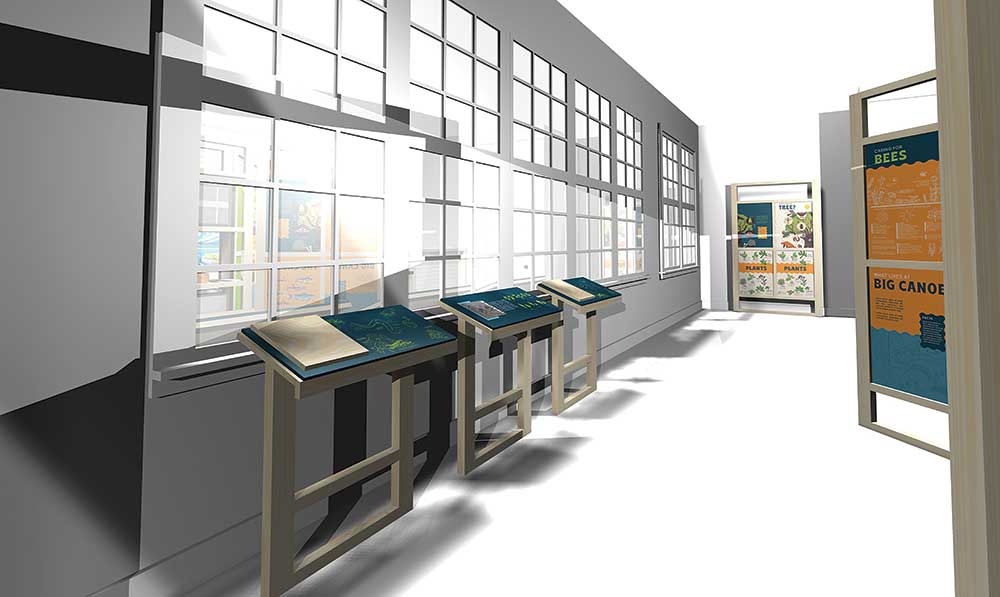
Concept design for the Nature Center
Once complete, the pavilion will give the Preserve a place to gather, adding another dimension to a property that has become increasingly popular for outdoor recreation and education.
The nature playscape is also working its way toward the construction phase. Most of the funding is in place, and the design is being adjusted to fit the available funds and take a phased approach. Morrison hopes work can begin in 2027.
For families, the playscape will offer another way for children to experience the outdoors through play, exploration and discovery – the kind of experience that can turn a visit to the Preserve into a lasting memory.
Then there is the Big Canoe Creek Nature Center, which will bring the Preserve’s educational mission into the heart of Springville.
The Nature Center will be located in the historic Rock School (built in 1921) rather than on the Preserve itself. Thanks to community support, the Big Canoe Creek Preserve Partners are renting the building from the Springville Preservation Society, and grants have helped move the project into the design phase. A designer is currently working on the interior, while construction documents move through the approval process. Physical work inside the building has not yet begun.
Doug sees the project as a natural fit for the community: a historic building being preserved while creating a new place to learn about the natural world around it.
“It is a really special place,” he says.
A COMMUNITY BUILDING WITH IT
The projects may still be in development, but people are already investing their time and energy in the Preserve.
This past spring, about 150 people came out for the Biggie Stomp 5K, an event that brought runners onto the trails with the added fun challenge of spotting Big Foot in the woods.
Scout troops have donated several projects. One group installed a picnic table, hitching post and horse step along the Easy Rider Trail.
“It’s good to see the broader community buy into the vision with their contributions,” Doug says.
Springville Library has become another important partner. Librarian Jamie Twente secured a grant for science-based kits that can be used with homeschoolers, opening opportunities for children to explore subjects such as fireflies, butterflies and other local wildlife.
The library also helped secure funding for interpretive signage along the 0.6-mile paved trail. A storyboard walk is planned with interchangeable 18-by-24-inch story panels that can bring nature-themed stories to the trail.
These additions may seem small compared with the larger construction projects, but together they reveal something important about the Preserve’s future.
It is a place where people can come to do something – walk, run, play, learn, gather – or simply slow down and notice what is around them.
And there is still plenty to discover right now.
The Preserve is open Wednesday-Sunday, with regular visitors continuing to return to the trails and new visitors finding their way there.
The next chapter is already underway. For those who have watched Big Canoe Creek Nature Preserve develop over the years, these projects offer something new to look forward to. For those who have never visited, there may be no better time to start exploring.
For Tara Martin, Big Canoe Creek Nature Preserve has become a place to get stronger, slow down and find herself again
Story by Molly Gilbert Photos by Mackenzie Free Submitted Photos
The trails at Big Canoe Creek Nature Preserve are more than a place for Tara Martin to exercise.
Just a half-mile from her home in Springville, the Preserve has become her personal playground, training ground and place to breathe. She walks, hikes and climbs its rugged trails as often as she can, sometimes covering 15 or 20 miles in a day.
And when she leaves, she doesn’t feel worn out.
“I come back feeling energized and recharged,” she says. “I feel awesome.”
For Tara, the explanation is simple. There is something about being outside – surrounded by trees, streams, birds, wind and uneven ground – that restores her.
“The Preserve cleanses me,” she says. “It gets my body in shape. It stops the chaotic brain.”
Over the past two years, the Preserve has helped Tara become stronger physically and emotionally. It has been the place where she built her endurance, discovered a love of climbing and prepared for some of the biggest adventures of her life.
But perhaps most importantly, it has become a place where she can simply be.
“I feel very connected to nature,” she says. “There aren’t that many places where I feel that way, but I always do at the Preserve.”
Finding her way back
Two years ago, Tara was living a very different life.
She was a wife and mother, and at work she was a lead support specialist overseeing about 100 caregivers. The job was demanding, stressful and essentially non-stop. For years, much of her energy went toward taking care of everyone else.
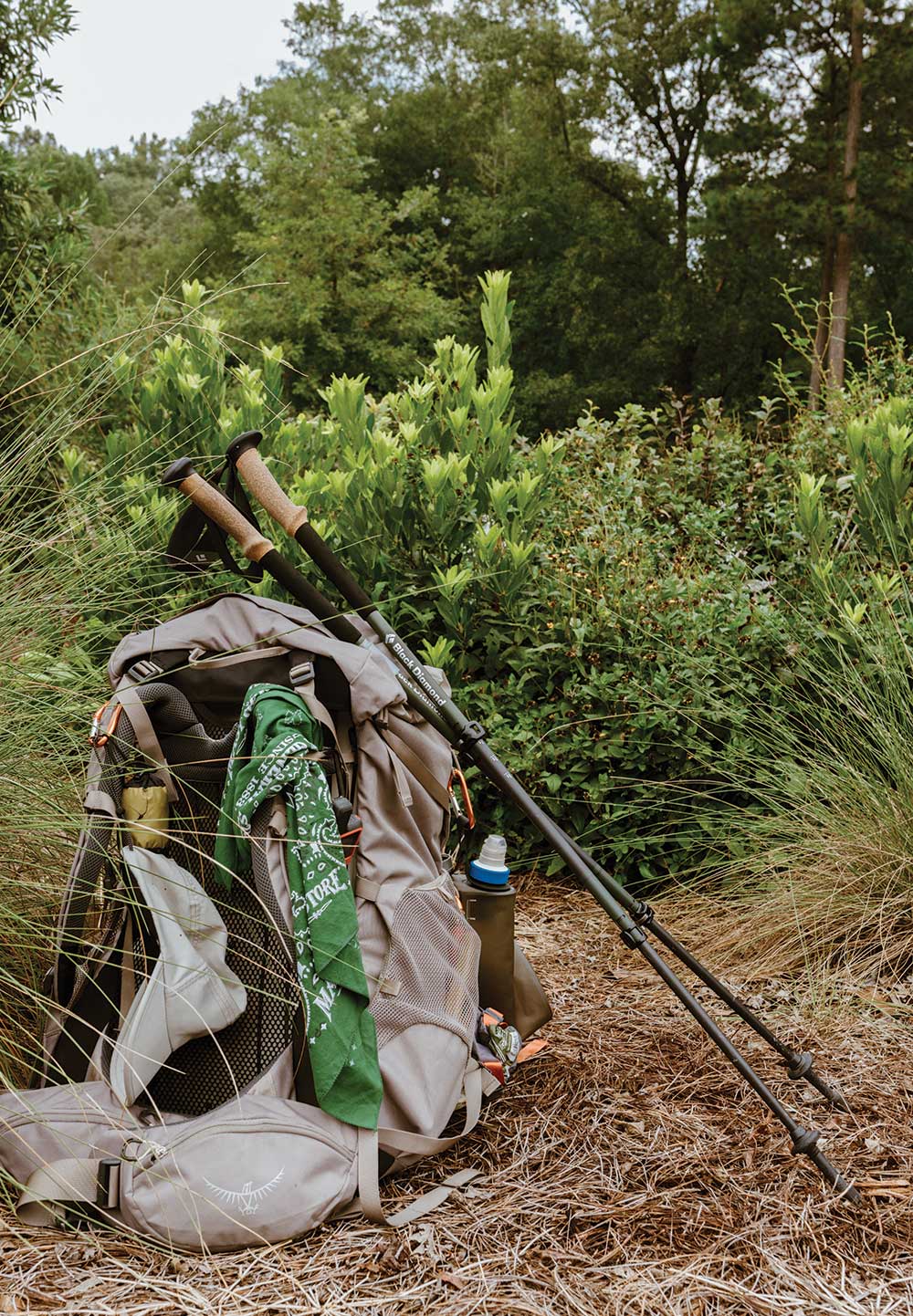
Tools of the training trade
“I never thought about my life and future – it was all about survival mode,” she says. “I went to work and was on call. I never thought about what I wanted. I just let myself go.”
Then came a vacation she had dreamed about since she was a child.
Tara and her husband, Mark, had planned a trip along the Pacific Coast, something she had looked forward to for years. But when the time came, she couldn’t enjoy it the way she had imagined.
It hurt to walk. Her body wasn’t prepared for the demands of the trip, and the experience forced her to confront something she could no longer ignore.
“I needed to get my life together,” she says. “I needed more movement.”
She began making some changes. She sought out therapy and started walking at a park in Springville. She could put in the miles, but she wasn’t getting stronger.
Then her son told her about Big Canoe Creek Nature Preserve.
It was close to home and offered something the park didn’t: elevation, hills and rugged, changing terrain. The Preserve’s trails climb and descend through the woods, with uneven footing, streams, creeks and fallen trees that make every walk a little different.
“I started going out there every day, even if it was only a mile or mile-and-a-half,” Tara says.
Soon, the miles added up.
“I walked up hills and noticed my leg muscles had gotten so much stronger,” she says. “I realized how much I loved climbing.”
Tara began wondering what she might be capable of beyond the Preserve.
Testing her strength
Tara was ready to put her new conditioning to the test. She traveled to Zion National Park in Utah, where she took on Angels Landing.
For Tara, completing the hike was about more than reaching the top. Not long before, she had struggled simply to walk during a vacation she had dreamed about for years. Now she was tackling a demanding climb in one of the country’s most spectacular landscapes.
She loved the challenge. The physical effort, the adrenaline and the satisfaction of accomplishing something difficult appealed to a part of Tara she was only beginning to discover.
“I developed confidence,” she says.
A month after returning from Zion, Tara reached another turning point.
She quit her job.
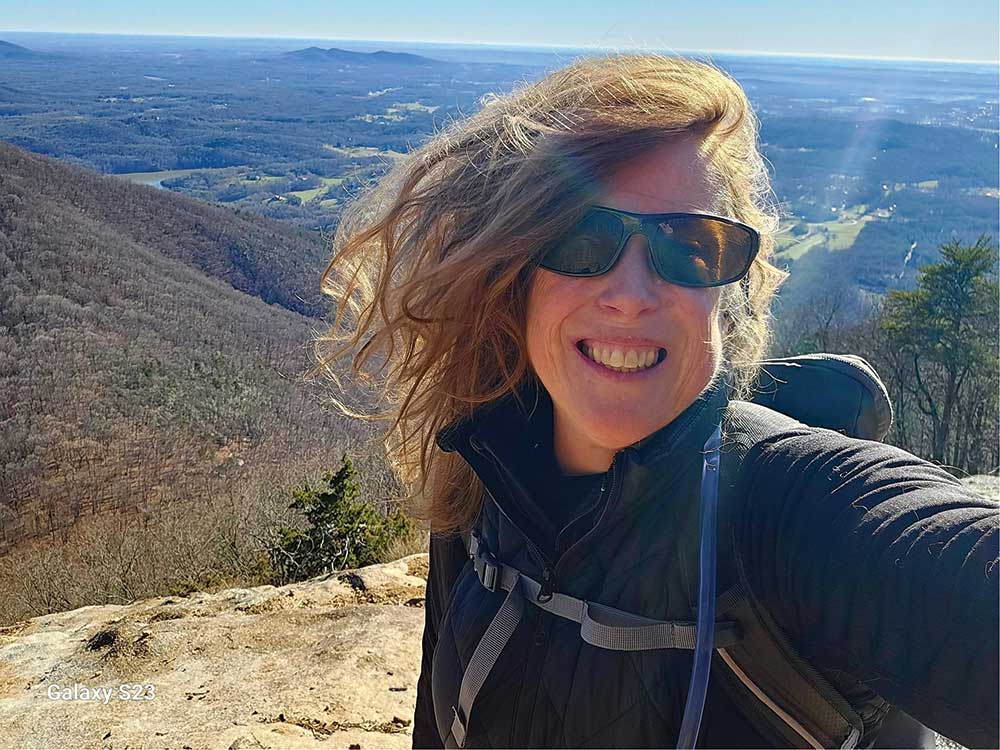
Sunrise summit at Yona
After years of a demanding position, she had reached a point where the work was no longer sustainable. She wanted a life with room for more than work – a life that allowed space for her family, her health and herself.
She drove to Colorado, car camped and climbed the Manitou Incline, completing all 2,768 steps.
Tara took three months off before finding a new job. Instead of simply slowing down, she used the time to explore what she could do.
Choosing a life of adventure
She went backpacking at Cheaha State Park and Sipsey Wilderness.
In a five-month period, she climbed Yonah Mountain three times, Slaughter Mountain and Brasstown Bald, and tackled Calloway Peak twice.
“I’m always after the next bigger mountain,” she says.
Each climb gave her another reason to believe in herself. She was seeking out steeper trails, longer distances and more difficult terrain.
“When you weren’t able to do this before – low self-esteem and no confidence – and then you accomplish it, it’s such a point of pride,” she says. “When you thought you could do nothing and realize you can do everything, that’s life-changing.”
The change showed in more than what she could accomplish on a trail.
“I walk differently now,” she says. “I stand up straight. I move with confidence. I feel amazing as a human being.”
A life with room to breathe
Now, Tara’s job has a more flexible schedule and gives her something her previous career had not: time.
She could work and take care of her family without putting herself last. Exercise and time outdoors could become part of her regular life rather than something she squeezed in when everything else was finished.
And she kept returning to Big Canoe Creek Nature Preserve.
Over the past two years, Tara has steadily lost weight, built muscle and developed the endurance she once thought was beyond her reach. What started as short walks became longer hikes. Miles became double-digit miles.
“I can walk 20 miles now and it’s nothing,” she says.
She credits the Preserve with giving her the terrain and consistency she needed to build that strength.
But the physical benefits are only part of why she keeps coming back.
Where she finds peace
For Tara, the Preserve is also a place of solitude and reflection.
There is a spot she affectionately calls “Tara’s Rock.” She sits there to pray, meditate or simply eat her lunch.
“I wanted to be able to have privacy and peace,” she says.
She describes the experience of being in the woods in almost physical terms: listening to the wind and birds, smelling the rain, feeling dirt beneath her fingers.
“Our bodies are composed of water; we are nature,” she says. “There’s nothing like being outside.”
Those sensory experiences help her feel connected – not just to the landscape, but to herself.
“It’s so cathartic,” she says.
A 15-mile day on the trail doesn’t necessarily leave her depleted. Instead, she often returns home feeling recharged.
“When I go out of state, it’s for the challenge,” she says.
The big mountains give her that challenge. The Preserve gives her something else.
Connection.
“If you’re running up and down Yonah, that’s about endurance,” she says. “At the Preserve, I connect with the earth and nature.”
That distinction is important to Tara. The mountains have become places where she can test herself, but the Preserve has become part of her everyday life.
It is where she trains, but it is also where she returns to herself.
The adventure in herown backyard
Tara’s adventures have continued to grow.
Her greatest accomplishment so far was completing the Cascade Canyon and Paintbrush Canyon Loop in Grand Teton National Park. The achievement represents just how far she has come.
And there is already another goal on the horizon: Mount Rainier.
She’ll train for that challenge the same way she has trained for everything else – by putting in the miles and tackling the hills at Big Canoe Creek Nature Preserve.
But Tara doesn’t believe someone needs to be preparing for a major expedition to appreciate what the Preserve offers.
That’s one of the things she loves most about it.
It is raw rather than perfectly manicured. Rugged rather than predictable. There are five trails with different terrain and challenges, making it a place for hikers, runners and mountain bikers.
Kids can ride their bikes. Families can explore. Someone can spend hours covering miles or simply take a short walk through the woods.
“You feel like you’re in the middle of the wilderness,” Tara says. “You feel so in tune with nature. You’re in a different world.”
Having a place like this nearby is a tremendous asset.
Just start walking
Tara is proud of the mountains she has climbed. She is proud of the miles she can cover now. She is proud of the Tetons and the adventures that once seemed impossible.
But when she talks about how she got here, her advice is remarkably simple.
“It’s just one foot in front of the other,” she says. “Don’t focus on 10 miles. Focus on one step.”
That’s how her transformation began.
One step became another. A short walk became a longer one. A hill became a mountain. A difficult hike became evidence that she could do something she once thought she couldn’t.
The process was gradual, but the effect was profound.
For Tara, Big Canoe Creek Nature Preserve has been part of learning how to take care of herself.
“It has saved my life,” she says. “Not just physically, emotionally.”
Sometimes the next adventure begins with something as simple as taking a walk in the woods.
At Fishers of Men Farm, a faith-filled day of joy, welcome, and outdoor connection for children and young adults with disabilities and their families
Story by Elaine Hobson Miller Submitted photos
On the day Eddie and Dedra Adams first looked at their 80-acre farm in Steele, a thunderstorm came up. When the couple and their Realtor took shelter on the porch of a 100-year-old wooden house, Dedra looked out over the five-acre lake in front of the house and proclaimed, “This is where we’ll raise our boys.”
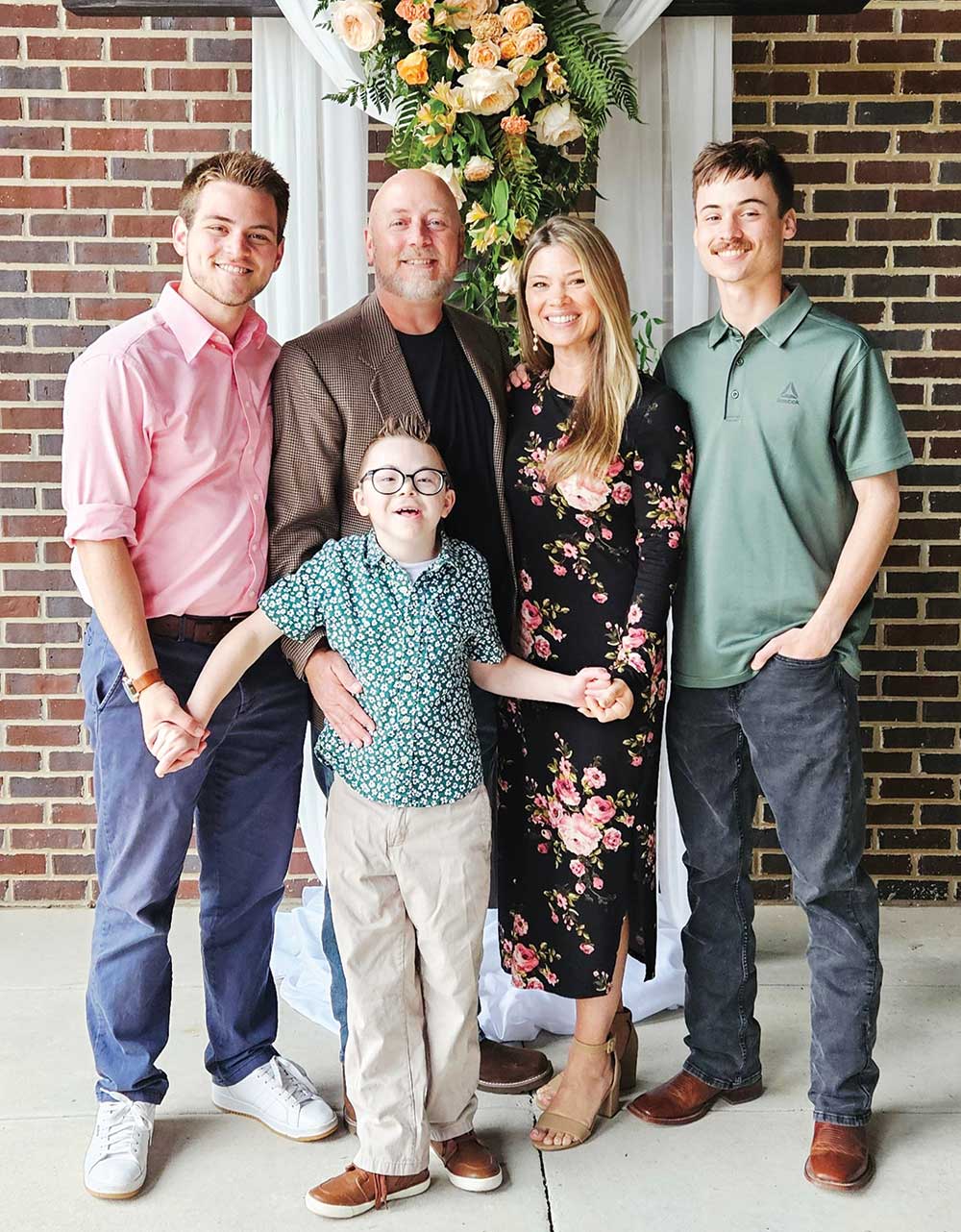
Family photo of Levi (front) with Caleb, Eddie, Dedra and Noah
The couple had two sons at that time and had been looking for property that would help them fulfill their dream of building a Christian family retreat. While it would be another seven years before the family actually moved to the farm, the boys were raised spending lots of weekends there.
“Noah was 7 and Caleb was 5 when we bought this place in 2013, but we didn’t move here until 2020,” says Dedra. “Eddie and the boys occasionally used a tiny camper to spend time up here together during that first seven years, but more importantly, the ministry began very quickly, within the first six months.”
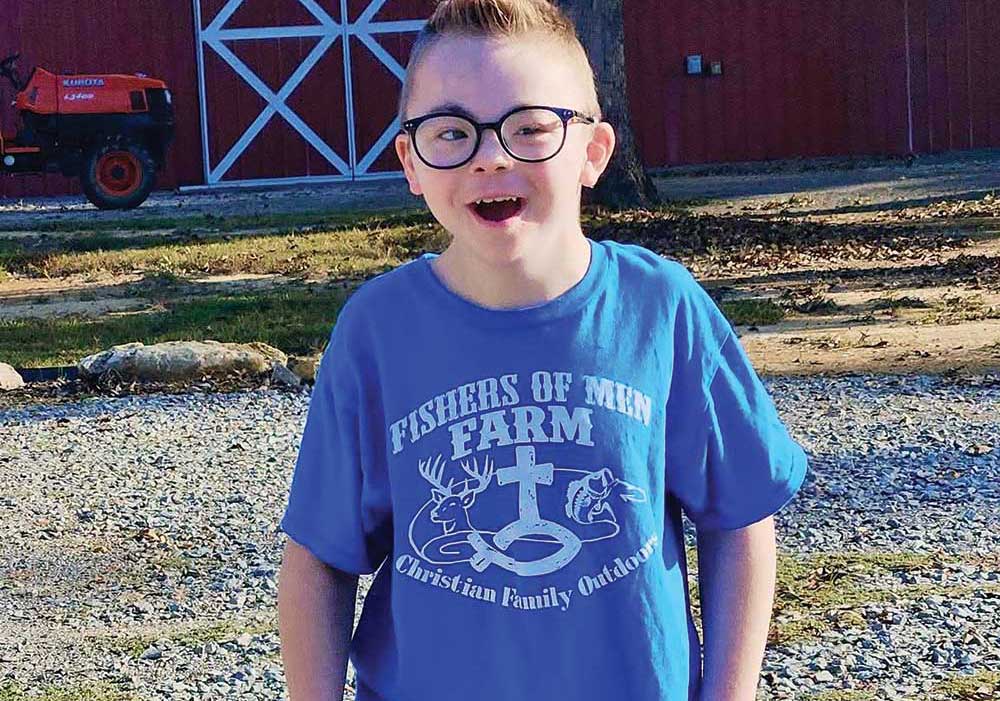
They dubbed their acreage Fishers of Men Farm, a ministry dedicated to helping families and individuals reconnect with God and each other through activities in His great outdoors. “We’ve had men’s ministry events, church services and picnics, father-son campouts, weddings, family reunions, family Christmas parties and anniversary celebrations here,” Dedra says.
The couple isparticular about what they allow to be held on their property. “We drew up bylaws that say events cannot contradict God’s word,” says Eddie. “We host Christian events or any event that promotes family. We also do smaller events like church cookouts. The Farm is used to promote and strengthen family relationships through activities such as hunting, fishing, hiking and camping.”
When their third son, Levi, was born in 2015 with Chromosome 9p Deletion Syndrome and Down Syndrome (see sidebar), the couple quickly realized how isolated families often feel when they have children with physical or mental disabilities. Their special-needs son inspired the couple to add another event to their roster, a Levi and Friends Day aimed at supporting these families.
“Within the first two years of having Levi in our lives, our hearts were burdened by the number of families who also have children with disabilities, but who do not have a strong, loving community surrounding them, helping them realize they are not alone on this journey,” says Dedra. “We are blessed with a community and a church (Faith Community Fellowship in Springville) that embraces Levi. We want these families to know they are not alone either.”
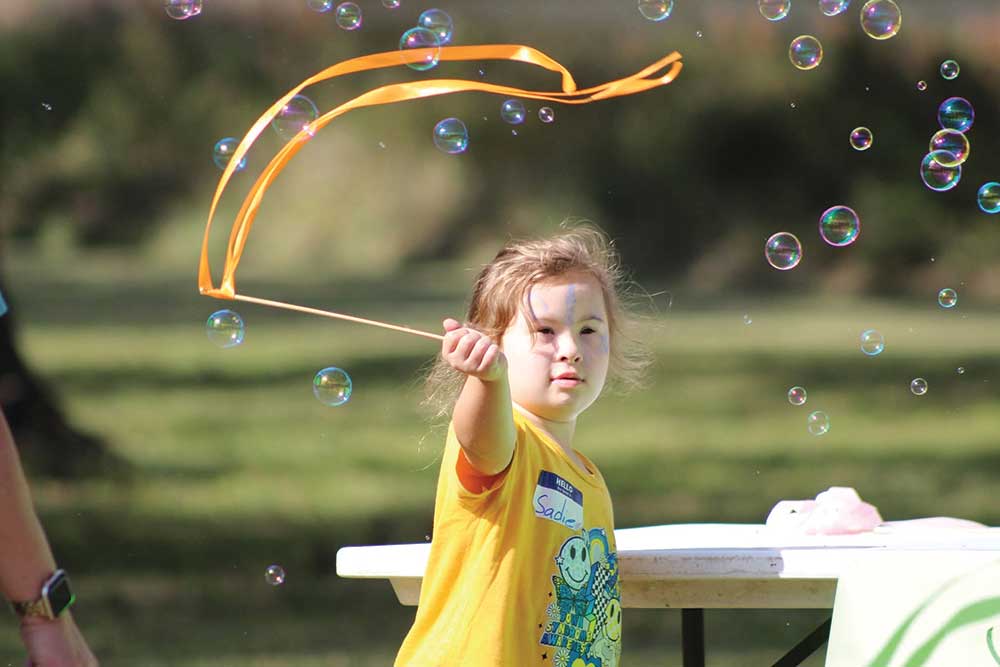
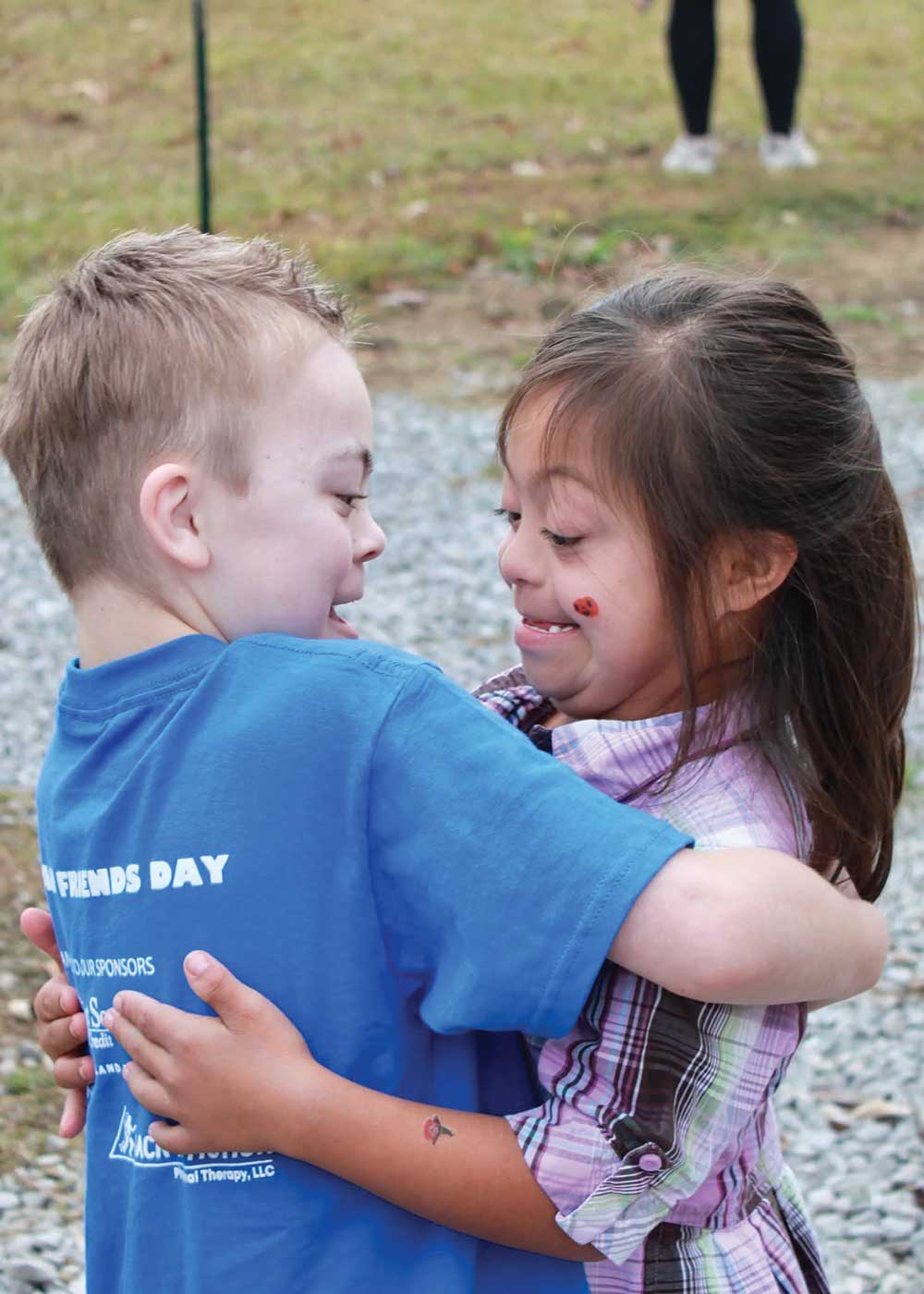
That’s how Levi and Friends Day, or LaF Day, as they affectionately call it, came about. By far the largest event on the Farm, it’s usually held on the second Saturday in October. (That’s the 10th this year.) It’s a free, all-day event for families with kids with disabilities. “We share resources with them, tell them about programs that help them, and love on them, so they won’t feel so isolated.”
Dedrasends Facebook invitations as well as digital versions via her contacts list. She tells folks to invite others as well. “Attendees need to RSVP, though, so I’ll know how many goody bags to make up for the kids and will have a head count for the food team,” she says. The bags contain items such as fidget spinners, stickers, snacks and sometimes T-shirts.
Levi & Friends is now the biggest event the farm sponsors and involves other Christian-based ministries that donate time to be part of it. “Hunting for Christ comes out and does archery,” Dedra says. “Canoe Creek Stables brings a petting zoo, Miss Magoo’s Reptile Zoo brings snakes and lizards.”
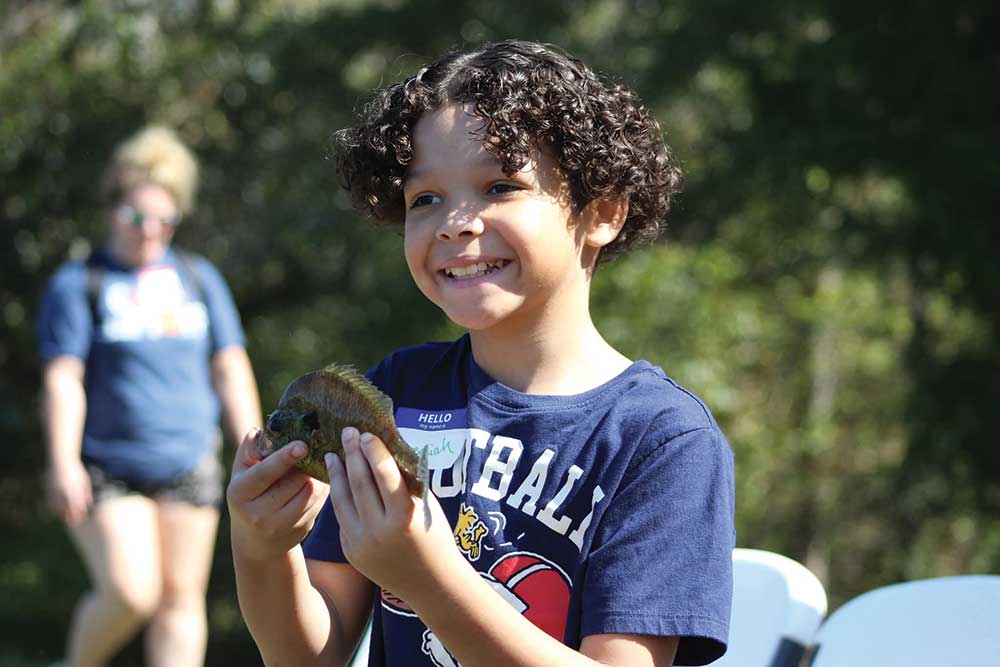
“We have hayrides, fishing teams, a cooking team that donates food and time, and 40-50 volunteers helping out,” Eddie says. “We assign buddies when the families check in, and they help the kids navigate through the day so the parents can relax. A lot of these kids have never shot a bow and arrow or caught a fish. We try to give them a country experience.”
Some of the kids have autism, others, Down syndrome, some are blind and some are limbless. “We welcome kids and young adults with any kind of disability,” Eddie says. “One girl without arms shot a bow and arrow here with her feet one year. She also caught several fish.”
Advertising is mostly by Facebook, word-of-mouth and local churches. About 150 people attended the event last year, including families and volunteers. “We had at least 50 kids from 33 families here in 2025,” Eddie says.
Fishers of Men Farm fulfills dreams God placed on the couple’s heart at various times in their lives. Eddie, a physical therapist at Back in Motion in Springville, was raised in Pinson, and grew up spending a lot of time visiting his grandfather’s farm in Blount County. That gave him the desire to own his own farm one day.
Dedra, who taught pre-K at Springville Elementary School for several years but will be working at the front desk at the new Springville Intermediate School this fall, was born to missionary parents in Guatemala, and grew up there.
Shortly after they were married, the couple did a short-term mission trip to Brazil. They’ve done medical and evangelical missions there, evangelical crusades and Bible teaching in Uganda, built churches in Honduras and helped build an orphanage in Costa Rica. It seems that their two older sons may be following in their parents’ footsteps.
“They are such incredible young men,” says Dedra. “Having a sibling with disabilities has influenced them a lot. Our oldest, Noah, who is 20, has a heart for rescuing trafficking victims. Caleb, 18, just graduated high school with honors, and feels called into ministry, but he’s not sure what that looks like just yet.”
Proceeds from their Fishers of Men property rentals go to support Fishers of Men International Ministries, a 501c3 non-profit organization that supports mission trips for them and others.
“We formed a 501(c) 3 because we had some big donations, and we wanted to let donors take tax deductions,” Dedra says. “We still have ministry partners we’ve had from the beginning.”
“We tithe 10 percent to two other local ministries, Hunting for Christ and Restoration Academy,” Eddie says.
There have been lots of donations of services, too, especially when constructing the farm’s buildings. “We’ve had electrical, plumbing and carpentry skills donated,” he says.
They are still in Phase I of their Master Plan, which includes a gazebo, two fishing piers and a covered pavilion with tables and chairs. They also have an equipment barn, and Eddie wants to add a handicap-accessible shooting house.
Their rustic, board-and-batten Event Barn, like the other buildings on the farm, is handicap accessible. It has a kitchen, bathrooms, meeting room with a stage and an outdoor grilling area. Its inside walls are decorated with fish caught in the farm’s lake and deer heads harvested on the property, as well as photos of baptisms in the lake and other events. “The tin wall boards in the bathrooms came from an old barn in Trussville,” Eddie points out.
Phase II of their Master Plan includes taking the road to the other side of the property and building handicap-accessible cabins.
“It’s on our hearts to build some guest cabins, and our design is to do three across from the lake,” says Eddie. “We want two-bedroom cabins, about 1,000 square feet each, that we can rent to anyone or provide to a family with special-needs or even missionaries on a temporary basis. We hope this is the next thing God lets us do. But there will be no charge to families with disabilities. We will have to get a road into that area,” too.
They’ve come a long way since first viewing the farm in 2013. “It was way overgrown then,” Dedra says. “It had that dilapidated farmhouse, which we weren’t able to save.”
The house had to be torn down, but the couple salvaged all they could from it and used parts in building their family home. The clawfoot tub, the cast-iron, wall-mounted sink and washboards are all part of their house now, and the farmhouse’s foundation of hand-carved stone is part of their fireplace. They also saved a lot of the lumber, stone and tin and continue to find uses for those.
“This place was a blank canvas when we first saw it,” Eddie says. “The sisters who owned it wanted it to become a church camp. They had seen our brochure and wanted us to have it. They already had two cash offers, but one of the sisters said, ‘We’ll wait on them.’ We had to get financing,” he says.
“Praise the Lord, we closed within 60 days from the time we first saw the property. I think God set this aside for His purposes years ago. We are excited to see what God does with the farm in the future. He owns the farm, we are just the caretakers of it.”
Levi writing his own story
Story by Elaine Hobson Miller Submitted photos
Levi Adams, who turns 11 in November, is a very special child who brings joy to his family every day.
He has Chromosome 9p-Deletion Syndrome, as well as translocation Down Syndrome. The former means part of Chromosome 9 is missing, according to Dedra. “Neither us, nor the eight specialists he has, have ever met anyone with his specific genetic makeup, but his pediatrician described it accurately, saying, ‘All this means is that he will write his own story.’”
And so he has.
“When he was diagnosed in-utero, we were told multiple times that because of the many markers indicating chromosomal abnormalities, he would probably never walk, never talk, be severely intellectually disabled, which would probably render him wheelchair bound in a vegetative state for life, and all that only IF he survived outside the womb,” Dedra says.
Levi not only survived but is thriving. His development was delayed, and he does have intellectual disabilities and continues to have medical complexities. But before he was born, God promised Dedra in a dream that he would walk one day.
“Within the first year after his birth, when I was doubting that we would ever see him walk, the Lord confirmed His promise through three other people who also had dreams of Levi walking,” she says. “And sure enough, at almost 5-years-old, Levi began walking completely on his own.”
Levi is considered non-verbal, although he has roughly 25 words or word-approximations (his version of words), about 20 signs, as well as the ability to use LAMP – an assisted technology device that allows him to communicate through pushing word buttons. Because of his intellectual disabilities, this will most likely be the way he communicates for the rest of his life.
“As the saying goes, ‘Actions speak louder than words,’ and this is true for Levi,” Dedra says. “He has this incredible ability to communicate with others without using words. His smile, his eyes, his laughter and his hugs communicate more than most of our words ever could. He is a gift and teaches us so many lessons about life, love, strength and purpose!”
There are no textbooks or medical information that can tell them exactly who Levi will be, or what he will be capable of doing or achieving. All they know is that Levi has a level of joy and love that seems to be straight from God.
“It’s definitely not natural. It’s supernatural,” Dedra says.
Decades after helping launch the original National Wild Turkey Federation chapter in the Pell City area, Barnett Lawley was honored by a new generation of conservationists during the Logan Martin Longbeards’ sold-out Hunting Heritage Banquet at the Pell City Civic Center.
“Barnett has done so much for the state and the county to promote conservation efforts here,” said chapter President Jim Tollison.
“He started the first chapter here. When I was helping organize the chapter again, I did not know he organized the original chapter or what he called it. I ended up picking the exact same name he used – Logan Martin Longbeards.
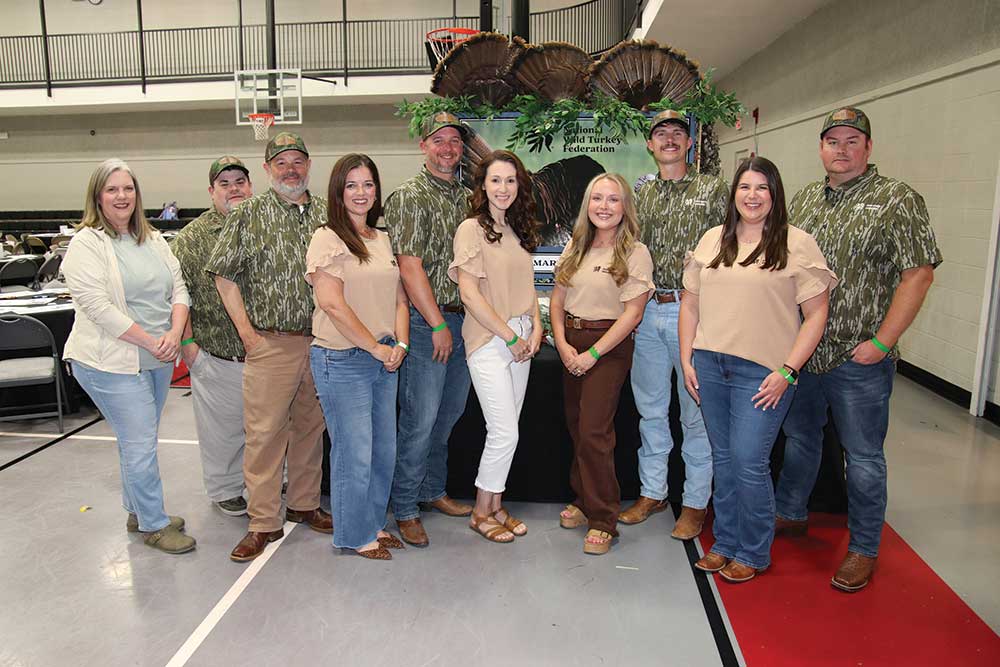
Board members and organizers Tracy Marcus, Rodney Bunt, Jim Tollison, Brooke Tollison, Tim Smith, Brittany Smith, Karlee Tucker, Logan Tucker, Hanna Grogan and Cameron Edge
“When I found all that out, I said we need to thank him for that” and everything else he has done. “There is no telling how many kids from around here he has taken turkey hunting over the years. Some of them are the same people who are donors and sponsors for this event now. His efforts back then are still helping conservation and the NWTF today.”
Tollison was quick to point out it is not just Barnett, but everyone in his family who deserves thanks for supporting the community.
“He was teaching about conservation, and his wife, Deanna, was teaching students in the classroom. She probably is one of the main reasons I went to college. She kept encouraging me to go. This organization and event, it’s been a great situation having the Lawleys involved,” Tollison said.
The sold-out event moved to a larger venue this year at the Pell City Civic Center, raising more than $40,000 for the program, which covers everything from promoting conservation and hunting to education efforts, including local scholarships, Tollison said.
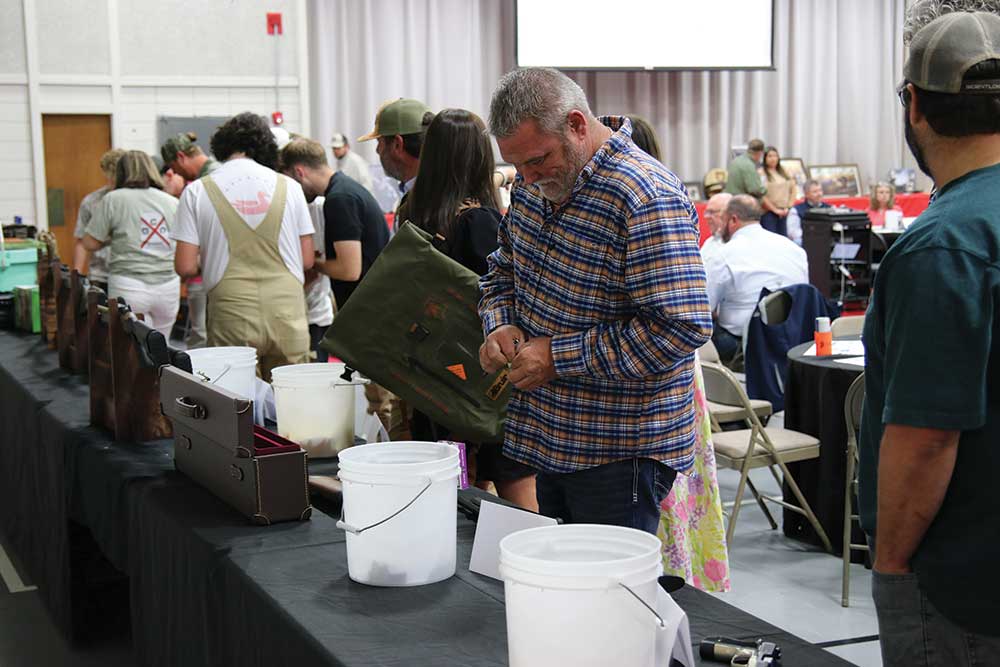
Participants entering in drawings to win everything from coolers to custom firearms
“We now have money in hand for scholarships, we just need people here to apply. And these scholarships can be used not just for four-year colleges, but for two-year degrees and trade schools, whatever path the students choose.”
Tollison and his wife, Brooke, thanked everyone who supported the Logan Martin Longbeards and the banquet.
“The Pell City Civic Center turned out to be a great venue. We will probably be holding it here again next year. They did a great job working with Hanna Grogan on our board to coordinate set up,” he said. “Complete Catering Company and Mandy Camp also did an amazing job with the food. It’s the only banquet I have ever been to that served turkey. It wasn’t wild, but it was good.
“Everything was well received. Thanks to our sponsors, we were able to give out 24 guns this year. Brian at BG Customs and Engraving put together several guns for us. GNX Gun Exchange and Coosa Guns also contributed,” he said.
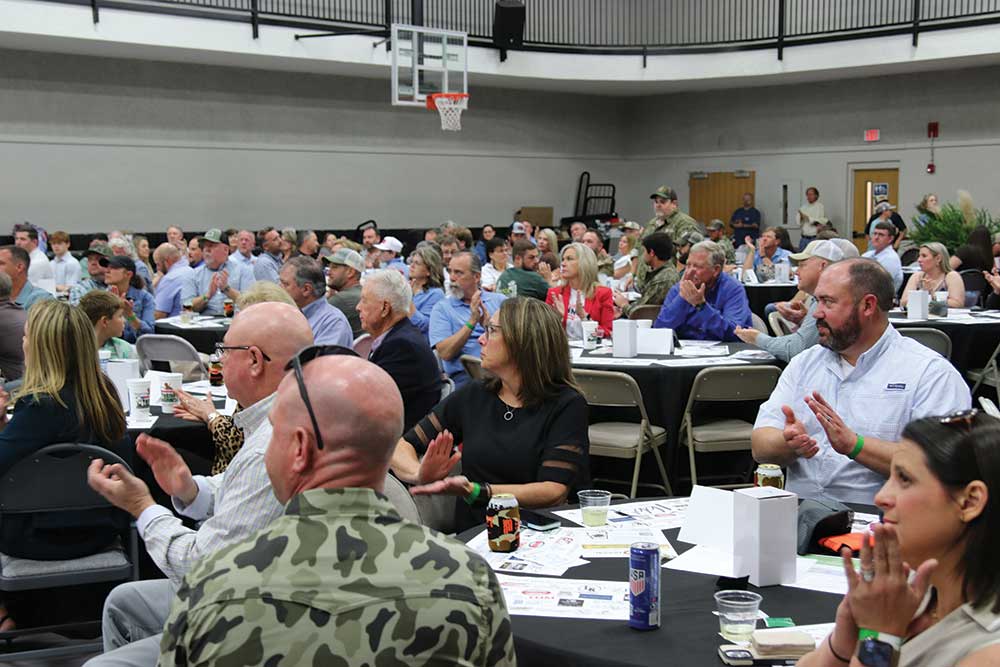
The audience applauds all the sponsors
“Thanks to the support of GNX, BG Customs and Coosa Guns we are able to have some very high-quality firearms with some finishes only available at this event.”
Because the banquet is family friendly, every child who came got to take part in a raffle, Brooke, who runs an Alfa agency in Pell City, said. “We gave out $500 worth of stuff to all the kids. They had a great time.”
And that’s the point, Jim said.
“It’s not just about raising money. We wanted to have a fun and successful event that also promotes the National Wild Turkey Federation and conservation efforts,” he said.
“We have a great team putting this event on, and it continues to grow. If you see one of the board members and are interested in being involved let them know.”
Follow the Logan Martin Longbeards on Facebook and the National Wild Turkey Federation online at nwtf.org.
For more than a decade, on a small piece of God’s good earth, folks here have found sustenance for the body and solace for the soul.
The precious piece of ground is known as Pell City Gateway Community Garden, where a small cadre of volunteers tends to the one-acre field that yields a growing harvest to help the hungry.
The garden has a natural garden area where organizers have recently planted Alabama native plants. The nature sacred area, said Gateway Director Renee Lilly, “Is a really a big deal,” “The Nature Sacred program is a national program created for people of all faiths by the Nature Sacred Foundation. They wanted to create places where people could be meditative.”
Founded by an Iowa couple, Kitty and Tom Stoner, the aim is to create more green spaces in communities to ease the fatigue and clamor of modern life. The idea took root some three decades ago after the Stoners moved to the Baltimore-Washington, D.C. area. Now known as Sacred Places, the sites “serve as a kind of a healing poultice for people to regain balance as an antidote to stress,” according to the website, naturesacred.org.
The Pell City Gateway Community Garden was established in 2014 on the former Avondale Mills site near downtown Pell City. It later moved to land across from St. Simon Peter Episcopal Church at 3705 Mays Bend Road.
While organizers want the Gateway community garden to be the sacred space, it also holds fast to the mission of raising fresh food – like kale, collards and cabbage in winter. Everything harvested from the garden is donated to the local food pantry and senior center.
At the end of the year 2025 The Anniston-based Northeast Alabama Community Foundation provided an emergency grant to boost a food drive because last winter, the federal government put a hold on funding for the SNAP food assistance program. “They (the foundation) have been good to us,” Lilly said.
Food insecurity and affordability have added to the urgency of the work of the garden, Lilly said. It brings to mind the Victory Gardens that sprouted across the nation during World War I.
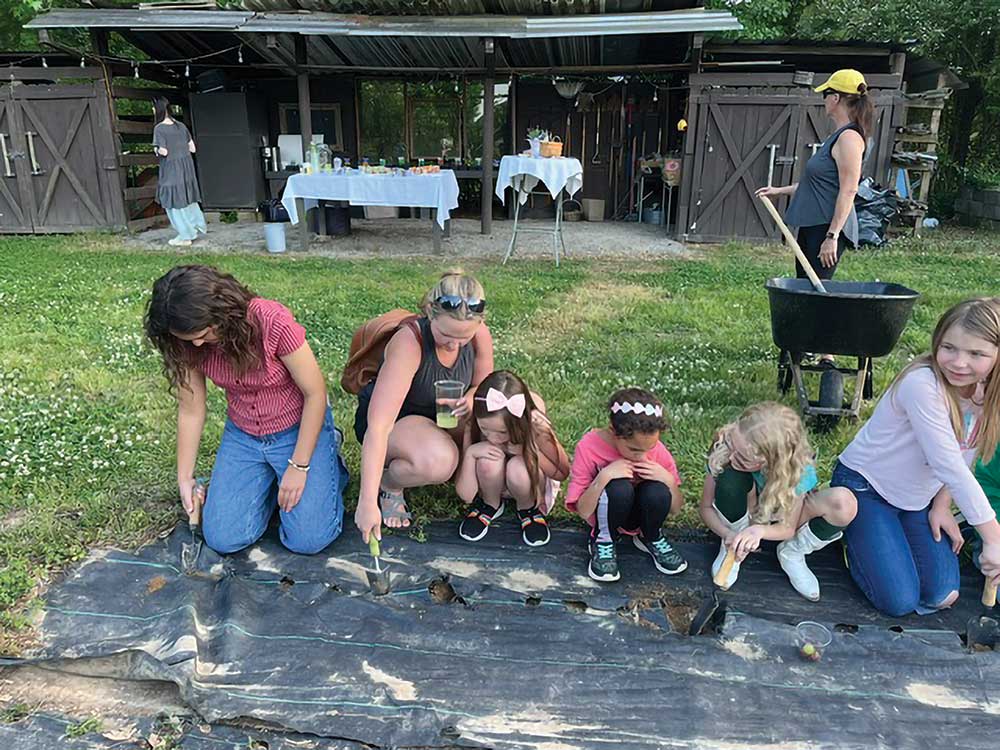
But the garden’s vision isn’t simply to grow food, but to grow gardeners as well. “We’ll still provide harvest for the places where we provide food, but it’s like teaching people to fish,” Lilly said.
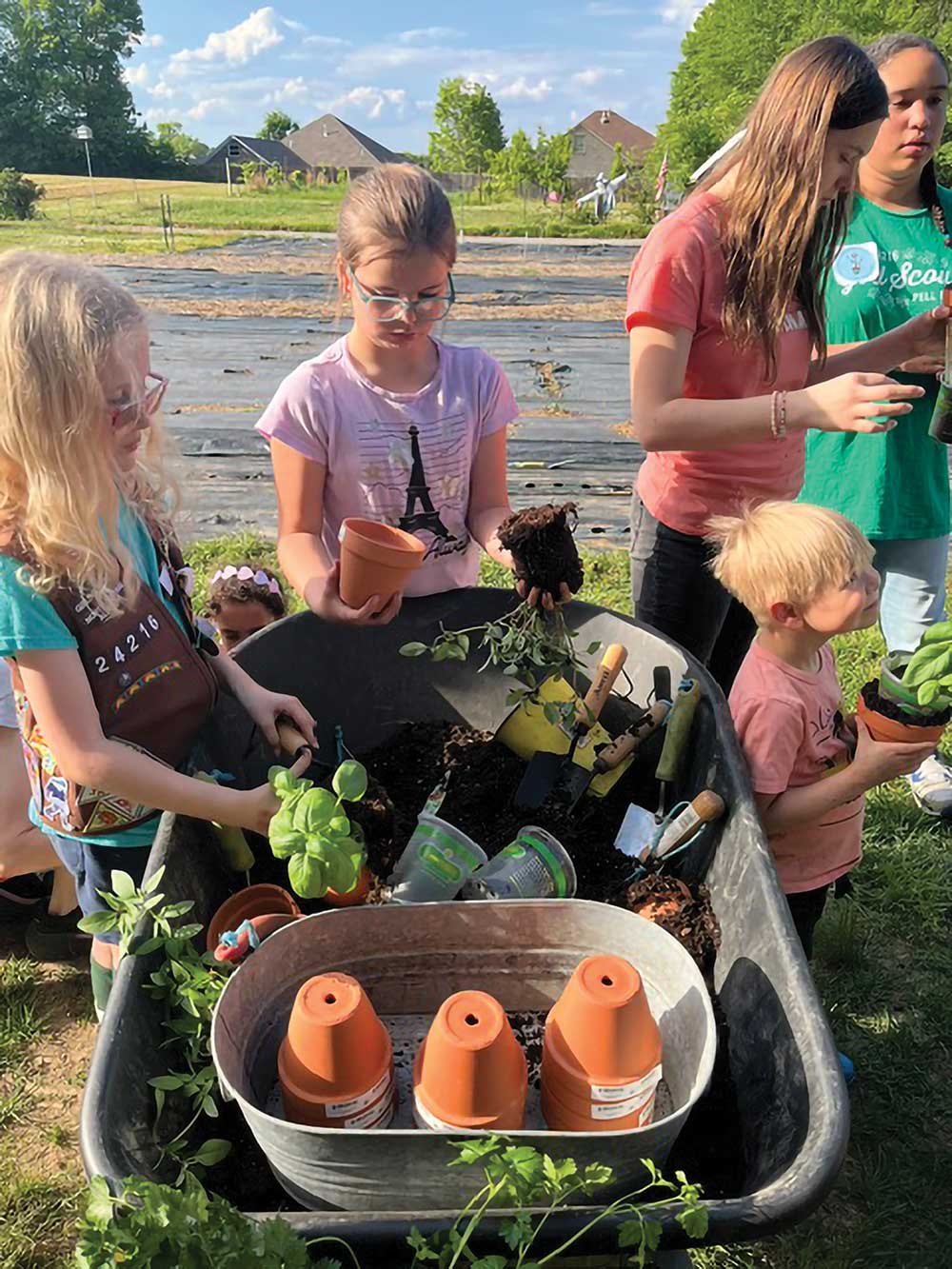
Lillian Olin-Sanchez, April Sanders, Audrey Sanders, Charlena Miller, Riley Robinson and Tia Glanze learning to garden
“If we teach people to garden, they can provide for their own needs, making people self-reliant and showing them they can grow food in a very small space,” said Gateway Community Gaden President Rebel Negley.
The garden produces food grown without the use of pesticides, said Negley, who at one time worked in the food industry. “That will really open your eyes. There are so many chemicals that are banned in European countries that (the American food industry) continues to use. That’s why we’ve been passionate about growing fresh food,” she said.
“We live in a society, where increasingly, people don’t know where their food comes from. A lot of kids eat canned foods, and they eat frozen stuff,” Negley said. “There’s nothing wrong with that sometimes. But our mission is to teach people where their food comes from. Good nutrition is not as affordable, unless you grow it yourself. It takes a village to make a community garden work.”
That’s why organizers are looking for people to invest their time to make the garden and its sacred space flourish.
“We need people. We need volunteers. We need teachers who want to teach, and we need administrative people. It’s not just tilling the soil. It’s administrative work as well,” Lilly said. “We need social media and marketing help. If you can show up, we’ll find something for you to do,” Lilly said.
The garden has the support of two local churches, St. Simon Peter Episcopal Church along with First United Methodist Church of Pell City.
Gateway is also collaborating with similar successful programs like Sylacauga Grows community garden in Sylacauga.
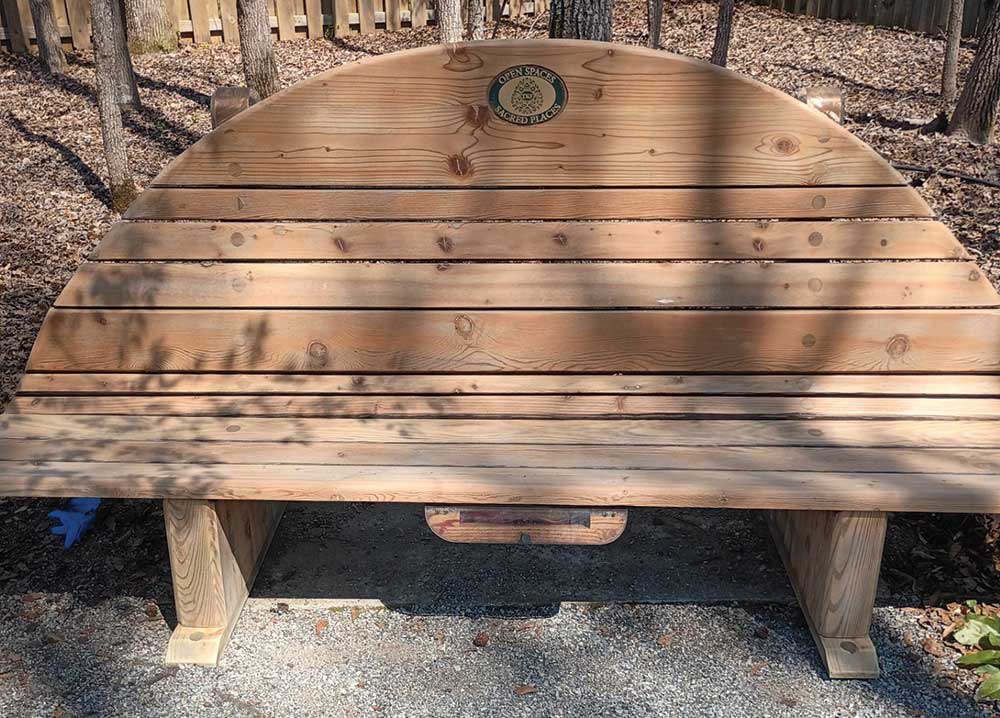
Sacred Space bench lures visitors to find solace in nature
While food for the body is a critical part of the Gateway mission, so is nourishment for the soul.
“The sacred space is a place where you can reflect,” Lilly said. “There is a journal underneath a wooden bench in the garden where people can sit and write and listen to the birds and see the beautiful plants that are in the nature area. They’re also able to see all the growing vegetables in our growing garden. People need to see that it’s a special place.”
The garden now flourishes with cucumber plants, okra, beans, potatoes – sweet, red and white – heading toward a seasonal harvest. The garden has produced some 30,000 pounds of food in its history.
Volunteers like Lilly and Negley haven’t just learned lessons about working the land, but also about themselves.
“One of the most important things is that any one of us could be food insecure at any given moment,” Negley said. “It doesn’t matter where you live or how much you have. Things can change, and you can find yourself with food insecurity. And there’s so much satisfaction in growing your own food because you know where it comes from, and you have excitement through the efforts in growing a garden. It’s a stress reliever. It’s peaceful.”
Lilly, who knew food insecurity as a child, recalled last December’s food drive. “I spoke to every person who came through our line,” she said. “People that were educators, people who had lost their husbands or had just lost their jobs. The feeling that you are able to help people. We all need to love one another and take care of each other.”
Gateway Community Garden has a Facebook page, and donations may be sent to Pell City Gateway Community Garden, P.O. Box 17, Pell City.AL 35125.
“Come see us,” Negley said. “See what we’re doing and if you want to get involved,” Negley said. “It takes all of us just working together to make the garden work.”
From Pell City Gateway Community Garden, hope – like the flowers and vegetables – is blossoming, even in these difficult days. And so is something comforting to be found here, Lilly said. “There is good in the world, and there are people who are kind.”
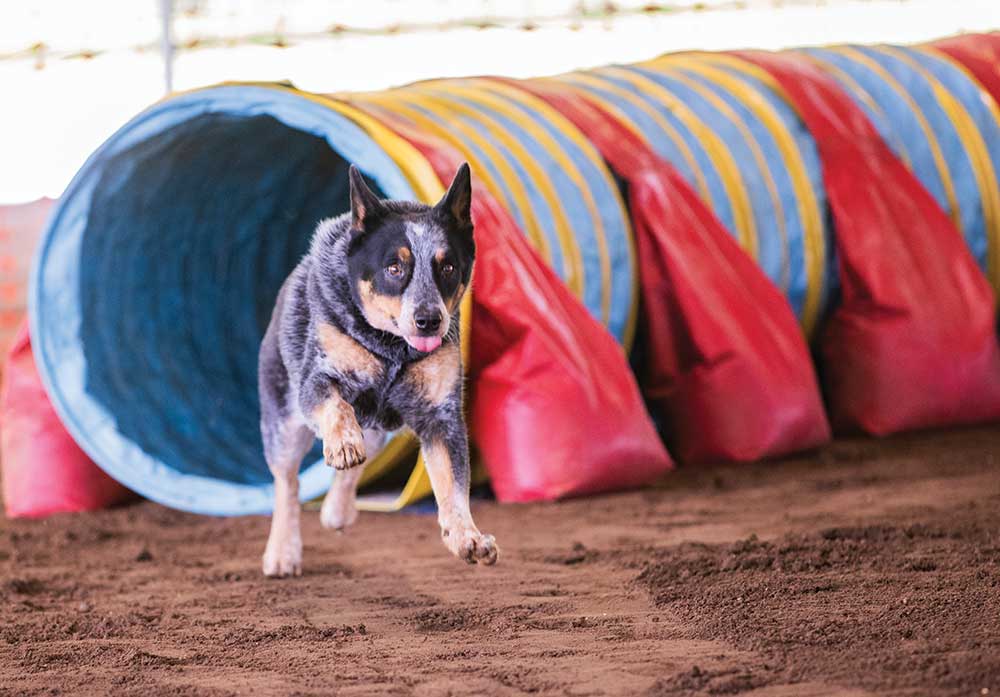
Fast paced, exciting dog agility trial takes center ring at arena
Story by Carol Pappas Photos by Bob Crisp
Four-footed competitors from across the Southeast headed to Odenville in April for an action-packed event at what has become a destination point for events as diverse and wide-ranging as the organizers who plan them.
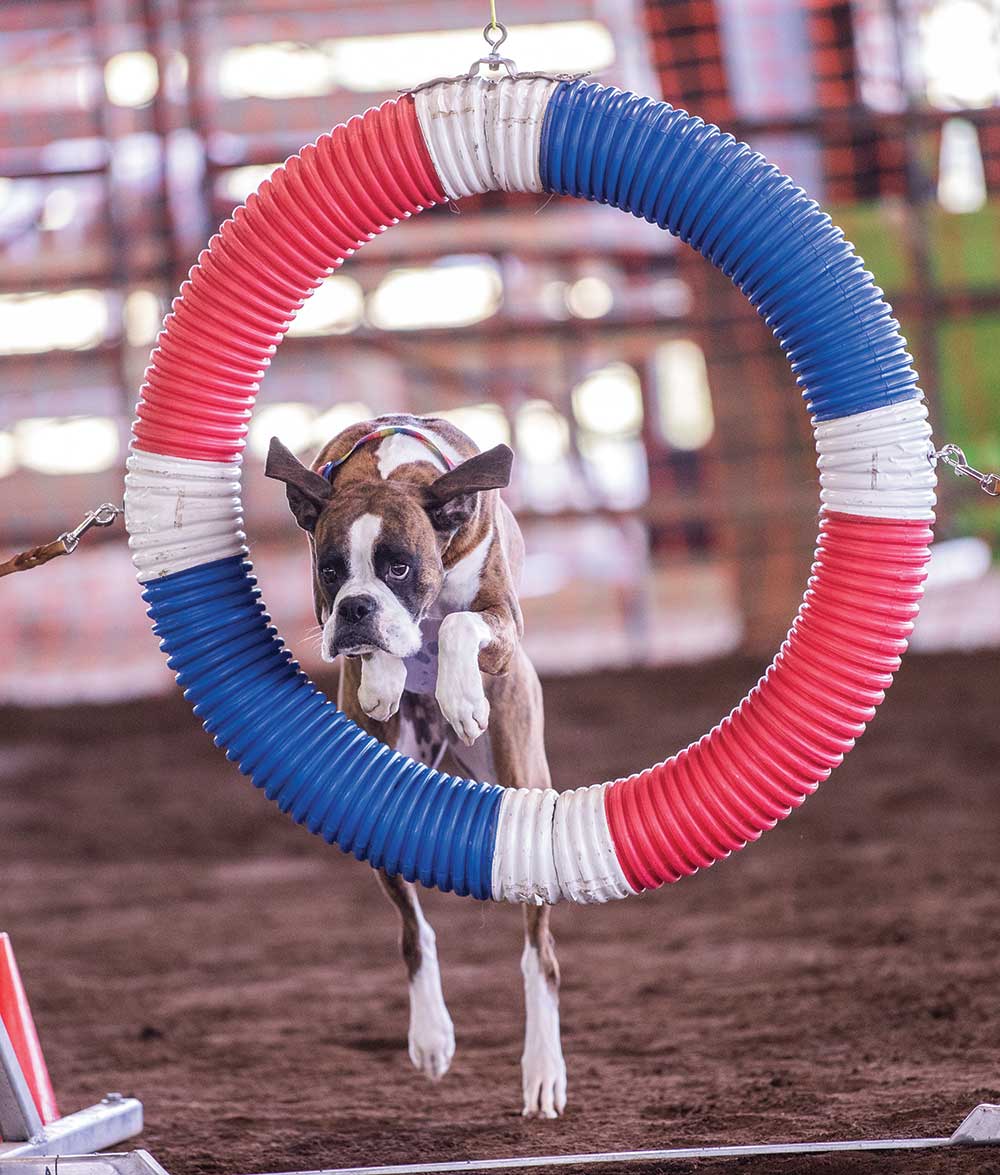
St. Clair County Arena and Event Center has played host to everything from rodeos and circuses to vintage markets and truck shows. And in April, dogs of all shapes and sizes took to the arena filled with jumps, tunnels, weave poles and what planners called “plenty of tail-wagging excitement.”
Spectators, dog lovers and handlers came together for three days of Greater Birmingham Agility Club’s Spring Into Agility Trial, a mixture of a qualifying run for further competition, fine-tuning skills or simply sharing time with other dog agility enthusiasts. Organizers billed it as “a weekend of fast dogs, great runs, and even better community.”
Dog agility is “a dynamic and fast-paced canine sport where dogs navigate through a timed obstacle course, showcasing their agility, speed, and teamwork with their handlers,” according to GBAC’s website.
“Yes, your dog can definitely participate in dog agility,” GBAC added, “and we welcome all breeds, both mixed and pure, to join the excitement and fun of agility training and competitions.”
Agility training involves obstacle courses, obedience drills and agility trials.
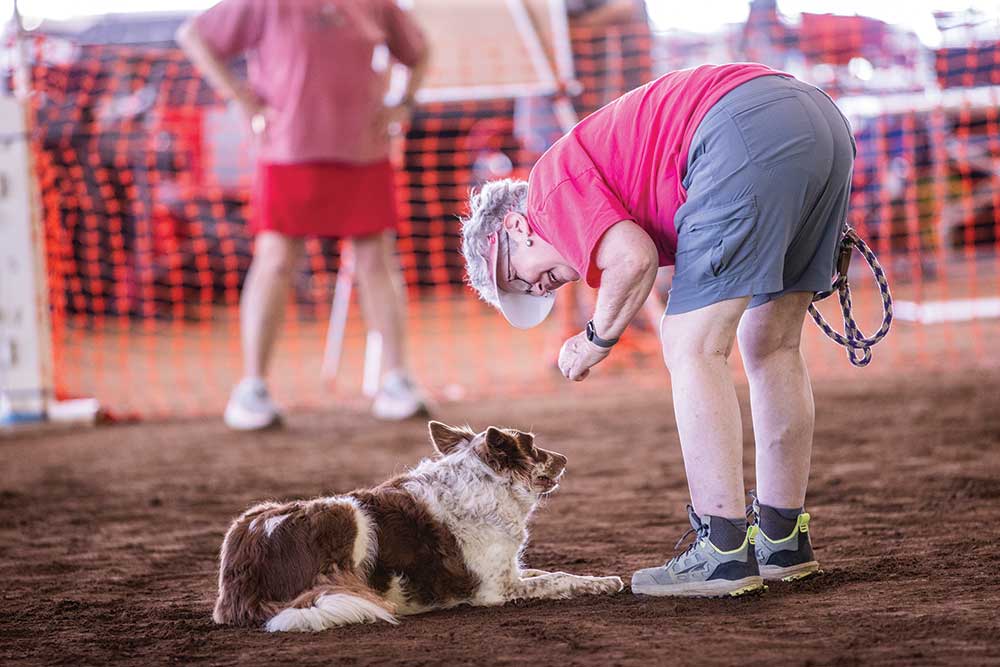
When the day is done, the final hurdle crossed and a clean jump through the ring is made, it comes down to connections – the bond between dog and handler. Through this sport, that bond is promoted, strengthened and on display for all to see.
The next Odenville event is Nov. 15-17 for GBAC’s Fall Trial. Club officials are already looking forward to it, noting that the 100 x 100-foot ring offers plenty of room for “exciting and challenging courses for the dogs to navigate.
“This event promises an exhilarating experience for both competitors and spectators, making it a must-attend for the agility community.”
“We’ve really enjoyed working with the Greater Birmingham Agility Club and have had a great response from them about hosting events at the Arena,” said Public/Recreation Asset Manager Ashley Hay. “We try to work closely with every group that uses the facility to make sure we’re meeting their specific needs, especially when it comes to footing and ground preparation.”
She noted that dog agility trials have very specific requirements, “and we’re happy to accommodate those details, just like we would for any group using the space. Seeing them choose to return is a great sign that the partnership is working.”
The goal of the center complex and campus has centered on creating a facility that serves the community and evolves alongside the needs of the people and organizations using it.
“We want groups to know we’re listening and willing to adapt where we can,” she said. “In fact, groups like GBAC have helped shape some of our future improvements.” She credits their hosting of multi-day events and bringing participants in from outside the area with reinforcing the need for RV and trailer hookups, “which we’re now working to add.”
Hay also talked of the overall interest in the Arena continuing to grow. “More people realize it’s more than just a place that hosts rodeos. We’ve had great interest across a wide variety of events, from dog agility and vintage markets to equestrian events and community gatherings. It’s been exciting to see people discover new uses for the space and reinforces our belief that the Arena can continue growing as a place that brings together a wide range of interests across our community.”
Editor’s Note: The St. Clair Arena and Event Center is located at 100 Arena Drive, Odenville. Learn more about the facilities at: stclairco.recdesk.com