Return of the Logan Martin Longbeards

Story and photos by
Graham Hadley

For the first time in a quarter of a century, the local chapter of the National Wild Turkey Federation held a Hunting Heritage Banquet in St. Clair County and marked the event as more of a success than they ever dreamed.

“Even if we had raised half of what we did, I would have considered it a success. We brought in about twice that. This was a fantastic first-time event,” said Jim Tollison, chapter president and chairperson of the fundraiser.

The local branch of the NWTF, called the Logan Martin Longbeards, recently reorganized with the help of the national organization, Tollison and some of his coworkers at Alabama Farm Credit in Talladega, where he serves as the regional vice president, and a host of others throughout the community.

“The NWTF works to protect wild turkey habitats and hunter rights,” Tollison said, pointing out that wild turkeys were all but hunted out in Alabama in the early 1900s. “For years, it was not common to see turkeys around where we live. They had to reintroduce wild turkeys to the state, or we would not have them today.”

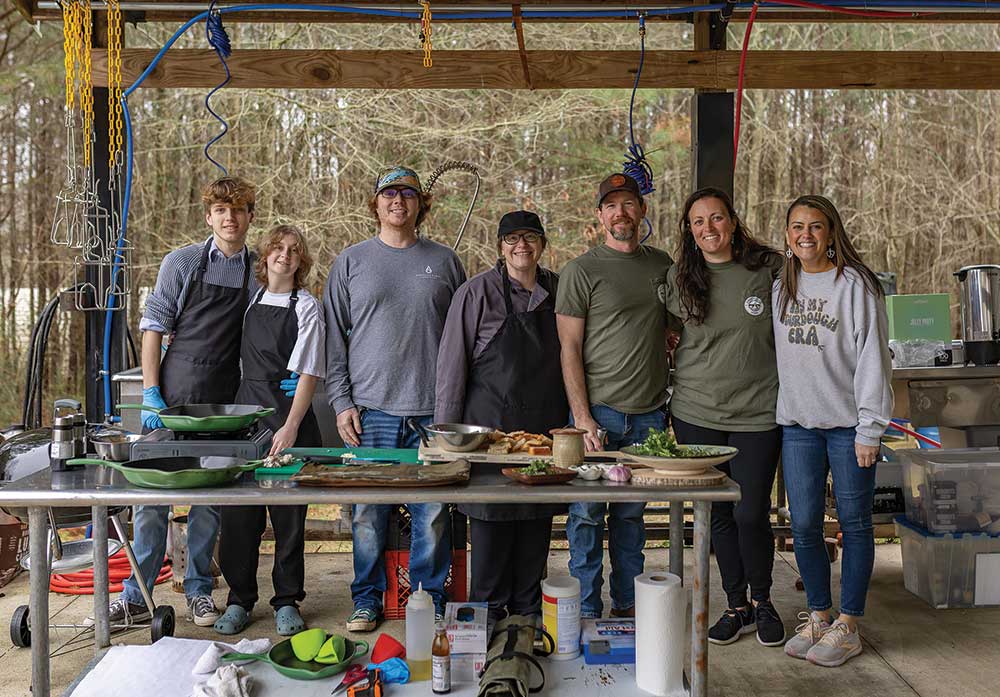
The committee included Cameron Edge, Hanna Grogan, Logan Tucker, Karlee Tucker, Tim Smith, Brittany Smith, Jim Tollison, David Talley, Coy Holloway and Dillion Willams
(Not pictured – Brooke Tollison)

Those efforts run the range from conservation to working with communities and government agencies to protect the land and the heritage of the sport.

The event organizers are still adding everything up, but the banquet, held April 3 at Celebrations in Pell City, brought in between $30,000 and $35,000 and attracted more than 150 people.

Aside from the catered dinner by Bowlings BBQ, attendees got to bid on and take part in drawings for a variety of guns and other outdoor and hunting equipment.

“People came together who like the outdoors,” Tollison said. “It was just a great group of people. The Federation had some special guns to win. Some are custom that are only available from the organization.

“It’s always fun to have a live auction – there were a couple of times I realized I was bidding against my wife, Brooke. And she was bidding on lots of stuff – it looked like she was trying to furnish our son, Jay’s, college room with NWTF stuff.

“Brian Worley helped with background checks, and GNX Guns and Bama Guns & Outfitters also were big sponsors.”

Those partners were key to the success. “Chad Camp with Lovejoy Realty really stepped up. He was eager to support the outdoors and did the premiere sponsorship,” Tollison said. Others, like Realtor Dana Ellison and Rob Knight not only sponsored the event, but they came and spent money at the auction.

Chapter president Jim Tollison and Chad Camp

Other sponsors included Cline & Co Properties; Richey, Price, Sawyer and Associates; THM Electrical and Maintenance Services; Chase Phifer; GNX Gun Exchange; Coosa Guns & Outdoors; Sen. Lance Bell; Bain & Co. CPA; Dixie Sod Farm; Alabama Farm Credit; Farm Systems Inc.; Metro Bank; Covered Bridge Timber Inc.; Rodney Bunt; Knights Plumbing; Ryan’s Hope Poultry Farm; Brooke Tollison, Alfa Insurance; Scott Tucker; and Alex Williamson 

“Celebrations was great to work with. They have upgraded the venue, and everything was perfect for what we wanted to do … have a family friendly event where people could bring their kids and have a fun night.”

Tollison also wanted to thank all the help he had organizing everything, especially from the NWTF and his associates at the bank.

“I had been attending these events in other places as a way to network and build business relationships and finally said to myself, why don’t we do this here? I was sitting with NWTF regional representative Coy Holloway and Hannah Grogan (who became treasurer for the organization) at the bank, and everyone was on board.”

The previous chapter had ceased operations years ago. “When we came up with the name Logan Martin Longbeards and looked it up, turns out the old chapter had used the same name. We had no idea.”

From that group, they organized a board and then put their attention toward the banquet.

Some of the guns to be auctioned off

“It was really a small core group of people who did most of the work – people from the bank, Coy and others. Brooke was probably one of our top sellers for the event. … And Hanna did a lot of the organizing for the actual event. Representative for NWTF had high praise for her efforts.

“We were blessed this first time.”

The money raised at the event goes to the NWTF efforts, both locally and around the country, with the exception of funding set aside for a local scholarship the Logan Martin Longbeards plan to award.

After the success of this year, Tollison is already looking ahead. “We will be doing this again next year. We had people from Clay and Randolph counties who came out and supported us. I want to reach out to other neighbors, like Talladega and Calhoun counties and get their involvement.”

It was a night of “good fun,” Tollison said, “with a great crowd of quality people who came together to support the NWTF and its efforts.”

One Mile at a Time

Top Photo: Jessie Holmes, formerly of Odenville, taking part in the Iditarod Dogsled Race, which he won this year.
Photo by Dave Poyzer, online at davepoyzer.com

Story by Roxann Edsall
Submitted photos

A trip by car from Odenville to Boston is 1,159 miles. From Odenville to Tucumcari, New Mexico is just under 1,100 miles. Now imagine a similar distance in the harsh, winter environment in Alaska, but instead of being inside your warm car, you are standing on the footboard of a sled racing through the frozen tundra at 10 to 12 miles per hour.

Alabama native Jessie Holmes knows firsthand the experience, as a musher and veteran racer of long-distance dog sled races.

He won this year’s 1,128-mile Iditarod Trail Sled Dog Race, the longest Iditarod in the race’s 53-year history. Due to a lack of snowfall along parts of the normal route, the official start of the 2025 race was moved from Willow, Alaska to Fairbanks.

The routing of the race was also altered, a precaution made to protect the safety of the mushers and their dogs, but adding over 100 miles to the grueling journey.

Holmes crossed the finish line in Nome at 2:55 a.m. on March 14, having completed the race in 10 days, 14 hours, 55 minutes and 41 seconds, just a little more than three hours ahead of second place finisher, veteran musher Matt Hall. The win brought with it a check for $57,200.

This was the 8th Iditarod for the 43-year-old Holmes, his strongest Iditarod finish. He placed 3rd in 2024 and in 2022.

Success, for Holmes, has been hard fought. Born in Sylacauga and raised in Phenix City by his mom, Judy Holmes, he admits to running away and getting into trouble a lot. As a teenager, he spent two years living with his father in Odenville and attended St. Clair County High School. Still getting into trouble there, he left school and headed out West hoping to figure things out.

“I was traveling, jumping trains, hitchhiking across the country working odd jobs,” says Holmes. “I settled in Montana for a little while working for a family. Then I headed up north into the Yukon Territory, wanting to be a mountain man.” He ultimately landed in Alaska, where he has thrived living off the grid.

He calls the wilderness the cure for the troubles of his youth. “It was what my soul needed,” admits Holmes. He credits the loving guidance of his grandfather, Gene Richmond, with his love of the wilderness lifestyle. An army veteran of World War II, the Korean War, and the Vietnam War, his grandfather lived on Fort Benning, just minutes from his Phenix City home.

As a youngster, Holmes was happy there playing with the chickens and beagles and in the garden. “I was always trying to round up stray dogs everywhere I went and was always getting in trouble for it. I’ve had a strong empathy for animals my whole life,” Holmes says. “If you ran over a turtle, I was in tears.”

From his grandfather, young Jessie learned to hunt, fish, trap, garden and raise dogs, skills he still uses to provide for himself and for his animals. His grandfather has since passed, but his “granny” still lives in Phenix City.

With his human family so far away, Holmes’ describes his dogs as family. And a big family it is. Working with 60 to 70 dogs in his kennel, he breeds, raises and trains dogs for his teams and for other mushers.

He has apprentices who work with him at his homestead and learn about training sled dogs. He still trains his “A-team,” which is about 30 dogs, while his apprentices work with the “B-team” and “C-team” dogs. He’s mentoring these young people just as he was mentored by special people when he first arrived in Alaska.

Gettting ready to bed down with his dogs for a short rest

Holmes gratefully acknowledges the men who took him under their wings. Jerry (Gerald) Riley, the 1976 Iditarod champion, was influential in steering the Alabama transplant through some challenging times. “He kind of adopted me,” says Holmes. “He’s the one that really saw that I could be a champion and convinced me of it. I had kind of a negative perception of myself.”

Riley taught him some important wilderness skills and got him interested in dog breeding and racing. “I learned a lot about race tactics from him, like psyching out your competitors and not letting people play mind games on you. He was a master at race strategy.” Riley never got to see Holmes win the Iditarod, having passed away last fall.

For a few years, Holmes lived in Nenana and had other Iditarod racers as neighbors. 1983 Champion Rick Mackey taught Holmes more on strategy, numbers and dog care. Bill Cotter, whose top finish was 3rd place, became a father figure to him. “All three of them taught me so much,” says Holmes.

“They came from a different era of mushing,” Holmes adds. “They didn’t typically travel all through the night because they didn’t have the high-level headlamps that we have now. All the gear is a lot more high-tech now. When it felt tough for me, I thought about them. I focused on doing this for a bigger reason than myself. I did it for all the people who believed in me and for those mentors that have passed.”

Reality Star

The Iditarod isn’t Holmes’ only claim to fame. When a National Geographic channel series producer was looking for cast members for Life Below Zero, a show about sustenance living in remote villages of the Alaskan wilderness, friends recommended Holmes. He was cast in the show, which ran from 2015 to 2023, and won nine Academy of Television Arts & Sciences prime time Emmy Awards.

“I wasn’t interested in the show at first, but I was paid very well and that gave me the income boost that I needed to be able to do the racing and the lifestyle I wanted,” Holmes explains.

Jessie tends to the needs of his dogs before his own

He had already been excelling in mid-length races but hadn’t had the money to put into training and the expenses for the longer races, like the Iditarod. With his earnings from Life Below Zero, he was able to buy better dogs, breed them and increase the quality of his team.

He began training for his first Iditarod, and the show documented and filmed that first attempt and his second year. He was named Rookie of the Year with a 7th place finish in his first attempt in 2018.

“You’re cold, hungry, sleepy,” describes Holmes of the race experience. “You’re excited and, you know, scared. It’s almost every emotion you can imagine, all wrapped up in each day.” There are many dangers on the trail, including frostbite, whiteout conditions, injuries to the musher or the dogs and dangers from wildlife.

In the 2024 race, he ended up breaking his hand defending his dogs from an angry moose. “We kind of came up on it, and it was sleeping on a real narrow technical spot on the trail,” Holmes recalls. “The dogs were just trying to go by, and it tried to stomp some of the dogs in the team. It reared up and stomped towards the dogs and me and the sled. We’d just startled it, and it was using its survival instinct, but I came face-to-face with it and had to punch it in the nose.”

Very real dangers during races also include sleep deprivation and complete exhaustion, even to the point of hallucination. “I’ve only hallucinated once years ago,” says Holmes. “I was in a pretty depleted state. I was along the coast and saw semi-trucks going down the sea ice and going like 60 miles an hour. I was in this crazy state of believing that it was really happening, and I was so irritated that they would let that happen on the race trail. Then there was like a massive white wall about three feet high, and I felt like I had to duck under it, so I threw the sled on the side and ducked underneath it. When I jumped back up and threw the sled upright, I looked back and it wasn’t there.” That experience shook him, and he ended taking a 9th place finish in that year’s Iditarod. Since then, he’s learned to manage his energy and prioritize his health.

His health has been an issue for him the past three years as he recovered from nearly being crushed by a house. In September of 2022, Holmes was helping in the recovery efforts after Typhoon Merbok hit the coastline of Western Alaska nearly destroying the town of Golovin. He and other volunteers were pulling out wet insulation and plywood from under a house and when he pulled his last nail, a portion of the underside of the house collapsed, pinning him beneath. Friends pulled him out and got him to the hospital.

“I broke three ribs and shattered my wrist,” tells Holmes. “That all happened at the peak of training for that year’s Iditarod. I entered that race with a lot of physical problems and basically emaciated at 142 pounds. So, I had a tough time on the trail. I ended up getting 5th that year.

With his health a priority, this year’s race strategy was to catch a one-hour nap each time he had to stop. He planned five-hour rest stops to give himself ample time to get his dogs taken care of and to give them 3½ hours of uninterrupted sleep. After they were put to bed, he made sure his hydration and nutrition needs were met, which left him about an hour of sleep time.

“So, the first thing I do right when I get stopped is to direct them off the trail somewhere,” explains Holmes. “My leaders listen to me, so a few commands, and they’ll park themselves off the trail.”

Having settled the dogs off the trail, he gets a cooker going to melt snow. It takes 3 ½ gallons of boiling water to thaw the meat his dogs will need. Because of the incredible amounts of energy needed for the race, sled dogs needs approximately two pounds of meat at each feeding. Holmes also uses the boiling water to thaw the ointments and massage oils to help each dog with sore muscles and foot abrasions.

“After they’ve gotten their ointments and massage oils, I add the kibble and supplements to their meat,” Holmes adds. “When they’re done, I put their coats on them and get them settled in the straw bed. Then it’s time for me to eat, repack my sled and climb in the straw with them for about an hour of sleep.”

Iditarod Trail Sled Dog Race rules mandate three stops along the race route, with one being a 24-hour stop at a major checkpoint and the other two being 8-hour stops. These required stops are designed to ensure that there is ample time for dog care and rest for the musher and his or her team.

It is also where mushers arrange for resupply shipments to be picked up. “I use them mostly for refueling points,” explains Holmes. “I get my straw, fuel for my cooker and my drop bags with supplies that I’ve ordered. I don’t stay in the towns. I camp in the country with my dogs.” That way, he says, he can keep his focus on the race and have fewer distractions.”

Holmes is very proud of all his dogs, particularly the team that won the Iditarod. “It was pretty special to have like that whole 10-dog team that I finished with be those that I bred and raised and have a deep connection to,” he says, adding that he loves them and wants them to succeed like a parent wanting to see his children succeed. “You know they’re not your children, but it’s a very blurred line for me.”

Two months before the start of the Iditarod, Holmes and his team won the Copper Basin 300, a 300-mile race. Then, just three weeks after winning the Iditarod, Holmes won the Kobuk 440. “That was my goal for the season,” says Holmes. “I saw how good the team was, and I knew we were at the peak of our career and had put the work in. To accomplish big goals, you have to set big goals.”

Holmes loves a challenge. “My goal was never to just live the simplest life in the world. It was to thrive in the wilderness,” he says. “I’m just an odd duck up here. I came from Alabama with a dream and a passion, and I pursued it to no end.

“I think it’s our southern heritage, the resilience and toughness that characterizes us from the South. When you’re hitting some terrible adversities, you’ve got to take it one day at a time, even one mile at a time.”

Editor’s Note: A special thank you goes out to Dave Poyzer for working with us to make sure we had the perfect cover shot for this edition. That is an outstanding photo taken in a difficult environment to shoot in. You can find his photos online at davepoyzer.com.

Cowboy Chiropractor

Story by Carol Pappas
Staff and submitted photos

It’s been quite a ride, but the young man who at 15 had amassed dozens of championships in the rodeo circuit, is back home in Moody practicing chiropractic care as a full-fledged doctor of chiropractic.

Throughout his high school years, Cody Stubbs was a rodeo sensation – bull riding, chute dogging (steer wrestling), goat tying and, his absolute favorite, team roping, among other rodeo events.

Staff from left, Dr. Shawn Stubbs, Dr. Cody Stubbs, Ginny Pate and Misty Cunningham

Beyond the championship buckles and saddles, his talent earned him a scholarship to the University of West Alabama for undergraduate school, where he was pursuing orthopedic medicine.

By his second year of undergraduate studies, he realized his philosophy of care aligned more with chiropractic than traditional medicine – a more holistic approach of education, wellness and lifestyle. It turned out to be a “lightbulb” moment about his future.

It seemed a natural path to take. His mother, Dr. Shawn Stubbs, has owned Crossroads Chiropractic in Moody for the past 25 years. Cody “grew up” there, she said, flashing photos of him playing in the clinic as a toddler or sporting his name-embroidered shirt he wore to escort patients back to rooms as a youngster.

It’s always been like family around the clinic. Receptionist Ginny Pate used to be Cody’s nanny. Now she’s assisting all grown-up Dr. Cody. 

He graduated from West Alabama in Livingston, where he met his future wife, Raven, who was a rodeo champion, too, having finished fourth in the world in Barrel Racing at the collegiate level.

Out of all of his buckles, the one he received for sportsmanship is Cody’s favorite

After college, he headed to Life University in Marietta, Ga., outside Atlanta, where he earned his doctorate.

Then, it was like homecoming, returning to Moody and Crossroads Chiropractic, where he settled in as “Dr. Cody” in October.  “It’s the best job in the world,” Cody said. “I am fortunate to be able to do it and see people get better without surgery or drugs.”

His mother said she is fortunate to have him back home working with her. “I love it. It’s like a dream come true working with him, my son following in my footsteps. The patients request him, and I get to play with my grandbaby.”

That’s her plan, she said, spending more time with the grandchildren. “Cody’s handling it great, above expectations. He’s just wonderful. He is really good with the elderly population, very respectful.”

Cody Stubbs Chute Dogging Alabama State Champion at National Finals, Gallup, New Mexico, 2013

He enjoys working with the older patients, too. He makes them laugh and puts them at ease. The aging patient traditionally has a number of doctors’ appointments. His goal is to make the appointment with him one they don’t dread.

“Everybody leaves with a smile on their face after seeing him, besides feeling better,” Dr. Shawn said.

Returning home to a piece of land between Moody and Odenville has stirred those old cowboy memories in him, and he talks of getting a horse and roping again one day. “I’m a country boy,” he said. Atlanta was “a lot of city for me,” so it’s good to be home on the land among the animals and wide-open spaces.

But for now, he’s content to take care of priorities – tending to the practice, his wife and one-year-old, Weston, and a second baby on the way. “I’ll be back soon. I have other priorities to get to. Family comes first, then I’ll get back to it.

Big Canoe Creek: Explore a world of biodiversity

Trees form more than just shade on a warm, sunny day. They represent the diversity of the preserve’s dense forest. Find beech, red and sugar maple trees as well as stands of river cane.

Among the hardwood and pine forests, discover native plants – wild azaleas, oak leaf hydrangeas, mountain laurels and buckeyes.

Want to go bird watching? There’s plenty to see! So far, eBird’s list of the species spotted there is up to 84, ranging from the Yellow-bellied Sapsucker to the Great Horned Owl and dozens in between. Even the Summer Tanager, the only totally red bird in North America, has made an appearance.

If you need help identifying all of them, just download the Merlin Bird ID app developed by the Cornell Lab of Ornithology on your cell phone. It is a handy helper to determine which tweet is which. Don’t forget to take your binoculars!

And the preserve’s namesake, Big Canoe Creek, is home to more than 50 species of fish, including the rare Trispot Darter, discovered in 2008 in Little Canoe Creek. It is a species that used to be found in Alabama but had not been seen in nearly 50 years. It is now listed by the U.S. Fish and Wildlife Service under the Endangered Species Act, as threatened.

Mussels, nature’s own water filter, were once in “great supply” in Big Canoe Creek, which has retained most of its species and has kept the creek pristine, underscoring its ecological integrity.  However, the Canoe Creek Clubshell (Pleurobema athearni)  found nowhere else but in Big Canoe Creek is listed under the Endangered Species Act, as recently as 2022 as “endangered”.  There is an effort underway to assess the watershed and determine what steps can be taken to keep this species from extinction.

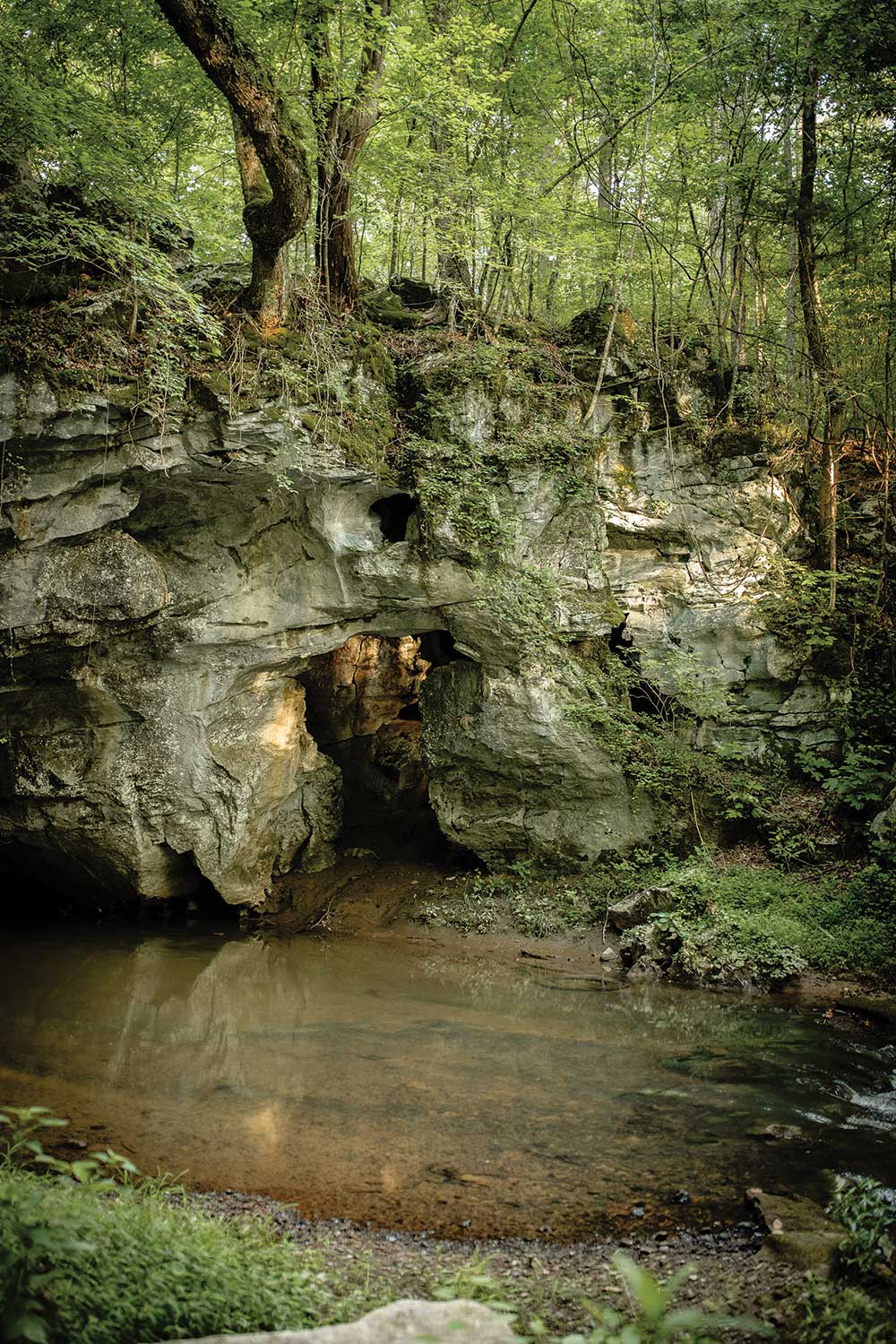
Big Canoe Creek has eight federally listed freshwater mussel species, and its 18-mile main stem stretch was designated a ‘critical habitat’ under the Endangered Species Act in 2004. l

Countdown begins for LakeFest 2025

It won’t be long now. Logan Martin LakeFest & Boat Show makes its 15th return engagement to Pell City Lakeside Park May 9-11. There’s always something for the whole family, and it’s nonstop fun the entire weekend.

Lake lifestyle vendors, entertainment, food to satisfy every palate, giveaways and more mark the event from beginning to end.

If you’ve got boat fever, LakeFest certainly has the cure. Boats and watercrafts of all kinds – with discounted pricing – are on display and ready for a test drive. 

It opens Friday, May 9 from 3 p.m.-9 p.m. A fireworks show saluting veterans is a highlight that evening. On Saturday, May 10, hours are from 10 a.m. to 9 p.m. And on Sunday – Mother’s Day – festivities get underway at noon with free Mimosas for all the Moms in the crowd.

Admission is free.

Big Canoe Creek

Story by Carol Pappas
Submitted and staff photos

It’s hard to imagine that Big Canoe Creek Nature Preserve is celebrating its first birthday already. It was more than a decade in the making, and it sometimes seemed that opening day would never arrive.

But it did. On Feb. 3, 2024, 731 people streamed in, and the crowds haven’t stopped. Over 400 attended the grand opening, ribbon cutting ceremony the day before. And the numbers since that time have not only climbed, they show no signs of slowing.

Ribbon cutting, opening ceremony a year ago draws huge crowd

In the first year of operation, 13,000 people, an average of 1,100 a month, have visited the preserve – 422 acres of nature nestled in the city of Springville, whose population is just a little over 5,000, according to the latest census.

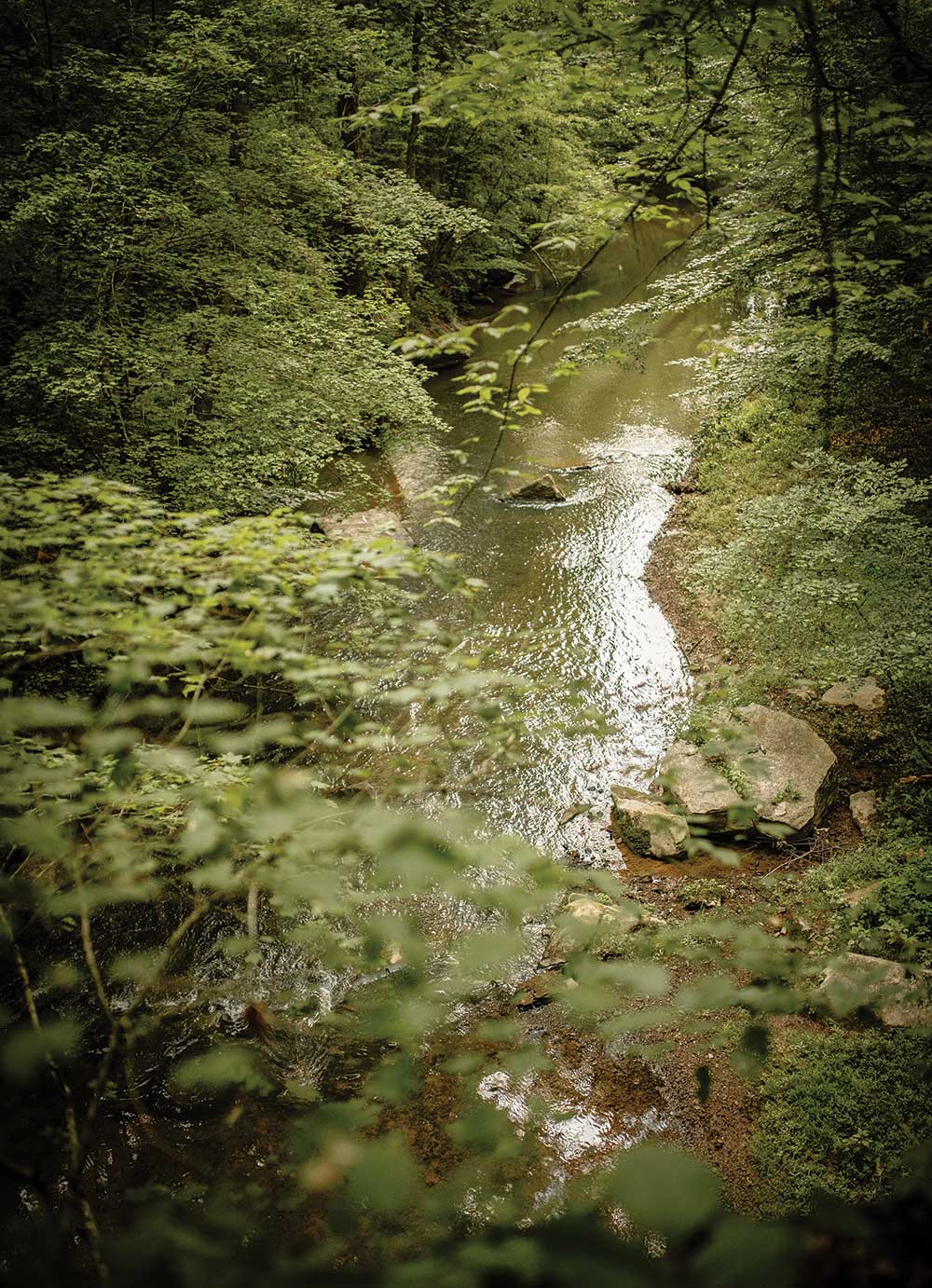
Its hiking, biking, birding and horseback riding trails wind their way beneath towering canopies of hardwoods, pine and maple trees with colorful palettes of flowers and diverse native plants marking the paths as if guiding the way.

A meandering creek, pristine as it flows through the heart of it all, is the ideal centerpiece – home to aquatic species – some not found anywhere else.

As Big Canoe Creek Nature Preserve Manager Doug Morrison says, it’s the perfect place to “get your nature on.”

Early days

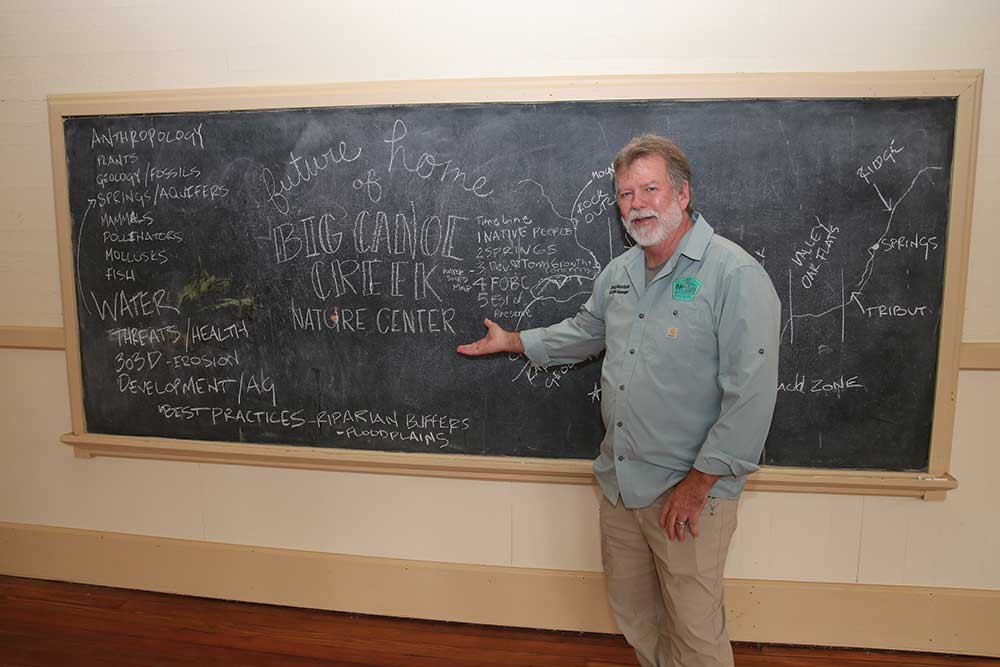
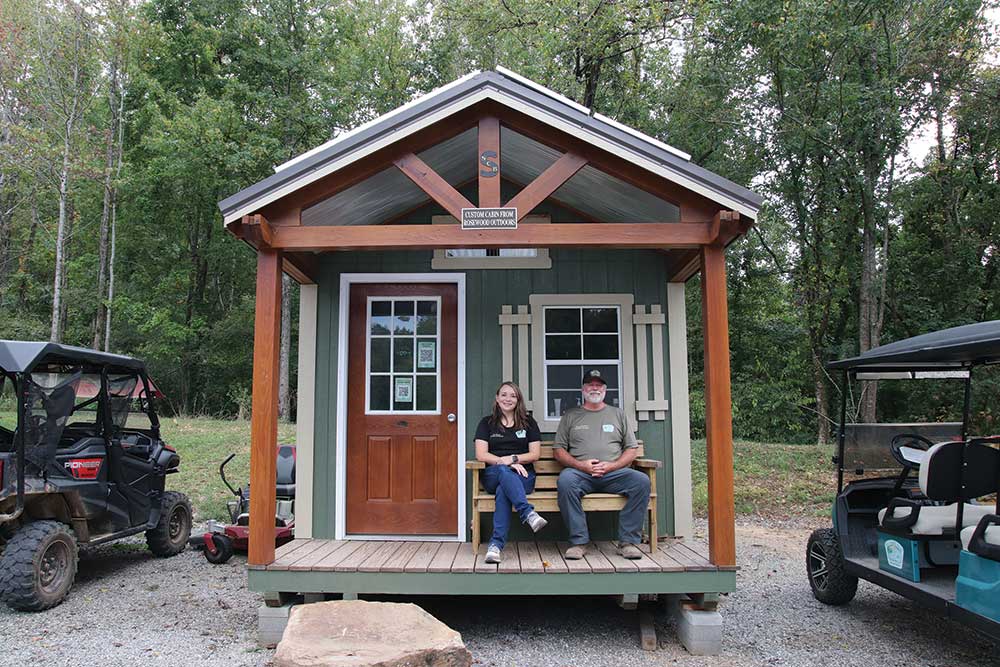
On an unseasonably warm day in late February, Morrison sits on the porch of the preserve office – a tiny wooden building, almost cabin-like in its appearance. He reminisces as he motions to the trails, bioswale and parking, surrounded by dense woods forming a picturesque backdrop.

Much of what you see was absent the year before. Trails were being built. A bioswale was being created to remove pollutants from stormwater runoff and let it settle in the soil to decompose rather than polluting the preserve below.

Entrance roads and parking lots were constructed. Signs erected. Benches were strategically placed throughout as a welcome respites along a hike or a placid place just to enjoy the scenery. 

Activity was at a fevered pitch as work was tireless in its efforts to open. It had been long awaited to fulfill a longtime dream by Morrison and others.

For a decade or so, they waged a passionate campaign to have the land preserved and protected so that generations from now, the preserve can still be experienced and enjoyed. Forever Wild Land Trust bought the acreage and set wheels in motion to do just that – preserve it forever.

These days

These days you’ll find Morrison and company planning, visioning, working toward improvements to the experience and enhancing its awareness and education programs to take it to the next level.

Lucy Cleaver has joined the team as education coordinator. Jake Tucker is maintenance technician. With Morrison, the trio keeps the preserve running on a daily basis.

Entertainment at first birthday celebration cookout

Education has long been a central focus of the preserve. It is key to its future to facilitate not only an understanding of the importance of nature, but a passion for preserving it.

Cleaver enters the picture with an impressive resume with a bachelor’s degree in Agriscience Education and a master’s in Natural Resource Management from Auburn University. She taught high school Agriscience classes before joining the Park and Rec Department of the City of Springville.

Already, she has the education calendar full of activities. 

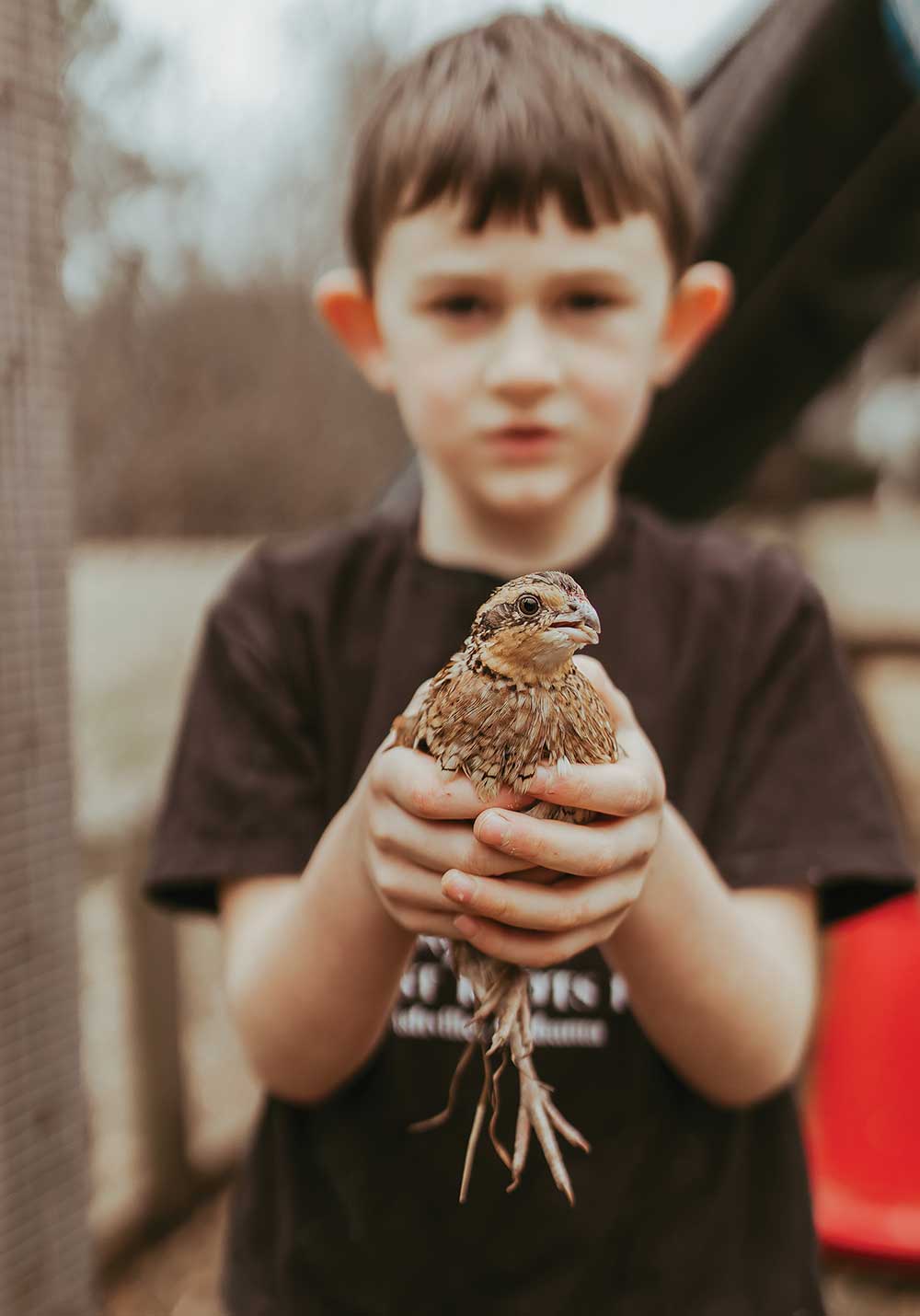
On March 8, it held its second Youth Turkey Calling Expo, getting youngsters up and out on a Saturday morning at the preserve to learn all about wild turkeys. They learned how to make turkey calls and all about turkey hunting and the outdoors. The free event had a multitude of sponsors and the value of items given away to the kids totaled over $5,000.

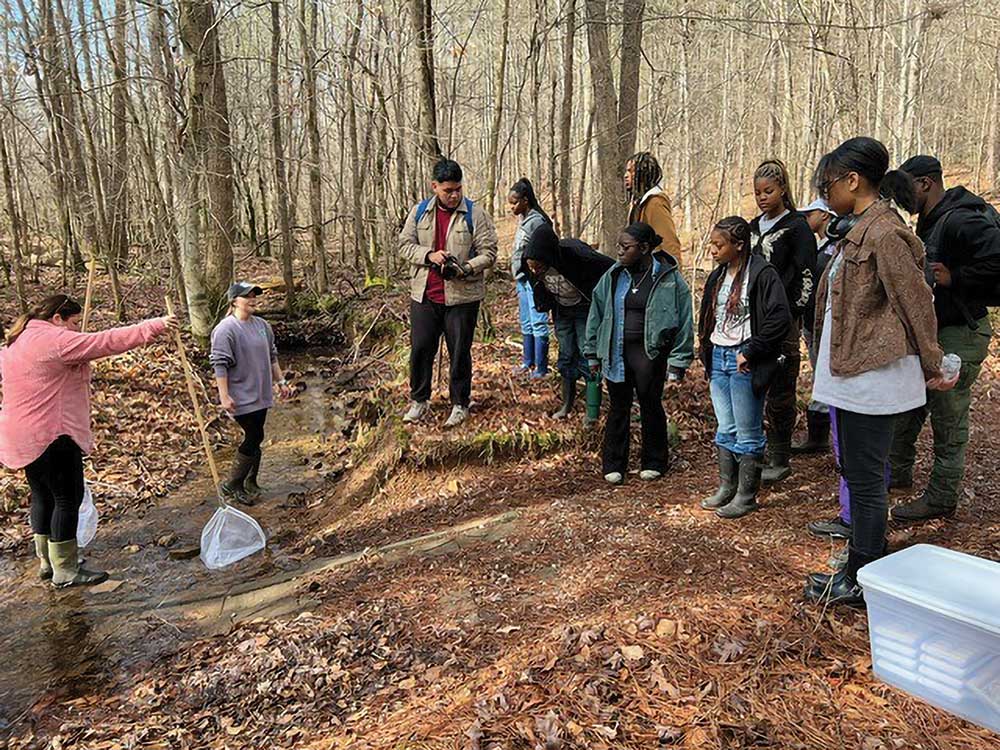
On March 10, Jones Valley teaching farm interns and students went for a hike at the preserve and learned all about its features.

April 5 will see the preserve partnering with Alabama Cooperative Extension for a native tree workshop. June 7 is set for an invasive species seminar, and Sept. 26-27, it will be the site of Forest Her, a workshop for women on how to read deeds, bank documents and wills and how to manage land. It is a joint effort with the U.S. Soil Conservation Service for Women in Agriculture, necessitated by a growing number of women inheriting the family farm and needing such guidance.

She is networking with educators in the Alabama Environmental Association to help develop more programs.

Rounding out the year, Creek Jam, the popular outdoor music festival at Homestead Hollow to benefit the preserve, is set to return Oct. 25.

Future plans

While the early chapters of this success story have already been written for the preserve, officials have no intention of stopping there. Innovation, accessibility and more education are its guides.

Immediate plans call for making a section of the lower trail more accessible by paving a 1-mile section to allow wheelchairs. This will be made possible as the result of funding from grants secured by the Big Canoe Creek Preserve Partners, announcements forthcoming.

Tucker is working on a ram pump, which employs a set of valves working together to provide pressure enough to move 14,000 gallons of water from a spring through 350 feet of line up an 80-foot elevation without electricity.

Morrison discovered the ram pump idea from Randy Moody, a friend who had previously lived on the property in a rental house. “I asked him, how did you get water because I knew no water lines were run up here,” Morrison said.

Moody explained that the remnants of an old spring house had a gathering reservoir that fed into a pipe and there used to be a ram pump there. Morrison had never heard of a ram pump before, but he and Tucker researched. Tucker found a ram pump kit online and installed it.

“Jake can do anything I throw at him,” Morrison said. As long as the water collected into the pipe flows downhill, a ram pump inserted inline on the pipe could gather and push water uphill. For every 1 foot of fall on the pipe, it could push 7 feet uphill.

The end result? “We collect water through the pipe, the ram pump pushes it uphill, and we can collect it in a reservoir. Right now, we have a small 250-gallon tote, but plans are for a much bigger reservoir to collect the water and send the overflow back to the stream, thus providing water for irrigation and possibly flushing future toilets.”

Eventually, this off the grid creation will become an education model.

Meanwhile, pollinator gardens planted in the fall will be in full swing in spring and summer.

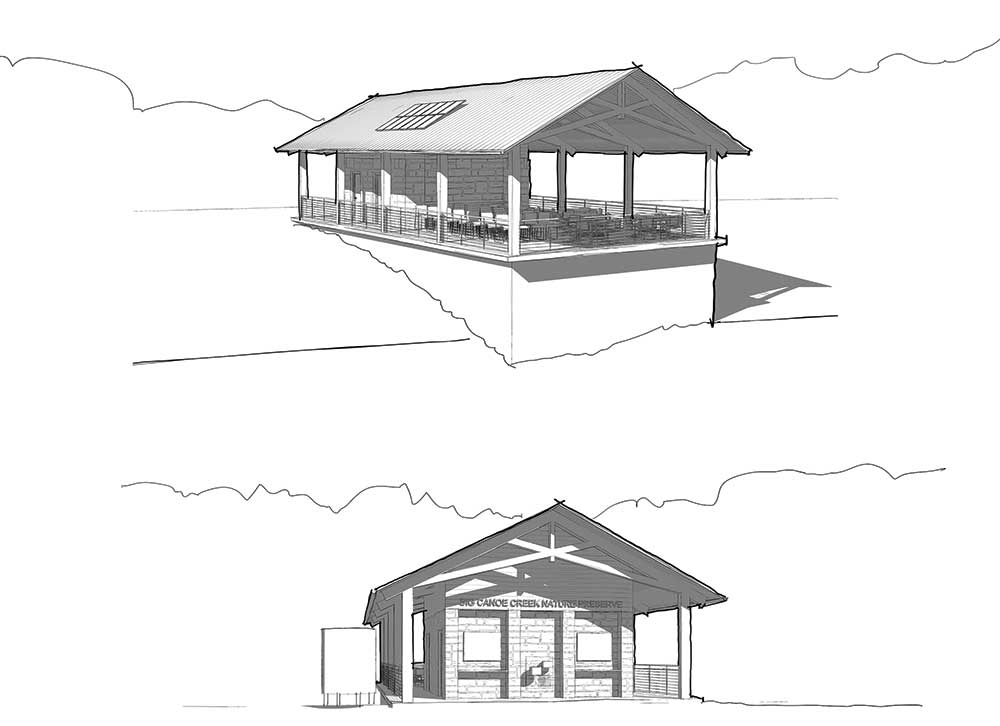
They are hopeful that an open-air pavilion with restrooms is on the horizon, made possible by a $400,000 grant from the Alabama Department of Economic and Community Affairs as part of its Recreational Trails Program. It was written by Mike McCown with assistance from Morrison and Candice Hill, director of St. Clair County’s new grant resource center.

There, they will be able to hold education and other events, and restroom facilities will now be available.

Why they do what they do

“This watershed is very, very special,” Morrison said as he talks of the protected species there, especially the Canoe Creek Clubshell Mussel, which had nearly become extinct. In 2022, they were placed on the endangered species list.

He points to the ecological potential for the future and a 2013 project on the creek.

Students from Jones Valley Teaching Farm schooled in features of preserve

In November 2013, The Nature Conservancy, U.S. Fish & Wildlife Service, river conservationists, The Friends of Big Canoe Creek, Coosa Riverkeeper and the Geological Survey of Alabama, DCNR and Alabama Power united to remove Goodwin’s Mill Dam. The former grist mill dam was built in the 1880s, and it was abandoned in the 1940s. At the time above the dam site, 15 different fish species, but no mussels, were found. Below it, twice that as more than 30 species of fish, were found, signaling that the dam had been obstructing the free flow of the fish.

“The fish passage was hindered by the dam. Fish have a symbiotic relationship with mussels. You see the female mussel releases glochidia (mussel larvae if you will) that latch onto the fishes’ gills. They feed off the blood of the fish for a few weeks, then drop off. And that’s where their life journey begins,”  Morrison explained.  Ten years later, they found mussels there, Canoe Creek Clubshells at that. Once the fish passage was unobstructed, the mussels were returning, and their role as a natural water filter will be vital to keeping the creek pristine.

After USFWS folks discovered the Clubshell there in 2023, they worked with Paul Johnson and Michael Buntin at Alabama Aquatic Center in Marion where they raise mussels. They released over 120 Clubshells and about the same number of Coosa Mocassinshell mussels in early 2024 into Big Canoe Creek, Morrison said, and they have high hopes for what it means for the future.

Through the preserve and the environmental and conservation work being done, “We want to teach people more about our watershed, how important the critters are that live here and how to take better care of our waterways so these special critters can exist. We must do what we can to prevent further extinctions,” Morrison said.

“All of God’s creatures have a right to exist to live a full life. We can tune in more to nature, explore more and discover more. Who knows what is still undiscovered? Bottom line, we all need to ‘get our nature on’, and maybe your existence will be rewarded tenfold.”