
98 years and counting
Story by Joe Whitten
Submitted Photos
If you should travel a St. Clair County backroad some afternoon and arrive at Willie Mae “Snookie” Beavers’ home for a visit, she might respond to a question by saying, “Now, back in them days …”
If she does, sit up and listen, for she has lived almost a century of Pell City history. She will converse with you in her Southern dialect that is as soft and melodious as Mahalia Jackson singing, “Precious Lord Take My Hand.”
Both Pell City and St. Clair County need to know what she can tell us about how it used to be with farming, gardening, killing hogs, preserving vegetables and fruits, playing the church piano and sewing old-timey quilts. She is one-of-a-kind, as all treasures are.
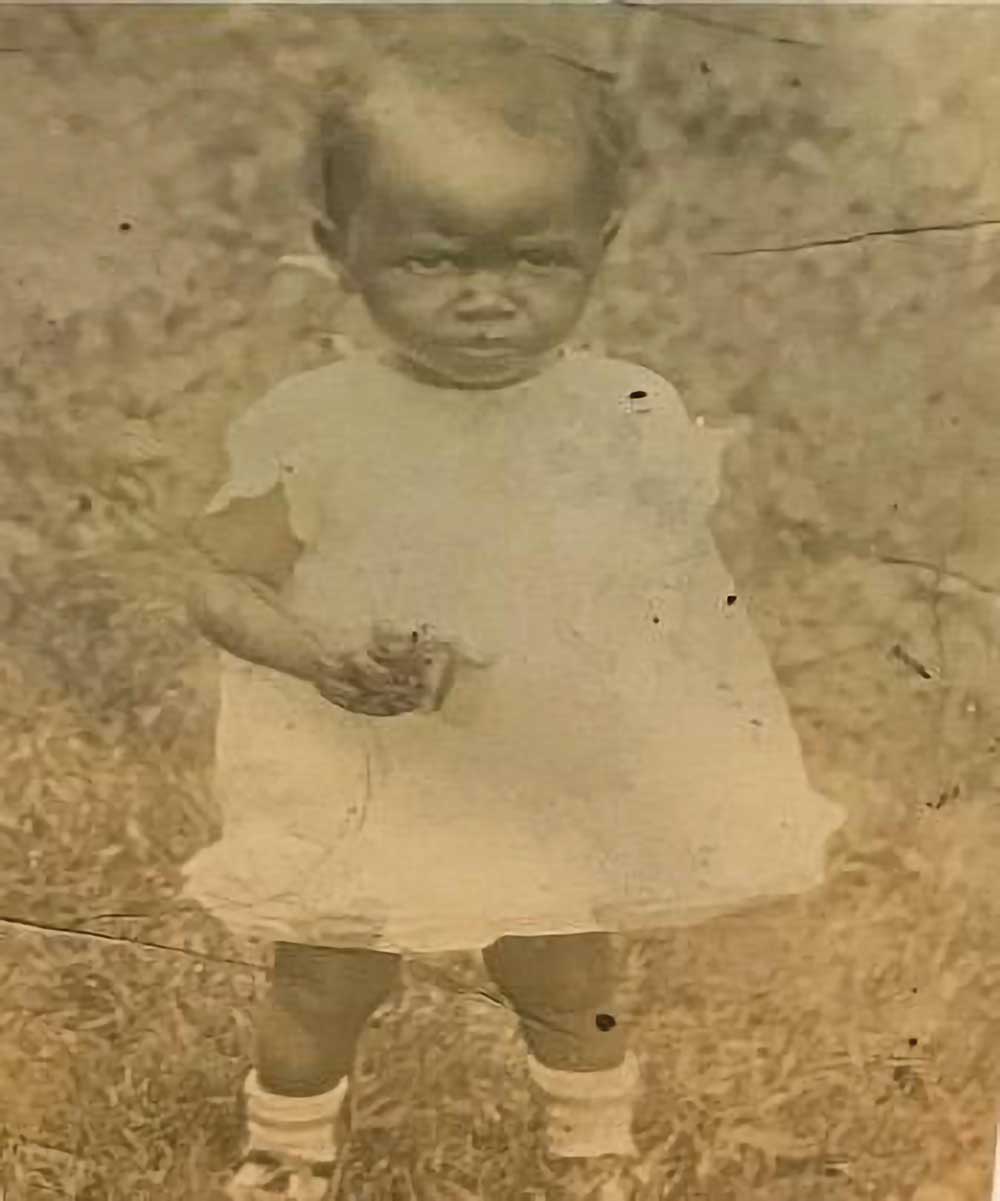
Born Jan. 9, 1927, to James and Bessie Moore Turner, Willie Mae was the first of the 10 Turner children. The family farmed Turner land in the Coosa Valley, south of Seddon, and she began working in the fields as soon as she was big enough to work.
“We farmed, raising cotton and corn and sugar cane. My parents worked in the fields, and I worked right there beside them,” Willie Mae says matter-of-factly. “I think I worked harder than any of the others cause I was the first one. And I didn’t just work in our fields, I worked in other folk fields, too. If they needed somebody, I went. Whatever was in the field, I was in there, and I did it. What the plow couldn’t do, we did with a hoe,” she laughed. “And after I got married, I still went to other folk fields and worked. Back in them days, that’s the way I had to make my money.”
Willie Mae married William Beavers on June 18, 1948, and they were parents to six children: Shirley, Connie, Wilma, William (BeBop) Jr., Bennie and Rodrick. All seven are still living. As the babies arrived and grew up, Willie Mae continued “working in fields” until she took a job with Pell City Cleaners.
She started working at the cleaners before she was 62 years old, but doesn’t remember the exact date. She started drawing her Social Security at age 62 but didn’t retire until she was 96. When asked why she retired, she laughed and said that one of her daughters told her she was too old to keep working, that she needed to retire. Willie Mae told her, “Well, the bossman said I was doing the work …. But she told me that if I didn’t come out, she’s gonna tell ‘em to fire me, and I believed she would’ve, so I come out.”
Her hardy laugh showed she was enjoying telling this. “I don’t know if he’d a-fired me or not, if she would-a told him to.”
Other than a brief time as a teenager washing dishes at the St. Clair County Training School, the Pell City Cleaners job was the only work she did other than farm work.
Gathered produce had to be preserved for the winter months. Willie Mae helped her mother can vegetables as they came in. As to fruit, they canned peaches for they were too juicy to dry, but they dried apples by the peck. “That’s where I learned how to can,” Willie Mae recalled. “I did what my mama done, I just couldn’t do it as good as she did.” What cucumbers they didn’t eat they pickled. She spoke of smokehouse pickles as quite delicious.
When the sorghum cane was mature, it was time to make syrup. Her dad set up the syrup mill and the boiling pan. Willie Mae and sisters stripped the cane and cut it in pieces ready to be fed to the mill as the mule walked round and round turning the mill, squeezing the juice from the cane into buckets. Poured into a boiling pan, the juice cooked down to syrup. “We poured the syrup in cans,” Willie Mae recalled, “and we ate biscuits and syrup.” She didn’t say it, but that was some good eating.
When asked about wild game for food, she said, “We loved rabbit and squirrel. That was good eating.” She paused, then laughing, said, “And possum. Mama did all the cooking, and everything she made was good.” Obviously enjoying remembering, she continued, “She made good dressing, good cakes, good custard, good biscuits.”
When hog killing weather came, Willie Mae learned from her mama about sausage, souse meat, and chitlins.
They used some less desirable cuts of pork to grind up for sausage, adding pepper and sage to the mixture. Willie Mae’s dad had a smokehouse where they hung the sausage, but the other cuts of meat they salted down in a wooden saltbox.
Asked about old-timey head cheese or souse meat, Willie Mae smiled, “I always made the souse meat. Made it out-a the head, and out-a the feet, and out-a the ears. We had a big pot, and I’d put it all in a pot and boil it till it got done, I’d pick all the bones out of it, and start mashing up the meat with my hands. Then I’d grind that all up with the sausage grinder. And that’s when I’d put different spices in it.” They formed the meat into a loaf shape to let it set until it was firm. Some call souse meat the original deli meat, for it makes delicious sandwiches.
Nothing about the hog went to waste, not even the intestines. They cut them into short pieces and washed them over and over until they were clean. “We’d get as much fat off as we could,” Willie Mae said. “We cooked ’em in a boiler for several hours with salt and pepper. Some folks fry ’em, but we didn’t, we just boiled ours till they got done. To me, that was some good eating.”
Today chitlins are regarded as solely a Black culture soul food, but Rev. Larry Adams of Mt. Zion Baptist Church in Springville can attest that chitlins are served in restaurants in France. Rev. Adams was on a teaching mission trip in Paris with Pastor Chipley Thornton and Pastor David DuPre from Springville First Baptist Church. For lunch one day, the three went to a Paris restaurant. Unable to read French, Pastor DuPre pointed to a picture and ordered it. When their meals were served, Rev. Adams looked at his friend and said, “You’re eating chitlins.” His friend said, “No.” Rev. Adams said, “I know chitlins, and you’re eating chitlins.” Sure enough, when they translated the menu offering it was chitterlings, or in Alabama, chitlins.
What Willie Mae learned growing up, she continues today, which includes growing vegetables. “Folks need to raise stuff,” she vows decisively. “If they don’t, they not gonna have anything to eat. The stores ain’t gonna have it. If you don’t raise it, you ain’t gonna have nothing to eat.”
She now gardens with baby brother, Larry Turner, and their garden is weed and grass free. When asked what they grew, she laughed, “We grow everything that can be raised – turnip greens, mustard, onions, green beans, tomatoes, cucumbers and all such stuff as that. Anything that can be raised. We always had a good garden. Larry had a jam-up garden. Me and him been raising a garden.” She paused, then said, “They say I’m lazy, but I just done got old.”
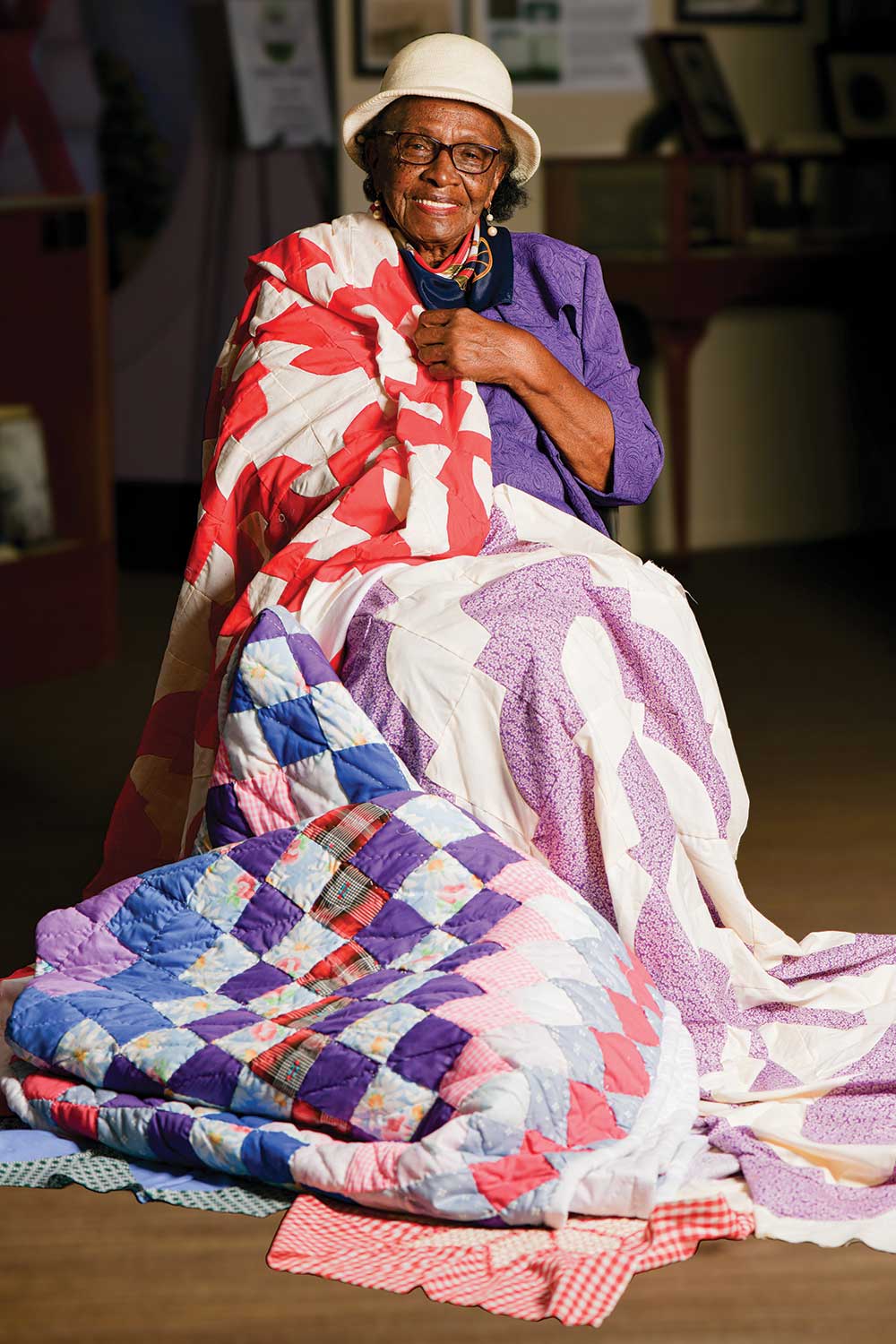
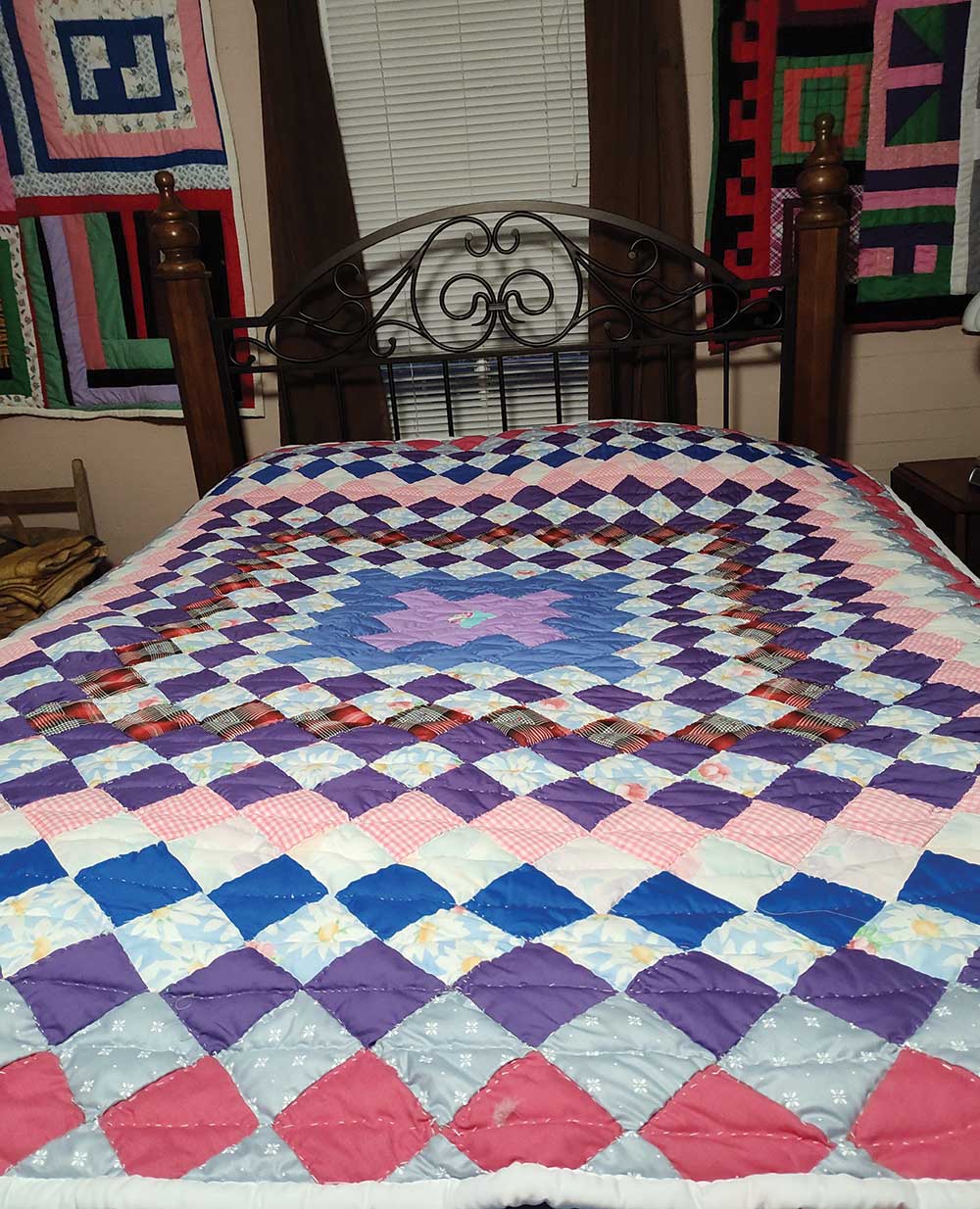
She may have slowed down, but “lazy” is not a word that fits Willie Mae Beavers. No lazy person on God’s green earth sews quilt tops and quilts them by hand. Willie Mae does, and her quilts are treasured by family, friends and folks she’s never met. A commendation from the Alabama House of Representatives read by Representative Hall on May 16, 2017, records that “…her magnificent quilts are displayed in homes across the United States,” and that “…many have received one of her famous quilts in celebration of a significant life milestone.”
Willie Mae’s love of quilts perhaps started with her grandmother, Henrietta Turner, whose house was a short walk through the woods from Willie Mae’s. “We walked over there to her house every day. She never acted like she got tired of us. She was a good grandmama.” And her love of quilts may have started with her grandmama, for she recently reminisced, “I used to enjoy looking at her quilts. She used to have these frames that you hang up in the house from the ceiling, and you had to hang ’em by their four corners. She hung it up and let it down to quilt on it. She used what she had to make ‘em: old clothes, pants and things.” Then, laughing, she said, “You know what, I went to the library the other day and saw these cotton carders, and I said, “Oh, my mama had some of these.” Carders were used to separate cotton from the seeds so the cotton could be used as the inner batting (padding) for the quilt.
Willie Mae enjoys talking about quilts. “I treasure quilts, but young folks …” she paused and shook her head, leaving the “don’t” unsaid, then continued on a happier note. “Mama always quilted. She made pretty quilts. My quilting’s not as pretty as hers.” She used cloth flour sacks, feed sacks and fertilizer sacks, when she began learning to quilt.
Bought fabric in quilts was unheard of among rural folk in the 1930s and ‘40s.
“I’d get the empty ones,” she said recently, “and wash ’em and I started making quilts from them.” Then came the phrase, “Back in them days, you didn’t buy anything. You had to use what you had. So, I would quilt, and I didn’t really have patterns then, it would just be blocks that they called the Nine Diamond.”
She still makes the Nine Diamond, but other quilt patterns she likes include Trip Around the World, Monkey Wrench, Stars and Bow Tie. “Nothing fancy. These real fancy quilts with a whole lot-a pretty little bitty pieces – I don’t do that,” she laughed. “I don’t know how old I was when I started quilting. But I been doing that all my life. I’m 98 years old, but I’ve been quilting – piecing and quilting all my life. My mama did it, and what I did, I tried to do it like her.”
An ear for piano
One thing Willie Mae does that she didn’t learn from her mother is playing the piano. Knowing her daughter wanted a piano, Mrs. Turner went to a piano store in Anniston and bought one. “I know she got tired of me playing, but she never told me to stop.” Willie Mae pauses to reflect, “If somebody ask me to play in the key of C or F sharp, I wouldn’t know what they was talking about. The Preacher one time asked me to play ‘Precious Lord’ in C. I played if for him, but I didn’t know if I played it in C,” she laughed.
She never took piano lessons, but she could play on the piano whatever she heard sung or played on the radio. At age 14, she began playing piano for Blooming Light Church, and she recalled how that happened. “I’m sure they had other players, but Mr. McHugh came to Papa and said, ‘I heard your daughter played the piano.’ And I started from there.” She couldn’t remember what month and year she started, but she continued as pianist and music director until in her 90s when COVID kept her and the congregation away from church services. “The first song I played at church,” she recalled fondly, “was ‘The Old Account Was Settled Long Ago.’” The last song she plays in church is yet to come.
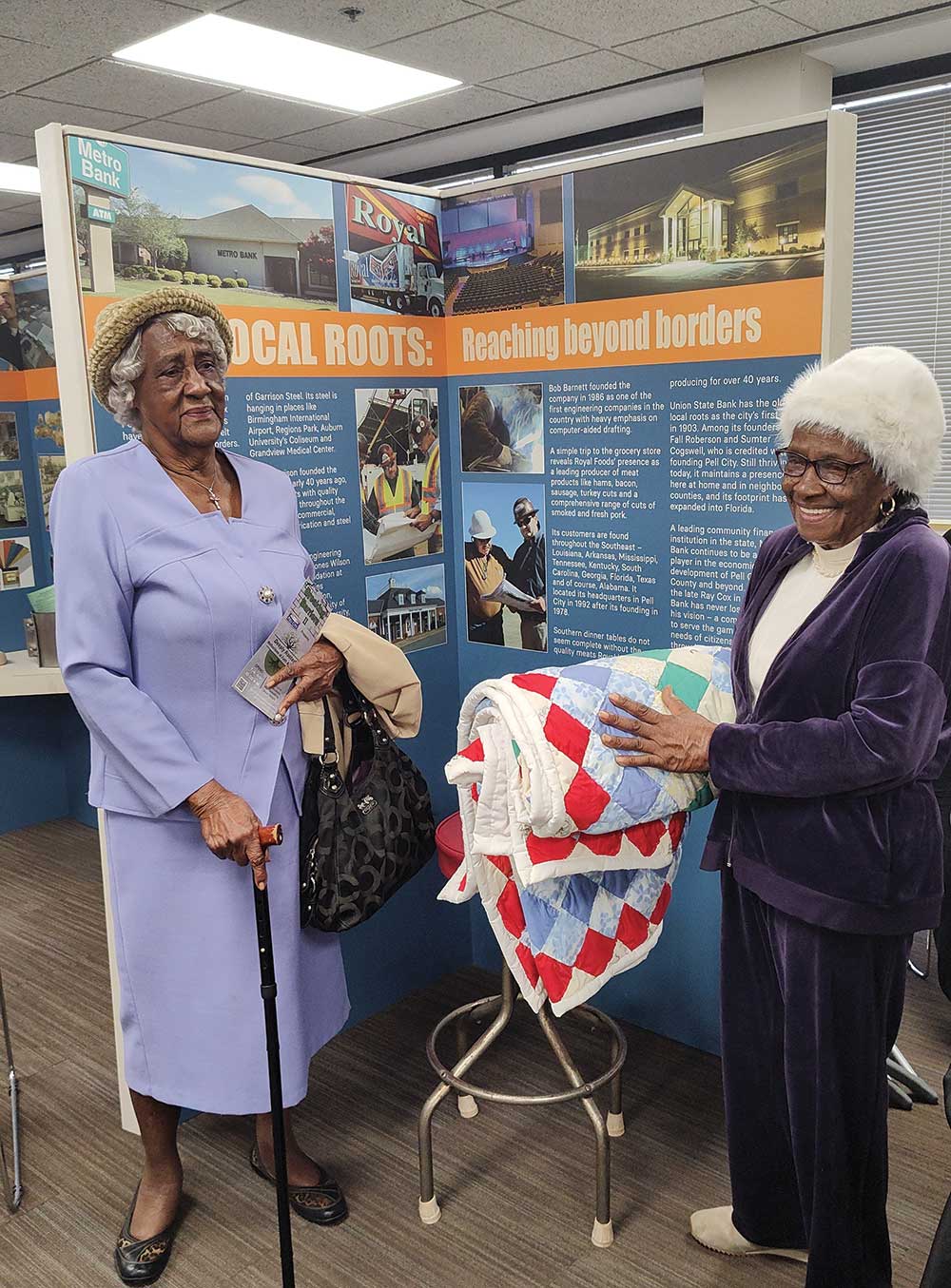
Willie Mae’s baby brother, Larry Turner, says folks need to know that she was not only the pianist at Blooming Light but that she was also the Minister of Music there and was Minister of Music for Riverside and for Rocky Zion for a while as well.
“I played for Rocky Zion,’ Willie Mae reflected, “and I played for Riverside, and for Peace and Goodwill.” Her dad, Rev. James R. Turner, was pastor at Peace and Goodwill at Riverside.
Asked if she played piano for her dad, she answered, “I played for him. Mama told me, ‘You got to.’ I went to all the revivals. That was fun.” She pauses a few seconds and adds sadly, “But church ain’t like what it used to be back in them days. We never sung anything but the old songs. ‘The Old Account Was Settled.’ ‘Oh How I Love Jesus.’ ‘Precious Lord.’ Old songs.” She laughed and said, “Now, I can play for old folks, but I can’t play for teenagers.” Lots of people agree with Willie Mae that the old songs are the best songs.
Larry Turner is proud of his sister and fondly affirms, “She’s legendary. Everybody knows her. Everybody loves her.”
Recently someone asked her, “What would you tell young people about your secret to living almost a hundred years?
“Now, you’re not the first one to ask me that,” she laughed. “And I tell ’em, well, ‘I can’t tell you, cause I do not know.’ She pauses, then says, “I tell ‘em, ‘I come up poor; I worked in the fields … I’ve worked in the fields all my life. I worked in my daddy’s field, and after I got grown, I worked in other folks’ fields. And I’m still here for some reason.”
You’re still here, Willie Mae “Snookie” Beavers, because you’re a St. Clair County and Pell City, Alabama, treasure and we need you. We need the harmony of your music, the beauty of your quilts, and your example of “work hard and live long.”
Most of all we need to hear you telling us how it was “back in them days” so we don’t forget the stamina and character of our ancestors and how they lived and worked and reared families.
You are one-of-a-kind, as all treasures are, and we thank God you’re still here.