Rhythm of the Rails

Story by Roxann Edsall
Submitted Photos

Two little girls, laughter echoing in the Alabama moonlight, hurry alongside their mother toward the train station. It’s the late 1950s in Pell City, a time when the whistle and hiss of the train closing in on the station was as predictable as the sun set.

Carolyn Hall recalls, “It was exciting! Mother would tell us to hurry because the train would be here any minute.”

Her sister, Nancy Jordan Spradley, smiles as she adds to the story. “Our mother or grandmother would carry us down there every night, and we’d wait for the train to come through. We’d wave at the conductor, then wait for the caboose and wave to that man, too.” For these sisters, that nightly ritual became a cherished memory, a blend of excitement and comfort as the mighty trains passed through their small town.

The evolution of the project

Pell City’s history is inseparable from the railroad tracks that brought it to life. Founded in 1887 by a consortium of railroad investors, the city was named after financial backer, George H. Pell, president of the East and West Railroad. A short line was created by that railroad to connect three larger systems – Seaboard Air Line Railroad, Talladega & Coosa Valley Line and Georgia Pacific Railroad – and a shared depot was built.

Even so, the town had an uninspiring start, sluggish at best. That is, until the railroad brought to town the man who would save it not once, but twice. Sumter Cogswell, a 29-year-old insurance agent, had no thoughts of saving a town in Alabama when he boarded a train near his own Kentucky home in March of 1890. He was headed to Talladega on business and was scheduled to change trains in Pell City. A missed connection left him stranded for the night.

Rather than an inconvenience, this delay became a turning point, not only for Cogswell, but for the future of the sleepy town. After a night at the Cornett House Hotel, Cogswell awoke, looked outside, and was struck by the potential of the area, specifically the proximity of three converging railroads, the nearby Coosa River, and the beauty of the surrounding landscape.

Seizing the opportunity, Cogswell purchased an option on a significant parcel of land, then negotiated a sale to the Pell City Iron and Land Company. Presuming the town was now on good footing, Cogswell left to resume life elsewhere.

The Panic of 1893 was a time of severe financial depression across the country, and it had devastating effects on Pell City. The Pell City Iron and Land Company went bankrupt, and by the time Cogswell returned for a visit in 1901 with his wife, Lydia DeGaris Cogswell, the town was all but dead. The Cogswells arranged to purchase the dying city for $3,000 and began to nurse it back to health.

It took hours of work to create this level of detail

Now 135 years old, Pell City is a healthy, growing city. A city of more than 17,000 people, it covers 27 square miles of land and water, a far cry from the original 8 blocks on the incorporation papers. Pell City has changed a bit since those early days, and though passenger rail travel is no longer available to or from the city, its impact is irrefutable.

To celebrate those early days and how the tracks once carved Pell City’s landscape, a group of six volunteers dedicated over a year building a train exhibit for the Museum of Pell City. The exhibit, opening this month, features an early 1900s to 1930s-era landscape of Pell City with exquisite detail, completed using historic photos from that time. The project was headed up by retired architect and model builder Malcolm Sokol.

Sokol worked with museum designer Jeremy Gossett to clear space within the museum and determine how large the exhibit could be. From that information, Sokol was able to create a design. A team of volunteers, which included Winston Greaves, David Smith, Max Jolley, and Erik Grieve, worked at Sokol’s house the first month to build the benchwork (similar to a table top) and the cork roadbed for the track. Colder weather and space constraints forced the team to move their operations to the Municipal Center for the rest of the build.

“We had all built model cars and things, but those were kits, and we were just kids. But with this project, Malcolm gave us specific tasks with instructions,” said Jolley. “He taught us tricks of the trade.”

Jolley’s specialization was painting all the people in the exhibit. “These people are smaller than your finger,” he adds. “I painted each one of them and to do that, I had to hold it still with tweezers and paint with a very small paintbrush.”

Among the buildings that were custom built were the courthouse, city hall, train depot and Cornett and St. Charles hotels, the First National Bank building, the Jake Garry livery, and Martin’s store. Others began with kits and were customized to look like the historical structure.

“We had homework from Malcolm each week,” recalls David Smith. “He’d send us home with a model to build each week and when we brought it back, he’d make suggestions, and we’d refine it until it was just as it should be.”

Smith was also in charge of 3D printing all the horses and wagons. The piece Smith spent the most time on was the water tower by the courthouse. The tower, whose many guy wires each had to be glued in place and painted, took a month to complete. The Cornett Hotel, which was built by Sokol, took six weeks to build.

Erik works on terrain

Sokol also produced each of the cars on the layout. He bought several cars and made molds of those cars so he could produce multiple castings of each car. Each of the cars represents about two hours of work.

Winston Greaves is a fellow model railroader and a friend of Sokol. Originally from Trinidad, he is a professional electrician by trade. He served as the project’s electrical specialist, and got everything powered so the train moves around the town. He also helped build many of the buildings.

Erik Grieve used to work with his grandfather on model trains. He had the opportunity to relive some of those memories while working with the rest of the team on the project. “It was incredible to see all the different techniques that go into bringing these scaled-down versions of real pieces to life,” Grieve said. “Malcolm showed us a spray-painting method that made the buildings’ bricks look amazingly realistic. Seeing how all the tiny details come together to create one cohesive picture was truly impressive.”

The team had all but a handful of pieces glued down when it had to be taken apart to move into the museum for the final work. It was reassembled in the museum space, and the team continued work and tweaked it for three additional months before unveiling the completed project. In all, an estimated 1,000 hours of work went into the project.

While the project represents many hours of work, the volunteers involved echo the sentiment that working together and getting to know each other was the greatest reward. As Smith put it, “For five grown men to be together and never any derogatory words spoken is a blessing. It was a bunch of men coming together and playing with toys, but creating something that, hopefully, generations in the future will enjoy.”

Museum designer Jeremy Gossett observes. Around the table are Winston, Malcolm, Museum Coordinator Erica Grieve, Erik and David

“This model is such a beautiful example of what can happen when a community comes together,” said Museum of Pell City Coordinator Erica Grieve. “Because of their dedication, we can give visitors a realistic look at our town’s early days and show how the railroad helped shape who we are today. It’s exciting to see projects like this continue to grow and strengthen the way we share our history.”

Ronald Sumner loves remembering the history of the area. He’s been a resident since his family moved to Pell City as a young boy. He remembers planes flying overhead announcing the end of World War II. And he remembers riding the trains from Pell City to Birmingham and back with his parents.

Spend time looking closely at the intricate details of the buildings along the train tracks, then close your eyes. You can almost hear the rhythm of the rails and how that became the rhythm of life for Pell City and her people. l

Editor’s note: The Museum of Pell City is open Thursdays and Fridays 10 a.m. – 4 p.m. and Saturdays 10 a.m. – 2 p.m.

Museum on the move

As Museum of Pell City approaches its third birthday, it’s hard to imagine a ‘down time’ for this quickly growing museum.

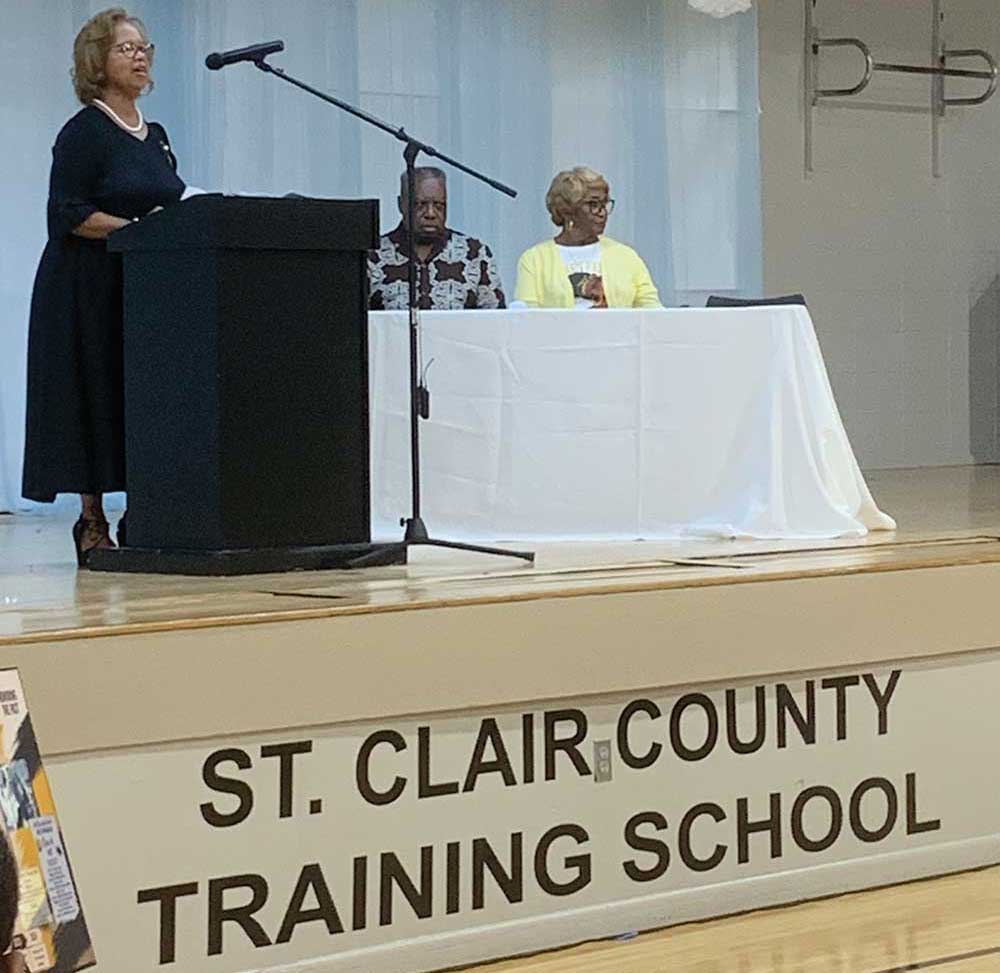
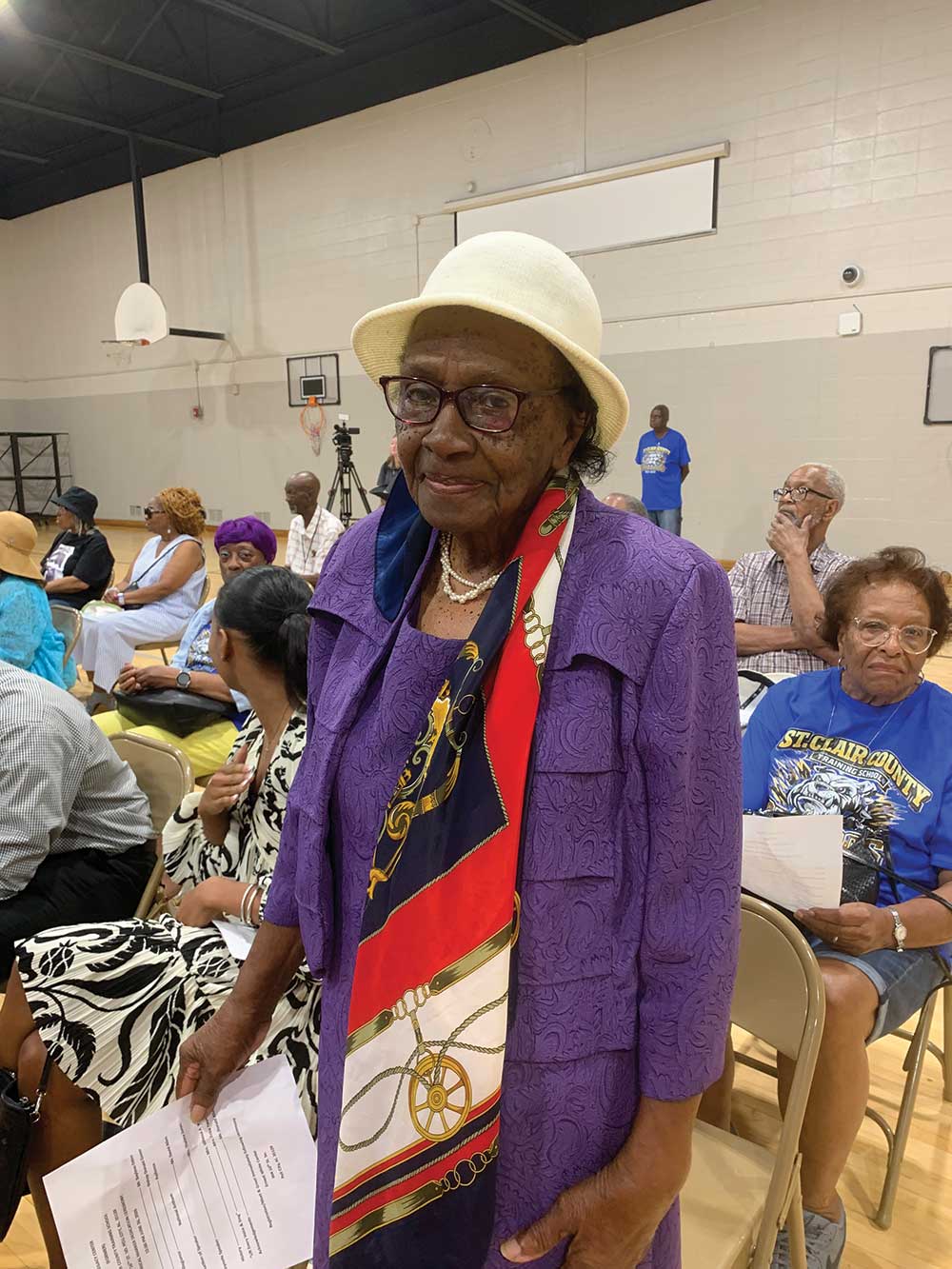
On Feb. 5, the museum will present its third edition of the Breaking Barriers series focusing on the Black community and its place in the city’s history. Headed by Museum Board Member Tonya Forman, its popularity has grown right along with the program itself.

This year’s theme is Education: Foundation for Success and pays tribute to the early Black educators whose guidance and compassion transformed the lives of Pell City students.

St. Clair District Attorney Lyle Harmon takes inaugural flight on simulator at opening

The day’s program, which begins at 11 a.m. features a reception and a film premiere of family and former students of these educators on the legacy of their impact. It will also mark the opening of an expanded Breaking Barriers exhibit.

Opening the next day, Feb. 6, and extending for two weeks until Feb. 21 is an art show by Sundi Hawkins. The show is a continuing series of the museum, giving the art community a home to display their works.

The museum board invested in a hanging system, and the exterior walls of the atrium just outside the museum have already displayed the creations of artist Nettie Bean and her students, a spectacular quilt show and Duran Jr. High’s art show. The quilt show will return in 2026, and more art shows are scheduled.

In December, the museum’s art gallery hosted the wood carvings of Eric Knepper, intricate, creative pieces of artwork crafted by the local artisan.

Upcoming are shows by Penny Arnold, Williams Intermediate students, a return of Nettie Bean and her students and the Helen Keller Foundation Art Show of Alabama.

In November, the museum opened an expansion of its military section and added a flight simulator, which is already drawing crowds of young and old alike. Designed by Jeremy Gossett, the simulator resembles the cockpit of a Boeing aircraft with a curved monitor that displays various flight patterns including Pell City and Logan Martin, Mosul and the French countryside.

The software is highly sophisticated and gives museum visitors a real feel of flight – from takeoff to landing. It was made possible by a special fundraiser providing nearly $7,000 to build and equip it.

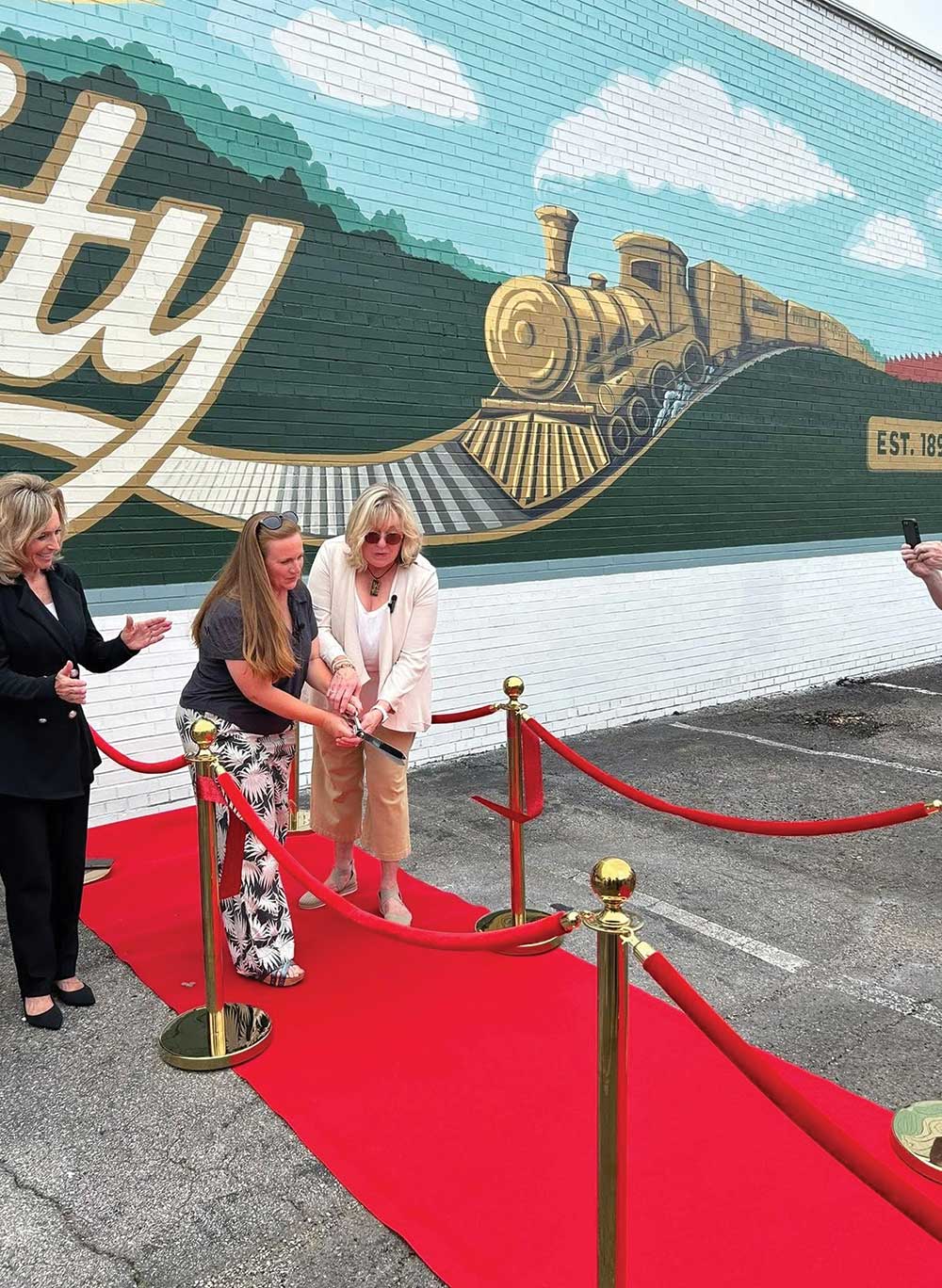
In April, just a few days past its third anniversary, the museum is celebrating with the official opening of its long-anticipated model train exhibit – Where It All Began. Headed by retired architect Malcolm Sokol with a team of volunteers – David Smith, Max Jolley, Erik Grieve and Winston Greaves – it took a year to build.

The museum hosted artist Nettie Bean and her students

The 16-foot train runs through a replica of 1920s-30s Pell City and will be surrounded by artifacts, narratives and photos depicting the train’s history in Pell City. After all, that is where it all began – when founder Sumter Cogswell missed his train to Talladega in 1890 and spent the night in what is now Pell City.

Nationally known artist Dirk Walker has donated an original painting of a Pell City train depot that will be used as a fundraiser for the museum.

An evening reception is planned along with tributes to the museum’s volunteers and naming “Volunteer of the Year.”

“We are so humbled by the community support we have been given since our opening,” said President Carol Pappas. Our docents give their time every week to guide visitors through our museum. We could not operate without them, and we are so appreciative of their work.”

Pappas lauded the dedication of the team who built the train, which now will be a centerpiece of the museum’s exhibits. “They met every Monday night for an entire year to assemble each rail of the track, recreate historic buildings from scratch, hand paint and place miniature figures throughout the town and so much more. It is so realistic. It is a must see. We cannot thank them enough.”

She noted that the museum is in the midst of a capital campaign, and businesses and individuals have stepped forward with multi-year sustaining funds. “They are the very foundation of our museum,” Pappas said.

“Recognizing the importance of cultural arts in our community as educational, historical, an enhancement to quality of life and a boost to tourism, the City of Pell City and St. Clair County have been supportive with appropriations over the past three years. Without their support, we could not have come this far.”

When the museum opened in a 4,000 square foot space provided by the City of Pell City, its mission was to preserve and promote the rich history of the city. Billing itself as the “small city museum that thinks big,” in less than three years it has attracted over 5,000 visitors from all over the state, country and points around the world.

It has created innovative, interactive exhibits highlighting the people, places and events that have shaped the city’s history, and the momentum shows no signs of slowing down anytime soon.

In October, the museum will reach back to the city’s real roots – Avondale Mills – with an impressive, interactive exhibition to celebrate and pay tribute to its first industry. Never-before-displayed artifacts, photographs and exhibits will tell the story of those early days along with a special film of oral histories premiering at the opening.

“As they say, we’ve come a long way since then,” Pappas said, “and Museum of Pell City is honored to be able to share that story along with countless others.”

Mt. Moriah Missionary Baptist Church

Story by Joe Whitten
Photos by Wallace Bromberg Jr.
Submitted photos

For a church to arise from Saturday nights of music and dancing is – without a doubt – a unique beginning, but that is the case of Mt. Moriah Missionary Baptist Church.

“A dirt road, a smattering of houses, friends, guitars, banjos, music and dances –God had a plan.” So begins Redena King’s 1975 handwritten two-page history as told to her by Essie Vaughan, the daughter of George “Doc” and Ada Tollison.

With that sentence in mind, relax in your recliner and let your mind drift back a hundred years to a place in St. Clair County called Sage Hill. Think of a field of russet-gold sage (sedge) grass rippling in an autumn afternoon breeze. As you daydream, listen for music floating on the breeze – stringed instruments joyfully filling the cool of the day. It’s Saturday night, and a family is hosting the weekly hoedown at a home in Sage Hill.

Choir and song leader Redena King

These weekly events brought banjo, guitar, mandolin and fiddle into happy harmony that soon had couples dancing, while for other folk it was background music for visiting  with friends not seen since last week or perhaps a month or so ago.

Known today as Mt. Moriah, Sage Hill was sparsely populated in 1925. The nearest school was probably Stewart’s Schoolhouse, a few miles away where Mineral Springs Baptist Church sits today, and the nearest church was Broken Arrow Baptist, about five miles away in Wattsville. So, we can surmise that most of the Saturday night merrymakers didn’t get up early Sunday morning and walk five miles to church. And it’s possible that one or two men may have partaken too much from the “little brown jug” and slept late.

But, indeed, God had a plan that included George “Doc” and Ada Tollison at whose home many of these Saturday night hoedowns occurred.

“Mr. Tollison had a nephew, Oscar Tollison, who was a preacher,” the history records. “He began coming here [to Sage Hill] and preaching on the weekends.” Mrs. King quoted Essie Vaughan, Doc Tollison’s daughter, who said, “The dancing soon stopped, but the preaching continued.”

This spiritual awakening saw different families welcoming weekend church services at their homes. At one of these services, Doc Tollison was saved. As the weekly preaching continued, others were converted.

Attendance at the home services grew so large that the men constructed a brush arbor on the Tollisons’ land as a place of worship. Bernice Sweatt Voss in her 1975 memories of Mt. Moriah described it. “The brush arbor had posts of good size trees [at the corners] and [tree] limbs made a sort of frame on top. Then brush covered [the limbs] to make a shade.” Doc Tollison’s wife, Ada Tollison, was saved in one of the brush arbor meetings.”

Essie Vaughan recounted that soon the men constructed a church house “… alongside the road … It was a long building with a door and windows facing the road and a door facing the road where the [dinner-on-the-ground] tables …” once stood. Those tables were located to the right of today’s fellowship hall as you face the double doors downstairs.

Hazel Layton Morgan in her written memories referred to the building as “shotgun style’ and that it was lit by kerosene lamps in cast iron wall brackets.

Essie Vaughan recalled that preaching was usually two times a month, and “the singing during services were acapella – no piano – to begin with.”

In her recollections, Hazel Layton Morgan mentioned the church pump organ, and this may have been the same one Bernice Sweatt Voss mentioned in her memories when she wrote, “We didn’t have any music instrument, so Mother and Dad loaned a small ‘piano’ organ for a while. Mother would play it, and Eunice and I would stand and pump the peddles for her.” (A “piano organ” was a small portable reed organ.) Eunice and Bernice often sang duets, and one of their favorites was In the Garden.

Building a congregation

Bernice Sweatt Voss’ family started attending Mt. Moriah in 1937, and she described the sanctuary of that time. “The building was a small wooden one with [asphalt] ‘brick siding’ on it …” standing close to the road. She also recalled that attendance outgrew the building by the late 1930s so “… we’d put the benches outside by the side door … pull the piano close to the door inside, and we’d have service at night this way. The preacher would stand in the door, and we all heard well.” The outside worship service provided relief from the summer heat inside the building.

 Around 1945, the congregation built the second sanctuary, a white-painted wooden building. Willie Ann May remembered that Summa Collette and Almos Sweatt collected $50 and gave it toward this new building.

Former pastors Ted St. John, Vester ‘Buck’ Castleberry, Joe Isbell, and Ronnie Venable

In the early 1960s, the third church building was originally constructed of concrete blocks, then, some years later, faced with red bricks and crowned with a white steeple. From the parking lot, a sweep of steps led to a portico, protecting the double doors into the sanctuary.

This building was turned into Sunday school rooms when the fourth sanctuary was erected in 2002-2003 under the ministry of Rev. Ronnie Venable. This building extended over part of the parking lot and provided space for a downstairs Fellowship Hall.

The fellowship hall is named The Howard L. Savage Fellowship Hall. He and his wife, Juanita Savage, were faithful church members who were involved in the planning and building of the current sanctuary. Mr. and Mrs. Savage are remembered as always ready to participate in anything the church needed. And many other dedicated members of Mt. Moriah helped in all areas as well.

All four church buildings were constructed on land donated by Doc and Ada Tollison. Thus, their legacy lives on.

 “Bro. Ronnie Venable was a faithful leader throughout the building process,” according to Redena King’s history. “Each of the churches were built by the help of the Lord and through the faithful dedication and service of men, women and youth who spent many hours working diligently to build a place of worship for all who would come and join in worship.”

Lifting up in song

In the “olden days,” to the right of today’s fellowship hall, there was a row of concrete “dinner on the grounds” tables where food was spread on special days, such as all-day singings and Homecoming celebrations.

Both Singing Schools and All-Day Sings were enjoyed by Mt. Moriah and the outlying communities. Willie Ann May recalled that Mr. and Mrs. Harden conducted Singing Schools every summer, which continued into the 1960s, teaching shape-note music, how to read it, sing it and play it. Then for several years, the yearly singing school was discontinued.

In 2021, Landon King, church pianist, reestablished the Singing School at Mt. Moriah. The school director, Tom Powell, is the grandson of G.T. “Dad” Speer, of The Speer Family gospel group. He is the director of the Alabama School of Gospel Music held the first two weeks of June each year at Snead State Community College in Boaz.  His wife, Dr. Lisa Powell, also teaches in Mt. Moriah’s Singing School and at the Alabama School of Gospel Music.

Tracy Phillips, accompanist for the Mt. Moriah event, is an acclaimed pianist who has accompanied groups at Gaither Homecomings.  

Doc Tollison’s log house

In her memories, Mrs. May recalled the joy of All-Day Singings: “…all we did was sing. Everybody was expected to get up and lead a song.”

Mrs. Voss has a vivid memory of an All-Day Singing in 1938. “We had an all- day singing and homecoming, and we had a great time. But after the singing was over, we kept talking and praying, and I found I was very much under conviction, and people began praying for me, and I was saved!”

Often, singings were announced in the local papers. In one church file are three announcements from undated and unidentified newspapers. One reads: “Singing at Mt. Moriah Saturday Night. There will be a benefit singing at Mt. Moriah Baptist Church Saturday night, January 12, beginning at 7 p.m. Special singers will be the Sonata and the Gospel Four. The proceeds from this singing will be to help pay for a singing school to be held in the county this spring. Everyone is invited to attend. Pastor Rev. Amos Sweatt, Vester “Buck” Castleberry, chairman.”

The second clipping announced the Crusaders Quartet of Anniston as special guest, and the third one reported the Lloyd Chapel Quartet as special singers.

Revival Time

Yearly revivals were standard, and Mrs. Voss recalled one in 1938. “This was the year men cut down trees and made a brush arbor for the revival in August or July … I think there was sawdust to keep the dust down. We had services day and night. At this revival, I joined the church and was baptized in Jones’ swimming hole in Coal City about where the Wattsville Post Office is now. Several others were also baptized. I think part or all of them were added to Broken Arrow [Baptist Church], including me.”

Mrs. Morgan recalled that evening revival services sometimes went on until 11 or 12 o’clock. She spoke of praying and shouting in these services. The shouting would be exclamations of “Hallelujah!” “Praise the Lord!” “Glory to God!” These joyful expressions were prevalent in both Baptist and Methodist revivals, back in the day.

Perhaps the best recollections of revival time from 50 plus years ago were those of Margie Smith Castleberry. She told of a prayer rock where the women of Mt. Moriah would meet to pray for the revival. Surely, as the women met at the prayer stone, they recalled God’s revival blessings of the past and prayed for God’s power in the current revival.

Original congregation from 1925

“The revivals would last two weeks sometimes,” Mrs. Castleberry wrote. “The women would fix lunch and dinner for the evangelist and the pastor. The revivals were always in July, when we would be in the middle of canning time, but we managed to attend every service. When we sacrificed our time, God really blessed,” she concluded.

Mrs. May recorded memories that were special to her. One occurred when Billy Walker was the pastor shortly after the second church construction. “He told all the young people that if they would come for a year without missing a Sunday, he would give them a brand-new Bible. Back then, they had a roll chart on the wall, and every Sunday you were present they put a star beside your name. I remember going every Sunday for a year, and I got a new Bible. I was so proud of it.”

Another special childhood memory for Mrs. May was the Easter egg hunt the year “Mrs. Flora Sweatt made Easter baskets out of oatmeal boxes for my sister Linda, my brother, Enis, and me.” Bought baskets were a luxury in those days when money was hard earned.

Easter and Christmas usually found Mt. Moriah’s musicians and choirs preparing to present special programs such as cantatas and musical plays and programs involving adult, youth and children’s choirs. Many church members have assisted the choirs through the years, including Joan Golden, Nora McNutt, Vicki Newton, Wanda Kelley, Redena King, Vickie Smith and other volunteers.   

In their memories, two of the ladies mentioned the ordinance of “foot washing.” This was based on Jesus washing the disciples’ feet as an act of humility. In the churches who practiced this, the men and women met separately for the ceremony.

Maggie Smith Castleberry mentioned that the church observed this “ever-so-often.” Willie Ann May recalled how her daddy, Will Rowe, would participate in foot washing, told how her brothers, Jack and Buck Rowe, doctored their dad’s socks. “One time before foot washing service, they filled daddy’s socks up with soot…When he pulled off his socks to wash feet, they were black with soot.” She did admit that her daddy, “didn’t think it was very funny.”

The foot washing services Mrs. May remembered, eventually ended, but another event she remembered from the “olden days” continues today: Vacation Bible School. “I remember one summer that for Vacation Bible School Mt. Moriah got a Southern Baptist Home Missionary to come and teach our Bible School,” she wrote.

“She would go home with different members of the church each day for dinner and to spend the night.” The missionary must have been young, for she mentioned that some of the high school age boys would come to the crafts session and participate.

Mrs. King remembered Vacation Bible School lasting two weeks in the 1960s. As an adult, she participated in various areas of preparation and teaching during this community event, which today occurs in June shortly after regular school ends for the summer.

Jessie Garrison, Bro. Ronnie Venable’s aunt, taught, led and hosted Bible Drills at the church for several years.  She also planned special WMU programs. Community outreach ministries occurred throughout the year – Vacation Bible School, Breakfast on 1st Saturdays, 5th Sunday night singings, Man Church on Tuesday nights, fall festival, and Youth night.

 Reaching Out

Mt. Moriah’s membership in the Southern Baptist Convention’s WMU (Women’s Missionary Union) began in 1975 and remains active today. Mrs. King recalls a particular WMU meeting in 1998. “On a Tuesday night [April 7] we had WMU, and  in our meeting, I asked the question, ‘How could we reach out into our community?’” She paused reflectively, and added, “I told them later that I didn’t know if I’d ever ask that question again! Because the next night [April 8], the tornado came through, and we were in this community for eight, nine, 10 weeks, ministering to the community.”

That community outreach was headed up by Bro. Ronnie Venable and his wife, Joan. The church accepted monetary donations which were later divided among community families who suffered loss in the storm. The Sunday school rooms were filled with clothing and supplies for those in need, and FEMA made Mt. Moriah Church building their headquarters. 

Heather Sharp, writing for the St. Clair News-Aegis, Thursday, April 23, 1998, reported Bro. Ronnie Venable offered the church as headquarters for FEMA, the Red Cross and the St. Clair County EMA.

The article reported that Ellen Bain, the local EMA assistant, said all the agencies “…praised Ronnie and Joan for all their contributions,” and that Bro. Ronnie was “…the emergency manager. He knows how to match resources with those who need them.”

The article reported Joan as stating, “We just delegated,” but she worked right alongside the church women who cooked for the volunteers and the victims. Not only did the women serve lunches at the church, but they also delivered “go boxes” to homes and to disaster relief workers onsite.  Mrs. Venable is quoted as saying, “It’s been marvelous to see everybody pull together.”

This 1998 community outreach continued when the fourth building was completed in 2003. Florence Kerr tells how the church is used today when tornado warnings are announced. “The building has below the ground space, and we open it up for the people who live in mobile homes – and I’m one of them – so, we come here. And one night, I think we had over 40 people. Different church members had brought food and stuff, and we fed them and had beverages.” Florence was recalling a tornado warning in the spring of 2025.

Celebrating Centennial

Sunday, August 10, 2025, dawned with clear skies and soon, sunshine baptized Mt. Moriah’s church building in a gilded glow, a radiant welcome to attendees who began arriving about 9:15.

Bro. Danny Wyatt, interim pastor, welcomed the congregation after which Candi Jones gave a brief power point history of the church.

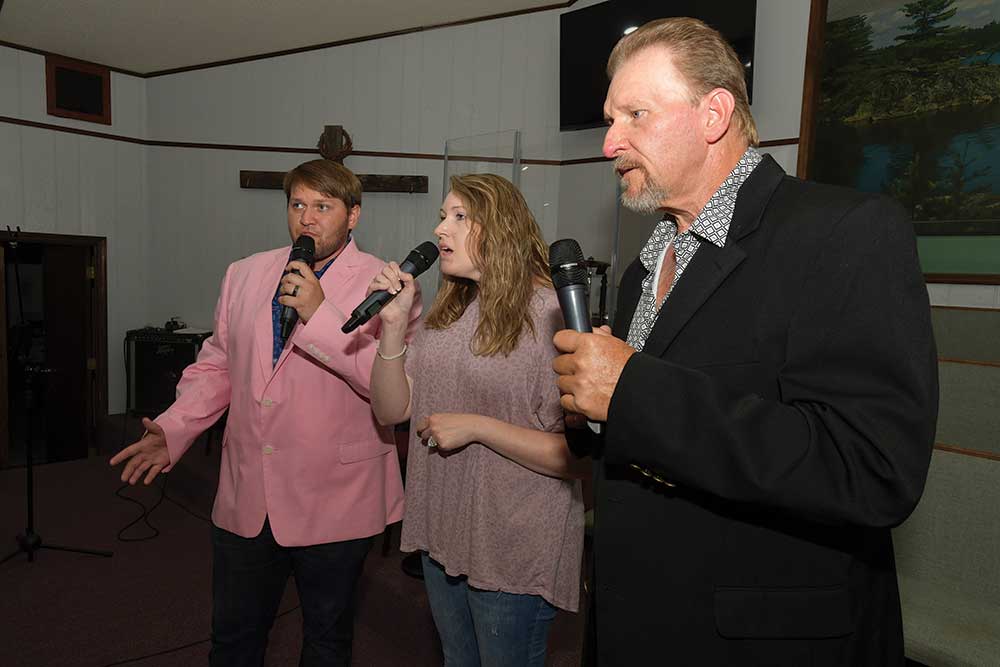
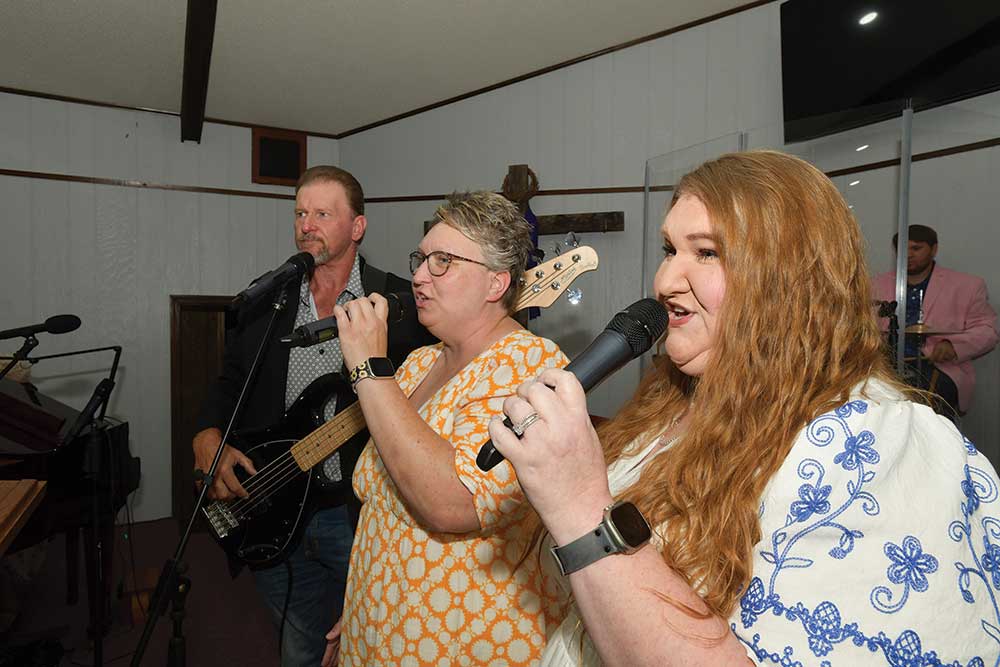
Enthusiastic congregational singing included Glory to His Name, Majesty, It’s a Grand and Glorious Feeling, Getting Ready to Leave This World, The Sweet Forever, and If We Never Meet Again. The only accompanying instrument was the piano played by church pianist King and former church pianist Jason Vaughan. Their fingers danced over the keys, Southern Gospel style, more joyfully than any Saturday night stringed instruments event at Doc Tollison’s in 1925.

Bro. Zane Smith, former pastor, spoke of the church’s progress while he served Mt. Moriah. During his almost 11-year tenure, there were improvements to the sanctuary, and added outreach ministries encouraged the community. The oldest former pastor in attendance was 91-year-old Lloyd Golden, who commenedt, “I was saved in this church and was never lost again.” The church’s oldest member, 91-year-old Mona Scott, spoke about was a blessing Mt. Moriah had been to her.

The Doris Akers’ song, Sweet, Sweet Spirit, sung near the beginning of the service expressed the atmosphere in the church:

There’s a sweet, sweet Spirit in this place,
And I know that it’s the Spirit of the Lord;
There are sweet expressions on each face,

And I know that it’s the presence of the Lord. Sweet Holy Spirit, Sweet heavenly dove,
Stay right here with us, filling us with Your love;
And for these blessings we lift our hearts in praise
Without a doubt we know that we’ll have been revived,
When we shall leave this place.

A ladies’ quartet, Nora McNutt, Vickie Smith, Redena King, and Linda Vaughan, sang I’m a Child of the King and I Claim the Blood. The church choir sang Mansion over the Hilltop and What a Great Savior Is He.

From Romans 12:1-2, Bro. Danny Wyatt preached: “I beseech you therefore, brethren, by the mercies of God, that ye present your bodies a living sacrifice, holy, acceptable unto God, which is your reasonable service.And be not conformed to this world: but be ye transformed by the renewing of your mind, that ye may prove what is that good, and acceptable, and perfect, will of God.”

Wyatt’s sobering point was that the forces of evil have a definite purpose to fill individuals’ minds with ungodly thoughts and desires – even the minds of professing Christians. Therefore, believers should focus their minds on Scripture and things of God.

After the sermon, a young lady who had accepted Christ as Savior during Mt. Moriah’s summer Vacation Bible School was baptized.

Before the closing prayer, Bro. Wyatt asked pianists King and Vaughan to play a duet. And what a duet! No doubt all 88 keys were played and replayed with chords and runs, with flourishes and crescendos of the joy of the Lord. Hands were clapping, and toes were tapping when the duet ended.

Bro Wyatt closed in prayer and a blessing over the meal to follow in the Fellowship Hall.

One can hope that God allowed those who organized the church a hundred years ago to look over the battlements of Heaven and rejoice over what God has accomplished with what He allowed them to begin when he turned their dancing into a prayer meeting and the prayer meeting into a revival and from the revival a church.

To God be the Glory. Amen.

Piecing together a story

Story by Roxann Edsall
Photos by Mackenzie Free

It was 1863, and America was imploding, ravaged by the effects of the Civil War. Brother met brother in battle, homes were burned and cities destroyed.

In Bennington County, Vermont, 46-year-old Jane A. Stickle channeled her energy, creativity and wartime grief into creating what is now one of the most famous quilts in the world. She stitched into one corner of her masterpiece the simple, yet haunting words – “In War Time 1863.”

Stickle’s quilt, now called the “Dear Jane” quilt, is a sampler, meaning that each of the squares is unique. Unlike most sampler quilts which typically use blocks created by different quilters, Stickle created each of the elements herself. She created most of the patterns for the blocks herself, utilizing established patterns for less than a third of her quilt. She also did not repeat a patterned fabric in any of the blocks.

The Dear Jane quilt has been housed in the Bennington Museum in Bennington, Vermont, for nearly seven decades. To protect the integrity of the fragile fabrics, the quilt is only displayed for one month each year, with thousands of quilters making the pilgrimage from as far away as Europe and Australia to view the piece.

County historian Joe Whitten talks history of quilts in special presentation

Rhonda Humphries has not yet been to see Stickle’s Dear Jane quilt but has spent thousands of hours on her own replica. Humphries, a member of the Friendship Quilters Guild of St. Clair County, was encouraged in the project by other guild members and her friend and mentor, Brenda Franklin.

Undaunted by the 5,602 individual pieces it takes to make the project, Humphries worked for two and a half years until the 169 five-inch blocks, 52 triangles, and four corner kites came together in her own finished masterpiece.

Humphries used Civil War era reproduction fabric and followed patterns created by Brenda Manges Papadakis, who viewed Jane’s original quilt in the museum in 1992 and meticulously traced each piece.

Papadakis so admired Stickle’s work that she was inspired to write a book published four years later called The Two Hundred Twenty-Five Patterns from the 1863 Jane A. Stickle Quilt, which included the patterns quilters could use to reproduce the quilt. Many quilters are inspired by the Dear Jane Quilt, and many bring their finished pieces when they make the trip to the Bennington Museum to view the original.

Like the Dear Jane Quilt, Humphries’ quilt is hand-pieced and hand-stitched, an effort that took incredible patience, perseverance and precision. “The most difficult part,” says Humphries, “was one block with a star inside. It’s made up of 30 pieces and, by itself, took three days to complete.” She has been quilting for eight years and has made 40-50 quilts but hadn’t done many quilts at the time she took on this challenge.

“Most people who start this quilt do not finish. It’s pretty involved,” admits Humphries. The blue ribbon and people’s choice awards from her recent entry in a quilt show pinned to the top say the effort has been well appreciated.

Humphries’ quilt was on display recently in a special exhibit at the Museum of Pell City, along with dozens of other quilts made by members of the Friendship Quilters Guild. Looking at each quilt is like looking at fine art in a gallery. Each quilt tells a story, whether one of whimsey or of more important historical matters.

Naomi Kircus is the creator of The Underground Railroad quilt. Its blocks relate the story of the freedom seekers during abolition. Created with Civil War replica fabric, the quilt is made up of 16 blocks, each a reproduction of one that would hang in the windows of safe houses. “When the slaves were running for their freedom, people would have safe places for them to stay,” explained Kircus. “They would display quilts [in the windows] where each of the squares was a message they were communicating to those they were helping.”

The personal narratives and messages communicated through quilting continue to be a source of pride and precious history for families and communities today. Quilts are handed down from generation to generation, becoming treasured heirlooms.

The Friendship Quilters Guild occasionally offers classes in quilting for those wanting to learn the skills and process. The guild has been together for more than 25 years and meets on the second Saturday of each month at Mt. Moriah Baptist Church in Pell City.

Rhonda Humphries and her Dear Jane Quilt

Organizer of the quilt exhibit and guild member Deb Cearley adds that the group has a passion for service. They make covers for cancer ports, fidget quilts, hospital bedrail bags and full-size quilts that they donate to area hospitals, cancer centers and hospice groups. 

“Service is the main thing we do,” said Cearley. “I came to a program here for Veterans and saw many of them come in with their blankets on their laps in their wheelchairs, and that just inspired us to make more.” They also provide placemats for Meals on Wheels and pet beds for Pell City’s animal shelter.

Florence Kerr, one of the oldest standing members of the organization, adds one more benefit to quilting, beyond its artistic and storytelling value. “Quilting is therapy,” she says. “It’s therapy because you have to be in a quiet place and really focus on the process.”

Perhaps the process really is the heart of the matter for the quilt’s creator, though it is the product that inspires the rest of us.

New life for historic home

Story by Scottie Vickery
Photos by Mackenzie Free

After leaving a career on Broadway during the Great Depression, Margaret Byers took center stage in the hearts of Springville residents. She was a little person – not much bigger than the first-graders she taught for decades – but she made a tremendous impact on everyone she met.

That’s a big part of the reason why Nancy Tucker and her daughter, Tami Spires, have taken such care while renovating the home where “Miss Margaret,” as she was affectionately known, lived most of her life. “We just felt like we needed to honor her,” Tami said.

Tami and Nancy take a break on Miss Margaret’s porch swing

The home, which Miss Margaret’s parents built in 1891, has some unique features, including doorknobs that are much lower than typical to accommodate their daughter’s small stature. “She just quit growing as a child,” Tami said. “No one really knows why.”

One of Nancy’s favorite features of the home, which boasts 14-foot ceilings, is an old phone nook that’s built into a wall and is only about 2 feet off the ground. “She had a little chair that sat next to it,” Nancy said. “It’s such a unique house, and we’re so happy to have it.”

Neither of the women was in the market for a new home when Nancy first saw the “For Sale” sign while walking with a friend one morning last summer. In fact, they both live right down the street from the Byers home, with Nancy’s house directly behind Tami’s.

Still, Nancy had a feeling she just couldn’t shake. “When I saw it that morning, I thought, ‘That’s going to be ours,’” she said. “I wanted it the minute I found out it was for sale, before I even went in it.” 

Nancy immediately called Tami, who contacted the real estate agent and scheduled a tour. A few hours after the walk-through, Nancy had a contract on the yellow house that stands directly across the street from Springville Middle School.

“We walked across the threshold, and she said, ‘I’m buying it,’” Tami said. Nancy wanted it so badly, in fact, that she didn’t even get an inspection on the house before signing the papers.

“I bought it like it was a loaf of bread,” Nancy said with a laugh. “I didn’t even think about the structure of the house or anything like that. I just loved it.”

Fortunately, they’ve since learned that, despite being more than 130 years old, the house is in pretty good condition. “There was no mold, no leaks, nothing wrong with the foundation,” Tami said. “We got lucky.”

They replaced the knob and tube wiring that is common in historic homes and can pose safety concerns, as well as some rotten porch boards. They covered up the fireplace in the dining room, one of four that were in the original house, and had the chimney removed because it was in bad shape. They also had new kitchen cabinets, which were not original to the home, and new countertops installed.

Everything else has been done by the mother/daughter duo. “Mom and I have singlehandedly done 95 percent of everything inside the house that’s been done,” Tami said. “Every weekend, we’re either here working on the house or shopping for things to furnish it. The shopping is more fun.”

While they love the history of old houses – Tami’s home was built in 1885, and Nancy’s was built in 1926 – they are especially intrigued with this one just because it belonged to Miss Margaret.

She was a beloved first-grade teacher for decades, and Nancy, Tami and Tami’s daughter, Rebekah Wester, are all teachers, as well.

Nancy taught Business at Springville High School for 26 years before retiring in 2000. A former English teacher at Moody Middle School, Tami is currently the counselor at Springville Elementary School. And Rebekah, who will live in the home once renovations are complete, teaches English at Ragland High School.

“We kind of feel a kinship with Miss Margaret because she was a teacher, and we are three generations of teachers,” Tami said. A member of the Springville Preservation Society, she leads walking tours of Springville for the fourth-grade students each year and for the public each spring. “This has always been my favorite house to talk about,” she said. “I love telling everyone about Miss Margaret.”

Small stature, tremendous impact

As a young woman, Miss Margaret dreamed of a career on the stage. Born into one of Springville’s pioneer families, she went to Huntingdon College in Montgomery after graduating from high school. A singer and dancer, she also attended an arts school in Chicago, according to an article on the “Tiny Teacher” that appeared in The Birmingham News in 1953.

Margaret Byers teaching reading

She moved to New York as a young woman and appeared in several Broadway productions in the late 1920s and early 1930s. “We’ve always been told she was a munchkin in the Broadway production of The Wizard of Oz, but we have not confirmed that to be true,” Tami said.

She did, however, play children’s roles in several productions. According to Broadway databases and other sources, she was cast in Merry-Go-Round, which played in 1927 at the Klaw Theatre, and in Her Unborn Child, which played in 1928 at the 48th Street Theatre. In 1929, 1930 and 1931, she played Bo-Peep in Babes in Toyland at the Imperial Theatre. She also was in a traveling theater troupe at some point, according to The Birmingham News article.

“She got to play a lot of the children’s roles on Broadway,” Tami said. Child labor laws were strictly enforced at the time, and at one theater, child welfare officials came after the director because they thought she was working too late at night. “She had to show them her ID to prove she was a grown woman,” Tami said.

A few years into the Depression, Miss Margaret returned home to Springville. “She was told to find another career because people just weren’t going to the theater anymore,” Tami explained.

Miss Margaret enrolled at Jacksonville State University and earned an education degree. She started teaching first grade at the Old Rock School, now an historic landmark. “If you got Miss Margaret, you were somebody,” said Nancy, whose son, Jamey, was in her last first-grade class. “I was so excited when I heard she would be his teacher. I thought I would absolutely die if he didn’t get Miss Margaret.”

Sandra Jones, a Springville native who now lives in Pell City, was another one of the lucky students. In 1994, she wrote a column about her former teacher for the St. Clair News Aegis and included a memory of the first time she met the woman who “was practically a living legend in Springville.”

“Margaret Byers wasn’t much taller than I – even in her tiny high-heeled shoes,” she wrote. “I studied the pert, pixieish woman as she darted about, smiling and chatting. Her face reflected warmth and there was a pleasant lilt in her voice. As I watched her, my fears suddenly melted away. In an instant, I came under the spell of ‘Miss Margaret’ – a spell that still lingers even after all these years.”

Even though she left the stage, Miss Margaret still loved to perform. She had an upright piano in her classroom and would often sing songs for her students. “She knew all the latest tunes: ‘Sugartime,’ ‘Catch a Falling Star,’ and ‘Mr. Sandman’ – and we sang them all,” Sandra wrote.

One of her fondest memories is of the day Miss Margaret let Sandra wear her shoes. “I had a pair of those play high heeled shoes that I had carried to school for Show and Tell. She traded shoes with me and let me wear her tiny high heels all day,” Sandra said. “They fit perfectly.”

Although she was well-prepared for second-grade, Sandra said the life lessons she learned from Miss Margaret were as important as the curriculum.

“Though she was small in stature, she was big on life; a buoyant bundle of boundless energy,” she wrote in her column. “And though she taught me ‘reading, writing, and arithmetic,’ I think the most valuable lesson I learned from her was the importance of blending work and play. She taught me that life is held in balance with the right portion of each.”

It needs to be loved

Those are the kinds of stories Nancy and Tami love hearing now that they’ve bought the house, which has had several owners since Miss Margaret passed away in 1987.  Since taking possession of the house on Aug. 1, they’ve spent all their free time renovating it together.

“We have probably spent more time together in the past few months than we have in the last year, and she lives right next door,” Tami said with a laugh. “We’re not afraid to tackle anything. We’ll try anything once, and we’ve learned a lot.”

Margaret Byers with her class in front of old rock school in Springville

They’ve painted every room in the house, which was no small feat with the tall ceilings. “I was here by myself one day on top of a ladder, and I thought, ‘That’s kind of stupid, being 88 and being up on top of a 14-foot ladder,” Nancy said. “We decided after that neither of us would get on a ladder unless someone else was here,” Tami added.

They hung new wallpaper in the bathroom, which still has the original cast iron tub. When they pulled off the previous owner’s, some of the sheetrock came with it, so they decided to paint over the wallpaper hanging in the living room. “It’s not professionally done at all, but everything we’ve done has been done with love,” Tami said.

She replaced the kitchen backsplash, and she and Nancy have spent countless days painstakingly scraping linoleum off the kitchen floor and trying to save the hardwood floors in that room. When they needed a break, Tami set up her sewing machine in the sitting room and made all the curtains, which are 108 inches in length.

Through the years, previous owners made some changes to the house. The kitchen was originally located in the back of the house, with an attached butler’s pantry. A maid’s room was just across the back porch. Now, the kitchen is in the center of the home, and the back room has been turned into a bedroom. Tami and Nancy hope to eventually turn the pantry into a second full bath.

 “The layout is not ideal for modern living, but it is what it is,” Tami said. “That’s kind of the charm.”

Now that the inside is nearing completion, the focus will soon turn to the outside. They want to clear the brush off the side lot and restore the yard to its former glory. They also plan to paint the outside of the house, and Nancy has decided that’s a job for someone else.

“We talked about doing it ourselves and just taking a section at a time,” Tami said. Nancy wasn’t convinced. “She talked about it, not me,” she said with a grin. “We’ve still got a lot of work to do, and you have to wait on one thing to finish another. We don’t want to get new gutters until we paint the house, and we don’t want to paint the house until we get some of these limbs cut.”

Once the renovations are finally complete, Nancy and Tami want to host an Open House for all of Miss Margaret’s former students. “Ever since we bought the house, people have been sharing so many wonderful stories about her, and we want to get everyone together and get those stories written down,” Tami said.

“Miss Margaret was loved by the whole community,” Nancy added. “She was loved by the other teachers, she was loved by the students, she was just loved by everyone.”

And that’s why they feel honored to be the next caretakers of the house that shaped the little woman with the big heart. “We were so afraid someone would come in and not love it the way we do and tear it down,” Tami said. “It doesn’t need to be torn down; it needs to be loved.”

Pell City Museum salutes veterans

It has become an annual tradition at Museum of Pell City each November as it seeks to honor, preserve and promote its military history in Salute to Veterans Nov. 7.

Now in its third year, the museum is redesigning and expanding its military exhibit space, increasing its focus on more modern-day wars and conflicts and adding an impressive interactive display – a fighter jet simulator. It will open Nov. 7, kicking off with a special reception at 10 a.m. in the banquet room of the Municipal Complex below the museum.

Existing military displays getting redesign

Headlining the event will be St. Clair County District Attorney Lyle Harmon, a veteran helicopter pilot in Iraq and Afghanistan.

“Much of our exhibit space to this point has been on earlier wars – World War I and II, Korean and Vietnam,” said President Carol Pappas. “What we wanted to do is provide a more comprehensive picture of our military history – bringing in more photographs and artifacts from the Persian Gulf War and the wars in Afghanistan and Iraq. We have so many veterans from those conflicts in our community, and we wanted a way to preserve and share their stories.” 

One of the centerpieces of the new exhibit will be photos and artifacts from the estate of Admiral Dennis Brooks, who served as Commander of the Joint Forces in the Persian Gulf. His long and storied career includes a visit aboard his ship from then President Ronald Reagan. His flight jacket as a fighter jet pilot in earlier days is on display among many other artifacts.

“We’ll have oral histories from his son, Mark Brooks, who also served as a fighter jet pilot and rose to the rank of …, who relates his father’s stories of achievement, sacrifice and the principles that guided him. We have other veterans of Iraq and Afghanistan, who share their own story, all of which will be presented in our own documentary,” Pappas said.

Challenge coin memento given to veterans at inaugural salute

“An examination of this era must also include the painful transition of coming home, and we will feature on film the story of a mother whose son took his own life, an all too familiar account, and her fight to help other veterans.”

Excitement is building as museum designer Jeremy Gossett and pilot consultant Donnie Todd put together the fighter jet simulator exhibit. “I won’t spoil the unveiling, but I can promise that it will be an attraction for all ages,” Pappas said.

This project could not have been possible without community support. “In an effort led by our treasurer, Zachary Gentile, and Museum Coordinator Erica Grieve, we were able to raise nearly $7,000 to bring this plan to fruition. We thank donors Glenda Harris, Paula Hereford, Inpac, St. Clair County Airport Authority, Dream Home Inspections, David Smith, Alan and Sandra Furr and Donnie and Ellen Todd. They stepped forward in a big way to make this project happen.”

As is the museum’s custom, a reception honoring all veterans with a keynote talk by Harmon will be held at 11 a.m., followed by the exhibit opening, tour and film showings.

“We invite everyone to this special tribute,” Pappas said. “It is truly a community event, and we are honored to present it.”