St. Vincent’s St. Clair Three Years

st-vincents-surgical

Surgical Services above equal

Story by Graham Hadley
Photos by Wallace Bromberg Jr.

It’s been three years since the dream of a new hospital in St. Clair County officially became a reality when the new St. Vincent’s St. Clair opened its doors just across Interstate 20 from the center of Pell City.

The underlying goals were to create a cutting-edge, state-of-the-art medical facility that had a warm, welcoming — and comforting atmosphere, all of which are part of the overall big-picture goal of better serving the people of St. Clair County and surrounding communities.

To that end, St. Vincent’s has gone beyond all expectations and continues to do so, and nowhere is that more apparent than in the on-site surgical facilities and services.

“St. Vincent’s St. Clair offers a very unique opportunity to a growing community,” said Dr. Jeffrey D. Lawler, an orthopedic and sports medicine surgeon. “Being centrally located, St. Vincent’s St. Clair allows patients to have world-class care without having to travel. Having a surgical procedure can be a stressful experience. St. Vincent’s staff, operating facility, and state-of the-art equipment help eliminate a lot of these stressors and make for a positive experience.”

A new day for surgeons …
And patients
Because of the forward-looking approach the hospital designers took back in the early planning stages, St. Vincent’s is able to offer surgical procedures to residents in the region that before would have required a trip to Birmingham or another big city.

According to Director of Surgical Services Kara Chandler, St. Vincent’s St. Clair offers colorectal surgery, epidurals, gastroenterology, general surgery, gynecology, orthopedics, ophthalmology, otolaryngology (ENT), pain management, urology, vascular surgery and more.

“In the near future, we will start performing minimally invasive weight-loss surgery, including lap band, laparoscopic gastric bypass and laparoscopic sleeve gastrectomy,” said Dr. Jay Long, general and bariatric surgeon.

“There are 24 specialists on staff here at St. Clair — 16 surgeons in the ORs, and eight gastroenterologists work in our GI Labs,” Chandler said.

Not only are these procedures available right here in St. Clair, but because of advances in medicine and surgical technology and techniques being implemented at St. Vincent’s, they can mean a much shorter stay in the hospital and, in many cases, a less painful and quicker recovery for the patients.

Foremost among those advancements is the continual honing and perfecting of laparoscopic surgical procedures. Where before, surgeons would have to literally open up a patient, cutting through many tissue layers and muscle with large incisions, now they can make several small incisions and, with the aid of a flexible scope and tools, perform many surgeries in a much less invasive way, said Dr. Scott Smith, a general surgeon and medical director and section chief of Surgical Services at St. Vincent’s St. Clair.

That means a better outlook for the patient — fewer complications and a much faster recovery. Some surgeries that would require a week or more recovery in the hospital now only require a two- to three-day stay. After most surgeries performed at St. Vincent’s St. Clair, the patients can leave after a day. Some surgeries are even done on an out-patient basis.

“Laparoscopy has been one of the most revolutionary things in medicine, especially when it comes to patient recovery and decreased post surgical pain and discomfort,” Smith said. “What was a former six-week recovery for gall bladder surgery now can mean a return to normal activity in a week. … Colon surgery can be done with a three-day stay instead of seven-day stay.”

Many of the most common procedures — appendectomies, hernia repair, gall bladder surgery and other basic gastro intestinal surgeries fall into those categories.

In a similar vein, the hospital also can do endoscopic GI procedures, sometimes in conjunction with the laparoscopic surgery. St. Vincent’s utilizes laparoscopic and endoscopic equipment that is cross compatible with the hookups in the operating rooms.

“We have two GI Suites that are designed with identical equipment so the physicians are comfortable in both rooms. Our GI Suites are state of the art with high-definition digital endoscopic equipment and video tower systems. Our video screens are suspended from the ceiling to allow maximum room and convenience,” Chandler said.

Attention to design
That cross compatibility did not happen by accident. St. Vincent’s St. Clair has two operating suites and two gastrointestinal suites — and their design could be called an industry-setting standard.

The large operating suites have all of the major equipment suspended by booms over the surgical areas. This means nurses and doctors have plenty of room to move around and work on their patients without bulky equipment getting in the way.

“The rooms were custom designed with the equipment centrally located around the surgical table. The equipment is suspended on towers from the ceiling and move in any direction to accommodate the visual needs of the surgeon. This allows for optimal positioning of the healthcare team without requiring them to maneuver around the equipment,” Chandler said.

For orthopedic surgeons — another common surgery performed at the new St. Clair hospital — that is of primary importance. Those surgeries, in particular, use lots of equipment that requires a lot of space.

Thanks to the large operating suites at St. Vincent’s St. Clair, they have all the space they need.

“We have a luxurious orthopedic surgical suite that is significantly larger than the other room to accommodate orthopedic surgery, which requires a great deal of equipment and instrumentation,” Chandler said.

To further cater to the special needs of the surgeons, nurses and other doctors and staff involved in the complicated surgical process, the hospital sets up the rooms identically — the equipment and the surgical tools are in the same place in each room. That makes it much easier for them to move from one surgery to the next without having to readapt to a different surgical environment each time.

The laparoscopic surgery is the future of surgical medical care, and the equipment at St. Vincent’s reflects that. The fiber-optic light and camera are connected to the latest high-definition monitors so the surgeons can see exactly what they need to while operating remotely through flexible laparoscopic sleeves.

Because not all surgery can be conducted laparoscopically, surgical theater lighting is of the utmost importance. Like the high-definition monitors, the better the lighting, the better the surgeons can see what they are doing.

Replacing the traditional doctor’s halogen lights are new low-shadow LED lighting systems that not only provide doctors with a good view of what they are doing, they generate much less heat than the older lighting systems — something that is very important during longer surgeries.

“The lights in our operating rooms are innovative technology. The lights hover from a boom over the operating room table. They are simple to position and have shadow control. The lights are designed for heat reduction so the surgical team does not become overheated during the surgery,” Chandler said.

As a bonus, the modern equipment is infinitely more energy efficient than its older counterparts.

Those advances carry over to the GI labs, said Dr. Owen McLean, one of the gastroenterologists at St. Vincent’s St. Clair. “The equipment is excellent, and the staff are well trained to work with the surgical and endoscopic cases.”

In addition to scheduled surgeries, the surgical staff is on hand to support cases that come in through the emergency room. Though they are not a trauma center, they provide whatever surgical procedures are immediately necessary and within their scope, even if the patient ultimately requires transfer to Birmingham for more specialized trauma care.

All about the care
What ultimately makes the difference at St. Vincent’s St. Clair is the quality of the staff and the importance they all place on patient care and serving the community’s needs. With all the new equipment, all the special considerations the designers made when planning the surgical suites and GI labs — as amazing as all of the technology is — it still comes down to quality care. And they all are benefits patients receive locally without a long drive to a big-city hospital.

The new hospital boasts a wide array of talented physicians who bring a growing number of specialties to the table, from general surgery to pediatric care and orthopedic medicine.

A big part of what is attracting this deep pool of talent to St. Clair is the cutting-edge facility and the hospital’s proactive approach to patient care.

For Smith, who “practices the full scope of general surgery,” the decision to come to Pell City was easy.

“With the move to this facility, it became clear there was a need in this community. There were new industries, new population. There was a population here that did not want to go to Birmingham,” he said.

“The facilities are on par with any facility I have operated in. The advanced equipment is here to do the laparoscopies. The staff and the expertise to do that are here, so it was an easy choice for me to come to St. Vincent’s St. Clair.”

The other side of that is the experienced and professional nursing and support staff, who make it their No. 1 concern to work with the physicians to provide the best patient care possible.

“Here at St. Clair we have the most wonderful surgical team any hospital could ever ask for. Our registered nurses hold dual certifications for both adults and pediatrics and offer over 100 years of combined nursing experience,” Chandler said.

And for the people who make St. Vincent’s St. Clair the top-notch medical facility that it is, serving the local residents who depend on them is the ultimate end game.

That they can do it here in Pell City, providing premium medical care to people not just from St. Clair County, but surrounding areas as well, is a testament to just how well the dream of creating this new hospital here has succeeded.

That achievement is reflected not just in the growing medical offerings at the hospital, but the continually positive response those associated with the hospital receive from the surrounding community, patients and their loved ones.

“I think the community has been receptive to the increased service line here at this hospital. I continue to hear good feedback from people and their families who have been patients here, and not just people I have treated, about the quality of care here,” Smith said.

For the doctors, nurses and staff, nothing is a better measure of St. Vincent’s St. Clair’s success.

“We just want to offer a high level of health care here locally so patients can feel like they are getting first-class medical care at their doorstep without having to go to Birmingham,” Smith said. “With the facilities here and the influx of medical specialties, we are providing that.”

Chandler agreed, “This team is more than a team — it’s a family, and they have one mission — to offer our patients the highest standard of care and services. They collaborate each day regarding each and every case, making sure they have everything they need for the patient. They help each other in every circumstance — they are partners.”

Take to the Skies

st-clair-airport-1Destination:
St. Clair Airport

Story and Photos by Jerry C. Smith
Photos by Wallace Bromberg Jr.

Peeking through a fence at Pell City’s St. Clair County Airport, 9-year-old Aaron Mathis already knows without a doubt what he wants to do for a living: he will be an airline pilot. For Aaron, this little country airport would soon become a field of dreams.

Established a few years after Logan Martin Lake was first created, St. Clair Airport, known officially as KPLR Hugghins Field, would one day cater to young Aaron’s aspirations, along with many others bitten by the aviation bug.

In 1966, Dr. Horace Clayton, an aviation medical examiner, secured a tract of farmland from Marlin Hugghins, a St. Clair businessman whose family still runs Hugghins Sod Farms. It was officially designated as airport property under a lease/payoff agreement with the newly-formed St. Clair County Airport Authority.

The airport’s infrastructure was built by insurance magnate Kyle Vess, under the name of KV Aviation, including the field’s first flight training school. KPLR was a deluxe operation from the start. The opening-day ceremony in 1966 was attended by Gov. George Wallace.

The runway, taxiway and airport grounds were kept in immaculate condition. No expense was spared to provide the best facilities and services available. Vess even built a control tower in anticipation of a great increase in air traffic, but it was never used except during air shows.

Robert Waldrop, who worked there as a lineman before moving into aircraft mechanics, tells of actually rolling out red carpets before the doors of visiting aircraft, while other linemen worked at clearing windscreens and leading edges of wings from dirt, smears and bugs, then waxing them for smoother airflow.

Robert got started in aviation at Talladega Airport as a lineman and general helper for $15 a week plus one hour of flight time, but soon moved to St. Clair, where he enjoyed a lifelong career of some 56 years in aircraft maintenance.

Discover St. Clair photographer Mike Callahan, who also worked at the airport in those days, recalls that Kyle Vess was one of those truly charismatic people whom everyone liked and trusted. He was a large man, very tall and weighing in at more than 400 pounds. Everyone appreciated the way he treated employees and customers. Many who knew Vess agree that, generally speaking, no nicer man ever ran a better airfield anywhere.

KPLR’s aircraft maintenance and avionics shops were so well-equipped and proficient that planes were brought in from hundreds, sometimes thousands of miles away for service. Birmingham-based Bill Woods Beechcraft routinely used these shops. All of Vess’ aircraft technicians were also rated pilots who could test-fly their work. Mike relates that the shop’s manager, Gene Tuggle, was very easy to work for and understood young people.

According to Mike, one of Tuggle’s top priorities was teaching his men to avoid walking into spinning propellers, which is more common around airfields than one would think. His workers and other airport personnel got reduced rates at the flying school. Vess would also help them go to college. Mike says the avionics shop, managed by Horace Diehl, operated around the clock in times of special need.

A popular hub
St. Clair Airport became a base for several military reserve units, such as 87 Maneuver Area Command (aka 87th MAC), and the 121st Aerial Recon Wing. Military versions of civilian aircraft were kept there, including Beechcraft Queen Airs, UH1 Huey helicopters, DeHavilland Beavers, L19 recon planes, OH58 Bell Kiowa helicopters, and a host of related equipment. One of KPLR’s Hueys was later recognized by its tail number in a news film as a copter being shoved off the side of a ship during the Vietnam evacuation.

The now-defunct Pine Harbor Golf & Racquet Club also had an airport connection. You knew you had become part of the local inner circle if you had a membership at PHG&R, a home on the lake, and an airplane at St. Clair airport. The club also had a seaplane facility at its Lake Logan Martin pier.

Danny Davis and the Nashville Brass visited KPLR in the 1980s in a plane emblazoned with a saxophone emblem.

However, Vess’ dream of an aviation empire would soon be halted by a process better explained by accountants and lawyers. In the mid-1970s, the field was transferred to St. Clair Airport Authority, which has owned and controlled it ever since. Sadly, Mr. Vess went to jail.

After the changeover, a southeastern distributorship for Cessna aircraft and a new flight school were established under the aegis of Sunny South Aviation in Florida. The flying school kept Handy Ellis and two other instructors busy training new pilots and re-certifying others with former military air service.

Present airport manager Bob Brown ferried new Cessnas from the factory to Sunny South in those days. He often stopped for fuel and a layover in St. Clair, never suspecting he would one day manage the airport.

Although a little belt-tightening became necessary, St. Clair Airport remained in service as a general aviation field which would soon became a mecca for area recreational pilots.

$50 hamburgers
Aaron is in Seventh Heaven. Having arrived at Sammie’s Touch & Go just after the doors opened, he is soon surrounded by dozens of veteran pilots, weekend patch pirates and hangar bums. The grassy field in front of Sammie’s hosts three or four dozen small aircraft, vintage warplanes, ultralights, even a powered paraglider. Aaron’s left ear is glued to a hand-held aircraft scanner as even more pilots fill the local Unicom frequency with radio chatter as they vie for landing clearance.

Sammie’s Touch & Go was named after its founder, Sammie Moore, and for a practice maneuver familiar to all pilots. Founded in 2000 as a place where Sammie could meet, eat and mingle with his flying buddies on a regular basis, it soon evolved into a fine public restaurant, patronized by hundreds. Their motto was DRIVE IN OR FLY IN, offering flying visitors a large, grassy aircraft parking area just off the north taxiway.

st-clair-airport-2Local Chapter 1320 of the Experimental Aircraft Association (EAA) was also formed in 2000, for the benefit of dozens of recreational flyers and home-made aircraft builders who frequented St. Clair Airport. Membership quickly swelled to about 85, and the chapter was very busy for the next five or six years with all kinds of flying events and sponsorships. Sammie began holding monthly Fly-In Breakfast events to sponsor EAA1320 and to provide yet another reason for his flying friends to congregate.

Places like Sammies are where the term “$50 hamburger” originated. Pilots often traveled hundreds of miles to visit plane-friendly cafes, and since there is no cheap way to fly any kind of aircraft, it was often joked that the hamburger they ate for lunch cost them at least 50 bucks. These days, though, it’s more like a hundred-dollar burger at the few such places that still exist.

Tommy Thompson, local general contractor, plane builder and pilot, said, “Everyone loved coming (to Sammie’s). It was a friendly local hangout for pilots and has contributed a lot to general aviation in central Alabama.”

Sadly, Sammie lost his life in March 2002 when his Breezy experimental plane took a sudden plunge into the ground shortly after takeoff. It was a devastating blow to the community, resulting in one of the largest funerals in St. Clair history. But his charisma lived on, and so did Sammie’s and the monthly Fly-Ins.

On a nice Saturday morning, it usually hosted 30-40 small planes, their pilots and friends thronging the restaurant and grounds. For a small sum that went to benefit local EAA programs, visitors could gorge on eggs, biscuits, gravy, grits, pancakes, juice, hash browns, omelets and coffee while enjoying abundant camaraderie. Local folks also loved to gather at these Fly-Ins, fascinated by all those often-strange aircraft and the people who flew them.

Your writer recalls getting up before the crack of dawn to fry 18-20 pounds of thick-sliced Royal bacon, bake a hundred or so biscuits, and help with logistical chores shared by folks like 1320 President Tommy Thompson, Lynn and Bill Glenn, Terry Richmond, and any others who could be lassoed into volunteering.

Legendary landings
It was truly a wondrous place for aviation buffs, often visited by living legends like Joe Shannon and the Henley brothers — a magical environment in which young Aaron Mathis began putting a fine edge upon his chosen future in aviation.

The national EAA sponsored a program called Young Eagles, which provided funding for youngsters’ first airplane rides. One fine Saturday brought a visit from an intrepid young man who was going to fly a Cessna Skyhawk around the world. Aaron was chosen to take his official Young Eagle flight with this adventurer.

Actually, Aaron had been aloft in a small plane once before at St. Clair as a gift for his eighth birthday, but on this day he was actually allowed to handle the controls during the flight!

Bill, Lynn and Chris Glenn hosted many Young Eagles’ functions in their superbly equipped hangar near Sammie’s. Bill is a retired United Airline pilot, and Lynn is a pilot and expert aircraft restorer. They have since relocated to a private airfield near Wilsonville, but during their tenure at KPLR, the Glenns’ hangar was the hangout of choice when Sammie’s was not open.

st-clair-airport-towerAnother noteworthy denizen was Ed Stringfellow, who holds ratings on more types of airplanes than he can recall all at once. Ed had the largest hangar at the airport — some 12,000 square feet. At one time, this cavernous building held a Mitchell B-25 bomber, a North American P-51 Mustang fighter, a North American AT6 Texan advanced trainer, a Piper J3 Cub and a BSA motorcycle. Ed loved old planes and employed expert mechanic Ted Campbell full-time to maintain his flock of collectibles. Robert Waldrop has also worked for him. Over the years, Ed has owned a Cessna 310 twin and several Beechcraft Staggerwing biplanes, plus a number of other small craft.

He came to St. Clair in 1978 looking for a place to hangar his 310, which he flew in connection with his lumber business. Over the years he’s racked up thousands of flying hours, and holds every rating possible for propeller-driven aircraft, including certified flight instructor.

Ed built his first hangar at St. Clair in 1988, later erecting a much larger one to hold the B-25 bomber he had just bought. But his pride and joy was Tiger Lily, his beloved P-51 Mustang. People used to rush to the airport every time they heard him flying overhead because they knew he always made a sizzling, low-level, high speed pass over the field before landing.

P-51s were the hottest fighters of World War II, the best ever built. To hear one pass by just a few yards away at full speed, its engine ablaze with raw power, is an unforgettable experience. Ed’s Mustang fly-bys were the highlight of many a weekend day at St. Clair.

Now 86, Ed still flies. He, too, relocated to Wilsonville, but has reduced his covey of vintage warbirds to a single Boeing Stearman WWII-era trainer biplane.

Tommy Thompson’s ¾ scale Loehle P5151 Mustang was a superbly crafted knockoff of the real thing, much admired at air events. Tommy has built and sold three of them, and was working on a ¾ scale Spitfire based upon the same fuselage, but was unable to complete it due to various events that would forever alter the field’s persona.

Change in the wind
True to the axiom that the only real constant is change, in recent years KPLR has gradually evolved from its previous, free-wheeling format to more of a mainstream player in general and corporate aviation. The old FBO (air terminal building) where all gathered to chat, drink stout coffee and critique each other’s landings was torn down and replaced with a new building constructed to current FAA standards and the needs of a modern air facility.

Fly-in breakfasts gradually faded away as attendance fell off for various economic, personal and logistical reasons, finally resulting in the dissolution of EAA Chapter 1320 and a turning point in local interests. Some hangar tenants relocated, while others sold their planes and moved to other ventures.

The good folks at Sammie’s later tried to revive the Fly-Ins to benefit a local charity, but that effort was short-lived. Eventually, Sammie’s closed its doors to the local daily dining scene, but Sammie’s daughter and son-in-law, Michelle and Craig Frickey, still use this unique venue to host receptions, holiday parties, meetings and other catered affairs.

Vital modifications were made to the taxiways and runway, a large parking apron was built in front of the new FBO, several large, improved hangars were added, and an automated weather-reporting system tower was installed in an area once used as a landing zone by a skydiving club.

It’s a place with great potential. Terry Capps, Airport Authority member and former field manager, says KPLR will always be a general aviation airport, plus, the FAA now has it officially listed as a “reliever” airfield for larger airports like Birmingham. There is a new flying school on premises, Etheredge Aviation and Flight Training Services, to fill the void left by long-time instructor Jim McLeod, who has retired to Tampa, Fla.

Ed Stringfellow helped negotiate for state and federal grants to fund these improvements, often dealing with Aviation Commission Chairman Gene Tibbets, son of World War II bomber pilot Paul Tibbets, whose plane, the Enola Gay, dropped the atomic bomb on Hiroshima. No doubt the P-51 rides Ed provided for various notables helped smooth the way.

Even with its changes, St. Clair maintains a lot of the old spirit and fellowship. Pilots still gather for coffee at the new FBO and its spacious pavilion overlooking the apron and runway. Many hangars still shelter experimental and light sport aircraft. New aviators still learn to fly and still get their shirttails cut off upon completing their first solo flight.

There are several familiar faces there, folks like former Pell City mayor Bill Hereford, who once owned three planes at St. Clair but is now down to a single Piper Archer named Baby. He got his license in 2003 at age 63 under the watchful eye of his instructor, former Pell City Councilman Donnie Todd.

Ron Gilmer is another St. Clair stalwart whose favorite thing was taking kids up in his superb Cessna Skyhawk, 53Romeo that every local pilot, your writer included, loved to fly. Other flyers include Joe West, retired Birmingham fire chief and ultralight pilot; Discover St. Clair photographer, Wally Bromberg with his Piper Tri-Pacer; Terry Capps, Airport Authority member and Ercoupe pilot; and attorney Erskine Funderburg, who is also chairman of the Airport Authority.

Other Authority members are Mike Fricker, Joe Suttle and Pell City Police Chief Greg Turley. The airport facilities are currently managed by Robert Brown, a retired Delta Airline captain.

Bob has impressive credentials, having spent most of his adult life working around airports and aircraft. With more than 20,000 hours of accident-free flying time in airliners, freight haulers and numerous smaller craft, Bob knows about airplanes and aviation.

He got his wings in Miami in 1963, earning his license in an Aeronca Champ. After serving in the Air Force, he flew freight service in a Lockheed Electra, hauling varied cargoes from racehorses to bundles of new shirts being delivered to Bogota, Colombia.

After taking his position at KPLR about a year ago, Bob has made several safety improvements, such as daily runway inspections to remove foreign objects and debris that might cause damage to aircraft and their engines. Fuel tanks and supplies are monitored daily for condensation and tampering. He also provides full training for linemen in safety and fire fighting. Bob is working with the city to get a full-time fire truck on premises.

He says that around 90 airplanes are based at St. Clair. The field has proven very useful for search-and-rescue operations, aerial real estate showings and utility/power line surveys as well as a base for banner tow-planes, advertising blimps and crop dusters. There are two large corporate hangars on field, and companies are encouraged to build their own, using a ground lease arrangement.

Ron Gilmer’s nephew, Rickey, now operates an airframe and engine repair service called Gilmer Aviation in a large hangar once occupied by Christine Beal-Kaplan’s SARCO (Small Aircraft Repair Company). Holder Aviation handles avionics services in another hangar.

And what of our wide-eyed youngster, Aaron? Well, he soloed in 2012 at St. Clair under the guidance of Jim McLeod, proudly sacrificing his shirt tail to hang on the wall at the FBO.

He’s 19 now and well on his way to a commercial air transport license. A student at Wallace State in Hanceville, Aaron is involved in an intensive aviation syllabus involving dozens of flight hours each month.

He says the time is right for new transport pilots because most of the Vietnam-era crossover pilots are now retiring. He feels that commercial aviation is leading the recovery from America’s general economic slump.

No doubt he will always treasure the days spent at KPLR as a child, looking through the fence, not over it, and dreaming of the day when he would say, “Ladies and gentlemen, this is Captain Mathis. I’d like to welcome you aboard our flight to. …”

Hearing that as an airline passenger would certainly make my day, too.

A Farm With a View

faulkner-farm-view

Faulkner Farms has million-dollar
views, precious memories

Story by Carol Pappas
Photos by Wallace Bromberg Jr.

Head down County Road 33 in Beaver Valley, and it’s like a Sunday afternoon ride in “the country.” Rolling hills and wide-open pastures with towering pines and hardwoods forming the picture-perfect backdrop greet you with the familiarity of an old friend.

It feels like home — or at least the one dreams are made of.

faulkner-farm-2A sign along the road says, Faulkner Farms, Est. 1972. A wooden, split-rail fence encircles a lush green pasture — its only residents an old barn and a covered arena where rare cattle from these parts once went to the highest bidders from around the country.

Realtor Lyman Lovejoy remembers the pasture packed with vehicles and people, “guests” of Dr. Jim Faulkner, who had traveled from as far away as Canada, Wyoming, Montana and the Dakotas. He would hold an annual auction, the “Southern Gentlemen Sale” in spring at the Ashville farm.

“Part of the pleasure was having the sale here once a year,” said Faulkner, who noted that he formed lifelong friendships with many who visited. His bond, too, was with the Simmental cattle he raised. “The worst part was selling them.”

The love of farming and the outdoors goes back to childhood, he said. He was born in Georgia in 1927 and raised in Montgomery. “It was during the Depression. Nobody had anything, but we didn’t know we didn’t have anything,” he mused.

He had kin in nearby Pineapple, and his uncle would pick him up on the weekends to work the farm. “I plowed a mule and picked cotton. It was a great raising up,” he said. He attended Auburn University, joined the Navy in World War II and later graduated from Vanderbilt University. Medical school took him to the University of Tennessee at Memphis, and after an internship in Greenville, S.C., he returned to Alabama, doing his residency in orthopedic medicine in Birmingham at the Hillman Clinic, now part of UAB Hospital.

After years of a successful practice in Woodlawn on Birmingham’s eastside at Slappey, Faulkner & Morris, he decided to buy a farm. He asked old friend, Joe Meacham, if he knew of a good place, and he pointed him in the right direction. He bought the land — more than 500 acres — in 1972 and hung its first Faulkner Farms sign, handmade in Maine.

His son, James Jr., lived there for a few years, building the fences, planting the grass and clearing the woods until he decided to follow in his father’s footsteps and become a doctor.

faulkner-farm-3In 1976, Faulkner built the house with Western Cedar logs from northern Michigan near the Canadian border. All the logs were numbered and smooth on the inside. It became his family’s retreat built on Beaver Creek, which meanders nearby. Today, it is a two-story home overlooking a vast expanse of pastureland and woods with a few head of cattle or a horse or two passing by in the distance.

A rustic, covered porch frames the entire breathtaking view.

At first, Faulkner raised cattle as a hobby. “It ended up a business,” he said. Once a year, “cowboy buddies” would venture to Beaver Valley for a two-day event that culminated in the selling of cattle whose origin was another valley far from St. Clair County — the Simme Valley in Switzerland.

In a 1984 Gadsden Times story about Faulkner and his Simmentals, it said this farm of “valley and ridge may be as close to the Alps as Alabama will ever come.”

Faulkner bought his own cattle in Germany and England with a bull bringing the highest value at auction, $6,000 to $8,000. At one time, he had close to 200 head.

“It was really a great thing. We would invite people a few months ahead.”

On Friday nights would be a barbecue at the farm or dinner at a nearby restaurant. The next morning, 100 to 120 people would gather in that front pasture, and a tent would be set up with a catered brunch. At noon, “we were ready to start,” Faulkner said.

A brochure told them what was available, and they chose what they wanted. Auction bleachers were set up underneath the covered arena so buyers could get a good look. “They were a great bunch of people,” Faulkner said. They were good family-type people. You could deal with them.”

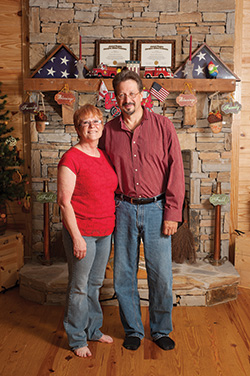
Faulkner retired from practice in 1990. His wife, Rose, passed away, and he has traveled the world doing mission work. He remarried an old friend, Diana, whose husband had passed away, and they are a loving couple who see the value in each other and the world around them. “She saved my life,” he said. “He’s a sweet, good man. He’s a prince,” she concluded.

As he looks around what is now 472 acres of Faulkner Farms, he appreciates the time spent building a farm, a business and a life there. Gazing out from the porch, where rocking chairs are the best seat in the house for enjoying the aesthetics, Faulkner chooses his words with an undisguised awe: “It’s God’s creation in its fullest.”

Key to the City

peanut-bill-sealesCommunity pays tribute to ‘Peanut’ Bill Seales

Story by Leigh Pritchett
Photography by Michael Callahan

Aug. 11, 2014, was a run-of-the-mill Monday for probably most people in St. Clair County.

But that was not the case for Bill Seales.

The man lovingly known as “Peanut Bill” had been summoned to the City Council meeting that was to take place that morning.

After the opening prayer and Pledge of Allegiance, Seales was called to the front of the Council chambers, where Mayor Joe Funderburg read a proclamation to “hereby honor a most gallant, courageous son.”

The proclamation calls Seales “a glowing example of determination” and “a model of courage for many Pell Citians.” It notes that he “has demonstrated a strength and desire to overcome many physical restrictions that did not prohibit his willingness and determination to be an independent, productive citizen. … (He) is, and shall always be a respected part of the Pell City family.”

The proclamation further declares Aug. 11, 2014, as “Bill Seales Day” in Pell City.

As Funderburg finished reading the proclamation, thunderous applause and a shout of “We love you, Bill!” erupted, quickly giving way to a standing ovation.

Then, Funderburg presented Seales with a golden key to the city.

Seales flashed his familiar, broad smile and there was another standing ovation.

Though speechless for a moment, Seales graciously responded, “Thank you. Thank you all.”

Cameras from two Birmingham television stations caught the action as an entourage of relatives, friends and well-wishers gathered around Seales outside the Council chambers. Tina Ailor, who is manager of Food Outlet and Seales’ special friend, held his hand.

“We were very honored that Pell City went to this length to recognize him,” said Alice Kennedy, Seales’ cousin.

Through the years, the citizens “were very excited to see Bill” whenever he was selling peanuts “and he was always welcomed with open arms,” Kennedy said.

Seales, who is 66, peddled peanuts around Pell City for nearly 50 years. He started at 17 years of age.

He became part of Pell City’s fabric as he logged thousands of miles on foot or on his three-wheeled cycle, selling his signature items about town. He also had a peanut stand, first at Food World until it permanently closed and then at Food Outlet.

When TV news anchor Mike Royer issued an open forum for anyone to speak, Kathy Phillips of Southside came from the back of the gathering and said she could be silent no longer.

She wiped tears from her eyes as she clipped on a microphone.

Phillips, a cousin, said she and Seales lived in the same house when she was a child.

“Bill has always been an inspiration to me and my family,” Phillips said. “He is one of my lifelong heroes.”

Daily, Seales would go five miles from where they lived on Florida Road into town, walk all around Pell City selling his peanuts and then return home. “That’s how he supported himself,” Phillips said.

Each day, he would bring Phillips a box of Cracker Jacks.

Seales’ independent spirit gave him determination to support himself and his wife, Karen (now deceased). Generously, he has given to his family, the community and the city, Phillips said.

The way Seales has lived is proof that anyone can do anything if the individual tries hard enough, regardless of the adversity he faces, Phillips said.

Shortly after Seales’ birth, a medical situation left him with physical challenges.

Yet, Seales resolved as a child not to allow the challenges to hold him back.

In an article in the February & March 2014 issue of Discover magazine, Seales says he decided early in life to work and support himself.

“I’m going to go forward, if it kills me,” Seales is quoted as saying. “I’ve always wanted to work. The Bible says, ‘Work.’ It never hurt me! … If I hadn’t been peddling peanuts and going and doing, I’d be dead. If you don’t get busy doing something, you won’t make it.”

Seales’ aunt, Geneva Bannister of Pell City, said she could not talk about him without crying. “I love him more than anybody else in the world.”

Funderburg described Seales as “one of the most popular citizens in Pell City” and “an example of courage to a lot of people.”

Because of Seales’ exemplary life, there had been much public support for him to be formally recognized, Funderburg explained. “I felt like (recognition) was something that was overdue.”

When the Council meeting adjourned that morning, the accolades did not end, however.

That afternoon, there was quite a shindig at Golden Living Center in Pell City, which is Seales’ current residence.

The music of Elvis, Bobby Darrin and Chubby Checker created such an upbeat atmosphere that Seales and Gerry Stallworth, the center’s director of rehabilitation, danced together.

After Jamie Lancaster, executive director of Golden Living Center, announced the honor the city had bestowed on Seales, the residents and staff members who filled the dining area applauded heartily.

When Seales got a glimpse of the peanut-shaped cake that awaited him and the bowls of peanuts surrounding it, his big, broad smile flashed once more.

Howard Hill

howard-hill-archerWorld’s Greatest Archer

Story by Jerry C. Smith
Photography by Wallace Bromberg Jr.
Submitted photos

Schoolboys often dream of marrying a favorite teacher, but Howard Hill of Shelby County actually pulled it off and, with her help and support, became a true legend in his own time, the World’s Greatest Archer.

Ashville’s Elizabeth Hodges had taught high school English in Wilsonville, Alabama, where Howard attended. Apparently their attraction was mutual, as he married her a few years later. They had a long, storybook life together, and now lie in final rest beside each other in Ashville’s New Cemetery.

Born in 1899 on a cotton plantation in Shelby County, Howard’s father made archery equipment for him and his four brothers and taught the boys how to use them. Howard grew up using weapons of all kinds, but his bow was always his favorite.

According to Craig Ekin in his book, Howard Hill, The Man And The Legend, Howard killed his first rabbit at age five and, in his excitement to show his folks the game he’d brought home for supper, left his bow in a cotton field. It took three days to find it.

Howard entered Auburn’s veterinary school at age 19, but did so well in sports that animal medicine was soon sidelined. A tall, powerful young man who excelled at anything athletic, he lettered in baseball, basketball and football, earning the nickname of Wild Cat.

Howard didn’t neglect his archery interests while at school, often slipping away on weekends for long target practice sessions which, according to Ekin, usually involved shooting some 700 to 800 arrows. Howard was so appreciative of his years at Auburn that he created a college archery program at the school after his retirement. Many of his artifacts are now displayed on campus.

In 1922, Howard moved into Southern League semi-pro baseball, often playing pro golf in off-season. It was about this time that he married Elizabeth, which Ekin describes as the best move Howard ever made. “Libba,” as he called her, realized from the start that archery was Howard’s destiny, and she encouraged him at every opportunity.

howard-hill-errol-flynnNiece Margaret Hodges McLain describes her Aunt Elizabeth as a perfect southern belle whose petite stature only made Uncle Howard seem that much larger. Mrs. McLain recalls the Hills visiting Ashville during breaks from movie work.

Howard often cooked meat entrees for family gatherings by the same method used on safari in Africa. He would dig a pit in the ground, build a big fire in it, then place meat wrapped in wet cheesecloth among the coals, cover it up, and let it cook all day, a process similar to Hawaii’s imu pits used at luaus.

While waiting for dinner, Howard would set up hay bales for targets, and demonstrated his many archery skills and trick shots. Margaret recalls seeing him shoot tossed dimes from the air, as well as helping the youngsters learn archery. Howard was well-respected in Elizabeth’s home town, where the local theater showed many of his films and short subjects.

Three years after their marriage, the Hills moved to Opa Locka, Florida, where Howard worked as a machinist at Hughes Tool Company, founded by the father of aviation pioneer Howard Hughes. While there, he read a book called The Witchery Of Archery, by Maurice Thompson, that inspired Howard to set forth on a path that would bring him worldwide fame and set new records, many of them unbroken to this day.

Howard made his first bow while working at Hughes. It wasn’t a very good one, but it signaled the start of a new career direction in archery. He continued making bows and arrows and working in the machine shop until 1932, when their California experience actually began.

Ekin relates that Howard was approached by famed newspaper editorial writer Arthur Brisbane, who wanted the Hills to move to his desert ranch near Barstow, California. Howard was to coach his sons in physical sports, while Elizabeth would tutor them in academics.

After Howard’s one-year contract ended on the Brisbane ranch, he went to Hollywood, intent on making a documentary film he had written, called The Last Wilderness. It emphasized hunting America’s big game rather than spending fortunes on jungle safaris.

The film was a quick success, made entirely outdoors without using a single studio set. Howard’s amazing archery skills were featured as he brought down every kind of large game animal in the American wild country. For the next year or so, he tirelessly promoted this movie by making personal appearances at each showing, dazzling his audiences during intermissions with incredible demonstrations of pinpoint accuracy.

Among Howard’s amazing feats were shooting dozens of arrows, rapid fire, into the exact center of a target from 45 feet, not only from a standing stance, but also lying on his back, side, belly, and from between his legs. His arrows often got damaged in these stunts because they were grouped so tightly there was scarcely room for them all in the target’s tiny center spot.

Howard also appealed physically to his audiences. At more than 6 feet tall, his muscular build and dashing good looks would have easily qualified him for leading roles in movies. He was immensely strong, able to pull any bow with ease. In fact, some of his bows were so powerful they took two men to string them unless he did it himself.

howard-hill-elizabethOne of Howard’s first major records was a long arrow flight of more than 391 yards, set in 1928 using a bow with a draw weight of 172 pounds that he built for the feat. He could keep seven arrows in the air at one time, and split a falling arrow with another.

Some favorite stunts were shooting at small objects in midair such as coins, rings, wasps, etc, shooting cigarettes out of some brave soul’s mouth, rolling a barrel down a hill and firing an arrow into its bunghole, splitting narrow sticks with arrows, shooting birds from high in the air, striking a match with one arrow, then extinguishing it with the next, shooting two arrows at once to burst two separate balloons, ricocheting arrows off wooden boards to hit a target, and breaking several balloons consecutively that had been blown up inside each other.

When asked how he hit moving targets so easily, Howard replied, “You have to train your eye to look at a single spot. If it’s a man, you look at a shirt button; if it’s a Coca Cola sign, you look at the center of an O. You have to look at infinite spots.”

Ekin remarks that when Howard was “looking at a spot,” his eye would appear as if it were literally going to pop right out of its socket. One thing that caught your writer’s notice in Hill documentaries was the way he laughed and joked with bystanders, but the minute his bow came into full draw, a dead-serious look would suddenly appear on his face. As soon as the arrow was loosed, however, he immediately became jovial again. It’s like he was two different people.

Howard’s hunting skills were legendary. He killed more than 2,000 large-game animals with his bow, including a rogue bull elephant. Taught to hunt by a Seminole Indian, he could track any kind of creature, often dispatching it with one arrow from a distance that would have challenged a gun hunter. Elizabeth often accompanied him on safaris and other big game hunts.

But despite his predatory skills, the man was not without a sense of humor. According to Ekin, on one western hunting trip he fooled his comrades into thinking they were eating veal brought from home when it was actually a wild burro he had shot the previous day and cooked in his signature fire pit.

Another time, Howard slipped a fox into a huge kettle of rabbit stew. On yet another trip, Howard and his companions were perturbed by a fellow hunter’s thunderous snoring, which continued despite all attempts to gently waken him. Finally, Howard simply rolled him, sleeping bag and all, into an icy creek.

His skills and uncanny accuracy soon caught the eye of Hollywood producers in 1937, when Warner Brothers was shooting The Adventures of Robin Hood. This high-dollar movie starred Basil Rathbone and Errol Flynn (for our younger readers, Flynn was sort of like today’s Kevin Costner, but far more macho). Facing a select group of some 50 accomplished archers who tested for the movie’s arrow shots, Howard easily topped them all in accuracy.

According to Ekin, director William Keighley told Howard, “You’re hired. Tell the head property man what equipment you want and report Monday to teach 22 actors and six principals how to shoot.”

Howard made many shots with the camera looking over his shoulder from behind, substituting himself for an actor who had just been filmed from the front while pulling the same bow. He performed many dangerous precision shots, such as knocking a war club from Basil Rathbone’s hand and shooting at running spear throwers.

By his own estimate, Howard “killed” 11 men while shooting Robin Hood. Some were shot while on galloping horses, falling to the ground with an arrow sticking out of their backs or chests. In reality, his blunted arrows had imbedded themselves into a thick block of balsa wood backed up by a steel plate, worn under their tunics. Had Howard’s aim been off by just a few inches, it could have been fatal.

Actors complained that a powerful bow he used to insure accuracy packed such an impact force that they didn’t have to fake falling from their horses; he literally knocked them off. He did all the bow shots for Errol Flynn, as well as numerous Indian battle scenes for movies like They Died With Their Boots On, Buffalo Bill, and several other films involving archery.

In a foreword to Howard’s book, Wild Adventure, Errol Flynn said, “When you meet Howard Hill you know darn well you’ve met him before, but you can’t remember where or when.“ The two became friends while on the Robin Hood set and spent many pleasant days afterward hunting, partying and fishing from Flynn’s yacht, the Sirocco, where he made one of the most incredible shots of his career.

He dropped a wooden barrel over the side, then threw the barrel’s cork after it. Quoting Ekin’s 1982 book: “While the boat and barrel were bobbing up and down on the waves, Howard proceeded to shoot the cork with an arrow that had a line attached to it. After retrieving the cork, he then shot the arrow again (with the cork still on the end of it), perfectly plugging the hole with the cork! This was made into a movie short, and can still be seen today.”

In 1940, Howard set up an archery shop in Hollywood, where he turned out some of the world’s finest bows and arrows. He made them for superstars like Gary Cooper, Roy Rogers, Iron Eyes Cody, Errol Flynn and Shirley Temple — complete with archery lessons.

By 1945, Howard had mostly given up on competitive shooting, since no one could beat him. In fact, he won 196 Field Archery tournaments in a row. His attention turned to hunting and exhibition work. He and Elizabeth built a fine, Southern-style colonial home in the middle of 10 acres in Pacoima, California, using marble imported from Sylacauga.

By the 1950s, Howard was making his own hunting movies, such as Tembo, released by RKO in 1952, which is still a film classic. In all, he produced 23 short subject films for Warner Brothers. He wrote several authoritative books on archery and big-game hunting, like Wild Adventure and Hunting The Hard Way, and has been featured in several other archery books.

In 1971, Howard was inducted into the Alabama Sports Hall of Fame. Birmingham sports editor Zipp Newman wrote, “Never has one man so completely dominated his sport as Howard Hill.”

His signature bows and arrows are still being manufactured and sold at Howard Hill Archery in Hamilton, Montana, operated by longtime friends Craig & Evie Ekin. For those interested in watching Howard’s demo films, Youtube offers more than a dozen, mostly filmed in the quaint, gender-patronizing style of the 1940-50s.

After an unparalleled lifetime of making bows, movies, and unbroken records, Howard and Elizabeth retired to a large, colonial style home they built in Vincent, which still stands today. Howard passed away in 1975 after a bout with cancer, and Elizabeth, always at his side, joined him in eternal peace less than a year later.

They now lie in repose in the Hodges’ family plot at the New Ashville Cemetery, just inside the fork of its service road. Their headstone is framed with two drawn bows, but nothing else at the site commemorates his world fame. Always the dedicated wife, Elizabeth’s marker does not show her birth date, only a final one, so as to not draw attention to the difference in their ages.

Margaret McLain describes Howard and Elizabeth’s life together as “a very long love story. She was his greatest fan.”

For a story on how Howard Hill touched the author’s life, read the print or digital version of Discover The Essence of St. Clair October & November 2014 edition.

C.A.S.P.I.R.

CASPIR-1Working to explain  the unexplainable

“From ghoulies and ghosties and
long-leggedy beasties
And things that go bump in the night
Good Lord, deliver us!”
— Traditional Scottish prayer

Story by Elaine Hobson Miller
Photography by Michael Callahan

A 4-year-old Moody boy sees a stranger in his house during the wee hours of the morning. A grown man hears footsteps from above when he’s in the basement of his Pell City business and noises from below when he’s upstairs alone.

Who do you call when you think you’ve encountered visitors from the spirit world? Priest? Psychiatrist? Ghost Hunters? How about the St. Clair County-based Central Alabama Society for Paranormal Investigation and Research (C.A.S.P.I.R.)?

“The Moody boy’s mother called me at 3 a.m. in a panic,” says Frank Lee, former Army National Guard military logistics technician and the founder and lead investigator for C.A.S.P.I.R. “The boy’s sighting wasn’t the only paranormal activity going on at their house. Cabinet doors were opening, they were hearing voices from empty rooms, and they saw a little girl.”

Lee didn’t rush over in the middle of the night. “They were Christians, so I worked with them through some prayers and scriptures, and things settled down.” When he did investigate, he found quite a lot of residual and intelligent activity. “A lot of paranormal activity that people encounter is residual energy,” Lee continues. “The popular explanation of this is the Stone Tape Theory, which says that certain materials like stone can hold energies, like an emotional or psychic imprint, whether happy, sad or whatever. A perfect example is churches, which tend to be one of the most reported haunted places we’ve encountered. Those are not evil hauntings, but emotional imprints.”

Intelligent activity, Lee says, is where the spirit answers the questions that people proffer. “In the case of the Moody home, they were sitting on the perfect storm, because they lived next door to a church, where emotions often run high.”

As for the Pell City businessman who hears footsteps, the investigation continues. On a warm Friday night in August, the C.A.S.P.I.R. team set up its instruments on the main floor of his business. The shop is in an old, one-story house, with a main level used as offices and a basement used for storage. With its piles of boxes, stud framing for rooms that no longer exist, and dark corners, the basement has the atmosphere of a Hammer Studios horror flick. The man has seen shadows and odd lights on the main level, and one day, a mist abruptly formed in an office, then just as abruptly disappeared. Most of these incidents have occurred during broad daylight.

A motley crew consisting of two blue-jeaned, 30-something men, two teenagers, a pink-haired and a punk-haired woman and a third with long blonde hair, the C.A.S.P.I.R. team looks like it would be more at home in a hard-rock band than at a paranormal investigation. Lee opened a cache of scientific and quasi-scientific instruments that included a motion-activated infrared camera, a camcorder, night-vision and infrared lights, a laser-grid projector, and something called an SB-7, or Spirit Box, that scans radio frequencies every quarter of a second. The SB-7 generates white noise, which investigators believe spirits can use to communicate with this world.

They also set out a thermobarometer to measure atmospheric conditions, because they believe that when ghosts are trying to manifest themselves, they draw energy that can create temperature fluctuations. Their EMF meter, normally used to find leaks in electrical wiring, measures any electro-magnetic field generated by spirits that might be present.

The Law of Conservation of Energy states: “Energy cannot be created or destroyed, it can only be changed from one form to another.” That would explain the presence of spirits in our world, says Lee. It also explains the theory behind the use of most of these instruments. The cameras sometimes pick up images that can’t be seen by the naked eye and simple voice recorders pick up electronic voice phenomena (EVP) from frequencies outside the range of the human ear.

Lee and his team came prepared with more than instruments, though. They had researched the building’s history and the geological properties of the land on which it sits. When they left, they would spend many hours poring over the data they had gathered, examining the photos closely and listening with practiced ears for any hint of other-worldly sounds.

“There are many aspects to properly handling a paranormal case, and the investigation is just the diagnostic part,” says Lee, an admitted science geek who sees himself as a serious researcher helping people rather than as a ghost hunter. “We follow up after the investigation, too, because the person involved may need counseling or to get back into church.”

This was Lee’s first trip to the Pell City business, but Donald Davis had been there several times. He says the house is inhabited by the spirit of an elderly woman named Anna, the former owner. He says her husband died in the basement, and that same man may have shot Anna’s brother to death in the back yard.

On previous trips, Donald had captured small moans, a voice saying, “Hey, I’m here,” and one complete sentence, “Do you want to go?” The latter, he says, was in response to his statement that if Anna didn’t want the team present, she should say so. He keeps going back, hoping to hear more.

Three other team members, Pink Floyd (real name), Dee Harper and Christine Grace, were present because they are mediums. Sometimes, Pink sees images or hears voices of entities inside her head, which caused her parents to send her to a psychiatrist when she was 5 years old. “I get memories of entities, like snapshots or watching a short film,” Pink says. “Some things trigger it, like certain smells that no one else can smell.”

Harper says she has always been able to see, hear and talk to spirits. “I saw a ‘real’ person in my mom’s closet as a child, but I was told it was my imagination. So I would block them (the spirit images) out. Last year, someone came into my life who helped me not to fear them, so now I tune in.”

Grace says names and numbers sometimes come to her, and she can see things others in the group can’t, like shadows, footprints or a face. “I can feel their touches, too,” she says.

While the team was setting up, their flashlight and camera batteries kept going dead, despite replenishing them with new ones. Lee had to run the instruments straight from the AC adapters, which can be common in haunted locations, he says.

Once the instruments were in place, the lights went off, and the chatter slowly faded as the team watched and listened. Donald turned on a digital recorder. The group eyed the green net light pattern on the wall, made by the laser grid projector. Street noises filtered in from outside and appliances hummed in the kitchen.

“Anna, are you still here?” Donald asked. He paused briefly, waiting for a response. “Is your husband here?” (pause) “Your brother?” (pause) “Can you tell us his name?” (pause) “Do you want us here?”

Suddenly, the laser lights flickered and dimmed. “Is that you tampering with our laser?” Lee asked. The grid stopped moving and came back to full brightness. “That was quite phenomenal, because we rarely see tampering with equipment to that level,” Lee says.

“Anna, do you know that you’ve passed away?” Donald continued. “Can you tell us how?” (pause) “Pink is here with us, do you have something to say to her?” (pause) “You said her name one time.”

Something touched Christine on the leg, causing her to jump. “I don’t know why they (spirits) like to touch me,” she says.

Later in the evening, after a curious reporter and skeptical photographer left, Brittany, Lee’s 13-year-old daughter, complained of a burning sensation on her back during an EVP session in the front office. When Lee checked her, he saw a large scratch mark that couldn’t be explained.

“She was sitting right in front of us when it happened, and there was nothing she could have leaned against in the chair to scratch her,” he says. Moments later, Brittany heard her name coming from the Echo Box, an instrument that takes random audio samples, then echoes and amplifies them, thus enabling the spirits to form words.

Other manifestations went on while the team was there, according to Lee. With everyone gathered in the same room, footsteps echoed from other parts of the house that were unoccupied. They felt knocking on the floor beneath them, as if someone were in the basement trying to make contact. Lee heard his name and Pink’s name from the Echo Box.

“When we asked, ‘How did you die?’ we heard a female voice come through the speaker that said, ‘Cancer,’” Lee claims. “We asked, ‘Who is in the basement?’ and the same female voice said, ‘My brother.’ We asked, ‘Is your brother angry?’ and received a ‘yes’ response over the system. When we asked, ‘How did your brother die?’ we received a response that said, ‘He was shot,’ which is historically accurate. We asked for names of the brother and others related to the case and the correct names came through as well. It was very compelling!”

This isn’t the scariest place Lee has encountered, however. That dubious distinction goes to a 17th-century Virginia home with a very dark past. “Me and three other investigators from a previous team were scratched and shoved there by something we couldn’t see,” he says. “We also had a case a few months ago here in Alabama where we saw a 25-pound end table thrown across the room. The people who live there had been clawed, pushed down the steps and held down and nearly suffocated. That type of activity is rare, but if you do encounter that degree of negativity and violence, you could be dealing with something demonic.”

Like the Pell City business, the end-table case remains open. “We’re working with a demonologist and the Catholic church to arrange a house blessing there,” Lee says. “If necessary, we’ll escalate the case to a full exorcism, which is also rare.”

Some investigations reveal normal causes to what people perceive as paranormal. While with a former team, Lee investigated a woman in Michigan who was having headaches, hallucinations and sleepless nights. The team found black mold and faulty electrical wiring in her rental house. When the landlord fixed those problems, the woman’s life returned to normal.

“There was no paranormal activity involved,” Lee says.

Contrary to popular opinion, paranormal activity doesn’t heighten around Halloween, according to Davis. “We see more activity in winter than summer, though, because the air is so dry and there is more static electricity,” he says. “Spirits use our energy and the energy that’s in the air to communicate with us.”

He believes that when people die tragically, they don’t always “depart” this world. “Some don’t know they’re dead and will deny it when asked,” he says.

So, where are these spirits, and why haven’t they passed on to heaven, hell or whatever Great Beyond awaits them?

“That’s what we’re trying to find out,” he says.