
200 years and counting
Story by Joe Whitten
Photos by Wallace Bromberg Jr.
Submitted Photos
Eden. What a lovely name for a town. It calls to mind the biblical Garden of Eden with visions of fertile soil, lush gardens, exotic flowers and green groves of sheltering trees.
One wonders if, in the first quarter of the 19th Century, the settlers to this area saw it like that. Probably not, for trees must be felled, new ground cleared and cultivated, houses and barns built, but it was a place of promise.
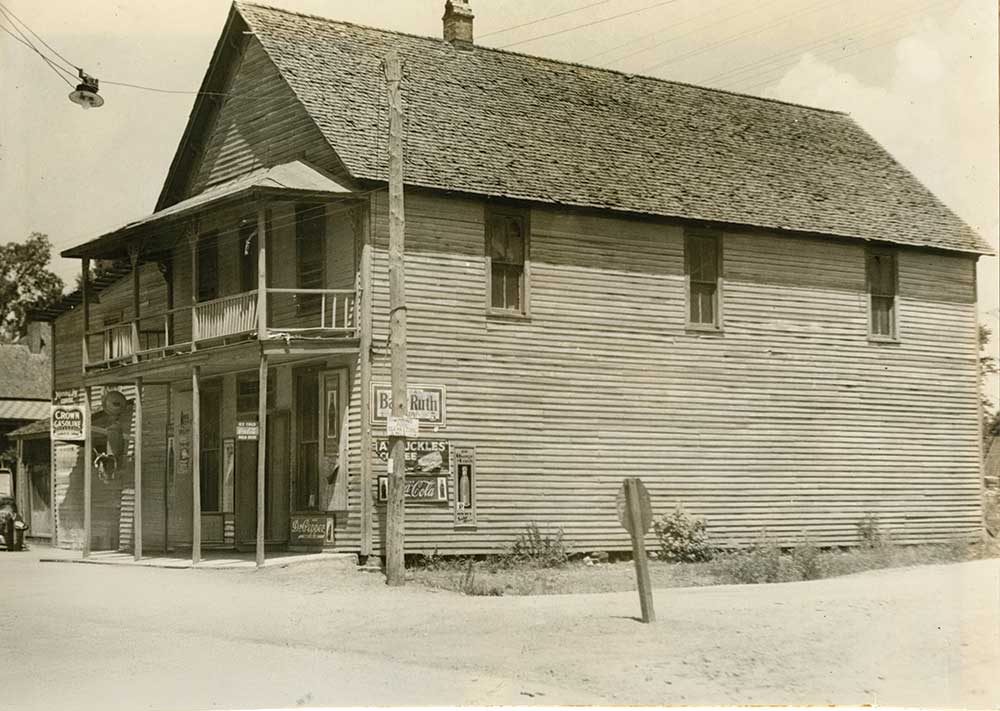
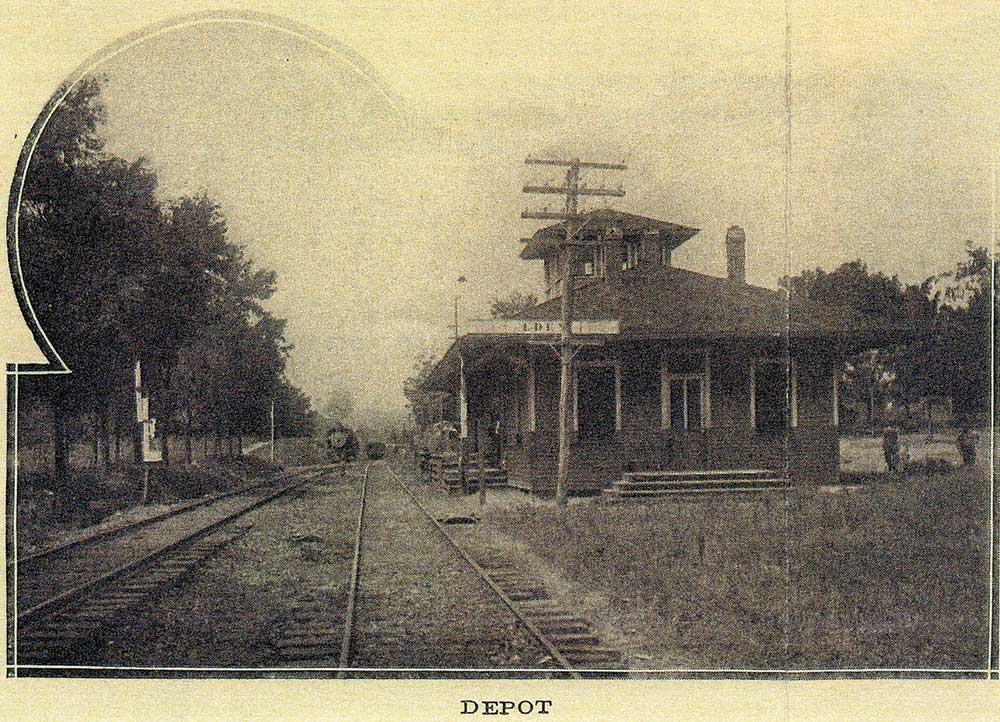
It’s uncertain when settlers first began migrating to today’s Eden, but family by family, a community formed. As the 19th Century progressed, businessmen opened stores and shops, and by 1900, it had become the town of Eden.
An April 4, 1906, Pell City Times article records that “…Eden…first bore the name of ‘Manchester,’ but there being another Manchester in the state, it was changed to Eden.”
Personal help with knowing the history towns and churches. In June 1970, Lailah Harris, in a letter to Mrs. E. N. Vandegrift of Oneonta, AL, wrote that although Eden eventually became a part of Pell City, it was a town “before the Civil War.” She also wrote that family tradition says Eden “…was so named by the Inzer family who came from Georgia to Alabama.” The Inzer family’s English ancestral roots were in Edensor, England, implying they left off “sor” and kept Eden as the town’s name. The online link letsgopeakdistrict.co.uk/listing/edensor states that “Edensor” is pronounced “Enzer.”
Mrs. Harris’ great grandfather, Henry Inzer, and his siblings, LaFayette, Mark, Jim, John and Cathrine all settled in St. Clair County. “They lived on Wolf Creek and made their living mostly from the land, although my great grandfather Henry was a preacher, blacksmith and worker in wood and metal.” He served as New Hope’s pastor in 1877.
New Hope Baptist Established
Early settlers needed fellowship, and churches fulfilled that need. By 1824, enough families had settled in today’s Eden to organize New Hope Baptist Church as the only Baptist church in St. Clair County’s Coosa Valley.
It was the second documented Baptist church established in the county. Mt. Zion Baptist (now Springville First Baptist) was established earlier in 1817. In the 1820s, to go from Eden over Bald Rock Mountain to worship at Big Springs (Springville) would have been difficult and dangerous.
New Hope is a grand name for a church in a new land, for it expresses the hope of God’s blessings in the years to come. The organizational date of 1824 comes from the 1853 Coosa River Baptist Association which met at Spring Creek Baptist Church in Shelby County. That year for the first time, the association asked for member churches to record the year their church was established, and New Hope’s date was listed 1824.
Hosea Holcomb, in his 1840 History of the Rise and Progress of Baptists in Alabama, gives some early history of the church: “New Hope in St. Clair County was formerly in Mount Zion Association, but united with the Coosa River (Association) in 1834. They have always, until recently, been a small band. Their number has increased considerably … Elder William McCain labors with them in word and in doctrine.”
Rev. William McCain was the first recorded pastor of New Hope, and we know much about him from his obituary written by Samuel Henderson and published in the March 11, 1883, issue of The Alabama Baptist.
Here are highlights: “Among all the ministers who have lived in the bounds of the old Coosa River Association … none have surpassed William McCain in effectiveness of ministerial labors. With scarcely education enough to read English correctly, he achieved a position in his calling that opened every pulpit in the region. … Learned and unlearned, lawyers, doctors, and merchants, mechanics and farmers, rich and poor, all flocked to hear him. …Although he never pronounced a grammatical sentence in his life, knowing it to be such, yet behind his broken English and awkward phrases, there was an unction and power that lifted his hearers above all his imperfections of style and delivery. …His thoughts would glow with a brilliancy and come with a power … entrancing and overpowering. He would sway vast congregations like fields of waving grain in a brisk wind … The salvation of souls was his passion of his life, and to this he consecrated his whole life.”
Houses of worship
For church building locations, oral history provides clues.
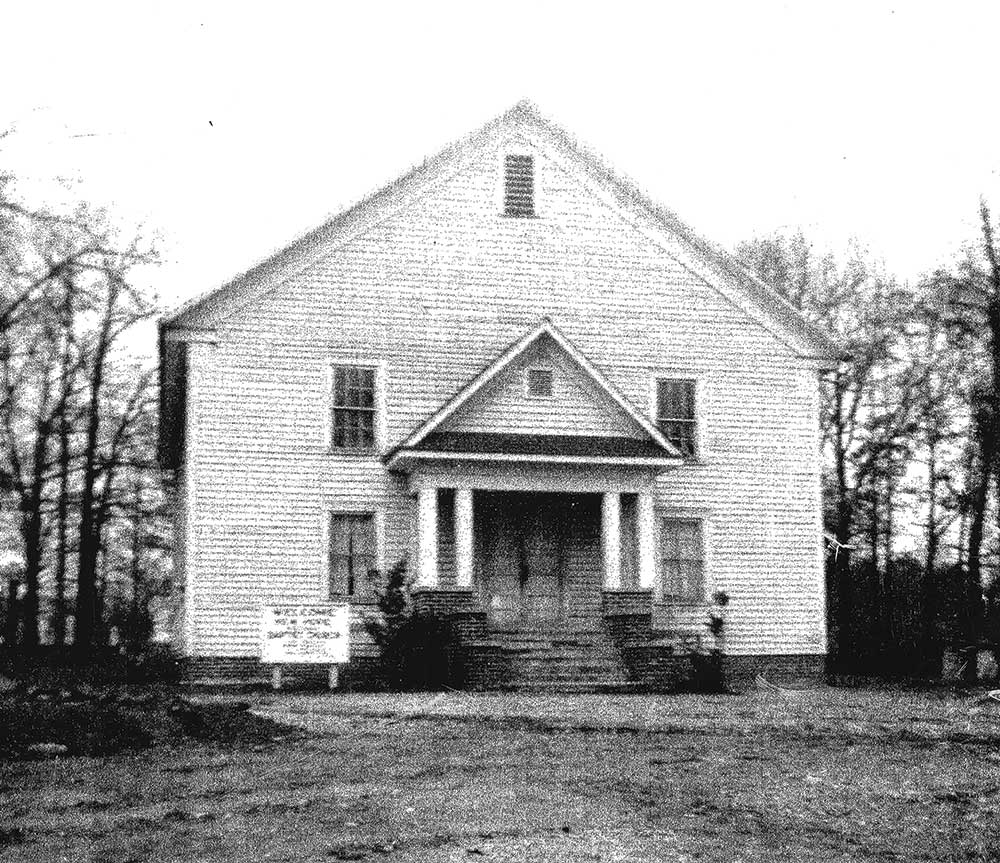
In his History of the New Hope Baptist Church, 1824-1972, Curtis Rush quoted information about the first building provided by Pauline Baker from an April 14, 1964, letter written by Rev. B.W. Inzer. “The oldest thing I ever heard about a church at Eden, Uncle Fealy Stewart told me about 1935. He said, ‘I used to walk down here when I was 7 years old and older with my Grandma Mullins. She told me about the only church anywhere in this area was about where Jim Stevens built. It was (of) logs, and split logs and boards made the seats, windows and doors.” The exact location of this building remains uncertain.
In the same letter, B.W. Inzer wrote about the second building, relating what Andrew Ginn told him about it. “He (Ginn) said when he was a small boy, he attended the First Baptist Church, which was later called New Hope, as we know it. It was at the foot of the mountain in front of the Jim Kilgroe place.
He said he would never forget seeing all the men stand their shotguns up in the corners of the church. They brought them for two reasons: There had been rowdy fellows molesting the services, and that must stop. Then after the services on Saturday, they would go out and kill deer which they would barbecue, and all had a feast.”
For Rush’s history, New Hope’s oldest member at that time, C.S. Alverson, wrote down his recollections of the third building. “I remember attending New Hope Baptist Church when I was just a boy (1880s). The building was on the site where the pastorium is now. (Today, the church gym is in that location.) There was one road called ‘Mud Street’ now Wolf Creek Road and the church building faced this road … The windows had no glass panes but only wooden board shutters and board doors. The floor was dirt.”
The fourth church building was constructed in 1888 and had two front doors and a back door. It was well-built, for a tornado in April 1929 twisted and damaged the church, but it was so sturdy that it did not collapse and, as recorded by Rush, “Miraculously, the building was straightened up and put back in good repair.” This was completed by the men of the church under the guidance of “Mr. Coach, a carpenter from Pell City.”
In 1937, the church gave the 1888 structure “a complete face-lifting.” They added a balcony with two Sunday school rooms, and on the first floor, a vestibule and two more Sunday school rooms. This fine old building served New Hope until the church erected a new brick sanctuary in 1949.
Memories of the 1888 building are found in the Oct. 17, 1996, St. Clair News-Aegis article by Ann Boone. Olivia Vick, then 85 years old, told Boone how she had attended New Hope for 81 years. “We went to church in the morning and had Sunday school in the afternoon … There were two front doors, one for the men and one for the women, and no one ever went through the other’s door.”
Recalling the 1929 tornado, Mrs. Vick said, “My mother always took flowers every Sunday, and when we looked in the church (after the tornado), we saw that her flowers and the vase they were in on the Communion Table were still there and unharmed.”
Mrs. Vick’s favorite New Hope memory was her salvation. “Newt Butterworth explained the plan of salvation to me … This was when I was 16, and we went down to Barber’s Creek (for my baptizing). I wore a light blue dress. It was August, so the water wasn’t cold. Afterwards we went up and had church.”
Newton “Newt” Butterworth’s death remains an intriguing part of New Hope’s history, as recorded in his obituary published July 25, 1935, in The Pell City News. “N. A. Butterworth Dies while Testifying. Mr. N. A. Butterworth died suddenly in the New Hope Baptist Church at Eden yesterday (Wednesday) while testifying in a revival service. Mr. Butterworth was 77 years old and was one of the oldest members of that church of which he was also a deacon. His last words were “I never felt happier in my life than I do this morning” and fell to the floor. … Burial will be at Mt. Carmel Cemetery.”
Included in the New Hope Baptist file at the Ashville Museum and Archives is a photocopied article titled, Pioneer Passes while Talking for the Lord, by Eloise Bowman. It noted that Butterworth prayed many times, “…‘Lord, let me die in the harness.’ (i.e. active until the moment of death) … (T)he Lord answered his prayer … when with his Bible under his arm, God called him home. He fell dead in the church.”
For a man to die in front of a congregation during a service would be a frightening object lesson that life is uncertain, and death is sure.
Revival week
Weeklong revivals were standard events in Baptist churches until about the 1970s or ’80s, when weekend and four-day revivals came into vogue. These yearly revivals usually resulted in conversions, baptisms and additions to church membership rolls.
In Rush’s history, he records that in 1864 during the Civil War, there were 41 baptisms and in 1866, a year after the war ended, there were 49 baptisms. These numbers are above average, for national conflicts and tragedies often draw people toward God and the church.
Churches ran revival announcements in local papers such as the one for New Hope in the April 7, 1955, St. Clair News-Aegis, “The revival at the New Hope Baptist Church will begin April 10th and continue through April 17th. Rev. Douglas Dexter will bring inspiring messages.” The announcement lists the titles of nine sermons, including the concluding one, Alibies, Lullabyes [sic], and Bye-byes.
Often in the 1950s and ‘60s, a traveling evangelist would hold a citywide tent revival with local churches promoting the event. Curtis Rush’s daughter, Margaret Rush, recalls one conducted by Evangelist C.J. Daniels from Orlando, Florida.
A May 16, 1965, Anniston Star article, Crusade Is Slated, reported about Daniels’ tent: “A unique poleless canvass cathedral with a seating capacity of 2,000 and auxiliary seating for another 2,000 has been erected on a lot just north of downtown Pell City on Highway 231 across from the dairy Queen … Dr. Daniels will be preaching with music directed by Dr. Lowell Leistner with John Roe at the organ.”
Margaret Rush recently recalled that Daniel’s promotional man, who came ahead to get things organized drove “…a Karmann Ghia car, and I had never seen one before. I thought it was very special.”
Daniels didn’t leave attendance to chance but promoted his revival wherever he went. Margaret remembered, “He had a plane – just a small plane – and he would take people up and show them the county from the plane. I went up with him… That was the first time that I’d flown in a plane.”
Daniels’ revivals were attended by throngs of worshipers as well as sight-seekers.
Homecoming and All-Day Singing.
Two other annual events were also observed on the same Sunday at New Hope in days gone by – the All-day Singing and Homecoming. No record exists stating when this second Sunday June event began. The June 7, 1945, announcement in The Pell City News reported, “Even the oldest of the old-timers are unable to say when the Eden Annual Homecoming started – 50 or 75 years ago, perhaps longer, most of them guess. No one seems to know, and no one cares much as long as the ‘Second Sunday’ celebration continues.”
In 1920, The Birmingham News reported the event in their June 14 edition. “Many citizens of Birmingham, Bessemer, Anniston, and other points who were formerly residents of St. Clair County attended the annual singing and homecoming at the Baptist church at Eden Sunday. Fully 2,000 persons were on hand. James Garrett, Circuit Court Clerk of St. Clair County, presided. Austen Hazelwood of Eden, one of Alabama’s sacred songwriters and singers, assisted in directing the music.
“Mrs. Lloyd Garrett, James Ragland of Pell City and Marvin Truitt of Anniston were among the leaders in the music. Rev. R.F. Funderberg of Cropwell, pastor of the church, was in charge of the devotional services. The affair this year proved one of the most enthusiastic ever held at Eden.”
The 1954 New Hope singing-homecoming announcement in the June 10 issue of St. Clair Times, reported that on Sunday, June 13, “…The Bama Boys will be guest singers. Also, local groups will be featured … Lunch will be served at noon. All attending are urged to bring a well-filled basket (of food).
In the May 25, 1951, issue of the Southern Aegis, Editor Edmund Blair reminisced about Homecoming at New Hope. “They come from far and near and from various states for this event.” He noted that folk would come in automobiles, but in the past “…mules and horses hitched to wagons, buggies, and in some cases, shiny black surreys were the chief method of transportation.”
These events were church and community reunions and were anticipated with excitement because attendees would see friends they had not visited with since last year’s homecoming and singing.
The folk found spiritual food in the church building and baskets of food at lunch with “dinner on the grounds” of the church. So, newspaper announcements encouraged women to bring “well-filled baskets of food.”
A June 7, 1945, announcement in The Pell City News mentioned the gas and food rationing of World War II. “Because of the transportation limitations, the crowd won’t likely be as big as in pre-war years, but every friend of Eden will make every effort to be present, and many have no doubt been saving their gas rations for this special day. Likewise, because of food rationing, many items that have in the past graced the bords at the dinner hour won’t be served, but there will be plenty to eat.”
Progressing through the years.
Population growth in the Eden-Pell City area necessitated additional construction. A new worship center was completed in 1997, and a Family Life Center and Gym in 2007. The 1949 structure serves as the Youth Room and the Senior Adult Sunday school room. As New Hope enters the beginning of its third century, plans have been laid for further expansion of the church campus.
200th Celebration
On Sunday, October 20, 2024, New Hope celebrated its 200th birthday. As the 10 o’clock hour approached, a sense of excitement permeated the sanctuary. Church members greeted one another and made sure non-member attendees felt welcomed as well. No one was excluded.
Proclamations from Pell City mayor and council were read, and a video proclamation by Dr. Lance from the Alabama Baptist Convention were presented prior to the beginning of the worship service.
After Scripture reading of Psalm 100, the Celebration Choir sang the Call to Worship hymn, Great is Thy Faithfulness, directed by Joseph Smith with Hanna Stough at the piano. Especially effective was Dr. Michael Averett’s trumpet obbligato, which underscored the hymn’s proclamation of God’s faithfulness. The concluding crescendo of choir, piano and trumpet brought approving applause and exclamations of praise.
After Greg Davis, chairman of the Bicentennial Committee, welcomed the congregation, Joseph Smith led the packed house in singing How Great Thou Art and To God Be the Glory. The singing of those well-loved hymns “raised the roof,” as old-timers would describe it. The male quartet with Greg “Skeet” Davis, Joseph Smith, Matthew Pope and Brandon Haynes harmonized the old hymn Brethren, We Have Met to Worship. Their rendition resulted in applause and vocal affirmation throughout the sanctuary.
After the congregation sang three praise and worship songs, St. Clair County Baptist Association Missionary Dr. Danny Courson gave greetings from the association member churches before reading from Joshua 4:4-9, the Scripture for transitional pastor Dr. Bob Weber’s sermon, Memories, Markers, Mission.
The Joshua passage recounts the Israelites crossing the Jordan River on dry land as they enter the Promised Land, and God instructing them to gather stones and build a memorial of that event. Dr. Weber spoke of the importance of memories and memorials in the lives of Christians, and that they should honor God’s blessings in their lives, the most important one being when they came to a saving knowledge of Christ. These blessings from God should be recounted to children and grandchildren and memorialized by parents and grandparents.
At this point in the service, 12 families brought stones to make a symbolic memorial to what God has accomplished through New Hope Baptist. Taylor Funderburg and children, Everett, Hadley and Findley, representing a first-generation family, laid the first stone. Husband Tyler missed because of his work. The Pope family of four generations laid the 12th stone. They are, from oldest to youngest, Gilbert Stuart, John Pope, Matthew Pope, and Glover Pope. This element of the bicentennial worship was modeled after the memorial stones recorded in Joshua 4:20-24. This memorial will be placed on the church campus in days to come.
The service continued with Dr. Weber admonishing the congregation that the church doesn’t rest on memories and memorials, for the membership is involved in New Hope’s stated mission – “To Worship Christ, Serve Others, Share the Gospel, and Disciple Believers.”
The service closed with the singing of Victory in Jesus, joyfully accompanied by piano and trumpet. Afterward, Johnny Gregg prayed the benediction and thanks before “dinner on the grounds” served in the FLC.
The history of a church is a history of God’s providence over a people whom He brings together to accomplish His purpose in a community.
As members die or move their membership for various reasons, God brings others to take their places, and the church continues to progress.
For a church to continue for 200 years is evidence of God’s blessings on those who organized New Hope in 1824. And although To God Be the Glory was not composed until 1872, every generation before and after would affirm its words:
Praise the Lord, Praise the Lord
Let the earth hear His voice,
Praise the Lord, praise the Lord,
Let the people rejoice
Oh, come to the Father through Jesus the Son,
And give Him the glory, great things He has done.
And by God’s gracious providence, the church will sing that hymn 100 years from now when they celebrate their tricentennial.
To God be the glory, for indeed great things He has done at Eden New Hope Baptist Church.