Pell City boom continues

Story by Paul South
Photos by staff and contributed

From structures where souls are nourished, to buildings helping first responders and physicians help and heal the body, Pell City is in the midst of a construction boom.

New police and fire stations, a new medical clinic and a new Sunday school building at the 123-year-old First Baptist Church of Pell City are only part of the story. The Goodgame Company construction trailers have popped up all over town.

Jason Goodgame, president of Goodgame Company, said the company, as well as the city, “has a lot going on.”

For example, Goodgame built a new state-of-the-art facility for the Pell City Police Department and as of mid-June, a new Pell City Fire Department Station was near completion.
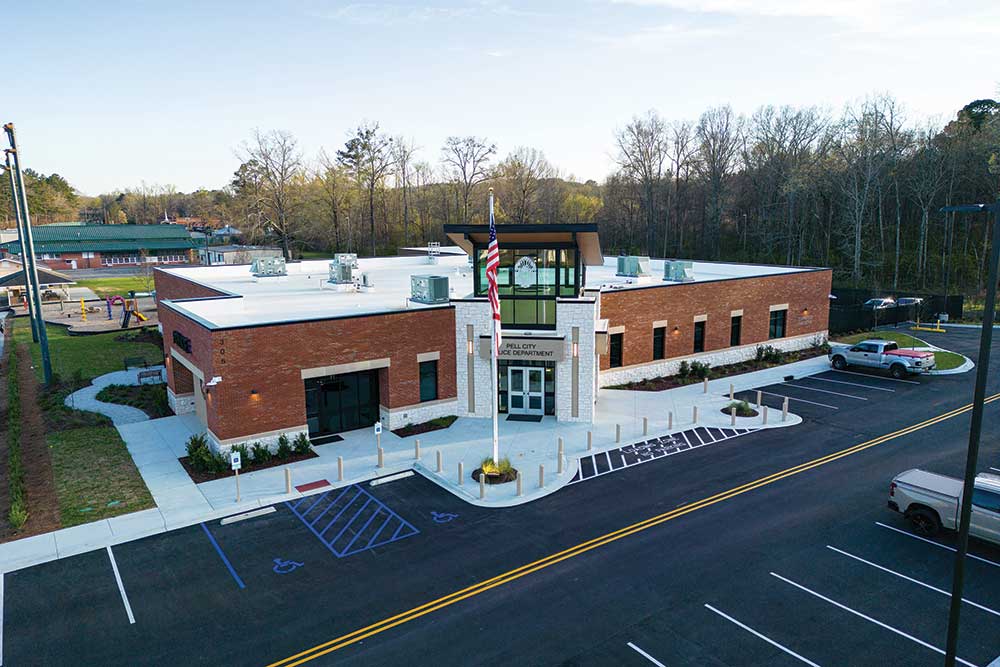
Pell City’s new Police Department

“On top of that, we completed the addition to Pell City First Baptist Church. We’re in the process of adding on to Royal Foods following the fire damage, and we have a fire-protection project underway at Benjamin Moore,” Goodgame said. “We finished large expansions at Ford Meter Box, Allied Minerals, Douglas Rulmeca and Town and Country Ford in 2025. Those projects closed out a cycle where Goodgame Company, Inc. had the best three years in the company’s history.”

Ford Meter Box, headquartered in Wabash, Indiana, manufactures waterworks products and has done so since 1898. Allied Minerals purchased Riverside Refractories in 2017 and later expanded into a 300,000-square-foot footprint on Truss Ferry Road. Douglas Manufacturing joined forces with Rulmeca to provide conveyor components across North America.

Goodgame Company also built the new Pell City location of Helms Healthcare, bringing Dr. Ronald “Rock” Helms back to his hometown.

Goodgame put the mushrooming construction activity in perspective. “Just remember, construction is always in arrears, so when we sell a job and build out the job, it can be 12 months between our first meeting with a customer and when we break ground. Then, those projects are usually between eight and 12 months,” he said. “So you have to keep a healthy backlog, because you are always trying to churn the next job.”

While Goodgame Company’s backlog is not as strong as in years past, Goodgame said there is still a boom happening in Pell City.

“Absolutely,” Goodgame said. “There are other developments going on that we’re not involved in, and that shows the activity is broader than just our projects.”

Those new businesses include a development with Ulta and Hobby Lobby, as well as restaurants including Olive Garden, Outback Steakhouse and others. There is also a new dental practice and other space for retail opportunities to expand.

“There is a boom,” Goodgame said. “There’s no question. Pell City is growing, and people are seeing an opportunity to come here and do business, especially in retail, which has always been a difficult area for Pell City. Harbor Freight moving into an existing retail space is a good example. That kind of activity adds sales and ad valorem tax revenue, and the city’s leadership in promoting controlled, positive growth has helped get us to where we are.”

At First Baptist, growth decades in the making

There was a time, with two Sunday services and two Sunday schools, Dr. John Thweatt said, when his congregation felt like two churches.

The COVID-19 pandemic changed all that.
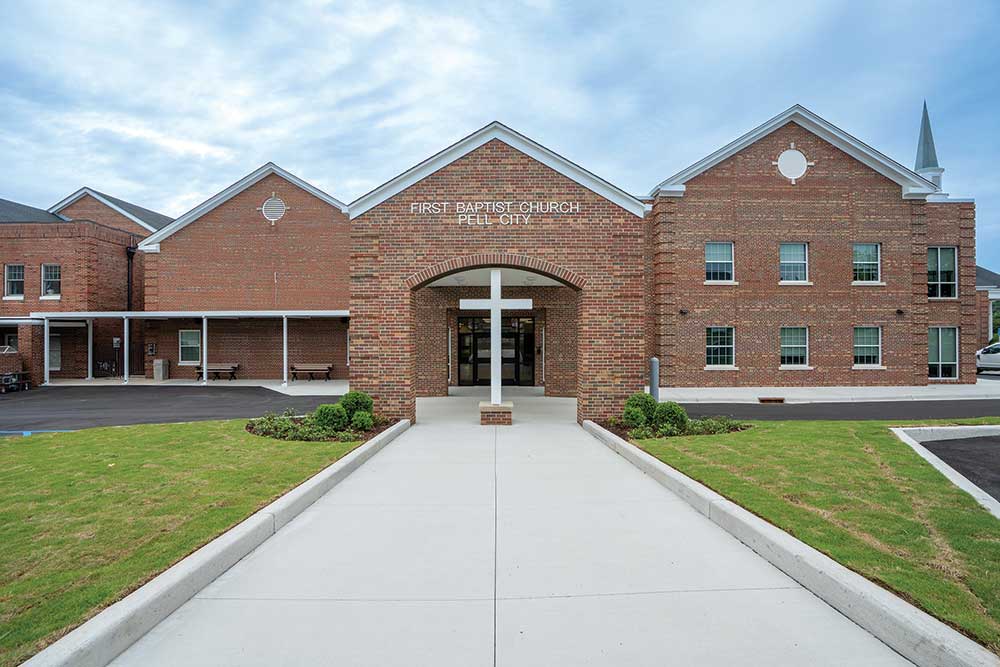
New addition to First Baptist Church of Pell City

“It brought us back together and let us go back to one Sunday school between the two services. It didn’t feel like two churches anymore. It was one church. People could go to one Sunday school and choose which service they wanted to go to – the early traditional or later contemporary service,” he said.

He added, “It was so positive, I and the leadership decided that we needed to do whatever we could to keep it to one Sunday school.”

The answer? A new addition.

“At one time we looked at relocation, but it was out of our price range. It just didn’t work.”

The church opted to stay on the corner it called home. And it began to explore things it needed – an elevator in the sanctuary building, new restrooms and classroom spaces. The church settled on a connecting building between the sanctuary and the rest of campus. A welcome center with a covered entrance was also created.

“We put a cross out in front of the new building,” Thweatt said. “We just tell everybody to meet us at the cross.”

He added, “Now we can put smaller classes upstairs, older classes upstairs because of the elevator. It opened up a lot of different variety for us.”

The new building is just under 10,000 square feet. The total investment was just over $4 million.

But beyond square feet and dollars and cents, the church asked key questions. “Who are we not reaching? How are we not helping people? We’ve got people who can’t get around. We still have limitations in our sanctuary, but these are things we’re still trying to address so that we can minister to everybody in our community.”

The church is growing, getting back to pre-COVID numbers thanks to the one Sunday school, Thweatt said. Both worship services are full. New people are being reached and others baptized. That’s different from many Southern Baptist churches that have either plateaued or are declining in membership.

“It’s made us multigenerational again,” Thweatt said.

Thweatt has pastored First Baptist for a quarter century. What does the new addition mean to the life of the church?

“You’d have to see it, but when I walk out of my office, it goes right into the new welcome center and down the long hallway on the first floor,” Thweatt said. “I’m still in shock. It’s brought us back to something people are proud of. People say they love it.

“You see people talking and fellowshipping,” he added. “It’s brought us back together and prepared us so we can keep growing.”

Facilities to be proud of

Pell City Manager Tim Kurzejeski was preparing for an open house at the new 16,000-square-foot police department completed earlier this year. It includes command and emergency operations centers, evidence storage, a workout facility and other space to create what Kurzejeski called, “an all-encompassing police department” for the city.

“A state-of-the-art stand-alone police department,” he said. “It’s a workable space where different parts of the police department have their own working, usable area. As the police department grew, it was pretty tight quarters, and it was tough for those guys to do their job.”

The new department also includes cutting-edge technology.

“It’s going to make their job a lot easier,” Kurzejeski said. “They are able to process (crime) scenes and solve crimes more efficiently. That’s better for the public.”

A new fire station is under construction to replace the facility at the Civic Center. As with the police station, the fire department had outgrown the Civic Center space.

Kurzejeski served as the city’s fire chief before being named city manager.

“We are completing the project,” he said. “It’s about a two-to-three-year project from the concept to completion. (The Civic Center station) was the oldest fire station in the city, built in the early 1980s. Kind of like with the police department, with the growth of the city, the fire department had outgrown that space, with apparatus and assigned personnel.

“I feel like with the (police department) and the new fire station, these two projects are buildings that not only the departments can be proud of, but that the city as a whole can be proud of,” he said.

The new emergency services buildings are built for the long haul.

“What people need to understand is that with these two projects (police and fire stations), they were built and designed for long-term use,” Kurzejeski said. “You’re talking about a fire station they had been in nearly 50 years. We truly took our team and brainstormed and made sure these new buildings were going to be functional and efficient for a long time. Sixty years from now, this (new fire station) will still be the fire station. So, you’ve got to do it right.”

For Pell City’s firefighters, the new station is more than a workplace.

“They are there for 24 hours at a time,” Kurzejeski said. “It’s their home.”

A focus on quality of life

What does all this building mean for Pell City?
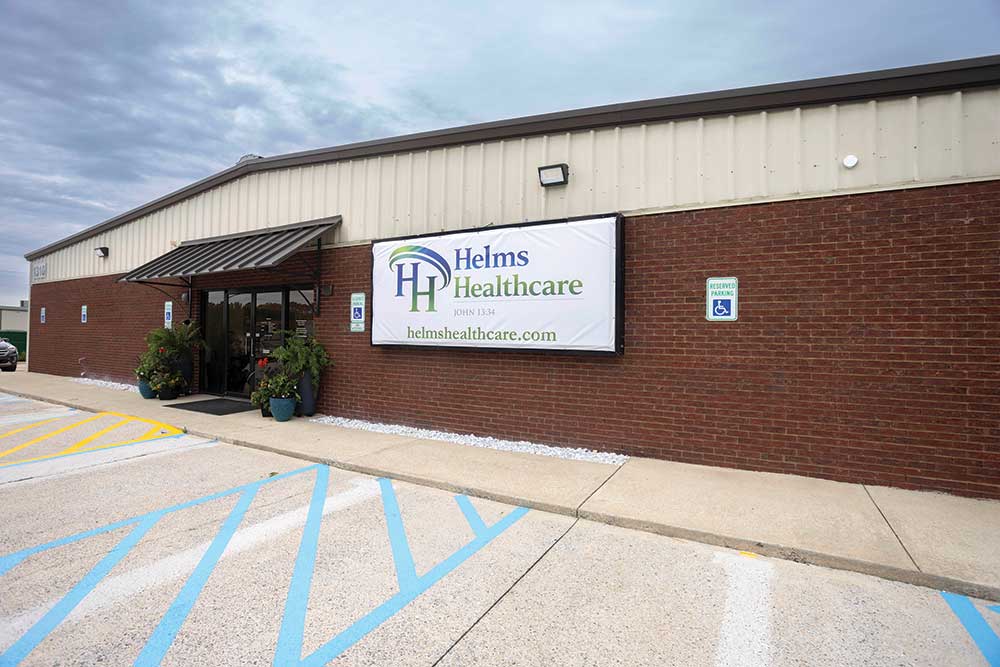
Exterior of new Helms Healthcare location in Pell City

“These particular projects we see going on around our city, it just shows the growth that our city is seeing,” Kurzejeski said. “It also shows the main reasons people are coming to Pell City. There’s a focus on the quality of life.”

He added, “The First Baptist Church addition and the different projects that we’ve seen around I-20 with restaurants coming in – Pell City is one of the growing cities, and St. Clair County is one of the top five growing counties in the state. It’s because we offer a good quality of life. People see that there’s a cost benefit to investing in the city.”

Kurzejeski arrived in Pell City 30 years ago.

“I know how it’s changed since I got here in 1996,” he said. “It’s a great place to work, a great place to call home. We are really working – everyone at times doesn’t see it – but we’re going to manage our growth to be the most beneficial for the people who live here.”

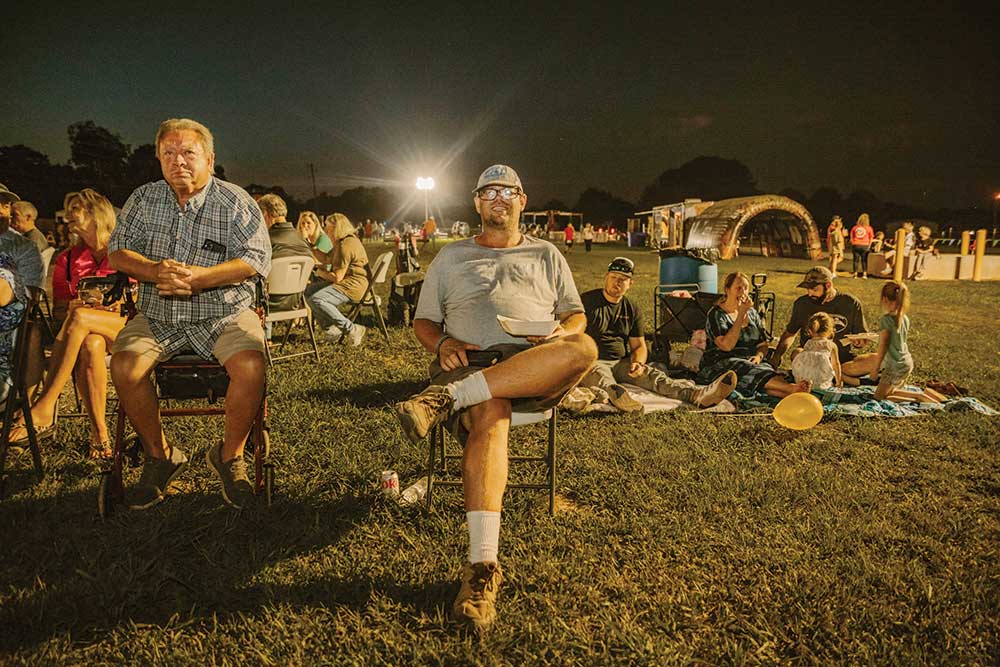
St. Clair County Fair

Story by Paul South
Submitted and Staff Photos

Jodi Shirley had a dream. Her perseverance turned it into reality.

Her daughter raised and showed lambs at county fairs across Alabama and in Mississippi, Georgia and Tennessee, but not close to home. “We didn’t have a local fair for these kids to show [their livestock],” she said. “Our livestock kids did not have their own fair to show sheep, cattle, and hogs. I said, ‘We’ve got to change that.’”

And they did. The St. Clair County Fair now enters its third year.

Enjoying entertainment

Shirley serves as the assistant coordinator of the St. Clair County Soil and Water Conservation District and is chairperson of the St. Clair County Fair Committee.

The fair is set for October 2 and 3 at the St. Clair County Agriculture Multi-Event Center at 100 Arena Drive in Odenville.

“It took us a few years to get things together,” she said. “It took us a year and a half or two years before we actually got it off the ground. We just pulled different community leaders together.”

Those leaders came from the county’s agricultural community – the St. Clair County Cattleman’s Association, the Women’s Committee of the Alabama Farmers Federation, the Alabama Cooperative Extension Service, Future Farmers of America and the county’s business community.

As a result, fair admission, parking and rides are free. And the fair celebrates St. Clair’s rich farming heritage, giving blue ribbon honors to everything from pies to pigs to pickles, quilts to crafts.

Fairgoers can feast on everything from corn dogs to cotton candy, to funnel cakes and caramel apples, staples of fair menus. Music for every taste from gospel to rock ‘n’ roll will fill the autumn air.

Families only have to pay for food, games or to buy crafts and other products. “We just brainstormed and said a lot of prayers, and it just all came together somehow,” Shirley said.

 In each of its first two years, the fair attracted 5,000 folks and rave reviews.

Rides for kids

“It’s been very positive,” she said. “We’d love to have a Ferris wheel. And people want better rides. But in year three, we’re taking baby steps.”

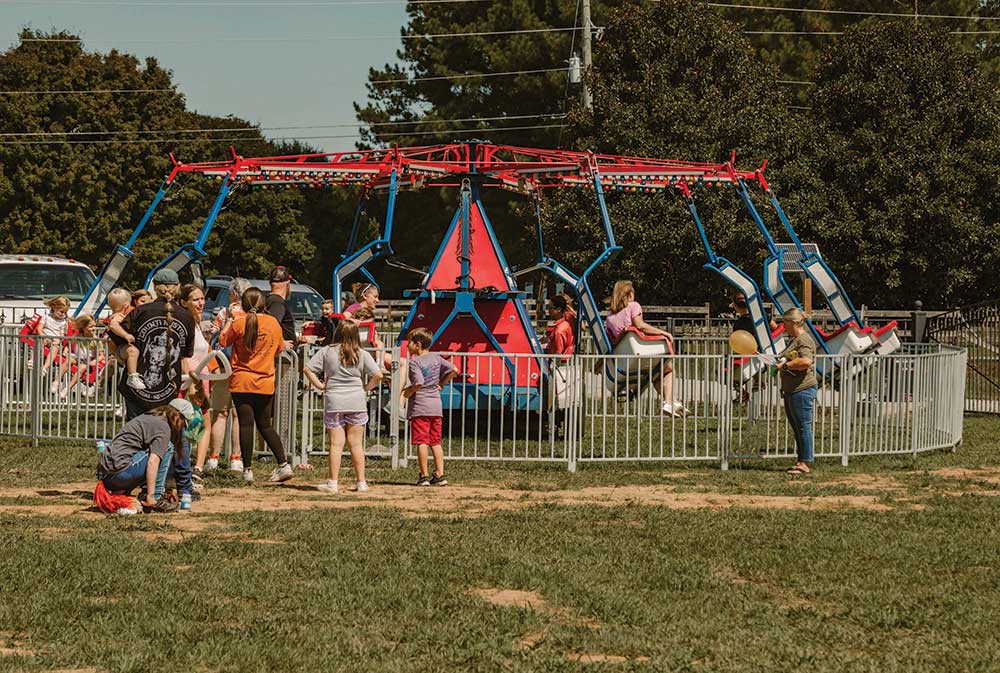
In its early years, the fair featured a rock-climbing wall, spinning teacups and a mechanical bull, swings, mini airplanes and bounce houses.

“The whole feel-good county fair is what we’re going for with the corn dogs and the lemonade and the funnel cakes and the candy apples, of course. Those are real important.”

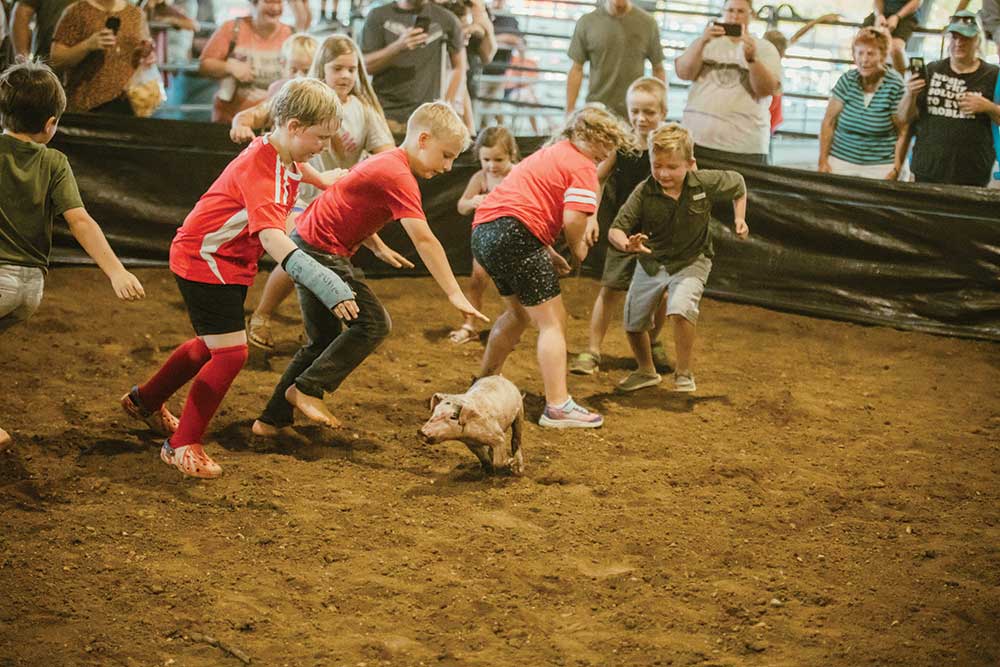
Greased pig event

 Full disclosure: Shirley is a confessed candy apple aficionado. But while apples may have her taste buds, the livestock showing has her heart.

“The [agriculture] world is my favorite,” she said. “Watching these kids get out there and present their animals and work super hard. Most of the work is behind the scenes. All of the dedication and work is put in at home typically.”

Part of the fair’s mission is to educate the community about the county’s agriculture, roots that run deep in St. Clair County. Local farmers demonstrated milking. Herding dogs showed off their skills. Plus, there’s a petting zoo.

“We love to educate the community about what it is, because a lot of people don’t know what livestock showing is, or what it’s about,” Shirley said. “There are so many people who go to the grocery store and think those items just happen to be there. But there’s somebody somewhere who’s worked from daylight to dark to make that happen. It’s nice to see the whole picture.”

Along with support from the business and agriculture community, a small army of volunteers makes the fair go. “Everybody knows their part,” Shirley said.

Bo Lindsey, a self-described “farm girl who learned to ride a cow before I could ride a horse” while spending time on her grandparents’ farm in Shoal Creek Valley, has been a fair volunteer from the start.

She shuttles families from the parking area to the fair and sees a change in families after a fun night. Free admission helps spark the fun, especially in these tough economic times.

“That’s the joy of it right there,” Lindsey said. “You’ve got families that can’t afford to take their kids nowhere because they’re trying to make ends meet. Let those kids wear themselves out.”

She recalled times when fairgoers would try to pay for parking. “You see when they open their wallet there ain’t much in there,” Lindsey said. 

And when they find out about free parking and admission and rides? “They light up and thank us,” she said. “It’s not us. God made it happen. You see it in people’s eyes. To see Mama and Daddy able to tell their kids, ‘Cut loose.’ That makes it worth it to me.”

Lindsey has a treasure trove of stories from her time as a volunteer. Free admission makes a difference. “There was a lady who had four kids,” Lindsey remembered. “Her husband was working two jobs. She had to take her kids … People just don’t have money anymore.”

The fair is a no-stress, unhurried, affordable family event.

She described the fair’s free rides as “bodacious,” adding, “I was talking to one lady who had five kids. She was trying to figure out how much it would cost for the rides. I told her, ‘It don’t cost you a dime. Put your kids on ‘em.’ That was just fun.”

Lindsey carries memories of the inaugural fair in her heart. “You will never top the first year,” she said. “It was just raw and innocent and joy and peace,” she said.

That joy and peace were sparked by something desperately needed these days. “Unity,” Lindsey said. “There just was. There were people who were your neighbors that you got to talk to. You got to meet their kids. I saw Mamas and Daddies talking while their kids were riding rides.”  

At the end of the day, beyond the food and fun and neighbors meeting neighbors, Shirley hopes folks will see agriculture beyond farmers and tractors and big fields.

“It goes so much beyond that. From the pencils we write with to the sports that we play that depend on the hides from some of these animals to the helmets we use to protect our children, everything starts with ag.”

But it’s even more than that, she said. “Not to be religious, but truly, God gave us this beautiful land and all of these creatures and all of these herbs for us to grow our food,” Shirley said. “That’s where it all starts. This is to celebrate that. I hope people come away with a better understanding of what agriculture truly is.”

Why is the fair important? “Because it is the community,” Lindsey said. “Everybody’s gotten away from this, and you end up with people who don’t know each other. That’s not community. This (the fair) is what communities are supposed to do. You’re supposed to get together, get to know each other, spend some time with each other. That doesn’t mean you have to talk to everybody that comes to the fair. But you’re going to meet some people you ain’t never talked to, and it’s fun just to get to know folks.”

Driving the shuttle, picking up families at the end of the evening, Lindsey notices something. They leave with a pocketful of memories.

“When they first get there, the kids are all excited, right?” Lindsey said. “At the end, the kids are worn out and excited. But the Moms and Dads? They’re at peace. You know you’ve done something right when you ask Mom and Dad if they had a good time.

“They look at each other and smile and go, ‘Yeah. We did.’”

Eleanor Shirley Isbell

Story by Joe Whitten
Submitted Photos

Come, travel the backroads to meet a 92-year-old lady whose life has exhibited the love, joy and peace of God throughout the years.

Eleanor Shirley Isbell always has a ready smile and a chuckle or laugh as she reminisces about her life.

Although born in Acmar on August 18, 1934, her birth certificate lists Atmore, Alabama, as her place of birth.

“Mamas didn’t go to the hospital to have babies in those days,” she explained. “So, on my birth certificate, they’ve got Atmore because in Montgomery, they had never heard of Acmar.”

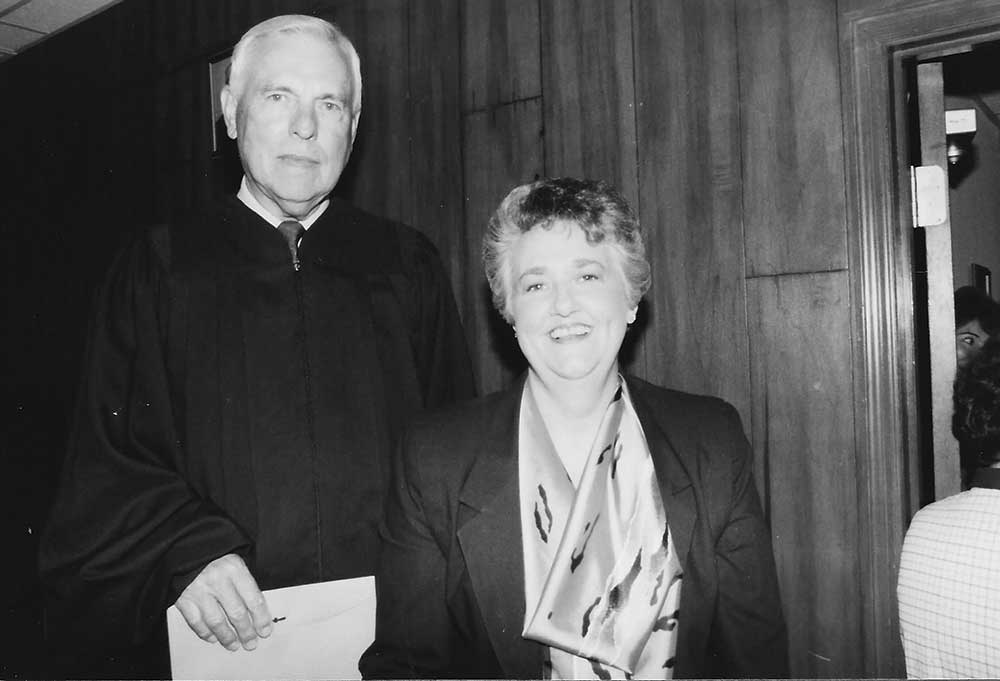
Eleanor sworn in as first woman on Moody City Council Judge Edwin Holladay

Clyde and Edith Bishop Shirley lived in the St. Clair County coal mining community of Acmar when Eleanor was born, and Clyde worked the mines. Sisters Linda, Margaret and Mary arrived at regular intervals.

From Acmar, the family moved to a house in today’s city of Moody. She remembers well living there. “In one side of the house was mama and daddy and us kids, and in the other side was my grandmother and grandfather Bishop. I spent a lot of time running back and forth,” she chuckled. “And I remember grandmother had this wood cookstove. It had a warmer on it above the stovetop, and after breakfast, she would put the leftover biscuits in the warmer. So, when I was going through there, she would take a biscuit and put some sugar in the biscuit for me,” she smiled, relishing the memory. “It’s a wonder somebody didn’t give us a whipping for running through there!”

The Shirley family moved a few times, and then Clyde built a house on today’s U.S. 411, a dirt road in those days. Eleanor described Clyde’s method of construction. “When my daddy built something, he just built it. No measurements. No nothing,” she said. “At this house he built, it had a grocery store in front, and we lived in the back. But, again, not a professional builder,” she emphasized.

Her sister Margaret’s room was next to the store, and the plank wall had knotholes. The flickering shadows that came from the store through the knotholes frightened Margaret every night.

It seems Clyde enjoyed building because Eleanor remembers living in other houses he built with his “saw it and nail it” method. He may have been a little like the self-taught country carpenter whose policy was, “It may be a little cattywampus, but it’ll all come out in the wash.”

She attended Moody Elementary and Middle School, graduating from the ninth grade there. For high school, she rode the bus to St. Clair County High School in Odenville, where she graduated in 1953.

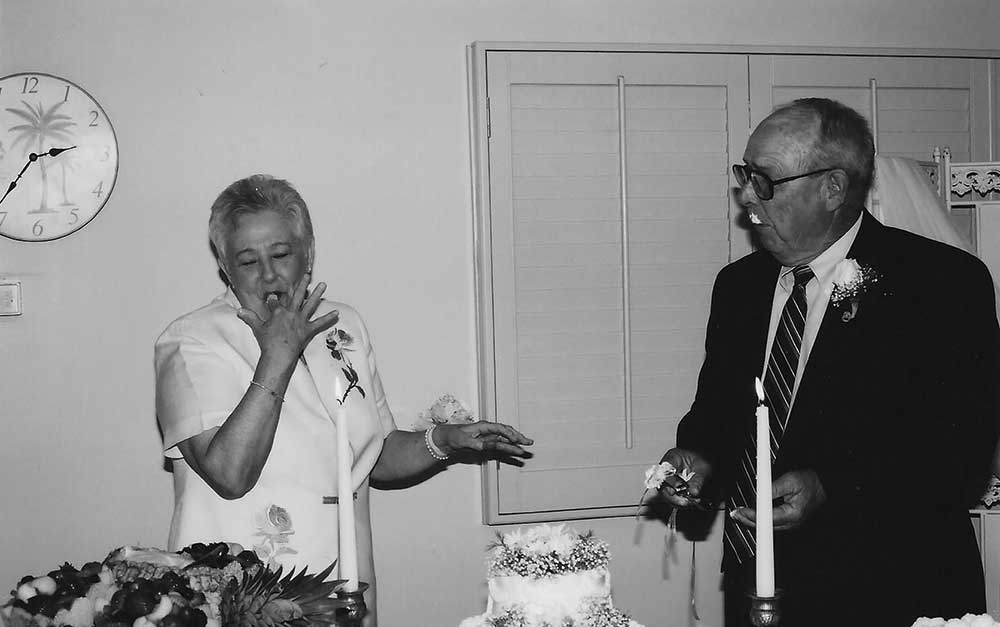
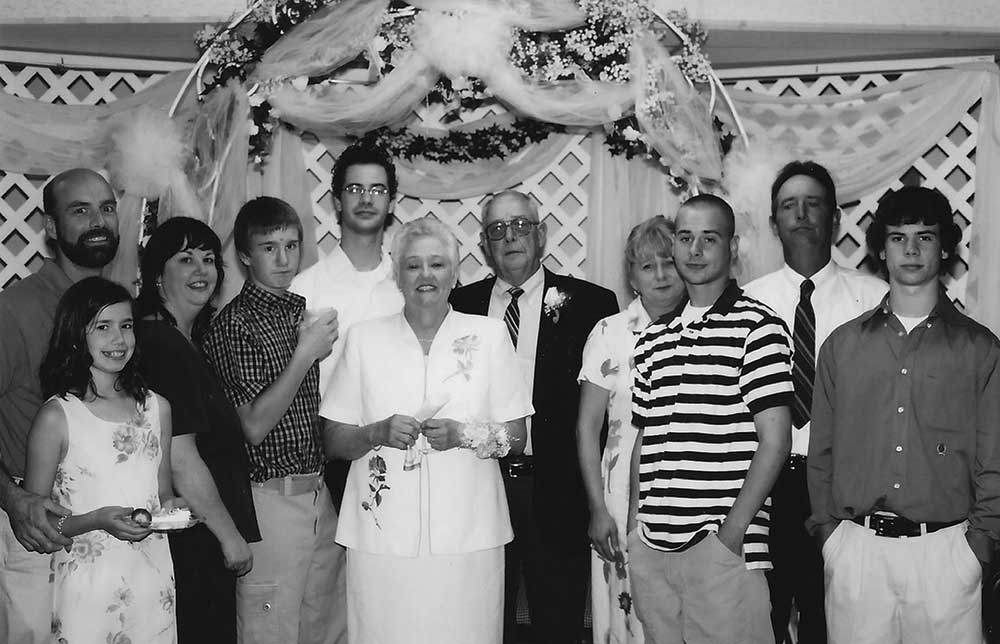
Eleanor and Milton’s 50th wedding anniversary

In 1954, she married Milton Isbell – and that’s a story of its own.

“You know how in Junior High there’s always one male student that all the girls are in love with,” she began. “There was no way that I was ever gonna get to date that one because his father made whiskey.”

With eyes still twinkling, she continued. “Here’s the deal. Milton was friends with the boy that all the girls were in love with, so my first date with Milton was a double date with the whiskey maker’s son – who was the driver – and his girlfriend. Me and Milton were in the back, and I dated him because the other boy was in the front seat.

“We dated a few more times – and Milton used to say I chased him, but I don’t remember chasing him. Anyway, we got married after he joined the Navy.” And the marriage lasted until Milton’s death, August 28, 2018 – 64 years.

Milton was in the Navy when they married and stationed in Alameda, California, so Eleanor bought a one-way ticket to San Francisco.

Crossing the US to California, she recalled, “I didn’t think much about it until I got that one-way ticket, and I thought, ‘Oh, no! I may never be coming back to Alabama!’”

Her fear was unfounded, though. About a year later, Milton was reassigned to Pensacola, Florida, where he worked in the print shop. He worked at that job until he was discharged from the Navy, and he kept the same print shop job as a civilian when he was discharged from the Navy.

Their son, Tim, was born in 1955 in Pensacola, and the Isbells lived there until he was about a year-and-a-half old. On the weekends, they would head back to Moody.

“One time when we were going back from Moody to Pensacola, and we hit a mule. I was in the front seat holding Tim – back then babies didn’t have to be in the back seat like they do today. We hit the mule, and it went up in the air, and it came back down, through the windshield the side I was on. And that mule got up, shook itself and ran off.”

Trying to locate the owner of the mule was a lost cause. “Nobody owned that mule,” she laughed. “Nobody claimed it, and of course we had to have a lot of work done on the car.”

The weekends traveling back and forth grew old, so the family moved to Leeds. Later, they moved in with Milton’s mom and stepfather. That house was right up the hill from the new Civic Center in Moody. Eleanor and Milton had two rooms at the back of the house and daughter Susan was born there in 1958.

Their next house was built by a company who just put up the outside walls. “So, that’s what we got,” Eleanor recalled. “We moved into that house and wasn’t anything done inside but studders. Not anything, and Milton gradually got it fixed, and we lived there 49 years.”

Father knows best

Pop, Clyde Shirley, could give good, blunt advice. Eleanor told of a time he kept her and Milton focused. “Daddy gave us a lot next door to them. So, we got the foundation built, and somebody was going to Florida, and we wanted to go. We didn’t have any money, so I went to my daddy to ask for money to go to Florida, and he said, ‘Do you want to go to Florida, or do you want to build a house?’” After a hearty laugh, she added, “So, we didn’t go to Florida.”

The Isbell family

Career paths

Including the Navy, Milton held down several different jobs. He worked for a little while at Ft. McClellan until they had a huge layoff. He was a milkman for a while and then he worked at Murry’s Garage. Then he went to work at Greystone Golf Course. Eleanor enjoyed several tournaments and met some famous golfers while Milton worked there. That ended one day when Milton had a confrontation with his boss, picked up his toolbox and said, “I’m going home.”

The very next day, Milton went to work at the Cahaba Country Club golf course, where his son Tim was employed. Tim had started working there when he was 14 years old. Milton worked there until he retired.

Eleanor also held several jobs during her working years. She spent 20 years with Dun and Bradstreet. “I worked a little while in every department,” she said. “Over the years, I must have been private secretary for eight or nine men at Dun and Bradstreet.” When she asked to be in sales because she knew those men earned the most, they refused her request, and she left the firm.

From there she spent 15 years in real estate. Then she tried retail sales for a while but quickly grew tired of that job. But that led to work she probably enjoyed the most.

The family was members of Leeds Assembly of God where Dan Ronsisvalle was pastor. One day she was at the church with others to go visit the sick and shut-ins of the church. The pastor pulled her aside and asked her if she would be his secretary. The secretary, his wife, wanted to give up the job. Eleanor agreed to take that church position

After she had been there for some months, she had surgery. As she recuperated at home, Pastor Ronsisvalle called and said, “I don’t like bookkeeping. I want you to be the church bookkeeper.” Eleanor said, “Well, I’ll have to pray about that.” Ronsisvalle replied, “You don’t need to pray about that.”

She became the bookkeeper, but it wasn’t long until the church needed a treasurer, and he asked her to take that job, and she did.

“At Leeds Assembly of God,” she reminisced, “I was secretary, I was bookkeeper and treasurer – and I did everything but sweep the floors,” she said. “I really enjoyed working for Ronsisvalle. I would go dragging in some days, and he’d come bouncing in, singing and carrying on, and say, ‘Good morning, Sunshine!’ And here I was with my head on my desk. He was always so happy.”

She paused and added quietly, “And I miss him, I miss him. I worked for my church for over 20 years. I worked until I was 81. My last day was July 4, and I turned 81 in August.”

Chronicling history

Eleanor wrote an article titled, “Moody, Alabama, “Then and Now,” which was published in Cherish, The Quarterly Journal of the St. Clair County Historical Society in October 1993. In it, she told how Benjamin Epps Moody arrived in St. Clair County. “He came with his family from the hills of North Carolina in 1820 to homestead a section of land granted to him when James Monroe was the country’s president.

“Mr. Moody built a one-room log cabin with a chimney at one end. He worked many long hours at building his chimney, digging the clay from his own land and molding the bricks by hand and baking them in an open fire. Years later, when the growth of his family demanded more room, the log cabin was torn down from around the chimney and a new house was built in its place.” The house has been reworked several times, but it and the chimney still stand in 2026.

Other families came to the area. “The good news had spread to North Carolina,” Eleanor wrote. “Soon there were homes belonging to the Moores, Kerrs, Lamberts, Taylors, Spruiells, Kirks, Adkins, Hawkins and Fulmers. Many of these family descendants live in Moody presently… These [early] folks were hardworking and loved liberty and opposed slavery. Not a single family owned slaves.”

People on foot, horses and wagons wore trails in four directions from the Moody home, and the community began to be called Moody’s Cross Roads.

Eleanor herself has lived and remembers a great deal of Moody’s history, since her dad, Clyde, rallied forces to found the town of Moody. Eleanor calls it “Pop’s last adventure.”

In 1962, Moody citizens learned that Leeds was interested in annexing the Moody area into the city of Leeds. Clyde went into action. He chose a group of men, one of them an attorney, who went to Montgomery and had the City of Moody incorporated.

“You’ll laugh at this,” Eleanor chuckled, “Pop hand-picked the first mayor and five counselors, and the election was without opposition. Mayor, A. E. Moore, and as counselors, he was counselor number one. Then, Hermon Waid, Hubert Adkins, Rodney Miles, and Jimmy DeShazo.” Milton Isbell was the first City Clerk, but that only lasted about two meetings, and he knew that job was not for him.

The first Town Hall was an addition to Clyde Shirley’s Swap Shop. “Remember, Daddy was not a good carpenter,” Eleanor laughed. “He just threw things up, you know. No measuring tape or anything. Well, that’s what the Swap Shop was – just thrown up. So, for the first Town Hall, Daddy just added a little more to the Swap Shop.” She paused and added nostalgically, “My daddy was something else!”

Living history

In 1980, Eleanor herself made Moody history for being the first woman elected to the Moody City Council. She recalled that she was preparing peanut butter and jelly sandwiches when “a still small voice said, ‘Run for Moody City Council.’ ‘Why would I do that,’ I wondered, but I knew my Pop would love me serving on City Council.” She got her name on the ballot with two others who were campaigning for the office. The general election ended in a runoff. Eleanor won the runoff.

After winning, she had a lot to learn. She spent many hours reading legal papers and learning laws and procedures. She credits then City Attorney Jim Hill as helping her the most in learning the ropes.

She ran for re-election, losing by 35 votes in a run-off. During that election, she recollected, “My mom said, ‘I will vote for you, but I pray that you lose.’” She laughed, and added, “God delivered me from politics!”

In her Cherish article, Eleanor pondered the future of Moody. “Who knows,” she wrote, “where the [present] growth will end? My dad paid $300 for seven plus acres in 1948. A couple of years ago, an acre of that same land sold for nearly one hundred thousand dollars. No one can be certain how much bigger Moody will get. There are rumors of a large discount store such as Wal-Mart or K-Mart coming to Moody. The rumors come and go. However, no matter how big it grows or how busy it gets (thousands of cars traveling daily on Highway 411), I still can close my eyes and picture two dirt roads known as Moody’s Cross Roads, where there was little traffic and only two stores, Hannon’s and Forman’s groceries, and a few friendly folks. It was home then, and come what may, Moody will probably always be home sweet home to me.”

In God’s providence, Eleanor has lived to see and know how the City of Moody has grown. She recently expressed her joy, by saying, “In thinking back to the add-on first Town Hall, I stand in awe of our lovely City Hall today, the great library and Civic Center.”

Although she deals with several health issues, Eleanor is the same cheerful Eleanor she has always been. Retired St. Clair County Judge and current State Rep. Jim Hill’s observations about her suit her well.

“When I think of Eleanor Isbell, it makes me smile, because every time I saw her, she had a smile on her face. She had a great outlook on life and was a pleasure to see and to be with.

“I met Eleanor probably 40 years ago. She was a Realtor in the Leeds/Moody area. I was a young lawyer, and a fair amount of my practice was real estate. Many times in church, we talk about the fruits of the Spirit – love, joy, peace, etc. Eleanor not only knew what they were, she exhibited them and lived them.

“I would be remiss if I did not mention Eleanor’s husband, Milton, who was just like her. They were a wonderful couple and perfectly matched.

“They say everyone makes you happy. Some people when you see them coming, and some when you see them going. Eleanor always made you happy when you saw her coming. She is truly a special person. If the world were full of Eleanor Isbells, it would have a lot less problems than it has now and be a much better place to live.”

And all who know her agree. Thank you, Eleanor, for your 92 years of blessing the lives of others.

St. Clair Training School

Story by Carol Pappas
Submitted Photos

Jennifer Gover gazed up at the historic marker with gold letters etched across the deep blue background and smiled.

It was that unmistakable look of satisfaction at the end of a long journey home, her work was done. St. Clair County Training School is now an official, historical landmark.

The school is already listed in the Alabama Register of Landmarks and Heritage. Thee marker with the official seal of the Alabama Historical Association was erected by the St. Clair County Training School Alumni Association, led by President Don Allen and Vice President Barbara Collins.

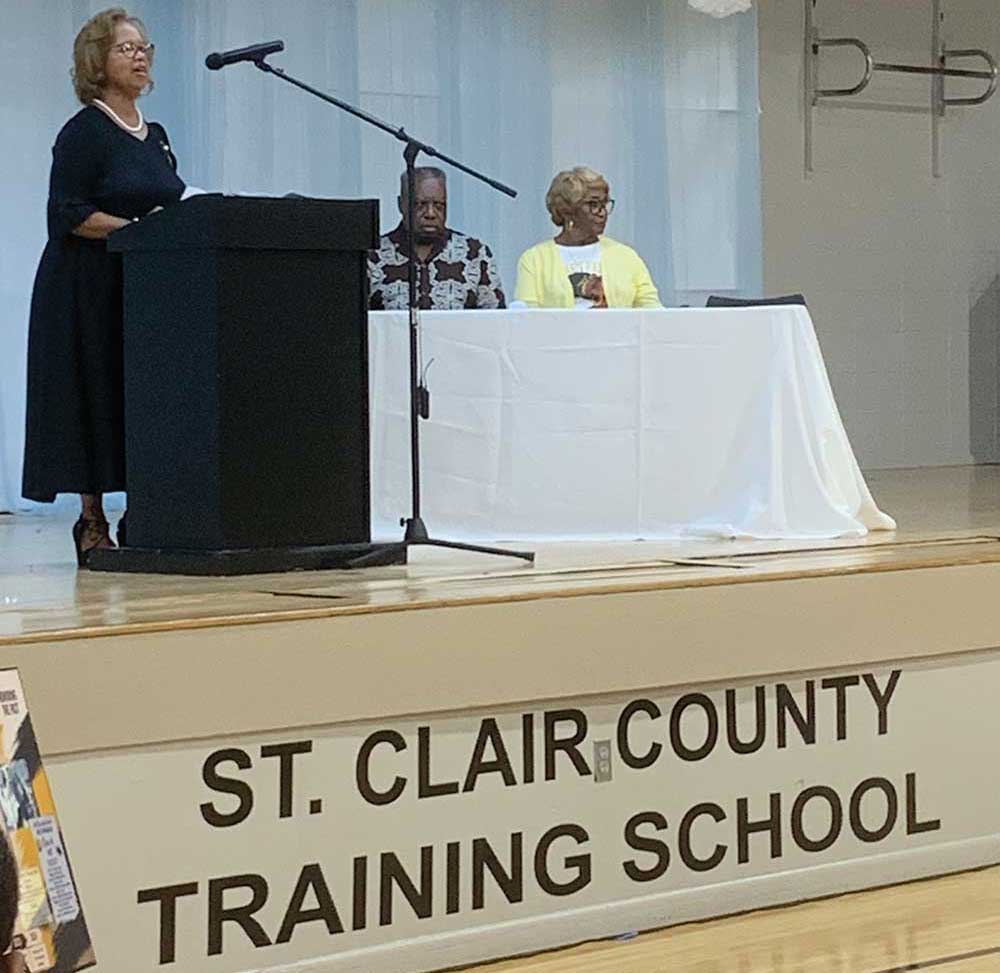
Thelma O’Neal Jones addresses the crowd at the dedication

In late June, alumni unveiled the marker in a special ceremony at the Pell City school site, now known as The Legacy Center, during the Alumni Association’s reunion weekend.

The marker tells the story of the school and its origin – history Gover researched and worked in collaboration with the Historical Commission to develop.

It was dedicated in 1922 as “the Colored Industrial Institute, also called the Rosenwald Negro School at Pell City.” It began as a one-room classroom on two acres with one teacher. The land purchase and construction were made possible through the Julius Rosenwald Foundation and local community matching funds totaling $2,900.

A 1922 Birmingham News story described it as “the largest and best equipped school for Negroes in St. Clair County.”

In 1934, the state Board of Education was requested to change the name to St. Clair County Training School and add an extra teacher. Four years later, the St. Clair Board of Education approved extending the high school department to meet training school requirements and the state department approved the name change.

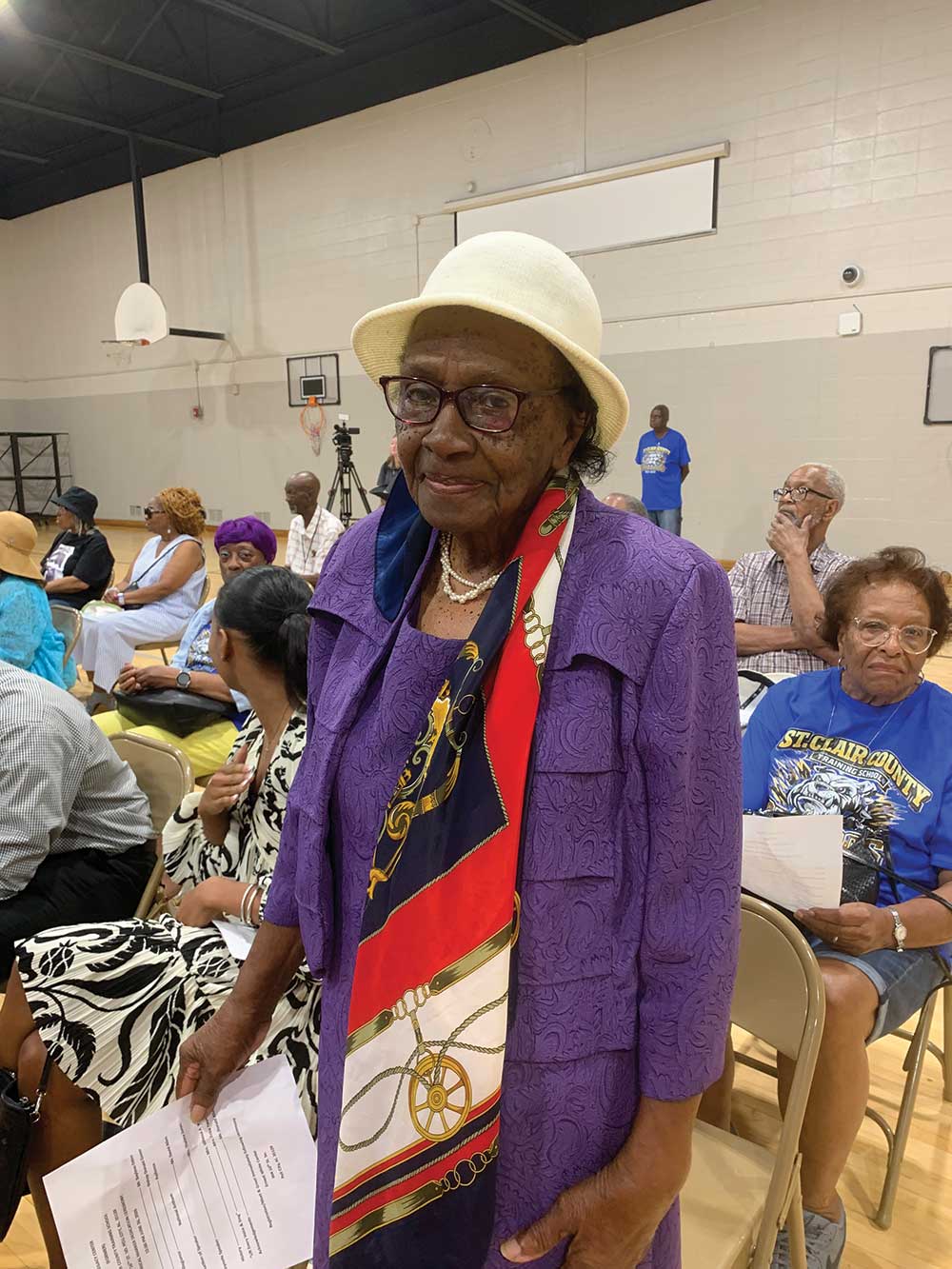
Willie Mae “Snookie” Turner Beavers, the oldest living alumni at 99

As part of the federal New Deal Program, the Public Works Administration allotted funds to build two more classrooms and make repairs.

From its beginning in 1922, the school educated Blacks in the surrounding communities of Pell City, Cropwell, Riverside, Piney Woods, Ragland and Acmar with the final class graduating in 1969 when the school closed for integration – 15 years after the Supreme Court’s Brown v. Board of Education decision called for an end to “separate but equal” schools.

Over 100 people attended the June ceremony, where former elementary school principal and SCCTS alumnus Thelma O’Neal Jones delivered the keynote address. “Our grandparents dreamed of a better future for us,” Jones told the crowd. “We were the first generation of education achievements,” many of whom went on to college. 

The lessons they learned there extended well beyond academics. They were lessons “upon which our lives were built,” she said. “We celebrate more than a building. We celebrate a legacy.”

Videssa Woods talked of the history of the school and its importance in all of the alumni’s lives. “Without history,” she asked them to remember, “there is no present.”

Pell City’s historic mural

Sometimes the path to taking a good idea to reality presents more than a few challenges along the way. But when you see the 86-foot mural welcoming you to Pell City’s Downtown Historic District, you’ll know the journey was well worth it.

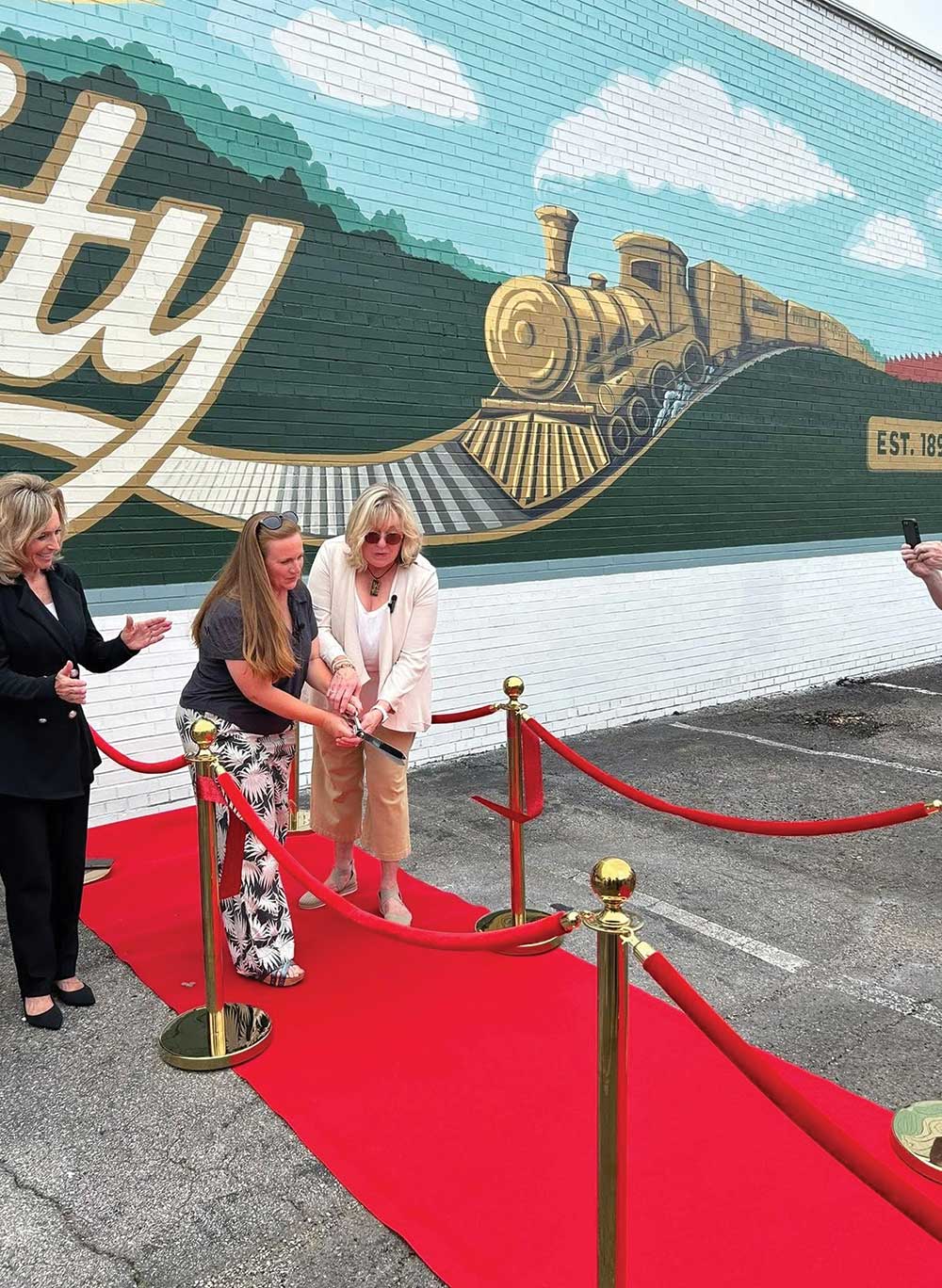
Three years ago, Pell City Historical Society envisioned and began discussion and planning for a historic mural, which led to a red-carpet ribbon cutting ceremony in late May paying tribute to the artists and all who played a role in making it happen.

“The mural is beautiful and nicely depicts Pell City’s historical past, and I believe it will inspire future projects our community will support and accomplish,” said interim Historical Society President David Murphy.

The mural isn’t the first project the Historical Society has spearheaded for downtown. Historic downtown flags were provided for Cogswell Avenue lampposts, focusing attention on the city’s historical roots firmly planted downtown.

Artists Sundi Hawkins (left) and Penny Arnold do the honors as Denise Olivastri observes

Local artists Penny Arnold and Sundi Hawkins created the new mural that majestically stretches across a white wall backdrop and depicts the founding of the town and key elements of its growth – a train, the mill, its businesses.

“When people look at this mural, my hope is that they feel a deep sense of pride in our city and see the boundless potential of our community,” Councilman Jay Jenkins said during the ceremony.

Denise Olivastri led the project, participating in the mural content along with Vicki Harmon, developing the letter of consent, securing the artists and the location at Glitz & Glamour, 2007 Cogswell Avenue. Pell City Council put its stamp of approval on the proposed artwork, and the artists went to work, completing it in record time.

“This amazing artwork serves as a visual bridge connecting our historic past with our bright future,” Olivastri told the crowd gathered for the ceremony as she acknowledged all who had a role.

She gave “a huge thank you to Pell City Sparklight for their alliance and cooperation in helping bring our city’s history to life! As funding co-sponsor and partner along with the Historical Society, they have joined us in giving our community a beautiful historic landmark that celebrates our roots. We are incredibly grateful to them for their kindness and generosity.”

She lauded city officials who were supportive of the historic mural undertaking throughout the project. “Your belief in the importance of public art and preserving the spirit of our downtown, helped make this vision possible. Thank you for recognizing how initiatives like this can bring people together, attract new visitors and create lasting memories for future generations.”

The mural’s location also deserved gratitude – “a huge thank you and much appreciation to Union State Bank who owns this building and to Pam Everidge and her husband, Steve, the owners of Glitz and Glamour, who generously and excitedly agreed to allow us to utilize the wall as the blank canvas for this incredible work of art.”

A special thank you went to Mason Roberts at Sherwin-Williams for supplying the vintage colors “to bring this mural to life.”

There were unexpected, but welcome role players as well. “We also want to thank Tim Mogren who just showed up and out and generously and freely provided the boom lift from THM Electrical which helped our artists complete their project in record time.”

Landon Honeycutt, who assisted with the scissor lift from The Rental Men, and Greg Gossett from the City Street Department, who installed the barriers around the wall perimeter to keep artists safe, were among those specially recognized.

Calling Hawkins and Arnold “incredible artists,” Olivastri stressed, “thank you is too small of a word for the talent, dedication and countless hours of hard work you put forth. Always smiling, always positive, you both worked diligently through long days and nights to bring this monumental vision to life, and your incredible creativity has added beauty, inspiration, joy and character to our dear city,” she said.

“This vibrant masterpiece of a mural will be admired by the masses for years to come, due to your tireless efforts, vision and skill. Our community is completely in awe of your work.”

Motioning to the crowd, Olivastri noted, “This historic mural belongs to all of us, and stands as a symbol of unity, progress and hometown pride. I hope it brings joy and a smile to your face every time you pass by.”

Deanna Lawley’s dedication

Story by Carol Pappas
Submitted Photos

When Deanna Lawley was a child, a less-than-harmonious trip to the dentist one day with her mother ended abruptly when Lawley bit the dentist.

Her mother was “horrified” with the actions of her 6-year-old, she recalled, “and she turned me over to my daddy.”

But her father had a deal to dangle in front of the precocious, albeit challenging, child that just might make the next visit a bit less dramatic.

He coerced her into behaving at the dentist’s office with the promise that he would buy her that book she had been wanting – Black Beauty – “the one with the shiny cover.” The father-daughter ‘deal’ was struck, and it not only became the key to a smooth office visit that day, it unlocked a lifetime of love for reading. “24 hours later I had my book,” she said.

And she’s been reading ever since.

As a career path, she naturally chose teaching English and for decades, she shared her passion for the written word with countless Pell City High School students. In retirement, she paints books through travel.

Forming a group called Friends Bound for New Horizons, Lawley guides trips across the globe. They have become learning adventures that have raised nearly $100,000 for the Pell City Library.

The first trips generated funds for Pell City Schools Educational Foundation and later grew successful enough to support the library and after that, Museum of Pell City, a nonprofit she co-founded.

Among her early travelers were Library Director Danny Stewart and Carolyn Hall, a longtime library supporter. One day Hall wryly told her, “There’s no reason why you can’t give money to the library,” which led to years of travel – and funding – for the library.

Guild members sought to honor her in a special way, and they named a room in the library for her.

Actually, there were two rooms that needed naming – arts and crafts and teens – and Lawley chose arts and crafts. She picked arts and crafts, not only for the creativity and imagination found inside, but she joked she had years of teaching teens, and “most” were not too entertained. “Arts and crafts are fun for any age – my PCHS teens, not so much. They were getting ready with research and Shakespeare for college.”

“She wanted to see the happy, fun part,” said Stewart.

“There was a desire to have something to pay her back for all the money she has raised over the years,” Stewart said. “We thought it was only fitting to name a room after her.” She shares the honor with husband Barnett, who not only has helped her with the trips over the years, he has given back to the community as a public servant, a conservationist and a volunteer in many different arenas.

“How deserving,” Stewart said. “They are a great couple in philanthropic endeavors.”

A reception in her honor featured a meet and greet hour on a beautifully decorated patio at the Municipal Complex followed by dinner in the banquet room. “The ladies of the Guild were extremely good hostesses. It was so much more than we anticipated. It was such a lovely event, and the patio was a perfect venue for such an occasion.”

Making it even more special was when she learned her good friends, John Wandrisco of United Distributors and St. Clair Commissioner Bob Mize supported the event, making it “such a fine affair.”

Lawley sees her fundraising work on the library’s behalf as a labor of love. “I’ve always loved to read. I am very pleased to be connected to the library,” she said, recounting childhood memories in Newnan, Georgia, where the library was housed in a historic Carnegie building on the courthouse square. It was “holy ground to me. It was a major influence on me as a child.”

And now, she gets to give that gift back in her own way, helping new generations learn to treasure the riches of the library just like she discovered so long ago.