
Event returns bigger and better
Story by Paul South
Submitted and Staff Photos
Jodi Shirley had a dream. Her perseverance turned it into reality.
Her daughter raised and showed lambs at county fairs across Alabama and in Mississippi, Georgia and Tennessee, but not close to home. “We didn’t have a local fair for these kids to show [their livestock],” she said. “Our livestock kids did not have their own fair to show sheep, cattle, and hogs. I said, ‘We’ve got to change that.’”
And they did. The St. Clair County Fair now enters its third year.
Shirley serves as the assistant coordinator of the St. Clair County Soil and Water Conservation District and is chairperson of the St. Clair County Fair Committee.
The fair is set for October 2 and 3 at the St. Clair County Agriculture Multi-Event Center at 100 Arena Drive in Odenville.
“It took us a few years to get things together,” she said. “It took us a year and a half or two years before we actually got it off the ground. We just pulled different community leaders together.”
Those leaders came from the county’s agricultural community – the St. Clair County Cattleman’s Association, the Women’s Committee of the Alabama Farmers Federation, the Alabama Cooperative Extension Service, Future Farmers of America and the county’s business community.
As a result, fair admission, parking and rides are free. And the fair celebrates St. Clair’s rich farming heritage, giving blue ribbon honors to everything from pies to pigs to pickles, quilts to crafts.
Fairgoers can feast on everything from corn dogs to cotton candy, to funnel cakes and caramel apples, staples of fair menus. Music for every taste from gospel to rock ‘n’ roll will fill the autumn air.
Families only have to pay for food, games or to buy crafts and other products. “We just brainstormed and said a lot of prayers, and it just all came together somehow,” Shirley said.
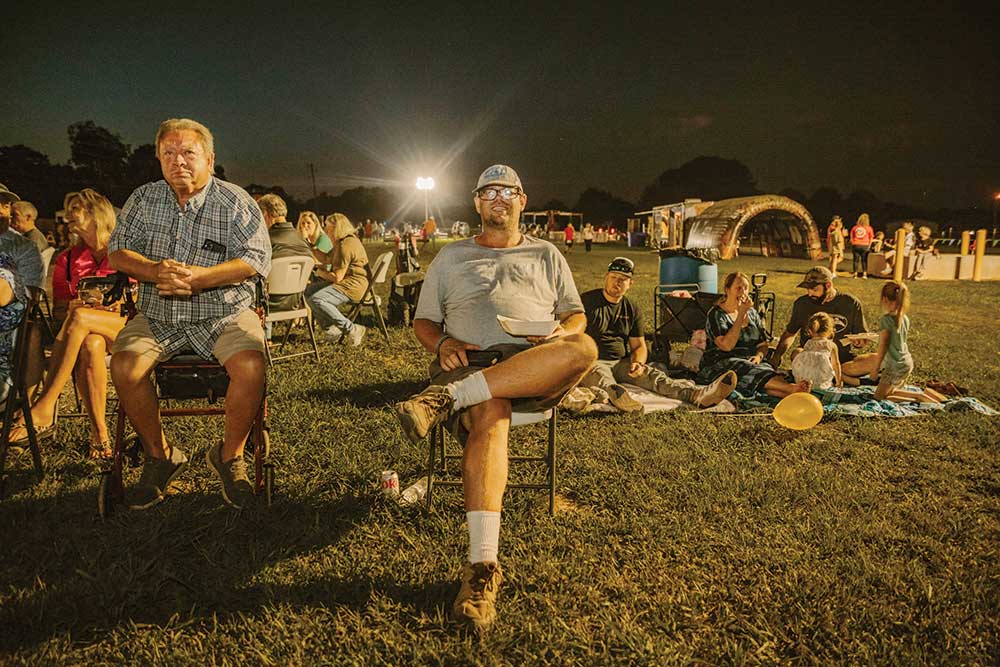
In each of its first two years, the fair attracted 5,000 folks and rave reviews.
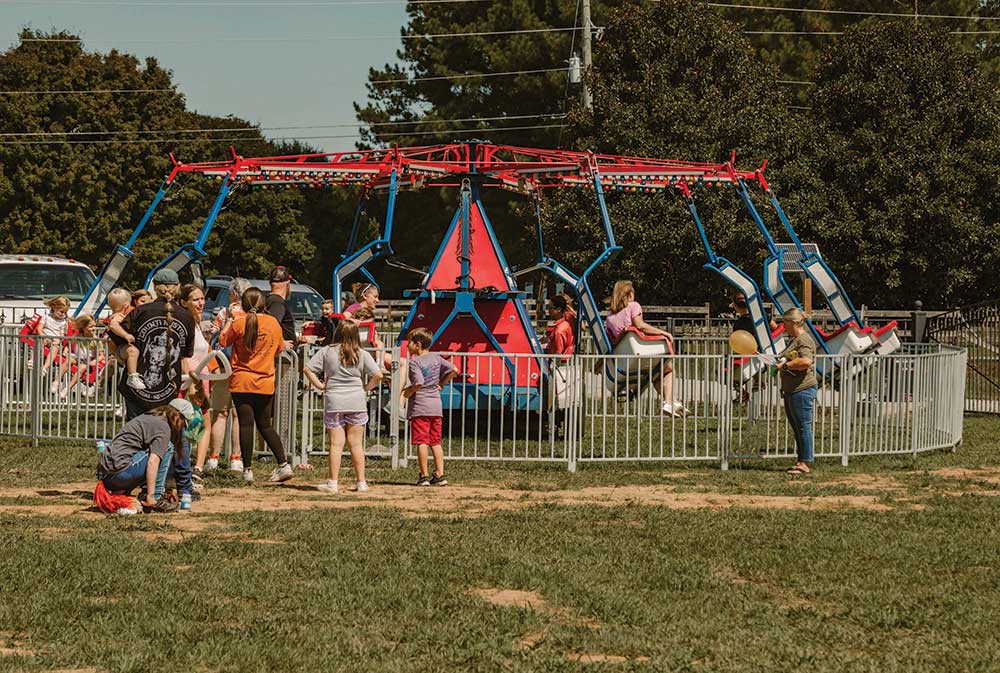
“It’s been very positive,” she said. “We’d love to have a Ferris wheel. And people want better rides. But in year three, we’re taking baby steps.”
In its early years, the fair featured a rock-climbing wall, spinning teacups and a mechanical bull, swings, mini airplanes and bounce houses.
“The whole feel-good county fair is what we’re going for with the corn dogs and the lemonade and the funnel cakes and the candy apples, of course. Those are real important.”
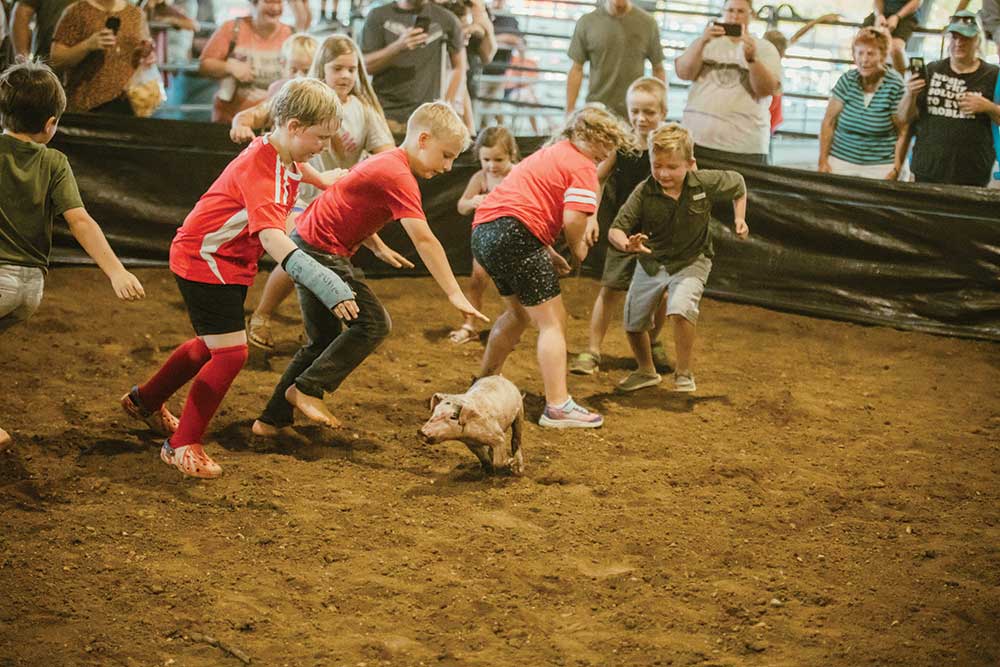
Full disclosure: Shirley is a confessed candy apple aficionado. But while apples may have her taste buds, the livestock showing has her heart.
“The [agriculture] world is my favorite,” she said. “Watching these kids get out there and present their animals and work super hard. Most of the work is behind the scenes. All of the dedication and work is put in at home typically.”
Part of the fair’s mission is to educate the community about the county’s agriculture, roots that run deep in St. Clair County. Local farmers demonstrated milking. Herding dogs showed off their skills. Plus, there’s a petting zoo.
“We love to educate the community about what it is, because a lot of people don’t know what livestock showing is, or what it’s about,” Shirley said. “There are so many people who go to the grocery store and think those items just happen to be there. But there’s somebody somewhere who’s worked from daylight to dark to make that happen. It’s nice to see the whole picture.”
Along with support from the business and agriculture community, a small army of volunteers makes the fair go. “Everybody knows their part,” Shirley said.
Bo Lindsey, a self-described “farm girl who learned to ride a cow before I could ride a horse” while spending time on her grandparents’ farm in Shoal Creek Valley, has been a fair volunteer from the start.
She shuttles families from the parking area to the fair and sees a change in families after a fun night. Free admission helps spark the fun, especially in these tough economic times.
“That’s the joy of it right there,” Lindsey said. “You’ve got families that can’t afford to take their kids nowhere because they’re trying to make ends meet. Let those kids wear themselves out.”
She recalled times when fairgoers would try to pay for parking. “You see when they open their wallet there ain’t much in there,” Lindsey said.
And when they find out about free parking and admission and rides? “They light up and thank us,” she said. “It’s not us. God made it happen. You see it in people’s eyes. To see Mama and Daddy able to tell their kids, ‘Cut loose.’ That makes it worth it to me.”
Lindsey has a treasure trove of stories from her time as a volunteer. Free admission makes a difference. “There was a lady who had four kids,” Lindsey remembered. “Her husband was working two jobs. She had to take her kids … People just don’t have money anymore.”
The fair is a no-stress, unhurried, affordable family event.
She described the fair’s free rides as “bodacious,” adding, “I was talking to one lady who had five kids. She was trying to figure out how much it would cost for the rides. I told her, ‘It don’t cost you a dime. Put your kids on ‘em.’ That was just fun.”
Lindsey carries memories of the inaugural fair in her heart. “You will never top the first year,” she said. “It was just raw and innocent and joy and peace,” she said.
That joy and peace were sparked by something desperately needed these days. “Unity,” Lindsey said. “There just was. There were people who were your neighbors that you got to talk to. You got to meet their kids. I saw Mamas and Daddies talking while their kids were riding rides.”
At the end of the day, beyond the food and fun and neighbors meeting neighbors, Shirley hopes folks will see agriculture beyond farmers and tractors and big fields.
“It goes so much beyond that. From the pencils we write with to the sports that we play that depend on the hides from some of these animals to the helmets we use to protect our children, everything starts with ag.”
But it’s even more than that, she said. “Not to be religious, but truly, God gave us this beautiful land and all of these creatures and all of these herbs for us to grow our food,” Shirley said. “That’s where it all starts. This is to celebrate that. I hope people come away with a better understanding of what agriculture truly is.”
Why is the fair important? “Because it is the community,” Lindsey said. “Everybody’s gotten away from this, and you end up with people who don’t know each other. That’s not community. This (the fair) is what communities are supposed to do. You’re supposed to get together, get to know each other, spend some time with each other. That doesn’t mean you have to talk to everybody that comes to the fair. But you’re going to meet some people you ain’t never talked to, and it’s fun just to get to know folks.”
Driving the shuttle, picking up families at the end of the evening, Lindsey notices something. They leave with a pocketful of memories.
“When they first get there, the kids are all excited, right?” Lindsey said. “At the end, the kids are worn out and excited. But the Moms and Dads? They’re at peace. You know you’ve done something right when you ask Mom and Dad if they had a good time.
“They look at each other and smile and go, ‘Yeah. We did.’”