The best ‘mater sammich

Story by Roxann Edsall
Photos by Mackenzie Free

Any way you slice it, the facts are clear. Southerners love a good “mater sammich.” Long considered the staple of summertime goodness, the tomato sandwich is the belle of the Southern culinary ball. Top fans include former President Jimmy Carter, who was well known for his love of this simple summer fare made with ripe tomatoes, mayonnaise, and bread.

“I love a good tomato sandwich!” says Springville resident Tiphanie Gatgens. “I love good, soft white bread with several big slices of tomatoes with Duke’s mayonnaise (although my mother swore by Bama mayo). Add a good bit of salt, and sometimes pepper. And now I’m in the mood for a tomato sandwich.”
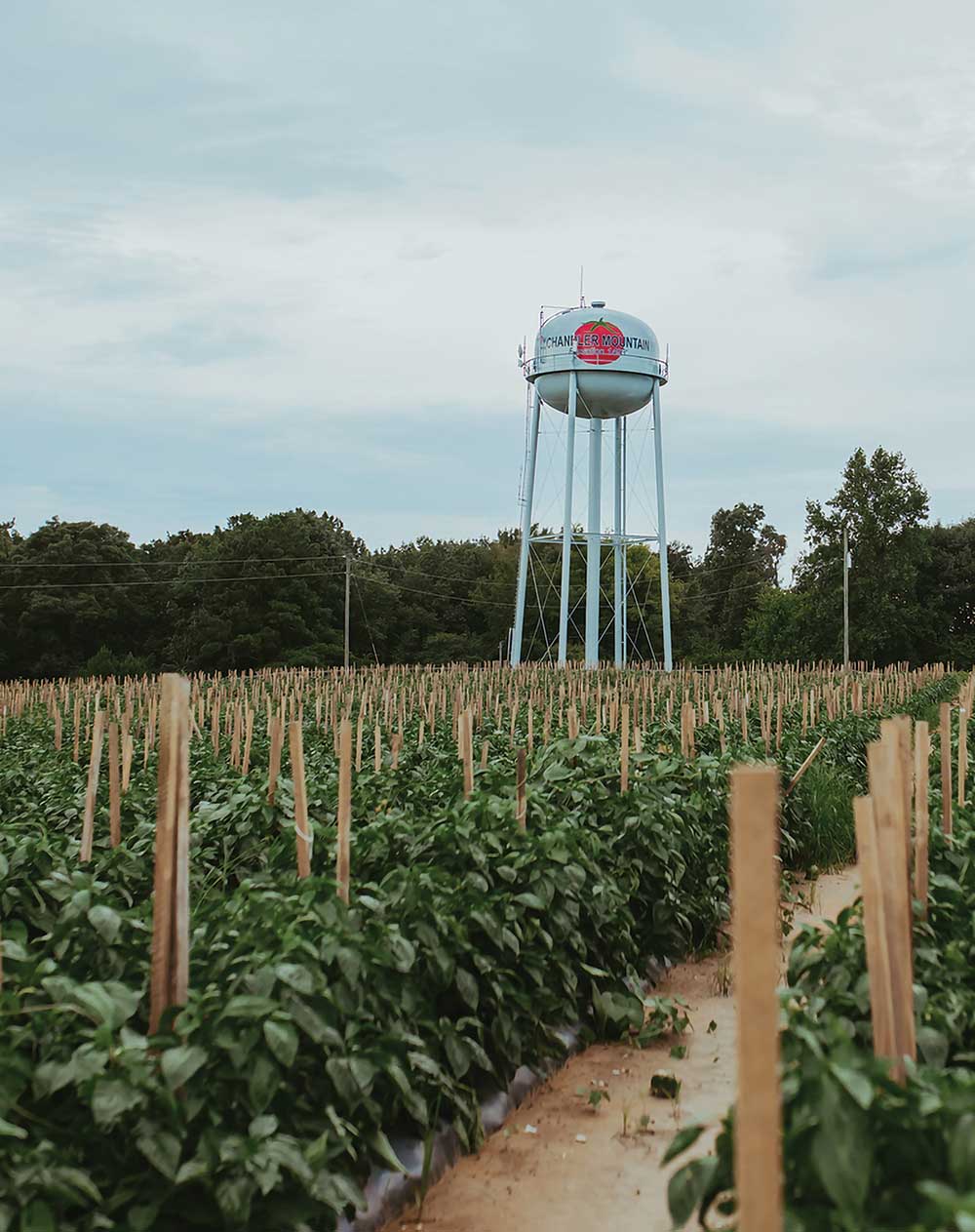
Chandler Mountain water tower stands over field of tomatoes

“Tomatoes speak of summer,” adds Texas transplant Heidi Cupstid-Bader, now a Pell City resident. “As a child, we’d pick them from my dad’s garden. We’d come home with buckets of vegetables, but before we started shelling peas, we had a delicious tomato sandwich and a cold glass of sweet tea. It’s not just the sandwich; it’s childhood summer memories.”

Even the movie industry recognizes the emotional connection to the tomato sandwich experience. In the 1996 movie “Harriet the Spy,” while 11-year-old Harriet makes her school lunch, her mother suggests some variety in sandwich choices. Harriet quickly admonishes her mother for even suggesting that she take something other than her beloved tomato sandwich. “I know what I like,” she flatly stated.

Southerners know what they like, too, and for tomato lovers in north and central Alabama, quenching the hunger for a tomato sandwich begins with a trip to Chandler Mountain beginning around July 4 when the first fruits are ready. Due to the volume of tomatoes produced and shipped from there, Chandler Mountain is known as the unofficial “Tomato Capital of Alabama.” And because of the sandy soil and breezy, cooler temperatures, Chandler Mountain is uniquely suited for producing high-quality flavorful tomatoes.

The Chandler Mountain tomato is something of a love story, the desire for the unattainable finally quenched after months of waiting. The season is four months long, at best, so these beauties are unavailable for the remaining eight months of the year. For tomato sandwich lovers, the wait is torture. Thankfully, the wait is over and until the end of October or early November, the tomato sandwich is back on the menu.
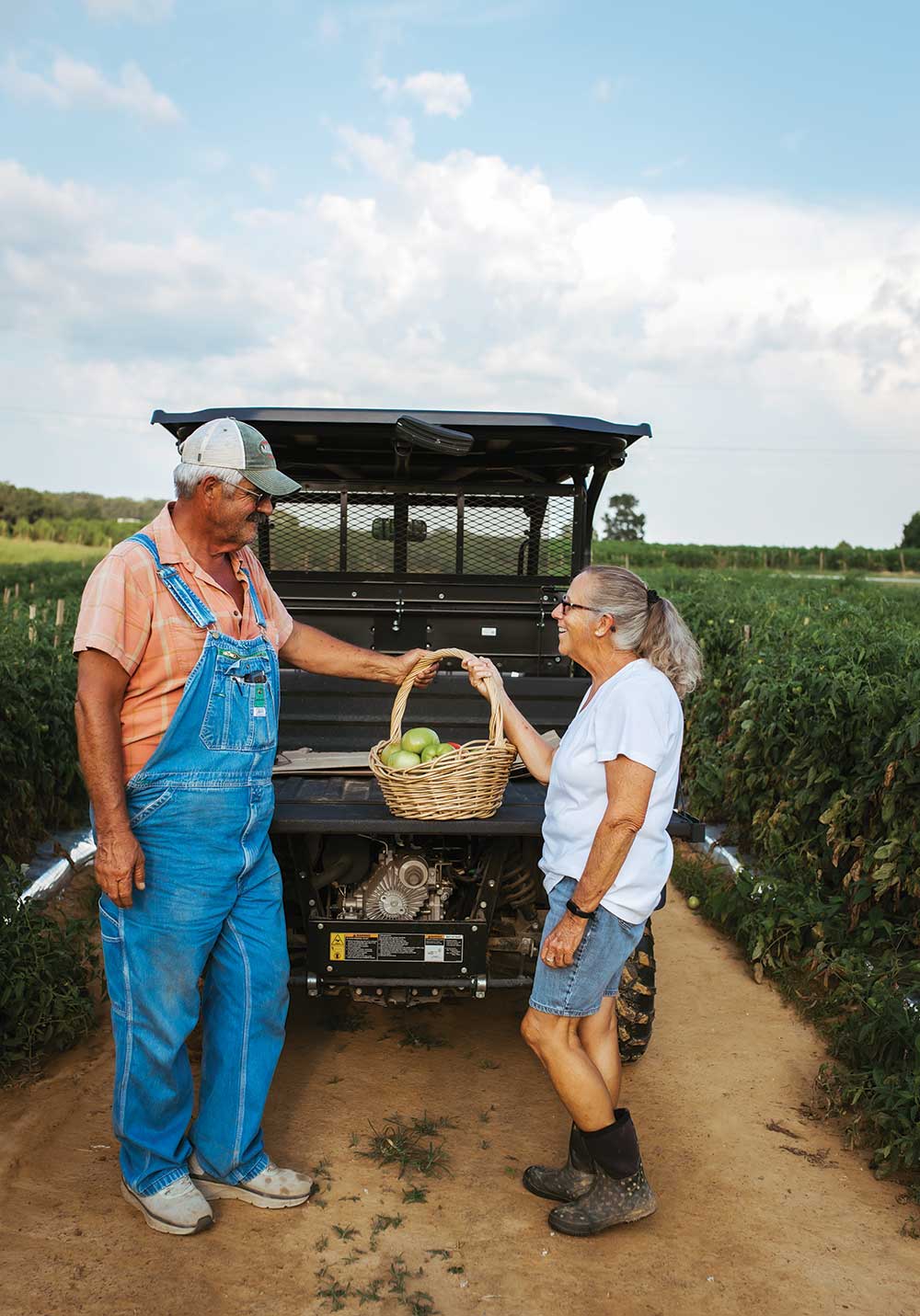
Paul and Cindy Alexander with a basket of their bounty

Chandler Mountain is home to several multi-generational tomato farms. Paul and Cindy Alexander own Alexander Farms in Steele. Paul, who also serves as pastor of Reeves Grove Baptist Church in nearby Whitney, is the third generation of his family to work the farm. He runs the farm with Cindy and his brother, Glenn. With no children to pass the farm down to, the couple is taking it a season at a time, with no immediate plans for retirement. “The Lord’s blessed us,” says Alexander.

The Alexanders have 240 acres and use 60 acres for their tomato crops. They hope to produce 100,000-150,000 25-pound boxes of tomatoes to sell. In addition to tomatoes, they grow squash, cucumbers, corn, okra, peas, peppers, pumpkins, peanuts, and flowers, most of which they sell from the farmstand on their property. The farm produces two varieties of tomatoes called Lancer and Patsy, both are big rounds and perfect for tomato sandwiches.

They still laugh when they tell the story of the day the lady came with knife in hand to test their product. “She said she’d bought tomatoes somewhere else last year and didn’t like them,” said Alexander. “She had a knife with her and asked if she could cut into one. I told her to help herself and if she didn’t like it, I didn’t want her to buy it. Both she and her husband tried it, and the husband said, ‘Now, that’s a tomato!’ And they come back about every two weeks (during the season) to buy more.”

Just up the road at Smith Tomato Farm, Chad Smith grows many types of heirlooms, rounds, Romas, grape tomatoes, cherry tomatoes, and yellow non-acid tomatoes. Their 300-acre farm, which his uncle started in 1965, features 80 acres of tomatoes and 20 acres of other vegetables and pumpkins. Their typical crop yield is five million pounds of tomatoes.
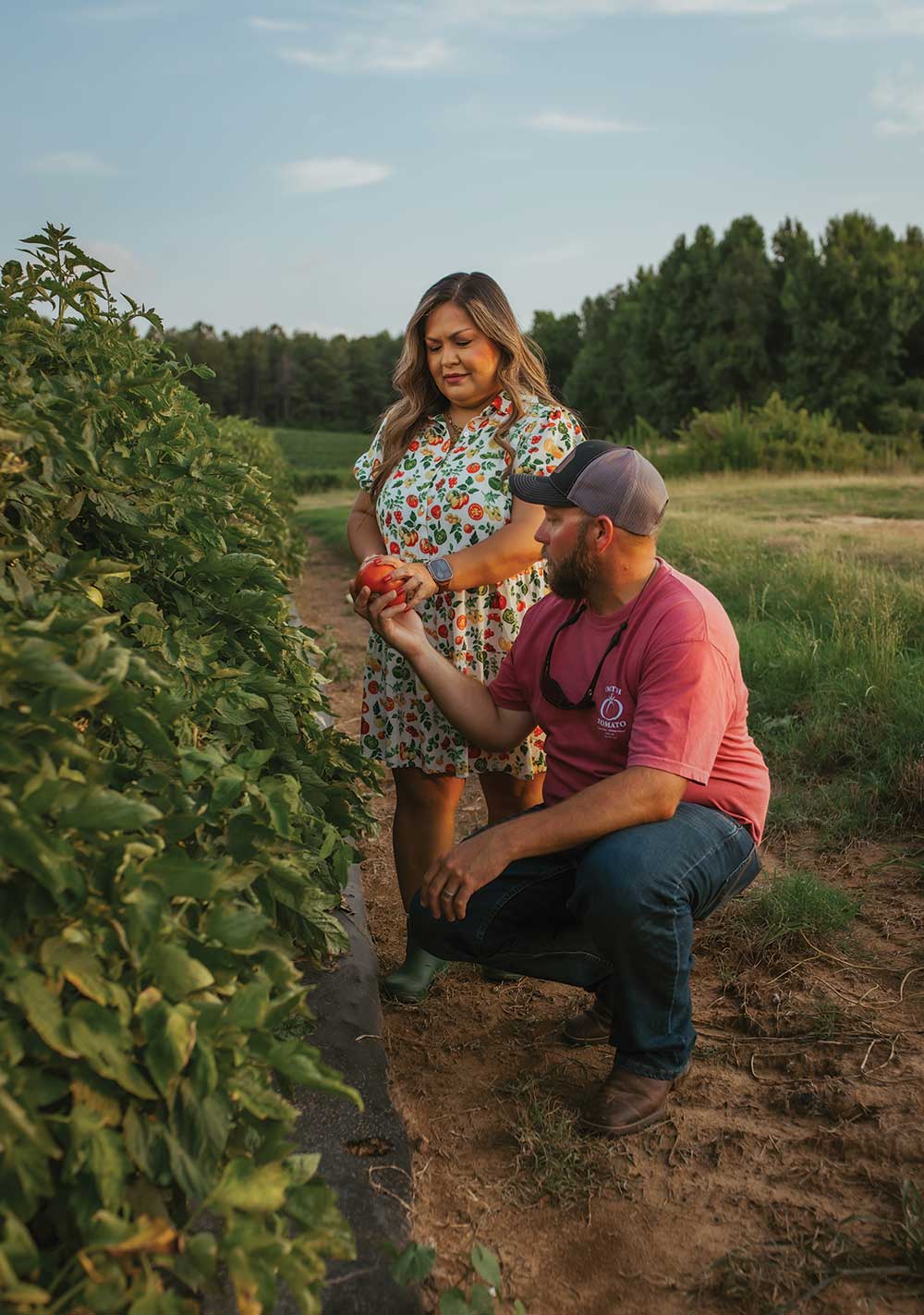
Esther and Chad Smith check the crop at Smith tomato Farm

“Last year we had bad weather, and certain insects were more of a problem. Because of that, about 50 percent of the farmers went out of business,” said Smith. “That’s why I tell people it’s important to buy from local farmers. This year’s crop is better than last year’s.”

Tomatoes are widely recognized as a superfood, which is reportedly good for your heart, eyes, skin, and bones. They are also high in vitamin C and lycopene, both powerful antioxidants. Ironically, the tomato is even better for your body when cooked, especially in olive oil. According to a finding released by the National Institutes of Health, cooking tomatoes in healthy fats like olive oil greatly increases the body’s ability to absorb the beneficial lycopene.

Whether you crave tomatoes because of their health benefits or simply for the taste, there are many ways to prepare them. Salads, pastas, soups, stews, and chili have their flavors amplified by the addition of tomatoes. The best tomatoes, however, can stand on their own, dressed only in mayonnaise and bread.

All hail the tomato sandwich. While not universally loved, the tomato sandwich is a summertime ritual in the South. However, there is serious contention in the tomato sandwich arena. People are fiercely passionate about their own recipe for this most sacred of summertime fare.

For instance, should the tomato be peeled or not? What type of bread should the tomato be nestled between? What spices or herbs are used (salt and pepper, garlic, paprika, oregano, basil)? While most agree the mayonnaise should be applied liberally, people tend to be zealous regarding the brand of mayo to use. Lastly, are other ingredients invited to the party? Many around the country include bacon, leafy greens, or cheese.

Traditionalists call for a simple approach, allowing the tomato flavor to shine. Around here, it’s a simple recipe, with essentially 3 ingredients – tomato, cheap white bread, and mayonnaise, along with salt and pepper. And then there’s the finesse.

The tomato should be an heirloom variety from a local farm, preferably from Chandler Mountain, and should be large enough to fill out the bread. Cut a beefy slice of at least one inch. Slather one slice of cheap white bread with Duke’s (or Hellmann’s or Blue Plate). Place tomato slice on the bread, then liberally cover the tomato with more mayonnaise. Salt and pepper before finally placing second piece of cheap white bread on top of tomato.
Pell City native Joe Dorough looks forward to the arrival of ripe fresh tomatoes on the Fourth of July. “My favorite is the better boy variety!” he says. “Use Duke’s mayonnaise on sourdough bread and if you want more flavor, add four slices of thick bacon and a slice of Vidalia onion. This is southern soul food!”

Dorough’s friend, Fayne Howell, agrees with the mayonnaise choice but insists that white Sunbeam bread is the only option. “Sometimes I add a slice of Vidalia onion,” she adds with a smile, “but only if I won’t be in close proximity to people.” Her favorite sandwich tomato is the Cherokee Red.

A common sentiment when eating a tomato sandwich is that it is best eaten over the kitchen sink. Biting into the juicy goodness is sure to leave your arms, if not your clothes, dripping with tomato succulence. The juice from the tomato blends perfectly with the mayonnaise and seeps into the white bread, creating a thin, wet, pulpy, somewhat precarious vessel for holding the tomato.

There are many variations and adaptations to this recipe worldwide. Some regions prefer sourdough, wheat bread, or even biscuits. Some toast the bread. Still more variations surround the seasonings and additional ingredients. One of the most surprising twists comes from beyond our planet. Crumbs in zero gravity can float away and become problematic for equipment, so tomato sandwiches in space are made with tortillas.

One thing people do agree on is that one should not skimp on the mayonnaise. In a comedy sketch, author and humorist Sean Dietrich, known as “Sean of the South,” suggests that only by using a masonry trowel can you really get enough Duke’s on your tomato sandwich. At Smith Tomato Farm, Smith tells the story of his uncle, Carl, who when asked what they put on their tomatoes at the farm to make them taste so good would answer “mayonnaise” with a grin on his face.

Truly what makes Chandler Mountain tomatoes taste so good, says Smith, is the sandy, rich, and well-drained soil, along with the elevation at which the plants grow. “When you have well-drained soil,” explains Smith, “it dries out and you can add water as you need it. The next thing is the steady air flow and cooler weather. The expertise and the timing of certain things you do is a big thing, too.”

Cathy Limbaugh of Lincoln is a huge fan of Smith Farms tomatoes. She and husband, Curtis, enjoy a spin on the classic tomato sandwich using homemade biscuits with butter, tomatoes, and cheese. “It was always a special Friday night dinner when my mother lived with us,” she remembers. “We still enjoy them when tomatoes are in season.”

So, what will your tomato sandwich cost this year? “It’s simply supply and demand,” explains Alexander. “If everybody’s got good crops, the product is out there, and the price is going to be pretty cheap. And the market can change from week to week.”

As long as the supply is there, the demand for Chandler Mountain tomatoes is sure to be strong. The mighty ‘mater sammich may not actually be manna from Heaven, but after the long wait for the perfect tomato, it just feels Heaven sent. It’s just so good it’ll make your tongue slap your brains out.we are just the caretakers of it.”
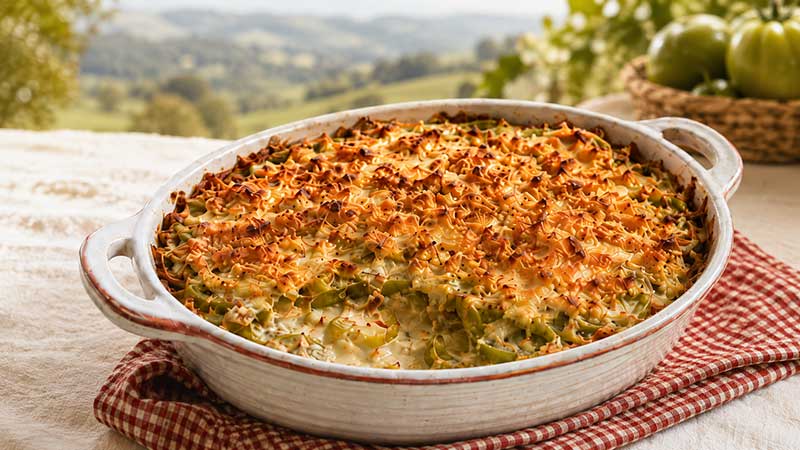

Green Tomato Casserole

Ingredients:

  • 4 medium green tomatoes cut in 1/4 inch slices
  • 1 tsp. sugar
  • 1 tsp. salt
  • 1/2 tsp. pepper
  • 2 cups bread crumbs
  • 1 cup sharp cheddar cheese
  • 1 tbsp. butter or margarine

Arrange one layer of tomato slices in bottom of greased 1 1/2 quart casserole dish. Combine salt, sugar and pepper, mix well. Sprinkle tomatoes with 1/2 sugar mixture, 1/3 bread crumbs and 1/3 cheese. Repeat layers, but omit cheese. Dot butter over top of casserole. Cover and bake at 400 degrees for 1 hour. Add remaining cheese. Bake uncovered for 5 minutes or until cheese melts.

Oven-Canned Tomatoes/Vegetables

Prepare tomato or vegetable as usual. Blanch. Fill jar with mixture and close lid. Place in cold oven. Set temperature to 275 degrees. Cook 1 hour and turn off oven. Leave until oven has cooled down.

Where Levi & friends belong

Story by Elaine Hobson Miller
Submitted photos

On the day Eddie and Dedra Adams first looked at their 80-acre farm in Steele, a thunderstorm came up. When the couple and their Realtor took shelter on the porch of a 100-year-old wooden house, Dedra looked out over the five-acre lake in front of the house and proclaimed, “This is where we’ll raise our boys.”

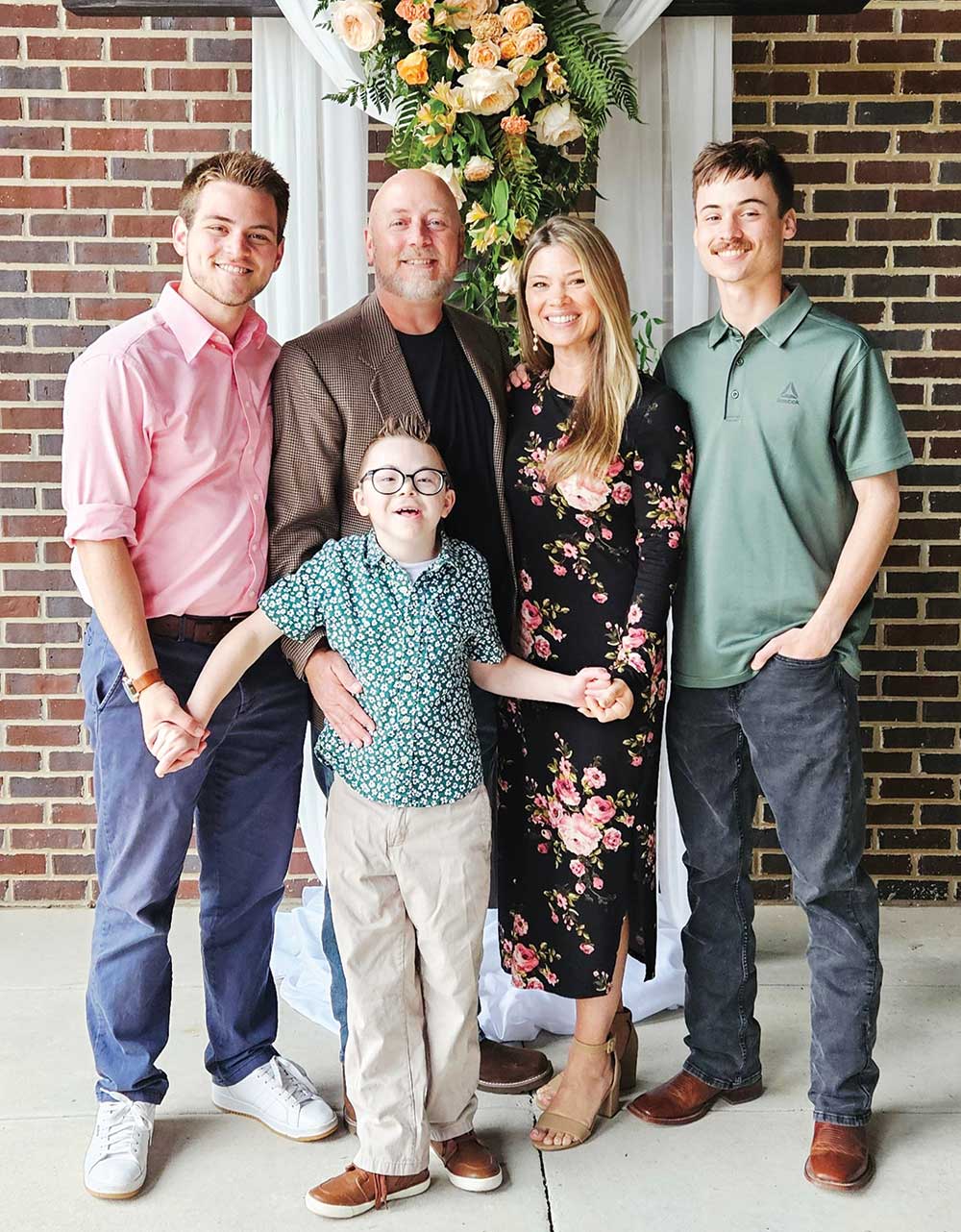
Family photo of Levi (front) with Caleb, Eddie, Dedra and Noah

The couple had two sons at that time and had been looking for property that would help them fulfill their dream of building a Christian family retreat. While it would be another seven years before the family actually moved to the farm, the boys were raised spending lots of weekends there.

“Noah was 7 and Caleb was 5 when we bought this place in 2013, but we didn’t move here until 2020,” says Dedra. “Eddie and the boys occasionally used a tiny camper to spend time up here together during that first seven years, but more importantly, the ministry began very quickly, within the first six months.”

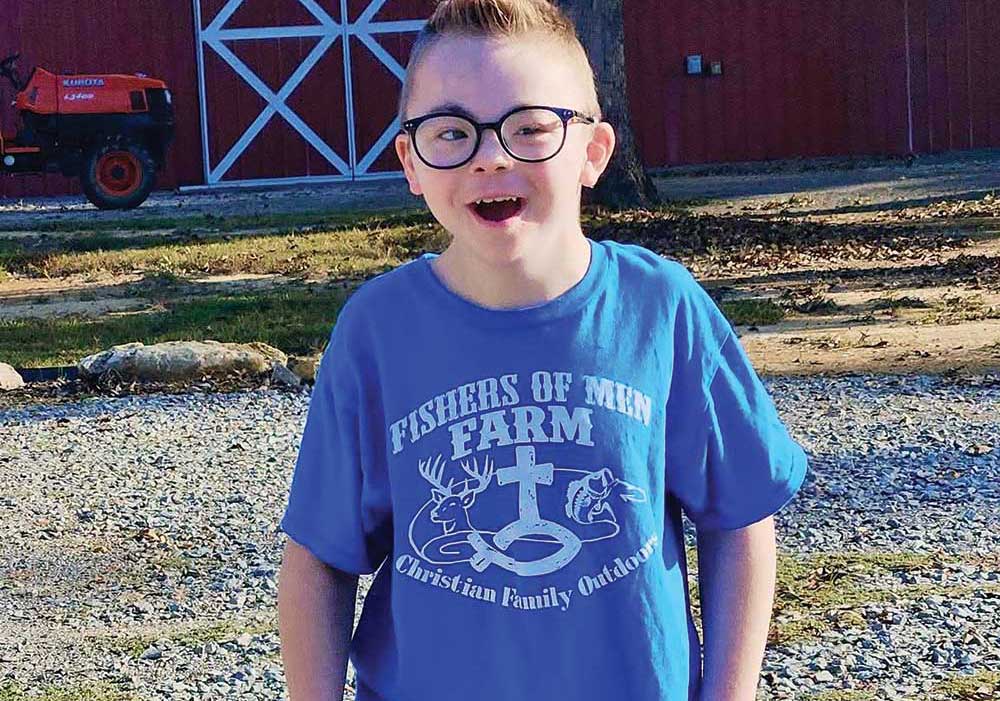
They dubbed their acreage Fishers of Men Farm, a ministry dedicated to helping families and individuals reconnect with God and each other through activities in His great outdoors. “We’ve had men’s ministry events, church services and picnics, father-son campouts, weddings, family reunions, family Christmas parties and anniversary celebrations here,” Dedra says.

The couple isparticular about what they allow to be held on their property. “We drew up bylaws that say events cannot contradict God’s word,” says Eddie. “We host Christian events or any event that promotes family. We also do smaller events like church cookouts. The Farm is used to promote and strengthen family relationships through activities such as hunting, fishing, hiking and camping.”

When their third son, Levi, was born in 2015 with Chromosome 9p Deletion Syndrome and Down Syndrome (see sidebar), the couple quickly realized how isolated families often feel when they have children with physical or mental disabilities. Their special-needs son inspired the couple to add another event to their roster, a Levi and Friends Day aimed at supporting these families.

“Within the first two years of having Levi in our lives, our hearts were burdened by the number of families who also have children with disabilities, but who do not have a strong, loving community surrounding them, helping them realize they are not alone on this journey,” says Dedra. “We are blessed with a community and a church (Faith Community Fellowship in Springville) that embraces Levi. We want these families to know they are not alone either.”

That’s how Levi and Friends Day, or LaF Day, as they affectionately call it, came about. By far the largest event on the Farm, it’s usually held on the second Saturday in October. (That’s the 10th this year.) It’s a free, all-day event for families with kids with disabilities. “We share resources with them, tell them about programs that help them, and love on them, so they won’t feel so isolated.”

 Dedrasends Facebook invitations as well as digital versions via her contacts list. She tells folks to invite others as well. “Attendees need to RSVP, though, so I’ll know how many goody bags to make up for the kids and will have a head count for the food team,” she says. The bags contain items such as fidget spinners, stickers, snacks and sometimes T-shirts.

Levi & Friends is now the biggest event the farm sponsors and involves other Christian-based ministries that donate time to be part of it. “Hunting for Christ comes out and does archery,” Dedra says. “Canoe Creek Stables brings a petting zoo, Miss Magoo’s Reptile Zoo brings snakes and lizards.”

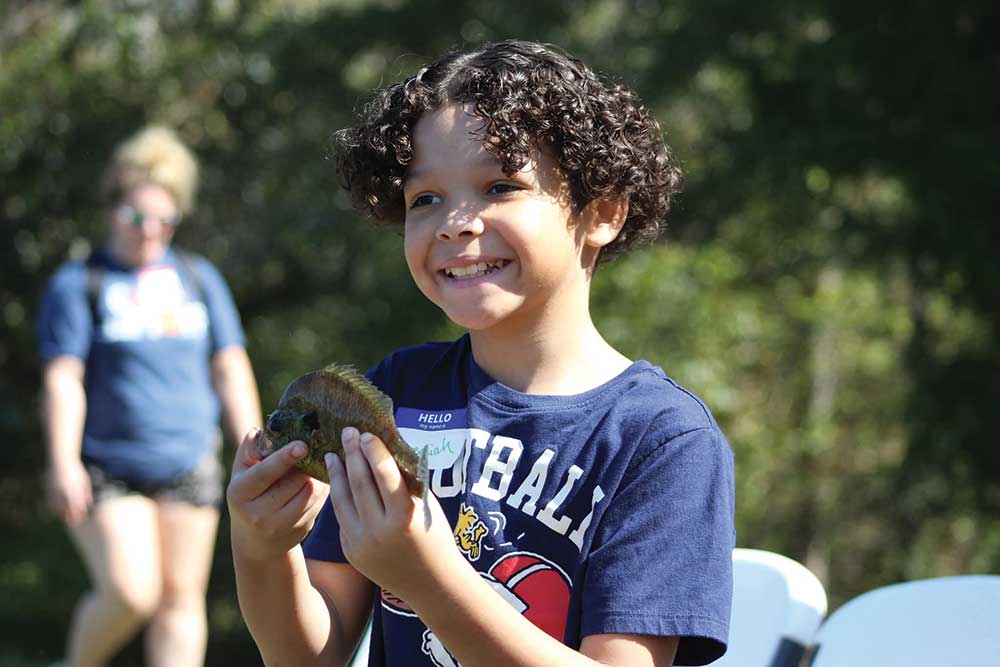
“We have hayrides, fishing teams, a cooking team that donates food and time, and 40-50 volunteers helping out,” Eddie says. “We assign buddies when the families check in, and they help the kids navigate through the day so the parents can relax. A lot of these kids have never shot a bow and arrow or caught a fish. We try to give them a country experience.”

Some of the kids have autism, others, Down syndrome, some are blind and some are limbless. “We welcome kids and young adults with any kind of disability,” Eddie says. “One girl without arms shot a bow and arrow here with her feet one year. She also caught several fish.”

Advertising is mostly by Facebook, word-of-mouth and local churches. About 150 people attended the event last year, including families and volunteers. “We had at least 50 kids from 33 families here in 2025,” Eddie says.

Fishers of Men Farm fulfills dreams God placed on the couple’s heart at various times in their lives. Eddie, a physical therapist at Back in Motion in Springville, was raised in Pinson, and grew up spending a lot of time visiting his grandfather’s farm in Blount County. That gave him the desire to own his own farm one day.

Dedra, who taught pre-K at Springville Elementary School for several years but will be working at the front desk at the new Springville Intermediate School this fall, was born to missionary parents in Guatemala, and grew up there.

Shortly after they were married, the couple did a short-term mission trip to Brazil. They’ve done medical and evangelical missions there, evangelical crusades and Bible teaching in Uganda, built churches in Honduras and helped build an orphanage in Costa Rica. It seems that their two older sons may be following in their parents’ footsteps.

 “They are such incredible young men,” says Dedra. “Having a sibling with disabilities has influenced them a lot. Our oldest, Noah, who is 20, has a heart for rescuing trafficking victims. Caleb, 18, just graduated high school with honors, and feels called into ministry, but he’s not sure what that looks like just yet.”

Proceeds from their Fishers of Men property rentals go to support Fishers of Men International Ministries, a 501c3 non-profit organization that supports mission trips for them and others.

“We formed a 501(c) 3 because we had some big donations, and we wanted to let donors take tax deductions,” Dedra says. “We still have ministry partners we’ve had from the beginning.”

“We tithe 10 percent to two other local ministries, Hunting for Christ and Restoration Academy,” Eddie says.

There have been lots of donations of services, too, especially when constructing the farm’s buildings. “We’ve had electrical, plumbing and carpentry skills donated,” he says.

They are still in Phase I of their Master Plan, which includes a gazebo, two fishing piers and a covered pavilion with tables and chairs. They also have an equipment barn, and Eddie wants to add a handicap-accessible shooting house.

Their rustic, board-and-batten Event Barn, like the other buildings on the farm, is handicap accessible. It has a kitchen, bathrooms, meeting room with a stage and an outdoor grilling area. Its inside walls are decorated with fish caught in the farm’s lake and deer heads harvested on the property, as well as photos of baptisms in the lake and other events. “The tin wall boards in the bathrooms came from an old barn in Trussville,” Eddie points out.

Phase II of their Master Plan includes taking the road to the other side of the property and building handicap-accessible cabins.

“It’s on our hearts to build some guest cabins, and our design is to do three across from the lake,” says Eddie. “We want two-bedroom cabins, about 1,000 square feet each, that we can rent to anyone or provide to a family with special-needs or even missionaries on a temporary basis. We hope this is the next thing God lets us do. But there will be no charge to families with disabilities. We will have to get a road into that area,” too.

They’ve come a long way since first viewing the farm in 2013. “It was way overgrown then,” Dedra says. “It had that dilapidated farmhouse, which we weren’t able to save.”

The house had to be torn down, but the couple salvaged all they could from it and used parts in building their family home. The clawfoot tub, the cast-iron, wall-mounted sink and washboards are all part of their house now, and the farmhouse’s foundation of hand-carved stone is part of their fireplace. They also saved a lot of the lumber, stone and tin and continue to find uses for those.

“This place was a blank canvas when we first saw it,” Eddie says. “The sisters who owned it wanted it to become a church camp. They had seen our brochure and wanted us to have it. They already had two cash offers, but one of the sisters said, ‘We’ll wait on them.’ We had to get financing,” he says.

“Praise the Lord, we closed within 60 days from the time we first saw the property. I think God set this aside for His purposes years ago. We are excited to see what God does with the farm in the future. He owns the farm, we are just the caretakers of it.”


Story by Elaine Hobson Miller
Submitted photos

Levi Adams, who turns 11 in November, is a very special child who brings joy to his family every day.

He has Chromosome 9p-Deletion Syndrome, as well as translocation Down Syndrome. The former means part of Chromosome 9 is missing, according to Dedra. “Neither us, nor the eight specialists he has, have ever met anyone with his specific genetic makeup, but his pediatrician described it accurately, saying, ‘All this means is that he will write his own story.’”

And so he has.

“When he was diagnosed in-utero, we were told multiple times that because of the many markers indicating chromosomal abnormalities, he would probably never walk, never talk, be severely intellectually disabled, which would probably render him wheelchair bound in a vegetative state for life, and all that only IF he survived outside the womb,” Dedra says.

Levi not only survived but is thriving. His development was delayed, and he does have intellectual disabilities and continues to have medical complexities. But before he was born, God promised Dedra in a dream that he would walk one day.

“Within the first year after his birth, when I was doubting that we would ever see him walk, the Lord confirmed His promise through three other people who also had dreams of Levi walking,” she says. “And sure enough, at almost 5-years-old, Levi began walking completely on his own.”

Levi is considered non-verbal, although he has roughly 25 words or word-approximations (his version of words), about 20 signs, as well as the ability to use LAMP – an assisted technology device that allows him to communicate through pushing word buttons. Because of his intellectual disabilities, this will most likely be the way he communicates for the rest of his life.

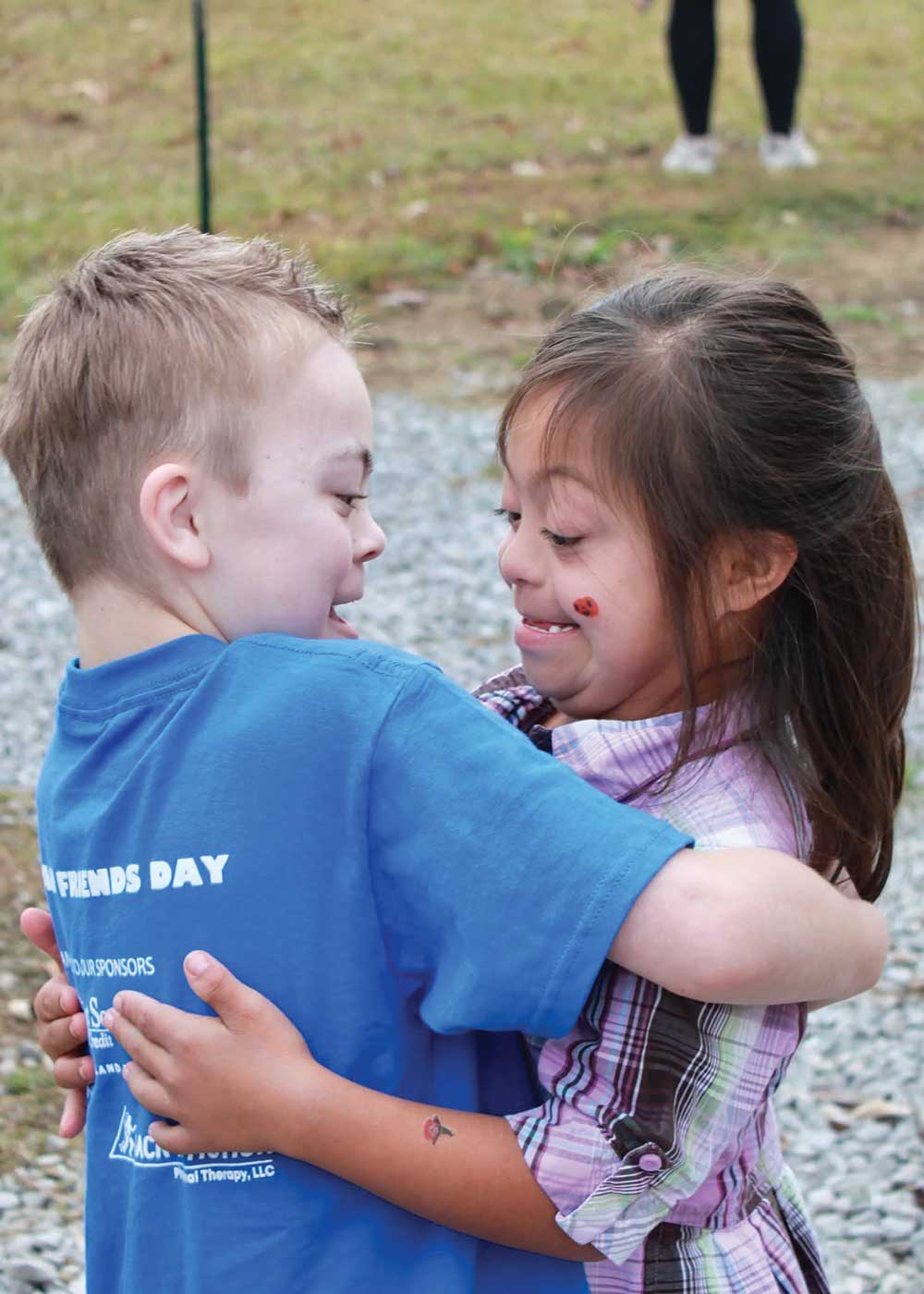
“As the saying goes, ‘Actions speak louder than words,’ and this is true for Levi,” Dedra says. “He has this incredible ability to communicate with others without using words. His smile, his eyes, his laughter and his hugs communicate more than most of our words ever could. He is a gift and teaches us so many lessons about life, love, strength and purpose!”

There are no textbooks or medical information that can tell them exactly who Levi will be, or what he will be capable of doing or achieving. All they know is that Levi has a level of joy and love that seems to be straight from God.

“It’s definitely not natural. It’s supernatural,” Dedra says.