The year was 2000. Y2K. It was a time for thinking about new beginnings. After all, a new century was dawning.
Meanwhile, a new, young mayor had come on the scene in St. Clair County – full of ideas, yes, but a yearning to learn from his older counterparts, too. So, Guin Robinson, mayor of Pell City at the time, took an old idea, resurrected it and helped put it on the road to revitalization.
This past December, the St. Clair Mayors Association celebrated its 25th year as what has become a catalyst for engaging leaders from around the county with programs, conversations and informational resources to play a role in moving the county forward as a team.
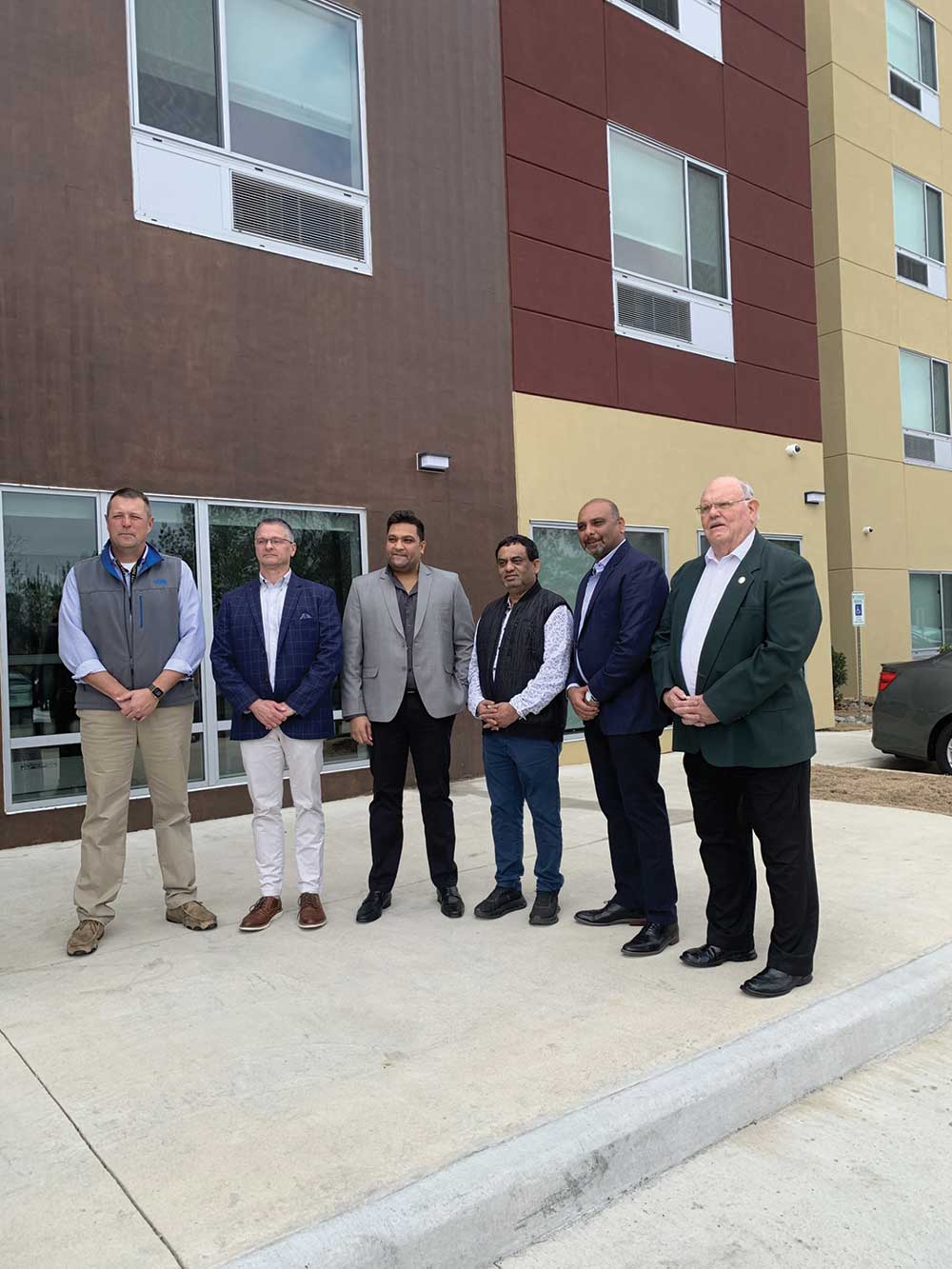
Springville Mayor Austin Phillips, St. Clair School Board Member Bill Morris and Moody Councilman Ellis Key
Robinson, no longer mayor but dean of economic development for Jefferson State Community College, welcomed the group to the college’s Pell City campus to celebrate. In the midst of the reminiscences, it was easy to detect the camaraderie developed over the years.
“When we organized the St. Clair County Mayors Association 25 years ago, the county was in a very different place than it is today,” Robinson recalled. “The St. Clair County Economic Development Council was still new, and the idea of cities and towns working together was, for the most part, untested.
In 2000, a largely new group of mayors from across the county was elected. “Early in that first year, we met as a group and quickly recognized that we had much in common, enjoyed working together and could accomplish far more collectively than we ever could alone,” Robinson said. “That moment was significant and, in my view, marked the beginning of a new spirit of cooperation that continues to this day.”
The original mayor’s association had been established years before but had gone dormant for some time before Robinson suggested it be revitalized.
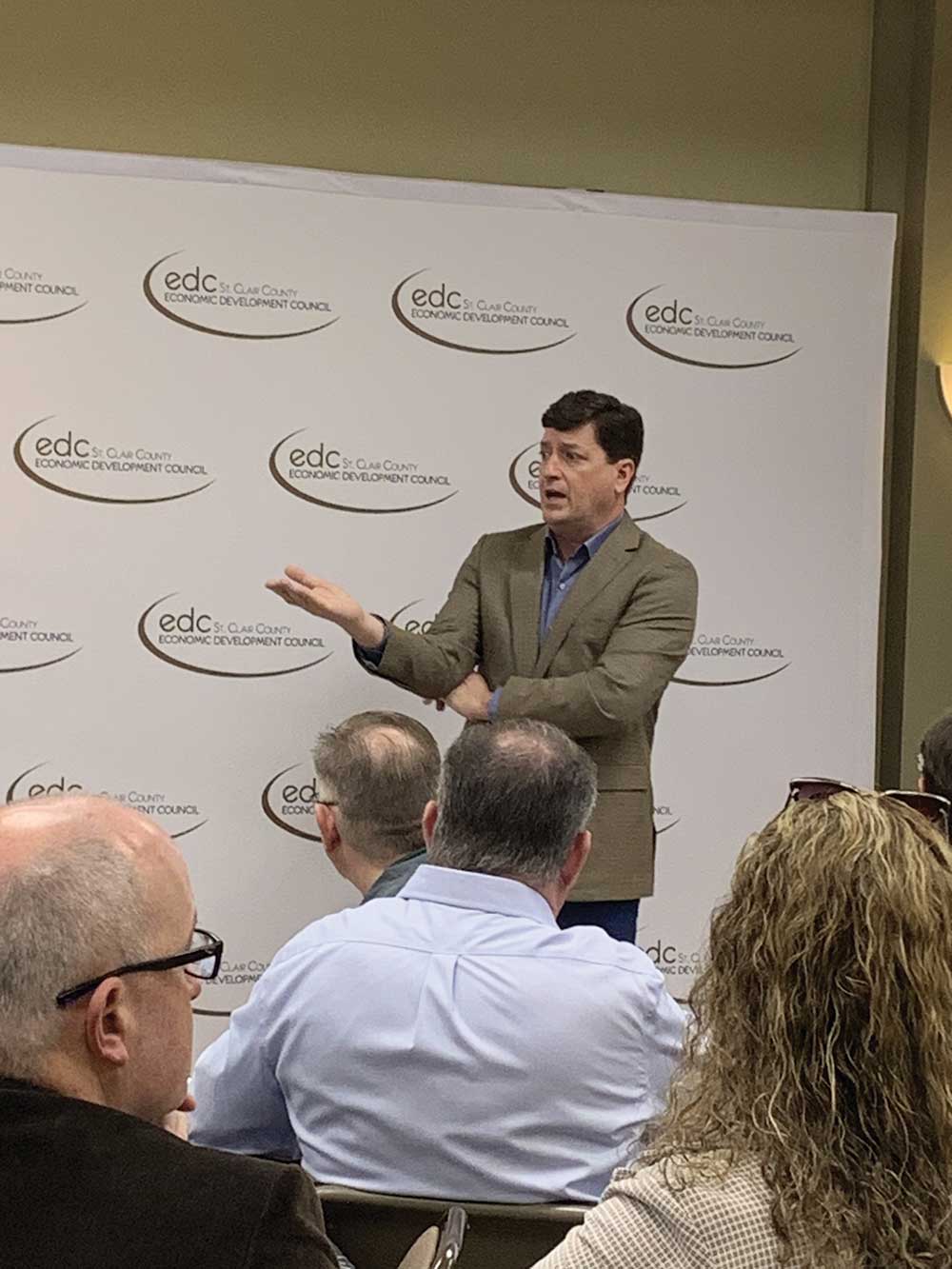
Guin Robinson addresses the crowd
Robinson served as its first president and soon, the group was up and running and making an impact. They exchanged ideas. They heard updates from state and county officials. They shared what worked and what didn’t in their own towns and cities.
The end result was a more unified county of leaders, sharing in each other’s triumphs and learning from each other’s tries that may have fallen short of success. They found common ground, and they worked together to make a positive impact.
“Over the years, the Association has grown to include non-mayors, a change that has only strengthened both the organization and its impact,” Robinson said. “Today, it serves not only as a forum for leaders to gather, but also as a catalyst for collaboration aimed at improving the quality of life for citizens throughout our municipalities and the county as a whole.
It became a resource center for not only mayors, but county officials – even state officeholders. They were able to hear the latest news from all parts of the county from those who knew it best, and they impressed state and federal officials with a unified front when requesting funding.
In an editorial the same year the association reorganized, The Daily Home newspaper endorsed the concept, calling it “a major breakthrough in effective communication with the ability to bring about improvements all around the county.”
The editorial rightly noted that issues like transportation, infrastructure and water are not unique to a single town. They are shared. “But, more important,” the newspaper said, “they realize the answers are shared, too.”
That has been the key to this success story since 2000. It’s a cooperative effort that continues to provide a strong foundation for progress that still thrives today.
“In my opinion,” Robinson said, “the Mayors Association has exceeded our earliest hopes for what could be accomplished.”
Much-anticipated restaurants set to open in Pell City
Story by Paul South Photos by David Smith
There’s a recipe for cooking up a broader restaurant menu for hungry St. Clair County residents and visitors – patience, hard work and teamwork.
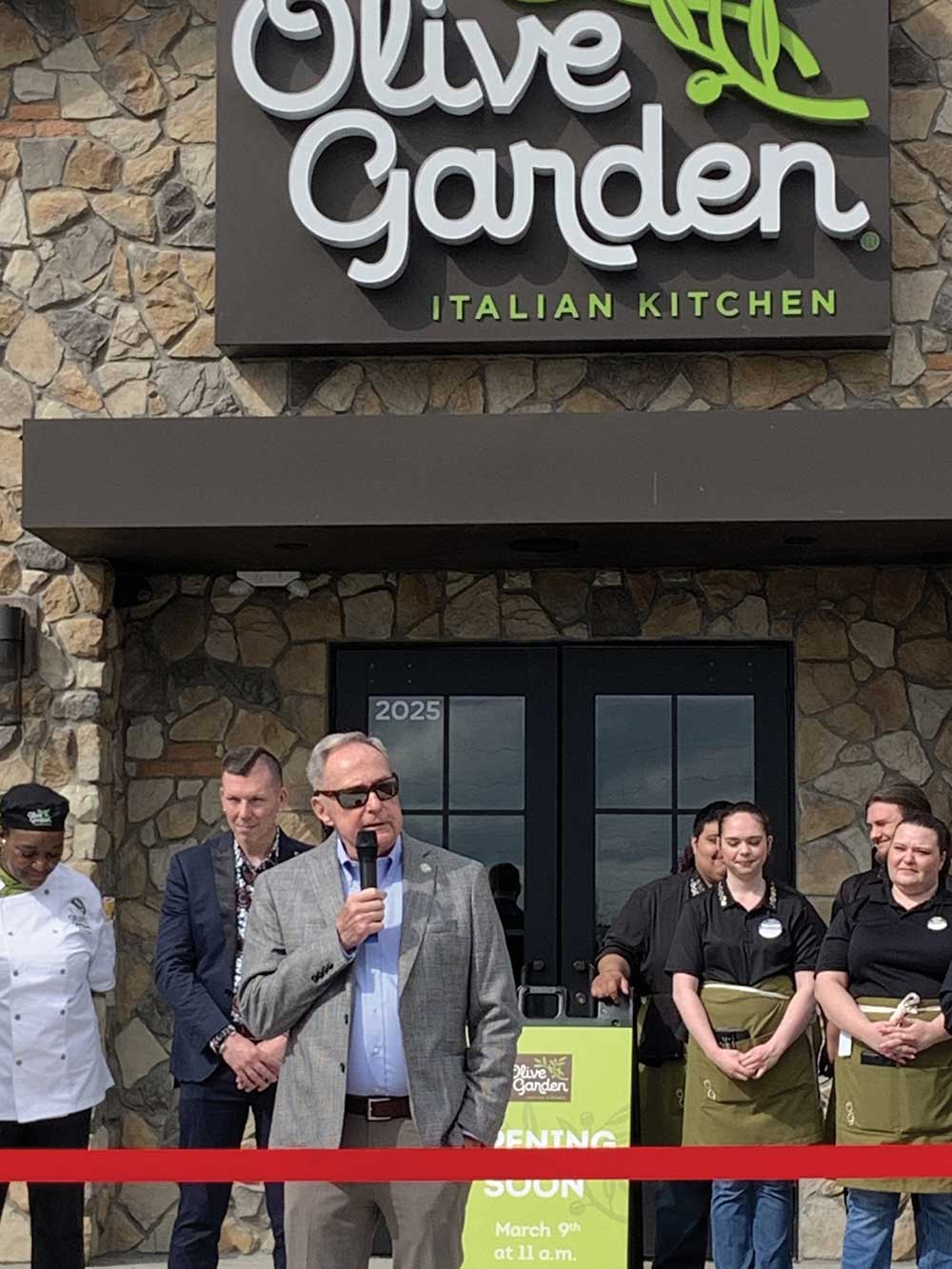
And that formula will come to life in 2026, with two popular national chains coming to Pell City in early Spring – Olive Garden and Longhorn Steakhouse. Groundbreaking for the restaurants took place in March 2025, and Longhorn Steakhouse is expected to open first with Olive Garden’s following about three weeks later, officials say.
The two newcomers will join Outback Steaks and prove an unwritten economic development adage, said Pell City developer Bill Ellison. Brands follow brands.
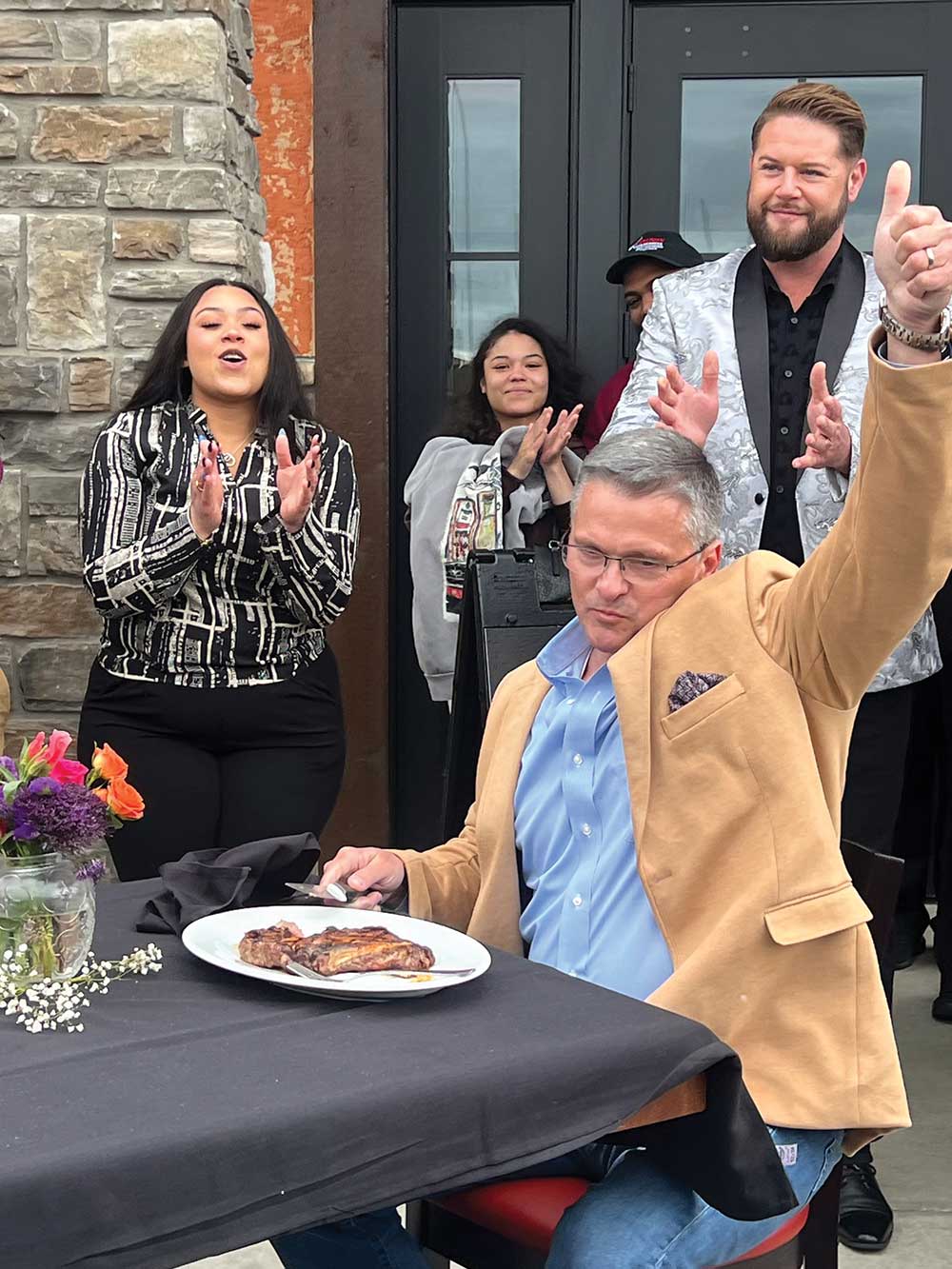
Classic western vibe at Longhorn Steakhouse
The restaurants come on the heels of the Pell City Square retail development that features Hobby Lobby, PetSmart, TJ Maxx, Old Navy, Ross, Ulta and others. Ellison was a co-developer of the shopping center.
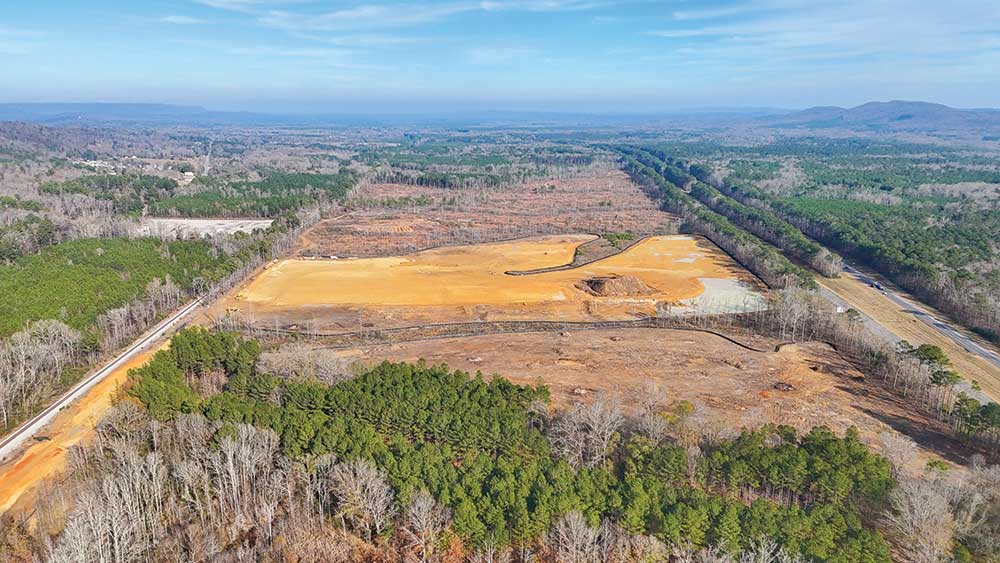
The new restaurants, located at the intersection of U.S. 231 and Hazelwood Drive adjacent to the I-20 interchange, are in response to residents who have long hungered for new full-service eateries in one of Alabama’s fastest growing counties.
“This has been something the community has really wanted,” Ellison said. “We’ve had a lot of retail success, but we just didn’t have the full-service restaurants. We’ve done well with everything else.”
He added, “I think when Pell City Square shopping center came in with that store mix, that’s sort of a regional type shopping center. The tenant mix that’s there, we had hoped, would bring in at least one full-service restaurant to the community, and we got Outback.”
Outback has had blockbuster success, Ellison said. “It’s a truly outstanding restaurant. As I understand it, the restaurant had the highest opening volume of sales in the history of Outback, and it’s been extremely high volume ever since.”
Booth waiting on customers to sit at Olive Garden
Pell City Square’s arrival lured more shoppers to Pell City than had shopped there in the past, Ellison said. The restaurants are the culmination of two to three years of work, Ellison said.
“The expansion of the trade area helped us to recruit Olive Garden and Longhorn to Pell City. It’s kind of like brands follow brands. When we got that shopping center, and Outback came, other brands look at Pell City, and they say, ‘Those stores came to Pell City. We might need to look at that.’ That just kind of gets the synergy going.”
Don Smith, executive director of the St. Clair County Economic Development Council, said bringing in new full-service restaurants was part of the public’s wish list.
“Having more sit-down restaurants was something that the community had expressed a desire in having here,” Smith said. “The elected officials have listened and made it a priority for us to work on. Through collaboration and partnerships with the developer, property owner, the city, the county and the EDC, we were fortunate to get those national chains to come to the community, to go along with those shoppers who are coming from outside of Pell City to shop at the new Pell City Square.”
Longhorn and Olive Garden are under the Darden Restaurants umbrella of brands, Ellison said. Darden operates 2,100 restaurants nationally with more than 200,000 employees.
Pell City’s growth, local industries and the Honda plant, tourism with Logan Martin Lake and a growing health care landscape all fueled the company’s decision to come to the county. “Needless to say, that’s a big honor for Pell City, Alabama,” Ellison said. “To attract those restaurants to this city, that really says something.”
All of this economic activity can have a snowball effect that can bring more restaurants and retail to the area. Big picture is that it can mean a regional boost to northeast Alabama.
“Like I said earlier, brands follow brands,” Ellison said. “It’ll just be a continuing progression. We’re expecting St. Clair County to continue to grow with a very bright future moving forward. As long as St. Clair County continues to grow and Pell City continues to grow, our region will continue to grow.”
Smith credited Ellison’s efforts.
“Bill Ellison worked really hard on a number of different retailers and eateries,” Smith said. “He felt, and we felt that these two brands (Longhorn and Olive Garden) filled a void that had existed. I think the community’s demographic fits really well with (the restaurants’) target customer.”
Ellison makes a critical point. “I didn’t do this by myself. I’m a hard worker and the rest of it. But the elected officials in Pell City and in St. Clair County and the EDC and Metro Bank through the years, have been with me hand in hand through all of this. It’s a team effort.”
For the past six decades, Jefferson State Community College has been guided by a single principle – opportunity. Since it’s opening in 1965, it may look different – much bigger, in fact, but it hasn’t wavered in providing opportunities.
Celebrating its 60th anniversary this past fall, Jefferson State now has its highest enrollment ever – 10,400 and eclipsing its old record set in 2010 by 800 students. The Pell City-St. Clair Campus experienced enrollment gains as well.
Whether it’s opportunities for students to learn and find gainful employment or those doing the hiring having an opportunity to hire workers with the skills they need, its workforce development program has been making a sizable impact in both sectors.
Lineman, welding and construction programs are part of the offerings at Jeff State
Keeping pace with the needs of today’s industries, Jefferson State has unveiled a new milestone in its mission. The college opened a new Workforce Education Center building on the Jefferson Campus, which serves the entire system.
Housing industrial and craft skills training courses, it includes their existing line worker program and new electrical, HVAC and multi-craft maintenance technician programs. The 7,500 square-foot building features flexible classroom spaces and laboratories that can be adapted to a variety of needs within the college’s short certificate Fast Track program.
The Fast Track program is a credentials program offering 35 options within their portfolio of skills training, specifically focused on developing skills needed for high-demand entry level career opportunities. “The new building really represents opportunity for our community,” says Leah Bigbee, dean of Workforce Education for JSCC. “We’ve been strategically focused on industrial and craft skills training because business and industry have been asking for these programs.”
Bigbee says the Workforce Development Program relies on relationships with local businesses and industry to share their needs and help develop and refine the curriculum in each specialty. “Across the board, our programs are developed with actual jobs in mind – from developing the curriculum to having seasoned veterans teaching classes to mock interviews to actual job interview days,” said Bigbee.
“Our programs are really co-created with industry, which is especially helpful in teaching the specific, current skills needed by area businesses,” said Bigbee. “We have the ability to adapt and be flexible to meet those needs. Really, our north star is those companies who give us continuous feedback.”
CDL drivers are in high demand these days
Guin Robinson, Jefferson State’s dean of Economic Development, has a unique perspective and understanding of the workforce needs of area businesses, having served as mayor of Pell City for five years and at Avondale Mills in Pell City as manager of Human Resources.
“When I was mayor, it was all about community and connecting industry and business and recruiting through the Economic Development Council. It’s what I’ve always done and love doing, connecting community to, in this case, the college.”
Jefferson State offers 116 transfer programs, 40 career and technical programs, and 35 non-credit, credentialed workforce education programs. They also offer online courses and 100 dual-enrollment course options.
“The credit classes that transfer to four-year institutions is still a lot of what we do,” Robinson says. “But not everyone has to have a four-year degree. As we came out of the COVID experience, that helped to highlight and better articulate what training and workforce needs we had. Our Fast Track program is playing a vital role in developing and training that workforce. Our new building, being the first completely new building on campus in years, speaks to the significance of the program.”
The short-term Fast Track programs include electrical, HVAC, lineworker, forklift operator, commercial driver (CDL), welding and a host of business and healthcare options. These credential programs help meet the needs of fresh high-school graduates beginning their careers, as well as those reentering the workforce or wanting to change career paths.
“We serve almost three thousand students in the Workforce Department,” says Bigbee. “Our data shows us that 80 percent complete the program and go on to find employment. Companies depend on us to create these customized training programs that really do give someone a leg up and give them a better chance to make it in an entry-level role and be retained, as opposed to someone who is just hired off the street.”
“At the end of the day,” adds Robinson, “it’s about providing economic opportunity for our students and marrying that with the needs of business and industry. It’s very rewarding.”
Some of the Jefferson State workforce development partner companies in St. Clair County include Goodgame Company, Ford Meter Box, Hubble Power and Gorbel. Jefferson State welcomes inquiries from other companies who might want to partner with their workforce development programs.
Several Fast-Track programs are offered at the Jefferson State St. Clair-Pell City Campus each year, including a clinical medical assistant class funded by the Community Foundation of Greater Birmingham.
In the spring, additional fast-track offerings such as welding, field engineering, and clinical medical assistant will be available.
Photo: Winners at the convention. Kylie Entrekin of Coosa Valley Electric Cooperative’s marketing team is second from left. Kylie Mason is third from left. She is in sales and marketing for Coosa Valley Technologies.
The marketing team from Coosa Valley Electric Cooperative and Coosa Valley Technologies received six awards at the Alabama Rural Electric Association of Cooperatives Communications Awards, which recognize excellence in marketing, communications and public relations among electric cooperatives across Alabama.
The awards, given during AREA’s annual communications conference in Huntsville, are for work created in 2024.
“These awards highlight the impact that marketing does for cooperatives and subsidiaries,” said Jon Cullimore, CVEC general manager. “I’m grateful for the team’s efforts and look forward to seeing what they can achieve next.”
CVEC and CVT each earned two Awards of Excellence, the highest honor given in each category. Cullimore received the Best Column Award for his Alabama Living magazine piece, “Giving Thanks After Helene.” The column recounts the devastation caused by Hurricane Helene and highlights the critical role Alabama’s cooperatives and linemen played in restoring power to affected communities.
“Orchestrating an Outage Response,” also published in Alabama Living magazine, was named Best News Story for its behind-the-scenes look at the coordinated efforts required to respond to a power outage.
CVT, a subsidiary of CVEC, won Best Wild Card for “Daily Dose of Fiber,” a nutrition-label-themed cereal box featuring the organization’s fiber service features. Pioneer Utility Resources, a firm specializing in electric cooperative marketing, created the cereal box design.
CVT’s Trunk R Treat Cybersecurity Halloween Event was recognized with the Best Event Campaign Award for its engaging, family-friendly approach to promoting online safety.
CVEC also received two Awards of Merit. The Alabama Living article titled “Helping with Helene” highlighted CVEC linemen providing mutual aid after Hurricane Helene. It was honored in the News Story category.
Safety Director Tommy Tant earned a Best Photo nod for his nighttime image titled “Nighttime Ballet,” which captured the precision and teamwork of linemen working after dark.
Marketing efforts from 2025 will be recognized during the annual conference in October 2026.
No matter how old I get, I always seem to be waiting for the day I finally grow up.
We spend our childhood looking toward all these mile markers — driving, graduation, college, marriage, parenthood — believing that once we pass a few of them, something magical will happen.
We’ll grow up. We’ll know things. We’ll FINALLY arrive and stop feeling like we’re just guessing our way through life.
But here’s the secret no one tells you when you’re young:
You never really grow up. … At least not all the way.Sure, you age. You get larger … taller … wiser in some ways, tired in others. But truthfully, the older you get, the more you realize how little you actually know.
And the more you realize you’re not alone.
The big secret in childhood is that no one ever really warns you that you never really grow up completely … no matter how old you get. I’m convinced even the oldest and wisest among us still have moments where they still feel 16 again, a little unsure and a little lost. Most days, I don’t have a clue what I’m doing. I am literally just “winging” my way through life. At least once a week, I would give anything to call my mom (who’s been gone over 10 years now) and ask her to come over and help me fix my life.
Some days, my kids call out for a grown-up, and it takes me a minute to remember —that’s me. I’M the grown-up. And like so many other “grown-ups,” I still look around wondering how in the world I got here — But here I am. Trying. Failing. Guessing. Growing up. Hoping I’m choosing right. … And occasionally glancing over my shoulder to see if a ‘real’ grown-up is coming to save me.
Spoiler— they’re not. It’s us. It’s always been us.
– Mackenzie Free –
Wife, mother, photographer & current resident of the unassumingly magical town of Steele, Alabama
Historic Springville Rock School will once again focus on education
Story and Photos by Graham Hadley Architectural renderings Courtesy of Stewart Knox Centercut Creative
Springville’s old Rock School has always been a cornerstone for education and community activities in the region. So it should be no surprise future plans for the historic structure continue that tradition.
The Big Canoe Creek Preserve Partners will be developing parts of the building as an educational Nature Center – an immersive and interactive walk-through experience highlighting the natural wonders of the preserve and surrounding areas to help better educate people of all ages about the importance of the regional biome.
“The Nature Center will teach people about all the diverse animals and plants in the Big Canoe Creek Nature Preserve, all the biodiversity, the Big Canoe Creek watershed and what a watershed actually is,” said Preserve Manager Doug Morrison.
Concept designs from Centercut Creative on what the Nature Center will look like
The project will use between 1,200 to 1,900 square feet of space in the historic Springville building. Some of that space is already being put to use as office space for the Preserve staff, which was previously primarily operating out of a small building at the preserve.
The idea for the educational Nature Center came to Morrison a little over a year ago during a planning and zoning meeting.
“The Springville Preservation Society owns the building and has done a great job restoring it. They needed to rezone the property to properly make use of it. During one of the zoning meetings where that was being discussed, the idea for the center just came to me. The old school would be ideal for that,” Morrison said.
“It gives us room for the Nature Center, office space, handicapped parking and has a ramp for ADA compliance. It checks all the boxes. The Preservation Society remodeled it and were looking to lease it.” The Rock School has been a centerpiece of the community for decades. “My son used to do Scouts here years ago,” Morrison said.
Frank Waid, president of the Preservation Society, told Morrison they had the big room and some other space available for lease, and things started coming together.
Community support has been instrumental to the success of Big Canoe Creek Nature Preserve, and this latest project is no different.
Doug Morrison in front of the blackboard in the Rock School where organizers brainstormed ideas for the center
Morrison is quick to point out how much help he, Education Coordinator Lucy Cleaver, Maintenance Tech Jake Tucker and the others who work to make the preserve such an amazing place, receive from the non-profit Preserve Partners. It was organized to handle fundraising and similar activities for the preserve. From the Board of Directors to the individuals and businesses that donate, along with the City of Springville, none of what they are doing would be possible without that collective support.
Shortly after discussing the idea with Frank Waid, Morrison was sitting in Nichols Nook drinking coffee with Justen Burns when he shared the vision for the Nature Center. Burns immediately responded, “I might be interested in helping out with that.” His company, Peritus Wealth Management, quickly stepped up to cover a portion of the lease expenses.
Granger Waid and his company, Norris Paving, also jumped on board to cover the remaining portion of the lease, saying, “I believe in what they are doing here.”
“We have the first year of the lease taken care of thanks to these good folks in our community,” Morrison said. “And thanks to other donors in the community and the Alabama Power Foundation, we are already accumulating funds for next year’s lease. If anyone would like to contribute to the Nature Center and the Preserve, donations can be made through our website at bigcanoecreekpreserve.org. We are truly blessed to have such wonderful support in this community, and we are extremely grateful.”
Once they had the fundamental pieces in place, things started moving quickly. Morrison and Cleaver have already moved into their new offices, making use of much-needed space for managing the preserve and planning for its future.
Morrison, Cleaver, Granger and Jessica Waid sat down after discussing the project and, using one of the old blackboards in the school’s big room, Granger mapped out exactly what their vision was.
What they have come up with is something very special for the city and the region.
“We have a guy, Stewart Knox with Centercut Creative, doing the master plan for the Nature Center,” Morrison said.
“He was involved in parts of the Natureplex at the Alabama Nature Center in Millbrook. I really like their 3D and interactive displays, especially this giant beehive you can go into. I want to have displays like that here.”
The walk-in behive display at the Natureplex in Millbrook designed by Stewart Knox
Knox, an Auburn graduate with a degree in industrial design, said it is “all concept-based design.” His work has focused on special projects – like the beehive at the Natureplex. “I am very hands-on; you have to be with this. I am good at coming up with complex plans.”
According to the design proposal Knox has put together, “The design will highlight the mission of Big Canoe Creek through storytelling, visual engagement and hands-on learning, while maintaining flexibility for future growth and programming.”
It incorporates free-standing and wall-mounted displays, interactive 3D installations and more. Knox refers to it as “nature’s classroom.”
Morrison said that they would also like to possibly have live animals at the center – “fish and turtles, maybe snakes. People have already started donating fish tanks that I need to go pick up.”
They also want to include displays about how the local native people lived in the area and others about community involvement in the Preserve and the conservation process.
This display case was originally in Laster Sundries
“It goes to our core ideals: Preserve, Explore, Discover,” Morrison said. “When you educate people about everything that makes up the biome here, those are going to be the people who want to help preserve it.”
Morrison sees other parts of Springville and the county working with the center. “Lucy is already putting together plans with the Springville Library to collaborate on educational programs. And we have two other businesses leasing space in the school – a photographer and an artist. I can see both of those being very much resources we can collaborate with.”
The Nature Center and the Preserve are the sort of big-picture projects that benefit the area by attracting people to Springville from all across the region and the state, he said.
The Big Canoe Creek Nature Preserve is already doing just that. This past Christmas, more than 1,200 people came through the preserve to see the holiday light display called “Christmas in the Pines,” an event that Morrison expects to grow next year.
“This was a great idea from Lucy and working with Jake, myself and our many volunteers, it turned out to be a huge success. People loved it!” And the Nature Center is only one of several projects attached to the Big Canoe Creek Nature Preserve that is in the works, including an education and multi-use pavilion. All of which, Morrison reiterated, are made possible through the support they receive from the city, Preserve Partners, grantors and many others who are working to make the preserve and center successful regional destination points.