Volunteer effort makes museum interactive train display a reality
Story by Roxann Edsall Submitted Photos
Two little girls, laughter echoing in the Alabama moonlight, hurry alongside their mother toward the train station. It’s the late 1950s in Pell City, a time when the whistle and hiss of the train closing in on the station was as predictable as the sun set.
Carolyn Hall recalls, “It was exciting! Mother would tell us to hurry because the train would be here any minute.”
Her sister, Nancy Jordan Spradley, smiles as she adds to the story. “Our mother or grandmother would carry us down there every night, and we’d wait for the train to come through. We’d wave at the conductor, then wait for the caboose and wave to that man, too.” For these sisters, that nightly ritual became a cherished memory, a blend of excitement and comfort as the mighty trains passed through their small town.
The evolution of the project
Pell City’s history is inseparable from the railroad tracks that brought it to life. Founded in 1887 by a consortium of railroad investors, the city was named after financial backer, George H. Pell, president of the East and West Railroad. A short line was created by that railroad to connect three larger systems – Seaboard Air Line Railroad, Talladega & Coosa Valley Line and Georgia Pacific Railroad – and a shared depot was built.
Even so, the town had an uninspiring start, sluggish at best. That is, until the railroad brought to town the man who would save it not once, but twice. Sumter Cogswell, a 29-year-old insurance agent, had no thoughts of saving a town in Alabama when he boarded a train near his own Kentucky home in March of 1890. He was headed to Talladega on business and was scheduled to change trains in Pell City. A missed connection left him stranded for the night.
Rather than an inconvenience, this delay became a turning point, not only for Cogswell, but for the future of the sleepy town. After a night at the Cornett House Hotel, Cogswell awoke, looked outside, and was struck by the potential of the area, specifically the proximity of three converging railroads, the nearby Coosa River, and the beauty of the surrounding landscape.
Seizing the opportunity, Cogswell purchased an option on a significant parcel of land, then negotiated a sale to the Pell City Iron and Land Company. Presuming the town was now on good footing, Cogswell left to resume life elsewhere.
The Panic of 1893 was a time of severe financial depression across the country, and it had devastating effects on Pell City. The Pell City Iron and Land Company went bankrupt, and by the time Cogswell returned for a visit in 1901 with his wife, Lydia DeGaris Cogswell, the town was all but dead. The Cogswells arranged to purchase the dying city for $3,000 and began to nurse it back to health.
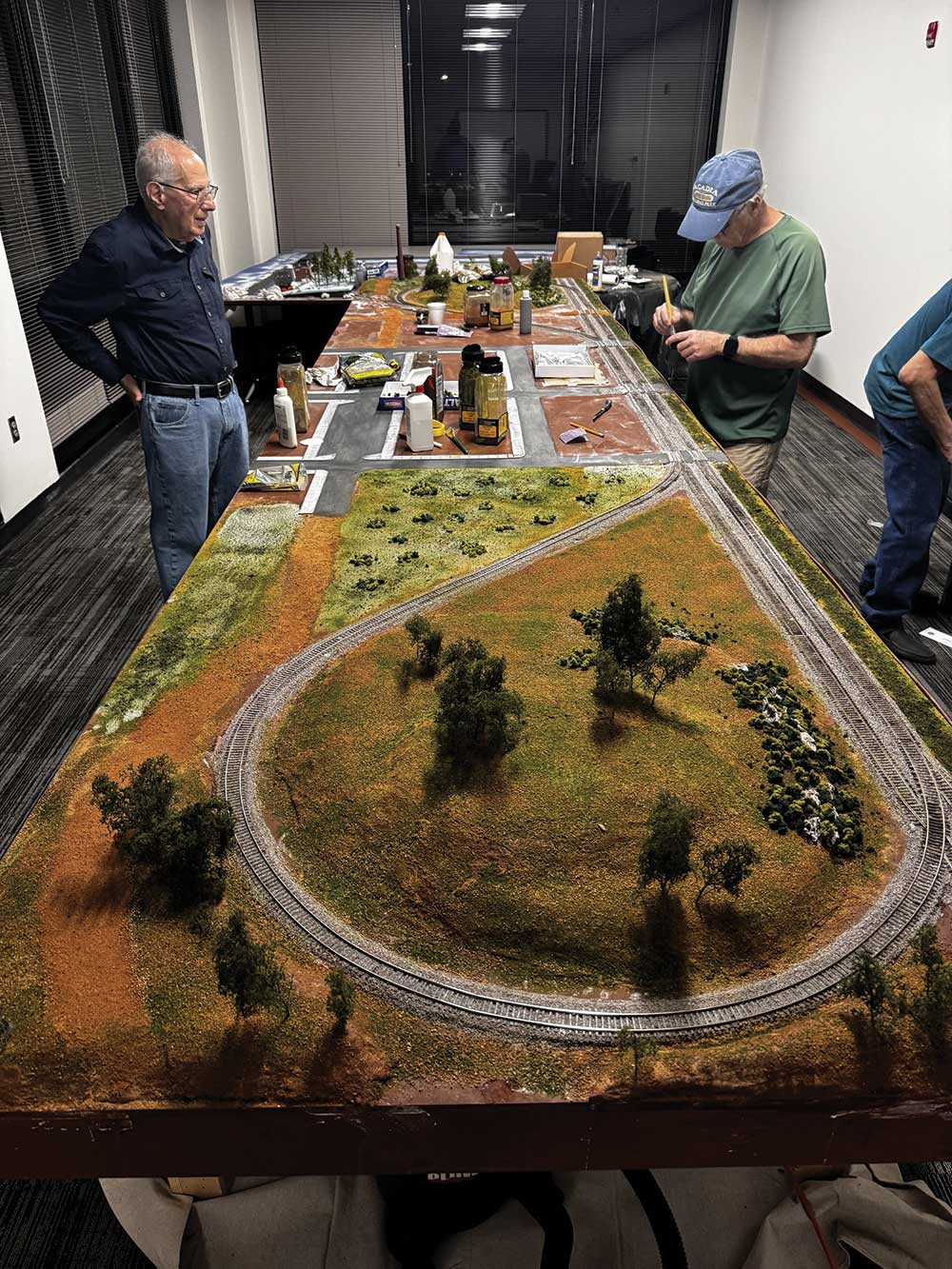
It took hours of work to create this level of detail
Now 135 years old, Pell City is a healthy, growing city. A city of more than 17,000 people, it covers 27 square miles of land and water, a far cry from the original 8 blocks on the incorporation papers. Pell City has changed a bit since those early days, and though passenger rail travel is no longer available to or from the city, its impact is irrefutable.
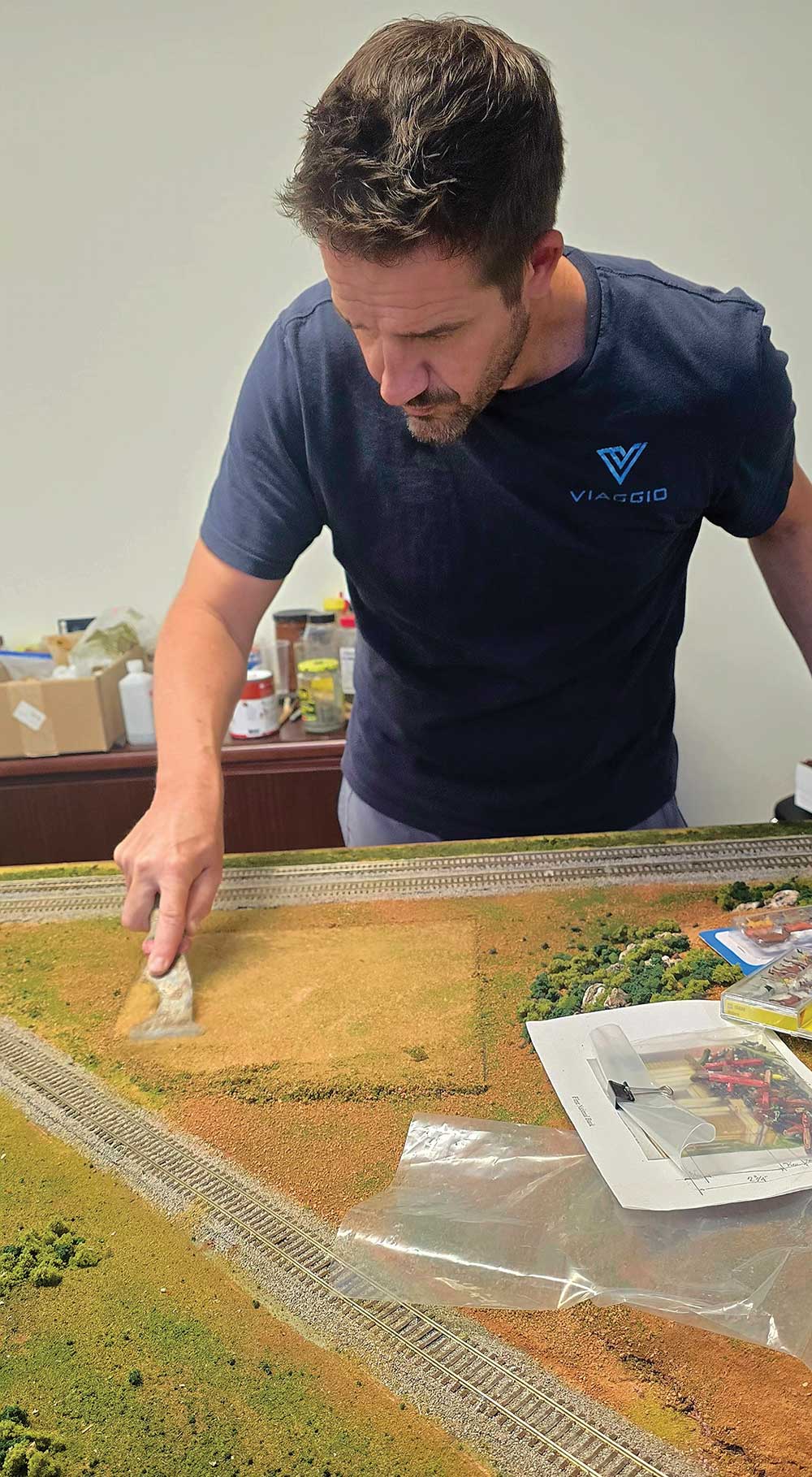
To celebrate those early days and how the tracks once carved Pell City’s landscape, a group of six volunteers dedicated over a year building a train exhibit for the Museum of Pell City. The exhibit, opening this month, features an early 1900s to 1930s-era landscape of Pell City with exquisite detail, completed using historic photos from that time. The project was headed up by retired architect and model builder Malcolm Sokol.
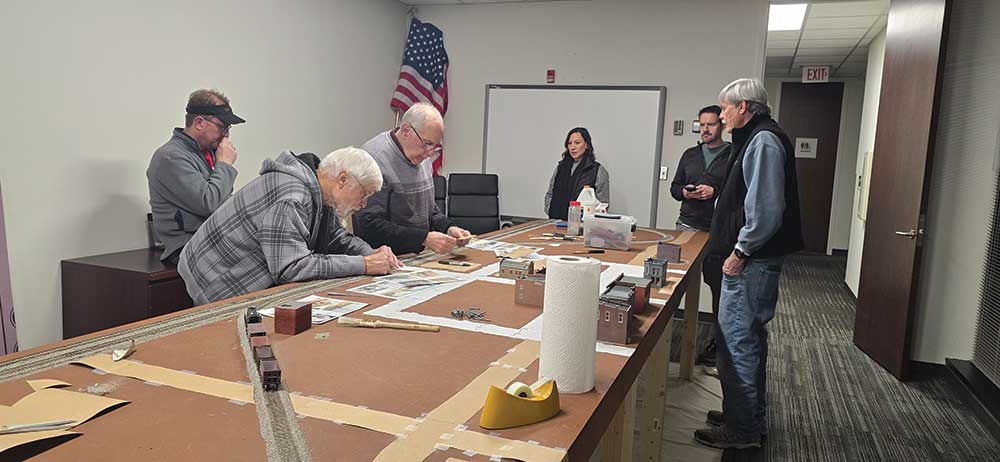
Sokol worked with museum designer Jeremy Gossett to clear space within the museum and determine how large the exhibit could be. From that information, Sokol was able to create a design. A team of volunteers, which included Winston Greaves, David Smith, Max Jolley, and Erik Grieve, worked at Sokol’s house the first month to build the benchwork (similar to a table top) and the cork roadbed for the track. Colder weather and space constraints forced the team to move their operations to the Municipal Center for the rest of the build.
“We had all built model cars and things, but those were kits, and we were just kids. But with this project, Malcolm gave us specific tasks with instructions,” said Jolley. “He taught us tricks of the trade.”
Jolley’s specialization was painting all the people in the exhibit. “These people are smaller than your finger,” he adds. “I painted each one of them and to do that, I had to hold it still with tweezers and paint with a very small paintbrush.”
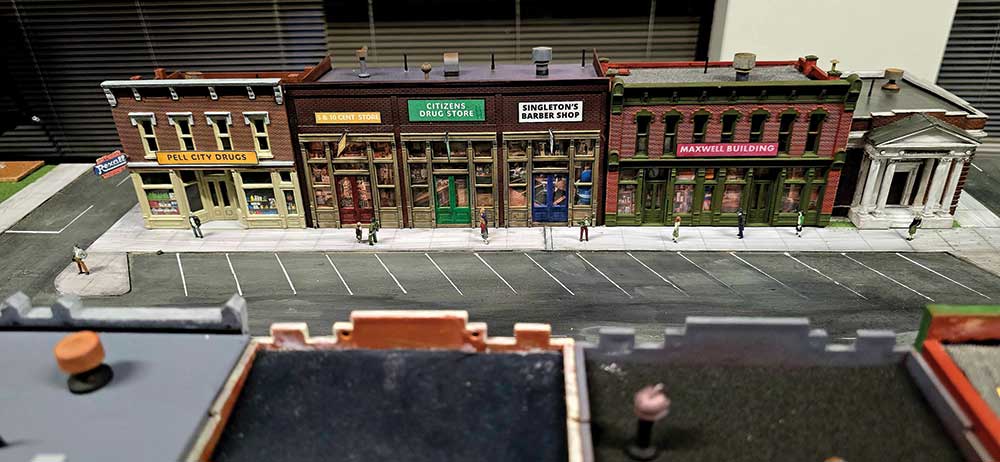
Among the buildings that were custom built were the courthouse, city hall, train depot and Cornett and St. Charles hotels, the First National Bank building, the Jake Garry livery, and Martin’s store. Others began with kits and were customized to look like the historical structure.
“We had homework from Malcolm each week,” recalls David Smith. “He’d send us home with a model to build each week and when we brought it back, he’d make suggestions, and we’d refine it until it was just as it should be.”
Smith was also in charge of 3D printing all the horses and wagons. The piece Smith spent the most time on was the water tower by the courthouse. The tower, whose many guy wires each had to be glued in place and painted, took a month to complete. The Cornett Hotel, which was built by Sokol, took six weeks to build.
Erik works on terrain
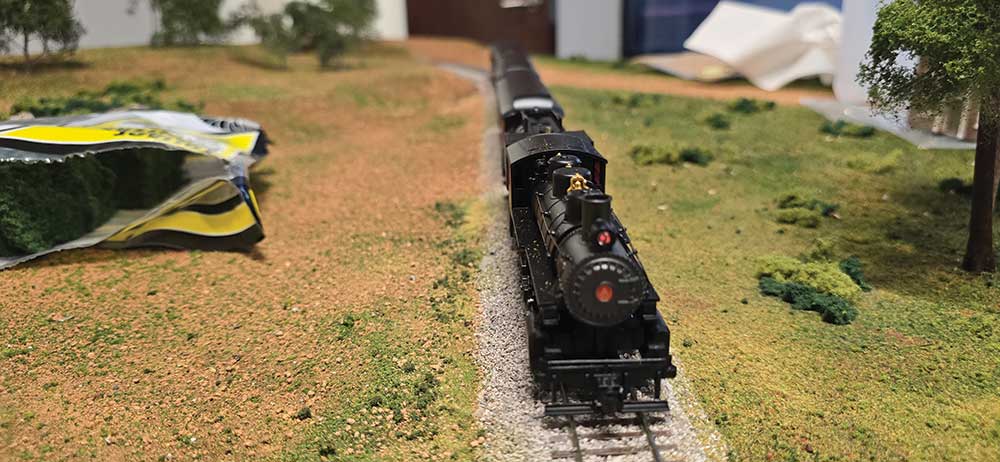
Sokol also produced each of the cars on the layout. He bought several cars and made molds of those cars so he could produce multiple castings of each car. Each of the cars represents about two hours of work.
Winston Greaves is a fellow model railroader and a friend of Sokol. Originally from Trinidad, he is a professional electrician by trade. He served as the project’s electrical specialist, and got everything powered so the train moves around the town. He also helped build many of the buildings.
Erik Grieve used to work with his grandfather on model trains. He had the opportunity to relive some of those memories while working with the rest of the team on the project. “It was incredible to see all the different techniques that go into bringing these scaled-down versions of real pieces to life,” Grieve said. “Malcolm showed us a spray-painting method that made the buildings’ bricks look amazingly realistic. Seeing how all the tiny details come together to create one cohesive picture was truly impressive.”
The team had all but a handful of pieces glued down when it had to be taken apart to move into the museum for the final work. It was reassembled in the museum space, and the team continued work and tweaked it for three additional months before unveiling the completed project. In all, an estimated 1,000 hours of work went into the project.
While the project represents many hours of work, the volunteers involved echo the sentiment that working together and getting to know each other was the greatest reward. As Smith put it, “For five grown men to be together and never any derogatory words spoken is a blessing. It was a bunch of men coming together and playing with toys, but creating something that, hopefully, generations in the future will enjoy.”
Museum designer Jeremy Gossett observes. Around the table are Winston, Malcolm, Museum Coordinator Erica Grieve, Erik and David
“This model is such a beautiful example of what can happen when a community comes together,” said Museum of Pell City Coordinator Erica Grieve. “Because of their dedication, we can give visitors a realistic look at our town’s early days and show how the railroad helped shape who we are today. It’s exciting to see projects like this continue to grow and strengthen the way we share our history.”
Ronald Sumner loves remembering the history of the area. He’s been a resident since his family moved to Pell City as a young boy. He remembers planes flying overhead announcing the end of World War II. And he remembers riding the trains from Pell City to Birmingham and back with his parents.
Spend time looking closely at the intricate details of the buildings along the train tracks, then close your eyes. You can almost hear the rhythm of the rails and how that became the rhythm of life for Pell City and her people. l
Editor’s note:The Museum of Pell City is open Thursdays and Fridays 10 a.m. – 4 p.m. and Saturdays 10 a.m. – 2 p.m.
Not long after they had their first child in 2017, Kiley and Josh Morrison started wondering about the food they were giving him. They worried about where it came from, the chemicals it contained, and whether or not it would affect their son’s future health.
After doing some research, they weren’t happy about what they learned. So they planted a vegetable garden, got a milk cow, and vowed to make changes for the good of their family.
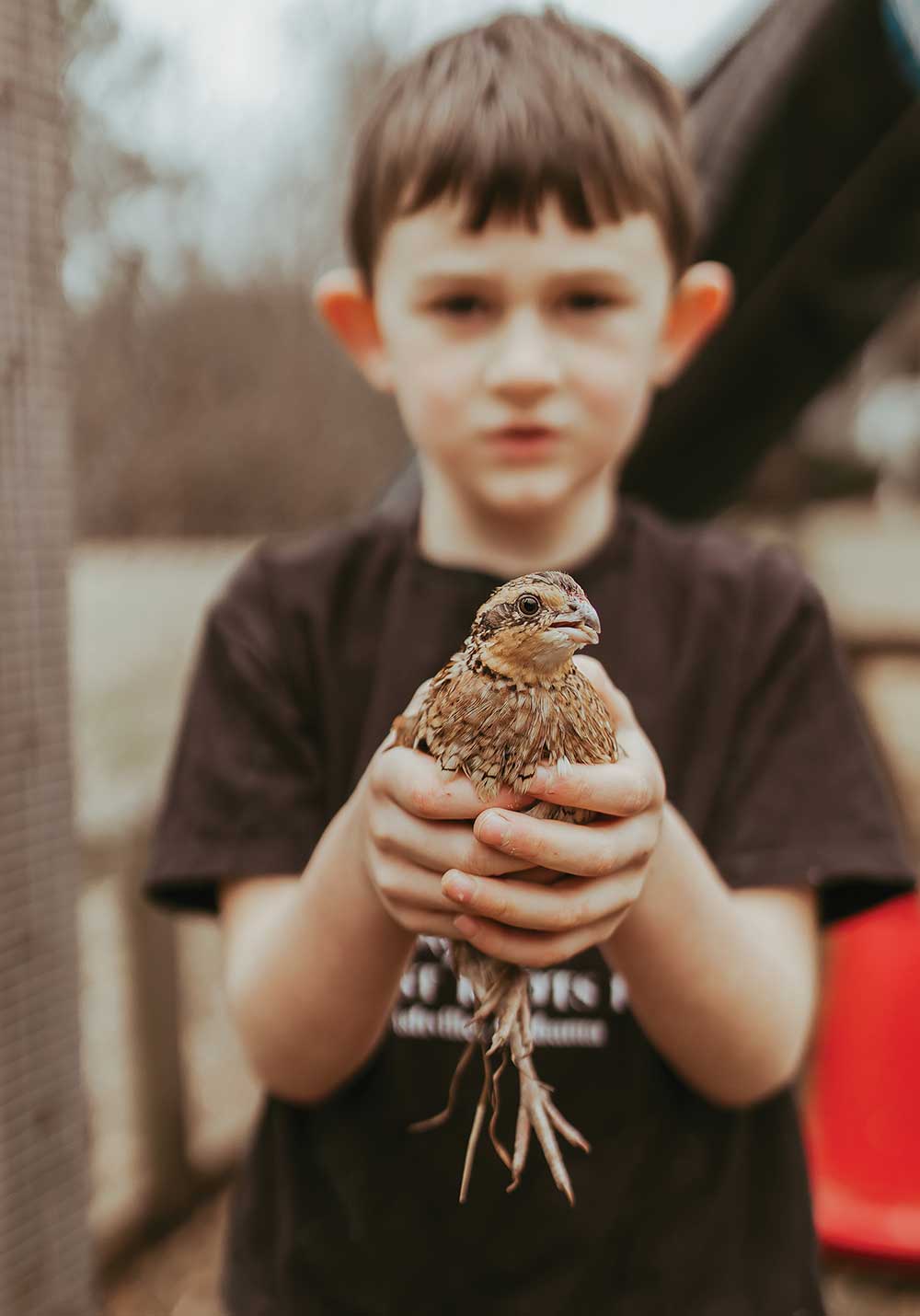
Atticus is raising quail
Nearly 10 years later, what started out as parents’ intuition has morphed into Earnest Roots Farm in Ashville, which offers pasture-raised beef, chicken, pork, and other food that was “produced the way God intended.” No GMOs, antibiotics, hormones, or synthetic chemicals are used, Josh said. Instead, they practice regenerative agriculture to produce healthy soil, which produces better grass, leading to healthier animals. The result, he said, is nutrient-rich foods with superior flavor.
“What’s at the end of your fork determines your health,” Josh said. “If you know your farmer, you know your food. It’s not just about taste, it’s about what you’re putting in your body,” Kiley added. It’s a lifestyle they’re willing to bet the farm on because they’ve seen the benefits of a healthier food system firsthand.
“We weren’t always foodies,” Josh said. “We didn’t care what we ate. I drank Mountain Dew like it was going out of style.”
Josh grew up with migraine headaches, some so severe he had to be hospitalized. While in a neurologist’s office one day, he flipped through a health magazine because it was the only reading material available. “There was an article about how your body needs water for your organs to work properly,” he said.
Josh decided to give it a try and vowed to drink only water. “I started seeing changes within several months,” he said. “Within two years I wasn’t having any more headaches, and this was something that had plagued me for 30-something years.”
Although their original goal was to provide the best food for their family, the Morrisons quickly realized that other folks wanted to do that, as well. As a result, they’ve steadily grown their business and their desire to be local farmers that people can trust.
Much of that trust comes from transparency. In addition to offering farm tours “so people can see that we do what we say we’re doing,” they have a YouTube channel with videos about everything from their farming practices to recipes and instructions for cutting up a whole chicken or making homemade butter.
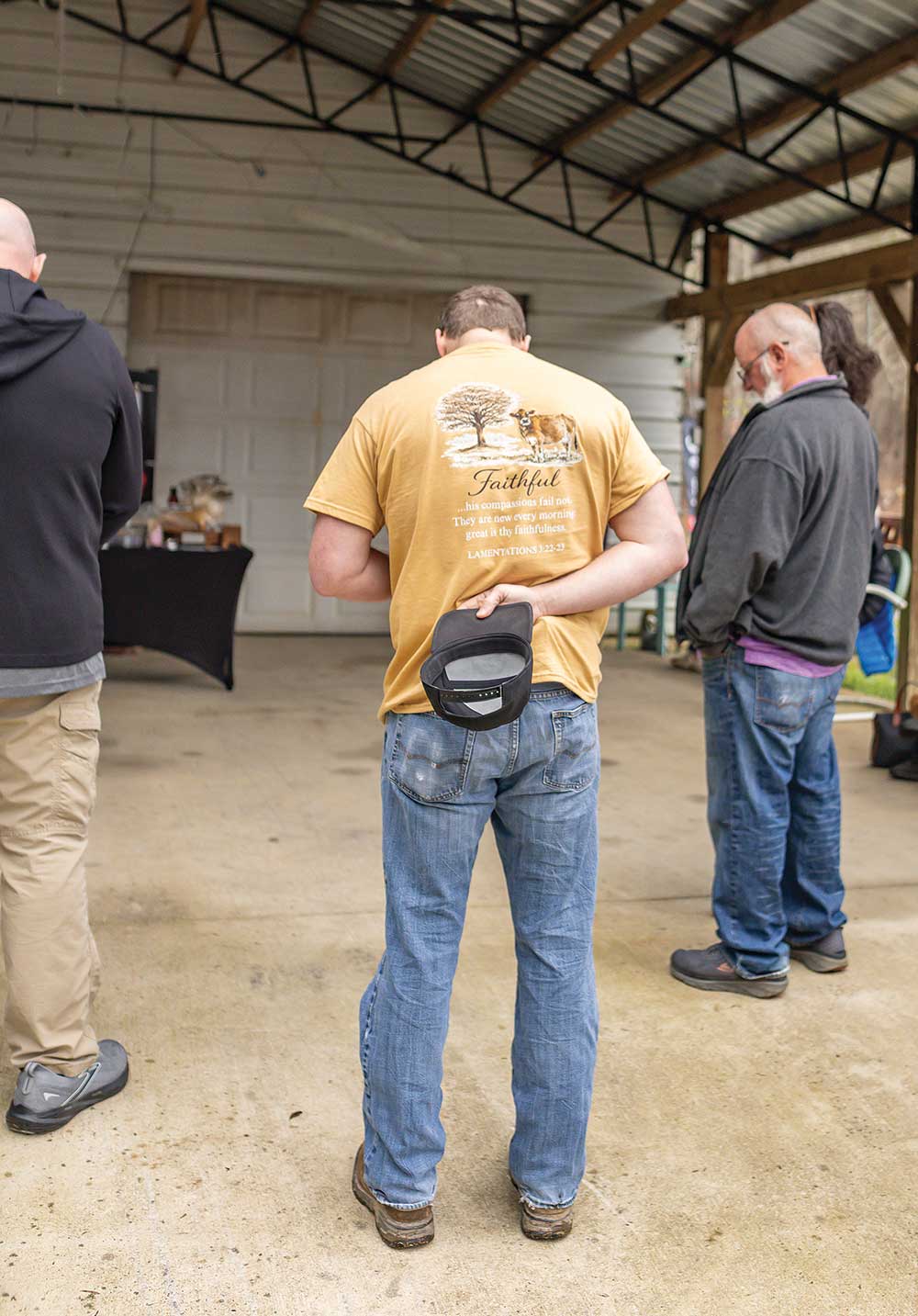
Andrew Jones offers a blessing before everyone eats at Market Day
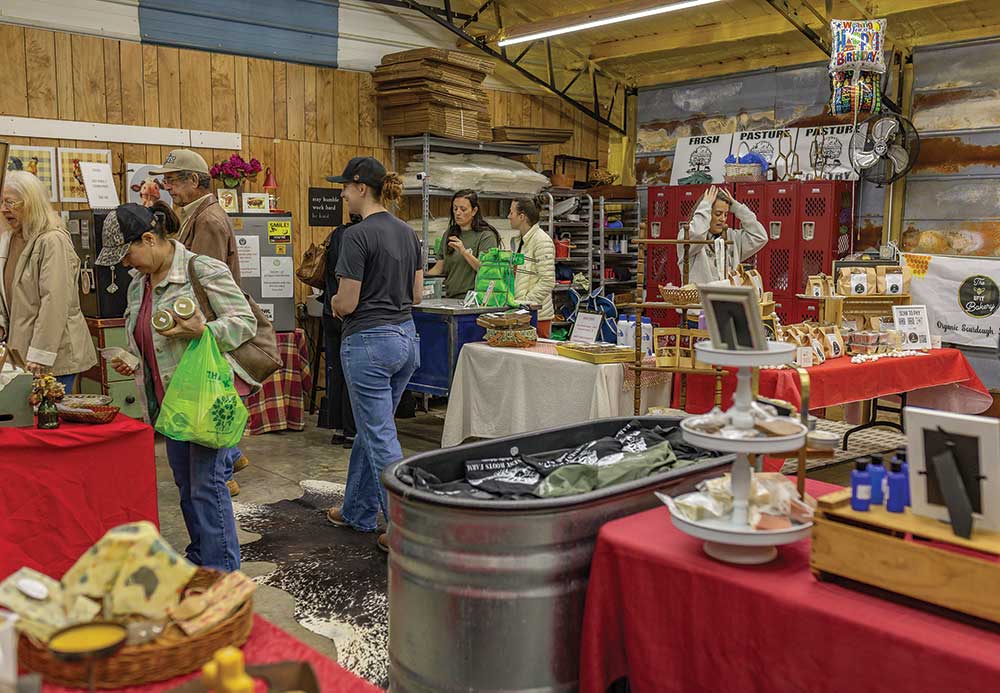
In 2024, they started hosting monthly Market Days with educational demonstrations and local vendors selling everything from honey, jams and jellies, sourdough bread, tinctures and oils, soap candles, and all-natural dog treats. They also sell their chicken, beef, pork, lamb, and quail, as well as offerings like fresh eggs, bourbon pepper bacon, garlic pepper brats, and maple brown sugar breakfast patties.
Market Days were so popular that they now host a farm market every Friday in addition to their shipping and local delivery options. “We’ve just continued to steadily improve it,” Kiley said. “We’ve learned a lot along the way, and God continues to open doors for us. We couldn’t do this without the tremendous support of the community.”
Deep roots
Kiley, a third-generation farmer, grew up on the family farm where she and Josh are now raising 9-year-old Augustus and Atticus, 6. Her grandfather, Ernest Ostrowski, was a dairy farmer in Wisconsin before moving to Alabama and marrying Kiley’s grandmother, June, a cattle farmer. Phillip Byram, Kiley’s father, was 16 when his mother married Ernest, and he has lived on the family farm, where he raises beef cattle, since he was 10. Phillip’s wife, Sharon, who passed away in 2020, was a farmer, as well.
Although Kiley loved growing up on the farm, she had no plans to end up there herself. She and Josh, who grew up in Altoona, met online 20 years ago, and they both attended Gadsden State before marrying and pursuing civil engineering degrees at the University of Alabama.
Kiley and Josh found jobs in the telecommunications field – she was in management with an engineering company in Birmingham, and he started designing fiber telecommunications. She traveled a lot and loved her job, but the lure of a simpler life eventually began to take hold.
“I wanted to be home and have a family and be grounded,” she said. “It took getting away from the farm to realize what a blessing it was to be able to live on the farm. It’s not something I take for granted.”
She realized she wanted her kids to have the same experiences she had, so they returned to Ashville and bought her grandparents’ farm, which was 10 minutes from her father’s farm. Although the plan was to focus on homesteading and self-sufficiency, they soon began selling beef, chicken and pork at a farmer’s market in Gadsden, which they did for two or three years. Business was good, so they launched a website just about the time the Covid pandemic started.
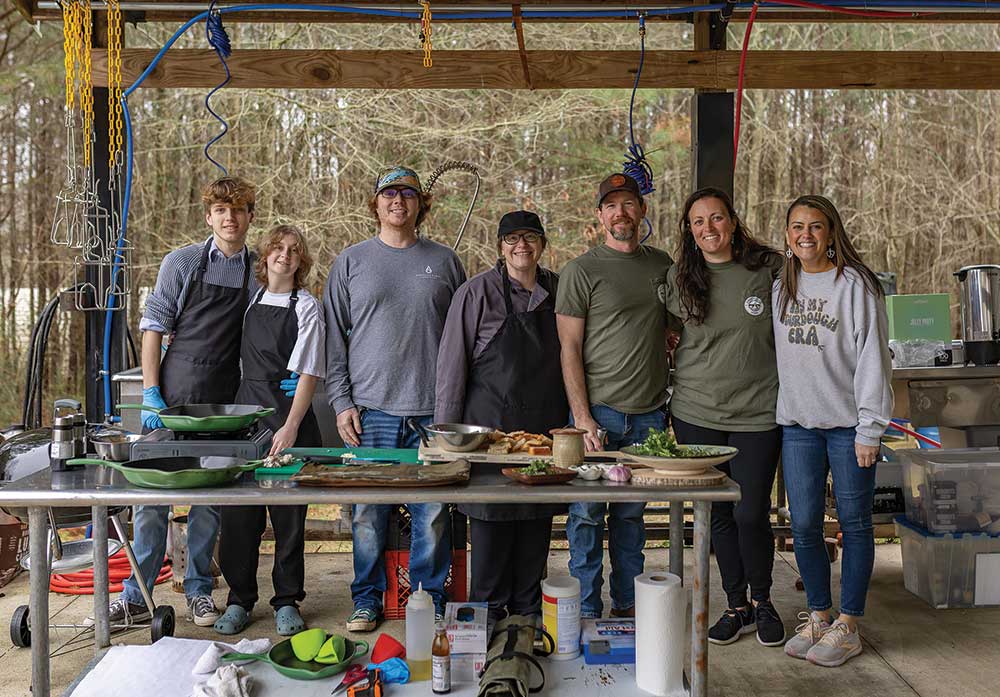
Culinary students Braden Godwin and Max Smith; Joey Duke of Aquality Farms; Meigan Tucker of ECTC; Josh and Kiley Morrison; and Anna Warren of The BFIT Bakery
“All of a sudden, people didn’t want to go to grocery stores; they wanted to go to their local farmer,” Kiley said. They set up local pickup points so customers could place orders online and pick it up later at a convenient location. “We did that for the community, and a lot of people took advantage of that,” she said.
The shipping side of the business grew quickly, and in 2021 they sold Ernest’s farm and bought a farmhouse and 10 acres (they recently added another 40 acres) adjacent to Phillip’s 180-acre cattle farm. Kiley’s sister and brother-in-law, Molly and Andrew Jones, live on the farm, as well, and the five of them work together to make Earnest Roots a reality. “Kiley and I are just really the faces” of the operation, Josh said. “It’s very much a family endeavor.”
The farm’s name is a nod to Ernest and the family’s deep farming history. Ernest and June taught Phillip to farm, and they taught Kiley and Molly, Josh explained. When he and Andrew joined the family and “didn’t know jack diddly about farming, they taught us, as well,” he said.
They changed the spelling from Ernest to Earnest as a nod to the future. “If you look in Webster’s dictionary, one of the definitions for ‘earnest’ is a promise of things to come,” Josh said. “As we grow, as we learn and diversify, we’re adding more and more products for our family and yours,” he said.
Future fruits
Market Day at the farm
They’re also raising what likely will be another generation of farmers. “They’re the reason we started this,” Josh said as he watched their boys run across the pasture.
The days are long. Josh is still designing fiber telecommunications in addition to his work on the farm. Kiley homeschools the boys while juggling her many roles. The boys get up early every morning to feed the chickens while Josh milks cows.
And they wouldn’t have it any other way. “I love that we’re raising them here where I was raised and that they’re getting their hands dirty and learning that it doesn’t hurt to work hard,” she said. “Never in a million years would I have thought that we would be here. There were a lot of steps between our original goals and where we are now, but God was laying the groundwork. He put us where we need to be without a shadow of a doubt.”
A self-described “military brat,” Bill Beebe plunged into art at a young age, painting his first mural on his Fredericksburg, Va., bedroom wall while listening to Nirvana’s Nevermind album. The seminal work by Dave Grohl and the late Kurt Cobain featured the hit, Smells Like Teen Spirit.
For Beebe, that spirit smelled like a plastic, even comforting aroma of acrylic paint as he found his place what for military families is an ever-changing world. “I’m not sure what initially drew me to large format painting. Maybe just the fact that people knew I could paint and asked me to,” he said.
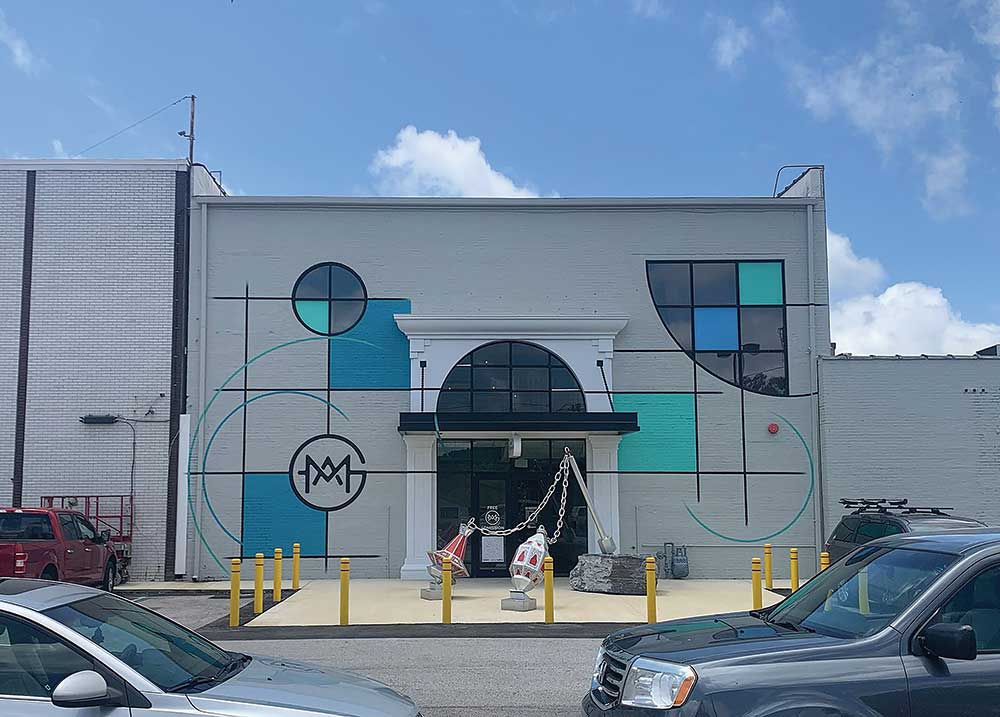
“I started painting for friends and family in the late 1990s, then more as side work in the 2000s.” That side hustle is now a full-time job for Beebe. His company, Art for the Wall, has brightened once-empty walls and storefronts in northeast Alabama with large-format murals and eye-catching signage.
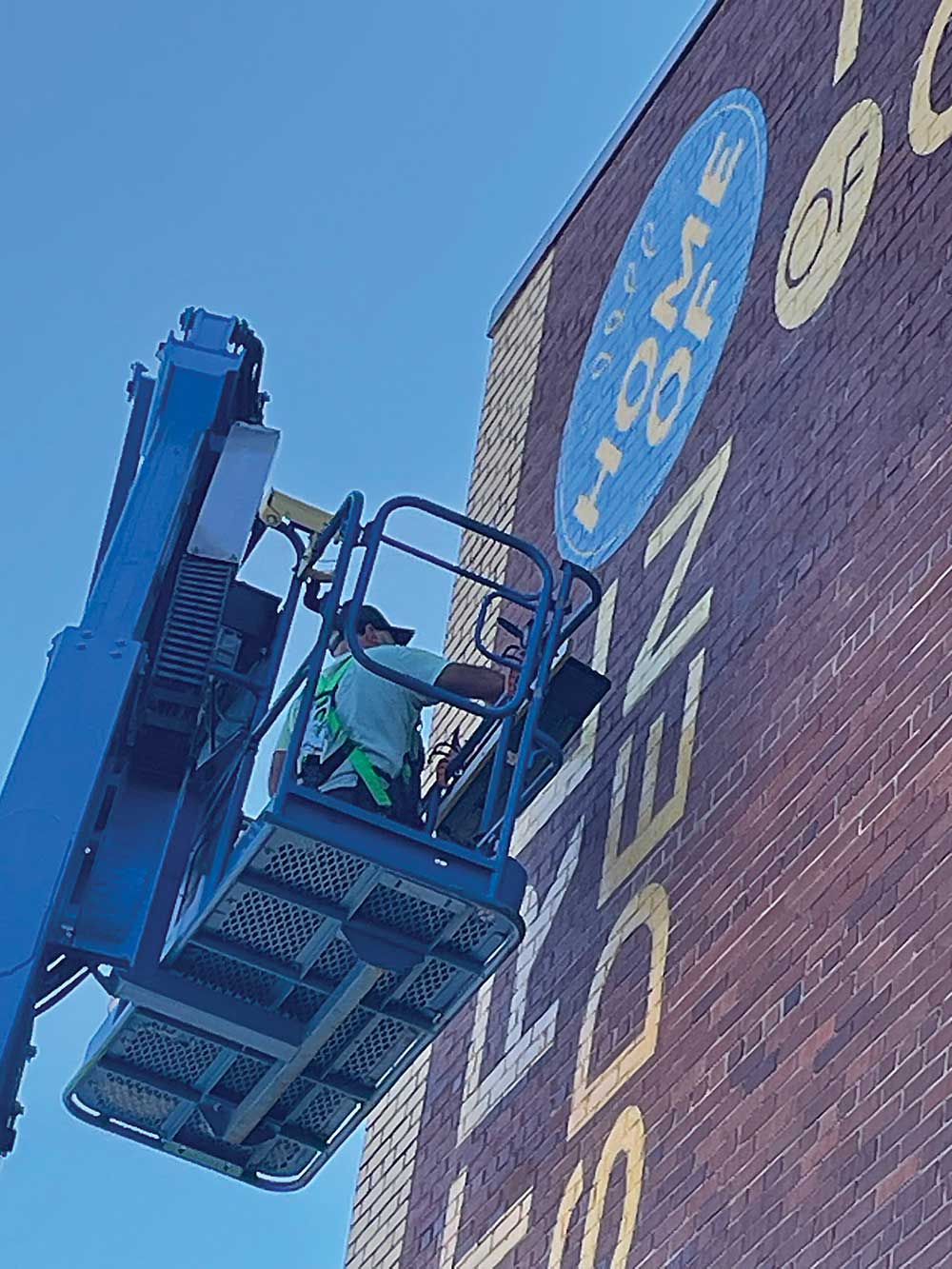
Bill Beebe painting a mural for the Theatre of Gadsden
Beebe spent a few of his teen years in Ashville and spent his early professional life as an electrical apprentice and later as a journeyman electrician. He went on to earn an associate’s degree in commercial graphic design.
Art for the Wall began in Charleston, S.C., but is now based in Ashville. “I’m still relatively new to Northeast Alabama after transferring my business from Charleston,” he said. “But I’ve done a couple (murals) in St. Clair County – the Historic Ashville, Alabama mural and for Gilrearth Printing & Signs’ new facility in Pell City…Most of my work can be seen in Gadsden – Downtown Gadsden, Inc., the Gadsden Museum of Art, the Ritz Theatre and my latest was the “You Belong In Gadsden” sign/mural I did next to the new Alabama Department of Rehabilitation Services building in East Gadsden.”
Kay Moore, executive director of Downtown Gadsden, Inc., called Beebe and his work, “a huge asset” to the organization and to downtown Gadsden as a whole. “We have several wonderful murals that he has created in the historic district,” she said.
“I think the most notable one is located on the west side of the Pitman Theatre. When I talked to Beebe about my vision, he immediately took it and turned it into reality.” The mural’s message? Unity. And the background words focused on the downtown area’s message.
Other murals highlight Beebe’s other talents, Moore said. “He is very gifted and very easy to work with,” Moore said. He often gets feedback from townsfolk who stop to watch the artist at work.
Beebe often can’t hear their comments because of traffic or the music he listens to while painting. “I’d imagine people think I’m rude if I don’t engage in conversation,” he said. Ninety percent of the time, I can’t hear what people are saying due to traffic, being up high on a lift, listening to music, or simply in the zone, concentrating on what I’m working on.”
Outdoor and indoor designs match the clients’ business theme
As for projects in the pipeline or in progress, there is a small sign for the Gilbert Cummans Greenroom behind the Pitman Theatre in Gadsden, as well as signage in Ashville, window graphics and murals to come in Oneonta and more.
As for all outdoor muralists, weather is a never-ending challenge. “Definitely the weather,” Beebe said. “Wind, rain, heat and cold. Occasionally, lift logistics if I’m working up high. Time is sometimes a factor with rentals since there’s typically a certain amount of days I can have with the equipment.”
For Beebe, the rewards for his work are many. “I’m usually creating something that is timeless,” he said. “Painted signs in particular – they look good when they’re freshly painted, and they look good when they’re old and faded.”
He also gets satisfaction when his work comes out clean, even after being painted on a rough surface. Too, there’s joy in seeing a work come together after working so closely to a surface or seeing a design take root on a computer and then blossoming into a large format mural.
And, when the day’s work is done, Beebe enjoys a simple pleasure –“a delicious cold beer after painting all day.”
The positive feedback he’s received from clients across 16 years as an artist is what keeps him painting and making signs. And while he enjoys the ease of most projects, he takes joy in challenge as well.
Had life taken a different path, architecture or engineering might have been Beebe’s calling. “I love details from start to finish in projects,” he said. “Designing, scaling, measuring, leveling and organizing are definitely my favorite aspects of every project.”
Beebe hopes his work influences others who may want to take a similar path. “Being an artist has its challenges, but so does everything else,” he said. “It’s a rewarding and legitimate career path. If you take time to learn the processes and techniques and mold that into a business model, you can make some pretty decent money and have a fulfilling career as an artist.”
Beebe finds it hard to explain his work, either as a storefront sign or massive mural. “I aim for precision, but I always want the viewer to know it’s a painting and not just some print on vinyl that has been stuck on the wall and heated up,” he said.
“Most of my stuff is logo painting, so it has to be spot on to the renderings I provide my customers. On a more personal level, I enjoy typography, so you’ll most likely see some kind of text in many of my paintings,” he added.
“I really appreciate simplicity in my work. I try to stick to the ‘less is more’ concept as much as I can.” If he could write a letter to his younger self, to that kid painting his first mural while jamming to Nirvana, what would Beebe advise? “Start your art career earlier (rather) than later,” he said. “Take more risks when you’re younger. It’s just paint. Everything is rushed when you’re an adult. Take your time and enjoy the process of every project. There are no failures in anything you do, just lessons.”
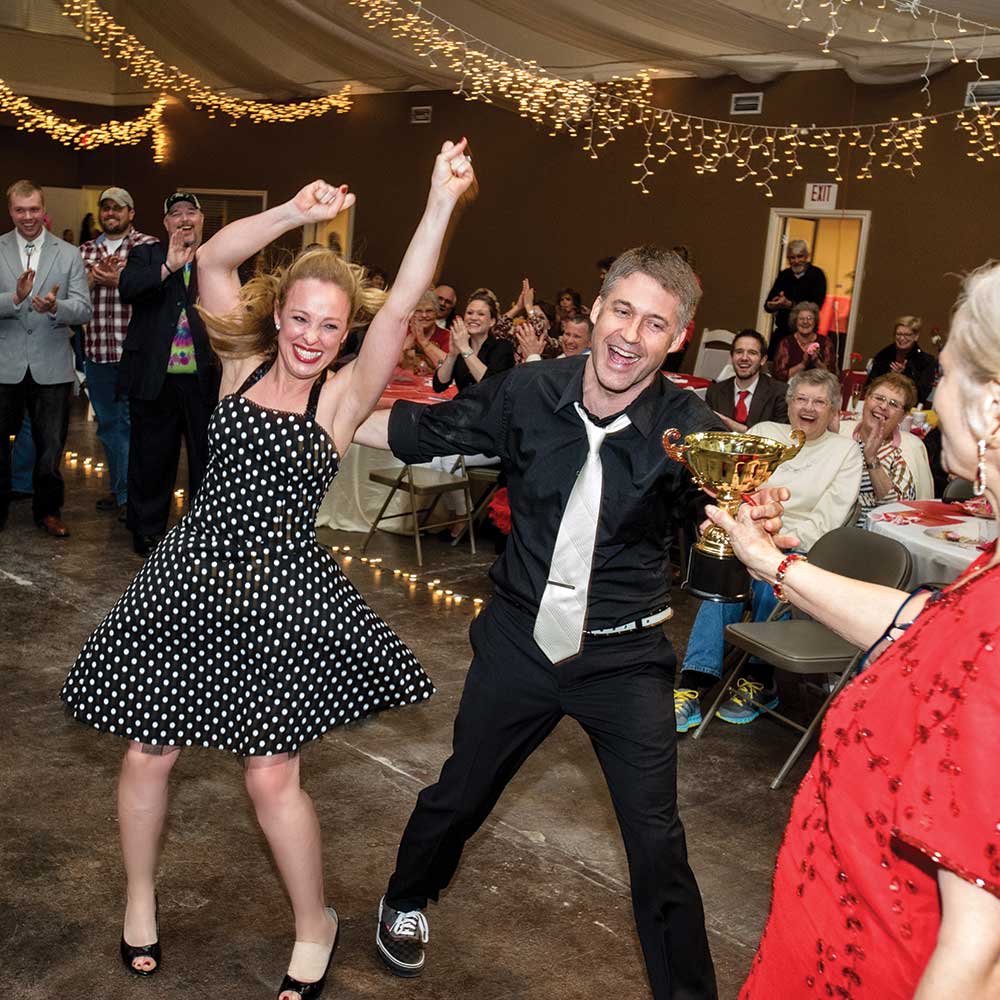
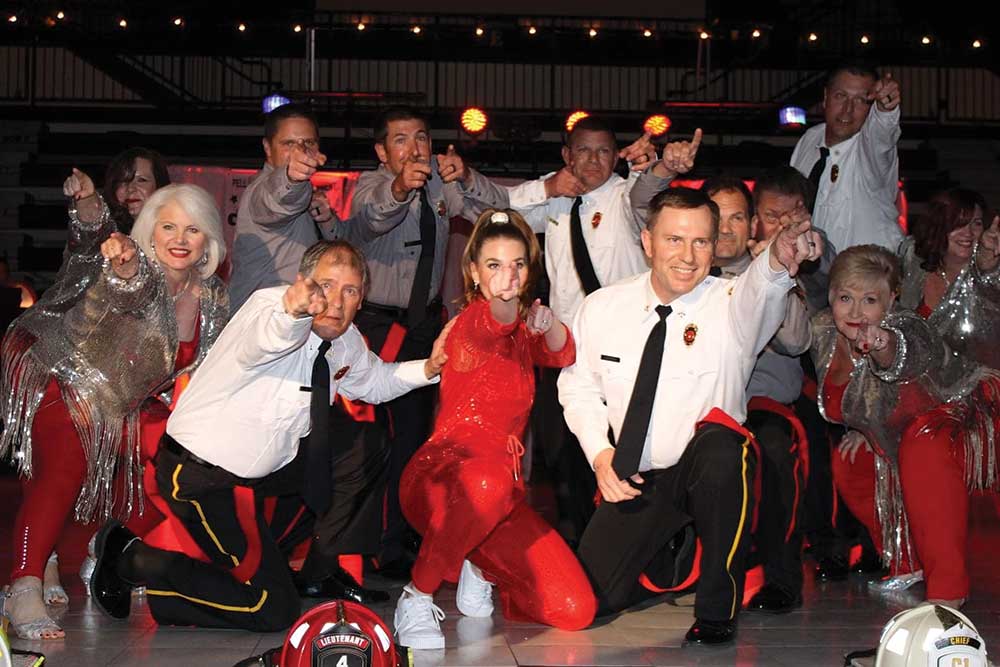
Looking for a high-energy evening that brings the community together while supporting a meaningful cause? Dancing With Our Stars, Pell City’s version of the popular television show Dancing With the Stars, returns for its 12th year this spring, continuing a beloved local tradition with a few thoughtful updates.
The event will take place on March 14 at 6 p.m. at the Center for Education and Performing Arts (CEPA).
For more than a decade, Dancing With Our Stars has showcased performers from Pell City and surrounding areas in a fun competition that celebrates creativity, connection and community pride. While the Pell City Line Dancers organized and headlined the event for its first 11 years, this marks the first year CEPA has taken on full responsibility for planning and hosting the event.
CEPA Executive Director Ash Arrington says the transition feels like a natural next step. “We’re excited to expand off the stage and get into the community planning this event,” Arrington said. “It’s always been our goal to reach more people, and having this under the CEPA brand adds a level of legitimacy to our desire to serve the community in new ways.”
CEPA Assistant Director Maci Johnsey acknowledged that taking on the event has been a big challenge for the organization’s small staff, but also a rewarding one. “It’s been a lot to take on, but that also makes it more personal,” Johnsey said. “We have a small committee, which makes communication easy, and everyone involved really cares about keeping the heart of the event intact.”
What is New This Year
This year’s program introduces expanded performance categories, with group sizes classified as Duo/Trio, Small Group (3–15 participants) and Large Group (16–30 participants). The number of participating groups will also be capped to keep the total runtime at approximately 2.5 hours.
The event is open to community members who want to participate. Groups perform a short routine of their choice. Registration is free and open until capacity is reached. Participants can register at www.pellcitycepa.com, where full performance guidelines are available, or in person at the CEPA Box Office. Questions may be directed to Johnsey at maci@pellcitycepa.com.
“We want to keep the event fun while also keeping the audience engaged,” Arrington said.
Judging will include first-, second-, and third-place awards, along with several special recognitions. Winners will be selected by celebrity community judges, and awards will be given in each category.
Audiences can expect a diverse lineup of performers, including children, professional dancers, neighborhood groups, local schools and dance studios. Returning favorites include Red Apple Dance, an Asian dance group based in Birmingham, along with the Pell City Line Dancers. Both groups remain a cornerstone of the event.
Giving Back to the Community
In keeping with CEPA’s mission, proceeds from the event will benefit organizations whose work aligns with community enrichment. This year’s primary beneficiary is the Pell City Education Foundation, with a junior recipient, The Hartzog Foundation.
“We love spotlighting these organizations and bringing awareness to the incredible work they’re doing right here in our community,” Arrington said.
In addition to the dance performances, the evening will feature a silent auction, concessions and beer and wine available for purchase.
A Night That Brings People Together
For Johnsey and Arrington, the impact of Dancing With Our Stars goes beyond dance. “People show up year after year to support their family and friends,” Johnsey said. “It’s a tradition.”
Arrington agrees and says one of her favorite moments is greeting attendees as they arrive. “So much work happens behind the scenes,” she said. “Seeing people walk through the doors and watching the program come together makes it all worth it.”
In a time when connection feels especially important, Dancing With Our Stars continues to offer something simple and powerful: a reason for the community to come together, celebrate one another, and support causes that matter. lfluence generations to come. Hold fast to your dreams and keep on collecting history. Your dream has strong wings.
Spend time talking with Tonya Forman, and you’ll soon realize you have found a person who loves Pell City, Alabama, and is focused on advancing the city and preserving the history of its citizens.
Born to Lesley Sr. and Fannie Forman were Tonya and her siblings, Sharod, Lesley Jr., and Diane. Tonya grew up in Pell City and was an active member of Rocky Zion Missionary Baptist Church. She graduated from Pell City High School in 1987. After graduation, she attended Central Alabama Community College in Childersburg.
Accepting a job with AT&T, she began commuting to Birmingham every workday. Before long, co-workers in the city began encouraging her to move to Birmingham rather than commute. Her response, she recently confided, was always, “There’s no place like Pell City! I can safely sit on my porch without a concern, and I’m not gonna leave that for a 30-minute drive down the interstate.”
Those conversations and her responses seem to be what urged her on to know her hometown better and to work for its upbuilding. “I realized what a blessing I had here in Pell city.”
CITIZENS IN ACTION
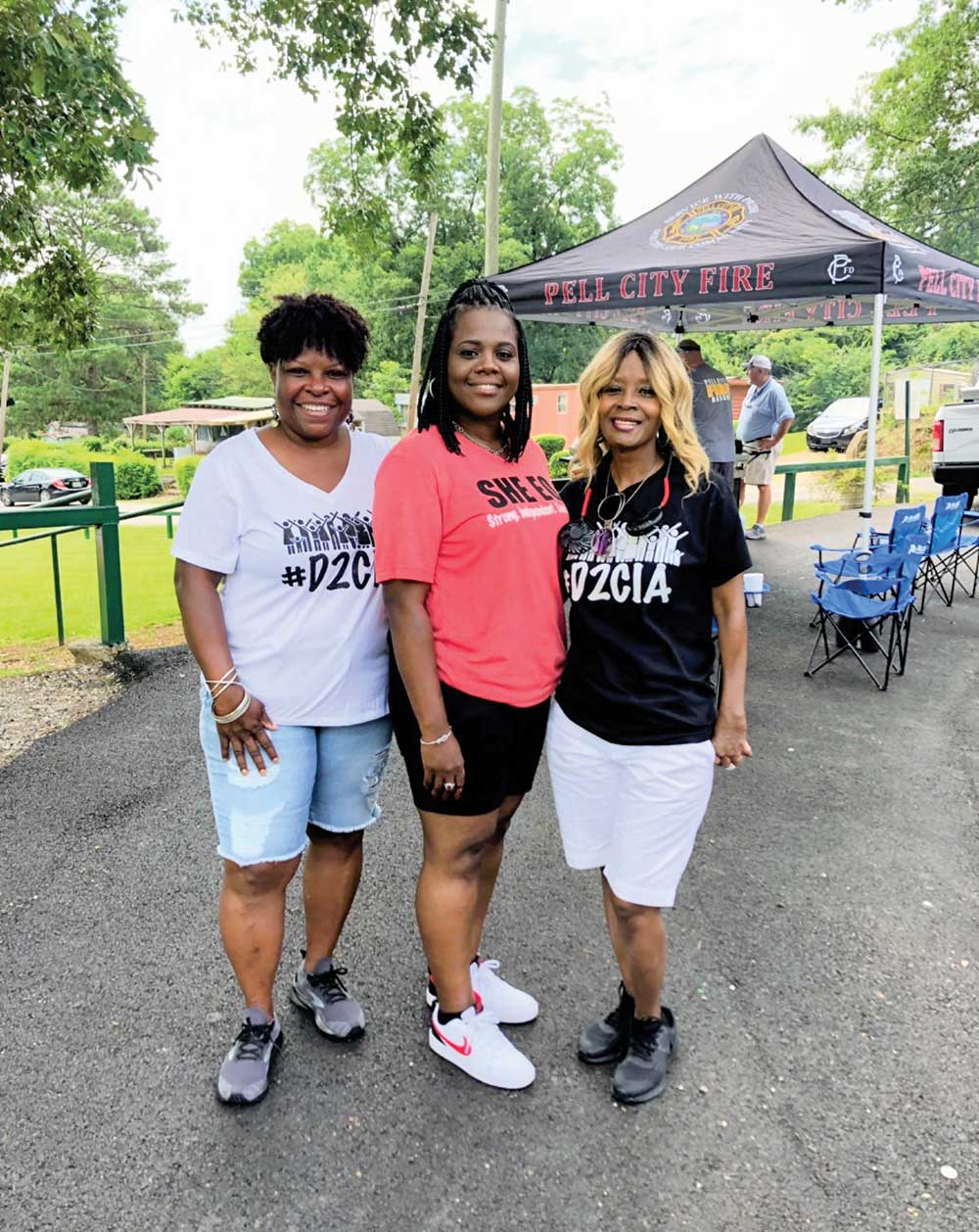
Forman at 2021 event with District 2 Councilwoman Ivi Wilson and Siri Truss
Tonya is a founding member of District 2 Citizens in Action, serving District 2 of Pell City. Established in 2021, the citizenship partnership is designed to achieve improved communication, understanding, and cooperation between citizens and city officials through increased personal contact between City Hall, neighborhoods and communities throughout the city. President of Citizens in Action is Bishop Donald Gover.
PELL CITY BLOCK PARTIES
One Pell City event Tonya devotes time to is the yearly Block Party. This event started in 1999 as an initiative to celebrate and bring the community together. For the past 26 years, it has brought citizens of Pell City and surrounding communities to the historic downtown for live music, kids’ rides, vendors, and food.
Tonya’s involvement in the Block Party began because at one event attendees began asking her questions to which they thought she should know the answers. Specifically, they asked about Greg White’s R&B Set which had occurred at 3:00 pm.
“A lot of people didn’t come to the Block Party until after the sun went down,” Tonya explained. “So, about 4:30 or 5:00 people were asking about Greg and Keith White.”
When they asked Tonya, she had to tell them his set was over. “It was amazing,” she laughed, “at how many were asking me, and I didn’t have anything to do with it.”
That would soon change, however, for a visit to Urainah Glidewell at the Pell City Chamber of Commerce office got results thatTonya hadn’t planned for or expected.
In the meeting with Urainah, Tonya explained how a lot of people avoided the heat of the day and came to the event when the day cooled down a bit. She asked that Greg White’s Set be moved to 5:00 instead of 3:00.
As they talked, Urainah said, “Why don’t you become an ambassador?” Which brought Tonya’s response, “What’s that and what does it involve?”
To that, Urainah responded, “Just do what you’re already doing. You’ve got a love for the city, promoting it and getting people involved.”
Ambassadors of the Pell City Chamber of Commerce are volunteers who help with events, welcome new chamber members, and support local Pell City businesses.
Never one to be uninvolved, Tonya filled out the Ambassador Application and was soon accepted.
Urainah Glidewell, Executive Director of the Chamber recently said of Tonya, who is now on the Chamber Board, “Rotunda ‘Tonya’ Forman has been a wonderful addition to the Pell City Chamber Board of Directors. From her tireless involvement with the community and her willingness to help with chamber events, to her generosity of time and spirit, we are so blessed to have Tonya as part of the team.” Tonya currently serves as Vice President of the Pell City Board of Directors.”
In her work with the Block Party, Tonya recognized that involving church musical groups would increase attendance as well as be a way churches could promote their ministries. So, church choirs, praise teams, and musicians became sets at the Block Parties.
When emergencies arise, as they will, Tonya can help assess the situation and bring resolution. One of these emergencies occurred at the 2025 Block Party. For the sponsors of the event, there is a VIP section where refreshments are served. As the day progressed, a storm rolled in, not only disrupting the event, but also blowing a tree across the driveway to Blue Eye Eatery, the caterer for the VIP section. “She had everything ready to bring out,” Tonya recalled, “but they were waiting to see if the power company was going to come out and cut the tree up.”
The power company didn’t come, and the caterer realized the only solution was a boat. “So, they communicated back and forth with Urainah Glidewell and Chamber members,” Tonya continued, “and they got on the boat with all the food and got it to the Civic Center where chamber members were there to unload, put it in a truck and get it here to the VIP area.”
Although delayed an hour or so by the storm, the VIP refreshments were ready by 5:30 or so. The early performers missed out, but the groups that came in at 5:00 and 6:00 were able to come in and enjoy the food.
ARCHIVING BLACK HISTORY
Tonya has accomplished a major success in the work of collecting and preserving the history of Pell City’s Black communities, schools, churches, and citizens.
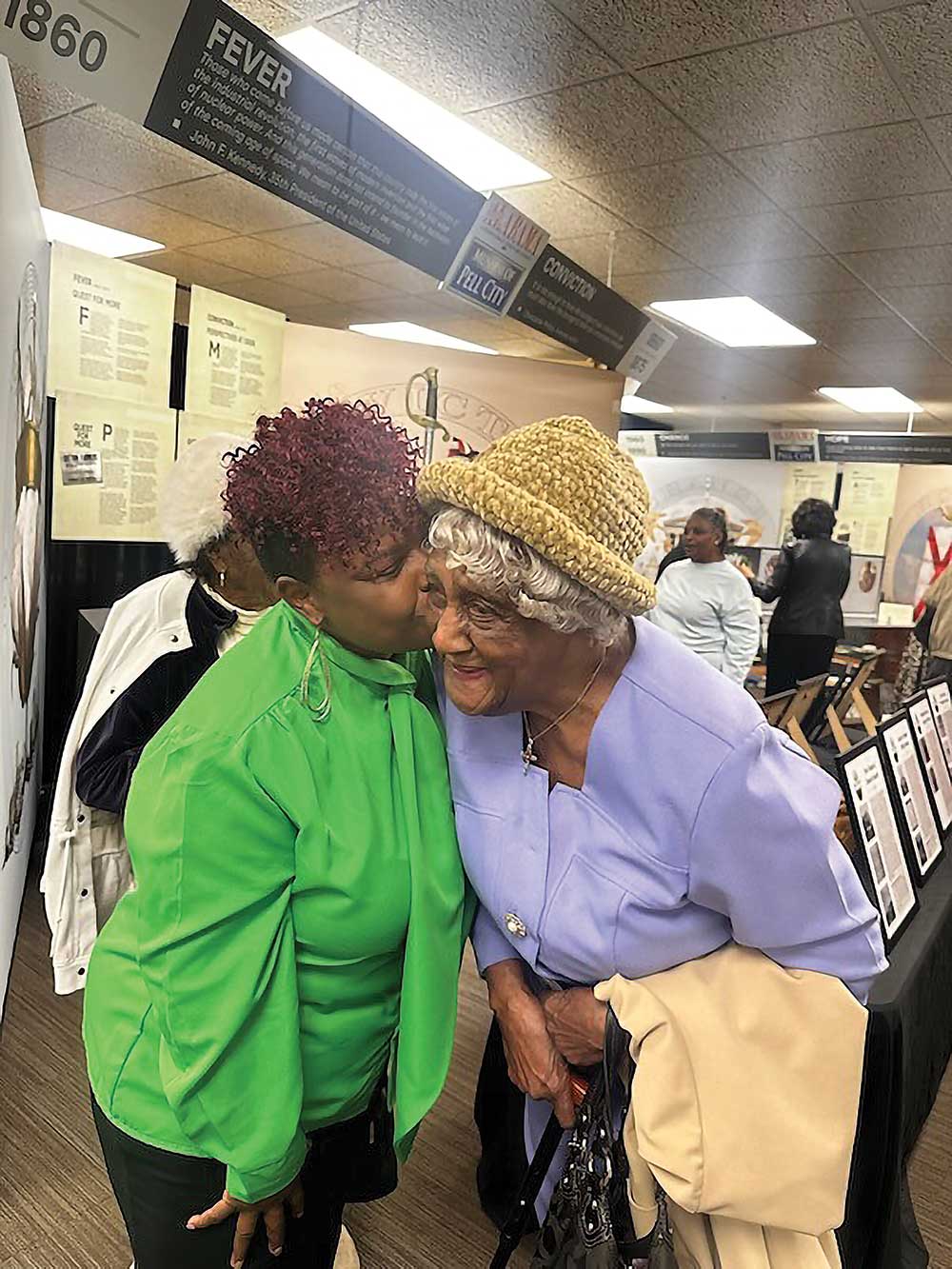
Forman and Johnnie Mae Green at the museum
Erica Grieve, Museum of Pell City Coordinator, recently said this about Tonya’s work. “Rotunda’s passion for preserving Pell City’s Black history has been nothing short of inspiring. She has spent countless hours collecting stories, photographs, and artifacts that ensure the experiences and achievements of our Black community are never forgotten. Her dedication and heart have shaped the Museum’s Breaking Barriers Exhibits and continue to bring our shared history to life for future generations.”
When the museum director and board approached Tonya about collecting Black history, she told them, “Black people don’t have a lot of [recorded] history because they were either burned out, ran off, or left because of work.” She also pointed out fires and floods had damaged or destroyed photographs and treasured history recorded in family Bibles, etc. It would not be an easy task.
However, never one to be daunted by difficulty, she acknowledged it and set about collecting history of churches, communities, and citizens. A significantly rewarding part of the collection occurred with the taping of community members: those who had lived long lives; those who had helped integrate Pell City schools; and those who had excelled in professions once unavailable to our Black citizens. These people broke the barriers of segregation and blazed the way for those coming afterwards.
The first Breaking Barriers event was announced in the Anniston Star, February 6, 2024, in an article by Laura Nation. “The Museum of Pell City opens its locally produced Black History Month exhibit Feb. 8, featuring the people of this community as they experienced events of the times in which they lived. Their stories reflect decades of a changing community through the years as well.
‘This particular focus of the city’s history was actually born early in the development of the Museum of Pell City, said director Carol Pappas.’ Carol Papas is President of the Museum of Pell City.”
Nation’s article continued: “There are 15 profiles among the videos, some of these are Thelma O’Neal Jones, the first Black female elementary school principal; Don Allen, a member of the first integrated football team; Bob McGowan, first Black Avondale Mills supervisor; and Keith White, the first Black art teacher in Pell City Schools.” Terry Young and Tom Ham were also on the first integrated football team.
Carol Pappa recently spoke of Tonya, saying, “In the time that I have worked with Tonya on our museum board, I discovered that she’s not just a member in name only. She goes to work, ensuring that any project she’s associated with becomes a success story.”
Ninety-five-year-old Johnnie Mae Green gives high praise to Tonya and her work of collecting Black history. “For a person in her generation to reach back and to think about the times that we had in our young days and to get interested in our history]is just amazing. I’m telling you: she is one to be complemented.” Johnnie Mae further stated, “Now, God had to have given Tonya the inspiration to do this. Because, without our history recorded, we will never know our background. And I thank God for her. She’s just a dynamic person.” She paused, then added, “She’s a God-fearing young lady. That’s the ticket to life. She’s one in a thousand.”
Tonya’s journey of faith began at Rocky Zion Missionary Baptist Church where she grew up learning of God. She was baptized by Pastor James Adams who served the church for eleven years. As she matured, she sang in the choir and on occasion led the singing. She was youth director at a time when the youth program flourished. “At that time the church published a small youth newspaper,” she recalled, “and the “the youth would write about a topic we had studied in Sunday School or about events and trips that were upcoming. They highlighted achievements of a youth member.”
WREATHS ACROSS AMERICA
Wreaths across America became another focus of Tonya’s as soon as she learned of this yearly event.
Wreaths across America, a non-profit organization, coordinates the placing of Christmas wreaths on the graves of veterans. The motto of the organization is “Remember, Honor, and Teach. Remember our veterans that served and are serving America, Honor the fallen veterans, and Teach our youth about the service and sacrifice of our veterans and families.”
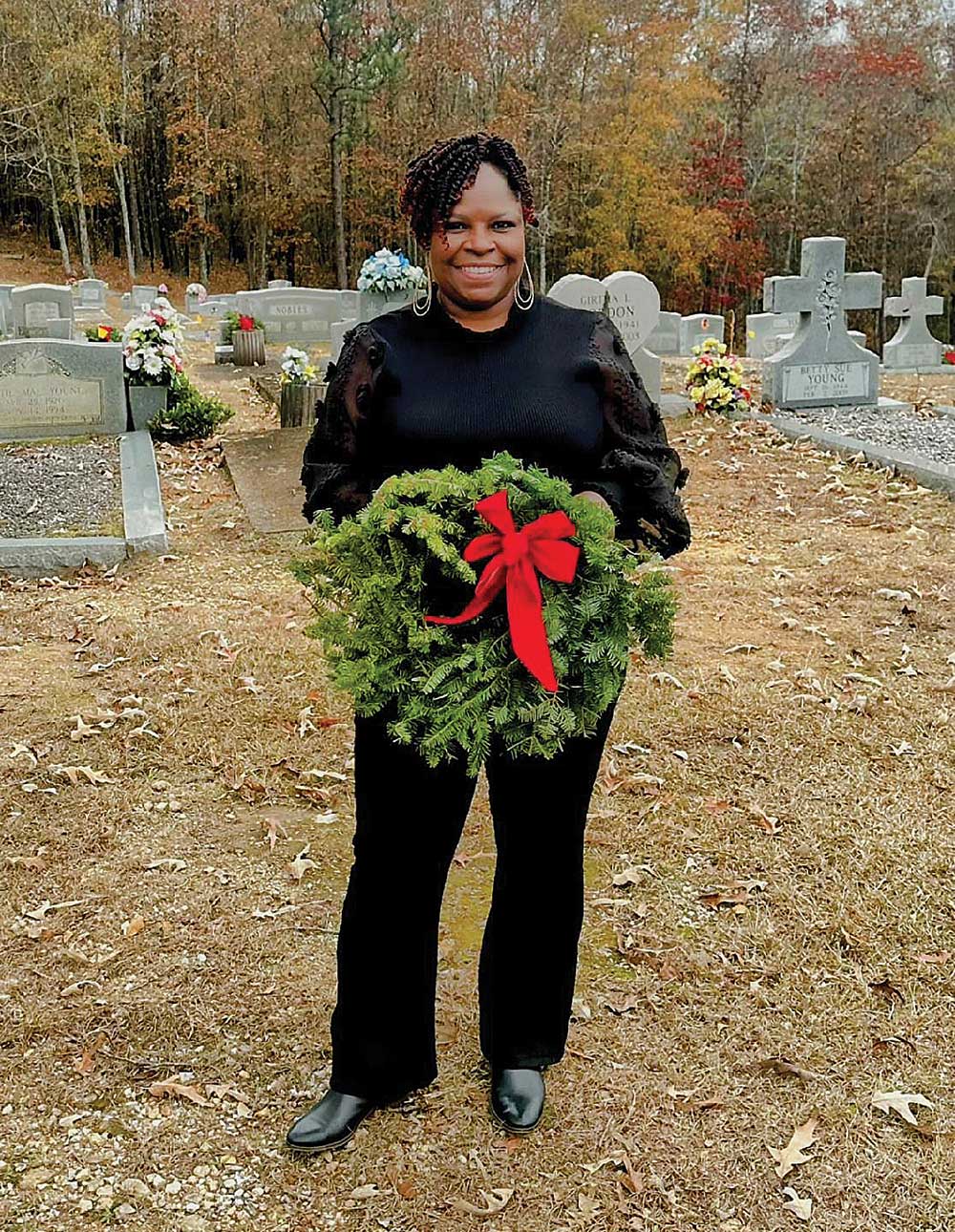
Forman helping with Wreaths Across America
Tonya learned of the project in a conversation with Mindy Manners at the Museum of Pell City. “I knew about Wreaths across America, nationally, but I didn’t think of it as locally involved,” she confided recently.
So, when Mindy started talking about it, I thought, I do remember flags, but I didn’t recall seeing wreaths, and I didn’t realize that it was a program doing it versus individual families or churches doing it.” In their conversation, Mindy told Tonya about the cemeteries she helped with, and Tonya realized they were traditional white church cemeteries. When Tonya commented, “We have Black veterans in our cemeteries,” Mindy’s response was, “Would you be interested in doing it for them?”. Tonya’s immediate response was “What do I have to do? How do we get this started?
The answer to that question was that Mindy Manners was getting ready to have a meeting at Pell City First Baptist Church. Tonya immediately called her Aunt Verhonda Embery, and good friend Jennifer Gover. These women travel together and always find cemeteries to explore, and they attended Manners’ meeting.
“We got the information we needed ,” Tonya recalled, “and Mindy told us how to get started—the website that we could communicate with.”
Tonya gives much credit to Jennifer Gover for getting Wreaths across America successful in the Black cemeteries of Pell City. “Jennifer took the lead. I like to work in the background, and I’m good with that.”
They began researching cemeteries and the veterans buried in each, and ended up with six cemeteries: Mt. Zion, Rocky Zion (Pell City Community), Coleman, First Baptist Cropwell, Greenfield, and Bloominglight (which used to be called Robinson).
Tonya and Jennifer had difficulty locating graves that didn’t have markers, and family members had to show where they were. Dirt had obscured some markers and they removed the dirt from those. “We involved the community,” Tonya reminisced, “and told them you’re gonna have to help us find where they’re buried.
Tonya and Jennifer got gas line marker flags to mark graves they located. The churches got involved, and the person in charge of individual cemeteries made sure they were spruced up for the wreath placing ceremony.
Wreaths cost $17.00 each Family members paid for some, and others who had no veteran to honor gave donations—some for more than one wreath, and the money came in to pay for the wreaths.
That first year, 2023, the wreaths arrived and were stored at Rocky Zion Baptist Church and some at Jennifer Gover’s home, and the two ladies organized up the program. “We got ROTC involved.” Tonya recently recalled. “We couldn’t get Pell City ROTC involved that first year, so Jennifer found veterans in Bessemer who had a program, and they came out and did the salute for us at the church, and we had singing. So, we had a small program. “
Volunteers distributed wreaths to each church, and the ladies had someone at each cemetery to meet the families and place the wreaths on the family graves. As each wreath was placed, a family member would say the names out into the atmosphere. A proclamation that here we honor one who served the United States of America, and we are proud of their service.
Writing of the premiere event, Laura Nation wrote in the December 14 issues of The St. Clair Times, “Excitement for the Wreaths Across America program has been building as two Pell City women, Jennifer Gover and Rotunda Forman, noted the need to honor the veterans and set out to develop a way to do so earlier this year.”
After mentioning the excitement of the project, Nation speaks of Gover and Forman’s labor of love in the wreaths. “Preparation for the 2023 event involved much research, contacting family members and friends, and spreading out into the community to locate as many veterans as possible. The women said they were met with much interest and help in the effort, and now, in the first year of their plan, the program is in place.”
Tonya recounts an interesting 2023 event at one of the cemeteries. “Coleman is a split cemetery—there’s a Black side and a white side. The person in charge of the white side saw what we were doing and wanted to participate; so Jennifer was able to get enough wreaths to cover the graves of the white veterans also.” What a beautiful cooperation that calls to mind the lyrics from the 60s which are as true today as then: Black and white together someday/ Deep in my heart I do believe / We shall overcome someday.
Having known Tonya for a long time and having worked with her on this project, Jennifer Gover observes, “Tonya and I have served together for the past three years as Location Coordinator and Coordinator Assistant for Wreaths Across America. During that time, she has been an invaluable asset in sharing with others the mission of WAA while convincing individuals to sponsor wreaths for our veterans resting in six local cemeteries.
“She has a strong sense of purpose and is always able to provide additional options while giving that beautiful smile. She has a heart for service and sometimes overextends herself . I think she does that because of the willingness to serve rather than be served. She’s always ready for the next adventure.”
The wreaths are removed before they turn brown and ugly. “We get our volunteers to go back and remove them,” Tonya explains. “If available, we get Greg Gossett of the Pell City Maintenance and Street Department to get someone to come out and pick them up. We bagged them up and they came and removed them.”
The success of the first year of participation in Wreaths across America has continued. In 2025, more than 200 wreaths were placed on graves.
HOLD FAST TO DREAMS
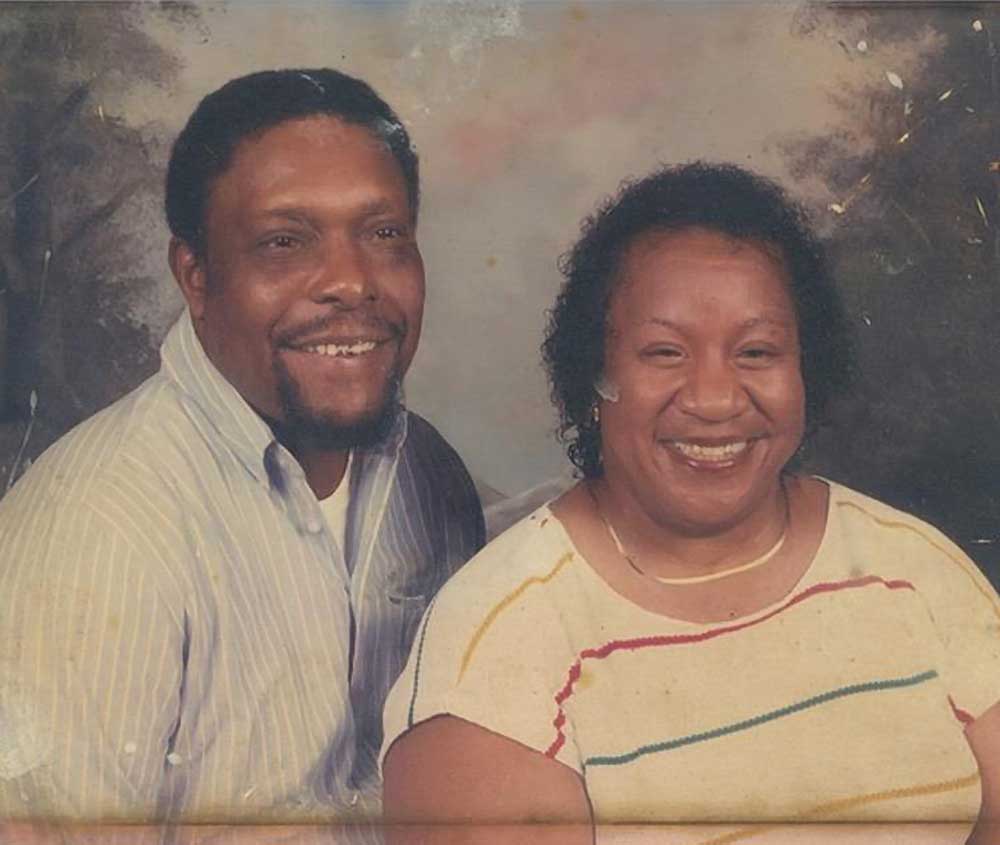
Parents Lesley Sr. and Fannie Forman
Of Tonya’s devotion to collecting and preserving Pell City’s Black history and the Breaking Barriers project, Johnnie Mae Green says, “She should be as famous as Harriet Tubman,” for Tubman collected and preserved the stories of those she helped escape slavery. Carol Pappas, President of the Museum of Pell City, praises her work as well. “Breaking Barriers, our celebration of Black history in our community, resulted from Tonya’s work, her creativity and her vision to make it happen. We are now in our third year in the series, which has focused on the first to break barriers in their respective fields, reflections of faith and family, and this year, foundations of education – a salute to educators who made a difference.
“Tonya is that rare soul who can see a need and doesn’t stop working until that need is filled. We could never have come this far in bridging our community together without her efforts.”
Langston Hughes, Black poet of the mid-twentieth century, wrote,
Hold fast to dreams For if dreams die Life is a broken-winged bird That cannot fly.
Supported by her faith, Tonya pursued her dreams of preserving the history of a city and its people, and in fulfilling that dream she put love into action.
Tonya, your work will continue to benefit and influence generations to come. Hold fast to your dreams and keep on collecting history. Your dream has strong wings.
Central Alabama reading program working to level the playing field
Story by Paul South Submitted Photos
Imagine the inability to read a sign, fill out a job application or even a check. Far too often, that scene plays out in Alabama, where one in four adults find those everyday tasks impossible.
They are functionally illiterate, shackled by an inability to read, but a growing number are reversing the challenges they face thanks to literacy programs like that of the Central Alabama Literacy Council.
Words like those of Helen Keller, who overcame profound disability to inspire the world, motivate retired pastor Ron DeThomas to meet the challenges head on. Keller once said, “More than at any other time, when I hold a beloved book in my hand, my limitations fall from me, my spirit is free.”
Tutors encouraged to volunteer in effort
DeThomas and the volunteers at the Central Alabama Literacy Council are working to help dozens of students overcome what has become their own disability.
The council serves St. Clair, Calhoun, Talladega, Etowah and Cleburne County in east Alabama, and DeThomas serves as county coordinator for the organization in those counties, which is funded through the United Way of Central Alabama.
Right now, the organization is working to help 25 individuals. To DeThomas, the former assistant pastor of Victory Christian Center, this is another type of ministry.
He was approached by Pell City leaders about taking the position. “I didn’t have any reason to say no. I have a lot of flexibility in the job.”
Surprisingly, some 90 percent of clients served by the council are high school graduates or higher. They have become victims of social promotion, the educational practice in which a student is moved to the next grade at the end of the academic year, regardless of whether they have mastered the material, with the objective of keeping students with their peers.
“Our average student might be somewhere in the area of 30 to 35 years old,” DeThomas said. “I think that’s pretty much it. Some years back we got off the old and strict standards of the school system, and they got lax in it.”
In 2019, at Alabama Gov. Kay Ivey’s urging, the legislature passed the Literacy Act, mandating that Alabama third graders must demonstrate reading proficiency on the Alabama Comprehensive Assessment Program to advance to the fourth grade.
“We needed this for a long time,” DeThomas said.
The first hurdle the council has to overcome in attracting new students is that stigma. “There aren’t many who we approach about literacy who just turn us down and don’t want to do it,” DeThomas sad. “Most of the reason they turn it down is because they are afraid someone is going to find out they can’t read at 42 years old or something. But I can assure them there are really not going to have that issue to face because the student, the tutor and myself are the only people who know they are being tutored. We keep all the information confidential.”
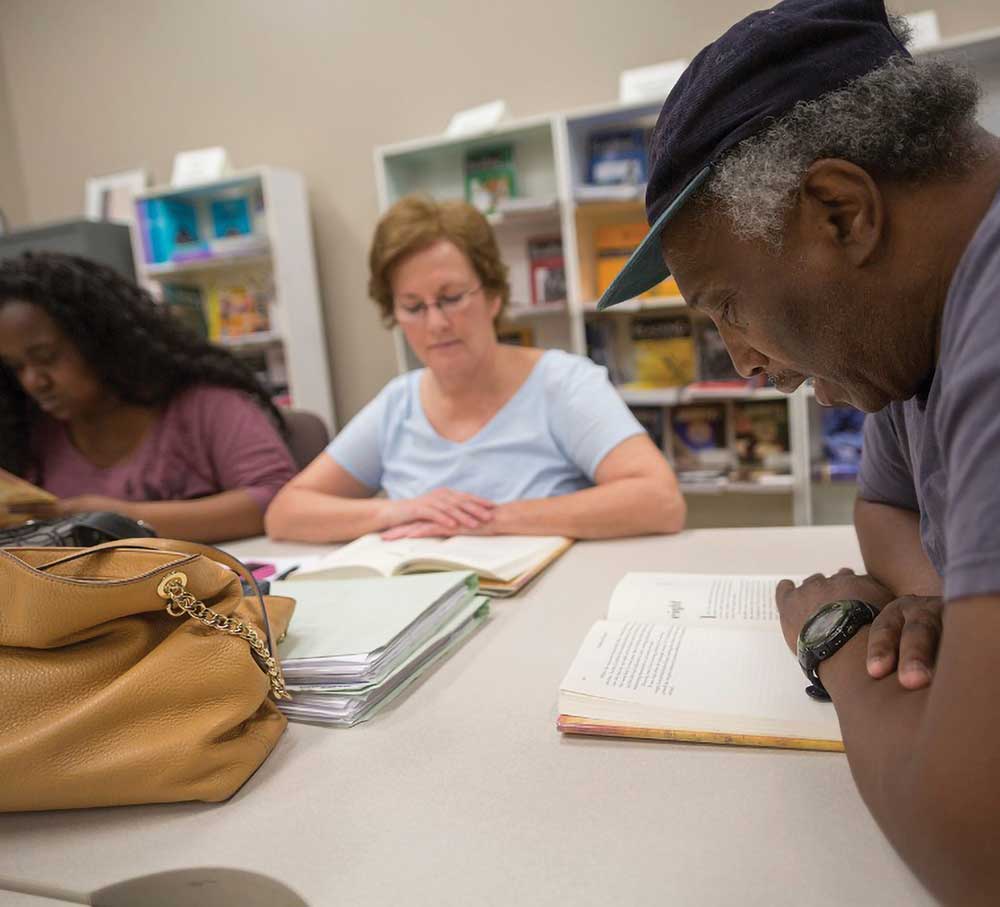
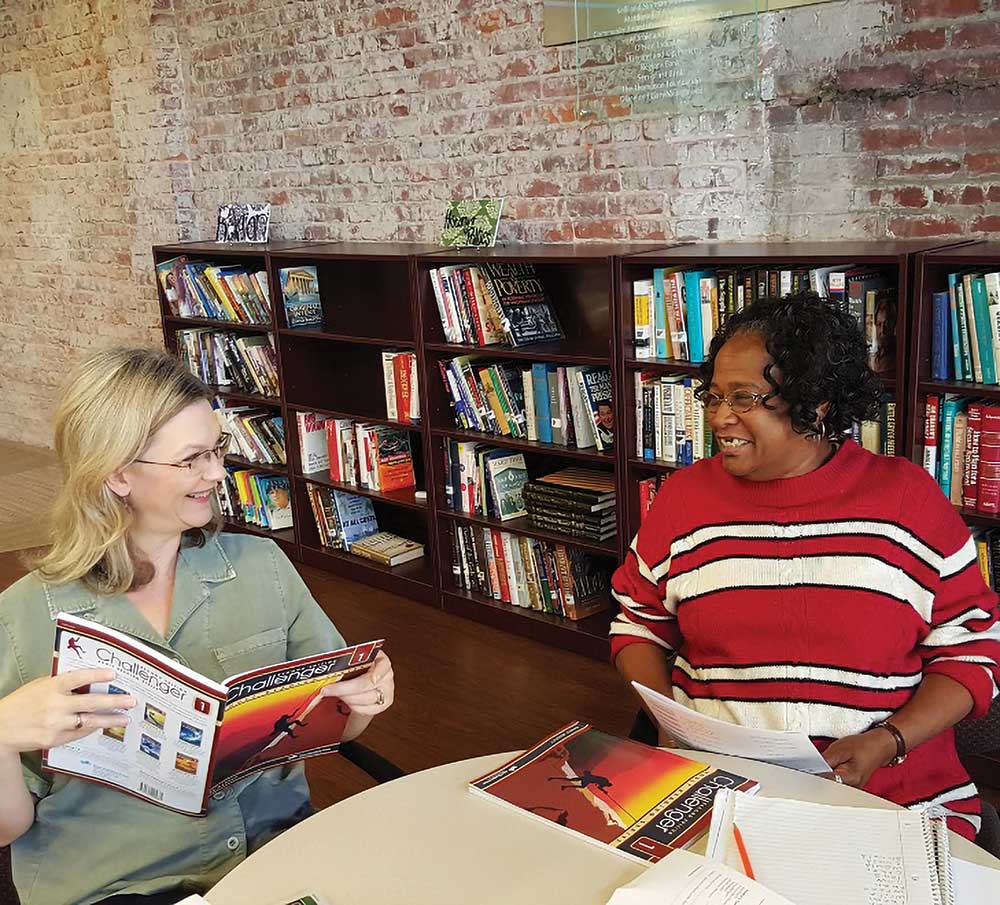
Many of the tutors are retired teachers or reading specialists. But classroom experience isn’t required.
“You don’t have to be in the field of education,” DeThomas said. “When we find a person who wants to be a tutor, we put them through a one-day training course. But it’s pretty extensive stuff. When they get through (the training), they start teaching. We have had an abundance of retired teachers that are doing this. That’s hard to beat.”
DeThomas has also tutored, working with a student at the St. Clair County Correctional Facility. For the retired pastor, tutoring is a different type of evangelism. But there is the joy that comes when the light of learning flips on.
“There are times like that in a lot of people’s situations, you just think, ‘’That’s what I’ve been waiting for,’ for the bell to come on, or something like that. But I think it does make a difference. I think it really does encourage the tutor as much as it does the student,” DeThomas said.
“These teachers really get into this tutoring thing, because they see the importance of it. They can tell when a student is really on board.”
In his eight years of work with the organization, only one or two students dropped out early in the program. “That’s really more of an encouragement for both the student and the tutor,” DeThomas said.
Students invest an hour each week for anywhere from nine months to a year. There is an emphasis on phonics and comprehension. The one-on-one classes are offered at no cost.
“They’re learning the things we learned in first, second third and fourth grade that they didn’t learn for whatever reason,” DeThomas said. “A lot of the students think it’s their fault that they didn’t learn to read. But that’s not always the case,”
For example, DeThomas told the story of one student who changed schools seven times in eight years. “He was a floating battleship out there,” DeThomas recalled. “He didn’t know what was going on. He got a different view of everything at every different school he attended.”
DeThomas believes parents who don’t place a priority on learning are a major issue in the struggles kids have in the classroom. “That’s sad, but it’s the truth,” he said.
He is hopeful about the future because of programs like this. Every encounter he has with students affirms he made the right decision when he chose to work in adult literacy.
“We’ve had students in the past who will tell you in a heartbeat their lives changed when they learned to read. They’ve become proficient in what they’ve been missing all these years. Their situation changed when they learned to read.”
That could mean the ability to read a beloved book, or the words of a hymn, or on a menu, or a driver’s license manual or job application. Some go on to get their GED. Think of it, as Helen Keller said, a mind and spirit freed.
“They feel comfortable reading now,” DeThomas said. “The light really comes on then. That happens with about every student that comes our way. Our commitment is, we’re going to make you a better family member, a better employee and help you be the person that you really want to be.” l
Editor’s Note:For more information about the Central Alabama Literacy Council, to become a student or tutor or to donate, or who knows someone who wants to learn to read, call 205-378-9072.
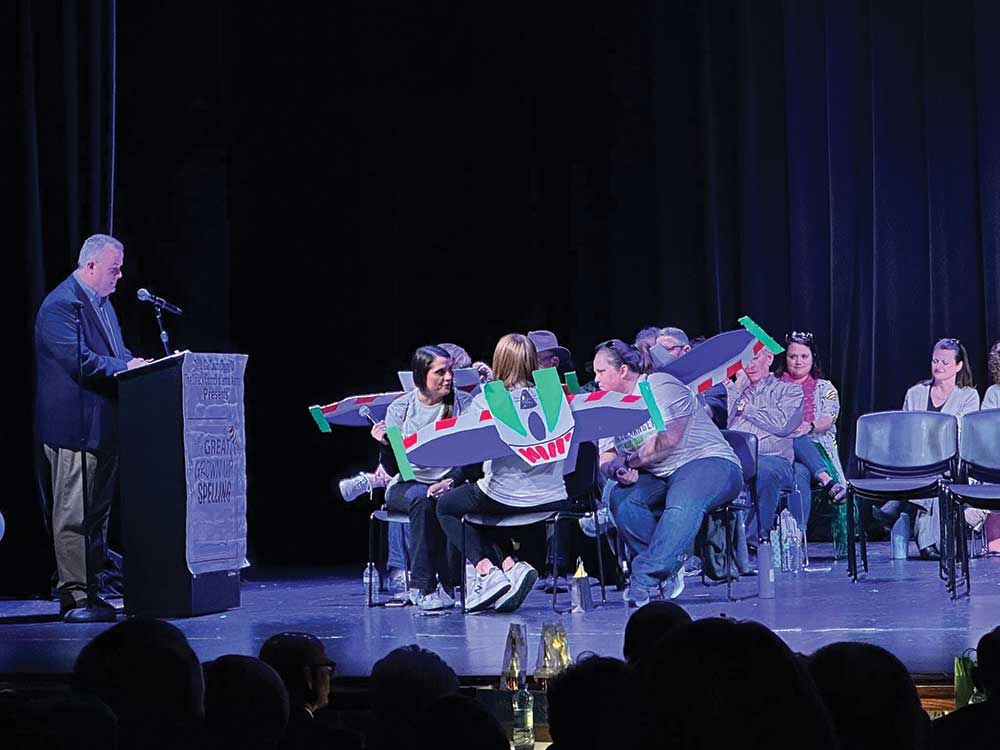
People from across the region take part in the Great Grown-up Spelling Bee at CEPA
THE GREAT GROWN-UP SPELLING BEE
The community has a chance to boost literacy by competing in or supporting the Great Grown-Up Spelling Bee at 7 p.m. on March 12 at the CEPA Center on the campus of Pell City High School. Doctors, lawyers, business and political leaders compete in three-member teams matching their spelling skills.
Proceeds from the Spelling Bee go to benefit the Literacy Council. For more information and for corporate sponsorship, call 205-378-9072.
The Bee helps build awareness of the Literacy Council and its work in bringing folks up to speed in their reading skills.