Town and Country

Impressive opening for an impressive project

Story by Carol Pappas
Photos by Wallace Bromberg Jr.

It had an exciting ring to it: “Welcome to the newest Ford store in America: Pell City Alabama!”

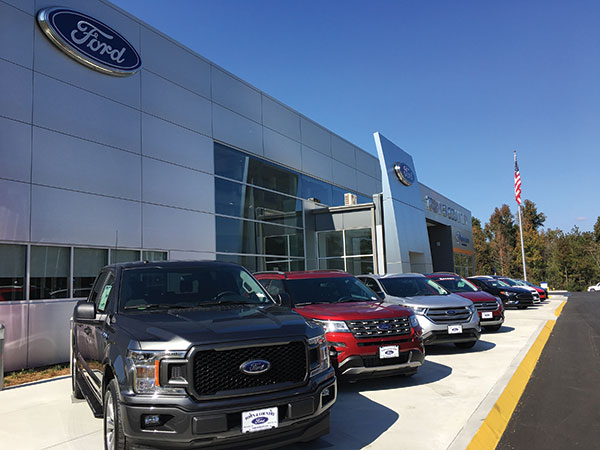
And in the moments that followed, there was no mistaking the excitement. NASCAR racing legend Jack Roush was there to cut the ribbon. So was Henry Ford’s great grandson, Edsel Ford. Coupled with the throng of well-wishers and public officials from around the region, opening the doors to the new Town & Country Ford signaled a new day for the automotive industry in Pell City and St. Clair County.

After all, they were partners in the project that had its share of delays but was no less welcome when it finally became reality.

General Manager Doug Bailey thanked the city and county “for all have you done for us over the years to reach this point for our customers.”

Co-owner Bill Sain offered thanks to “the whole team. You believed in your brand. It’s a great market, and we think it will really grow.”

His partner, Steve Watts, thanked all as well, noting that the community had welcomed the dealership with open arms.

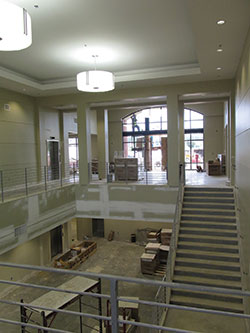
Goodgame Company built the facility that stands at the entrance to Pell City on US 231, projecting a new, more progressive image for the city. Vice President Jason Goodgame talked of the reinvestment Town & Country has made in Pell City.

A tremendous amount of growth is happening all around the city, and Goodgame rightly calls Town & Country and others’ investments “a regrowth. They are putting money back into the town.”

Following a decade of new growth, “You’re seeing locals spending money on what they have. They are reinvesting in their physical location,” Goodgame said. He called the Town & Country project “a highlight. It’s high end. They did not cut corners. It’s the nicest thing you’ve ever seen. The finished product is really a beautiful project.”

According to architect Trevor Matchett of Hendon Huckstein architects, “The owner was dedicated to the idea of a first-class facility for Pell City from day one. Ford Land brought some specific new branding elements, which we incorporated into the owner’s vision for a destination facility for customers and employees alike.”

During the design process, Matchett said, “the owner constantly emphasized the value of both his employees and his customers. Ensuring the employees have safe and healthy working conditions throughout the facility was as important as the customer interface areas.”

The project wasn’t without its hurdles, he said. “One of our greatest challenges was accommodating and coordinating the myriad systems and vendors that go into a dealership like this. From the high-tech video components to the oil delivery systems, all have to work together seamlessly. In a sense, the dealership itself is like a well-tuned Mustang. It’s a beautiful, slick, modern, shell, plus all the necessary systems working in concert ‘under the hood’ to efficiently and effectively generate the power behind this great dealership.”

From the expansive showroom to the state-of-the-art service center to quick lane services, it all spells customer service, according to Bailey.

“We wanted to create an environment that customers and employees want to be in,” he said. “I think we pulled it off.”

Town & Country has tripled its capacity for parts and is increasing that inventory to have more in stock and available for more retail at the parts counter to provide a quicker turnaround for the customer.

Again, with the customer in mind, it’s only 26 minutes from beginning to end for an oil change, tire rotation and inspection, said Bailey. “And it’s priced below market value.”

The 27,200 square foot facility replaces the 8,000 square foot dealership, which is now – with cosmetic changes – the headquarters for pre-owned vehicles, some servicing, new and used inspections, heavy engine work, cleanup and detailing.

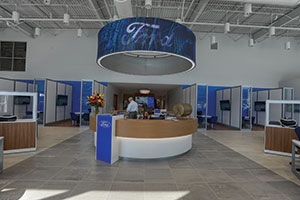
When Bailey first helped plan the new building, he thought about its size and how to keep it from feeling empty. They pulled that off, too. The expanse of glass, LED features, halo digital graphic accent lighting and even music – “It’s more welcoming when you walk in.”

The waiting areas have common tables equipped with iPads for games and movies, and large screen monitors surround.

More features abound in virtually every corner. A specially equipped camera system allows the customer to watch his vehicle being worked on. In the service department, customers are greeted by a service coordinator with an iPad. Photos and addresses are uploaded in the system, giving the ability to track maintenance.

Town & Country has now gone from 32 employees to 54, and the dealership situated on 13 acres leading into the city, creates an impressive entrance to Pell City. “It’s exciting,” Bailey said.

Pell City Growing

Story and photos by Carol Pappas
Photos by Graham Hadley

Driving around Pell City these days is like being on a tour of a boom town. Rooftops are going up. Steel framework for major businesses is being erected. Construction in various phases is under way in many parts of the city.

And the benefits aren’t lost on people like Brian Muenger, city manager of Pell City.

“We are now seeing through a combination of factors economic properties becoming available that are desirable. They’re coming onto the market, and we’re seeing a lot of focus on investment on US 231 and properties adjacent to I-20.”

In just the northern tip of Pell City on US 231 and I-20 thoroughfares, Town & Country Ford, McSweeney Automotive and Northside Medical Home are looming large on the economic landscape.

The old hospital property fronting I-20 is getting more than a second look of late. “Interested parties are looking that we didn’t have before. Now they’re showing interest.”

Just across I-20, market movement is being seen in the Vaughn and Hazelwood Drive areas. “Property transactions are taking place. People are ready to develop those areas,” Muenger said.

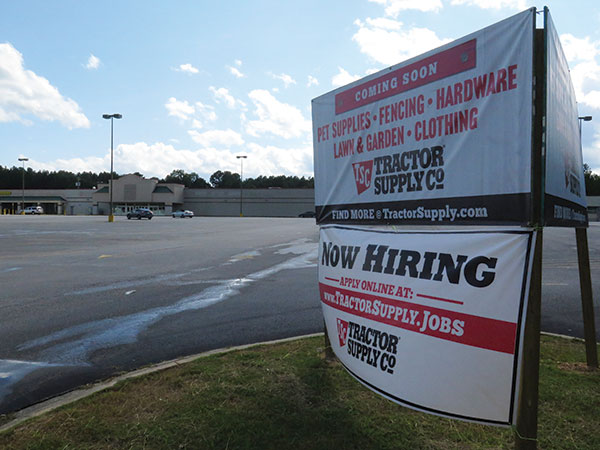
What once would have been a devastating blow – Kmart closing a little further south on US 231 – has the potential to rebound better and stronger than before. A trio of retailers is coming in – Tractor Supply Co., Martin’s Family Clothing and Bargain Hunt. Tractor Supply will occupy the end and outdoor portion of the 90,000-square-foot Kmart space, and Martin’s will bring its regional reputation and department store to 40,000 square feet of it. “Three retailers will almost exceed employment and sales of Kmart. It is a great thing for the community, and it says a lot about our retail community,” Muenger noted.

He turned his attention to Bankhead Crossing, where a new theater, bowling alley and entertainment complex is expected to begin construction soon. The project was delayed due to design revisions, but it appears ready to deliver on its plans.

With a burgeoning Walmart shopping center and surrounding businesses, it is easy to see cause for excitement. I-20 Development President and CEO Bill Ellison, who developed those areas and is continuing to do so, predicted that “the Premiere Entertainment Center will trigger the next tier of retail development along Highway 231 and the I-20 Corridor. I think you will see the addition of more restaurants and retail box stores. It will help expand the tax revenue for the City of Pell City.”

Already, businesses in that area are two of the top three revenue generators for the city, Muenger said. With the rerouting of Hazelwood Drive just across US 231 for improved access to St. Vincent’s St. Clair and the Col. Robert L. Howard State Veterans Home, development in that area is opening up new growth. That project is in the design phase and readying to enter the acquisition phase.

Muenger points with particular pride to the city’s recent Standard and Poor rating of AA Stable. “That’s a top tier” for a city the size of Pell City, Muenger said, and it underscores a strong economy, budget, management, liquidity and weak debt.

“We expect existing business to continue to grow with new business coming into the market,” Muenger said, a prospect that bodes well for the future.

“St. Clair County is often one of the top five counties in Alabama in population growth and median household income. Pell City’s leaders have taken a very thoughtful approach to growth by focusing on job creation, quality of life and safety. When you create a safe community for young couples to start a family and career, it will then become the perfect environment for retailers. We are seeing this more as the Birmingham market continues to grow to the east,” he said.

“Specifically, Pell City has understood that infrastructure is the key to future development and they have always invested wisely in water, sewer, and transportation infrastructure. Many people have already forgotten that at one point the bridge over the interstate had only two lanes. Pell City was willing to invest in its future.

“We believe that, with continued strong leadership from the Mayor, Council Members, City Manager and the entire community, Pell City will continue to grow and prosper.”

LAH Realtor Dana Ellison couldn’t agree more. She and LAH commercial broker Austin Blair have listed what has long been thought of as prime development property on the southern end of the city.

What is known locally as the Cropwell intersection, where 19th Street, Alabama 34 and US 231 South intersect, sizable acreage is being marketed and is expected to fuel substantial growth in that area.

Ellison talked about the potential in terms of convenience for anyone living south of the Kmart development. “It pulls from several counties, like Talladega and Shelby, as well as the residential areas of Logan Martin Lake and southern St. Clair County.”

She noted that when grocery giant Publix decided to locate nearby in what is now the South Park development, “they looked at the demographics of that area.”

And decision-makers liked what they saw.

“We have some key pieces of commercially zoned property on the market at that intersection, providing an opportunity for users needing from one acre up to parcels large enough for an entire shopping center,” Blair said. “It’s a real opportunity for growth.”

Nearby Pell City’s Civic Center and Sports Complex and Lakeside Park draw substantial traffic. Lake residents like the convenience of shopping and doing business in the area, and Ellison sees the properties that are available now as prime spots for medical offices, hardware, convenience stores, restaurants and office space.

“We’re seeing new rooftops,” she said, and demand is resurging. Household income is increasing, and interest in the lake is on an upward trajectory.

All those signs point toward major growth on the southern end of the city, and coupled with the growth on the northern end, Pell City appears to be in just the right spot heading into the future.

“You can get to Pell City from downtown Birmingham in just over 30 minutes most any time of day. Pell City is easy to access via free flowing I-20 compared to other growing areas near Birmingham,” Blair said. “That should continue to promote positive growth.”


Northside Medical Home Opening

Expansion creating a special place in Pell City

Story and Photos by Carol Pappas
Photos by Graham Hadley

It is hard to imagine that from a small office on John Haynes Drive, a mere 3,000 square feet, that a sprawling medical home could rise a decade and a half later.

But on Pell City’s north end, the construction seems endless as Northside Medical Associates continues expansion after expansion.

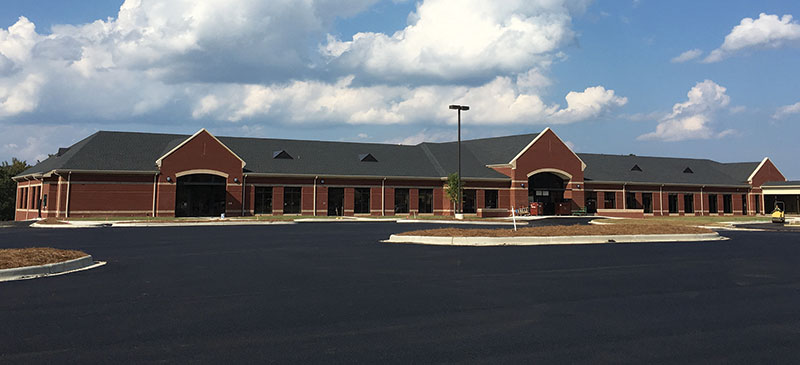
Founded in 2001 by Dr. Rock Helms, Northside has evolved into 80,000 square feet of patient-centered facilities, the latest of which doubles its size and significantly enhances its scope. Northside Medical Home opened in October, fulfilling the next step in Helms’ vision of health care. Official grand opening and ribbon cutting are set for Oct. 24.

At the center of what he envisions is always the patient – comprehensive care, access to cutting-edge diagnostic technology, expanded specialties and an atmosphere where doctors talk to one another for better outcomes for its patients. And all of it is conveniently located close to the patient on a single campus.

“It has always been good to provide a place for patients where they can obtain a full range of medical services at one patient location. This is the next step toward that goal,” Helms said. “We encourage collaboration between primary and specialty care because it enables better quality care.”

The two-story, 50,000-square-foot Northside Medical Home, fronting Interstate 20 on one side and the existing facilities on the other, represents a sizable next step – diverse specialties all under one roof.

In the new wing will be Alacare Home Health and Hospice, VisionFirst Eye Center, Birmingham Heart Clinic, Alabama Oral & Facial Surgery, Southeast Gastro, Eastern Surgical Associates, an expanded Northside Apothecary, and Northside CARE Team with expanded Health & Wellness department. It even has a café coming in January.

Northside Medical Home’s expansion also will include bone density and body composition, infusion suite, and health and wellness classes in its new training center. According to Chief Operating Officer Laura Gossett, the tenants have already expressed interest in hosting events for the public to educate and promote specific health-related topics. “Our training center will be the ideal venue for these types of events.”

Doctors Helms, Michael Dupre and Hunter Russell, along with their nurse practitioners and clinical staff, will relocate to the new building. Doctors William McClanahan, Bob Whitmore and Steve Fortson, along with their nurse practitioners and clinical staff, will expand clinical services in buildings I and II. Also expected are new timeshare specialty physicians from Birmingham and surrounding areas joining the Northside campus Timeshare medical staff soon.

“We want this to be a medical home for patients,” Helms said. “It’s exciting. It’s a more convenient, relaxed setting” than driving to larger, crowded metropolitan areas.

And the end result is an unrivaled collaboration coming together to put the patient at the center of everything they do. Here’s what Northside Medical Home’s newest residents had to say about the new venture:


Birmingham Heart Clinic

With the expansion from a time-share rotation space to a full-time 9,000+ square-foot clinic, it will give Birmingham Heart Clinic the capability of offering full service cardiology to the Pell City area. BHC will have anywhere from one to three physicians seeing patients in its new office every day starting in October. 

In addition, the new office space will give BHC the ability to perform a wide range of diagnostic testing in-house, such as nuclear and exercise stress tests, cardiac and vascular ultrasounds, Holter and event monitoring.

“BHC responded to growth in the Pell City area more than eight years ago by opening a clinic, and initially, that volume of patients was served with clinic coverage roughly one day per week,” explained Dr. Jason B. Thompson. “The area has seen remarkable growth and has outstanding primary care with both fueling the development of the clinic space set to open. BHC Pell City will be able to accommodate three full-time providers and offer an array of diagnostic testing, allowing patients to keep their care locally.”


VisionFirst Eye Center

VisionFirst’s Dr. Sara Clark Cleghern is looking forward to quadrupling the amount of space her clinic now occupies. It will have its own waiting room, which features an area for children, complete with toys and an iPad bar.

“More” is the operative word at Pell City’s VisionFirst – more examination rooms, more equipment and the ability to do more procedures in-house. With services from primary eye care to surgeons represented, “it will allow us to do more,” she said. And there will be an expanded, comprehensive line of glasses.

Birmingham-based VisionFirst affiliated with Northside in January 2015, and Cleghern came on board in August 2015.

“We love how it integrates patient care. So many of our patients have doctors there. We can talk things over with their doctors.” If there is a problem with eye care that is associated with their primary care, often the answer is just down the hall. In other communities oftentimes that kind of ease in communication between doctors isn’t the case.

As an example, she pointed to a patient with an acute eye problem. The primary doctor referred the patient to Dr. Cleghern, the patient had an MRI in Northside’s Imaging Suite before seeing her, so they were able to have access to all they needed before the exam and diagnosis. No delays.

“It’s really incredible,” she said.

“There is a good community within the clinic, good relationships and the facilities are better,” she added. Outside the clinic, “we love the community of Pell City, it’s close-knit. I love getting to meet patients and see them year after year,” building better relationships and becoming more familiar with their history – medically and personally.

This new clinic will have full vision care with access to comprehensive services – from ocular disease to surgical care.


Alabama Oral Surgery

Dr. Chris Rothman of Alabama Oral & Facial Surgery called the move to Northside Medical Home “a natural fit.” He has been practicing in Pell City for 15 years, but was having trouble with infrastructure.

“We needed a new state-of-the-art building,” he said.

They found it at Northside in a 2,000-square-foot suite the practice will occupy. “We like the people. It’s good for us. There is a pharmacy on-site, and patients can have their surgery, go through the drive through to pick up their prescriptions and be on their way home.”

He talked of the strong relationships developed with Northside’s key people. “(Chief Operating Officer) Laura Gossett is fantastic to work with, and (CEO) Rock Helms is great, too.”


Eastern Surgical Associates

“Our relationship with Northside Medical is paramount in our quest to service patients in East Alabama,” said Robin Smith, practice manager of Eastern Surgical Associates, which is based in Trussville and expanded to Northside. “Our practice has continued to grow in East Alabama due to the patient, physician and staff relationships garnered while working in the Northside Medical Building.

“We have been able to provide much-needed surgical assistance to patients that otherwise would have had to travel extensively for care.”


Northside Apothecary

 Northside Apothecary will be moving to the end cap of the new building with expanded room from its location in Phase II. “We are very excited about moving into our new space,” said Pharmacy Director Bradley Pate. The pharmacy will continue its hours of 8:30 a.m. to 8 p.m. weekdays and 9 a.m. to 4 p.m. on Saturdays. “Being back on the end cap, we are able to offer drive-through services to our patients once again. We are adding a second pick-up window, so you definitely won’t be wasting time waiting in line to pick up your prescriptions or other needs.”

Northside Apothecary will continue to be a full-service pharmacy with a full line of OTC, home-health and compression therapy products. “We will have more retail space and are going to introduce a gift section, which will include items from Willow Tree, Melissa and Doug, an array of gift and greeting cards, and many other boutique and seasonal offerings. We have a wide array of items coming in and changing often, so you are sure to find something for everyone on your list,” Pate said.

Additional space in the pharmacy allows it to expand its compounding services to provide unique and individualized medication options for patients. “We can compound just about anything, from our popular arthritis cream to veterinary medications. Northside Apothecary has always been innovative and continues to integrate technology to better provide for our patients.”

Northside Apothecary has its own mobile app (currently available for Android users and will soon be added to the Apple App Store) that will allow patients to request prescription refills and transfers, set up refill reminders, and connect on Facebook and Instagram. Patients also have the option to sign up for free, weekly e-newsletters, which incorporate health-related articles and medication information.

“Northside has become a destination for health care in St. Clair County, and Northside Apothecary wants to become the premiere pharmacy in the area,” Pate said. “Our relationship with the practitioners at Northside allow us to always provide exceptional care for our patients. We love our patients and will continue to be the pharmacy that fills all your needs.”


Alacare Home Health & Hospice

Alacare Home Health & Hospice has been part of the St. Clair County health care community for more than 35 years. “The decision to move into the new Northside Medical Home complex was guided by a question we at Alacare ask ourselves each day, ‘How can we deliver the best care possible for our patients?’” according to Alacare CEO Susan B. Brouillette.

“Alacare’s ability to work more closely with Northside Medical’s “Patient-Centered” care model allows us the opportunity to improve the continuity of care and communication with other healthcare providers.

“The new Northside Medical Home complex that Dr. Helms has developed will facilitate a working collaborative health-care environment enabling us to improve patient’s outcomes and reduce the likelihood of a patient having to return to the hospital unless absolutely necessary,” she said.

“Across the nation and especially in Alabama, our aging population and increasing healthcare costs will make a person’s own home an important place for health care whenever possible. By coordinating with the patient’s physician, hospital or outpatient clinic, Alacare Home Health & Hospice can provide the necessary care in the best possible place, the patient’s own home.”


Northside CARE Team

The newly created Northside CARE Team is a chronic-care management team of health care providers who treat patients at the clinic or at home if needed. It began with four patients in April and has already soared over the 200-mark.

Its aim is to reduce hospitalizations and enhance quality of life by focusing on the relationship between the primary-care provider and the patient, identifying barriers to their patients’ health and executing a plan to navigate around those challenges.

“We want them happy, healthy and out of the hospital,” said CARE Program Director Dianna McCain.

The CARE Team offers assistance with medications on a weekly basis at patients’ homes or daily calls to remind patients to take their medications.

Because of a growing shortage of primary-care physicians, Helms envisioned a program that could take the best care of patients, whether it is at Northside or in the patient’s home.

Its new space will allow the program to grow and better serve its patients.


Editor’s note: To learn more about Northside Medical Home, go to northsidemedicalhome.com.

Expanding LakeLife

Stickers, clothing, websites and more

Partners by Design Inc., a Pell City-based multimedia marketing company in historic downtown, has expanded its LakeLife brand with new products, an online store and retail outlets.

It started out as a way to promote Logan Martin Lake, and we did so with our website, loganmartinlakelife.com, and social media accounts. That led to the sale of vinyl, die-cut stickers, T-shirts, caps, visors and boat totes bearing our registered logo designed by Graham Hadley, our vice president for the Creative Division,” said Partners President and CEO Carol Pappas. “And more products are planned,” she added.

“We quickly saw that LakeLife, in general, is a way of life to promote as well, and we continue to build that brand on our newly launched national site, thelakelife.net,” she said, which includes information on Alabama lakes and a blog written by Pappas called LakeLife 24/7. Coincidentally, the site’s Twitter handle is lakelife247, and its Facebook page is at LakeLife.

The national site also features LakeLife Cooking, an online store, photos and other lake-related information and links, and content continues to be a work in progress. “We invite the LakeLife community – no matter where it is – to submit photos to be featured on the site,” Pappas said.

“In the meantime, Logan Martin LakeLife, continues to grow with our stickers, apparel and accessories selling well,” Pappas said. Logan Martin LakeLife products may be found in St. Clair County at Magnolia’s Gift Shop in Cropwell, The Dam Store and Country Store at Dam Road near Logan Martin Dam. In Talladega County, find them at Griffin’s Laser Engraving and in Jefferson, stickers are being sold at Rocky Ridge Hardware in Vestavia.

Logan Martin LakeLife products also are on sale in our online store at loganmartinlakelife.com, where Neely Henry stickers are also for sale. “St. Clair is blessed with two lakes,” Pappas said, “and we are hoping to expand our footprint with more Neely Henry products as well.”

Partners by Design was founded in St. Clair County in 2009 by Pappas and began official operation in 2010. Her colleagues at the time, Hadley and Brandon Wynn, have since become shareholders and partners in the organization. Wynn is vice president of Online Services for the company.

In addition to the LakeLife brand, Partners publishes Discover, The Essence of St. Clair Magazine, Chamber magazines for Leeds and Moody, Mosaic Magazine for Alabama Humanities Foundation, produces brochures, newletters, enewsletters, designs and rebuilds websites, and offers graphic design, advertising, communications consulting and photography services.

Find us online at loganmartinlakelife.com and thelakelife.net and on Facebook

A Unified Vision

Pell City schools setting example with workforce development

Story by Graham Hadley
Photos courtesy of Pell City School System

When it comes to preparing high school students for entry into the workforce, the Pell City School System is doing everything it can to stack the odds in its students’ favor.

Part of that process is the system’s continuing partnership with the St. Clair Economic Development Council, Jefferson State Community College and local businesses in a regional workforce development initiative, but a large part of it is the result of the system taking internal measures to embrace a broader view of the role of education in students’ lives.

“The key to it is having a team of people who can get information to the students because they hear about college and they hear about jobs, but they do not have a working knowledge of the steps they need to take to get a good job or a career,” said Pell City Schools Curriculum Coordinator Kim Williams.

“The second part of it is the training opportunities that go along with those jobs. Just having a team that can provide the knowledge to those students is essential.”

The efforts have paid off, not just for students and the school system, but for the community, especially for businesses and industries hungry for a well-trained workforce.

Danielle Pope, one of the Pell City High School teachers focusing on workforce training, said the success of the program did not happen overnight — it was a steady progression over the past few years.

“We went from what was originally called co-op classes to paid internships, and the process continues to progress,” she said. “The community has really gotten behind what we are trying to do. We have about 60 community partners between apprenticeships and internships.

“And we keep getting better quality internships that are more career-track based. It lets the students look at more long-term options.”

Many schools have some form of career prep, with a later focus on admission to a four-year college.

“Most schools do career prep in the eighth- and ninth-grade — but it is not very relevant to students at that age. Then for juniors, the focus is on college, looking at things like the ACT test and how to get their scores up,” Pope said.

And both Pope and Williams said college prep is still a very important part of the curriculum at Pell City, but they also are making career prep a priority to provide options for all students post graduation.

“We have AP and online classes – we have a strong core academic offering for that. The classes we have do a good job preparing students for four-year college. And we have a plethora of students following that path,” Williams said.

“But our data points to 40 to 45 percent of our students will finish their first year of college – that’s on track with data for the rest of the state. That leaves 55 percent of students who need a viable pathway to a career. They need to find a good career, and that happens through two-year colleges, career centers or workforce development.”

According to the other partners in the training programs, Pell City’s efforts have been an unqualified success, with students placed in every branch of the regional workforce, from medical offices to major construction and industrial companies.

Williams said their program worked because of the level of commitment from everyone involved as the system implemented and continues to implement more and more job-training options into the curriculum.

“Success comes from the top. Superintendent Dr. Michael Barber has been completely supportive in these programs. … Dr. Barber and the school board have been very supportive in letting us explore ways students not going into formal post-secondary academic settings can get jobs,” she said.

“There was a big push in Alabama for workforce development, with big bond issues from the state focusing on that. … Then, as far as the Pell City community goes, we have had business leaders all saying we need a skilled workforce, skilled training programs in our area to meet workforce demands.”

And those leaders have been more than willing to help put Pell City students to work.

“Then we have the EDC recognizing that need and working with David Felton, program coordinator and advisor at Jefferson State’s Manufacturing Center,” someone Williams and EDC Assistant Director Jason Roberts credit as being a key player in coordinating the community college’s role with all the other participants.

“We have all these entities in the community recognizing this need, and the school board and superintendent recognizing the need. If you don’t have key leadership positions buying in behind the program, it won’t be a success,” she said.

The other side of that are the hands-on educators and staff in the system like Williams and Pope who make the classes and programs work and continue to grow. 

“We have a career coach this year, Shelley Kaler. Our counselors have a lot on them administratively – testing, college applications and all the other essential ways they help our students every day. So, Shelley is devoted to helping students figure out what they want to do — especially students who do not know what they want to do,” Pope said.

“She is singularly focused. I think having someone on board who can help students in that one way is very important,” Williams agreed.

Pope added that Kaler’s position is particularly helpful for students who may not be on a four-year college path.

“She has taken a lot of those kids and said, ‘Let’s get you in a place that has benefits and good pay, where they can start building a career.’ Those are often places that also have tuition assistance for students who may want to explore post-secondary education options while they work,” Pope said.

In addition to that guidance and classes that can help students graduate with certification in everything from welding to medical fields, the school system also goes the extra mile to put the students together with the people who will eventually be hiring and training them.

Pope has spent years attending meetings and conferences, making the connections with business leaders, getting their feedback on what they expect from graduates looking for work and also convincing those leaders to take a more hands-on role in the education process.

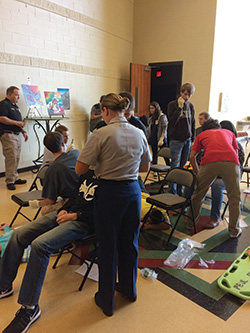
“This year we are trying to figure out a way for students to get in contact with people in different industries. We did do a traditional job fair for seniors, but we also had career discussions in the medical, construction, industrial, city government and public safety fields with those leaders, including the city manager, police and fire chiefs,” Pope said.

“Partners would come in and have a panel, tell how they got where they are. Students could ask questions — and our students did a really good job asking questions, and they could stay after and talk to the panel participants.”

The students also got the opportunity to do mock interviews with the employers who might be doing the real interview one day. That was so successful that the school actually had one student hired from a mock interview.

Pope said the response from the students has been positive. But, just as important, the partners have also been impressed with the students and the efforts the school is making.

“The feedback from the representatives who came was positive. They kept saying, ‘I did not have anything like this when I was in high school,’” and they wished they did, she said.

“Between 20 to 30 business reps took part this year, with juniors and seniors taking part from the school. We got a lot of good feedback from people in the community — people who want to do this.”

The school system has been focusing in the highest demand areas: industry and manufacturing, construction and medicine. But they are continually adding classes, with pharmacy tech, information technology and other areas becoming more in demand.

And because of partnerships with Jeff State and local businesses and a program initiated by the state that allows people like firefighters or accountants to become educators certified to teach their specific areas of expertise, many of the classes being taught can lead to some level of skills certification at graduation.

“We had six students pass their pharmacy tech certification at the end of the year this year,” Williams said.

“It has been a team effort,” Williams said. “Jeff State has the resources to supply the training. Businesses have the need. The EDC looks after the overall economic health of the community. The superintendent and the board support our programs,” she said.

“Everyone is on the same page, sharing the same vision.”

Workforce Development

Learning the job on the job

Story and Photos by Graham Hadley
Photos courtesy of Garrison Steel

When he was growing up, John Garrison’s greatest challenge was to work his way up from high school student to one day owning an industry-leading metal fabrication and erection company.

Today, that company, Garrison Steel, employs more than 200 people in Pell City.

Now he has a new challenge – finding skilled workers from a dwindling workforce to fill the jobs at his company, which has been responsible for the construction of buildings across the Southeastern United States.

So Garrison has come up with a plan to help his company and the workforce grow by building a training classroom at his facility.

The problem

For decades, people working in skilled trades, everything from metal fabrication to construction, plumbing to welding, were usually trained, almost apprentice style, by the previous generation.

But as the focus in secondary education turned more and more to two- and four-year college prep, fewer and fewer people were training in these essential skill areas, Garrison said.

That focus, combined with a general social impression that factory and construction jobs were dangerous and somehow less desirable than professional employment, has resulted in a serious drought of skilled workers at a time when the economy is expanding, particularly in this region, and exactly those trade skills are needed the most.

Existing skilled employees are gradually aging out of the workforce and, for the past couple of decades, few people have been stepping up to fill those positions — despite drastically improved work conditions and good pay, Garrison said.

“I am one of the last. My generation is the last of the people trained by skilled union laborers in our jobs,” he said.

Over the last few years, backed by the National Center for Construction Education and Research formed at the University of Florida, St. Clair business leaders like the Economic Development Council and education officials from Jefferson State Community College and the Pell City School System have made great strides in workforce development, offering high school and college students training in exactly those skills that are needed most.

And they did not do the work alone. Businesses across the board, from manufacturing and construction like Ford Meter Box, Goodgame Construction and WKW Automotive to medical offices and other companies have stepped into the partnership to provide the training and jobs for the students.

Taking the program in-house

From the beginning, Garrison and other industry leaders recognized they needed partnerships with local educators, both at the secondary and post-secondary levels — and they found exactly what they were looking for in Jeff State and the Pell City School System, he said.

Forming that partnership has been a struggle to get similar programs off the ground all over the country, but not in St. Clair, Garrison said.

While that partnership laid the foundation for initial job training — teaching students how to weld, construction techniques, OSHA safety standards and the like — the basic tools they would need to get their foot in the door after high school, Garrison wanted to take the process a step further.

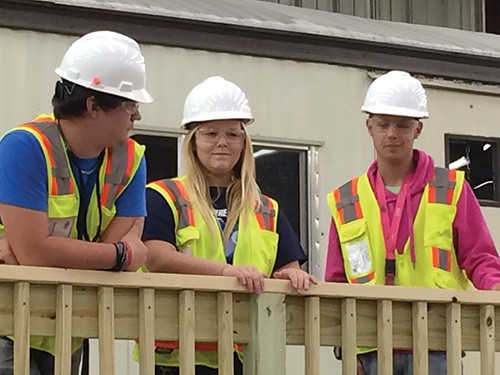
“So in June of 2016, I asked Jefferson State to meet with seven area high schools to discuss a pilot program to take up to 25 high school students in dual enrollment and begin teaching out of the NCCER Ironworking curriculum. They all agreed and in January began the first ironworker program four hours per day, five days a week for 16 weeks,” he stated in a press release.

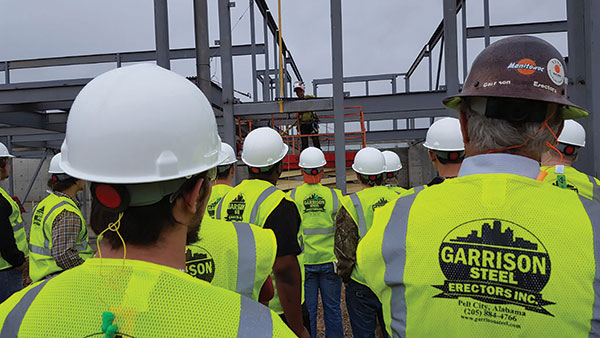
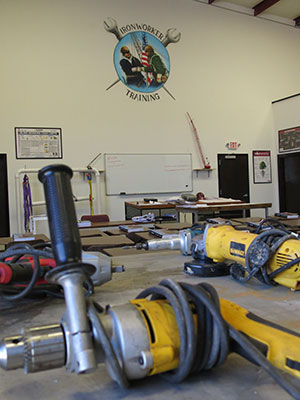
“Money for books and a classroom at Jefferson State Pell City for the first eight weeks was funded with Federal Perkins Grants, and the second eight weeks were at a newly built training center at Garrison Steel, where students learned theory and hands-on with welding, cranes, rigging, fabrication, oxygen and acetylene cutting, and much more.”

The first class finished up at the new facility at Garrison Steel as school wound down for the 2016-2017 year, and Garrison sees it as nothing but a great success and a huge step forward for the workforce development initiative he and the other business, education and industry leaders have been working toward.

“Our classroom is set up to do half theory and half practical. We integrate practical in nearly every day’s classroom experience, which breaks the monotony and adds to the connectivity in what they are reading.”

He said that appeals to students who are interested in learning the theory behind the work they are doing with their hands, but also is an ideal environment for those students who may not like a traditional classroom environment.

“Many kids don’t like book-work because they cannot see the connection between theory and practical. So, as a teacher this year, my goal was so that when they read, and there was a lot of reading, that we stopped often enough to see real-world applications and for them to connect.”

The only thing Garrison said they were not able to do this year, and that they will have next year, is a steel tower where students can practice and learn with safety and other rigging equipment in a real-world environment.

“The students will be training off the ground with safety equipment.”

What’s next

This is only the first step, for Garrison’s teaching center and for the students.

Now that they have cemented a relationship with local schools, he wants to reach out to people already in the workforce who have the skills training but not the theory behind what they are doing.

“This year our program captured those students who are available because they are in school. We have figured out how to utilize those students and train them. The next challenge for the fall classes is to figure out how to integrate what we call incumbent workers, those who are out there, already with jobs, sometimes at distant job-site locations, that have only the practical side of learning and virtually no theory to their learning.”

And those students won’t necessarily have to come to Garrison Steel or Jefferson State. Garrison has plans to use the Internet and distance learning to help train workers at their job sites.

The students have received their entry-level training this year, but there are many more classes and options available to them down the road.
“The theory is this — these guys who are going to graduate high school want to get out and get a job in the workplace, but that is just a start. In describing it, I try to play a movie in their head: ‘You get really good at what you know how to do skill-wise. Then you become capable of managing those skills of others, learning another new role in the company.’

“As the company grows, we need new managers. As time goes by, older guys like me age out, and we fill those positions from the bottom up. That is the theory, the process we tell these guys,” Garrison said. “We want them to be able to work all the way up to owning their own company one day.”

And as you learn one skill, more open up to you — in the workplace and in college.

“Just because you start out a welder does not mean you have to be a welder for the rest of your life,” he said.

“I have explained to my students that you know more technical aspects of our business than many of the people who have been working in the field for six years or more. They have a practical advantage over you, but you are learning the more challenging part, which is theory, and you will get the practical experience once you are hired.

“Now you have a distinct advantage over the incumbent workforce and have a pathway to higher positions later in your career.”

Payoff for students
and business

The move is not entirely altruistic. Garrison readily admits that having a skilled workforce at his disposal can save money and cut down drastically on job time. It also creates an overall safer work-site environment.

“The cost of labor is driving up the cost of construction. The cost of labor does not necessarily mean higher wages,” he said. The longer it takes to complete a job, the more expensive the project is.

“What a skilled workforce can do in three months might take an unskilled workforce four months to do. The problem is not a lack of workers; it is a lack of skilled workers.

Students who have enrolled in the program and are working for Garrison are similarly reaping the rewards of their efforts.

David Graves, who has previously talked about his experience at Garrison Steel soon after his graduation, has taken part in some of the classes and continues months later to move down the career path he has embraced.

“When he added the welding school, I took that. I was in processing before, now I am in welding, and that is going in the direction I want to be in,” he said.

“I want to learn more about fabrication, and welding is a step in that direction. …”

And it is the combination of classroom instruction and hands-on that is making all the difference.

“It really helps going through the class, giving you an understanding, but it won’t teach you to weld by itself. You learn that on the floor, learn from trial and error, grinding out your mistakes.”

Down the road, Graves hopes to move up to a supervisor or quality control position.

“There are classes for that at college. That opens doors like project manager.”

Matt McCrory is another employee who has benefitted from the multifaceted training program.

He has been at Garrison for two years now and has worked his way to an office position, lotting, where they break down the different design drawings into their components, which makes fabrication easier and more organized.

He originally took the welding course at Jefferson State and has continued his training at Garrison.

“That class helped me read the drawings. That is the biggest thing: Since I mostly read drawings, how things are applied, how they are used, how they are built,” McCrory said. “If I don’t know how to read the drawings, I can’t do my job.”

He plans on continuing to work at Garrison, but also sees more college in his future at Jefferson State, focusing on business administration.

“The lessons I have learned here will help in college,” he said, adding that he definitely has a better idea of what he wants his career path to be now that he has been in the workforce. Something he said was very much lacking when he was a senior in high school.

One graduate of the class, Alex Bowman of Pell City, is still in school but is already on the job.

Bowman is a 17-year-old who just finished his junior year and is working at Garrison Steel.

And he already can see his path ahead.

“I am looking at doing this for a career, definitely something as an ironworker with Garrison Steel,” he said, pointing to the owner as an example. “Seeing Mr. Garrison’s investment in us makes me want to work harder, to one day get to the level he is at. It’s very inspiring.”

Studying in the class and working at Garrison has been ideal for Bowman, who readily admits he is not a fan of traditional classroom environments.

“I am not very good in a classroom. You can learn the idea of what you want from a book, but hands-on, you actually learn how to do it,” he said.

And because he now has some certification under his belt, he has options.

“NCCER was a huge step up for us when it came to the ironworker program. It means, when you graduate, you have jobs waiting for you. Having your core training shows a lot of employers you have the ability and intentions to step up and get ahead in the game.”

Return on Investment

“I know for a fact that a one-dollar investment in training returns three in productivity. … It’s not altruism; it’s survival,” Garrison said.

He is quick to point out that he is not the only one investing in the program — support he could not have made the new classroom work without.

“Red-D-Arc Welders are a major contributor to our program with welding equipment donated. The additional supporters of our program are NUCOR Steel, Cobb Wire Rope and Sling, NEX AIR, and Lincoln Electric and Service Construction Supply (SCS),” he said.

Between that kind of support and the growing partnership with education, business and organizations like the EDC, Garrison sees a bright future for workforce development in St. Clair County.