Willie Mae ‘Snookie’ Turner Beavers

Story by Joe Whitten
Submitted Photos

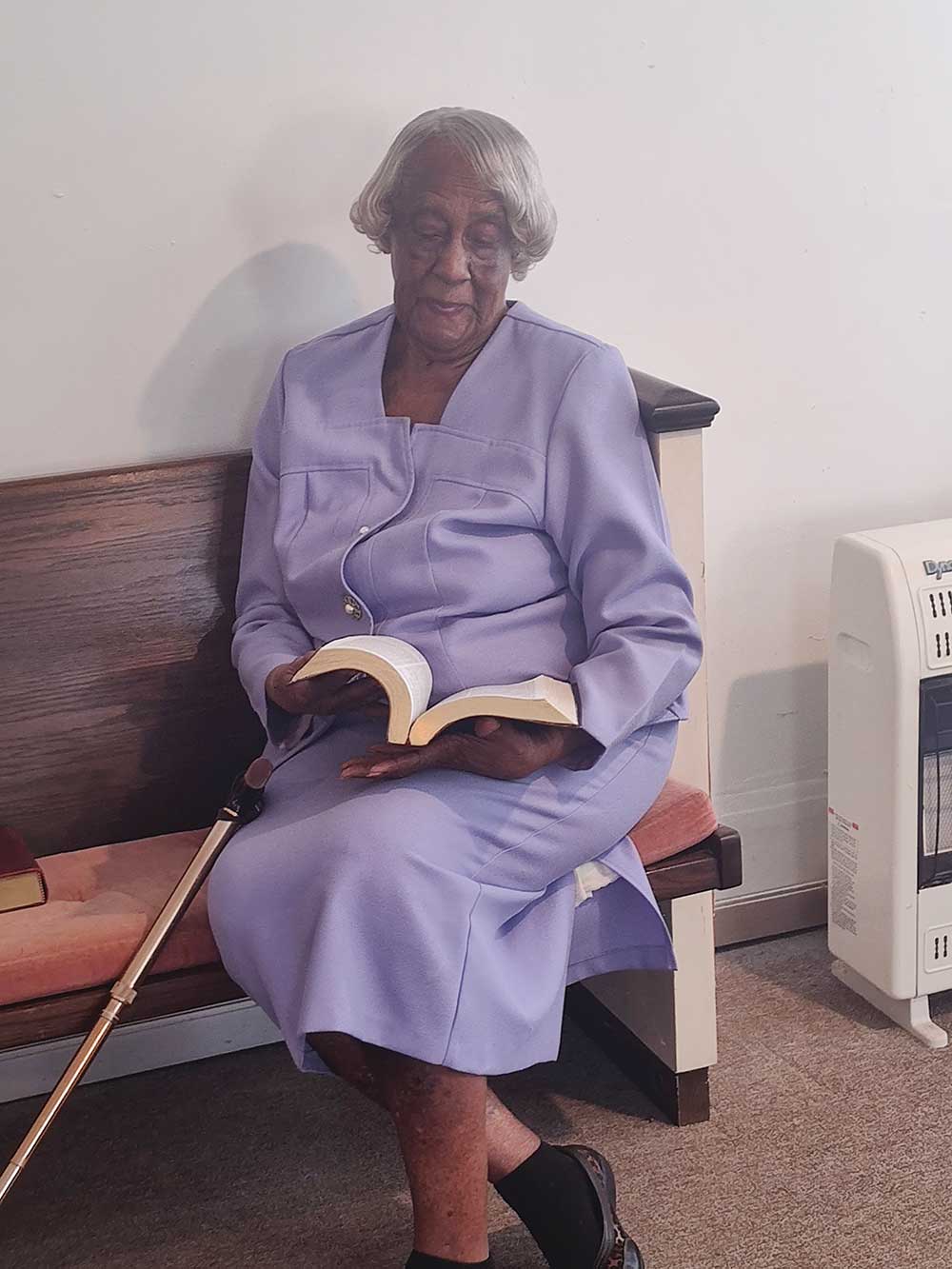
If you should travel a St. Clair County backroad some afternoon and arrive at Willie Mae “Snookie” Beavers’ home for a visit, she might respond to a question by saying, “Now, back in them days …”

If she does, sit up and listen, for she has lived almost a century of Pell City history. She will converse with you in her Southern dialect that is as soft and melodious as Mahalia Jackson singing, “Precious Lord Take My Hand.”

Both Pell City and St. Clair County need to know what she can tell us about how it used to be with farming, gardening, killing hogs, preserving vegetables and fruits, playing the church piano and sewing old-timey quilts. She is one-of-a-kind, as all treasures are.

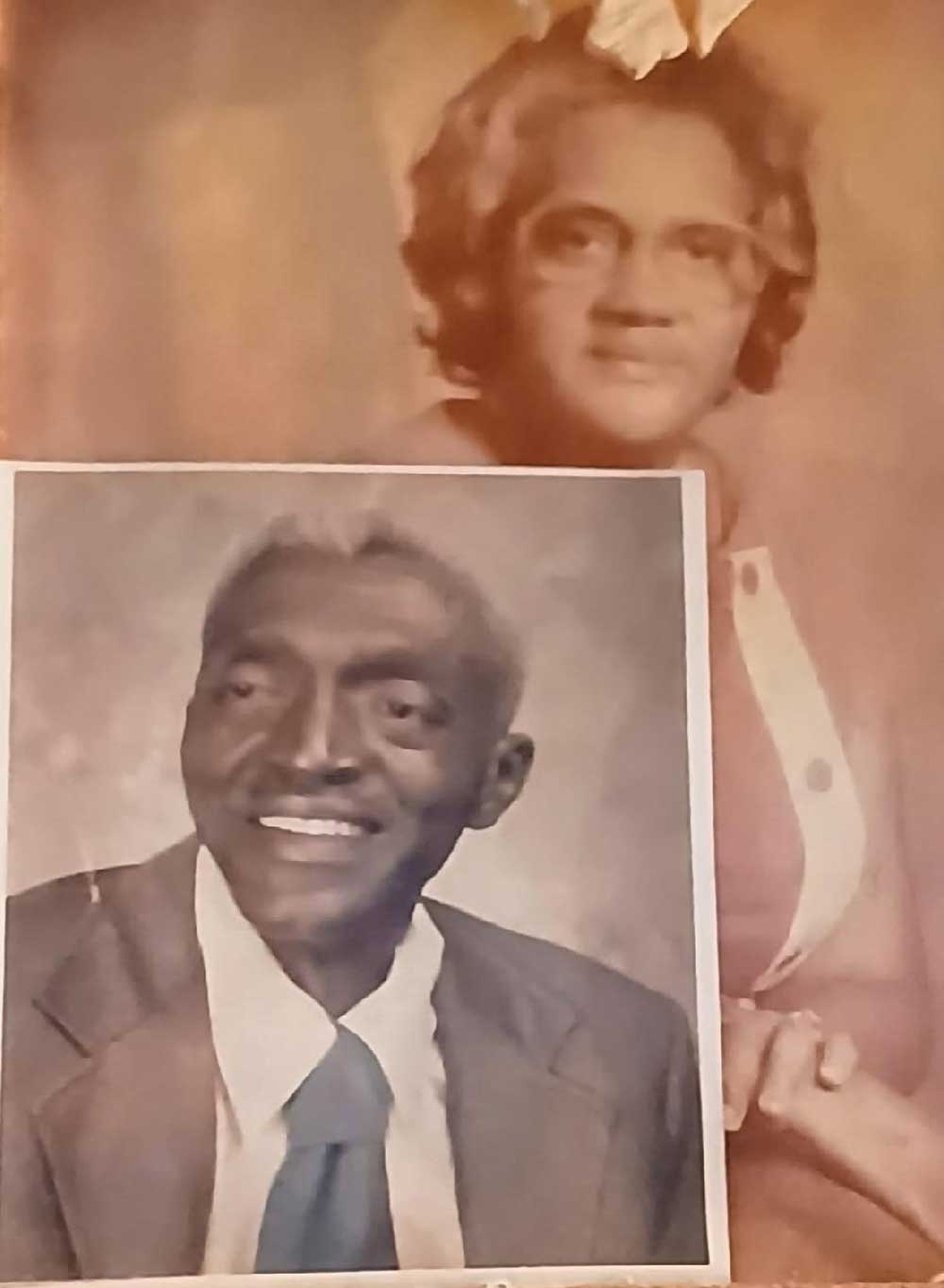
Born Jan. 9, 1927, to James and Bessie Moore Turner, Willie Mae was the first of the 10 Turner children. The family farmed Turner land in the Coosa Valley, south of Seddon, and she began working in the fields as soon as she was big enough to work.

“We farmed, raising cotton and corn and sugar cane. My parents worked in the fields, and I worked right there beside them,” Willie Mae says matter-of-factly. “I think I worked harder than any of the others cause I was the first one. And I didn’t just work in our fields, I worked in other folk fields, too. If they needed somebody, I went. Whatever was in the field, I was in there, and I did it. What the plow couldn’t do, we did with a hoe,” she laughed. “And after I got married, I still went to other folk fields and worked. Back in them days, that’s the way I had to make my money.”

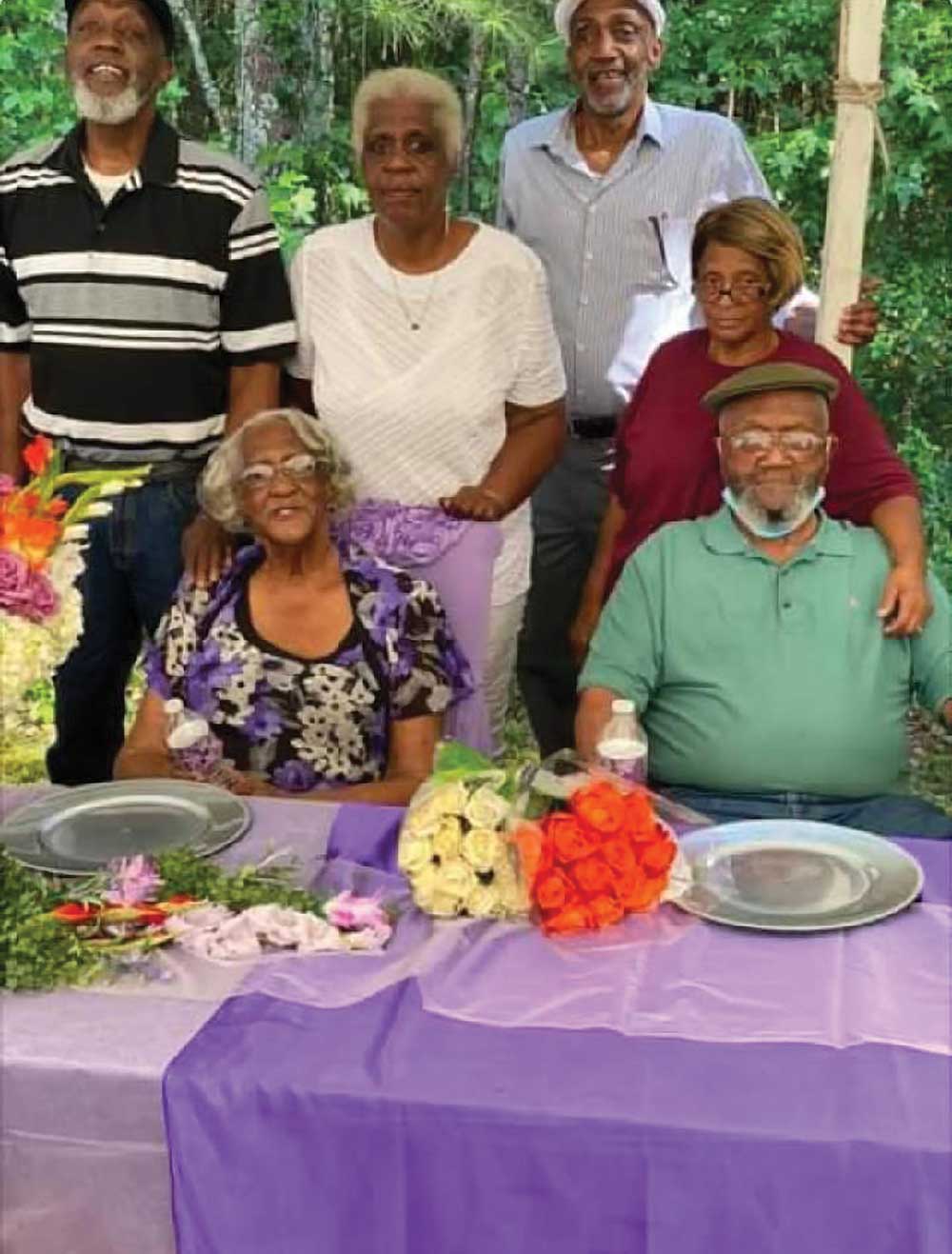
Willie Mae married William Beavers on June 18, 1948, and they were parents to six children: Shirley, Connie, Wilma, William (BeBop) Jr., Bennie and Rodrick. All seven are still living. As the babies arrived and grew up, Willie Mae continued “working in fields” until she took a job with Pell City Cleaners.

She started working at the cleaners before she was 62 years old, but doesn’t remember the exact date. She started drawing her Social Security at age 62 but didn’t retire until she was 96. When asked why she retired, she laughed and said that one of her daughters told her she was too old to keep working, that she needed to retire. Willie Mae told her, “Well, the bossman said I was doing the work …. But she told me that if I didn’t come out, she’s gonna tell ‘em to fire me, and I believed she would’ve, so I come out.”

Her hardy laugh showed she was enjoying telling this. “I don’t know if he’d a-fired me or not, if she would-a told him to.”       

Other than a brief time as a teenager washing dishes at the St. Clair County Training School, the Pell City Cleaners job was the only work she did other than farm work.

Gathered produce had to be preserved for the winter months. Willie Mae helped her mother can vegetables as they came in. As to fruit, they canned peaches for they were too juicy to dry, but they dried apples by the peck. “That’s where I learned how to can,” Willie Mae recalled. “I did what my mama done, I just couldn’t do it as good as she did.” What cucumbers they didn’t eat they pickled. She spoke of smokehouse pickles as quite delicious.

When the sorghum cane was mature, it was time to make syrup. Her dad set up the syrup mill and the boiling pan. Willie Mae and sisters stripped the cane and cut it in pieces ready to be fed to the mill as the mule walked round and round turning the mill, squeezing the juice from the cane into buckets. Poured into a boiling pan, the juice cooked down to syrup. “We poured the syrup in cans,” Willie Mae recalled, “and we ate biscuits and syrup.” She didn’t say it, but that was some good eating.

Willie Mae’s Trip Around the World quilt in a local collector’s home

When asked about wild game for food, she said, “We loved rabbit and squirrel. That was good eating.” She paused, then laughing, said, “And possum. Mama did all the cooking, and everything she made was good.” Obviously enjoying remembering, she continued, “She made good dressing, good cakes, good custard, good biscuits.”

When hog killing weather came, Willie Mae learned from her mama about sausage, souse meat, and chitlins.

They used some less desirable cuts of pork to grind up for sausage, adding pepper and sage to the mixture. Willie Mae’s dad had a smokehouse where they hung the sausage, but the other cuts of meat they salted down in a wooden saltbox.

Asked about old-timey head cheese or souse meat, Willie Mae smiled, “I always made the souse meat. Made it out-a the head, and out-a the feet, and out-a the ears. We had a big pot, and I’d put it all in a pot and boil it till it got done, I’d pick all the bones out of it, and start mashing up the meat with my hands. Then I’d grind that all up with the sausage grinder. And that’s when I’d put different spices in it.” They formed the meat into a loaf shape to let it set until it was firm. Some call souse meat the original deli meat, for it makes delicious sandwiches.

Nothing about the hog went to waste, not even the intestines. They cut them into short pieces and washed them over and over until they were clean. “We’d get as much fat off as we could,” Willie Mae said. “We cooked ’em in a boiler for several hours with salt and pepper. Some folks fry ’em, but we didn’t, we just boiled ours till they got done. To me, that was some good eating.”

Willie Mae’s baby photo

Today chitlins are regarded as solely a Black culture soul food, but Rev. Larry Adams of Mt. Zion Baptist Church in Springville can attest that chitlins are served in restaurants in France. Rev. Adams was on a teaching mission trip in Paris with Pastor Chipley Thornton and Pastor David DuPre from Springville First Baptist Church. For lunch one day, the three went to a Paris restaurant. Unable to read French, Pastor DuPre pointed to a picture and ordered it. When their meals were served, Rev. Adams looked at his friend and said, “You’re eating chitlins.” His friend said, “No.” Rev. Adams said, “I know chitlins, and you’re eating chitlins.” Sure enough, when they translated the menu offering it was chitterlings, or in Alabama, chitlins.

What Willie Mae learned growing up, she continues today, which includes growing vegetables. “Folks need to raise stuff,” she vows decisively. “If they don’t, they not gonna have anything to eat. The stores ain’t gonna have it. If you don’t raise it, you ain’t gonna have nothing to eat.”

She now gardens with baby brother, Larry Turner, and their garden is weed and grass free. When asked what they grew, she laughed, “We grow everything that can be raised – turnip greens, mustard, onions, green beans, tomatoes, cucumbers and all such stuff as that. Anything that can be raised. We always had a good garden. Larry had a jam-up garden. Me and him been raising a garden.” She paused, then said, “They say I’m lazy, but I just done got old.”

 She may have slowed down, but “lazy” is not a word that fits Willie Mae Beavers. No lazy person on God’s green earth sews quilt tops and quilts them by hand. Willie Mae does, and her quilts are treasured by family, friends and folks she’s never met. A commendation from the Alabama House of Representatives read by Representative Hall on May 16, 2017, records that “…her magnificent quilts are displayed in homes across the United States,” and that “…many have received one of her famous quilts in celebration of a significant life milestone.”

Willie Mae’s love of quilts perhaps started with her grandmother, Henrietta Turner, whose house was a short walk through the woods from Willie Mae’s. “We walked over there to her house every day. She never acted like she got tired of us. She was a good grandmama.” And her love of quilts may have started with her grandmama, for she recently reminisced, “I used to enjoy looking at her quilts. She used to have these frames that you hang up in the house from the ceiling, and you had to hang ’em by their four corners. She hung it up and let it down to quilt on it. She used what she had to make ‘em: old clothes, pants and things.” Then, laughing, she said, “You know what, I went to the library the other day and saw these cotton carders, and I said, “Oh, my mama had some of these.” Carders were used to separate cotton from the seeds so the cotton could be used as the inner batting (padding) for the quilt.

Willie Mae enjoys talking about quilts. “I treasure quilts, but young folks …” she paused and shook her head, leaving the “don’t” unsaid, then continued on a happier note. “Mama always quilted. She made pretty quilts. My quilting’s not as pretty as hers.” She used cloth flour sacks, feed sacks and fertilizer sacks, when she began learning to quilt.

Bought fabric in quilts was unheard of among rural folk in the 1930s and ‘40s.

“I’d get the empty ones,” she said recently, “and wash ’em and I started making quilts from them.” Then came the phrase, “Back in them days, you didn’t buy anything. You had to use what you had. So, I would quilt, and I didn’t really have patterns then, it would just be blocks that they called the Nine Diamond.”

She still makes the Nine Diamond, but other quilt patterns she likes include Trip Around the World, Monkey Wrench, Stars and  Bow Tie. “Nothing fancy. These real fancy quilts with a whole lot-a pretty little bitty pieces – I don’t do that,” she laughed. “I don’t know how old I was when I started quilting. But I been doing that all my life. I’m 98 years old, but I’ve been quilting – piecing and quilting all my life. My mama did it, and what I did, I tried to do it like her.”

An ear for piano

One thing Willie Mae does that she didn’t learn from her mother is playing the piano. Knowing her daughter wanted a piano, Mrs. Turner went to a piano store in Anniston and bought one. “I know she got tired of me playing, but she never told me to stop.” Willie Mae pauses to reflect, “If somebody ask me to play in the key of C or F sharp, I wouldn’t know what they was talking about. The Preacher one time asked me to play ‘Precious Lord’ in C. I played if for him, but I didn’t know if I played it in C,” she laughed.

She never took piano lessons, but she could play on the piano whatever she heard sung or played on the radio. At age 14, she began playing piano for Blooming Light Church, and she recalled how that happened. “I’m sure they had other players, but Mr. McHugh came to Papa and said, ‘I heard your daughter played the piano.’ And I started from there.” She couldn’t remember what month and year she started, but she continued as pianist and music director until in her 90s when COVID kept her and the congregation away from church services. “The first song I played at church,” she recalled fondly, “was ‘The Old Account Was Settled Long Ago.’” The last song she plays in church is yet to come.

Willie Mae and good friend Johnnie Mae Green

Willie Mae’s baby brother, Larry Turner, says folks need to know that she was not only the pianist at Blooming Light but that she was also the Minister of Music there and was Minister of Music for Riverside and for Rocky Zion for a while as well.

“I played for Rocky Zion,’ Willie Mae reflected, “and I played for Riverside, and for Peace and Goodwill.” Her dad, Rev. James R. Turner, was pastor at Peace and Goodwill at Riverside.

Asked if she played piano for her dad, she answered, “I played for him. Mama told me, ‘You got to.’ I went to all the revivals. That was fun.” She pauses a few seconds and adds sadly, “But church ain’t like what it used to be back in them days. We never sung anything but the old songs. ‘The Old Account Was Settled.’ ‘Oh How I Love Jesus.’ ‘Precious Lord.’ Old songs.” She laughed and said, “Now, I can play for old folks, but I can’t play for teenagers.” Lots of people agree with Willie Mae that the old songs are the best songs.

Larry Turner is proud of his sister and fondly affirms, “She’s legendary. Everybody knows her. Everybody loves her.”

Recently someone asked her, “What would you tell young people about your secret to living almost a hundred years?

“Now, you’re not the first one to ask me that,” she laughed. “And I tell ’em, well, ‘I can’t tell you, cause I do not know.’ She pauses, then says, “I tell ‘em, ‘I come up poor; I worked in the fields … I’ve worked in the fields all my life. I worked in my daddy’s field, and after I got grown, I worked in other folks’ fields. And I’m still here for some reason.”

You’re still here, Willie Mae “Snookie” Beavers, because you’re a St. Clair County and Pell City, Alabama, treasure and we need you. We need the harmony of your music, the beauty of your quilts, and your example of “work hard and live long.”

Most of all we need to hear you telling us how it was “back in them days” so we don’t forget the stamina and character of our ancestors and how they lived and worked and reared families.

You are one-of-a-kind, as all treasures are, and we thank God you’re still here.

The Rock Bridge

Story by Paul South
Photos by Mackenzie Free

Sometimes nature’s miracles enter our hearts, souls and minds with a bang, like the colors of the Northern Lights, or the Hale-Bopp comet piercing a blue-black sky as it did late in the last century. Both phenomena are greeted by “ooohs” and “aaahhhs,” wows or wordless, wide-eyed wonder.

But more often, time and the elements combine quietly with nature to create something magnificent and mystical.

So, it is with the Chandler Natural Bridge, a place known simply as The Rock Bridge. Located near the base of Chandler Mountain that forms part of the St. Clair-Etowah County line, the natural bridge is one of six named natural bridges and two unnamed spans in Alabama, according to the Natural Arch and Bridge Society.

The Rock Bridge spans Little Canoe Creek. It’s 48 feet long, 54 feet wide and 17 feet thick. The top part of the span is made from Gaspar Limestone. Wind and water erosion sculpted the bridge over millions of years.

Since 2003, Save Chandler Mountain, a nonprofit advocacy group for the mountain, has worked to protect the Alabama’s third-largest peak, which is known as the “Tomato Capital of the World.”

Fran Summerlin, founder and president of the advocacy group, has a special place in her heart for the mountain and for the Rock Bridge. She holds dear childhood memories of her brother taking her to see the bridge when she was only five.

“It was fascinating, I’d never seen anything like it. It was wonderful.”

What made it fascinating?

“There was a big rock that looked like a bridge,” Summerlin said.

“When you think of natural bridges all over the country, they’re always revered,” she said. “People love going and seeing them. (The Rock Bridge) was formed by water, and it’s a fascinating place.”

She talks of Alabama Power Company’s unsuccessful plans two years ago to build a hydroelectric dam there, a move that drew vocal opposition from residents, environmentalists and Native American groups. “If the power company project had gone on, it (the bridge) would have been covered with water,” Summerlin said. “It would have been lost.”

In August 2023, Alabama Power withdrew its application to the Federal Energy Regulatory Commission to operate a Pumped Storage Hyrdro facility at Chandler Mountain.

Locals now have a heightened sense of the mountain’s importance. Darrell Hyatt, too, has precious memories of the bridge – picnics, swimming in the creek and exploring the area. “It should be a state park,” Hyatt said. “It’s beyond comprehension that anyone would consider destroying it.”

Summerlin said Save Chandler Mountain is continuing to research the area and work to find historical and archaeological treasures on the mountain. “We will continue to do that and continue to hope that (the utility) would come to some conclusion that the land needs to be preserved.”

Seth Penn is an environmental and political activist and enrolled citizen of the Cherokee Tribe of Northeast Alabama. While he couldn’t speak specifically about the significance of the Rock Bridge to indigenous peoples, generally speaking, natural arches and bridges often have sacred meaning for Native American tribes, who often see natural bridges as portals to the upper and lower spiritual worlds.

“I don’t know a lot of specifics about that specific natural bridge itself to really give you a lot of insight,” Penn said. “I can tell you that a lot of natural bridges … and special occurring rock features such as that which occur on the landscape are often seen as portal-type places, meaning they are significant to various indigenous tribes. And often, those are places where certain ceremonies or prayers will be conducted because they do believe sites like that have special spiritual significance.”

Rich Beckman, Knight Chair of Journalism Emeritus at the University of Miami (FL), is president of the nonprofit Natural Arch and Bridge Society. Formed in 1968, the 200-member organization works to protect natural arches and bridges and promote the study, appreciation and preservation of the natural structures.

While the NABS is small compared to other environmental groups like the Sierra Club, Beckman said the organization can “raise a ruckus” when natural treasures like the Rock Bridge are threatened.

“We don’t preserve natural arches, but we do try to help them live out their life cycle without abuse,” he wrote in an e-mail. “So, we are concerned about any planned or criminal destruction by man.”

The NABS joined locals and indigenous peoples to oppose an Alabama Power plan to build a hydroelectric power facility on Chandler Mountain, a proposal opponents of the plan argued would flood Chandler Mountain and leave the natural bridge underwater.

In the face of opposition, the utility withdrew its Federal Energy Regulatory Commission permit request and shelved the proposal, at least for now.

“We certainly let the utility know of our disapproval,” Beckman wrote. “(The Alabama Power proposal) would have been a disaster.”

The land where the bridge resides is fenced off by Alabama Power and closed to the public.

However, a portion of the utility-owned land on the mountain is open to hunters under Alabama Power’s hunting license program.

 In an email, company spokesman Joey Blackwell wrote, “Through this program, parcels of land across the state are awarded through a public auction program,” Blackwell wrote. “Once a hunting license is awarded to a particular hunting club, the property can only be hunted by its members and guests.”

The utility makes some of its land holdings available for public use, including public access points across 13 reservoirs in partnership with local and state agencies, Blackwell said. The hunting license program is one of those initiatives.

Blackwell defended Alabama Power’s land use practices. “Alabama Power manages its St. Clair and Etowah County property holdings in the same way we work to be good stewards of land across out state,” Blackwell wrote. “Alabama is one of the most biodiverse states in the country, and experts in forestry, biology and wetlands management work together to protect our natural resources.”

Meanwhile, Save Chandler Mountain’s preservation work continues. How can citizens get involved?

“There’s power in numbers,” Summerlin said. “They could join Save Chandler Mountain, get on our Facebook page. We continue to strive to preserve this land. Just get involved with us.”

Hyatt said the mountain and the Chandler Natural Bridge are important, not to be taken for granted. “I was in awe of it, even as a child,” he said. “I didn’t really appreciate this place then as much as I do now. The older I get, the more it means.”

What would Summerlin want people who had never seen the Chandler Natural Bridge to know about the span?

“It Is s magical place,” she said. “It deserves to be preserved. In fact, all of this community and this area deserve to be preserved because it is a holy place for the Cherokees. It has incredible historical significance, not just for the indigenous people, but with, for example President Andrew Jackson took the land and either sold it or granted deeds to people.”

Some descendants of those original recipients still have those deeds, Summerlin said.

“This is a very historically significant, culturally significant, and I would like to say, it’s a sacred place.” l

Editor’s Note: For more information about Save Chandler Mountain, contact Fran Summerlin at fransummerlin@att.net, or visit the Save Chandler Mountain Facebook page or on the organization’s website, savechandlermountain.com. Dues are $20 annually.m to keep our programming fresh, giving people a reason to come and come back again to discover our rich history.”

Eden and New Hope Baptist

Story by Joe Whitten
Photos by Wallace Bromberg Jr.
Submitted Photos

Eden. What a lovely name for a town. It calls to mind the biblical Garden of Eden with visions of fertile soil, lush gardens, exotic flowers and green groves of sheltering trees.

One wonders if, in the first quarter of the 19th Century, the settlers to this area saw it like that. Probably not, for trees must be felled, new ground cleared and cultivated, houses and barns built, but it was a place of promise.

It’s uncertain when settlers first began migrating to today’s Eden, but family by family, a community formed. As the 19th Century progressed, businessmen opened stores and shops, and by 1900, it had become the town of Eden. 

New Hope Baptist

An April 4, 1906, Pell City Times article records that “…Eden…first bore the name of ‘Manchester,’ but there being another Manchester in the state, it was changed to Eden.”

Personal help with knowing the history towns and churches. In June 1970, Lailah Harris, in a letter to Mrs. E. N. Vandegrift of Oneonta, AL, wrote that although Eden eventually became a part of Pell City, it was a town “before the Civil War.” She also wrote that family tradition says Eden “…was so named by the Inzer family who came from Georgia to Alabama.” The Inzer family’s English ancestral roots were in Edensor, England, implying they left off “sor” and kept Eden as the town’s name. The online link letsgopeakdistrict.co.uk/listing/edensor states that “Edensor” is pronounced “Enzer.”

 Mrs. Harris’ great grandfather, Henry Inzer, and his siblings, LaFayette, Mark, Jim, John and Cathrine all settled in St. Clair County. “They lived on Wolf Creek and made their living mostly from the land, although my great grandfather Henry was a preacher, blacksmith and worker in wood and metal.” He served as New Hope’s pastor in 1877.

New Hope Baptist Established

Early settlers needed fellowship, and churches fulfilled that need. By 1824, enough families had settled in today’s Eden to organize New Hope Baptist Church as the only Baptist church in St. Clair County’s Coosa Valley.

It was the second documented Baptist church established in the county. Mt. Zion Baptist (now Springville First Baptist) was established earlier in 1817. In the 1820s, to go from Eden over Bald Rock Mountain to worship at Big Springs (Springville) would have been difficult and dangerous.

New Hope is a grand name for a church in a new land, for it expresses the hope of God’s blessings in the years to come. The organizational date of 1824 comes from the 1853 Coosa River Baptist Association which met at Spring Creek Baptist Church in Shelby County. That year for the first time, the association asked for member churches to record the year their church was established, and New Hope’s date was listed 1824.

Laney-Barber-Gossett Store in Eden

Hosea Holcomb, in his 1840 History of the Rise and Progress of Baptists in Alabama, gives some early history of the church: “New Hope in St. Clair County was formerly in Mount Zion Association, but united with the Coosa River (Association) in 1834. They have always, until recently, been a small band. Their number has increased considerably … Elder William McCain labors with them in word and in doctrine.”

Rev. William McCain was the first recorded pastor of New Hope, and we know much about him from his obituary written by Samuel Henderson and published in the March 11, 1883, issue of The Alabama Baptist.

Here are highlights: “Among all the ministers who have lived in the bounds of the old Coosa River Association … none have surpassed William McCain in effectiveness of ministerial labors. With scarcely education enough to read English correctly, he achieved a position in his calling that opened every pulpit in the region. … Learned and unlearned, lawyers, doctors, and merchants, mechanics and farmers, rich and poor, all flocked to hear him. …Although he never pronounced a grammatical sentence in his life, knowing it to be such, yet behind his broken English and awkward phrases, there was an unction and power that lifted his hearers above all his imperfections of style and delivery. …His thoughts would glow with a brilliancy and come with a power … entrancing and overpowering. He would sway vast congregations like fields of waving grain in a brisk wind … The salvation of souls was his passion of his life, and to this he consecrated his whole life.”

Houses of worship

For church building locations, oral history provides clues.

In his History of the New Hope Baptist Church, 1824-1972, Curtis Rush quoted information about the first building provided by Pauline Baker from an April 14, 1964, letter written by Rev. B.W. Inzer. “The oldest thing I ever heard about a church at Eden, Uncle Fealy Stewart told me about 1935. He said, ‘I used to walk down here when I was 7 years old and older with my Grandma Mullins. She told me about the only church anywhere in this area was about where Jim Stevens built. It was (of) logs, and split logs and boards made the seats, windows and doors.” The exact location of this building remains uncertain.

In the same letter, B.W. Inzer wrote about the second building, relating what Andrew Ginn told him about it. “He (Ginn) said when he was a small boy, he attended the First Baptist Church, which was later called New Hope, as we know it. It was at the foot of the mountain in front of the Jim Kilgroe place.

He said he would never forget seeing all the men stand their shotguns up in the corners of the church. They brought them for two reasons: There had been rowdy fellows molesting the services, and that must stop. Then after the services on Saturday, they would go out and kill deer which they would barbecue, and all had a feast.”

For Rush’s history, New Hope’s oldest member at that time, C.S. Alverson, wrote down his recollections of the third building. “I remember attending New Hope Baptist Church when I was just a boy (1880s). The building was on the site where the pastorium is now. (Today, the church gym is in that location.) There was one road called ‘Mud Street’ now Wolf Creek Road and the church building faced this road … The windows had no glass panes but only wooden board shutters and board doors. The floor was dirt.”

The fourth church building was constructed in 1888 and had two front doors and a back door. It was well-built, for a tornado in April 1929 twisted and damaged the church, but it was so sturdy that it did not collapse and, as recorded by Rush, “Miraculously, the building was straightened up and put back in good repair.” This was completed by the men of the church under the guidance of “Mr. Coach, a carpenter from Pell City.”

In 1937, the church gave the 1888 structure “a complete face-lifting.” They added a balcony with two Sunday school rooms, and on the first floor, a vestibule and two more Sunday school rooms. This fine old building served New Hope until the church erected a new brick sanctuary in 1949.

Memories of the 1888 building are found in the Oct. 17, 1996, St. Clair News-Aegis article by Ann Boone. Olivia Vick, then 85 years old, told Boone how she had attended New Hope for 81 years. “We went to church in the morning and had Sunday school in the afternoon … There were two front doors, one for the men and one for the women, and no one ever went through the other’s door.”

Recalling the 1929 tornado, Mrs. Vick said, “My mother always took flowers every Sunday, and when we looked in the church (after the tornado), we saw that her flowers and the vase they were in on the Communion Table were still there and unharmed.”

Mrs. Vick’s favorite New Hope memory was her salvation. “Newt Butterworth explained the plan of salvation to me … This was when I was 16, and we went down to Barber’s Creek (for my baptizing). I wore a light blue dress. It was August, so the water wasn’t cold. Afterwards we went up and had church.”

Eden Depot

Newton “Newt” Butterworth’s death remains an intriguing part of New Hope’s history, as recorded in his obituary published July 25, 1935, in The Pell City News. “N. A. Butterworth Dies while Testifying. Mr.  N. A. Butterworth died suddenly in the New Hope Baptist Church at Eden yesterday (Wednesday) while testifying in a revival service. Mr. Butterworth was 77 years old and was one of the oldest members of that church of which he was also a deacon. His last words were “I never felt happier in my life than I do this morning” and fell to the floor. … Burial will be at Mt. Carmel Cemetery.”

Included in the New Hope Baptist file at the Ashville Museum and Archives is a photocopied article titled, Pioneer Passes while Talking for the Lord, by Eloise Bowman. It noted that Butterworth prayed many times, “…‘Lord, let me die in the harness.’ (i.e. active until the moment of death) … (T)he Lord answered his prayer … when with his Bible under his arm, God called him home. He fell dead in the church.”

For a man to die in front of a congregation during a service would be a frightening object lesson that life is uncertain, and death is sure.

Revival week

Weeklong revivals were standard events in Baptist churches until about the 1970s or ’80s, when weekend and four-day revivals came into vogue. These yearly revivals usually resulted in conversions, baptisms and additions to church membership rolls.

In Rush’s history, he records that in 1864 during the Civil War, there were 41 baptisms and in 1866, a year after the war ended, there were 49 baptisms. These numbers are above average, for national conflicts and tragedies often draw people toward God and the church.

Churches ran revival announcements in local papers such as the one for New Hope in the April 7, 1955, St. Clair News-Aegis, “The revival at the New Hope Baptist Church will begin April 10th and continue through April 17th. Rev. Douglas Dexter will bring inspiring messages.” The announcement lists the titles of nine sermons, including the concluding one, Alibies, Lullabyes [sic], and Bye-byes.

Often in the 1950s and ‘60s, a traveling evangelist would hold a citywide tent revival with local churches promoting the event. Curtis Rush’s daughter, Margaret Rush, recalls one conducted by Evangelist C.J. Daniels from Orlando, Florida.

A May 16, 1965, Anniston Star article, Crusade Is Slated, reported about Daniels’ tent: “A unique poleless canvass cathedral with a seating capacity of 2,000 and auxiliary seating for another 2,000 has been erected on a lot just north of downtown Pell City on Highway 231 across from the dairy Queen … Dr. Daniels will be preaching with music directed by Dr. Lowell Leistner with John Roe at the organ.”

Margaret Rush recently recalled that Daniel’s promotional man, who came ahead to get things organized drove “…a Karmann Ghia car, and I had never seen one before. I thought it was very special.”

Daniels didn’t leave attendance to chance but promoted his revival wherever he went. Margaret remembered, “He had a plane – just a small plane – and he would take people up and show them the county from the plane. I went up with him… That was the first time that I’d flown in a plane.”

Daniels’ revivals were attended by throngs of worshipers as well as sight-seekers.

Homecoming and All-Day Singing.

Two other annual events were also observed on the same Sunday at New Hope in days gone by – the All-day Singing and Homecoming. No record exists stating when this second Sunday June event began. The June 7, 1945, announcement in The Pell City News reported, “Even the oldest of the old-timers are unable to say when the Eden Annual Homecoming started – 50 or 75 years ago, perhaps longer, most of them guess. No one seems to know, and no one cares much as long as the ‘Second Sunday’ celebration continues.”

In 1920, The Birmingham News reported the event in their June 14 edition. “Many citizens of Birmingham, Bessemer, Anniston, and other points who were formerly residents of St. Clair County attended the annual singing and homecoming at the Baptist church at Eden Sunday. Fully 2,000 persons were on hand. James Garrett, Circuit Court Clerk of St. Clair County, presided. Austen Hazelwood of Eden, one of Alabama’s sacred songwriters and singers, assisted in directing the music.

“Mrs. Lloyd Garrett, James Ragland of Pell City and Marvin Truitt of Anniston were among the leaders in the music. Rev. R.F. Funderberg of Cropwell, pastor of the church, was in charge of the devotional services. The affair this year proved one of the most enthusiastic ever held at Eden.”

The 1954 New Hope singing-homecoming announcement in the June 10 issue of St. Clair Times, reported that on Sunday, June 13, “…The Bama Boys will be guest singers. Also, local groups will be featured … Lunch will be served at noon. All attending are urged to bring a well-filled basket (of food).

In the May 25, 1951, issue of the Southern Aegis, Editor Edmund Blair reminisced about Homecoming at New Hope. “They come from far and near and from various states for this event.”  He noted that folk would come in automobiles, but in the past “…mules and horses hitched to wagons, buggies, and in some cases, shiny black surreys were the chief method of transportation.”

These events were church and community reunions and were anticipated with excitement because attendees would see friends they had not visited with since last year’s homecoming and singing.

The folk found spiritual food in the church building and baskets of food at lunch with “dinner on the grounds” of the church. So, newspaper announcements encouraged women to bring “well-filled baskets of food.”

A June 7, 1945, announcement in The Pell City News mentioned the gas and food rationing of World War II. “Because of the transportation limitations, the crowd won’t likely be as big as in pre-war years, but every friend of Eden will make every effort to be present, and many have no doubt been saving their gas rations for this special day. Likewise, because of food rationing, many items that have in the past graced the bords at the dinner hour won’t be served, but there will be plenty to eat.”

Progressing through the years.

Population growth in the Eden-Pell City area necessitated additional construction. A new worship center was completed in 1997, and a Family Life Center and Gym in 2007. The 1949 structure serves as the Youth Room and the Senior Adult Sunday school room. As New Hope enters the beginning of its third century, plans have been laid for further expansion of the church campus.

200th Celebration

On Sunday, October 20, 2024, New Hope celebrated its 200th birthday. As the 10 o’clock hour approached, a sense of excitement permeated the sanctuary. Church members greeted one another and made sure non-member attendees felt welcomed as well. No one was excluded.

Proclamations from Pell City mayor and council were read, and a video proclamation by Dr. Lance from the Alabama Baptist Convention were presented prior to the beginning of the worship service.

After Scripture reading of Psalm 100, the Celebration Choir sang the Call to Worship hymn, Great is Thy Faithfulness, directed by Joseph Smith with Hanna Stough at the piano. Especially effective was Dr. Michael Averett’s trumpet obbligato, which underscored the hymn’s proclamation of God’s faithfulness. The concluding crescendo of choir, piano and trumpet brought approving applause and exclamations of praise.

After Greg Davis, chairman of the Bicentennial Committee, welcomed the congregation, Joseph Smith led the packed house in singing How Great Thou Art and To God Be the Glory. The singing of those well-loved hymns “raised the roof,” as old-timers would describe it. The male quartet with Greg “Skeet” Davis, Joseph Smith, Matthew Pope and Brandon Haynes harmonized the old hymn Brethren, We Have Met to Worship. Their rendition resulted in applause and vocal affirmation throughout the sanctuary.

After the congregation sang three praise and worship songs, St. Clair County Baptist Association Missionary Dr. Danny Courson gave greetings from the association member churches before reading from Joshua 4:4-9, the Scripture for transitional pastor Dr. Bob Weber’s sermon, Memories, Markers, Mission.

The Joshua passage recounts the Israelites crossing the Jordan River on dry land as they enter the Promised Land, and God instructing them to gather stones and build a memorial of that event. Dr. Weber spoke of the importance of memories and memorials in the lives of Christians, and that they should honor God’s blessings in their lives, the most important one being when they came to a saving knowledge of Christ. These blessings from God should be recounted to children and grandchildren and memorialized by parents and grandparents.

At this point in the service, 12 families brought stones to make a symbolic memorial to what God has accomplished through New Hope Baptist. Taylor Funderburg and children, Everett, Hadley and Findley, representing a first-generation family, laid the first stone. Husband Tyler missed because of his work. The Pope family of four generations laid the 12th stone. They are, from oldest to youngest, Gilbert Stuart, John Pope, Matthew Pope, and Glover Pope. This element of the bicentennial worship was modeled after the memorial stones recorded in Joshua 4:20-24. This memorial will be placed on the church campus in days to come.

The service continued with Dr. Weber admonishing the congregation that the church doesn’t rest on memories and memorials, for the membership is involved in New Hope’s stated mission – “To Worship Christ, Serve Others, Share the Gospel, and Disciple Believers.”

The service closed with the singing of Victory in Jesus, joyfully accompanied by piano and trumpet.  Afterward, Johnny Gregg prayed the benediction and thanks before “dinner on the grounds” served in the FLC.

The history of a church is a history of God’s providence over a people whom He brings together to accomplish His purpose in a community.

As members die or move their membership for various reasons, God brings others to take their places, and the church continues to progress.

For a church to continue for 200 years is evidence of God’s blessings on those who organized New Hope in 1824. And although To God Be the Glory was not composed until 1872, every generation before and after would affirm its words:

Praise the Lord, Praise the Lord

Let the earth hear His voice,

Praise the Lord, praise the Lord,

 Let the people rejoice

Oh, come to the Father through Jesus the Son,

And give Him the glory, great things He has done.

And by God’s gracious providence, the church will sing that hymn 100 years from now when they celebrate their tricentennial.

To God be the glory, for indeed great things He has done at Eden New Hope Baptist Church.

Chandler Mountain

By Roxann Edsall
Photos by Mackenzine Free

For many, the mention of Chandler Mountain brings to mind images of big, beautiful, savory tomatoes.  But the roots of the mountain’s history run far deeper than those lovely fruits or even of those families that have farmed them for generations.  Archaeologists are now calling the mountain a place of profound Native American cultural significance, having documented several sites on and around the mountain.

Climbing the rock face on the mountain

These sites, formally verified by archaeologists over the last two years, include pictographs, which are paintings on stone using the pigment, called red ochre, found in the dirt.  There are at least eight documented sites containing pictographs, cairns, snake walls and other various rock formations attributed to the area’s Native American heritage.  Next month, archaeologists are planning to visit an additional five areas that may also contain significant indigenous findings.

Those culturally significant Native American findings were instrumental in saving Chandler Mountain residents from the fallout from a proposed Alabama Power dam project.  Alabama Power had planned to build a pumped storage hydroelectric facility that would have pumped water from Neely Henry Lake up the mountain to a reservoir and dam at the top, the intent of which was to created electricity by releasing water at peak use times to flow down the mountain to four dams below.

The building and operation of the project would have forever changed the landscape of the mountainside and residents banded together to fight.  They created Save Chandler Mountain, a 501c3 non-profit, and began working to build a case to oppose the dam project.  “The project was a net-negative program, meaning it would have used more energy than it created,” said Fran Summerlin, the organization’s president.  “It was going to get rid of so much farmland and so many houses.” 

 Summerlin explained that the organization reached out to archaeologists and cultural heritage people and found common ground with the people who originally lived on the land, members of the Cherokee Tribe of Northeast Alabama.  Both current residents and the Indigenous people of the area were desperate to save the land and protect its features. 

Seth Penn is a member of the Cherokee Tribe of Northeast Alabama and was, at the time of the proposed dam project, the southeastern coordinator for the Indian Nations Conservation Alliance (INCA).  Fighting to promote Native American culture and to protect sacred sites was his mission and that dovetailed well with Save Chandler Mountain’s mission.  Penn, who has degrees in both cultural anthropology and natural resource conservation management, with minors in Cherokee studies and language, lives in north Alabama, but has ancestral ties to both Etowah and St. Clair counties.

“Chandler Mountain and that area was a place where multiple tribal territories came together,” Penn explains.  “You had the Cherokee people, various branches of Muskogee, as well as Choctaws and Chickasaw too.  This was a special place where various tribes would come together to trade and to talk through things and to try to work things out peacefully.” 

A popular destination – Horse Pens 40 – for bouldering, entertainment, festivals and views

So, their work together began by inviting noted archaeologist David Johnson to visit the mountain.  Johnson, who is from Poughkeepsie, New York, had successfully documented Native American sacred and ceremonial landscapes along the lower Hudson Valley, which was instrumental in saving Split Rock Mountain, a land sacred to the Ramapo Munsee Lenape Nation. “We were having a ceremony celebrating the saving of Split Rock Mountain and Seth Penn and his mother came from northeast Alabama,” said Johnson.  “I walked him around that site and showed him the stone features.  He said I needed to come to Alabama.”

“I made the drive down to Huntsville and met with Seth’s tribe,” Johnson continued.  “Within the first two days, we found two ceremonial landscape sites that the Cherokee Tribe of Northeast Alabama knew nothing about.”    It was at the presentation he gave to the tribe about his findings that he met some visitors who came up from Chandler Mountain.  “They asked me to come look and I went down for two days for a quick look.  What I saw was enough that I went back and have documented eight major sites there.”

The shape of the mountain itself is unique in that, unlike typical mountains that rise to a peak, the top of Chandler Mountain is a plateau, flat at the top with a dip, or bowl in the middle.  The shape is a natural occurrence, formed during the creation of the Appalachian Mountains hundreds of millions of years ago.  The flat top made the mountain ideal for the ceremonial and tribal activities, according to Johnson, with plenty of room for tribes to meet, to trade, to work through disputes, and to pray.

The mountain is known as the tomato capital

“You don’t usually find a lot of artifacts at this type of site,” says Johnson.  “You don’t find a lot of broken arrows and firepits because that’s not what they did here.  This was a special place, a sacred place.”  Those types of artifacts, he explains, are found in habitation sites, archaeological sites where cultures lived and slept.

“There are ceremonially significant places on the mountain, as well as in the whole region,” Penn explains.  “There are places where you see the presence of that confirmed through various rock formations, art, and things along those lines that are centuries old.  It affirms the long-lasting presence of Indigenous people there.”  It’s a place that local Native Americans still go to pray.  “We go to these sacred places where we are able to stand in present time, but lock arms with our ancestors, the ancients, to pray.”

The land is sacred, too, to those who live and farm the land today.  “There are places there with history, with stories, with blood, sweat and tears that have been poured into that land,” Penn continues.  “If that dam project had happened, it would have erased the history of Indigenous people from thousands of years ago, but would also have erased a lot of history from the present inhabitants of that land and their families.” 

Charles Abercrombie’s family is deeply ingrained in the history of the area.  For more than 75 years, he has lived on land on the side of Chandler Mountain that was once part of the homestead of Joel Chandler, for whom the mountain is named.  Chandler received the land as payment for his work as a soldier in the Creek Indian War.  Abercrombie still has the land grant signed by Andrew Jackson.  The land has been owned by the Abercrombie family since 1894, and Abercrombie says he would fight to protect his land from any threat.  “When all this started, I went to an eminent domain attorney,” Abercrombie said.  “I was willing to go to the Supreme Court, if I had to.”

He did not have to go to the Supreme Court.  As a result of feedback from residents and pushback from Twinkle Cavanaugh, then Alabama Public Service Commission president, the application for the Alabama Power dam project on Chandler Mountain was withdrawn and the mountain, with its beautiful landscape and rich history was saved. 

“Bringing these potential cultural losses to the forefront may have contributed to the demise of the project, but important political opposition is probably what made the difference,” says Terry Henderson.  Henderson, whose family has been around the mountain and Canoe Creek since around 1850, has lived on the south brow of the mountain for two years.  He is married to Linda Derry, a professional historical archaeologist, and worries as much about “unrestrained and uncontrolled visitation” in the area.  “These properties, structures, and vistas should be protected through legal, enforceable, verifiable development and access restraints,” says Henderson.

Ben Lyon agrees.  He was drawn to the mountain as a rock climber 20 years ago and has lived there for the past 12 years.  His property contains red ochre drawings and other findings important to Native American culture.  “I believe it’s as important as anything to preserve these,” says Lyons.  “It’s one of the few examples of pre-Woodlands depictions in the Coosa River Valley.”

Lyon says saving the mountain and its cultural history is important for the future of the children and for the families who make their living on the land.  “There’s a way of life on Chandler Mountain that would have been lost, and about a third of the mountain would have been lost,” said Lyon. 

Chandler Mountain is a place of tranquil beauty, a place where families live off the land and spend time in the outdoors.  It’s a land of history, of promise, and carries with it the burden of conserving it for future generations.  Conservationist Aldo Leopold stressed the importance of that responsibility when he wrote, “The oldest task in human history is to live on a piece of land without spoiling it.”  Together, the mountain’s current residents and those representing their Indigenous predecessors have made sure this sacred mountain will not be spoiled.

Springville, AL

Story by Paul South
Photos by Graham Hadley

When Brad Waid, a Bloomfield Hills, Mich.,-based motivational speaker returns home to this St. Clair County town of Springville and pops into Nichol’s Nook Coffee Shop or Laster’s Sundries or any of the other downtown shops, the warm, comforting, kind feeling never changes.

“When my son visits,  he says (Springville) is a perfect little town, right out of a Hallmark  movie. You walk into Nichol’s and you could do a Hallmark  movie in there.”

Frank and Carol Waid, lifelong town residents lead a small army of volunteers who want to keep things that way, preserving the landmarks that give a deep richness to Springville.

People come from all over for cool treats at Laster Sundries

The Springville Preservation Society began its work restoring the 1902 Old Rock School, the  Presbyterian Church, the Springville Museum and historic homes that  adorn the city’s streets.

The Society celebrates historic buildings to be sure. But it’s also about people. Springville has its share of famous folks, like Detroit Tiger pitcher Casey Mize and Pat Buttram and  Hank Patterson, stars of the  wacky 1960s classic comedy sitcom, Green Acres.

But the human story runs deeper.  Families have called Springville home for generations. At the turn of the past century,  ancestors hauled boulders to help build the school, now part of the National Register of Historic Places.

 Work on the beloved school continues.

“The whole upstairs is completed,” Frank Waid said. “The floor’s completed. The kitchen is in. The bathrooms are in. Heating and cooling in the kitchen are in, and two of the main rooms are completed.

Close to completion is an event space made from two rooms where a wall has been  knocked out.

Restored original single traffic light in the Springville History Museum

“That’s where we’ve had to stop right now because we need to put heating and cooling in those two rooms, and we just don’t have quite enough funds to do that. We’re real close to having the funds.”

The Society needs another $2,000-$3,000 dollars to add the HVAC system.

The organization is also working to repair and restore the floors and the front of  Springville’s History Museum, housed in the old Masonic Lodge,  which was built in 1903. The organization is seeking grants to make needed repairs.

“The  whole front of the building is kind of like laying on the ground,” Waid said. “The beams have started to settle and the walls are starting to settle. That’s our big project right now.”

He added, “It’s a bigger project than we can do fundraisers for. It desperately needs to be done or otherwise, we will eventually have to close if we don’t have the funds to get it done.”

Work has also continued on the Presbyterian Church and the accompanying manse, where  damaged roofs were replaced on the two buildings. The church building is being used as an event venue, and the manse is a treasure trove of information for amateur and professional researchers.

“It’s a full heritage center,” Waid said.” It’s a  research center and a  genealogy center. We have lots of books and records that folks can use for family research and genealogy. We have a computer and Wi-Fi for research.”

The restored Presbyterian Church and Heritage Center

Are there other projects on the Society’s plate? “That is enough,” said Waid.

“It’s about all we can handle right now.”

The Society has a schedule of events to raise funds for its many efforts and to build community and awareness. A recent yard sale raised enough money to replace the heating and cooling system at the old Presbyterian church.

Springville has rallied to support preservation efforts and with good reason. The Rock School could well be called the cornerstone of historic Springville. “It has ties to all the families, all the way back to the original settlers of the area,” Waid said.

The Society has an active membership. More than half of the 65 members are involved, not just names on a membership roll. “The people who are our members are some of the greatest in the world,” Waid said.

 Along with its building and restoration efforts, Springville celebrates its storied heritage in other ways. It’s one of some 30 Alabama cities that hosts walking tours to highlight local history each April. “We get a lot of visitors,” Waid said. “And a lot of visitors tell us that they’re glad to see what we’ve done.”

If time allows, Society members are sure to take visitors, many born and reared in Springville, back to The Rock School. “It brings back so many memories. They love it,” Waid said.

Springville’s preservation push also brings repeat visitors from outside St. Clair County who are smitten with the town. Many make donations, and others even join the Society.

A section of the rock school before renovations get started

“A lot of people come to the area, and they just love the area, and they see what they are doing to protect the history and buildings so they can be maintained and used for the betterment of the community,” Waid said. “They just love what we’re doing.”

Earlier in June, the Preservation Society hosted a Tablescapes fundraiser, and representatives of the Alabama Cooperative Extension Service were expected in Springville to tour the Society’s work.

In the fall, Green Acres Day returns to celebrate Green Acres and the Hollywood careers of Buttram and Patterson.

Beyond brick and mortar, at its heart, Springville is special because of its people, who make it a place where friendship or a helping hand isn’t hard to find, Waid said.

A ramp has been added to the rock school to make it ADA compliant

“It’s just a loving, caring city. Anytime there is an event in the city, people come out to support it … Everybody just  jumps in to help. It’s that small town you grew up in and even though it’s gotten bigger, it’s more family oriented.”

As for the Hallmark movie analogy, walk into Nichol’s or Laster’s for a taste of something sweet or most anywhere in the heart of Springville and Frank Waid says simply, “It fits.”

And the Springville Preservation Society fits, too.

“We’re here to preserve our heritage and our history,” Waid said. “That’s what we do through all these buildings – telling the story of our little hometown and the people in it and try to save all those memories.”

Those remembrances of days gone by, like when downtown stores used to give away $10 gold pieces, or even Frank Waid’s own father, Fred, who didn’t miss a Springville High football game for 20 years, are sweet and rich like a Laster’s sundae.

What would previous generations who built the city think of society’s work? “I think they would be pleased,” Waid said. “We support our town. If it weren’t for those little Mom and Pop stores, which was all they (our ancestors) had, we wouldn’t have been able to make ends meet.”

Les Johnson

Story by Joe Whitten
Contributed photos

For someone to live 78 years in St. Clair County without ever eating barbecue sounds like cuisine deprivation. But that was 90-year-old Les Johnson’s sad truth. He deserves compassion, however, for he grew up in St. Clair County, Michigan. “I came to Alabama for the first time in 2012, and I ate my first barbecue at Charlie’s in Odenville,” Les admitted, “and I’ve never stopped eating them since.” In St. Clair County, Alabama, he not only enjoyed barbecue but also collard greens, fried okra, butterbeans, and cobbler pie.

Les’s story starts in Canada where his father, Leslie Hontoon Johnson, was born. Leslie was awarded US citizenship for fighting for America in World War I. After the war, he worked as Chief Steward on a Great Lakes freighter. When he was on leave in Port Huron, Michigan, he became friends with Eva Fleming. They fell in love and were soon married.

Because Leslie was on the ship for months at a time, Eva moved back with her parents at the farm. Two daughters, Mary and Grace, were born there, and on July 4, 1934, Les joined them. Today he says all the 4th of July fireworks are for him.

Les enjoyed a special relationship with his grandfather. “I loved living on the farm,” he recounted. “My grandfather died when I was five, but I still remember him. He was over six feet tall, and there weren’t many men that tall then. He had huge hands, and he’d take mine and cover it with his.”

A creek flowed by their farm, and in winter he and his granddad would walk the frozen creek in the snow to the nearest town to buy supplies.

When his grandpa died, his mother ran the farm and his dad continued on the freighter.

Les spoke fondly of the farm. “We sold chickens and eggs and butter. My mother made butter with a churn. The Kroger and A&P stores would call us and tell us how many chickens they needed for the weekend, and we’d get the chickens, stick ‘em in the neck with a sharp knife, and hang ‘em on the clothesline to let the blood drip. Then we had to put them in tubs of hot and cold water and pull all the feathers out.” No automation in those days.

Les in uniform in his early 20s

The Johnson children peddled their products on Saturdays to regular customers in Port Huron. “We already had their orders,” Les related. “My sister would take one side of the road, and I’d take the other. We always had eggs and butter. And when strawberries were in, we sold strawberries for 25 cents a quart.”

Just like Alabama kids, Les took chances, without much consideration of consequences. He and sister Mary rode a horse that refused to cross a wooden bridge over the creek. “One day, we decided we’d get at the top of the hill and get him going as fast as we could downhill, so he’d have to cross the bridge.” However, the horse stopped stone still the second his hoofs hit the wood. “The hor se stopped, but we went across that bridge,” he laughed. “We were picking gravel out of our legs for months.”

Les got the better of his sisters many times. He would scrunch himself between his sister and her boyfriend until they paid him to leave. Sometimes he would lock a sister in a room until they paid up. But they loved him, and his 98-year-old sister, Grace, recently said of him, “Les was always so spoiled by everyone because he was so much younger and the only boy.  He got away with everything! He was and is so loved by everyone.”

As the ship’s Head Stewart, Leslie Johnson could take his wife on two trips a year and young Les went with her. They would drive to Lorain, Ohio, where the ship unloaded and uploaded. “We would get onboard there,” Les said, “and we’d go through the locks at Sault Ste. Marie and get a ship load up there and come back to Lorain. We had a ’36 Chevrolet, and I’d sit on the armrest on the back seat while my mother drove us back home.”

Les with sisters Mary and Grace

Those times ended when Les’s dad had a heart attack on ship. The crew lowered him on a stretcher into a Port Huron mail boat which brought him to shore. Leslie was at home for about a month before he died.

The Johnson family continued farming for about two years, then his mother sold the property, and they moved to Port Huron where she took a job as a butcher. Sister Mary had married. Sister Grace lived with an aunt, and 12-year-old Les lived with his mother.

Les recalled having to move. “It was terrible, moving to a city—a city I’d never been to except for shopping. I had to get new friends and go to a different school. The first couple of weeks, I hated it, but then I made some friends and liked it a little bit. But I missed the farm.”

Having learned how to work at the farm, in the city, 12-year-old Les soon had a newspaper route. When he turned 14, he got a job cleaning an appliance store, and when he got his driver’s license, he began delivering appliances. “My first car,” Les laughed, “was a ’29 Model A. It cost me $30.00, and then it cost me $50.00 for insurance.”

Les and Fay Johnson at a grandson’s wedding

On June 16, 1953, Les graduated from Port Huron High School, but perhaps the more memorable event had occurred a few weeks earlier on May 21, 1953. During the afternoon of that day, an F-4 tornado, over a mile wide, wreaked destruction throughout Port Huron, then whirled across the St. Clair River into Canada. In remembering the tornado, Les told how “It blew the roof off the back of our house where my mother was sitting in the kitchen. It never touched her, but she was so frightened that her hair turned white, and it never turned back to brown. The colloquial name for this phenomenon is the Maria Antoinette Syndrome, for her hair is said to have turned white overnight from the trauma of the Reign of Terror’s’ guillotine.

Les enjoyed building and remodeling houses. When asked about this, he said, “I worked for a construction company, and I always loved building stuff. The week before I graduated from high school, I got a job with a construction company, and they said they’d try me out for two weeks. I stayed there for 25 years. When I first started working there, I was in the union,  and I got $1.95 an hour. When I retired, I was getting $28.00 an hour.” That company built houses and factories, so Les developed expertise in carpentry and ironwork. He left that company in 1978, then worked for a power company until 1983.

In 1954, Les married Fay Burns, and needing a house to live in, he built it. Having learned never to waste anything, he tore down an old house for material for the new house, salvaging everything. He and Fay pulled out all the nails and filled five five-gallon buckets and sold them for scrap.

Les worked his regular job during the day and worked on their home in the evenings. He had it roughed-in when his draft notice arrived. Three weeks later he was in the army. He boarded up the windows and put tarpaper over the top, and there it sat for two years until he was discharged.

The Johnson children arrived by adoption. Fay and Les adopted Lori in 1962, Steven in 1963, and Lynette in 1968. A few years after, Les’s sister-in-law and her husband both died close together, so, the Johnsons took his niece, Michelle, into their home as their daughter. 

Any time the siblings are together, they enjoy recalling good times growing up. “When I was a kid,” Lynette related, “we used to go to a campground called Pigeon River Campground in Michigan. One night when we were sitting around the fire, dad decided to do a rain dance around the fire. It worked! Not only did we have rain that night, we also had a tornado. He still performs a rain dance on occasion.”

Les and his four children, Michele, Lore, Lynette and Steve

Sister Lori added hers. “When dad lost his leg from the work accident, he gave us kids a choice: either a pool or go to Florida. We got both,” she laughed.  “When we wanted horses, he drove us all through the country and would say ‘How does that smell?’  We would respond with ‘That smells bad because it’s cow manure!’ Then we went by the horses and would say, ‘Humm that smells good! Must be horse manure!’ That worked too. We got our horses!  He taught us a good work ethic.  We couldn’t have asked for a better dad!”

Steve’s memory connects with horses. “In 1975, dad bought a frame for a one-horse sleigh at an auction, and he and I restored it in his workshop in the basement. He built the body, the seats, and everything. Some friends of his gave him the harness. We had a few horses, and one was able to pull the sleigh. So, he put bells on it, and at Christmas time he would take us for rides through the snow around the neighborhood in the sleigh. Those were extra special moments—both helping build the sleigh and riding it.”

Michelle’s memory shows Les’s ability to assess character. “I had a date, and our dates were required to come to the door. Les answered the door and told my date, ‘You have 30 seconds to get off the porch and out of the driveway—and you better move it because it’s a long driveway.’ I was so upset, and I cried and cried. But Les said, ‘That boy’s no good, I just know it.’ And low-and-behold, a couple years later that same young man went to jail! I hated to admit that my dad was right,” she laughed, “but he certainly was. He is an amazing man, and we are all blessed to have him in our lives.”

Les’ tomato harvest

The Johnsons enjoyed the outdoors, especially hunting. They owned a parcel of hunting land, but it had no cabin. Les, who never saw a job he couldn’t do, solved that problem. The Grand Trunk Railway Company’s nearby railyard refurbished boxcars, and Les bought a truckload of boxcar two-by-sixes. “They delivered them,” he said, “and I had a John Deere tractor with a 30-inch sawblade, and I sawed the two-by-sixes down to two-by-fours and framed a cabin in my back yard—bolted the sections together, numbered them, and took it down.”

A friend loaned him a truck to haul the cabin sections to the site. On Les’s brother-in-law’s trailer they put some furniture on, and the two headed out at 3:00 in the morning. They arrived onsite at 7:00 and started working. They finished at 7:00 that night and headed home.

Les enjoyed hunting even after an industrial accident cost him a leg. He and son-in-law Tim often hunted together. “We were walking out of the woods one night,” Tim laughed, “and Les fell over. He said, ‘I stepped in a hole.’ I helped him up. He took one step and fell down again. When I helped him up that time, I noticed that his foot was missing—it had broken off his artificial leg. We hobbled to the cabin and took three of his old legs and engineered a new one for him to get home.”

All of Les and Fay’s children married and raised families in Port Huron. Grandchildren came and the grandparents enjoyed being part of their lives. However, one day Tim dumbfounded everybody by announcing his family was moving to Alabama. His company had transferred him.

When asked how that news was received, Les chuckled, “Well, my wife had a fit. ‘You can’t take my grandkids and go to Alabama! I don’t know where that is.’ I wasn’t happy about it either,” he admitted, “but we helped them move. I drove the U-Haul with Tim. We came at the end of October 2012, and my wife and I stayed that winter with them.”

The tightknit Johnsons adjusted and started making the drive from Port Huron to Alabama. Les and Fay came each winter and enjoyed the warmer Alabama weather.

When Les’s wife died in 2016, he lived alone in their Michigan home for two years. Lynette and Tim encouraged him to sell his home and move to Alabama and live with them, and in 2018 he moved in with them.

Les began attending First Baptist Church Springville with the Hoffmans. He made friends easily and was soon involved with Sunday school and church, the Saints Alive senior group, and the Over the Hill Gang, men who meet at the Farmhouse Restaurant every Friday for lunch.

Desiring to join First Baptist, Les attended the New Members Class with the pastors. Having come from a Methodist and Lutheran background, he needed to be baptized by emersion. But how could a one-legged man get in and out of the baptistery? No problem for two deacons, as Les tells it. “I took my leg off, and Lee Love and Al Rayburn carried me down the steps into the baptistry, and Pastor David DuPre dunked me.”

After the baptism, Pastor Chip Thornton told his favorite story about Les. “He was put under anesthesia for surgery. When they rolled him out of the recovery room, he was flat on his back, still under the effects of anesthesia, but he had his arms in the air, and was saying, ‘Thank you, Jesus! Thank you, Jesus! Thank you, Jesus!’ The congregation loved it and applauded.

One reason Les enjoys Alabama is the long gardening season. “I can garden almost year-round,” Les comments. “Certain things I can plant in the fall, and others in the spring” For early start, he needed a greenhouse, so he and Tim built one. They bought used windows, put a skylight on the roof, and heating bars inside. “I use it to grow tomatoes, peppers, cabbage and cauliflower seedlings, then I give most of them to people in the church,” he laughed. “It’s just fun watching them grow.”

Gardeners at church gave Les hints on Southern gardening, and his grand-son-in-law, Matt Hyatt, of Chandler Mountain, gave pointers as well. Les may be 90 years old, but he still enjoys learning.

And learning more about the Bible, God, and Jesus his Savior is what he enjoys most. When asked about the difference in church and preaching in Michigan and here, he responded: “Like between night and day! I thought I was getting the Word of God,” he lamented, “but I wasn’t. It is so different. Here they go through the Bible. When I first got down here and went to Sunday school class, they could a verse—or one word–and teach on that for a whole hour—what it means and where a word came from. They never did that up north. It’s just a blessing to be down here. I love all our pastors, and I love all the people in my church.” He paused, then added, “And they love me. I couldn’t get used to that at first. When people would say, ‘I love you,’ I thought, parents and my family say that.  But down here, they all say they love me!”

And they do. In the spring of 2022, Les was going through a down time resulting from events in October 2021 on a trip to Port Huron. On the first day of that trip, the airline misplaced his luggage, and someone hacked his credit card. On the second day, he stumbled and broke his hip, which resulted in hip-replacement surgery and two weeks of recuperation in a nursing home and three weeks at his daughter Lori’s home. When he finally arrived back home on Beaver Ridge Mountain, he said, “If you want to see me again, come to Alabama.” His spirits were so low that a Sunday school buddy, Chuck Whitiker, suggested to the Sunday school teacher that the class plan a surprise birthday party for Les. The class agreed and managed to keep it secret from Les.

Back, Les and Grace; Front, Mary and their mother, Eva

On the day of the party, Lynette and daughter Sara decorated the church’s Family Life Center. Jeri Jenkins prepared the food. Tim’s job was to get Les to the event. By creative subterfuge concerning a church meeting that needed Les in attendance, Tim got Les in the truck; however, Les, being significantly disgruntled, grumbled his discontent all the way to the church. Tim opened the FLC door and frowning Les entered to be greeted with shouts of “Surprise! Happy Birthday!” Thus, he was shocked out of the doldrums into good spirits to enjoy the day.

Les thinks of Heaven often and that his body will be in working order—he’s had 25 plus surgeries, has one artificial leg, an artificial hip, is blind in one eye and has macular degeneration in the other, and he has scalloped edged ears from removed skin cancers. “I’ll have everything new in Heaven,” he laughed.

He recently received a hand-held gadget that allows him to read and listen to the Bible, and that makes him happy. His grandson-in-law, Matt, built a prayer bench for him which they placed in a wooded nook, and in good weather, Les spends time there praying for his family and thanking God for all his goodness and kindness to him. If one happened to be nearby and unseen, he might hear Les singing “And He walks with me and He talks with me, and He tells me I am his own. And the joy we share as we tarry there, none other has ever known,” for “In the Garden” is one of his favorite hymns. The time he has spent in God’s Garden of meditation is reflected in his life. Les Johnson is a one-of-a-kind inspiration.