
Pell City Gateway Community Garden growing strong
Story by Paul South
Submitted photos
For more than a decade, on a small piece of God’s good earth, folks here have found sustenance for the body and solace for the soul.
The precious piece of ground is known as Pell City Gateway Community Garden, where a small cadre of volunteers tends to the one-acre field that yields a growing harvest to help the hungry.
The garden has a natural garden area where organizers have recently planted Alabama native plants. The nature sacred area, said Gateway Director Renee Lilly, “Is a really a big deal,” “The Nature Sacred program is a national program created for people of all faiths by the Nature Sacred Foundation. They wanted to create places where people could be meditative.”
Founded by an Iowa couple, Kitty and Tom Stoner, the aim is to create more green spaces in communities to ease the fatigue and clamor of modern life. The idea took root some three decades ago after the Stoners moved to the Baltimore-Washington, D.C. area. Now known as Sacred Places, the sites “serve as a kind of a healing poultice for people to regain balance as an antidote to stress,” according to the website, naturesacred.org.
The Pell City Gateway Community Garden was established in 2014 on the former Avondale Mills site near downtown Pell City. It later moved to land across from St. Simon Peter Episcopal Church at 3705 Mays Bend Road.
While organizers want the Gateway community garden to be the sacred space, it also holds fast to the mission of raising fresh food – like kale, collards and cabbage in winter. Everything harvested from the garden is donated to the local food pantry and senior center.
At the end of the year 2025 The Anniston-based Northeast Alabama Community Foundation provided an emergency grant to boost a food drive because last winter, the federal government put a hold on funding for the SNAP food assistance program. “They (the foundation) have been good to us,” Lilly said.
Food insecurity and affordability have added to the urgency of the work of the garden, Lilly said. It brings to mind the Victory Gardens that sprouted across the nation during World War I.
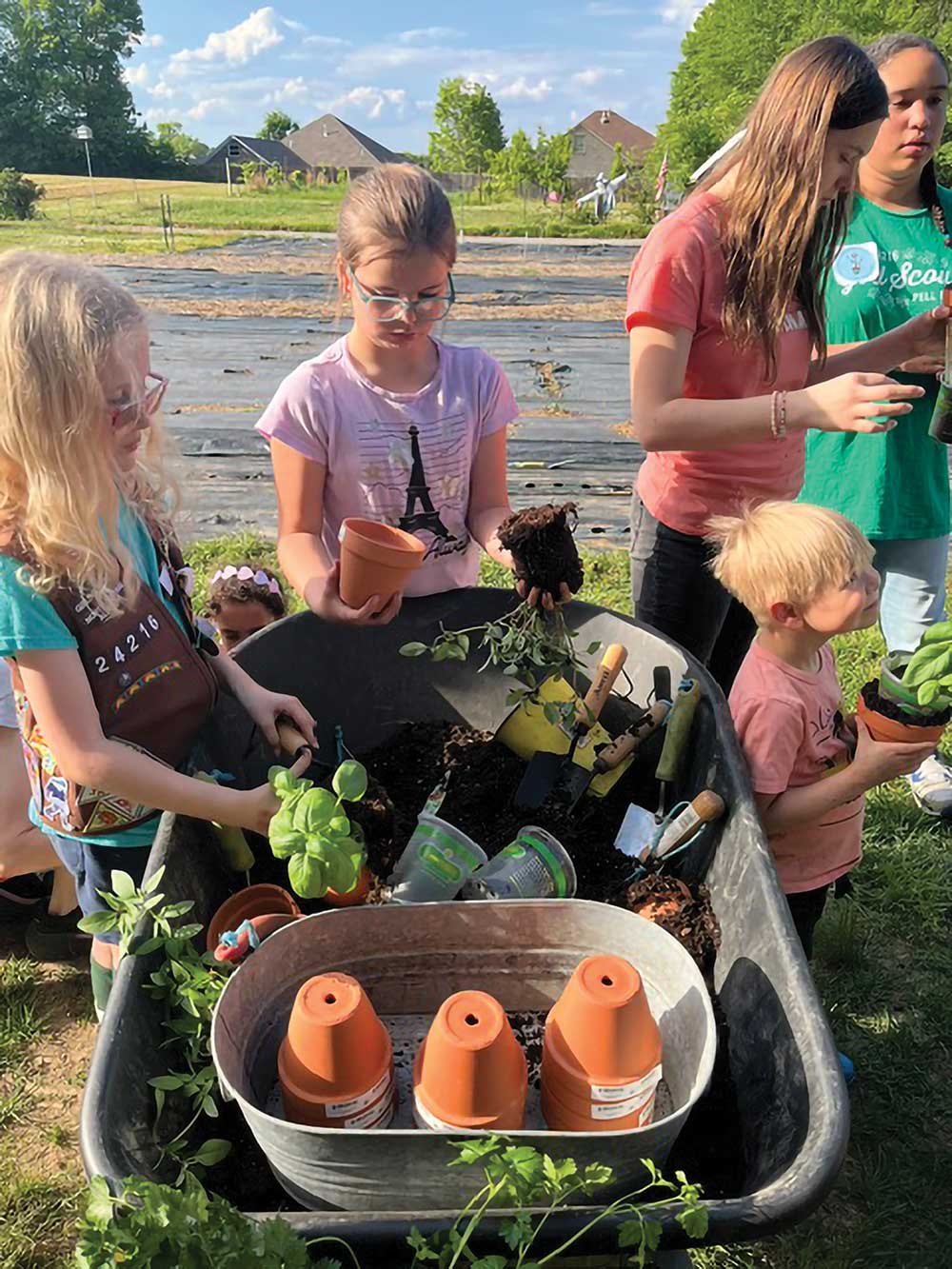
But the garden’s vision isn’t simply to grow food, but to grow gardeners as well. “We’ll still provide harvest for the places where we provide food, but it’s like teaching people to fish,” Lilly said.
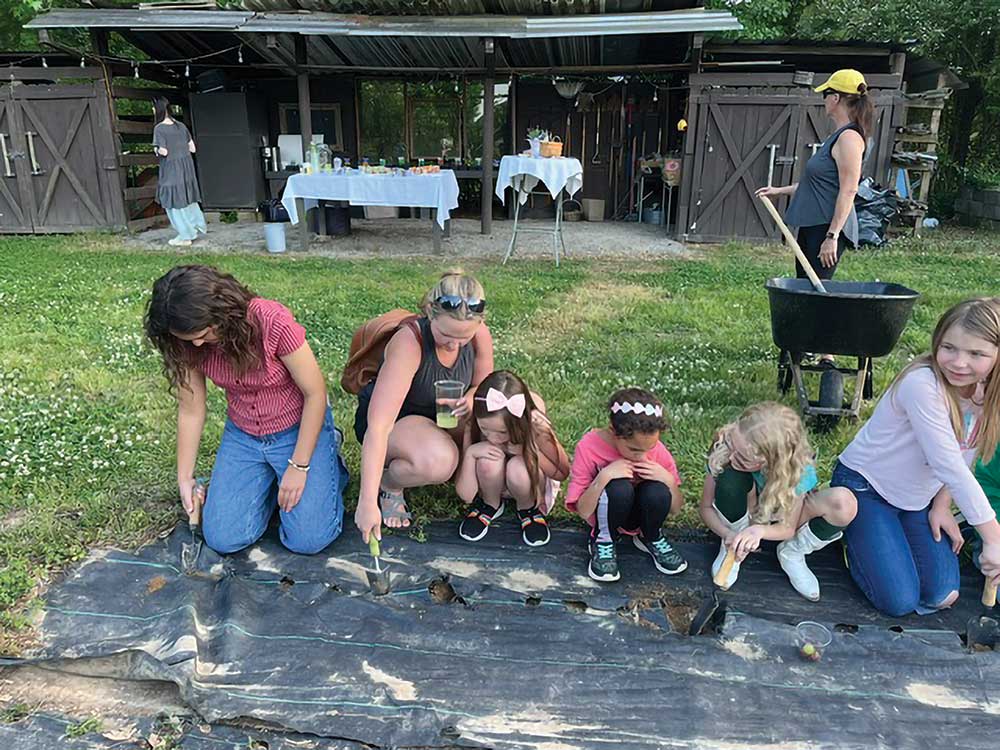
“If we teach people to garden, they can provide for their own needs, making people self-reliant and showing them they can grow food in a very small space,” said Gateway Community Gaden President Rebel Negley.
The garden produces food grown without the use of pesticides, said Negley, who at one time worked in the food industry. “That will really open your eyes. There are so many chemicals that are banned in European countries that (the American food industry) continues to use. That’s why we’ve been passionate about growing fresh food,” she said.
“We live in a society, where increasingly, people don’t know where their food comes from. A lot of kids eat canned foods, and they eat frozen stuff,” Negley said. “There’s nothing wrong with that sometimes. But our mission is to teach people where their food comes from. Good nutrition is not as affordable, unless you grow it yourself. It takes a village to make a community garden work.”
That’s why organizers are looking for people to invest their time to make the garden and its sacred space flourish.
“We need people. We need volunteers. We need teachers who want to teach, and we need administrative people. It’s not just tilling the soil. It’s administrative work as well,” Lilly said. “We need social media and marketing help. If you can show up, we’ll find something for you to do,” Lilly said.
The garden has the support of two local churches, St. Simon Peter Episcopal Church along with First United Methodist Church of Pell City.
Gateway is also collaborating with similar successful programs like Sylacauga Grows community garden in Sylacauga.
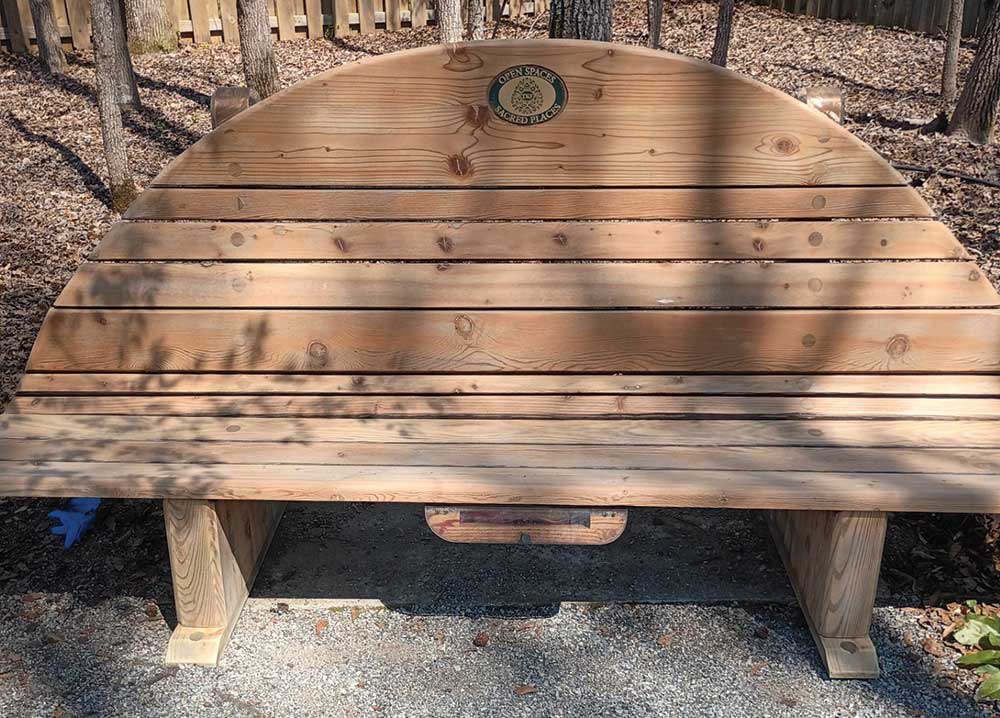
While food for the body is a critical part of the Gateway mission, so is nourishment for the soul.
“The sacred space is a place where you can reflect,” Lilly said. “There is a journal underneath a wooden bench in the garden where people can sit and write and listen to the birds and see the beautiful plants that are in the nature area. They’re also able to see all the growing vegetables in our growing garden. People need to see that it’s a special place.”
The garden now flourishes with cucumber plants, okra, beans, potatoes – sweet, red and white – heading toward a seasonal harvest. The garden has produced some 30,000 pounds of food in its history.
Volunteers like Lilly and Negley haven’t just learned lessons about working the land, but also about themselves.
“One of the most important things is that any one of us could be food insecure at any given moment,” Negley said. “It doesn’t matter where you live or how much you have. Things can change, and you can find yourself with food insecurity. And there’s so much satisfaction in growing your own food because you know where it comes from, and you have excitement through the efforts in growing a garden. It’s a stress reliever. It’s peaceful.”
Lilly, who knew food insecurity as a child, recalled last December’s food drive. “I spoke to every person who came through our line,” she said. “People that were educators, people who had lost their husbands or had just lost their jobs. The feeling that you are able to help people. We all need to love one another and take care of each other.”
Gateway Community Garden has a Facebook page, and donations may be sent to Pell City Gateway Community Garden, P.O. Box 17, Pell City.AL 35125.
“Come see us,” Negley said. “See what we’re doing and if you want to get involved,” Negley said. “It takes all of us just working together to make the garden work.”
From Pell City Gateway Community Garden, hope – like the flowers and vegetables – is blossoming, even in these difficult days. And so is something comforting to be found here, Lilly said. “There is good in the world, and there are people who are kind.”