Knitted Knockers

Trudy Mayoros’ knitting gives breast cancer survivors a lift

Story by Elaine Hobson Miller
Photos by Meghan Frondorf

Mentioning “knitted knockers” usually elicits raised eyebrows, sly grins or outright snickers from people who haven’t heard the term before. Among breast cancer survivors who are familiar with the term, it elicits smiles and sighs of relief.

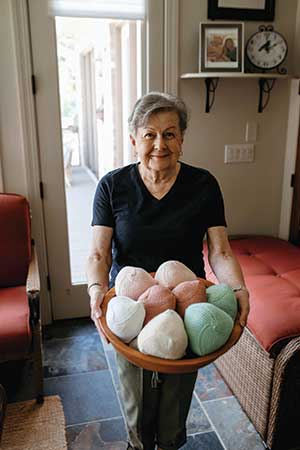
Knitted knockers are soft, comfortable, handmade breast prosthetics for women who have undergone mastectomies or other breast procedures. Unlike traditional prosthetics, knitted versions are lightweight and gentle on scarred or sensitive skin.

Trudy Mayoros has never had breast cancer. But she has been knitting since she was five years old. So, when she learned about the volunteer organization that provides knitted and crocheted alternatives to expensive, heavy breast prosthetics, free of charge, she was touched. She jumped on the bandwagon immediately.

Trudy makes several knitted knockers each week.

“I’ve been doing this since 2016, when Lee Ann Clark, county extension coordinator for Alabama Cooperative Extension Services for St. Clair, held a big Pink & Teal Awareness luncheon that October and introduced people in this area to Knitted Knockers,” Trudy says. “October is Breast Cancer Awareness Month, and pink is its color. Teal is for ovarian cancer, and Lee Ann’s sister died of ovarian cancer. After the luncheon, some of us formed a Knitted Knockers group.”

 Initially, several women met to knit and crochet the knockers, and their inventory grew well beyond the requests received. So, they sent their inventory to Knitted Knockers headquarters in Washington state. “Currently, we knit as we receive orders and usually specifically for the size and color requested,” Trudy says.

Since its inception in 2011, Knitted Knockers has provided 1,876 handmade knockers to registered medical providers (to give to their patients), 447,871 knitted knockers total and has 4,756 groups involved in the knitting, all on a worldwide basis.

Although her monthly numbers vary now because she makes them upon request, Trudy has knitted at least five dozen pairs, as well as singles, over the past five years.She also knits and crochets about half a dozen blankets and 10-15 hats each month for other charity organizations. Topping her list are the Warm Up America Foundation, a Texas-based organization that supplies blankets, hats and scarves to the homeless; Ann’s New Life Center for Women, located in Cropwell and Leeds, which supplies blankets, booties and caps to new mothers; a couple of Native American charities and the Jimmie Hale Mission in downtown Birmingham.

“I love doing this,” she says. “It’s my thing, my mission.”

She has been a knitter since she was five, when she made a pair of socks for her father. “He was thrilled, but I can imagine what they were like,” she says, in a voice as soft as the pima cotton with which she knits the knockers, and that retains a hint of her Swiss accent.

Born in Switzerland, it makes sense that she knits European or continental fashion. In this style, the yarn is held in the left hand and a subtle movement of the left index finger is used to help the needle pick up the yarn and form a new stitch. “American style involves holding the yarn in your right hand and ‘throwing’ it over the needle to form the stitch,” she says. She uses four needles for the knockers, knitting with two, dropping one, then picking up another as she forms the triangular shape. It takes about an hour and a half to knit one knocker.

Most of her orders come from individuals who learn of her service by word of mouth or from their oncologist. When she gets an order, she tries to turn it around in one to two days. “I let them pick the color,” she says. “Beige is the most popular choice, but pink is popular, too. It’s the only time they can pick their size! Believe it or not, most of the time they go smaller (than before surgery).”

Women to whom she has given knockers often send thank-you notes, and sometimes they include a donation. In keeping with the tenets of Knitted Knockers Foundation, she doesn’t charge a cent for her work. If she gets a donation from a grateful wearer, she turns it back into more yarn.

Knitted Knockers can be colorful or simply beige.

Commercial breast prostheses usually are made of rubber and can weigh 1.5 pounds. They cost more than $100 and make women sweaty, so some just stop wearing them. Knitted knockers, on the other hand, are made from exceptionally soft cotton stuffed with PolyFiberFil,which is non-allergenic. They can be hand or machine washed and hung to dry.

“I order the yarn from a place out West, and they get the cotton from Peru,” Trudy says. “Lion Brand now has a soft yarn called Coboo approved by the Knitted Knockers organization as soft enough for the knockers. It’s a #3 weight, and Walmart is carrying it, so it is a lot less expensive than the yarn I’ve been ordering – about a third of the price.”

She has a dedicated craft room over her garage, where she keeps several WIPs (works in progress). Baby blankets and caps are stacked next to her sewing machine, finished except for weaving in the yarn ends – a dreaded task for most knitters and crocheters.

Along one wall, a stack of plastic, see-through drawers keep her yarn organized by color and weight while also storing magazines and knitting tools. A clear bag houses large foam blocks that fit together like a puzzle. She uses those for wet blocking many of her finished pieces.

Two recliners face a small television that she often watches while knitting. The crocheted antimacassars on the backs of the recliners are her own pattern. She makes up most of her patterns as she knits or crochets, and only learned to read printed ones a few years ago.

“I probably spend two to three hours a day minimum knitting, more if I’m working on special projects,” she says. “I may go up to my craft room around 1 p.m., and work until Emery (her husband) reminds me it’s time for dinner. Then after dinner, I’ll knit while we watch TV together in our family room downstairs.”

Like the dozens of hummingbirds at the feeders on her patio, Trudy can’t sit still and do nothing. Apparently, she can’t walk and do nothing, either, as evidenced by the treadmill in her craft room. She tries to walk half an hour a day at the No. 2 speed setting and works while she walks. She knits items that involve a lot of repetition and don’t require her to count stitches.

“I feel I have a gift in serving other people,” Trudy says. “When God blesses you with so much, you don’t sit on your gifts.”

Editor’s Note: For more information on the free Knitted Knockers program, including a prosthesis pattern and list of accepted yarns, see knittedknockers.org. Trudy is on their knitter list, and you can contact her through their website.

Rock ‘n’ roll fantasy

American Idol’s Gressett returns to Pell City, prepares for next act

Story by Loyd McIntosh
Photos by Richard Rybka

Backstage at the Pell City Center for Education and Performing Arts building on the campus of Pell City High School, Tristen Gressett is just 20 minutes away from taking the stage. In his first appearance since his meteoric rise and frankly, stunning elimination from American Idol, the 17-year-old is launching his solo career.

And he’s doing it from the very stage he has performed on dozens of times in high school theatre productions, choral presentations and events where he was part of an ensemble. On this night, not only is Gressett the featured performer, he’s the only performer – no band, no side musicians, no background singers. Just him, an acoustic guitar (augmented with a few electric effects) and a collection of classic rock songs and some original tunes. All eyes and ears will be focused on him this evening, a reality that is only just beginning to sink in.

“It really kind of hit me today when I was getting set up that I finally have my own show where I’m getting to perform for all these people,” says Gressett. Under the management of his mother, Gressett has been performing in restaurants and bars for much of his teenage years. He comes across like a grizzled vet of honky-tonks and smoke-filled juke joints, building a dedicated group of 10-12 fans who have followed him from gig to gig. “But the rest,” Gressett says, “they’re there to drink, they’re there to eat. They couldn’t care less about the entertainment. Know what I mean?”

In the dressing room, Gressett is wired – an absolute bundle of kinetic energy. Practically unable to sit down for more than five seconds, Gressett spends the last 15 minutes before the show laughing with his girlfriend Leah Love, joking with friends and well-wishers, and even cutting up and snapping a selfie or two with yours truly.

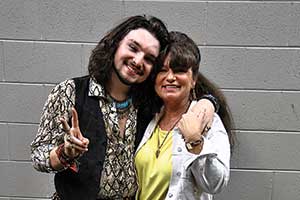
Tristen and his Mom, Missie

On display is Gressett’s ants-in-the-pants exuberance that practically exploded onto the screen and had the American Idol judges – Katy Perry, Luke Bryan and Lionel Richie – a little unnerved. “We might have to sit on top of you, man,” Richie famously said following Gressett’s rendition of Billy Joel’s Piano Man.

One could easily interpret Gressett’s animation as nervousness, and who could blame them? He has a lot riding on this homecoming. Gressett, however, says “no way!” He’s more than ready to take this next step, launching his post-American Idol career from his hometown. “All my life, I’ve always wanted to be able to perform with everybody there watching for me,” he says. “So yeah, I feel like I’m one step closer to making that dream come true.”

It may be a cliché to say someone is “born” for something. Gressett’s mother and biggest fan, Missie Gressett, says, in her son’s case, it’s pretty much the truth. “He kind of came out performing,” she says. “He has always loved being on the stage. Always.” She played music constantly for Tristen in utero, playing Johannes Brahms and Ludwig van Beethoven through listening devices placed on her stomach, which, at least in part, may account for Tristen’s abilities but also his wide range of musical interests. “He still listens to classical music all these years later, and he plays it on the piano,” his mother says.

“When we were out in Hollywood, we actually went to the Hollywood Bowl and saw Two Cellos, so that was an amazing experience,” adds Ms. Gressett, who has become quite famous in her own right having been featured often during her son’s run on American Idol.

A single mother with a vibrant, creative mind of her own – the homemade Halloween costumes she used to send Tristen to school at Eden Elementary, for instance, are legendary. She has poured much of her energy and passion into helping her only child achieve his dreams. “I am the proudest mama in the world,” she says as she works the merchandise table selling T-shirts and CDs. “We just have a special bond because it’s always just been us, and I’ve always been mama and daddy.”

The American Idol Experience

Gressett auditioned for American Idol along with more than 120,000 hopefuls, all vying for a coveted golden ticket to Los Angeles. Auditioning in Nashville, Gressett’s time in front of the judges is well documented – his aforementioned hyperactivity, the tearing up while chatting with fellow Alabamian Lionel Richie, his rendition of Piano Man and his thoughtful promotions of Pell City, just to name a few of the highlights.

Gressett seemed to devour the screen during his audition, but, he says, so much more goes into those moments than what viewers see months later. “What you’re seeing on television is what an editor sat down and was like, ‘OK, how can we turn this three-hour moment into two minutes?’ My audition on television, was about, what, 15 minutes? It actually happened over a span of three days.”

Despite some initial hesitancy among the judges, Gressett earned his golden ticket and was whisked off to La La Land – Hollywood. There, he experienced the intensity of the show’s weekly production schedule of “a ton of interviews,” walking around Los Angeles shooting b-roll footage, practicing and generally trying to survive the insanity week to week.

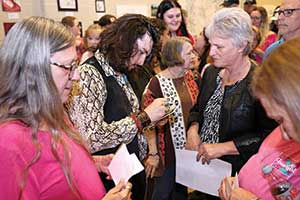
Autographs for the fans

Despite the show’s competition format, Gressett says he never viewed the other contestants as rivals. “These were all people with the same goals, and it was awesome being around all those people who have such a strong connection because they’re all fighting for the same thing,” Gressett says. “It just never felt like a competition to me.”

For much of Gressett’s American Idol run, he appeared to be the lead dog, leaving the pack behind. But Gressett was eliminated after the Top 11 show in late April after performing a rousing rendition of the Rolling Stones’ classic, You Can’t Always Get What You Want.

His ouster was not without controversy. Many viewers on streaming services such as Hulu and Xfinity claim technical issues caused Gressett’s performance to go missing from the broadcast. In the days that followed, several online petitions were begun to get Gressett back on the show due to the error. In the end, the results stood, and Gressett’s run came to an early end – fairly or unfairly.

American Idol tends to reward screechy divas and clean-cut young men rather than long-haired, bearded, bluesy rockers like Gressett – Alabamian Bo Bice being a notable exception – a viewpoint shared by none other than Katy Perry. “He’s a rock ‘n’ roller, and it’s really challenging for that genre sometimes to get really far because it’s not about who’s the best singer – you have to check a little bit of a lot of boxes,” said Perry in a press statement following Gressett’s final episode. “But I think that he definitely poured a lot of sauce on his performance tonight and you got to strike a balance. I wish him the best. I’m gonna be seeing him on stage. I’m gonna go to his concerts for sure.”

“Somebody like me is going to have to fight a little harder,” adds Gressett, “and I fought as hard as I could. But I’m happy to make it as far as I did because over 122,000 people auditioned to be on the show. Just to be able to say ‘hey I placed 11th’ makes me feel a lot better about my journey ending when it did. I’m just happy to be able to pursue music on my own now with a stronger head on my shoulders and with the knowledge that I learned from the show.”

It’s Show Time!

With the crowd at near capacity, Gressett hits the stage shortly after 7 p.m. and immediately launches into his version of Piano Man followed by an eclectic mix of well-known classics, Neil Young’s Heart of Gold, Chuck Berry’s Johnny B. Good – showing off his considerable guitar soloing skills in the process – and a version of the Beatles’ With A Little Help From My Friends.

The fifth song of the set was an original, titled The Road. Throughout the night, Gressett included a handful of accomplished original songs included on a six-song EP released in 2021 titled Act I: The Poet.

Gressett’s songwriting isn’t nearly celebrated as much as his skills as a singer and performer, although it’s clear that he puts much time and effort into his writing. “Sometimes it starts with the guitar and sometimes it starts with a phrase, and then I think, ‘How do I turn this into a song?’ I also use a lot of my personal experiences that I go through and stories of people that I know and love,” he explains.

A standout tune is one simply titled, Tiffany. It tells the story of a young and awkwardly inexperienced young man who finds himself attracted to a girl named Tiffany, who, though only a few years older, has a few more cynical miles under her belt than her would-be suitor. After finishing the song, Gressett said that it was one of his more humorous, jokey songs.

On the contrary,Tiffany displays a maturity in its wordsmithing.

In all, Gressett performed for around two hours, the crowd seemingly in the palm of his hand the entire night, even during a few moments that didn’t go as planned. For instance, Gressett managed his way around a pesky guitar cable that shorted out a handful of times during the night and handled a few of the rowdier fans with the humor and finesse of a seasoned pro.

One moment that particularly showed Gressett’s grace under fire occurred when he realized he left his capo (guitar geeks will know what this is) in the dressing room, leaving him unable to play his next song in the right key. Gressett walked backstage while mumbling in a high-pitch, faux-female voice, “You mean to tell me I paid $20 just so I can watch this kid look for his stuff?” to wild laughter before returning on stage to start the next song.

The show was a triumphant homecoming for Gressett, who waves his Pell City flag high and proud. While much of his talent and stage presence is natural, he says there have many people along the way who have helped him to become the person he is today.

“In eighth grade, my drama teacher, Mrs. Nixon, really encouraged me to hone in on my performance in theater. I’ve always been kind of crazy, but she got me to hone in and use it as a way of expressing myself,” says Gressett. “Mrs. Kaler at the high school has been one of my biggest supporters. She’s such a great person in general, but she has done so much when it came to getting people to vote for me. She’s been such a huge part of this for me.

“And, of course, Eden Elementary. That’s my home place over there. I love Eden. I went and sang for the kids over there recently and, man, that was such a full-circle moment for me,” Gressett add. “That was so awesome.”

What’s Up Next?

With his American Idol experience and high school graduation behind him, Gressett is focused on kick-starting his music career in a big way. Eventually, he plans to relocate to Los Angeles, but, until then, his schedule is full of appearances throughout the summer.

He performed at the Creek Bank Festival in Leeds, the Block Party in Pell City, and he opened for American Idol winner and Birmingham native Taylor Hicks at the Jazz Fest in Alexander City.

Later in June, he opened for Jefferson Starship at the Helen Keller Festival in Tuscumbia, and on July 1, Gressett performed in Canada, his first time traveling outside the U.S., at the Grand Falls Potato Festival in Grand Falls, New Brunswick. l

The Act of Creation

Artist turns old Ragland bank building, own creations into works of art

Story by Scottie Vickery
Photos by Meghan Frondorf

Ragland artist Mary Ann Sampson is perhaps best known as a book artist whose handmade creations “are a personal stage and a memory stick for a life lived.” Dig a little deeper, and you soon discover that her portfolio, much like her life, is diverse, rich and ever-changing.

In addition to creating hundreds of one-of-a-kind books that are featured in national and international collections, she counts sculptures, drawings, paintings, etchings and photographs among her work. A former nurse, Sampson changed course and followed her passion for art after she married and had a child.

Samples of compelling work and photos of stories that inspire her to create more

Today, at 80 years old, Sampson is still finding new ways to express herself, whether through new art mediums, singing or most recently, tap dancing. “I’ll try almost anything,” she said. “I’ve been real fortunate to have lots of ways to self-express.”

Many of those forms of self-expression were on display this past spring at the Gadsden Museum of Art, which hosted a retrospective exhibit of Sampson’s work. “I put together a lot of things I’d never shown before – drawings, etchings, as well as books,” she said. “My studio is filled with stuff now that I don’t know what to do with.”

Ray Wetzel, director of the art museum and curator of the collection, praised her unique works. “Her artwork is full of complicated simplicity in the way of the labor and craftsmanship of these delicate paper constructions that oftentimes look machine made,” he said. “It is the same passion that goes into her work that gives me a sense of calm that within the chaos hidden in her work she is also telling the viewer everything will be all right.”

Childhood influences

Born in a small town in North Carolina, young Mary Ann spent a lot of time on her grandparents’ farm, which laid the foundation for her love for rural life. “I loved the freedom of barefoot days and playing until sunset with my cousins,” she said.

She also remembers creating masterpieces at the kitchen table with her two sisters. The young artists were inspired by their mother’s cousin, Ruth Faison Shaw, the originator of finger painting. A teacher in Rome during World War II, Shaw was inspired when she saw a child with a cut finger smearing iodine on the walls. She later developed finger paints and had them patented in 1931.

“We would just get in the kitchen and paint that way, and I loved playing in the paint,” Sampson said, adding that she enjoyed smearing the different colors together on the paper to see what took shape. She also loved drawing and making scrapbooks, and she remembers being encouraged by her first-grade teacher, Mrs. Woodard. “I always loved my teachers who had artwork plastered all around the walls,” she said. “She was very instrumental in instilling a love of art in me.”

Sampson’s father worked at a hardware store, and her mother later became a seamstress to bring in some extra money. “She had a treadle sewing machine,” which was powered by a foot pedal, Sampson said. “Mom taught us to sew long before we took it in high school.”

Today, Sampson has two sewing machines, including her mother’s, and she uses the skills she learned as a child to bind many of the books she creates. “She was very methodical, and I think I get a lot of that pickiness and attention to detail from her,” Sampson said. “Of course, I can be very messy in my painting, too.”

Despite a lifelong love of art and the desire to pursue it in college, Sampson took the more practical route and went to nursing school at Wake Forest University. A nurse for 10 years, she fell in love with a medical student she met at the hospital. She and Larry Sampson were married in 1964, just before he joined the Army and was stationed in Texas and Vietnam. 

Upon his return in 1966, they moved to Birmingham where he did his residency at UAB, and she was a cardiac nurse at St. Vincent’s Hospital. He later opened his dermatology practice in Birmingham’s eastern area and practiced medicine for more than 30 years.

Through it all, Sampson’s passion for art never wavered, and when daughter Anna was 2, she returned to school to study art. She attended both Birmingham-Southern College and Samford University, eventually earning a double major in art and Spanish. “It took a long time because I was married and had a family, but I finally graduated in 1982,” she said.

After graduation, she rented studio space in Birmingham from an artist friend who owned a printing press, which intrigued Sampson. “I loved printmaking,” she said. “I love the surprises you get when you run something through the ink. You’re never quite sure how the etching and scratching will turn out.”

A simpler life

After a few years of renting a space, Sampson knew it was time to find a permanent home for her studio. “I had looked in Birmingham, but I couldn’t find anything I could afford,” she said. “Mostly lawyers could afford what I was looking at, and I knew my income wasn’t going to be anything like that.”

Ragland Bank, built in 1910

She and her husband owned a tract of land in St. Clair County, and she realized a return to the rural lifestyle she loved as a child was beckoning. She eventually bought the old two-story Ragland Bank, built in 1910, and renovated it for her studio.

“We were driving through Ragland one day, and I saw this turn-of-the-century building,” she said. “The roof had fallen in, it was boarded up in places, and there was a big faded ‘For Sale’ sign on it. It was just the kind of structure I was in the market for. I said, ‘Larry, stop! That’s it, that’s it!’”

Just as she does with her art, Sampson poured her heart into renovating the building. “It didn’t cost a lot of money to buy it, but it took a pile of it to get it up to snuff,” she said. After calling in a friend who had helped restore Sloss Furnaces, she replaced the roof – twice – during the renovation process. Since the mortar between the bricks had literally turned to sand, workers had to remove each brick by hand and rebuild and mortar the entire structure. “I was working in there throughout all of this,” Sampson said.

By the book

After participating in a book arts workshop at the University of Alabama, Sampson’s interest was piqued. When she attended a show of artists’ books in Richmond, Va., her future path was set. “I fell in love with them,” she said, of the handmade books. “I just loved the way you could express yourself in an artistic way through books.”

She began to experiment with using books as an art form and was intrigued by the possibilities. “If you’re a painter, you use a brush and paint. In book arts, you don’t have the canvas. You take the quality or essence of what a book is and make it into a place where you put your art,” she said.

She took workshops with some of the greats in the book arts world, including Keith Smith and Tim Ely, and she began creating and showing some of her own works of art. She bought a letterpress for her studio, and she also began experimenting with binding techniques. Inspired to learn all she could, she eventually earned a master’s in book arts at the University of Alabama.

“When I started doing books, I just stuck with it and kept going until I had enough to do a show. When the first piece sold, it just happened,” Sampson said, seemingly still amazed by the good fortune. “I just kept exploring, and it just happened.”

Sampson said she has always been interested in the human form, and much of her work reflects that. “My subject matter is usually puppets, string people and articulated figures,” she said. “I have a real interest in how the human figure wiggles about.”

Many of Sampson’s books are letterpress, one of the oldest forms of printing, and she painstakingly creates them letter-by-letter in her studio using a variety of beautiful papers. Letterpress “has this beautiful history that dates back hundreds of years. I can get excited about different kinds of type, but I’m sure the world couldn’t care less,” she said with a laugh.

In addition to painting covers, printing the words – many of the books feature poetry – and illustrating with pencils or paints, Sampson uses a variety of materials, including cloth and leather. She binds her own books, sewing some and using paste, linen thread or wire for others. “I just love to explore new mediums.”

Inspired by the Mona Lisa, she has a wall filled with references to her – even a modern day obituary with Mona Lisa listed as a survivor.

As one show led to another and then another, Sampson began making a name for herself. She met Bill and Vicky Stewart, owners of Vamp & Tramp, Booksellers, who traveled the country selling artwork and books. “They carried some of my first books with them and sold every book I had,” she said. “It’s wonderful to have someone take the time and their good, hard-earned money to invest in what you’ve done.”

Sampson named her studio the One-Eye Opera Company, a nod to some of her early book creations that focused on music themes. She founded the OEOCO Press (using the initials of her studio’s name) with the mission of creating limited-edition, letterpress and one-of-a-kind books. In addition to creating her own, she has collaborated with other artists and poets on unique art pieces. 

Although she has some individual book collectors who own her work, “the public doesn’t know what to do with artists’ books, by and large,” she said. Many of her pieces, which range from hundreds of dollars to thousands, are in library collections, and Vanderbilt University boasts one of the largest collections of her works. Her books have found homes and been exhibited all over the world – from Tennessee, North Carolina and New York City to Canada, Mexico City and Germany.

A quieter life

Although she is still creating, Sampson, who has macular degeneration in one eye, is no longer setting the type for her books. Her artwork temporarily took a backseat for about six years after their Shoal Creek Valley home was destroyed by a tornado in 2011 and while her husband, who passed away in 2017, battled Parkinson’s disease. She now lives just next door to their original home in an old house made from lumber from the Moundville train depot. “Everyone calls it Railroad House,” she said. “It’s an interesting home. It’s small, but it’s all I need.”

She spends her days enjoying the quiet and visiting with friends and family, including her daughter, son-in-law and grandsons, who live nearby. She also enjoys gardening and discovering new talents. For the past year, she’s been taking voice lessons and learning to tap dance. “I sing in the choir, and I’d been wanting to take voice lessons to learn more about singing and projecting,” she said.

After enrolling in a voice class at Shalita Clark’s studio in Springville, Sampson was persuaded to take a tap class, as well. “I’m learning a lot, and I got to dance onstage at the Birmingham-Jefferson Civic Center,” Sampson said. “I’m having a lot of fun.”

She’s also enjoying being back in the studio and playing around with new techniques. Most recently, she experimented with a painting technique that uses oils and cold wax, relying on YouTube videos for instruction. “I don’t have much hope for this, but I still enjoy experimenting with new mediums,” she said.

That’s because, as an artist, she can’t stop creating. “It’s a passion,” she said. “You just love it and are so grateful that you can do it.”

Creedon Creek

Andy and Creed Stone keep legacy, craftsmanship alive

Story Elaine Hobson Miller
Photos by Graham Hadley
Submitted Photos

Andy Stone has developed an eye for beautiful wood. He sees character where others see beetle tunnels and discolorations. He takes so-called faulty pieces and turns them into unique tabletops, floating shelves and mantels. It’s a gift that propelled him from a hobby to making a living with wood, despite starting his business during the height of the COVID-19 pandemic.

“I started woodworking as a side business in 2006, while I was with Bill Harbert Construction,” says Andy. “Later, while I was at Coca-Cola, I prayed about it for two years, then in October of 2020, I stepped out on faith, trusted God and decided to do it. It was kinda scary, starting a business at that time.”

His Creedon Creek Woodworking began near his home in Trussville, but he quickly outgrew that shop. He moved to the Leeds headquarters of W.C. Wright Heating, Air, Plumbing and Generators because he needed more space. “Wright is a longtime friend who has plenty of warehouse space,” Andy says. “But we’re looking for something closer to home, in the Trussville or Springville area.”

From live-edge shelves to cutting boards, if it is made of wood, Creedon Creek can make it.

The “we” to which he is referring includes his father, Creedon, who works with Andy and for whom the company is named. It’s just the two of them right now, but they hope to hire a helper soon. They build dining room tables, custom furniture, outdoor furniture, built-in bookcases and cabinets, mantels, conference tables, office desks and more. They do a lot of charcuterie boards, which are glorified cutting boards, because they are “all the rage now,” says Andy’s mom, Brenda Stone. “Most of them are out of hickory and walnut,” she says.

Epoxy tables are quite popular now, too. “Wood will have a live edge (where the bark was) and a straight edge (cut side),” Andy explains. “You put the live edges together and use resin to fill the gap between them. It can look like a river flowing through the length of the wood.” He says “Welcome” and scripture signs are also popular for dens and front porches, and he has done a few mudroom benches.

“We built a mantel from a pine log that came from the bottom of Lay Lake,” says Creed, the name the elder Stone goes by. “We like to have never got a hole drilled in it, it was so hard.” Andy wants to get into the wedding industry by making custom wedding gifts as well as serving pieces such as cake platters and tabletop risers for caterers to use at receptions.

Some people go to Creedon Creek with photos of what they want, others with only vague ideas and dreams. Andy will draw something up or send them to the internet in search of a picture for inspiration. “If you can dream it, we can make it,” is Creedon Creek’s motto.

 “I keep a folder of plans that I draw for people, in case I need something to reference,” Andy says. “I’m the only one who can read them, though,” he adds, referring to his drawing skills and penmanship.

Most of their machinery is portable, i.e., shop tools mounted on wheels. They have the usual table saw, router, planers and sanders, drills and track saw, as well as a fiber laser machine that’s used to cut out designs or cut them into a piece of wood.

They would love to own a portable sawmill and just might try to buy out their supplier when he retires. “We use a sawyer named Larry Ferguson of Cook Springs to cut wood from logs,” says Creed. “Ferguson Sawmill was started by his daddy, and my daddy bought from him.”

They use a variety of wood, including hickory, walnut, pine, cedar, maple and teak. They know the difference between ambrosia, curly and spalted wood and used all of those in a dining room table that is Andy’s favorite achievement so far. “Ambrosia wood is where you see little tunnels made by the ambrosia beetle,” Andy says. “Curly refers to the way the piece is cut: it’s quarter-sawn. Spalted is a discoloring caused by a fungus.” Then there’s “buggy blue” pine, where a fungus that grows on pine trees causes a blue stain in the grain.

Andy and Mackenzie

Teak and sapele are their choices for outdoor furniture, because both are highly weather-resistant. “Sapele looks like mahogany but it’s as durable as teak,” Andy says. “We seal our outdoor furniture with Thompson’s Water Seal, like you would a deck, although they don’t need anything.”

 Stacks of boards are scattered about the workroom, along with piles of cross-cut timber or “cookies.” Andy puts the latter together to make end tables and coffee tables. One particular flame-box elder cookie displays a red coloration that was made by love bugs. “We’ll probably put together two slices, a large one and a smaller one that broke off, using epoxy and pieces of wood cut in the shape of bow ties and inlaid between the slices,” Andy says.

He’ll set the bow ties opposite to the grain in the pieces he joins, to keep the wood from expanding and contracting too much. “You never know how wood will act,” says Andy. “Certain wood goes this way or that, and you have to tame it to go the way you want it to by the way you cut it and finish it. We’re just glorified wood tamers.”

Under one of his work benches is a small tool bag that belongs to Andy’s daughter, 3-year-old Mackenzie. It contains real pliers, a hammer, ear protection and safety glasses. When Mackenzie visits her dad at the shop, she pulls out her tool bag and pretends to work right alongside him. When she tires of that, she zips around the room on her plastic car. “She’s the reason I stepped out on my own, to make her proud, to leave a legacy,” Andy says.

Prominently displayed on one vertical support beam is a 3D map of the United States, with each state recessed. Fifty pieces cut out of the map are in the shape of the 50 states, and they fit together like a puzzle. When someone orders such a map, Andy donates the pieces to a school or day care so the kids can paint them and learn about the states. “My silent business partner came up with this idea,” Andy says. It was his idea, however, to donate a tree to onetreeplanted.org, an organization that plants trees around the world, for every product sold.

“My great-grandfather was a master woodworker, and he and my grandfather were contractors,” says Andy. “One of my main goals is to start a mentorship program. I would love to teach some younger kids the trade, so it doesn’t die off.” l

Follow Creedon Creek on Facebook

A Night at the Opera

Summer-ending concert may become
yearly event on Logan Martin Lake

Jason Rogoff and Jeff Thompson found the cure for the quarantined summer blues: an outdoor rock concert … during Labor Day weekend.

But it cannot be your normal concert.

This one has to be arranged in less than eight weeks; it has to feature a sought-after performer who just happens to be available because of pandemic cancellations; it has to provide seating that socially distances audience members attending by land and huge video screens visible to those attending by boat; it has to raise funds for two entities, and it has to be full of energy.

That concert – which was on Sept. 4 at Pell City Sports Complex on the shores of Logan Martin Lake – fulfilled all the requirements and quite possibly began an annual event.

For the concert, the Black Jacket Symphony performed the songs from the Queen album, A Night at the Opera, and featured the vocal talent of Marc Martel.

The stage lights up the night

Martel provided some vocals for Bohemian Rhapsody, the biopic about Queen’s late lead singer Freddie Mercury, said Rogoff, director and producer of the Black Jacket Symphony.

Thompson, who is director of the Center for Education and Performing Arts (CEPA) in Pell City, said Rogoff approached him about an outdoor concert patterned after others that the Black Jacket Symphony had held in Birmingham.

For the Black Jacket Symphony, this would be a return visit to Pell City.

In February 2020, the Black Jacket Symphony performed Fleetwood Mac’s album, Rumours, in concert at CEPA and had scheduled Led Zeppelin IV for May. But COVID containment measures canceled Led Zeppelin IV.

Visit the Black Jacket Symphony online
at blackjacketsymphony.com

Marc Martel once again playing guitar during a BJS Queen show

Artist finds her outlet

Anita Bice shares her work from home

Story by Leigh Pritchett
Submitted photos

When a pandemic evaporated Anita Bice’s art business and affected her creativity, she got … creative.

Normally in the spring of the year, the artist from Moody would be preparing for and attending arts festivals and outdoor shows in several states.

Educated at Samford University in Birmingham and American Academy of Art in Chicago, Anita operates an art production studio in her home. She has been an artist 35 years.

But stay-at-home orders in Alabama and elsewhere canceled one event after another.

“All my shows are being canceled. What do I do?,” she asked herself.

Because customers could not visit her studio store or attend the festivals, she would take her art to them. At times when she would have been at events, she would hold virtual art shows by digital means.

Rayder, the dog, has his own following.

“Virtual reality is for real … yes. The surreal has become all too real!,” states her email introduction to her art show in lieu of the 2020 Panoply Arts Festival in Huntsville.

“A virtual art show is not as good as walking from booth to booth in the beautiful town of Fairhope, AL (along with 250,000 friends!) but it’s the best we can do in these crazy times,” she says in an email after cancellation of Fairhope Arts and Crafts Festival.

Not only did the shutdown affect her fine arts business, but it also curtailed demand for architectural renderings, which is Anita’s full-time job. “Right now, my architectural art is at a standstill,” she said.

This is not the first time she has experienced a standstill. When the housing construction rate plummeted during an economic downturn 15 years ago, Anita focused on fine arts. And that birthed the cottage industry that has since kept Anita, her daughter Dana, and Anita’s sister, Sharon Henderson of Pell City, quite busy.

Downloadable for coloring after with color added by line.

Little more than a week before the coronavirus shutdown, Anita’s mother, Sara Smith, went into assisted living. The stay-home order, the fact that the family could not visit Mrs. Smith for a while and the sudden curtailment of both art businesses seemed to stymie Anita’s creativity.

A keyboardist at Bethel Baptist Church in Odenville, she did what she has done in anxious times in the past: she played piano. From that came the idea for a video featuring an angel painting she had done; Anita would provide the musical accompaniment.

On Facebook, the video received views from Canada, Italy, Australia, India and all across the United States. The response amazed Anita. Seeing how art with music touches people, she decided to do more videos.

With newfound creative energy, Anita analyzed the possibilities in art and charted her course. “God is in control,” regardless of how uncertain times may seem, she said.

She saw this time as an opportunity to learn, to brainstorm, to plan, to branch into other areas.

“The downtime has allowed me to learn some things,” such as new features on the keyboards she plays. “… It has given me more time to think about future artwork,” one of which is a series based on music. “That is in my mind and about to be on canvas,” she said.

Being confined also gave her a craving to paint coastal scenes. Those art pieces join her other popular series of florals, cotton and Pots n Pans. Her repertoire also includes wood panel art pieces, tea towels, note cards, mini fine arts on magnet, Christmas on burlap, digital art and photo restoration.

As she paints, she posts on Facebook, which allows viewers to see her latest work. Several creations sold immediately upon completion. Anita has made available free, downloadable line art of some of her originals that people can paint or color. Her Easter download was very well received. “I am going to continue to do that,” she said.

Discounts and free shipping have been offered through her website anitabiceart.com, and she featured a grab bag of “goodies” for Mother’s Day.

Daily, she connects with followers, potential customers and prospective students through her website, Facebook, Instagram and email. (Viewers also get updates about Rayder, her dog that sits like a meerkat and has his own Facebook following.)

Art instruction videos, workshops and seminars are other projects sparked by the isolation.

The basics of art, Photoshop and tips for entering art competitions are a few of the topics she wants to cover. “If people have time now, … what a great time to offer those,” she said of the videos.

Anita added, “(Offering) online classes may be one of the next steps in my growth.”

In her three decades of art, Anita has seen “feast or famine.”

Nonetheless, each phase for her has fostered new possibilities.

“There are so many directions to go!” she said.

EDITOR’S NOTE: Through June 10, 2020, Discover readers may get a 25-percent discount on items at anitabiceart.com. Use the coupon DISCOVER25.