







The Painter

Lonergan’s story, life’s work an inspiration

Jon-Lonergan-1Story by Carol Pappas
Photos by Wallace Bromberg Jr.

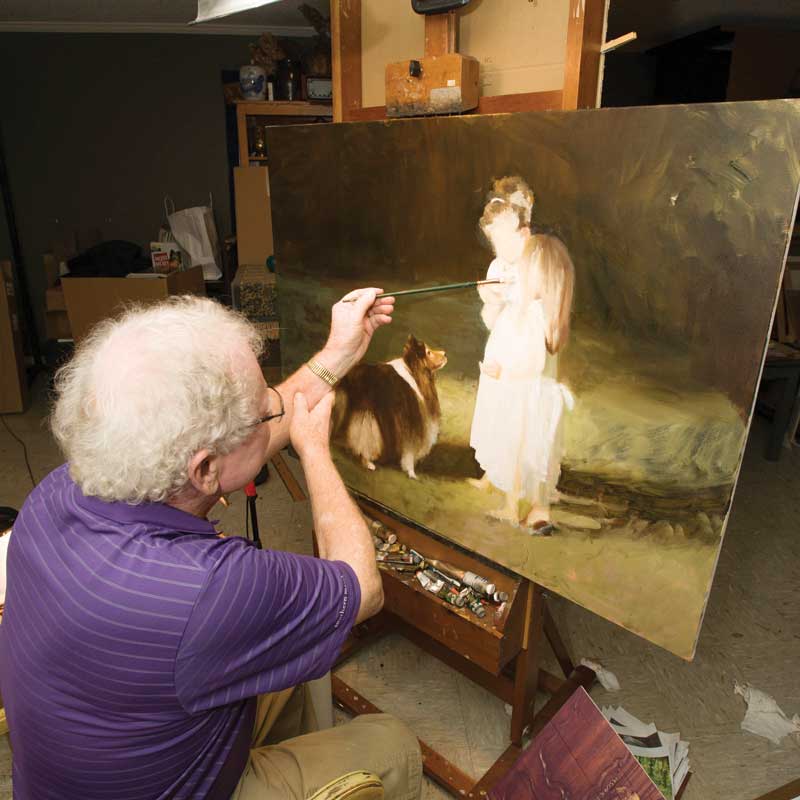
He has been described as “the boy who lived to draw.” Sitting in an easy chair at his home in Chula Vista, surrounded by a couple of Shelties, a black Lab and a lifetime of his works, John Lonergan pauses a moment and reflects. “If I had known in high school the level where I am now, I would have been impressed.”

But the inherent perfectionist in him quickly adds, “You never get to the level you want to be.”

With an impressive career as an art teacher to his credit — both in public school and in the private sector — gallery showings, commissioned work and his art hanging in private and corporate collections virtually around the world, one might be tempted to call it the pinnacle.

But add a book about his life and work, more shows and commissions up ahead, and it is easy to see that Lonergan isn’t done yet.

The latest triumph for the St. Clair County-born Lonergan, who was inspired by a teacher when he was growing up in the village shadow of Avondale Mills, is a book, John Longergan, The Painter. Published by Birmingham-based Red Camel Press, the book is a rare opportunity to see the world through an artist’s eyes.

It is dedicated to his parents, John L. Sr. and Jennie S. Lonergan, “who gave me confidence and support to follow my dream to become a painter;” his wife, Sandra, a gifted and noted photographer, who is “my best critic and treasured lifelong sweetheart;” and Doe, his black lab, “my life’s best friend.”

Through paintings and commentary, it deftly weaves the story of a young country boy from a small Southern town, who builds a life as a master painter and inspiring teacher. The gift his parents and teachers recognized early in his life is a gift he continues to give others through his painting and teaching.

His students call him the master. And it was one of those students who was so inspired by his teaching and his work that she suggested the book. She happened to be a book publisher, and three years later the collaborative effort evolved into: John Lonergan, The Painter.

When Liza Elliott first broached the idea of a book, Lonergan recalled it as an “interesting” proposition. “But I didn’t think much about it. When I found out she was serious, we went to work on it.”

They selected paintings and visited about 50 homes to photograph from private collections over the next three years. Still life, figures, landscapes and portraits are the sections of the book.

They, alone, could tell the story of a gifted painter who talks to us through his canvas. But there is something extra about this book, something personal that immediately draws you into it.

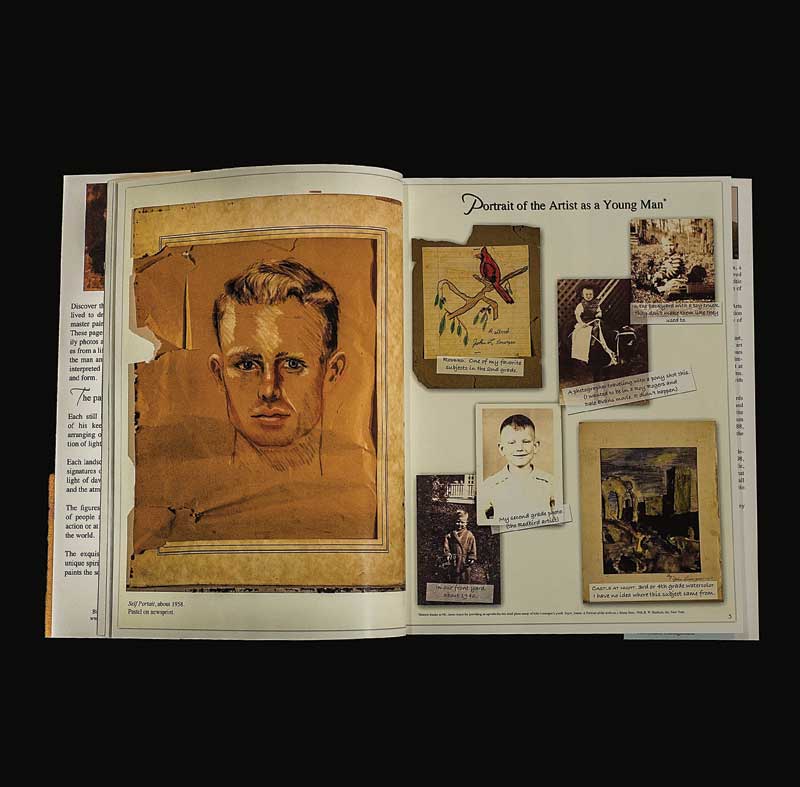
It is the self portrait, circa 1958, pastel on newsprint. The chiseled detail of the face, the light, the eyes gazing straight at you immediately capture you. And it is the photographs he includes under “Portrait of the Artist as a Young Man” that endear you to this life story through words, pictures and of course, the center of it all — the art.

Jon-Lonergan-bookThere is a picture of his perfectly, hand drawn “Redbird” sitting on the branch of a tree. His canvas then was composition paper, now yellowed with age. Under the redbird drawing is the simplicity retold: “One of my favorite subjects in the second-grade.” Underneath is a photograph of him in the second-grade. In parentheses, he adds the moniker, “the Redbird artist.”

The next few pages are peppered with photographs and drawings from his childhood and teen-age years, parenthetical humor enhancing each nostalgic look. The photograph of a toddler all dressed up in cowboy suit riding on a pony explains, “A photographer traveling with a pony shot this. (I wanted to be in a Roy Rogers and Dale Evans movie. It didn’t happen)

There are photographs of his parents, a drawing of a horse with calf “Matted and displayed by my 4th grade teacher, Mrs. Betty Cosper.” It was fitting that he included that particular photo. Teachers would have a great influence on his life, and he never fails to give them credit. He speaks of Mrs. Cosper in reverent terms. “She was a big influence. She really took an interest in my artwork.”

He includes a photo of his high school art teacher, Mrs. Dorothy Mays, noting that she “inspired me.” He talks of Iola Roberts, the principal at the old Avondale Mills School, who was a strict disciplinarian but gave her students an appreciation for the arts. “She had a real passion for Avondale Mills kids.”

In light of a perceived divide between “town” kids and mill village youngsters, she would tell them, “ ‘Remember, you are as good as anybody.’ You know, I didn’t know I wasn’t,” he said. “She would definitely get my vote for best educator in Pell City ever. O.D. Duran was good, too.” Perhaps that is why their names now don two of Pell City’s elementary schools.

After a brief career in commercial art, Lonergan, himself, would become art teacher at the same high school where Mrs. Mays mentored him. After he was hired, he expressed doubt to her that he could handle it. “I don’t know what I’m going to do,” he said he told her. “ ‘All you have to do is stay one day ahead of them,’ ” she replied. And that he did for the next 25 years.

Past the pages of Lonergan’s childhood comes present day, where he passes along his gift and his inspiration to others — The Atelier, the French term for workshop of a master painter and his students. It is this studio in Birmingham, where they have trained for more than two decades.

In her narrative of that particular section, Elliott writes, “For those who collect John Lonergan’s paintings, he is an inspiration. For those who study with John Lonergan, he is the master.”

For the section on Teaching, she describes it thusly: “That is the Lonergan method. Teach and inspire. They are better painters for it.”

In Still Life, she says, “Like a magician, with a paint brush as a wand, his paint strokes cast the spell, conjuring up gorgeous pictures that never cease to amaze.”

For Figures, “What matters to Lonergan is the light, the shapes, the colors of the people and the location around him. The challenge is to convey the emotion of the moment through a fully realized painting, giving voice to the people through the medium of oil paint.”

Portraits, as the other works, tell a story. “The faces project personality,” Elliott writes. “The settings provide context. Taken together, he reveals an episode in that person’s life, at that moment in time.”

His rural roots obviously influence Landscapes.

“John Lonergan shares his private world with us and we, too, can bask in the brilliant moments of nature’s beauty.”

And his love of animals is evident in the inclusion of the pictures of Molly and Doe, his Sheltie and Lab, on the final page with a note, “We show our love of God by our love for all people, friends, family, and of course, our pets. That’s all that counts.”

Although spoken years before Lonergan was born, a quote from Edgar Degas, the French artist believed to be among the founders of Impressionism, seems to capture the very essence of Lonergan. “Art is not what you see, but what you make others see.”

And through his life and his works, the eyes of the beholder see plenty.

Politicians of Note

politicians-of-note-1Story by Jane Newton Henry
Photos by Wallace Bromberg Jr.

When day is done for these
officials, the beat goes on
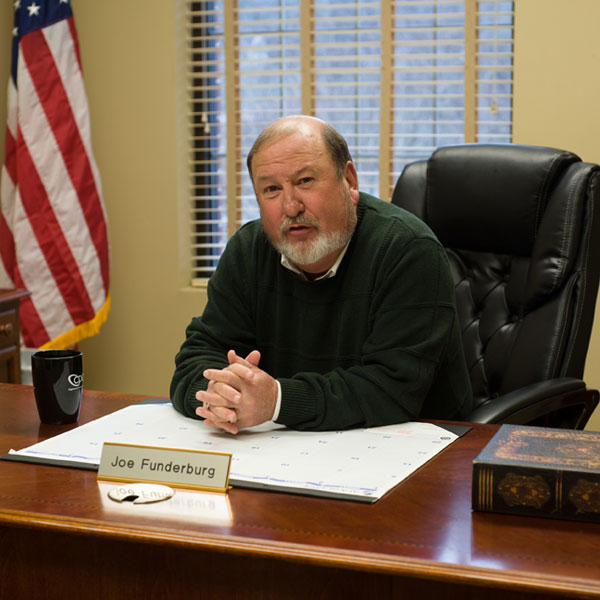
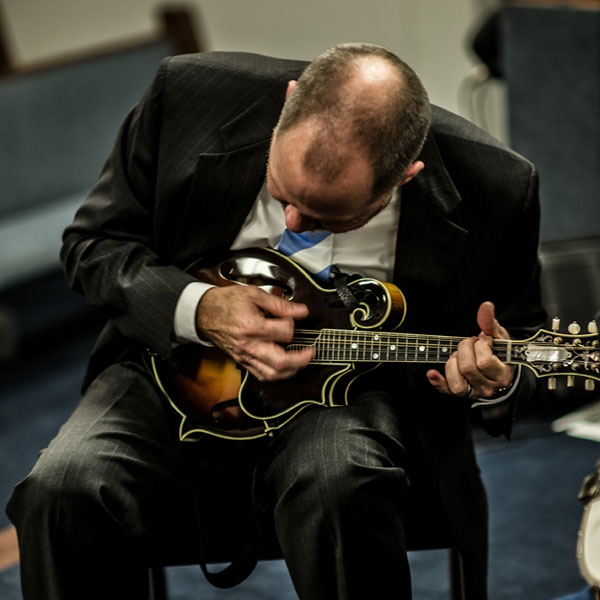
By day, he’s mayor of Pell City. But nights and weekends you’ll find him crooning to the crowds in his very own band. Same holds true for Alan Furr, a judge by day and quite the singer and guitarist for the Wingnuts away from court. And the superintendent of schools, put a mandolin in his hand and he’s just as at home as he is at the head of the class.

Pell City Mayor Joe Funderburg, Pell City School Superintendent Michael Barber and St. Clair County District Judge Alan Furr became interested in music when they were young. Although they now have “day jobs,” music remains their hobby, their pastime and their passion. Funderburg plays rock and roll while Barber plays bluegrass, and Furr plays both.

Rock-and-roll mayor
“I look at it like this,” said Funderburg. “Some people play golf; some people hunt and fish. Everybody has hobbies of some sort, and I am fortunate that I am able to play music.”

The mayor has played six- and 12-string guitars and sung in bands for more than 40 years. “I’ve always enjoyed music,” he said. “I liked to sing when I was small, and I wanted to play an instrument.

“I begged for a guitar and got a $20 Sears and Roebuck Silvertone,” he said. “It had a very thick neck and I’ve got kind of small hands, so that thing was a job to learn to play.”

In the 1960s, he formed the band Leaves of Autumn with high-school friends. After high school, Funderburg continued to play music and found that music paid his college expenses. When his father passed away, he dropped out of school and became a professional musician.

“That was about all I knew how to do, so I went to work playing, and I was fortunate to work with some top-notch musicians,” he said. “I don’t claim to be an accomplished musician. I learned music by picking it up and playing it with other people.”

Funderburg says his favorite part of his musical career was during the 1970s. “At that time, St. Clair County — as well as Calhoun, Etowah and Shelby counties — didn’t have many places where people could hear rock-and-roll music, and the Boondocks Lounge was the place to go,” he said. “That was probably the most exciting time for me because we were playing at a happening place, and the band was recording in Birmingham, too.”

A member of the band Straight Shift, he now performs about once a month. The band has recently played at the Pell City Block Party, entertained at a sock hop at Celebrations in Pell City and performed at a private Christmas party in Birmingham.

Barber’s bluegrass
“When I came up, we didn’t have a lot of things that are offered today,” said Michael Barber. “I remember when we got our first color television. We had rabbit ears, so the reception wasn’t that good. Music was a pastime for us.”

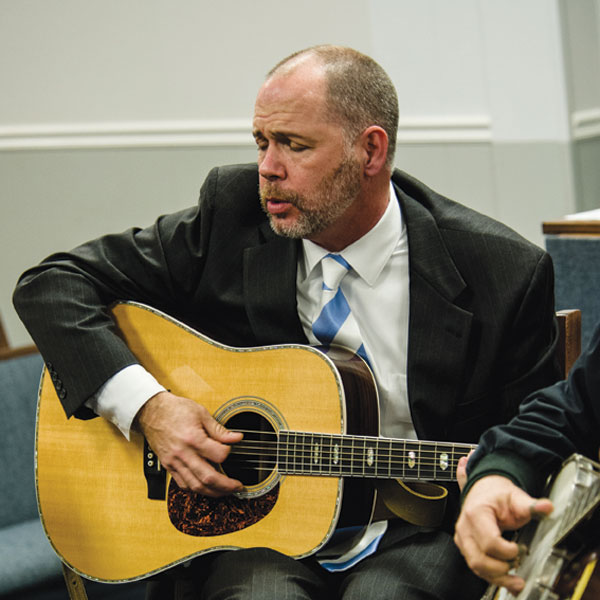
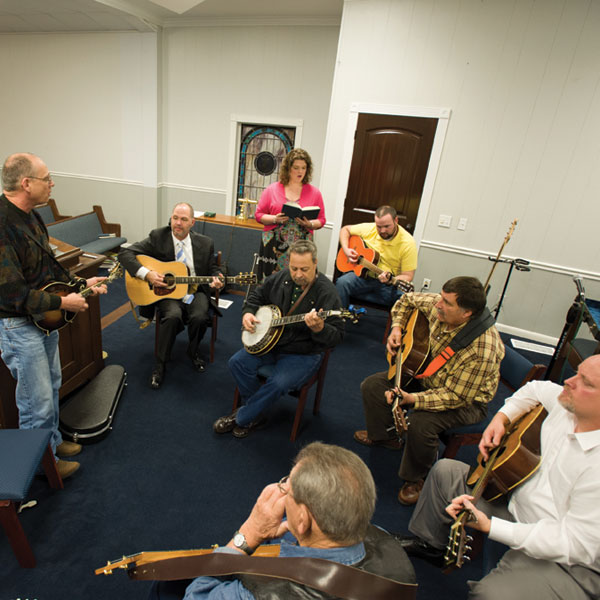
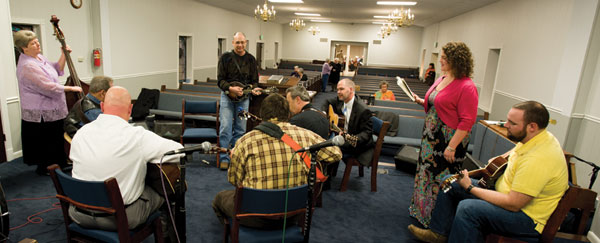
On Sundays at 5 p.m., you will find him playing bluegrass at Pell City’s Mt. Zion Primitive Baptist Church, where he is the pastor. Barber and other musicians play before the evening worship service.

“The women in the church provide refreshments and work on prayer shawls to take to the nursing home,” he said. “The music is a good transition to the service.”

The number of musicians playing on a given Sunday varies from a few to a dozen. Barber plays mandolin, guitar, bass and some banjo, and he sings. “There are three other mandolin players at the church, so we rotate around,” he said.

Members of the group play on a local radio station every third Sunday and at Golden Living, an assisted-living facility, every third Sunday from 2 to 4 p.m. Barber says they have been playing at Golden Living for 15 or 20 years. They also play at the Veteran’s Home and in the schools, when invited, and do caroling for shut-ins at Christmas. “It’s a ministry,” he said.

Barber was first exposed to music in church, where he was a member of the youth choir. “I was raised in the church and sang hymns as a child,” he said. He also listened to country and gospel music, including Hank Williams and the Happy Goodman Family.

“I took piano lessons for several years; it was a struggle for me,” he said. After learning the guitar and mandolin, he found he enjoyed playing bluegrass and learned that music could help pay a good part of college expenses.

Barber is self-taught on mandolin and guitar. “You get better by learning from others,” he said. When he teaches other to play, he asks them to teach someone else and share their knowledge.

“It thrills me when I teach a child who wants to learn and that child turns into a better musician than I am and then I see that child share it with another generation,” he said. “It feels like you’ve done something.”

A good judge of music
Ten-year-old Alan Furr became interested in music after hearing his grandfather Owen Furr play old-time country music and bluegrass with neighbors on his front porch in Crenshaw County.

“When I was 12, my parents made me a deal: If I could figure out how to buy an electric guitar, then they would buy me an amplifier,” he said. He got a job paying 50 cents an hour at the Handy Andy grocery store in Montgomery. His mother went to Art’s Music in Montgomery and financed a purple Fender Mustang guitar that he paid for with the money he made at the grocery store. Within a year or two, Furr was playing rhythm guitar with the Vibrations.

In addition to guitar, Furr plays mandolin, keyboards, ukulele, dulcimer and drums, and sings. A vocal performance major in college, he added church music to his repertoire. He continues to perform church music and serves as minister of music at the First Baptist Church of Ashville.

After graduating from law school, he spent about a year playing in the band the Reflectors with some friends from Birmingham. He currently plays in two bands – Whitney Junction and the Wingnuts.

The bluegrass band Whitney Junction was formed at First Baptist Church of Ashville. The group plays for free.

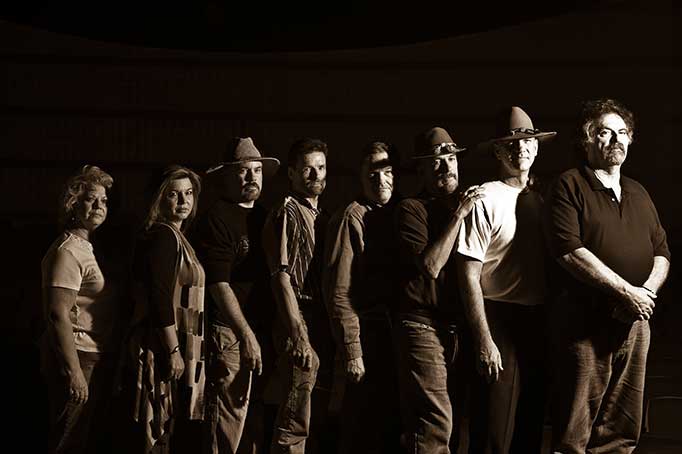
The Wingnuts, originally composed of aviators, plays 1960s rock and roll. The group came together after the 2011 tornado, as Furr explained, “when Donnie Todd, a member of the Pell City City Council, and I worked up seven or eight songs to play at a benefit for the Civil Air Patrol.” The Wingnuts now play once or twice a month for corporate and charitable events, such the Fur Ball, a fundraiser for the Animal Shelter of Pell City.
Furr said he sold his purple Fender Mustang guitar to a “kid” for $75, the same amount he had paid for it almost 10 years earlier. “Then the kid called me when he was getting a new guitar,” Furr said, and offered to sell the Mustang back to Furr for $75. But Furr explained that the kid could get more for it if he traded it in, and the kid took his advice.

Years later, Furr saw the purple Mustang for sale in a music store in Enterprise. He says he told his mother about it, and, unknown to him, she called every music store in southeast Alabama until she found it. He was surprised when she returned the guitar to him the following Christmas.

Wood Carver

Creator of many; master of all

coosa-wood-carverStory by Carol Pappas
Photography by Mike Callahan

When lightning struck a tree in Bill Golden’s yard, the natural instinct was to grab a chainsaw. But as quickly as that bolt shot through the tree, an idea struck Golden.

So with chainsaw in hand and a makeshift scaffold surrounding the tree, he masterfully turned the 12 feet of its remnants into an Indian carving that now stands watch like a sentry over the shoreline that fronts his Logan Martin Lake property.

Take a look around outside and inside his home, and one can’t help but conclude that just as he carved an impressive sculpture out of nothing more than a tree stump, Golden makes a habit out of turning challenges into opportunities.

“I do a lot of different things,” Golden said. “God has given me the abilities, and I’m not afraid to use them.”

Fear is not a word — or an emotion — Golden knows well. Why else would he try to create a stained glass window without so much as a moment’s lesson? But step up on his front porch and come face to face with a stained glass work of art.

He had been encouraged to take a class, but he told the woman where he bought his equipment that he “read a book.” When he returned for more equipment, she again encouraged him to take a class. “I’m doing OK,” he told her.

In the third week of his project, the notion of a class was dangled in front of him once again. “No, I’m doing fine,” he assured her.

By the end of the fourth week, the window was finished. He took a picture to show her, and she was “flabbergasted. ‘You could enter this in a contest,’” he recalled her telling him. And adding the ultimate compliment, she said, “‘I’ve got a door I’d like you to do for me.’”

“That’s where I messed up,” he chuckled at the memory. “I could have made a little money at it.”

Dollars don’t drive him, though, challenge does. “He is very talented,” his wife, Beth, said. “I have never asked him to do anything he couldn’t do, and it’s always better than I describe it — and always bigger.”

A retired supervisor from Hayes Aircraft and once a senior designer at SMI Steel and a project engineer at Connor Steel, his resume also includes an animated film — not because it was in his job description. It was simply a need at the time, and he accepted the challenge.

Hayes was vying for a NASA contract. “My boss called me from Houston and said he told NASA that I was an animation expert. I told him I knew nothing about animation, that I had seen animations about Donald Duck and Mickey Mouse. He told me to go downtown and buy any books you need. I bought three books.”

Three months later and with an animation film to his credit, Golden said his boss called him into his office and said they won the NASA contract. Another hurdle; another challenge met by Golden.

coosa-water-wheelInside his Logan Martin Lake home today, you’ll find plenty of evidence of Golden’s handiwork. In the foyer is a framed, pen and ink drawing that looks as though it could be on display in an art gallery. The signature on it? Golden’s, of course.

Nearby hangs a three dimensional music sheet he created with actual piano keys from the family’s century-old piano forming the notes of doxology, “Praise God, from whom all blessings flow.”

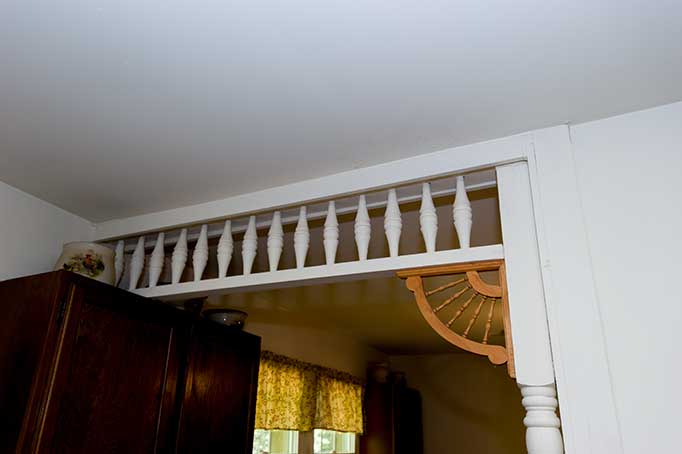
Then there is the 300-pound roll top desk he fashioned out of red oak, various paintings and carvings of toys, figures and dolls, the table he built from an oak tree and the room-sized Christmas village display complete with a mountain landscape overlooking it. The snow-capped peaks he painted stretch across two walls of the room, the natural light coming through a window behind it following the natural path of the sun setting. Oh, and it’s not a canvas, it’s an old sail he turned into one.

These and more are all Golden originals, but he takes particular pride in the 7-foot “Chief Coosaloosa,” dressed in leather, holding a hatchet in one hand with the other hand over his heart. The inspiration came from the trunk itself. A growth on it looked like an arm stretching across a chest, Golden said. “I felt obligated to carve that Indian.”

Its history didn’t begin with the lightning strike, though, it was one of three trees he bought 40 years ago from Sears and Roebuck and planted on the property that lies across the road from present day Pine Harbor golf course. When he bought the lakefront property, Pine Harbor was merely a cotton field, he said.

When lightning struck his prized tree, he decided to save at least a piece of it. He told the tree cutting company to leave him a 12-foot stump. Golden built a 12-by-12-foot platform around it about 3 feet off the ground and over the next four weeks, Chief Coosaloosa began to emerge. “I started at the top and came down with an electric chainsaw.” Feathers, leather jacket and pants, moccasins, the hatchet, the chiseled look of his face — all are lifelike. It took Golden a week to stain it, and it now stands as a landmark for anglers and boaters alike who have discovered it.

Another landmark stands — or turns — just a few feet away. It is a waterwheel he built that serves as the end of his heating and cooling system and also produces enough water for doves he raises in a former greenhouse, a pen and a pond. And, “It’s more efficient air conditioning than the unit outside,” he said.

Where does all that ability come from? Perhaps it’s in the genes. “My dad had a reputation for fixing anything,” he said. Or perhaps it’s simply drive. “I’ve still got a lot of things to do before I check out. Everything you see (even the house itself), I did. I’ve still got more to do. I haven’t gotten to the end of that list yet. I enjoy retirement as retirement is supposed to be enjoyed.”

So what’s next? Well, there is that cedar log that could be turned into a football player with a leather helmet. …

Unusual Art

A great inspiration

Story by Carol Pappas
Photos by Matthew Pope
Past photos courtesy of Jamie Truitt

Perhaps it’s the honk of a car horn accompanied by a neighborly wave and a smiling face behind the wheel. Perhaps it’s a stranger’s knock at the door to say, “Thank you.” Or the note tucked inside the ear of a bunny rabbit fashioned from hay, spray paint and water noodles.

Whatever the motivation, the seasonal work of art using a hay bale as the canvas on U.S. 231 South in Cropwell has become a source of inspiration — not only for those passing by, but for the artist herself.

The tradition began three years ago, when Jamie Truitt’s mother moved into her Cropwell home with husband Don. The wide-open field out front, facing the heavily traveled U.S. 231, seemed the perfect spot for a decorated hay bale, traditionally a fall custom.

“I always wanted a hay bale decorated,” said Ann Arnett. She asked her artistic daughter if she could decorate it. “She took off with that.”

The first was at Halloween, and it was not planned beyond that. But the reaction from people was so great, it continued. Christmas, Easter, back to school, Jamie’s daughter Katie-Ann’s birthday and, of course, the holiday that started it all — Halloween — all find thousands of passersby turning their heads toward the open field. And their smiles aren’t far behind.

The creativity behind it starts with a simple pencil sketch. By the end, water noodles become ears for an Easter bunny or birthday candles on a cupcake. Landscaping fabric turns into the wings of a giant bat. Chicken wire and mesh become the tools of her work.

Pumpkins, a spider, a Christmas present, a clown and countless other ideas go from paper to straw courtesy of imagination, artistic ability and a generous gift of the hay bale itself from Jacob Mitchell.

“Tons of spray paint” transform her hay bale canvas into whimsical works of art and a gift to strangers and neighbors passing by each day.

“People have stopped,” Jamie said. “They get out of their car and walk over. They say it makes them smile. It brightens up their dreary ride going to work.”

Two little boys whose mother is a friend of Jamie’s were overheard betting on what the next hay bale would include. One predicted a smiley face. Imagine the excitement of those little boys on their ride to school when that smiley face actually appeared.

Stories of that hay bale and its impact abound. One passerby left a note saying they were very thankful for her doing it. “They were going through a rough situation, passed by (and spotted the Easter bunny), and it elevated their mood.”

People have left donations, had their photo made there or pulled up just to say thank you.

“I’ve seen parents and kids pictures with it on Facebook,” Jamie said. One person even offered her a job doing a portrait.

But when times grew tough for Jamie, who was hospitalized for eight weeks, the familiar source of inspiration faded, much to the disappointment of her growing community of followers. Suddenly, it appeared decorated one day as a rainbow with a sign and a simple message, “Praying for Ms. Jamie.”

It was the handiwork of neighbors Jeannette and Anthony Harmon.

“I just cried over that one,” Arnett said. They took a picture of it, made a copy and taped it up in Jamie’s hospital room.

It became a symbol of inspiration to her, brightening what had become an especially bad day for her. And the inspiration to get better continued. As she moved from hospital to hospital, the constant was that picture and the sentiment behind it.

After her recovery, when people met her and realized she was the source of the hay bale and the prayers, they would tell her, “You’re the Ms. Jamie we’ve been praying for!” Or, “Because of that hay bale, you’re on our prayer list.”

For Jamie, the hay bale is a reciprocal gift.

“It is good to have a reason to do the hay bale. It’s more our pleasure of doing it. Being sick, it gives me an area to focus on other than my health problems. In the way it brightens their day, their comments brighten my day back.”

And the smiles it inevitably evokes simply add to the magic of the gift.

Just ask Katie-Ann: “It’s all good.”

The Cane Makers

A stick and a knife are tools of their trade

Story by Tina Tidmore
Photos by Michael Callahan

Walking stick, cane, hiking pole and pilgrim’s staff: just a few of the terms that refer to the humble weight-supporter often associated with disability, the elderly and ancient Biblical characters walking through a desert. At least two St. Clair County woodworkers add creativity to the sticks they find in the woods, giving them eye-appeal in addition to a practical use.

Marvin Little, a retired insurance adjuster, takes a simple approach in his creations. His focus is on using a variety of woods and a variety of handles. He retains the bark and enhances the natural beauty of the stick.

Little’s interest in making canes started when he moved into a new home 15 years ago. While walking through the woods, he noticed some small trees and branches that would make good walking sticks. He has learned many of his techniques through online cane-making clubs where ideas are shared.

His own sharing sparked interest from another would-be cane maker. Cook Springs resident Jackie Stevens, who retired from the banking industry, remembers her interest starting when Little regularly brought his canes to the old St. Clair Federal Savings and Loan in Pell City to show the employees.

Little tried to get her involved in the Logan Martin Woodcarvers group, but she regularly declined. Finally in 2006, “I went to a meeting and became hooked,” Stevens said. Then, with a few unprepared, seasoned sticks Little gave her, she started creating her own canes.

Using a knife, Stevens actually carves shapes and figures into the sticks, including one she worked on of two snakes this summer.

Both Little and Stevens said a love for working with wood was passed down to them in their families. “I enjoy making something with my hands,” Little said. “It’s always a challenge to make something pretty and useful out of wood.”

“I even love the smell of wood,” Stevens said.

Little’s approach is not only to provide something attractive and unique, he likes knowing he is making something with practical use that is helpful to people.

But Stevens’ focus is on adding to her personal wood-carving collection or creating artistic pieces for decoration or display. She has given some as gifts or done commissioned pieces. They are strong enough to be useful, but that’s not her main focus.

Because their canes have different primary purposes, they have different price ranges. He sells his canes at local festivals and is careful not to invest too much time or supplies into them. “You have to make something that will sell at the venue where you want to sell it,” Little said. So his price points are $18 to $28, which generally amounts to enough to cover his expenses. He’s not making any profit or even paying for his time.

Similarly, Stevens isn’t in it for the money, even though she’s sold one at $60 and others up to $400. She started her cane-carving while seeking a stress-reliever. “My shop is the only place that I can completely lose myself with no worries or fears and lose all track of time,” said Stevens. “To me, the entire process from harvesting the wood to applying the final finish is rewarding.”

But she avoids turning it into a job. “I want it to be my idea, my style, no demands,” Stevens said. “I bowed out of the real world and come into my fantasy world.”

In 2006, when Stevens first attended the Logan Martin Woodcarvers, she was the only woman. But now others are involved, and they have taken up carving dolls. “The biggest thing is the friends I’ve gained in the group,” Stevens said.

Cane-making Process

Making a walking cane starts, obviously, with the stick. Marvin Little, who lives just north of Pell City, has used sassafras, hickory, oak, bamboo, sourwood, cedar and many other species. “A lot of it I don’t know what it is because I cut it in the winter when there aren’t any leaves,” Little said.

Some are branches, but most of the walking canes started as trunks of young trees. Little often turns the root ball into the cane handle. Broken limbs lying on the ground cannot be used because they are weakened by bugs. “It has to be something that feels good in your hand,” Little said.

Both Little and Jackie Stevens say “twisties” are highly favored. They are trees that have been twisted into a cork-screw form by vines. “If I find a good twisty in the woods, I’ve got to have it,” Stevens said.

Both Little and Stevens have friends offering them sticks and other wood. “I hate to see wood discarded,” Little said.

The harvested stick must be allowed to season for a year. Then, Little cleans off loose bark. It’s at that point that he decides what he will make with that stick. Some need to be straightened using water and a clamp. Sanding and painting are next. Then he puts on the handles and adds the protective clear coat.

In addition to the joy of creating something attractive, there is the challenge of doing so within the limitations and features each piece of wood has. “The wood has to talk to me,” Stevens said in reference to what she decides to do with it.

Much of the character of a walking cane is in the handle. Little has used a variety of items to create decorative handles, including doorknobs, deer hoofs and elk horns. Even a golf ball has been turned into a cane handle.

The most unusual request Little received was to create a wood-carved human skull as a cane handle. He has been asked to do canes shaped like snakes. But he has refused. Why? Simple. “I don’t like snakes,” he said.

To be functional and stable, the top of the cane must be in the same plane as the bottom, even if the middle is twisted. Also, the height of the cane needs to come up to the person’s wrist. Shorter or longer and it will not provide the stable support needed.

A cane Stevens is most proud of is one that used material from the former Avondale Mills in St. Clair County. “I made this cane in the memory of my Big Daddy McCullough, who worked in the mill all his life,” Stevens said. As the Mill was being dismantled, she asked for some of the remnant material.

She got some wooden thread spools and a 1902 sprinkler head that she made into a cane that she treasures. “I took several of these old spools of various colors, stacked them on each other and ran a quarter–inch thread rod the length of the cane and then put the sprinkler head on top,” Stevens said.

She has agreed to have her canes included in an exhibit at Heritage Hall Museum. Little plans to be selling his canes at this fall’s Homestead Hollow.

But beyond that, they do it just for the joy found in creating a work of art with a knife and a stick.

Celebrating 37 years

Theater group is uniquely Springville

Story by Jane Newton Henry
Photos by Brandie Felice, Judy Shults
and Janet McBroom

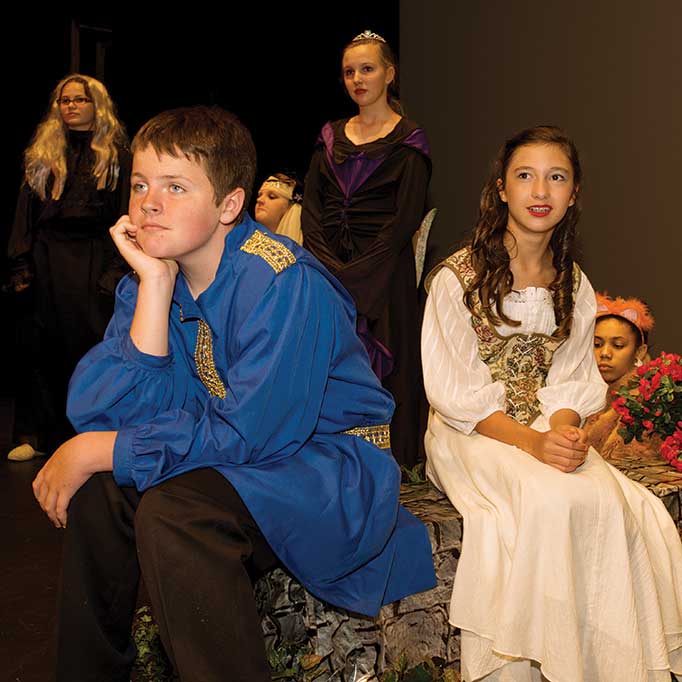
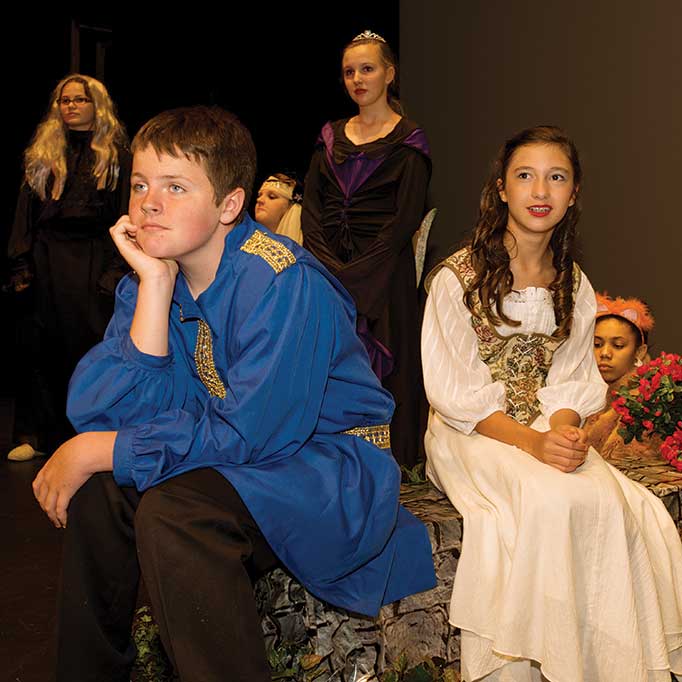
It’s a true story that reads like the opening scene of a classic Broadway musical: June Morgan Mack returns home to Springville in 1976 with her college diploma, only to find that her summer job has fallen through. She talks with her neighbor, Archie Jones, about the problem, and he says, “Why don’t you do a show?”

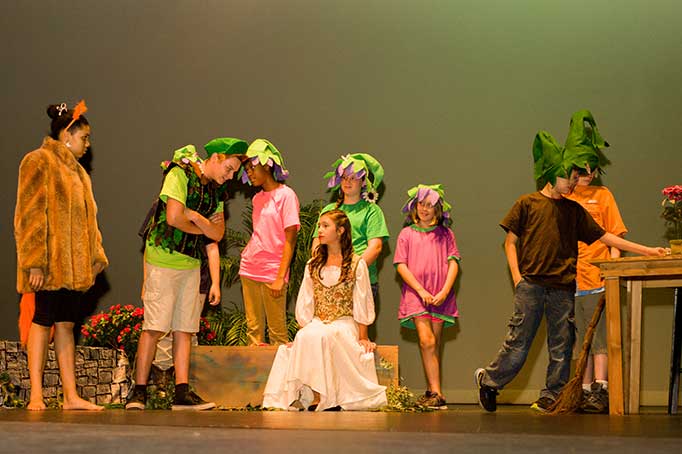
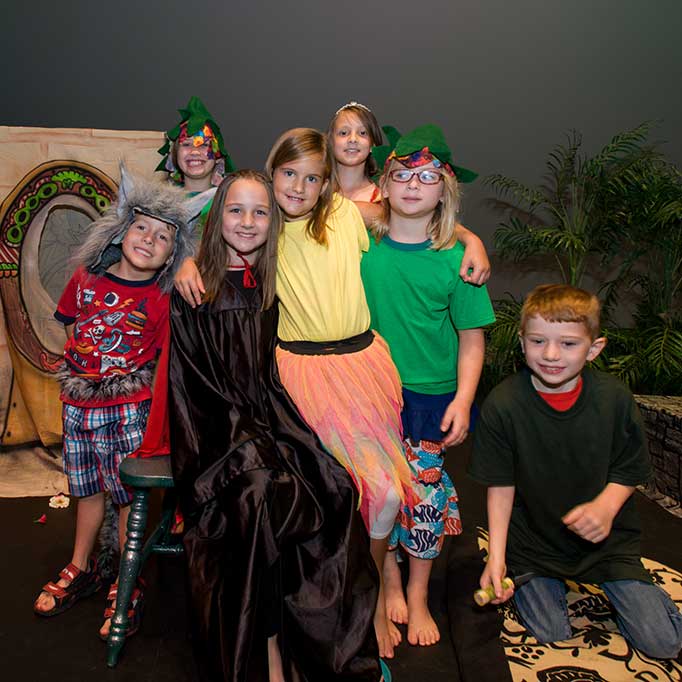
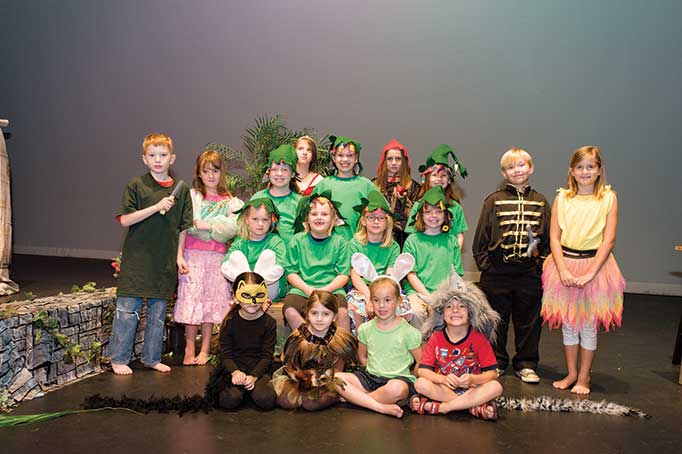
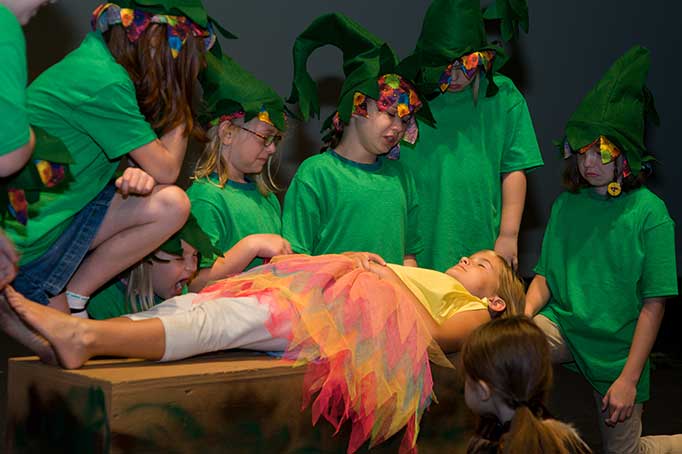
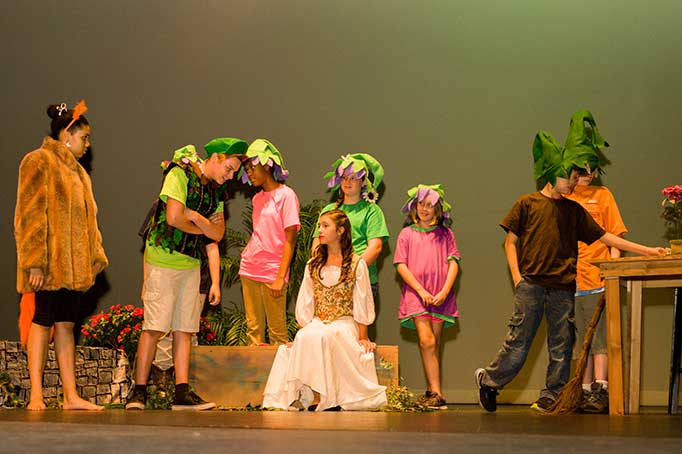
So that’s what she did. She wrote a children’s musical titled, “Circus Magic,” and found about 25 people to produce and appear in the play. They built sets, made costumes, rehearsed and did one performance at Springville High School, now Springville Middle School. “Everybody got a charge out of it, so we decided to do it again the next year,” she said.

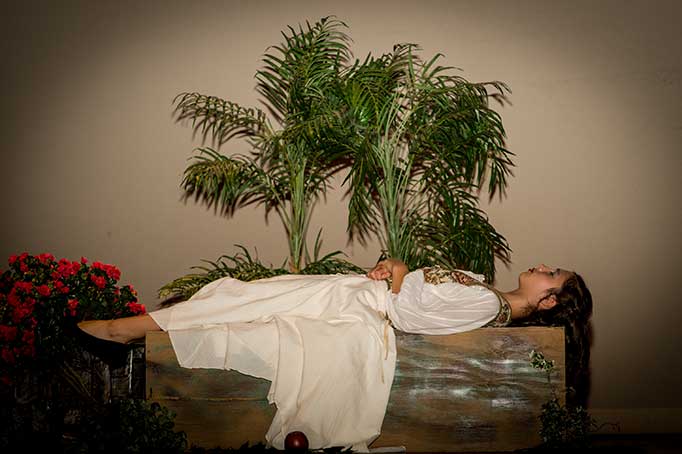
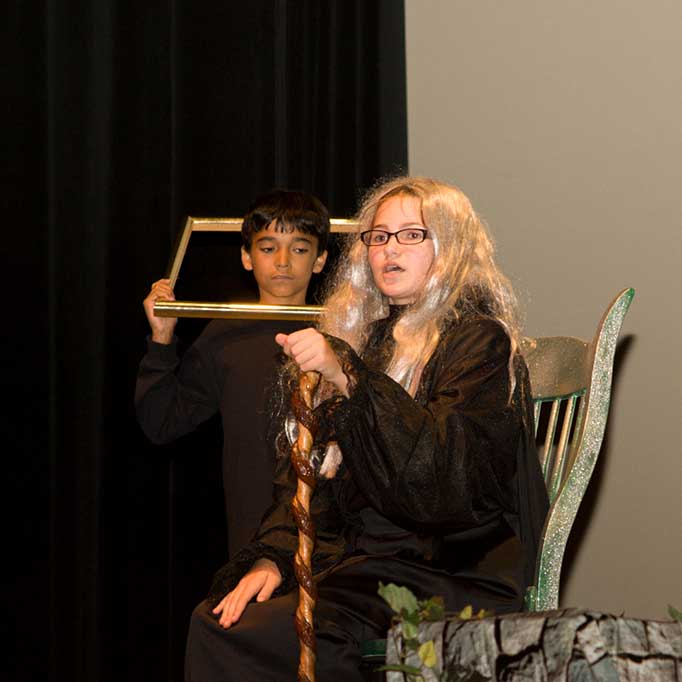
That production marked the beginning of Springville Children’s Theater. For five summers, Mack wrote and directed children’s musicals.  Thirty seven years later, the theater group in the St. Clair County town of about 4,000 people, is still going strong.

She credits the “incredibly talented” people of Springville for keeping the effort going.  In addition, the group’s unique operating philosophy has played a major role in its success.

Extraordinary talent

“When we started the theater group, there were so many talented people right here in Springville — all these incredible people who were singing in church choirs,” Mack said. “Since then, I’ve been in many other states and have done many other things, but I would still say that the talent in Springville is extraordinary.”

Mack recalled the performances in “Circus Magic.”  Twelve-year old Shawn Cushen worked as the stage manager and played the male lead in the play. Penny Burgess played opposite him. “They were terrific in the play. And they were brilliant kids. They were making all A’s in school, but to memorize all of those pages of the script and then to stand up and spit out their lines with gusto – that was something no one knew they could do.”

A unique philosophy

Our guiding principle is to cast every person who auditions, she said. “We believe that if it’s fun and interesting for people, and they learn a lot and are proud of themselves, the show takes care of itself.”

By 1981, the grown-ups wanted to do larger-scale shows requiring casts of all ages, Mack said.  That year, the group chose “Oklahoma!,” and it became the first in a long line of Broadway musicals that the newly named Springville Community Theater would produce.

“’Oklahoma!’ was expandable,” she said.  “We could put all the kids in it we could find, which is a big deal for us.”

The group has a particular interest in bringing first-timers to the stage – especially children. “We believe that a community theater not only fosters a positive community spirit, but builds confidence and forges lifetime friendships.”

The theater also plays an educational role. Mack explained that during the organization’s early years, there wasn’t any other live theater in the area, and children were growing up without it.

“They didn’t know the classical musical-theater literature, and that’s one reason I’ve been so dedicated to doing the classics,” she said. “We will do Rogers and Hammerstein forever.”

After the production of “Oklahoma!,” the theater has produced classic Broadway musicals every few years.  They performed “Oklahoma!” a second time in 2010, which was performed outdoors at nearby Homestead Hollow, and just this month, they performed South Pacific again — 30 years after their first production of that show.

June Mack

Mack, who founded the Springville theater group and has directed most of the shows, says that preparing for a production is difficult. “It’s not just for fun. It’s disciplined,” she said. “I’m regimented about people knowing their lines before I even see them.

“It’s hard work, but that raises the bar and makes people take it more seriously. People will always step up to the challenge. I expect great things; they surprise themselves — that’s how it works. So I keep upping the challenge; that’s my job.  As long as I can keep doing that, they will keep surpassing their expectations.”

She credits the people of Springville with helping her learn her craft. “They taught me to direct,” Mack said. “I am so grateful for the patience and devotion of these people for all of these years.

“We’ve hit obstacles and said, ‘That’s it. The show’s gonna be shut down. It’s never gonna work.’ But you give these people 30 minutes to regroup and think, and we’ll move forward again.”

Since Mack’s first summer with Springville Children’s Theater, she has worked on more than 50 theater productions and 70 films. In addition to her bachelor’s degree in composition for musical theater from Hollins College, she received master’s degrees in film and education from Florida State and Harvard University. Her films have garnered 22 international awards and have been seen on national television and at screenings here and in other countries.  She is a professor of film at the University of Alabama in Birmingham. Expect to hear about auditions for another summer musical in Springville in a couple more years. If you would like to get involved in Springville Community Theater, contact Mack at (205) 467-3105 or jmack@uab.edu.
Editor’s Note: If you have been involved in a production of Springville Children’s Theater or Springville Community Theater and have film or video footage from a show or shows, contact June Mack at (205) 467-3105 or jmack@uab.edu. She is collecting footage to have it digitally archived.