
Pell City resident makes the journey of a lifetime
Story by Paul South
Submitted Photos
For the pilgrims who annually flock to Spain from around the world to walk all or part of the Camino de Santiago, the reasons for their journey are as varied as they are.
For the hikers, it can be a trek of faith, fellowship, revelry, reflection, exploration or a communion with God and nature. Known as the Way of St. James, it might well be a tour mixing all of the above, ending at the Cathedral of Santiago de Compostela in northern Spain, where it is believed the remains of St. James the Great rest.
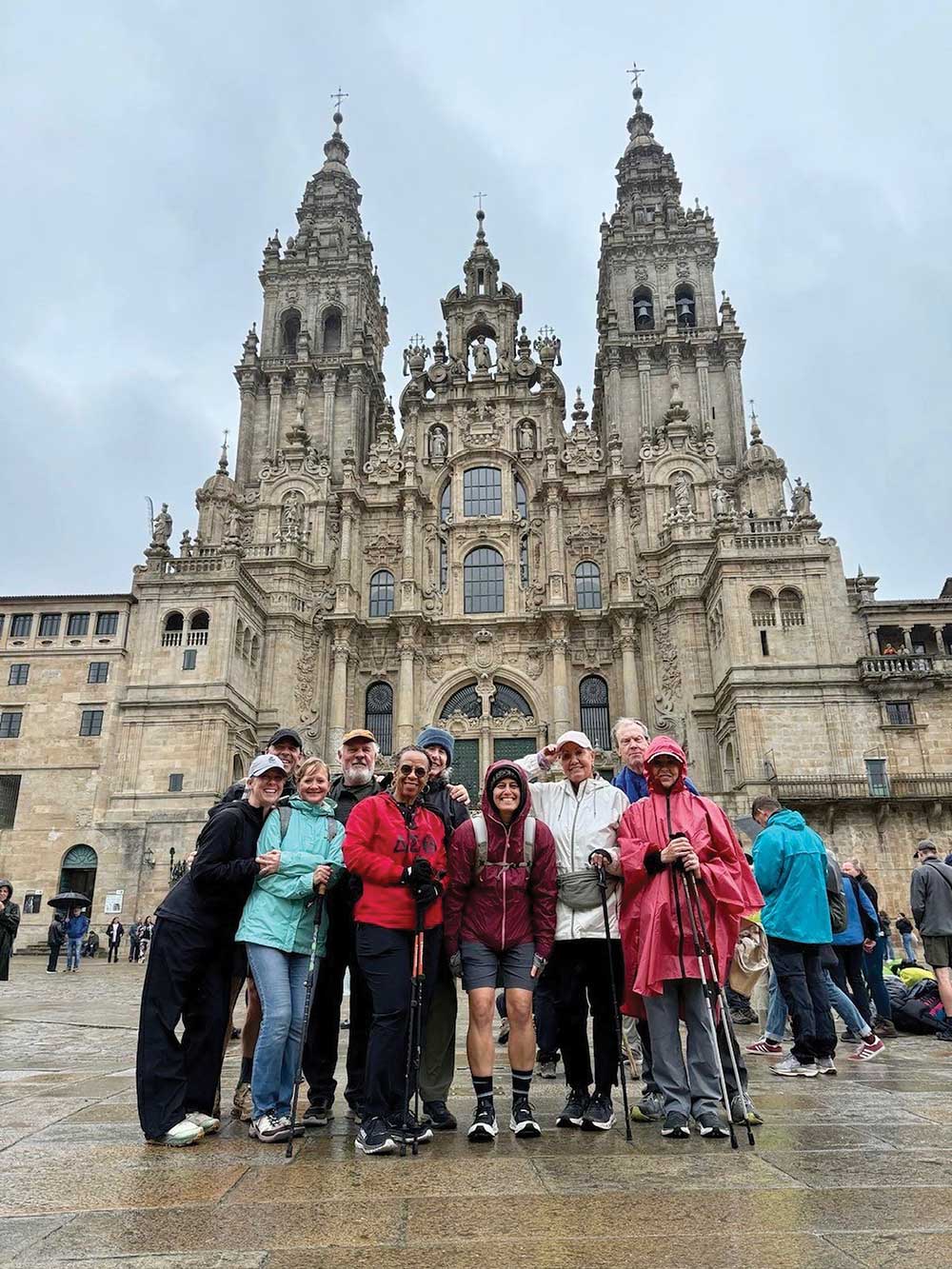
For Jean Barnett of Pell City, her 70-mile, weeklong journey on a portion of the Camino Frances or French Way, was a moveable feast of all of the above. The spark for her journey was first ignited by her yoga instructor, Terri Sellers, a five-time veteran of the journey, who was organizing a Camino trip for a small group of friends.
“I heard her talking about walking across Spain, going on this pilgrimage, and I was intrigued. I’d heard of it many years ago, and I decided if I didn’t do it now, I might never do it,” Barnett said.
Multiple reasons fueled her desire to tackle the journey.
“The challenge drew me in,” she said. “But the opportunity to do it with friends who were like minded attracted me to it.”
It came at a time, too, when she had wrestled with family health challenges.
“(The Camino) was just something I felt like I wanted to experience – to get back out and spend some time exploring and doing something that sounded challenging but was doable,” she said.
And there was the spiritual side.
“People have a lot of reasons for doing it, and mine was somewhat religious,” she said. “But being out on the trail gives you a chance to really meditate and have an opportunity to just kind of be with yourself paired with many opportunities for fellowship along the way. But I took time to pray and listen to the sounds of nature, which was one of the things I really loved – the early morning walks, listening to the bird calls, just the sounds of the world waking up.”
She added, “To be out there in a place where you could just be by yourself and think.”
And there were times of fellowship with her group and with other travelers along the road.
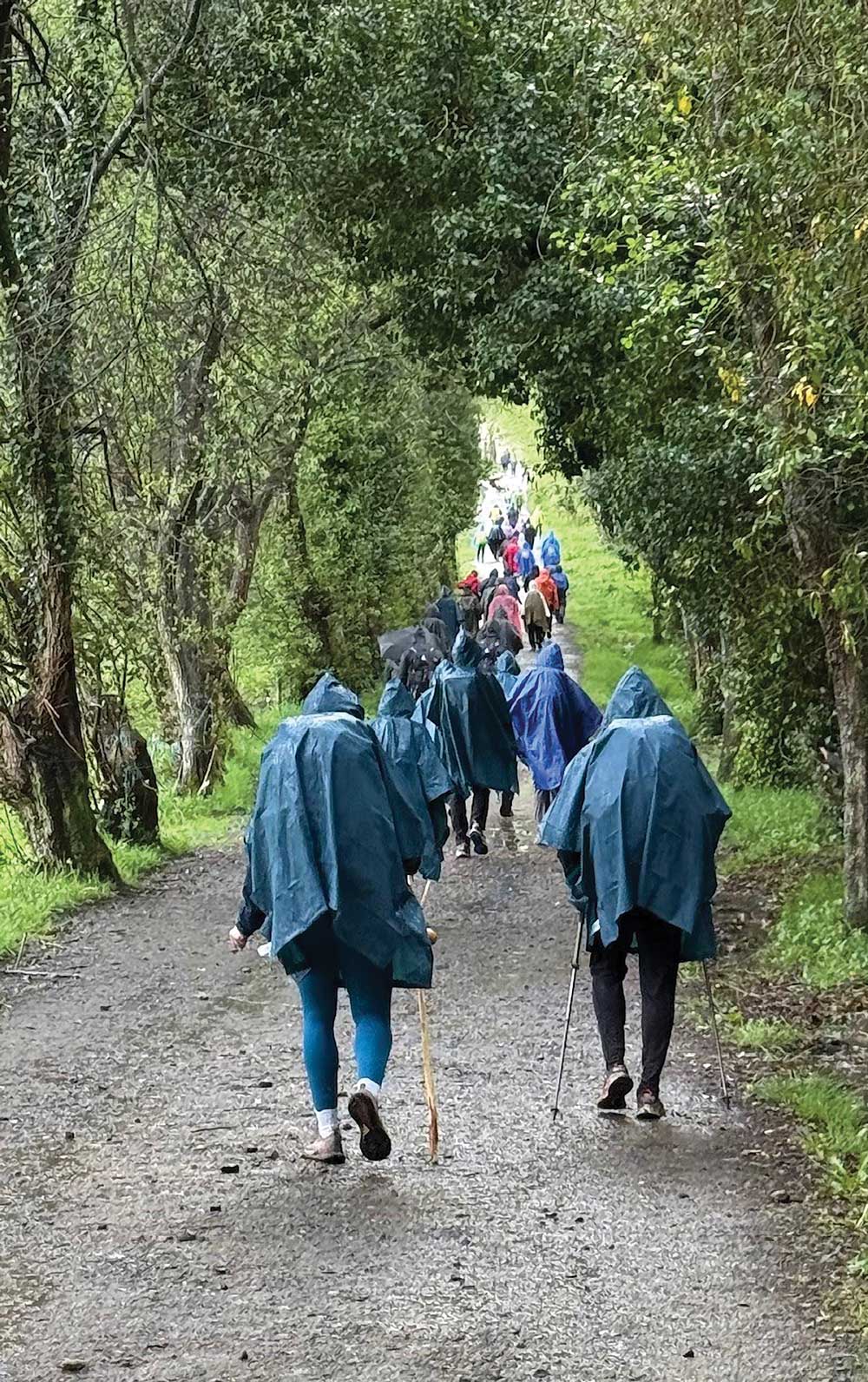
“There’s a balance there,” she said.
Barnett, a former runner who competed in half-marathons, moved at a more deliberate pace in her pilgrimage. Deep reflection, introspection and fellowship don’t move at a racer’s pace. Camino de Santiago is an opportunity to escape from the daily grind.
“It’s something of a distraction that takes you out of your role in day-to-day life and the chance to just kind of contemplate the world and your purpose,” Barnett said.
Amid the deeper moments, there are the earthlier concerns, from fatigue to blisters on the trail. “You just take every day as it comes and deal with it,” she said.
What is the Camino de Santiago?
In 820, a tomb was discovered in Galicia believed to be the final resting place of St. James the Great. According to “The Camino de Santiago Survival Guide,” while the details are a bit fuzzy, the “Camino” was the beginning of Christian pilgrimages. It is believed that in 920, a Frenchman, Bretanaldo, was the first foreigner to walk the Camino. Some 438,683 people completed the Camino via a network of different routes and via different means. While nearly 95 percent of travelers walk the Camino, others travel via bicycle, horseback, sailboat, on crutches or in a wheelchair.
One interesting note: Some famous people have made the pilgrimage, including the King and Queen of Belgium, television host Jenna Bush Hagar and the acclaimed actor Martin Sheen.
There are several different routes for the Camino, all ending at the Cathedral de Santiago. As they get closer to Santiago and the Cathedral, they merge into one trail, crowded with pilgrims. Here is a glimpse of the trails, taken from The Camino De Santiago Survival Guide:
The French (Frances) Way: This is the most commonly taken route of 780 kilometers from Roncesvalles to Galicia. This route passes through Pamplona, famous for the Running of the Bulls, written about in Hemingway’s The Sun Also Rises.
Barnett and her group began their 70-mile journey in the town of Sarria.
The Northern (Norte) Way begins in Irun and passes through Bilbao, San Sebastian and other towns before entering Galicia.
The Primitive Way: Beginning in Oviedo, this 321-kilometer journey merges with the French and Northern routes near the end.
The English Way (Ingles): The route, which begins in either Coruna or Ferrol and ends in Santiago is named for the pilgrims who originally traveled from the United Kingdom. The distance from Ferrol is 110 km. From Coruna, the distance is 75 km.
The Portuguese Way begins in either Lisbon, or more commonly in Porto. The inland route from the Portuguese capital Lisbon is 600 km, 620 km by the coastal route. From Porto, the inland trek is 230 km, 260 km the coastal way.
The Via de la Plata: The 1,000 km route begins in Seville, Spain and runs inland before arriving in Galicia.
Preparation and an early challenge on the trail
While others will travel all of one of the routes and “rough it” along the way, Barnett’s group traveled with a support van. Hotel reservations along the route were made in advance.
There were checkpoints along the way offering water and snacks and stops for lunch and dinner. Their luggage was also transported. It was somewhat akin to sherpas who aid hikers on an Everest journey.
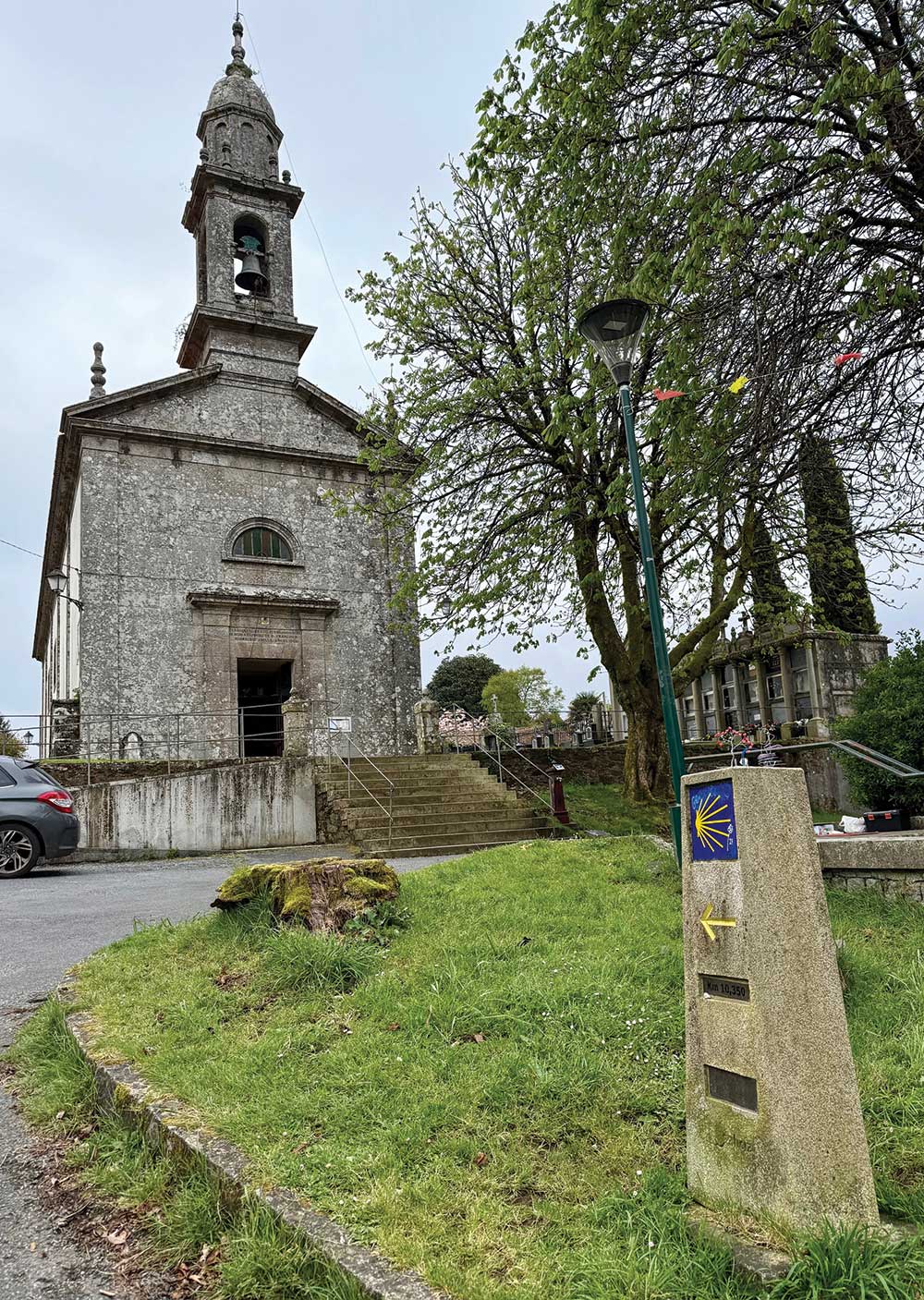
“I’ve heard it referred to as “Pilgrim Lite,” she said. “We really did have a lot of support along the way, which made it really doable.”
The Camino requires preparation physically, mentally, spiritually and emotionally.
“You know, I don’t think I adequately prepared for it, actually. I was so busy with everyday life and the things I had to do to make sure while I was gone my family was taken care of,” she said. “There was a lot I had to take care of before I could get away.”
At home, she’s also involved at her church, Pell City First United Methodist in trying to help it grow, and she was in rehab for a back injury for six weeks before the trip.”
“I wasn’t as adequately prepared as I needed to be – spiritually, mentally, any of that,” Barnett said. “The therapists helped me get to a point where I could do it without suffering too much.”
The biggest physical challenge came shortly after the long flight from the States to Europe. “On the first day, I got scared,” she said. There was swelling in my lower legs, and the trail was hilly with long inclines and declines. I had a hard time keeping my heart rate down because the swelling was putting pressure on my heart … I wasn’t sure I was going to be able to do it. I just had to take it very slow.”
A pair of compression socks saved her journey. Asked if that first day was the hardest on her portion of the Camino Frances, Barnett said, “Absolutely, it was. After that first day, it wasn’t a problem. But it was still very challenging. That’s a lot of miles, and it was hilly.”
That first day caused her to consider giving up, but the support and advice of her group kept her going. “I was ready to try again,” she said. “I didn’t want to give up.”
For Barnett, the journey was part solitude, part introspection, part fellowship and more, a hybrid of all the reasons travelers make the pilgrimage. She and her group entered Santiago on the Thursday before Easter. After completing her Camino, she attended Easter Mass at the Cathedral of the Assumption of Our Lady in Porto, Portugal.
“It was amazingly beautiful and spiritual to celebrate in Porto’s majestic ancient cathedral,” she said.
While that may have been the spiritual climax of her trip, Barnett also encountered inspiration in human form. A pilgrim in front of her was walking slowly, with difficulty.
“As I got closer, I realized he was walking on crutches and carrying a backpack,” she said. “It occurred to me, that whatever issues I had or have in my life, I don’t have crutches. For him to take the journey and make it happen, it just touched me. He was my hero.”
As she came alongside the man, she spoke to him.
“He had the most joyful, radiant smile,” Barnett recalled. “He had some age on him, but here he was doing something that most people on crutches would just consider impossible. And he was happy.”
There were other surprises on the walk. Musicians, alongside the trail, buskers who would happily take a Euro or two tossed into an open cello or guitar case, serenaded pilgrims. Groups of young people sang joyfully or laughed as they walked. Barnett encountered fellow pilgrims from around the world, on the trail and in bars and cafés in the villages along the route.
Nature offered signs of spring and of renewal, a pasture full of lambs or calves.
“It gave me another thought, to take this this time and think about the future and the importance of having this life and how you spend your time,” Barnett said.
As she passed centuries-old buildings, Barnett considered the early pilgrims in ancient days who made this journey.
“They did not have the modern conveniences we have – the high-tech shoes and gear – all the things that we access so easily. What did they do when they had issues? … We have so much.”
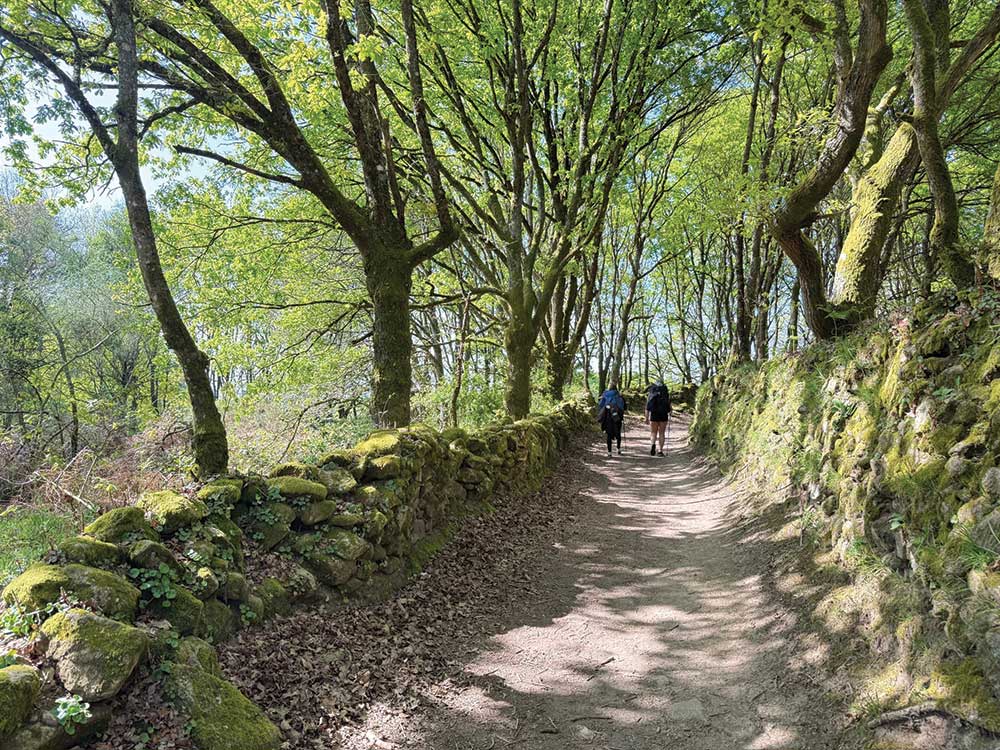
A favorite memory for Barnett is when she walked a tree-lined path along a stone wall covered in moss. “The moss was glistening, and it looked like carpeting in the shape of the rocks of the wall,” she said. “It was leading you from where you’ve been to where you’re going. It was a gorgeous, magical fairyland.”
She also warmly recalled the fragrance of a eucalyptus forest, ancient buildings, lovely murals. The Camino experience left her forever changed.
“It gave me a chance to focus on what’s important in life. We get so tied up in the daily routine, grocery shopping and cooking meals, and (the trip) gave me a chance for an inward focus, to think about the things that are important in life and relationships and this big world. There are so many places to go and people to meet. It’s eye opening.”
It helped her realize that “being on the Camino is a lot like life. You have to do what you need to do to get from Point A to Point B each day. But in this scenario, you are in nature all the time.”
And at each day’s end, as she laid down to sleep, she remembered the people, places and things she saw – welcoming people in breathtaking, yet peaceful places.
“It was a good time to take a pause in life, even though I was in motion most of the time. It was a pause for your mind to open up more to the spiritual aspect. Being outside. Communing with nature. Thinking about this wonderful world and God and what He has created for us and the responsibility that comes with preserving it.”
The Camino also impacted her perspective on the world.
“I wasn’t bombarded with news, but staying out of the daily news was good for my soul and good for my mind. (In the news), there’s always the bad and negative things going on. The Camino forces you to focus on the good and the beautiful.”
And when she arrived with her fellow pilgrims at the Cathedral of St. James the Great, she was greeted with cheers and applause. She wept with joy at the memory. They were there with pilgrims who had trekked the entire Camino de Santiago, but that did not dampen her triumphal entry.
“Oh my gosh, that was exhilarating,” Barnett said. “It was pouring rain off and on all day, and it was raining when we got to Santiago. But we were so excited to see the cathedral, to end the journey. About 10 kilometers out you could see the spires of the cathedral. I get goosebumps just thinking about it. It put more energy into our final few steps. … The energy level was amazing.”
It impacted her relationship with God.
“When I feel close to nature, I feel close to God. It’s an opportunity for a conversation with God. It was an opportunity to pray and to meditate while listening to nature.”
She thought of nature and art and history along the way – and the pilgrim on crutches.
“I felt blessed to speak to that man who was making his way at his pace with this huge smile on his face, and it made me think how blessed I was to be able to do this with a great group of people.”
Barnett offered a quote from Sellers, the yoga instructor who in part inspired her to tackle part of the Camino, a journey of beauty, discovery and the Divine. “It’s not about what you take with you, it’s what you leave behind.”
What did Barnett leave behind?
“I tried to leave stress and worry and take (home) the joy that I experienced.”
She offered counsel to those who may be considering the Camino de Santiago or any other challenge in life. “Follow your dreams,” she said. “If there’s something you want to experience, then make it happen. It’s a great big, beautiful world. Don’t shy away from something that, though it may be challenging, is an opportunity for growth.”
The trip, simply put, was “very nourishing for my soul.”
Quoting Sellers again, she described the magical, mystical journey: “As we venture away from our everyday lives and from the script of a typical trip or vacation, we are invited to open our eyes, hearts and minds to being a stranger in a strange land and see each day as unfolding minute by minute, step by step into a journey of challenge, renewal and hope. In other words, we are off on an adventure, and while it will offer times of comfort and awe, there may be times of challenge and obstacles. It comes with the Way.”