
Quilting is art, storytelling, therapy
Story by Roxann Edsall
Photos by Mackenzie Free
It was 1863, and America was imploding, ravaged by the effects of the Civil War. Brother met brother in battle, homes were burned and cities destroyed.
In Bennington County, Vermont, 46-year-old Jane A. Stickle channeled her energy, creativity and wartime grief into creating what is now one of the most famous quilts in the world. She stitched into one corner of her masterpiece the simple, yet haunting words – “In War Time 1863.”
Stickle’s quilt, now called the “Dear Jane” quilt, is a sampler, meaning that each of the squares is unique. Unlike most sampler quilts which typically use blocks created by different quilters, Stickle created each of the elements herself. She created most of the patterns for the blocks herself, utilizing established patterns for less than a third of her quilt. She also did not repeat a patterned fabric in any of the blocks.
The Dear Jane quilt has been housed in the Bennington Museum in Bennington, Vermont, for nearly seven decades. To protect the integrity of the fragile fabrics, the quilt is only displayed for one month each year, with thousands of quilters making the pilgrimage from as far away as Europe and Australia to view the piece.
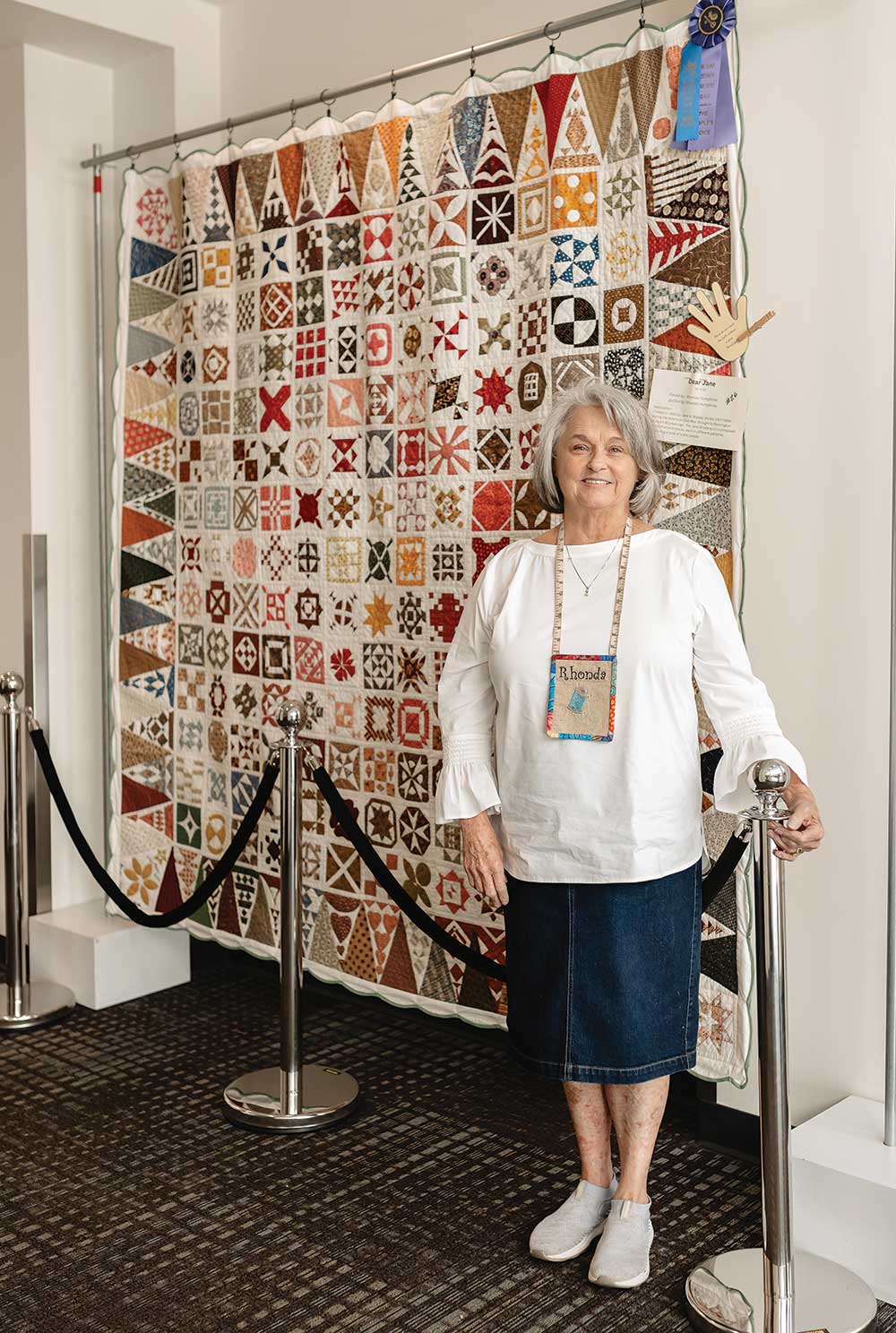
Rhonda Humphries has not yet been to see Stickle’s Dear Jane quilt but has spent thousands of hours on her own replica. Humphries, a member of the Friendship Quilters Guild of St. Clair County, was encouraged in the project by other guild members and her friend and mentor, Brenda Franklin.
Undaunted by the 5,602 individual pieces it takes to make the project, Humphries worked for two and a half years until the 169 five-inch blocks, 52 triangles, and four corner kites came together in her own finished masterpiece.
Humphries used Civil War era reproduction fabric and followed patterns created by Brenda Manges Papadakis, who viewed Jane’s original quilt in the museum in 1992 and meticulously traced each piece.
Papadakis so admired Stickle’s work that she was inspired to write a book published four years later called The Two Hundred Twenty-Five Patterns from the 1863 Jane A. Stickle Quilt, which included the patterns quilters could use to reproduce the quilt. Many quilters are inspired by the Dear Jane Quilt, and many bring their finished pieces when they make the trip to the Bennington Museum to view the original.
Like the Dear Jane Quilt, Humphries’ quilt is hand-pieced and hand-stitched, an effort that took incredible patience, perseverance and precision. “The most difficult part,” says Humphries, “was one block with a star inside. It’s made up of 30 pieces and, by itself, took three days to complete.” She has been quilting for eight years and has made 40-50 quilts but hadn’t done many quilts at the time she took on this challenge.
“Most people who start this quilt do not finish. It’s pretty involved,” admits Humphries. The blue ribbon and people’s choice awards from her recent entry in a quilt show pinned to the top say the effort has been well appreciated.
Humphries’ quilt was on display recently in a special exhibit at the Museum of Pell City, along with dozens of other quilts made by members of the Friendship Quilters Guild. Looking at each quilt is like looking at fine art in a gallery. Each quilt tells a story, whether one of whimsey or of more important historical matters.
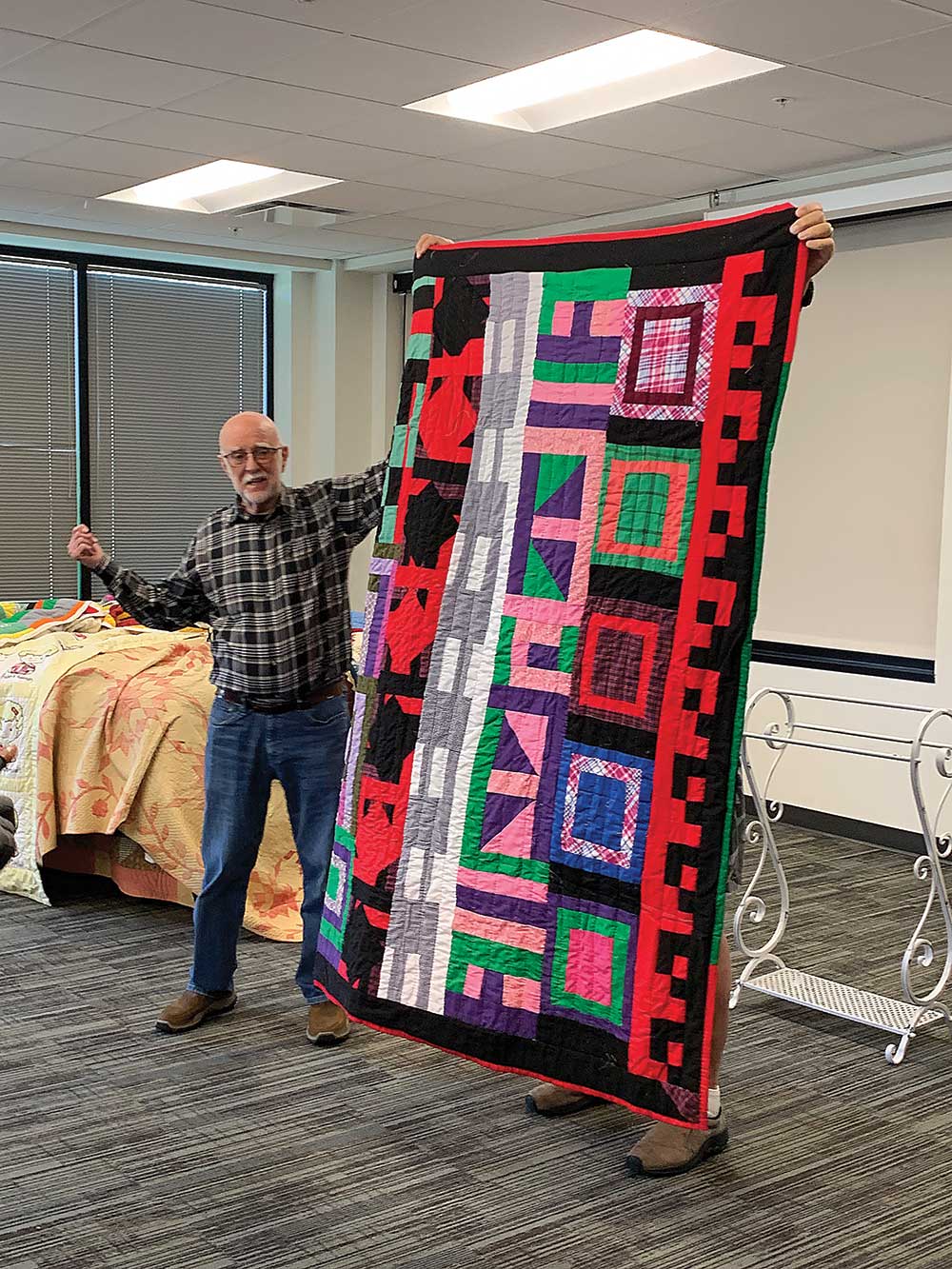
Naomi Kircus is the creator of The Underground Railroad quilt. Its blocks relate the story of the freedom seekers during abolition. Created with Civil War replica fabric, the quilt is made up of 16 blocks, each a reproduction of one that would hang in the windows of safe houses. “When the slaves were running for their freedom, people would have safe places for them to stay,” explained Kircus. “They would display quilts [in the windows] where each of the squares was a message they were communicating to those they were helping.”
The personal narratives and messages communicated through quilting continue to be a source of pride and precious history for families and communities today. Quilts are handed down from generation to generation, becoming treasured heirlooms.
The Friendship Quilters Guild occasionally offers classes in quilting for those wanting to learn the skills and process. The guild has been together for more than 25 years and meets on the second Saturday of each month at Mt. Moriah Baptist Church in Pell City.
Organizer of the quilt exhibit and guild member Deb Cearley adds that the group has a passion for service. They make covers for cancer ports, fidget quilts, hospital bedrail bags and full-size quilts that they donate to area hospitals, cancer centers and hospice groups.
“Service is the main thing we do,” said Cearley. “I came to a program here for Veterans and saw many of them come in with their blankets on their laps in their wheelchairs, and that just inspired us to make more.” They also provide placemats for Meals on Wheels and pet beds for Pell City’s animal shelter.
Florence Kerr, one of the oldest standing members of the organization, adds one more benefit to quilting, beyond its artistic and storytelling value. “Quilting is therapy,” she says. “It’s therapy because you have to be in a quiet place and really focus on the process.”
Perhaps the process really is the heart of the matter for the quilt’s creator, though it is the product that inspires the rest of us.