
A tribute to tradition, culture, generations
Story and photos
by Carol Pappas
It’s a tradition whose roots run deep in history, culture and the church. Some might think it’s simply fashion, but for generations of Black women, donning beautiful, often elaborate hats, it’s an expression of identity, dignity and faith.
The hats they wore to church on Sundays were a reflection of who they were – their personality – and each was distinctive, just like the women who wore them.
At First Baptist Church South in Pell City, members of the church wanted to capture the essence of that tradition in their own church and planned to have some of the women wear their ‘crowns’ on Mother’s Day. It was an idea church member Paula Jackson had, and the Women’s Ministry followed through with an impressive exhibit.
Illness caused the church’s original plan to change, and Women’s Ministry Leader Jennifer Gover decided to expand the reach, contacting women throughout the community to recruit for its “Women Who Wear Hats” exhibit. With the help of her niece, Chrissa Posey, the momentum grew into an exhibit on May 2, May 3 and Mother’s Day, May 10, to pay tribute to these women and their hats with 91 hats displayed from the women of 14 different churches.
“My lifesaver is my niece, Chrissa Posey, who has artistic inclinations and decided placement of the hats and suits,” Gover said. “She even prepared and set up refreshments for the exhibit.” Her behind the scenes work contributed greatly to the success of the event.
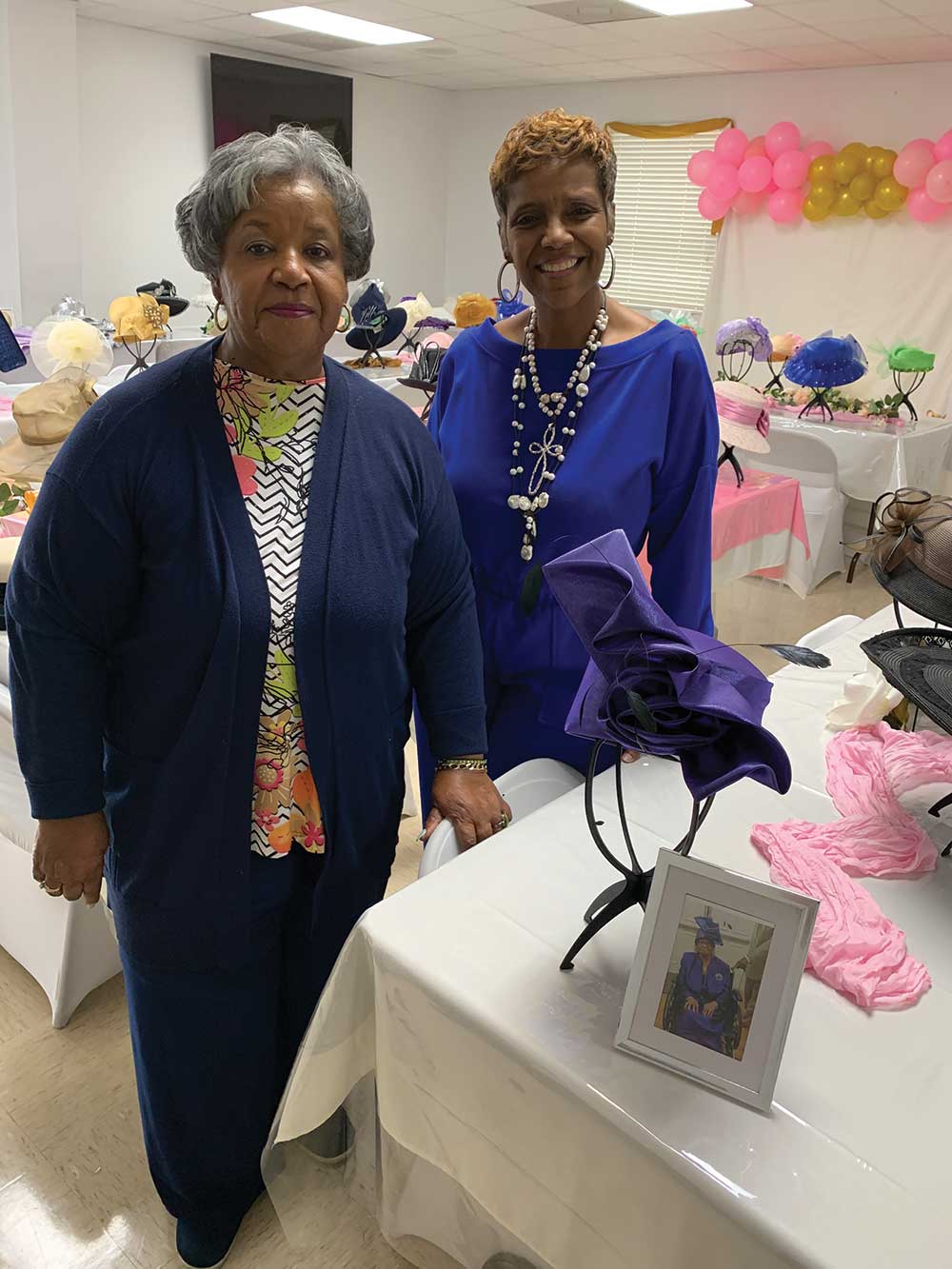
From feathers to jewels to embroidery and lace, the hats ranged from simple, but elegant to elaborate and billowy. “We thought it was impressive,” said Gover. “It shows how the personalities are different. It wasn’t just something they wear on their head, but something from the heart.”
Nearby, a table of framed photos of the featured women – most in their signature hats – seemed to watch over the room as if surveying the handiwork that brought the event to fruition.
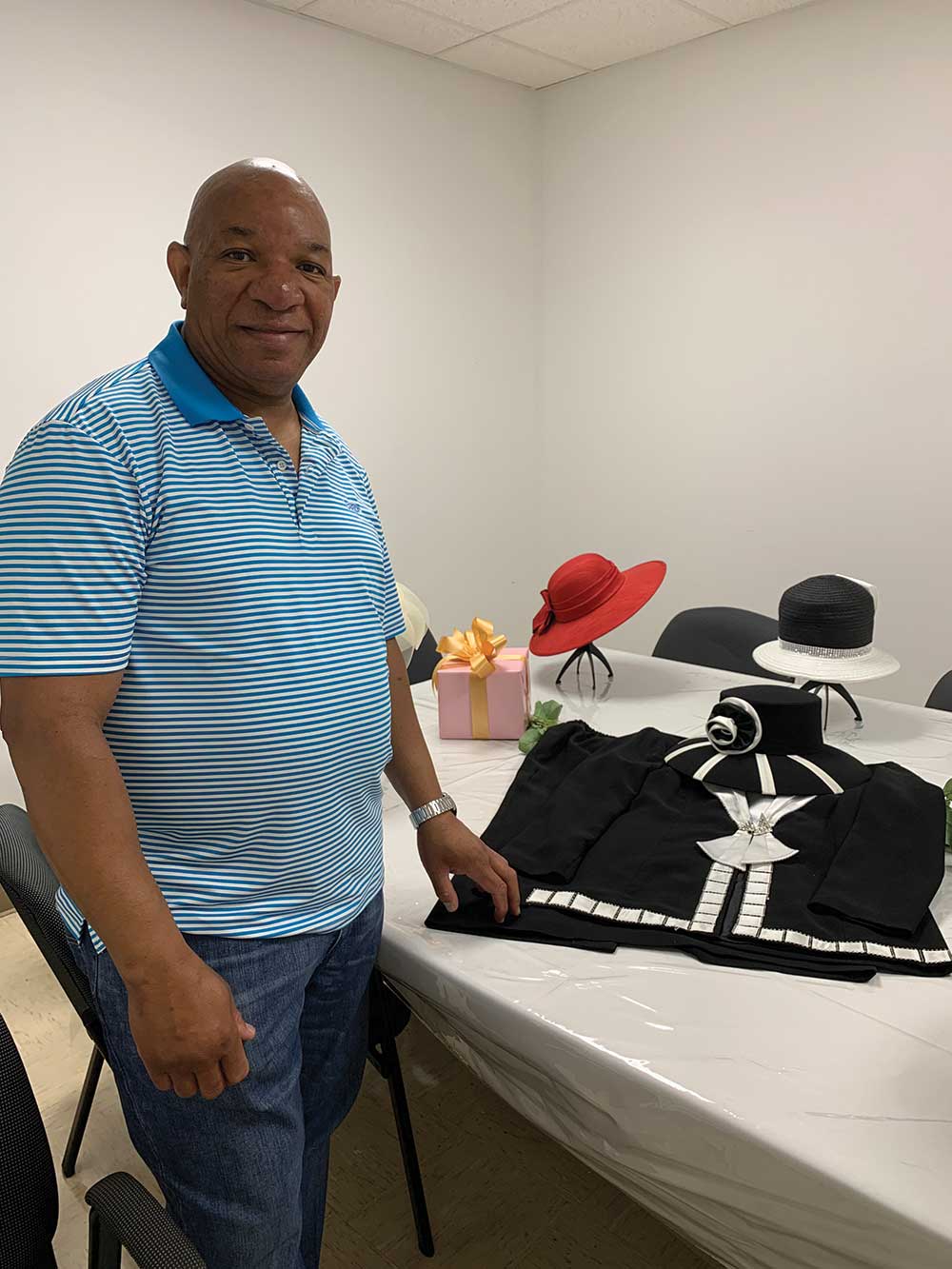
Elic Smith displayed the hat and stunning, matching suit worn by his 86-year-old mother, Blossie Smith. He couldn’t disguise the smile as he recounted his mother’s Sunday attire. “Miss B – You would have thought she would have been first lady.”
It’s a tradition that spans generations from slavery to present day, explained Charlotte Crawford. It was an outward expression of who they were within – “a classy, dignified lady. Each hat represents how they carried themselves. Ruby Sawyer Fomby always wore hats,” she said of her own mother.
Janice Carter echoed the recollections of others as she talked about her mother, Elnora Carter. “Mama wasn’t going to church without a hat or a suit.” Her grandmother, Mary Singleton, would buy two suits just alike and take a cuff or a piece from one and fix the other “just the way she wanted it.”
Elnora was a singer with B.J. and the Countryettes. “When she was singing, she had her hat, too.” It was like her personal signature for every performance.
“I grew up in a church where older women wore hats,” recalled Ernestine O’Neal. “You never wore pants to church.” The hats of Ernestine’s mother, Annie O’Neal, were a part of the exhibit. Annie was Sherrell O’Neal’s grandmother, and she noted that hats only came in one size, so women would sew or fasten material inside to make it fit tight.
To demonstrate, Sherrell tried on one such hat – a dainty, circular piece covered in blue feathers with a piece of felt placed inside – a perfect fit!
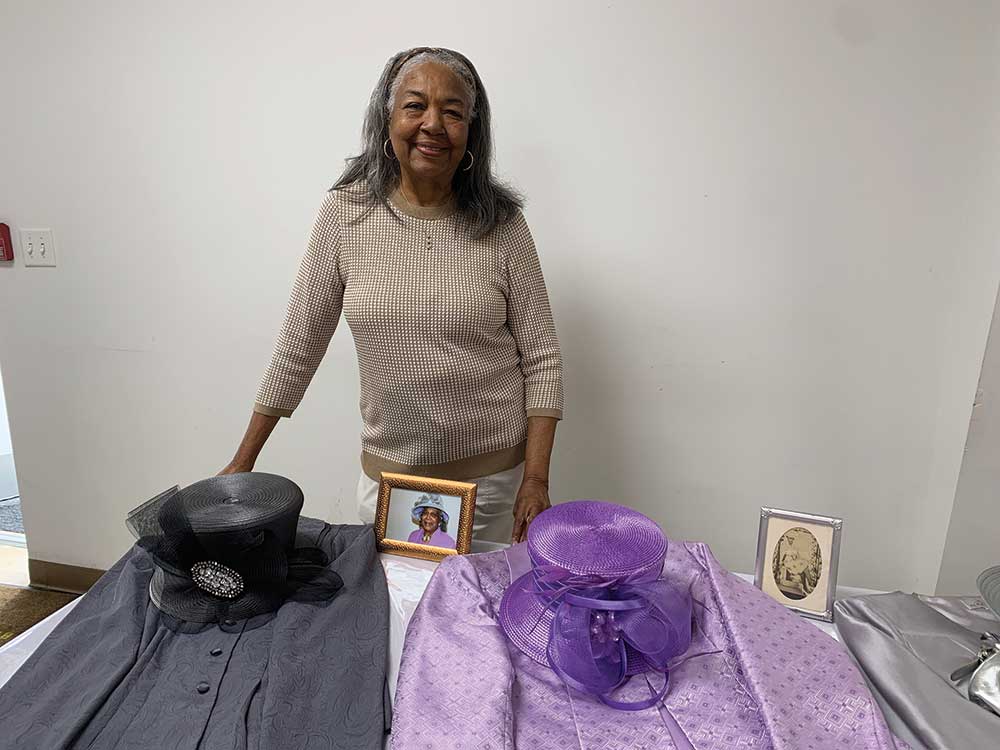
Bobbie Jo Swain of First Baptist Cropwell had the largest collection in the exhibit. Some in the overall display were vintage – 50 to 60 years old. Estelle Forman pointed to the hats of her mother, Bernice Joiner, and mother-in-law, Lizzie Forman, whose hats were featured in the display. Like the others, they were perfect fits for the way they carried themselves, she said.
An opening reception attended by 50 ladies – some of whom donated hats along with family, friends and others – shared precious memories the exhibit evoked.
One of the women asked if she could peek inside a straw hat with pink flowers. The label said Jack McConnell, a well-known milliner active in the mid to late 20th century. The hat’s owner was Caroline Gover’s mother, Della Jordan Gover. Caroline recalled it was bought 25 to 30 years ago at a small hat shop in Birmingham.
These women were serious about their hats, and they invested to get just the right one. They often shopped at a store in Ensley called Cotton’s. Later, they bought their hats locally from Kenwin’s or Mays and Jones with prices ranging from $50 to well over $200.
“They were willing to spend money on these hats,” Jennifer Gover said, and with good reason. It was as much a part of their personality as their smile, a laugh or a word of advice remembered long after they are gone.
“Today, women do not wear hats to church services as they did in the past,” Gover said. “We dress more casual, except for special occasions. But there are still a few who hold on to the tradition of bold and beautiful hats to complement exquisite suits or dresses.”
Remember, she said, “a hat is an expression of a black woman’s soul. It is something she wears on her head but belongs to her heart. It is the keynote of her personality – the finishing touch.”